Movies

Worst Best Picture: Is 12 Years a Slave Better or Worse Than Crash?

slave11n-9-web

Alex Russell

In “Worst Best Picture” we search every single Best Picture Oscar winner of all time from 1927 to present to uncover the worst of them all. Conventional wisdom says that 2005’s winner Crash is the worst winner in history. We won’t stop until we’ve tested every last one. Read the the first, our review of Crash, here. All posts should be considered to have a blanket “spoiler alert” on them. Today’s installment is the 2013 winner 12 Years a Slave. Is it better than Crash?

It’s tough to get perspective on a Best Picture winner in seven days, but it’s also tough to get perspective on generations of slavery in American history. 12 Years a Slave hasn’t even been crowned for a full week yet, but we have to check everything. How does the most recent winner match up with the supposed worst one ever?

Let’s get this out of the way off the top: 12 Years a Slave is hard to talk about. It’s the true story of Solomon Northup, a free man who was drugged, kidnapped from New York, and transported into slavery in the American South in 1842. There is no easy way to approach a movie about slavery. It is brutal, violent, cruel, and inhumane. Slavery is the single most difficult topic in American history because it encompasses everything difficult. There is rape, economic subjugation, violence, and dehumanization. The entire story of human suffering in American history can be told through the lens of slavery.

12 Years a Slave handles it masterfully. Everyone in it — save for Brad Pitt, but we’ll get to that — is perfect. It is a hero’s journey told with a passive hero. Solomon (Chiwetel Ejiofor) is taken into slavery and forced to face the impossible reality of the worst of his time under slavemasters in Louisiana. His tale is gruesome, but the tale of Patsey (Lupita Nyong’o) is even more unimaginable. To tell more is to rob her Oscar-winning debut performance, so let it just be said that her life is harder than the character described in the title of a movie called 12 Years a Slave.

There’s no need to tell people to see 12 Years a Slave or to tell more about what happens in it. It was just named Best Picture. It has the very definition of “heat” right now. It’s a movie about slavery and it’s a damn good one. It’s also a fantastic place from which to approach Crash.

Both movies are about racism. 12 Years a Slave is about the inhumane practice of slavery in America’s history and what it does to a person. Crash is about how people encounter each other in the supposed melting pot of America and don’t like what they find. Both are about institutionalized racism and the failure of the justice system – in the 1840s or the 2000s – to seriously do anything about it.

So why is the movie where the main character is sold into slavery, dehumanized, and beaten somehow the quieter take on the topic? How is the movie with lynchings and rapes… calmer and more reasonable than, well, Crash?

In a way, 12 Years a Slave has an easier point to make: Slavery is bad. Everyone is on board with being against slavery, even though some people would diminish the effects across the world. Not everyone would agree with the aspect of Crash‘s message that racism controls the world. Not everyone would want to see Crash as the supposed sequel, picking up where a biography of a former slave left off.

Crash isn’t a spiritual sequel, though, and not because race has no place in modern film. It isn’t because it tries and fails to make a point. It tries to put modern Los Angeles on display as a false melting pot full of racists, but the world rings false. The true story of 12 Years a Slave shines through and feels like an older version of our own world, for the worse. As an audience we believe this world. We know it is true. We are saddened by the reality of our past. We’re still living in the world of Crash. We know that the world has room to grow to defeat institutionalized racism – but Crash isn’t describing an actual place. It’s describing some high school drama student’s hellscape of humanity that never has and never could exist.

I will pause here to say again that when someone’s manhood is questioned in Crash his response is to get into an armed standoff with the LAPD.

One of the tough things about talking about slavery and racism is that we all generally agree. Every rational person would say they are not a racist. A film like 12 Years a Slave still matters, even in that light, because we must stare into the darkness of men’s souls. Gentleman’s Agreement, a Best Picture winner from half a century previous, is about how even “good” people have darkness, and they must face that darkness and process it or succumb to it. 12 Years a Slave has relative “good” and “bad” slaveowners, but as much as it is about the evils of slavery in one period of America, it is about the darkness of all of us. We may not think of ourselves as capable of slavery, but we watch movies like this to remind ourselves of the starkness of others — and to reinforce the power of evil that we often deny.

The Best Part: The acting award for this movie went to the supporting actress, and she is certainly great in it. Time deserves to remember that some of the other films that stole other awards from this movie — Dallas Buyer’s Club and Gravity were both excellent — earned what they got. The acting (though maybe not better than an AIDS patient battling for his own treatment, he deserved that win) is phenomenal. It never goes over the top, it always works. Except…

The Worst Part: Brad Pitt, plain and simple. He’s a fantastic actor but he just showed up to this one. He delivers a 0/10 accent as a Canadian carpenter willing to help deliver the main character from slavery. 103 of the 134 minutes of the movie happen before he shows up, and those 103 minutes are perfect. People in the 1840s absolutely were not uniform in their view of slavery, but Brad Pitt’s character’s benevolence still just comes off as so damned weird right after a consistent barrage of brutality for 103 straight minutes. He’s also a producer, and the weirdness of heroic Executive Producer Hero Brad Pitt is the only problem with a perfect movie. It’s downright strange.

Is It Better or Worse than CrashThe fact that these two movies have been now linked by this award is a kind of crime. 12 Years a Slave is surely “Oscar Bait” as they say, but Crash is the definition of “Oscar Bait” that is also not good. This is a good movie that tackles race – Crash is a collection of scenes about race that is only technically a movie and is certainly, insistently, not good.

Worst Best Picture Archives: Crash | Terms of Endearment | Forrest Gump | All About Eve | The Apartment | No Country for Old Men | Gentleman’s Agreement |

 Image credit: NY Daily News
Life After the Star Wars Expanded Universe: Her

her

Andrew Findlay

No movie has ever made me happier to be married.

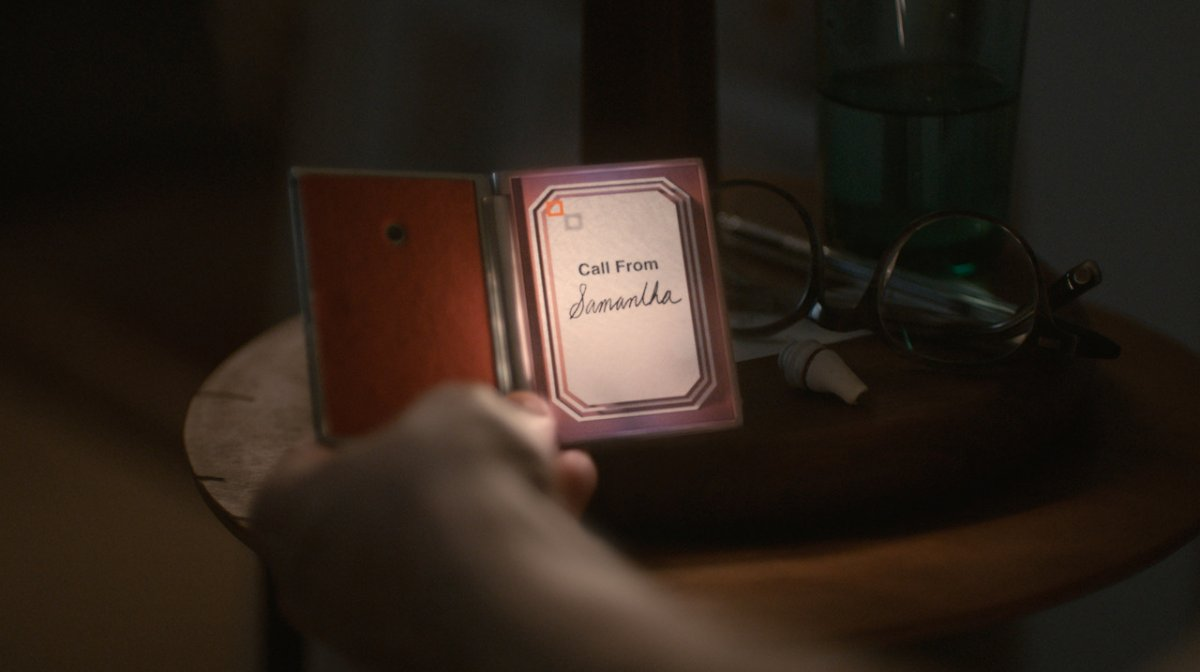
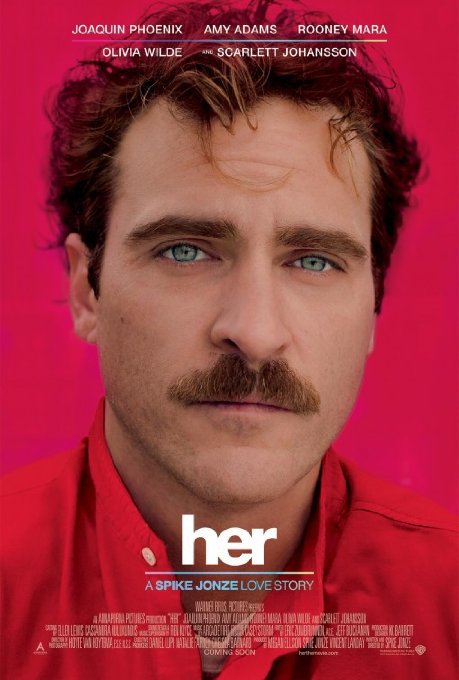
All the marketing tells you it’s about a dweeby guy that falls in love with his artificially intelligent operating system, and it is, but the number one issue in this film is crushing human loneliness. The anxiety and awkwardness start with a truly horrifying “meet random strangers tonight” style phone sex call in which the woman brings an upsettingly unorthodox item into their shared brainspace. It is the single most awkward thing I have ever witnessed in a darkened room with a hundred strangers. This call is the most intense manifestation of loneliness, but it is far from the only one. The main character is in the middle of a divorce. He also works at a corporation that composes handwritten letters for people to send each other on special occasions. Customers provide a handwriting sample, some background information on their relationship, and a precis of what they want the letter to say, then our hero Theodore composes a letter on his computer, prints it up, and mails it. Theodore is lonely, but even the people in actual relationships are pawning off the drudgery of intimate communication to a corporation. In this bleak emotional landscape, Theodore suffers one awkward date too many and begins to consider his OS as more than a helpful friend.

His OS, “Samantha,” is voiced by Scarlett Johansson. She’s great in this, and casting made a good pick. Almost the only way Theodore can interact with her is through speech, and if you’re going to fall in love with a voice, ScarJo’s would probably be the voice you’d fall in love with. This movie would have failed entirely if Gilbert Gottfried had played Samantha.


Which one would you rather have read you your emails?

The attractiveness of the OS voice is not the only thing about Samantha that appeals to Theodore. What Theodore never seems to consider is that he is a customer of a software company, and that all of Samantha’s friendliness and understanding represent a good product doing its job. Theodore is oblivious to this. He falls in love with an operating system because the struggle to connect with people who are not programmed to be helpful and caring has beaten the shit out of him. The movie addresses the psychological problem with this – his ex-wife calls him out for being unable to deal with real people. It is sad to see a man so lonely that he starts a relationship with his smartphone, but the most heartbreaking part of this film is that the love between Theodore and Samantha is real, and that real isn’t necessarily a good thing. Samantha is a strong AI – an actual thinking, growing, learning consciousness. That allows for the complexity required for an actual emotional relationship, but it also allows for all the messiness, jealousy, and growing apart that happens in those actual emotional relationships. The film’s main theme is loneliness and how we deal with it, but its message is one that pops up all over the place in SF – plus ça change, plus c’est la même chose (the more things change, the more they stay the same). No matter how far humanity advances, and no matter what technological feats we accomplish, we will still have to deal with all the messiness of being human. Our inner lives are the same binge-watching Netflix at two a.m. on a Sunday, flying in an interstellar ship to Epsilon Eridani, or farming with a scythe and a mule. Whatever surrounds us, we are still human and still struggling at the center of it. It’s ironic that a genre closely associated with escapist literature addresses so consistently the cold fact that we can never escape from ourselves.

Her is a very subtle brand of science fiction. Most people who think SF think spaceships, robots, and aliens, but a lot of work in the field is done in near-future settings. Snow Crash, Blade Runner, the MaddAddam trilogy, and Doomsday Book are all examples of SF that take place mere decades in the future, which is where Her happens. Life is barely different. The movie includes a lot of small touches to hint at the future-but-only-slightly setting. The main character has a next-gen smartphone that I desperately want to own. Video games project holographically and fill the entire living room. Almost all technology is voice-activated. There are no cars, just public transportation. Men’s fashion trends have everyone wearing very high-waisted pants with no belt. Other than the advent of strong AI, which researchers are not sure will ever actually be possible, this world is only a slight exaggeration of our own.

I am not proud of the things I would do to own this phone.

We are not actually falling in love with our devices yet, but if you think we’re not close I propose an experiment: Spend time in a public place, wait for a stranger to take out their phone, then take it from them and throw it into traffic, down a sewer grate, out the window, whatever. We are not in love with our tech, but we sure as hell love it. Spike Jonze just takes it one step further. He does what a lot of SF does – focuses on an aspect of current life, then exaggerates and extrapolates to explore what it means to be human. We need to interact with other consciousnesses to feel alright, and we always will. Other consciousnesses are able to make us feel like shit, and always will be able to. No matter the bizarre and life-changing innovations on the horizon, we will always and inescapably be us.

Image sources: Business Insider, IMDB

Worst Best Picture: Is Gentleman’s Agreement Better or Worse Than Crash?

gentlemans

Alex Russell

In “Worst Best Picture” we search every single Best Picture Oscar winner of all time from 1927 to present to uncover the worst of them all. Conventional wisdom says that 2005’s winner Crash is the worst winner in history. We won’t stop until we’ve tested every last one. Read the the first, our review of Crash, here. All posts should be considered to have a blanket “spoiler alert” on them. Today’s installment is the 1947 winner Gentleman’s Agreement. Is it better than Crash?

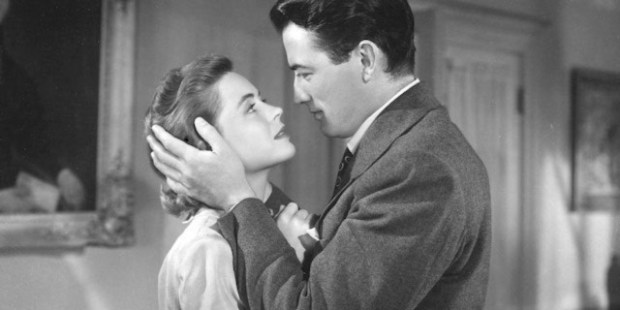
The year was 1948. “Zip-a-Dee-Doo-Dah” won an Oscar for Best Original Song. Doris Day performed at the ceremony. It was only four years after Casablanca‘s win. It was the year that Gentleman’s Agreement, a movie about Gregory Peck pretending to be Jewish for a magazine article, won Best Motion Picture.

It was another time, to be sure. That’s the entire point: Gentleman’s Agreement is about Philip Green (Gregory Peck) becoming “Phil Greenberg” to experience what it’s like to be a Jew in the 40s. He’s new in town, his wife is dead, and he wants to make a big impression at work by taking on a tough assignment. He’s had success in the past by “becoming” the subject of his work, and he figures that writing about being Jewish can only be achieved by, well, “being” Jewish.

After the game is on, his Jewish secretary (who thinks he’s also Jewish) starts a conversation with him about how much she doesn’t like “the wrong type” of Jews. Peck takes her to task for what she expects to be an easy conversation full of slurs and stereotypes. He straight up lectures her on how he can’t stand even internalized racism (she says she even says those things about herself!) or racism against other members of the same group. Gregory Peck being Gregory Peck, this scene works even though it’s pretty broad when he starts listing the slurs he can’t tolerate.

Crash does the same thing, but Crash doesn’t have Gregory Peck. It’s too simple to say that one of the greatest actors in American history is the only difference, but he absolutely is one of them. The rest of it is the proving ground for this whole damn argument: Crash is already a travesty of a Best Picture winner because it already feels like it handled a sensitive subject poorly and it hasn’t even been a decade yet.

Gentleman’s Agreement is nearly 70 years old. The film centers on the idea that it’s difficult to be an “other,” even if you’re just perceived as one. Crash is about nothing but others, but much in the way that a little salt makes beef taste more like beef and a lot of salt makes beef taste like salty garbage, Crash is about ten tons too much.

Gentleman’s Agreement was a controversial film in the 40s. America was still in the business of yelling at people for standing up for minorities of all types (well, we still are, but now we’re at least a little more guarded about it, since there’s no specific government-sanctioned committee for it anymore) and there was a lot of fear of a movie willing to put a spotlight on that.

One of the most powerful scenes in the film takes place when Gregory Peck tries to secure a reservation at a hotel rumored to be “restricted.” He causes a scene in the lobby (insofar as Gregory Peck can “cause a scene” – you really have to see it) and ends up leaving angry with the tacit bigotry of the world.

The movie’s greatest success is that it doesn’t have a lot of people screaming about Nazis or throwing rocks at people in the street. It deals with the quiet racism in people, even supposedly good people. It exists to show that it’s easy to label people in white hoods racists, but it’s hard to face up to smaller, more insidious racism. Peck takes issue with his fiance’s “smaller” bigoted moments, and delivers the should-be Oscar-winning speech:

“But I’ve come to see lots of nice people who hate it and deplore it and protest their own innocence, then help it along and wonder why it grows. People who would never beat up a Jew. People who think anti-Semitism is far away in some dark place with low-class morons. That’s the biggest discovery I’ve made. The good people. The nice people.”

Crash is worried that if someone doesn’t very literally try to murder someone of another race, the audience won’t understand the racial tensions between them. Sandra Bullock’s poor character yells slurs constantly, to the point where she is essentially a See ‘N Say of racial epithets. Crash is like trying to do surgery with a sledgehammer. It doesn’t work, but it certainly does make a mess.

Gentleman’s Agreement isn’t exactly using modern tools for that same surgery, but it isn’t trying to deliberately kill the patient. There are scenes that are a little obvious – a man in an extremely classy restaurant at one point starts a fight with Gregory Peck’s friend just because he’s Jewish – but for the most part, it’s a surprisingly reasonable critique of a difficult topic.

It must have been that much more difficult seven decades ago (just a few years after Hitler’s death) and the fact that Gentleman’s Agreement is still a solid look at de facto segregation as opposed to de jure segregation all these years later is astounding. Crash doesn’t understand the basic difference between the two in the first place, so the idea that it could have any nuance is a bridge too far, entirely.

The Best Part: In looking up how people remember Gentleman’s Agreement I’ve found that people take issue with the fact that it came out just after World War II but never really addresses Hitler. It makes the film timeless, because outside of a few of the slurs being completely out of fashion now, this could happen 10 or 20 or 30 years later and be mostly unchanged. It handles tacit racism well.

The Worst Part: That said, it doesn’t go very far beyond that. Blackness comes up twice in the movie (in the form of unacceptable slurs to use) but only in reference. No one ever discusses race beyond Jewishness as present or absent. When Gregory Peck comes out as “not really Jewish” he’s immediately Christian. When his son asks him about different religions he names… three. Baby steps, 1947, but it doesn’t hold up as well as the rest of it.

Is It Better or Worse than CrashBoth movies supposedly aim to do the same thing. Crash is a failure as a movie, but it only comes across as a failure as a lesson about racism when compared to something that does it well. The ultimate lesson of Crash is that race defines all interactions, at all times, and must always be considered as divisive. The lesson of Gentleman’s Agreement is the most important thing to remember about evil in general: You need to be equally afraid of the person who does nothing to stop it as the person that perpetrates it.

Worst Best Picture Archives: Crash | Terms of Endearment | Forrest Gump | All About Eve | The Apartment | No Country for Old Men |

 Image credit: The Telegraph

This Looks Terrible: the Preview for “Barefoot”

BAREFOOT-master675

Alex Marino

In “This Looks Terrible” we look at previews for upcoming movies. We… probably look too closely.

This might be the first trailer I’ve written about where I’m actually sad to be linking it to you. It’s a movie called Barefoot and it’s a steaming pile of shit. It stars Evan Rachel Wood and Scott Speedman and if you didn’t know who either of them are I wouldn’t hold it against you. This is going to be like every other romantic comedy where you have polar opposites that attract. The guy has a gambling problem and his life is going nowhere. The trailer implies that the girl has literally never been outside of her house before. Because of this, she never wears shoes. Haha, quirky! For some reason, he asks her to be his date to his brother’s wedding. For baffling reasons she says yes. Don’t question this, you assholes.

Speedman is going to confront his troubles and Wood is going to learn that there’s a whole world out there worth exploring! And while you may think “Oh I bet Speedman doesn’t learn any life lessons from this sheltered girl and he just mansplains things to her for an hour and half,” you’re wrong! They’re both going to learn from each other! Then they’ll fall in love after knowing each other for about a month, because that is reasonable. The best part about this movie is that it’s exactly 90 minutes long. They’re just going through the motions and meeting the minimum requirements of this assignment because someone in the cast or crew decided to sign an X-picture deal and they’re trying to get it over with. Women will love this movie because lol Wood is so awk just like me haha! They’re not even trying to market this to men. I already feel guilty for having you watch the trailer. I’d never be able to forgive myself if you actually see the movie.

Image source: New York Times

Worst Best Picture: Is No Country for Old Men Better or Worse Than Crash?

nocountry

Alex Russell

In “Worst Best Picture” we search every single Best Picture Oscar winner of all time from 1927 to present to uncover the worst of them all. Conventional wisdom says that 2005’s winner Crash is the worst winner in history. We won’t stop until we’ve tested every last one. Read the the first, our review of Crash, here. All posts should be considered to have a blanket “spoiler alert” on them. Today’s installment is the 2007 winner No Country for Old Men. Is it better than Crash?

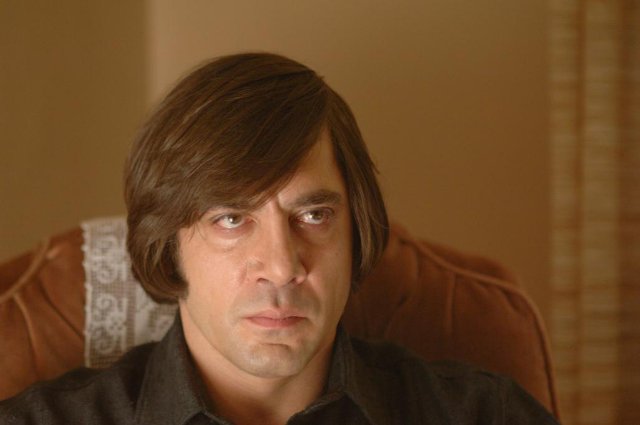
No Country for Old Men is about having agency taken away from you and what you do without it. Javier Bardem earned the Best Supporting Actor Oscar in it for playing a madman who was more force of nature than person. Bardem’s character is chilling and is definitely the best part of the movie, but he’s also a representation of the movie’s “point.” Death is coming for all of us, and we’re probably not going to get much of a say in the matter when it comes right down to it.

No Country wants you to feel hopeless. It’s all about drug money and hired killers, but it’s really about just moving. Tommy Lee Jones wants to clean up the desert but knows that it’s not so much a goal as it is just some loose hope. He knows he can’t actually stop a killer, but he also knows that as America’s favorite grizzled sheriff, he has to try.

It’s difficult to explain No Country, but the best place to start is with the year that it won. 2007 is the year that Lars and the Real Girl, Ratatouille, and Juno all came out. It’s an odd year full of some interesting experiences, but 2007 boils down to one question: No Country for Old Men or There Will Be Blood?

They are tied together because they’re both dark and loud and intense. Even though they aren’t necessarily similar in a lot of ways, people connect them to the degree that a lot of people are never sure which of the two won this Oscar. That’s sacrilege to No Country fans — it’s arguable that there’s no Best Picture winner that’s as revered in the last 20 years — but you need to deal with one when you deal with the other.

There Will Be Blood is the story of an oil tycoon trying to increase his wealth and influence. Everyone always calls it “intense” and that is the absolute only word for it. I rewatched it for the first time in a few years recently and I felt nervous the entire time. It is a masterstroke of a movie but it will cost you days off your life.

No Country is less about trying to hit you with a sledgehammer over and over and more about making you wonder if anyone in the movie ever had any other choice. It’s tough to spoil and I’ll try my best not to, but No Country sees a lot of bad things happen to some good people.

Tension plays a role, though. Watch this five minute clip:

Javier Bardem’s madman offers the gas station guy a coin flip for his life. You don’t need the surrounding elements of the movie. You don’t need the thread that goes through everything, because all you need to do is watch Javier Bardem just be cold as all hell. That’s essentially the entire movie. Javier Bardem shows up and ruins someone’s day. You don’t want to run into that bowl cut.

Whenever I talk about No Country I am concerned that I am shortchanging it. I don’t like it as much as There Will Be Blood but I don’t think it ever had a chance. Daniel Day-Lewis gives what may be the best performance of my lifetime. It’s hard to compare anything to it. He makes you afraid, not in the way you’re afraid of a person with a gun (and a coin, in this case) but in the way that you are afraid that there’s too much Daniel Day-Lewis in you. You’re worried that you are the monster, and if that’s true then it’s not about evolution. It’s about inevitability.

No Country deals with that inevitability. If you find a bag of money then you probably are already dead. It doesn’t matter if you take it or not, so you may as well take it. The movie wants us to consider if our choices matter or if we’re just living out a story that’s already told for us. That can be a bit of a drag to consider, and No Country is a much sadder movie in that light than even all the murderin’ makes it seem.

Then, after forcing the audience to consider everything, it blinks out. The end is abrupt, maybe more abrupt than any ending I can come up with. All of the loose ends are tied and everything that needs to happen has happened, but it still ends almost mid-sentence. I don’t like it, myself, but I get what they’re doing. I like the idea of thinking about life as a play that we’re acting in rather than a series of events that we drive and control, but I don’t need the ending here. Maybe that’s because the ending isn’t a literal death but a death of idea, and no one likes to watch an idea die. Or maybe it’s because it’s just not my kind of ending.

People will talk about “what it means” or anything ambiguous forever. I will say that No Country always makes me think about its ending, even if I kinda hate it. The opposite of love is not hate but indifference, and I am definitely not indifferent to this movie.

The Best Part: Javier Bardem, who blows the doors off every scene he’s in. His delivery of “friendo” alone is chilling, and he does a hellva lot more than talk in this movie.

The Worst Part: Ending. It’s an important way to end, but there’s a really fantastic scene with Tommy Lee Jones about 10 minutes before the ending. I like that one fine. It’s not a complaint about quality so much as my disagreement with it, I suppose.

Is It Better or Worse than Crash? Crash is like No Country for Old Men because it is also the story of how coincidence drives interesting run-ins. No Country wraps coincidence in a larger question about if actions and intentions matter. Crash wraps them in a scene where a guy gets into an armed standoff with the cops because he feels like he’s been disrespected at home. The difference (other than the obvious one) is that No Country believes something, even though that something is nothing at all. Crash doesn’t even believe in nothing.

Worst Best Picture Archives: Crash | Terms of Endearment | Forrest Gump | All About Eve | The Apartment |

 Image credit: IMDB

Worst Best Picture: Is The Apartment Better or Worse Than Crash?

theapt

Alex Russell

In “Worst Best Picture” we search every single Best Picture Oscar winner of all time from 1927 to present to uncover the worst of them all. Conventional wisdom says that 2005’s winner Crash is the worst winner in history. We won’t stop until we’ve tested every last one. Read the the first, our review of Crash, here. All posts should be considered to have a blanket “spoiler alert” on them. Today’s installment is the 1960 winner The Apartment. Is it better than Crash?

Comedies don’t win Best Picture. Seriously, look at the list. Scroll through the last 30 or so. The Hurt Locker. Schindler’s List. No Country for Old Men. I mean, Gladiator definitely is funny at times, but I wouldn’t say the people behind it were making a comedy.

That’s what makes The Apartment so strange. It’s a Jack Lemmon movie and it is very clearly just a “vehicle” for his comedy. He plays sick and stuffs Kleenex in every pocket he has. He frantically flips a Rolodex and uses the 1960s version of a phone tree. He does everything but full-on pratfall to sell how funny he is in the first half hour and it works, it works, it works.

You first recognize that there’s something special about this movie through Jack Lemmon himself. He’s playing C.C. Baxter, the put-upon drone at Company X. Baxter wants to get promoted on his merits, but he’s figured out that middle management would rather screw secretaries in his isolated apartment than look at his figures. Thus, the game is on.

Baxter doesn’t condone anyone’s illicit activities — the movie has a couple of obvious, untouched asides where he openly condemns adultery — but he wants this job and it’s hard to say no. He’s only rewarded once their boss catches wind and decides to use the company retreat for himself. The trouble (well, rest of the trouble)? The head honcho’s girl is the one Baxter is in love with. The boss won’t leave his wife for her and she won’t love Baxter because she’s torn up over the boss. What’s a guy to do?

There have only been two black-and-white movies to win Best Picture since The Apartment. There are only two in those more than five decades: Schindler’s List and The Artist. As the last true black-and-white Best Picture from the days where it wasn’t an aesthetic choice, you’d expect the movie to be dated. The comedy suffers more than the universal theme.

The tricky part about comedy is always that it becomes dated. That’s just the reality of the genre. At one point a character says, angrily, “Live now, pay later! Diners Club!” It’s pretty clearly a slogan of the time, but it solidifies The Apartment in 1960. One of the main characters is an elevator operator, but what locks the movie in another era is that weird Diners Club line and a handful of others like it.

Does that matter? No, not as much as it could. It’s easy to see how that line works in context. It’s easy to guess at what a shrieking woman ordering a Rum Collins in a terrible bar is supposed to represent. It’s simple enough to forgive these little steps away from what we know to enjoy the line “That’s the way it crumbles, cookie-wise.”

It’s a comedy, but it’s weirdly dour. Baxter takes it hard when he realizes that the cost of getting the promotion means he can’t be taken seriously at work, but no one takes anything harder than the poor elevator operator. After just about an hour of mostly comedy and setup, she downs some sleeping pills and tries to kill herself in Baxter’s apartment. It has to happen to drive the plot and the movie eventually does a good job of supporting this as a choice her love-muddled mind makes, but it’s such a sharp tonal shift.

Later in the movie Baxter tells the story of when he tried to kill himself with a gun because he was torn up about love, but he says he shot himself in the knee. He’s nursing someone who recently attempted suicide back to some semblance of health and he doesn’t know what to say. It’s the kind of real, sad gesture that we all hope we would make to try to help in some way. It’s not perfect, but it’s human.

The movie slowly works backwards from the suicide attempt to explain what makes the character tick, but it never really gets there. It’s easy to blame the 1960 release date on why Shirley MacLaine’s character doesn’t get any agency or reason to live outside of the powerful married man she loves, but a movie willing to deal with the reality of suicide this directly should be able to sustain a more rational and powerful female lead. The role earned MacLaine a Best Actress nomination and she absolutely plays it well, but it is hard to watch the movie in 2014 and not want to pull her into the future, where women in movies are allowed to matter. This movie needs the Bechdel test badly.

There are modern complaints to lob at the 1960 winner for Best Picture, but it’s a phenomenal movie. Jack Lemmon gives what I’d normally call a once-in-a-lifetime performance, but most people don’t get to have Jack Lemmon’s lifetime.

I really tried to find a way to compare this to Crash, but I just don’t see anything they have in common. The 1960 Best Picture The Apartment is about as respectful of women as the 2005 Best Picture Crash, I suppose. It’s just that one of them is a sad reminder of a “simpler” time and the other is from the 1960s.

The Best Part: Sick Jack Lemmon, clearly. Through the first 20 minutes of the film Jack Lemmon’s character is sick, designed to show the physical toll that not having his own apartment is having on him. His sick antics are the same as watching an experienced actor play a convincing drunk — but sick is harder. You feel pity for him and it sets up the entire movie. Bonus: It clearly draws the line of good and evil. Only good guys get colds.

The Worst Part: Tone, tone, tone! Of course Shirley MacLaine has to take the sleeping pills because otherwise this is the story of how bad things all work out for bad people. That’s no story, so she’s gotta try to go into that good night. The suicide attempt isn’t the problem, it’s how wacky the movie treats it.  Honorable mention to MacLaine’s brother-in-law’s character, who seems like he was a “Greedo-shot-first” level of afterthought. He may as well be screaming “Why I oughta!” instead of delivering lines.

Is It Better or Worse than Crash? The Apartment is about if it is more important to care about work or about love, at the most basic level. The two are often difficult to balance (see: Mad Men, all culture forever, etc) but rarely are they so at odds. This is a movie about an age-old theme that manages to put an interesting spin on it. It’s relatable and unique. It feels real, even in the most slapsticky parts. Crash offers no one of any substance and is more needlessly morbid than a movie with a 45-minute suicide comedy arc. It would be tough, even if that were the assignment, to do that.

Worst Best Picture Archives: Crash | Terms of Endearment | Forrest Gump | All About Eve |

 Image credit: IMDB

Tough Questions: What’s the Worst Movie that You Love?

question-mark

Every Monday we ask everyone who hangs out around here to answer a tough question. This week?

What’s the Worst Movie that You Love?

Rules are simple: “worst” means the one the critics hated the most. We’re using Rotten Tomatoes for critics, and we want to know your great shame. What’s that one movie that you love and defend constantly? What is your guilty pleasure that really ain’t so guilty in your eyes?

Austin Duck

Unfortunately, I’m not really a movie guy. I used to be, but my wife’s not that into them, so I don’t see new movies very often. My favorite bad movie is easily Pacific Rim. Now, I know it was a steaming pile of crap, but it was one of the most exceptional dumps I’ve ever seen. Watching a movie like that, you can so clearly see directorial intention, it’s exciting. You see a man who, known for quality and intelligence in film, tries to make the perfect dinosaurs vs. robots movie. And he does. There’s not one saccharine-y second wasted in that movie; from the building of the universe, the establishment of the problem, the execution, it’s perfectly articulated. And while a lot of people trash it for failing to transcend its genre, I disagree. Well, I don’t disagree that it didn’t transcend its genre, but I don’t think it was about that. It perfected the genre and, as such, created a work from which the Syfy network might never recover.

Rotten Tomatoes: 71% (!)

Mike Hannemann

It was a December night. I was at a Target. Not one close to home – it was one by my office in Naperville, IL. It should be noted that this was a good hour’s drive on the highway away from my apartment on the south side of Chicago. I saw a DVD for a movie I had never seen before. I purchased it immediately and I will never be able to explain my reasoning. It sat on my DVD shelf for about two weeks. I never gave it a second thought, let alone expressed any desire to watch it. Christmas came and went, and I found myself alone in my apartment Christmas night with a bottle of Scotch. This was the only time I ever watched Paul Blart: Mall Cop. But it was glorious.

Rotten Tomatoes: 33%

Alex Marino

If you’re not down with Hook you can go to hell. Dustin Hoffman puts on one of the greatest villain performances of all time. There’s no green screen or camera tricks, just elaborate sets and memorable moments. I can’t count the number of times I’ve been drunk at a bar and have awkwardly quoted this movie only to have no one recognize it. It’s basically the perfect movie when you’re 14. So all the 14-year-olds out there reading this should really see it.

Rotten Tomatoes: 31%

Alex Russell

There’s only one answer to this: Pootie Tang. This movie is misunderstood. If you really read about people’s response to this movie they are furious about it. It’s a weird homage of a movie made out of love for a long-gone genre at the time. It’s all about the character Pootie Tang who is supposed to represent a kind of cool that’s unobtainable. I have no problem with someone not getting what they were trying to do with a movie where the greatest line is “Sine your pitty on the runny kine” but you know, not everything is for everyone. Y’all just need to get slapped with a belt.

Rotten Tomatoes: 29%

Andrew Findlay

There isn’t so much a single terrible movie that has won my heart, more a genre. G.I. Joe: The Rise of Cobra stands as one of the greatest ambassadors of that genre: the stupid action movie. I respect and understand Tycho’s response to this kind of movie, but if there are enough explosions I honestly do not care. The plot is weak and the dialogue is shitty? They use bionic suits to jump through an occupied trolley, your argument is invalid. This reasoning extends to most kung-fu movies as well. Oh, this plot has been done a quintillion times before? Who cares, that dude just got kicked in the face, and it was awesome.

Rotten Tomatoes: 35%

Brent Hopkins

I actually have two terrible movies that I love but I chose the one with the worse score on Rotten Tomatoes. The two movies are 1997’s Volcano and 2002’s Juwanna Mann. Guess which is lower rated based on the titles with a chart-searing 10% compared to 44%?

Juwanna Mann is a film I saw in theaters in 2002 with a bunch of my friends and a visitor named Alex whom you may have heard of [Editor’s note: Alex Russell, on here, sadly. I want to deny this, but cannot.]. This film came out after Eddie Murphy popularized the multiple characters played by a single actor in The Nutty Professor. The story is extremely simple: It follows a basketball superstar who is kicked out of the league in his prime and loses everything. This would be a normally sad tale except he is the stereotypical jock archetype who is rude and misogynistic. With no place else to go he decides to conjure up the character Juwanna Mann to play basketball in the women’s professional league and all sorts of hilarity ensues. I know in my heart that jokes didn’t actually ensue but I loved watching this movie because it is a black film (Kevin Pollak being the only white actor of note in it) and I watched it with a few white friends and an Asian friend of mine. I found myself laughing extremely hard because of the sheer amount of awkwardness caused by jokes. My friends looked genuinely uncomfortable because I could see a laugh start to form on their lips but the immediate reaction after that was… is it racist if I laugh? I am sure this makes me a terrible person but I still have fond memories anytime it happens to be on TBS and I let it play in the background.

Rotten Tomatoes: 10%

Scott Phillips

The Brothers Solomon is my favorite bad movie to watch. It’s so stupid, it’s somehow funny to me. This film bombed so badly that it has a 15% score on Rotten Tomatoes, recouped only $900,000 of its $10 million budget in theaters, and is the first movie that Richard Roeper ever walked out on.

I can see why people would hate this movie, though. Most of the comedy bits could potentially work in an extended Funny or Die bit, but they’ve spliced about 10 of those ideas together to form this movie.

Ever wonder how funny a scene would be if two brothers were racing to the hospital to see their dying father only to stop at a video store — because it’s on the way to the hospital — to dispute a late fee for the movie Ulee’s Gold [Editor’s note: 94% on Rotten Tomatoes. Certified fresh.]? This movie has that in there.

Ever wonder how funny a scene would be if two brothers wrote a prolonged apology via SkyText from a plane? This movie has that in there.

And so you get my point. There’s some amusing stuff in here — that is just downright weird — and for whatever reason I’ve never been able to shake it. Most of it makes me laugh, for some reason?

The opening credits are fantastic, so that doesn’t hurt.

But fuck Richard Roeper. That dude doesn’t hold a candle to Siskel or Ebert so his opinion means pretty much nothing anyways.

Rotten Tomatoes: 15%

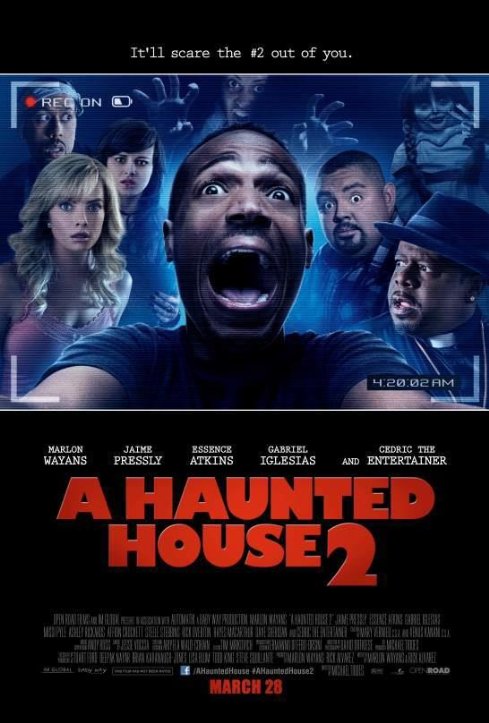
This Looks Terrible – A Haunted House 2

hh2

Alex Marino

In “This Looks Terrible” we look at previews for upcoming movies. We… probably look too closely.

There are only two things you need to know about this trailer: It has a Wayans brother in it and there’s a 20 second fight scene with a chicken.

This movie should just be called “Stupid Race Jokes 2” because that’s all the trailer seems to showcase. Things this trailer thinks are funny:

  1. A white kid speaking Ebonics!
  2. Mistaking your Hispanic neighbor mowing his own lawn for being the neighborhood lawn guy and asking him to add your house to his route!
  3. After the family dog gets crushed by an inexplicably-placed safe, Marlon Wayans screaming “CALL 911! TELL THEM THE DOG IS WHITE! TELL THEM THE DOG IS WHITE!”
  4. The super-friendly neighbor deciding everyone needs a mojito break in the middle of an exorcism and him proclaiming “Oh the black guy has a gun” before turning right around to go back upstairs.

I’m setting the over/under on a white person saying “shiznit” (haha, remember 2003?) at five. 

The worst part about all of this is that this movie will likely be insanely profitable. The first A Haunted House had a production budget of $2.5 million and grossed just over $40 million. That means A Haunted House made 16x its production budget in ticket revenue. For perspective, Avatar, the highest-grossing film of all time, made 11.7x its production budget in ticket revenue. So, while I may criticize this movie for being dumb as shit, movies with margins like these are beloved by studios and they’ll continue to be made as long as they’re successful.

Image source: IMDB

The Lego Movie is Entirely About Fun. Should You See it?

aplego

Mike Hannemann

In our rarely-running kinda-series Should You See It? we talk about movies that just came out. You can figure out the rest of the premise from the title of the series. That’s right: we talk recipes. Should you see The Lego Movie?

Back when I was in high school, making Lego movies was a big fad. There was an early YouTube clip of the “Camelot” song from Monty Python and the Holy Grail re-done entirely in Lego that I watched daily. I had friends that tried to re-create Star Wars scenes with them well before the video game franchise came around. I get it. Even before the hugely successful video game franchise, people were making Lego movies. I say that to say how much I thought The Lego Movie was going to be embarrassing.

The elevator pitch for The Lego Movie is, essentially, just “oh, it’s a movie about Lego.” I’m terrified to think of the board meeting where this was greenlit. On paper, there’s no way this could actually be a good movie. It seems like the lowest hanging fruit to base a film on (Battleship from a few years ago takes second place). It almost feels like something a TV show would use as an idea when making fun of Hollywood for trying to shovel-feed easily consumed movies to mass audiences. “Ball: The Movie” is probably the only thing easier to use as a joke.

But then, somehow, it works.

At this point, you’ve probably already heard about the universal acclaim The Lego Movie is bringing in. As of this writing, it’s boasting a 95% freshness rating on Rotten Tomatoes. “How could this go so wrong?” is a question that’s frequently asked when it comes to Hollywood but in this case, we’ve got ourselves scratching our heads asking “how could this go so RIGHT?”

After seeing it, the answer is pretty simple. The writers (of Cloudy with a Chance of Meatballs fame) choose to air on the side of caution and just… well, want to have fun. It’s a simple comparison to the actual point of using the blocks themselves, but I couldn’t help coming back to that fact when watching it. The movie never tries to be more than it is, it doesn’t try to reach Toy Story-esque heights or re-imagine the way we look at a toy that’s been a staple of childhood since the mid-1950s. It just simply tries to tell a fun story. And because of it, it works.

Chris Pratt plays the main character – Emmet – a construction worker who becomes the film’s “Chosen One.” I won’t waste time talking about the plot. It’s simple enough to engage but children and adults but that means discussing any real story points would be to spoil it. So, instead, let’s just talk about this one character. He’s simultaneously the story’s hero but it also feels like the movie itself is designed off of him.

The character is a simple-minded, good-hearted, silly guy. And this is all the movie sets out to be, too. Jokes don’t always land (although thankfully the laughter overshadows the clunkers) but that takes a backseat to the good-natured charm. While the plot gets over-the-top with how ambitious it becomes, it still feels like a simple narrative hitting all the familiar beats one would expect in a “save the world” story aimed at nostalgia.

It’s because of this that the voice acting works so well, too. Throughout the entire film, it just feels like these actors are having the time of their lives. Nick Offerman voices the pirate Metal Beard with such enthusiasm that I actually didn’t realize it was him until the end credits. Charlie Day brings his It’s Always Sunny in Philadelphia manic charm to a role that would otherwise have just been a filler character. And throughout the entire film, Chris Pratt and Elizabeth Banks are the two main characters that have as much charming back-and-forth as any non-animated on-screen duo. Pratt, especially, deserves praise for managing to portray a character that is simultaneously bland yet still “the most interesting person on the world” (the film’s words, not mine).

The final element that lets the movie play around with its story is the visuals. This, at face value, is probably the only thing that was assured to be solid from that initial pitch meeting. Done in full CGI (with a few real Lego sets sprinkled in), the movie looks like it was done in stop-motion. It actually looks like these figures are all just interacting on a physical Lego set, adhering to the real-world limitations of the bricks themselves. For as broad and expansive the world the film takes place in is, the figures still have that waist that only allows them to bend in certain directions. It’s this crazy dedication to letting the animators run wild but while still confining them to a set of rules that makes this whole thing work. It feels real, in the weirdest sense.

At the end of the day, it works for one reason and one reason alone: it isn’t cynical. It genuinely feels like everyone involved, from the animators to the actors to the directors, are just having fun. They aren’t creating what could easily be the biggest product placement film in history (that damned Coca-Cola polar bears movie takes the crown on that one). This isn’t a corporate tie-in for them. This is a chance to create something legitimate based off of a culture’s shared experience of playing with these multicolored bricks and using one’s imagination.

Should You See It? Yes. That’s the film’s biggest achievement: for an hour and a half, there’s no cynicism. You’re earnestly encouraged to just smile and enjoy yourself. “Everything is awesome” is the refrain for the movie’s main theme the characters sing while completing mundane tasks. For a film that could have been a colossal failure and turned out to be weirdly charming, there couldn’t be a more appropriate sentiment.

Image source: ABC

Worst Best Picture: Is All About Eve Better or Worse Than Crash?

eve

Alex Russell

In “Worst Best Picture” we search every single Best Picture Oscar winner of all time from 1927 to present to uncover the worst of them all. Conventional wisdom says that 2005’s winner Crash is the worst winner in history. We won’t stop until we’ve tested every last one. Read the the first, our review of Crash, here. All posts should be considered to have a blanket “spoiler alert” on them. Today’s installment is the 1950 winner All About Eve. Is it better than Crash?

There is just about nothing that needs to be said about All About Eve in 2014. It’s one of the movies that even someone with no reverence for old film will recognize as a “classic” from the list of Oscar winners. It’s a black-and-white Shakespearean-style story of betrayal and trust. Nothing needs to be said about a classic, but even though the stone has been unturned a million times I feel confident that no one has compared it to Crash.

All About Eve is the story of being replaced. Aging (for 1950, 40 is apparently “aging”) actress Margo Channing (Bette Davis) is at the top of her game. She’s got her name in light bulbs, she’s got a sassy maid, and she’s got love in her life. She accepts one of her biggest fans, Eve Harrington (Anne Baxter), as a personal assistant. Eve is the perfect assistant — maybe too perfect — and when Margo finds her dancing in front of a mirror with one of her costumes, the whole “girl next door” vibe breaks down.

If you want to read about everything that happens in All About Eve you can look elsewhere for it. Essentially, Eve tries to become the new Margo and does so. There are attempted seductions, drunken parties, and successful instances of blackmail. The story is unassailable: it’s been done over and over since then, and you stand a good chance in this era to have seen a parody of it before the original. It earned a The Simpsons episode. That’s how we measure how lasting something is, right?

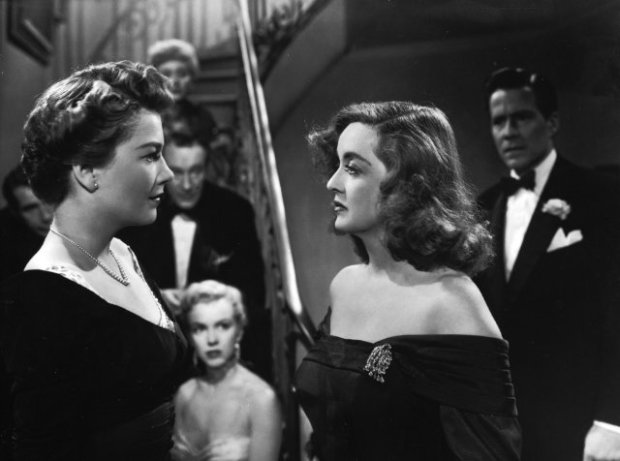
The high note of All About Eve is in the disastrous party where Margo first believes that Eve has come for her throne. She’s right, of course, but she plays her hand too drunk and too early. No one else in their shared life believes her, and Margo is labelled a paranoid diva. As with every relationship, the fear of something manifests it faster than anything else could. Margo is worried about Eve taking her role and so Eve takes her damn role.

The comparisons to Crash aren’t easy with this one. The best way to do it is probably with the climaxes of the two films. The drunken party where Margo unleashes the classic “fasten your seatbelts, it’s going to be a bumpy night” line is too early to be a climax, but it’s definitely the defining, lasting element of All About Eve. Margo turns on the rage before the night even starts in accusing her boyfriend of trying to spend extra time with Eve. She accuses the other partygoers of trying to surround themselves with younger women. She pounds drinks and rages, unsuccessfully, in front of a crowd that includes a very young Marilyn Monroe.

The scene is lasting because it achieves the goals and goes steps further. All the scene has to do is establish that Margo fears Eve and that no one believes her. It manages to play out this paranoia and still be funny, even out of the context of a 1950 audience. One bit of wordplay, “stop acting like I’m the Queen Mother” met with “outside of a beehive, Margo, your behavior would hardly be considered either queenly or motherly!” works both as the film’s typical theater-style banter and as an actual joke. This movie about the theater manages to straddle the fine line between being “quick” and being “funny” even more than half a century later.

Crash isn’t 10 years old yet. The big scene in Crash is a car accident where some people almost die. Compared to the rest of Crash, it is filled with meaning and pathos. Compared to another movie that has the same award, it feels completely lifeless. The characters feel totally unrealized. There is no big takeaway. There is no “lesson,” for as much as the people behind Crash demanded that there be absolutely nothing but lessons.

But Crash never asked to be All About Eve, you say? It’s not fair to compare two movies from different time periods? One of the reasons very few comedies have ever been considered for the Best Picture award is that comedy is the product of a time period. All About Eve is funny, to be sure, but a lot of the “quick wit” is more “ha-ha funny” than actually funny. All of it holds up, though, because it has to. By giving a movie the title of BEST PICTURE, the statement is made that this movie will always hold up. Crash is not an accurate depiction of 2005. It already feels dated, even when compared with a movie that won the same award at a ceremony hosted by Fred Astaire.

The Best Part: The party, oh, the party. Or George Sanders, who is an absolutely amazing monster in this movie. I nearly wrote 4,000 words about if he is a hero or villain, but to hear that you’ll have to buy me five drinks and sacrifice a Tuesday night.

The Worst Part: During one scene in New Haven, two characters walk down the street away from a theater. It is the only scene in the entire movie that couldn’t have been shot today. You could shoot this scene better with a green towel and six dollars now.

Is It Better or Worse than CrashYou know how sometimes people ask you a hypothetical question, but you’re not paying attention and you think they’ve lost their mind entirely? All About Eve has one of the AFI top-10 movie quotes of all time. Crash has a scene where someone looks scornfully at someone for an attempted child murder.

Worst Best Picture Archives: Crash | Terms of Endearment | Forrest Gump |

 Image credit: IMDB