best picture

Worst Best Picture: Is The Apartment Better or Worse Than Crash?

theapt

Alex Russell

In “Worst Best Picture” we search every single Best Picture Oscar winner of all time from 1927 to present to uncover the worst of them all. Conventional wisdom says that 2005’s winner Crash is the worst winner in history. We won’t stop until we’ve tested every last one. Read the the first, our review of Crash, here. All posts should be considered to have a blanket “spoiler alert” on them. Today’s installment is the 1960 winner The Apartment. Is it better than Crash?

Comedies don’t win Best Picture. Seriously, look at the list. Scroll through the last 30 or so. The Hurt Locker. Schindler’s List. No Country for Old Men. I mean, Gladiator definitely is funny at times, but I wouldn’t say the people behind it were making a comedy.

That’s what makes The Apartment so strange. It’s a Jack Lemmon movie and it is very clearly just a “vehicle” for his comedy. He plays sick and stuffs Kleenex in every pocket he has. He frantically flips a Rolodex and uses the 1960s version of a phone tree. He does everything but full-on pratfall to sell how funny he is in the first half hour and it works, it works, it works.

You first recognize that there’s something special about this movie through Jack Lemmon himself. He’s playing C.C. Baxter, the put-upon drone at Company X. Baxter wants to get promoted on his merits, but he’s figured out that middle management would rather screw secretaries in his isolated apartment than look at his figures. Thus, the game is on.

Baxter doesn’t condone anyone’s illicit activities — the movie has a couple of obvious, untouched asides where he openly condemns adultery — but he wants this job and it’s hard to say no. He’s only rewarded once their boss catches wind and decides to use the company retreat for himself. The trouble (well, rest of the trouble)? The head honcho’s girl is the one Baxter is in love with. The boss won’t leave his wife for her and she won’t love Baxter because she’s torn up over the boss. What’s a guy to do?

There have only been two black-and-white movies to win Best Picture since The Apartment. There are only two in those more than five decades: Schindler’s List and The Artist. As the last true black-and-white Best Picture from the days where it wasn’t an aesthetic choice, you’d expect the movie to be dated. The comedy suffers more than the universal theme.

The tricky part about comedy is always that it becomes dated. That’s just the reality of the genre. At one point a character says, angrily, “Live now, pay later! Diners Club!” It’s pretty clearly a slogan of the time, but it solidifies The Apartment in 1960. One of the main characters is an elevator operator, but what locks the movie in another era is that weird Diners Club line and a handful of others like it.

Does that matter? No, not as much as it could. It’s easy to see how that line works in context. It’s easy to guess at what a shrieking woman ordering a Rum Collins in a terrible bar is supposed to represent. It’s simple enough to forgive these little steps away from what we know to enjoy the line “That’s the way it crumbles, cookie-wise.”

It’s a comedy, but it’s weirdly dour. Baxter takes it hard when he realizes that the cost of getting the promotion means he can’t be taken seriously at work, but no one takes anything harder than the poor elevator operator. After just about an hour of mostly comedy and setup, she downs some sleeping pills and tries to kill herself in Baxter’s apartment. It has to happen to drive the plot and the movie eventually does a good job of supporting this as a choice her love-muddled mind makes, but it’s such a sharp tonal shift.

Later in the movie Baxter tells the story of when he tried to kill himself with a gun because he was torn up about love, but he says he shot himself in the knee. He’s nursing someone who recently attempted suicide back to some semblance of health and he doesn’t know what to say. It’s the kind of real, sad gesture that we all hope we would make to try to help in some way. It’s not perfect, but it’s human.

The movie slowly works backwards from the suicide attempt to explain what makes the character tick, but it never really gets there. It’s easy to blame the 1960 release date on why Shirley MacLaine’s character doesn’t get any agency or reason to live outside of the powerful married man she loves, but a movie willing to deal with the reality of suicide this directly should be able to sustain a more rational and powerful female lead. The role earned MacLaine a Best Actress nomination and she absolutely plays it well, but it is hard to watch the movie in 2014 and not want to pull her into the future, where women in movies are allowed to matter. This movie needs the Bechdel test badly.

There are modern complaints to lob at the 1960 winner for Best Picture, but it’s a phenomenal movie. Jack Lemmon gives what I’d normally call a once-in-a-lifetime performance, but most people don’t get to have Jack Lemmon’s lifetime.

I really tried to find a way to compare this to Crash, but I just don’t see anything they have in common. The 1960 Best Picture The Apartment is about as respectful of women as the 2005 Best Picture Crash, I suppose. It’s just that one of them is a sad reminder of a “simpler” time and the other is from the 1960s.

The Best Part: Sick Jack Lemmon, clearly. Through the first 20 minutes of the film Jack Lemmon’s character is sick, designed to show the physical toll that not having his own apartment is having on him. His sick antics are the same as watching an experienced actor play a convincing drunk — but sick is harder. You feel pity for him and it sets up the entire movie. Bonus: It clearly draws the line of good and evil. Only good guys get colds.

The Worst Part: Tone, tone, tone! Of course Shirley MacLaine has to take the sleeping pills because otherwise this is the story of how bad things all work out for bad people. That’s no story, so she’s gotta try to go into that good night. The suicide attempt isn’t the problem, it’s how wacky the movie treats it.  Honorable mention to MacLaine’s brother-in-law’s character, who seems like he was a “Greedo-shot-first” level of afterthought. He may as well be screaming “Why I oughta!” instead of delivering lines.

Is It Better or Worse than Crash? The Apartment is about if it is more important to care about work or about love, at the most basic level. The two are often difficult to balance (see: Mad Men, all culture forever, etc) but rarely are they so at odds. This is a movie about an age-old theme that manages to put an interesting spin on it. It’s relatable and unique. It feels real, even in the most slapsticky parts. Crash offers no one of any substance and is more needlessly morbid than a movie with a 45-minute suicide comedy arc. It would be tough, even if that were the assignment, to do that.

Worst Best Picture Archives: Crash | Terms of Endearment | Forrest Gump | All About Eve |

 Image credit: IMDB

Worst Best Picture: Is All About Eve Better or Worse Than Crash?

eve

Alex Russell

In “Worst Best Picture” we search every single Best Picture Oscar winner of all time from 1927 to present to uncover the worst of them all. Conventional wisdom says that 2005’s winner Crash is the worst winner in history. We won’t stop until we’ve tested every last one. Read the the first, our review of Crash, here. All posts should be considered to have a blanket “spoiler alert” on them. Today’s installment is the 1950 winner All About Eve. Is it better than Crash?

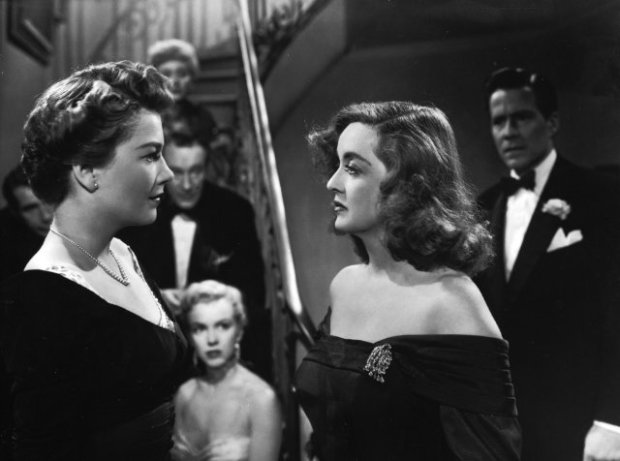
There is just about nothing that needs to be said about All About Eve in 2014. It’s one of the movies that even someone with no reverence for old film will recognize as a “classic” from the list of Oscar winners. It’s a black-and-white Shakespearean-style story of betrayal and trust. Nothing needs to be said about a classic, but even though the stone has been unturned a million times I feel confident that no one has compared it to Crash.

All About Eve is the story of being replaced. Aging (for 1950, 40 is apparently “aging”) actress Margo Channing (Bette Davis) is at the top of her game. She’s got her name in light bulbs, she’s got a sassy maid, and she’s got love in her life. She accepts one of her biggest fans, Eve Harrington (Anne Baxter), as a personal assistant. Eve is the perfect assistant — maybe too perfect — and when Margo finds her dancing in front of a mirror with one of her costumes, the whole “girl next door” vibe breaks down.

If you want to read about everything that happens in All About Eve you can look elsewhere for it. Essentially, Eve tries to become the new Margo and does so. There are attempted seductions, drunken parties, and successful instances of blackmail. The story is unassailable: it’s been done over and over since then, and you stand a good chance in this era to have seen a parody of it before the original. It earned a The Simpsons episode. That’s how we measure how lasting something is, right?

The high note of All About Eve is in the disastrous party where Margo first believes that Eve has come for her throne. She’s right, of course, but she plays her hand too drunk and too early. No one else in their shared life believes her, and Margo is labelled a paranoid diva. As with every relationship, the fear of something manifests it faster than anything else could. Margo is worried about Eve taking her role and so Eve takes her damn role.

The comparisons to Crash aren’t easy with this one. The best way to do it is probably with the climaxes of the two films. The drunken party where Margo unleashes the classic “fasten your seatbelts, it’s going to be a bumpy night” line is too early to be a climax, but it’s definitely the defining, lasting element of All About Eve. Margo turns on the rage before the night even starts in accusing her boyfriend of trying to spend extra time with Eve. She accuses the other partygoers of trying to surround themselves with younger women. She pounds drinks and rages, unsuccessfully, in front of a crowd that includes a very young Marilyn Monroe.

The scene is lasting because it achieves the goals and goes steps further. All the scene has to do is establish that Margo fears Eve and that no one believes her. It manages to play out this paranoia and still be funny, even out of the context of a 1950 audience. One bit of wordplay, “stop acting like I’m the Queen Mother” met with “outside of a beehive, Margo, your behavior would hardly be considered either queenly or motherly!” works both as the film’s typical theater-style banter and as an actual joke. This movie about the theater manages to straddle the fine line between being “quick” and being “funny” even more than half a century later.

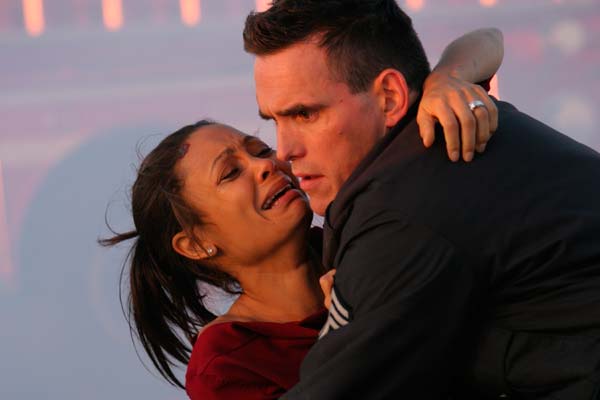
Crash isn’t 10 years old yet. The big scene in Crash is a car accident where some people almost die. Compared to the rest of Crash, it is filled with meaning and pathos. Compared to another movie that has the same award, it feels completely lifeless. The characters feel totally unrealized. There is no big takeaway. There is no “lesson,” for as much as the people behind Crash demanded that there be absolutely nothing but lessons.

But Crash never asked to be All About Eve, you say? It’s not fair to compare two movies from different time periods? One of the reasons very few comedies have ever been considered for the Best Picture award is that comedy is the product of a time period. All About Eve is funny, to be sure, but a lot of the “quick wit” is more “ha-ha funny” than actually funny. All of it holds up, though, because it has to. By giving a movie the title of BEST PICTURE, the statement is made that this movie will always hold up. Crash is not an accurate depiction of 2005. It already feels dated, even when compared with a movie that won the same award at a ceremony hosted by Fred Astaire.

The Best Part: The party, oh, the party. Or George Sanders, who is an absolutely amazing monster in this movie. I nearly wrote 4,000 words about if he is a hero or villain, but to hear that you’ll have to buy me five drinks and sacrifice a Tuesday night.

The Worst Part: During one scene in New Haven, two characters walk down the street away from a theater. It is the only scene in the entire movie that couldn’t have been shot today. You could shoot this scene better with a green towel and six dollars now.

Is It Better or Worse than CrashYou know how sometimes people ask you a hypothetical question, but you’re not paying attention and you think they’ve lost their mind entirely? All About Eve has one of the AFI top-10 movie quotes of all time. Crash has a scene where someone looks scornfully at someone for an attempted child murder.

Worst Best Picture Archives: Crash | Terms of Endearment | Forrest Gump |

 Image credit: IMDB

Worst Best Picture: Is Forrest Gump Better or Worse Than Crash?

Forrest-gump-original

Alex Russell

In “Worst Best Picture” we search every single Best Picture Oscar winner of all time from 1927 to present to uncover the worst of them all. Conventional wisdom says that 2005’s winner Crash is the worst winner in history. We won’t stop until we’ve tested every last one. Read the the first, our review of Crash, here. All posts should be considered to have a blanket “spoiler alert” on them. Today’s installment is the 1994 winner Forrest Gump. Is it better than Crash?

If you put ten people in a room and told them they couldn’t come out until they’d named the ten most iconic American films of the last thirty years then you would probably go to prison for kidnapping. Before serving your time, though, you’d also have a list that almost assuredly included Forrest Gump.

Only The Lion King outdid it in the domestic box office in 1994. The Shawshank Redemption, Quiz Show, and Pulp Fiction failed to stop the feel good movie of the year (where someone loses their legs) from winning Best Picture. Forrest Gump made hundreds of millions of dollars, enjoyed almost universal acclaim, and launched an entire damn theme restaurant. People loved this movie.

It is strange to see it now, twenty years later. I’ve heard stories of sad nerd parents showing their kids the original Star Wars movies only to be frustrated that they cannot love them as they do. They know who Luke’s dad is. They aren’t impressed. That comparison isn’t perfect here, but even if you haven’t seen Forrest Gump you still kinda have.

Forrest Gump (Tom Hanks, as though I need to even say that) lives a full life. He meets world leaders, plays college football for a legendary program, gets honored in war, and invents the smiley face. The movie unfolds through Gump telling his weird story like a clip show. The clip show comparison does work here, because these scenes are so iconic in recent American film that it’s just about impossible to not know them. Shrimp. Lt. Dan. Jenny. You know because you can’t not know.

Saying there are “problems” with Forrest Gump is putting it mildly, but they are all intentional problems. The camp factor of Gump is off every chart, even the chart they invented to show things that are off of charts. Tom Hanks pulls his pants down to show LBJ a bullet wound on national television. It’s all in the service of making Forrest the character into a lovable oaf, but it’s thick. It was probably more endearing before lines of dialogue became relics of the early 90s, but there are moments when you can’t help but feel overwhelmed by it all now.

For as broad and as hamfisted as it is, it’s all intentional. They set this movie up to feel goofy in an earnest way. Crash stumbles around more serious subject matter in the same awkward fashion, but Crash does so with no self awareness. That’s why Gump just elicits eyerolling when it goes too broad and Crash feels like something a sixteen year old didn’t think through when it does.

There will always be a discussion of Forrest Gump versus Pulp Fiction among the kind of people that have that discussion, but Gump brings something to the table more than the aphorisms and goofball charm. It comes through as a bright movie with dark edges even years later. There are problems — Jenny’s character doesn’t get enough to do and she’s just another piece of Forrest’s puzzle — but the movie is still cohesive. The third act is decidedly strange and has gotten even stranger with time. There’s a case to be made that his “running for no reason” is a statement about Forrest’s place in the world or is his response to an uncaring world but it doesn’t advance the movie’s message and comes off as just blessedly strange.

I’m not going to sit here and say Forrest Gump is bad. On the contrary, it’s amazing how little it feels like the “Movie of the Week” ideal that it occupies in American pop culture.

The Best Part: Lt. Dan (Gary Sinise), who is the only person with real motivations in the movie outside of Forrest. Most of the cast just doesn’t get enough to do in this movie. There’s no way to interact with a character like Forrest Gump unless you play a foil to him, and the only person they let really do that is Gary Sinise.

The Worst Part: This, probably.

Is It Better or Worse than CrashIt’s better, absolutely. Forrest Gump is one of your family’s favorite movies for a reason. The flaws don’t ruin the experience, of course, and there’s no greater thrill to the movie than watching Tom Hanks just Tom Hanks around. Crash is starting to sour even worse than it originally came off to me, and I’m hoping one of the next few gives it a real challenge at the bottom of the barrel.

Worst Best Picture Archives: Crash | Terms of Endearment |

 Image credit: IMDB

Worst Best Picture: Is Terms of Endearment Better or Worse Than Crash?

terms

Alex Russell

In “Worst Best Picture” we search every single Best Picture Oscar winner of all time from 1927 to present to uncover the worst of them all. Conventional wisdom says that 2005’s winner Crash is the worst winner in history. We won’t stop until we’ve tested every last one. Read the the first, our review of Crash, here. All posts should be considered to have a blanket “spoiler alert” on them. Today’s installment is the 1983 winner Terms of Endearment. Is it better than Crash?

The Motion Picture Association of America debuted the PG-13 rating in the summer of 1984. In the decade before that, movies were all rated G, PG, R, or (very, very rarely) X. Whatever you think of the MPAA and the rating system, watching a movie prior to 1984 shows the need for PG-13. Terms of Endearment, a PG-rated movie, has two direct orgasm jokes in the first 15 minutes. It’s the first of what I can only call a lot of same. It’s a movie about personal interactions. Some interactions get blue.

Terms of Endearment won the Oscar for Best Picture in 1983. Of the four other nominees, history best remembers The Right Stuff and The Big Chill. After looking at everything that was nominated across the board, history’s list also needs to include WarGames, Flashdance, and Return of the Jedi. All-in-all it’s not a bad year for film, but it definitely feels absolutely and completely 1980s.

The tone is set early: Albert Brooks dies. The legendary comic plays (off screen) Emma’s (Debra Winger) father and Aurora’s (Shirley MacLaine) wife. His funeral scene is accompanied by the “opening theme” of absurd jaunty music. Tone is a big part of any movie and music is a big part of tone. It’s astounding how much this element doesn’t hold up. The movie was nominated for Best Original Score, but I can’t remember the last time music was this distracting — oh wait, it was Crash.

The music reinforces the “period piece” nature that every movie takes on after a few decades. The central narrative of Terms of Endearment is the story of Emma and Aurora. Aurora is the straight-laced mother who can’t let go of her daughter and Emma is the caged daughter who doesn’t really want to be free. She marries a man named Flap (Jeff Daniels, who looks young) right out of high school and carries out a marriage her mother Doesn’t Approve Of, moves to Iowa, and has three children.

There are a lot of places this plot could go from there. The average movie would force the mother to learn that she was too hard on the daughter and force the daughter to realize that running away from control only hurt her worse. Terms of Endearment, a movie from more than three decades ago, is ahead of even today as it subverts that hacky expectation.

Flap and Emma play house for a bit, but they can’t change the fact that they got married right out of high school. When people get married right out of high school it goes one way or the other: this one goes the other. This isn’t surprising, though the fact that no one ever questions that Jeff Daniels is playing a guy named Flap definitely is. Was Flap a name in 1983? We don’t have all the facts in, but we’re monitoring this story closely.

Shirley MacLaine beat out her fictional daughter Debra Winger for the Best Actress Oscar, but hot damn Debra Winger is perfect in this movie. Emma leaps into her mother’s arms after coming home for a weekend and she moves with a fluidity and liveliness that perfectly sells her character. When she’s playing a 20-something trying to act like a real adult, the movement tells it all. Emma is a kid, forever, and she’s always going to be Aurora’s kid.

The two stay on the phone through the whole movie, which is another 80s-shock device. In the time before cell phones, it is clearly supposed to be weird that Emma and Aurora are on the phone moments after sex or early in the morning. Aurora’s last words to Emma on her way to Iowa are about the phone bill. It helps sell the seriousness of the mother-daughter relationship. These little touches do more than any overwrought dialogue ever could.

The other side of mother-daughter is Aurora. She starts the film as someone who is visibly upset that people won’t let her say she’s 50 at her birthday party (she’s 52, her doctor reminds everyone). The hacky thing to do here is to transition her into a wild woman by the end of the movie. She begins an odd relationship with her ex-astronaut neighbor Garrett (Jack Nicholson at his absolute most Jack) that includes doing donuts in a convertible on the beach (reluctantly) and having sex for the first time in a decade (also reluctantly).

This is the very first non-Crash edition of this, so I’m still setting overall rules. All of these should be considered to have a spoiler warning on them. These are supposedly classics, all of them, and you should have either seen them or accepted that they may be spoiled for you when you read this.

The third act of Terms of Endearment is intense. Her doctor uncovers something troubling and suggests that Emma needs treatment immediately. She does well enough to go to New York City with her childhood friend at first, but then she rapidly goes down the proverbial tubes. Emma has cancer and Emma is dying.

This movie won Best Picture because it manages to be funny even though it’s the story of a woman whose mother never lets her go. It’s the story of a woman who dies after having an imperfect life that she never really has control over. She makes some final decisions (which has an odd feeling of “we should be so lucky in this world”) and then dies.

It’s a powerful movie before Emma ever gets cancer. It deals with individual loss of love. It deals with loneliness around others. It deals with the ways we all choose to just get the hell by when we end up somewhere (or someone) we just can’t get away from.

The cancer third act feels like another movie; it’s another episode of a show that you already like with people you already know. Acts one and two are funny and real in equal doses, but act three is a full-on reality haymaker that never gets maudlin. They deal with Emma’s dying and death with grace. It feels like a real person is dying, and the greatest trick of Terms of Endearment is that it stops being just a really great story at just the right moment.

The Best Part: While the obvious nod should go to Emma’s goodbyes to her friends and family in the hospital, I want to give this to a scene where she visits her mother during the depths of her despair about her marriage. She leaps into waiting arms and then discusses her extramarital activities with her mother in bed over coffee. The movie establishes the relationship between the characters so well that this scene feels sweet rather than weird, and that’s an accomplishment.

The Worst Part: The “theme” plays over and over in this movie and it is never appropriate. As Emma is just about to be hospitalized forever, some Super Nintendo-type funky jazz plays. It’s distracting at best.

Is It Better or Worse than CrashMuch, much, much better. This movie may as well have been the reason I started doing this. There’s no better thing to say about Terms of Endearment than that the distance between it and Crash is not measurable by the tools we have in today’s world. It is a theoretical distance, measurable only in the abstract.

Worst Best Picture Archives: Crash

 Image credit: IMDB

Worst Best Picture: Is Crash the Worst Oscar Winner of All Time?

crash-4-large

Alex Russell

On March 5th, 2006, America watched the Academy of Motion Picture Arts and Sciences award Crash the Academy Award for Best Picture. I didn’t personally watch the 78th Oscars, but I like a good movie as much as the next person. A few years later, I put Crash on my Netflix queue (back when people still had a Netflix queue for discs) and I waited.

Crash came. I watched Crash. I did not like Crash.

I still remember watching it on a tiny TV in a kitchen in Memphis. I remember wondering what I was missing and what everyone else had figured out. I watched the climax twice to try to pull out whatever beauty that other people saw in it. I couldn’t figure out what was wrong with me.

History has not remembered Crash fondly. It tops a number of lists of “worst” Oscar winners ever. Now that we’ve had plenty of time to crown other winners and compare them to Crash, we’ve got enough time before it and time after it to ask this question:

Is Crash the worst movie to ever win the Oscar for Best Picture?

With Argo last year, there are 84 other choices. We’re going to check them all.

In 2014, we’re going to watch every single movie that has ever been named best of the year. We’ll compare all of them to that most-hated-of-them-all Crash. Future editions of this feature will explore one of the other winners and then compare it to Crash, but we’ve gotta start somewhere.

We’ve gotta rewatch Crash itself.

I bought Crash with actual, real money. It turns out that it’s cheaper to buy the damn DVD than to get it any other way online. So now I have this shame capsule, forever. Some part of me wants to justify this purchase as “research materials” or “sources” or “self-inflicted punishment” The truth is that I had to know if it was as bad as I remembered it. I’ve actually only seen about 20 or 30 Best Picture winners, and for all of them I am going to revisit them completely. Crash can be no different.

The first thing you notice when you watch Crash is just how quickly it is… stupid. Calling a movie “stupid” is a simple criticism that should generally be reserved for much more base subject matter, but Crash starts off with an onslaught of some of the most asinine and insulting dialogue ever put to film. The first five minutes has dozens and dozens of slurs. You are struck, as a viewer, at how this not only isn’t the best movie of 2004, but how it barely feels like a movie at all. It feels more like a play written in a creative writing class full of teenagers. It is relentless with its message, and it assumes that you, as a viewer, will forget what it means to say if it ever stops saying it for one second.

For those of you who have not seen it, Crash is about racism. A handful of people in Los Angeles interact with the classic “other” stereotypes that they are most afraid of until they are all connected by a shoestring plot. Everything that happens in the movie serves to “challenge” the viewer. No one is “good” and no one is “bad,” everyone is just afraid of the “other.” Black people get pulled over and are mistreated by white people. A Chinese man gets run over by black people who essentially leave him to die. A white lady feels threatened by a Latino who is fixing her lock. There’s no reason to delve into the specifics of the plot. It is enough to know that Crash really, really wants you to think about what you think you know about racists. Surprise, everyone is racist at all times, to everyone.

It becomes a challenge to find any character with any redeeming qualities. People don’t act like people, they act like stand-ins for evil ideas. You know when you read an obvious allegory and someone’s name is like, Charity, or Hope or something and you roll your eyes because the author thought you were so stupid that you might not understand anything not spelled all the way out for you? Crash is worried you will miss the forest, the trees, and the ground. It’s shocking people aren’t wearing T-shirts that list the themes they represent on them.

In one of the opening scenes, Ludacris carjacks the Defense Attorney of Los Angeles. He does this after giving a long speech about how he felt discriminated against when he didn’t get enough coffee with his spaghetti at an Italian restaurant. You can accuse me of leaving out parts to make that sound absurd, but then you’d have to see Crash, wouldn’t you?

Is Crash all bad? No, not by a long shot. There are actually some decent scenes in the second act of the movie, but they are all shattered by these interjected lines. Every time some tension develops or a conflict goes somewhere, someone all but screams a slur at the camera. It robs the movie of any authenticity. This gets especially meta when one of the characters on a movie set hears from Tony Danza that a black character isn’t “authentic” enough. It’s clearly supposed to make the recipient of the message uncomfortable, but it is not something an authentic person would say. The movie is evil and calls this “normal.” If you want to make a movie about how no one is truly good or evil, you can’t make everyone evil all the time. There’s no baseline. It’s sci-fi without rules.

Some special attention needs to be given to the music. Nearly every “important” scene where two stories intersect has this weird Gladiator-style choral music over it. The effect is that even when a scene is in danger of getting to a good place, it takes you out of it. It happens every time the movie gets really, really proud of itself. It never happens deservedly.

If it was just some movie that came on TBS on a Saturday afternoon you would watch five minutes of it, snap back into yourself, and turn on some other horrible movie. The biggest sin of Crash is that the people who tell us what the good movies are say it was the best of them. It should just be a forgotten, weird piece of 2004. It’s not, though, and that’s why we embark on this journey.

The Best Part: There’s an OK scene with Terrence Howard. He does OK in one scene where he gets carjacked. That scene immediately becomes one of the worst of the movie when cops with shotguns stand down after they are asked real nice.

The Worst Part: At one point, a character shoots a kid. The kid doesn’t die (because the gun is filled with blanks) and then the family walks away and leaves the shooter standing in broad daylight. If you shoot at my kid, we’re at least going to have a conversation.

Honorable mention for worst goes to Sandra Bullock, who plays a completely useless character that does not drive any element of the plot. I’m not anti-Sandra Bullock, but whoa. To call her “misused” implies that they made an attempt. They did not.

Next time we’ll be back to compare Crash to another movie. We will not stop until we have done our due diligence. We’ll answer this, once and for all: what is the Worst Best Picture?

 Image credit: IMDB