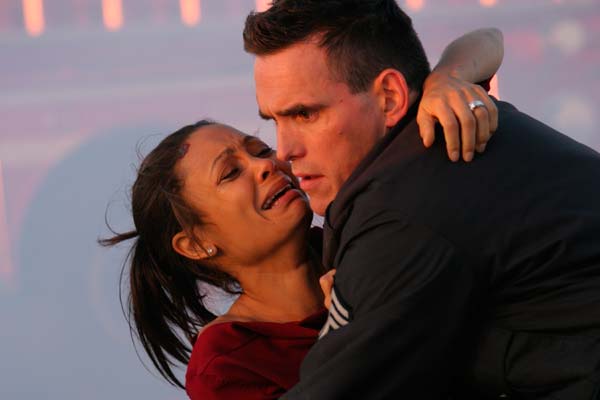
crash

Worst Best Picture: Is No Country for Old Men Better or Worse Than Crash?

nocountry

Alex Russell

In “Worst Best Picture” we search every single Best Picture Oscar winner of all time from 1927 to present to uncover the worst of them all. Conventional wisdom says that 2005’s winner Crash is the worst winner in history. We won’t stop until we’ve tested every last one. Read the the first, our review of Crash, here. All posts should be considered to have a blanket “spoiler alert” on them. Today’s installment is the 2007 winner No Country for Old Men. Is it better than Crash?

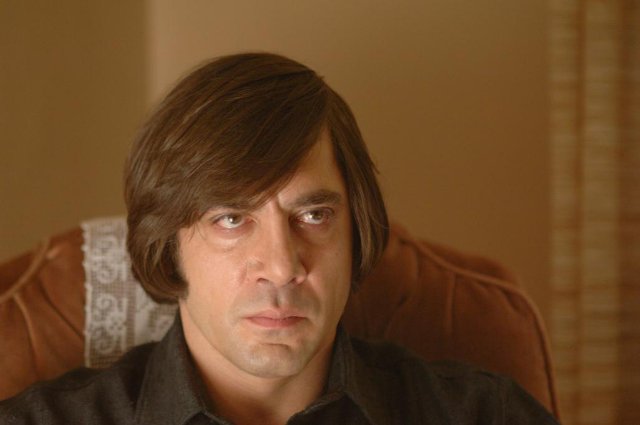
No Country for Old Men is about having agency taken away from you and what you do without it. Javier Bardem earned the Best Supporting Actor Oscar in it for playing a madman who was more force of nature than person. Bardem’s character is chilling and is definitely the best part of the movie, but he’s also a representation of the movie’s “point.” Death is coming for all of us, and we’re probably not going to get much of a say in the matter when it comes right down to it.

No Country wants you to feel hopeless. It’s all about drug money and hired killers, but it’s really about just moving. Tommy Lee Jones wants to clean up the desert but knows that it’s not so much a goal as it is just some loose hope. He knows he can’t actually stop a killer, but he also knows that as America’s favorite grizzled sheriff, he has to try.

It’s difficult to explain No Country, but the best place to start is with the year that it won. 2007 is the year that Lars and the Real Girl, Ratatouille, and Juno all came out. It’s an odd year full of some interesting experiences, but 2007 boils down to one question: No Country for Old Men or There Will Be Blood?

They are tied together because they’re both dark and loud and intense. Even though they aren’t necessarily similar in a lot of ways, people connect them to the degree that a lot of people are never sure which of the two won this Oscar. That’s sacrilege to No Country fans — it’s arguable that there’s no Best Picture winner that’s as revered in the last 20 years — but you need to deal with one when you deal with the other.

There Will Be Blood is the story of an oil tycoon trying to increase his wealth and influence. Everyone always calls it “intense” and that is the absolute only word for it. I rewatched it for the first time in a few years recently and I felt nervous the entire time. It is a masterstroke of a movie but it will cost you days off your life.

No Country is less about trying to hit you with a sledgehammer over and over and more about making you wonder if anyone in the movie ever had any other choice. It’s tough to spoil and I’ll try my best not to, but No Country sees a lot of bad things happen to some good people.

Tension plays a role, though. Watch this five minute clip:

Javier Bardem’s madman offers the gas station guy a coin flip for his life. You don’t need the surrounding elements of the movie. You don’t need the thread that goes through everything, because all you need to do is watch Javier Bardem just be cold as all hell. That’s essentially the entire movie. Javier Bardem shows up and ruins someone’s day. You don’t want to run into that bowl cut.

Whenever I talk about No Country I am concerned that I am shortchanging it. I don’t like it as much as There Will Be Blood but I don’t think it ever had a chance. Daniel Day-Lewis gives what may be the best performance of my lifetime. It’s hard to compare anything to it. He makes you afraid, not in the way you’re afraid of a person with a gun (and a coin, in this case) but in the way that you are afraid that there’s too much Daniel Day-Lewis in you. You’re worried that you are the monster, and if that’s true then it’s not about evolution. It’s about inevitability.

No Country deals with that inevitability. If you find a bag of money then you probably are already dead. It doesn’t matter if you take it or not, so you may as well take it. The movie wants us to consider if our choices matter or if we’re just living out a story that’s already told for us. That can be a bit of a drag to consider, and No Country is a much sadder movie in that light than even all the murderin’ makes it seem.

Then, after forcing the audience to consider everything, it blinks out. The end is abrupt, maybe more abrupt than any ending I can come up with. All of the loose ends are tied and everything that needs to happen has happened, but it still ends almost mid-sentence. I don’t like it, myself, but I get what they’re doing. I like the idea of thinking about life as a play that we’re acting in rather than a series of events that we drive and control, but I don’t need the ending here. Maybe that’s because the ending isn’t a literal death but a death of idea, and no one likes to watch an idea die. Or maybe it’s because it’s just not my kind of ending.

People will talk about “what it means” or anything ambiguous forever. I will say that No Country always makes me think about its ending, even if I kinda hate it. The opposite of love is not hate but indifference, and I am definitely not indifferent to this movie.

The Best Part: Javier Bardem, who blows the doors off every scene he’s in. His delivery of “friendo” alone is chilling, and he does a hellva lot more than talk in this movie.

The Worst Part: Ending. It’s an important way to end, but there’s a really fantastic scene with Tommy Lee Jones about 10 minutes before the ending. I like that one fine. It’s not a complaint about quality so much as my disagreement with it, I suppose.

Is It Better or Worse than Crash? Crash is like No Country for Old Men because it is also the story of how coincidence drives interesting run-ins. No Country wraps coincidence in a larger question about if actions and intentions matter. Crash wraps them in a scene where a guy gets into an armed standoff with the cops because he feels like he’s been disrespected at home. The difference (other than the obvious one) is that No Country believes something, even though that something is nothing at all. Crash doesn’t even believe in nothing.

Worst Best Picture Archives: Crash | Terms of Endearment | Forrest Gump | All About Eve | The Apartment |

 Image credit: IMDB

Worst Best Picture: Is The Apartment Better or Worse Than Crash?

theapt

Alex Russell

In “Worst Best Picture” we search every single Best Picture Oscar winner of all time from 1927 to present to uncover the worst of them all. Conventional wisdom says that 2005’s winner Crash is the worst winner in history. We won’t stop until we’ve tested every last one. Read the the first, our review of Crash, here. All posts should be considered to have a blanket “spoiler alert” on them. Today’s installment is the 1960 winner The Apartment. Is it better than Crash?

Comedies don’t win Best Picture. Seriously, look at the list. Scroll through the last 30 or so. The Hurt Locker. Schindler’s List. No Country for Old Men. I mean, Gladiator definitely is funny at times, but I wouldn’t say the people behind it were making a comedy.

That’s what makes The Apartment so strange. It’s a Jack Lemmon movie and it is very clearly just a “vehicle” for his comedy. He plays sick and stuffs Kleenex in every pocket he has. He frantically flips a Rolodex and uses the 1960s version of a phone tree. He does everything but full-on pratfall to sell how funny he is in the first half hour and it works, it works, it works.

You first recognize that there’s something special about this movie through Jack Lemmon himself. He’s playing C.C. Baxter, the put-upon drone at Company X. Baxter wants to get promoted on his merits, but he’s figured out that middle management would rather screw secretaries in his isolated apartment than look at his figures. Thus, the game is on.

Baxter doesn’t condone anyone’s illicit activities — the movie has a couple of obvious, untouched asides where he openly condemns adultery — but he wants this job and it’s hard to say no. He’s only rewarded once their boss catches wind and decides to use the company retreat for himself. The trouble (well, rest of the trouble)? The head honcho’s girl is the one Baxter is in love with. The boss won’t leave his wife for her and she won’t love Baxter because she’s torn up over the boss. What’s a guy to do?

There have only been two black-and-white movies to win Best Picture since The Apartment. There are only two in those more than five decades: Schindler’s List and The Artist. As the last true black-and-white Best Picture from the days where it wasn’t an aesthetic choice, you’d expect the movie to be dated. The comedy suffers more than the universal theme.

The tricky part about comedy is always that it becomes dated. That’s just the reality of the genre. At one point a character says, angrily, “Live now, pay later! Diners Club!” It’s pretty clearly a slogan of the time, but it solidifies The Apartment in 1960. One of the main characters is an elevator operator, but what locks the movie in another era is that weird Diners Club line and a handful of others like it.

Does that matter? No, not as much as it could. It’s easy to see how that line works in context. It’s easy to guess at what a shrieking woman ordering a Rum Collins in a terrible bar is supposed to represent. It’s simple enough to forgive these little steps away from what we know to enjoy the line “That’s the way it crumbles, cookie-wise.”

It’s a comedy, but it’s weirdly dour. Baxter takes it hard when he realizes that the cost of getting the promotion means he can’t be taken seriously at work, but no one takes anything harder than the poor elevator operator. After just about an hour of mostly comedy and setup, she downs some sleeping pills and tries to kill herself in Baxter’s apartment. It has to happen to drive the plot and the movie eventually does a good job of supporting this as a choice her love-muddled mind makes, but it’s such a sharp tonal shift.

Later in the movie Baxter tells the story of when he tried to kill himself with a gun because he was torn up about love, but he says he shot himself in the knee. He’s nursing someone who recently attempted suicide back to some semblance of health and he doesn’t know what to say. It’s the kind of real, sad gesture that we all hope we would make to try to help in some way. It’s not perfect, but it’s human.

The movie slowly works backwards from the suicide attempt to explain what makes the character tick, but it never really gets there. It’s easy to blame the 1960 release date on why Shirley MacLaine’s character doesn’t get any agency or reason to live outside of the powerful married man she loves, but a movie willing to deal with the reality of suicide this directly should be able to sustain a more rational and powerful female lead. The role earned MacLaine a Best Actress nomination and she absolutely plays it well, but it is hard to watch the movie in 2014 and not want to pull her into the future, where women in movies are allowed to matter. This movie needs the Bechdel test badly.

There are modern complaints to lob at the 1960 winner for Best Picture, but it’s a phenomenal movie. Jack Lemmon gives what I’d normally call a once-in-a-lifetime performance, but most people don’t get to have Jack Lemmon’s lifetime.

I really tried to find a way to compare this to Crash, but I just don’t see anything they have in common. The 1960 Best Picture The Apartment is about as respectful of women as the 2005 Best Picture Crash, I suppose. It’s just that one of them is a sad reminder of a “simpler” time and the other is from the 1960s.

The Best Part: Sick Jack Lemmon, clearly. Through the first 20 minutes of the film Jack Lemmon’s character is sick, designed to show the physical toll that not having his own apartment is having on him. His sick antics are the same as watching an experienced actor play a convincing drunk — but sick is harder. You feel pity for him and it sets up the entire movie. Bonus: It clearly draws the line of good and evil. Only good guys get colds.

The Worst Part: Tone, tone, tone! Of course Shirley MacLaine has to take the sleeping pills because otherwise this is the story of how bad things all work out for bad people. That’s no story, so she’s gotta try to go into that good night. The suicide attempt isn’t the problem, it’s how wacky the movie treats it.  Honorable mention to MacLaine’s brother-in-law’s character, who seems like he was a “Greedo-shot-first” level of afterthought. He may as well be screaming “Why I oughta!” instead of delivering lines.

Is It Better or Worse than Crash? The Apartment is about if it is more important to care about work or about love, at the most basic level. The two are often difficult to balance (see: Mad Men, all culture forever, etc) but rarely are they so at odds. This is a movie about an age-old theme that manages to put an interesting spin on it. It’s relatable and unique. It feels real, even in the most slapsticky parts. Crash offers no one of any substance and is more needlessly morbid than a movie with a 45-minute suicide comedy arc. It would be tough, even if that were the assignment, to do that.

Worst Best Picture Archives: Crash | Terms of Endearment | Forrest Gump | All About Eve |

 Image credit: IMDB

Worst Best Picture: Is Crash the Worst Oscar Winner of All Time?

crash-4-large

Alex Russell

On March 5th, 2006, America watched the Academy of Motion Picture Arts and Sciences award Crash the Academy Award for Best Picture. I didn’t personally watch the 78th Oscars, but I like a good movie as much as the next person. A few years later, I put Crash on my Netflix queue (back when people still had a Netflix queue for discs) and I waited.

Crash came. I watched Crash. I did not like Crash.

I still remember watching it on a tiny TV in a kitchen in Memphis. I remember wondering what I was missing and what everyone else had figured out. I watched the climax twice to try to pull out whatever beauty that other people saw in it. I couldn’t figure out what was wrong with me.

History has not remembered Crash fondly. It tops a number of lists of “worst” Oscar winners ever. Now that we’ve had plenty of time to crown other winners and compare them to Crash, we’ve got enough time before it and time after it to ask this question:

Is Crash the worst movie to ever win the Oscar for Best Picture?

With Argo last year, there are 84 other choices. We’re going to check them all.

In 2014, we’re going to watch every single movie that has ever been named best of the year. We’ll compare all of them to that most-hated-of-them-all Crash. Future editions of this feature will explore one of the other winners and then compare it to Crash, but we’ve gotta start somewhere.

We’ve gotta rewatch Crash itself.

I bought Crash with actual, real money. It turns out that it’s cheaper to buy the damn DVD than to get it any other way online. So now I have this shame capsule, forever. Some part of me wants to justify this purchase as “research materials” or “sources” or “self-inflicted punishment” The truth is that I had to know if it was as bad as I remembered it. I’ve actually only seen about 20 or 30 Best Picture winners, and for all of them I am going to revisit them completely. Crash can be no different.

The first thing you notice when you watch Crash is just how quickly it is… stupid. Calling a movie “stupid” is a simple criticism that should generally be reserved for much more base subject matter, but Crash starts off with an onslaught of some of the most asinine and insulting dialogue ever put to film. The first five minutes has dozens and dozens of slurs. You are struck, as a viewer, at how this not only isn’t the best movie of 2004, but how it barely feels like a movie at all. It feels more like a play written in a creative writing class full of teenagers. It is relentless with its message, and it assumes that you, as a viewer, will forget what it means to say if it ever stops saying it for one second.

For those of you who have not seen it, Crash is about racism. A handful of people in Los Angeles interact with the classic “other” stereotypes that they are most afraid of until they are all connected by a shoestring plot. Everything that happens in the movie serves to “challenge” the viewer. No one is “good” and no one is “bad,” everyone is just afraid of the “other.” Black people get pulled over and are mistreated by white people. A Chinese man gets run over by black people who essentially leave him to die. A white lady feels threatened by a Latino who is fixing her lock. There’s no reason to delve into the specifics of the plot. It is enough to know that Crash really, really wants you to think about what you think you know about racists. Surprise, everyone is racist at all times, to everyone.

It becomes a challenge to find any character with any redeeming qualities. People don’t act like people, they act like stand-ins for evil ideas. You know when you read an obvious allegory and someone’s name is like, Charity, or Hope or something and you roll your eyes because the author thought you were so stupid that you might not understand anything not spelled all the way out for you? Crash is worried you will miss the forest, the trees, and the ground. It’s shocking people aren’t wearing T-shirts that list the themes they represent on them.

In one of the opening scenes, Ludacris carjacks the Defense Attorney of Los Angeles. He does this after giving a long speech about how he felt discriminated against when he didn’t get enough coffee with his spaghetti at an Italian restaurant. You can accuse me of leaving out parts to make that sound absurd, but then you’d have to see Crash, wouldn’t you?

Is Crash all bad? No, not by a long shot. There are actually some decent scenes in the second act of the movie, but they are all shattered by these interjected lines. Every time some tension develops or a conflict goes somewhere, someone all but screams a slur at the camera. It robs the movie of any authenticity. This gets especially meta when one of the characters on a movie set hears from Tony Danza that a black character isn’t “authentic” enough. It’s clearly supposed to make the recipient of the message uncomfortable, but it is not something an authentic person would say. The movie is evil and calls this “normal.” If you want to make a movie about how no one is truly good or evil, you can’t make everyone evil all the time. There’s no baseline. It’s sci-fi without rules.

Some special attention needs to be given to the music. Nearly every “important” scene where two stories intersect has this weird Gladiator-style choral music over it. The effect is that even when a scene is in danger of getting to a good place, it takes you out of it. It happens every time the movie gets really, really proud of itself. It never happens deservedly.

If it was just some movie that came on TBS on a Saturday afternoon you would watch five minutes of it, snap back into yourself, and turn on some other horrible movie. The biggest sin of Crash is that the people who tell us what the good movies are say it was the best of them. It should just be a forgotten, weird piece of 2004. It’s not, though, and that’s why we embark on this journey.

The Best Part: There’s an OK scene with Terrence Howard. He does OK in one scene where he gets carjacked. That scene immediately becomes one of the worst of the movie when cops with shotguns stand down after they are asked real nice.

The Worst Part: At one point, a character shoots a kid. The kid doesn’t die (because the gun is filled with blanks) and then the family walks away and leaves the shooter standing in broad daylight. If you shoot at my kid, we’re at least going to have a conversation.

Honorable mention for worst goes to Sandra Bullock, who plays a completely useless character that does not drive any element of the plot. I’m not anti-Sandra Bullock, but whoa. To call her “misused” implies that they made an attempt. They did not.

Next time we’ll be back to compare Crash to another movie. We will not stop until we have done our due diligence. We’ll answer this, once and for all: what is the Worst Best Picture?

 Image credit: IMDB