FX

The Americans: A Show About Patriotism, Murder, and Marriage

Andrew Findlay

The Americans is a relatively new show that FX broadcasts on Wednesdays at 10. The general premise is that the Soviet Union successfully placed a significant number of covert agents into the United States. These are not just commandos with accents, but exhaustively trained and elaborately I.D.’d infiltrators. They are selected young and spend years training in combat and the normal spy stuff, but also learn about American culture and cultivate a flawless, accentless command of English. Then, they are placed in a normal, unremarkable cover life somewhere near a point of interest for the Soviets.

The two main characters, Elizabeth and Philip Jennings, have been living in the Virginia suburbs around D.C. since the 60s. Before the start of the show, things had been slowly becoming more and more peaceful, to the point where the Jennings barely had to do secret agent stuff anymore. However, the 80s and Reagan roll around, and all of the sudden they are again fully active and have to run around doing shit for the glory of Lenin.

They are deep cover agents, and the intricacy and strength of that cover generates most of the complications of the show. They are dedicated to the ideals of universal freedom for all mankind as interpreted by their home country, but they also run a travel agency, live in a big house, and have kids. The kids part is really messed up – their children do not know what their parents really do, so these two super-spies are deeply, immovably in love with two red-blooded American schoolchildren. They want to bring down the corrupt and bloated American autocracy, but their children, whom they adore, are 100% supportive of it. The mother, Elizabeth, the violently atheistic Soviet operative, almost goes insane when her child starts attending Bible study with a group of friends and cannot even explain to her own daughter why it makes her so upset because that would compromise her cover. They are also neighbors and family friends with Agent Beeman, a G-man who works in the counterintelligence department of the FBI.
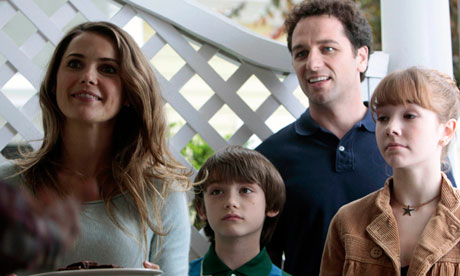
Hey kids, we’ll be home late tonight. Mommy and Daddy have to blackmail a government official.

Most of the pleasure of watching the show comes from the friction generated by the mismatch between their American and Soviet personae, which, after two decades in the States, have begun to bleed together. The American side of the Americans is not simply a mask – is the part of Philip who loves his son and enjoys driving a fast car the “fake” part of him? Is he 100% okay with the side of him that murders people for a cause? On a less psychological level, it’s also great to see them switch flawlessly from American citizen into frighteningly competent Soviet operative. Elizabeth gets pulled over and has something compromising in the car with her? She plays the distraught wife to the cop until he gets close, then beats the shit out of him when it becomes clear she can’t cry her way out of it (I might have made up this particular incident, but stuff like it happens all the time). Watching the split-second transition from smiling, amiable, and confused civilian to a machine designed to collapse your trachea is good television. I talk a lot about how audiences love watching terrifying, almost superhuman competence on-screen (Breaking Bad, Doctor Who), and that dynamic is strongly in play here. The central pair of the series is frighteningly competent at any number of things – disguise, decoding, deception, dismemberment. They can do it all, and they can do it all really well.
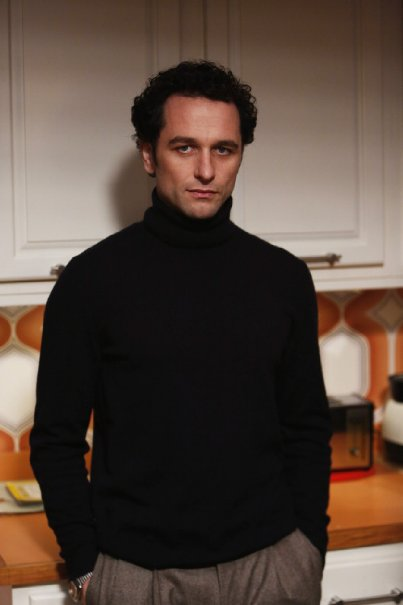
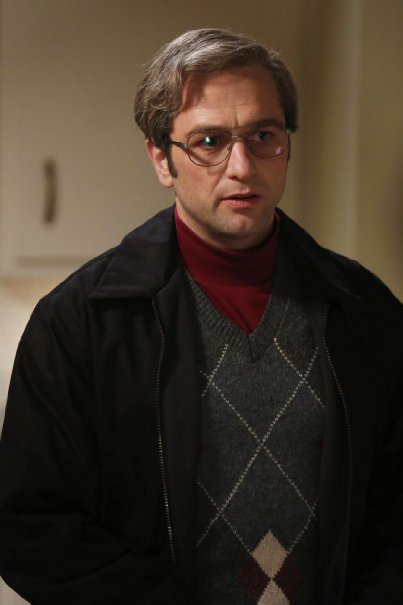
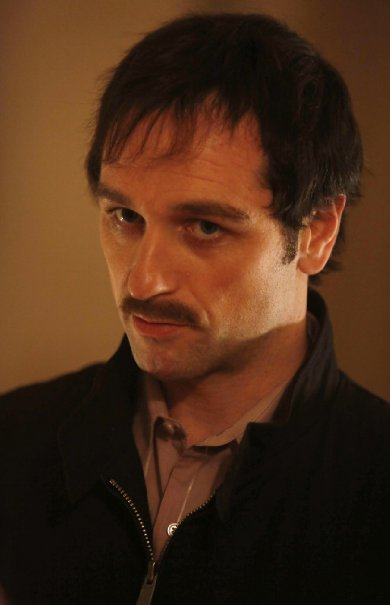
Left to right: Normal look, bureaucrat disguise, smarmy dude disguise. The disguises are really great, because of course they’re the exact same person, but that’s the thing – you only need to change a little bit of how you look to throw off any attempt to make a police sketch of what you actually look like.

The conflict, the tension, and the spy stuff are only part of why this show is so good. In the end, this show is about a marriage. Elizabeth and Philip met each other only after they started training and became “married” only as part of their implantation into the USA. They have a marriage certificate, sure, but it’s forgery by the KGB, like the rest of their lives in America. This creates a really weird, stressful dynamic between the couple. On the one hand, they have lived together for two decades and that creates a definite bond, but on the other hand, their marriage is simply a tool to help them undermine the peace and prosperity of the United States. As deep cover KGB officers, they are not allowed to speak Russian, nor are they allowed ever to mention any detail of their lives before they came to America. This means that these two people sharing their lives with each other know almost nothing about how or where those lives started. Another item complicating things is that Philip has been more seduced by the American lifestyle than Elizabeth has. For example, Philip would betray the USSR to protect his kids, whereas Elizabeth would betray her kids to protect the USSR (she says). The progress of the show is their journey as a couple, working on their trust and emotional issues in the midst of the incredibly stressful reality of their lives. This stumbling in the dark to find out who they actually are and what they actually mean to each other is very rewarding to watch.

http://www.youtube.com/watch?v=2z2VXWS1eDU

This is a three-minute recap of the pilot episode. It gives a really good idea of what I’ve been talking about this whole article.

Finish the article, watch the pilot recap, then decide if The Americans is for you. I love this show. It’s full of well-plotted suspense and action, it has a complex, compelling central couple, and it constantly assaults preconceived notions people hold about identity, appearance, and reality. It’s a free country thanks to Reagan so you can choose for yourself, but you’d be making a big mistake not to check this out.

Andrew Findlay has strong opinions about things (mostly literature) and will share them with you loudly and confidently.

Images: The Guardian, IMDB
Can Chozen Follow Archer?

chozenlead

Jonathan May

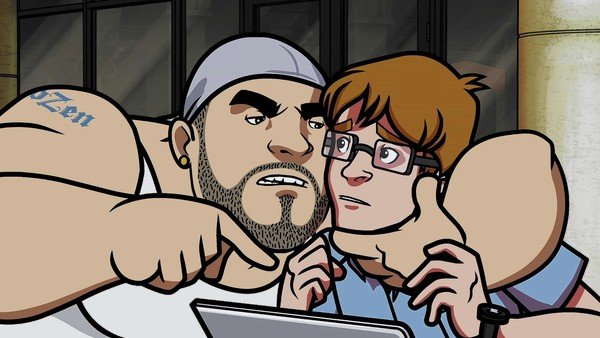
FX’s Chozen features, at its core, an outcast in a lot of ways. Our eponymous star is not only a white rapper and a convict, but also a homosexual. Luckily for its audience, the show focuses little on how these elements make Chozen (voiced by Bobby Moynihan) different from other people; the show does, however, focus on how gross he is. We see Chozen peeing, farting, getting head, burping, offending; the show basically begs us to congratulate it on presenting the non-gay gay. But what’s the situation?

Out of prison, Chozen lives in his sister’s college apartment while trying to figure out how to best gain revenge on the man who framed him, thereby sending him to jail. They say living well is the best revenge, and living it up seems to be his and the show’s main purpose. We see lots of partying, drugs, alcohol, implied and boldly stated sex acts. There’s lots of talk about the rap game, but very little rapping. Each episode, almost as an afterthought, devotes scant attention to the story’s overarching concern, instead lingering on stupid race jokes, obvious sex jokes, and lots of slapstick influence. So why do I watch?

Initially, what I appreciated about the show was its non-standard representation of gay men. I see more gay men who look like Chozen than men who look like the guys in HBO’s Looking. At first Chozen acknowledged its own stereotypes and often subjugated them with ironic force; the frat dude who hankers after Chozen is seemingly out and wants a relationship. What a lovely twist, I thought. But it’s unfortunate that the show’s “awww” moments end there. On closer inspection, the show tends to conflate “straight male behavior” with “gay male sexuality” to produce its now-tired effect. It’s like the producers were like, “How can we make the gay character more relatable? Oh, I know. Let’s just make him more straight-acting.” While this does provide welcome differentiation in gay portrayals, it wearies the viewer very quickly into the season.

Speaking of the show as a whole and its motivation, I hope it centers back onto the main plot point: revenge. We’ve spent more than half a season engaged in college high jinks, crass sexual jokes, and attempts at moral lessons on friendship. We need to get back to the story, or else Chozen will be nothing more than that show that comes on after Archer.

Jonathan May watches too much television, but he’s just playing catch-up from a childhood spent in Zimbabwe. You can read his poetry at owenmay.com, follow him on Twitter at @jonowenmay, or email him at owen.may@gmail.com.

Chozen can be seen on Monday nights alongside Archer, and you can read our examination of Chozen as a spiritual successor to Kenny Powers here.

Image source: Complex

Chozen: Spiritual Successor to Eastbound and Down?

"Chozen"

Scott Phillips

After three episodes, I still have no idea how to feel about FX’s new animated series Chozen.

A Monday night FX comedy that airs following Archer, Chozen is a unique blend of cartoon comedy and hip-hop with some humor about Chozen being gay thrown in for good measure (more on that in a minute).

That’s right: Chozen is a gay, white, cartoon gangsta rapper.

That lead character — and show itself — should make for something unique, but as the mixture of staffs indicates in the trailer, this show is a lot like Eastbound and Down meets Archer.

Before you Archer fans get upset, the animation is what I’m comparing but the Eastbound and Down comparisons stand through three episodes of Chozen.

Chozen is a less likable and less realistic — it is a cartoon — version of Kenny Powers during the first three episodes. Bobby Moynihan does great voice work but Chozen’s desire to make it to the top as quickly as possible while doing drugs and chasing sex is very much like the journey of Kenny Powers.

But there are some subtle differences.

For one, Chozen is gay and his preference is men rather than Kenny womanizing while pursing his former girlfriend. Chozen’s sexual preference is not forced or used for frequent cheap pops — much like how sex can be overused for both heterosexual and homosexual characters for cheap laughs in comedic situations. While Chozen’s sexual preference is mentioned and Chozen frequently pursues sex, this character tendency doesn’t feel forced and it feels as though Chozen’s desire for sex prevents him from attaining his goals of rap superstardom.

People do stupid things for sex and Chozen is no exception. Chozen being gay was played up quite a bit in the trailer,  but it doesn’t feel like that big of a part of Chozen. Chozen is — thankfully — more about revenge over a rap rival than it is about the sexuality of a white rapper and that is why Chozen has potential as a show. The storyline for revenge is feasible and Chozen’s character traits of enjoying drugs and sex sometimes prevent Chozen from achieving those goals. Pretty simple formula…

…which is why I’m still scratching my head about this show, because the main plot line and hip-hop elements of the show have been very up-and-down.

As a lifelong fan of hip-hop, I appreciate many of the jokes and, of course, rap songs that go on in Chozen but I just can’t get over how awful Chozen’s rival, Phantasm, is.

Once, or twice, during each episode Moynihan and the”Chozen crew will conjure up a fake rap song that Chozen will fantasize about while doing something else. The results of these songs are often fantastic. They’re humorous, catchy and have so many subtle one-liners and jokes in many of the songs that poke fun at hip-hop culture and other things.

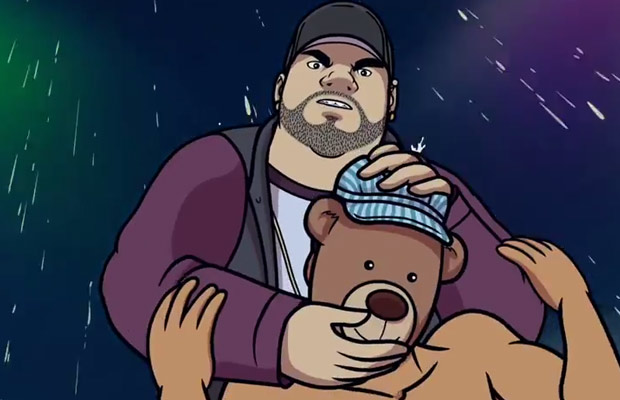
When Chozen raps “Murder, Sex” in the pilot it makes fun of every hip-hop cliche in both video and song form while also adding in the element of hard-bodied dudes in bear-heads grinding up on Chozen. The whole song and video is absurd and it’s hard not to enjoy if you understand some of the ridiculous pitfalls of modern hip-hop culture.

http://www.youtube.com/watch?v=ywQsrHyI_DM

So we have Chozen — free after spending 10 years in jail — and he’s instantly making catchy rap songs in pursuit of his rival Phantasm — who framed Chozen and put him in jail after previously being in the same rap crew.

Phantasm is now one of the biggest rap stars in the world. He’s got videos, security teams, and a pet jaguar, and everything about Phantasm pisses me off.

Voiced by Wu-Tang Clan legend Method Man, Chozen takes Meth’s trademark gravel voice and makes it sound so much worse. It sounds like a charisma-less Method Man did some PCP and had a tracheotomy before he did Phantasm’s voice work. It’s fucking miserable.

So, not only do we have an awful voiceover job at work when it comes to Phantasm, but Phantasm as a character just isn’t very realistic. As an audience, many of which are likely keen on hip-hop, we’re supposed to believe that a mediocre rapper named “Phantasm” is going to become one of the world’s biggest stars?

Many musical acts make it to the top without a lot of talent, but never with a name as awful as “Phantasm” in a genre as judgmental as hip-hop. Image and street cred are EVERYTHING in hip-hop and Phantasm doesn’t look, sound, or act like a major rap star. In the first face-to-face moment featuring Phantasm and Chozen in episode 3, Phantasm reveals that other people write his tracks and how he struggles to be creative in the studio.

Again, maybe this is being used to make it seem like Chozen has a chance at glory, but it makes Phantasm look like a cheap prop that will be good for nothing once Chozen and his friends pass him by.

It undermines Chozen and his journey to top Phantasm if everyone in the audience thinks Phantasm is whack to begin with.

This, again, draws back to Kenny Powers and his journey on Eastbound and Down. Kenny had rivals on “Eastbound and Down” but the main battle that Kenny fought was always a battle of inner demons in his quest to make it to the top. While some of Kenny’s rivals came and went during the journey, the trip to the top was always the ultimate payoff.

With how Phantasm is being set up the early part of this season, it wouldn’t surprise me if Chozen’s journey — and story arc — follows much of the same path as Kenny Powers’.

There are plenty of other fictional cartoon rappers that Chozen can go against as a rival character in the future, but this show will likely always center on Chozen doing whatever it takes to make it out of his sister’s living room and onto the covers of magazines.

While I’m not buying Phantasm as a rival and the sophomoric humor can be up-and-down, Chozen has a chance to be a decent comedy if it sticks to its formula and lets Chozen — as a character — breathe and be creative. Moynihan has a good grasp on the Chozen character already and there are a lot of different and fun ways the writers can go with how to take Chozen.

Let’s just hope the Chozen staff keeps the formula simple and lets the journey to the top guide Chozen along his path.

Chozen can be seen on FX’s website and Monday nights alongside Archer.

Image source: LA Times

The Less Things Change: Archer is Back and Still Amazing

Alex Russell

A year ago, some idiot wrote an article about the fourth season of Archer. He said the following:

The agency on Archer feels full and the characters have developed relationships with each other that they can mine for jokes during bigger plots, but no one is in any danger of becoming reasonable or compassionate. That’s how they can keep turning out new episodes without jumping any kind of shark, ever: there’s no shark to jump if no one ever moves.

That idiot was me, and that idiot was wrong.

Archer didn’t jump the shark in season four. Quite the opposite: season four of Archer proved that creator Adam Reed knew his characters better than I did, thankfully. The titular (like I said in my last review, there’s a word he’d never let me say without comment) Sterling Archer managed to do the one thing no one thought he would in season four. Sterling Archer grew a little bit.

So did the rest of ISIS, the spy agency that served as the setting for most of the first 49 episodes of the show. Archer, for the uninitiated, is a show about people in a spy agency trying to succeed before tripping over themselves through relationships, personal conquests, and sometimes (though increasingly rarely) actual spying.

It’s a surprise that season five of Archer will be “Archer Vice” instead of spy show and center around the cast trying to sell off millions of dollars worth of cocaine, but it’s not a big surprise. The show was never really about the spying. The spying and the agency were just there to hold all the characters together. They were there to explain why an accountant, an HR rep, a scientist, and a millionaire were all hanging out with James Bond. Adam Reed thought that the use of the spy elements wasn’t necessary anymore, so he designed this season as a change of scenery.

The season is now two episodes old. How is it different?

The first episode (“White Elephant”) of season five is almost entirely setup. ISIS gets raided and it turns out that none of this spying stuff was strictly legal. Everyone’s headed to jail forever but then, by way of Malory’s uncanny ability to have dirt on everyone, they’re free to go.

Then there’s a five minute montage of clips from “Archer Vice,” and that’s apparently what we’re going to experience over the next few months. It’s all biker gangs and catchphrases and shootouts. The parallels are easy: spies and coke dealers are apparently not so different, and the show won’t really change that much as a result.

The second episode (“Archer Vice: A Kiss While Dying”) is a bit of a step backwards in the joke department, but it gives a much better feel to how the season will work. Carol/Cheryl Tunt is a country singer who only sounds great when no one is watching. This seems like it’s going to be a big part of the season, but it still goes largely unexplored two episodes in. The bulk of the episode is just Archer, Lana, and Pam Poovey trying to execute a drug deal in Miami. It feels like an episode that could happen at any point in the series. When you start to dissect it you realize that it basically has happened before. Most of what I liked about the first episode is absent here, but most of what there is to love about Archer in general is still intact. It’s funny, it’s paced well, and it’s definitely servicing (again, as Archer himself would tell me, phrasing) a bigger story.

The thing I keep coming back to is a joke in the middle of the first episode. Archer and the newly-pregnant Lana Kane are handcuffed to an interrogation desk at the FBI. After some typically silly escape tactics, Archer mentions that the child shouldn’t have to grow up without a father. Lana says that she’d rather it have no father than Archer as one, and Archer starts to cry.

It’s an extremely quick shift in tone. It’s immediately played for a joke when Lana buys into his devastated response, but it does force you to realize that you would believe either result. If Lana actually had hurt Archer by talking about his difficult relationship with paternity (in more ways than one) or if Archer really was baiting Lana into only thinking she had hurt him for a joke, we aren’t sure. We don’t know because Archer the character is more complicated than the scotch-soaked spy of previous seasons. He’s real now.

Everyone’s real now. Cyril Figgis, the accountant, has been constantly played for laughs. He’s slowly become a full-fledged member of the team with his own specific deficiencies and successes. He’s not the punching bag for everything now, he’s the punching bag for his own specific reasons. In the world of Adam Reed, that’s a big damn step up.

And of course: the show was never just about things like Burt Reynolds (“I wanna say Burt Reynolds!”). All too often over the last few seasons the show used the spy narrative to loosely set themselves up for whatever story they wanted to tell, not the other way around. Some things were obviously “why would spies be doing blank” rather than figuring out what spies would actually be doing. Now they are free to tell the cocaine story without resetting every episode and pretending this has to make sense. It just does make sense. It’s “grounded” (sorta) because they’ve already convinced the audience: the gang couldn’t spy anymore, so now they sell coke.

More people are watching Archer now than ever before. That’s fantastic. I thought the show’s success hinged on unchanging characters that everyone grew to love even though they were unlovable. I thought it was just a joke machine. Like 30 Rock, though, Archer has managed to make me care about someone that I thought was more of a symbol than a character. I’ll never call Archer a show primarily about compassion or growth, but the loss of setting goes down smoother because these people finally, somehow, matter.

 Image credit: GQ