star wars

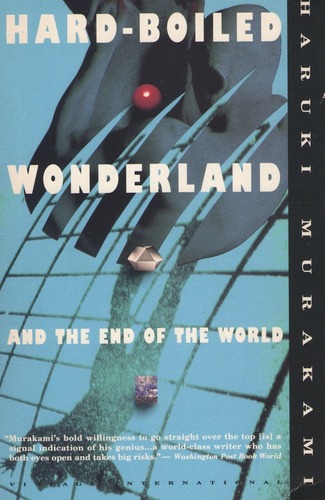
Life After the Star Wars Expanded Universe: Haruki Murakami’s Hard-Boiled Wonderland and The End of the World

 51wuFG4IlsL

Andrew Findlay

In Life After the Star Wars Expanded Universe, we take a look at science fiction and fantasy, why they’re great, and what they say about where our species has been and where it’s going. 

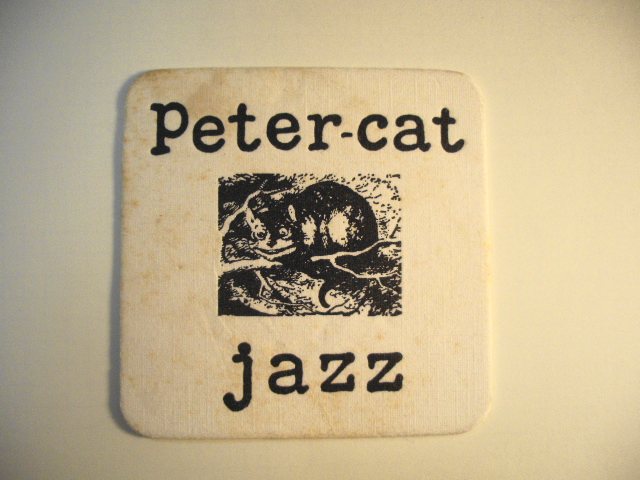
Haruki Murakami has an awesome how-I-became-a-writer story. His parents expected him to snag a job with Mitsubishi and find a nice wife once he was secure. He married young and started a jazz bar, the Peter Cat. One: That is an awesome jazz bar name. Two: Something about saying “fuck stable employment, I’m going to open a jazz bar” seems like an especially risky thing to do in Japan. He continued running the bar until, at 29 years old, he saw a player hit a home run at a baseball game, and he suddenly knew he could write a novel. A lot of people say “I can write a novel!” to themselves. Not a lot then immediately go home and write an award-winning one, which is what Murakami did. At 65, he is one of the foremost practitioners of the post-modern novel of the weird. He usually builds the reality of his book out of the materials at hand, i.e the real world, but then takes those parts and subtly bends them until the world he bases on this one becomes haunting, unsettling, and strange. The proximity of the completely normal, unassuming world with the depths and strangenesses Murakami weaves through it creates a tension that is central to most of his work. In Hard-Boiled Wonderland and the End of the World, that dynamic is in full play, but he more explicitly includes science-fiction and fantasy in the mix.
20101124_1297590

I desperately want to travel back in time to the Peter Cat Jazz Bar.

Hard-Boiled Wonderland and the End of the World comprises two interwoven narratives, one science-fiction and one fantasy, that play out in alternating chapters. In the SF world, a data encryption specialist gets in way over his head. In the fantasy world, a newcomer with no memory of his self gives up his shadow in order to enter a strange town. The weaving itself is impressive – one of the signature Murakami pieces of weirdness is that these narratives are connected in a strange and unknown way that is very hazy at the beginning of the book. What is extraordinary is how perfectly Murakami hits the tone of each genre in the alternating chapters. In the SF chapters, Murakami creates a gritty, slightly grim world of loneliness and serious men doing serious things reminiscent of cyberpunk, and in the fantasy chapters, he perfectly captures the importance of place and the sense of timelessness that permeate a lot of the genre.

In the SF chapters (Hard-Boiled Wonderland), the narrative follows a man as he gets more and more involved in a dangerous conspiracy that he does not understand. The main science-fictional element of this world is that the main character is a Calcutec, an individual who has undergone brain surgery and training to transform his subconscious into a data-shuffling device. He takes a series of numbers, puts a pencil in his hand, goes into a trance, and then when he wakes up, he has run the data through his subconscious and shuffled it into a new, nearly-uncrackable code. Something about the uniqueness of each person’s consciousness and the chaos of the human mind make this the most secure form of data encryption – without the key, there is almost no way to decrypt the information. This is important, as the System, the giant data-protection agency which fields Calcutecs, is battling the Factory, an underground organization composed of Semiotecs whose main motivation is finding, decrypting, and selling top-secret information. The protagonist is hired by a mad scientist to protect his cutting-edge research. He does his normal thing, encrypts the data, but then people who desperately want that data make his life difficult. The main conflict in the Hard-Boiled chapters comes from the protagonist’s desire to stay safe and discover what is going on and why people are chasing him.

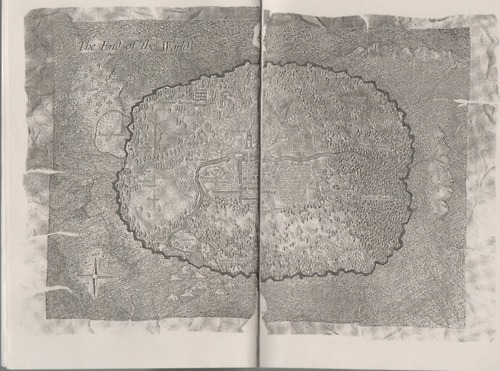
In the fantasy chapters, the narrative follows a newcomer around a mysterious town as he tries to figure out what is going on and reunite with his shadow. There are many magical elements to The End of the World, such as the protagonist having to give up his shadow, which becomes a separate, autonomous entity. There are unicorns that wander around the town during the day and are sent out the West gate at night. The central magic of these chapters, however, is dreamreading. The protagonist is assigned a job, as all inhabitants of the town are assigned a job. His is dreamreading, which consists of going to the library at night, going into the stacks, which contain shelves of unicorn skulls, taking them down, tracing the glowing lines on each skull with his fingers, and attempting to read the thoughts and dreams contained within. The point and method of this process is just as mysterious and unknown as the data encryption in the SF world, and each protagonist is just as confused and lost as the other. In addition to the magical aspect, another trait that makes these chapters a strong example of fantasy is Murakami’s attention to maps and places.
map-of-the-end-of-the-world

I’ve said it before and I’ll say it again: It ain’t fantasy without a map.

The Town itself is a major character of the fantasy chapters, and one of the major differences between the two narratives is how much more important not just what is happening but where it’s happening is important to this one. The Town is a community which stands at the End of the World. It is surrounded by a gigantic, perfect wall, with only one exit: the West Gate, which is tended by the Gatekeeper. These locations are primal: There is only the Library, the Woods, the Pool, the Barracks, et cetera. Each location is just the capital-letter archetype of what it represents, and there are no clear place names. This adds to the haziness and nonspecificity of these chapters. All of the characters here are named for their occupation: the Librarian, the Colonel, and the Dreamreader, in addition to the Gatekeeper. A mildly sinister tone is set in the first chapter when the protagonist has to give up his shadow, and when the Gatekeeper starts seeming more like a warden than a keeper. The main conflict in The End of the World chapters comes from the main character’s desire to find out what the secret of the Town is and to reunite with his shadow.

The greatest success of this book is the flawless interweaving of each separate narrative into a cohesive, if jagged, whole, and Murakami’s masterful switching between tones and styles each chapter. To give an example of the perfect and nuanced difference in style, following are two excerpts from the book.

First paragraph of first SF chapter:

The elevator continued its impossibly slow ascent. Or at least I imagined it was ascent. There was not telling for sure: it was so slow that all sense of direction simply vanished. It could have been going down for all I knew, or maybe it wasn’t moving at all. But let’s just assume it was going up. Merely a guess. Maybe I’d gone up twelve stories, then down three. Maybe I’d circled the globe. How would I know? 

First paragraph of first fantasy chapter:

With the approach of autumn, a layer of long golden fur grows over their bodies. Golden in the purest sense of the word, with not the least intrusion of another hue. Theirs is a gold that comes into this world as gold and exists in this world as gold. Poised between all heaven and earth, they stand steeped in gold.

In the SF opening, the focus is on the thoughts of the narrator as he interacts with a piece of technology – an elevator. Rational, analytical thought dissecting all possibilities of movement and speed for the elevator he is riding to his job. In the fantasy opening, the focus is on rich, mythical description. The narrator describes the autumn coats of the unicorns, and they are not just gold and pretty; their coat color is a Platonic form of gold, “poised between all heaven and earth.” The focus is not so much on the analysis of the mundane as it is on the observation and experience of the mythical. This slight but powerful stylistic difference reverberates throughout each narrative, keeping them distinct even as the reader discovers how they are connected.

The main pleasure of this book comes from the dense accumulation of small, vivid details. The SF narrator spends a lot of time drinking whiskey, listening to jazz, and reading books. The fantasy narrator spends a lot of time going on long walks within the town walls. These sound boring, but Murakami’s descriptive power makes it pleasurable to read about the SF narrator eating a sandwich or the fantasy narrator walking to the Library looking at the sky. That is, Murakami’s talent makes his book interesting in parts that a lesser author would make unforgivably boring. Another strong point of this novel is its deep meditation on the nature of self. As the narratives cycle more and more tightly around each other, the major thematic focus of the novel shifts to questioning who each narrator actually is, what the significance of self is, and what identity means. The SF narrator becomes more and more preoccupied with who he is and what motivates him:

Once, when I was younger, I thought I could be someone else. I’d move to Casablanca, open a bar, and I’d meet Ingrid Bergman. Or more realistically – whether actually more realistic or not – I’d tune in on a better life, something more suited to my true self. Toward that end, I had to undergo training. I read The Greening of America, and I saw Easy Rider three times. But like a boat with a twisted rudder, I kept coming back to the same place. I wasn’t going anywhere. I was myself, waiting on the shore for me to return.

Everyone deals with constructing their own identity, trying to modify themselves either by strengthening their identity or trying to get away from it, and Murakami profoundly captures the futility and beauty of the struggle with that amazing line, “I was myself, waiting on the shore for me to return.” In addition to these discrete thoughts on self and identity, the narratives begin spiraling around each other in a way that structurally supports meditations on what existence is – I can’t really get into that part of it without hitting spoilers.

If you’ve been hearing buzz about Murakami for years but have not yet read anything of his, this is the place to start. It is not as long and sprawling as 1Q84, is more plot-driven than The Wind-up Bird Chronicle, and is a great book all on its own. The creation and sustainment of two distinct but intertwined worlds, the depth of detail he creates in each narrative, and the shattering profundity of the final reflection on what selfhood means all mark this as a book well worth your time.

Andrew Findlay has strong opinions about things (mostly literature) and will share them with you loudly and confidently. You can email him at afindlay.recess@gmail.com.
Images: Map from here and Jazz Bar from here.

Life After the Star Wars Expanded Universe: Alfonso Cuarón’s Gravity

 Gravity_Poster

Andrew Findlay

In Life After the Star Wars Expanded Universe, we take a look at science fiction and fantasy, why they’re great, and what they say about where our species has been and where it’s going. 

Gravity is a space film. It is also the winningest movie of the 86th Academy Awards, bringing home seven Oscars. It deserves every single one. It took me half a year to actually watch this, which is strange considering how I prioritize my media consumption mostly by putting anything that involves spaceships on the top of the pile. What I watched when I finally got around to it was a sparse, tightly-woven film about what happens when something minor goes wrong in an extremely hostile environment. Gravity is devastating in its simplicity. After a fairly brief intro period, there is only one character, and her only enemy is the title of the movie – the force of gravitation.

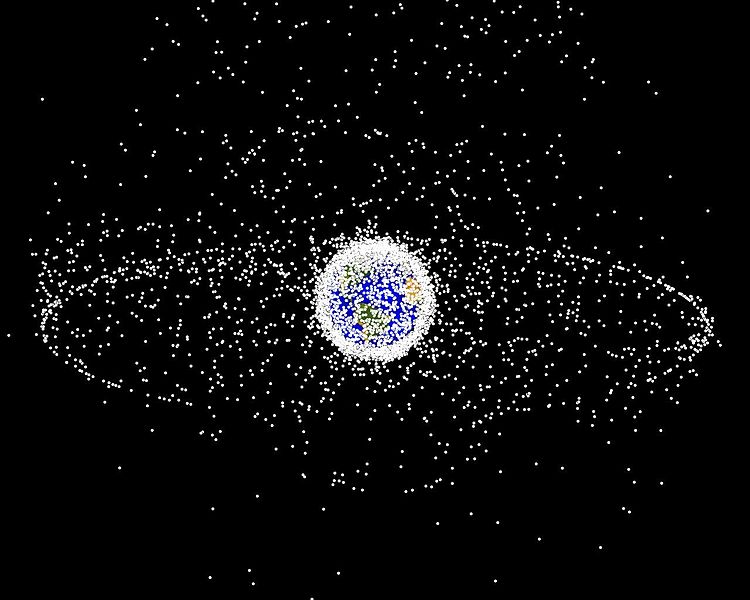
Gravity’s great! It keeps you from flying off the face of the Earth! Wonderful! However, if you are in orbit, your relationship to gravity becomes markedly less benevolent. Orbit amounts to controlled freefall. In orbit, you are falling at an exact velocity and an exact trajectory that maintains you or your craft in a circle around the planet. At the end of the day, you are still just falling, so if anything at all goes wrong, your orbit will turn into a more everyday type of fall, and you will catch fire and burn to death in the mesosphere. In addition to the falling problem, Earth’s gravity keeps an impressive amount of space debris in a cloud around the planet (19,000 discrete pieces over two inches). It’s fine if it’s just sitting there, but if it or you is moving fast, there is a significant collision danger. The International Space Station orbits at around 17,000 mph. Imagine getting hit in the face with a professionally-thrown baseball (90 mph). Now imagine one or many baseball-sized things hitting your orbital craft at 200 times that speed. This is basically what happens in the first fifteen minutes of Gravity.

750px-Debris-GEO1280

Each white dot is something that could kill you

The initial destruction caused by space debris leaves Dr. Ryan Stone (Sandra Bullock) completely alone in space, desperate to find a way back home. Well, a survivable way back home. If she lowered her standards, she could get home by simply pushing off in the general direction of Earth. In addition to the general destruction of devices and networks meant to keep humans alive in low Earth orbit, communications satellites are also down, which means Stone is alone not only physically but psychologically. With absolutely no communication with Houston and the nearest human being about 200-300 miles straight down, Bullock’s character becomes the most isolated individual in human history. This isolation and Stone’s lopsided struggle with a hostile and decaying environment combine to make one of the cleanest, most perfect pieces of suspense fiction of the past few years.

With only one main character bouncing around in a terrifying situation she neither asked nor prepared for, all the the viewer’s chips are in one pot, so to speak. In Aliens, everyone around Ripley just dies and dies and dies, and that only serves to ramp up the tension for Ripley’s own survival. In Gravity, you only get one, and if you break it, that’s it. From almost the beginning of the conflict, this dynamic forces a stronger level of investment in the character and results in a higher level of terror. The total focus on one character also allows the deep exploration of that character’s psyche – she talks to herself because there is no one else to talk to, and she talks about her daughter, her life, her hopes, and her fears. Following her on her journey from space installation to space installation in her desperate quest to survive is one of the most enjoyable narrative achievements of the past year.

MV5BMTc0ODc4NjM4MV5BMl5BanBnXkFtZTgwMTgwNzIyMDE@._V1__SX1537_SY680_

Probably the best-done female character in all of science fiction

Gravity is billed as a science fiction film, and an interesting question is why? There is no futuristic technology, no aliens, no psychic powers or mutation. This film uses no technology that does not exist, so why is it science fiction? SF is about more than the future, time travel, and warp drives. It is about technology, the changes engendered by it, and the relationship of humanity to it. One of the best science fiction novels out there, Cryptonomicon by Neal Stephenson, has at its core cryptography and information science. The science fictional aspects of the book focus on a well-developed technology that has existed since time. It specifically explored its use and misuse in WWII and the 1990s. As the pace of change and technological development increases, science fiction becomes more and more just normal fiction. It is not the milieu into which we project our imaginations, but the milieu in which we live. In the Middle Ages in Europe, the life the grandfather led was the life the father led was the life the son led. My grandfather started a family when color television was a pretty swell new thing, my father started a family when personal computers could process text, process numbers, and play Snake, and now I’m living in a world where this single machine on which I am typing gives me access to more information than I could process in my entire life, videophones are a reality (FaceTime and Skype), people walk around with mobile computers in their pocket more powerful than the NASA computer that sent men to the Moon, medical professionals can literally print human organs, and human beings temporarily live in space. We cannot escape from SF as the basis of many of our stories because the future arrived yesterday, and continues arriving yesterday every time the sun rises. It is simple to build an entire narrative from the basic theories and problems of space habitation as they exist now.

Candy_Crush_Saga_game_setup_example

Pictured: the OS mission control used during the Apollo 11 flight

Cuarón built Gravity on the theory of gravitation (sure) and the problem of the Kessler syndrome. I’ve already discussed the problem of orbit as a controlled fall, but the Kessler syndrome is a very real concern of space agencies today. Basically, there’s so much crap floating around above us that one little explosion or impact could cause an ablation cascade, wherein the fallout from one event then collides with and destroys other objects, the fallout from which then collides with and destroys more objects, on and on until everything upstairs is well and truly fucked. NASA’s main concern with this possibility is that it could take out many of our satellites and render space unusable for generations, but in Gravity, this ablation cascade directly threatens the main character’s life. Bonus: due to gravity, she gets to deal with 17000 mph debris circling around the Earth and returning for another hit every 90 minutes! The danger, isolation, and unknowability of space come to the fore in this film. Terror in the face of the unknown or in the face of forces much larger than we could control or comprehend is a main theme of SF. Gravity shows us that we do not need to go to Alpha Centauri to find those forces – one of them exists right here, keeping our feet firmly glued to the ground.

Andrew Findlay has strong opinions about things (mostly literature) and will share them with you loudly and confidently. You can email him at afindlay.recess@gmail.com.
Life After the Star Wars Expanded Universe: John Brunner’s Stand on Zanzibar

Stand_on_Zanzibar_working

Andrew Findlay

In Life After the Star Wars Expanded Universe, we take a look at science fiction and fantasy, why they’re great, and what they say about where our species has been and where it’s going.

Isaac Asimov once predicted that by this time, many home appliances would run on atomic batteries. It would be so convenient: no need to use electricity and the battery would not run down within the consumer’s lifetime. Truly a marvel of modern science! In all seriousness, if Asimov’s failure to see anything wrong with a blender powered by nuclear fission does not clearly crown him as the king of all science nerddom, I don’t know what would. One of science fiction’s stocks-in-trade is predicting the future. Some suggestions are eerily accurate, and some are Jetsons-level laughable. Stand on Zanzibar is strange in that a weirdly high percentage of its predictions are absolutely correct.

The novel is set in 2010. The main pressure driving its plot is that there’s just too damn many of us. Brunner correctly placed the 2010 population of the world around seven billion, which is where the name comes from. Apparently, seven billion people, standing upright and shoulder-to-shoulder, would just barely fit on the island of Zanzibar. This foundational problem is not the only prediction Brunner gets right:

  1. “Muckers” go insane and go on senseless public rampages (Columbine, Aurora, Newtown)
  2. China is our main global competitor
  3. Europe has banded into a single political entity
  4. Detroit is a ghost town filled with abandoned warehouses
  5. Consumer culture is dominant
  6. News is highly processed and regurgitated on television in digestible bites
  7.  There is legislation against tobacco but marijuana is legal
  8. Rent is so ridiculous in New York that a high-level executive has to have roommates to help him pay it.

Brunner misses a few things and gets a few other things wrong (in response to the population problem, there is eugenics legislation – people cannot have children unless they prove their genetic health), but the amount that he predicts correctly in this future is impressive. He gives texture and substance to his future world by using the Innis mode.

Isaac_Asimov_on_Throne

I found this while looking for Asimov quotations. Holy shit.

The book opens with a passage from Marshall McLuhan’s The Gutenberg Galaxy, which explains the Innis mode as constructing a mosaic of facts and events without perspective or unifying narrative. Brunner’s use of this mode strongly influences the structure of the book. There are four main types of “chapters.” Chapters labeled “continuity” follow the linear narrative of the story. “Tracking with closeups” present vignettes of characters not directly related to the main plot but part of the same world. “Context,” presents, you guessed it, context for the other parts of the story in the form of fake newspaper articles, works of sociology, and other types of analyses. Finally, “the happening world,” the most Innis-modian of these chapters, is a storm of assorted facts, sometimes as short as a single line, that assault the reader with the vibrance and freneticism of all the overwhelming information in the larger world outside the main narrative. The Innis mode generally and “the happening world” in particular serve to create an immensely dense world without sacrificing main narrative time to do it.

The main narrative consists of two parallel plots: U.S. intervention in an island nation in the Pacific, Yatakang, that is embarking on a “genetic optimisation program” to build a race of supermen, and a massive company called General Technics beginning a training program in a fictional West African nation in order to exploit mineral wealth off the coast. The Yatakangi storyline consists of a lot of great spy action and explosions. The U.S. intervenes because they either want to prove the genetic optimisation program is an impossible propaganda stunt or, if it is true, take steps to make it just an impossible propaganda stunt. One Yatakangi character tells the American spy that Americans just aren’t very good at letting other people be better than them at anything. The African storyline concerns Beninia, a country that is dirt poor, where education could be improved, and where starvation is a major concern. Beninia draws the interest of General Technics because, despite all of this, there has not been a murder there in the past 15 years, there is no open conflict or dissatisfaction, no vandalism, and no theft. In a world where people regularly run amok (the etymological basis for “mucker”) and kill as many people as they can before they are put down, the complete absence of murder indicates an inviting level of stability. GT agrees to put in place a 50-year program wherein they float the Beninians a huge loan, then use it to build all the most modern conveniences and supercharge their education so that, within those two decades, the Beninian population will be transformed into a nation of extremely skilled technicians and scientists with the knowledge set required to exploit the mineral deposits in the ocean nearby. This plan is created and vetted by the General Technics supercomputer, Shalmaneser. GT’s main claim to fame is this computer. It is next-level, near-A.I. type hardware, and its predictions are the main reason the company is so confident that their Beninia plan will work. They are in it for themselves, as they will be more than paid back by the wealth at the bottom of the sea, but they get to change the course of an entire nation for the better. The book tries very hard to sell the point that this is not neocolonialism pure and simple. The President of Beninia is complicit in the plan because he is dying and wants to leave a good future to his nation. Everyone involved in the project has their hearts in the right place and wants to help. Within the book, it is absolutely believable that this is a new and benign form of economic development. Outside of the book, this is basically a company owning a country outright, and in reality that never works out well for the owned. The disconnect between what happens in the book and the real-world probabilities make this conceit of the book ring a little hollow.

PCP283.feat3.body4-580-90

This is what Brunner means when he says “supercomputer.”

Speaking of things Brunner attempts that end up going wrong, he tries to extrapolate the future of race relations while sitting in front of a typewriter in 1968. He gets right that, due to anti-discrimination laws and the easing of overt racism, many positions of power are filled by African Americans, and racial tensions still simmer on. One of the main characters is a black vice president of General Technics. His roommate is white. They are both friends, but in their internal monologue, they each think really angry thoughts filled with racial slurs about each other. The problem is not that they get angry at each other, but that the sole source of a lot of their anger seems to be race. It seems outdated and strange, and indicates that Brunner, while trying to present a realistic future of race, was not fully free from many of his own preconceptions about it: In Brunner’s future, a relationship between equals of a different race seems not to be able to exist without some type of rancor. There is also no shortage of racist slurs against the Asian Yatakangi. Try as it might, this book is definitely a product of the sociocultural milieu of the 1960s.

Treatment of women in this book is just as big a problem as the treatment of race. There are no women involved as main characters, there are only two women in the entire book that have any real agency or power, and the current form of dating is something called the “shiggy circuit.” Codder is a mildly offensive term for a man, and shiggy is a mildly offensive term for a woman. Most young women participate in the “shiggy circuit,” a social construct in which women have no fixed abode and merely cycle around the city, moving in and out of the apartments of the men they sleep with, depending on them for food and shelter, and then moving on to the next one when either the woman or the man becomes bored. The easy interchangeability of women and the fact that they take up with the man and not vice versa necessarily places them at a disadvantage in relation to the men. This dynamic grows out of a problem that runs through many SF books written in the 50s and 60s. Most of the writers at that time were men, and many attempted to imagine new and more open sexual mores. The problem is that most of these new social systems ended up being not so much a representation of sexual progress as a result of the author’s subconscious thinking to itself, “Hey, wouldn’t it be cool if women were just naked? Like, all the time?” It comes off more as male fantasy than as balanced prediction (cf. Stranger in a Strange Land, The Gods Themselves).

la-et-mn-star-trek-into-darkness-writer-apolog-001

Glad we’ve stopped oversexualizing women in science fiction. She’s a weapons specialist on the Enterprise, by the way.

Despite the jangling treatment of race and women, the book, in the form of Chad Mulligan, delivers wry, incisive, and apt criticism of society and the humans who run it. Mulligan is a pop sociologist and is the author of The Hipcrime Vocab and the amazingly-named You’re an Ignorant Idiot. He is deeply in love with the human race, which of course means he is intensely enraged by its stupidity. He becomes a main character by the end of the book, but for most of it we see snippets of his angry, incisive writings as excerpts in the “context” or “tracking with closeups” chapters. His main thesis is that if we don’t all change drastically we are all going to die, so act a little less insane and a little more rationally and lovingly. To give an idea of what kind of vision he has, I’ve included a handful of definitions from his Hipcrime Vocab.

The Hipcrime Vocab by Chad Mulligan:

(COINCIDENCE You weren’t paying attention to the other half of what was going on.)

(PATRIOTISM A great British writer once said that if he had to choose between betraying his country and betraying a friend he hoped he would have the decency to betray his country. Amen, brothers and sisters! Amen!)

(SHALMANESER That real cool piece of hardware up at the GT tower. They say he’s apt to evolve up to true consciousness one day. Also they say he’s as intelligent as a thousand of us put together, which isn’t really saying much, because when you put a thousand of us together look how stupidly we behave.)

Mulligan is a great character: contemptuous, competent, snarky, and broken-hearted by what he sees humanity doing to itself. He moves through the book spouting wisdom and being right about things, which isn’t necessarily a problem, but “irreverent middle-aged dude who is wiser than others” is a bit of an overused archetype in older SF.

This book has a lot to recommend it. It is a feat of worldbuilding, giving a nuanced and exhaustive picture of the world as it might exist in the future. Its narrative structure is innovative and effective. Its driving conflict is a problem that has affected, is affecting, and will affect the human race for the foreseeable future: increasing population, decreasing resources, and the tension and problems created by that dynamic. Its hope is that humanity finds a method to stop feeding on itself, but it presents the alternatives in horrifying depth and detail. It is a pity that, while many of the facts and events predicted are impressively accurate (the fall of Detroit, senseless acts of public slaughter, 24-hour news, the European Union), the conceptualization of race and women are mere extensions of the patterns extant in 1968. It represents a failure of imagination and a victory of narrow-mindedness in a novel otherwise exultant in its inventiveness, insight, and breadth. You still need to read this for what it does right.

Andrew Findlay has strong opinions about things (mostly literature) and will share them with you loudly and confidently. You can email him at afindlay.recess@gmail.com.

Image: LA Times

Life After the Star Wars Expanded Universe: Bernard Werber’s Empire of the Ants

cf4dc27a02a0dab1f700d110.L

Andrew Findlay

In Life After the Star Wars Expanded Universe, we take a look at science fiction and fantasy, why they’re great, and what they say about where our species has been and where it’s going.

Imagine this: you are absolutely crushed with exhaustion. You’ve been working for 12 hours straight, or you’ve just run 10 miles, or you’ve just moved all of your furniture to a new apartment and only one of your friends actually showed up to help. You are about to fall down with fatigue, but you turn to your friend, who offers you nourishment from his or her own stomach. Once you lock lips and do the exchange, you feel reenergized and ready to take on the world. This process is called trophallaxis, and for ants, it’s a way to bond, exchange pheromones, and get valuable caloric units to the members of the colony that need it most. I know this because I have just finished reading a book called Empire of the Ants.

This book is strange in that the majority of it is narrated from the point of view of ants. Werber weaves three distinct threads through the book’s narrative: ant POV passages, human POV passages, and fictional encyclopedia entries. The encyclopedia was written by a deceased mad scientist, the relatives of whom form most of the human characters in the novel. Its subject is unknown at the beginning of the novel, but its author, Edmond Wells, was deep into myrmecology and wanted to establish communication with the ants. His nephew, Jonathan, inherits his old apartment and finds a note saying “Never go into the cellar!” Following story logic, of course he ends up going down there, where he discovers a massive subterranean cavern. The narrative thread of the human POV section deals with the dangers, mysteries, and discoveries of the late Uncle Edmond’s secret underground laboratory. The ant POV sections actually dominate the book, which raises the question –  how do animals with brains the size of an asterisk (*) sustain any type of comprehensible narrative? This is where the fiction part of science fiction comes in.

A_Formica_rufa_sideview

Formica Rufa, the main character(s) of this novel

Ants undeniably use language. A lot of animals use basic pheromones, but ants employ a massive dictionary of them: scientists think that they can recognize hundreds of chemical combinations (side note: the scientist in that article is attempting exactly what the fictional scientist in the book is – translating and using the ant language). Werber takes this fact of ant society and expands chemical signals like “Food this way!” and “I am dying!” into a structure that can handle phrases like, “Something weird is going on here. We need to communicate this to the swarm.” It is an established fact that ants have language, and Werber simply asks his readers to apply suspension of disbelief and accept that ants have a language nearly as complex as ours. He does not abuse this anthropomorphization of his principal characters. They use their ant language to run around doing ant things – at no point do two disgruntled ants get drunk at a bar and whine about how the Queen is working them too hard. We see ants going out into the dangers of the world foraging for food, ants taking care of larvae, ants making war with a different species of ant, and any number of other antish activities. Werber does a good job illuminating the subtlety and complexity of life in an anthill and making these explanations part of the action of the story. For example, most ant colonies have a queen whose only responsibility or influence over the swarm is constantly laying eggs. Most of these eggs grow into sterile female worker ants, but some are fed better than others, and these better-fed larvae develop into sexually mature, winged females. Unfertilized eggs develop into male ants, which do nothing but sit around eating. When the weather is right, all the males and sexually mature females fly away from the colony, sometimes over very long distances, and mate along the way. The male deposits his gametes in the female then dies, and the female can then use this genetic payload to lay eggs for as long as the next thirty years. She then lands, tears off her own wings, starts digging a small burrow to lay eggs in, and builds the entire populace of a new city.

Meat_eater_ant_qeen_excavating_hole

This newly-landed queen is already stocked with every worker that will ever be a member of her colony.

Werber takes all of this information and weaves it into a tense action scene in the book. Out of the millions of virgin queens who swarm off, only a handful actually survive. They are eaten by birds, they are killed by competing ants, or they simply fail at setting up a new colony. This high failure rate allows Werber to add a lot of suspense to the situation when narrating the nuptial flight of one of the main ant characters. She flies hard as birds pick off her comrades left and right, she tires and can fly no more and falls in a river, she gets trapped in a spiderweb and faces almost certain death there, and then she lands, eats her own wings (high-protein nourishment after an exhausting ordeal), and starts the laborious process of bringing a new nation into the world. This melding of action and explanation throughout the book creates a strange phenomenon whereby, as Werber advances the plot, the reader learns a ridiculous amount about how ants work. I know about trophallaxy, the nuptial flight, where and how they store food, their symbiotic relationship with aphids, how they wake up after a long hibernation, how they use their antennae, how they care for their young, how they wage war (they can actually shoot acid from their abdomen!), and a host of other facts. The interplay between information and plot advancement creates a pleasurable sense of ambiguity around whether the book is a reference text or a fiction book. I mean, it’s a fiction book; it has talking ants for God’s sake, but from what you can learn from it, it may as well be an encyclopedia.

Which brings us to what might turn you off of this book: If you do not care about ant facts, you will be bored to tears. The main payoff of the novel is the painstaking exploration and elucidation of an extremely alien culture that exists just a few feet underneath the earth, and if you are not into that, your experience of the novel will be missing its main selling point. The humans are hands-down the weakest part of the novel. Their thoughts are simplistic, their dialogue is uninteresting, and their path through the narrative is not nearly as appealing as that of the ants. Werber does not construct solid mimetic aspects for his characters. James Phelan’s theory of character splits character creation into three aspects: The mimetic aspect is how much the character resembles an actual person, the thematic aspect is how the character serves to advance the ideas of the novel, and the synthetic aspect is how the character serves as an artificial construct that advances the narrative. Many SF novels skimp on developing the mimetic aspect of their characters (consistent character traits, subtle emotional responses, believable interactions with other characters). Having fully-developed characters along all three axes is often what separates SF books that escape the Science Fiction and Fantasy section of bookstores from more well-recognized (but not necessarily less worthwhile) SF. For example, The Handmaid’s Tale, 1984, and Fahrenheit 451 are not considered genre literature, whereas the less character-centric Starship Troopers, The Gods Themselves, and Planet of the Apes are almost always found next to the Star Wars books.

AtomicWar0401

One of these categories of SF has much better book covers than the other.

In some SF novels, the subsumption of character-as-person by character-as-idea is a symptom of SF as a literature of ideas – the SF novel is an exercise in philosophical extrapolation, and everything else takes a backseat to that. It is forgivable to have two-dimensional characters in the service of ideas, but Werber’s humans are stunted both mimetically and thematically. Their only purpose is synthetic – they stumble through the world of the book and advance the plot.

The flimsiness of the human characters and the relatively lackluster plot are the only sour spots in an exact, exciting, and enlightening study of how a society completely alien to our own might function if it had just a little bit more brainpower than we give it credit for. Ants are amazing. They are arguably the most successful animal on the planet. They are on every continent, everywhere except for the highest mountain peaks and the poles. They have been around for 140 million years (humanity = 200,000 years). The total weight of all ants on Earth roughly equals the total weight of all humans on Earth. If they can communicate the way they do in this book, and we piss them off, we’re screwed. Maybe you should read this as a primer on how best to welcome your new ant overlords.

Andrew Findlay has strong opinions about things (mostly literature) and will share them with you loudly and confidently. You can email him at afindlay.recess@gmail.com.

Life After the Star Wars Expanded Universe: The Short Stories of George Saunders

Author George Saunders

Andrew Findlay

In Life After the Star Wars Expanded Universe, we take a look at science fiction and fantasy, why they’re great, and what they say about where our species has been and where it’s going.

George Saunders is one of the greatest short story writers alive today. He is currently positioned to become a household name (well, in houses lined with books), but he has been killing it for nearly two decades. The New York Times hailed his latest short story collection, The Tenth of December, as the “best book you’ll read this year.” Saunders came to the art by a strange path. He graduated from college in 1981 with a B.S. in geophysical engineering and spent some time prospecting for an oil company in Indonesia. He then found a job as a technical writer for an environmental engineering company. By the late 90s, he’d published CivilWarLand in Bad Decline and had gotten a professorship at Syracuse. His unorthodox literary training leads to a fresh and interesting style. Saunders himself describes the phenomenon as “just me working inefficiently, with flawed tools, in a mode I don’t have sufficient background to really understand. Like if you put a welder to designing dresses.”

A welder-designed dress would at least be an interesting and new thing, and that’s what Saunders’ stories are. The humor, language usage, and emotional impact of his stories are what makes them powerful. Saunders employs dark humor and tragicomedy to great effect. This feature of his stories has drawn comparisons between him and Kurt Vonnegut, and like Kurt Vonnegut, some of his humor is laugh-out-loud entertaining, but it is mostly the humor that comes from the sudden revelation of a deep truth, humor that does not manifest in laughter but in a swift body-blow to something a lot deeper in you than simple amusement. It is absurd humor, and it mostly arises from horrifying situations and people living through them as if they were more or less normal. The best example of this humor comes from the first sentence of “The 400-Pound CEO”

At noon another load of raccoons comes in and Claude takes them out back of the office and executes them with a tire iron.

Murdering animals is not ha-ha funny, but the shock of that situation, the world of the story in which a company exists that surreptitiously murders raccoons with automotive maintenance implements, and the realization that, if it were lucrative, there would probably be a company in real life that did exactly that, combine to create a much more profound, more affecting, and less flashy humor than the standard fare.

800px-Curious_Raccoon

You would not believe the profit margin on these things

Another example, from “Tenth of December,” is the interior monologue of a not-too-bright kid who is remembering his runaway father:

Dad had once said, Trust your mind, Rob. If it smells like shit but has writing across it that says Happy Birthday and a candle stuck down in it, what is it?

Is there icing on it? he’d said.

Dad had done that thing of squinting the eyes when an answer was not quite there yet.

Sure, basic humor comes from how stupid the kid is. Stupidity is a very deep well for amusement, but couched and laced throughout that more mundane entertainment is deep emotional involvement. The dad is gone, the kid is remembering his advice, the kid has to deal with being stupid, and the kid is remembering his dad “squinting his eyes” as he most likely thinks about how stupid his son is, which dealing with fatherly disappointment is par for the course vis-a-vis life, but this boy’s father actually kicked standard disappointment up to abandonment.

Award_misc_birthday_cake

Delicious.

The language Saunders favors tends to be simple and immediate, as most of his narrators spend a lot of time relaying the stream-of-consciousness of his main characters, and very few people think with showboating words while navigating the trenches of actual life. The informal style and immediacy add punch to the emotional impact, so the reader experiences what the character experiences with very little processing lag or separation. More so than simple language, the situations and descriptions of the characters creates a massive emotional impact. Saunders does not choose as his subject big heroes and villains. He explores not the grandness of exalted victory or crushing defeat, but the petty brokenness of everyday life and the small consolations wrested from it, which is what most people actually deal with. These small consolations are affecting because they are all we can manage, but also, if we shift our perspective, all we need.

It just so happens that a lot of his stories are science fiction. I got a chance to ask him about his sci-fi chops, and he responded that he wasn’t a superfan (as in, he has not seen every episode of Star Trek: The Next Generation), but that he really enjoyed writing in that mode and that it helped break you out of lame writing and bad habits, which, yes, a lot of self-consciously literary books are full of lame writing and bad habits (I really hated the 100 pages I read of that book). Saunders’ writing style is mostly absurd and surrealistic. Many of his stories are full of ghosts, ridiculous people, and nonsensical events. In a decent number of these stories, the enhanced-reality style turns to science fiction. Why am I reviewing this author as a science fiction author if he just dips his beak in every few stories? He is quite simply one of the best practitioners of the form. One of the methods by which SF gains it power is cognitive estrangement, wherein the author presents a reality that is clearly different from the empirical environment of both the author and the reader, but is a plausible extension of it. In this dynamic, the clash between the world of the story and the real world brings heightened clarity to the readers’ perception how things actually are. Saunders’ SF is great at this. It is only a hop, a skip, and a jump into the future, and only extrapolates the technologies and societal norms that form the most rampant pathologies at play in U.S. culture today, namely capitalism and fear. One story takes the form of a sales representative from KidLuv trying to dissuade a dissatisfied mother from returning her I CAN SPEAK!™, which is a molded mask you fit over your infant’s face that, through an implanted speaker, gives the impression that your child can talk. This is of course at the cost of the comfort of the infant. Another chronicles the penalties a man incurs by taking off his shoes to walk more comfortably in NYC, incidentally preventing the advertising sensors in the sidewalks from reading the identification tags in his shoes and projecting the most relevant ads in front of him as he walks.

800px-1_times_square_night_2013

Completely implausible storyline.

Another is about a new type of incarceration, where prisoners can opt to go to research stations, receive a MobiPak™ (an implanted drug delivery system) and participate in dangerous pharmaceutical research. The current ascendancy of consumer culture and capitalism make these possible futures all too plausible, and by forcing his readers to consider these futures, he highlights the dehumanizing and unsustainable nature of the present system. Above all, he hammers home the perennial truth, formulated by his forebear, that there’s only one rule: “God damn it, you’ve got to be kind.”

Read these stories. They hit hard, and they hit deep. Saunders has said that a novel is just a story that hasn’t yet figured out to be brief, and the power behind the brevity of his stories gives a lot of support to that statement. More than anything else I have been reading lately, they have an active effect on what I think and who I am. Read these to be changed, to be awoken. It sounds cliché as all hell to say that, but just because something is cliché does not mean it does not apply, and one of Saunders’ main goals in writing is to break us out of habitual thought patterns and to crack us open to what is really going on – in the world, with other people, within ourselves. If you’re still not convinced, my last shot is one of his quotations about literature, which is one of the most accurate I’ve ever read:

Fiction is a kind of compassion-generating machine that saves us from sloth. Is life kind or cruel? Yes, Literature answers. Are people good or bad? You bet, says Literature. But unlike other systems of knowing, Literature declines to eradicate one truth in favor of another.

Andrew Findlay has strong opinions about things (mostly literature) and will share them with you loudly and confidently. You can email him at afindlay.recess@gmail.com.

Image: The New York Times

Life After the Star Wars Expanded Universe: Jules Verne’s Twenty Thousand Leagues Under the Sea

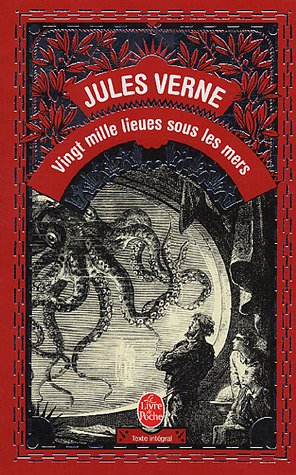
vernebook

Andrew Findlay

In Life After the Star Wars Expanded Universe, we take a look at science fiction and fantasy, why they’re great, and what they say about where our species has been and where it’s going.

Writing about Jules Verne is daunting. A science fiction enthusiast talking about a book like Twenty Thousand Leagues Under the Sea is like a music writer discussing Revolver. It’s important to talk about and remember, but Jules Verne, like The Beatles, had such an outsize influence on his field that it’s hard to even approach. There were others before him, sure. Voltaire’s Micromégas chronicles the adventures of a 20,000 foot tall man from the Sirian system, and Shelley’s Frankenstein introduces the world to mad scientists. The former is really more of a philosophical fable, and Frankenstein is to Mary Shelley what “Sex and Candy” is to Marcy Playground.

Sure, this song is great. Name another one they wrote.

Point is, Verne is the first author to focus specifically on the “science” part of science fiction and put out a huge body of work that is consistently centered around technology. This body of work is hugely popular – the only author translated into more languages than Jules Verne is William Shakespeare. Verne achieves this popularity by taking the science that’s available to him, exaggerating it, and weaving a story around it. Around the World in Eighty Days focuses on transportation technology, Journey to the Center of the Earth focuses on geographical exploration, and Twenty Thousand Leagues Under the Sea focuses on marine exploration.

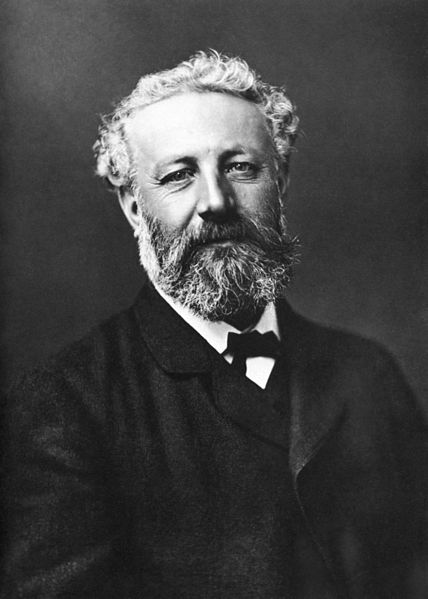
Félix_Nadar_1820-1910_portraits_Jules_Verne_(restoration)

Jules Verne. Just look at this magnificent bastard.

This book is, above all things, an adventure novel. One misconception that may be as widespread as “Frankenstein” being the name of the monster is that the titular 20,000 leagues is how deep the submarine goes. Seeing as how the average depth of the world’s oceans comes to three miles and that 20,000 leagues equal about 69,000 miles, the leagues in the title refer to how much ground (water?) the submarine covers. Nemo and his crew travel nearly far enough to circumnavigate the Earth three times. Who is in his crew, and how did they get there?

Nemo’s official crew are a bunch of faceless sailors recruited from here and there around the world. The main characters of the novel, however, enter his vessel, The Nautilus, in a much more interesting way. Early in the book, all the nations of the world decide that the Nautilus, which is observed going around sinking ships and surfacing while jetting water all over the place, is some heretofore unknown sea monster. Pierre Aronnax, scientist, Ned Land, harpoonist, and Conseil, Aronnax’s servant, are all on an American warship sent to dispatch this creature. The ship fails miserably, and Aronnax et al find themselves on the back of the creature, which surprisingly feels a lot like metal. Nemo appears, makes introductions, and informs his charges that they are his prisoners, as maintaining the secrecy of the Nautilus is important.

As prisons go, the Nautilus is not a bad one. Verne did not invent the concept of the submarine, but his version is a lot nicer than what was puttering about in the world in 1870. The Plongeur, the first machine-powered submarine, was launched in 1863. The Nautilus is extremely advanced compared to the Plongeur. Substrate of actual science, upon which Verne builds his fiction. First off, the Nautilus can travel underwater for five consecutive days thanks to its mercury-sodium batteries (the sodium for which is extracted from seawater). When it has to surface, it is to replenish the air supply in the ship. It also has distillation facilities to create drinking water and food processing facilities to draw all the nutrients the crew need from the sea (lots of kelp and fish). Finally, the luxury of the Nautilus sets it apart from its contemporaries. Captain Nemo has a massive viewing gallery with a huge wall of tempered glass affording views of the ocean, a dining hall, and a study/library with an organ, lounging chairs, biological specimens, and a massive collection of books.

20000_Nautilus_Salon

The Nautilus’ main room, complete with pipe organ.

Alright, so we have the setup. In Twenty Thousand Leagues Under the Sea, the main characters pretty much just go around in a submarine looking at cool shit under the sea. The most compelling part of the book is Nemo’s story. Nemo means “no one” in Greek, and Nemo is a man who has, after some barely-referenced atrocity, withdrawn himself from the society of men and started living for revenge. He takes his revenge by using the superiority of his vessel to sink pretty much any ship he runs across. He is kind of evil, but he is also a super-genius, and we all know how much audiences love intelligence and competence regardless of the moral questions involved. There are two parallel plots. One is what mostly defines the book in the cultural consciousness: going around the ocean and doing cool stuff. The other is the growing conflict between Captain Nemo and his three prisoners. I don’t want to spoil you on the latter, but talking about the former won’t hurt anything.

I said earlier this is above all things an adventure novel, and adventure novels are nothing without destinations. The destinations of the Nautilus include the South Pole, an enchanting underwater forest (through which the principal characters hunt using electric harpoon guns and scuba suits), old shipwrecks (the gold from which finances Nemo’s outfit), and the lost city of Atlantis (dead and gone, with columns sticking out of the ocean floor). Aside from the extremely technical descriptions of how all of Nemo’s gadgets work and the central maelstrom of Nemo’s dark personality, the main appeal of the novel comes from the ability of Nemo to take the reader into the unexplored regions of the world, for the narrator to describe outlandish adventures there, and for everyone to then retire to the comfort of a luxury liner and discuss their excursion over algae salad and walrus steak.

If you decide to read this, be careful not to get a bad translation. One of the main reasons Verne is considered more a literary author in France and more a genre author worldwide is that his work suffers from notoriously bad translations. While we’re talking about language, I’ll say that the linguistic feel of the book is a lot like a Charles Dickens novel – it might be a little work, and the formulation of character thoughts and dialogue may be a bit drier than we’re used to, but it’s more than worth it. Bad translation or not, outmoded dialogue or not, this is a seminal work of science fiction. Humanity’s fascination with the unexplored is what wins Verne’s masterpiece its place of primacy in today’s culture. The modern reader can still get a lot of mileage out of this book. After all, we have still only explored five percent of the ocean. Who’s to say Atlantis is not actually down there?

Andrew Findlay has strong opinions about things (mostly literature) and will share them with you loudly and confidently. You can email him at afindlay.recess@gmail.com.

Life After the Star Wars Expanded Universe: David Cronenberg’s eXistenZ

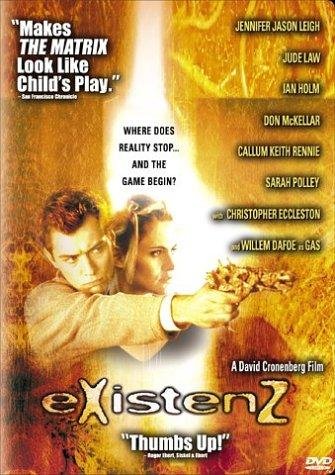
existenz

Andrew Findlay

In Life After the Star Wars Expanded Universe, we take a look at science fiction and fantasy, why they’re great, and what they say about where our species has been and where it’s going.

It is important that we set parameters early for how bizarre this film is, so I’m going to start by telling you that within the first 15 minutes, one of the main characters gets shot by an organic gun that uses human teeth as projectiles. This happens to her as she is fondling a gadget that looks like nothing so much as a mass of tumorous nipples stitched together and made animate. And it just gets weirder.

existenz

This is the centerpiece of the entire movie

Before we really dive in, let’s stop and talk about why this is a world of toothguns and nipple masses. The overview of the film is that Allegra Geller, programming genius, is doing beta testing for her new game, eXistenZ. Technology in this world has invested all of its R&D in biorganic gadgets. Scientists use genetics to grow tech instead of building it in a traditional way. As such, sometimes guns are grown of bone and shoot teeth. Video games are played through game pods. Game pods start out as some type of frog, but are heavily bioengineered into what is in the picture above. The technology involved here goes beyond virtual reality, as the game pod connects directly to the player through a “bioport,” a hole drilled into the back of anyone who wants to use a game pod. It not only draws its running power from the player’s body but directly accesses their central nervous system to create such a realistic experience that it is indistinguishable from actual existence.

A group of fans has gathered together and are patiently waiting to “port” together and experience the game en masse. eXistenZ appears to be a standard sandbox game. There are general objectives and obstacles, and the player is expected to wander around figuring out what’s going on. The main difference is that the immersion is so complete that the player basically enters an alternate universe where NPC actions are scripted.

This abandonment of reality rubs some people the wrong way, which is why a terrorist uses a molar gun to attempt to assassinate the game designer. There’s a lot of commotion and death, but Allegra (Jennifer Jason Leigh) and Ted Pikul (Jude Law) escape and go on the run. The attack damaged Allegra’s game pod, so they have to port into the game to run it and find out if eXistenZ will still work. They do so, but things get complicated when the story in the game mirrors what is happening in reality. In the game, there is an assassination plot and a toothgun. Ted and Allegra try to unravel the attempt on her life by progressing through the game world, but more worrisome than the murder attempt is that, when Ted unplugs from the game to take a break, reality no longer feels real.

MagrittePipe

This movie asks big, important questions. What is technology? Where is it going? How do we react to it, and how does it change us? Cronenberg’s modus operandi is to select a technology or science that exists or seems close to existing, then to exaggerate and extrapolate to explore its effects on humanity. He covers chemical-induced accidental mutation in Scanners and television broadcasts in Videodrome. In eXistenZ, it’s video games. As an avid gamer, it’s gratifying to see a movie dedicated entirely to the societal effects of one of my chosen pastimes. The movie sets up a plausible direction for video games and then shows its effects on individuals and society at large. Societally, there are people who escape into alternate realities as recreation and other people who murder the designers of those alternate realities on moral principle. On the individual level, people range from the squeamish and reluctant Ted Pikul, who does not even have a bioport installed until he has to enter eXistenZ because he is afraid of body modification, to Gas, played by Willem Dafoe, who is a manic-eyed devotee of Allegra Geller’s work. Dafoe has one of the best lines in the movie. The fleeing main pair stop at a gas station, and Dafoe’s character recognizes them and starts gushing about how Allegra’s games changed his life. Ted, who has yet to enter the world of total-immersion gaming, asks him how his life was different because of Allegra Geller. The response is priceless.

Ted: What was your life like before?

Gas: Before?

Ted: Before it was changed by Allegra Geller.

Gas: I operated a gas station.

Ted: You still operate a gas station, don’t you?

Gas: Only on the most pathetic level of reality.

Willem Dafoe’s line is so great because it sums up perfectly what video games do for those who play them (or really any media for those who read, watch, or listen to them): absolutely nothing. If you read a book, watch a movie, or play a video game, it changes absolutely nothing in your external life, but the external is just “the most pathetic level of reality.” The changes that happen within the consumer of media are what’s important – relaxation, an expanded consciousness, heightened emotion – it’s all fake, none of it’s real, but our ability to recognize, respond to, and create fake shit is the trait that makes us human, shared only, and even then only partially, by a handful of the higher animals (chimpanzees, dolphins, elephants, etc).

Reality versus irreality ends up being the central conflict of the movie. After entering the perfect simulation of the game, it’s hard to tell what is and is not real. The “what if life is just like, a simulation, man?” conversation seems like an argument that would only be had over a table full of Taco Bell in a room full of pungent smoke, but it’s actually a very old and well-respected existential question. If we are living in an absolutely perfect simulation of reality, there is literally no way for us to tell. A truly perfect simulation would be indistinguishable from reality. Think about it – grab an object next to you and heft it in your hand. Toss it up and down a couple of times. Are you, through the messaging apparatus in your nerves, transferring chemical energy from your muscles to whatever you grabbed, or is a machine stimulating neurons in your unconscious brain to make you perceive all of the effects of that action?

I don’t care about the answer one way or the other, much as I don’t care about whether or not free will exists, because it changes nothing about my life and how I lead it. Right now, I am either choosing to drink bourbon and write this article, or I am predestined to drink bourbon and write this article. Either way, I’m tipsy and typing. In much the same way, a simulation that’s just as good as the real thing is, after all, just as good as the real thing. In the movie, it becomes more of a moral question, as they are actively dropping in and out of a simulation, and killing people in both the simulation and the real world means that it’s difficult to tell if you just shot a piece of code or a human being with a spouse and kids.

You should watch this. It’s one of those movies that Netflix tags “cerebral,” which mostly means that, even if it’s good, you’ll know at all times exactly how many minutes are left until the credits roll. Even if it moves kind of slow and gets kind of confusing, the future it envisions and the important questions it raises make it more than worthwhile. Right now, the closest thing we have to simulated reality is the Oculus Rift:

existenz

She looks so happy in there. Maybe she’s eating salad.

With current technological limitations, it’s pretty obvious what is and is not real, but humanity loves entertainment so much that it probably will not stop striving towards a perfect simulacrum of existence. Cronenberg explores what might happen if we make it there.

Andrew Findlay has strong opinions about things (mostly literature) and will share them with you loudly and confidently.

Images: Business Insider, IMDB

Life After the Star Wars Expanded Universe: N.K. Jemisin’s The Broken Kingdoms

Andrew Findlay

In Life After the Star Wars Expanded Universe, we take a look at science fiction and fantasy, why they’re great, and what they say about where our species has been and where it’s going.

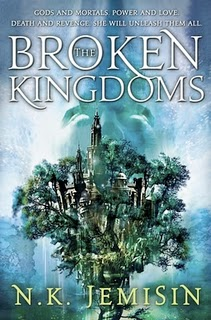
The Broken Kingdoms is book two of The Inheritance Trilogy. The main premise of this book series is that the inhabitants of this world coexist with and even enslave their gods. There are three main “big G” Gods: Nahadoth, god of the night, Itempas, god of the day, and Yeine, goddess of twilight and the dawn. Any offspring from these three Gods are called godlings, and while not as powerful as their forebears, they have some impressive abilities. Without getting into specifics, I can tell you these Gods have disagreements and war sometimes. During the first book, Nahadoth is actually enslaved by humanity because Itempas chained him as punishment. The humans who had control of him, the Arameri, quickly became the undisputed rulers of the world, because any society that stood against them quickly fell to the overwhelming power of their pet God. The Arameri live in the palace pictured on the book cover – Sky, a castle in a tree. Shadow is the city that has grown under the tree, so called because the massive branches shade most of the city.

The author, N.K. Jemisin, is a relatively new author – book one of this series is her first novel that really exploded. I appreciate how prolific she is: The first book in the trilogy was published in 2010 and the third was published in 2011. That is a whole world, a full story, complete and entire, in less than a couple of years. That is refreshing as hell in the world of The Wheel of Time and A Song of Ice and Fire, the former of which took twenty-three years to complete, and the latter of which has been going for eighteen years and is nowhere near finished.

Praise this woman – she actually publishes fantasy regularly. It’s impressive.

The story she creates in The Broken Kingdoms focuses on the upheaval and changes in a city newly filled with godlings. For 2,000 years, godlings were not allowed in the human realm, but events in the first book ease that restriction, and now they participate in human society. The action of the book starts with the murder of one of their number, and suspense begins high and fast – who killed an immortal, and how did they do it?

The main character through whose perceptions the reader experiences the search for the murderer is Oree Shoth, a member of a marginalized race, the Maroneh. In the distant past, the rich and powerful island that was her people’s ancestral home was sunk beneath the waves by the fury of Nahadoth, the Arameri’s enslaved God. They were given space to settle in Arameri lands but have never really recovered. What’s special about Oree? Well, for one thing she’s blind, but not really.

The not really part is that she is magic – for some reason, she can “see” anything magical. In the enchantment-doused city of Shadow, this means she can get around easily by the glow of magic everywhere, and godlings she can see perfectly clearly, as they are beings of pure magic. Her magical ability also allows her to use paint and artistic representations to open doors to other places. Equipped with normal and godling friends and her abilities, she finds herself embroiled in the conflict bubbling at the center of this murder conspiracy.

Without discussing key events of the book, I want to talk about what is good and bad about this book. The best thing about this book is the mythos – Jemisin spends a significant amount of time explaining the origin of the world. First, there was Maelstrom, massive, incomprehensible, chaotic, feared by god and man alike. Maelstrom produced Nahadoth, god of the night, then Itempas, god of the day. They were brothers and more than brothers, and loved each other deeply. A few millennia later, Enefa, goddess of twilight, dawn, and life appears. Through her, procreation and the genesis of human life become possible. Later, there is a massive conflict among the Three that creates many of the problems explored in this book. The magic system is also interesting. All magic in this world originates in the gods, but in a world where Gods and godlings regularly had relationships with humans, many humans have a little godsblood in them and can channel a bit of magic. There is a competing form of magic wherein ungifted humans, through extreme study and materials manipulation, can use sigils, inscriptions, and artifacts to tap magical potential. Finally, the book has high readability. It’s a fast read because Jemisin follows a nicely balanced intrigue/payoff rhythm wherein suspense and lack of knowledge is set up, satisfied, and replaced by even more extensive intrigue in rapid oscillations, holding final satisfaction off until the last page of the book.

On the bad side, the characters seem a little light. Almost no one other than Oree is fleshed out at all, and even Oree herself is not an extremely complex character. The same lack of complexity affects the plot. It’s just event, event, event, TWIST, keep reading! It’s well put-together, but it’s built like a carpenter building a chair, not an architect building a cathedral. Also, the world surrounding the story is not very well explored. This could be because the books are comparatively short. I wasn’t sure whether to include this feature as a good thing or a bad thing, because Jemisin sketches out a massive world brimming with history by using a minimum of key explanations and events. This strategy can leave the world feeling a little bit hollow and flimsy, but it’s a blessed change from Robert Jordan’s strategy of describing every fold in every garment and the delicate silverwork on the side of every teapot.

You should read this. Some of the story elements are a bit weak, but it is strong on everything I look for in a fantasy: interesting premise for a new world, satisfying exploration of the mythology of that world, and a respectably put-together and exciting plot. Also, you should reward this author for actually finishing her book series instead of stringing people along for decades.

Andrew Findlay has strong opinions about things (mostly literature) and will share them with you loudly and confidently.

Life After the Star Wars Expanded Universe: Doctor Who, Why It’s Generally Amazing, and Why It Currently Sucks

Andrew Findlay

In Life After the Star Wars Expanded Universe, we take a look at science fiction and fantasy, why they’re great, and what they say about where our species has been and where it’s going.

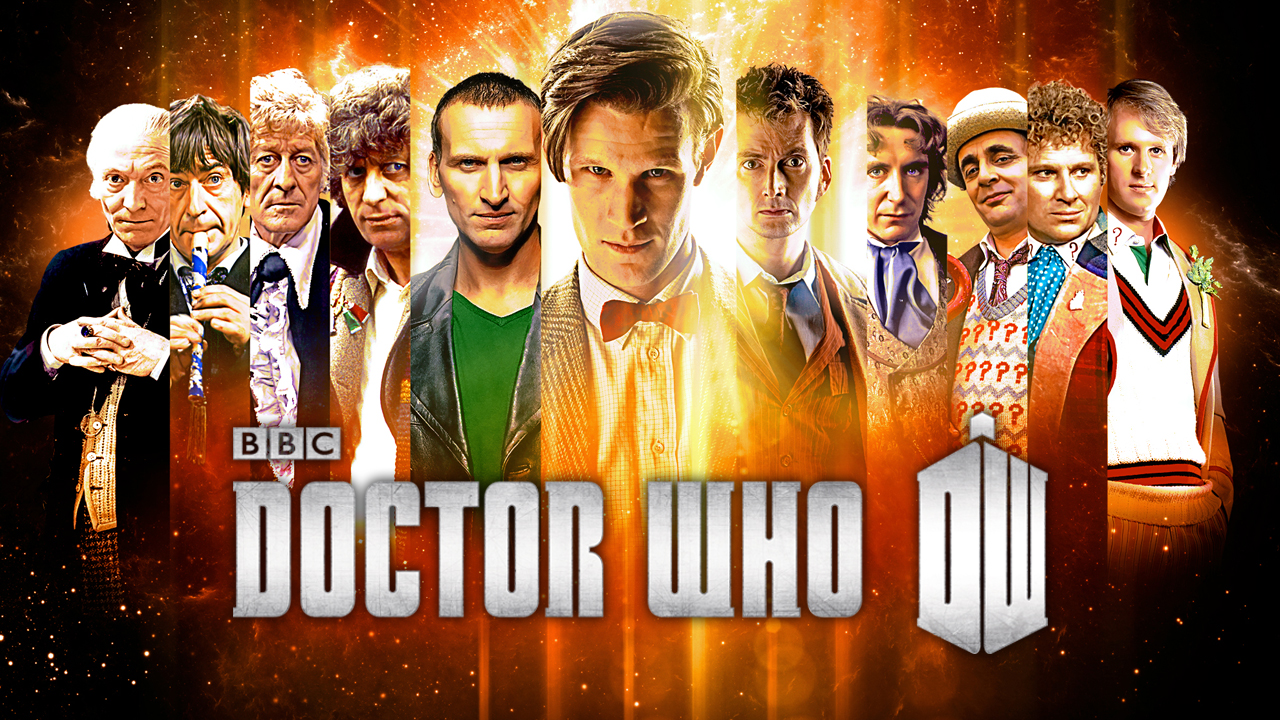
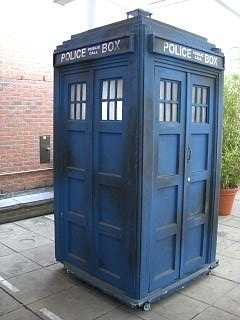
If you don’t know a whole lot about Doctor Who, that’s fine. If you don’t know in a vague way what Doctor Who is, what the hell, man? Maybe not so much in America, but it is a cultural mainstay in Great Britain. What’s the longest-running, most culturally impactful US show you can think of? The Simpsons? The Simpsons has been around forever. It’s still going, and when it started, I was three. When Doctor Who started, my dad was 15. It has been around for over five decades. How the hell do you keep the same feel for the same show for five decades? One answer: regeneration. The main character, the Doctor, is a member of an alien race: the Time Lords. When a Time Lord is grievously injured, he or she regenerates – remaking every cell in their body to escape death, but changing their physical features and even personality traits. Whenever an actor decides to leave, the Doctor dies, regenerates, and comes back slightly different. The Time Lords won their name by mastering time travel, but they are non-interventionist. The Doctor is not. He stole a TARDIS (Time And Relative Dimensions in Space, their time travel devices) from them, and now he pops up in any space, any time, and helps or makes life complicated for whomever he finds there.

The TARDIS: the most advanced spacecraft you will ever see

The primary factor that makes Doctor Who so great is its unbelievable breadth. Not only has it occupied a massive cultural niche for the last 50 years, but the show itself can take its audience to any time or place imaginable. If the writers want to take us to Pompeii the day before the big event, boom, we’re there. If they want to take us to see how humanity is doing in the year 50 bajillion, we’re there. The degree of latitude and writer’s license that exist on this show is huge, and that gives space for the story to be correspondingly huge. The variety afforded by this model enables some truly amazing episodes. The writers can cover an ancient Egyptian ghost story, a far-future murder mystery, a WWII action adventure, or any other combination of events that occurs to them. The Doctor has met Shakespeare, Winston Churchill, Elizabeth the First, Abraham Lincoln, and Vincent Van Gogh, among others.

Another main part of the show’s greatness is the tone of optimism that runs throughout the whole thing. No matter how high the stakes or how dire the consequences, the Doctor himself always believes the best in people, and that the best possible outcome is always achievable. He does not give up, and no matter how cynical a bastard you are, that’s nice to see on television. The Doctor himself is another reason that Doctor Who is such a cultural powerhouse. Competence is something we respect and enjoy to see, and the Doctor has competence in spades. He has intimate knowledge of a limitless number of arcane scientific fields, can completely outmaneuver enemies from stupider races, and manically spouts technobabble with the best of them.

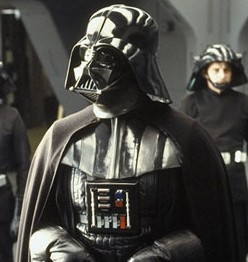
He’s also terrifying. At the beginning of the current incarnation of the show (they took a 10-year break; the version I’m discussing started in 2005), there’s been some huge intergalactic war, and the Doctor is the sole survivor. He’s also the one that killed everyone else to end the war. His general demeanor is silly and happy-go-lucky, but that demeanor is built on the cold, solid granite of someone who will commit genocide if it makes the universe a better place. This major conflict within the personality of the Doctor is a joy to see, and this Darth Vader/Mr. Rogers clash within the character pops up throughout the series. The Doctor likes to eat fish and chips, go on vacation, and be generally nonthreatening, but he also brings down governments and single-handedly decimates armies. The goofiness wrapped around a razor-blade interior is compelling to watch because it’s not just silliness and badassery but who the Doctor fundamentally is covered with a thin veneer of who he desperately wishes he were. The longing and piteousness in that situation give the Doctor an appealing complexity.

He finds your lack of desire to be his neighbor disturbing

Speaking of characters, this show’s treatment of characters is part of what made it great. The Doctor runs about collecting companions, people who travel with him on his TARDIS. The first one for the new series is Rose Tyler. Rose leads a life where she works in a shop all day, goes home, and watches tellie. This is the entirety of her life. Then she is chased by store mannequins come to life, meets the Doctor, and her life changes.

This is how they meet. Notice the Darth Vader/Mr. Rogers dichotomy – all the proper pleasantries followed by him brandishing a detonator he’s about to use and saying “Run for your life!”

Not only does the show do a good job building a full life for Rose outside of the TARDIS – we meet a jealous boyfriend, we see a nice but importunate mother, we learn that her father died when she was just a little girl – but it does a good job having Rose change and develop herself. She starts out as an alright but ultimately boring sort, but the TARDIS changes people. Imagine living life as a normal person when all of a sudden a box falls out of the sky, a man pops out, and that man says that he can take you whenever and wherever you’ve ever wanted to go. One, that would be hard to say no to, and two, being exposed to all of time and space broadens people’s horizons and enables a lot of growth and transformation. Rose becomes more knowledgeable, more caring, and more competent. Her relationship with the Doctor is the ultimate platonic-kinda-but-not-really relationship there is and one of the most adorable things I’ve seen on television. Through her experiences and that relationship, she changes from a normal woman to someone who can hold her own in battles that range through time and space, at one point and temporarily (mild spoiler) basically becoming the goddess of time. To give an idea of the trust and respect the Doctor has for her talent, here he is, facing off against space Satan:

http://www.youtube.com/watch?v=aqlqQsKG94I

Notice again the conflict at the Doctor’s core – angry and ballsy enough to mouth off to Satan himself, gushy and fuzzy enough to talk about how great his girl is.

Most of his other companions follow this same pattern, but none were ever better than Rose. They all share the main trait that meeting the Doctor enables them to tap their potential and improve themselves while helping the Doctor.

Rose Tyler, ladies and gentlemen

I mention how well fleshed-out and dynamic Rose is because it stands in stark contrast to what has been happening on the show lately. I still watch it because for four seasons it was one of the best things I’ve ever seen, but season seven was un-fucking-watchable. What went wrong, Andrew? You said everything was amazing! Well, it was. Was. The biggest problem with the new season and its betrayal of its own past is its treatment of any character not the Doctor. The show now exists not as a vehicle to explore relationships and change and humanity, but a vehicle to aggrandize the Doctor. The companions from previous seasons all have families, pasts, and people who love them. They all change, grow, and cause you to at least care whether they live or die. Season seven’s companion, Clara, has a great mystery about her, but that mystery is all that defines her. That’s it. “Ooh look at me I’m a companion and I’m mysterious,” says Clara. There, now you know almost literally everything I know about this companion. She doesn’t grow, she doesn’t change, and I want you to show me the bastard who cares whether she lives or dies, because I need to yell at him in a bar about things that are good versus things that are bad and why he’s on the wrong side of history. The emptiness and fluff of this character is not only bad television, it’s a slap to the face when you compare it to how well this show used to do supporting characters.

Pictured: Clara Oswald, newest companion. Or Nancy Drew. I don’t give a shit.

In addition, the plot writing has taken an absolute nosedive. The dialogue can still be snappy and appealing, there can still be some enjoyable set pieces, but writing quality has been steadily falling for seasons five and six, and it plummeted for season seven. The main problem is the growing lack of respect for internal consistency. Internal consistency is a tenet of science fiction (really all fiction) that emphasizes the importance of making sure the universe you are setting up makes sense to itself. Whatever rules you set up for that universe, you’ve got to follow them or everything falls apart. In the first few seasons, the Whoniverse was internally consistent. Can’t change time or cross your own timeline without terrifying consequences? Check, we won’t change time or cross our own timelines. Looks like we’ll have to find some other way to sort our problems. In the earlier seasons, time travel either served as a device to get the cast from problem to problem, or was a problem to be fixed itself. Even in spots where the show bent the rules, the writers supplied a plausible explanation that tied it into the rules that already existed, thus maintaining internal consistency. Now, time travel is the solution to almost everything, and no one gives a shit about crossing their own timeline, which was a universe-ending blunder in the first few seasons. Almost every single episode in the seventh season builds up all these complex problems for the Doctor, stacking conflict on top of terror on top of oh-no-how-will-we-ever-succeed, but invariably one stupid thing that is completely unrelated to the episode’s buildup will solve everything. Often, if you ask the Doctor why he won, the response would be “because Time,” but following is a list of other dumbass plot devices that got the Doctor out of jams: a special leaf from Clara’s childhood that stopped the bad guys with happy memories, a flying motorcycle the Doctor uses to get inside a skyscraper with impenetrable security (it was not mentioned before or after that he had a flying motorcycle), a mother’s love being strong enough to protect everyone, and the Doctor literally just screaming who he was and watching everyone run away in fear. It’s like the opposite of Chekhov’s gun: If you see absolutely nothing in the first act, it will appear in the third act, completely change the rules of the game, and make the play terrible. The show is crap now because, with lazy storytelling in each episode, the Doctor is never really in danger and never truly seems to solve anything for himself; his victory is just handed to him because the episode is almost over.

The lazy writing corrupts more than single episodes. Doctor Who usually follows the standard pattern story arc: a bunch of stories, loosely related, paving the way to a big final conflict. Season seven has no arc. It consisted of a bunch of slapped-together one-and-done shows, and I remember being livid when, going into the season finale, I realized that while a Big Bad and a mystery at the end of the season had been hinted at, nothing had been done in previous episodes to actually elucidate or build towards it. This, along with the new, empty, insufferable companion, have made this show awful.

This gif probably accounts for at least 4% of Tumblr’s total bandwidth and is also how I feel about the current state of this show.

You should still watch this. After season four, do what you want, but you have got to watch part of this. It’s a cultural beast, the time travel / space travel / science fiction elements of it make the only limitation for the show the writer’s imagination, and it’s got one of the most compelling characters ever created. This show has won a level of dedication from me that almost no other form of art or storytelling matches. Even after three years of this show ripping my heart out each time its writers couldn’t be bothered to actually resolve a conflict, I still love it so much that if you asked me which show I liked better, this or something like Breaking Bad or The Wire, I’d have to think about it. If the writers get less lazy and decide that character development and cohesive plots actually matter again, this show will get real good real fast. And here’s the good news: with the cultural staying power it has in Britain and the handy regeneration device around to replace retiring actors, this show will probably outlive you and me. That’s plenty of time for it to return to glory.

Andrew Findlay has strong opinions about things (mostly literature) and will share them with you loudly and confidently.

Image sources: BBC America, Washington Post

Life After the Star Wars Expanded Universe: Jose Saramago’s Blindness

Andrew Findlay

In Life After the Star Wars Expanded Universe, we take a look at science fiction and fantasy, why they’re great, and what they say about where our species has been and where it’s going.

Blindness is a novel like Infinite Jest in that it has strong science-fictional traits, but many would throw out terms like counterfactual or speculative instead of going whole-hog and calling it SF. I’ll just say the main premise of the book and let you decide for yourself: In an unnamed city in an unnamed country, people are going about their lives as normal until suddenly, out of nowhere, people start going blind. There seems to be no contagion, no reasonable epidemiology to explain why this is occurring. Some people go blind, some do not. The blindness is not a lack of sight, but a complete whitewashing of your vision – all the stricken can see, all the time, is a wall of white.

The greatest SF explores what happens to society in the face of great change, and that’s exactly what Blindness is going for. Saramago takes away one tiny little thing – sight – and it completely upends the world. The first man to go blind does so at a stoplight, so when it turns green he does not move and pisses a bunch of people off. When those around him understand that he’s been struck blind, they get less angry and one even offers to drive him home. In an action that foreshadows the societal breakdown to come, this shitty samaritan then steals his car. He is the second person to go blind. The government’s response to a seeming disease that they can neither control nor understand is to freak out and force everyone affected to into an old asylum that they have repurposed to house them. A large portion of the book takes place in this asylum, and it is there that Saramago explores in depth what happens to people when they are pushed to the edge.

This seems like a rational response to people going blind.

The main characters of the novel, as much as there are main characters, are the doctor and his wife. The doctor, hilariously, is an ophthalmologist. His wife is inexplicably not affected by the disease – she pretends to be blind so as not to lose her husband to the asylum. In the first group of asylum inhabitants, this pair serves as the voice of reason and tamps down the group anxiety to manageable and sane levels. They build a tenuous society within those asylum walls, which are patrolled by soldiers who will shoot them if they attempt to leave. Nothing lasts, and everything is subject to strain and decay, so however much those first inhabitants can work together, their way of life is shattered as the epidemic builds up to full steam and the asylum is flooded with the newly blind. In the beginning, soldiers would send them food, now there is not enough. In the beginning, the inhabitants would share and work together, now gangs are forming and fighting with each other for food and, horrifyingly, women. It used to be possible to maintain some cleanliness, but with the facilities overflowing with people, the latrines overflow with waste. Blind, imprisoned, and with all agency taken from him by the authorities, the doctor keeps a stiff upper lip, but his breaking point is trying to use the bathroom:

The stench choked him. He had the impression of having stepped on some soft pulp, the excrement of someone who had missed the hole of the latrine or who had decided to relieve himself without any consideration for others. He tried to imagine what the place must look like, for him it was all white, luminous, resplendent, he had no way of knowing whether the walls and ground were white and he came to the absurd conclusion that the light and whiteness there were giving off the awful stench. We shall go mad with horror, he thought. Then he tried to clean himself but there was no paper. He ran his hand over the wall behind him, where he expected to find the rolls of toilet paper or nails, where in the absence of anything better, any old scraps of paper had been stuck up. Nothing. He felt unhappy, disconsolate, more unfortunate than he could bear, crushed there, protecting his trousers which were brushing against that disgusting floor, blind, blind, blind, and, unable to control himself, he began to weep quietly.

There’s a lot going on in this excerpt. First off, it communicates the horror and squalor of their physical situation: this character just identified shit by his sense of touch. He’s stuck in a bathroom where no one can ever hit the target because no one can see it. His sight is gone, but his smell is not, and his surroundings assault it powerfully. Secondly, it highlights how difficult and degrading the simplest tasks can become when we lose one simple thing. Sure, of course blind people cannot drive, but the frightening thing about this novel is that all these newly blind people who have not had time to adjust to their condition struggle even with wiping themselves. Thirdly, it explores the spiritual effect this lack of ability has on people. In this excerpt, we have the doctor – married, successful, in the business of confidently helping others – sitting in a shit-stained bathroom unable to take care of his most basic physical needs. His lack of control in the physical world leads directly to his loss of emotional control, which results in him weeping quietly in a bathroom.

When this is one your main nemeses in life, you are in a bad spiritual place.

This helplessness and despair eventually spreads to most of the city. The guards start falling prey to the blindness epidemic, and, in the absence of soldiers or any overarching social order, the inmates wander out of the asylum and stumble through their transformed city. Blindness demonstrates intensely and convincingly exactly how little it would take for our society to crumble. Everyone is familiar with the idea of the world ending due to violent illness, resource scarcity, or nuclear war. It does not even take that much – the world will end if filled with a bunch of perfectly healthy people who have lost the ability to see. Evolutionarily, this makes sense. Sight is humanity’s primary sense. In the way way back, it, along with bipedalism, gave us an advantage in our primal environment: we could stand taller and see farther than other animals on the plain. We no longer need to hunt for and run from other animals, but the primacy of sight still exists. Think about it: When cops are searching for a fugitive, they don’t put his scent on the APB, they put his image. Movies and television, two of the most popular forms of mass entertainment, require sight to fully enjoy. Reading is, has been, and for the foreseeable future will be the main method of information transfer in our society. Without sight, you would not be able to understand this article. When sight disappears, a big part of how we adapt to and interact with the world disappears with it.

Science fiction is an exploration of humanity in extremity. It imagines a different world and explores how we deal with it. How does a man condemned to perpetual loneliness in Moon deal? How does a man who has come unstuck in time and exposed to all the psychological awkwardness of that state in Slaughterhouse-Five deal? How do the handful of survivors of a world-wrapping biopocalypse in MaddAddam deal? Saramago crafts a beautiful and concise exploration of humanity in extremity by changing one tiny aspect of our current world. It’s not even in the realm of SF that people go blind – that happens daily. The only change Saramago makes is that it happens inexplicably, and it happens to everyone. He pulls at one small string, and the entire fabric of human society unravels. It is important to keep in mind how fragile and impermanent our way of life is, and how little it would take to completely wreck it.

Andrew Findlay has strong opinions about things (mostly literature) and will share them with you loudly and confidently.

Image sources: Wiki, Amazon