tv review

What I Did With My Summer Vacation: Louie

Louie_headoverheels_1280x720_236191299626

Alex Russell

In What I Did With My Summer Vacation we explore shows you should catch up on during TV’s slowest season. This week: Louie, Louie, Louie, Louie.

FX just announced that Louie and Fargo are coming back with new seasons. This is great news for anyone that loves TV. You have roughly a year to prepare. Go watch all of Fargo, I already told you to do that last week. This week’s column is just an extension of the same argument I have with people every week: you have to watch Louie.

There is a ton of ink spilled over Louis CK every year. We’re certainly guilty of spilling ink sometimes at Reading at Recess (to the point where we specifically defended it) but overall, it’s just important to make an argument and to defend it. I don’t mind the thinkpieces about how Louie isn’t funny anymore. I think it’s definitely something worth discussing.

I’m not going to argue over if Louie is or isn’t a funny show. I’m going to tell you it’s a show that’s out to do something else. If you want jokes, Bob’s Burgers, Broad City, Inside Amy Schumer, and Review are all also coming back. Louie wants you to be uncomfortable.

This last season was hard to watch, but that’s what I want out of it. Louie made poor decisions as a protagonist. He approached feminism and body image and consent as topics, because those are the topics we’re talking about. I don’t think he always did so with as much grace as he could have. I do think he did it when no one else really was.

Right now Louis CK has the mic in pop culture. Your mom knows who he is and he’s the most popular stand up with your friend who has some actual cultural cred. His show isn’t wildly popular, but he’s the subject of thinkpieces (I hate that term and now I’ve used it twice, but it’s really all that works) because there’s something in his show that’s worth thinking about.

This last season was not my favorite season of Louie. I think Parker Posey’s character from season three will be my favorite part of my favorite show for a long time to come. My favorite moments in Louie have always felt to me like I wasn’t exactly sure what was being intended by them. What Louie is to me is not what Louie is to you. It’s not because I’m special; it’s because everyone is going to take away something else from that strange view of the world.

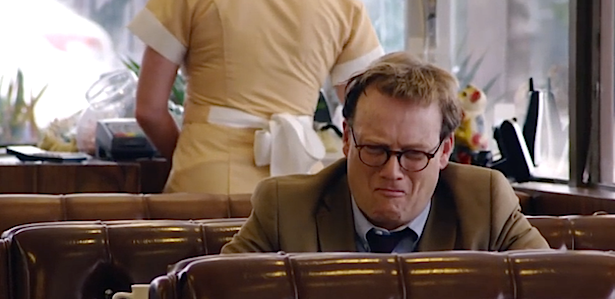
Louie isn’t very funny anymore. There are still great moments — this, the opening to the season with the garbage truck, is the hardest I’ve laughed in 2014 — but I don’t need to laugh at Louis CK on his show. I need him to take some risks. I need him to try to talk about delicate topics and not always do a great job. I need a full world that’s uncomfortable, like the couple next to you at the restaurant getting rude with the waiter. It’s awful, but that’s what actually happens when you go outside sometimes.

Louie can be dark or light, depending on the episode and your personal temperament, but it is always something considering. Season four had big character development (and undevelopment, at times) but it can also be the story of learning how to talk to your kid about drugs. It’s a lumbering beast at this point, and I totally understand if you don’t like what you see. Just keep in mind that for some of us, that’s part of the point.

You can watch Louie on FX’s website or on Hulu. You can also read our recap series about season four where we tried to find larger life lessons in each episode.

Alex Russell lives in Chicago and is set in his ways. Disagree with him about anything at readingatrecess@gmail.com or on Twitter at @alexbad.

Dating Naked: VH1’s New Reality Dating Show Mixes Dating and… Naked People

Dating Naked

Jonathan May

I watched the premiere of VH1’s Dating Naked over the weekend, and it was about as floppy as many of the blurred out genitals during the course of the dates. The premise is achingly simple: one girl and one guy meet and go on a naked date, and then a proper date with clothes. The next day, each go on a date with a different person (also naked), ending with each date being brought back to the house for subtle inspection by all parties. This happens one more time. So on the last night, there are three girls and three guys, usually all naked, in the pool. The spin isn’t terribly original, nor are any of the jokes made about nudity during the surprisingly endless 30 minutes.

The truly unfortunate part is that, in this episode in any case, the initial woman falls for the initial man much harder than he for her; I can’t tell if the show’s production was adept at finding the right obsessively emotional girl, or if they just picked one of many. The show makes the tacit statement that women are more emotionally needy than men, and through careful casting and a splash of alcohol, it achieves its effect. Men are cast as untamable lotharios, and women as needy vixens. What’s new?

But the initial pair doesn’t enter quite so jaded. Each speaks to the camera of looking for The One and finding someone who is genuine, but as soon as gorgeous naked bodies come into play, a lot of the emotional criteria fall by the way. By the end of the episode, the initial Adam and Eve pair must each pick one person whom they’d like to date later; they are free to pick each other as well. I won’t ruin the ending, but needless to say, the production of the show rests soundly on the scant bits of blur on otherwise completely naked, mostly attractive, Americans.

Like all reality dating shows, this focuses on minor bitchy dramas and sexual farces to keep it moving; it’s unclear how much is scripted and how much might actually be sincere, but it feels like sincerity is beside the point in a show where all the contestants are nude. It’s safe to say Dating Naked isn’t breaking any new ground, but it was still more interesting than any other dating show I’ve seen on television in the past few years. Though I doubt the show will create any kind of fandom, I’ll probably still be tuning in next week.

Jonathan May watches too much television, but he’s just playing catch-up from a childhood spent in Zimbabwe. You can read his poetry at owenmay.com, follow him on Twitter at @jonowenmay, or email him at owen.may@gmail.com.

Postmodern Rapture – The Leftovers Episode Three – Two Boats and a Helicopter

article-2654110-1EA2AAB600000578-391_634x356

Colton Royle

Every week Colton Royle discusses the newest episode of HBO’s new show about a new kind of rapture, The Leftovers. You can also read our review of the book the show is based on.

Many spoilers ahead.

The Leftovers stares religion in the face with the new episode focusing entirely on Matt Jamison, Mapleton’s minister, as he pushes the line between madness and divine power that arises as a theme once again. Where the previous two episodes have felt frayed at the edges and had us viewers grabbing for a metaphorical bucket dropping into a well, here was an episode that felt tight, feverish, and much more indicative thematically.

Matt Jamison preaching to a near empty church was an interesting and unexpected turn when you consider how much emphasis is placed on the rapture in Christian doctrine, and this brings up a theme of the episode which to me was ambiguity in suffering. I mean here is a guy who lost his congregation and now he’s gonna lose his church, and he can’t get the money from his sister and he eventually does get the money but he almost gets mugged and THEN he gets hit with a rock and misses the deadline and his wife is…I mean WTF, I don’t even know if I have a heart left after all these emotional stab wounds straight to it.

Three arrivals of the pigeons in key locations and colors for a massive gambling success only to have him miss the deadline to buy his church back by three days establishes the point Nora (his sister!?) makes that even with all the “good news,” or even divine help, does it make the situation of life, life in the modern world, any better? To me, The Leftovers is starting to make some massive questions very concrete in this episode, and even the varied tones in which they depicted Matt, from beautiful and serene during the baptism scene, to his eventual nightmare in the hospital and his jagged anger in chiaroscuro lighting, leads us to question each of these characters in multiple settings. It’s not simply binary; it’s not just this and that, but rather a polyphony of reactions.

All this I say, yet when the Guilty Remnants buy Matt’s church, it builds a rage in Jamison that is building all through Mapleton that is very much an “us and them” story. Will it turn violent for the cult? Tethered to all this melancholy and hysteria is this building desire from the citizens for all of post-departed life to mean something more, and with that comes “responsibility” and “retribution” and “redemption” and a bunch of other five dollar words to say that these people want it to matter. So while The Leftovers builds ambiguity and uncertainty, it also meddles with characters who are trying to push against it. Case in point, when asked “what denomination?” in reference to casino chips and Matt (the minister) replies, “does it matter?” we start nodding and going, “okay now I get it.”

This is interesting. It’s interesting to me because at the heart of it is storytelling in general and what television takes for granted in particular and the friction between plot development and real life coming to a head could lead to some super interesting and way too academic analyses (see previous 507 words).

But really this episode was gripping and really hurt and had some more reveals (“Roy, you deserve this” –K.G.) that will make you butt-bump up and down on the couch and clap. You want to see other people (not just us) try and make sense of life in erratic and strange ways? Follow follow follow follow…

Colton Royle is a reader of mostly American fiction and non-fiction. He is currently teaching in Fort Worth, Texas.

What I Did With My Summer Vacation: Fargo

allison-tolman-fargo-tv

Alex Russell

In What I Did With My Summer Vacation we explore shows you should catch up on during TV’s slowest season. This week: Fargo, morality, and lots and lots of snow.

I mean, you watched Fargo, right?

Something I’ve become fascinated with lately is “missing” culture. I haven’t seen True Detective yet, and I have to add the yet there as quickly as I can whenever I say that. Of course I’m going to watch True Detective. How could I not, with how people talk about it?

That’s what happens with shows now. People either watch the “not optional” ones or they spend time at parties telling people that they’re “a few seasons behind.” The entire premise of this series — to get you to hopefully watch a show you should catch up on — requires that you be some sort of mythical beast that doesn’t already have a few lifetimes of TV ahead of you.

Let’s assume you have the time, but you need to be persuaded to spend it with Fargo. You saw the movie at least, right? OK. Well, start there, I guess?

Fargo the show exists in the same world as Fargo the movie, but that’s essentially all you need to know. The show is interested in some of the same themes — what we deserve, especially — but it’s refreshingly its own thing. There are a handful of Coen brothers homages peppered through the season, but they are more affirming than they are distracting. They exist to bring up questions about the bigger universe of both Fargo the show and Fargo the movie. They’re meant as little easter eggs more than big “oh, that guy!” moments.

It feels too slight to just say that it’s not just a cousin to the movie, but it’s an important starting place when discussing the show. I came in skeptical; Fargo is one of my favorite movies. I wasn’t disappointed. The show looks poised to pick up just about every miniseries Emmy available, too, so people have bought into this world.

I’m not going to rundown the plot of the first season. Since the first season is self-contained (supposedly, but some members of the cast broke out so much that I wouldn’t be surprised if that gets reconsidered) this story is “over.” These people, such as they are now, are done in the world of Fargo. This is a completely closed story, and you don’t get too many of those.

Fargo is a hard show to not spoil. I don’t want to give any details here because I want you to go watch this damn thing, but it’s a show that is not uncomfortable taking risks. I’ll say that. Any show where your cast doesn’t even have to last the season — much less the episode — is a show with just an unbelievable amount of suspense. It’s not all blood and death, but man, sometimes it sure is. There’s just something about the contrast of blood and snow. It’s a really striking show, even when there’s nothing too bonkers happening.

I think you should watch Fargo. It’s not that long and you already know the world, somewhat. You don’t know Billy Bob Thornton in it, though. You might wanna check that out, no matter what else you have on your plate.

You can watch Fargo’s first season on FX’s website or on Hulu. You can also read our previous piece about Molly, the cop who subverts the trope of the evil hero in modern TV.

Alex Russell lives in Chicago and is set in his ways. Disagree with him about anything at readingatrecess@gmail.com or on Twitter at @alexbad.
Postmodern Rapture – The Leftovers Episode Two – Penguin One, Us Zero

article-2678245-1F5677FC00000578-381_634x789

Colton Royle

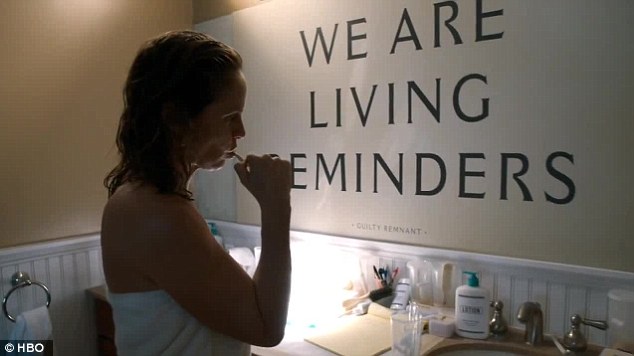
Every Tuesday Colton Royle discusses the newest episode of HBO’s new show about a new kind of rapture, The Leftovers. Since two episodes have already aired, we covered episode one on Friday and here is episode two. You can also read our review of the book the show is based on.

To repeat, massive spoilers ahead.

I cannot believe I’m saying this: there are too many guns. Already in episode two a SWAT team is getting sent into Wayne’s establishment to rob so many Asian girls it’s comical. This action that happens way too soon gets multiplied by Tom “saving” Christine by killing with a gunshot to the neck. Yes, I’m enjoying the parallels to his father, Kevin’s, shooting of the dogs last episode, and yes, we’re debating whether the identities created so far are because of the massive departed, or whether the personality was something there all along, but it’s too much too fast. The violence left the rest of the episode in a fog.

More questions of identity: Kevin Garvey’s mental disturbances mimic the continued parallel to the supernatural plot developments of Stephen King’s The Stand and Under the Dome, and we’re unaware if it is truly madness or divine intervention, which is so 15th Century. It has that Lost feel to it that makes me want to bite down on live electrical wire.

The quick edits to the dog shooting during the therapy session were too quick and not subtle and loud and just…etc.

Kevin’s “Investigation of the Missing Bagels,” felt like a Blue’s Clues episode, but this combined with questioning the shooter’s existence to his father’s schizophrenia was layered extremely well, and featured that adult paranoia that seems to be building in Mapleton.

Yet Jill observing Nora purposely break the coffee mug to get out of paying for her breakfast was easily the most engaging moment in the episode. Is she using her tragic story for profit? Is she simply playing around with suburban niceties? This coincides with her role in “departed insurance” which is literally profit made on the disappearance three years ago.

Jill is at a crossroads, and is the last Garvey to commit to any kind of altered behavior post-disappearance. Playing detective with both the dead dog last episode and Nora this episode has her seeing all the avenues. Again: so much identity.

Meg Abbott swinging an axe is one of those odd totally-a-cult procedures that gets remarked on by Laurie Garvey as “not a cult,” and this is a problem. It’s a problem when handwriting is with blue ink on little white notepads that make us feel like we’re teaching the sixth grade because we’re squinting at the screen. It’s a problem when dialogue moves fast and handwriting and reading don’t. There are some major complexities with the Guilty Remnants that are going to be missed or incorrectly assumed or told without elegance.

Tom’s repeated yelling from underwater last episode to above water this episode was an excellent progression of the suffering that Wayne says he wants, “without salvation,” and perhaps Tom assumes in some way that he is already damned.

Will Kevin uncover the truth about his supposedly “sent” friend? Will Jill and Aimee steal more stale gummy bears? Is Christine really everything? Will Liv Tyler build a log cabin? We’ll let Wayne decide.

Colton Royle is a reader of mostly American fiction and non-fiction. He is currently teaching in Fort Worth, Texas.

Image: The Daily Mail

Postmodern Rapture – The Leftovers Series Premiere

article-2654110-1EA2AAB600000578-391_634x356

Every Tuesday Colton Royle discusses the newest episode of HBO’s new show about a new kind of rapture, The Leftovers. Since two episodes have already aired, episode one is covered today, episode two will be covered on Monday, and we’ll be caught up by Tuesday. You can also read our review of the book the show is based on.

Colton Royle

We all remember the 1990s and Kirk Cameron, but it’s a new decade, and The Leftovers, an HBO series based on the novel of the same name by Tom Perotta, hopes to avoid any religious dogma while presenting moral aspirations of its very own. The story mostly follows the Garvey family in the suburban and affluent Mapleton, and it has been three years after a rapture-like disappearance of two percent of the world population by unknown causes. “Gary fuckin’ Busey,” a bartender says before turning the volume down, an almost overused reminder in the first episode that there was no motivation or criteria. Mapleton remembers October 14 as “Hero’s Day” and holds a parade to honor the ones that have gone. It is a world of letters with no signatures, and little to no hope of anything near redemption.

The following contains spoilers.

And yet, even with Kevin Garney, police officer and existential night runner, as he punches a photograph of his wife on the wall, even with the students burying a dog and lamenting, “I’m sorry you had to go through this,” and the stale parallels in that, the story is already heading towards some Stephen King style good vs. evil conflict a la The Stand and Under the Dome. Not one but three cults have emerged from the mess of disappearances, each with their own reasoning for the event. The Garney family itself is as fractured as the town, with the father coping with his own wife, in a twist, not as one of those vanished, but a member of the silent-and-chain-smoking-and-traveling-in-pairs Guilty Remnants. Kevin’s son Tom attempts a relationship with a young Asian woman who is under the watchful eye of Wayne, a leader for the second cult, as he holds his eyes open just a little too wide and intimidates with knife moves. And the daughter, who floats in anti-paranoia for as long as possible, gets high on-campus and elbows girls in field hockey.

I myself am stumped by my reactions: do I want a supernatural show to commit to a linear progression of understanding? Because I seem also to enjoy, only slightly, the sheer noise of responses, the entropy of anger. Even the parallel structure with Kevin Garney and his run-in with the dog killer, from hatred for killing animals, to his changeover to shooting the dogs with a gun of his own, the symbolism oversaturated, at least was somewhat intriguing. They showed a lot and told a little, which is a good start, but it will face difficulties in tone and therefore audience if it is continued. “They’re not our dogs anymore,” the hunter says, and while that is true for the town of Mapleton, so far, it is also a question in the air for the entire show. Who will The Leftovers belong to?

Colton Royle is a reader of mostly American fiction and non-fiction. He is currently teaching in Fort Worth, Texas.

What I Did With My Summer Vacation: Review

Screen-Shot-2014-03-06-at-2.30.53-PM

Alex Russell

In What I Did With My Summer Vacation we explore shows you should catch up on during TV’s slowest season. This week: the downward spiral of Andy Daly on Review.

We’re gonna talk about Andy Daly’s extremely strange, extremely dark glance at humanity in a second. FIrst, I’m gonna need you to watch him eat 15 pancakes.

I normally don’t think “you’ve just gotta see it” is an important component of criticism, but there’s only so much I can tell you about Review without you having some basic experience with it. It’s Andy Daly (who you may know from Eastbound & Down or various podcastsplaying Forrest MacNeil, a “life reviewer.” He hosts a show within a show, which sounds more complicated than it is.

Forrest is the most interesting kind of madman in that he truly believes he has insight the world needs. His character is defined by the lengths he’ll go to for the “perfect” review. It’s no spoiler to tell you that “Pancakes, Divorce, Pancakes” gets a little dark, but the it’s all more interesting than most shows that get labelled “dark.”

It’s not the divorce itself, that part’s not funny. It’s that Forrest truly believes he’s making something that matters. He believes that by experiencing divorce in a happy marriage he can impart wisdom to the world. He’s game for anything — anything — because he has to have the first-hand experience to “review” it on his show.

It’s Always Sunny in Philadelphia works while other shows about terrible people don’t because the characters in Sunny are getting worse in really slow, specific ways. Dennis on Sunny is likely a murderer at this point, so the show can play around with him being “just an asshole” for a little while with no real fear of those little slights making him unlikable in that moment. If you’re on board for what Sunny has to say about the world — that nothing really matters as long as you’re totally oblivious — then you’re on board for everything else they do to their characters. They can eat garbage or mail people their hair or whatever; they are beyond simple changes now.

Not so with Forrest. Forrest is a character that’s alternatively really depressing and really infuriating. He ruins his own life to make these “reviews” for his show, but even the show itself doesn’t matter. He makes bad choices and stands to gain nothing from them beyond fodder for a show. That gives the whole thing a meta feel to it that layers over the darkness; you feel genuinely bad for Andy Daly while you also feel that Forrest MacNeil deserves what he gets.

It’s a wonder the show worked with so many people. I was deeply in love with it from the start, but bits like a misunderstanding of language that causes Forrest to commit himself to serious mental care (“There All Is Aching”) really require you to take a few steps as a viewer. Anyone should be able to enjoy Andy Daly dressed as Batman trying to get his son back, though (“Being Batman”). Watch that one, and, hell, you’ve already watched him eat 15 pancakes. Don’t you want to see what the second installment of pancakes could possibly be?

It’s 30 pancakes, but as with everything else in Forrest MacNeil’s life, it’s so much more than that.

You can watch highlights of season one of Review on Comedy Central’s site, and the full season is around if you’re crafty. Season two comes out in 2015, so you better be ready.

Alex Russell lives in Chicago and is set in his ways. Disagree with him about anything at readingatrecess@gmail.com or on Twitter at @alexbad.
What I Did With My Summer Vacation: Nathan For You

maxresdefault

Alex Russell

In What I Did With My Summer Vacation we explore shows you should catch up on during TV’s slowest season. This week: the nervous weirdness of Nathan For You.

It’s summer, and TV is dead. Even with Netflix releases of shows like Orange is the New Black, we’re still mostly at the mercy of TV scheduling to determine when we watch new stuff. If your DVR looks like mine, right now you don’t have much to catch up on. This is the perfect time to start something new. For the next few weeks, we’re going to go over what you should watch to get ready for the glorious return of fall TV.

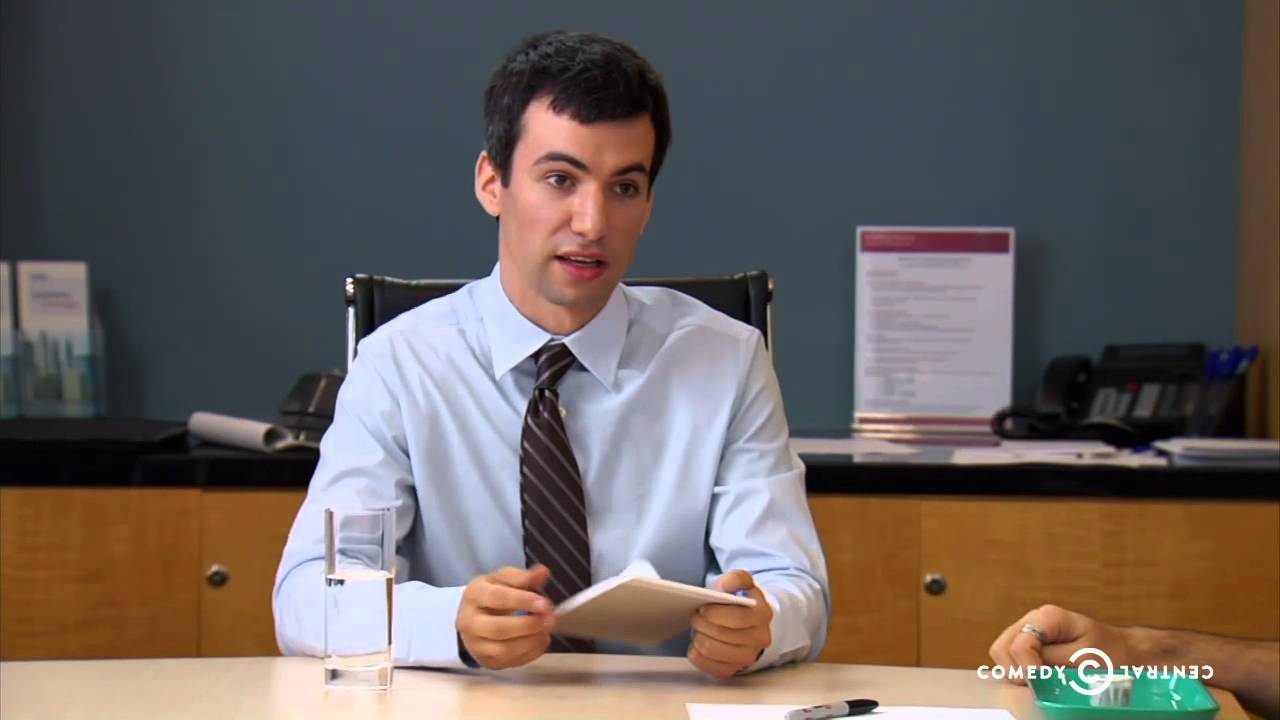
The first installment is Nathan For You, a supremely strange show that had an eight-episode first-season run on Comedy Central last spring. In each episode, comedian Nathan Fielder meekly suggests business ideas to struggling local businesses. They range from the simple and bad (a cab service where you can opt out or in to conversation with the driver) to the complex and bad (a gas station that offers “free” gas with rebate where the rebate requires customers to climb a mountain and sleep in the woods).

The real joy of Nathan For You is that these ideas aren’t complete jokes. For a brief second, all of them seem like they have a chance at working. When Nathan suggests that a burger place claim that they have the best burger in town — and they’ll give you $100 if they’re wrong — you definitely feel compelled to go to the burger place and see. Watch this three-minute clip from the episode:

The business owners in these episodes always come off genuine. Nathan only shames people or makes them look stupid if they’re actually terrible people. There’s an episode with a private detective who is genuinely awful, and it’s fun to watch Nathan make him look like an idiot on TV. There’s a very The Daily Show with Jon Stewart feel to those interviews, but in this one the burger guy just seems genuine. He wants you to eat his burger and he thinks it’s the best in town, he’s just not sure he wants to risk $100 that he’s wrong. Nathan offers to put up the cash himself, and the game is on. You might see where this is going.

“Cringe TV” can be pretty awful. I’ve written before about how The Office was a fun show, but 22 minutes of Michael Scott disappointing inner city kids in “Scott’s Tots” doesn’t work because it’s too mean and too sad. Nathan For You has some rough moments to watch, but they’re all at Nathan’s expense. When he offers people a free pizza if a pizza place can’t deliver in eight minutes, you know it’s going to end badly. But when the customer is angry that the free pizza is the size of a hand, Nathan’s the one who gets yelled at. It’s funny because you think the poor real pizza delivery guy is going to catch hell, but it’s this nervous Canadian comic instead. The pizza guy getting yelled at is sad; Nathan having shit rain down on him is amazing.

You should start with the gas station episode. It’s really beyond description to watch people file into a van to spend the night in the woods with Nathan to save miniscule amounts of money on gas. The creators’ choice to pop up images about how little people are saving as they go through the ridiculous rebate process is inspired. Watch it, love it, and throw the new one airing tonight on your DVR. What, what else are you watching tonight?

You can watch all eight episodes of season one of Nathan For You on Comedy Central’s website.

Alex Russell lives in Chicago and is set in his ways. Disagree with him about anything at readingatrecess@gmail.com or on Twitter at @alexbad.

America’s Next Top Model: Cycles 20 and 21

America's Next Top Model, Cycle 21

Jonathan May

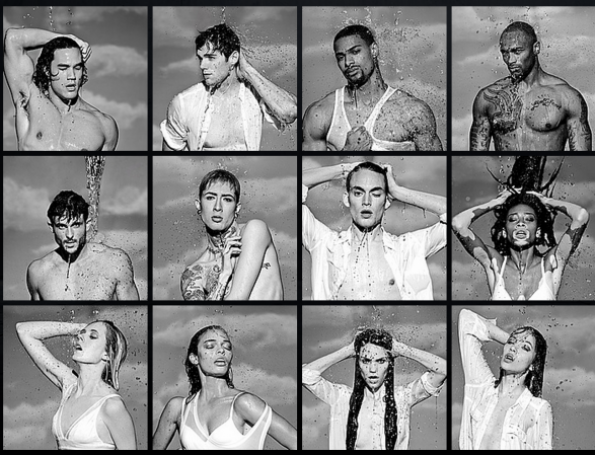
Cycle 21 of The CW’s America’s Next Top Model starts at the end of August this year. Going along with the 2.0 reinvention theme from last cycle, this latest will feature both male and female models, competing for the top prize. After much brouhaha, Ms. J. Alexander will return to judge alongside Tyra, the fans, and the fabulous Kelly Cutrone. Being from Memphis, I’m proud to say we have a male Memphian representing the River City in the competition. And because Tyra loves to shake it up, this upcoming season will also feature a female African-American contestant with vitiligo—I’ve seen her photos posted on the ANTM Facebook page, and she is gorgeous. I’m glad to see that Tyra keeps pushing the fashion envelope as far as the mainstream is concerned; it’s the same reason I like the United Colors of Benetton ads for their “whole-world” perspective on what is beautiful. America’s Next Top Model over the years has addressed and codified many forms of beauty, but what keeps it from becoming formulaic is the insistence on a model who can actually function well in the industry, perhaps the most important factor.

But let’s take a look at how the introduction of guys to the competition went in Cycle 20. Hormones raged as soon as the final contestants were decided. Romances quickly developed between various pairs; one particular couple, Marvin and Renee, were even termed “Marnee” like so many celebrity pairs. Cycle 20 also proved that the men could be just as bitchy as the women; for example, Chris, the hot and emotional brunette-turned-blond, drains the other contestants constantly with his notes about dishes and yelling about others’ behaviors. I personally blame him for Nina going home as early as she did, because she would spend so much time listening to his emotional quibbling.

This cycle also heightened the suspense by leading up to an elimination (or comeback) right as the episode ends, so you have to tune in the following week to see the results. While this may be an aggravating move for television viewing, when you binge-watch online it makes much less of a difference. One particular episode, however, wherein two contestants are brought back almost broke the emotional will of Phil, the bearded contender. He broke down while being eliminated, only to be told that tonight was the night someone was being brought back, upon which he broke down again. Then Tyra announces that Alexandra is coming back, and Phil breaks down again because he thinks that’s the end. Then Tyra says that she only just announced the female comeback contestant and has yet to pick the male. Phil breaks down again at that point. When he finally loses coming back to Jeremy and breaks down for the final time, I fully expected him to suffer a total nervous collapse. Such is the drama of reality television.

Ultimately, the winner was determined more by virtue of the sponsors (Guess Jeans, Nylon magazine) than by sheer talent. I won’t spoil the results in case you haven’t watched, but let’s just say I wish there were more variety in the lineup. Does a guy stand a chance of winning America’s Next Top Model? I’ll be tuning in this August to find out.

Jonathan May watches too much television, but he’s just playing catch-up from a childhood spent in Zimbabwe. You can read his poetry at owenmay.com, follow him on Twitter at @jonowenmay, or email him at owen.may@gmail.com

Undateable: NBC’s New Comedy Set in Detroit… that Doesn’t Want to Talk About Detroit

Undateable

Jonathan May

NBC’s Undateable is set in present-day Detroit, Michigan and plays this fact for laughs approximately one time in the six episodes that have aired so far. This is its main fault; most great comedies make great use of the cities in which they’re set. Curb had Los Angeles, Seinfeld had New York City. Often the nature of a show is dependent on where its set, but the fact that Undateable is filmed in front of a live studio audience makes it somehow more germane and less specific to Detroit and its comedic possibilities.

Like other sitcoms, this one is set in a bar and follows its fastidious, young owner Justin, his sexy, swaggering roommate Danny, and their motley crew consisting of Danny’s sister, a gay man, a black man, a openly misogynist nerd, and a hot female server. While the variety of the group unfolds many possibilities, unfortunately these roles are mostly played to stereotype. While I laughed out loud many times over the past six episodes, I can’t help but feel empty about most of the characters; the two main men find ladies very early on, and the ancillary characters languish listlessly in the background, ready to serve up another clever off-color joke or ubiquitous cultural reference when needed. But the show doesn’t seem to be addressing any central problem that would give it more focus. No one is really in jeopardy; nothing much is at stake. And ultimately, for a show to be set in Detroit in 2014, as the city goes through the insane bureaucratic process of insolvency, and not address any of this is the worst kind of audience letdown.

For a show like Undateable to make it another season (and possibly the rest of this one), it will need to establish a problem, preferably one which connects to Detroit’s problems at large, giving it a more empathetic context. Perhaps its characters might not seem so flat if they discuss, openly struggle, and make fun of the crippling issues of public service, safety, corruption, and government failure that they could. A comedy like Broad City highlights the complexities of getting around, working, and living in New York City, but in Undateable, we miss out on all the potential fun, being constricted by the format to scenes set in the apartment and the bar. I’ll be tuning in for the laughs, but I just wish the show would give us something memorable.

Jonathan May watches too much television, but he’s just playing catch-up from a childhood spent in Zimbabwe. You can read his poetry at owenmay.com, follow him on Twitter at @jonowenmay, or email him at owen.may@gmail.com.

Image: NBC