Author: Alex Russell

How Did I Like This? Limp Bizkit – “Faith”

e9ac49601d2ffd5a3747875fda0d3ad8

Brent Hopkins

In “How Did I Like This?” someone looks back at something they loved as a child and wonders how they were ever so wrong. Today Brent Hopkins listens to Limp Bizkit.

Limp Bizkit found its rock and died underneath it many moons ago, snuggling Fred Durst’s sex tape and probably their newest album, Stampede of the Disco Elephants, which will be dropped this year. Luckily, for Reading at Recess’ sake, sometimes your ankle gets grabbed by the rock dwellers and I had the pleasure of listening to not one, but two of their songs this morning on my carpool trip to work today: “Rearranged” and “Faith.”

“Rearranged” came on second and honestly, I have to admit I started singing along. I still remembered all of the words. It isn’t really played too much compared to much of their discography and I hadn’t heard it in somewhere in the vein of 10 years. As I am typing this I still can’t get the beat out of my head, so I am sure it will be stuck with me for the rest of the day.

For those that haven’t heard this song in a decade.

Faith came on first and I was mildly confused as to what I was hearing. Since living in Korea I have grown accustomed to singing in karaoke a few times a year and “Faith” by George Michael is hands down my most belted ballad. I don’t know why, but I absolutely love the song and that is where my singing zone is. Hearing Fred Durst sing the song for the first time in quite awhile (more recently than “Rearranged”) made me grind my teeth in dissatisfaction. I wasn’t too familiar with Michael as a kid so I thought Freddy Faith Bizkit was doing a pretty fine job of it. Wrong. I listened to every second of it and instantly thought: “Well, that’s definitely one of those wrong things from your childhood, Brent.”

This was the first thing I put on after booting up my PC at work to wash the sound of that other “Faith” away. All I have to do now is avoid listening to their cover of “Behind Blue Eyes” and I may be able to live a healthy life.

Brent Hopkins considers himself jack-o-all-trades and a great listener. Chat with him about his articles or anything in general at brentahopkins@gmail.com.

You Need to Watch Black Mirror: “The National Anthem” Episode Review

black-mirror

Jonathan May

Promise: I will not give away the ending. You must watch this show. Watch it immediately after reading this.

It’s been a long time since television has posed such an interesting question as this episode poses. Is the decency of one man worth more or less than the life of one other person? Such a fragile and horrifying situation. I found myself aghast at the cost of fame, wherein your personhood, known to all, is your own worst enemy. In this case, the British Prime Minister must have sex with a pig on live television or else the kidnapped Princess will be executed. The use of YouTube by the kidnappers (I’m not giving the end away, I promise) to facilitate a public interest reminded me, in a way, of the scene between the prisoners and citizens of Gotham in The Dark Knight. You bring the public into the situation, and that’s where the stake of fame comes in. It would be interesting to posit the same premise, but with an “ordinary citizen” at the center, instead of a Prime Minister. Would the greater public be just as interested in watching an everyday Joe have sex with a pig to secure the release of a princess? I’m not so sure, but then again, I’ve never wanted an office of power, where you become the target for statements thrust into the public sphere.

As far as this being a commentary on art, all I will say, without divulging the end, is that this episode conflates “Art” with “Statements.” For something to be artistic, it should be beautiful (a bold statement, but one I’ll stand by any day), and while the idea might be beautiful in a cold, intellectual way, the expression of the idea is far from beauty, focusing instead on art always being a performance, which I thought we had moved beyond.

But for the love of yourself, if you want to watch the most gripping thing produced for television in the past five years, seek out Channel 4’s Black Mirror, the first episode “The National Anthem.”

Jonathan May watches too much television, but he’s just playing catch-up from a childhood spent in Zimbabwe. You can read his poetry at owenmay.com, follow him on Twitter at @jonowenmay, or email him at owen.may@gmail.com


Life Lessons from Episodes of Louie: “Back” and “Model”

louie-3

Alex Russell

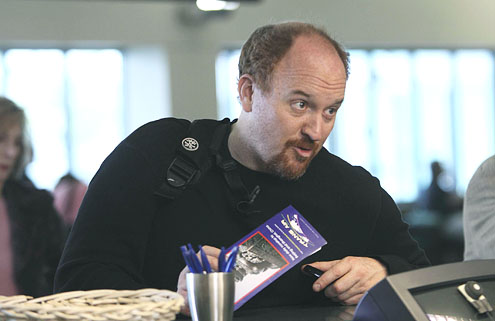
Louis C.K.’s critically acclaimed show Louie’s fourth season runs as two episodes every Monday night. Rather than just answering the question of “are these episodes good,” (because the answer is always yes) we’ll talk about the big lessons imparted in each episode. This week: Louie’s back hurts and he has to open for Jerry Seinfeld.

Welcome to this! Maybe it’ll work and maybe it won’t. That sentence had to come up in the pitch for Louie, so it’s as good of a place to start as any. I love Louie very deeply. I even loved Louis C.K.’s tonally similar movie. Louie is always going to mean different things to different people, but to me it means hope for the hopeless. The “world” of Louie is brutal and mean, but it is not without victory. After an extremely long hiatus, Louis C.K. had to come out swinging to remind people what both the world of Louie and the character of “Louie” are like. The first two episodes definitely do that.

Episode 1: “Back”

“Back” opens with the best joke structure possible: Big gets bigger. Louie wakes up in New York City to the sound of garbage men. Of course, they break into his house to jump on his bed and dump trash on him. His life literally gets worse from the moment he wakes up. It’s a fitting start to an episode that’s mostly about how hard it is to get older.

Louie always features stand up bits that weave the vignettes together; the one about hating a 31-year-old for complaining about aging will hit too close to home for a lot of people. Louie’s back goes out and a gruff doctor, an unfazed sexshop worker, and Todd Barry don’t have any time or interest in consoling him.

It’s tempting to label this “you have to take care of yourself,” but the doctor is insistent that everyone’s back hurts most of the time. The back pain is obvious both as a symbol for and the result of aging, so the first episode of the season is closer to the first line from the Serenity Prayer:

God, grant me the serenity to accept the things I cannot change,
The courage to change the things I can,
And wisdom to know the difference.

Episode 2: “Model

Anyone with a passing knowledge of Louie or a working sense of dread will see the first twist in “Model” coming. Louie has to open for Jerry Seinfeld at a benefit. He doesn’t get enough detail and thus ends up in a T-shirt at a black-tie affair full of millionaires. The first 10 minutes is every bit as agonizing as you’d expect, but it’s when the episode turns to the model herself that it socks you in the gut.

There’s some good stuff that I don’t want to spoil, but it is enough to say that this episode would have consequences for the characters on another show. The “continuity” of Louie is always up in the air — outside of two extended relationships on the show, not much carries over — but it will be interesting to see if the show cares about the big blow it deals its main character in “Model.”

Probably not, and that’s more than fine. What’s more interesting is the lesson itself, revealed in the scene with the credits: It’s never all bad.

Alex Russell lives in Chicago and is set in his ways. Disagree with him about anything at readingatrecess@gmail.com or on Twitter at @alexbad.

Worst Best Picture: Is The Bridge on the River Kwai Better or Worse Than Crash?

1958_iconic_actor_guiness

Alex Russell

In “Worst Best Picture” we search every single Best Picture Oscar winner of all time from 1927 to present to uncover the worst of them all. Conventional wisdom says that 2005’s winner Crash is the worst winner in history. We won’t stop until we’ve tested every last one. Read the the first, our review of Crash, here. All posts should be considered to have a blanket “spoiler alert” on them. Today’s installment is the 1957 winner The Bridge on the River Kwai. Is it better than Crash?

There’s a reason it’s Ron Swanson’s favorite movie: It’s about building a bridge.

The Bridge on the River Kwai is every dad’s favorite Best Picture winner. It’s about brutality and masculinity in unexpected ways. From the opening shot of two men digging graves to the closing raid on the bridge itself, there couldn’t be more masculinity built into this movie unless it actually crossed the three-hour mark it comes close to crossing.

Every story is about conflict. The Bridge on the River Kwai is a war movie, but the fact that the British soldiers are in a prison camp only matters as an establishing detail. Alec Guinness leads his men through their stint as prisoners of war with the standard British resilience, and it definitely starts out as a movie about brutal conditions and harsh realities of war. The strict head of the camp Colonel Saito (Sessue Hayakawa) tries to force the British troops to build a militarily important bridge, the British troops refuse and do a terrible job on purpose, and the officers steel themselves for organized resistance.

When it becomes clear that they will build the bridge or die resisting it, Guinness decides that they may as well build it well if they must build it at all. There’s a very Catch-22 element to this thought process that’s both darkly funny and very sad. The tone’s lighter than you might expect at times for a movie about dying in prison camp, but as the movie stops being about one thing and becomes the story of how a project galvanizes people it really walks a fine line without seeming too absurd.

The Best Part: Saito could be portrayed in some really awful ways and isn’t. Wondering about the portrayal of the Japanese head of a prison camp in a movie made in 1957 really, really makes you wince when you start the film, but he presents an interesting perspective. Saito has to finish his bridge and the British have to survive and endure. There’s a lot more going on, but at a basic level it’s a movie about how people apply the skills they’ve learned in normal life when life becomes anything but. Two halves of a whole, and all that.

The Worst Part: It’s tough to talk about this without spoiling it too much, but the less subtle B-plot of the movie is a lot. William Holden’s character Shears is forced into many different roles over three hours, and not all of them are very interesting. People have debated if the film portrays British people well, but it’s Holden’s American character that really has some extreme moments.

Is It Better or Worse than CrashIt’s nearly 50 years older and it is more racially sensitive. There’s definitely some complicated emotions tied up in the portrayal of what “Britishness” means, but it is a movie less concerned with painting good and evil than with showing a side of war that most people don’t consider. In one scene Alec Guinness walks around the hospital tent and sends the “best off” of the men to finish the bridge. It’s a truly dark scene; these men are going to die as they finish a military asset for their enemies. Guinness plays it calmly and that elevates the performance. It’s a serious and compelling tradeoff: He believes it is more important to keep the men feeling useful than it is to not finish the bridge. The premise is ridiculous, but it’s rational and it’s quiet. There aren’t two words that describe Crash less.

Worst Best Picture Archives: Crash | Terms of Endearment | Forrest Gump | All About Eve | The Apartment | No Country for Old Men | Gentleman’s Agreement |12 Years a SlaveThe Last Emperor | The Silence of the Lambs | The Artist | A Man for All Seasons | Platoon | The Lord of the Rings: The Return of the King | The King’s Speech | Rain Man | The Departed |

Alex Russell lives in Chicago and is set in his ways. Disagree with him about anything at readingatrecess@gmail.com or on Twitter at @alexbad.

 Image source: Oscars.org

Life After the Star Wars Expanded Universe: Bernard Werber’s Empire of the Ants

cf4dc27a02a0dab1f700d110.L

Andrew Findlay

In Life After the Star Wars Expanded Universe, we take a look at science fiction and fantasy, why they’re great, and what they say about where our species has been and where it’s going.

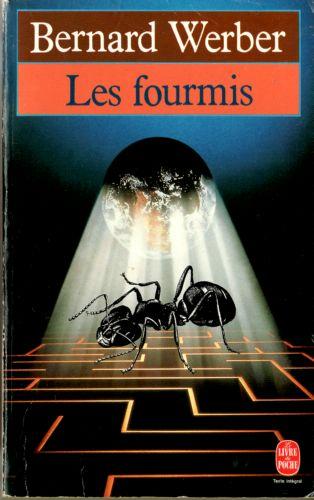
Imagine this: you are absolutely crushed with exhaustion. You’ve been working for 12 hours straight, or you’ve just run 10 miles, or you’ve just moved all of your furniture to a new apartment and only one of your friends actually showed up to help. You are about to fall down with fatigue, but you turn to your friend, who offers you nourishment from his or her own stomach. Once you lock lips and do the exchange, you feel reenergized and ready to take on the world. This process is called trophallaxis, and for ants, it’s a way to bond, exchange pheromones, and get valuable caloric units to the members of the colony that need it most. I know this because I have just finished reading a book called Empire of the Ants.

This book is strange in that the majority of it is narrated from the point of view of ants. Werber weaves three distinct threads through the book’s narrative: ant POV passages, human POV passages, and fictional encyclopedia entries. The encyclopedia was written by a deceased mad scientist, the relatives of whom form most of the human characters in the novel. Its subject is unknown at the beginning of the novel, but its author, Edmond Wells, was deep into myrmecology and wanted to establish communication with the ants. His nephew, Jonathan, inherits his old apartment and finds a note saying “Never go into the cellar!” Following story logic, of course he ends up going down there, where he discovers a massive subterranean cavern. The narrative thread of the human POV section deals with the dangers, mysteries, and discoveries of the late Uncle Edmond’s secret underground laboratory. The ant POV sections actually dominate the book, which raises the question –  how do animals with brains the size of an asterisk (*) sustain any type of comprehensible narrative? This is where the fiction part of science fiction comes in.

A_Formica_rufa_sideview

Formica Rufa, the main character(s) of this novel

Ants undeniably use language. A lot of animals use basic pheromones, but ants employ a massive dictionary of them: scientists think that they can recognize hundreds of chemical combinations (side note: the scientist in that article is attempting exactly what the fictional scientist in the book is – translating and using the ant language). Werber takes this fact of ant society and expands chemical signals like “Food this way!” and “I am dying!” into a structure that can handle phrases like, “Something weird is going on here. We need to communicate this to the swarm.” It is an established fact that ants have language, and Werber simply asks his readers to apply suspension of disbelief and accept that ants have a language nearly as complex as ours. He does not abuse this anthropomorphization of his principal characters. They use their ant language to run around doing ant things – at no point do two disgruntled ants get drunk at a bar and whine about how the Queen is working them too hard. We see ants going out into the dangers of the world foraging for food, ants taking care of larvae, ants making war with a different species of ant, and any number of other antish activities. Werber does a good job illuminating the subtlety and complexity of life in an anthill and making these explanations part of the action of the story. For example, most ant colonies have a queen whose only responsibility or influence over the swarm is constantly laying eggs. Most of these eggs grow into sterile female worker ants, but some are fed better than others, and these better-fed larvae develop into sexually mature, winged females. Unfertilized eggs develop into male ants, which do nothing but sit around eating. When the weather is right, all the males and sexually mature females fly away from the colony, sometimes over very long distances, and mate along the way. The male deposits his gametes in the female then dies, and the female can then use this genetic payload to lay eggs for as long as the next thirty years. She then lands, tears off her own wings, starts digging a small burrow to lay eggs in, and builds the entire populace of a new city.

Meat_eater_ant_qeen_excavating_hole

This newly-landed queen is already stocked with every worker that will ever be a member of her colony.

Werber takes all of this information and weaves it into a tense action scene in the book. Out of the millions of virgin queens who swarm off, only a handful actually survive. They are eaten by birds, they are killed by competing ants, or they simply fail at setting up a new colony. This high failure rate allows Werber to add a lot of suspense to the situation when narrating the nuptial flight of one of the main ant characters. She flies hard as birds pick off her comrades left and right, she tires and can fly no more and falls in a river, she gets trapped in a spiderweb and faces almost certain death there, and then she lands, eats her own wings (high-protein nourishment after an exhausting ordeal), and starts the laborious process of bringing a new nation into the world. This melding of action and explanation throughout the book creates a strange phenomenon whereby, as Werber advances the plot, the reader learns a ridiculous amount about how ants work. I know about trophallaxy, the nuptial flight, where and how they store food, their symbiotic relationship with aphids, how they wake up after a long hibernation, how they use their antennae, how they care for their young, how they wage war (they can actually shoot acid from their abdomen!), and a host of other facts. The interplay between information and plot advancement creates a pleasurable sense of ambiguity around whether the book is a reference text or a fiction book. I mean, it’s a fiction book; it has talking ants for God’s sake, but from what you can learn from it, it may as well be an encyclopedia.

Which brings us to what might turn you off of this book: If you do not care about ant facts, you will be bored to tears. The main payoff of the novel is the painstaking exploration and elucidation of an extremely alien culture that exists just a few feet underneath the earth, and if you are not into that, your experience of the novel will be missing its main selling point. The humans are hands-down the weakest part of the novel. Their thoughts are simplistic, their dialogue is uninteresting, and their path through the narrative is not nearly as appealing as that of the ants. Werber does not construct solid mimetic aspects for his characters. James Phelan’s theory of character splits character creation into three aspects: The mimetic aspect is how much the character resembles an actual person, the thematic aspect is how the character serves to advance the ideas of the novel, and the synthetic aspect is how the character serves as an artificial construct that advances the narrative. Many SF novels skimp on developing the mimetic aspect of their characters (consistent character traits, subtle emotional responses, believable interactions with other characters). Having fully-developed characters along all three axes is often what separates SF books that escape the Science Fiction and Fantasy section of bookstores from more well-recognized (but not necessarily less worthwhile) SF. For example, The Handmaid’s Tale, 1984, and Fahrenheit 451 are not considered genre literature, whereas the less character-centric Starship Troopers, The Gods Themselves, and Planet of the Apes are almost always found next to the Star Wars books.

AtomicWar0401

One of these categories of SF has much better book covers than the other.

In some SF novels, the subsumption of character-as-person by character-as-idea is a symptom of SF as a literature of ideas – the SF novel is an exercise in philosophical extrapolation, and everything else takes a backseat to that. It is forgivable to have two-dimensional characters in the service of ideas, but Werber’s humans are stunted both mimetically and thematically. Their only purpose is synthetic – they stumble through the world of the book and advance the plot.

The flimsiness of the human characters and the relatively lackluster plot are the only sour spots in an exact, exciting, and enlightening study of how a society completely alien to our own might function if it had just a little bit more brainpower than we give it credit for. Ants are amazing. They are arguably the most successful animal on the planet. They are on every continent, everywhere except for the highest mountain peaks and the poles. They have been around for 140 million years (humanity = 200,000 years). The total weight of all ants on Earth roughly equals the total weight of all humans on Earth. If they can communicate the way they do in this book, and we piss them off, we’re screwed. Maybe you should read this as a primer on how best to welcome your new ant overlords.

Andrew Findlay has strong opinions about things (mostly literature) and will share them with you loudly and confidently. You can email him at afindlay.recess@gmail.com.
Tough Questions: What’s the Worst Piece of Furniture You’re Still Holding On To?

question-mark

Every week we ask everyone who hangs out around here to answer a tough question. This week:

What’s the worst piece of furniture you’re still holding on to?

Rules are simple: Everyone has something they have kept for about three moves too many. There’s some chair that your Uncle Robert gave you that you just can’t help but love, even though it’s filled with wild animals. Which of your possessions is it looking increasingly like you’ll be buried with?

Alex Russell

The sheets are new, but my bed itself is the same bed I slept on when I was a teenager. This same dumb queen mattress and box spring have accompanied me all the way. Every time I move I almost leave it behind just to force myself to upgrade the thing I spent eight hours (six hours? four hours?) with every night, but it just never happens. I need some sort of intervention where my friends force me to go to IKEA, because even that would be an upgrade at this point.

Stephanie Feinstein

A dresser from our first bedroom set. I have managed to cycle out the sleigh bed and the single nightstand, but the dresser still stays. Outwardly, it looks great, dignified, with a lovely cherry finish. But the drawers have never opened properly (they are weirdly short and with a strange catch, so they only open like three inches at most), the handles are falling off, and one drawer also will NOT close. It is not terrible, but I dream about new dressers often.

Jonathan May

couch

This couch is the Craigslist ad you’ll never answer. It sat in my friend Susan’s parents’ house for the longest time. The year was 2009, and I was moving into a new place and had little to no furniture. I was working at Starbucks then. Susan’s parents saw my plead for furniture online and submitted to me this humble couch, available for pickup that night from their curb. So my 5’4″ and 150-pound self drove over after work and stared at the long couch, wondering how the hell I would get it into the back of my truck by myself (it was late). With a lot of finesse, I managed to get the damn thing up there. Then it started to rain. I eventually got it home and unloaded it into my living room. That couch moved with me from house to house over the years, and now it resides in my carport, ravaged by raccoons and smokers.

Andrew Findlay

This Tough Question is probably the first no-brainer I’ve had. I read the question to my wife, and her eyes immediately went to this chair:

SAMSUNG

This chair is over half a century old. My grandparents bought it for my father when he was living with them as a child. It included two dressers, a mirror, and a desk. My father did his homework in this chair. I did my homework in this chair. Now, I use it to prop up my feet while I watch TV or play video games. My wife hates it. It’s outdated, it does not match anything else in the apartment, and at this point it might be more Elmer’s wood glue than chair, but a hassock would just be lame, and this chair is bursting with sentimental value.

Brent Hopkins

This might be an odd response, but I technically don’t own any furniture in America or Korea. Every apartment I have lived in here has been fully furnished, so I haven’t needed to buy anything. I haven’t technically lived in my own place in America in years, so when I go home I tend to sleep in the guest bedroom which is full of things that aren’t mine.

Symbols and Sociopaths: Hannibal Season 2, Episode 9

Hannibal episode 9

Jonathan May

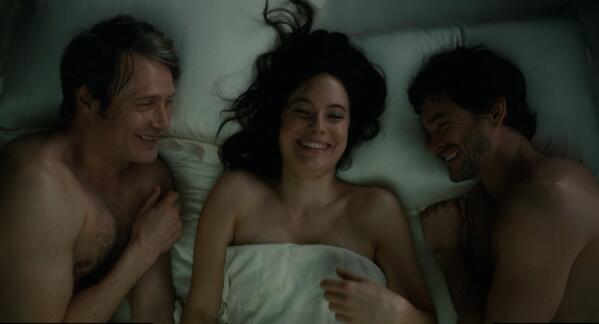
(Massive spoilers, and I totally called Will being groomed by Lecter into becoming a serial killer like three episodes ago. C’mon, story gods!)

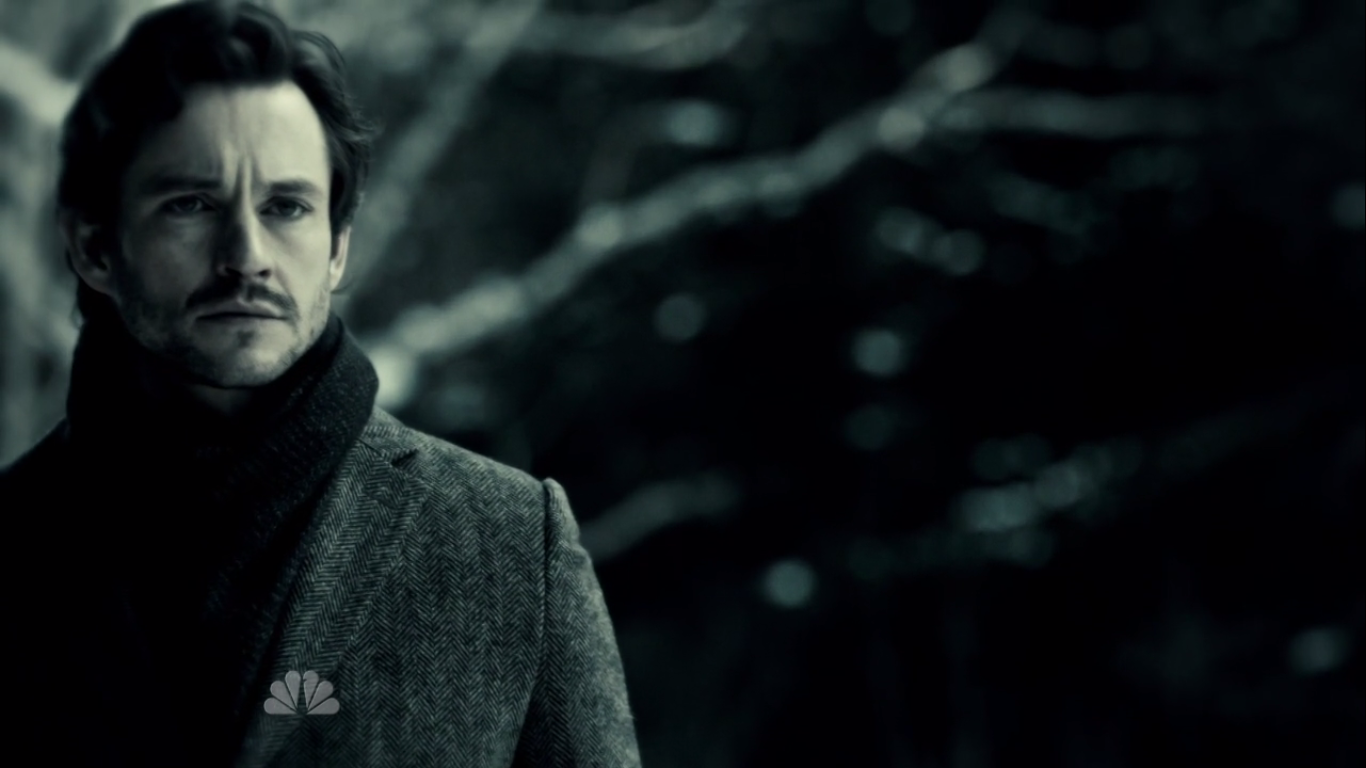
Everything in this episode acts in opposition to what has been. This week’s killer suffers from what Hannibal terms species dysphoria, but, on the whole, the episode operates thematically under what I like to call reverse personification. The killer, wanting to be an animal, acts not only in opposition to nature, but to his own nature as well. Will, on the other hand, finally actualizes as a killer, acting against what he knows to be good (akrasia) and aligning with what he knows to be wrong. When he brings up the question of right and wrong to Dr. Lecter, the good doctor responds that those are inconsequential to a God who enjoys human suffering and joy the same, and that he thinks of God when he kills; I think he’s really just thinking of himself, having been “resurrected” from the cross by Jack and Dr. Bloom in the foiled plot by Will against him.

When Will arrives at Hannibal’s door at the episode’s end with the killer’s body in tow, it’s as if he too has become animalistic, like a dog or cat bringing home a dead bird for the master. I almost expected Hannibal to pet him. So we know, or at least we think we know, that Will is now apt student to the good doctor; could this be a ploy on Will’s end to finally expose Lecter, or is this a genuine turn in character? I only bring up the former possibility because this season’s arc has been a bit wobbly, and I wouldn’t put it past the story gods to throw a big “Gotcha!” at us. But, as Will stated, now they’re both “even Steven.” All that said, I stand by my thoughts from three weeks ago: Will is becoming the monster Hannibal always meant him to become, his most successful therapeutic result. My predictions for tonight’s episode are that Will finally realizes some artistic killing projects of his own, something morbid will happen to Dr. Bloom or Jack’s wife (or is she dead? so far, we don’t know!), and Margot will continue to bore me to death. Did the production really need another affluent person to sit around the story’s perimeters this late in the game?

Minor note: Whoever put on Hugh Dancy’s eye makeup this week needs to calm down.

Jonathan May watches too much television, but he’s just playing catch-up from a childhood spent in Zimbabwe. You can read his poetry at owenmay.com, follow him on Twitter at @jonowenmay, or email him at owen.may@gmail.com.

Hannibal airs Friday nights on NBC. You can read our pieces about previous episodes here.

Image: NBC

Another Look at the Endings of Lost, Breaking Bad, and The Wire

Television_set_from_the_early_1950s

Andrew Findlay

In this so far nameless segment, regular contributor Andrew Findlay takes issue with another person’s opinions. Think of it as a “letter to the editor” except it’s always from the same defiant person and the “editor” in that example writes for the same site. This one has spoilers for The Wire, Breaking Bad, Battlestar Galactica, Lost, and a previous post on Reading at Recess about TV.

Extremely popular, long-running television shows struggle with sticking the landing. It is known. It has been known ever since the ending of Lost caused about half of its die-hard fanbase to swear never to watch another episode. It has been known since people internet-complained at the less-than-ideal end to Battlestar Galactica. However, it is strange to pick as the most relevant representatives of this phenomenon two of the most critically acclaimed shows of all time, one of which was showered with accolades for achieving the impossible and having a nearly perfect final episode.

Terrible endings exist and are unfortunate. At the end of Battlestar Galactica, the survivors sent their entire fleet into the sun so they could join/create humanity and live through the Dark Ages alongside them instead of significantly lessening human misery by holding on to their tech, which seemed like a weird choice. The ending of Lost, a show built almost entirely on mystery and suspense, completely dismissed the big final mystery and betrayed a legion of fans that had spent a significant portion of their lives tuning in every week. When you promise answers for years and years, and then the answer is “Oh, just unplug the island, any IT person worth his salt will tell you the usefulness of power cycling,” it creates a vast and deep well of rage. Who created the plug? What is that glowing room? Why are you just giving your viewership more mysteries instead of actually answering anything? When you go from a level of dedication that creates the YouTube video below to undiluted hatred, you have written a terrible ending.

I teared up watching this, remembering how it felt to be a part of the viewership of this show. Not sure if I’ll ever watch an episode again.

The Wire and Breaking Bad ended really well. Season five of The Wire may have been a little weaker compared to the others, but there was no nosedive. The state of affairs at the end of the final episode were either good or emphasized the whole underlying theme of the show: The game is the game, and the game never ends. It is absolutely believable that McNulty’s arrogant ass would get himself killed, but the detective’s wake in the last episode is actually fake, and he is actually escaping from his self-destructive career path. Omar, probably the most universally liked character on the show, is murdered in a convenience store by a little kid. This happens because he is not a civilian – he is a player of the game, and the game never ends, and anything can happen. Almost no one escapes, and if they do, they are lucky.

I don’t have as much an issue with that as with the idea of Breaking Bad’s final episode being a failure. It is almost universally praised as a near-flawless ending. It is almost perfect because Walt gets exactly everything he deserves, but he also gets everything he wants. This paradox exists because Walt, after five seasons of being driven by anger and pride, finally realizes and repents all the mistakes he made. He realizes what he deserves and is only concerned with doing right by those he loves. Who does he love (who is still alive at this point)? Jesse, Skyler, and his son and daughter. What has his arrogance done to them throughout the series? His family has lost everything, been terrorized, and been forced to abandon their home. Jesse has lost the woman he loves, been completely broken psychologically, and been enslaved by an Aryan Brotherhood gang. This is some bad shit that Walt has done. The reason that Walt can get what he deserves and what he wants is that, for the first time, what he wants is not centered around himself. He finally, finally, realizes what he actually needs to do, not for his own ego, but for the people he loves.

This is one of the greatest scenes in television, period.

This growth and shift of character makes the final episode what it is. He is out for money, but only for his family after he is gone. He is out for vengeance, but mostly to rescue Jesse from the position he put him in and to punish them for what they did to Hank. After so much greed and vanity and selfishness, Walt finally realizes what he has done and what he needs to do to make it right, whether he survives or not. Walt, after years of denial and repression and blame-shifting and anger, accepts who he is and what he does, and formulates a plan. This plan is absolutely successful. He finds a way to provide for the family he destroyed by intimidating his old work colleague. He rescues Jesse by single-handedly wiping out a gang. Then, after having actually done right by the people he loves, after five seasons of only paying lip service to that sentiment, he dies. It seems to me he dies from blood loss, as he’s been leaking for quite a while at this point and is leaving blood on everything he touches, but regardless of the cause, the important thing is that he died after achieving all of his goals. Walter White achieving all of his goals and then escaping from justice yet again would be a repugnant ending, but he does not escape justice, and he is not the same Walter White. Sure, he doesn’t get arrested, but he spends most of the second half of season five dealing with the consequences of his actions. The complete ruination of his own life, the life of his family, and the life of someone who is like a son to him, is consequence enough. What the hell are the police going to be able to do that he hasn’t already done to himself? These consequences and the pain of dealing with them set a process, if not of redemption, then at least of remorse and planning. The Walt of the last 20 minutes of the show is not the Walt who is in the “empire-building business,” but a Walt willing to sacrifice himself to do right by everyone else. This profound character transformation makes it possible for us to root for Walt again, and this is the trick that makes the ending of Breaking Bad so appealing. As for Jesse, who is driving away into the night, it doesn’t really matter where he’s going. He is free from the physical enslavement of the Aryan gang and the psychological enslavement of Walt. Wherever he is headed, it cannot possibly be worse than where he was.

This cultural moment has been called, many times, the Golden Age of television. It is an edifice built on the foundations of The Sopranos and The Wire. It is the result of a shift in perception, where television writers are responsible for creating a quality product and not just creating ratings. It consists of many different shows of deep emotional impact, strong plotting, and important thematic development. The result is that we consume our acclaimed television more like we consume our acclaimed novels, voraciously and as important art. The reason people are analyzing TV shows now is not that there is some mystical relationship between TV and novels or that one is replacing the other, but that TV has gotten really, ridiculously good in the past decade, and that humans love spinning commentary on really, ridiculously good things. Sure, there are some grievous missteps here and there, but The Wire and Breaking Bad are not examples of them.

Andrew Findlay has strong opinions about things (mostly literature) and will share them with you loudly and confidently. You can email him at afindlay.recess@gmail.com.

Worst Best Picture: Is The Departed Better or Worse Than Crash?

damon_cadet_jpg

Alex Russell

In “Worst Best Picture” we search every single Best Picture Oscar winner of all time from 1927 to present to uncover the worst of them all. Conventional wisdom says that 2005’s winner Crash is the worst winner in history. We won’t stop until we’ve tested every last one. Read the the first, our review of Crash, here. All posts should be considered to have a blanket “spoiler alert” on them. Today’s installment is the 2006 winner The Departed. Is it better than Crash?

What is there to say about Martin Scorsese that hasn’t already been said?

He’s arguably the most-acclaimed living director in America. He made Taxi Driver. His reputation speaks for itself, so it’s surprising that The Departed was his first Best Picture Oscar win.

The Departed is the story of two moles: One is a real cop embedded into a fake life of crime and the other is a fake cop raised to infiltrate the police to protect organized crime. It provides the necessary interesting twists and it plays with the idea of loyalty and reality. Even though we know Matt Damon is the fake cop and Leonardo DiCaprio is the fake mobster, it’s repeatedly tough to tell who is in too deep. Kurt Vonnegut said it best: “We are what we pretend to be, so we must be careful about what we pretend to be.”

There’s also Alec Baldwin, Martin Sheen, and Mark Wahlberg as real cops and a series of standard “tough guys” as Jack Nicholson’s crew of bad dudes from Boston. It’s well-acted and immersive, which is tough to do for a movie about mobsters from Boston. It’s a great movie for a reason, but beyond a different take on personal identity and loyalty, there’s not really a whole lot of message.

The Best Part: There are lots and lots of movies like this. The director of Goodfellas and Taxi Driver should be expected to make a sound mob movie in Boston, but it’s still amazing that a good one came out of the late 2000s. It’s only been a few years, but it already seems like 20 versions of this movie came out in about 10 years. Much like how every TV show about a dark hero is going to have a tough time establishing itself as original for awhile, the mob genre is done for a few decades now.

The Worst Part: It feels a little silly to fill this section in on some movies. The Departed isn’t one of my favorite movies, but it’s an outstanding cinematic achievement. It feels slight to even say this, but it’s the last shot of the entire movie. It doesn’t give anything away to say this: Do you really need to have a literal rat scurry across the screen in a movie about two competing informants? The entire plot of the movie is about mixed identity and the duality of “rats.” We get it. After nearly three hours, we get it.

Is It Better or Worse than CrashLike Crash, The Departed has an ensemble cast. There’s a million people in both movies — well, a million men. Crash paints women as evil and petty while The Departed prefers them to be absent. Only two women in The Departed have more than two minutes of screen time, and only one of them does anything more than have sex with Jack Nicholson. Neither movie is a strong contender to pass the Bechdel test. Is absent better than terrible? I guess so. The Departed makes lots of strange choices. Characters turn on and off racism and homophobia to paint the “authenticity” of Boston, but it’s never consistent or dealt with completely. The movie is mostly lots of bar fights and yelling, but it still comes off less cynical than Crash. Even if you leave out all the good parts and take The Departed as just a mean-spirited view of Boston, it’s better.

Worst Best Picture Archives: Crash | Terms of Endearment | Forrest Gump | All About Eve | The Apartment | No Country for Old Men | Gentleman’s Agreement |12 Years a SlaveThe Last Emperor | The Silence of the Lambs | The Artist | A Man for All Seasons | Platoon | The Lord of the Rings: The Return of the King | The King’s Speech | Rain Man |

Alex Russell lives in Chicago and is set in his ways. Disagree with him about anything at readingatrecess@gmail.com or on Twitter at @alexbad.

 Image source: Oscars.org

The Wolf of Wall Street is About Excess and Debauchery: Should You See It?

wows

Stephanie Feinstein

In our rarely-running kinda-series Should You See It? we talk about movies that just came out. You can figure out the rest of the premise from the title of the series. That’s right: We talk recipes. Should you see The Wolf of Wall Street?

Spoilers, of course.

First of all, this was a really long 180 minutes, and the first 45 are just 2000’s Boiler Room all over again.

This is a true story: The real deal Jordan Belfort wrote a memoir about how he swindled the hell out of America, and Scorsese decided that would make a good movie. But unlike so many other debauchery-focused films, it lacks reflection and remorse.

This lack of victims, of consequence, of remorse, of pain, are my issues with Scorsese’s latest. The movie spirals down a hole of moral ambiguity, drowning in its own self-righteousness.

“But he gets caught!” You might argue, “He pays for his sins!” I disagree. A 36-month stint in a Nevada white-collar prison does not atonement make. Referring to the incarceration as a respite from his money-hungry life, he feels no remorse for what put him there.

There is a lack of remorse for cheating on his first wife, and we see no repercussions of divorce. There is no aftermath of her marriage, no additional hospitality or hurt. No or media backlash; no paparazzi-fueled tabloids.

When his yacht sinks during a hellacious storm, no one is harmed and only the yacht (which I assume to be heavily insured), suffers. His wife is fine, their friends are fine, no crew is lost. The plane coming to rescue them after the wreck? It explodes, killing three people. Do we see the funerals, the anguish of having ruined other lives? No. He does not even openly acknowledge the explosion, glossing over it in a smooth voice over, paving the way for his reluctant sobriety.

The two scenes that most display the lack of morality and compass do not use yachts, planes, or pussy to make a point. When Belfort Lemmon-ludes up and over at the country club, he chooses to drive his expensive-ass car home, despite a total lack of motor skills. He claims to have made it home without a scratch on himself or the gleaming Lamborghini. As the audience, we believe him until officers show up the next day, ready for an arrest.

If this were a tale of moral understanding and growth, more than just a fender and door would be damaged. In screenplay-land, this is the time to show us a bit of blood on the hood and imply that Belfort cost someone more than just their savings. This moral resolution does not appear; the charges of DWI are dropped without evidence.

Another car, a Mercedes with a passenger, and another great display. During Belfort’s slide further down the amoral rabbit hole, his model wife Naomi LaPaglia (Margot Robbie) challenges his life and he flips his shit. Destroying a sofa in search of his “small stash” (what I assume to be about ¼ pound of uncut cocaine), he buries his nose into the powder before snatching up his eldest child and attempting to flee the property. As expected, the car crashes, and although the child is absolutely not large enough or old enough to be in the front seat safely in an accident, no great harm is done.

As before, if this story was to have a lesson — a moral, an actual resolve beyond greed –that child would not have arrived unscathed. But like so many other things, Belfort’s life continues unruffled, no matter what he is facing.

As for the rest of the film, the side characters are by far the best. Cristin Milioti as the suffering first wife (Teresa Petrillo), has a beautiful emotional breakdown after finding DiCaprio’s Belfort cheating. A recent television sensation (she’s the mother in How I Met Your Mother), she plays the Jersey hairdresser delightfully.

Jonah Hill (Donnie Azoff) is another surprising standout, as I was not really expecting much from him (Protip: To understand how I feel about Jonah, please watch 2008’s Strange Wilderness.) His meandering, pseudo-improvised diatribes are often humorous, but feel disjointed. It was great to see him jacking off at the party, smoking crack, or rip-torn on blow and pills, but the “chops” didn’t feel as genuine.

Anyone out there remember Early Edition? Crime solving with psychic newspapers? Kyle Chandler remembers, as he plays ineffectual FBI agent Patrick Denham in Wolf, making little money and an even smaller impact in the financial world. (His will-they-won’t-they bribe scene is pretty great.). Would the story be stronger if Chandler was again paired with a psychic newspaper? Maybe.

The cameos of television actors don’t end there, as Kenneth Choi (Sons of Anarchy), Jon Bernthal (The Walking Dead) and Thomas Middleditch (Silicon Valley) make appearances with different ends. The addition of seasoned veterans Rob Reiner, Jon Favreau, and Jean Dujardin rounds out the strong cast, but no one can save the film. Even the real Jordan Belfort, cleverly hidden in the end as an announcer in Auckland, cannot give enough gravitas or remorse to save it all.

Best Part: Matthew McConaughey’s Mark Hanna. A single real scene, the introduction of drugs, a weirdly racist chest thumping, and the drive of the all-mighty dollar, McConaughey was better than the movie deserved. I wanted so much for him to return in the end, check up on Jordan, challenge him in some way, but to no avail. The chest-thumping remains, but McConaughey leaves us far too soon.

 2nd Best Part: DiCaprio’s worm flailing at the country club. Hilarious, as well as a great look at an actor not known for his physicality in roles (Gilbert Grape notwithstanding.) The fact it so delightfully mimicked his dancing at his wedding made it all the better.

Overall: In the kidnapping-car crash, Jordan receives a small wound on his forehead, and a trickle of blood is our only real indication of his pain. We see no recovery, no regret, no growth.

In The Wolf of Wall Street, Jordan Belfort bleeds, but it is never enough.

Should You See It? (Well, now rent it): Sure. I will say that I am super-duper glad I did not see this in theaters, as the debauchery of it all would have been too great, with no great Hunter S. reflection. At home, on the sofa, it’s a great watching experience. The story is surprisingly fun, once you get past all the moral ineptitude.

Stephanie Feinstein yells at her television daily, and you will never change that. You can challenge her at stephanie.feinstein@gmail.com.