Author: Alex Russell

Life After the Star Wars Expanded Universe: David Cronenberg’s eXistenZ

existenz

Andrew Findlay

In Life After the Star Wars Expanded Universe, we take a look at science fiction and fantasy, why they’re great, and what they say about where our species has been and where it’s going.

It is important that we set parameters early for how bizarre this film is, so I’m going to start by telling you that within the first 15 minutes, one of the main characters gets shot by an organic gun that uses human teeth as projectiles. This happens to her as she is fondling a gadget that looks like nothing so much as a mass of tumorous nipples stitched together and made animate. And it just gets weirder.

existenz

This is the centerpiece of the entire movie

Before we really dive in, let’s stop and talk about why this is a world of toothguns and nipple masses. The overview of the film is that Allegra Geller, programming genius, is doing beta testing for her new game, eXistenZ. Technology in this world has invested all of its R&D in biorganic gadgets. Scientists use genetics to grow tech instead of building it in a traditional way. As such, sometimes guns are grown of bone and shoot teeth. Video games are played through game pods. Game pods start out as some type of frog, but are heavily bioengineered into what is in the picture above. The technology involved here goes beyond virtual reality, as the game pod connects directly to the player through a “bioport,” a hole drilled into the back of anyone who wants to use a game pod. It not only draws its running power from the player’s body but directly accesses their central nervous system to create such a realistic experience that it is indistinguishable from actual existence.

A group of fans has gathered together and are patiently waiting to “port” together and experience the game en masse. eXistenZ appears to be a standard sandbox game. There are general objectives and obstacles, and the player is expected to wander around figuring out what’s going on. The main difference is that the immersion is so complete that the player basically enters an alternate universe where NPC actions are scripted.

This abandonment of reality rubs some people the wrong way, which is why a terrorist uses a molar gun to attempt to assassinate the game designer. There’s a lot of commotion and death, but Allegra (Jennifer Jason Leigh) and Ted Pikul (Jude Law) escape and go on the run. The attack damaged Allegra’s game pod, so they have to port into the game to run it and find out if eXistenZ will still work. They do so, but things get complicated when the story in the game mirrors what is happening in reality. In the game, there is an assassination plot and a toothgun. Ted and Allegra try to unravel the attempt on her life by progressing through the game world, but more worrisome than the murder attempt is that, when Ted unplugs from the game to take a break, reality no longer feels real.

MagrittePipe

This movie asks big, important questions. What is technology? Where is it going? How do we react to it, and how does it change us? Cronenberg’s modus operandi is to select a technology or science that exists or seems close to existing, then to exaggerate and extrapolate to explore its effects on humanity. He covers chemical-induced accidental mutation in Scanners and television broadcasts in Videodrome. In eXistenZ, it’s video games. As an avid gamer, it’s gratifying to see a movie dedicated entirely to the societal effects of one of my chosen pastimes. The movie sets up a plausible direction for video games and then shows its effects on individuals and society at large. Societally, there are people who escape into alternate realities as recreation and other people who murder the designers of those alternate realities on moral principle. On the individual level, people range from the squeamish and reluctant Ted Pikul, who does not even have a bioport installed until he has to enter eXistenZ because he is afraid of body modification, to Gas, played by Willem Dafoe, who is a manic-eyed devotee of Allegra Geller’s work. Dafoe has one of the best lines in the movie. The fleeing main pair stop at a gas station, and Dafoe’s character recognizes them and starts gushing about how Allegra’s games changed his life. Ted, who has yet to enter the world of total-immersion gaming, asks him how his life was different because of Allegra Geller. The response is priceless.

Ted: What was your life like before?

Gas: Before?

Ted: Before it was changed by Allegra Geller.

Gas: I operated a gas station.

Ted: You still operate a gas station, don’t you?

Gas: Only on the most pathetic level of reality.

Willem Dafoe’s line is so great because it sums up perfectly what video games do for those who play them (or really any media for those who read, watch, or listen to them): absolutely nothing. If you read a book, watch a movie, or play a video game, it changes absolutely nothing in your external life, but the external is just “the most pathetic level of reality.” The changes that happen within the consumer of media are what’s important – relaxation, an expanded consciousness, heightened emotion – it’s all fake, none of it’s real, but our ability to recognize, respond to, and create fake shit is the trait that makes us human, shared only, and even then only partially, by a handful of the higher animals (chimpanzees, dolphins, elephants, etc).

Reality versus irreality ends up being the central conflict of the movie. After entering the perfect simulation of the game, it’s hard to tell what is and is not real. The “what if life is just like, a simulation, man?” conversation seems like an argument that would only be had over a table full of Taco Bell in a room full of pungent smoke, but it’s actually a very old and well-respected existential question. If we are living in an absolutely perfect simulation of reality, there is literally no way for us to tell. A truly perfect simulation would be indistinguishable from reality. Think about it – grab an object next to you and heft it in your hand. Toss it up and down a couple of times. Are you, through the messaging apparatus in your nerves, transferring chemical energy from your muscles to whatever you grabbed, or is a machine stimulating neurons in your unconscious brain to make you perceive all of the effects of that action?

I don’t care about the answer one way or the other, much as I don’t care about whether or not free will exists, because it changes nothing about my life and how I lead it. Right now, I am either choosing to drink bourbon and write this article, or I am predestined to drink bourbon and write this article. Either way, I’m tipsy and typing. In much the same way, a simulation that’s just as good as the real thing is, after all, just as good as the real thing. In the movie, it becomes more of a moral question, as they are actively dropping in and out of a simulation, and killing people in both the simulation and the real world means that it’s difficult to tell if you just shot a piece of code or a human being with a spouse and kids.

You should watch this. It’s one of those movies that Netflix tags “cerebral,” which mostly means that, even if it’s good, you’ll know at all times exactly how many minutes are left until the credits roll. Even if it moves kind of slow and gets kind of confusing, the future it envisions and the important questions it raises make it more than worthwhile. Right now, the closest thing we have to simulated reality is the Oculus Rift:

existenz

She looks so happy in there. Maybe she’s eating salad.

With current technological limitations, it’s pretty obvious what is and is not real, but humanity loves entertainment so much that it probably will not stop striving towards a perfect simulacrum of existence. Cronenberg explores what might happen if we make it there.

Andrew Findlay has strong opinions about things (mostly literature) and will share them with you loudly and confidently.

Images: Business Insider, IMDB

Symbols and Sociopaths: Hannibal Season 2, Episode 6

closeupepisode6

Jonathan May

(As always, massive spoiler alert)

Just a reminder: We’re only halfway through the season and have yet to catch up to the frame of this tale. In the first episode, we open with the struggle between Jack and Hannibal, then flash back eight weeks. So we’re still catching up (quickly, I posit) to a showdown. Also, we haven’t touched on Jack’s wife in the past two episodes really, so I’m sure they will kill her off any episode now in the most maudlin fashion imaginable.

Fact: Mads Mikkelsen played Igor Stravinsky in the gorgeous period film Coco Chanel and Igor Stravinsky (2009). I saw the film in theaters, and the recreation of the opening night of The Rite of Spring in Paris is probably one of my favorite moments in film history. You eventually see Stravinsky and Chanel naked in the many stages of coitus (one memorable scene includes some sex on the piano bench). So it’s a little jarring to open with Hannibal at the harpsichord, composing music to “move past” what Will “did” to him and even more disturbing to later see Dr. Bloom and Hannibal giving it the old college try on the harpsichord bench. Mikkelsen brought some of Stravinsky into this episode with an awareness of his own mortality, and ultimately the end game is revealed by this awareness. As Hannibal becomes more afraid of Will, he must be able to get to him, so he “frees” Will through exoneration by committing a murder using pieces of Will’s supposed victims. Will, by virtue of this whole ordeal, burns in revenge, being trained by Lecter into becoming his replacement. What will complete this transformation is the eventual murder of Dr. Bloom by Hannibal.

In addition to Stravinsky, we have not-so-subtle references to the movie Hannibal with Will stating that Lecter thinks of his victims as pigs and later in the scene where Abel Gideon eats his own thigh (à la Liotta). I have no idea why they gave such a close adaptation of that scene; the affinities between them only made this incarnation seem weak with a bloated Eddie Izzard succumbing willingly to death. However, the preparation of Gideon’s thigh in clay was lovingly rendered on film. The strongest moments in the series consistently involve food, and this is definitely a strong moment, but then it’s ruined by Gideon trying to be funny. Perhaps the most arresting visual of the episode was the tree-person made by Lecter, like a perverted Daphne ripe with flowers.

Bringing back Miriam Lass at this point seems inanely cruel. We already know who’s committing the murders; Jack’s wife is going to die of cancer, so will her reappearance really matter that much? Call me callous, but I feel like this will end up being another emotional red herring, and honestly, I wish we’d just stick to the point. With Will now free to claim vengeance, the race is between Will killing Hannibal or Jack locking him away.

Note: Hopefully the “history” between Drs. Bloom and Lecter will be elucidated for those of us who don’t write the show, if the story gods are listening.

Jonathan May watches too much television, but he’s just playing catch-up from a childhood spent in Zimbabwe. You can read his poetry at owenmay.com, follow him on Twitter at @jonowenmay, or email him at owen.may@gmail.com.
Hannibal airs Friday nights on NBC. You can read our pieces about previous episodes here.

3 Days to Kill is Two Hours of Kevin Costner Acting Ridiculous: Should You See It?

movies-3-days-to-kill-banner

Brent Hopkins

In our rarely-running kinda-series Should You See It? we talk about movies that just came out. You can figure out the rest of the premise from the title of the series. That’s right: We talk recipes. Should you see 3 Days to Kill?

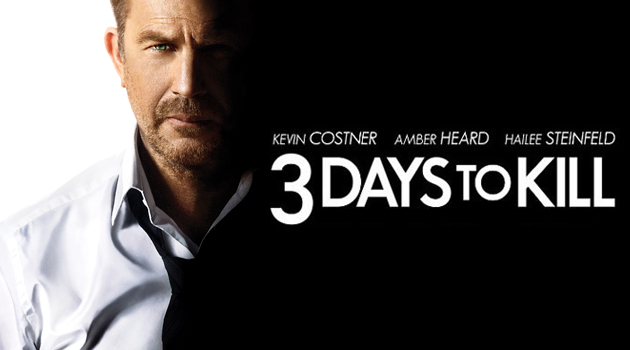
3 Days to Kill stars Kevin Costner as Ethan Renner, a CIA agent who is the best cleaner in the business. He is in the middle of a job when he gets a notification that it is his daughter’s birthday. Being the awesome dad that Kevin Costner is, he decides to take a break from killing everyone to call home. As CIA operations are wont to do, things go south quickly and he ends up going head to head against bomb smuggler “The Albino.”

You can tell he’s a bad guy, as he has no hair or eyebrows. Ethan has The Albino dead to rights and then he suddenly starts coughing and bleeding from the nose. End scene, and the next time we see Ethan he is told that he only has a few months to live due to a terminal illness.

This leads Kevin to retire from the business and go to his family, a wife and daughter in Paris, to reconnect, as he has been a vacant father and husband for a few years. He goes to his separate home and comes to find a full African family squatting in his place. They have redecorated and rearranged everything, and he reacts about as crotchety as you would expect old Kevin Costner to react. He chooses not to murder the whole lot — there are more than a few children and a pregnant girl — and we see the grinch in him slightly melt. He chooses to make amends with his final months but gets a new lease on life when a CIA operative Vivi Delay (played by Amber Heard), asks him to help kill quite a few people (namely The Albino and The Wolf) in exchange for an experimental drug that will keep him alive, 50,000 dollars, and a million-dollar life insurance policy. The twist is, of course, that there are side effects to the experimental drug that keep rearing their ugly head at the worst times for Ethan.

There are the requisite awkward family reunions that take place with Ethan trying to pick up as if his daughter hasn’t aged a bit and their worlds collide fittingly. That is actually what the whole movie feels like, multiple worlds slamming into one another and never quite aligning properly. This movie is all over the place and it is definitely a bad film. The thing is, the movie is so scatterbrained that it comes off as aggressively fun as opposed to just hours of wasted time.

The violence is graphic but never really that excessive. The daughter-father story is brown-sugar sweet, yet I found myself chuckling at the ridiculousness of their interactions more than anything else. The bad guys are named The ALBINO and The WOLF, the former being a creepy lunatic and the latter being anything but a wolf. Vivi Delay is supposedly equal in skill to Ethan, but for the life of me it felt like a showcase of how much sexier Vivi looks than everything else in Paris.

9532112

Also, smoldering seriousness is a must.

This is a bad movie. Kevin Costner places this corpse of a script on his back and carries the whole thing. Without him this movie would be worth walking out of in the first 15 minutes, but there is something about Costner in this film where I actually felt like he thought the whole thing was as ridiculous as it actually is and just ran with it. There are so many moments in this film that left me saying “Well, that is not what I expected from Hollywood.” Costner takes it in stride and constantly makes this face… and I love him for it.

Kevin_Costner_in_The_Upside_of_Anger_Wallpaper_1_1024

I have no idea what’s happening either, folks.

Should You See It? Yes, if you are not a film snob, this movie was bad but quite fun. It takes the Taken premise but removes most of the stress from the plot and replaces it with quirky scenes.

Images: Film School Rejects 

What is Reading at Recess? It’s (Popular) Cultural Reading

playground

Austin Duck

Recently, at a party, someone considering coming to write for Reading at Recess expressed her hesitation to me; she said “Austin, I don’t work in a field where we attempt to elevate things. The blog comes off as pretentious, as a bunch of guys with semi-valid credentials writing as if they actually know something, as if they have the cultural authority to write toward taste and value or the knowledge to sort out this from that,” and, I’ll admit, it took me aback.

I never really considered our project here at RAR to be about superiority or ethos-building, a kind of talking from the Silicon tower (if you will), but maybe it is. I don’t know. But I feel like, and perhaps I’m a bit misguided here, that our project is not so much pretentious (if you take a look back at the majority of the posts [mine excluded because I am, in fact, pretentious] you’ll see that most are just fan-boy diary entries) as it is an effort in cultural reading.

As you may have noticed, our title Reading at Recess has very little to do with reading in the traditional sense. Sure, I normally write about books, and Andrew Findlay writes about sci-fi, and Jon May definitely touches on the literary from time to time, but this isn’t, and has never been, a blog about books. Instead, RAR is about reading culture (well, elements of it anyway) and presenting responses to those readings (which, inevitably, are so intertwined with our particular tastes and our socio-economic positions as middle-class men who came of age in America that it’s impossible to separate the objective (Hah, that doesn’t exist! Suck it, Science) from the subjective). I don’t think, though, that this failure of impartiality or this desire to elevate our topics—video games, movies, television, or other cultural miscellany—is useless, invaluable, or altogether insensitive to the desires of our readers to access, be informed of, or make up their own minds regarding the texts (and I use text in terms of any piece of information that we interpret) we focus on. Instead, you could think of our discussions here at RAR as corollary to your own, as models for personal cultural inquiry (though that, I think, might be a bit of a self-aggrandizing vision on my part), or just as our desire to have these conversations with each other and ourselves, a kind of self-obligation we set forth toward always writing, being critical of what we see, using what we know and where we’re from to make some kind of sense of the element(s) of culture that obsess us.

And that’s what cultural reading really is. It’s engaging what obsesses you, exploring it far beyond what most people have with it, a casual relationship, and, most importantly, not interacting with it passively. At this point, I don’t read a sentence in a book without thinking why is that here? What’s it doing? and it’s not because I think I’m smarter than anyone else, nor because I want to be perceived as that guy who does those things. It’s because, at a baseline, I’ve become so involved with literary texts that I want to see what they really are, how they work, how they’re made, and why they’re made that way. Because, however they’re made (and for whatever reason), I too am made that way; I am a construction of the same language, the same culture—possibly we (the text and I) are separated by history, but in that way I am of it, a response to it, the next (or next to next) logical (or illogical but extant) step in linguistic, grammatical, philosophical, scientific, historical systems.

Sure, that sounds grandiose and crazy, and it is, but I’ve written it that way because it’s important. Because that’s how I experience it. I gave up on reading for pleasure a long time ago because I discovered that, through work, pleasure comes in the cultural (and, by extension, the self-reflexive) discovery of the real-to-me, those iterations and patterns and texts that become more than books or movies or games, that become part of my thinking and thereby reveal (if I’m willing to look) what elements of culture inform me and my decisions, what makes me up and allows me to see (a little) beyond the scope of myself precisely because I’m able to see a piece of my self’s scope.

If you’re starting to think to yourself that this project sounds very selfish, that’s because it is. But be real with yourself. You’re not reading this because you care about the content. Good content lives in straight journalism, where writing disappears and all that’s left are ideas. Go to Vox or The New York Times or something if you want that. You come to these blogs to learn about new things, movies you haven’t seen, games you might want to play, sure, but you come here, likely, not for what we’ve selected but why we’ve selected it; because we care. Because it obsesses us. Because every time we sit down to meet our weekly deadline, it’s not rote or filler or because we have to because we don’t. Each of us, in our own small, sometimes glib way, is engaged in a kind of cultural self-discovery and everything the comes with it: the biases, the crass reality, the meaningless, waste-of-time attentiveness, the existential void that opens up every time you realize your entire life is built on the words of others, TV shows, shitty commercials, and movies you were told were good but just aren’t. Cultural reading, then, fills the void, one text at a time, by making sense of it, at least from one perspective, so that we don’t get even more lost.

That’s not to say we’ll ever be found, or find ourselves, or that RAR specifically will help at all. It’s not about help, or us believing we know something you don’t. Yes, we’re writing to you because you are also we (just look at Whitman’s “Crossing Brooklyn Ferry”), but, more-so, to discover why we write, to ask questions we don’t know the answers to, to identify (and, in identifying, attempt to come to some understanding of) the fundamental impasses, paradoxes, hypocrisies, and identifications with the (popular) cultural of our moment that seem, to us, to mean something (or not).

For the love of god come write with us.

Austin Duck lives and blogs in DC. He can be reached at jaustinduck@gmail.com.

Image: NBC

Tough Questions: If You Had to Use AOL Instant Messenger in 2014, What Would Your Screen Name Be?

question-mark

Every Monday we ask everyone who hangs out around here to answer a tough question. This week:

If You Had to Use AOL Instant Messenger in 2014, What Would Your Name Be?

Rules are simple: Imagine a world where everyone is back on AIM. It’s easy, if you try. Imagine conducting every important conversation (and let’s be honest, every not-at-all important conversation) with someone named SoxGuy2020 or xXQTAngelXx. We were really, really close to that reality until Google replaced AIM. We almost lived in an even dumber world than we do now. If AIM had crushed Google in the battle for relevancy, who would you be in 2014?

Alex Russell

I have no shame about my absurd choice of alex is so loud in my teenage years. It is amazing to me how long I once agonized over this concept. Now, I’m just Alex Russell. That’s boring. That’s simple. That isn’t an unfunny joke, like I like so much! RussellAndFlow, clearly.

Jonathan May

My screen name back in the day was thenjonsays, the concept of which I shamefully stole from a friend in high school. If AIM were alive and kicking now, I would probably go with whydidn’tyoujusttextme or markwahlberginfear. The more that I look at screen names though, the more I think they’re a precursor to hashtags. You try to evoke a whole mood in a hashtag, and the screen name was, like, your total identity on AIM. Yeah, you thought you were funny too in the late 90s.

Andrew Findlay

My AIM name would be mygchatnameisafindlay.recess@gmail.com, and whenever anyone messaged me I would reply with a frowny emoji and wait for them to contact me on a non-defunct messaging service.

It’s dead – leave it buried. Although it was beautiful while it lasted. My first substantive conversations with my current wife took place on AIM, and nearly every member of our generation is an amazing typist because they practiced on AIM for at least an hour every day during high school.

Alex Marino

xXxDaTaGuY03xXx

Because I work in data analysis and I graduated high school in 2003. And if you don’t have your birth or high school graduation year in your AIM screen name you’re a basic bitch. Throw triple Xs on the beginning and end (before the landmark Vin Diesel film) because people need to know how fucking cool and edgy I am.

Austin Duck

TQ: I would stick with my screen name from the way-way back: ADCloWnLoVE. Sure, the Insane Clown Posse have come out as closet Christians hiding behind some super-bizarre carnival misdirection, but shit. I grew my heart on clown love. (Note: This is not an endorsement of the Insane Clown Posse or its music).

Brent Hopkins

Not sure what he means by had to use AIM in 2014. I still am logged onto AIM 24/7/365. I also am on ICQ at all times as well. Screen name: Soulcalibur74, ICQ 161590484. Feel free to message me. If I were to change the screen name, though, I would go with my adult movie name obviously… Onyx Monolith. I am not a discreet man.

Eudora Welty’s The Golden Apples and How to Write the Way People Actually Talk

Andrew Findlay

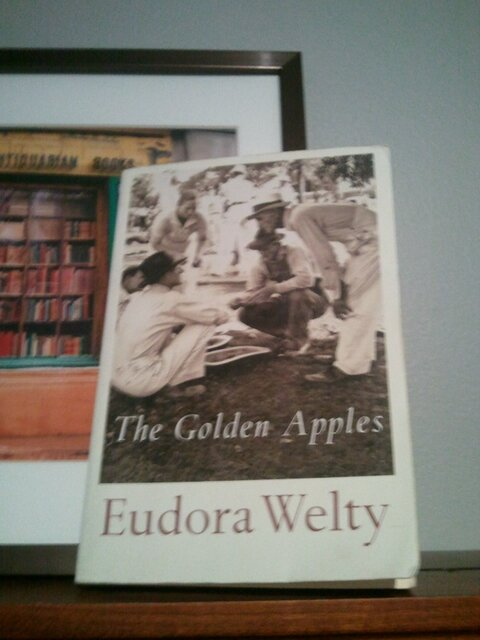
The Golden Apples is a collection of interwoven short stories about a town called Morgana, Mississippi. It explores the people, places and values of the town. It is very similar in structure to The Dubliners, except instead of Dublin it’s focused on Mississippi. Mississippi is a weird place. Like New Jersey, it has very specific associations in the national consciousness. Like New Jersey is supposedly hideous, marred by endless highways, and filled with people who only care about gym, tan, and laundry, Mississippi is supposedly just farmland, devoid of culture, and filled with fat racists. The problem with national preconceptions about different regions is that they are held mostly by people who have never been within 300 miles of those regions.

New Jersey

This is New Jersey.

That is to say – they might be based in part on fact, but the resulting ideas have usually been extrapolated beyond all semblance of reality. Mississippi definitely has problems. One prime example is that in 2009 (2009!) students at a Charleston, MS high school had their first integrated prom. Yea, sure, that’s messed up, but that doesn’t mean the entire state is full of ignorant people. The artistic contributions of Mississippians to American letters are staggering. You have the old, dead greats like Faulkner, Richard Wright, and Tennessee Williams. You have bestselling authors like John Grisham. You have current show-stoppers like Donna Tartt. Eudora Welty was a Mississippi author, and she was the equal, or close to it, of Faulkner. One of the things that made her so great was her command of language.

Her skill with language is two-fold. First off, Katherine Anne Porter once said that Welty had “an ear sharp, shrewd, and true as a tuning fork.” Her dialogue captures exactly how people actually say things, which is one of the first talents to disappear from the output of an author as they slide from first to second-rate. To give an example, this is what one character says in response to a question asking why she spent so long at her sister’s:

“I was comin’ back. Sister’s place a place once you get to it — hard time gettin’ out.”

This communicates the dropped g, the dropped “to be” verb that indicates casual Southern-accented conversation, but more importantly what happens towards the end of the sentence reflects what people actually sound like when they speak – the pause, the abandonment of the old syntax, the start of a new sentence, not grammatically correct, as a new and better way to say what you’re saying occurs to you mid-sentence. Another example, pulled from a group of people talking about a daughter’s behavior:

“Daughter wouldn’t run off and leave her, she’s old and crippled.”

“Left once, will again.”

“That fellow Mabry’s been taking out his gun and leaving Virgie a bag o’ quail every other day. Anybody can see him go by the back door.”

What stands out here is the “Left once, will again.” Completely wrong sentence. Everything is implied, nothing is clear. This is never what people would say in an official paper or newspaper article. Thing is, it’s exactly what people say in conversation to save time. In the context of the conversation, the referents are absolutely clear. Many high-level writers have trouble writing dialogue in a way that does not reflect the correct language drilled into them in grade school. Welty has no such difficulty.

She also just uses language really well. Her diction is not absurdly recherché, but it is dense and powerful. She packs a lot of meaning into collections of simple words, which is more impressive than sending your poor reader to the dictionary endlessly. Following is an excerpt from one of the stories in which Miss Eckhart, the old emotionless piano teacher, surprises her pupils when she plays.

Coming from Miss Eckhart, the music made all the pupils uneasy, almost alarmed; something had burst out unwanted, exciting, from the wrong person’s life. This was some brilliant thing too splendid for Miss Eckhart, piercing and striking the air around her the way a Christmas firework might almost jump out of the hand that was, each year, inexperienced anew.

In simple and clear language, Welty deeply explores the issues of childhood innocence, of the depths of human emotion, and of the discomfort we feel when confronted with the unexpected. This depth-through-simplicity is a feat she pulls off repeatedly throughout the book.

Here she is, looking out the window and thinking words that are probably already better put-together than anything you’ve ever put on paper.

The Golden Apples is a strange book. It does not have a strong message like 1984 about the dangers of totalitarianism or Catch-22 about the absurdities of war. Its themes revolve around the importance of family, identity, and community and the intersection among them, but instead of making a clear declaration about them, Welty is content with exploring them profoundly. Each story moves forward in time, so the reader sees the progression of different important characters as the town and the families within it grow and change. The main impression this book leaves upon completion is density – all the themes, motifs, and characters in the different stories have been exhaustively explored using a minimum of words – meaning is coiled and pressed heavily into each syllable.

Due to how tightly-packed it is with significance, it is not at all a beach read, but it is one of the most important books I’ve ever read. It is a meditation on life, emotion, struggle, and resolution. It does not have the answers, only the exploration. It’s a tough climb, but it’s worth it.

Andrew Findlay has strong opinions about things (mostly literature) and will share them with you loudly and confidently.

Images: Myscenicdrives.com, Brainpickings.org

Why Aren’t People Watching Parks and Recreation?

Parks and Recreation- Season 6

Alex Russell

Remember when Liz Lemon was everywhere?

For a few years it seemed like you couldn’t load Tumblr or Facebook without seeing at least five Liz Lemon memes. There’s nothing necessarily wrong with that; 30 Rock was a tremendous show. It was a lot of things, but above all else it was the critically-acclaimed anchor to NBC’s very weird (but very great) Thursday night that included The OfficeCommunity, and Parks and Recreation.

The Office faltered late, as everyone knows. 30 Rock managed to do OK just because it was consistently being hailed as the best show on television. Community‘s story is still unfolding, but the fanbase is rabid enough that it will probably end up fine. But what of Leslie Knope and the Liz-Lemon-meme-worthy Ron Swanson?

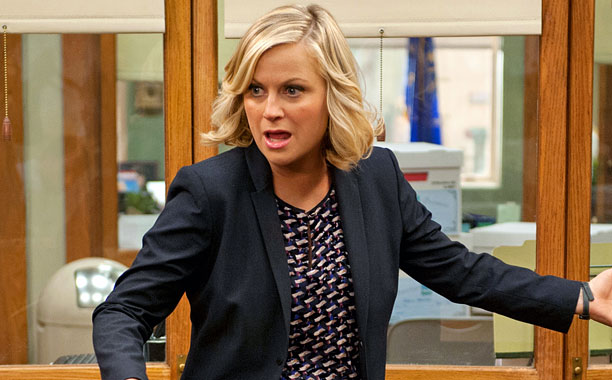
Let’s tell it straight: People are not watching Parks and Recreation anymore. Numbers-wise, the show has done a little bit worse every season, especially after losing The Office as a lead-in. Everyone who loves Parks and Rec will tell you that it doesn’t really find its footing until the end of the first season, but America really disagrees. The first season held a huge percentage of Office fans, even though it debuted after one of the dumbest storylines in Office history (“Michael Scott Paper Company” was the lead-in episode for the pilot).

Season two of Parks and Rec is some of the greatest sitcom TV of the last fifteen years, but it did a little bit worse (between four and six million people per episode) than the weird first season. Second three — which followed the final Michael Scott episodes of The Office and was the first season with Rob Lowe and Adam Scott as regulars — did even worse, sometimes dropping below four million. The three seasons since have done worse in the ratings, and sometimes far worse.

A lot of this is on NBC. 30 Rock did even worse than Parks and Rec during its decline and even The Office, the one your mom liked sometimes, barely managed four million viewers a night by the end. Community seemed unstoppable, but it’s tanking this year in the ratings. Parenthood, once one of NBC’s most reliable shows, is doing the same.

Thursday night on the other networks? Fox has Hell’s Kitchen and American Idol. CBS has The Big Bang Theory and Two and a Half Men. ABC has Scandal. NBC’s support for its sitcoms is Hollywood Game Night.

It’s impossible to convince someone to definitely watch something unless they already might, but you really should be DVRing Parks and Rec. The show stumbled a little with an ambitious plot for main character Leslie Knope, but it’s still one of the only consistently funny, consistently great sitcoms on network TV. NBC renewed it for next year, but based on the competition and the current trend, Parks and Rec is dead in the water. Come stay awhile with it every week, like you would an elderly relative. Ron Swanson is still there Ron-Swansoning around, and that really should be enough to earn your 22 minutes a week.

Alex Russell lives in Chicago and is set in his ways. Disagree with him about anything at readingatrecess@gmail.com or on Twitter at @alexbad.

Image: NBC

Book Review: Tom Perrotta’s The Leftovers

The Leftovers

Jonathan May

I finished this novel recently, and my friend J—– informed me that it would be released this summer on HBO as a miniseries. My first question was How? But the more I think about it, my real question is Why?

The Leftovers takes as its main device the Biblical rapture, wherein the elect are called to Heaven, leaving those on Earth to repent or suffer. Within the first five pages, the religious aspect of the rapture has fallen to the wayside; just any people, regardless of character or religious affiliation, are taken. It seems God wasn’t so picky after all, if God is indeed to blame. The novel, pointedly it seems, lets blame rest on the self-conscious shoulders of the citizens of Mapleton, a Blue Velvet-esque town name if there ever was one. We focus mostly, in close third, on the newly elected mayor, an affable, forgettable character named Kevin Garvey. He tries to help his fellow citizens deal with the weirdness of it all, having lost none of his family in the “taking.” However, as people start to deal with the event by forming cultish groups, Kevin loses family along the way.

We’re in and out of his wife Laurie’s mind as well; she ultimately leaves him to join the Guilty Remnant, a chain-smoking silent group dedicated to asceticism, silence, and a mission. Smoking and in pairs, they rove the country, making sure no one forgets what has happened, and that the final reckoning is yet to come. The idea of silence is powerful within the novel; people literally vanished without a bang, without an inkling of anything. And so the silence must continue for some. Laurie as a character is very strong, but her intentions aren’t. Why does she join the group? Is it guilt, or something else? I feel like we never know.

This novel, like many of Perrotta’s others (Little Children, The Abstinence Teacher), dwells superbly within the contemporary suburban mind. He highlights deftly the quotidian and how necessary it is. But what the novel fails to do is provide us any sense of resolution; in fact, the way the novel ends (I won’t spoil it) actively works against resolution, forcing the reader to construct a possible ending. I found this cheap and flabby, as far as fiction goes. I would rather be pointed to a moral certainty about the work, even if it ends up being about amorality. Instead, we’re given some kind of Inception-like wishy-washy, choose-your-own-path scene that simply stops.

The writing is strongest when we’re bouncing around from character to character, and I wish there had been more of that. Since we settle on Kevin most often, his portions should have been the most arresting, but we’re given clichés like, “There was always that little secret between them, the memory of a summer night, the awareness of a road not taken.” I almost put the book down there, but my curiosity about what would happen to Laurie, the daughter Jill, and a certain unborn child who is introduced early on drove me to finish it.

I have no idea how this will translate to film; to build toward such a nothing of an ending seems like an incredible waste of time and money. But who knows? Maybe HBO will give some resolution where there was none.

You can listen to a sample from the audiobook of The Leftovers from Macmillan Audio here:

Jonathan May watches too much television, but he’s just playing catch-up from a childhood spent in Zimbabwe. You can read his poetry at owenmay.com, follow him on Twitter at @jonowenmay, or email him at owen.may@gmail.com.

Image source: io9

Worst Best Picture: Is The Lord of the Rings: The Return of the King Better or Worse Than Crash?

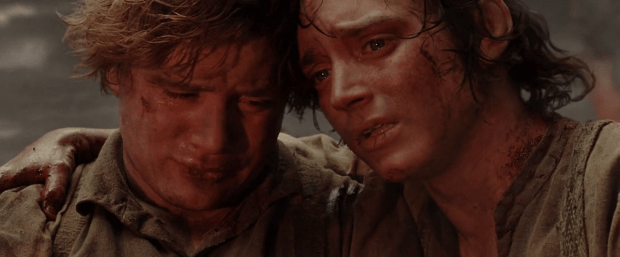
Frodo_and_Sam_at_Mt_Doom

Alex Russell

In “Worst Best Picture” we search every single Best Picture Oscar winner of all time from 1927 to present to uncover the worst of them all. Conventional wisdom says that 2005’s winner Crash is the worst winner in history. We won’t stop until we’ve tested every last one. Read the the first, our review of Crash, here. All posts should be considered to have a blanket “spoiler alert” on them. Today’s installment is the 2003 winner The Lord of the Rings: The Return of the King. Is it better than Crash?

You’re not supposed to read comments online. Everyone knows that. I try not to, but I had to see what people hated about one of the most decorated Best Picture Oscar winners of all time.

There are 15 negative reviews for The Lord of the Rings: The Return of the King on Rotten Tomatoes. One review says that the epic story of orcs, hobbits, and elves lacks “believability.” One calls it racist. One says it “lacks substance.” None of these are actually reviews of the movie, they’re reviews of the book masquerading as movie reviews. They are all written from a perspective wherein the reviewer either isn’t aware of the wildly popular source material or doesn’t care. All 15 are varying degrees of mad at Peter Jackson for supposedly making “The Lord of the Rings” idea up, and they all seem to believe he shouldn’t have bothered.

Whenever you can’t stand something that everyone likes it can be easy to entrench yourself. All 15 reviewers there saw a movie that made a billion dollars and tied Titanic and Ben-Hur as the most decorated Academy Award-winning movie of all time. They saw this movie, they hated it, and they demanded the world know of their hate. Awards and box office totals aren’t the only measures of a good movie – Crash won three Oscars and made nearly 100 million dollars and the entire point of this series is to prove that it is a very specific kind of awful movie – but it is easy to see how those 15 people had to swing for the fences.

The final Lord of the Rings movie went up against Lost in Translation for its Best Picture award. The contrast there is interesting, and I have to wonder if there’s a bigger possible disparity between “loud” and “quiet” in two movies. The Return of the King was a slam dunk in many ways, especially because its award seemed like destiny after A Beautiful Mind and Chicago beat the first two installments.

It’s a strange experience to rewatch it in 2014. It’s very hard to avoid the Lord of the Rings movies in our world. There has to be some broadcast law about one of them being on TNT or FX every single day. I sat down and watched it again and was left with a feeling of great contentedness. I was glad to see that a movie I remembered as a masterpiece held up. It’s strange at times and wonderful in unexpected ways at others, but it is a mammoth achievement of filmmaking that deserves the accolades it gets.

I also briefly considered exploring how Faramir’s attempts to earn his father’s respect parallel the attempts of Terrence Howard’s character in Crash, but then again, life is way too short to think about that even long enough to finish this sentennnnnnnnc ugh ugh ugh ugh.

The Best Part: The fight at Minas Tirith feels huge and important, and the shifting perspective from inside and outside the castle walls makes it feel more like a fully realized fight. There are multiple “starts” to the fight that all allow for different discussions of heroics and bravery. There’s nothing to not like about how the whole thing is handled, and the most fascinating part of it is just how early it happens in the movie. There’s an entire hour of “climax” after Minas Tirith, but it’s in that battle that the movie won its Oscar. Watch something like Troy try to do the same thing and you will gain more respect for it.

The Worst Part: It’s tempting to call this the length – the unextended version is well over three hours – but it’s more just the ending itself. The movie is great at pacing until it absolutely is not, at all. This is especially telling because the actual end to the novel has even more than the movie does. It seems like if they had already decided to cut off a big part of the ending, then what’s the harm in going even farther?

Is It Better or Worse than CrashCrash has no hobbits in it, so of course it is a lesser movie. No, but really, it’s possible to consider The Return of the King an oversized popcorn movie or to judge it on length. It’s also worth discussing to question if it represents the source material completely; there’s a lot left out that some viewers might see as worthy of inclusion. Whatever stones you turn over to try to pick apart the best of the Lord of the Rings trilogy, though, you will not find a problem that helps you compare it to Crash.

Worst Best Picture Archives: Crash | Terms of Endearment | Forrest Gump | All About Eve | The Apartment | No Country for Old Men | Gentleman’s Agreement |12 Years a SlaveThe Last Emperor | The Silence of the Lambs | The Artist | A Man for All Seasons | Platoon |

Alex Russell lives in Chicago and is set in his ways. Disagree with him about anything at readingatrecess@gmail.com or on Twitter at @alexbad.

 Image source: Oscars.org

The Americans: A Show About Patriotism, Murder, and Marriage

Andrew Findlay

The Americans is a relatively new show that FX broadcasts on Wednesdays at 10. The general premise is that the Soviet Union successfully placed a significant number of covert agents into the United States. These are not just commandos with accents, but exhaustively trained and elaborately I.D.’d infiltrators. They are selected young and spend years training in combat and the normal spy stuff, but also learn about American culture and cultivate a flawless, accentless command of English. Then, they are placed in a normal, unremarkable cover life somewhere near a point of interest for the Soviets.

The two main characters, Elizabeth and Philip Jennings, have been living in the Virginia suburbs around D.C. since the 60s. Before the start of the show, things had been slowly becoming more and more peaceful, to the point where the Jennings barely had to do secret agent stuff anymore. However, the 80s and Reagan roll around, and all of the sudden they are again fully active and have to run around doing shit for the glory of Lenin.

They are deep cover agents, and the intricacy and strength of that cover generates most of the complications of the show. They are dedicated to the ideals of universal freedom for all mankind as interpreted by their home country, but they also run a travel agency, live in a big house, and have kids. The kids part is really messed up – their children do not know what their parents really do, so these two super-spies are deeply, immovably in love with two red-blooded American schoolchildren. They want to bring down the corrupt and bloated American autocracy, but their children, whom they adore, are 100% supportive of it. The mother, Elizabeth, the violently atheistic Soviet operative, almost goes insane when her child starts attending Bible study with a group of friends and cannot even explain to her own daughter why it makes her so upset because that would compromise her cover. They are also neighbors and family friends with Agent Beeman, a G-man who works in the counterintelligence department of the FBI.

Hey kids, we’ll be home late tonight. Mommy and Daddy have to blackmail a government official.

Most of the pleasure of watching the show comes from the friction generated by the mismatch between their American and Soviet personae, which, after two decades in the States, have begun to bleed together. The American side of the Americans is not simply a mask – is the part of Philip who loves his son and enjoys driving a fast car the “fake” part of him? Is he 100% okay with the side of him that murders people for a cause? On a less psychological level, it’s also great to see them switch flawlessly from American citizen into frighteningly competent Soviet operative. Elizabeth gets pulled over and has something compromising in the car with her? She plays the distraught wife to the cop until he gets close, then beats the shit out of him when it becomes clear she can’t cry her way out of it (I might have made up this particular incident, but stuff like it happens all the time). Watching the split-second transition from smiling, amiable, and confused civilian to a machine designed to collapse your trachea is good television. I talk a lot about how audiences love watching terrifying, almost superhuman competence on-screen (Breaking Bad, Doctor Who), and that dynamic is strongly in play here. The central pair of the series is frighteningly competent at any number of things – disguise, decoding, deception, dismemberment. They can do it all, and they can do it all really well.

Left to right: Normal look, bureaucrat disguise, smarmy dude disguise. The disguises are really great, because of course they’re the exact same person, but that’s the thing – you only need to change a little bit of how you look to throw off any attempt to make a police sketch of what you actually look like.

The conflict, the tension, and the spy stuff are only part of why this show is so good. In the end, this show is about a marriage. Elizabeth and Philip met each other only after they started training and became “married” only as part of their implantation into the USA. They have a marriage certificate, sure, but it’s forgery by the KGB, like the rest of their lives in America. This creates a really weird, stressful dynamic between the couple. On the one hand, they have lived together for two decades and that creates a definite bond, but on the other hand, their marriage is simply a tool to help them undermine the peace and prosperity of the United States. As deep cover KGB officers, they are not allowed to speak Russian, nor are they allowed ever to mention any detail of their lives before they came to America. This means that these two people sharing their lives with each other know almost nothing about how or where those lives started. Another item complicating things is that Philip has been more seduced by the American lifestyle than Elizabeth has. For example, Philip would betray the USSR to protect his kids, whereas Elizabeth would betray her kids to protect the USSR (she says). The progress of the show is their journey as a couple, working on their trust and emotional issues in the midst of the incredibly stressful reality of their lives. This stumbling in the dark to find out who they actually are and what they actually mean to each other is very rewarding to watch.

This is a three-minute recap of the pilot episode. It gives a really good idea of what I’ve been talking about this whole article.

Finish the article, watch the pilot recap, then decide if The Americans is for you. I love this show. It’s full of well-plotted suspense and action, it has a complex, compelling central couple, and it constantly assaults preconceived notions people hold about identity, appearance, and reality. It’s a free country thanks to Reagan so you can choose for yourself, but you’d be making a big mistake not to check this out.

Andrew Findlay has strong opinions about things (mostly literature) and will share them with you loudly and confidently.

Images: The Guardian, IMDB