Author: Alex Russell

Response: Infinite Jest is Probably Not Science Fiction

Austin Duck

(Editor’s note: This may or may not be a response to a previous post here by someone else. It’s certainly at least related, so you may want to open the other one in a new tab.)

Before I begin, I think it necessary to make one thing absolutely clear: I wholeheartedly believe that science fiction can be literature. Margaret Atwood and Ursula Le Guin, these women write literature.

Reader, I think you’ve been misled. You were told that I’d be here to “throw down” with Andrew Findlay, that Infinite Jest (henceforth IJ) is a work of science fiction, that I have a heart of gold (if you read AF’s final footnote), and, unfortunately, none of this is true.

I’m sure you’re thinking to yourself, right now, “how are you not going to argue with AF while fundamentally disagreeing (and claiming that you’ll address that disagreement),” and, honestly, that’s the predicament I’m finding myself in. You see, I don’t find any particular pleasure in launching what will inevitably be a pointless argument about a book that no one reads (though everyone owns a copy). However, I can’t help but talk because I find problems not with the claim that IJ engages sci-fi elements but with the way it has been presented to you as being sci-fi.

The truth of the matter is that, so far as I can tell, IJ is not a sci-fi novel given the criteria I use when I approach it. This criteria seems to differ from Findlay’s in a single, meaningful way. But, before I get to that, let’s revisit the criteria he laid out on Monday:

  • Takes place in the future
  • Strange changes in government, cartography, or the overall structure of the world
  • Extrapolated technologies
  • Thematic development of the plot centers around a certain piece of technology

All of this, very superficially, seems to create a sci-fi novel. I say superficially because, aside from the last criterion (which I’ll address below), none of these elements are inherently anything but set-dressing, asides, bits of information that require more willful suspension of disbelief but do not fundamentally alter anything in a text. If, for some reason that I don’t quite understand, we were to assume that realism were the only capital-L “Literature,” then yes, absolutely, this criteria would hold, but as we’ve seen in our postmodern literary landscape, that’s not quite the case. Do we inherently classify something as sci-fi because it engages these set-pieces? Is White Noise sci-fi? Or Gravity’s Rainbow? Does Haruki Murakami write fantasy novels? I just don’t think so.

To be completely honest, I don’t really have a full grasp on what’s changed since modernism that would allow Murakami to be regarded in the same vein as Faulkner or Atwood as with Stein or Cather, but one thing’s for certain: it happened. Sci-fi fans can disclaim the statements of “literary heavyweights” like Jonathan Franzen, but, ultimately, people like Franzen don’t influence literary tastes nearly so much as critics, intellectuals, and popular culture and, fuck, just look around. Sci-fi is everywhere, and everywhere in high regard. So fuck Jonathan Franzen. Seriously.

I think that what’s happened is the result of post-structural linguistics, post-colonial literatures, and politico-ideological theories of gender, race, and sexuality. I’m not going to get into why (because you’ll fall asleep) but, to give a profoundly abridged version, the prevalent critical consensus of the last 30 years at least (though you could easily trace it back 50) is that “Art” exists beyond a white, Latinate, logocentric (sorry) realism. It just does. There are too many experiences and too many minds for prescription of what creates art, experience, or meaning.

I know it seems like I’ve gone pretty far from IJ, but trust me, I haven’t. IJ, begun somewhere in the late 80s and published in 1996, is a direct inheritor of all of this literary/cultural upheaval. It occurs, it is composed, in a time where experimentation—of different forms, idioms, genres, voices, styles, etc.—makes it perfectly acceptable to cannibalize, to pull from the highest culture (the title refers, in addition to the film that Findlay discussed, to a line in Hamlet) and the lowest (the dime store fantasy or science fiction novel) to make something new, a device consistently utilized by Pynchon, whom Wallace developed a lot of chops imitating.

So does it mean that, to borrow elements of a genre makes a work itself of that genre? In some ways, yes, it does, in the sense that IJ could not exist, as it does, without the existence of the sci-fi genre. Just as I am of my father, so too is IJ of sci-fi. But is it actually a sci- fi novel?

Of Findlay’s above-mentioned criteria, I think no, IJ is not a sci-fi novel. Yes, it is sort of set in the future (or really, for us, the now), and yes, there is a differently arranged America, giant bugs, and advanced technologies, but none of this, and I mean none. of. it. has any actual bearing on the novel itself. Of the approximately 1,000,000,000 plots engaged in IJ, the two most prevalent are of tennis prodigy and aspiring drug addict Hal Incandenza and former junky and street criminal Don Gately. Engagement with these characters (or something closely related to them (the tennis school that Hal attends or the halfway house that Gately oversees)) occupies approximately 75% of the book (that’s over 750 pages to you and me) and the sci-fi elements of the plot occupy exactly none of these pages. Neither Hal nor Don ever hear anything concerning the more fantastic elements of the film Infinite Jest, nor do they ever encounter giant insects or interact meaningfully with the reconfigured United States (neither character leaves Boston during the entire novel).

Instead, both characters (each in their own ways) are obsessed with drugs, with doing them or not doing them, and with the material conditions of living in a world that encourages escape—through drugs, through Netflix (which Wallace calls the Interlace viewer with streaming and cartridge capabilities), through work and family and games—while hiding the consequences of quitting—the psychosis, the inability to relate to other people, the inability to function in a way that makes the world less lonely. And, as a result, that’s what the book hovers over, brings forward as the theme, as to what is truly important. The world then, with its years having been named by companies (for example, instead of 2002, the year is officially called The Year of the Whopper) and its giant insects created by a former-actor-and-ultimately-incompetent-president as the result of turning the upper Northeast into a giant trash bin, does not drive the plot(s). Instead, these set pieces exist as hyperbole, they exist to make larger statements about a culture at large. Ultimately, they exist to be metaphorically, hyperbolically similar to those real plots of Incandenza and Gately, to explode them, rendering them generalizable (i.e. evident in other aspects of the culture) without making them generalities.

And I think this is an important distinction: IJ is not a book about characters. Yes, there are characters, loads of them, some of whom you’ll get very attached to, who will show you yourself and your world in very uncomfortable ways. But really, truly, IJ is an analysis of the culture, a hard look at a culture of escapism, of shirking responsibility, of letting go toward achieving pure, individuated pleasure, and is invested in showing the material outcomes. Sure there are big bugs, but they’re the effects. They don’t matter, they don’t really do anything except exist, and, in their existence, they remind us of the realities beneath the stories being told to us, the stories we’ve invested and of which we are not likely to escape.

Which brings us finally to Findlay’s fourth claim—that thematic development of the plot centers around a certain piece of technology—and its relationship to the film Infinite Jest (which, for those of you just tuning in, is a film created by Hal’s optical-physicist-gone-auteur-filmmaker-father that is so entertaining anyone who views it never stops watching and dies.) I do agree that there is something to this film’s presence in the text that goes pretty far beyond what I’ve discussed above in terms of adding a serious sci-fi element to the text. The story of the film’s effects does come across as being the third most important plot in IJ (right behind Don and Hal, though occupying much less actual page-space) and its existence is pervasive, showing up directly in nearly every minor-character arc in the book.

Despite this, I’m still not convinced that this element makes the book sci-fi; yes, IJ definitely makes a strongly sci-fi move, but not, it seems to a sci-fi effect. Let me try that again. Here are three reasons why I don’t think that the film Infinite Jest makes the book Infinite Jest sci-fi :

1) while this film is a technology that doesn’t exist, it doesn’t seem to be the effects of radically advanced science that make the difference as it does the effects of experimental art (much more in line with the structure of the book, the meta-textual, self-conscious foot-noting, etc.),

2) that, rather than a specific material/technological aspect that makes the film “addictive,” it seems that IJ (the movie) stands in for a Platonic idea of entertainment (i.e. something completely, purely entertaining) as a means for hyperbolizing the novel’s themes (as mentioned above), and

3) (most importantly) that, to me that what makes a piece of literature quintessentially sci-fi is not the engagement of specific science-materials in a text, but an in-depth study of what, logically, could come of the use of those materials and their effects on humanity. IJ ultimately isn’t speculative because it’s not concerned with what the effects of Netflix or the film’s particular technology will be; it’s concerned with what’s already here and uses these sci-fi pieces to hyperbolize and generalize, to exemplify cultural patterns in these objects that affect multiple lives.

It’s undeniable that Infinite Jest contains sci-fi elements. However, rather than calling it sci-fi (which is not derogatory; it’s just not accurate), let’s just call it what it is: an enormous, important, genre-bending book that cuts to the core of the contemporary American experience of pleasure and addiction. It’s simple to read, nearly impossible to think about, and you are truly at a loss if you don’t read it just because it weighs like 20 pounds or because you’d rather watch Girls.
Your Twitter Guide to #Sochi2014

Scott Phillips

One of the amazing things about Twitter is the real-time access you get to anybody that you follow. Bob — that guy you work with — might royally suck on conference calls, but maybe he makes some witty remarks on the CTA every morning. That little cousin of yours probably can’t string two sentences of real words together, but at least they have Twitter to talk about #oomf (one of my followers; get with the times, you assholes).

But Twitter is also granting us some amazing access to the 2014 Winter Olympic Games in Sochi, where journalists from around the globe are sending some pretty ridiculous images of the semi-completed Olympic surroundings.

Here’s a snapshot — no, not a Snapchat, that’s for another time — of some of the more interesting things we’ve seen in Sochi so far.

Since the Olympics is about the athletes, we’ll start with their accommodations. Hockey will be the sport that the casual fan of the Olympics will watch the most because of the involvement of NHL players, so that makes this photo even funnier.

Canadian hockey players are supposed to sleep and get laid in twin beds that are, like, a foot apart? Can you imagine Jonathan Toews trying to bring groupies back to his room?

“Hey, how you doing? Jonathan Toews, Stanley Cup champion. I signed a multi-million dollar contract, but do you wanna come back to my room and kick it on my twin bed with my two roommates? Also, we need some extra towels if you have any leads…”

https://twitter.com/DanWetzel/status/430829086022569984

As media members have checked into uncompleted hotel rooms, normal things in America like lightbulbs, door knobs, soap, and shower curtains are becoming hot items on the Olympic media black market.

The thought of someone like Dan Wetzel, a national sports columnist who makes six figures to comfortably cover every major sporting event from a prime location, trying to trade three light bulbs on the Russian black market for a doorknob is just awesome.

Then there’s this horrifying revelation: Russian water will evidently melt your face. Or, Olympic corporate sponsor Gatorade has taken their branding in Sochi to the fucking next level by replacing water with lemon-lime Gatorade. I mean, do people in Russia have enough electrolytes?

The water has been a much-discussed issue in Sochi and if you can get clean water at all — and it also happens to be hot! — then you’re basically staying in the best hotel room in Russia.

Why are there stray dogs fucking everywhere in Sochi? Have we established this yet? It’s like that scene in A Christmas Story when dogs are just randomly running through the kitchen tearing everything apart.

There’s also the famous story of the German photographer that tried three times to check into a hotel room in Sochi only to find a stray dog in the third room he was shown.

Did Stephen King have Pet Cemetery filmed there?

Manhole covers: We evidently take them for granted in America, but here in Sochi, they just call it “population control.” Not watching your kid? Sorry, mom, your son has fallen into the abyss and is playing an underground level of Super Mario World right now collecting coins and crying like crazy.

Seriously, why isn’t this the universal sign for bathrooms all across the world? It completely gets the point across and is so much more entertaining to look at than what we have now in America.

https://twitter.com/Bonnie_D_Ford/status/430824145887428608

That’s not creepy or anything… Forget about things like privacy and an ability to sleep soundly thanks to randoms coming in and out of your room to see if construction is complete.

Maybe some other journalist offered a few million rubles to steal your hotel room. Try telling your boss that you have to cover Ice Dancing from your hotel room because the construction workers keep trying to break in to steal your instant oatmeal.

Well, there you have it, folks. Some of the crazier shit we’ve seen on Twitter from Sochi. And we’re still two days from the Olympic Games even beginning!

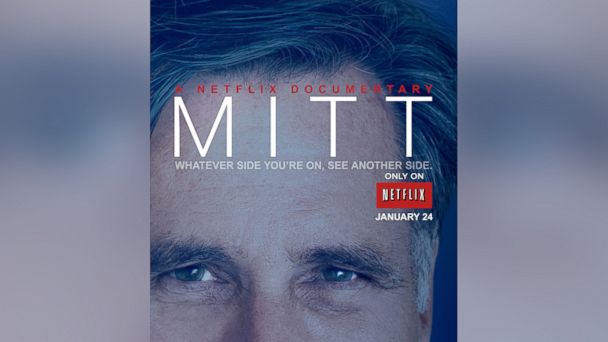
An Obama Campaign Worker Watched the Documentary Mitt. Should You See it?

abcmitt

Alex Marino

In our rarely-running kinda-series Should You See It? we talk about movies that just came out. You can figure out the rest of the premise from the title of the series. That’s right: we talk recipes. Should you see the new doc about Mitt Romney?

Given that all my other pieces here are about yelling at kids to get off my lawn, I could understand the belief that I spend my days sitting on a porch in a lawn chair being grumpy at the world.  But before all that I worked for the Obama campaign doing data work in North Carolina for all of 2012. It was exhausting and exciting and unhealthy and incredible all at the same time. Like so many of my colleagues, once everything was over and I actually had an ounce of free time I decided to occupy it with reading as much as I could about the election. I’ve read almost every book that’s been written about the campaign. Hell I was reading short e-books about the campaign during the campaign. It was always interesting to see what journalists got right (that we used data incredibly well) and what they were completely clueless about (how we used that data). I had read so much that by the time the highly-anticipated sequel to Game Change called Double Down came out there really wasn’t a whole lot of never-before-seen content. I finished it craving an account that actually understood what we did or at least brought a fresh perspective to the race. But I never thought that a documentary about the guy I worked to beat would be that account.

Mitt isn’t about the inside politics of a national campaign. It’s not about the internal struggles or the war room drama. You don’t see Paul Ryan until 70 minutes in. You don’t see the campaign manager until 80 minutes in. It’s the story of a man and his family on the campaign trail since 2007.

When you work on a political campaign it’s easy to lose perspective on how you view your opponent. For so long I held this belief that Romney was completely out of touch with working-class Americans. And while Mitt didn’t show any evidence that directly refutes that belief, there was a really touching scene where he talks about his father, former Governor of Michigan and candidate for president George Romney. He was showing the notes he took while on stage at the first debate. At the top of the first sheet was “DAD”.  He went on to explain:

“I always think about dad and about [how] I’m standing on his shoulders… There’s no way I’d be running for president if dad hadn’t done what dad did. He’s the real deal. The guy was born in Mexico. He didn’t have a college degree. He became the head of a car company and became a governor. It would have never entered my mind to be in politics.  How can you go from his beginnings to think ‘I could be head of a car company. I can run for governor. I can run for president.’ That gap. For me, I started where he ended up. I started off with money and education and Harvard Business School and Harvard Law School. For me, it’s moving that far. (moves his hands, palms facing each other, slightly apart) For him it was like that. (moves hands considerably apart)

Even after the first debate I felt so confident that Obama was going to win that I couldn’t imagine the conversations going on at Romney HQ. I thought they had to be living in some strange bubble where only good news gets passed along. But after the first and second debates it was Romney who was even-handed. He knew he did well in the first debate and he knew he didn’t do as well in the second. This was in the face of his family being excessively supportive (as they should be). Even on election night as everyone else is trying to find ways to hold on to the belief that he can win, Mitt is well aware that it’s over and seems remarkably relaxed.

I remember feeling so strongly that Mitt was this out of touch rich guy.  His life consisted of car elevators and dressage horses! I never once thought that those things helped make his wife’s life a little easier as she dealt with multiple sclerosis. And while those things may seem excessive, if you were as rich as the Romneys wouldn’t you do everything in your power to make coping with a disease like MS easier?

But while Mitt did such a better job than the campaign in making the candidate seem human, there were many puzzling things the film revealed how informed Romney was about the state of the race. In the last few weeks of the race he saw huge crowds everywhere he went. I understand how he could feel like things were on an upswing. But a look at the numbers would have quickly brought him back down to Earth. During election night Ann mentioned that they were hoping to win Michigan, Pennsylvania, and Wisconsin. Polling just before election day never showed any of those states as even being close. The fact that the candidate and his wife weren’t aware of their path to victory is baffling to me. They got most of their return information from external news sources rather than their internal analytics team. But was he actually not briefed on these things or did the documentary just not show any of that?

The scene that hit me the most took place the day after election day at Romney HQ in Boston. After he and his campaign manager each spoke, you saw the tears of sadness streaming down the faces of his staff. Most people don’t understand what’s in those tears.  For so many of us this race meant moving across the country, barely seeing friends and family, putting off school for a year, relationships collapsing under the stress of the campaign, 3:30 a.m. wake up times, 10:00 p.m. checkout calls, 11:00 p.m. dinners, and more takeout than you can imagine. It was our entire life and to not have it all end with a victory is nothing short of devastating. I was lucky to be on the winning side that was filled with tears of happiness on election night.  I can’t imagine how I would have felt had the results been different.

Should You See It? If you have Netflix make sure to watch Mitt. If you don’t have Netflix what the fuck is wrong with you; are you 90? Because while it’s easy to get caught up in the passions of a long political campaign and view your opponents as enemy robots seeking to destroy your entire existence, it’s healthy to remember they’re people too, from the field intern all the way up to the candidate.

Image source: ABC

Broodhollow: Dreadful Light Reading in Webcomic Form

broodhollow


When I was growing up, I really only had one career goal: I wanted to be a cartoonist. Yeah, I took the popular way out back then. That never panned out (spoiler alert, I actually don’t draw Dennis the Menace) but watching the medium grow up with me has gone in a lot of very interesting directions. With print media dying, of course, the age of the online world picked up where they left off. End of great set up.

Webcomics exploded onto the scene back in the late 1990s.  Your co-workers send you links to them all the time, especially likely if you write for or read the content here on this site.  You’ve got your break out stars like Penny-Arcade and Achewood and then your lesser known ones like Brawl in the Family that are pleasant little surprises you fins on your own.  It’s a landscape you can’t really avoid online anymore if you appreciate the art form.  There is one entry, however, that deserves mention.

Kris Straub has been doing webcomics since 2000 with Checkerboard Nightmare. He went on to do an epic sci-fi story that spanned seven years at StarSlip Crisis and currently makes most of his revenue through Chainsawsuit (a gag-a-day strip that never fails to get me). Recently, he’s embarked on an entirely new strip that is unlike anything on the web that I’ve seen.

Enter:  Broodhollow.

Broodhollow lives in its own weird little corner of the internet.  It’s a cosmic-horror-humor strip. Set in the town of Broodhollow during the Great Depression it follows the curious story of Wadsworth Zane, a failed encyclopedia salesman called to this town through the will of a recently-deceased yet obscure relative. The drawings are light and simple. The colors are somewhat faded but only indicate very faint feelings of dread. The characters look like they could be in the background of an early Mickey Mouse cartoon.

Then a reanimated mangled corpse shows up.

Broodhollow takes the idea of telling a horror story and turns it on its head. There are laughs but only occasionally. Some strips end without a punchline, just a sense of foreboding as the story progresses. As the reader progresses further into the mystery of this town, as Wadsworth does, things take a Lovecraftian turn for the nasty. He encounters other characters: a young woman working for her father’s law office, the group of mill workers who enjoy spending their nights at the bar, a psychiatrist who may know more than he lets on. There’s even a secret council involved that avoids the cliché nature of such an idea and still feels like something that could have happened in the early 1930s. To tell any more of the story would be to ruin it. The important note is that the world and the characters you’re looking at are drawn and painted – they aren’t real, they’re just pixels. Much as the town of Broodhollow feels, as you learn about it and its residents, a “painted” version of what actually exists underneath.

And that doesn’t even begin to explain the unique nature of the art involved. In the middle of a lightly drawn strip will be the horrible image of some monstrosity that looks simultaneously human and anything but. Straub walks a fine line throughout the entire story: light mystery and horrific dread. The images aren’t terrifying but the way they’re presented is. Light and painted backgrounds contrast with the drawings of the characters to draw the eye to a certain detail, making you almost miss the horrors drawn away from where you’re looking.  

This isn’t to say it’s perfect. It’s an ambitious project to take on. To have a strip that can deliver laughs but then also do a loving homage to the style of storytelling H.P. Lovecraft embraced. But that’s what makes it so much more interesting than anything else being published online right now. There isn’t the cheap joke because “this is a comic strip, it has to end with a joke!”. All said and done, it’s a evenly paced narrative that has one goal:  to tell a story that hasn’t been told before. The fact that it’s a webcomic is purely coincidental.  

Straub is approaching the project in a smart way. Instead of promising one strip a day, he’s focusing on three a week. Every few months will tell another chapter in the story, which then can be bought as a book. He takes a few months off to work on the next chapter and then comes back. It made the wait between chapters infuriating but all the more rewarding when it came back. He recently started a Kickstarter and more than raised enough funds to keep making the project and then some. In an age where you can call people on the internet “the worst” and no judge would convict you, it’s also an age where people who are dedicated to a project can come together and help artists out. For every Zach Braff trying to raise millions without having to spend his own millions, there’s a guy like Straub who just wanted to take a chance to show people something they wouldn’t be able to get anywhere else. To show them Broodhollow.

If you’re looking for some light reading, the first book is available for free online at Straub’s Broodhollow homepage here.  It won’t take you more than an hour and it’s worth it.

Image source: Kickstarter


Tough Questions: What Are You Most Excited for in 2014 That You’re Sure Will Disappoint You?

question-mark

Every Monday we ask everyone who hangs out around here to answer a tough question. This week?

What Are You Most Excited for in 2014 That You’re Sure Will Disappoint You?

Rules are simple: what do you have hope for that you know you’re wrong about? What are you fired up for early in the year that you will be miserable about once it happens? As a note here, Brent answered before the game. His pick of the Seahawks flopping in the Super Bowl looks hilarious for that reason.

Alex Marino

I speak for a lot of people when I say that I was hoping George R. R. Martin was going to release the next book in the A Song of Ice and Fire series called The Winds of Winter.  But it’s looking more and more like it’s not going to be released anytime soon. With his last release A Dance with Dragons, his original goal completion date was late 2006. Then his publisher said it would be released in the fall of 2008. Then in early 2009 he said he would get it finished by June of the same year. By July 2010 he had yet to have the book finished. It wasn’t until July 2011 that the book was finally published. And in 2011 with regards to The Winds of Winter Martin said that he could have it finished in three years at a good writing pace. But given how everything went down with A Dance with Dragons, who knows how accurate that is. It’s now to the point where people are getting worried the TV show is going to catch up to the novels before they’re all finished. I still believe that the remaining books are going to be excellent, but my biggest 2014 disappointment that I’m most excited for is Martin’s eventual statement that things are taking longer than he anticipated.

Alex Russell

Every year I set four basic goals for myself. They’re simple but important, and keeping them in mind all year allows me to keep my year on track. It’s easier to quit smoking when it’s one of four things to do in a year than it is to “quit smoking.” I quit last year and haven’t had a cigarette in just under a whole year. This year? The one I’m going to miss is losing 20 pounds. I was rail thin growing up and time caught up with me in my late twenties. Through portion control, salads for lunch, and just outright misery I’ve managed to get my diet under control, but there’s just no damn way I’ll make it to 20 pounds. It’s fun to live in a world where that’s still possible, and that’s where February finds me. Oh, and stand up. There’s no way anyone can follow 2013, which had some of the greatest album releases of the last decade. The only way to go is down.

Andrew Findlay

The University of Tennessee’s football season. God. Damn. It. Go Vols.

Brent Hopkins

This is strange (because by the time this is posted it will already have passed) but I think the thing that I am most excited for this year is the Super Bowl. The reason I am so into the Super Bowl this year is because I am a huge Seahawks fan and have been for years. I got to sadly watch the last Super Bowl they were in where Pittsburgh benefited from less than stellar refereeing (yes, I know the Seahawks had quite a few games go their way unfairly this year, also). The reason I think this year will disappoint me is two-fold. One is I have work. Like any sane company though, we aren’t allowed to just sit and watch TV so I’m probably not going to be able to watch it. I will be sitting at work, doing nothing, in Korea. Second is this sinking feeling that the Manning two-headed dragon needs four rings to satiate the football gods in their family. One for the father and one for the unknown brother as well. The stars seem to be aligning for them to place their fists together in this strange Planeteer formation made with four Super Bowl rings  and Mr. Football will come down from the skies  and erase rugby and soccer from history and the new sports chairgroup will be the Mannings… or maybe I am a smidge neurotic. WOOOO HAWKS (if they won).

Scott Phillips

I always get fired up for the Olympics, but I just know that I’m going to be disappointed by this year’s Winter Olympics in Sochi. I mean, can Russia do anything right? There are still Olympic structures that have yet to be completed. There’s the fiasco about stray dogs and whether Russia actually believes if non-heterosexuals are “people.”

And we haven’t even gotten to the actual playing of the games. In the summer of 2008, I had the time of my life playing drinking games to the Olympics nearly every night while I was living at my Mom’s house and hanging with my friends from high school. It was fantastic. But, ever since, I can’t find good drinking partners for these games and the Winter Olympics, in particular, are a difficult sell.

Drinking games during the Olympics are fantastic and I encourage people to join me at any point during the Sochi games, I just know I’m going to be disappointed while doing it.

Mike Hannemann

The event in 2014 I’m most looking forward to being disappointed by has boiled down to the third and final Hobbit movie.  I don’t mean that in the sense that I thought the prior two were particularly bad films. Quite the contrary, in fact. They were flawed and directionless at times, but they still were fun. And as a nerd who made that large transition into adulthood during the original Lord of the Rings trilogy, any chance I get to return to that world is already a win in my book. Hell, I’m going to fight kicking and screaming to hold onto that belief when an inevitable sequel to the original trilogy comes out in 15 years. The disappointment is instead going to come from longing to return not to a place, but a time. I’m going to see this movie with my best friend at midnight in the same theater we saw the original films in, and I’m going to hope beyond hope that it’ll feel like I’m 19 again, and there’s still a whole lot about the world I haven’t figured out yet. But in the end, I’ll probably just end up mildly entertain and thinking that maybe taking the next day off of work just to see a movie was a bad idea. Also that I probably shouldn’t have drank 64 ounces of Mountain Dew at one in the damned morning.

Life After the Star Wars Expanded Universe: Infinite Jest as Science Fiction

Andrew Findlay

This article’s shtick is reviewing great science fiction, so before I start in on my review, I’ll make my case that this book belongs here. What are some major features of science fiction?

1. Takes place in the future

2. Strange changes in government, cartography, or the overall structure of the world

3. Extrapolated technologies

4. Thematic development of the plot centers around a certain piece of technology

All of these characteristics are strong predictors of science fictional status, and all are strongly present in Infinite Jest. We’ll take it number by number.

Infinite Jest takes place in a (#1) near-future America. It’s hard to tell exactly, but Stephen Burns estimates that the time of the main part of the book roughly matches 2009. That’s fifteen years in the future from the 1994 date of publication. In this future, the reigning method of North American political interaction is O.N.A.N.ism (#2). I don’t think there’s ever been a more intentional masturbation joke, but O.N.A.N. stands for the Organization of North American Nations, a souped-up NAFTA in which the American president basically has the final say on everything. One of the things the president does is create the Great Concavity, where the far northeast of the U.S.A is given to Canada, and then becomes a massive, region-wide landfill.

Fuck you, Montpelier!

Every single bit of America’s waste is sent to that place, which is now legally Canada, so America does not have to deal with it. There’s even a new term for this unprecedented gifting of land to a neighboring country: experialism. There’s also (#3) a bunch of new technologies. I’ll start with a big one: unlimited clean energy. Well, kind of clean. Annular fusion is the whole reason for drowning Vermont and Maine in toxic waste and creating what Americans call the Great Concavity. Annular fusion is a counterintuitive clean energy system that uses hideous amounts of toxic material to initiate fusion that is so clean that it not only purifies the materials used in the process but also sucks every toxin and radioactive particle out of every location in a wide circumference. The whole reason they have to send massive amounts of waste into the area is that the process of annular fusion removes every poison from everything in the area, leading to massive, lush, unbelievable overgrowth. This entails huge trees, lush grass, even gigantic animals and insects.¹

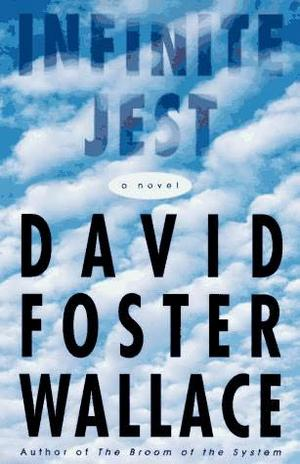
Continual bombardment with poison is the only way to keep these animals/plants from growing out of control and taking over the surrounding areas. DFW includes many additional near-future innovations in this novel, but the most important one is Infinite Jest. The book title references a short film from within the novel itself, a piece of video technology (#4) that is central to the plot and theme. Infinite Jest is an unreleased video that is so entertaining or appealing that, once someone starts watching it, it is so pleasurable that they never stop… ever. Police would know that someone died from watching the video when they saw a self-befouled, dehydrated husk sitting in a recliner. That is, they would know that if the electricity to the entertainment system had been cut. If it hadn’t and the video was still running, they would just sit down and watch, and the exact same thing would happen to them.

This is great! Let’s do this until we die.

Whenever people hear of Infinite Jest, they don’t think science fiction. I didn’t even know it was set in the future until I read it. The issue is that Infinite-Jest-as-science-fiction is not part of Little, Brown’s marketing strategy. Very often these days, booksellers and publishers decide what is and is not science fiction. There’s also a specious assumption that Serious Literature and science fiction are mutually exclusive. In Ursula Le Guin’s brilliant “On Serious Literature,”² she takes this type of thinking to task:

Had he not even understood the importance of the distinction between sci fi and counterfactual fiction? Could he not see that Cormac McCarthy — although everything in his book (except the wonderfully blatant use of an egregiously obscure vocabulary) was remarkably similar to a great many earlier works of science fiction about men crossing the country after a holocaust — could never under any circumstances be said to be a sci fi writer, because Cormac McCarthy was a serious writer and so by definition incapable of lowering himself to commit genre?

The Road is obviously science fiction.³ End of days, world of ash, single wanderer with companion trying to make his way? Except The Road was not billed or sold as science fiction, because Cormac McCarthy. Infinite Jest is the victim of the same type of thinking. This way of looking at things persists across literature. For example, Margaret Atwood’s Oryx and Crake is not sold as science fiction even though an honest-to-god mad fucking scientist is a title character. Gravity’s Rainbow, almost the entire focus of which was the Nazi’s V2 missile program, the direct technological parent of the rockets that put men on the Moon, is rarely considered science fiction, although there’s a fairly strong argument there from the standpoint of #4.

Yep, looks pretty sciencey to me.

So, back to Infinite Jest. It’s science fiction, so I’m allowed to review it. The thing that surprised me most about it was how easy it was to read. It’s on the same cultural level as Ulysses and Gravity’s Rainbow – a Big Important Novel you want people to see you reading on the train. I’m not saying Ulysses and Gravity’s Rainbow aren’t worthwhile, but they are most definitely a fucking trek. Infinite Jest isn’t. There are some advanced bits, and yes there are footnotes,⁴ but for the most part it’s just long as hell. To prove my point, following are excerpts from each book, chosen by opening the book to a random page and typing what I found.

Infinite Jest:

Katherine, I am, in English, moribund. I have no legs, no Swiss honor, no leaders who will fight the truth. I am not alive, Katherine. I roll from skiing lodge to tavern, frequently drinking, alone, wishing for my death, locked inside my pain in the heart. I wish for my death but have not the courage to make actions to cause death. I twice try to roll over the side of a tall Swiss hill but cannot bring myself. I curse myself for cowardice and inutile.⁵

Ulysses:

Lynch! Hey? Sign on long o me. Denzille lane this way. Change here for Bawdyhouse. We two, she said, will seek the kips where shady Mary is. Righto, any old time. Laetabuntur in cubilibus suis. You coming long? Whisper, who the sooty hell’s the johnny in the black duds? Hush! Sinned against the light and even now that day is at hand when he shall come to judge the world by fire. Pflaap! Ut implerentur scripturae. Strike up a ballad.⁶

Gravity’s Rainbow:

He used to pick and shovel at the spring roads of Berkshire, April afternoons he’s lost, “Chapter 81 work,” they called it, following the scraper that clears the winter’s crystal attack-from-within, its white necropolizing…picking up rusted beer cans, rubbers yellow with preterite seed, Kleenex wadded to brain shapes hiding preterite snot, preterite tears, newspapers, broken glass, pieces of automobile, days when in superstition and fright he could make it all fit, seeing clearly in each an entry in a record, a history: his own, his winter’s, his country’s…instructing him, dunce and drifter, in ways deeper than he can explain…⁷

Above are excerpts from the trifecta of Modern Novels You Must Read. I hope they make it clear that Infinite Jest is comparatively accessible and smooth reading. It’s also one of the funniest books I’ve ever read. Most “funny” books have me smiling a little as I consider how good that last joke was, but Infinite Jest had me in tears multiple times a day. So now we come to the main point of this article: read Infinite Jest. It is funny, compelling, and important. I spent most of my time discussing why certain features of this book put it within my science fiction purview, so Austin Duck⁸ will be along on Wednesday to talk about a massively more crucial subject: what makes Infinite Jest so damn important?

NOTES AND ERRATA

1. This is key, considering that outsized insects were almost as important to early pulp SF as words were.

2.  Read this. Following that link is undeniably a better use of your time than reading this article. It leads to a tongue-in-cheek piece of brilliant microfiction Le Guin wrote in response to a reviewer of Michael Chabon stating that he “has spent considerable energy trying to drag the decaying corpse of genre fiction out of the shallow grave where writers of serious literature abandoned it.” This statement put Ursula Le Guin, goddess of fantasy and science fiction that she is, in high dudgeon. Her response is facetiousness perfected.

3. Or so obviously indebted to it that not acknowledging it is an act of ingratitude.

4. I recommend using an ereader to go through Infinite Jest. It’s gigantic and physically difficult to hold up. Also, clicking on a number to go directly to the footnote is a lot easier than flipping back and forth.

5. If given the context that a French Quebecois man in a wheelchair is speaking this in a second language, I can pretty easily figure out what’s going on here. No challenge at all.

6. What the fuck. What in the actual fuck. Is that Latin? Why? Why is that Latin?

7.  Okay, I know all the words here. All of them. Let’s just put them… together… hm. I can piece this together with some effort, but the fact remains that the author chose to write “rubbers yellow with preterite seed” instead of “used condoms,” so I don’t know.

8. Kind of a dick, but smart as hell and with a heart of gold. Read his article!

Image credits: Allmedia.com, Wiki, and Infinitesummer.org

Casual Commitments: Cook, Serve, Delicious!

cookserve

Brent A. Hopkins

In Casual Commitments, we explore the ups and downs of casual gaming.

Cooking is an art form and this game is the pepper grinder.

Today I will be reviewing Cook, Serve, Delicious!, another game that is available on mobile devices and then was recently ported to PC and released on Steam. It is a restaurant and time management simulation.

The premise of the game is the player taking the role of a chef who has taken over a former renowned restaurant that has gone from being a five-star pinnacle of culinary delight to a starless greasy spoon restaurant. As the chef in a newly revamped tower that houses your restaurant as well, you have to build your menu to mainly attract the tenants and reclaim the former five-star rating that was once held.

The game setup is split into two sections: one being the restaurant and the other being the management portion. The interfaces are both very clean and simple and there is a nice little tutorial to help the player become acclimated to the game. I will start off with the chef portion of the game as that is the games’ major selling point.

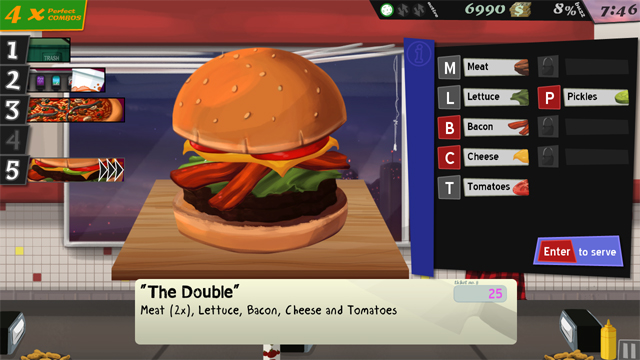
The restaurant that you run is owned and maintained solely by you. It opens at 9 a.m. and closes at 10 p.m. This means that over the course of a day you have to deal with all of the things that a real restaurant would have to handle, alone. The main job that you have is to handle customers’ orders. This works in a quick time event sort of way. The customer will come in and order something on your menu (I will explain the menu more later) this is assigned a number on the keyboard from 1 to however many order slots you have unlocked (I currently have 5). Once you acknowledge the customer you must finish their order. I will use one of the earliest and cheapest foods as an example, The Corn Dog.

The Corn Dog is simple but it can come in three ways: ketchup only, mustard only, or ketchup and mustard. The customer will come in and wait and when you acknowledge him or her they will say I want only mustard, for instance. The game has built in hot keys for each food on the menu so in this case ‘M’ is used for mustard on corndogs and then you press enter to serve the food. When the order has no mistakes you are given a rating from the customer. Rinse and repeat.

The rating system is how you are tracked throughout the day, with perfect orders giving you a chain which increases your restaurants’ “Buzz.” The higher the “buzz” the more people will come day-to-day. There are two other ratings you can get which are average and bad. Average doesn’t do anything but break your perfect streak, but bad orders hurt your “Buzz” and impact customers.

The other part of the restaurant section is the chores that you must do. These are all setup in the same interface as the food where they will show up as customers and you must choose and complete them quickly to keep customers happy. There are four chores to do: dishes, rat traps, toilet cleaning, and trash. These are all hot-keyed like the food menus, so once you memorize how to do them you can hit the keys without looking and complete them really quickly. The types of food you have on your menu affect what chores come up the most. When you have meals that require plates, you do dishes more. If you have fish, you deal with rats more. The chores become more of a slight inconvenience than a real problem.

The stress from the restaurant portion of the game is entirely rolled up in handling customers and chores quickly. When you have many things on your menu and they all take various amounts of preparation time it can become hard to juggle the steak orders with the ice cream orders. There is also rush hour to deal with, which hits at noon and 6 p.m., and this drastically increases the rate at which you have to deal with customers. Your fingers will have to fly to make sure you can keep your perfect scores up through them. The secret here is simply to memorize the keys for the foods on your menu so you can quickly read what the customer wants and bang it out without looking. Once you can do that the game is never really hard, with mistakes mainly stemming from fat fingers (in my case) hitting the wrong customer and effectively serving them too early.

The second part of the game is the management aspect. This takes place on a different menu and has a few parts to deal with. The parts you will use the most are the food menu and equipment menu. These are where you choose what food you serve day to day and also what equipment you will have available to you to enhance your cooking.

The food menu is really simple because all you have to do is save up enough money to buy an item and it is added to a pool of recipes that you know. Each food takes different types of preparation in the kitchen, and this would be hard to deal with without practice so the game allows you to practice before you have to suddenly make lasagna or nachos in an actual working day.

The menu itself is setup where you can only have a certain number of items to prepare each day. There is something called menu rot which forces you to take things off the menu after two days, or else people will refuse to order it because it is boring. To keep you from constantly having to rotate a wide variety of foods there are also staple items which you can keep on the menu every day to have some regularity in preparation.

The foods themselves are varied and tend to fall into culinary categories: American, Italian, Asian, Mexican, snacks, and drinks. These all can be upgraded which usually add more options for the customers to choose from, thus making the game harder. This is something that doesn’t really matter unless you’re going for achievements because there are never Mexican days or Italian days at the restaurant unless you choose to do that. The foods also have pluses and minuses attached to them that can increase the interest in them being ordered, cause them to require more cleaning, or even call for perfection when ordered. These are mildly important because the game still ticks along even if you are not min-maxing your food prices and buzz.

The other part of the post-work menu system is comprised of emails and events that you can partake in. The email system gives you updates about what customers will want on a rainy day, what new items are available to purchase, which foods you can upgrade, and so on. The most interesting thing I found here were the bets, dating, catering deals, and chef challenges. These all can increase your money and give you a reprieve from just going into ‘work’ every day. They aren’t that varied either, as they still take place in the kitchen but the best part about it is they give you mini-challenges to deal with for fun.

So those are the two portions of the game, now it is time for the problems. The game is fun… for a very short amount of time. It is obviously perfect for a casual phone or tablet game, but when it comes to a PC port it takes the will of Buddha and the wrists of Superman to play for lengthy amounts of time. I have been gaming for most of my life and I am no stranger to marathon sessions. This game, though, is the first to make me step away due to arm cramps from just rote typing and clicking.

Secondly, because the game is more about memory and speed than anything else, it doesn’t feel like it is skill-based once you have gotten a few of the high priced recipes down pat. Then you just find yourself grinding out days, rotating things off the menu occasionally, and never having hard recipes on your menu unless the game forces you to.

My final major gripe with this game is really simple: IT TAKES TOO LONG! The game starts you out with a zero-star restaurant and you have to fulfill certain requirements to get upgraded to a one-star restaurant. The requirements can be as easy as buy x amount of food for your menu to the slightly more difficult get x perfects on so many days. These are not a problem and help keep interest in the game, so I like them. My one problem is with the last requirement: serve 20 days in the restaurant at this rating. This is genuinely the one thing that makes me want to change all the keys on my keyboard to sandpaper and play by sliding my knuckles across the keys. There is nothing fun about finishing all of the requirements for your restaurant to be upgraded by day five and realizing that you have 15 more days to play with nothing to gain but money for equipment and upgrades. It is poorly paced and I find myself saying “Play ten days today then turn the game off so you keep your sanity.”

The game is sold as a restaurant simulation and that is not true in the least. You don’t have the full freedom of control that you would really want in a game like this, because you can’t make new recipes. You can’t customize the restaurant into serving a type of food and you can’t even manage your own restaurant look and feel, as the upgrades are all forced. I was really let down by this game because I was hoping to be a seller of fine deep-fried desserts and alcohols as a true Texan/Southern-bred foodie would and instead I found myself selling salads because I happened to memorize all of those ingredients quickly.

I give Cook, Serve, Delicious! 2 salt shakers out of 5 because the game is a great quick fix but falls flat when you realize you have to grind more than teenagers at a house party to get what you want.

Cook, Serve, Delicious! is produced by Vertigo Gaming.

Image source: Vertigo Gaming

Louis C.K. Made a Movie in 1998. He Just Released it for $5. Should You See it?

abc_louie_ck_nt_111209_wmain

Alex Russell

In our rarely-running kinda-series Should You See It? we talk about movies that just came out. You can figure out the rest of the premise from the title of the series. That’s right: we talk recipes. Should you see Louis C.K.’s “lost” movie Tomorrow Night?

The entire world knows who Louis C.K. is, more or less. Sure, you have to restrict that to the “English-speaking world” and within that “people with TV or web access” and within that “people who aren’t the worst or have friends who aren’t the worst” but that’s basically everyone.

The unlikely hero of American alt-comedy (and really more than that, but let’s leave it there) shows up on Facebook whenever he weighs in on people whining about the Internet on planes or kids with cellphones. This is great, because it means that more people have access to someone that everyone should already love. Louis C.K. is one of the few comics (see also: Oswalt, Patton) that you absolutely have to like if you like comedy. He’s unassailable because he is unstoppable. He helped pioneer the idea of writing a new hour every year and retiring the old one completely. He still does it better than just about anyone and he’s as such raised the bar so high that comedy is in a better place in 2014 than almost ever in history.

If that sounds like high praise, good. You don’t need me to tell you Louis C.K. is one of the greatest comedic minds of our generation, but you might want me to give a quick history lesson. Louis C.K. comes from the old guard of comics that you expect your friends to know but don’t. He made it where many of them didn’t, and that’s into the world of people who don’t “know” stand up comedy. Louis C.K. is a name that someone who didn’t hear a single comedy album or watch a single comedy special last year will still likely know. He transcended comedy geekdom in a lot of ways, but the one that’s most interesting is with his show Louie.

Louie is a 30-minute exploration of the fictionalized life of Louis C.K. He shows the gritty, depressing, and sometimes-funny world of raising two daughters and not understanding the cards dealt to a person. It’s beyond me to describe it — it’s my favorite show on television, and the number two spot isn’t close — but all that need be said is that it is an Emmy-winning show that is essentially labeled perfect by the people that label TV for a living. Even if it isn’t your favorite show or you don’t even watch it, you have to be aware of the fanfare around Louie.

Louis C.K. made a show before Louie for HBO: Lucky Louie. There’s a different sensibility to Lucky Louie. The dark-at-times, surreal-all-the-time nature of Louie is replaced by brighter-but-not-happier themes and situations. Lucky Louie is about another fictionalized Louis married to Pamela Adlon (who you most likely know as the voice of Bobby from King of the Hill). They’re broke, they have a kid, and they live imperfect lives. It’s a show that Louis C.K. has likened to a modern-day The Honeymooners for good reason. Life is hard for the people in the world of Lucky Louie, but it’s a life worth living.

On Wednesday at noon, Louis C.K. released a feature-length film he made in 1998. You can go buy it and watch it for five bucks. I’m just not sure you’re going to like it. It depends on what you want out of Louis C.K.

It’s weird, but everything’s weird about Louis C.K. His “big break” in stand up style came when he started talking honestly about how hard it was to sometimes hate things he wasn’t supposed to hate. He talked honestly about the struggles of marriage and raising children and he didn’t couch his feelings in the typical hypotheticals. He brought a new voice that demanded to be heard because it didn’t sound like anything else.

Tomorrow Night is weird for a lot of reasons. He talked about the movie on his recent appearance on The Daily Show with Jon Stewart and detailed the story of borrowing money to make it. His description to Jon Stewart — that it’s a movie about a guy sexually excited by sitting in ice cream — is technically a true description, but it masks the tone of the movie completely.

The main character works in a photo store. He’s miserable because he can’t stand the untidiness of life. He decides that the way he can take back his little corner of the world is to call up every single person who has photos waiting to be picked up — the first of many reminders that it’s almost two decades ago in the world of this movie — and demand that they come in that day.

That drives the action. The guy meets a hypersexual woman who tries to seduce him and a mailman (played by J.B. Smoove, who is seemingly always just his character from Curb Your Enthusiasmwho wants him to get out of his shell. At night, he goes home and sits in bowls of ice cream.

It’s an absurd way to show that the character leads a double life. He’s obsessed with cleanliness, so he must defile himself in a graphic way to experience true freedom. He finds himself drawn to an elderly woman who keeps a tidy house and the wheels fall off in increasingly absurd ways. Someone is killed by wild dogs in the street. They go see a 1998 Conan O’Brien (who is a timeless man and possibly a wizard). They ride in carnival rides. There’s lots going on.

The movie isn’t “random” or exactly “surreal” because all of this really happens and it all happens for a reason. It’s just a little bit too much. One character, a dopey soldier stuck forever “at war,” sends letters hope to his mother only to have them all be thrown away by two cackling mail room guys played by Steve Carell and Robert Smigel. The results are hilarious here (and possibly worth viewing on their own) but they don’t fit well with the surrounding set pieces.

Tomorrow Night is more Louie than Lucky Louie, but it’s a little bit of both. It’s getting mixed reviews for good reason: parts of it are just bad. The husband of the elderly woman is played so cartoonishly evil that it’s impossible to even hate him. Lucky Louie-veteran Rick Shapiro plays a woman in mostly-unexplained drag that doesn’t really go anywhere. A lot of this movie is Louis C.K. saying “it would be funny if X happened” and going for it. He’s mostly right, but the results aren’t essential viewing.

Should You See It? It depends on your level of obsession with the creator. If you love the sensibility of Louie, there’s something here for you. If you don’t, or if you can’t get past that “sitting in ice cream naked” is supposed to represent something else less gross, then you can probably skip this. It’s a great piece of history to have, but it’s going to be too weird for people who just think he’s really damn funny.

Image source: ABC News

This Looks Terrible: Labor Day

laborday

Alex Marino

In “This Looks Terrible” we look at previews for upcoming movies. We… probably look too closely.

Damn you, Jason Reitman. Up in the Air was so damn good and now you have to leave this heap of trash on my doorstep? This shitpile is called Labor Day and it’s somehow a romantic comedy about a mother and son that are forced to take in an escaped prisoner.

This trailer teaches us a few helpful things if you ever find yourself quasi-kidnapped by an escaped convict. First, after he ties you up if he feeds you like a baby then you know he won’t hurt you. He’ll become a fatherly figure through teaching your son baseball because that’s not been done in movies ever before.  And if you’ve suffered the loss of a loved one it can be cured by baking a peach pie.

“I can’t give you a family.”

“You already have.”

Ugh, fucking spare me. Let’s not forget that nobody gave him shit. He forced Kate Winslet to take him home because he threatened the life of her son. Did an 18-year-old write this script? Is this movie just The Notebook but for the 35+ crowd? This is the kind of shit that should only be allowed on Lifetime or The Hallmark Channel.

“I’d take 20 more years just to have another three days with you.”

Can we talk about this for a second? From everything I’ve heard prison isn’t a fucking vacation. And because he’s doing time for murder, he’s not going to be in minimum security either. Anyone dumb enough to do 20 years of hard time in exchange for 72 hours with someone they’ve known for a week deserves to be in stupid prison.

But it’s okay everyone, you don’t actually have to see this movie. They show us the fucking ending in the trailer! You’ve got Henry covering his ears while laying down in the back seat of a car as bullets pierce the seats. So James Van Der Beek is going to get into a shootout with Brolin, kill him, and then we’re going to have a dramatic death scene with Brolin whispering his last words as Kate Winslet holds him. My guess for that scene is Winslet pleading for Brolin to not leave her and him saying:

“I only knew you… a week… but you gave me… enough love… for a lifetime…”

Fuck this movie.

Image source: IMDB

Chozen: Spiritual Successor to Eastbound and Down?

"Chozen"

Scott Phillips

After three episodes, I still have no idea how to feel about FX’s new animated series Chozen.

A Monday night FX comedy that airs following Archer, Chozen is a unique blend of cartoon comedy and hip-hop with some humor about Chozen being gay thrown in for good measure (more on that in a minute).

That’s right: Chozen is a gay, white, cartoon gangsta rapper.

That lead character — and show itself — should make for something unique, but as the mixture of staffs indicates in the trailer, this show is a lot like Eastbound and Down meets Archer.

Before you Archer fans get upset, the animation is what I’m comparing but the Eastbound and Down comparisons stand through three episodes of Chozen.

Chozen is a less likable and less realistic — it is a cartoon — version of Kenny Powers during the first three episodes. Bobby Moynihan does great voice work but Chozen’s desire to make it to the top as quickly as possible while doing drugs and chasing sex is very much like the journey of Kenny Powers.

But there are some subtle differences.

For one, Chozen is gay and his preference is men rather than Kenny womanizing while pursing his former girlfriend. Chozen’s sexual preference is not forced or used for frequent cheap pops — much like how sex can be overused for both heterosexual and homosexual characters for cheap laughs in comedic situations. While Chozen’s sexual preference is mentioned and Chozen frequently pursues sex, this character tendency doesn’t feel forced and it feels as though Chozen’s desire for sex prevents him from attaining his goals of rap superstardom.

People do stupid things for sex and Chozen is no exception. Chozen being gay was played up quite a bit in the trailer,  but it doesn’t feel like that big of a part of Chozen. Chozen is — thankfully — more about revenge over a rap rival than it is about the sexuality of a white rapper and that is why Chozen has potential as a show. The storyline for revenge is feasible and Chozen’s character traits of enjoying drugs and sex sometimes prevent Chozen from achieving those goals. Pretty simple formula…

…which is why I’m still scratching my head about this show, because the main plot line and hip-hop elements of the show have been very up-and-down.

As a lifelong fan of hip-hop, I appreciate many of the jokes and, of course, rap songs that go on in Chozen but I just can’t get over how awful Chozen’s rival, Phantasm, is.

Once, or twice, during each episode Moynihan and the”Chozen crew will conjure up a fake rap song that Chozen will fantasize about while doing something else. The results of these songs are often fantastic. They’re humorous, catchy and have so many subtle one-liners and jokes in many of the songs that poke fun at hip-hop culture and other things.

When Chozen raps “Murder, Sex” in the pilot it makes fun of every hip-hop cliche in both video and song form while also adding in the element of hard-bodied dudes in bear-heads grinding up on Chozen. The whole song and video is absurd and it’s hard not to enjoy if you understand some of the ridiculous pitfalls of modern hip-hop culture.

So we have Chozen — free after spending 10 years in jail — and he’s instantly making catchy rap songs in pursuit of his rival Phantasm — who framed Chozen and put him in jail after previously being in the same rap crew.

Phantasm is now one of the biggest rap stars in the world. He’s got videos, security teams, and a pet jaguar, and everything about Phantasm pisses me off.

Voiced by Wu-Tang Clan legend Method Man, Chozen takes Meth’s trademark gravel voice and makes it sound so much worse. It sounds like a charisma-less Method Man did some PCP and had a tracheotomy before he did Phantasm’s voice work. It’s fucking miserable.

So, not only do we have an awful voiceover job at work when it comes to Phantasm, but Phantasm as a character just isn’t very realistic. As an audience, many of which are likely keen on hip-hop, we’re supposed to believe that a mediocre rapper named “Phantasm” is going to become one of the world’s biggest stars?

Many musical acts make it to the top without a lot of talent, but never with a name as awful as “Phantasm” in a genre as judgmental as hip-hop. Image and street cred are EVERYTHING in hip-hop and Phantasm doesn’t look, sound, or act like a major rap star. In the first face-to-face moment featuring Phantasm and Chozen in episode 3, Phantasm reveals that other people write his tracks and how he struggles to be creative in the studio.

Again, maybe this is being used to make it seem like Chozen has a chance at glory, but it makes Phantasm look like a cheap prop that will be good for nothing once Chozen and his friends pass him by.

It undermines Chozen and his journey to top Phantasm if everyone in the audience thinks Phantasm is whack to begin with.

This, again, draws back to Kenny Powers and his journey on Eastbound and Down. Kenny had rivals on “Eastbound and Down” but the main battle that Kenny fought was always a battle of inner demons in his quest to make it to the top. While some of Kenny’s rivals came and went during the journey, the trip to the top was always the ultimate payoff.

With how Phantasm is being set up the early part of this season, it wouldn’t surprise me if Chozen’s journey — and story arc — follows much of the same path as Kenny Powers’.

There are plenty of other fictional cartoon rappers that Chozen can go against as a rival character in the future, but this show will likely always center on Chozen doing whatever it takes to make it out of his sister’s living room and onto the covers of magazines.

While I’m not buying Phantasm as a rival and the sophomoric humor can be up-and-down, Chozen has a chance to be a decent comedy if it sticks to its formula and lets Chozen — as a character — breathe and be creative. Moynihan has a good grasp on the Chozen character already and there are a lot of different and fun ways the writers can go with how to take Chozen.

Let’s just hope the Chozen staff keeps the formula simple and lets the journey to the top guide Chozen along his path.

Chozen can be seen on FX’s website and Monday nights alongside Archer.

Image source: LA Times