Author: Alex Russell

Casual Commitments: When I Move, You Don’t Move

moving

Brent A. Hopkins

In Casual Commitments, we explore the ups and downs of casual gaming. Well, we usually do. Today, the author turns inward. Get to know our games correspondent Brent Hopkins today. And yes, that’s a Ludacris reference in the title.

This is my first time writing something that is far more personal and completely separate from gaming, so bear with me.

Over the… entirety of my life, I have been a bit of a roamer. My dad has always had jobs in sales and marketing and as a really outgoing man he tended to get promotions or jump at opportunities for advancement, which meant we moved all the time. This meant that I never really settled down in an area, because like any other social training I grew to expect a ‘reset’ of sorts every three or four years. This is not something unique to me as I have met many people who have moved over the years, but heck, this isn’t about them, this is about me.

The benefits of moving all of the time are many: I have almost no real fear of moving into areas where I know no on,and I actually tend to thrive as the new kid on the block. Tied to being the new kid, I have always had the ability to meet people and build relationships really quickly. When time isn’t on your side you figure out how to cut out the social fluff. This has made me two things. First, I’m a bit overly honest with my friends and family because I like people to take what I say at face value. Second, I’m a bit of a social moderator. I tend to see both sides of all situations even if I don’t entirely agree with one or the other (which I have been told by another writer here is quite annoying).

These are all skills that have proven invaluable moving forward in my life as I have decided to live overseas as an English teacher for the foreseeable future, and I was surprised that it crosses cultural boundaries as well. A part of me feels like I would have maybe done better as a counselor or a psychiatrist but hindsight and I are not ones to sit down and chat. I take solace in knowing that I am good at noticing the small things that are important to people and teaching has given me a chance to affect people using these roaming skills.

The bad aspects of always moving around are things that I have been dealing with very intensely recently. 2013 was what I like to call “shitty.” It was probably the worst year of my life since I was around 13 or 14 when the uncle I was closest to passed away. I always assumed bad years had spikes in crap that happened but I found that starting in February 2013 it was a pretty sustained level of ‘bleh’ with refresher ‘ohgodwai’ on about a bi-monthly to monthly basis. I spent a whole bunch of time thinking back on myself.

The general mindset I have nowadays isn’t particularly conducive to longevity in anything. I am not used to lengthy routines so the idea of settling down is something I can’t really wrap my mind around. This is obviously detrimental to any romantic relationship I have because I always feel like I have a clock ticking down to when I will suddenly leave again. This is something I used as an excuse as a teenager for my inability to date but has not suddenly vanished as I have bounced between South Korea and the USA and my current job has me hopping contract to contract. This has caused me to have long breaks between relationships because the energy of starting coupled with the emotions of leaving are, shockingly enough, huge deterrents.

I am also a jack-of-all trades, which is something I have always liked about myself. The problem (as there always is a problem, right?) is that when I moved I always tended to change interests so I never got amazing at anything that wasn’t a social skill. I am not complaining about this, really, but I found that when I start to get a decent level of skill at something I just stop practicing feeling content with it. Now, I will be honest, I actually am super-competitive behind my perpetual smile so I tend to get above average at things I set my mind to. There has always been a part of me that does envy those that can say I am really good at ______________ (insert skill or ability here).

Lastly, I have these strange moments (in my mind, probably not to others) where I think about having a home — not a house. Now, I have a home that I can go back to with my parents there but I am closer to 30 than I am to 20 now and I of course think about having my own home. Nothing that I am currently doing is getting me closer to that, which is mildly worrisome. I am at heart a homebody and I actually love days where I get to relax at home, cook for those I love, and be domestic. This is in stark contrast to this underlying urge to move when I am comfortable in a place because of that damn timer that is always ticking. This leaves me feeling like the single man/woman versus the married one, longing for the pinnacle that only the other can reach.

I always tend to analyze others and while that is a useful skill if done accurately I think I know now that I also need to look at myself and my behavior as well. I am spending a lot more time trying to get back to ideas and ideals I care about, which is something I lost a bit over the last year. Writing is one of those and ya know I haven’t been this content in awhile even with an impending move around the corner. At least now I am aware of some of the good and bad habits I have accrued over the years but I feel like constant moving is an interesting thing to mold an individual.

Here’s to a better year than the last.

This Looks Terrible – Life of a King

lifeofaking

Alex Marino

In “This Looks Terrible” we look at previews for upcoming movies. We… probably look too closely.

Just when you thought it had been too long since another awful teacher-student drama, Cuba Gooding, Jr. fills the void. This movie is called A Fuckton of Chess Puns and is going to follow the exact same formula so many of these films have already used and abused. If you’re an asshole and didn’t watch the trailer all you need to know is this is the chess version of Good Will Hunting and Finding Forrester but this time the mentor has a mentor (GROUNDBREAKING) and the pun density is off the charts.

Let’s take a minute and just list the puns included in this trailer:

“Just keep your eye on the endgame.”

“…you must think before you move.”

“This is your life.  One mistake and it can be taken away.”

“I didn’t see the endgame, man, and it cost me.  It cost me big.”

“I learned.  I learned the board.”

“It’s about learning how to play the game”

Even in the on-screen text they write “To make a difference you have to make the right moves.”  This trailer can go straight to hell.

But don’t take my word for it. The Washington Post’s review for this movie is titled “In ‘Life of a King,’ chess becomes an allegory for life” proving that The Washington Post believes their readers have never seen a movie before.

You don’t have to be a chess player to know that the game is incredibly complex.  True genius in chess comes from a person being able to see 20 moves ahead of where the board is and that’s just not entertaining to put in a movie. So you’re forced into slow motion shots of someone knocking over their king or having someone dramatically make their final move and say “checkmate”.  But almost no one is going to see this movie for the intense chess scenes.  We’re all just looking to save more on our car insurance with Allstate.

Image source: IMDB

Read This or Kill Yourself: Seiobo There Below by Laszlo Krasznahorkai

seiobo

Austin Duck

In Read This or Kill Yourself, we get tough with you about your bookshelf and what had damn well better be on it.

If you haven’t heard of Laszlo Krasznahorkai, you’re not in the minority. To be completely honest, the only reason I’m aware of him (and this book) is that I was trying to impress the book reviewer at The Washington Post so he’d help me get a better job (look how well that worked out).

Cool story, huh?

Anyway, Krasznahorkai is Hungarian, super allusive, and has only had a handful of books translated into English over the last decade or so. To us readers of English literature (even us grad school pricks), he’s pretty fucking remote. But, as with many things we’ve never heard of (or are just starting to see creeping up on our cultural radar screens), this guy is really, really good. Just read this excerpt. Can you believe how. fucking. good. this. guy. is?

Let me start again.

It might help to describe the basics of this book first. It’s hard to say whether Seiobo There Below (henceforth STB) is a novel or a collection of stories, but I’m not sure that the distinction between the two would be, in any way, meaningful to the understanding of the book. It’s definitely divided into sections (that are numbered using primes to imply a kind of “golden spiral” relationship between the sections [hence the impossibility of determining whether to read it as a whole or as discrete stories]), none of which are connected in any way but by theme. All of these pieces, in their own ways, are obsessed with the moment of transcendence through art, following various makers, protégés, and tourists through strange times, places, and works of art.

For example, in STB, you’ll read incredibly thorough accounts of a character consumed by the process of crafting a mask for the Japanese Noh Theater, another wandering through Italy to stare at an artwork he’s seen before, another exploring the Alhambra trying to make sense of the impossibility of knowing what the architectural masterpiece could have possibly been intended for, and another watching a bird standing in the middle of a river. Even as I’m writing this, I’m thinking to myself, it’s impossible that this book isn’t the most boring, most pretentious thing in town, but it’s not! It just isn’t. And I think I know why.

While some people love a good plot, some love great characters, and some (academic assholes) get off on meaning or cultural implication or philosophical value, I find that (and it seems like others agree) what really matters in the creation of great, meaningful literature—what really sets it apart from journalism, grocery-store fiction, bad genre fiction, etc.—is the sentence. That’s it. Now, perhaps it’s because I’ve thought about ways to aggrandize my life as a poet for a bit too long (because, shit, I still have to explain that to myself each morning), but for me (and a lot of other people much smarter and less pretentious than me) the sentence is what separates the good from the bad, what can create empathy with the reader or destroy the possibility of it. Think about it.

Sentences comprise our entire material experience of any book; sure, they are the units of thinking used to build meaning, understanding, and communication, but, left at that, all you have is really good journalism or a really meaningfully essay. Great sentences, on the other hand, call attention to themselves as sentences. Yes, they carry logic and information, but they have rhythms, they pause strategically, they themselves (as opposed to the content they carry) create ironies with what you expect sentences to be. Sentences are the basic units of organization, and organization in art is what allows us to experience it, to feel it rather than just read it. Sentences are fucking cool, y’all, and there’s no doubt in my mind that Krasznahorkai is one of our living masters of such.

I’d really like to show you one, but the average sentence in this book is easily 15-20 pages long, so I’ll spare you (and my genius editors here [ed note: thanks). If you’d like to see one, check out the link above. In a nutshell, these sentences are long (lol), difficult, and unlike anything I’ve seen in American literature. They are different (and difficult) because, unlike Faulkner’s, or Foster Wallace’s, or even our old ex-friend Frank Bidart’s, contrary to the basic logic of a sentence, they don’t build forward momentum. Let me say that another way (so you don’t kill yourself with boredom): the average sentence (even the more wonderful, more artful one) operates like a car rolling down a hill toward a brick wall; the speed increases and the overall tone gets more dire, an expectation is created (i.e. that the car will hit the wall) and, in some ways, you’re waiting for and preparing yourself for the full stop, the experience of collision with meaning.

Krasznahorkai’s sentences in STB, on the other hand, are a bit more like taking a tour bus around an unfamiliar city. You get on, somewhat oriented, and go and go and go, and there’s a tour guide saying look here and did you know about this; things feel assembled piecemeal, there’s chatter, honking horns, you stop briefly at stoplights (ahhh, the semicolon) and, yes, there’s a destination, but that seems less important, or, rather, distantly important; you’re here to get lost in the miscellany one piece at a time so that when you finally arrive at the conclusion, you know that you’ve had a meaningful experience that had more to do with the sum of the tour, all of the little meaningful (or not so much) pieces of your experience, than it did where you ended up.

But where you end up is important too; after the tour, after you get to know the texture and contours and history of the place, winding up in the Upper West Side can be pretty revelatory, despite the fact that you only started a few blocks away in Times Square.

These are not the sentences of a beach read (unless you like to inflict this kind of work on yourself while on vacation); these are the sentences of a major artwork that you will feel working on you, changing you, bending you around its purpose. You will get tired of them; you will beg the sentences to end, the paragraphs to end, the sections to end, because my God I just wanted something to read on the subway, let me out of your fucking world, but, in a way, I think that’s the point. Just as there’s the ambiguity between short-story collection and novel at play, so too is there a sense that these sentences could be shorter, should be shorter, but, because they’re all joined, some larger book-length, sentence-length ritual is being enacted, something vital you could miss if you don’t stick around. And that’s the pleasure of this book: it wraps you up meaningfully; it makes you work meaningfully. It’s written, sentence by sentence, section by section, in such a way that you can’t help but see the structure, feel its constraints, and experience the pleasures of the each section’s yield as the result. This book is a full-scale interrogation of art as holy and will force you into the repetitions, the rituals, and the cramped spaces of the makers; you will see and feel what is so large, so vital, in objects so small.

Image source: NPR

Worst Best Picture: Is Forrest Gump Better or Worse Than Crash?

Forrest-gump-original

Alex Russell

In “Worst Best Picture” we search every single Best Picture Oscar winner of all time from 1927 to present to uncover the worst of them all. Conventional wisdom says that 2005’s winner Crash is the worst winner in history. We won’t stop until we’ve tested every last one. Read the the first, our review of Crash, here. All posts should be considered to have a blanket “spoiler alert” on them. Today’s installment is the 1994 winner Forrest Gump. Is it better than Crash?

If you put ten people in a room and told them they couldn’t come out until they’d named the ten most iconic American films of the last thirty years then you would probably go to prison for kidnapping. Before serving your time, though, you’d also have a list that almost assuredly included Forrest Gump.

Only The Lion King outdid it in the domestic box office in 1994. The Shawshank Redemption, Quiz Show, and Pulp Fiction failed to stop the feel good movie of the year (where someone loses their legs) from winning Best Picture. Forrest Gump made hundreds of millions of dollars, enjoyed almost universal acclaim, and launched an entire damn theme restaurant. People loved this movie.

It is strange to see it now, twenty years later. I’ve heard stories of sad nerd parents showing their kids the original Star Wars movies only to be frustrated that they cannot love them as they do. They know who Luke’s dad is. They aren’t impressed. That comparison isn’t perfect here, but even if you haven’t seen Forrest Gump you still kinda have.

Forrest Gump (Tom Hanks, as though I need to even say that) lives a full life. He meets world leaders, plays college football for a legendary program, gets honored in war, and invents the smiley face. The movie unfolds through Gump telling his weird story like a clip show. The clip show comparison does work here, because these scenes are so iconic in recent American film that it’s just about impossible to not know them. Shrimp. Lt. Dan. Jenny. You know because you can’t not know.

Saying there are “problems” with Forrest Gump is putting it mildly, but they are all intentional problems. The camp factor of Gump is off every chart, even the chart they invented to show things that are off of charts. Tom Hanks pulls his pants down to show LBJ a bullet wound on national television. It’s all in the service of making Forrest the character into a lovable oaf, but it’s thick. It was probably more endearing before lines of dialogue became relics of the early 90s, but there are moments when you can’t help but feel overwhelmed by it all now.

For as broad and as hamfisted as it is, it’s all intentional. They set this movie up to feel goofy in an earnest way. Crash stumbles around more serious subject matter in the same awkward fashion, but Crash does so with no self awareness. That’s why Gump just elicits eyerolling when it goes too broad and Crash feels like something a sixteen year old didn’t think through when it does.

There will always be a discussion of Forrest Gump versus Pulp Fiction among the kind of people that have that discussion, but Gump brings something to the table more than the aphorisms and goofball charm. It comes through as a bright movie with dark edges even years later. There are problems — Jenny’s character doesn’t get enough to do and she’s just another piece of Forrest’s puzzle — but the movie is still cohesive. The third act is decidedly strange and has gotten even stranger with time. There’s a case to be made that his “running for no reason” is a statement about Forrest’s place in the world or is his response to an uncaring world but it doesn’t advance the movie’s message and comes off as just blessedly strange.

I’m not going to sit here and say Forrest Gump is bad. On the contrary, it’s amazing how little it feels like the “Movie of the Week” ideal that it occupies in American pop culture.

The Best Part: Lt. Dan (Gary Sinise), who is the only person with real motivations in the movie outside of Forrest. Most of the cast just doesn’t get enough to do in this movie. There’s no way to interact with a character like Forrest Gump unless you play a foil to him, and the only person they let really do that is Gary Sinise.

The Worst Part: This, probably.

Is It Better or Worse than CrashIt’s better, absolutely. Forrest Gump is one of your family’s favorite movies for a reason. The flaws don’t ruin the experience, of course, and there’s no greater thrill to the movie than watching Tom Hanks just Tom Hanks around. Crash is starting to sour even worse than it originally came off to me, and I’m hoping one of the next few gives it a real challenge at the bottom of the barrel.

Worst Best Picture Archives: Crash | Terms of Endearment |

 Image credit: IMDB

Casual Commitments: Evoland

Brent A. Hopkins

In Casual Commitments, we explore the ups and downs of casual gaming.

Back again with another quick game review of a Steam-available gem called Evoland developed by Shiro Games.

Evoland is relatively unique in its class because it really is a throwback to three of the biggest RPG franchises out there. The art style is mostly focused around Zelda, the story and map setup is taken from Final Fantasy, and there is even a dungeon that switches to a Diablo-style loot-em-up. The whole experience is relatively short and sweet spanning about six-ten hours depending on how long you take to find all its secrets.

The Evo in Evoland comes from the evolution of the graphics and gameplay elements that you pick up in treasure chests scattered throughout the game. These are all given in small pieces as opposed to massive jumps so you can see how gaming really has evolved over time. You start out in this 8-bit classic Game Boy environment and slowly build up to PS1-flavor environments. As a person who has played the gamut of gaming consoles I will goofily admit that there were times, particularly with Mode7 and smooth scrolling, where I found myself chuckling a bit thinking back on games I played before these technological leaps.

(The pixels, kid, the pixels!)

The game itself is actually not too far from a Game Boy game really, utilizing two buttons one for actions and attacking the other for canceling and accessing a pretty useless pause menu. The obvious point of the game is more like a museum where you look at the relics from past generations while casually solving the simplest puzzles these games had to offer.

This is probably where the game suffers the most. The game is fun but the battle system is so tragically archaic that I may have misled you all when I said it was like a Game Boy game. This game actually has less going on when dealing with battles than some Atari games. You get the concept of Zelda and Final Fantasy battles but because there is zero customization and the evolutions stop at the most basic levels you will find yourself DREADING and I mean sighing in distress when you get a random battle.

I played the game with achievements in mind, like I do with most every game, and they are simple to get and pretty intuitive as well. There are a slew of lil’ jokes here and there and there is nothing like playing as Clink: a green-tunic-wearing-spiky-haired-blond with a rather huge sword. Don’t expect a lot from the battle system but you get a taste of enough different games that it will keep you interested, especially if you don’t have achievements in mind.

I give Evoland 3.5 out of 5 pixels because it is worth the play for those that like Zelda and Final Fantasy VII but there is no reason to play it again once the credits roll.

Evoland is produced by Shiro Games.

Image source: Theology Games and Indie Haven

Life After the Star Wars Expanded Universe: Kim Stanley Robinson’s Mars Trilogy

Andrew Findlay

Humanity has been around as a species for about 200,000 years. Good job, guys! Pat yourselves on the back. The problem is that, even discounting the existence of bloodthirsty, upjumped apes too stupid to realize that their drive to power will eventually destroy the world, we don’t stand a great chance in the very long term. Earth has a bad habit of going through extinction events. There have been five major ones where about half the animal species on Earth died. Notice I didn’t say half the animals on Earth died – half the species on the planet disappeared. Even if we stand a good chance of going through a global disaster, it still wouldn’t be pleasant to be here when it hits. The “don’t put all your eggs on one planet” mode of thought has led to the colonization of other planets being of high scientific interest, both in fiction and reality.

Mars, which has a nominal atmosphere and plenty of frozen water, is one of our best options for settlement. It takes less than a year to send stuff (or theoretical people) to the red planet. In Kim Stanley Robinson’s Mars trilogy, that’s exactly what we do. It is written as a future history – a subgenre in which the author explores a possible future as a historian would – realistically and with minute attention to detail. In the chronology of the trilogy, the first thing that happens is that in the year 2026, the U.N. selects the First Hundred to send on a mission to Mars. Since the titles of the books in the trilogy are Red Mars, Green Mars, and Blue Mars, I won’t be spoiling anything to tell you that their terraforming efforts are successful. However, with one hundred people in close quarters, there’s a lot of disagreement and conflict. This problem is exacerbated as Earth begins sending up more colonists to follow in the footsteps of the First Hundred. After a while, Mars is populated by dozens of competing interests. There are disagreements among the First Hundred scientists – terraform the whole planet or live in tent cities to preserve the primal environment, serve as an outpost to Earth or break away entirely, work only on science or try to create a brand new planet. On top of this, there are immigrants from all over Earth, all trying to hold on to their individual traditions and cultures and make a place for themselves.

Home sweet home

It’s an extremely important series on three fronts: science, characters, and politics. First off, every scientific discovery, experiment, or occurrence is explained. Robinson weaves proven and hypothetical scientific treatises into the narrative of the story with minimal drag – each explanation is closely associated with a necessary plot point. How do they achieve orbit once they get to Mars? Robinson tells you all about aerobreaking. How do they start seeding life on Mars? Robinson explains all the plant species they use and all the biological hacks and environmental modifications that increase the hospitableness of the planet. How do they deal with all the radiation exposure from the voyage over and from just being on the surface? Robinson explains how one of the biologists on the mission finds a way to scan for and fix DNA transcription errors caused by radiation. Incidentally, this process also doubles as a longevity treatment – with genetic damage being one of the main factors of aging, this treatment halts the age of those who undergo it at a perpetually spry 70ish. Characters that live for a millennium give Robinson a lot of time for character development. From the character standpoint, the trilogy is extremely ambitious. It follows the lives of dozens of people, a large number of which are POV characters. Many POV characters are fully realized, and even those that aren’t very well fleshed-out are still more than just skin and bones. Reading about events from the perspectives of many different characters over the course of the three books and 200 years of the series leads to a very close, subtle understanding of the inner workings of many of them and of all the psychological variety that exists across the human species. Having all of these extremely opinionated and well-realized characters try to settle a world together leads to my favorite part of the series – political conflict.

The politics of the Mars trilogy is where Robinson really shines. Unlike the ideal politics of the Culture or the complete wiping out of the old order in the MaddAddam trilogy, the Mars trilogy presents the realistic, gritty, step-by-step rise of a new and humane society out of the ruins of the old exploitative order. The major conflict that develops in the series is that of the new Martians against corporate interests back on Earth. The situation on Earth declines significantly, to the point where transnationals (companies that transcend nations – phase two of our current multinationals) control everything and have bought out the U.N. Mars represents a huge opportunity for profit, so outside forces start treating the Martians’ home as just another economic interest. The series has very little good to say about Earth, where corporations currently own many politicians and in Robinson’s future simply own whole countries outright. When trying to settle on what economic system to follow, one of his characters rails against the old order on Earth:

That is what capitalism is – a version of feudalism in which capital replaces land,

and business leaders replace kings. But the hierarchy remains. And so we still hand over

our lives’ labor, under duress, to feed rulers who do no real work.

The beautiful thing about this quotation is not that it calls out capitalism for what it is – an easy way for the powerful to exploit the weak, a hierarchy in which if you do not have a job, you starve, a system in which the productivity of the worker enriches the rich while leaving scraps for everyone else – but that it was said in the context of rational argument between multiple people trying to decide on the best way to run an entire planet. At one point in the series, the colonists convene a Martian analogue to the Continental Congress. Pages and pages are dedicated to all the conflicts, shouting matches, and debates that are involved in forming a viable government. There’s a common saying about politics that no one wants to see the sausage being made, but Robinson applies the same exactitude and detail of his scientific explanations to the politics of the series. He takes us through the entire process, from slaughtering the hog to grinding the meat to stuffing the casing. His point is that, without being intricately involved in the sausage-making, you can’t ensure that what you end up eating isn’t a bunch of pigshit.

As far as recommending that you read this, it depends on what kind of person you are. It is to the era of space colonization what War and Peace is to the Napoleonic era: massive in size and scope (nearly 2000 pages), tracing the paths of a heap of characters through the events of the story, making a Big Statement about culture and politics. My caveat is that above all, it is a book of detail – the minutiae of the lives of all the characters, accurate and long scientific descriptions, pages filled with parliamentary procedure – for some readers, this is a huge strength that will capture their imagination and passion, for others it is a huge weakness that will bore them to tears. I’ll admit my eyes kind of glass over whenever Robinson describes Martian geology in intricate detail. The important thing about this series with regard to science fiction is that, as a future history, it doesn’t just show us the horrible end our stupid selves trigger or the ideal future we somehow make it to (Fallout 3 and Star Trek,respectively), but charts a possible course correction for our current disastrous path and expounds upon it using an epic plot and interesting characters.

Image credits: Wiki and IMDB.

Tough Questions: What Do You Hate That Everyone Loves?

question-mark

Every Monday we ask everyone who hangs out around here to answer a tough question. This week?

What Do You Hate That Everyone You Know Loves?

Rules are simple: what’s that one thing that you just can’t sign off on? What is the thing that you just cannot wrap your mind around? What does every damn person love that you just can’t even find it in your dark heart to like?

Austin Duck

Aside from people, there’s really not a whole lot that I hate. But, being a big metropolitan area, one thing everyone seems to love is fancy cocktails in fancy cocktail bars and it drives me up the fucking wall. Why would I pay, like, $8 extra for fancy bitters or elder flower liqueur when I can go to the shitty bar that I go to and get whiskeys for $3.50. It doesn’t make any sense to me. Food, I get. Drugs, ditto. But it’s not like the booze is any better when it’s mixed by mixologists; it’s exactly the same. I want something that I can drink a lot of on a meager salary. 

Mike Hannemann

This goes back and forth for me, but it all boils down to sports. Personally, I blame being the only member of a (somewhat) big family that wasn’t physically capable of any of this. To get more specific: basketball. I could probably name less than 10 players currently in the NBA, including general descriptions like “that one guy with weird hair who’s an asshole.” I know I’m wrong in not caring, but I just can’t access it. I went to a Chicago Bulls game a few years back and the only details I remember are that it was Benny the Bull’s birthday and the Bulls scored over 100 points (but I only remember this because it meant I got a free Big Mac if I brought the ticker to a McDonald’s).  I never even redeemed my Big Mac.

Alex Marino

I fucking hate Twitter. I also don’t like Facebook a whole lot but I hate Twitter more because it could be this awesome community and instead is a giant pile of word throw up. The wild popularity has forced it to become a place where people have to rush to make the first shitty joke about whatever show is on TV so they can get the most retweets. Last week was a bunch of dumb fucking Justin Bieber jokes and tonight it’s a bunch of garbage about the Grammys (which are also garbage). And then tomorrow there’s going to be a bunch of miserable Buzzfeed articles about “ZOMG 13 Awesomesauce Tweets About the Grammys.” There’s another polar vortex coming through this week. Are you as excited as I am to see Twitpics of everyone’s weather apps?! Twitter is a place that breeds lazy journalism where you can see entire news articles written about two tweets from someone famous. In politics it’s just another medium where the competition is to see which side is louder rather than right. Twitter was awesome when its users were authentic and engaging rather than brand-focused and politically correct. And there still are a lot of those users out there. There’s just way more shit you have to wade through to get to it.

Alex Russell

This has to be How I Met Your Mother. There is a commercial for this show where a character says “It’s going to be LEGEND. DAIRY.” with a deliberate pause between the two words. It may sound petty to be caught up in one silly commercial, but this is what I hear when I’m falling asleep. I think of how thousands and thousands of people don’t watch Parks and Recreation but do watch this show and I wake up. This is why I haven’t slept in five years. LEGEND. DAIRY. I’d pay ten American dollars for this show to never run again. It’s not the worst show on TV by a long shot, but it’s the worst one that smart people like.

Andrew Findlay

The Game of Thrones TV Show

This is not so much a matter of hatred – I just won’t watch the show. I watched the first episode and thought “this is boring, I know everything that happens already from the books.” Don’t get me wrong, I’m not neglecting to watch it because of some “the book is just better” snob factor. It’s just that I read the first four in a single month, and then when I got to the end, there were no more, and it was painful. Then there was one more, I read it, and then there were no more, and it was painful. I fully support GRRM doing whatever he wants to with his time. Understandably, he got pissed off once when fans complained about his liking football and him spending precious writing time watching sports instead of finishing the books they loved, but for some reason I sort of irrationally see the show as a direct competitor to book completion. In addition, I’ve built up this world in my own mind, and don’t want all the actors’ stupid faces messing up how I see people. I’ll circle back and marathon it once the books are done or after enough people yell at me for this stupid decision.

Brent Hopkins

This is actually a really simple answer for me. I absolutely hate peanut butter and I have had to deal with that shame my entire life. Most people instantly ask “Are you allergic to nuts?” which is a valid question. When they find out that isn’t the case and that I just don’t like peanut butter it turns into an interrogation. “Do you like other nuts?” “Do you like peanuts?” “How about peanut butter cookies?” I actually like all nuts including peanuts but the smell and flavor of peanut butter has been off-putting to me since I was around five years old. I think I got it from my dad because he hates the flavor just as much as I do. Living in Korea has been interesting because they don’t really eat it here either but when talking about Western food it always comes up and they always assume I like it and act just as surprised when I explain how much I hate it.

Worst Best Picture: Is Terms of Endearment Better or Worse Than Crash?

terms

Alex Russell

In “Worst Best Picture” we search every single Best Picture Oscar winner of all time from 1927 to present to uncover the worst of them all. Conventional wisdom says that 2005’s winner Crash is the worst winner in history. We won’t stop until we’ve tested every last one. Read the the first, our review of Crash, here. All posts should be considered to have a blanket “spoiler alert” on them. Today’s installment is the 1983 winner Terms of Endearment. Is it better than Crash?

The Motion Picture Association of America debuted the PG-13 rating in the summer of 1984. In the decade before that, movies were all rated G, PG, R, or (very, very rarely) X. Whatever you think of the MPAA and the rating system, watching a movie prior to 1984 shows the need for PG-13. Terms of Endearment, a PG-rated movie, has two direct orgasm jokes in the first 15 minutes. It’s the first of what I can only call a lot of same. It’s a movie about personal interactions. Some interactions get blue.

Terms of Endearment won the Oscar for Best Picture in 1983. Of the four other nominees, history best remembers The Right Stuff and The Big Chill. After looking at everything that was nominated across the board, history’s list also needs to include WarGames, Flashdance, and Return of the Jedi. All-in-all it’s not a bad year for film, but it definitely feels absolutely and completely 1980s.

The tone is set early: Albert Brooks dies. The legendary comic plays (off screen) Emma’s (Debra Winger) father and Aurora’s (Shirley MacLaine) wife. His funeral scene is accompanied by the “opening theme” of absurd jaunty music. Tone is a big part of any movie and music is a big part of tone. It’s astounding how much this element doesn’t hold up. The movie was nominated for Best Original Score, but I can’t remember the last time music was this distracting — oh wait, it was Crash.

The music reinforces the “period piece” nature that every movie takes on after a few decades. The central narrative of Terms of Endearment is the story of Emma and Aurora. Aurora is the straight-laced mother who can’t let go of her daughter and Emma is the caged daughter who doesn’t really want to be free. She marries a man named Flap (Jeff Daniels, who looks young) right out of high school and carries out a marriage her mother Doesn’t Approve Of, moves to Iowa, and has three children.

There are a lot of places this plot could go from there. The average movie would force the mother to learn that she was too hard on the daughter and force the daughter to realize that running away from control only hurt her worse. Terms of Endearment, a movie from more than three decades ago, is ahead of even today as it subverts that hacky expectation.

Flap and Emma play house for a bit, but they can’t change the fact that they got married right out of high school. When people get married right out of high school it goes one way or the other: this one goes the other. This isn’t surprising, though the fact that no one ever questions that Jeff Daniels is playing a guy named Flap definitely is. Was Flap a name in 1983? We don’t have all the facts in, but we’re monitoring this story closely.

Shirley MacLaine beat out her fictional daughter Debra Winger for the Best Actress Oscar, but hot damn Debra Winger is perfect in this movie. Emma leaps into her mother’s arms after coming home for a weekend and she moves with a fluidity and liveliness that perfectly sells her character. When she’s playing a 20-something trying to act like a real adult, the movement tells it all. Emma is a kid, forever, and she’s always going to be Aurora’s kid.

The two stay on the phone through the whole movie, which is another 80s-shock device. In the time before cell phones, it is clearly supposed to be weird that Emma and Aurora are on the phone moments after sex or early in the morning. Aurora’s last words to Emma on her way to Iowa are about the phone bill. It helps sell the seriousness of the mother-daughter relationship. These little touches do more than any overwrought dialogue ever could.

The other side of mother-daughter is Aurora. She starts the film as someone who is visibly upset that people won’t let her say she’s 50 at her birthday party (she’s 52, her doctor reminds everyone). The hacky thing to do here is to transition her into a wild woman by the end of the movie. She begins an odd relationship with her ex-astronaut neighbor Garrett (Jack Nicholson at his absolute most Jack) that includes doing donuts in a convertible on the beach (reluctantly) and having sex for the first time in a decade (also reluctantly).

This is the very first non-Crash edition of this, so I’m still setting overall rules. All of these should be considered to have a spoiler warning on them. These are supposedly classics, all of them, and you should have either seen them or accepted that they may be spoiled for you when you read this.

The third act of Terms of Endearment is intense. Her doctor uncovers something troubling and suggests that Emma needs treatment immediately. She does well enough to go to New York City with her childhood friend at first, but then she rapidly goes down the proverbial tubes. Emma has cancer and Emma is dying.

This movie won Best Picture because it manages to be funny even though it’s the story of a woman whose mother never lets her go. It’s the story of a woman who dies after having an imperfect life that she never really has control over. She makes some final decisions (which has an odd feeling of “we should be so lucky in this world”) and then dies.

It’s a powerful movie before Emma ever gets cancer. It deals with individual loss of love. It deals with loneliness around others. It deals with the ways we all choose to just get the hell by when we end up somewhere (or someone) we just can’t get away from.

The cancer third act feels like another movie; it’s another episode of a show that you already like with people you already know. Acts one and two are funny and real in equal doses, but act three is a full-on reality haymaker that never gets maudlin. They deal with Emma’s dying and death with grace. It feels like a real person is dying, and the greatest trick of Terms of Endearment is that it stops being just a really great story at just the right moment.

The Best Part: While the obvious nod should go to Emma’s goodbyes to her friends and family in the hospital, I want to give this to a scene where she visits her mother during the depths of her despair about her marriage. She leaps into waiting arms and then discusses her extramarital activities with her mother in bed over coffee. The movie establishes the relationship between the characters so well that this scene feels sweet rather than weird, and that’s an accomplishment.

The Worst Part: The “theme” plays over and over in this movie and it is never appropriate. As Emma is just about to be hospitalized forever, some Super Nintendo-type funky jazz plays. It’s distracting at best.

Is It Better or Worse than CrashMuch, much, much better. This movie may as well have been the reason I started doing this. There’s no better thing to say about Terms of Endearment than that the distance between it and Crash is not measurable by the tools we have in today’s world. It is a theoretical distance, measurable only in the abstract.

Worst Best Picture Archives: Crash

 Image credit: IMDB

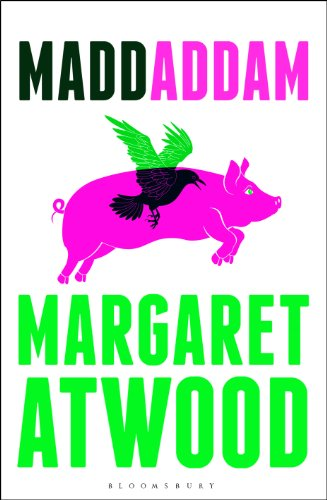
Life After the Star Wars Expanded Universe: Margaret Atwood’s MaddAddam Trilogy

Andrew Findlay

Margaret Atwood is a very special lady. She is an extremely talented writer and one of the best living for simple wordsmithery. If you haven’t read her The Handmaid’s Tale, stop reading this article, go to Amazon, and buy the Kindle version so you can start reading as soon as possible. No, seriously. Atwood the author is unassailably great, and Atwood the public persona is quick, witty, and charming. One reason I like her so much is that, in contrast to many other knights of cultural development, she loves the changes being wrought by the Internet and social media. Unlike crotchety Jonathan Franzen, who once had the balls to say of Salman Rushdie’s Twitter use that he should know better, and that 140 characters blah blah death of English blah blah blah. Authors who say things like that seem bizarrely out of touch with media, considering that media is the vehicle for their success. Atwood, on the other hand, loves the Internet, mainly because basic literacy (I said basic literacy) is a prerequisite for participation, and it gives youth a platform for writing, getting their writing published, and receiving criticism, a platform that was not present when she was coming up.

This type of forward thinking, openness to technology, and general flexibility of mind has led her into the realm of speculative fiction. Speculative fiction is a euphemism for science fiction used by people who think that once science fiction gets too smart you have to call it something else. Her justification is that spaceships and aliens cannot actually happen, but that the events she writes about can actually occur with the technology available to us today. She’s so damned good at it that she can call it whatever she wants. Her main claim to fame in the SF world, other than the previously mentioned The Handmaid’s Tale (buy it now) is the recently concluded MaddAddam trilogy, a post-apocalyptic series.


The world of the series is a near-future extrapolation of how things currently are. Corporations have become megaconglomerates that have more power than most nation-states. If you have a job with one of them, you live in a compound, which is like a gated community but with much better security. If you do not have a job with them, you live in the pleeblands, which is a wasteland of crime, poverty, and questionable foodstuffs. One of the most successful restaurants is Secret Burger – where the source of protein in your hamburger is always a surprise! Secret Burger is very popular with many criminal organizations. I’ll let you connect that for yourself.

Atwood’s dystopia arises from bioengineering. We get glimpses of some of the biogenetic horrors of the world in the lead up to the apocalypse. One example is the extremely popular Chickienobs, which are genetically modified chickens. They no longer have neurons, or beaks, or much of anything other than meat. They are giant, bulbous amalgamations of breasts and drumsticks with a tube of nutrients that goes in at one end and a tube of waste that comes out the other. Another questionable transgenic organism is the pigoon – pigs that have been modified to grow replacement organs for humans. These pigs are gigantic because they have to have space to grow extra lungs, livers, hearts, and even cortical tissue. None of these things – the massively impoverished populace, the overpowered corps, or the questionably engineered animals – actually bring about the end of the world. A massive outbreak of an Ebola-like virus basically melts humanity where it stands. The narrative of the first book, Oryx and Crake, starts after the apocalypse and explores the buildup to the biocatastrophe through flashbacks. The book’s post-apocalyptic start means the action opens on the sole survivor of The End: grim, frightened, and alone. The first few paragraphs are my favorite start of any book ever:

Snowman wakes before dawn. He lies unmoving, listening to the tide coming in,

wave after wave sloshing over the various barricades, wish-wash, wish-wash, the rhythm

of heartbeat. He would so like to believe he is still asleep.

On the eastern horizon there’s a greyish haze, lit now with a rosy, deadly glow.

Strange how that colour still seems tender. The offshore towers stand out in dark silhouette

against it, rising improbably out of the pink and pale blue of the lagoon. The shrieks of the

birds that nest out there and the distant ocean grinding against the ersatz reefs of rusted

car parts and jumbled bricks and assorted rubble sound almost like holiday traffic.

Out of habit he looks at his watch – stainless-steel case, burnished aluminum band,

still shiny although it no longer works. He wears it now as his only talisman. A blank face

is what it shows him: zero hour. It causes a jolt of terror to run through him, this absence

of official time. Nobody nowhere knows what time it is.

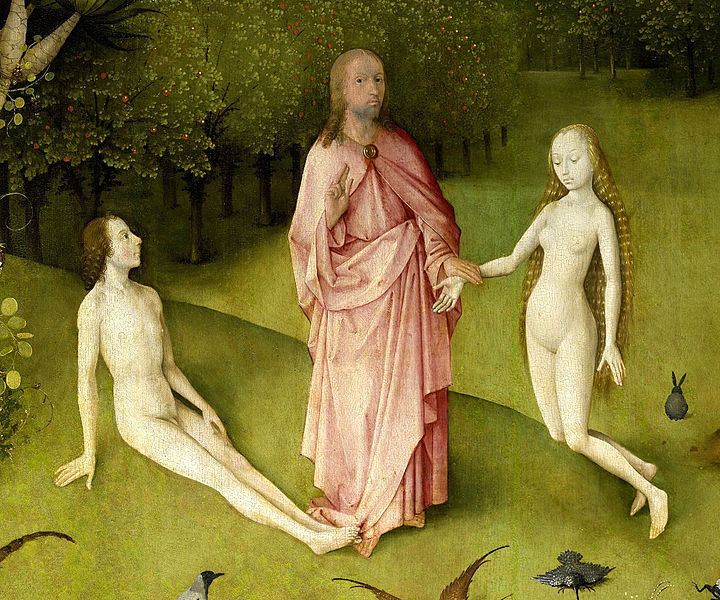
Atwood accomplishes so much in so few paragraphs. The protagonist waking up and wishing he were just not there anymore, the artifacts of a crumbled civilization discarded in the ocean, and most hauntingly, the fact that “[n]obody nowhere knows what time it is,” because as far as Snowman knows, there is nobody nowhere. A horrifying and deft way to signal just how alone he is. Well, not quite alone. One of the characters that we meet through flashbacks, Crake, a brilliant geneticist, has bioengineered a perfect humanity. He started with human stock and made modifications until he ended up with post-humans. To name just a few modifications, the children of Crake are not physiologically predisposed to violence, they can survive by just walking around eating leaves and grass, and their sweat repels insects. They represent a new origin story, a modern Genesis.


Snowman’s main motivation for the book is taking care of these “Crakers,” who survive the outbreak. Caring for this fresh-out-of-the-box humanity, even just surviving himself, is a dubious proposition in the new world. Most obviously, the old methods of food delivery, medical care, and shelter building disappeared with the disappearance of humanity. Most unsettlingly, many of the previously innocuous gene-spliced species now pose a danger to Snowman. The best example of this is the pigoons, which have escaped and are now approaching human-level intelligence. In one scene of the book, they almost trap Snowman raptor-style. How the hell are they this smart? Well…

Life, ah, finds a way.

In the absence of humans to keep them under control and penned in, the pigoons escape their enclosures and the human brain tissue they were growing for transplantation gives them the capacity for thought. This is just one of the endless bioengineered dangers Snowman has to deal with in the world he wakes up in.

Oryx and Crake is a great book, but it is also part of a great trilogy. The trilogy does not progress in time as most do. In the present of the narrative, it inches forward as its flashbacks cycle to fill in more and more of the blanks in the pre-apocalypse world, fleshing out the past more with each book. The two sequels sometimes lose something in treading over similar ground, but Atwood is such a talented worldbuilder that any depth or texture she adds is welcome. Each cycle back builds more and more on the circumstances that led to the end of the world, and explores more and more deeply how a sick civilization dies and how a new civilization continues after an extinction event. I mentioned earlier that Atwood considers her work speculative (not science) fiction because it projects a plausible future based on the technology and society we have now. That plausibility factor makes this trilogy all the more compelling and terrifying. Do yourself a favor and check it out.

Image credits: Wiki, Drinking Cinema (take a guess which one)

It was the best of times…

Alex Russell

It’s Oscar season, and there’s no better time to do a thing we were gonna do anyway even if it wasn’t Oscar season. Today marks the official debut of my own feature here “Worst Best Movie.” I’m gonna watch every single Best Picture winner ever and compare them to Crash. To get a baseline, I watched the supposed worst winner ever and… yeah, that’s about right. See what I said here, if you missed it.

Before that, though, Andrew Findlay will be by to tell you how great Margaret Atwood is. He’s not often wrong about this sort of thing, so you might want to pay attention.

Have a good Friday. Play nice with the other dogs.

Image source: Oscars.org