Games

Casual Commitments: Evoland

Brent A. Hopkins

In Casual Commitments, we explore the ups and downs of casual gaming.

Back again with another quick game review of a Steam-available gem called Evoland developed by Shiro Games.

Evoland is relatively unique in its class because it really is a throwback to three of the biggest RPG franchises out there. The art style is mostly focused around Zelda, the story and map setup is taken from Final Fantasy, and there is even a dungeon that switches to a Diablo-style loot-em-up. The whole experience is relatively short and sweet spanning about six-ten hours depending on how long you take to find all its secrets.

The Evo in Evoland comes from the evolution of the graphics and gameplay elements that you pick up in treasure chests scattered throughout the game. These are all given in small pieces as opposed to massive jumps so you can see how gaming really has evolved over time. You start out in this 8-bit classic Game Boy environment and slowly build up to PS1-flavor environments. As a person who has played the gamut of gaming consoles I will goofily admit that there were times, particularly with Mode7 and smooth scrolling, where I found myself chuckling a bit thinking back on games I played before these technological leaps.

(The pixels, kid, the pixels!)

The game itself is actually not too far from a Game Boy game really, utilizing two buttons one for actions and attacking the other for canceling and accessing a pretty useless pause menu. The obvious point of the game is more like a museum where you look at the relics from past generations while casually solving the simplest puzzles these games had to offer.

This is probably where the game suffers the most. The game is fun but the battle system is so tragically archaic that I may have misled you all when I said it was like a Game Boy game. This game actually has less going on when dealing with battles than some Atari games. You get the concept of Zelda and Final Fantasy battles but because there is zero customization and the evolutions stop at the most basic levels you will find yourself DREADING and I mean sighing in distress when you get a random battle.

I played the game with achievements in mind, like I do with most every game, and they are simple to get and pretty intuitive as well. There are a slew of lil’ jokes here and there and there is nothing like playing as Clink: a green-tunic-wearing-spiky-haired-blond with a rather huge sword. Don’t expect a lot from the battle system but you get a taste of enough different games that it will keep you interested, especially if you don’t have achievements in mind.

I give Evoland 3.5 out of 5 pixels because it is worth the play for those that like Zelda and Final Fantasy VII but there is no reason to play it again once the credits roll.

Evoland is produced by Shiro Games.

Image source: Theology Games and Indie Haven
Casual Commitments: Tiny Thief

Brent A. Hopkins

In Casual Commitments, we explore the ups and downs of casual gaming.

The second time waster on my list is called Tiny Thief, a game that has had a bit of controversy surrounding it thanks to the publisher, Rovio. You all probably know Rovio for its hyper-popular Angry Birds franchise, which has spawned more merchandise than Star Wars over the last few years, and when a company is making that kind of money one of the first things to slide is its morals. The issue is with the insane markup for Tiny Thief on the Steam platform compared to the App Store. The normal retail price on Steam is about 4,000% more expensive than the App Store version which has caused consumers to be, picket the Rovio offices, mad. I bought the game for two dollars, so I don’t have that same grief with the company.

In my opinion, Tiny Thief is to the adventure genre what Final Fantasy VII is to RPGs. This game is probably the best introduction to the genre that you can possibly have and it makes you want to try your hand at more difficult adventures once you have completed its journey.

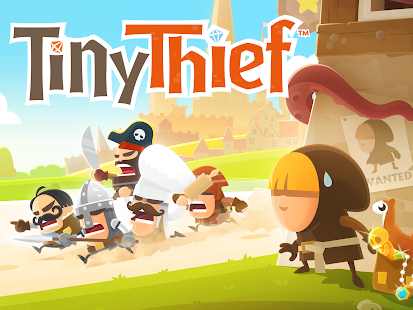
The whole atmosphere of the game is a bright fairy tale where you play the role of a Robin Hood like thief who must steal a particular item on each level to advance. This would be a bit simple even for a casual game, so there are also bonus items to steal and your pet ferret to find. Completing all of these nets you a star, with a perfect completion getting you three stars for the stage.

Most adventure games give you very few hints to progress the story, which can make them infuriatingly hard if you can’t wrap your mind around the puzzles. Oft times the developers make completely random connections like string-plus-alcohol-plus-birthday-candles makes a flamethrower. This flamethrower will be used with duct tape and a KFC bucket to make a hot air balloon. There is nothing clever about this and I personally hate that feeling of “ARE YOU F’ING SERIOUS!” that comes along with “solving” these riddles.

Tiny Thief gets big points from me because almost all of the interactions open to the player make sense. The interface is also very smooth as it is click to move and click to interact. The interactions come in two varieties: first is the thief that you move around and use to grab objects to solve puzzles and second are background interactions. The background interactions are things the player has to find on the level to solve separate puzzles and help the lil’ thief achieve his dreams of larceny.

That really sums up what you have to do. There is a story in the game but it is just the avenue through which the game is delivered. Tiny Thief falls for Tiny Princess and must steal his way to her. Sweet like aspartame.

New for Steam are Tiny Thief achievements. Most of these are just completion based where you finish a level or you don’t use the hint option for multiple rounds and at the end of the chapter (there are six, one being a tutorial) and you get the achievement. To add some more flair to the game there are hidden achievements which I won’t spoil here, but they tend to deal with humans being weirdoes and accosting the poor pixel people. It is an easy game to perfect if that’s your thing.

I will give Tiny Thief a 5 out of 5 Diamonds on PC (buy it on sale if possible). It is the perfect game to play for five to ten minutes and I look forward to some DLC levels if they ever happen.

Tiny Thief is produced by Rovio Entertainment.

Image source: Google Play

Casual Commitments: Triple Town

Brent A. Hopkins

In Casual Commitments, we explore the ups and downs of casual gaming.

Ah, PC gaming… how I have missed you.

To start, I describe myself as a gamer through and through. One of my first memories is sitting in my living room with my older brother and sister playing the original Nintendo. I remember we were playing two games in particular that day. Double Dribble (White Team: LA vs. Green Team: NY by Konami) and the classic Super Mario Brothers. That being said, I have grown old and bitter. I turned into a gamer hipster. Like most people who deem themselves purist of something I had a pretty lengthy phase where I hated casual games.

Things suddenly changed when I wanted to game and I was actually getting slammed with work and graduate classes. My stress relief has always been 1) gaming 2) shopping or 3) reading and I couldn’t sit and play an RPG for 10 hours or really anything for a lengthy period of time so I turned to Candy Crush. This game kept me from slowly ending all of my friendships with my old man grumpiness and I had to concede the casual market wasn’t so bad.

Then came the winter of 2013 and I was even busier with graduate school, my sister visiting me in Korea, looking for a new job, and work. So I turned on my computer, loaded up Steam, and bought between 60 and 80 games during the winter sale. I am not a man of moderation, by the way. Quite a few of the games were purchased with the intent of being used on my new tablet, the Microsoft Surface 2 Pro, and these two games have gotten the most play by far.

Triple Town

I picked this game up for around $2.50 on Steam with no actual knowledge of the game other than, “Dawww, look at the cute bears” and “Hey! The little citizens look like Mii avatars.” This was enough for me to install the game and I would say that is good advertising on developer SpryFox’s part. The game is an odd combination of space management, city design, and puzzle solving which you can’t really find anywhere else.

The game has two parts that the player has to deal with, the first being their hometown and the second being the towns that they go to and try and develop. I will explain the player’s town first as it is also used as the main hub for the game.

The player’s town is an open field that can be developed by matching three like resource nodes. This will upgrade to the next level and you can rinse and repeat this process leveling things up further and further. The difficulty arises when you have to match three of a high level resource with lower ones because there is a finite amount of space.

This is what the main game focuses on and it is much harder than you would think. The puzzle aspect of the game is that if you run out of spaces to place new tiles the round is over and you get money to upgrade your hometown and you must start over from the beginning. The towns are semi-populated with grass, trees, rocks, and houses that you must build around and use and the next piece you are given is randomly generated as well so you can’t rely on getting a piece you need to save you.

There are some amenities the player is given to help the town along, the most important of which are the crystal and the reserve space. The crystal is the wildcard of the game and matches two pieces into the next highest so two grasses and a crystal make a bush and so on. If the player does not have two matches on the board the crystal is a game ender because it turns into a rock which is almost impossible to match (you must use other crystals to make more rocks). The reserve space is a spot where you can keep valued pieces for later use but you only have one reserve space so while it seems like a great idea to save a crystal forever there is little to do when you have two crystals saved up.

The game is incredibly simple to get into but very hard to master, especially if you don’t think spatially. The first few rounds I just threw down bushes and trees and ended up with a lot of wasted spaces where I couldn’t build. This got me some coins but in the end my rounds were short and my scores were low. Then I started really trying to get the best buildings which go all the way up to floating sky castles. This is the part that really sucks you in.

The rounds take an extremely long time when you are doing well because you can’t just mindlessly click and I found myself playing for upwards of 30 to 40 minutes sometimes. This is actually a problem with the game because for a casual title you can’t always just drop it and go do something else, because your towns do not save.

There are different starting towns to choose from as well with various benefits and drawbacks. Some have more space but spawn bears and ninja bears; others get rid of the bear menace and leave you with less space to build on. I am an achievement hunter and this is something that the Steam game has over the app store versions of the game. When you build that new level of castle you get a nice achievement for your work and it helps motivate you to plan out your town and spend the 40 minutes getting floating cyber castles.

I would give the game 4 out of 5 stars. It is easy to play yet hard to master. As a casual game the rounds do tend to take too long if you are looking for a quick satisfying fix.

Triple Town is developed by SpryFox, LLC

The Game for People That Don’t Play Games: Gone Home

Alex Russell

If you play games, you have probably already made up your mind about Gone Home. You either played it on recommendation from just about everyone’s top 10 lists from 2013 or you decided it wasn’t for you and moved on. Whichever camp you fall into, I’m not going to be the deciding vote. I’m not going to be the reason you play Gone Home if you already play games.

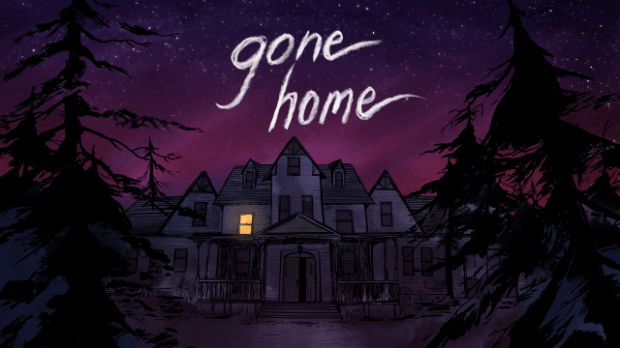
That’s because I don’t think it’s necessarily best suited for that crowd. Gone Home is entirely story-driven. You play a girl who comes home from a vacation abroad to find that no one is at home in her family’s house. You wander the creaky halls and get occasionally freaked out by the storm outside. From the moment you launch the game on the patio outside and start looking for clues, you are drawn into a world that doesn’t seem to have a lot of answers.

It raises plenty of questions. You find out about your own life from postcards that are collected on end tables. You uncover your mother’s struggles at work and your father’s minor downfall as a fringe author through the minutia of their lives in notes and letters. The more you pay attention to letters behind false backings in desks and the little details of the house itself the more you are likely to uncover the full story.

It’s tough to ignore the parallels with mystery. The meat of the story is your younger sister Sam, and the main storytelling device is her narration. As you find the different “big” parts of the story Sam speaks to you right out of her notebook. There’s no good way to talk about this and still have this serve as a call to action to play the game, so let it be enough to say that Sam has the conflict. The key to a good story is to make the character want something, and Sam definitely wants something.

On Metacritic, Gone Home has an 86 from critics and a 5.4/10 from users. That kind of disparity between critical success and the average person’s feelings on the Internet isn’t shocking. It’s easy to oversimplify and say that gamers don’t “get it,” but I don’t think that’s it. Gone Home probably isn’t what people expect to play when they hear that it is a “game of the year” candidate.

Gone Home is played from the same perspective and with the same ambiance as a million other games. The great majority of games that happen in worlds like this have zombies or ghosts or madmen or something else, waiting to stab you the shadows. Those games aren’t more or less than Gone Home, and I made it the entire way through the game still expecting something to jump out and ruin my world. I firmly believed this, all the way through the “last level” which is especially spooky. A run through the basement that I played with my lights in my apartment turned off got to me as much as any Resident Evil game ever did.

Gone Home is clearly happy to live in this expectation. They want the average gamer to expect to deal with the undead, but they probably also want to freak you out if this is the only game you play all year. The controls are as simple as any browser game and it’s impossible to not understand what’s being asked of you. It is a game that lives on expectations, tone, and mood.

So that’s probably why the response differs so much. It won’t challenge you in the way you might expect to be challenged by a video game. The “puzzles” boil down to things like finding a safe’s code in a book or figuring out how to knock something off a shelf by throwing a can at it. None of that matters to me.

What matters is that the critical praise for Gone Home says a little bit about the insecurity of people who play games. Gone Home is one of the greatest stories I’ve seen in a game, but it’s simple. Bioshock Infinite told a much more complex, winding story in 2013 and did so with a lot more of what I’d consider “gameplay.” But I walked away from Gone Home with a better experience.

A lot of people’s first criticism of video games is that they are violent, but Bioshock Infinite even got criticized by the best gaming journalists as too violent. People labelled the carnage distracting, and I certainly found myself frustrated sometimes that it wasn’t spending more time on the story I loved so much. We’re going in the right direction when that’s a criticism: more story, less traditional “game.”

People might argue, “why don’t you just watch a movie?” Gone Home is the best argument 2013 has, and it is definitely time for you to consider playing a game.

Gone Home is available on Steam for $19.99, and it does go on sale from time to time.

Image source: The Fullbright Company