TV

What I Did With My Summer Vacation: Nathan For You

maxresdefault

Alex Russell

In What I Did With My Summer Vacation we explore shows you should catch up on during TV’s slowest season. This week: the nervous weirdness of Nathan For You.

It’s summer, and TV is dead. Even with Netflix releases of shows like Orange is the New Black, we’re still mostly at the mercy of TV scheduling to determine when we watch new stuff. If your DVR looks like mine, right now you don’t have much to catch up on. This is the perfect time to start something new. For the next few weeks, we’re going to go over what you should watch to get ready for the glorious return of fall TV.

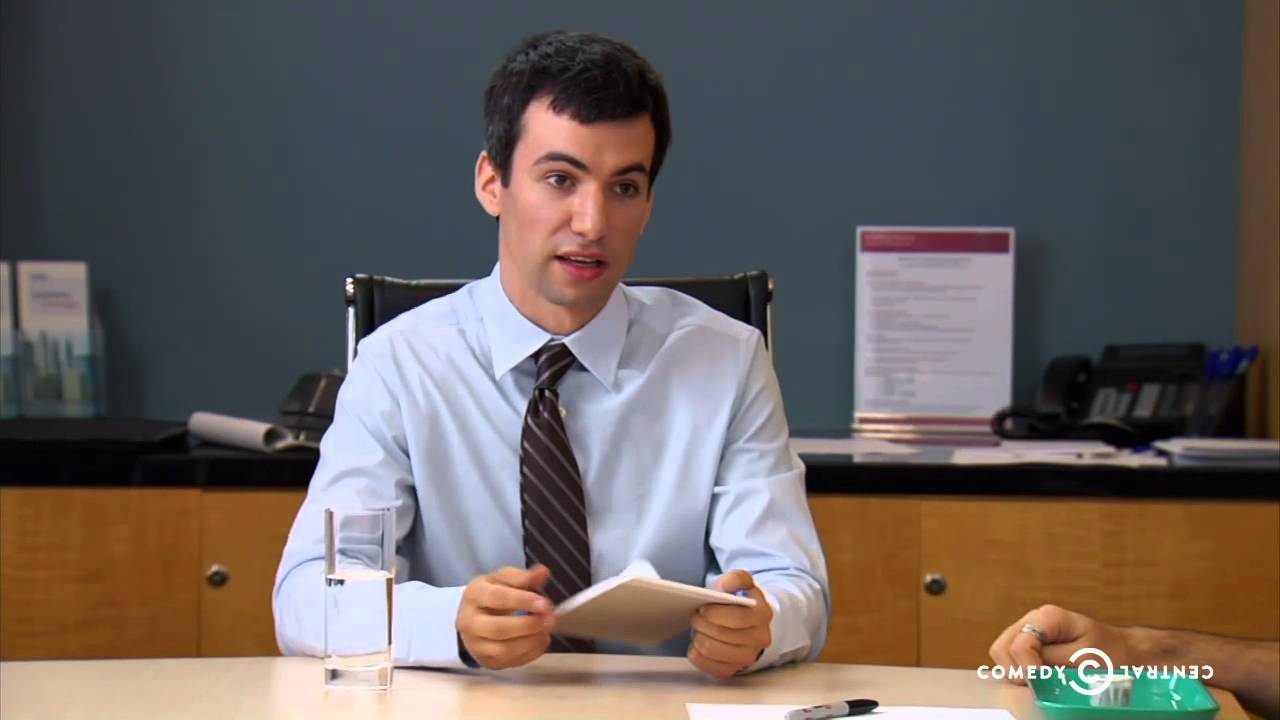
The first installment is Nathan For You, a supremely strange show that had an eight-episode first-season run on Comedy Central last spring. In each episode, comedian Nathan Fielder meekly suggests business ideas to struggling local businesses. They range from the simple and bad (a cab service where you can opt out or in to conversation with the driver) to the complex and bad (a gas station that offers “free” gas with rebate where the rebate requires customers to climb a mountain and sleep in the woods).

The real joy of Nathan For You is that these ideas aren’t complete jokes. For a brief second, all of them seem like they have a chance at working. When Nathan suggests that a burger place claim that they have the best burger in town — and they’ll give you $100 if they’re wrong — you definitely feel compelled to go to the burger place and see. Watch this three-minute clip from the episode:

The business owners in these episodes always come off genuine. Nathan only shames people or makes them look stupid if they’re actually terrible people. There’s an episode with a private detective who is genuinely awful, and it’s fun to watch Nathan make him look like an idiot on TV. There’s a very The Daily Show with Jon Stewart feel to those interviews, but in this one the burger guy just seems genuine. He wants you to eat his burger and he thinks it’s the best in town, he’s just not sure he wants to risk $100 that he’s wrong. Nathan offers to put up the cash himself, and the game is on. You might see where this is going.

“Cringe TV” can be pretty awful. I’ve written before about how The Office was a fun show, but 22 minutes of Michael Scott disappointing inner city kids in “Scott’s Tots” doesn’t work because it’s too mean and too sad. Nathan For You has some rough moments to watch, but they’re all at Nathan’s expense. When he offers people a free pizza if a pizza place can’t deliver in eight minutes, you know it’s going to end badly. But when the customer is angry that the free pizza is the size of a hand, Nathan’s the one who gets yelled at. It’s funny because you think the poor real pizza delivery guy is going to catch hell, but it’s this nervous Canadian comic instead. The pizza guy getting yelled at is sad; Nathan having shit rain down on him is amazing.

You should start with the gas station episode. It’s really beyond description to watch people file into a van to spend the night in the woods with Nathan to save miniscule amounts of money on gas. The creators’ choice to pop up images about how little people are saving as they go through the ridiculous rebate process is inspired. Watch it, love it, and throw the new one airing tonight on your DVR. What, what else are you watching tonight?

You can watch all eight episodes of season one of Nathan For You on Comedy Central’s website.

Alex Russell lives in Chicago and is set in his ways. Disagree with him about anything at readingatrecess@gmail.com or on Twitter at @alexbad.
Life After the Star Wars Expanded Universe: BBC America’s Orphan Black

orphan-black-season-2-poster8

Andrew Findlay

In Life After the Star Wars Expanded Universe, we take a look at science fiction and fantasy, why they’re great, and what they say about where our species has been and where it’s going. 

Science fiction on television is usually a hit-or-miss proposition. Sure, you’ve got your Battlestar Galacticas, your Losts, and your Fringes, but you’ve also got your Sanctuarys, your Revolutions, and your whatever the hell Syfy thinks it’s doing with endless Ghost Hunter marathons. TV is the birthplace of a lot of great SF, but it can also be a graveyard. Orphan Black was born, screaming and healthy, on the airwaves of BBC America. It just finished out its second season, which means it already has more episodes than Firefly will ever have, which is a tragedy. Stretching the baby metaphor way too far, what happened with FOX and Firefly is this: Joss Whedon gave birth to the baby that would cure cancer, and FOX smothered it in the cradle with a pillow because FOX does not like anyone to have nice things (poor poor Arrested Development was smothered by the same villain).

Fox_Broadcasting_Company_(Logo)

These are bad people, and they do bad things.

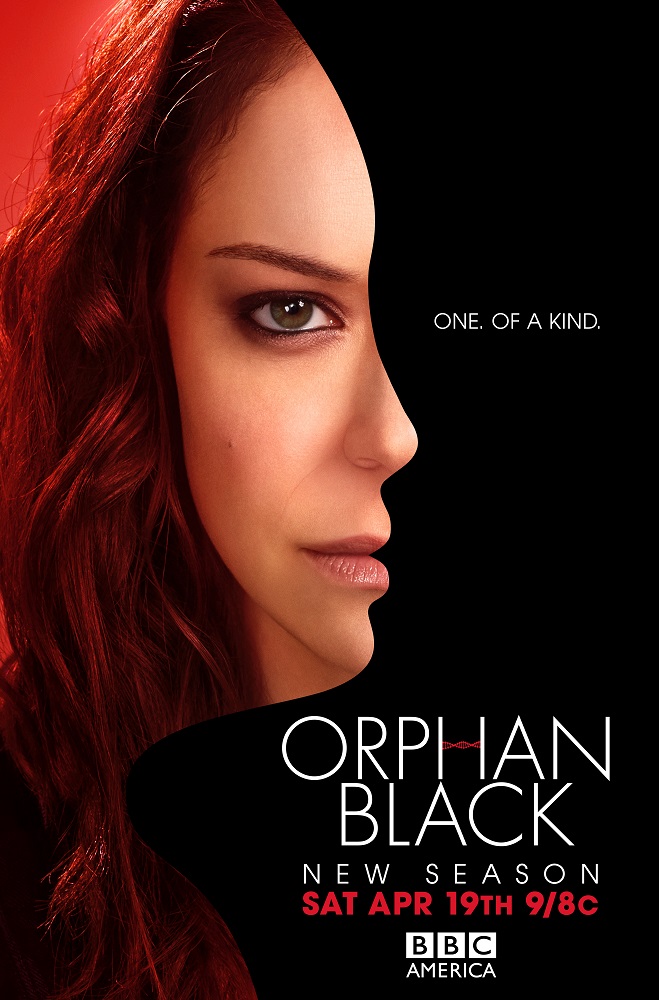
BBC America started out as a vehicle to get Doctor Who stateside (along with other British shows), but it is branching out into original programming with Orphan Black. The series is spearheaded by a Canadian development team, which, before you think “Canadian SF?” please realize that Stargate: SG-1, arguably the most successful straight-up SF show ever, was filmed out of Vancouver. Orphan Black takes place mostly in Toronto, the lead actress is Tatiana Maslany, and she is amazing.

Following is a brief discussion of the plot, and there are some spoilers. I do not think I spoil anything past episode three or four, but it is impossible to give a précis of the show without spoiling something. At the very start of the show, we meet Sarah Manning, a woman who grew up in London, moved to Toronto, and is generally just in some deep shit. She is trying to flee an abusive boyfriend, scrape together enough cash to get out of her situation, and retrieve her daughter (whom she abandoned) from her foster mother. She makes a phone call on a train platform which hints at some of these problems, then right after she hangs up she sees someone who looks exactly like her, crying, walk up to the edge of the platform and throw herself in front of a train. Without thinking too much, Sarah grabs her purse and runs, planning to steal her identity and clean out her bank account. She is successful with this, but it is a definite frying pan/fire situation, as she discovers that she is one of an unknown number of clones and that someone is assassinating them one by one. To solve this problem, she bands together with the other known clones (again, no idea how many there are total), and attempts to uncover their pasts and the ultimate goal of the organization that created them. There, done, and I didn’t even mention anything that happened past episode three.

One of the main features that makes this show so great is the virtuosity of its lead actress, Tatiana Maslany. There end up being about four main clones that engage in solving the mystery of their existence, and Maslany plays all of them. They are all completely different, fully realized human beings. A lot of this is due to the writing and the costume departments, but most of it is pulled off by Maslany’s talent. She can, through very subtle modifications in body language and vocal inflection, create completely different people. This would be impressive if it was just “oh hey, I filmed a scene as this clone, but now I am filming a scene as this one,” but she plays different people all talking together in the same room at the exact same time, and she also plays different clones pretending to be other clones. If that last one is confusing phrasing, keep in mind that Sarah Manning, the main clone, is a grifter, and that she is really good at deception. The whole show starts out with her stealing the suicidal Beth Childs’ identity. She pulls this trick multiple times with multiple clones, and watching her play Sarah Manning playing another clone badly, messing up the accent ever so slightly here and there, is really entertaining. If you don’t quite get why I’m so impressed, please watch this:

They don’t even rely on goatees!

What-the-fuck-is-happening English con artist Sarah, uptight Canadian housewife Alison, and laid-back stoner American grad student Cosima all meet in episode three, and they all are differentiated by preoccupations, responses to stress, body language, and voice. Not only that, they are all filmed together, which means that Maslany is exhaustively filming each scene multiple times, at least once for each clone. Again, she is amazing. Bravo.

Aside from the great character trickery, this show is really strong in a lot of other areas. Its plotting is tight and suspenseful, perfectly balancing the line between suspense and payoff (unlike Lost, which held payoff until the final episode and fucked up royally). I started this series on Monday, and I finished in the early morning hours of Wednesday (as in 3 a.m.). I did not stop watching until it was done. There are only twenty episodes at this point, so it is still at the level where you could make it a fun marathon, one that would end before feelings of self-loathing set in. It also does right by its SF roots. It does not use SF for cheap one-off episode ideas or plot spackle. Like the Deist’s clockmaker God, the showrunners set up an internally consistent universe, then walk away and let it play out according to the rules set up in the first few episodes. The SF elements of the show are also really powerful. The whole plot hinges on bioengineering, which if you’ve eaten corn, you have probably already interacted with a transgenic organism. This is the really exciting, tension-filled area of SF where all the issues involved could be problems we are dealing with in reality in the next twenty years. The show uses cloning to explore the concepts of identity and self-determination, but it also keeps character, suspense, and humanity at the center of each episode.

Battlestar Galactica and Lost are gone, Stargate SG-1 packed it in, and Firefly was brutally murdered before its time. In the year since Fringe wrapped, we’ve been in a dry spell for strong, original, appealing SF programming. Orphan Black is the monsoon that breaks the drought, and in a TV landscape where terrible SF is produced and cancelled all the time, and intelligent SF is also produced and cancelled all the time, while crapfests like Two and a Half Men and The Big Bang Theory will seemingly just not die no matter how many anathemata I perform over pictures of Chuck Lorre, it is nice to see a powerful start and promising future from a show like this.

Andrew Findlay has strong opinions about things (mostly literature) and will share them with you loudly and confidently. You can email him at afindlay.recess@gmail.com.

Image from here.

America’s Next Top Model: Cycles 20 and 21

America's Next Top Model, Cycle 21

Jonathan May

Cycle 21 of The CW’s America’s Next Top Model starts at the end of August this year. Going along with the 2.0 reinvention theme from last cycle, this latest will feature both male and female models, competing for the top prize. After much brouhaha, Ms. J. Alexander will return to judge alongside Tyra, the fans, and the fabulous Kelly Cutrone. Being from Memphis, I’m proud to say we have a male Memphian representing the River City in the competition. And because Tyra loves to shake it up, this upcoming season will also feature a female African-American contestant with vitiligo—I’ve seen her photos posted on the ANTM Facebook page, and she is gorgeous. I’m glad to see that Tyra keeps pushing the fashion envelope as far as the mainstream is concerned; it’s the same reason I like the United Colors of Benetton ads for their “whole-world” perspective on what is beautiful. America’s Next Top Model over the years has addressed and codified many forms of beauty, but what keeps it from becoming formulaic is the insistence on a model who can actually function well in the industry, perhaps the most important factor.

But let’s take a look at how the introduction of guys to the competition went in Cycle 20. Hormones raged as soon as the final contestants were decided. Romances quickly developed between various pairs; one particular couple, Marvin and Renee, were even termed “Marnee” like so many celebrity pairs. Cycle 20 also proved that the men could be just as bitchy as the women; for example, Chris, the hot and emotional brunette-turned-blond, drains the other contestants constantly with his notes about dishes and yelling about others’ behaviors. I personally blame him for Nina going home as early as she did, because she would spend so much time listening to his emotional quibbling.

This cycle also heightened the suspense by leading up to an elimination (or comeback) right as the episode ends, so you have to tune in the following week to see the results. While this may be an aggravating move for television viewing, when you binge-watch online it makes much less of a difference. One particular episode, however, wherein two contestants are brought back almost broke the emotional will of Phil, the bearded contender. He broke down while being eliminated, only to be told that tonight was the night someone was being brought back, upon which he broke down again. Then Tyra announces that Alexandra is coming back, and Phil breaks down again because he thinks that’s the end. Then Tyra says that she only just announced the female comeback contestant and has yet to pick the male. Phil breaks down again at that point. When he finally loses coming back to Jeremy and breaks down for the final time, I fully expected him to suffer a total nervous collapse. Such is the drama of reality television.

Ultimately, the winner was determined more by virtue of the sponsors (Guess Jeans, Nylon magazine) than by sheer talent. I won’t spoil the results in case you haven’t watched, but let’s just say I wish there were more variety in the lineup. Does a guy stand a chance of winning America’s Next Top Model? I’ll be tuning in this August to find out.

Jonathan May watches too much television, but he’s just playing catch-up from a childhood spent in Zimbabwe. You can read his poetry at owenmay.com, follow him on Twitter at @jonowenmay, or email him at owen.may@gmail.com

Undateable: NBC’s New Comedy Set in Detroit… that Doesn’t Want to Talk About Detroit

Undateable

Jonathan May

NBC’s Undateable is set in present-day Detroit, Michigan and plays this fact for laughs approximately one time in the six episodes that have aired so far. This is its main fault; most great comedies make great use of the cities in which they’re set. Curb had Los Angeles, Seinfeld had New York City. Often the nature of a show is dependent on where its set, but the fact that Undateable is filmed in front of a live studio audience makes it somehow more germane and less specific to Detroit and its comedic possibilities.

Like other sitcoms, this one is set in a bar and follows its fastidious, young owner Justin, his sexy, swaggering roommate Danny, and their motley crew consisting of Danny’s sister, a gay man, a black man, a openly misogynist nerd, and a hot female server. While the variety of the group unfolds many possibilities, unfortunately these roles are mostly played to stereotype. While I laughed out loud many times over the past six episodes, I can’t help but feel empty about most of the characters; the two main men find ladies very early on, and the ancillary characters languish listlessly in the background, ready to serve up another clever off-color joke or ubiquitous cultural reference when needed. But the show doesn’t seem to be addressing any central problem that would give it more focus. No one is really in jeopardy; nothing much is at stake. And ultimately, for a show to be set in Detroit in 2014, as the city goes through the insane bureaucratic process of insolvency, and not address any of this is the worst kind of audience letdown.

For a show like Undateable to make it another season (and possibly the rest of this one), it will need to establish a problem, preferably one which connects to Detroit’s problems at large, giving it a more empathetic context. Perhaps its characters might not seem so flat if they discuss, openly struggle, and make fun of the crippling issues of public service, safety, corruption, and government failure that they could. A comedy like Broad City highlights the complexities of getting around, working, and living in New York City, but in Undateable, we miss out on all the potential fun, being constricted by the format to scenes set in the apartment and the bar. I’ll be tuning in for the laughs, but I just wish the show would give us something memorable.

Jonathan May watches too much television, but he’s just playing catch-up from a childhood spent in Zimbabwe. You can read his poetry at owenmay.com, follow him on Twitter at @jonowenmay, or email him at owen.may@gmail.com.

Image: NBC

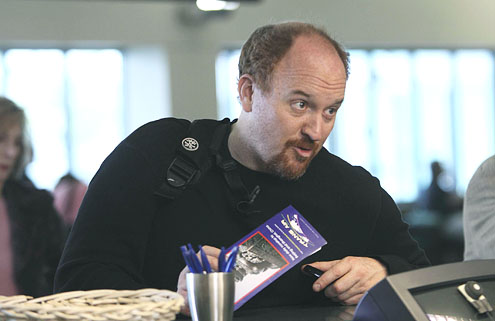
Life Lessons from Episodes of Louie: “Pamela 2” and “Pamela 3”

louie-3

Alex Russell

Louis C.K.’s critically acclaimed show Louie’s fourth season runs as two episodes every Monday night. Rather than just answering the question of “are these episodes good,” (because the answer is always yes) we’ll talk about the big lessons imparted in each episode. This week: the season ends.

Episode 13: “Pamela 2”

Whenever you see someone on television wake up after they’ve had sex, they look like no real person ever looks after sex. It’s just the way sex is always shot, it seems even more unrealistic than it does in, well, real life. Real sex is awkward and full of absurd, funny moments.

In Louie, when people have sex, they have to think about taking their shoes off. They have to have their pants taken off both legs at the same time. They have to figure out how to get to the bed, because no one just sits on a bed. They sit on a couch. The bed is later.

This may seem overly simplistic to point out. Louie is a show obsessed with the “what is real” question in a narrative sense, but it’s also a show fascinated by the mundane. Louis C.K. became one of the most famous comics in America on the strength of the mundane as a comedic source. His show is less about how it’s all funny and more about how it all is consistent. Everyone takes their shoes off before they have sex and no one knows how to do it. There’s no sexy — or even practical — way to take off your shoes in a hurry.

It’s not all sex, but everything is that moment. Everything is taking your shoes off quickly to not let a moment pass or convincing someone to do something spontaneous before they make a joke. Everything in life is making the moment what it can be before it passes. When Louie is a sad show, it’s about missing those moments. Sometimes it’s something else, and this one is mostly something else. Just go out there and try, dummy. That’s all you can do.

Episode 14: “Pamela 3”

The choice to run all 14 of these episodes over seven weeks seemed weird when this all started. But now, after all of the “Elevator” saga and “Pamela,” it’s clear that this was the only way to run this. It could have just as easily been a one-night binge, I guess, but then I’d be dead. This was all rough.

I don’t want to spend too much time on recapping the season, but let’s review for a very short paragraph. This is the season of a show on television where Louis C.K. rescued an old woman from a stuck elevator, went on dates with three women (four women, maybe, hard to say with the model), and opened for Jerry Seinfeld. That’s what happened. Oh, and he also went back in time to show the breakdown of his marriage and his childhood and his family and his psyche and…

…back to “Pamela 3.” Long-time viewers of Louie (hello, all 13 of you) know that Louie and Pamela have an aggressive — but familiar — relationship. They rag on each other and riff and talk in dumb voices. Even one of the most romantic moments in Louie history was Pamela getting on a plane as she yelled “wave to me, dummy,” which was mistaken for “wait for me.” Pamela and Louie have had chances, but they’ve always been caught up in the armor of acting like you don’t give a damn.

But they do. It’s just hard to tell someone else that you’re going to finally drop the cynicism or the sarcasm or whatever your deal is and engage with them. It’s hard to actually be a person, because jokes are easier a lot of the time. We make jokes at funerals because funerals suck. We’d rather not engage.

It’s an old lesson, far older than most of the ones in this season of Louie. “Pamela 3” is about not getting what you want, but it’s about something even better than that. It will make you more kind, and it’s something that I struggle with all the time. The lesson in the finale of this season of Louie has to be that you have to let other people be themselves, because that’s all anyone should ever be. If you do that, and you still like them, then that’s what love is. Not anything else.

We’ll be back next week with a different show. If you have suggestions, leave a comment.

Alex Russell lives in Chicago and is set in his ways. Disagree with him about anything at readingatrecess@gmail.com or on Twitter at @alexbad.

You Should Be Watching Season Two of Orange is the New Black

OITNB-logo

Stephanie Feinstein

Minor season two spoilers.

If you haven’t watched season one of Orange is the New Black, then stop reading this and go watch it now. NOW.

For those who have made it diligently through season one, rejoice! You are probably already done with season two!

On June 6, season two was released in its entirety on Netflix. A hit since the beginning, OITNB was a semi-experiment for Netflix, embarking into the world of truly original programming (I do not count the 4th season of Arrested Development as “original”). Along with other hits like House of Cards, this new generation of streaming television addresses directly the demographics and preferences of the target audiences. People were watching David Fincher movies, Kevin Spacey movies, and presidential/political dramas…. so they made a political Kevin Spacey drama, directed by David Fincher. We asked, they gave. In the case of Orange is the New Black, I guess we were all thirsting for some female drama that did not include Friday night dates or working at a hospital, where little focus can be given to a character’s wardrobe and men are not the only love option.

For OITNB, season one was good, but not amazing. I got really tired of the first-world problems of our main character, as the true storytelling was hidden among the myriad of inmates. Jenji Kohan, mastermind of the hit Weeds, is also the creator of OITNB, and she has gone on record that Piper’s story got us in the door, but what will keep viewers around are the otherwise untold tales of incarcerated minorities. Piper Kerman is a real woman, who did get incarcerated because of drug-running mistakes of her youth, she did have a fiance and a lesbian lover, but Piper Kerman only shares so much with Piper Chapman. Real people rarely make captivating television, so the glory of fiction rounds out less fascinating dents, and sometimes other people’s dents are more interesting. With a bevy of flashbacks highlighting key moments of the women’s lives, we glimpse depth and understanding beyond the orange and beige jumpsuits. Heavy issues of race, poverty, sexual violence, drugs, and motherhood are all addressed, in addition to a fairly scathing view of the privatized prison system. You do have to put up with a lot of Laura Prepon, though.

One of my favorite aspects of OITNB this season? Jodie Foster.

An occasional director for season one, Foster directed the opening episode of season two. Oh the fear! I am a great Foster fan, mainly because the fear she portrays on screen becomes so hauntingly real that it can give me nightmares (Silence of the Lambs, Panic Room). Foster pulled out all of the stops for this episode, drenching viewers in uncertainty and panic. Small homages to Hannibal Lecter, with beautifully placed airplanes, masks, and talks of false freedom. My skin crawled from the hungry looks of men, the implied violence around each turn, the tension of unknown destinations. It was a home run of an episode.

In the week since it all was delivered to Netflix, I have finished season two and I recommend it to everyone I see. Most of my issues with season one have since been resolved, the acting has increased, the story has power, and prison life has become fascinating. You should be watching it.

Stephanie Feinstein spends more time than she should yelling at her television, and that may never change. You can contact her at stephanie.feinstein@gmail.com

BBC’s Whites: Should You See It?

whites BBC

Jonathan May

In our rarely-running kinda-series Should You See It? we talk about movies that just came out. You can figure out the rest of the premise from the title of the series. That’s right: We talk recipes. Should you see BBC’s Whites?

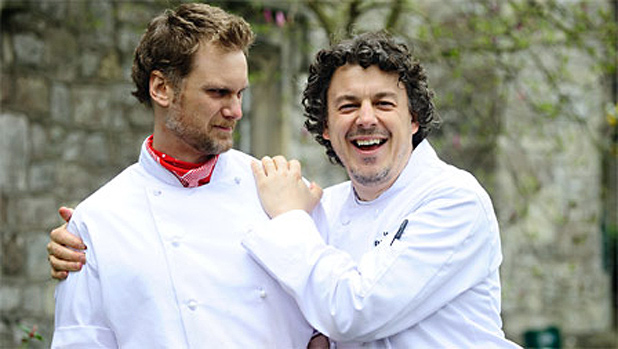
BBC’s Whites follows one Roland White, head chef at the White House, a restaurant and hotel in a traditional British manor, as he attempts to abuse everything under his care in return for his own happiness. It’s unfortunate then for Roland, and everyone else, that he has no idea what happiness is. While he attempts to please himself in various ways, his tall, blond sous-chef, Bib, runs the kitchen. First episode in, Bib, at the end of his wits, demands help in the kitchen. The agency sends over a not-too-bright chap named Skoose, whose sole purpose in life is to make Bib miserable. Throw in a beautiful female manager and a doe-eyed, clueless server, and the rest basically writes itself, or appears to, in its effortlessness.

It’s good that the show centers on such an egotistical figure—a sort of comedic, pathetic Prince Hamlet to a crumbling Elsinore. Roland, in his pursuit of drinking and women, has abandoned his creativity, his friends, and a tight hand on his restaurant. An inspector’s visit doesn’t go so well, and we’re left to wonder where the humor is when someone essentially turns out to be a real asshole. As with most comedies that are built around someone you are supposed to hate, Whites makes sure that its ancillary characters are in dire need of viewer sympathy. Poor Bib is overworked; you almost weep for the thin bastard. And is the beautiful manager really dating a gay guy?

Should you see it?

This six-episode gem really never took off due to financial difficulty (the actors were all trained in a professional kitchen). It’s a shame because as the last episode ended, you could feel the show brimming with fresh energy for another round. Oh well. I can’t recommend this show highly enough. At 30 minutes each, the episodes are ripe for a Hulu binge. One pro tip: don’t watch hungry, because by the end, you’ll be trying to make every fancy thing you’ve never tried to make in your kitchen.

Jonathan May watches too much television, but he’s just playing catch-up from a childhood spent in Zimbabwe. You can read his poetry at owenmay.com, follow him on Twitter at @jonowenmay, or email him at owen.may@gmail.com.

Image: The Daily Mail

Life Lessons from Episodes of Louie: “In the Woods”

louie-3

Alex Russell

Louis C.K.’s critically acclaimed show Louie’s fourth season runs as two episodes every Monday night. Rather than just answering the question of “are these episodes good,” (because the answer is always yes) we’ll talk about the big lessons imparted in each episode. This week: Louie struggles with “do as I say, not as I do.”

Episodes 11 and 12: “In the Woods”

This episode is dedicated to Philip Seymour Hoffman. It is about drugs.

Louie catches his oldest daughter smoking pot. Louie gets upset. She says, “what do you even know about it?” Louie remembers. That’s all you need to know about the “what” of the episode.

It’s almost entirely told in flashback, which is amazing. There have been a number of reality jumps and flashbacks in Louie over the years, but this one is the most fully realized. It helps that it’s a kind of double episode. You feel the pain of Louie’s mother as she feels her son slipping away. You feel the distance of Louie’s father as he both tries to help and shrugs at the same time. You feel the world of young Louie, which is both the actual history of the character and a dream state.

“Real” Louie has a brother on the show, but the brother’s not in the flashback. In a previous episode, a flashback revealed his wife to be white when she’s black in the “reality” of Louie. This all means something.

It never matters what happens. It matters what you take away from it.

Teenage Louie in the flashback gets obsessed with pot. He dedicates his life to obtaining pot and escaping his boring life by getting high. An episode dedicated to a man who recently died of a heroin overdose is about pot, which at first seems weird…

…but it’s not about pot. It’s about the ways we hide from the people that care about us. It’s about booze and pornography and music and general deceit and exercise and biking and cooking and smoking and comic books and religion and politics and whatever else your particular crutch is, really. It’s about Louie, a teenager, who is getting high not because he’s mad or sad or lonely, but because he just is getting high. It costs him his sense of self. It costs him the girl — and the scenes where he and a young classmate look longingly at each other over the gulf of addiction are dreadfully perfect — and it costs him the closeness of his family.

Adult Louie has to decide how to turn this memory into a lesson for his daughter. He has to figure out what we all have to figure out: how do you make your past mistakes productive? He wants to be a warning, but when she asks him if he’s going to yell at her, he knows he has to be careful.

There’s no way to spoil this episode. This is the pause between “Pamela 1” and next week’s season finale of “Pamela 2” and “Pamela 3.” This whole season has been about Louie’s love life, but it’s been more interesting to see how we got to the version of adult Louie in the show. The explosion is more noteworthy, sure, but watching the fuse is more fun. Louie’s childhood isn’t necessarily atomic, but it’s sad and relatable because Louie is some version of who we all were and — some days — still are. This one is heavy on the intended morals, but I take the following:

Pay attention to who you were, if only to be damned sure you aren’t ever them again.

Alex Russell lives in Chicago and is set in his ways. Disagree with him about anything at readingatrecess@gmail.com or on Twitter at @alexbad.
Life Lessons from Episodes of Louie: “Elevator (Part 6)” and “Pamela (Part 1)”

louie-3

Alex Russell

Louis C.K.’s critically acclaimed show Louie’s fourth season runs as two episodes every Monday night. Rather than just answering the question of “are these episodes good,” (because the answer is always yes) we’ll talk about the big lessons imparted in each episode. This week: Louie rents a car in a hurricane and forgets himself.

Episode 9: “Elevator (Part 6)”

These are two very different episodes of television. It’s been difficult some times during this (especially during the previous five parts of “Elevator”) to draw a meaningful distinction between the two episodes. That is not difficult now.

They’re set up that way on purpose. “Elevator (Part 6)” is the conclusion of what’s now a film-length dramatic romance told in six parts. No one could have expected Amia to stay, of course, but the act of her leaving is still brutal. Louie, like so many of us, hoped that the joy he could draw from a relationship with a forced expiration date was worth the expiration itself. To get inside Louie’s head, I’ll just ask you: Was yours?

The episode also features a hurricane, but that’s all visuals. It’s shot in a way that nothing on TV right now really is; you’re constantly lost and worried for the characters. Louie is forced to drive into a New York storm that will remind you of another recent one, and honestly, I couldn’t help but remember friends I had in New York at the time and the reality of Sandy. As someone who has never lived near a coast, it just seems unimaginable.

As Louie the show is about showing the world of Louie the character’s New York, the in-show disaster does a great job. Louie is lost and often helpless, but he will drive into the storm to try. He knows the direction he wants to go — be it towards his family or towards love with Amia — but he has no idea about anything beyond that. We’ll sum it up as he does: Move towards your goals, even if you only have two birthday candles, a light bulb, a flashlight, and a banana.

Episode 10: “Pamela (Part 1)

The end of the “Elevator” saga brings the start of the “Pamela” one, and it’s not an easy episode to discuss. I’m dedicated to not “spoiling” Louie, but there is one central element to the episode’s ending that has to come up in a discussion of the episode. If you haven’t seen it and are going to, go do so.

Yeah, right? See what I mean?

Pamela is played by Pamela Adlon, the voice of Bobby Hill on King of the Hill and Louis CK’s wife on his earlier show Lucky Louie. She’s the closest to a real “love interest” that Louie has ever had — there are others, but they don’t even seem to be real people, which is a whole different discussion about the “reality” of Louie that I will have with you over a pot of coffee sometime — and she is also the closest character in tone to Louie himself. They’re brash at times and they’re sweet at times (in a fashion) and they’re there for each other when it matters.

Louie loves Pamela. Pamela loves Louie, but Louie says no because he’s with Amia. Amia goes back to Hungary, Louie tells Pamela he’s ready, Pamela says it’s too late. A tale as old as time, and I’m being serious.

How often have you only too late noticed that you had a connection with someone? Or maybe you did notice in time, but it was too late for them, or vice versa? These are the real ways we interact, and they’re especially real because we recognize everything that comes along with them…

…until we don’t. Louie tries to kiss Pamela very forcefully when he comes home to relieve her from babysitting his kids. Pamela’s not interested, but Louie says that she said earlier that she was. The show briefly deals with this earlier in the episode by having Louie and Pamela share a “why are you so mean to me” and “why do you like it?” exchange. It’s fortunate that we know these people, because it reduces some of the horror of Louie’s monstrous act and it explains some of Pamela’s reluctance as emotional armor. It doesn’t do either act of explaining enough, but that’s on purpose. This is supposed to be a gross scene, and it really, really is.

I’m very intrigued to see the second and third parts of “Pamela” to see how they address what is just a kiss, but is also something awful at the same time. The lesson from arguably the worst thing the show has made Louie do? It’s most important with Pamela herself, but it’s also an episode full of Louie making little choices (he sits next to a guy talking to no one on the train and later tells a man to not spit on the bus) that are noble but ultimately pointless. Louie’s scale for “good” is way off. Remember to actually be good when you can, not “good.”

Alex Russell lives in Chicago and is set in his ways. Disagree with him about anything at readingatrecess@gmail.com or on Twitter at @alexbad.

Symbols and Sociopaths: Hannibal Season 2, Episode 13

Hannibal season 2 finale

Jonathan May

Mega-spoiler alert.

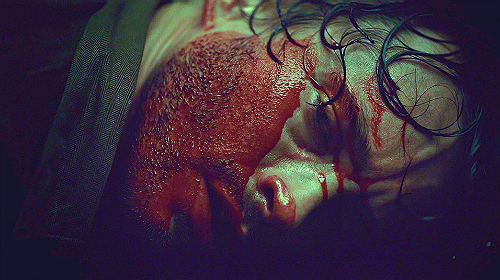
So of course after asking for Cynthia Nixon’s character to come back for weeks now, the story gods deliver in the most obscene way possible, tightening the plot’s noose with bureaucratic nonsense. Of course Jack and Will are stymied now and must move forward by themselves. And then Abigail reappears! And then she kills Alana! And then Hannibal murders Jack, Will, and Abigail! People were killed with such rapid abandon I thought I was watching a short, homoerotic Shakespeare production with mood lighting. But let’s not kid ourselves, Shakespeare this wasn’t.

Like, what? The first thirty minutes were boring, boring, boring, and then the swift successive murders of the cast at large? I don’t even know what to say. Perhaps now is a good time to view properly Hannibal as a critique of the aesthete, free from financial concern. He literally walks away from the action, like so many bankers and traders during the recent financial collapse. I’m not going to claim that financial ruin as the results of others’ actions is tantamount to murder, but they share tragic qualities. If Hannibal simply walks away now, the chase is on. Maybe for the third season, Cynthia Nixon will helm the ship in pursuit of Lecter; perhaps we’ll go to Italy.

As for this season as a whole, I feel like too many tertiary characters were introduced only to be broiled. The lack of resolution with Jack’s wife Bella upsets me, as well. It’s as if by not showing her death, she experiences purgatory, always suffering in that bed. The only other one who makes it out of the fray (seemingly) is Freddie Lounds; she knew to get when the getting was good.

So folks, I’ll be tuning in for the beginning of season three, and if it’s a bunch of malarkey, I’ll be sure to tell you all about it.

Jonathan May watches too much television, but he’s just playing catch-up from a childhood spent in Zimbabwe. You can read his poetry at owenmay.com, follow him on Twitter at @jonowenmay, or email him at owen.may@gmail.com.

You can read our pieces about previous episodes here.

Image: NBC