film

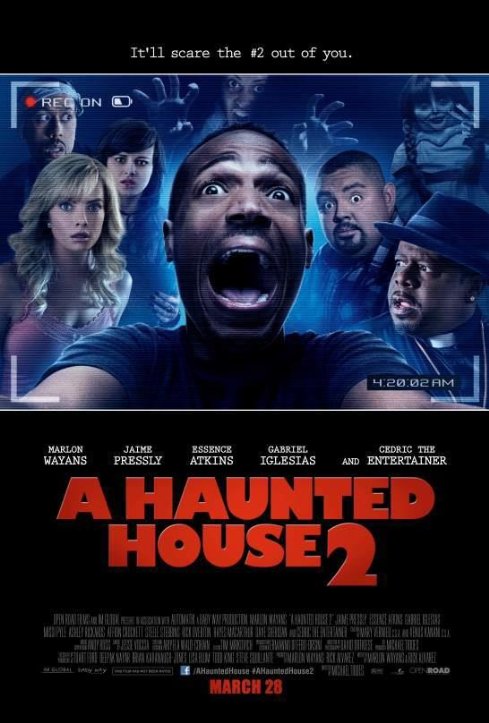
This Looks Terrible – A Haunted House 2

hh2

Alex Marino

In “This Looks Terrible” we look at previews for upcoming movies. We… probably look too closely.

There are only two things you need to know about this trailer: It has a Wayans brother in it and there’s a 20 second fight scene with a chicken.

This movie should just be called “Stupid Race Jokes 2” because that’s all the trailer seems to showcase. Things this trailer thinks are funny:

  1. A white kid speaking Ebonics!
  2. Mistaking your Hispanic neighbor mowing his own lawn for being the neighborhood lawn guy and asking him to add your house to his route!
  3. After the family dog gets crushed by an inexplicably-placed safe, Marlon Wayans screaming “CALL 911! TELL THEM THE DOG IS WHITE! TELL THEM THE DOG IS WHITE!”
  4. The super-friendly neighbor deciding everyone needs a mojito break in the middle of an exorcism and him proclaiming “Oh the black guy has a gun” before turning right around to go back upstairs.

I’m setting the over/under on a white person saying “shiznit” (haha, remember 2003?) at five. 

The worst part about all of this is that this movie will likely be insanely profitable. The first A Haunted House had a production budget of $2.5 million and grossed just over $40 million. That means A Haunted House made 16x its production budget in ticket revenue. For perspective, Avatar, the highest-grossing film of all time, made 11.7x its production budget in ticket revenue. So, while I may criticize this movie for being dumb as shit, movies with margins like these are beloved by studios and they’ll continue to be made as long as they’re successful.

Image source: IMDB

The Lego Movie is Entirely About Fun. Should You See it?

aplego

Mike Hannemann

In our rarely-running kinda-series Should You See It? we talk about movies that just came out. You can figure out the rest of the premise from the title of the series. That’s right: we talk recipes. Should you see The Lego Movie?

Back when I was in high school, making Lego movies was a big fad. There was an early YouTube clip of the “Camelot” song from Monty Python and the Holy Grail re-done entirely in Lego that I watched daily. I had friends that tried to re-create Star Wars scenes with them well before the video game franchise came around. I get it. Even before the hugely successful video game franchise, people were making Lego movies. I say that to say how much I thought The Lego Movie was going to be embarrassing.

The elevator pitch for The Lego Movie is, essentially, just “oh, it’s a movie about Lego.” I’m terrified to think of the board meeting where this was greenlit. On paper, there’s no way this could actually be a good movie. It seems like the lowest hanging fruit to base a film on (Battleship from a few years ago takes second place). It almost feels like something a TV show would use as an idea when making fun of Hollywood for trying to shovel-feed easily consumed movies to mass audiences. “Ball: The Movie” is probably the only thing easier to use as a joke.

But then, somehow, it works.

At this point, you’ve probably already heard about the universal acclaim The Lego Movie is bringing in. As of this writing, it’s boasting a 95% freshness rating on Rotten Tomatoes. “How could this go so wrong?” is a question that’s frequently asked when it comes to Hollywood but in this case, we’ve got ourselves scratching our heads asking “how could this go so RIGHT?”

After seeing it, the answer is pretty simple. The writers (of Cloudy with a Chance of Meatballs fame) choose to air on the side of caution and just… well, want to have fun. It’s a simple comparison to the actual point of using the blocks themselves, but I couldn’t help coming back to that fact when watching it. The movie never tries to be more than it is, it doesn’t try to reach Toy Story-esque heights or re-imagine the way we look at a toy that’s been a staple of childhood since the mid-1950s. It just simply tries to tell a fun story. And because of it, it works.

Chris Pratt plays the main character – Emmet – a construction worker who becomes the film’s “Chosen One.” I won’t waste time talking about the plot. It’s simple enough to engage but children and adults but that means discussing any real story points would be to spoil it. So, instead, let’s just talk about this one character. He’s simultaneously the story’s hero but it also feels like the movie itself is designed off of him.

The character is a simple-minded, good-hearted, silly guy. And this is all the movie sets out to be, too. Jokes don’t always land (although thankfully the laughter overshadows the clunkers) but that takes a backseat to the good-natured charm. While the plot gets over-the-top with how ambitious it becomes, it still feels like a simple narrative hitting all the familiar beats one would expect in a “save the world” story aimed at nostalgia.

It’s because of this that the voice acting works so well, too. Throughout the entire film, it just feels like these actors are having the time of their lives. Nick Offerman voices the pirate Metal Beard with such enthusiasm that I actually didn’t realize it was him until the end credits. Charlie Day brings his It’s Always Sunny in Philadelphia manic charm to a role that would otherwise have just been a filler character. And throughout the entire film, Chris Pratt and Elizabeth Banks are the two main characters that have as much charming back-and-forth as any non-animated on-screen duo. Pratt, especially, deserves praise for managing to portray a character that is simultaneously bland yet still “the most interesting person on the world” (the film’s words, not mine).

The final element that lets the movie play around with its story is the visuals. This, at face value, is probably the only thing that was assured to be solid from that initial pitch meeting. Done in full CGI (with a few real Lego sets sprinkled in), the movie looks like it was done in stop-motion. It actually looks like these figures are all just interacting on a physical Lego set, adhering to the real-world limitations of the bricks themselves. For as broad and expansive the world the film takes place in is, the figures still have that waist that only allows them to bend in certain directions. It’s this crazy dedication to letting the animators run wild but while still confining them to a set of rules that makes this whole thing work. It feels real, in the weirdest sense.

At the end of the day, it works for one reason and one reason alone: it isn’t cynical. It genuinely feels like everyone involved, from the animators to the actors to the directors, are just having fun. They aren’t creating what could easily be the biggest product placement film in history (that damned Coca-Cola polar bears movie takes the crown on that one). This isn’t a corporate tie-in for them. This is a chance to create something legitimate based off of a culture’s shared experience of playing with these multicolored bricks and using one’s imagination.

Should You See It? Yes. That’s the film’s biggest achievement: for an hour and a half, there’s no cynicism. You’re earnestly encouraged to just smile and enjoy yourself. “Everything is awesome” is the refrain for the movie’s main theme the characters sing while completing mundane tasks. For a film that could have been a colossal failure and turned out to be weirdly charming, there couldn’t be a more appropriate sentiment.

Image source: ABC

Worst Best Picture: Is All About Eve Better or Worse Than Crash?

eve

Alex Russell

In “Worst Best Picture” we search every single Best Picture Oscar winner of all time from 1927 to present to uncover the worst of them all. Conventional wisdom says that 2005’s winner Crash is the worst winner in history. We won’t stop until we’ve tested every last one. Read the the first, our review of Crash, here. All posts should be considered to have a blanket “spoiler alert” on them. Today’s installment is the 1950 winner All About Eve. Is it better than Crash?

There is just about nothing that needs to be said about All About Eve in 2014. It’s one of the movies that even someone with no reverence for old film will recognize as a “classic” from the list of Oscar winners. It’s a black-and-white Shakespearean-style story of betrayal and trust. Nothing needs to be said about a classic, but even though the stone has been unturned a million times I feel confident that no one has compared it to Crash.

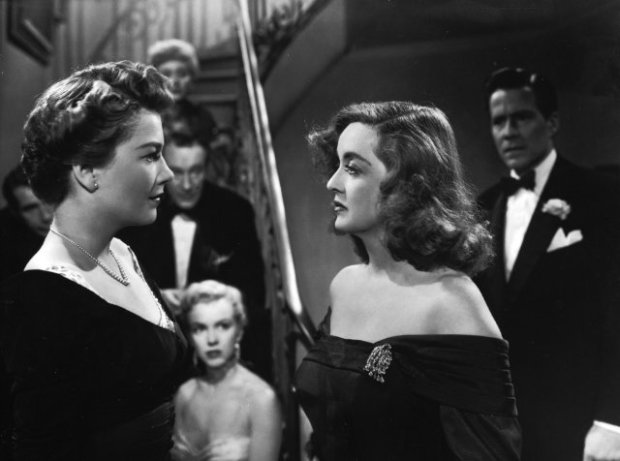
All About Eve is the story of being replaced. Aging (for 1950, 40 is apparently “aging”) actress Margo Channing (Bette Davis) is at the top of her game. She’s got her name in light bulbs, she’s got a sassy maid, and she’s got love in her life. She accepts one of her biggest fans, Eve Harrington (Anne Baxter), as a personal assistant. Eve is the perfect assistant — maybe too perfect — and when Margo finds her dancing in front of a mirror with one of her costumes, the whole “girl next door” vibe breaks down.

If you want to read about everything that happens in All About Eve you can look elsewhere for it. Essentially, Eve tries to become the new Margo and does so. There are attempted seductions, drunken parties, and successful instances of blackmail. The story is unassailable: it’s been done over and over since then, and you stand a good chance in this era to have seen a parody of it before the original. It earned a The Simpsons episode. That’s how we measure how lasting something is, right?

The high note of All About Eve is in the disastrous party where Margo first believes that Eve has come for her throne. She’s right, of course, but she plays her hand too drunk and too early. No one else in their shared life believes her, and Margo is labelled a paranoid diva. As with every relationship, the fear of something manifests it faster than anything else could. Margo is worried about Eve taking her role and so Eve takes her damn role.

The comparisons to Crash aren’t easy with this one. The best way to do it is probably with the climaxes of the two films. The drunken party where Margo unleashes the classic “fasten your seatbelts, it’s going to be a bumpy night” line is too early to be a climax, but it’s definitely the defining, lasting element of All About Eve. Margo turns on the rage before the night even starts in accusing her boyfriend of trying to spend extra time with Eve. She accuses the other partygoers of trying to surround themselves with younger women. She pounds drinks and rages, unsuccessfully, in front of a crowd that includes a very young Marilyn Monroe.

The scene is lasting because it achieves the goals and goes steps further. All the scene has to do is establish that Margo fears Eve and that no one believes her. It manages to play out this paranoia and still be funny, even out of the context of a 1950 audience. One bit of wordplay, “stop acting like I’m the Queen Mother” met with “outside of a beehive, Margo, your behavior would hardly be considered either queenly or motherly!” works both as the film’s typical theater-style banter and as an actual joke. This movie about the theater manages to straddle the fine line between being “quick” and being “funny” even more than half a century later.

Crash isn’t 10 years old yet. The big scene in Crash is a car accident where some people almost die. Compared to the rest of Crash, it is filled with meaning and pathos. Compared to another movie that has the same award, it feels completely lifeless. The characters feel totally unrealized. There is no big takeaway. There is no “lesson,” for as much as the people behind Crash demanded that there be absolutely nothing but lessons.

But Crash never asked to be All About Eve, you say? It’s not fair to compare two movies from different time periods? One of the reasons very few comedies have ever been considered for the Best Picture award is that comedy is the product of a time period. All About Eve is funny, to be sure, but a lot of the “quick wit” is more “ha-ha funny” than actually funny. All of it holds up, though, because it has to. By giving a movie the title of BEST PICTURE, the statement is made that this movie will always hold up. Crash is not an accurate depiction of 2005. It already feels dated, even when compared with a movie that won the same award at a ceremony hosted by Fred Astaire.

The Best Part: The party, oh, the party. Or George Sanders, who is an absolutely amazing monster in this movie. I nearly wrote 4,000 words about if he is a hero or villain, but to hear that you’ll have to buy me five drinks and sacrifice a Tuesday night.

The Worst Part: During one scene in New Haven, two characters walk down the street away from a theater. It is the only scene in the entire movie that couldn’t have been shot today. You could shoot this scene better with a green towel and six dollars now.

Is It Better or Worse than CrashYou know how sometimes people ask you a hypothetical question, but you’re not paying attention and you think they’ve lost their mind entirely? All About Eve has one of the AFI top-10 movie quotes of all time. Crash has a scene where someone looks scornfully at someone for an attempted child murder.

Worst Best Picture Archives: Crash | Terms of Endearment | Forrest Gump |

 Image credit: IMDB

An Obama Campaign Worker Watched the Documentary Mitt. Should You See it?

abcmitt

Alex Marino

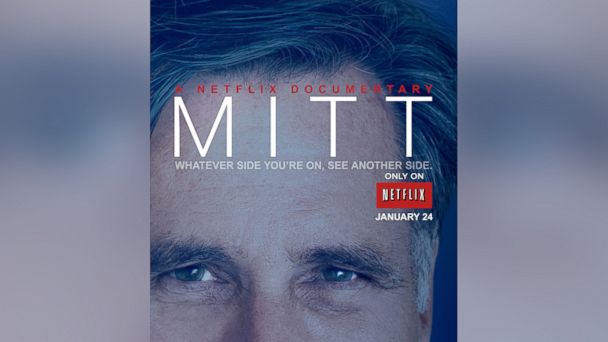
In our rarely-running kinda-series Should You See It? we talk about movies that just came out. You can figure out the rest of the premise from the title of the series. That’s right: we talk recipes. Should you see the new doc about Mitt Romney?

Given that all my other pieces here are about yelling at kids to get off my lawn, I could understand the belief that I spend my days sitting on a porch in a lawn chair being grumpy at the world.  But before all that I worked for the Obama campaign doing data work in North Carolina for all of 2012. It was exhausting and exciting and unhealthy and incredible all at the same time. Like so many of my colleagues, once everything was over and I actually had an ounce of free time I decided to occupy it with reading as much as I could about the election. I’ve read almost every book that’s been written about the campaign. Hell I was reading short e-books about the campaign during the campaign. It was always interesting to see what journalists got right (that we used data incredibly well) and what they were completely clueless about (how we used that data). I had read so much that by the time the highly-anticipated sequel to Game Change called Double Down came out there really wasn’t a whole lot of never-before-seen content. I finished it craving an account that actually understood what we did or at least brought a fresh perspective to the race. But I never thought that a documentary about the guy I worked to beat would be that account.

Mitt isn’t about the inside politics of a national campaign. It’s not about the internal struggles or the war room drama. You don’t see Paul Ryan until 70 minutes in. You don’t see the campaign manager until 80 minutes in. It’s the story of a man and his family on the campaign trail since 2007.

When you work on a political campaign it’s easy to lose perspective on how you view your opponent. For so long I held this belief that Romney was completely out of touch with working-class Americans. And while Mitt didn’t show any evidence that directly refutes that belief, there was a really touching scene where he talks about his father, former Governor of Michigan and candidate for president George Romney. He was showing the notes he took while on stage at the first debate. At the top of the first sheet was “DAD”.  He went on to explain:

“I always think about dad and about [how] I’m standing on his shoulders… There’s no way I’d be running for president if dad hadn’t done what dad did. He’s the real deal. The guy was born in Mexico. He didn’t have a college degree. He became the head of a car company and became a governor. It would have never entered my mind to be in politics.  How can you go from his beginnings to think ‘I could be head of a car company. I can run for governor. I can run for president.’ That gap. For me, I started where he ended up. I started off with money and education and Harvard Business School and Harvard Law School. For me, it’s moving that far. (moves his hands, palms facing each other, slightly apart) For him it was like that. (moves hands considerably apart)

Even after the first debate I felt so confident that Obama was going to win that I couldn’t imagine the conversations going on at Romney HQ. I thought they had to be living in some strange bubble where only good news gets passed along. But after the first and second debates it was Romney who was even-handed. He knew he did well in the first debate and he knew he didn’t do as well in the second. This was in the face of his family being excessively supportive (as they should be). Even on election night as everyone else is trying to find ways to hold on to the belief that he can win, Mitt is well aware that it’s over and seems remarkably relaxed.

I remember feeling so strongly that Mitt was this out of touch rich guy.  His life consisted of car elevators and dressage horses! I never once thought that those things helped make his wife’s life a little easier as she dealt with multiple sclerosis. And while those things may seem excessive, if you were as rich as the Romneys wouldn’t you do everything in your power to make coping with a disease like MS easier?

But while Mitt did such a better job than the campaign in making the candidate seem human, there were many puzzling things the film revealed how informed Romney was about the state of the race. In the last few weeks of the race he saw huge crowds everywhere he went. I understand how he could feel like things were on an upswing. But a look at the numbers would have quickly brought him back down to Earth. During election night Ann mentioned that they were hoping to win Michigan, Pennsylvania, and Wisconsin. Polling just before election day never showed any of those states as even being close. The fact that the candidate and his wife weren’t aware of their path to victory is baffling to me. They got most of their return information from external news sources rather than their internal analytics team. But was he actually not briefed on these things or did the documentary just not show any of that?

The scene that hit me the most took place the day after election day at Romney HQ in Boston. After he and his campaign manager each spoke, you saw the tears of sadness streaming down the faces of his staff. Most people don’t understand what’s in those tears.  For so many of us this race meant moving across the country, barely seeing friends and family, putting off school for a year, relationships collapsing under the stress of the campaign, 3:30 a.m. wake up times, 10:00 p.m. checkout calls, 11:00 p.m. dinners, and more takeout than you can imagine. It was our entire life and to not have it all end with a victory is nothing short of devastating. I was lucky to be on the winning side that was filled with tears of happiness on election night.  I can’t imagine how I would have felt had the results been different.

Should You See It? If you have Netflix make sure to watch Mitt. If you don’t have Netflix what the fuck is wrong with you; are you 90? Because while it’s easy to get caught up in the passions of a long political campaign and view your opponents as enemy robots seeking to destroy your entire existence, it’s healthy to remember they’re people too, from the field intern all the way up to the candidate.

Image source: ABC

This Looks Terrible: Labor Day

laborday

Alex Marino

In “This Looks Terrible” we look at previews for upcoming movies. We… probably look too closely.

Damn you, Jason Reitman. Up in the Air was so damn good and now you have to leave this heap of trash on my doorstep? This shitpile is called Labor Day and it’s somehow a romantic comedy about a mother and son that are forced to take in an escaped prisoner.

This trailer teaches us a few helpful things if you ever find yourself quasi-kidnapped by an escaped convict. First, after he ties you up if he feeds you like a baby then you know he won’t hurt you. He’ll become a fatherly figure through teaching your son baseball because that’s not been done in movies ever before.  And if you’ve suffered the loss of a loved one it can be cured by baking a peach pie.

“I can’t give you a family.”

“You already have.”

Ugh, fucking spare me. Let’s not forget that nobody gave him shit. He forced Kate Winslet to take him home because he threatened the life of her son. Did an 18-year-old write this script? Is this movie just The Notebook but for the 35+ crowd? This is the kind of shit that should only be allowed on Lifetime or The Hallmark Channel.

“I’d take 20 more years just to have another three days with you.”

Can we talk about this for a second? From everything I’ve heard prison isn’t a fucking vacation. And because he’s doing time for murder, he’s not going to be in minimum security either. Anyone dumb enough to do 20 years of hard time in exchange for 72 hours with someone they’ve known for a week deserves to be in stupid prison.

But it’s okay everyone, you don’t actually have to see this movie. They show us the fucking ending in the trailer! You’ve got Henry covering his ears while laying down in the back seat of a car as bullets pierce the seats. So James Van Der Beek is going to get into a shootout with Brolin, kill him, and then we’re going to have a dramatic death scene with Brolin whispering his last words as Kate Winslet holds him. My guess for that scene is Winslet pleading for Brolin to not leave her and him saying:

“I only knew you… a week… but you gave me… enough love… for a lifetime…”

Fuck this movie.

Image source: IMDB

This Looks Terrible – Life of a King

lifeofaking

Alex Marino

In “This Looks Terrible” we look at previews for upcoming movies. We… probably look too closely.

Just when you thought it had been too long since another awful teacher-student drama, Cuba Gooding, Jr. fills the void. This movie is called A Fuckton of Chess Puns and is going to follow the exact same formula so many of these films have already used and abused. If you’re an asshole and didn’t watch the trailer all you need to know is this is the chess version of Good Will Hunting and Finding Forrester but this time the mentor has a mentor (GROUNDBREAKING) and the pun density is off the charts.

Let’s take a minute and just list the puns included in this trailer:

“Just keep your eye on the endgame.”

“…you must think before you move.”

“This is your life.  One mistake and it can be taken away.”

“I didn’t see the endgame, man, and it cost me.  It cost me big.”

“I learned.  I learned the board.”

“It’s about learning how to play the game”

Even in the on-screen text they write “To make a difference you have to make the right moves.”  This trailer can go straight to hell.

But don’t take my word for it. The Washington Post’s review for this movie is titled “In ‘Life of a King,’ chess becomes an allegory for life” proving that The Washington Post believes their readers have never seen a movie before.

You don’t have to be a chess player to know that the game is incredibly complex.  True genius in chess comes from a person being able to see 20 moves ahead of where the board is and that’s just not entertaining to put in a movie. So you’re forced into slow motion shots of someone knocking over their king or having someone dramatically make their final move and say “checkmate”.  But almost no one is going to see this movie for the intense chess scenes.  We’re all just looking to save more on our car insurance with Allstate.

Image source: IMDB

Worst Best Picture: Is Forrest Gump Better or Worse Than Crash?

Forrest-gump-original

Alex Russell

In “Worst Best Picture” we search every single Best Picture Oscar winner of all time from 1927 to present to uncover the worst of them all. Conventional wisdom says that 2005’s winner Crash is the worst winner in history. We won’t stop until we’ve tested every last one. Read the the first, our review of Crash, here. All posts should be considered to have a blanket “spoiler alert” on them. Today’s installment is the 1994 winner Forrest Gump. Is it better than Crash?

If you put ten people in a room and told them they couldn’t come out until they’d named the ten most iconic American films of the last thirty years then you would probably go to prison for kidnapping. Before serving your time, though, you’d also have a list that almost assuredly included Forrest Gump.

Only The Lion King outdid it in the domestic box office in 1994. The Shawshank Redemption, Quiz Show, and Pulp Fiction failed to stop the feel good movie of the year (where someone loses their legs) from winning Best Picture. Forrest Gump made hundreds of millions of dollars, enjoyed almost universal acclaim, and launched an entire damn theme restaurant. People loved this movie.

It is strange to see it now, twenty years later. I’ve heard stories of sad nerd parents showing their kids the original Star Wars movies only to be frustrated that they cannot love them as they do. They know who Luke’s dad is. They aren’t impressed. That comparison isn’t perfect here, but even if you haven’t seen Forrest Gump you still kinda have.

Forrest Gump (Tom Hanks, as though I need to even say that) lives a full life. He meets world leaders, plays college football for a legendary program, gets honored in war, and invents the smiley face. The movie unfolds through Gump telling his weird story like a clip show. The clip show comparison does work here, because these scenes are so iconic in recent American film that it’s just about impossible to not know them. Shrimp. Lt. Dan. Jenny. You know because you can’t not know.

Saying there are “problems” with Forrest Gump is putting it mildly, but they are all intentional problems. The camp factor of Gump is off every chart, even the chart they invented to show things that are off of charts. Tom Hanks pulls his pants down to show LBJ a bullet wound on national television. It’s all in the service of making Forrest the character into a lovable oaf, but it’s thick. It was probably more endearing before lines of dialogue became relics of the early 90s, but there are moments when you can’t help but feel overwhelmed by it all now.

For as broad and as hamfisted as it is, it’s all intentional. They set this movie up to feel goofy in an earnest way. Crash stumbles around more serious subject matter in the same awkward fashion, but Crash does so with no self awareness. That’s why Gump just elicits eyerolling when it goes too broad and Crash feels like something a sixteen year old didn’t think through when it does.

There will always be a discussion of Forrest Gump versus Pulp Fiction among the kind of people that have that discussion, but Gump brings something to the table more than the aphorisms and goofball charm. It comes through as a bright movie with dark edges even years later. There are problems — Jenny’s character doesn’t get enough to do and she’s just another piece of Forrest’s puzzle — but the movie is still cohesive. The third act is decidedly strange and has gotten even stranger with time. There’s a case to be made that his “running for no reason” is a statement about Forrest’s place in the world or is his response to an uncaring world but it doesn’t advance the movie’s message and comes off as just blessedly strange.

I’m not going to sit here and say Forrest Gump is bad. On the contrary, it’s amazing how little it feels like the “Movie of the Week” ideal that it occupies in American pop culture.

The Best Part: Lt. Dan (Gary Sinise), who is the only person with real motivations in the movie outside of Forrest. Most of the cast just doesn’t get enough to do in this movie. There’s no way to interact with a character like Forrest Gump unless you play a foil to him, and the only person they let really do that is Gary Sinise.

The Worst Part: This, probably.

Is It Better or Worse than CrashIt’s better, absolutely. Forrest Gump is one of your family’s favorite movies for a reason. The flaws don’t ruin the experience, of course, and there’s no greater thrill to the movie than watching Tom Hanks just Tom Hanks around. Crash is starting to sour even worse than it originally came off to me, and I’m hoping one of the next few gives it a real challenge at the bottom of the barrel.

Worst Best Picture Archives: Crash | Terms of Endearment |

 Image credit: IMDB

Worst Best Picture: Is Terms of Endearment Better or Worse Than Crash?

terms

Alex Russell

In “Worst Best Picture” we search every single Best Picture Oscar winner of all time from 1927 to present to uncover the worst of them all. Conventional wisdom says that 2005’s winner Crash is the worst winner in history. We won’t stop until we’ve tested every last one. Read the the first, our review of Crash, here. All posts should be considered to have a blanket “spoiler alert” on them. Today’s installment is the 1983 winner Terms of Endearment. Is it better than Crash?

The Motion Picture Association of America debuted the PG-13 rating in the summer of 1984. In the decade before that, movies were all rated G, PG, R, or (very, very rarely) X. Whatever you think of the MPAA and the rating system, watching a movie prior to 1984 shows the need for PG-13. Terms of Endearment, a PG-rated movie, has two direct orgasm jokes in the first 15 minutes. It’s the first of what I can only call a lot of same. It’s a movie about personal interactions. Some interactions get blue.

Terms of Endearment won the Oscar for Best Picture in 1983. Of the four other nominees, history best remembers The Right Stuff and The Big Chill. After looking at everything that was nominated across the board, history’s list also needs to include WarGames, Flashdance, and Return of the Jedi. All-in-all it’s not a bad year for film, but it definitely feels absolutely and completely 1980s.

The tone is set early: Albert Brooks dies. The legendary comic plays (off screen) Emma’s (Debra Winger) father and Aurora’s (Shirley MacLaine) wife. His funeral scene is accompanied by the “opening theme” of absurd jaunty music. Tone is a big part of any movie and music is a big part of tone. It’s astounding how much this element doesn’t hold up. The movie was nominated for Best Original Score, but I can’t remember the last time music was this distracting — oh wait, it was Crash.

The music reinforces the “period piece” nature that every movie takes on after a few decades. The central narrative of Terms of Endearment is the story of Emma and Aurora. Aurora is the straight-laced mother who can’t let go of her daughter and Emma is the caged daughter who doesn’t really want to be free. She marries a man named Flap (Jeff Daniels, who looks young) right out of high school and carries out a marriage her mother Doesn’t Approve Of, moves to Iowa, and has three children.

There are a lot of places this plot could go from there. The average movie would force the mother to learn that she was too hard on the daughter and force the daughter to realize that running away from control only hurt her worse. Terms of Endearment, a movie from more than three decades ago, is ahead of even today as it subverts that hacky expectation.

Flap and Emma play house for a bit, but they can’t change the fact that they got married right out of high school. When people get married right out of high school it goes one way or the other: this one goes the other. This isn’t surprising, though the fact that no one ever questions that Jeff Daniels is playing a guy named Flap definitely is. Was Flap a name in 1983? We don’t have all the facts in, but we’re monitoring this story closely.

Shirley MacLaine beat out her fictional daughter Debra Winger for the Best Actress Oscar, but hot damn Debra Winger is perfect in this movie. Emma leaps into her mother’s arms after coming home for a weekend and she moves with a fluidity and liveliness that perfectly sells her character. When she’s playing a 20-something trying to act like a real adult, the movement tells it all. Emma is a kid, forever, and she’s always going to be Aurora’s kid.

The two stay on the phone through the whole movie, which is another 80s-shock device. In the time before cell phones, it is clearly supposed to be weird that Emma and Aurora are on the phone moments after sex or early in the morning. Aurora’s last words to Emma on her way to Iowa are about the phone bill. It helps sell the seriousness of the mother-daughter relationship. These little touches do more than any overwrought dialogue ever could.

The other side of mother-daughter is Aurora. She starts the film as someone who is visibly upset that people won’t let her say she’s 50 at her birthday party (she’s 52, her doctor reminds everyone). The hacky thing to do here is to transition her into a wild woman by the end of the movie. She begins an odd relationship with her ex-astronaut neighbor Garrett (Jack Nicholson at his absolute most Jack) that includes doing donuts in a convertible on the beach (reluctantly) and having sex for the first time in a decade (also reluctantly).

This is the very first non-Crash edition of this, so I’m still setting overall rules. All of these should be considered to have a spoiler warning on them. These are supposedly classics, all of them, and you should have either seen them or accepted that they may be spoiled for you when you read this.

The third act of Terms of Endearment is intense. Her doctor uncovers something troubling and suggests that Emma needs treatment immediately. She does well enough to go to New York City with her childhood friend at first, but then she rapidly goes down the proverbial tubes. Emma has cancer and Emma is dying.

This movie won Best Picture because it manages to be funny even though it’s the story of a woman whose mother never lets her go. It’s the story of a woman who dies after having an imperfect life that she never really has control over. She makes some final decisions (which has an odd feeling of “we should be so lucky in this world”) and then dies.

It’s a powerful movie before Emma ever gets cancer. It deals with individual loss of love. It deals with loneliness around others. It deals with the ways we all choose to just get the hell by when we end up somewhere (or someone) we just can’t get away from.

The cancer third act feels like another movie; it’s another episode of a show that you already like with people you already know. Acts one and two are funny and real in equal doses, but act three is a full-on reality haymaker that never gets maudlin. They deal with Emma’s dying and death with grace. It feels like a real person is dying, and the greatest trick of Terms of Endearment is that it stops being just a really great story at just the right moment.

The Best Part: While the obvious nod should go to Emma’s goodbyes to her friends and family in the hospital, I want to give this to a scene where she visits her mother during the depths of her despair about her marriage. She leaps into waiting arms and then discusses her extramarital activities with her mother in bed over coffee. The movie establishes the relationship between the characters so well that this scene feels sweet rather than weird, and that’s an accomplishment.

The Worst Part: The “theme” plays over and over in this movie and it is never appropriate. As Emma is just about to be hospitalized forever, some Super Nintendo-type funky jazz plays. It’s distracting at best.

Is It Better or Worse than CrashMuch, much, much better. This movie may as well have been the reason I started doing this. There’s no better thing to say about Terms of Endearment than that the distance between it and Crash is not measurable by the tools we have in today’s world. It is a theoretical distance, measurable only in the abstract.

Worst Best Picture Archives: Crash

 Image credit: IMDB