literature

Broodhollow: Dreadful Light Reading in Webcomic Form

broodhollow


When I was growing up, I really only had one career goal: I wanted to be a cartoonist. Yeah, I took the popular way out back then. That never panned out (spoiler alert, I actually don’t draw Dennis the Menace) but watching the medium grow up with me has gone in a lot of very interesting directions. With print media dying, of course, the age of the online world picked up where they left off. End of great set up.

Webcomics exploded onto the scene back in the late 1990s.  Your co-workers send you links to them all the time, especially likely if you write for or read the content here on this site.  You’ve got your break out stars like Penny-Arcade and Achewood and then your lesser known ones like Brawl in the Family that are pleasant little surprises you fins on your own.  It’s a landscape you can’t really avoid online anymore if you appreciate the art form.  There is one entry, however, that deserves mention.

Kris Straub has been doing webcomics since 2000 with Checkerboard Nightmare. He went on to do an epic sci-fi story that spanned seven years at StarSlip Crisis and currently makes most of his revenue through Chainsawsuit (a gag-a-day strip that never fails to get me). Recently, he’s embarked on an entirely new strip that is unlike anything on the web that I’ve seen.

Enter:  Broodhollow.

Broodhollow lives in its own weird little corner of the internet.  It’s a cosmic-horror-humor strip. Set in the town of Broodhollow during the Great Depression it follows the curious story of Wadsworth Zane, a failed encyclopedia salesman called to this town through the will of a recently-deceased yet obscure relative. The drawings are light and simple. The colors are somewhat faded but only indicate very faint feelings of dread. The characters look like they could be in the background of an early Mickey Mouse cartoon.

Then a reanimated mangled corpse shows up.

Broodhollow takes the idea of telling a horror story and turns it on its head. There are laughs but only occasionally. Some strips end without a punchline, just a sense of foreboding as the story progresses. As the reader progresses further into the mystery of this town, as Wadsworth does, things take a Lovecraftian turn for the nasty. He encounters other characters: a young woman working for her father’s law office, the group of mill workers who enjoy spending their nights at the bar, a psychiatrist who may know more than he lets on. There’s even a secret council involved that avoids the cliché nature of such an idea and still feels like something that could have happened in the early 1930s. To tell any more of the story would be to ruin it. The important note is that the world and the characters you’re looking at are drawn and painted – they aren’t real, they’re just pixels. Much as the town of Broodhollow feels, as you learn about it and its residents, a “painted” version of what actually exists underneath.

And that doesn’t even begin to explain the unique nature of the art involved. In the middle of a lightly drawn strip will be the horrible image of some monstrosity that looks simultaneously human and anything but. Straub walks a fine line throughout the entire story: light mystery and horrific dread. The images aren’t terrifying but the way they’re presented is. Light and painted backgrounds contrast with the drawings of the characters to draw the eye to a certain detail, making you almost miss the horrors drawn away from where you’re looking.  

This isn’t to say it’s perfect. It’s an ambitious project to take on. To have a strip that can deliver laughs but then also do a loving homage to the style of storytelling H.P. Lovecraft embraced. But that’s what makes it so much more interesting than anything else being published online right now. There isn’t the cheap joke because “this is a comic strip, it has to end with a joke!”. All said and done, it’s a evenly paced narrative that has one goal:  to tell a story that hasn’t been told before. The fact that it’s a webcomic is purely coincidental.  

Straub is approaching the project in a smart way. Instead of promising one strip a day, he’s focusing on three a week. Every few months will tell another chapter in the story, which then can be bought as a book. He takes a few months off to work on the next chapter and then comes back. It made the wait between chapters infuriating but all the more rewarding when it came back. He recently started a Kickstarter and more than raised enough funds to keep making the project and then some. In an age where you can call people on the internet “the worst” and no judge would convict you, it’s also an age where people who are dedicated to a project can come together and help artists out. For every Zach Braff trying to raise millions without having to spend his own millions, there’s a guy like Straub who just wanted to take a chance to show people something they wouldn’t be able to get anywhere else. To show them Broodhollow.

If you’re looking for some light reading, the first book is available for free online at Straub’s Broodhollow homepage here.  It won’t take you more than an hour and it’s worth it.

Image source: Kickstarter
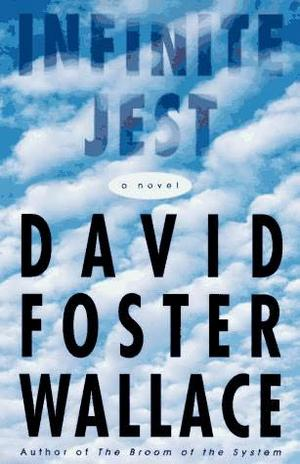
 

Life After the Star Wars Expanded Universe: Infinite Jest as Science Fiction

Andrew Findlay

This article’s shtick is reviewing great science fiction, so before I start in on my review, I’ll make my case that this book belongs here. What are some major features of science fiction?

1. Takes place in the future

2. Strange changes in government, cartography, or the overall structure of the world

3. Extrapolated technologies

4. Thematic development of the plot centers around a certain piece of technology

All of these characteristics are strong predictors of science fictional status, and all are strongly present in Infinite Jest. We’ll take it number by number.

Infinite Jest takes place in a (#1) near-future America. It’s hard to tell exactly, but Stephen Burns estimates that the time of the main part of the book roughly matches 2009. That’s fifteen years in the future from the 1994 date of publication. In this future, the reigning method of North American political interaction is O.N.A.N.ism (#2). I don’t think there’s ever been a more intentional masturbation joke, but O.N.A.N. stands for the Organization of North American Nations, a souped-up NAFTA in which the American president basically has the final say on everything. One of the things the president does is create the Great Concavity, where the far northeast of the U.S.A is given to Canada, and then becomes a massive, region-wide landfill.

Fuck you, Montpelier!

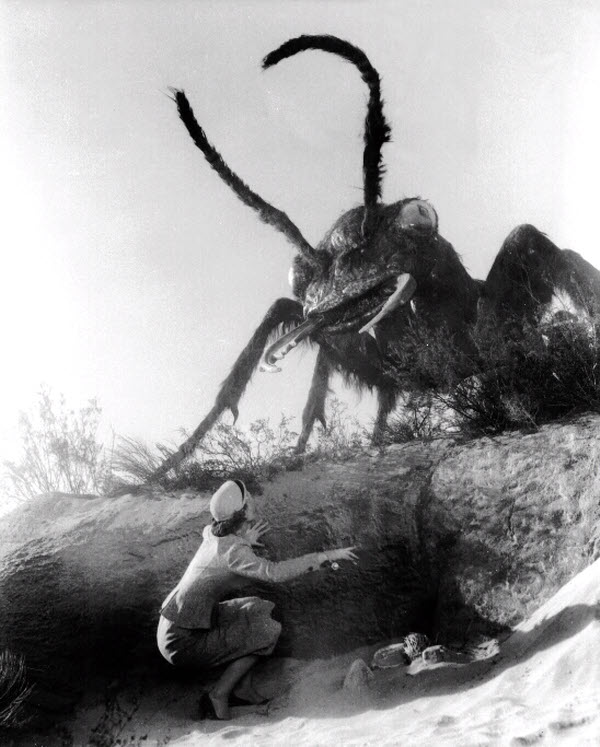
Every single bit of America’s waste is sent to that place, which is now legally Canada, so America does not have to deal with it. There’s even a new term for this unprecedented gifting of land to a neighboring country: experialism. There’s also (#3) a bunch of new technologies. I’ll start with a big one: unlimited clean energy. Well, kind of clean. Annular fusion is the whole reason for drowning Vermont and Maine in toxic waste and creating what Americans call the Great Concavity. Annular fusion is a counterintuitive clean energy system that uses hideous amounts of toxic material to initiate fusion that is so clean that it not only purifies the materials used in the process but also sucks every toxin and radioactive particle out of every location in a wide circumference. The whole reason they have to send massive amounts of waste into the area is that the process of annular fusion removes every poison from everything in the area, leading to massive, lush, unbelievable overgrowth. This entails huge trees, lush grass, even gigantic animals and insects.¹

Continual bombardment with poison is the only way to keep these animals/plants from growing out of control and taking over the surrounding areas. DFW includes many additional near-future innovations in this novel, but the most important one is Infinite Jest. The book title references a short film from within the novel itself, a piece of video technology (#4) that is central to the plot and theme. Infinite Jest is an unreleased video that is so entertaining or appealing that, once someone starts watching it, it is so pleasurable that they never stop… ever. Police would know that someone died from watching the video when they saw a self-befouled, dehydrated husk sitting in a recliner. That is, they would know that if the electricity to the entertainment system had been cut. If it hadn’t and the video was still running, they would just sit down and watch, and the exact same thing would happen to them.

This is great! Let’s do this until we die.

Whenever people hear of Infinite Jest, they don’t think science fiction. I didn’t even know it was set in the future until I read it. The issue is that Infinite-Jest-as-science-fiction is not part of Little, Brown’s marketing strategy. Very often these days, booksellers and publishers decide what is and is not science fiction. There’s also a specious assumption that Serious Literature and science fiction are mutually exclusive. In Ursula Le Guin’s brilliant “On Serious Literature,”² she takes this type of thinking to task:

Had he not even understood the importance of the distinction between sci fi and counterfactual fiction? Could he not see that Cormac McCarthy — although everything in his book (except the wonderfully blatant use of an egregiously obscure vocabulary) was remarkably similar to a great many earlier works of science fiction about men crossing the country after a holocaust — could never under any circumstances be said to be a sci fi writer, because Cormac McCarthy was a serious writer and so by definition incapable of lowering himself to commit genre?

The Road is obviously science fiction.³ End of days, world of ash, single wanderer with companion trying to make his way? Except The Road was not billed or sold as science fiction, because Cormac McCarthy. Infinite Jest is the victim of the same type of thinking. This way of looking at things persists across literature. For example, Margaret Atwood’s Oryx and Crake is not sold as science fiction even though an honest-to-god mad fucking scientist is a title character. Gravity’s Rainbow, almost the entire focus of which was the Nazi’s V2 missile program, the direct technological parent of the rockets that put men on the Moon, is rarely considered science fiction, although there’s a fairly strong argument there from the standpoint of #4.

Yep, looks pretty sciencey to me.

So, back to Infinite Jest. It’s science fiction, so I’m allowed to review it. The thing that surprised me most about it was how easy it was to read. It’s on the same cultural level as Ulysses and Gravity’s Rainbow – a Big Important Novel you want people to see you reading on the train. I’m not saying Ulysses and Gravity’s Rainbow aren’t worthwhile, but they are most definitely a fucking trek. Infinite Jest isn’t. There are some advanced bits, and yes there are footnotes,⁴ but for the most part it’s just long as hell. To prove my point, following are excerpts from each book, chosen by opening the book to a random page and typing what I found.

Infinite Jest:

Katherine, I am, in English, moribund. I have no legs, no Swiss honor, no leaders who will fight the truth. I am not alive, Katherine. I roll from skiing lodge to tavern, frequently drinking, alone, wishing for my death, locked inside my pain in the heart. I wish for my death but have not the courage to make actions to cause death. I twice try to roll over the side of a tall Swiss hill but cannot bring myself. I curse myself for cowardice and inutile.⁵

Ulysses:

Lynch! Hey? Sign on long o me. Denzille lane this way. Change here for Bawdyhouse. We two, she said, will seek the kips where shady Mary is. Righto, any old time. Laetabuntur in cubilibus suis. You coming long? Whisper, who the sooty hell’s the johnny in the black duds? Hush! Sinned against the light and even now that day is at hand when he shall come to judge the world by fire. Pflaap! Ut implerentur scripturae. Strike up a ballad.⁶

Gravity’s Rainbow:

He used to pick and shovel at the spring roads of Berkshire, April afternoons he’s lost, “Chapter 81 work,” they called it, following the scraper that clears the winter’s crystal attack-from-within, its white necropolizing…picking up rusted beer cans, rubbers yellow with preterite seed, Kleenex wadded to brain shapes hiding preterite snot, preterite tears, newspapers, broken glass, pieces of automobile, days when in superstition and fright he could make it all fit, seeing clearly in each an entry in a record, a history: his own, his winter’s, his country’s…instructing him, dunce and drifter, in ways deeper than he can explain…⁷

Above are excerpts from the trifecta of Modern Novels You Must Read. I hope they make it clear that Infinite Jest is comparatively accessible and smooth reading. It’s also one of the funniest books I’ve ever read. Most “funny” books have me smiling a little as I consider how good that last joke was, but Infinite Jest had me in tears multiple times a day. So now we come to the main point of this article: read Infinite Jest. It is funny, compelling, and important. I spent most of my time discussing why certain features of this book put it within my science fiction purview, so Austin Duck⁸ will be along on Wednesday to talk about a massively more crucial subject: what makes Infinite Jest so damn important?

NOTES AND ERRATA

1. This is key, considering that outsized insects were almost as important to early pulp SF as words were.

2.  Read this. Following that link is undeniably a better use of your time than reading this article. It leads to a tongue-in-cheek piece of brilliant microfiction Le Guin wrote in response to a reviewer of Michael Chabon stating that he “has spent considerable energy trying to drag the decaying corpse of genre fiction out of the shallow grave where writers of serious literature abandoned it.” This statement put Ursula Le Guin, goddess of fantasy and science fiction that she is, in high dudgeon. Her response is facetiousness perfected.

3. Or so obviously indebted to it that not acknowledging it is an act of ingratitude.

4. I recommend using an ereader to go through Infinite Jest. It’s gigantic and physically difficult to hold up. Also, clicking on a number to go directly to the footnote is a lot easier than flipping back and forth.

5. If given the context that a French Quebecois man in a wheelchair is speaking this in a second language, I can pretty easily figure out what’s going on here. No challenge at all.

6. What the fuck. What in the actual fuck. Is that Latin? Why? Why is that Latin?

7.  Okay, I know all the words here. All of them. Let’s just put them… together… hm. I can piece this together with some effort, but the fact remains that the author chose to write “rubbers yellow with preterite seed” instead of “used condoms,” so I don’t know.

8. Kind of a dick, but smart as hell and with a heart of gold. Read his article!

Image credits: Allmedia.com, Wiki, and Infinitesummer.org

Read This or Kill Yourself: Seiobo There Below by Laszlo Krasznahorkai

seiobo

Austin Duck

In Read This or Kill Yourself, we get tough with you about your bookshelf and what had damn well better be on it.

If you haven’t heard of Laszlo Krasznahorkai, you’re not in the minority. To be completely honest, the only reason I’m aware of him (and this book) is that I was trying to impress the book reviewer at The Washington Post so he’d help me get a better job (look how well that worked out).

Cool story, huh?

Anyway, Krasznahorkai is Hungarian, super allusive, and has only had a handful of books translated into English over the last decade or so. To us readers of English literature (even us grad school pricks), he’s pretty fucking remote. But, as with many things we’ve never heard of (or are just starting to see creeping up on our cultural radar screens), this guy is really, really good. Just read this excerpt. Can you believe how. fucking. good. this. guy. is?

Let me start again.

It might help to describe the basics of this book first. It’s hard to say whether Seiobo There Below (henceforth STB) is a novel or a collection of stories, but I’m not sure that the distinction between the two would be, in any way, meaningful to the understanding of the book. It’s definitely divided into sections (that are numbered using primes to imply a kind of “golden spiral” relationship between the sections [hence the impossibility of determining whether to read it as a whole or as discrete stories]), none of which are connected in any way but by theme. All of these pieces, in their own ways, are obsessed with the moment of transcendence through art, following various makers, protégés, and tourists through strange times, places, and works of art.

For example, in STB, you’ll read incredibly thorough accounts of a character consumed by the process of crafting a mask for the Japanese Noh Theater, another wandering through Italy to stare at an artwork he’s seen before, another exploring the Alhambra trying to make sense of the impossibility of knowing what the architectural masterpiece could have possibly been intended for, and another watching a bird standing in the middle of a river. Even as I’m writing this, I’m thinking to myself, it’s impossible that this book isn’t the most boring, most pretentious thing in town, but it’s not! It just isn’t. And I think I know why.

While some people love a good plot, some love great characters, and some (academic assholes) get off on meaning or cultural implication or philosophical value, I find that (and it seems like others agree) what really matters in the creation of great, meaningful literature—what really sets it apart from journalism, grocery-store fiction, bad genre fiction, etc.—is the sentence. That’s it. Now, perhaps it’s because I’ve thought about ways to aggrandize my life as a poet for a bit too long (because, shit, I still have to explain that to myself each morning), but for me (and a lot of other people much smarter and less pretentious than me) the sentence is what separates the good from the bad, what can create empathy with the reader or destroy the possibility of it. Think about it.

Sentences comprise our entire material experience of any book; sure, they are the units of thinking used to build meaning, understanding, and communication, but, left at that, all you have is really good journalism or a really meaningfully essay. Great sentences, on the other hand, call attention to themselves as sentences. Yes, they carry logic and information, but they have rhythms, they pause strategically, they themselves (as opposed to the content they carry) create ironies with what you expect sentences to be. Sentences are the basic units of organization, and organization in art is what allows us to experience it, to feel it rather than just read it. Sentences are fucking cool, y’all, and there’s no doubt in my mind that Krasznahorkai is one of our living masters of such.

I’d really like to show you one, but the average sentence in this book is easily 15-20 pages long, so I’ll spare you (and my genius editors here [ed note: thanks). If you’d like to see one, check out the link above. In a nutshell, these sentences are long (lol), difficult, and unlike anything I’ve seen in American literature. They are different (and difficult) because, unlike Faulkner’s, or Foster Wallace’s, or even our old ex-friend Frank Bidart’s, contrary to the basic logic of a sentence, they don’t build forward momentum. Let me say that another way (so you don’t kill yourself with boredom): the average sentence (even the more wonderful, more artful one) operates like a car rolling down a hill toward a brick wall; the speed increases and the overall tone gets more dire, an expectation is created (i.e. that the car will hit the wall) and, in some ways, you’re waiting for and preparing yourself for the full stop, the experience of collision with meaning.

Krasznahorkai’s sentences in STB, on the other hand, are a bit more like taking a tour bus around an unfamiliar city. You get on, somewhat oriented, and go and go and go, and there’s a tour guide saying look here and did you know about this; things feel assembled piecemeal, there’s chatter, honking horns, you stop briefly at stoplights (ahhh, the semicolon) and, yes, there’s a destination, but that seems less important, or, rather, distantly important; you’re here to get lost in the miscellany one piece at a time so that when you finally arrive at the conclusion, you know that you’ve had a meaningful experience that had more to do with the sum of the tour, all of the little meaningful (or not so much) pieces of your experience, than it did where you ended up.

But where you end up is important too; after the tour, after you get to know the texture and contours and history of the place, winding up in the Upper West Side can be pretty revelatory, despite the fact that you only started a few blocks away in Times Square.

These are not the sentences of a beach read (unless you like to inflict this kind of work on yourself while on vacation); these are the sentences of a major artwork that you will feel working on you, changing you, bending you around its purpose. You will get tired of them; you will beg the sentences to end, the paragraphs to end, the sections to end, because my God I just wanted something to read on the subway, let me out of your fucking world, but, in a way, I think that’s the point. Just as there’s the ambiguity between short-story collection and novel at play, so too is there a sense that these sentences could be shorter, should be shorter, but, because they’re all joined, some larger book-length, sentence-length ritual is being enacted, something vital you could miss if you don’t stick around. And that’s the pleasure of this book: it wraps you up meaningfully; it makes you work meaningfully. It’s written, sentence by sentence, section by section, in such a way that you can’t help but see the structure, feel its constraints, and experience the pleasures of the each section’s yield as the result. This book is a full-scale interrogation of art as holy and will force you into the repetitions, the rituals, and the cramped spaces of the makers; you will see and feel what is so large, so vital, in objects so small.

Image source: NPR

Life After the Star Wars Expanded Universe: Kim Stanley Robinson’s Mars Trilogy

Andrew Findlay

Humanity has been around as a species for about 200,000 years. Good job, guys! Pat yourselves on the back. The problem is that, even discounting the existence of bloodthirsty, upjumped apes too stupid to realize that their drive to power will eventually destroy the world, we don’t stand a great chance in the very long term. Earth has a bad habit of going through extinction events. There have been five major ones where about half the animal species on Earth died. Notice I didn’t say half the animals on Earth died – half the species on the planet disappeared. Even if we stand a good chance of going through a global disaster, it still wouldn’t be pleasant to be here when it hits. The “don’t put all your eggs on one planet” mode of thought has led to the colonization of other planets being of high scientific interest, both in fiction and reality.

Mars, which has a nominal atmosphere and plenty of frozen water, is one of our best options for settlement. It takes less than a year to send stuff (or theoretical people) to the red planet. In Kim Stanley Robinson’s Mars trilogy, that’s exactly what we do. It is written as a future history – a subgenre in which the author explores a possible future as a historian would – realistically and with minute attention to detail. In the chronology of the trilogy, the first thing that happens is that in the year 2026, the U.N. selects the First Hundred to send on a mission to Mars. Since the titles of the books in the trilogy are Red Mars, Green Mars, and Blue Mars, I won’t be spoiling anything to tell you that their terraforming efforts are successful. However, with one hundred people in close quarters, there’s a lot of disagreement and conflict. This problem is exacerbated as Earth begins sending up more colonists to follow in the footsteps of the First Hundred. After a while, Mars is populated by dozens of competing interests. There are disagreements among the First Hundred scientists – terraform the whole planet or live in tent cities to preserve the primal environment, serve as an outpost to Earth or break away entirely, work only on science or try to create a brand new planet. On top of this, there are immigrants from all over Earth, all trying to hold on to their individual traditions and cultures and make a place for themselves.

Home sweet home

It’s an extremely important series on three fronts: science, characters, and politics. First off, every scientific discovery, experiment, or occurrence is explained. Robinson weaves proven and hypothetical scientific treatises into the narrative of the story with minimal drag – each explanation is closely associated with a necessary plot point. How do they achieve orbit once they get to Mars? Robinson tells you all about aerobreaking. How do they start seeding life on Mars? Robinson explains all the plant species they use and all the biological hacks and environmental modifications that increase the hospitableness of the planet. How do they deal with all the radiation exposure from the voyage over and from just being on the surface? Robinson explains how one of the biologists on the mission finds a way to scan for and fix DNA transcription errors caused by radiation. Incidentally, this process also doubles as a longevity treatment – with genetic damage being one of the main factors of aging, this treatment halts the age of those who undergo it at a perpetually spry 70ish. Characters that live for a millennium give Robinson a lot of time for character development. From the character standpoint, the trilogy is extremely ambitious. It follows the lives of dozens of people, a large number of which are POV characters. Many POV characters are fully realized, and even those that aren’t very well fleshed-out are still more than just skin and bones. Reading about events from the perspectives of many different characters over the course of the three books and 200 years of the series leads to a very close, subtle understanding of the inner workings of many of them and of all the psychological variety that exists across the human species. Having all of these extremely opinionated and well-realized characters try to settle a world together leads to my favorite part of the series – political conflict.

The politics of the Mars trilogy is where Robinson really shines. Unlike the ideal politics of the Culture or the complete wiping out of the old order in the MaddAddam trilogy, the Mars trilogy presents the realistic, gritty, step-by-step rise of a new and humane society out of the ruins of the old exploitative order. The major conflict that develops in the series is that of the new Martians against corporate interests back on Earth. The situation on Earth declines significantly, to the point where transnationals (companies that transcend nations – phase two of our current multinationals) control everything and have bought out the U.N. Mars represents a huge opportunity for profit, so outside forces start treating the Martians’ home as just another economic interest. The series has very little good to say about Earth, where corporations currently own many politicians and in Robinson’s future simply own whole countries outright. When trying to settle on what economic system to follow, one of his characters rails against the old order on Earth:

That is what capitalism is – a version of feudalism in which capital replaces land,

and business leaders replace kings. But the hierarchy remains. And so we still hand over

our lives’ labor, under duress, to feed rulers who do no real work.

The beautiful thing about this quotation is not that it calls out capitalism for what it is – an easy way for the powerful to exploit the weak, a hierarchy in which if you do not have a job, you starve, a system in which the productivity of the worker enriches the rich while leaving scraps for everyone else – but that it was said in the context of rational argument between multiple people trying to decide on the best way to run an entire planet. At one point in the series, the colonists convene a Martian analogue to the Continental Congress. Pages and pages are dedicated to all the conflicts, shouting matches, and debates that are involved in forming a viable government. There’s a common saying about politics that no one wants to see the sausage being made, but Robinson applies the same exactitude and detail of his scientific explanations to the politics of the series. He takes us through the entire process, from slaughtering the hog to grinding the meat to stuffing the casing. His point is that, without being intricately involved in the sausage-making, you can’t ensure that what you end up eating isn’t a bunch of pigshit.

As far as recommending that you read this, it depends on what kind of person you are. It is to the era of space colonization what War and Peace is to the Napoleonic era: massive in size and scope (nearly 2000 pages), tracing the paths of a heap of characters through the events of the story, making a Big Statement about culture and politics. My caveat is that above all, it is a book of detail – the minutiae of the lives of all the characters, accurate and long scientific descriptions, pages filled with parliamentary procedure – for some readers, this is a huge strength that will capture their imagination and passion, for others it is a huge weakness that will bore them to tears. I’ll admit my eyes kind of glass over whenever Robinson describes Martian geology in intricate detail. The important thing about this series with regard to science fiction is that, as a future history, it doesn’t just show us the horrible end our stupid selves trigger or the ideal future we somehow make it to (Fallout 3 and Star Trek,respectively), but charts a possible course correction for our current disastrous path and expounds upon it using an epic plot and interesting characters.

Image credits: Wiki and IMDB.

Life After the Star Wars Expanded Universe: Margaret Atwood’s MaddAddam Trilogy

Andrew Findlay

Margaret Atwood is a very special lady. She is an extremely talented writer and one of the best living for simple wordsmithery. If you haven’t read her The Handmaid’s Tale, stop reading this article, go to Amazon, and buy the Kindle version so you can start reading as soon as possible. No, seriously. Atwood the author is unassailably great, and Atwood the public persona is quick, witty, and charming. One reason I like her so much is that, in contrast to many other knights of cultural development, she loves the changes being wrought by the Internet and social media. Unlike crotchety Jonathan Franzen, who once had the balls to say of Salman Rushdie’s Twitter use that he should know better, and that 140 characters blah blah death of English blah blah blah. Authors who say things like that seem bizarrely out of touch with media, considering that media is the vehicle for their success. Atwood, on the other hand, loves the Internet, mainly because basic literacy (I said basic literacy) is a prerequisite for participation, and it gives youth a platform for writing, getting their writing published, and receiving criticism, a platform that was not present when she was coming up.

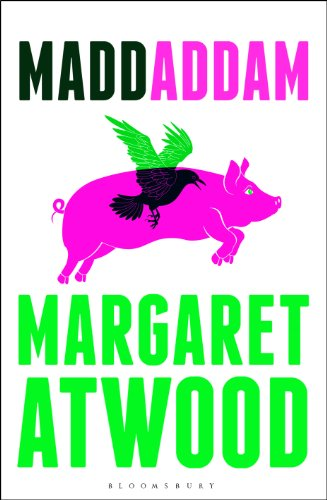
This type of forward thinking, openness to technology, and general flexibility of mind has led her into the realm of speculative fiction. Speculative fiction is a euphemism for science fiction used by people who think that once science fiction gets too smart you have to call it something else. Her justification is that spaceships and aliens cannot actually happen, but that the events she writes about can actually occur with the technology available to us today. She’s so damned good at it that she can call it whatever she wants. Her main claim to fame in the SF world, other than the previously mentioned The Handmaid’s Tale (buy it now) is the recently concluded MaddAddam trilogy, a post-apocalyptic series.


The world of the series is a near-future extrapolation of how things currently are. Corporations have become megaconglomerates that have more power than most nation-states. If you have a job with one of them, you live in a compound, which is like a gated community but with much better security. If you do not have a job with them, you live in the pleeblands, which is a wasteland of crime, poverty, and questionable foodstuffs. One of the most successful restaurants is Secret Burger – where the source of protein in your hamburger is always a surprise! Secret Burger is very popular with many criminal organizations. I’ll let you connect that for yourself.

Atwood’s dystopia arises from bioengineering. We get glimpses of some of the biogenetic horrors of the world in the lead up to the apocalypse. One example is the extremely popular Chickienobs, which are genetically modified chickens. They no longer have neurons, or beaks, or much of anything other than meat. They are giant, bulbous amalgamations of breasts and drumsticks with a tube of nutrients that goes in at one end and a tube of waste that comes out the other. Another questionable transgenic organism is the pigoon – pigs that have been modified to grow replacement organs for humans. These pigs are gigantic because they have to have space to grow extra lungs, livers, hearts, and even cortical tissue. None of these things – the massively impoverished populace, the overpowered corps, or the questionably engineered animals – actually bring about the end of the world. A massive outbreak of an Ebola-like virus basically melts humanity where it stands. The narrative of the first book, Oryx and Crake, starts after the apocalypse and explores the buildup to the biocatastrophe through flashbacks. The book’s post-apocalyptic start means the action opens on the sole survivor of The End: grim, frightened, and alone. The first few paragraphs are my favorite start of any book ever:

Snowman wakes before dawn. He lies unmoving, listening to the tide coming in,

wave after wave sloshing over the various barricades, wish-wash, wish-wash, the rhythm

of heartbeat. He would so like to believe he is still asleep.

On the eastern horizon there’s a greyish haze, lit now with a rosy, deadly glow.

Strange how that colour still seems tender. The offshore towers stand out in dark silhouette

against it, rising improbably out of the pink and pale blue of the lagoon. The shrieks of the

birds that nest out there and the distant ocean grinding against the ersatz reefs of rusted

car parts and jumbled bricks and assorted rubble sound almost like holiday traffic.

Out of habit he looks at his watch – stainless-steel case, burnished aluminum band,

still shiny although it no longer works. He wears it now as his only talisman. A blank face

is what it shows him: zero hour. It causes a jolt of terror to run through him, this absence

of official time. Nobody nowhere knows what time it is.

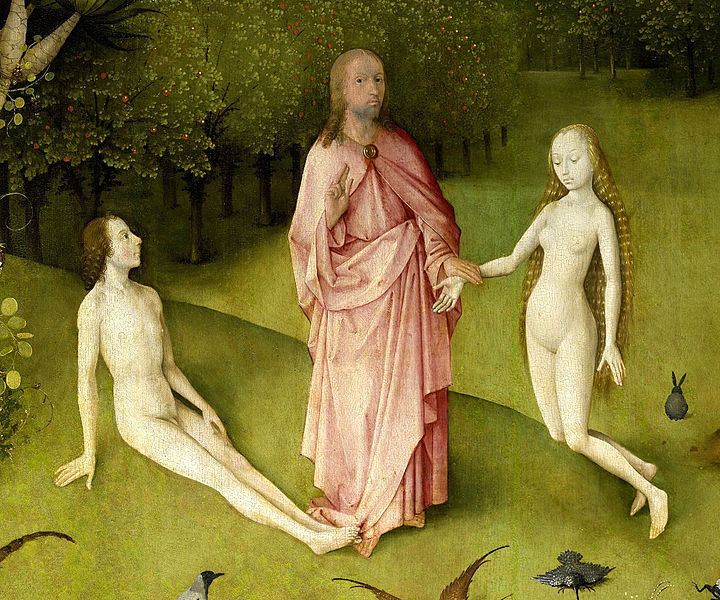
Atwood accomplishes so much in so few paragraphs. The protagonist waking up and wishing he were just not there anymore, the artifacts of a crumbled civilization discarded in the ocean, and most hauntingly, the fact that “[n]obody nowhere knows what time it is,” because as far as Snowman knows, there is nobody nowhere. A horrifying and deft way to signal just how alone he is. Well, not quite alone. One of the characters that we meet through flashbacks, Crake, a brilliant geneticist, has bioengineered a perfect humanity. He started with human stock and made modifications until he ended up with post-humans. To name just a few modifications, the children of Crake are not physiologically predisposed to violence, they can survive by just walking around eating leaves and grass, and their sweat repels insects. They represent a new origin story, a modern Genesis.


Snowman’s main motivation for the book is taking care of these “Crakers,” who survive the outbreak. Caring for this fresh-out-of-the-box humanity, even just surviving himself, is a dubious proposition in the new world. Most obviously, the old methods of food delivery, medical care, and shelter building disappeared with the disappearance of humanity. Most unsettlingly, many of the previously innocuous gene-spliced species now pose a danger to Snowman. The best example of this is the pigoons, which have escaped and are now approaching human-level intelligence. In one scene of the book, they almost trap Snowman raptor-style. How the hell are they this smart? Well…

Life, ah, finds a way.

In the absence of humans to keep them under control and penned in, the pigoons escape their enclosures and the human brain tissue they were growing for transplantation gives them the capacity for thought. This is just one of the endless bioengineered dangers Snowman has to deal with in the world he wakes up in.

Oryx and Crake is a great book, but it is also part of a great trilogy. The trilogy does not progress in time as most do. In the present of the narrative, it inches forward as its flashbacks cycle to fill in more and more of the blanks in the pre-apocalypse world, fleshing out the past more with each book. The two sequels sometimes lose something in treading over similar ground, but Atwood is such a talented worldbuilder that any depth or texture she adds is welcome. Each cycle back builds more and more on the circumstances that led to the end of the world, and explores more and more deeply how a sick civilization dies and how a new civilization continues after an extinction event. I mentioned earlier that Atwood considers her work speculative (not science) fiction because it projects a plausible future based on the technology and society we have now. That plausibility factor makes this trilogy all the more compelling and terrifying. Do yourself a favor and check it out.

Image credits: Wiki, Drinking Cinema (take a guess which one)

Infinite Entertainment: Postmodern Maximalism and the Serial Television of Today

Austin Duck

Pages want to be filled” –Stanley Plumly

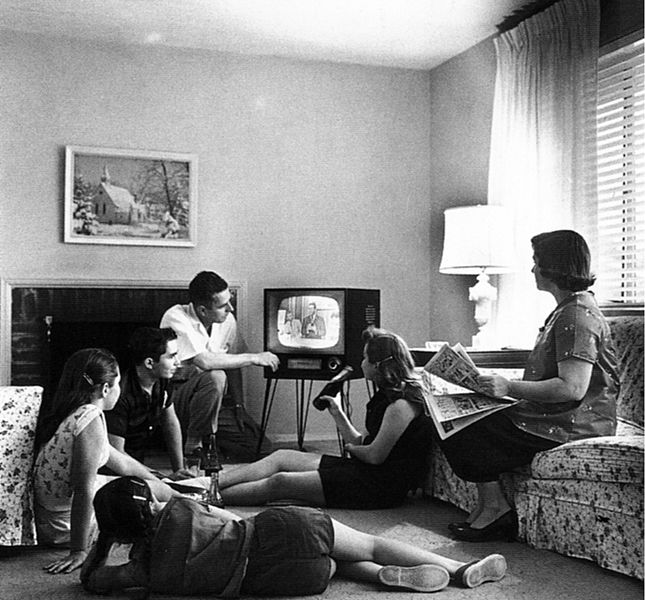
Lately (and by lately I mean over the past five years or so), I’ve become transfixed by two things: postmodern maximalist literature (read: big fucking books written after 1970) and serial television. I would actually go so far as to argue that they produce the same effect across two different mediums, that great serial television and long, long novels employ the same techniques toward the same effect, but in different mediums. And they both completely obsess us. They drive us day after day to watch hours of Netflix, to lug around huge tomes like Infinite Jest or 2666 or The Luminaries or Seiobo There Below on the subway while looking like assholes, to have us struggling and stuttering when we’re asked things like “doesn’t that seem like a waste of time,” because really, no, it doesn’t, but it’s not easy to say why I can justify watching 30 hours of TV in a weekend or spending a month reading a novel, but I know it’s vital. I know it is.

Yes, both require time, considerable time, hours and hours of our lives invested in both plots and characters, but also in the cities of their settings, the minutiae of daily lives, and the large-scale, totalizing cultural patterns that exist in the narrative’s “eye.” (Sorry, I don’t know how to talk about both the scope of a novel and a TV show simultaneously in a non-pretentious way… it is, after all, an ‘eye/I’ that we’re watching all this though… Okay, my head’s out of my ass now). And, ultimately, as simple as it seems, that is what unites these two mediums; they take a lot of time, and give themselves the space to be simultaneously obsessed by individuated lives while archetypalizing (is that a word?) those thousands of individual patterns to make a larger statement about the “eye’s” culture(s).

For too long, people have tried and tried to equate film and novel, and it just doesn’t work. Novels, in general, are too complex. I’ll assume that you all read in high school and acknowledge that Baz Luhrmann’s The Great Gatsby was a colossal pile of crap. Yes, you can hack out the basic plot of a novel for a movie, and yes, you can create period sets and costumes and just really evoke the shit out of culture of the text, but you’ll never get it. And you’ll never get it for this reason: film, like poetry, can rarely (if ever) accommodate more than a handful of characters. Think about it.

Poems can rarely handle more than one character and, while exceptions do exist, primarily revolve around a single “I” speaking the text. Everything included, then, is meant to weigh on the I, to create empathy with the I so that you, the reader, can experience the revelation as the “I.” While I know better than to make totalizing statements about “what poems do,” I’ll say that, majority of the time, in English language poetry from the mid 18th century to now, the object has been to create empathy with a speaking I (“Dead white-guy poetry,” I think they call it). As I’m sure you already know, movies are, by and large, the same. Rarely can a film tell the story of more than one person, unless the other parties involved are directly linked to and involved in the action of the primary character, the hero (think any of the Ocean’s movies, for example). In film, the hero’s narrative controls the landscape of other characters, creating a singular story.

This is where those train-wreck movies like Love Actually and Valentine’s Day fail; they create too many narratives that become, in a way, abstract. They fail because they take on the architecture of a maximalist novel (or of serialized television), but they don’t have the space to become stories; instead, they watch as hypothetical, as constructed; we feel their intentions because we are having the same single-sentence synopsis (“You will find the love you deserve on Valentine’s Day”) reiterated 10-12 times over the course of 100 minutes. Sure, these movies are great cash-grabs, packing the screen-time with more celebrities than I can even pretend to know (I’m more of a TV guy, remember?) but they have always failed and will always because there’s no texture, no space, no way to allow these characters to transition from an undergraduate thesis statement to living, breathing characters.

Postmodern maximalism, on the other hand, is all-space all the time; it comes with a commitment of its own. Its investment lies not in telling a quick, punchy story; you will literally never read a book over 600 pages and think “wow, that went by fast,” and this will never happen for a reason: one cannot sustain that kind of attention or argument (because, honestly, all art is argument) on plot alone. Instead, these works (just like serial television) rely on small details of characters, what they eat for breakfast, what kind of drugs they take, a complete filmography documenting the life’s work of their auteur father, etc. They rely on multiple compelling plots coming to the surface, creating mirrors of one another to make a single, more complex point (the “eye’s culture” as I pretentiously claimed before) without actually saying it aloud. Think about it this way: maximalist literature and serial television work less to “tell a good story” than they do to build a kind of collage, you know the kind, where they use a bunch of little pictures to make a big picture. That’s what this kind of art does; it’s meta.

But so the fuck what, right? What do you care? Postmodern pastiche and cultural meta-analysis belong in one place (and that’s up the asses of bearded white guys with thick plastic glasses, amiright?) Well, yes, you are, in a way. But think about it my way (says the bearded white guy with thick plastic glasses): these serial TV shows are drawing us to our Netflix queues (do they still call them that?) day after day for these binges. I don’t think a day goes by when I don’t hear someone talking about Girls, The Wire, Mad Men, or Breaking Bad and there’s a reason for that. I don’t know what it is, but I think this is my forum for guessing, and I’ll take a shot. We’re fucking tired of the simplicity of narrative transmission. That doesn’t mean the old way is bad (or that postmodernism is better than anything else, because jesus shit, it’s really not); it simply means that, for most of us consuming this stuff, we’ve grown up in a “multicultural, multilingual, linguistically and epistemologically decentered” world. We live in a world of relativism where there is no Truth, no God, only small, subjective truths and gods. And maximalism represents that complexity.

We don’t have a hero because there are no heroes; instead, we have a foreboding structural presence (whether it is economics, bureaucracy, neo-liberal capitalism, or the entertainment) that drives all of our poor stories to play out in one way or another while we, as silly as we are, try being human despite it all.

Image credit: The Guardian

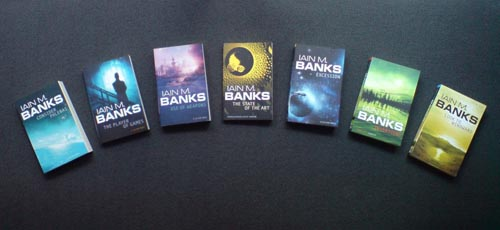
Iain M.Banks: Life After the Star Wars Expanded Universe

Andrew Findlay

Iain Banks died last June. He announced a couple months beforehand that he had been diagnosed with gallbladder cancer and that he didn’t have long to live. He was not mistaken. Iain Banks’ first really popular novel was The Wasp Factory. It was published in 1984, and it was about a kid that kills animals, murders siblings, and is just generally fucked up. It was very well received in the literary community, so much so that Banks made a list of the top fifty British writers of the 20th century. That’s not the Banks I knew. I knew Iain M. Banks. Iain M. Banks wrote science fiction.

The need for many in the literary community to separate science fiction from literary fiction is something I’ve been whinging about for years. The assumption that a novel with spaceships cannot also have well-developed prose, plot, and characterization has kept a lot of people from reading a lot of really good fiction. In general the plots of SF novels are put together a lot more tightly and with a lot more craftsmanship than those of a lot of modern literary fiction novels, the worst of which consist of a lot of standing around, speaking words, and doing nothing. I’m reminded of the Eddie Izzard bit about British cinema (“What is it Sebastian, I’m arranging matches”). You can’t eat popcorn to that.

In any case, Banks started to write science fiction while continuing to write literary fiction, and his publisher decided that, to prevent confusion, Iain Banks would be his Serious Fiction name, and Iain M. Banks would be his science fiction moniker. I have read nothing with Iain Banks on the cover. I have read almost everything with Iain M. Banks on the cover. What exactly does Iain M. Banks write about? He mostly writes about the Culture.

The Culture is present in almost all of Banks’ science fiction books. It is arguably his greatest creation – this galactic society is the cornerstone of his vast fame in the science fiction community. The Culture is an extraordinarily advanced post-scarcity society. It’s an anarchistic civilization, but in a society that has the material means to make anarchy a feasible proposition, “being an anarchist” isn’t really a considered position as much as it is a fact of life. Energy is limitless, technology meets every physical need of every citizen, and there is true equality because, with all of their basic needs more than met, people basically just hang out. Healthcare is at such an advanced stage that Culture citizens are freed from nearly every constraint that comes with being a meatsack. People are biologically immortal unless they decide not to be (which happens often – people get sick of breathing after a millennium of it). Most are implanted with drug glands that generate any of many combinations of drugs – uppers to stay awake, downers to relax, mind-enhancing cocktails for high-stress situations, etc – without any type of hangover effect or physiological drawback.

All these biological hacks are great, but what highly advanced spacefaring society is really worthy of the name without really cool spaceships? Culture ships are more than just transport – they also house the entities that make the Culture possible – the (capital M) Minds. A Mind is an AI in the post-bootstrap stage. Skynet became sentient and decimated humanity, the Minds became sentient and were a whole lot nicer than Skynet. They like humanity, and they work with humanity to help improve everyone’s lot. Each ship houses a Mind in a relationship in which the ship is the Mind – what your body is to your brain, the ship is to the Mind. Each Mind has a distinct personality, and its name reflects an important aspect of that personality. These names range from fairly silly or esoteric for standard vehicles (What is The Answer and Why?, Experiencing a Significant Gravitas Shortfall) to vaguely threatening for warships (the firmly tongue-in-cheek Frank Exchange of Views, the terrifyingly ominous You’ll Clean That Up Before You Leave).

Wait, why does a perfect utopian society need warships? Well, there are other people in the universe, and the general attitude of Culture Minds is that you can’t really be free if you can’t also blow the hell out of anyone who might threaten that freedom. In order to ensure their own growth and survival, the Culture created a covert branch called Special Circumstances. Life is unadulterated freedom and happiness if you actually live in the Culture, but that would be boring as hell to explore (Sebastian, Matches). SC is where the mayhem is, and as a result, it attracts an element that most members of the Culture find strange or even distasteful. Impatient, violent, impulsive, both ship Minds and people. This is where you see fewer ships with names like Not Invented Here and What Are The Civilian Applications? and more ships with names like Hand Me The Gun and Ask Me Again or Outstanding Contribution to the Historical Process. Banks almost always sets the Culture up against a less advanced civilization. The end result of the massive technological gap between the two societies in conflict is one of the great pleasures of the series, where the protagonist usually outmatches their enemy to such a ridiculous extent that it creates a strange feeling of glee, like when some asshole with a switchblade tries to attack Batman in a dark alley. He doesn’t have a chance, that’s not the point, but it’s so fun to watch Batman give him what’s coming to him. It is fiction candy to watch dumb, violent thugs get obliterated by the frighteningly intelligent, violent psychopaths in Special Circumstances.

But wait wait wait – how is this type of meddling and big-stick-carrying not imperialism, pure and simple? It seems diametrically opposed to the love, peace, and understanding vibe of the Culture as a whole. This is addressed somewhat in the books, but mostly Banks explains it away with the “those decisions are made by unimaginably advanced and hyperintelligent AIs, so just Trust Them” defense. Morally, it’s not really an acceptable position, but this is where suspension of disbelief comes in. It’s not really harder to accept that Minds really do know best when it comes to waging just war than it is to accept that superhuman intelligence manifests and then decides to be humanity’s best buddy.

The series is amazing, but some of the individual books suffer from plot momentum, wherein the major issues of a 627-page book barrel into the last twenty pages at full steam, entirely unresolved. Those twenty pages are absurdly entertaining, but the overall fabric of the plot frays a little if the ending is this rushed. Each separate book is not the point though. The world Banks builds is the greater gem by far. You have to take each book as a part of the whole, and the whole is a massively free, open, and just society where humanity (or a single humanoid society at least) is untrammeled by hierarchy, taboo, or power.

The belief that such a society could exist under any circumstances is an act of optimism. The future of humanity on Earth will branch one of two ways – either we’ll utterly destroy ourselves with any one of hundreds of man-made catastrophes or hang in there long enough for our technology to propel us to what we poor 21st-century slobs would consider Garden of Eden status. I choose the act of optimism. It’s important to be able to look through a window at a place that is not insane, in this time when people are still killing each other for worshiping a different man in the sky, when the basic climatological makeup of our world is about to change drastically and irreversibly, and when twenty percent of children in the most obscenely wealthy nation on this rock have trouble getting enough food to eat. Flirting with and making entertainment out of our imminent self-destruction is a very popular pastime – just look at The Road, Fallout 3, The Walking Dead, 1984, etc. This is all well and good, and it’s important to process just how fucked we all might be, but it’s equally important to hold on to a little optimism, to believe in what could be, and to hope that, against all odds, our dumb-as-hell, shoot-yourself-in-the-foot little species can make it somewhere nice. I recommend starting your journey with Player of Games.

Image credits: Wiki, NASA, space.com