review

Life After the Star Wars Expanded Universe: The Short Stories of George Saunders

Author George Saunders

Andrew Findlay

In Life After the Star Wars Expanded Universe, we take a look at science fiction and fantasy, why they’re great, and what they say about where our species has been and where it’s going.

George Saunders is one of the greatest short story writers alive today. He is currently positioned to become a household name (well, in houses lined with books), but he has been killing it for nearly two decades. The New York Times hailed his latest short story collection, The Tenth of December, as the “best book you’ll read this year.” Saunders came to the art by a strange path. He graduated from college in 1981 with a B.S. in geophysical engineering and spent some time prospecting for an oil company in Indonesia. He then found a job as a technical writer for an environmental engineering company. By the late 90s, he’d published CivilWarLand in Bad Decline and had gotten a professorship at Syracuse. His unorthodox literary training leads to a fresh and interesting style. Saunders himself describes the phenomenon as “just me working inefficiently, with flawed tools, in a mode I don’t have sufficient background to really understand. Like if you put a welder to designing dresses.”

A welder-designed dress would at least be an interesting and new thing, and that’s what Saunders’ stories are. The humor, language usage, and emotional impact of his stories are what makes them powerful. Saunders employs dark humor and tragicomedy to great effect. This feature of his stories has drawn comparisons between him and Kurt Vonnegut, and like Kurt Vonnegut, some of his humor is laugh-out-loud entertaining, but it is mostly the humor that comes from the sudden revelation of a deep truth, humor that does not manifest in laughter but in a swift body-blow to something a lot deeper in you than simple amusement. It is absurd humor, and it mostly arises from horrifying situations and people living through them as if they were more or less normal. The best example of this humor comes from the first sentence of “The 400-Pound CEO”

At noon another load of raccoons comes in and Claude takes them out back of the office and executes them with a tire iron.

Murdering animals is not ha-ha funny, but the shock of that situation, the world of the story in which a company exists that surreptitiously murders raccoons with automotive maintenance implements, and the realization that, if it were lucrative, there would probably be a company in real life that did exactly that, combine to create a much more profound, more affecting, and less flashy humor than the standard fare.

800px-Curious_Raccoon

You would not believe the profit margin on these things

Another example, from “Tenth of December,” is the interior monologue of a not-too-bright kid who is remembering his runaway father:

Dad had once said, Trust your mind, Rob. If it smells like shit but has writing across it that says Happy Birthday and a candle stuck down in it, what is it?

Is there icing on it? he’d said.

Dad had done that thing of squinting the eyes when an answer was not quite there yet.

Sure, basic humor comes from how stupid the kid is. Stupidity is a very deep well for amusement, but couched and laced throughout that more mundane entertainment is deep emotional involvement. The dad is gone, the kid is remembering his advice, the kid has to deal with being stupid, and the kid is remembering his dad “squinting his eyes” as he most likely thinks about how stupid his son is, which dealing with fatherly disappointment is par for the course vis-a-vis life, but this boy’s father actually kicked standard disappointment up to abandonment.

Award_misc_birthday_cake

Delicious.

The language Saunders favors tends to be simple and immediate, as most of his narrators spend a lot of time relaying the stream-of-consciousness of his main characters, and very few people think with showboating words while navigating the trenches of actual life. The informal style and immediacy add punch to the emotional impact, so the reader experiences what the character experiences with very little processing lag or separation. More so than simple language, the situations and descriptions of the characters creates a massive emotional impact. Saunders does not choose as his subject big heroes and villains. He explores not the grandness of exalted victory or crushing defeat, but the petty brokenness of everyday life and the small consolations wrested from it, which is what most people actually deal with. These small consolations are affecting because they are all we can manage, but also, if we shift our perspective, all we need.

It just so happens that a lot of his stories are science fiction. I got a chance to ask him about his sci-fi chops, and he responded that he wasn’t a superfan (as in, he has not seen every episode of Star Trek: The Next Generation), but that he really enjoyed writing in that mode and that it helped break you out of lame writing and bad habits, which, yes, a lot of self-consciously literary books are full of lame writing and bad habits (I really hated the 100 pages I read of that book). Saunders’ writing style is mostly absurd and surrealistic. Many of his stories are full of ghosts, ridiculous people, and nonsensical events. In a decent number of these stories, the enhanced-reality style turns to science fiction. Why am I reviewing this author as a science fiction author if he just dips his beak in every few stories? He is quite simply one of the best practitioners of the form. One of the methods by which SF gains it power is cognitive estrangement, wherein the author presents a reality that is clearly different from the empirical environment of both the author and the reader, but is a plausible extension of it. In this dynamic, the clash between the world of the story and the real world brings heightened clarity to the readers’ perception how things actually are. Saunders’ SF is great at this. It is only a hop, a skip, and a jump into the future, and only extrapolates the technologies and societal norms that form the most rampant pathologies at play in U.S. culture today, namely capitalism and fear. One story takes the form of a sales representative from KidLuv trying to dissuade a dissatisfied mother from returning her I CAN SPEAK!™, which is a molded mask you fit over your infant’s face that, through an implanted speaker, gives the impression that your child can talk. This is of course at the cost of the comfort of the infant. Another chronicles the penalties a man incurs by taking off his shoes to walk more comfortably in NYC, incidentally preventing the advertising sensors in the sidewalks from reading the identification tags in his shoes and projecting the most relevant ads in front of him as he walks.

800px-1_times_square_night_2013

Completely implausible storyline.

Another is about a new type of incarceration, where prisoners can opt to go to research stations, receive a MobiPak™ (an implanted drug delivery system) and participate in dangerous pharmaceutical research. The current ascendancy of consumer culture and capitalism make these possible futures all too plausible, and by forcing his readers to consider these futures, he highlights the dehumanizing and unsustainable nature of the present system. Above all, he hammers home the perennial truth, formulated by his forebear, that there’s only one rule: “God damn it, you’ve got to be kind.”

Read these stories. They hit hard, and they hit deep. Saunders has said that a novel is just a story that hasn’t yet figured out to be brief, and the power behind the brevity of his stories gives a lot of support to that statement. More than anything else I have been reading lately, they have an active effect on what I think and who I am. Read these to be changed, to be awoken. It sounds cliché as all hell to say that, but just because something is cliché does not mean it does not apply, and one of Saunders’ main goals in writing is to break us out of habitual thought patterns and to crack us open to what is really going on – in the world, with other people, within ourselves. If you’re still not convinced, my last shot is one of his quotations about literature, which is one of the most accurate I’ve ever read:

Fiction is a kind of compassion-generating machine that saves us from sloth. Is life kind or cruel? Yes, Literature answers. Are people good or bad? You bet, says Literature. But unlike other systems of knowing, Literature declines to eradicate one truth in favor of another.

Andrew Findlay has strong opinions about things (mostly literature) and will share them with you loudly and confidently. You can email him at afindlay.recess@gmail.com.

Image: The New York Times

Symbols and Sociopaths: Hannibal Season 2, Episode 8

hannibal, episode 8

Jonathan May

(As always, massive spoiler alert)

This episode was unremarkable in a number of ways that I do not care to elucidate. We have the character of Margot thrown in, an unnecessary and late-coming red herring if there ever was one. Like most of the women in this show, she merely acts as a soundboard to the male characters, in this case Hannibal. As if to beat a dead horse (ha ha), we also have gratuitous (and not in terms of skin shown) scenes between Hannibal and Dr. Bloom, who has become yet another glass fawn in Lecter’s menagerie.

The dance between Will and Hannibal starts off slow enough in the episode and remains at an agonizingly slow tempo throughout; we learn no new information about their relationship. We head no further down the road of resolution, as we soon should given there are but five episodes left. We still, as I dutifully remind, need to catch up to the frame that opened the season between Jack and Hannibal.

The whole business with Will attempting to kill the social worker sociopath on behalf of the brain-damaged man was abysmal; Hannibal’s explanation of the event concurrent to its unfolding was equally banal. Unless we’re to learn something new through all of this madness, I don’t see the point. The image of the live bird inside the dead woman inside the dead horse was disarming, but just that.

We need to get back to the solid storyline: Hannibal’s eventual discovery and the chase. Throwing in characters at the last minute doesn’t bode well for the arc of the storyline. Let’s hope the story gods bring us back around this Friday.

Jonathan May watches too much television, but he’s just playing catch-up from a childhood spent in Zimbabwe. You can read his poetry at owenmay.com, follow him on Twitter at @jonowenmay, or email him at owen.may@gmail.com.

Hannibal airs Friday nights on NBC. You can read our pieces about previous episodes here.

Image: NBC

Johnny-Come-Lately: America’s Next Top Model, Cycles 9-14

tyra_banks

Jonathan May

Jonathan May grew up in Zimbabwe as a child of missionaries and missed a lot of “important” American things along the way. He chronicles his journey to catch up in a feature called “Johnny-Come-Lately.”

Over the past three weekends, I’ve watched cycles 9-14 of the CW’s America’s Next Top Model, and by God if I haven’t tried to smile with my eyes (“smize”) in the mirror at least a few times during the process. I’ve practiced using my space and being fierce and throwing shade with the very best, Ms. Tyra Banks, in my head. This show would quite literally be nothing without her; she’s never afraid to be goofy and fierce and smoldering, sometimes all in the same five minutes. But that, as she points out, is the essence of being a supermodel: being able to be memorable, yet a chameleon. She emphasizes the three C’s of modeling: catalogue, commercial, and couture. And the girls worship her. Who wouldn’t, with that flawless skin and that bravado?

The show focuses on different types of beauty (plus-size, petite, alien, masculine, strong bone structure) through the different girls picked to enter the competition; every cycle is usually “fair” in its makeup, although that’s a hard task when you’re literally trying to find the most beautiful girl out there. Luckily Tyra and the judges emphasize personality and inner beauty throughout; the girls have to interview and make conversation. They must participate in social graces, sometimes in totally different countries for those girls lucky enough to make it that far. This is very attractive as a quality in the show; rarely does a complete bitch make it to the top two. While being fair to the reality format, the show consistently delivers the message that in order to win in the fashion industry, people need to like you; ergo, don’t be a bitch.

So, we have 13-14 girls who learn about modeling and walking and posing, who get makeovers (there are inevitable tears), who are winnowed down week by week for their participation in challenges, overall attitude and appearance, and weekly photograph challenges. During the course of this madness, the viewer becomes endearingly acquainted with Jay Manuel (creative director of photo shoots) and “Ms. J” Alexander, a fierce modeling coach who works it with the best of the ladies; these two help the girls along to the best of their abilities, but ultimately the girls must want it for themselves the most.

Why do I watch so obsessively? First of all, the judges and coaches show in their own behavior that having a genuine personality is what makes a real top model; girls of all looks and sizes have won the coveted top prize, but they all share the same warmness of a real girl shining through the model. Second, the transformations of the girls are remarkable, both mental and physical; by the end, the girls look and act totally foreign to themselves just weeks prior. The house drama among that many girls of course has its dramatic appeal, but for me, the winners usually aren’t the instigators or the participants in the whole she-said, she-said. Third, girls can literally come from nothing and become something; even the girls who don’t win often receive contracts after appearing on the show. Who doesn’t love a good American Dream story, complete with pretty women? In the end, I like a show that emphasizes the positive aspects of one’s emotional character. I don’t think the show promotes a typical standard of beauty, but rather many types of beauty.

My advice if you want to audition: Know your designers, photographers, and top models. Practice in front of a mirror. Take a look at your wardrobe to see if it’s fresh. And be fierce.

Jonathan May watches too much television, but he’s just playing catch-up from a childhood spent in Zimbabwe. You can read his poetry at owenmay.com, follow him on Twitter at @jonowenmay, or email him at owen.may@gmail.com

Bad Last Chapters or How Television is the New Terrible Novel

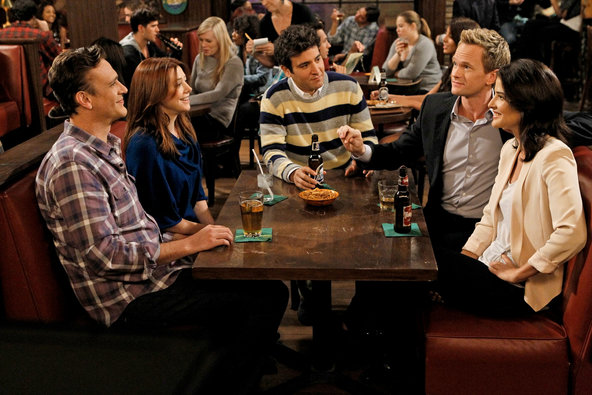
How I Met Your Mother Finale

 Stephanie Feinstein

Note: Serious spoilers for a bunch of shows, notably How I Met Your Mother, Roseanne, The Sopranos, True Detective, and Breaking Bad.

Devoting seven years to something is a serious commitment. To Hollywood, seven years of marriage is the equivalence of 25 years to mere mortals in lesser zip codes. Seven years of a vice may easily be called an addiction; seven years of school sees a full turn of your DNA. Seven years is literally the length of time one needs to become an entirely new person.

Seven years is too long to hold onto the same story, same ending, same turns. Sure, many an MFA could argue to me that grand books arose out of more than seven years of imaginings, rewrites, and edits, but I shall counter argue that those novels surely found new pathways by the end. An author grows and evolves with his or her work, expanding into the sunshine of new thought and wisdom.

I have a dear friend in the heady throes of editing her first novel for publication, and having known her for more than seven years, she has had to rewrite much as her knowledge and self expanded.

Do not dare to tell me that television writers do not suffer so.

How I Met Your Mother ran for nine seasons, I realize, but it was in its second when I began watching and when the show filmed its ending. According to Alan Sepinwall of HitFix.com, it was also the ending used in the initial sitcom pitch to CBS. It was always supposed to be Robin.

In Austin Duck’s article concerning the teleology of HIMYM, he asserts that the Robin-not-mother ending completes the circular nature of the show, a common feature of sitcom writing. While I will agree that the show, like many others, is highly dependent on circuitous routes within its plot, as viewer and fan, I disagree with the balance of the ending on several accounts. For a show so devoted to wrapping up loose ends, the final episode created more questions. Examples of the queries I have posed to myself and other fans: Who was 31? Didn’t Ted make Robin get rid of the dogs last time? What killed the mother? How long did that illness last? How often does Aunt Robin come over for dinner? So, is Lily a stay-at-home mom now? Does she still work for the Captain? Does Barney have full custody? Did he marry the mother? But I digress from Robin and Ted.

In “Last Forever: How They Conned Us All,” Sepinwall points out that the relationship of Robin and Ted devolves over the nine-season run, turning toxic and incomplete, thus forcing them together at the end leaves the viewer dissatisfied, as we have been told over and over again all the reasons the relationship will not work. I agree, and I use this as my basis for why endings in television are the new terrible novel.

I love terrible novels. Much like Jonathan May loves to hate-watch television, I truly enjoy hate-reading poorly written or executed stories. That may sound harsh, as I have yet to publish anything, much less anything excellent or terrible. But if I can’t be pretentious on a website, then why the hell do I have a degree in literature?

Bad writing can be bad for many reasons: poor editing, bad grammar, sloppy story lines, lost symbolism… the list is really endless. A terrible novel will need more than just bad writing technicalities… it needs to create holes that it cannot fill, force relationships that do not fit, and waste opportunities for symbolism and allusion. HIMYM suffers from a stubbornness to characterization in forcing its ending. The writers cursed themselves from the beginning by deciding exactly how the story would end. A novelist may not be very successful if they begin an epic novel knowing exactly how the story will end, and refusing to ever back down from the singular scenario. Unless one can throw in some seriously killer Edith Wharton twists (Oh, you want to stay Mattie to stay, Ethan? Oh, really? How badly do you want her to stay…?), the completed work will be stilted and forced. If we consider HIMYM as a novel constructed over seven years, the characters have grown in unexpected ways. Lily’s role of mother not only evolves through action, but through reaction, as she steps away from early childhood education into a role of art curator. On screen, the character evolves even further, as Alyson Hannigan has gone through more than one pregnancy in her real life, even when her character was still childless. The written relationship of Robin and Ted blossomed and died over multiple seasons, with varying stages of “this is the last time; I’m really letting go.” In the final season, final episodes, we as viewers witness Ted giving up the role of finder, of hero, of conquering knight. When faced with a vulnerable, scared bride, he is chivalrous, wise, telling her that she is already with the right man. Smiling, Ted explains that he simply must find the right woman for himself, confirming that it is not Robin. For a sitcom, this moment was bittersweet, tainting the usual “happily ever after” endings of today, but I believe that modern audiences want a storyline that can be real. The idea of Ted abandoning the obsessive thought of Robin is comforting to audiences, assuring us that new chances at happiness are possible when we open ourselves to possibility. Ted’s meeting and short relationship with Tracy was sweet, honest, and felt very real. It was also cut awkwardly short to a “And then she got sick, and that was six years ago that we lost her.” “Dad, you should date Aunt Robin!” (Okay, so that is not how the official dialogue went down, but close enough.)

So, the ending of How I Met Your Mother was stilted, forced, and a terrible novel of television. Great until the last chapter, which weirdly dragged, with a cop-out of an ending.

But I’m not done there. How I Met Your Mother is not alone in its novel terribleness. Other terrible novels of television include Roseanne and the “it’s all a damn dream” ending, The Sopranos meets Tristram Shandy‘s inked out page of an ending, and The Wire.

Shut up, all of you. I loved The Wire, and I will argue all damn day that it is far more Shakespearean than Breaking Bad could ever hope to be. Tragic McNulty, the Benvolio-esque Bunk, the shut-the-hell-up-this-is-new-literature showdown between Omar and Brother Mouzone (Michael K. Williams and Michael Potts, respectively)… I love that shit. But the final act of that beautiful play fell flat for me, and left a depressingly Irish-whiskey flavored tang in my throat.

And Breaking Bad! I watched the full run up to the final season in a single summer, with the final season happening in real time. And, I found it less than lackluster. Perhaps it was weak characters, perhaps it was a whole handful of misogynistic men and weak women. But most of all, I really despised the ending. Our final scene of Walter, stripped of his glory as he stumbles among his scientific vats, now worth nothing, tapping the dial fronts of the equipment. Then he falls, a blood stain left across the shiny aluminum surface. Blood loss? Chemical Poisoning? The cancer finally doing him in? We have no idea. (Note: There are not words to express how much I wanted a massive meth explosion in those final moments. I am from the South, and everyone knows moonshine stills and meth labs eventually explode). But instead, we get the soft wailing of an inept police department, with Walter already too far gone to atone for his sins. And what the hell with Jesse just driving into the sunset, just in time to star in Need For Speed? Terrible. The novel equivalent of “To Be Continued” with absolutely no plans for a sequel. Do I have greater hopes for Better Call Saul? Not really. Will I watch it? Of course… that’s irrelevant.

Now, my next television novel that has failed me is really less novel and more first short story in a series. Why are anthologies the new rage? Are we bored with following evolving characters over a span of years, aging and acquiring wisdom with them? Are actors just not willing to commit the time and energy into evolving these characters? I don’t know, but, oh, how I wish I did.

True Detective season one filled a void in my cultural soul that I did not realize was empty. Well, the first seven-and-a-half episodes (There are only eight total.). Being a Southern lady, I devoured the swampy nature, the Louisiana drawls and old-French tones. In college, I randomly attended a lecture series about rural Louisiana Mardi Gras and Easter traditions, strange rituals with masks and pagan origins. I went to find new inspiration for poetry, but the images of those presentations have stuck with me for years. True Detective‘s use of the arcanely ritualistic culture of the backwoods bayou delighted me, and I waited for deep significance of these images to emerge within the show.

Michael Hughes published a great article on io9.com shortly after the first few episodes aired, illuminating a new set of allusions form the writers. In “The One Literary Reference You Must Know to Appreciate True Detective, Hughes cites Robert Chambers’ The King in Yellow, a selection of short stories published in the late Victorian era, as being quoted by central characters within the episodes, if not contributing to the larger story. I quickly acquired the text from Gutenberg Press and I devoured the stories, exclaiming every few pages as a new revelation or theory was uncovered to me. (Mask of deception! Women in stone! Repairer of reputations!) I watched the rest of the season waiting for Carcosa to come to light, a Yellow King to be crowned, the wave of insanity to mask us all in truth.

The final episode of True Detective season one was thrilling but flat. A “to be continued” vibe was given, but next season has already been announced to have a new cast, location, and story line. We will no longer be traipsing the back bayous in search of pederasts and twig sculptures. I will not be able to find out: How those scars happened? Who else was involved? How did the old black maid know about Carcosa? Why the spiral? Why did Hart’s daughters have a sexual violence storyline but not? Why did the killer have a British accent for only, like, ¼ of his scenes? Why was his dad tied up? I may never know.

I hope we will never reach a point as society where television sitcoms and dramas replace great literature. In fact, I think the two can greatly benefit from one another. What if we, as intelligent minds of the internet, band together to rewrite television history? FAN FICTION. Granted, fan fiction has been around as long as fans have found disappointment with story lines. But I am calling for a new age of fan-fueled fiction, where the endings are reinvented to be stronger, more beautiful.

You see, my aforementioned novelist friend had a terrible quandary after the How I Met Your Mother finale aired. Her sister, a devoted fan, had missed the initial airing, but my novelist friend was fretting over hoer own disappointment. “I want her to see it, but not the last five minutes,” she lamented. “I want her to turn off the television with five minutes remaining, and then read a chapter I’ve written instead.”

She ultimately did not, letting the writers of the show have their ending.

BUT WHAT IF…

…fan fiction reached a new level. What if those of us with the degrees, sources, and talent band together to override what society has deemed as “appropriate endings?” Because I am dissatisfied with television, even when it leads me on for so very long.

When True Detective fell short of my literary expectations, I sought out fans. Now, I don’t know if I am just unable to locate the hidden fan fiction files of the internet, or if there just isn’t anything out there, but the results were very limited. Yet, the theories presented through the five stories I found were intriguing, provocative, and creative. Still not what I wanted as the ending, but it gave me something.

So, a call to all those who fan fictionalize their television serials, write me new endings! Breaking Bad, The Wire, Roseanne, True Detective, How I Met Your Mother… send it all to me! I will read each personally, and with any luck, the best to my mind will be presented on this site.

You can reach Stephanie Feinstein at stephanie.feinstein@gmail.com.

Image: New York Times

Should You See It: Captain America: The Winter Soldier

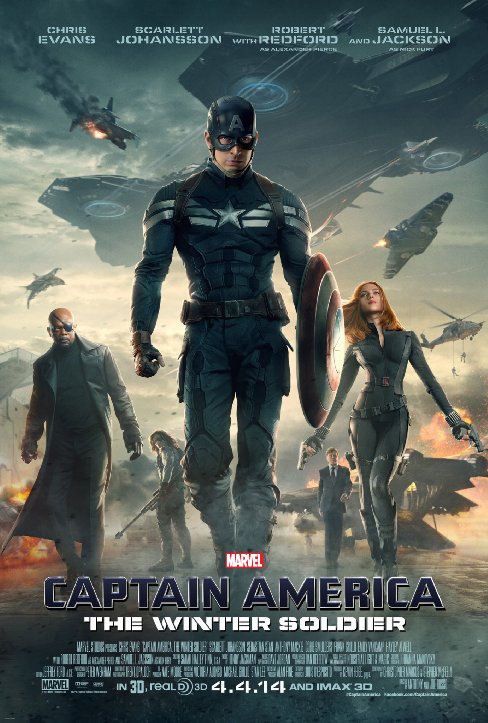
MV5BMjM2NzUzNzQwNl5BMl5BanBnXkFtZTgwMDQ1MDkwMTE@._V1__SX1537_SY723_

Andrew Findlay

In our rarely-running kinda-series Should You See It? we talk about movies that just came out. You can figure out the rest of the premise from the title of the series. That’s right: We talk recipes. Should you see Captain America: The Winter Soldier?

The movie opens with Captain (America) Steve Rogers jogging laps on the National Mall. His “jogging,” as a superhuman recipient of Dr. Abraham Erskine’s super-soldier serum, amounts to a full sprint for an Olympic athlete. He laps another jogger, a young, fit man, so many times that the other guy gets pissed off and tries to sprint to catch him, which progresses to two army veterans talking about war, which is ended by S.H.I.E.L.D. picking Cap up in a fast car. Solid intro.

The intro of Steve Rogers jogging says something important about the character: He actually needs to exercise and train to maintain his strength. He’s strong and great, but still pretty normal. I was amazed when Marvel took Captain America, clearly just the worst superhero ever when I was nine, and made him into one of the most appealing franchises in movies today. Nine-year-old me thought he was stupid because basically he is just in really good shape with a weird shield. Superman is invincible and Batman has an endless supply of cool toys, so what’s in it for a Steve Rogers fan? The appeal of Captain America, aside from the movies doing a great job focusing on the human side of him and helping audiences empathize with his life, is that he is the absolute, be-all end-all specimen of human perfection, but his superpowers end there. He’s the ultimate athlete, the ultimate patriot, and the ultimate gentleman, but he is still fundamentally human, unlike Superman, who has to shave with laser vision.

This is either the dumbest or the greatest thing I’ve ever seen. 

The fast car takes him to a jet which takes him to the location of the first action set piece. These set pieces are the definite high points of the movie. They are most of what the movie is, and for each and every one, I was literally leaning forward thinking, as much as I thought anything, “yes yes yes yes yes” on repeat until Captain America stopped slamming his shield into people’s faces. The combat is more complicated and varied than that, though. One scene in particular that stands out is an amazing car chase through Northwest D.C. with Nick Fury at the helm of an SUV that’s so well-equipped it’s really more of a spaceship. Samuel L. Jackson truly lives up to his laconic badass persona in this role, participating in one of the most exciting parts in a movie filled with super-soldiers. Marvel has been doing crowd-pleasing action for years now, and they have become exceedingly efficient at it.

Trinity_in_screens

Pictured: Stan Lee

The plot is believable and full of suspense. It never drags or makes you roll your eyes, which is admirable when a plot is serving mostly as spackle between action scenes. The twist (SPOILER – there’s a twist) is pretty horrifying and plausible when it happens, and gives Captain America plenty of opportunity for research on the relative durability of shields versus faces (hint: in 9 out of 10 studies, the shield demonstrated higher levels of durability). There are certain things that, if you think really hard about them, seem to not quite fit together right for plausibility or continuity, but if you’re thinking that hard about it, you’re doing it wrong, anyway. They’re seriously minor things that I hate myself for noticing, and you won’t think about them. This is not the awful era of the horrendous post-Keaton late-90s Batman movie. This is not Ben Affleck in Daredevil. Superhero movies are A Thing now, and any plot holes that exist aren’t big enough to fall through unless you dig them out yourself.

Should you see it? 

You should definitely see this movie. It is one of the best vehicles for action scenes this year, and it achieves what a lot of really impressive action movies don’t: Those over-the-top scenes are actually tied together really well with a strong story. Yes, the exploding and shooting and hitting are definitely the focus of the movie, but their weight doesn’t shatter the rest of the film into kindling.

Andrew Findlay has strong opinions about things (mostly literature) and will share them with you loudly and confidently. You can email him at afindlay.recess@gmail.com.

Image: IMDB

Symbols and Sociopaths: Hannibal Season 2, Episode 7

hannibal, episode 7

Jonathan May

(As always, massive spoiler alert)

Every 15 minutes or so, I let out an audible groan while watching this latest episode. Miriam Lass returns after being found by Jack, only to kill Dr. Chilton out of an impulse she can’t control. Oh Miriam, made into just a simple plot device. Oh Dr. Chilton, made into just a simple plot device. So now we have a freed Will, a Hannibal no longer under suspicion, and a bewildered audience.

We still haven’t caught up to the frame with which the season opened, so we know the showdown between Hannibal and Jack is imminent. What will bring them together in this way? What will finally open Jack’s eyes? He jumped on the Dr. Chilton Is Guilty Train pretty hard, but when he finally catches the poor bastard in the snow, we see immediately that Jack knows Chilton is innocent. Miriam’s impulsive killing of Chilton is obviously the result of psychological transference on Lecter’s part; by using recordings of Chilton’s voice and light-disruption therapy, he was able to train Miriam into believing that Chilton, not Hannibal, was the Chesapeake Ripper and her captor. Hopefully Will can bring Jack around to this, forcing his move against Hannibal.

Some may misinterpret the depiction of the Wound Man in this episode as an obvious symbol of superiority, drawn from medieval medical books and rendered lovingly by Hannibal on graphite in his office. However, the Wound Man operates more as a bastardization here of the Hanged Man, a pittura infamante that quite literally symbolizes resurrection. Hannibal sees this opportunity through Chilton as a way to resurrect as a new creature and move on; though I doubt he’ll give up the grisly trade, he sees this as an opportunity to escape. Will’s appearance at the end, though, signals that we are not finished with this reddish business by a long shot. Will would like to resume his therapy, and we shall see where it takes him.

Jonathan May watches too much television, but he’s just playing catch-up from a childhood spent in Zimbabwe. You can read his poetry at owenmay.com, follow him on Twitter at @jonowenmay, or email him at owen.may@gmail.com.

Hannibal airs Friday nights on NBC. You can read our pieces about previous episodes here.

Opinion: George R. R. Martin Is Not Your “Bitch,” He’s Your Dealer

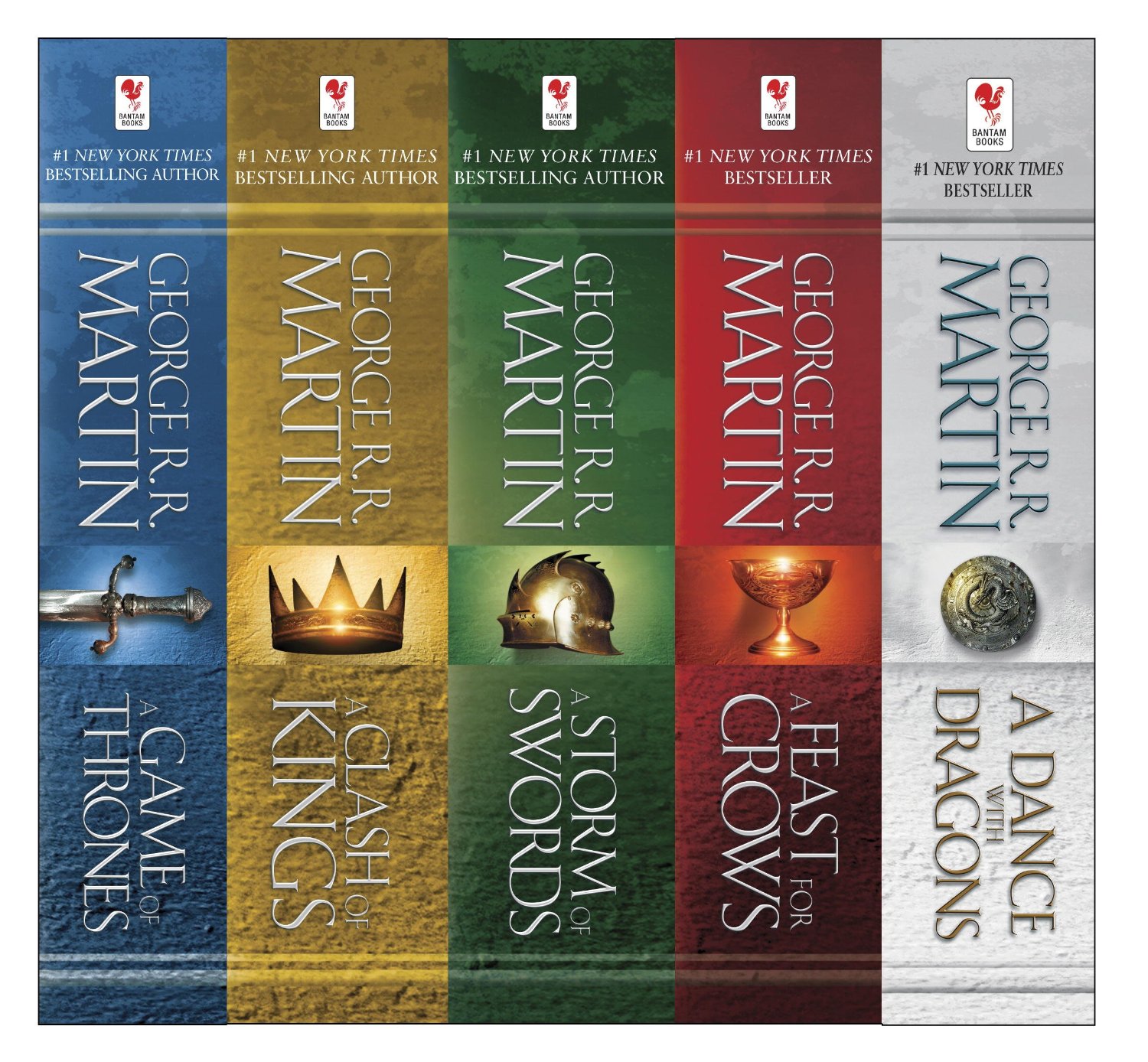
Game of Thrones

Andrew Findlay

Disclaimer: There are no direct spoilers in the review. You might be able to infer something, but that’s it. Also, the most recent book came out three years ago, so if you don’t want to be spoiled by anything ever again, go read that.

A Song of Ice and Fire is an amazing series. The gritty realism in a fantasy locale, the compelling characters, the whip-crack plotting and suspense – all of these traits combine to forge the cultural juggernaut that is ASOIAF. I love these books. I came a little bit late to the party. I read them around December 2010, 14 years after the start of the series, when the first four books had already been published. I read those four books in one month. The paperback versions for tally up to 3,844 pages, meaning that for the month of December, I read an average of 128 pages a day. That’s how good this series is. For an entire month, If I was not working or sleeping, I was what-the-fuck-noooo-i-loved-that-character-ing my way across Westeros. In the same time and at that rate, I could have read the Lord of the Rings three times, the entire Harry Potter series, or thirteen normal-sized (300 pages, let’s say) books. That is dedication. That is a clear sign of an enjoyable series. The problem is that George R. R. Martin has fans that read 128 pages a day, but he writes .76 pages a day.

The addictiveness and scarcity of the product creates a rabid fanbase composed of people who make strange decisions about these books. For example, a day after the release of A Dance With Dragons (book five, July 2011), I had to drive 15 hours from D.C. to Memphis with my fiancee for the purpose of marriage. She was behind the wheel the whole way, and I read that book the entire 15 hours. Relevant factoid: Reading in the car makes me violently carsick. I ignored nausea for 15 hours to get through as much of the book as I could. When I got home, in a city surrounded by family and friends I see only rarely, I still read at least four hours a day. Luckily, I finished the book before my marriage.

Also luckily, no one played this at my wedding.

Since then, I have been trying not to think about the series at all, because that creates visceral longing for resolution to all the cliffhangers on par with what I imagine someone in the grip of a Schedule I drug experiences. GRRM has created a legion of addicts. Addicts do not respond well when they are cut off from their substance of choice, and in the past three years, there has not been another fix. This has famously led to fans expressing dismay that GRRM watches football on Sundays in the fall, that he works on other book projects, and that he basically does anything but sit in a box with one bald light swinging over his head and a typewriter in front of him. The most crass concern expressed is that GRRM, who is 65, will die before finishing the series. The first few are strange, because Martin has the right to do whatever he pleases. The last one is heartless, as those fans are placing the completion of a series they love over the life of a human being.

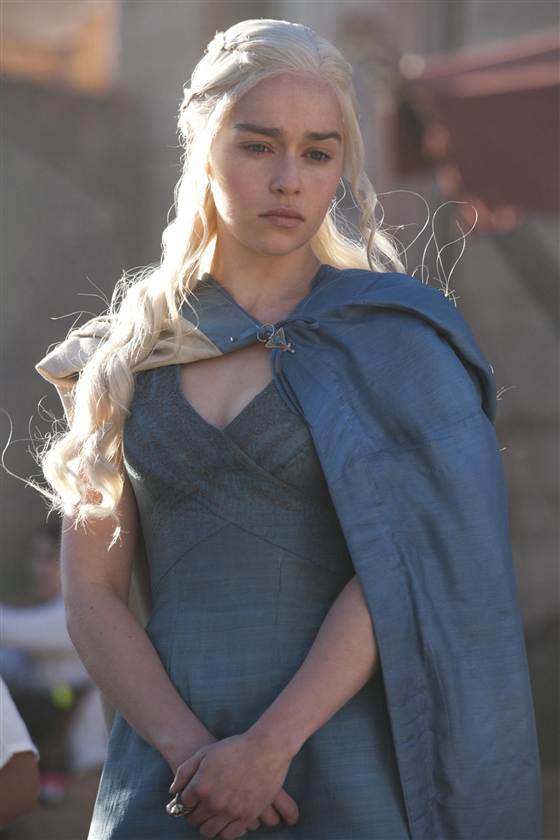
1C6694189-emilia-clarke-photo-keith-bernstein-hbo-2.blocks_desktop_medium

ASOIAF. Not even once.

The problem is that this series, originally planned to be three books but having since ballooned into seven, has been going since 1996. To compare, the entire Lord of the Rings trilogy was published from July 1954 to October 1955. All the way from Gandalf freaking out an innocent Frodo in the Shire to the final collapse and defeat of the Dark Lord (spoiler alert!), readers had to wait just over a single year for the conclusion to a story so massive its weight is felt in nearly every entry into the fantasy genre since (to be fair, Tolkien had basically written the whole thing before publishing the first part). I only jumped on this train five years ago, but some poor bastards have been waiting nearly two decades to get to the station. This ballooning and extension of the books is due to a phenomenon which is weakening the series as a whole: success killing editorial power. The first three books of this series are incredibly, world-changingly good. Books four and five aren’t necessarily bad, but really only bask in the reflected glory of what came before. In a series known for page-turning action, plotting, and suspense, there was a whole lot of material in book four that no one cared about, material that did not do much to advance the plot or tie the main threads of the story together more tightly. Why is this happening? Why are the editors allowing GRRM to bloat the series? It is because, at this point, if he published a book that just said “The North Remembers” and nothing else for fifty pages, everyone would still buy it. Why do we get point of view chapters from people we do not care about? Because GRRM is writing for addicts, and if he cuts the product, we will still buy it. The editors know this and thus give him free reign because their company makes money regardless. ASOIAF is a victim of its own success.

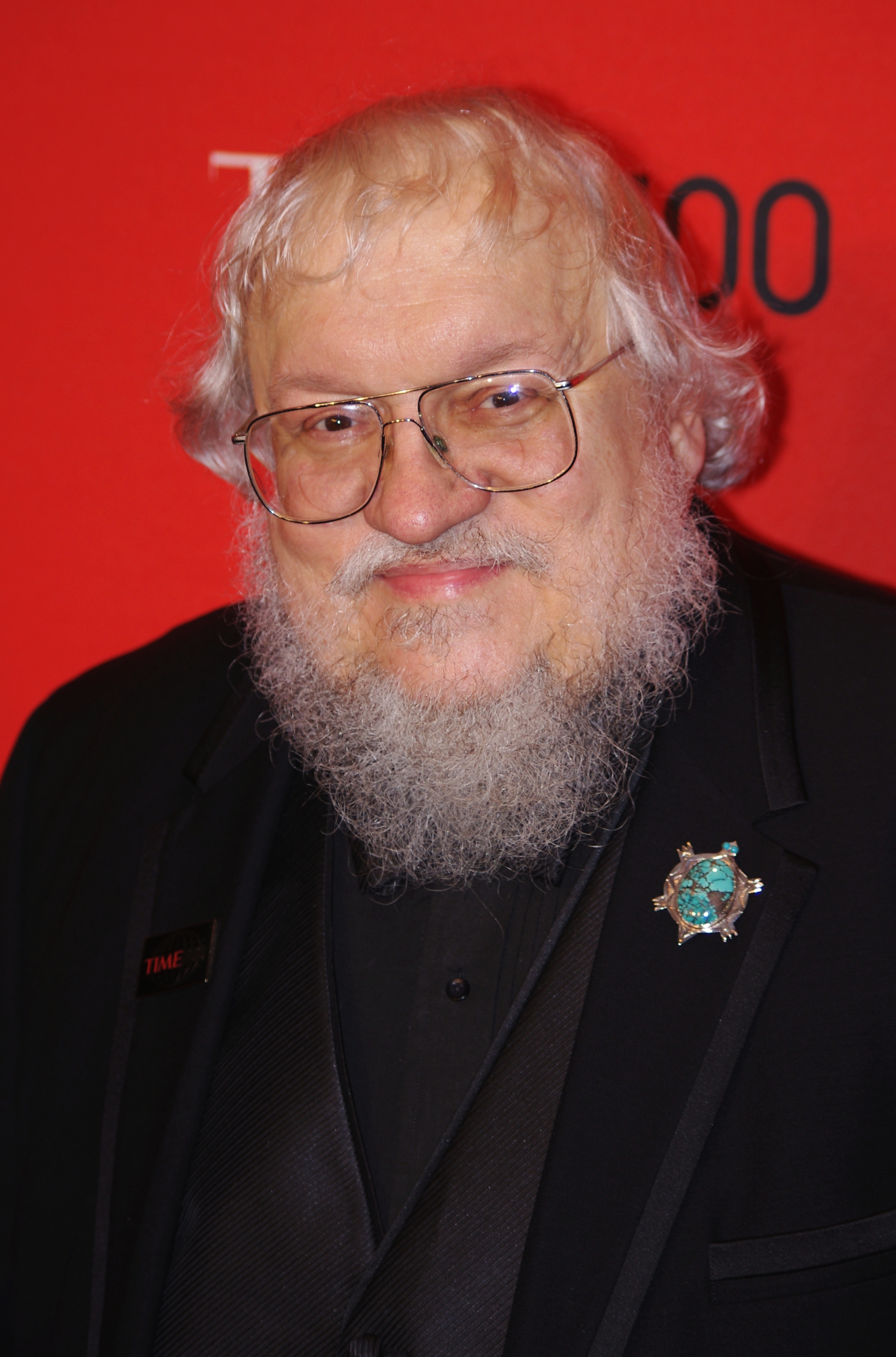
George_R_R_Martin_2011_Shankbone

Pictured: GRRM, escaped from his writing box

Speaking of success, another issue affecting the books is its serialization on HBO. I have yet to watch the show. I’m sure it’s amazing, but something in me is forcing me to finish the books, all of them, before starting in on the show. This may no longer be possible. The show is now halfway through the third of five books, and there is so much fluff in books four and five that the showrunners could conceivably fit it all into one season. Assuming HBO sticks to a yearly production schedule, that gives GRRM one year to write book six and one year to finish it up with book seven. His total output for the past 15years is two books, so unless something drastically changes, there is every possibility I will be watching instead of reading the conclusion to this story.

I do not want to be forced to another medium to find out what happens in the books I love. There is nothing wrong with the show, but it is not the same thing as the books. Not having watched much of it, I can’t speak to specific differences, but it’s clear that there cannot be nearly as much detail to the world – in order to make something watchable, you have to cut it down significantly. The size, the texture, and the depth of the books is part of what makes it for me. The backstories, the tiny defeats and victories for every single character, the flashbacks, the red herrings and true clues packed into the pages of A Song of Ice and Fire are flying through my head right now, and there is no way they fly as thick and fast in the HBO version.

Another strangeness created by the success of the show, because TV popularity is orders of magnitude above book popularity, is that there are new legions of addicts who do not want to be spoiled. A huge event happens at the end of season three of the show (which I did watch on YouTube, because holy shit), and everyone was understandably concerned about spoilers, but that same event happened in a book published while Bill Clinton was still president. If you really care about spoilers and desperately want to know what happens next, read the damned books.

Neil Gaiman famously responded to a fan question about GRRM’s writing pace with “GRRM is not your bitch.” Good response, absolutely true, but a little bit simplistic. When you write something so great that you have a significant percentage of the human population wishing that you would just sit in a box typing for 18 hours a day, there are consequences. One consequence is that you become famous and fabulously wealthy, afforded the freedom to engage in whatever projects you like. Another is that the fervor of fans that catapulted you to the top can quickly turn to anger if they feel you are not fulfilling your obligations to them. It is ridiculous that people wanted Martin to stop watching football so he could write. It is terrible that fans are more concerned about their series concluding than his life ending (although at this point, I’m mildly concerned that my death will come before book seven is published). Even still, George has an obligation to his fans. Edit more judiciously, tie plots together more tightly, and return to the transcendence of A Storm of Swords. I desperately want to see the North remember, and I want to see it in print.

Andrew Findlay has strong opinions about things (mostly literature) and will share them with you loudly and confidently.

Nymphomaniac is Five Hours of Lars von Trier Trying to Offend You: Should You See It?

Nymphomaniac poster

Jonathan May

In our rarely-running kinda-series Should You See It? we talk about movies that just came out. You can figure out the rest of the premise from the title of the series. That’s right: We talk recipes. Should you see Nymphomaniac?

“Beneath the gazes, beneath the hands, beneath the sexes that defiled her, the whips that rent her, she lost herself in a delirious absence from herself which restored her to love and, perhaps, brought her to the edge of death.” —from The Story of O

Parenthesis in Greek means ‘put in beside’ so it’s only fitting that the title of Lars von Trier’s latest film includes an empty set (it’s stylized as “Nymph()maniac“), a nothing story inside a nothing story. The story operates on the frame tale level; that is, our protagonist Joe relates her tale of sexual deviance from childhood forward to the eager ears of Seligman, an older male virgin (which later becomes important) after he finds her in an alleyway, obviously beaten up.

The main problem with the film is that Joe is constantly interrupted in her telling by Seligman, an obsequious listener if there ever was one. The film must center safely back around to its frame at the end, which deflates what’s at stake for the viewer. And center around it does; this was the moment of unexpectedness though. What transpires between Joe and Seligman in those final moments completely derails the film and its message, but I will not be the one to spoil it for the reader.

What I will take umbrage with is the fact that the more “salacious” aspects of the film (the erect penises, the S&M, the graphicness of the presentation, Joe screaming “Fill all my holes”) are not nearly as “offending” (though I’m very hesitant to use this word) as the moral statements made by the director through his characters. It becomes very obvious when Joe is talking and when Lars von Trier is talking through Joe. Von Trier all but preaches about how we should not silence aspects of our vocabulary for fear that we silence ourselves; but then he launches, through Joe, into a tirade about how pedophilia is like any other sexuality and how the 96% of pedophiles who don’t act on their urges should be “given a medal” for bravely squelching their desires. I take huge insult to these claims. Pedophilia is learned behavior, not innate. Not acting on desire or lust is not commensurate to bravery. Once again, von Trier sacrifices in terms of actual filmic development to focus on his status as a provocateur. Unfortunately this game is tired and boring, especially coming in the middle of a combined five-hour romp. I feel like I was constantly being prodded into offense; luckily for me, I’m offended by very little. But I still felt like the whole story amounts to nothing more than a way for von Trier to poke a stick at his audience. What he loses in this, of course, is the sincerity of Joe and her story. She unapologetically owns her sexuality at several points throughout the film. To have her become nothing more than a soapbox is typical of von Trier’s treatment of women.

Should you see it?

If you want original story, see the film Salo by Pasolini or read its precursor, The 120 Days of Sodom by the Marquis de Sade. Or you can read The Story of O by Pauline Reage. If it’s a good Lars von Trier movie you want to see, try Melancolia or Dancer in the Dark. But you can safely pass on Nymphomaniac.

Jonathan May watches too much television, but he’s just playing catch-up from a childhood spent in Zimbabwe. You can read his poetry at owenmay.com, follow him on Twitter at @jonowenmay, or email him at owen.may@gmail.com.

Symbols and Sociopaths: Hannibal Season 2, Episode 6

closeupepisode6

Jonathan May

(As always, massive spoiler alert)

Just a reminder: We’re only halfway through the season and have yet to catch up to the frame of this tale. In the first episode, we open with the struggle between Jack and Hannibal, then flash back eight weeks. So we’re still catching up (quickly, I posit) to a showdown. Also, we haven’t touched on Jack’s wife in the past two episodes really, so I’m sure they will kill her off any episode now in the most maudlin fashion imaginable.

Fact: Mads Mikkelsen played Igor Stravinsky in the gorgeous period film Coco Chanel and Igor Stravinsky (2009). I saw the film in theaters, and the recreation of the opening night of The Rite of Spring in Paris is probably one of my favorite moments in film history. You eventually see Stravinsky and Chanel naked in the many stages of coitus (one memorable scene includes some sex on the piano bench). So it’s a little jarring to open with Hannibal at the harpsichord, composing music to “move past” what Will “did” to him and even more disturbing to later see Dr. Bloom and Hannibal giving it the old college try on the harpsichord bench. Mikkelsen brought some of Stravinsky into this episode with an awareness of his own mortality, and ultimately the end game is revealed by this awareness. As Hannibal becomes more afraid of Will, he must be able to get to him, so he “frees” Will through exoneration by committing a murder using pieces of Will’s supposed victims. Will, by virtue of this whole ordeal, burns in revenge, being trained by Lecter into becoming his replacement. What will complete this transformation is the eventual murder of Dr. Bloom by Hannibal.

In addition to Stravinsky, we have not-so-subtle references to the movie Hannibal with Will stating that Lecter thinks of his victims as pigs and later in the scene where Abel Gideon eats his own thigh (à la Liotta). I have no idea why they gave such a close adaptation of that scene; the affinities between them only made this incarnation seem weak with a bloated Eddie Izzard succumbing willingly to death. However, the preparation of Gideon’s thigh in clay was lovingly rendered on film. The strongest moments in the series consistently involve food, and this is definitely a strong moment, but then it’s ruined by Gideon trying to be funny. Perhaps the most arresting visual of the episode was the tree-person made by Lecter, like a perverted Daphne ripe with flowers.

Bringing back Miriam Lass at this point seems inanely cruel. We already know who’s committing the murders; Jack’s wife is going to die of cancer, so will her reappearance really matter that much? Call me callous, but I feel like this will end up being another emotional red herring, and honestly, I wish we’d just stick to the point. With Will now free to claim vengeance, the race is between Will killing Hannibal or Jack locking him away.

Note: Hopefully the “history” between Drs. Bloom and Lecter will be elucidated for those of us who don’t write the show, if the story gods are listening.

Jonathan May watches too much television, but he’s just playing catch-up from a childhood spent in Zimbabwe. You can read his poetry at owenmay.com, follow him on Twitter at @jonowenmay, or email him at owen.may@gmail.com.

Hannibal airs Friday nights on NBC. You can read our pieces about previous episodes here.

3 Days to Kill is Two Hours of Kevin Costner Acting Ridiculous: Should You See It?

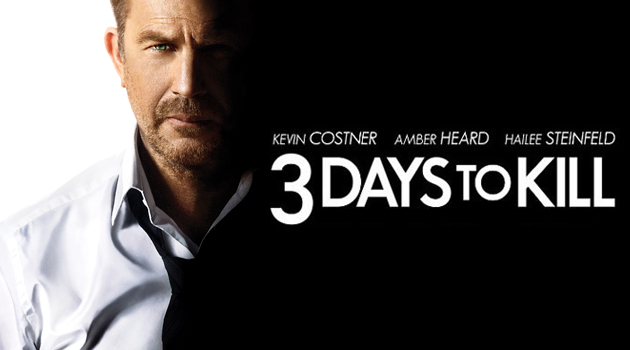
movies-3-days-to-kill-banner

Brent Hopkins

In our rarely-running kinda-series Should You See It? we talk about movies that just came out. You can figure out the rest of the premise from the title of the series. That’s right: We talk recipes. Should you see 3 Days to Kill?

3 Days to Kill stars Kevin Costner as Ethan Renner, a CIA agent who is the best cleaner in the business. He is in the middle of a job when he gets a notification that it is his daughter’s birthday. Being the awesome dad that Kevin Costner is, he decides to take a break from killing everyone to call home. As CIA operations are wont to do, things go south quickly and he ends up going head to head against bomb smuggler “The Albino.”

You can tell he’s a bad guy, as he has no hair or eyebrows. Ethan has The Albino dead to rights and then he suddenly starts coughing and bleeding from the nose. End scene, and the next time we see Ethan he is told that he only has a few months to live due to a terminal illness.

This leads Kevin to retire from the business and go to his family, a wife and daughter in Paris, to reconnect, as he has been a vacant father and husband for a few years. He goes to his separate home and comes to find a full African family squatting in his place. They have redecorated and rearranged everything, and he reacts about as crotchety as you would expect old Kevin Costner to react. He chooses not to murder the whole lot — there are more than a few children and a pregnant girl — and we see the grinch in him slightly melt. He chooses to make amends with his final months but gets a new lease on life when a CIA operative Vivi Delay (played by Amber Heard), asks him to help kill quite a few people (namely The Albino and The Wolf) in exchange for an experimental drug that will keep him alive, 50,000 dollars, and a million-dollar life insurance policy. The twist is, of course, that there are side effects to the experimental drug that keep rearing their ugly head at the worst times for Ethan.

There are the requisite awkward family reunions that take place with Ethan trying to pick up as if his daughter hasn’t aged a bit and their worlds collide fittingly. That is actually what the whole movie feels like, multiple worlds slamming into one another and never quite aligning properly. This movie is all over the place and it is definitely a bad film. The thing is, the movie is so scatterbrained that it comes off as aggressively fun as opposed to just hours of wasted time.

The violence is graphic but never really that excessive. The daughter-father story is brown-sugar sweet, yet I found myself chuckling at the ridiculousness of their interactions more than anything else. The bad guys are named The ALBINO and The WOLF, the former being a creepy lunatic and the latter being anything but a wolf. Vivi Delay is supposedly equal in skill to Ethan, but for the life of me it felt like a showcase of how much sexier Vivi looks than everything else in Paris.

9532112

Also, smoldering seriousness is a must.

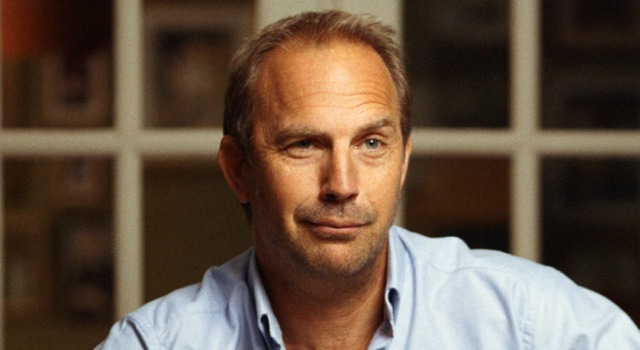
This is a bad movie. Kevin Costner places this corpse of a script on his back and carries the whole thing. Without him this movie would be worth walking out of in the first 15 minutes, but there is something about Costner in this film where I actually felt like he thought the whole thing was as ridiculous as it actually is and just ran with it. There are so many moments in this film that left me saying “Well, that is not what I expected from Hollywood.” Costner takes it in stride and constantly makes this face… and I love him for it.

Kevin_Costner_in_The_Upside_of_Anger_Wallpaper_1_1024

I have no idea what’s happening either, folks.

Should You See It? Yes, if you are not a film snob, this movie was bad but quite fun. It takes the Taken premise but removes most of the stress from the plot and replaces it with quirky scenes.

Images: Film School Rejects