television

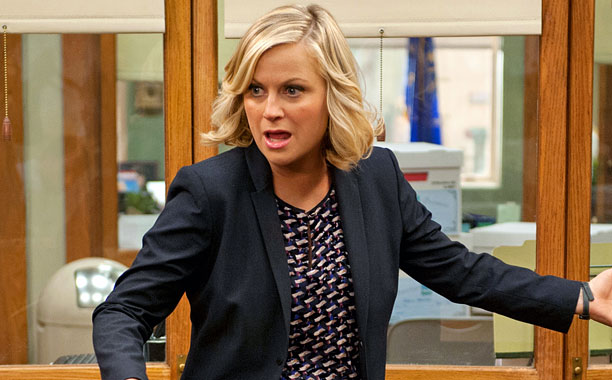
Why Aren’t People Watching Parks and Recreation?

Parks and Recreation- Season 6

Alex Russell

Remember when Liz Lemon was everywhere?

For a few years it seemed like you couldn’t load Tumblr or Facebook without seeing at least five Liz Lemon memes. There’s nothing necessarily wrong with that; 30 Rock was a tremendous show. It was a lot of things, but above all else it was the critically-acclaimed anchor to NBC’s very weird (but very great) Thursday night that included The OfficeCommunity, and Parks and Recreation.

The Office faltered late, as everyone knows. 30 Rock managed to do OK just because it was consistently being hailed as the best show on television. Community‘s story is still unfolding, but the fanbase is rabid enough that it will probably end up fine. But what of Leslie Knope and the Liz-Lemon-meme-worthy Ron Swanson?

Let’s tell it straight: People are not watching Parks and Recreation anymore. Numbers-wise, the show has done a little bit worse every season, especially after losing The Office as a lead-in. Everyone who loves Parks and Rec will tell you that it doesn’t really find its footing until the end of the first season, but America really disagrees. The first season held a huge percentage of Office fans, even though it debuted after one of the dumbest storylines in Office history (“Michael Scott Paper Company” was the lead-in episode for the pilot).

Season two of Parks and Rec is some of the greatest sitcom TV of the last fifteen years, but it did a little bit worse (between four and six million people per episode) than the weird first season. Second three — which followed the final Michael Scott episodes of The Office and was the first season with Rob Lowe and Adam Scott as regulars — did even worse, sometimes dropping below four million. The three seasons since have done worse in the ratings, and sometimes far worse.

A lot of this is on NBC. 30 Rock did even worse than Parks and Rec during its decline and even The Office, the one your mom liked sometimes, barely managed four million viewers a night by the end. Community seemed unstoppable, but it’s tanking this year in the ratings. Parenthood, once one of NBC’s most reliable shows, is doing the same.

Thursday night on the other networks? Fox has Hell’s Kitchen and American Idol. CBS has The Big Bang Theory and Two and a Half Men. ABC has Scandal. NBC’s support for its sitcoms is Hollywood Game Night.

It’s impossible to convince someone to definitely watch something unless they already might, but you really should be DVRing Parks and Rec. The show stumbled a little with an ambitious plot for main character Leslie Knope, but it’s still one of the only consistently funny, consistently great sitcoms on network TV. NBC renewed it for next year, but based on the competition and the current trend, Parks and Rec is dead in the water. Come stay awhile with it every week, like you would an elderly relative. Ron Swanson is still there Ron-Swansoning around, and that really should be enough to earn your 22 minutes a week.

Alex Russell lives in Chicago and is set in his ways. Disagree with him about anything at readingatrecess@gmail.com or on Twitter at @alexbad.

Image: NBC

Book Review: Tom Perrotta’s The Leftovers

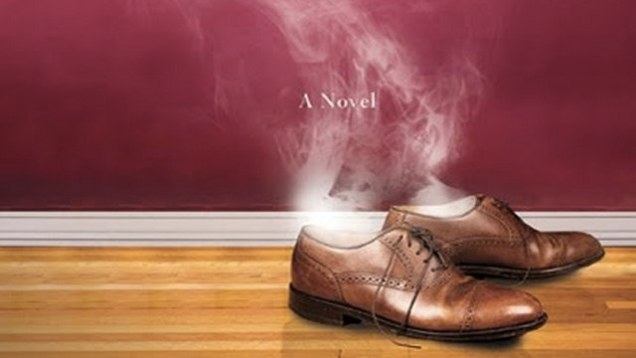
The Leftovers

Jonathan May

I finished this novel recently, and my friend J—– informed me that it would be released this summer on HBO as a miniseries. My first question was How? But the more I think about it, my real question is Why?

The Leftovers takes as its main device the Biblical rapture, wherein the elect are called to Heaven, leaving those on Earth to repent or suffer. Within the first five pages, the religious aspect of the rapture has fallen to the wayside; just any people, regardless of character or religious affiliation, are taken. It seems God wasn’t so picky after all, if God is indeed to blame. The novel, pointedly it seems, lets blame rest on the self-conscious shoulders of the citizens of Mapleton, a Blue Velvet-esque town name if there ever was one. We focus mostly, in close third, on the newly elected mayor, an affable, forgettable character named Kevin Garvey. He tries to help his fellow citizens deal with the weirdness of it all, having lost none of his family in the “taking.” However, as people start to deal with the event by forming cultish groups, Kevin loses family along the way.

We’re in and out of his wife Laurie’s mind as well; she ultimately leaves him to join the Guilty Remnant, a chain-smoking silent group dedicated to asceticism, silence, and a mission. Smoking and in pairs, they rove the country, making sure no one forgets what has happened, and that the final reckoning is yet to come. The idea of silence is powerful within the novel; people literally vanished without a bang, without an inkling of anything. And so the silence must continue for some. Laurie as a character is very strong, but her intentions aren’t. Why does she join the group? Is it guilt, or something else? I feel like we never know.

This novel, like many of Perrotta’s others (Little Children, The Abstinence Teacher), dwells superbly within the contemporary suburban mind. He highlights deftly the quotidian and how necessary it is. But what the novel fails to do is provide us any sense of resolution; in fact, the way the novel ends (I won’t spoil it) actively works against resolution, forcing the reader to construct a possible ending. I found this cheap and flabby, as far as fiction goes. I would rather be pointed to a moral certainty about the work, even if it ends up being about amorality. Instead, we’re given some kind of Inception-like wishy-washy, choose-your-own-path scene that simply stops.

The writing is strongest when we’re bouncing around from character to character, and I wish there had been more of that. Since we settle on Kevin most often, his portions should have been the most arresting, but we’re given clichés like, “There was always that little secret between them, the memory of a summer night, the awareness of a road not taken.” I almost put the book down there, but my curiosity about what would happen to Laurie, the daughter Jill, and a certain unborn child who is introduced early on drove me to finish it.

I have no idea how this will translate to film; to build toward such a nothing of an ending seems like an incredible waste of time and money. But who knows? Maybe HBO will give some resolution where there was none.

You can listen to a sample from the audiobook of The Leftovers from Macmillan Audio here:

Jonathan May watches too much television, but he’s just playing catch-up from a childhood spent in Zimbabwe. You can read his poetry at owenmay.com, follow him on Twitter at @jonowenmay, or email him at owen.may@gmail.com.

Image source: io9

The Americans: A Show About Patriotism, Murder, and Marriage

Andrew Findlay

The Americans is a relatively new show that FX broadcasts on Wednesdays at 10. The general premise is that the Soviet Union successfully placed a significant number of covert agents into the United States. These are not just commandos with accents, but exhaustively trained and elaborately I.D.’d infiltrators. They are selected young and spend years training in combat and the normal spy stuff, but also learn about American culture and cultivate a flawless, accentless command of English. Then, they are placed in a normal, unremarkable cover life somewhere near a point of interest for the Soviets.

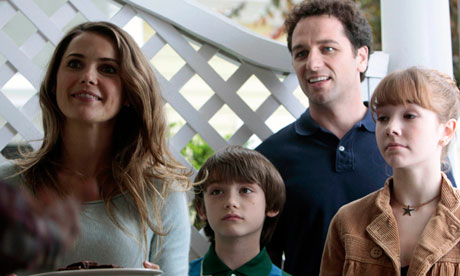
The two main characters, Elizabeth and Philip Jennings, have been living in the Virginia suburbs around D.C. since the 60s. Before the start of the show, things had been slowly becoming more and more peaceful, to the point where the Jennings barely had to do secret agent stuff anymore. However, the 80s and Reagan roll around, and all of the sudden they are again fully active and have to run around doing shit for the glory of Lenin.

They are deep cover agents, and the intricacy and strength of that cover generates most of the complications of the show. They are dedicated to the ideals of universal freedom for all mankind as interpreted by their home country, but they also run a travel agency, live in a big house, and have kids. The kids part is really messed up – their children do not know what their parents really do, so these two super-spies are deeply, immovably in love with two red-blooded American schoolchildren. They want to bring down the corrupt and bloated American autocracy, but their children, whom they adore, are 100% supportive of it. The mother, Elizabeth, the violently atheistic Soviet operative, almost goes insane when her child starts attending Bible study with a group of friends and cannot even explain to her own daughter why it makes her so upset because that would compromise her cover. They are also neighbors and family friends with Agent Beeman, a G-man who works in the counterintelligence department of the FBI.

Hey kids, we’ll be home late tonight. Mommy and Daddy have to blackmail a government official.

Most of the pleasure of watching the show comes from the friction generated by the mismatch between their American and Soviet personae, which, after two decades in the States, have begun to bleed together. The American side of the Americans is not simply a mask – is the part of Philip who loves his son and enjoys driving a fast car the “fake” part of him? Is he 100% okay with the side of him that murders people for a cause? On a less psychological level, it’s also great to see them switch flawlessly from American citizen into frighteningly competent Soviet operative. Elizabeth gets pulled over and has something compromising in the car with her? She plays the distraught wife to the cop until he gets close, then beats the shit out of him when it becomes clear she can’t cry her way out of it (I might have made up this particular incident, but stuff like it happens all the time). Watching the split-second transition from smiling, amiable, and confused civilian to a machine designed to collapse your trachea is good television. I talk a lot about how audiences love watching terrifying, almost superhuman competence on-screen (Breaking Bad, Doctor Who), and that dynamic is strongly in play here. The central pair of the series is frighteningly competent at any number of things – disguise, decoding, deception, dismemberment. They can do it all, and they can do it all really well.

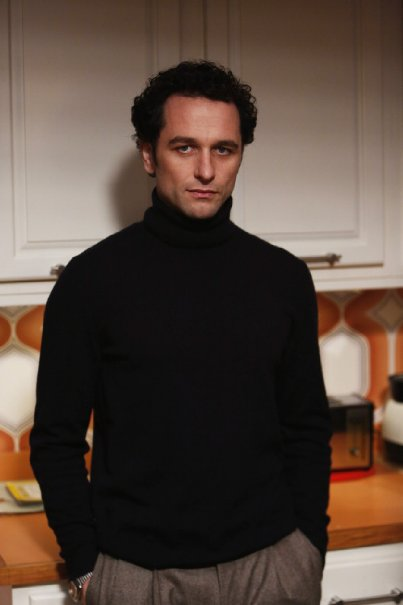
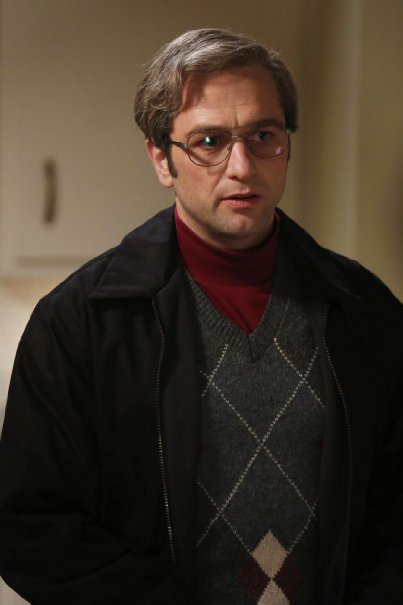
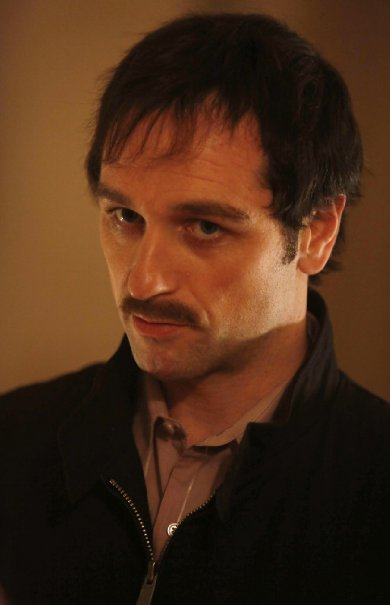
Left to right: Normal look, bureaucrat disguise, smarmy dude disguise. The disguises are really great, because of course they’re the exact same person, but that’s the thing – you only need to change a little bit of how you look to throw off any attempt to make a police sketch of what you actually look like.

The conflict, the tension, and the spy stuff are only part of why this show is so good. In the end, this show is about a marriage. Elizabeth and Philip met each other only after they started training and became “married” only as part of their implantation into the USA. They have a marriage certificate, sure, but it’s forgery by the KGB, like the rest of their lives in America. This creates a really weird, stressful dynamic between the couple. On the one hand, they have lived together for two decades and that creates a definite bond, but on the other hand, their marriage is simply a tool to help them undermine the peace and prosperity of the United States. As deep cover KGB officers, they are not allowed to speak Russian, nor are they allowed ever to mention any detail of their lives before they came to America. This means that these two people sharing their lives with each other know almost nothing about how or where those lives started. Another item complicating things is that Philip has been more seduced by the American lifestyle than Elizabeth has. For example, Philip would betray the USSR to protect his kids, whereas Elizabeth would betray her kids to protect the USSR (she says). The progress of the show is their journey as a couple, working on their trust and emotional issues in the midst of the incredibly stressful reality of their lives. This stumbling in the dark to find out who they actually are and what they actually mean to each other is very rewarding to watch.

http://www.youtube.com/watch?v=2z2VXWS1eDU

This is a three-minute recap of the pilot episode. It gives a really good idea of what I’ve been talking about this whole article.

Finish the article, watch the pilot recap, then decide if The Americans is for you. I love this show. It’s full of well-plotted suspense and action, it has a complex, compelling central couple, and it constantly assaults preconceived notions people hold about identity, appearance, and reality. It’s a free country thanks to Reagan so you can choose for yourself, but you’d be making a big mistake not to check this out.

Andrew Findlay has strong opinions about things (mostly literature) and will share them with you loudly and confidently.

Images: The Guardian, IMDB

Symbols and Sociopaths: Hannibal Season 2, Episode 5

hannibal episode 5

Jonathan May

(As always, massive spoiler alert)

We start with the second in a series of split montages, this one featuring breakfast. As Hannibal lovingly prepares his meal in the comfort of his own home, Will stares down the tray lumped with what barely passes for breakfast. The first time we see this split montage is when Hannibal and Will are dressing for trial; this time is different in that it highlights the relative high and low of their respective situations. The high and low is important in this episode, as its juxtaposition implies a classical dramatic structure, that of the protagonist falling from a high place to a low place. It’s unfortunate that the dramatic casualty of this thematic exactness is Dr. Beverly Katz. From the high point of living and finally discovering Hannibal for what he is, Dr. Katz is brought down to lowness, being killed and sliced in a “performance piece” better than any by Damien Hirst (The Cell with Jennifer Lopez also comes to mind). And what exquisite sadness I felt upon seeing Dr. Katz laid out as if prepared for examination under a microscope. RIP, Dr. Katz.

Eddie Izzard is brought back in as the serial killer Abel Gideon in order to act as a sounding board for Hannibal, Will, and the others. But I could just as easily have done without him in this episode. His character brought nothing but lowness, spitting out pithy dialogue like the old man from Pet Cemetery. (An example, speaking of Hannibal: “He is the devil, Mr. Graham. He is smoke. You’ll never catch the ripper. He won’t be caught. If you want him, you will have to kill him.”) The obviousness of this is mortifying; I never, in a million years, imagined that this story would end neatly with Hannibal being meted out justice through the courts. Blood will always be repaid with blood in proper tragedies.

But speaking of courtly justice, what of Will’s trial? And where the hell is Cynthia Nixon to add some perspective to this mess? Instead of Cynthia, we’re given the orderly of the psychiatric ward, a gorgeous pale fellow who readily accedes to Will’s demand that he kill Hannibal. Will, of course, fears becoming Hannibal (hence the horror he feels as the antlers grow through his back), but he’s still willing to “transcend” justice in order to be justified. Will has shifted here from justice to revenge, a tragic flaw; it’s unfortunate that he had to resort to such extremes in an attempt to attain rightness.

The scene between Hannibal and the orderly is properly “high” in its beauty; the camerawork here captures the chiaroscuro of Hannibal’s bleeding body as he hangs Christ-like with his feet on a bucket. It’s almost like a Caravaggio. And that beautiful line which gives us all of Hannibal—“Only if you eat me.” Such a high moment, capable, on the brink of annihilation. And then we’re brought crashing down as the orderly is shot, dashing Will’s plan and possible hopes for ever leaving the psychiatric ward.

Jonathan May watches too much television, but he’s just playing catch-up from a childhood spent in Zimbabwe. You can read his poetry at owenmay.com, follow him on Twitter at @jonowenmay, or email him at owen.may@gmail.com.

Hannibal airs Friday nights on NBC. You can read our piece about the previous episode here.

Breaking Bad or The Wire: Why Pick When You Can Argue Forever?

Andrew Findlay

I.

It is a universally accepted truism that we are living in the golden age of television. Sure, people are still giving Chuck Lorre money and that’s terrible, but in the past couple of decades there have been The Sopranos, Mad Men, Breaking Bad, The Wire, Six Feet Under, Dexter, and absolutely stunning newcomer True Detective. In addition to these heavy-hitters, there’s lot of great stuff like Firefly, Scandal, The Vampire Diaries (it’s great and I’m not 14 I promise), along with quality comedies like 30 Rock, Parks and Recreation, Community, and Girls. Truly an embarrassment of riches. However, it’s a weird quirk of American culture that we can’t just enjoy everything, we have to make a list and decide which is the best. If we can’t judge the quality of these shows and categorize them better than the dumb schmucks around us, what’s the point of even watching? With that being said, this article is about a throwdown between two of the best: Breaking Bad and The Wire. Which one should you smugly assert is better?

Just a quick overview before diving in: The Wire is noteworthy because of its extreme focus on reality. It unflinchingly explores the real world, with the repeated and insistent declaration that hey, it is what it is. The dialogue in this show is truly a joy – especially anything the young asshole cop McNulty says to, well, anyone. Its plotting and pacing are nearly flawless, and it takes time to explore the ravages of the drug war on the communities and cultures of Baltimore. Breaking Bad can deliver excitement like no other show. It moves absurdly fast and is packed with a ridiculous amount of action. In the pilot, the main character gets cancer, decides to make meth, makes the best meth ever, kills a couple of drug dealers, and is ready to get in a shootout with the cops at the end of the first episode. No other show pulls that off in the pilot. It also focuses almost exclusively on Walter White, doing an in-depth character study on the darker motivations and emotions in the human psyche. Finally, it is satisfying in that it has one well-plotted unifying arc that is resolved more perfectly than any other show I’ve ever seen.

II.
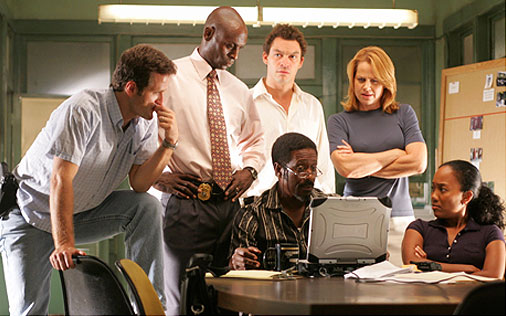
The “good guys.” Sort of.

The Wire is a show about drug dealers and cops in Baltimore. It explores the inner workings and power struggles of both the law enforcement apparatus and the organizations actively working to undermine that apparatus. The main character of the show is definitely Baltimore – everyone else is tangential to the trials and travails of the city itself. It is about the rise and decline, and decline, and decline of the American city. What this show does extremely well is focus unerringly on reality. There are consequences for every single action – no one gets away with anything, ever. People do what they do based on extremely complex and murky motivations, but every action is perfect and clear to understand – no character exists in a vacuum. In another nod to reality, there is no good or bad, there are just people. One of the most helpful members of the special crimes unit is an idiot who beat a kid so badly he went blind in one eye. McNulty, arguably the main(ish) character, is a brilliant detective, but he’s an absolute self-inflated asshole, he cannot for the life of him respect his superiors, and he drives drunk pretty consistently. He is unhealthily obsessed with his job. He is divorced, and he has his two boys for the weekend. The fun father-son bonding game he plays with them is called “Tail the Drug Lord and Tell Daddy Where He Goes.” That’s right – he’s great at solving crime, he desperately wants Baltimore to be a safer place, but he involves his children in active criminal investigations. Not a paragon of fatherhood.
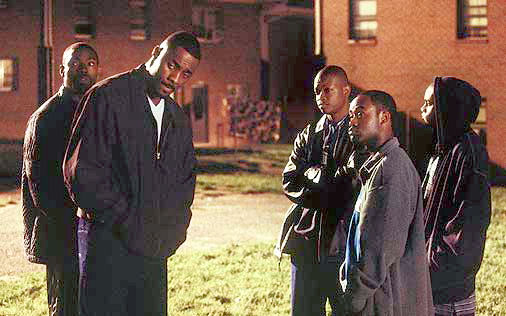
The “bad guys.” Sort of.

On the other end, one of the drug dealers, D, kills people, sells heroin, and does pretty much everything you’d expect a drug dealer to do, but also feels genuine remorse about a lot of what he does and is extremely conflicted about the persona he has chosen for himself. In this show, there are no easy or ready-made conclusions – it is what it is. The Wire is weighed down a little bit by its huge cast. I mean, it’s a strength because it allows us to see the plight of Baltimore from multiple eyes and perspectives, but one problem that Breaking Bad does not have is that, with so many characters, the viewer ends up not knowing them as well, resulting in less emotional investment. I had to watch most of the first season until I was clear on everyone’s names. Another thing that hurts The Wire in comparison to Breaking Bad is that each season focuses on a different aspect of Baltimore crime, often with very different casts of characters and settings. This is a strength in that it gives a lot of variety, explores many different aspects of Baltimore, and communicates powerfully that the game is the game no matter where you go, but it also feels in some ways like the same shit over and over again.

III.
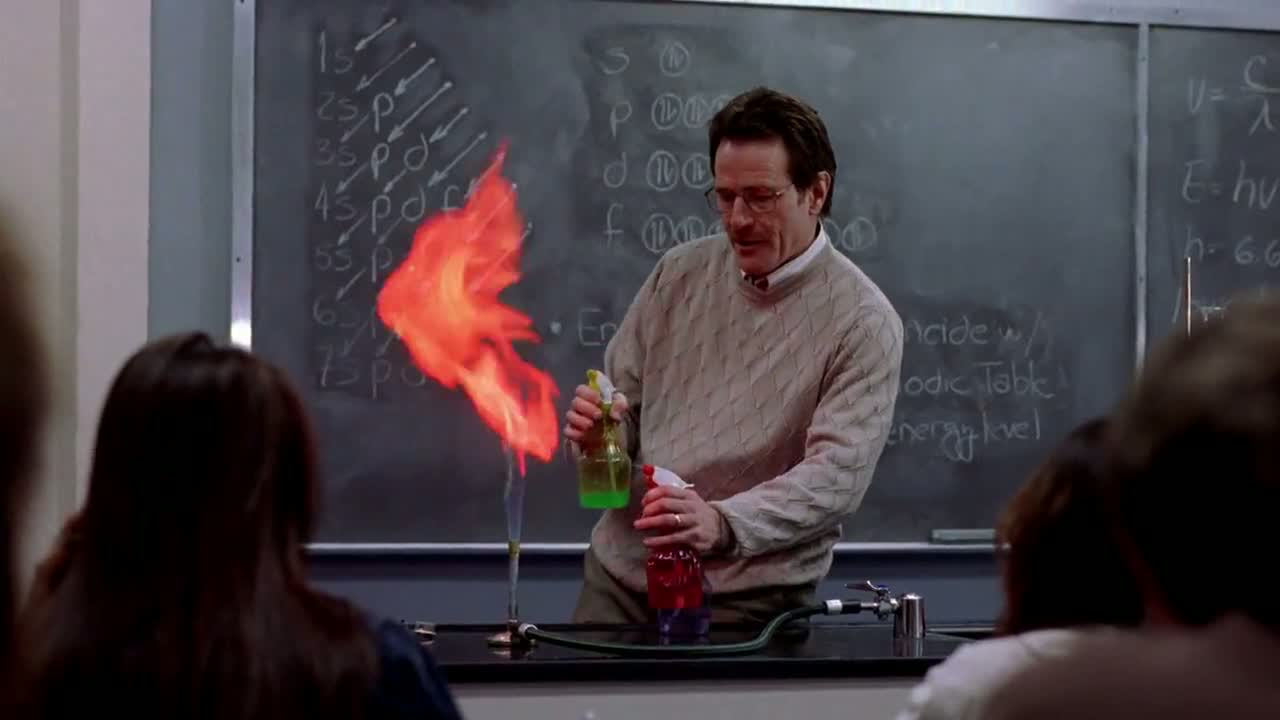
Pictured: the face of evil

Breaking Bad is a show about a poor, prideful chemistry teacher who has been screwed out of a lucrative job in an Albuquerque-based biotech company. He gets cancer, which is his breaking point. Faced with the near certainty of death, he decides to set things in order for his family by making as much money as he can in the time he has left, both to fund his treatments and to leave something behind for his children. With this goal in mind, he asks to go on a ride-along to a drug bust with his DEA brother-in-law. At this drug bust, he sees one of his old students escaping the police. He hooks up with this student later, asks him to help him break into the meth business, and a criminal mastermind is born. Well, not quite. He has to develop over the course of the show. From beginning to end, Walter White, the main character, is amazing at cooking meth. In an industry where most people are throwing ingredients together, boiling them, and hoping for the best, Walt applies the principles of chemistry to his “cook.” The result is that he makes the best meth that anyone has ever seen. The problem is that he has no idea how to break into the market. He depends on his old student at first, but slowly learns how to become a drug lord in his own right. The show explores the consequences of selling your soul to your own sense of pride. As Walt becomes better and better at what he does, he also becomes more and more ruthless. It is a slow and subtle transformation that takes place over the course of five seasons, but at the end of it, Walt has transformed from a nebbishy chemistry teacher to a truly terrifying figure in the underworld. Breaking Bad does an amazing job with building tension and with quickly developing the plot. More happens in episode one of this show than what most shows achieve in an entire season. With only a handful of characters that are really developed, the show focuses deeply on their emotional development, with the result that the audience feels all the feelings for these people. Also, this show has Bryan Cranston, who is arguably one of the greatest actors ever. Compared with The Wire, on which there is no truly standout acting talent and on which Method Man plays a recurring character, Breaking Bad comes out far ahead in the acting department. The best thing Breaking Bad does is the character of Walter White himself. Showrunner Vince Gilligan hands Cranston a lot of great material, and Cranston does wonders with it.
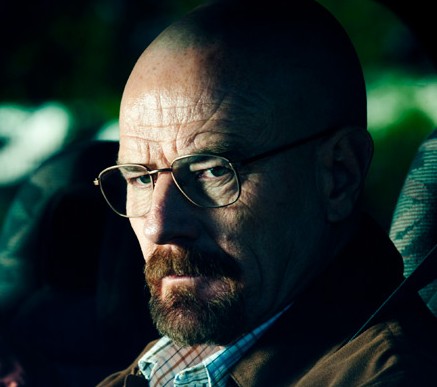
No wait, it was this one. This one was the face of evil.

The guy slowly turns into an amoral sociopath, but the audience roots for him every step of the way. Why would normal, rational people want to see such an asshole succeed? Vince Gilligan himself put forth a theory that I agree with completely: The Darth Vader theory. Why do people love Darth Vader so much? It’s not because he’s great guy, it’s because he is so terrifyingly good at his job. People like to see competency and skill, and Walt is so fucking smart it’s unbelievable. As one character says to people trying to catch him, “He’s smarter than you, he’s luckier than you.” I’ll say it again: He is so fucking smart that it is just fun to watch him get away with shit because of the ingenuity involved in it. McNulty from The Wire thinks he’s smart? He is an idiot child compared to this psychopath. Walt is an asshole, but he is conflicted. He’s a ruthless drug dealer, but also a family man. He’s arrogant and prideful, but also weak in a lot of ways. These conflicts meld and overlap to create an extremely compelling and watchable character. The only thing that possibly holds Breaking Bad back is that it pushes believability. If Walter White existed in the ultra-realistic world of The Wire, he would be arrested in the first episode. This isn’t necessarily a bad thing, just an area where the show compares unfavorably to The Wire.

IV.

Asking the question “Breaking Bad or The Wire?” is a lot like asking the question “Shakespeare or Tolstoy?” The feel of Breaking Bad has a lot in common with Shakespeare’s plays, and the aesthetic of The Wire calls to mind Tolstoy.
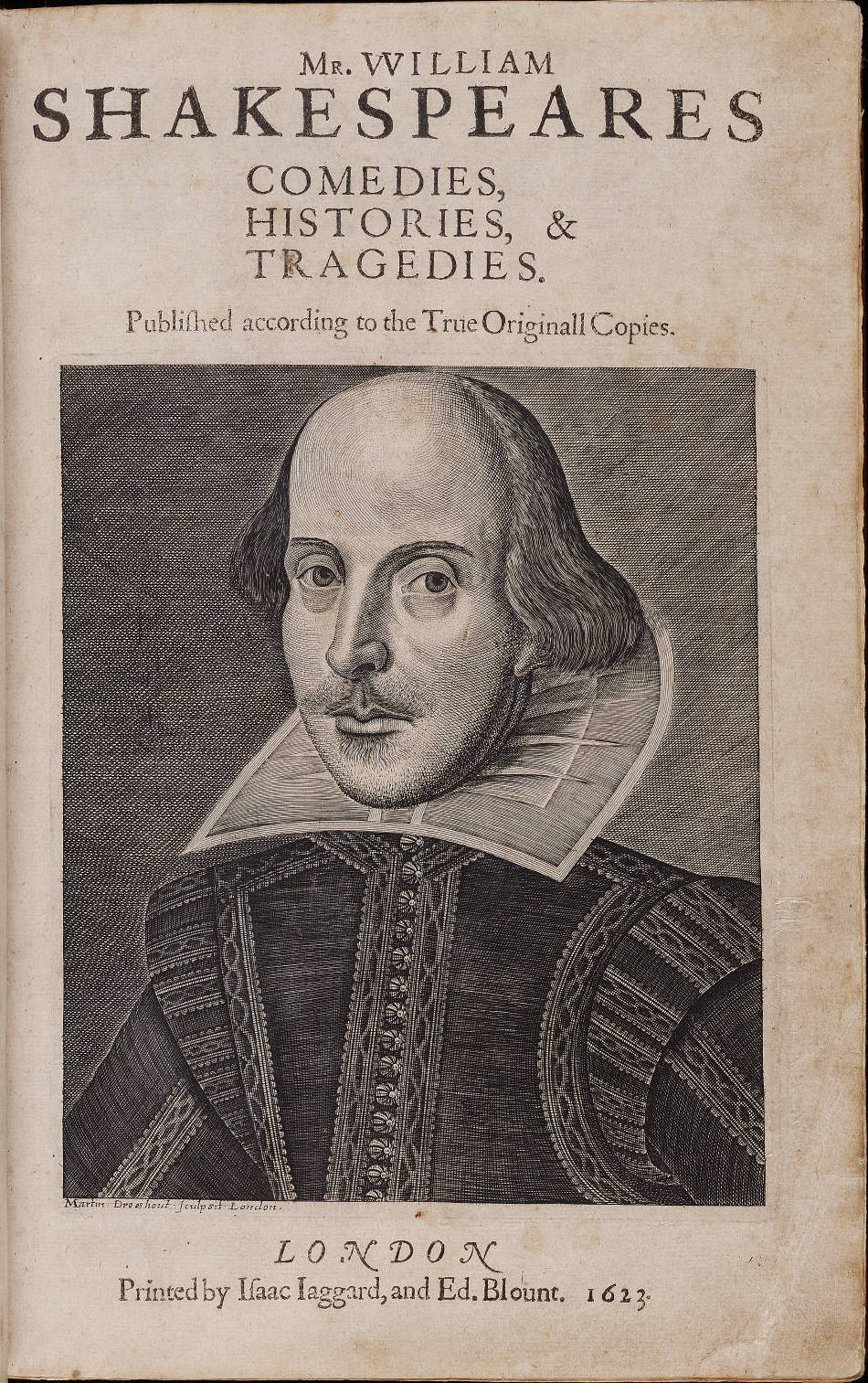
Walter White is almost as amazing as my neck ruff.

First off, what drives Breaking Bad, like what drives Shakespeare’s plays, is an extreme and profound focus on human nature, on characters and the traits that are the key to their rise and downfall. In Richard III, the titular king is extremely clever and ambitious, which serves him well until he ends up going too far and dying on the battlefield. In Hamlet, the main character’s reticence serves him well and keeps him from becoming a pawn of craftier people (cf. Laertes, whose anger at his father’s death allows Claudius to control him utterly). That is, it serves him well until it results in the deaths of basically his entire family. In Breaking Bad, Walt’s intelligence, ambition, and pride serve him extremely well. That is, until they don’t. There are similarities between the two on the believability front as well. Breaking Bad is not hyper-focused on realism, but neither is Shakespeare. Let’s look at Hamlet again: an extremely frank and subtle exploration of human nature and motivation, but in a realistic world, when Claudius sends him to be executed by the King of England, he should have died, end of story. What actually happens is that, on the way to England, Hamlet is rescued by fucking pirates. Out of nowhere, pirates accost the ship and take him away. In The Winter’s Tale, a main plot point of the story is that one character, Perdita, is actually of noble blood but was raised by a shepherd. She was raised by a shepherd because Antigonus, the man tasked with getting rid of her as a baby, is about to keep her because who leaves a little girl in the wild alone, but then, in one of the best stage directions in the history of theater, is chased off and “exit[s], pursued by bear.” In Romeo and Juliet, we are led to believe that no one, not one person can intercept Romeo and tell him “Oh no, just kidding, we’re playing a trick, she’s not actually dead.” Finally, the focus on action and entertainment unite the two. Breaking Bad is full of twists, explosions, and fast pacing. Shakespeare is full of action, intrigue, and swordfights.

Tolstoy liked to keep things realistic.

The Wire is more like Anna Karenina. There is an extreme focus on realism. For a lot of the book, Anna Karenina is just Russian dudes walking around doing shit in Russia. Like The Wire, it engages the sociopolitical issues of the day deeply and unflinchingly. It also has the same character pattern as The Wire. There are a ton of characters, nearly all of them are well-put-together and well-explained, no one is a cardboard cutout, but still, with so many it’s hard to focus very closely on just one (with the exception of Anna herself). The focus of Anna Karenina, like The Wire, is on psychological realism and the consequences of people’s actions.

V.

So that brings us back to the question posed at the beginning of this article: Which one is better? I think more than anything that is just a poorly formed question. Both shows are so different that they are hard to compare. Both are absolutely amazing, and at this level of television, it’s hard to objectively declare one thing better than another. I personally prefer Breaking Bad to The Wire, but telling someone who prefers The Wire that they’re wrong is a really hard case to make. Some people prefer Shakespeare to Tolstoy and vice versa. Both are amazing, both are flawless artists. Much like those two authors, neither of these shows really does anything wrong, so it’s really hard to call, but ultimately, it’s not necessary to call. Just watch and enjoy your damned television.

Andrew Findlay has strong opinions about things (mostly literature) and will share them with you loudly and confidently.

Image sources: AMC and HBO
Broad City: Season Review

broadcity

Jonathan May

I’m just going to come out and say it—Broad City is one of the funniest damn shows I’ve ever seen. It’s everything Girls fails to be and so, so much more. The jokes are uninhibited, surprising, and recurring. Cultural references abound. But the wacky, lovable, goofy best friendship Ilana and Abbi share makes up the core of this comedy set in Brooklyn. I’m comforted by a show that’s not afraid to portray every relationship as not being wrought with peril.

The comedy duo, Ilana and Abbi, have been doing this show on YouTube from 2009-2011. Amy Poehler saw them, and the rest is history. Luckily they’ve maintained most of the writing credits, as they are best able to draw out the nuances from their relationship and its quotidian nature. I discovered later that my favorite episode (“Working Girls”) wasn’t written by them, but in that episode, the two spend most of their time apart. Curious.

This isn’t a show that’s trying to be smart, and thank God. The show tries to be, and amply succeeds in being, hilarious—a much higher virtue for television. There are many references to this being the Golden Age of television, as if we were all being written about by Hesiod. The seriousness with which people approach this idea extends into most shows themselves, making them bland and self-important, as if we are supposed to find reflections from life or higher meanings; it’s also the result of presentist thought reigning in the current cultural dialectic, a presumptuous and vain attitude. Broad City is a great reminder that television can simply be for entertainment, and there’s nothing wrong with that.

If you don’t like jokes about weed or vaginas or bodily functions, this is, in fact, probably not the show for you. But if you have a sense of humor, you should definitely binge-watch the first season (10 episodes). The secondary characters are brilliantly rendered; the cameos are few, but incredibly well-chosen (Rachel Dratch and Janeane Garofalo to name a few). And to those happy fans, rejoice!—a second season is in the works. I know I’ll be watching.

Jonathan May watches too much television, but he’s just playing catch-up from a childhood spent in Zimbabwe. You can read his poetry at owenmay.com, follow him on Twitter at @jonowenmay, or email him at owen.may@gmail.com.

Image source: Comedy Central

Counterpoint: What if Girls is Actually Great?

Andrew Findlay

Our resident sci-fi nerd Andrew Findlay apparently took issue with Jonathan May’s coverage of hate-watching the Girls season finale enough that he wanted to gush about it here. Here’s the opposite of hate-watching, which might just be watching? Here’s the first in our 46,750 part series “Counterpoint.”

Girls is an amazing television show. It is a perfect comedy of the awkward: the discomfort and hilarity rolling off of each episode in waves is a great accomplishment. Within this comedy, the writers also attempt to explore authentic reactions and emotions that actual people, not sitcom approximations, have.

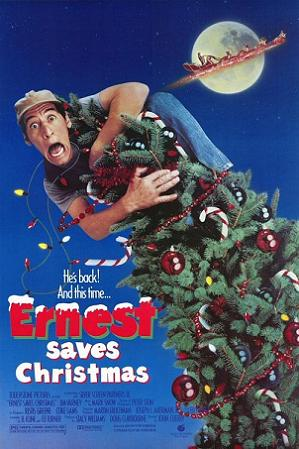
A lot of people are annoyed by how ridiculous and terrible the main characters are, but honestly, have you seen people lately? Most of them are ridiculous and terrible. Think of your own friends: some might be paragons of virtue, but how many have some terrible habits and make dumbass decisions? How many don’t, God love ‘em, annoy the shit out of you sometimes? I posit that if your best friend’s actions have never filled you with rage, you might not be best friends. The show deals in hyperreality. It takes actual personality patterns, exaggerates them until they become semi-caricatures, and then explores the emotional ramifications of human behavior. Yes, all of these people are terrible. Yes, they are too much. The thing is though, that’s the point. Taking Girls to task for being filled with terrible people is like taking the Ernest movies to task because the main character is implausibly stupid.

Come now, a man of his intellectual ability could not save anything, much less Christmas

Even within this implausible framework, the show inserts interactions and situations that are startlingly real. The foundation of the fights between Adam and Hannah might be absurd, but the language they use in fighting and the way they deal with emotional conflict matches reality very closely. I have no firsthand knowledge of this, but my wife informs me that not all, but many of the conversations among the girls reflect how women really do talk to each other, which is “fucking refreshing” when compared to the SATC ladies discussing dick size over mimosas. Also, Girls has a realistic portrayal of post-coital conversation and body language. After sex, Hannah walks around talking naked, because why would you hide your body from the person you just fucked? Think about it – if you had sex with someone in real life, and they immediately tore all your bedsheets off your bed and wrapped them around themselves to hide their nudity, wouldn’t you be a little freaked out? This brings me to a point that isn’t really part of my main argument, but I feel it needs to be mentioned: Hannah is not conventionally attractive and walks around naked, ew! Well, sorry that modern culture has led you to expect only flat-bellied, buxom goddesses to be inflicted upon your vision. Seriously – Hannah’s body type is how a lot of women look, and there is nothing wrong with it. Check your privileged expectations.

Speaking of expectations, Girls is a comedy from HBO, the only show on television that passes the Bechdel test, and because of that, people heap a mountain of expectations upon it, expectations the showrunners never outright claimed or even hinted at. The people saying Hannah represents the voice of a generation, and the other people getting enraged at how bad a picture she paints of the current generation? Dunham never said anything about any generation. Yes, the main character of the show muses whether she may be the voice of her generation, but the main character of the show is remarkably narcissistic and was also high on opium at the time. Oh, all the show’s main characters are privileged and there isn’t enough diversity? Ha! I’m not laughing because that’s not true, I’m laughing because it’s true of nearly every television show. Again, for some reason, Girls is held to higher expectations than other shows, expectations no one set up aside from the people complaining about them. Where is the diversity on Friends or How I Met Your Mother? Where is the exploration of underprivileged characters on Sex and the City, where the four main characters go on endless brunches and shopping sprees, where one is a Harvard-educated lawyer, another grows up rich and marries extremely rich, another is a successful PR executive, and the last is a successful columnist with an on-off relationship with a man of fantastic means? Fuck’s sake, at least some of the characters on Girls actually struggle with unemployment. I’m not saying these criticisms of Girls hold no weight, I’m simply confused as to why Friends, SATC, and How I Met Your Mother get a pass for the exact same problems, whereas the response to Girls is virulent hatred.

This show is really great. My wife and I laugh during every episode, feel feelings for most of them, and are just generally amused and glad this show exists. If you hate-watch it, of course you’re going to focus on all these terrible people doing terrible things, but your perspective will suffer from confirmation bias, where you only see the bad and draw conclusions to support your preexisting idea that the show is terrible. Check it out. It’s great, and unlike anything else I watch on television.


They Made a Video Game Out of The Office: Five Terrible Games Based on TV Shows

0

Mike Hannemann

South Park: The Stick of Truth was released recently for the Xbox 360 and Playstation 3. The long-awaited game had finally managed to overcome development hell and several delays. The final product is exactly what you would and wouldn’t expect for a game based on South Park. All the crude elements one associates with the show are there: racist, sexist, fart jokes… all of it. Here’s the part no one really expected: It’s… actually… good. The development team worked closely with the creators of the show and delivered a definitive South Park experience. The writing is genuinely funny and when you play it actually feels like you’re controlling an episode of the show. But you’ll find that on any review site. Instead, let’s consider how unlikely this was.

Video games based on franchises are usually doomed from the start. Occasionally, movies will be spared from this but then something like the Rambo game will come out (in 2014, and if I could type a year in all caps I would to drive the point home) and set the bar back to square one. This has always been the nature of video games and pop culture. Something is introduced, blows up in popularity, and a video game is released to capitalize on that. Hell, South Park did that several times before this entry. It’s easy to make a quick buck because (insert flavor of the week here) can have a quick tie-in. This was especially true of the 1990s. It didn’t take much to make an NES or even an SNES or Sega Genesis game, so we saw hundreds of terrible franchise nonsense. The Super Star Wars games, while remembered fondly by some, barely even followed the plots of the movies. Hell, even commercials were franchised. I wake up with nightmares of playing games based on Domino’s Pizza’s The Noid or Chester Cheetah.

Let’s give the 1990s a pass here. Let’s turn and look at the past 12 years. Next generation consoles. These games cost money to make. Even when creators were involved, they still missed the mark. I submit the following five entries into the catalog of video games based on TV shows that left a sour taste in the mouth of any fan.

5. Lost

The Lost video game was basically just a middle finger to the fanbase. Lost was a show that was built on mysteries, fans were rabid to find clues hidden in each scene that may or may not mean anything. The creators encouraged it, it let to fan mania. Then, during the middle of season four, a game was released for the Playstation 3 and Xbox 360. The game had the player assume the role of a new survivor, waking up among the wreckage of Oceanic flight 815. The game took place during the events of the show, taking place on various days during the shows run. Plotted by the creative forces behind the show, the game promised “revelations” on the main plot. Not only was the gameplay terrible, you couldn’t help but feel overwhelmingly this was shoehorned in as a cash grab. If any of this mattered, why did characters on the show never mention it? Fans of the show don’t even talk about it. For a show where fans obsessed over what number was on a calendar in a background shot of a dream, I think that’s the most damning thing I could say.

4. Futurama

This one is hard to talk about. Admittedly, I wanted this game to work. Based on one of the better animated sitcoms, the sci-fi nature of the show lends itself perfectly to a video game. Honestly, the story was pretty great. It was funny, deftly acted by the original voice cast, and made fun of a ton of video game tropes (in-game parody was still uncommon at this point). Hell, the show was canceled that year (2003) and again fans were willing to do anything for more content. Unfortunately, no script would be tight enough to make up for poor gameplay mechanics. Transferring a 2-D cartoon into a 3-D world just doesn’t work. The character models were blocky, the platforming was sub-par, and the camera was essentially non-functional. The Futurama game is something fans admit exist, but would never consider bringing up at a party. You know, all those Futurama parties people go to.

3. 24

In a list of sad examples, this one is particularly tragic. 24 is another show that a video game just makes sense to make. It’s a turn-your-brain-off action show. Basically just take a Modern Warfare game and replace the main character with Kiefer Sutherland’s Jack Bauer and there you go. As is the common trend here, the creators and actors were all involved. Released in 2006 and taking place between seasons two and three, this game for the Playstation 2 and Xbox pledged to tell a canonical story explaining the time that took place between the two. For once, this actually MADE SENSE for a game based on a serialized TV show. 24 jumps ahead years at a time between seasons. Logically, something could have happened in that time. The problem isn’t the story. The problem isn’t the acting. Hell, the problem isn’t even the gameplay. The problem is that the game wanders around, not knowing what it wants to be. There are heavy action levels, sniping levels, car-only levels, and puzzle missions. You play as Jack Bauer’s daughter, Kim, in one where you just crawl around in air vents. The game never commits to what kind of game it wants to be, and by making it a “controllable season of the show” it suffers. I remember playing this and thinking it was sad how close to a genuinely good game this was.

2. The Office

Didn’t know there was a game based on the US version of The Office? I apologize for being the one to break the news. Seriously. Next time we see each other, you can punch me in the face, I won’t block. Following the smash success of the early season(s) of The Office, a licensed game was greenlit. It was released only for PC. It was a collection of mini games. Which I guess is the harshest thing I could say about the definition of the word “games.” There was no complexity to it. There was also, coincidentally, no point to it. The saving grace is that it didn’t claim to be anything more than it was. It wasn’t The Office experience. It was a $4.99 mini game pack. I probably shouldn’t complain too much about a game I didn’t actually buy. What needs to be remembered, though, is there is never ever an excuse to release a video game based on a sitcom. Unless it’s a trivia game. And it’s free online. And I guess you’re really, really bored.

1. The Walking Dead: Survival Instincts

I saved the most recent for last because while all of the aforementioned games are insulting in some aspect (even The Office) this one misfired on all cylinders. Think about how hard this is to screw up. The Walking Dead is, and remains, the most popular show on cable television. Ok, it’s also set in the zombie apocalypse which is a video game setting — that is a no-brainer. The more popular characters are back to do voices and provide some background on their past. Makes sense right? The end result of this Xbox 360/Playstation 3 title was a mixed bag of terrible plot points and gameplay mechanics that wouldn’t work with another two years of work. It deliver, though, one true element of The Walking Dead, the show: It left you wondering what more talented people could have done with the property.

(Disclaimer: The Walking Dead is also a game released by Telltale Games that is a huge success, but this is more based on the comic than the show. The game makes no attempt to tie the two together, so I have excluded it.)

So there it is. The worst games based on some of the best shows. These will always be the reasons I worry when I hear about “TV Show! The Game!” being developed, but at least South Park: The Stick of Truth proves the law of averages.

Image source: The Daily Beast

Symbols and Sociopaths: Hannibal Season 2, Episode 4

nbchan

Jonathan May

This episode was really just all over the place. We start out in Will’s head as he teaches Abigail Hobbs to fish; the terrible fishing metaphors fly hard and fast (“the one that got away” could also work as a Katy Perry song title). By incorporating Abigail into his interior space, we’re able to see more clearly Will’s goal in this trial: to lure out the beast in Hannibal and expose it to the light. So Will succumbs to the greedy desire of the hospital psychiatric director for exclusive “therapy” to regain his memories. We’ll see if this pays off in the long run.

But then we segue into an apiarist serial killer who freely admits to her crimes when confronted (albeit in a controlled insane way) halfway through the episode. The swiftness with which this was handled confused me and left me wanting more.

So what did we linger on the most? We see laid out, in brutal coldness, Bella’s acceptance of death as a cure to living. Perhaps the only echo in this episode is the image of the honeycomb, Bella’s body honeycombed with cancer. Just a thought. The whole slow dance toward death Jack must acknowledge is lightened by the novel plot introduction of medical marijuana. As Jack and Bella smoke purple kush, we feel imminently the frailty of even this small moment of levity. And, as the plot gods would have it, happiness comes at great cost.

My prediction that Dr. Beverly Katz would discover Hannibal for what he was came to startling life at the episode’s end. I was riveted in my seat as she gaped in shock at something. I am so, so thankful we did not see what she saw. It’s always more horrible what we imagine ourselves. But this unfortunate interaction could lead to the demise of my favorite character.

All to say, Friday could not come sooner. I’ve been trolling the Hannibal Tumblr and Facebook page, like a dutiful #fannibal, so we’ll see if the story gods repay. If they’re out there, listening, I have but one humble request: better music. The whole episode was plagued with shrieking strings and obvious, eerie auditory leitmotifs. Let’s lay off a little moving forward.

My predictions for this week’s episode: Alas, Dr. Katz is held by Hannibal, but hopefully not killed. Will Graham moves forward with his new therapy and fills in his missing narrative. Bella lingers on; Jack feels it necessary to stay beside her, when Dr. Katz needs him most. And where the hell is Cynthia Nixon?

Jonathan May watches too much television, but he’s just playing catch-up from a childhood spent in Zimbabwe. You can read his poetry at owenmay.com, follow him on Twitter at @jonowenmay, or email him at owen.may@gmail.com.

Hannibal airs Friday nights on NBC. You can read our piece about the previous episode here.

Image source: NBC

Hate-Watching the Girls Season Finale

girls_ep9_shoshana_g_mp_576

Jonathan May

Jonathan May’s original explanation and defense of hate-watching Girls can be found here. This post covers only the season finale, which aired on Sunday.

[Editor’s note: An earlier version of this post erroneously identified this in one instance as the series finale of Girls. It is actually the season finale. We apologize for the wishful thinking.] 

What can I say? All’s well that ends well, and end well this doesn’t. (Pro tip: Never make a Girls/Shakespeare comparison). I spent most of this disaster of an episode hating Marnie for hurting Shoshanna; I do admit that if Shoshanna hadn’t pushed Ray away, it might not have happened at all, but such is the wanton heart. I find myself thinking about the show purely in terms of the romantic engagements, which hearkens back to my theory that the show is in no way (and under no uncertain terms) a comedy, but rather a romance. But for a show all about girls, there is certainly a lot of attachment to boys.

This episode attempts to wrap up a season’s worth of false starts and prolonged miseries. Adam’s sister reappears, and tada!—she’s living with Laird, with whom she’s expecting a child. Then she promptly disappears from the plot. (Situation: resolved?) Marnie, no shocker, feels it necessary to reveal to Shoshanna that she and Ray slept together.Why she feels it necessary is beyond me. In a Western world of privilege, Marnie feels it’s her duty to unburden herself of guilt, rather than keep silent. She does this not for Shoshanna, but for herself, using the guise of truth as a way to assuage her own loneliness by bringing Shoshanna into co-misery. So, my real shocker for this episode was hating Marnie more than Hannah.

Which brings us to Hannah, unavoidably so. Her acceptance to Iowa was a trite and tawdry move on the part of the plot; Hannah lives in a world of limitless opportunity as a writer, even though we never see her writing. Comparisons to Sex and the City noted, Carrie’s main grace as the central protagonist was that the narration began and normally ended with her writing, her articles, because she was a writer. We never see any articulation or actualization of Hannah’s writing, just its end results. Where are the hard hours alone? The time spent putting together an application for a tough-to-get-into program like Iowa? We see none of that, and we’re the worse for it. Missing those moments cheapens the idea of work behind creative writing. We see Adam practicing constantly, Ray reading, Marnie singing, but we never see Hannah writing.

All in all, the episode closes with dramatic flourish typical of an inflated season of histrionics, with Hannah clutching her torn acceptance to Iowa like a sad, frumpy Vivien Leigh. Jessa’s arc throughout the season was the most interesting, and her courage in helping the photographer to end her life (and then save it) was the strongest point of the episode. Jessa makes it clear that at least some of the Girls aren’t just living for themselves.

My predictions for next season: We open in media res after something (?) happens to Hannah at Iowa, forcing a return to Brooklyn. Jessa has finally found herself. Adam is wildly successful. Marnie does something better with her hair. Shoshanna leaves the drama behind.

Jonathan May watches too much television, but he’s just playing catch-up from a childhood spent in Zimbabwe. You can read his poetry at owenmay.com, follow him on Twitter at @jonowenmay, or email him at owen.may@gmail.com.

Image source: Grantland