TV

The Less Things Change: Archer is Back and Still Amazing

Alex Russell

A year ago, some idiot wrote an article about the fourth season of Archer. He said the following:

The agency on Archer feels full and the characters have developed relationships with each other that they can mine for jokes during bigger plots, but no one is in any danger of becoming reasonable or compassionate. That’s how they can keep turning out new episodes without jumping any kind of shark, ever: there’s no shark to jump if no one ever moves.

That idiot was me, and that idiot was wrong.

Archer didn’t jump the shark in season four. Quite the opposite: season four of Archer proved that creator Adam Reed knew his characters better than I did, thankfully. The titular (like I said in my last review, there’s a word he’d never let me say without comment) Sterling Archer managed to do the one thing no one thought he would in season four. Sterling Archer grew a little bit.

So did the rest of ISIS, the spy agency that served as the setting for most of the first 49 episodes of the show. Archer, for the uninitiated, is a show about people in a spy agency trying to succeed before tripping over themselves through relationships, personal conquests, and sometimes (though increasingly rarely) actual spying.

It’s a surprise that season five of Archer will be “Archer Vice” instead of spy show and center around the cast trying to sell off millions of dollars worth of cocaine, but it’s not a big surprise. The show was never really about the spying. The spying and the agency were just there to hold all the characters together. They were there to explain why an accountant, an HR rep, a scientist, and a millionaire were all hanging out with James Bond. Adam Reed thought that the use of the spy elements wasn’t necessary anymore, so he designed this season as a change of scenery.

The season is now two episodes old. How is it different?

The first episode (“White Elephant”) of season five is almost entirely setup. ISIS gets raided and it turns out that none of this spying stuff was strictly legal. Everyone’s headed to jail forever but then, by way of Malory’s uncanny ability to have dirt on everyone, they’re free to go.

Then there’s a five minute montage of clips from “Archer Vice,” and that’s apparently what we’re going to experience over the next few months. It’s all biker gangs and catchphrases and shootouts. The parallels are easy: spies and coke dealers are apparently not so different, and the show won’t really change that much as a result.

The second episode (“Archer Vice: A Kiss While Dying”) is a bit of a step backwards in the joke department, but it gives a much better feel to how the season will work. Carol/Cheryl Tunt is a country singer who only sounds great when no one is watching. This seems like it’s going to be a big part of the season, but it still goes largely unexplored two episodes in. The bulk of the episode is just Archer, Lana, and Pam Poovey trying to execute a drug deal in Miami. It feels like an episode that could happen at any point in the series. When you start to dissect it you realize that it basically has happened before. Most of what I liked about the first episode is absent here, but most of what there is to love about Archer in general is still intact. It’s funny, it’s paced well, and it’s definitely servicing (again, as Archer himself would tell me, phrasing) a bigger story.

The thing I keep coming back to is a joke in the middle of the first episode. Archer and the newly-pregnant Lana Kane are handcuffed to an interrogation desk at the FBI. After some typically silly escape tactics, Archer mentions that the child shouldn’t have to grow up without a father. Lana says that she’d rather it have no father than Archer as one, and Archer starts to cry.

It’s an extremely quick shift in tone. It’s immediately played for a joke when Lana buys into his devastated response, but it does force you to realize that you would believe either result. If Lana actually had hurt Archer by talking about his difficult relationship with paternity (in more ways than one) or if Archer really was baiting Lana into only thinking she had hurt him for a joke, we aren’t sure. We don’t know because Archer the character is more complicated than the scotch-soaked spy of previous seasons. He’s real now.

Everyone’s real now. Cyril Figgis, the accountant, has been constantly played for laughs. He’s slowly become a full-fledged member of the team with his own specific deficiencies and successes. He’s not the punching bag for everything now, he’s the punching bag for his own specific reasons. In the world of Adam Reed, that’s a big damn step up.

And of course: the show was never just about things like Burt Reynolds (“I wanna say Burt Reynolds!”). All too often over the last few seasons the show used the spy narrative to loosely set themselves up for whatever story they wanted to tell, not the other way around. Some things were obviously “why would spies be doing blank” rather than figuring out what spies would actually be doing. Now they are free to tell the cocaine story without resetting every episode and pretending this has to make sense. It just does make sense. It’s “grounded” (sorta) because they’ve already convinced the audience: the gang couldn’t spy anymore, so now they sell coke.

More people are watching Archer now than ever before. That’s fantastic. I thought the show’s success hinged on unchanging characters that everyone grew to love even though they were unlovable. I thought it was just a joke machine. Like 30 Rock, though, Archer has managed to make me care about someone that I thought was more of a symbol than a character. I’ll never call Archer a show primarily about compassion or growth, but the loss of setting goes down smoother because these people finally, somehow, matter.

 Image credit: GQ

In Defense of The Big Bang Theory

Mike Hannemann

Here’s an argument defending why that show currently holds a one out of three thumbs up on my TiVo.

The Big Bang Theory can be a touchy topic to talk about. On the one hand, it’s the highest rated sitcom on TV. On the other, it’s been called incredibly lazy (and even offensive) television. I’d like to point out some word choice there because it’s crucial for my argument.

This show is a “sitcom.” Not a “comedy.” That’s an incredibly important distinction. The two can oftentimes be one and the same, but sometimes a show will draw a line in the sand and decidedly state what they intend to be. Sitcoms are rarely, if ever, truly great television. Cheers  and Seinfeld, yeah, these were sitcoms that redefined their genre. But not every comedy is a sitcom. I’m not saying that BBT is comparable to Archer, Louie, Parks and Recreation, or even Workaholics. A sitcom is a decisive format. There is an X, Y, and Z to every script. There’s even three set locations that most of the major scenes will always take place because they have to be built, on a sound stage, and filmed sometimes still in front of an audience. It’s popcorn TV. It’s something to throw on after dinner. In a landscape of Last Man Standing, Modern Family, The Middle, and Men at Work (TBS is really trying to produce sitcoms these days) my argument is simply that it does deserve to fall on the higher end of things.

Objection 1: The easy joke

Let’s call this one out right away: the most common criticism I hear is that show isn’t funny because it falls back on that stereotypical nerd joke over and over again. That guys who read comics can’t talk to girls and have no social skills and can speak Klingon. It’s the same joke that’s been done on everything, including The Simpsons (hell, that show created the mold many of the characters on BBT are based on). If you can’t get past this fact, stop reading. You won’t be able to access the better part of the show. If you can muster it up to roll your eyes at the softballs there’s something better there.

This is largely character based. Reactions to jokes are just as enjoyable as the comedy itself. The actors can deliver physical comedy and read lines the right way to make it more amusing when on paper it’s probably pretty brutal. You can forgive a comic or even a friend for making saying something stupid in jest if they’re likable. It’s what makes easy jokes OK. A lot of times, something isn’t funny because of the words used – it’s funny because that specific character said it. The more time spent with the cast, the more you appreciate that. More on this shortly.

Objection 2: Interest

Regardless of a show’s writing staff’s ability to write jokes, it’s far worse if they can’t write anything interesting. I would argue that a sitcom with lame jokes but an interesting setting is far more acceptable than a sitcom that’s just boring. A sitcom with puns and fart jokes that can hold your attention is better than anything ABC churns out where you can’t even remember any of the characters’ names by the end. BBT offers something to the television landscape to at least define itself as something with the possibility for stories that haven’t been done to death.

Set at a university and having a majority of the characters academic successes allows the writers to explore cliches in different settings. It’s a sitcom – it’s nearly impossible to think “this hasn’t been done before” but the new benchmark in the genre is “this hasn’t been done THIS WAY before.”

Objection 3: The characters

This is actually the biggest strength the show has going for it. People see the Sheldon character (Jim Parsons’ role that won him Emmys over Steve Carell on The Office year after year) and are immediately turned off. I’ll give ground on this. A lot of the focused on his eccentricities which you can compare to Seinfeld’s Kramer (at best) and Family Matters‘ Steve Urkel (at worst). It’s jarring and off putting – but it isn’t all that’s there. You have to get past this point.

The show wisely realized it couldn’t carry the same joke over and over again for multiple seasons and actually had characters grow and develop to the point where the joke couldn’t be made anymore. Hell, jokes made at the expense of others but all of the main characters are hugely successful over the course of the series run thus far. BBT doesn’t treat its characters as punching bags (well, not all the time) when it comes to real issues – just in the moment of the easy joke. As the characters develop, bits and pieces of lame easy jokes fall to the wayside for the better character driven humor. And better defined characters were added to the current cast.

I’m specifically referring to the women added to the show, this is another. As much as the early seasons relied on Sheldon being… well, weird, to attract viewers the staff added more female characters to the show. Non stereotypical ones that blended naturally with the developing cast. They’re a highlight on the show now and are actually written well. It isn’t the usual Chuck Lorre Two and a Half Men treatment. Sure, there are still stereotypes (it is CBS after all), but now there’s a fully fleshed out cast.

Closing argument:

I doubt this will change any minds as to whether someone will ever watch this show, but I offer this up as an explanation for the millions of people who do. This isn’t ground breaking television. Hell, it feels silly analyzing it this in depth (even though the AV Club does it weekly). But as far as sitcoms go, it’s on the higher end. It’s something to throw on if you have a bad day and just need some popcorn TV to relax. Get past the things people who don’t watch the show already know about it and you’ll find the reasons people do.

The Friday Night Death Slot, Where TV Goes to Die

Alex Russell

Friday night is where television goes to die.The Wiki for “Friday night death slot” reads like a graveyard of shows that you either don’t remember or don’t want to remember. What was Canterbury’s Law? FreakyLinks? Fastlane?

The major networks have extra shows to burn off and they all do it at the same time: 8 p.m. on Friday. When you spend all your time rewatching that one episode of Louie where he drives her to the airport, you can lose focus on what most people are watching. You start to lack perspective.

This is one of the slowest times of the year for TV. This is as good a time as any to check in on Friday night.

I recorded a hour of all four of the major networks. I couldn’t justify the time to watch NBC’s Dracula or CBS’s Intelligence, so I can’t speak to those two. I did made it through four half-hour comedies that are all dying or dead. I am here in the future to tell you that there is a reason all of this garbage is on Friday at 8.

The worst part about it all? Since everyone has agreed that Friday is the wasteland night, no one is trying. No one has the need to get better because they know no one else is in any danger of lapping them.

So what’s on? I survived four shows:

Last Man Standing

Last Man Standing is shockingly bad television. Tim Allen plays the man of the house with three confusing stereotypes and Nancy Travis, his wife. From the commercials, you’d think it was just another show where clueless dad can’t catch a break. It is that, much like Home Improvement, but it lacks the charm of his time as the Tool Man.

Tim Allen works at a sporting goods store. He also is a professional “vlogger” who makes viral videos about his political views and sporting goods. Really let that sink in: Tim Allen makes videos about backpacks and the good old days and that’s his job.

“Vlog” is said about sixty times over the 22-minute episode. No one ever stops to consider making a joke about how no one says “vlog” in the real world, so it’s a little unclear if the writers even know that. No one addresses the fact that these are commercials for a fictional sporting goods store that are somehow popular among teenagers, for no reason. People have a bad habit of saying things are “random” but the unexplained nature of Tim Allen’s career as a viral content producer really must be considered the strangest of the strange.

The episode’s moral lesson is that Barry Goldwater was the greatest political mind in American history. Three different characters mention this. The youngest daughter says the phrase “You know, Dad, I was so hyped to hear your vlog on tyranny.” Last Man Standing is a really, seriously weird show. It comes off as an unconnected mash of elements and it absolutely fails as a comedy. Tim Allen hates Hillary Clinton. The police are a drain on society. Taxes aren’t fair to the rich. The libertarian message in this weird damn show is distracting and it would ruin the show if there was a show to ruin.

My favorite joke is that it was “filmed in front of a live studio audience” but it very clearly is sweetened with canned laughter. Apparently a joke about punching people for being liberals couldn’t carry the room on its own?

The Neighbors

Before you read any more of this – watch ABC’s trailer for the show.

Recently there’s been a weird rethinking of The Neighbors. People seem to have a “it’s not as bad as you’d think” attitude about it. They’re wrong. They are not correct.

The Neighbors is about some aliens that live next to every family from every show. The episode “Fear and Loving in New Jersey” centers around the aliens getting mugged and becoming afraid of the world around them. They don’t know what getting mugged is! They think the guy is trying to trade them a knife!

It has all of the premise of 3rd Rock from the Sun with none of the charm. The acting is all over the place. You really need to see it to understand it. There are lines that are read so poorly that you have to wonder if they filmed the whole thing in an afternoon and just kept the first takes.

Much like Last Man Standing, this show really shows that ABC hates the left. There’s a weird throwaway joke about global warming not being real… but it really gets going when it tries to be “edgy.” With the discovery that one of the characters is a ninja, someone seriously says “ninja please” I mean this it is said by one person to another person.

There’s lots more to say about this, but I must reiterate that this show on ABC made an n-word joke.

Enlisted

Enlisted is the only real new show on the list, and it’s a good one. It doesn’t really make sense to be on this list at all. Why is Fox setting it up for failure?

That’s the question worth asking here, because Enlisted is good television. As much as a bad show can be hidden in a commercial, the ads for Enlisted aren’t doing it any favors. I never would have watched it if not for this whole experiment. I’m glad I did, because there’s actual heart here.

“Heart” is usually a bad word in comedy. Modern Family’s weird voiceovers and the music cues from Scrubs are good examples of how “heart” doesn’t have a lot of room for error in comedy. Seinfeld’s core rule was “no hugs, no lessons.” It’s a good rule to live by.

Enlisted is a military comedy about three brothers. It’s funny, to be sure, but I can’t get over how much the stakes of the show are built up in 22 minutes. People discuss deaths at war. People share real emotions about family and separation. There’s a tank. It’s a lot to handle.

Some of my love for it is that I watched it right after ABC’s disaster hour, but I think it will have a good run of eight episodes before fading away forever because Fox doesn’t care about it.

Raising Hope

Raising Hope has been on the air for a few years and it is on life support. I’ve never seen a second of it before this episode (season 4, episode 11) and I am surprised at how much you need to know to make sense of it. I thought it was about a baby. It’s about… something else.

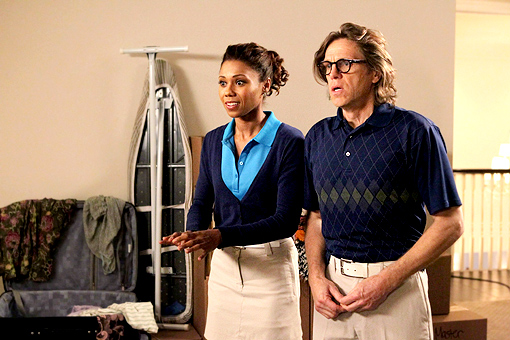
The show is pretty wacky. There are a lot of cutaways and zany physical comedy bits, far more than you’d expect given the tone of the show. The episode I watched had Cloris Leachman teaching a valuable lesson about loving your family and doing more to improve yourself. There’s a baby, but only kinda. There’s nothing to talk about with Raising Hope. It embodies the death slot idea: a show too weird to live, but too good to kill completely. So it will sit there and die, one Friday at a time.

Image source: ew.com

Setting the Tone for Sticking the Landing: CBS’s Approach to How I Met Your Mother

Mike Hannemann

CBS is probably the smartest network on television. Let me immediately clarify that sentence. Their programming isn’t the smartest – not by a long shot. It’s the reigning network king for primetime dramas and comedies, having dethroned NBC years ago. Personally, I devote an hour of my life every week to CBS, two sitcoms are all that interest me. And that’s even on the heavy end of the 25-35 demographic. There are no Facebook updates on Hawaii Five-0 or Sherlock. I don’t go to work and hear people talking about Survivor anymore. In five years? Well, who knows. My peer group may be super into CSI: Dubuque.

I can’t, however, insult the intelligence the network heads have for their scheduling. It’s solid and air-tight. Their dramas compete with the right dramas to win and they smartly place their comedies on nights where other networks won’t be able to compete in the big leagues. As much as I love Parks and Recreation, it’s always going to lose to Two and a Half Men. With no real education in this, I can’t really say that I draw these claims from technical knowledge… just a deep-rooted obsession with TV for the past 20 years of my life. Which is why finding out CBS’ approach to ending their second-highest-rated sitcom was so fascinating.

First, a quick recap: How I Met Your Mother is currently in a ninth and final season. It started as a low-rated test to see if TV audiences would take to a show with a mildly distinct and unique narrative structure – yet also one that could easily be drawn out for, well, nine seasons. It landed and turned into the network’s biggest sitcom after The Big Bang Theory (a quick check of the numbers also puts Two and a Half Men in that category). Like all popular shows, the network wanted to hold onto it as long as possible. But since creative minds finally have at least some say in when and how a show would end, a deal was struck to conclude in 2014. (Sidebar: Can you imagine what that would have been like 10 years ago? When, if even for a moment, network execs would stop and listen to the writers that enough is enough?)

The interesting part is how they’re going to do it.

HIMYM is going to end on March 31st, burning off its final two episodes. One of the highest-rated shows is going out in March, not May. Not with a big finale to compete with the other networks ending their seasons. Instead, on a date that is one of the slowest times of the year for television (the top three of course being November sweeps, February sweeps, and May). The crazier part is that this is in the midst of one of the biggest sporting events of the year: the NCAA tournament. A tournament that CBS airs. It makes no sense, on paper. But when you elaborate on it, it’s genius.

Not that the show needs the advertising, but being able to promote the finale during the tournament is huge. It was already going to be talked-about but now CBS is creating an island in the middle of the TV landscape for this to be the ONLY event. How many times do you think people are going to hear “How I Met Your Mother series finale event” during the course of March Madness? If it’s anything less than 12 per game, I’d be honestly shocked.

Let’s go back to the island metaphor. CBS is creating something unique for the show to land on. This is the only thing happening at the end of March. There’s nothing for anyone else to talk about… so why not talk about this? Viewers who didn’t care much for the show will at least have nothing else distracting them. It won’t be a big week because a list of shows are ending for the season – it’s a big week because one show, THIS show, is ending. And since it all ties back into advertising, CBS looks to increase that revenue as well because of it.

Finally, this basically leaves a spot on the bench to fill at the perfect time. CBS is known for having many comedy pilots that go to series and are canceled because… well, they’re awful (stay in your room, Rob!). But there are always shows with potential for greatness that never get the chance to get there. Creating a seat in the middle of CBS’s comedy lineup after coming off the wave of a series finale and into a wave of rising expectations for everything else ending for the season is the perfect spot to put something new in. Something (hopefully, a little experimental like HIMYM was) that deserves that little bit of an extra chance.

Network TV shows end in a lot of different ways. Some are critically acclaimed but end quietly, like 30 Rock did last year. Some shows are burned off during the summer with networks airing episodes just because they have nothing else to put on. And most end in May, competing with each other for every precious (if arguably obsolete thanks to streaming) ratings tick. CBS has shown intelligence in its programming tactics, and their willingness to take a chance to create a new standard on how you can use a show’s ending to help both creative and corporate parties is nothing short of brilliant.

But then I read about their potential spinoff How I Met Your Father that’s in pilot mode right now and I’m tempted to take everything I just said back.

Image source: fanpop.com

Space Dandy: The New York Times is Reviewing Anime Now?

Alex Russell

In 1998 Shinichiro Watanabe created what turned out to be a very accessible anime series for American audiences when he developed Cowboy Bebop. Bebop was a big hit in the United States, even for people who weren’t devotes of the artform in general. It was an easy to watch, action-packed show with a soundtrack that was “cool” in the way “cool” is supposed to be used. It was flashy, but not bright like Dragonball Z or Pokemon. It was soaked in booze and smothered in cigarette smoke and it was a perfect introduction in style and content to a world that a lot of Americans had never given much thought.

The show ran on the very first night of Cartoon Network’s Adult Swim block of shows in 2001 and continued to rerun through the end of last year. It would be a mistake to say that Watanabe took America by storm and became a household name just as much as it would be a mistake to blindly assume everyone knows the first damn thing about Cowboy Bebop. It’s just more likely that you’ve heard of the show that was supposedly going to be adapted to a live-action version with Keanu Reeves than you have heard of, say, His and Her Circumstances.

You don’t need to know everything about the world of anime to understand Watanabe’s new show that runs on Adult Swim on Saturday nights, but it’ll certainly help. Space Dandy is the story of a man named Dandy who travels the outer reaches of space in search of new species of aliens. He needs to report them to a more-than-global database to make a living and to fuel his real purpose in life: visiting every location of a Hooters-parody restaurant called, well, “Boobies.”

Stay with me.

Bebop isn’t super-serious all the time. The series begins its 26-episode run with episodes about chasing a dog through busy street markets and cheating dealers in casinos. As the story develops the emotional core of the show grows darker and darker until it’s so gritty it gets almost maudlin. Around the sixth flash of a character dropping wrapped roses to the far-away tune of a music box, it brushes against the line between sad and sappy. It doesn’t cross it, though, and in that line lies the ability to make an animated show feel more real than a live-action one.

It’s assuredly unfair to compare Dandy and Bebop. For one thing, Bebop is done. It became much more than the sum of its episodes by the end. Dandy has only had one episode air so far (“Live With the Flow, Baby” which you can watch here) and has a long way to go to develop into whatever it’s going to be. Should you watch it develop? That all depends.

The New York Times praises the animation and calls the worst of the humor “cringe-inducing.” There’s two important things to mention here:

  1.  The New York Times is talking about what is essentially a style parody running at almost midnight on Adult Swim.
  2.  They (for the most part) are doing so correctly.

Dandy (the show and the character) is ridiculous. It’s designed as a parody of traditional anime, which the Times gets right and you can read their piece to read about influences. The first half of the first episode is some of the broadest television that’s ever been broadcast. Dandy’s sidekick (an android vacuum cleaner…kinda) shrieks and worries that they are “breaking the fourth wall” too early. The characters are all ridiculous and if you don’t constantly remind yourself that they’re ridiculous to mock an existing style then they might feel too slapstick to handle.

The parody is so direct that it reminded me of a terrible movie I saw as a kid. Mafia! was ahead of its time in a bad way. It’s also a genre parody that’s the same joke as the Scary Movie franchise. You know mob movies? Here’s every mob movie. That’s the joke! If you don’t know the source material it can feel like it’s just bad jokes.

You should stick around for the second half, though. Dandy captures what he thinks is a rare breed of cat alien, but it’s just a cat. The cat takes Dandy to where the real weird creatures are and the episode picks up from there. There’s no need to ruin the ending, but the variety of creatures and inventive art style are worth the price of admission that the weird opening charges you.

If it sounds like I’m wavering it’s because I am. The bad jokes in the first half are really bad at times and I’m hesitant to recommend this to people as it stands right now. I can do so only because the final animation sequence got an audible “wow” out of me, and it’s really not that often that animation does that anymore. If the show strikes a better balance between the goofs and the interesting universe itself, it will probably find an audience on Adult Swim. For now, though, it’s odd territory on American television that you should still see to believe.

Space Dandy airs Saturday nights on Adult Swim.

Image source: awn.com