Literature

Opinion: George R. R. Martin Is Not Your “Bitch,” He’s Your Dealer

Game of Thrones

Andrew Findlay

Disclaimer: There are no direct spoilers in the review. You might be able to infer something, but that’s it. Also, the most recent book came out three years ago, so if you don’t want to be spoiled by anything ever again, go read that.

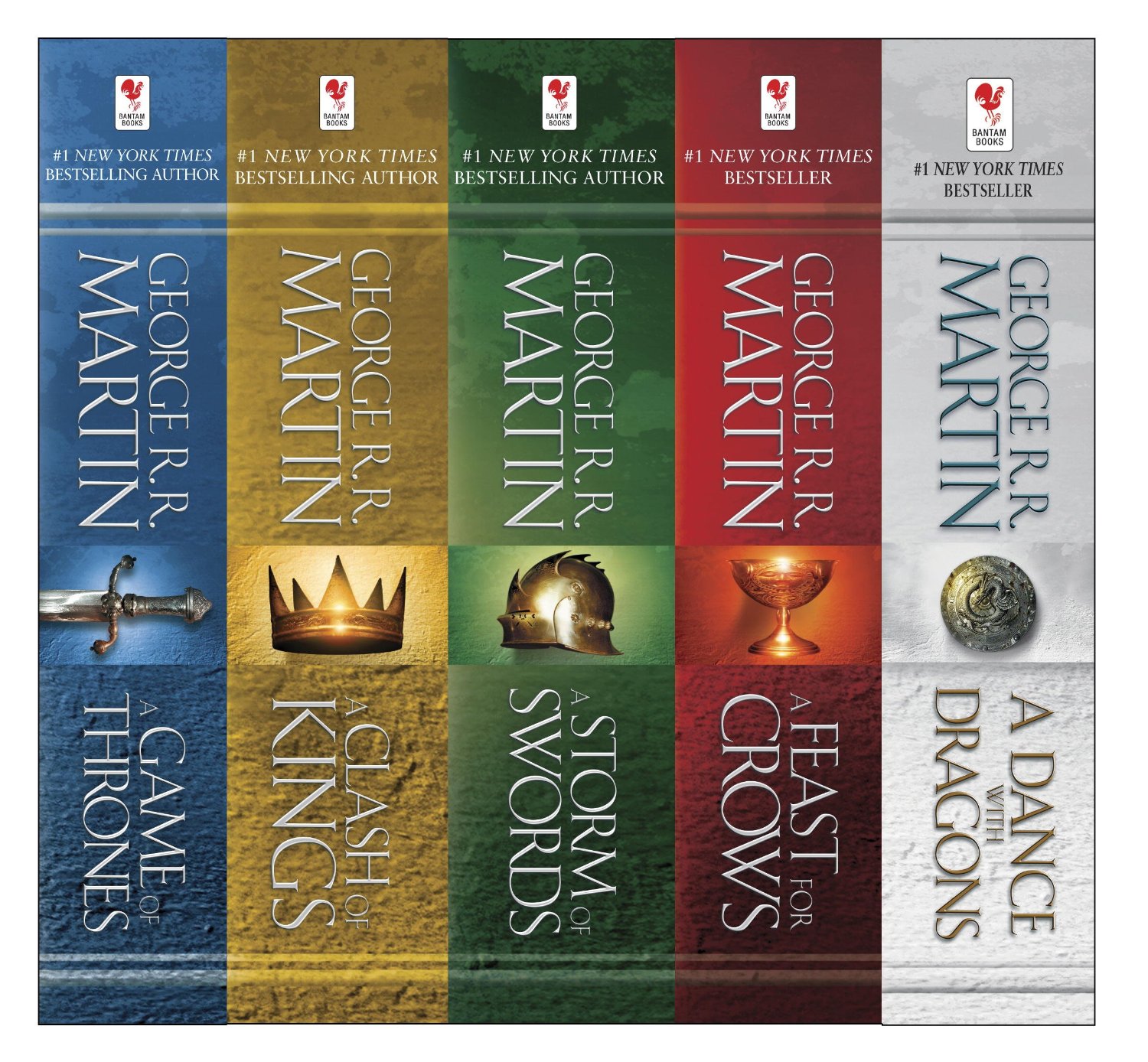
A Song of Ice and Fire is an amazing series. The gritty realism in a fantasy locale, the compelling characters, the whip-crack plotting and suspense – all of these traits combine to forge the cultural juggernaut that is ASOIAF. I love these books. I came a little bit late to the party. I read them around December 2010, 14 years after the start of the series, when the first four books had already been published. I read those four books in one month. The paperback versions for tally up to 3,844 pages, meaning that for the month of December, I read an average of 128 pages a day. That’s how good this series is. For an entire month, If I was not working or sleeping, I was what-the-fuck-noooo-i-loved-that-character-ing my way across Westeros. In the same time and at that rate, I could have read the Lord of the Rings three times, the entire Harry Potter series, or thirteen normal-sized (300 pages, let’s say) books. That is dedication. That is a clear sign of an enjoyable series. The problem is that George R. R. Martin has fans that read 128 pages a day, but he writes .76 pages a day.

The addictiveness and scarcity of the product creates a rabid fanbase composed of people who make strange decisions about these books. For example, a day after the release of A Dance With Dragons (book five, July 2011), I had to drive 15 hours from D.C. to Memphis with my fiancee for the purpose of marriage. She was behind the wheel the whole way, and I read that book the entire 15 hours. Relevant factoid: Reading in the car makes me violently carsick. I ignored nausea for 15 hours to get through as much of the book as I could. When I got home, in a city surrounded by family and friends I see only rarely, I still read at least four hours a day. Luckily, I finished the book before my marriage.

Also luckily, no one played this at my wedding.

Since then, I have been trying not to think about the series at all, because that creates visceral longing for resolution to all the cliffhangers on par with what I imagine someone in the grip of a Schedule I drug experiences. GRRM has created a legion of addicts. Addicts do not respond well when they are cut off from their substance of choice, and in the past three years, there has not been another fix. This has famously led to fans expressing dismay that GRRM watches football on Sundays in the fall, that he works on other book projects, and that he basically does anything but sit in a box with one bald light swinging over his head and a typewriter in front of him. The most crass concern expressed is that GRRM, who is 65, will die before finishing the series. The first few are strange, because Martin has the right to do whatever he pleases. The last one is heartless, as those fans are placing the completion of a series they love over the life of a human being.
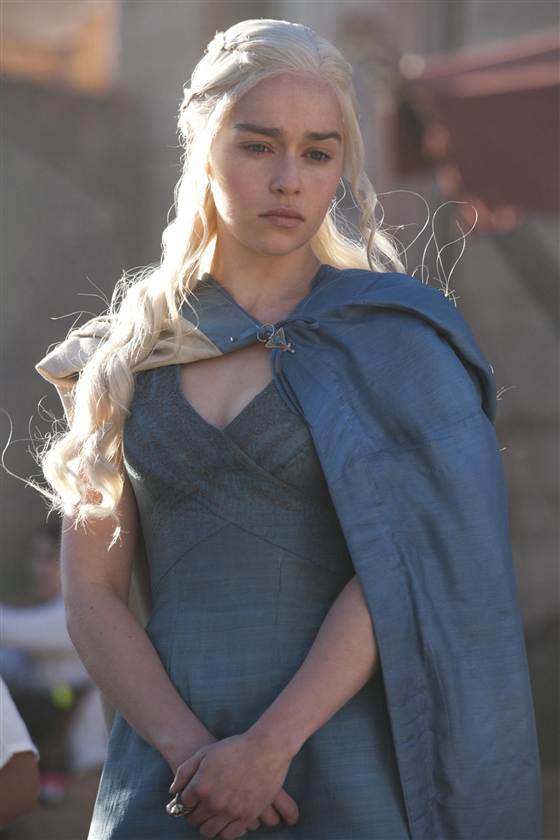
1C6694189-emilia-clarke-photo-keith-bernstein-hbo-2.blocks_desktop_medium

ASOIAF. Not even once.

The problem is that this series, originally planned to be three books but having since ballooned into seven, has been going since 1996. To compare, the entire Lord of the Rings trilogy was published from July 1954 to October 1955. All the way from Gandalf freaking out an innocent Frodo in the Shire to the final collapse and defeat of the Dark Lord (spoiler alert!), readers had to wait just over a single year for the conclusion to a story so massive its weight is felt in nearly every entry into the fantasy genre since (to be fair, Tolkien had basically written the whole thing before publishing the first part). I only jumped on this train five years ago, but some poor bastards have been waiting nearly two decades to get to the station. This ballooning and extension of the books is due to a phenomenon which is weakening the series as a whole: success killing editorial power. The first three books of this series are incredibly, world-changingly good. Books four and five aren’t necessarily bad, but really only bask in the reflected glory of what came before. In a series known for page-turning action, plotting, and suspense, there was a whole lot of material in book four that no one cared about, material that did not do much to advance the plot or tie the main threads of the story together more tightly. Why is this happening? Why are the editors allowing GRRM to bloat the series? It is because, at this point, if he published a book that just said “The North Remembers” and nothing else for fifty pages, everyone would still buy it. Why do we get point of view chapters from people we do not care about? Because GRRM is writing for addicts, and if he cuts the product, we will still buy it. The editors know this and thus give him free reign because their company makes money regardless. ASOIAF is a victim of its own success.
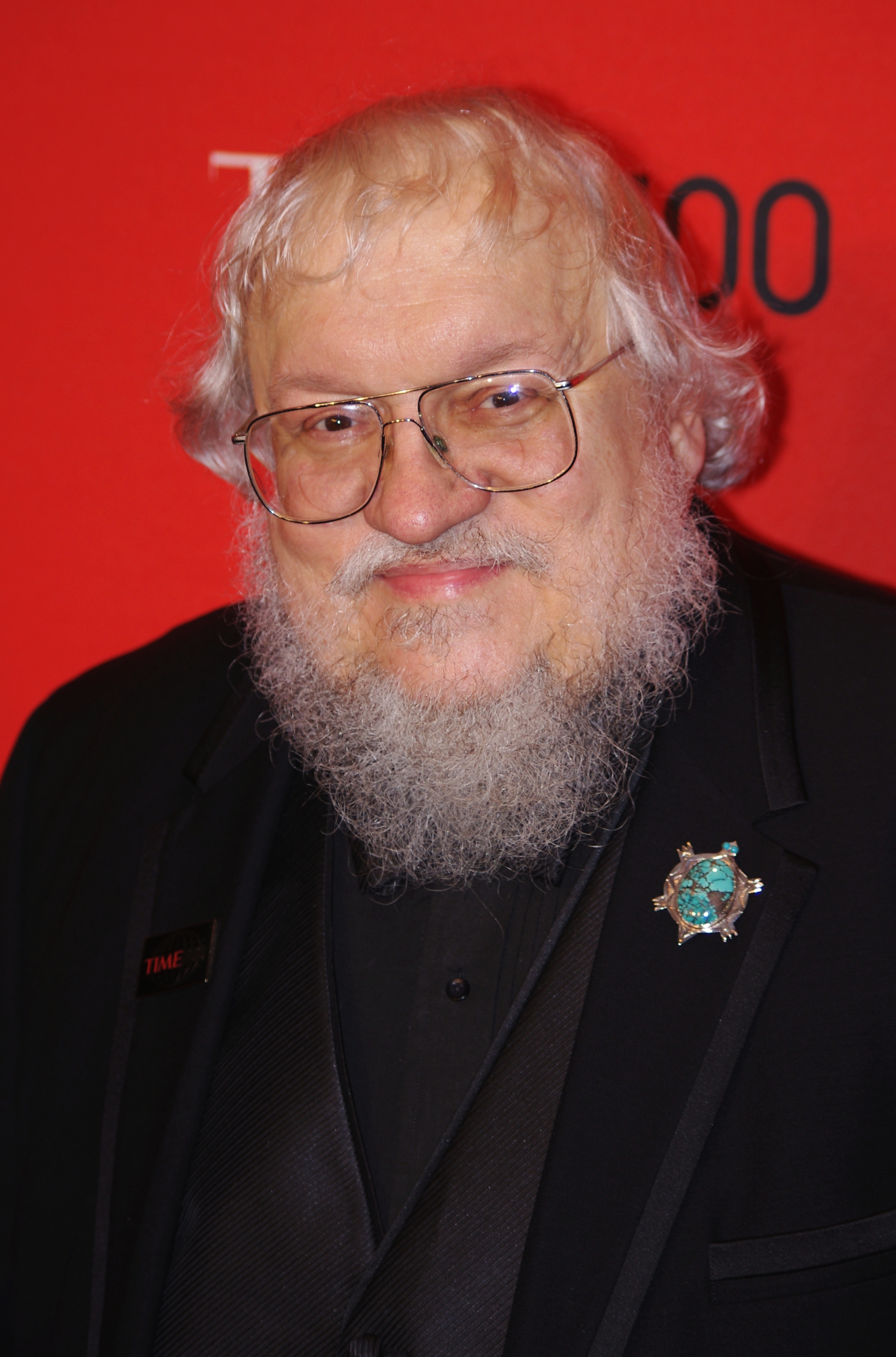
George_R_R_Martin_2011_Shankbone

Pictured: GRRM, escaped from his writing box

Speaking of success, another issue affecting the books is its serialization on HBO. I have yet to watch the show. I’m sure it’s amazing, but something in me is forcing me to finish the books, all of them, before starting in on the show. This may no longer be possible. The show is now halfway through the third of five books, and there is so much fluff in books four and five that the showrunners could conceivably fit it all into one season. Assuming HBO sticks to a yearly production schedule, that gives GRRM one year to write book six and one year to finish it up with book seven. His total output for the past 15years is two books, so unless something drastically changes, there is every possibility I will be watching instead of reading the conclusion to this story.

I do not want to be forced to another medium to find out what happens in the books I love. There is nothing wrong with the show, but it is not the same thing as the books. Not having watched much of it, I can’t speak to specific differences, but it’s clear that there cannot be nearly as much detail to the world – in order to make something watchable, you have to cut it down significantly. The size, the texture, and the depth of the books is part of what makes it for me. The backstories, the tiny defeats and victories for every single character, the flashbacks, the red herrings and true clues packed into the pages of A Song of Ice and Fire are flying through my head right now, and there is no way they fly as thick and fast in the HBO version.

Another strangeness created by the success of the show, because TV popularity is orders of magnitude above book popularity, is that there are new legions of addicts who do not want to be spoiled. A huge event happens at the end of season three of the show (which I did watch on YouTube, because holy shit), and everyone was understandably concerned about spoilers, but that same event happened in a book published while Bill Clinton was still president. If you really care about spoilers and desperately want to know what happens next, read the damned books.

Neil Gaiman famously responded to a fan question about GRRM’s writing pace with “GRRM is not your bitch.” Good response, absolutely true, but a little bit simplistic. When you write something so great that you have a significant percentage of the human population wishing that you would just sit in a box typing for 18 hours a day, there are consequences. One consequence is that you become famous and fabulously wealthy, afforded the freedom to engage in whatever projects you like. Another is that the fervor of fans that catapulted you to the top can quickly turn to anger if they feel you are not fulfilling your obligations to them. It is ridiculous that people wanted Martin to stop watching football so he could write. It is terrible that fans are more concerned about their series concluding than his life ending (although at this point, I’m mildly concerned that my death will come before book seven is published). Even still, George has an obligation to his fans. Edit more judiciously, tie plots together more tightly, and return to the transcendence of A Storm of Swords. I desperately want to see the North remember, and I want to see it in print.

Andrew Findlay has strong opinions about things (mostly literature) and will share them with you loudly and confidently.

What is Reading at Recess? It’s (Popular) Cultural Reading

playground

Austin Duck

Recently, at a party, someone considering coming to write for Reading at Recess expressed her hesitation to me; she said “Austin, I don’t work in a field where we attempt to elevate things. The blog comes off as pretentious, as a bunch of guys with semi-valid credentials writing as if they actually know something, as if they have the cultural authority to write toward taste and value or the knowledge to sort out this from that,” and, I’ll admit, it took me aback.

I never really considered our project here at RAR to be about superiority or ethos-building, a kind of talking from the Silicon tower (if you will), but maybe it is. I don’t know. But I feel like, and perhaps I’m a bit misguided here, that our project is not so much pretentious (if you take a look back at the majority of the posts [mine excluded because I am, in fact, pretentious] you’ll see that most are just fan-boy diary entries) as it is an effort in cultural reading.

As you may have noticed, our title Reading at Recess has very little to do with reading in the traditional sense. Sure, I normally write about books, and Andrew Findlay writes about sci-fi, and Jon May definitely touches on the literary from time to time, but this isn’t, and has never been, a blog about books. Instead, RAR is about reading culture (well, elements of it anyway) and presenting responses to those readings (which, inevitably, are so intertwined with our particular tastes and our socio-economic positions as middle-class men who came of age in America that it’s impossible to separate the objective (Hah, that doesn’t exist! Suck it, Science) from the subjective). I don’t think, though, that this failure of impartiality or this desire to elevate our topics—video games, movies, television, or other cultural miscellany—is useless, invaluable, or altogether insensitive to the desires of our readers to access, be informed of, or make up their own minds regarding the texts (and I use text in terms of any piece of information that we interpret) we focus on. Instead, you could think of our discussions here at RAR as corollary to your own, as models for personal cultural inquiry (though that, I think, might be a bit of a self-aggrandizing vision on my part), or just as our desire to have these conversations with each other and ourselves, a kind of self-obligation we set forth toward always writing, being critical of what we see, using what we know and where we’re from to make some kind of sense of the element(s) of culture that obsess us.

And that’s what cultural reading really is. It’s engaging what obsesses you, exploring it far beyond what most people have with it, a casual relationship, and, most importantly, not interacting with it passively. At this point, I don’t read a sentence in a book without thinking why is that here? What’s it doing? and it’s not because I think I’m smarter than anyone else, nor because I want to be perceived as that guy who does those things. It’s because, at a baseline, I’ve become so involved with literary texts that I want to see what they really are, how they work, how they’re made, and why they’re made that way. Because, however they’re made (and for whatever reason), I too am made that way; I am a construction of the same language, the same culture—possibly we (the text and I) are separated by history, but in that way I am of it, a response to it, the next (or next to next) logical (or illogical but extant) step in linguistic, grammatical, philosophical, scientific, historical systems.

Sure, that sounds grandiose and crazy, and it is, but I’ve written it that way because it’s important. Because that’s how I experience it. I gave up on reading for pleasure a long time ago because I discovered that, through work, pleasure comes in the cultural (and, by extension, the self-reflexive) discovery of the real-to-me, those iterations and patterns and texts that become more than books or movies or games, that become part of my thinking and thereby reveal (if I’m willing to look) what elements of culture inform me and my decisions, what makes me up and allows me to see (a little) beyond the scope of myself precisely because I’m able to see a piece of my self’s scope.

If you’re starting to think to yourself that this project sounds very selfish, that’s because it is. But be real with yourself. You’re not reading this because you care about the content. Good content lives in straight journalism, where writing disappears and all that’s left are ideas. Go to Vox or The New York Times or something if you want that. You come to these blogs to learn about new things, movies you haven’t seen, games you might want to play, sure, but you come here, likely, not for what we’ve selected but why we’ve selected it; because we care. Because it obsesses us. Because every time we sit down to meet our weekly deadline, it’s not rote or filler or because we have to because we don’t. Each of us, in our own small, sometimes glib way, is engaged in a kind of cultural self-discovery and everything the comes with it: the biases, the crass reality, the meaningless, waste-of-time attentiveness, the existential void that opens up every time you realize your entire life is built on the words of others, TV shows, shitty commercials, and movies you were told were good but just aren’t. Cultural reading, then, fills the void, one text at a time, by making sense of it, at least from one perspective, so that we don’t get even more lost.

That’s not to say we’ll ever be found, or find ourselves, or that RAR specifically will help at all. It’s not about help, or us believing we know something you don’t. Yes, we’re writing to you because you are also we (just look at Whitman’s “Crossing Brooklyn Ferry”), but, more-so, to discover why we write, to ask questions we don’t know the answers to, to identify (and, in identifying, attempt to come to some understanding of) the fundamental impasses, paradoxes, hypocrisies, and identifications with the (popular) cultural of our moment that seem, to us, to mean something (or not).

For the love of god come write with us.

Austin Duck lives and blogs in DC. He can be reached at jaustinduck@gmail.com.

Image: NBC

Eudora Welty’s The Golden Apples and How to Write the Way People Actually Talk

Andrew Findlay

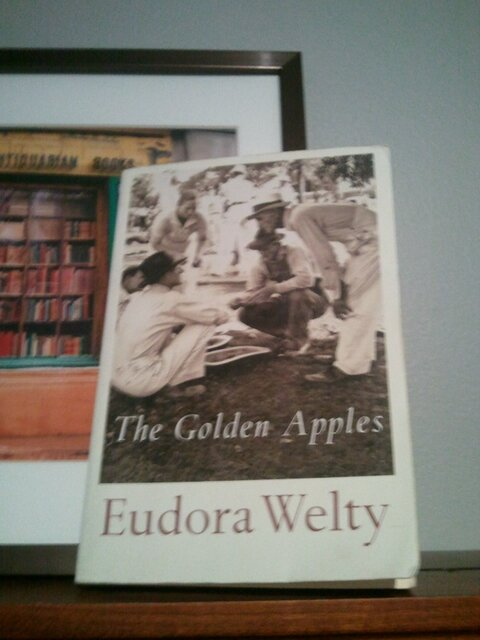
The Golden Apples is a collection of interwoven short stories about a town called Morgana, Mississippi. It explores the people, places and values of the town. It is very similar in structure to The Dubliners, except instead of Dublin it’s focused on Mississippi. Mississippi is a weird place. Like New Jersey, it has very specific associations in the national consciousness. Like New Jersey is supposedly hideous, marred by endless highways, and filled with people who only care about gym, tan, and laundry, Mississippi is supposedly just farmland, devoid of culture, and filled with fat racists. The problem with national preconceptions about different regions is that they are held mostly by people who have never been within 300 miles of those regions.

New Jersey

This is New Jersey.

That is to say – they might be based in part on fact, but the resulting ideas have usually been extrapolated beyond all semblance of reality. Mississippi definitely has problems. One prime example is that in 2009 (2009!) students at a Charleston, MS high school had their first integrated prom. Yea, sure, that’s messed up, but that doesn’t mean the entire state is full of ignorant people. The artistic contributions of Mississippians to American letters are staggering. You have the old, dead greats like Faulkner, Richard Wright, and Tennessee Williams. You have bestselling authors like John Grisham. You have current show-stoppers like Donna Tartt. Eudora Welty was a Mississippi author, and she was the equal, or close to it, of Faulkner. One of the things that made her so great was her command of language.

Her skill with language is two-fold. First off, Katherine Anne Porter once said that Welty had “an ear sharp, shrewd, and true as a tuning fork.” Her dialogue captures exactly how people actually say things, which is one of the first talents to disappear from the output of an author as they slide from first to second-rate. To give an example, this is what one character says in response to a question asking why she spent so long at her sister’s:

“I was comin’ back. Sister’s place a place once you get to it — hard time gettin’ out.”

This communicates the dropped g, the dropped “to be” verb that indicates casual Southern-accented conversation, but more importantly what happens towards the end of the sentence reflects what people actually sound like when they speak – the pause, the abandonment of the old syntax, the start of a new sentence, not grammatically correct, as a new and better way to say what you’re saying occurs to you mid-sentence. Another example, pulled from a group of people talking about a daughter’s behavior:

“Daughter wouldn’t run off and leave her, she’s old and crippled.”

“Left once, will again.”

“That fellow Mabry’s been taking out his gun and leaving Virgie a bag o’ quail every other day. Anybody can see him go by the back door.”

What stands out here is the “Left once, will again.” Completely wrong sentence. Everything is implied, nothing is clear. This is never what people would say in an official paper or newspaper article. Thing is, it’s exactly what people say in conversation to save time. In the context of the conversation, the referents are absolutely clear. Many high-level writers have trouble writing dialogue in a way that does not reflect the correct language drilled into them in grade school. Welty has no such difficulty.

She also just uses language really well. Her diction is not absurdly recherché, but it is dense and powerful. She packs a lot of meaning into collections of simple words, which is more impressive than sending your poor reader to the dictionary endlessly. Following is an excerpt from one of the stories in which Miss Eckhart, the old emotionless piano teacher, surprises her pupils when she plays.

Coming from Miss Eckhart, the music made all the pupils uneasy, almost alarmed; something had burst out unwanted, exciting, from the wrong person’s life. This was some brilliant thing too splendid for Miss Eckhart, piercing and striking the air around her the way a Christmas firework might almost jump out of the hand that was, each year, inexperienced anew.

In simple and clear language, Welty deeply explores the issues of childhood innocence, of the depths of human emotion, and of the discomfort we feel when confronted with the unexpected. This depth-through-simplicity is a feat she pulls off repeatedly throughout the book.

Here she is, looking out the window and thinking words that are probably already better put-together than anything you’ve ever put on paper.

The Golden Apples is a strange book. It does not have a strong message like 1984 about the dangers of totalitarianism or Catch-22 about the absurdities of war. Its themes revolve around the importance of family, identity, and community and the intersection among them, but instead of making a clear declaration about them, Welty is content with exploring them profoundly. Each story moves forward in time, so the reader sees the progression of different important characters as the town and the families within it grow and change. The main impression this book leaves upon completion is density – all the themes, motifs, and characters in the different stories have been exhaustively explored using a minimum of words – meaning is coiled and pressed heavily into each syllable.

Due to how tightly-packed it is with significance, it is not at all a beach read, but it is one of the most important books I’ve ever read. It is a meditation on life, emotion, struggle, and resolution. It does not have the answers, only the exploration. It’s a tough climb, but it’s worth it.

Andrew Findlay has strong opinions about things (mostly literature) and will share them with you loudly and confidently.

Images: Myscenicdrives.com, Brainpickings.org

Life After the Star Wars Expanded Universe: N.K. Jemisin’s The Broken Kingdoms

Andrew Findlay

In Life After the Star Wars Expanded Universe, we take a look at science fiction and fantasy, why they’re great, and what they say about where our species has been and where it’s going.

The Broken Kingdoms is book two of The Inheritance Trilogy. The main premise of this book series is that the inhabitants of this world coexist with and even enslave their gods. There are three main “big G” Gods: Nahadoth, god of the night, Itempas, god of the day, and Yeine, goddess of twilight and the dawn. Any offspring from these three Gods are called godlings, and while not as powerful as their forebears, they have some impressive abilities. Without getting into specifics, I can tell you these Gods have disagreements and war sometimes. During the first book, Nahadoth is actually enslaved by humanity because Itempas chained him as punishment. The humans who had control of him, the Arameri, quickly became the undisputed rulers of the world, because any society that stood against them quickly fell to the overwhelming power of their pet God. The Arameri live in the palace pictured on the book cover – Sky, a castle in a tree. Shadow is the city that has grown under the tree, so called because the massive branches shade most of the city.

The author, N.K. Jemisin, is a relatively new author – book one of this series is her first novel that really exploded. I appreciate how prolific she is: The first book in the trilogy was published in 2010 and the third was published in 2011. That is a whole world, a full story, complete and entire, in less than a couple of years. That is refreshing as hell in the world of The Wheel of Time and A Song of Ice and Fire, the former of which took twenty-three years to complete, and the latter of which has been going for eighteen years and is nowhere near finished.

Praise this woman – she actually publishes fantasy regularly. It’s impressive.

The story she creates in The Broken Kingdoms focuses on the upheaval and changes in a city newly filled with godlings. For 2,000 years, godlings were not allowed in the human realm, but events in the first book ease that restriction, and now they participate in human society. The action of the book starts with the murder of one of their number, and suspense begins high and fast – who killed an immortal, and how did they do it?

The main character through whose perceptions the reader experiences the search for the murderer is Oree Shoth, a member of a marginalized race, the Maroneh. In the distant past, the rich and powerful island that was her people’s ancestral home was sunk beneath the waves by the fury of Nahadoth, the Arameri’s enslaved God. They were given space to settle in Arameri lands but have never really recovered. What’s special about Oree? Well, for one thing she’s blind, but not really.

The not really part is that she is magic – for some reason, she can “see” anything magical. In the enchantment-doused city of Shadow, this means she can get around easily by the glow of magic everywhere, and godlings she can see perfectly clearly, as they are beings of pure magic. Her magical ability also allows her to use paint and artistic representations to open doors to other places. Equipped with normal and godling friends and her abilities, she finds herself embroiled in the conflict bubbling at the center of this murder conspiracy.

Without discussing key events of the book, I want to talk about what is good and bad about this book. The best thing about this book is the mythos – Jemisin spends a significant amount of time explaining the origin of the world. First, there was Maelstrom, massive, incomprehensible, chaotic, feared by god and man alike. Maelstrom produced Nahadoth, god of the night, then Itempas, god of the day. They were brothers and more than brothers, and loved each other deeply. A few millennia later, Enefa, goddess of twilight, dawn, and life appears. Through her, procreation and the genesis of human life become possible. Later, there is a massive conflict among the Three that creates many of the problems explored in this book. The magic system is also interesting. All magic in this world originates in the gods, but in a world where Gods and godlings regularly had relationships with humans, many humans have a little godsblood in them and can channel a bit of magic. There is a competing form of magic wherein ungifted humans, through extreme study and materials manipulation, can use sigils, inscriptions, and artifacts to tap magical potential. Finally, the book has high readability. It’s a fast read because Jemisin follows a nicely balanced intrigue/payoff rhythm wherein suspense and lack of knowledge is set up, satisfied, and replaced by even more extensive intrigue in rapid oscillations, holding final satisfaction off until the last page of the book.

On the bad side, the characters seem a little light. Almost no one other than Oree is fleshed out at all, and even Oree herself is not an extremely complex character. The same lack of complexity affects the plot. It’s just event, event, event, TWIST, keep reading! It’s well put-together, but it’s built like a carpenter building a chair, not an architect building a cathedral. Also, the world surrounding the story is not very well explored. This could be because the books are comparatively short. I wasn’t sure whether to include this feature as a good thing or a bad thing, because Jemisin sketches out a massive world brimming with history by using a minimum of key explanations and events. This strategy can leave the world feeling a little bit hollow and flimsy, but it’s a blessed change from Robert Jordan’s strategy of describing every fold in every garment and the delicate silverwork on the side of every teapot.

You should read this. Some of the story elements are a bit weak, but it is strong on everything I look for in a fantasy: interesting premise for a new world, satisfying exploration of the mythology of that world, and a respectably put-together and exciting plot. Also, you should reward this author for actually finishing her book series instead of stringing people along for decades.

Andrew Findlay has strong opinions about things (mostly literature) and will share them with you loudly and confidently.
The Last Five Minutes of How I Met Your Mother, False Symmetry, and the Teleology of Popular Fiction

himym

Austin Duck

Whether or not you watched the end of How I Met Your Mother, chances are, at this point, you know how it ended. You know that, after nine seasons of Ted’s search for the woman of his dreams, they’re together for less than an entire episode, that the writers decided it best to kill her off and to position Ted and Robin together as a kind of OTP (one-true-pairing for those who aren’t fan-fiction aficionados) fated across dozens of years to end up together. Predictably, the Internet has had two reactions: those who have shipped (another ff term for you all) Ted and Robin all along are delighted, surprised maybe, but ultimately very pleased by the seeming symmetry of HIMYM (with Ted and Robin coming together in the first episode and then, against all odds, again at the last).

And then, there are the others, the ones who are outraged by the narrative violations that have occurred to bring Ted and Robin together, and the major characters who, developed over nine years, are reduced and cut out, subordinated to one-bit characters with forced “revelations.”  These fine folks have taken to the Internet, decrying WORST EPISODE EVER and HOW COULD THEY DO THAT TO BARNEY and HOW ARE TED’S KIDS OVER THE DEATH OF THEIR MOTHER IN SIX YEARS, OKAY ENOUGH TO SAY ‘GO AHEAD DAD, FUCK AUNT ROBIN, WE DON’T CARE’ and, while I don’t normally feel one way or another about tv shows (I mean, I watch them obsessively, but I tend not to care enough to take to the keyboard), I want to weigh in here, not so much about my feelings but about the structural incongruities that seem to have everyone convinced that this finale didn’t quite do what it needed to.

Before getting to the meat of the problem—the problem of teleology—I want to consider the bizarre symmetry attempted in the final episode, in the few remaining minutes after 25 years have been traversed in a few telling vignettes. The last scene, Ted standing outside Robin’s apartment, blue-French-horn-in-hand, while she perches on her window ledge, surrounded by dogs, is taken shot-for-shot (and, for the most part, line by line) from the first episode during Ted’s first “Big Robin Gesture.” (BRG) Between this and the fact that, season after season, the show is actually populated by a series of BRG’s—stealing the horn, inviting Robin to his wedding with Stella despite her wishes, refusing to marry Victoria at the expense of his friendship with Robin, the locket, etc.—one could almost make the argument for coherence, for a consistent, over-arching theme that, while obscured by the minutiae of week-to-week, season-to-season, was always there, hiding in plain sight, brought forward by the symmetrical ending as the point of the show, the issue at hand, the inevitable, meaningful, always already there. Almost.

Unfortunately, this narrative violates the promise that initiates the very reason for the show, the story to the kids… the explanation of how Ted meets the mother of his children. While I understand that, narratively, things happen, characters change, have more chemistry than the writers expected, etc. (I’ll address this in a minute), the show’s framework—the search for Ted’s baby-mama (as the show would have it)—puts pressure on narrative, directs and controls it, in the same way that a sentence front-loaded with subordinate clauses, continuously delaying its main point will create, nay demand, a kind of resolution. Let me demonstrate:

Despite Ted’s feelings for Robin always coming back, and despite the fact that Ted and Robin seemed both to fundamentally want the same things, and that Barney and Robin, as cute as they were, didn’t seem, exactly, to mesh (likely because of the way Barney was rendered as pathological, sick by the end), and even with Marshall and Lilly’s blessing and the support of Ted’s children, the apparatus of the show, promising a resolution of “How I Met Your Mother,” was subordinated, cast aside as not-that-important compared to something that, by all accounts, didn’t really need to happen.

Imagine someone telling you a story for nine years, only to reveal in the last few seconds that it wasn’t important, that there was another story that should have been told, that the hook you’ve been on (and on and on and on) has been sleight of hand.

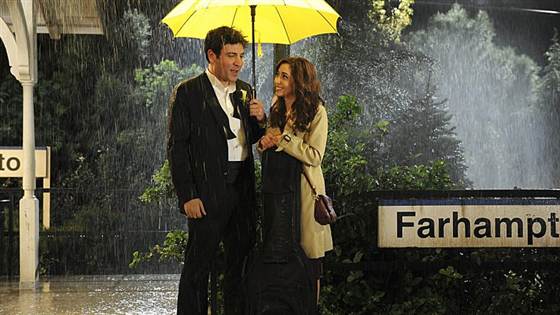
It could happen, I guess, it could work (God knows Anne Carson could make it work), but what starts as a narrative gag had better lead to something larger, more satisfying, more inevitable. And does this? Do the symmetry and the BRGs create an inevitability large enough to make the audience forget they’ve had a big one pulled over on them, that all the wishing for Ted’s happiness, the giddiness at each glimpse of the yellow umbrella, every vision of a lady playing a bass guitar, has existed exclusively so that the writers can give you something you already had and that, ultimately, you were already okay with losing?

Because that’s, really, the problem with the “inevitability” ending: We were all okay with Ted and Robin going their separate ways. We’d been promised someone even better than Robin, and, in a show that crosses nine years in real-time (and 25 years total), we been promised change, growth, that Ted at 27 (the one who fell for Robin) didn’t know what he wanted, that the course of their friendship and their mutual considerations for one another altered them, that they were able to be happy for each other, to consider one another, without being together. We were promised (episode to episode) that Ted and Robin’s friendship would become adult, that Ted would realize his wants couldn’t change hers, the she didn’t want what he was selling, and, until the last five minutes of the finale, that’s what we got. We saw nine years of growth, promise, real tenderness, thrown away—Barney and Robin, so suited for each other in their ways, are torn apart because Robin won’t stop traveling for work (though she was willing to give up her work for a relationship with Don), Barney, the complicated, deeply sick, good-natured friend and lover, reduced to horn-dog caricature so the audience can stomach the split with Robin, the woman of Ted’s dreams, the woman we’ve all searched for for nine years, killed within 30 minutes.

And, as if anticipating our resistance, we, the audience, are characterized as two kids who’ve been listening to this story for years’ we’re denied the ability to grieve or refuse Ted’s moving forward, are told (through our own voices) that mom’s been dead for six years, and Aunt Robin’s great, that the ending, the fulfillment of change, is this that we recognize as a regression, a circle. Sure, if we had six years to “know the mother”—in any capacity other than flash-forward montages—, had known Ted’s grief at her passing, known Ted and Robin’s interactions as an adult, perhaps this could have worked. But as it stands, it just doesn’t.

Instead, the final minutes become just another iteration of popular fiction’s tendency toward teleology, toward forcing an ending because “the writer wants it” rather than “because the narrative demands it.” To cite the most popular instance of teleological fiction, just think about Twilight: It’s clear, even to those only have a passing familiarity with the books, that Bella, the protagonist, has much more chemistry with Jacob (the werewolf) than she does with Edward (the glitter-vamp). The text, and the characters within it, were asserting their own relationships, their own order (as, really, the fundamentals of writing are learning how to listen as a text, a series of character, write themselves), and the author, Stephanie Meyer, ignored it. She wanted an ending that the text didn’t want, and she got it, awkwardness and all. The same thing has happening in HIMYM.

I can’t speak to the writers’ values, why they wanted what they did, or why they’ve made the choices they have. However, for whatever reason, they’ve written (produced, and aired) something not nearly so conscious of the narrative itself as of the hopes and dreams of whoever was writing it which, realistically, no one cares about.

Austin Duck lives and blogs in DC. He can be reached at jaustinduck@gmail.com.

Image source: Today

Breaking Bad or The Wire: Why Pick When You Can Argue Forever?

Andrew Findlay

I.

It is a universally accepted truism that we are living in the golden age of television. Sure, people are still giving Chuck Lorre money and that’s terrible, but in the past couple of decades there have been The Sopranos, Mad Men, Breaking Bad, The Wire, Six Feet Under, Dexter, and absolutely stunning newcomer True Detective. In addition to these heavy-hitters, there’s lot of great stuff like Firefly, Scandal, The Vampire Diaries (it’s great and I’m not 14 I promise), along with quality comedies like 30 Rock, Parks and Recreation, Community, and Girls. Truly an embarrassment of riches. However, it’s a weird quirk of American culture that we can’t just enjoy everything, we have to make a list and decide which is the best. If we can’t judge the quality of these shows and categorize them better than the dumb schmucks around us, what’s the point of even watching? With that being said, this article is about a throwdown between two of the best: Breaking Bad and The Wire. Which one should you smugly assert is better?

Just a quick overview before diving in: The Wire is noteworthy because of its extreme focus on reality. It unflinchingly explores the real world, with the repeated and insistent declaration that hey, it is what it is. The dialogue in this show is truly a joy – especially anything the young asshole cop McNulty says to, well, anyone. Its plotting and pacing are nearly flawless, and it takes time to explore the ravages of the drug war on the communities and cultures of Baltimore. Breaking Bad can deliver excitement like no other show. It moves absurdly fast and is packed with a ridiculous amount of action. In the pilot, the main character gets cancer, decides to make meth, makes the best meth ever, kills a couple of drug dealers, and is ready to get in a shootout with the cops at the end of the first episode. No other show pulls that off in the pilot. It also focuses almost exclusively on Walter White, doing an in-depth character study on the darker motivations and emotions in the human psyche. Finally, it is satisfying in that it has one well-plotted unifying arc that is resolved more perfectly than any other show I’ve ever seen.

II.

The “good guys.” Sort of.

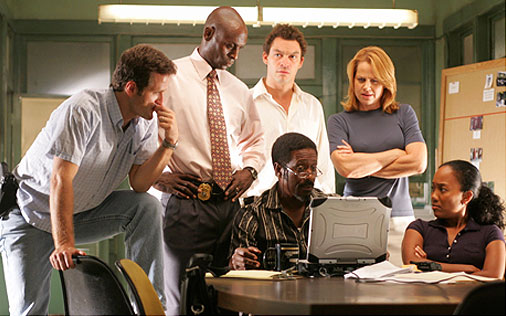
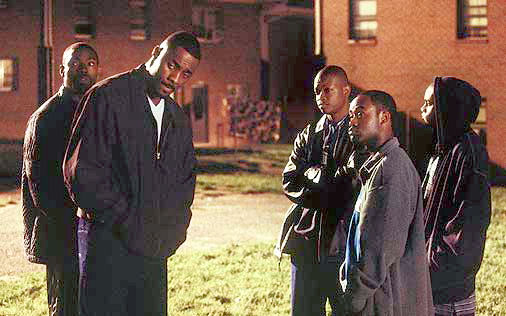
The Wire is a show about drug dealers and cops in Baltimore. It explores the inner workings and power struggles of both the law enforcement apparatus and the organizations actively working to undermine that apparatus. The main character of the show is definitely Baltimore – everyone else is tangential to the trials and travails of the city itself. It is about the rise and decline, and decline, and decline of the American city. What this show does extremely well is focus unerringly on reality. There are consequences for every single action – no one gets away with anything, ever. People do what they do based on extremely complex and murky motivations, but every action is perfect and clear to understand – no character exists in a vacuum. In another nod to reality, there is no good or bad, there are just people. One of the most helpful members of the special crimes unit is an idiot who beat a kid so badly he went blind in one eye. McNulty, arguably the main(ish) character, is a brilliant detective, but he’s an absolute self-inflated asshole, he cannot for the life of him respect his superiors, and he drives drunk pretty consistently. He is unhealthily obsessed with his job. He is divorced, and he has his two boys for the weekend. The fun father-son bonding game he plays with them is called “Tail the Drug Lord and Tell Daddy Where He Goes.” That’s right – he’s great at solving crime, he desperately wants Baltimore to be a safer place, but he involves his children in active criminal investigations. Not a paragon of fatherhood.

The “bad guys.” Sort of.

On the other end, one of the drug dealers, D, kills people, sells heroin, and does pretty much everything you’d expect a drug dealer to do, but also feels genuine remorse about a lot of what he does and is extremely conflicted about the persona he has chosen for himself. In this show, there are no easy or ready-made conclusions – it is what it is. The Wire is weighed down a little bit by its huge cast. I mean, it’s a strength because it allows us to see the plight of Baltimore from multiple eyes and perspectives, but one problem that Breaking Bad does not have is that, with so many characters, the viewer ends up not knowing them as well, resulting in less emotional investment. I had to watch most of the first season until I was clear on everyone’s names. Another thing that hurts The Wire in comparison to Breaking Bad is that each season focuses on a different aspect of Baltimore crime, often with very different casts of characters and settings. This is a strength in that it gives a lot of variety, explores many different aspects of Baltimore, and communicates powerfully that the game is the game no matter where you go, but it also feels in some ways like the same shit over and over again.

III.

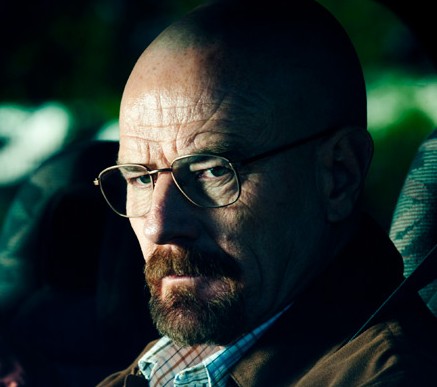
Pictured: the face of evil

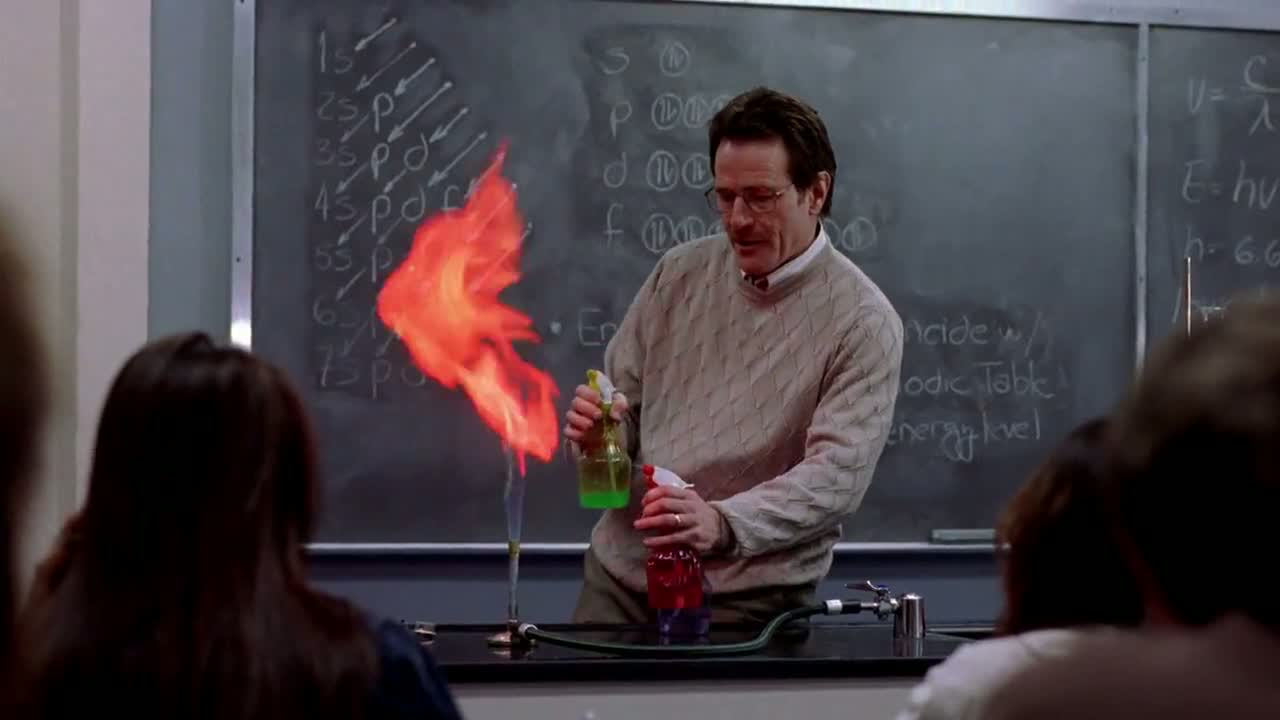
Breaking Bad is a show about a poor, prideful chemistry teacher who has been screwed out of a lucrative job in an Albuquerque-based biotech company. He gets cancer, which is his breaking point. Faced with the near certainty of death, he decides to set things in order for his family by making as much money as he can in the time he has left, both to fund his treatments and to leave something behind for his children. With this goal in mind, he asks to go on a ride-along to a drug bust with his DEA brother-in-law. At this drug bust, he sees one of his old students escaping the police. He hooks up with this student later, asks him to help him break into the meth business, and a criminal mastermind is born. Well, not quite. He has to develop over the course of the show. From beginning to end, Walter White, the main character, is amazing at cooking meth. In an industry where most people are throwing ingredients together, boiling them, and hoping for the best, Walt applies the principles of chemistry to his “cook.” The result is that he makes the best meth that anyone has ever seen. The problem is that he has no idea how to break into the market. He depends on his old student at first, but slowly learns how to become a drug lord in his own right. The show explores the consequences of selling your soul to your own sense of pride. As Walt becomes better and better at what he does, he also becomes more and more ruthless. It is a slow and subtle transformation that takes place over the course of five seasons, but at the end of it, Walt has transformed from a nebbishy chemistry teacher to a truly terrifying figure in the underworld. Breaking Bad does an amazing job with building tension and with quickly developing the plot. More happens in episode one of this show than what most shows achieve in an entire season. With only a handful of characters that are really developed, the show focuses deeply on their emotional development, with the result that the audience feels all the feelings for these people. Also, this show has Bryan Cranston, who is arguably one of the greatest actors ever. Compared with The Wire, on which there is no truly standout acting talent and on which Method Man plays a recurring character, Breaking Bad comes out far ahead in the acting department. The best thing Breaking Bad does is the character of Walter White himself. Showrunner Vince Gilligan hands Cranston a lot of great material, and Cranston does wonders with it.

No wait, it was this one. This one was the face of evil.

The guy slowly turns into an amoral sociopath, but the audience roots for him every step of the way. Why would normal, rational people want to see such an asshole succeed? Vince Gilligan himself put forth a theory that I agree with completely: The Darth Vader theory. Why do people love Darth Vader so much? It’s not because he’s great guy, it’s because he is so terrifyingly good at his job. People like to see competency and skill, and Walt is so fucking smart it’s unbelievable. As one character says to people trying to catch him, “He’s smarter than you, he’s luckier than you.” I’ll say it again: He is so fucking smart that it is just fun to watch him get away with shit because of the ingenuity involved in it. McNulty from The Wire thinks he’s smart? He is an idiot child compared to this psychopath. Walt is an asshole, but he is conflicted. He’s a ruthless drug dealer, but also a family man. He’s arrogant and prideful, but also weak in a lot of ways. These conflicts meld and overlap to create an extremely compelling and watchable character. The only thing that possibly holds Breaking Bad back is that it pushes believability. If Walter White existed in the ultra-realistic world of The Wire, he would be arrested in the first episode. This isn’t necessarily a bad thing, just an area where the show compares unfavorably to The Wire.

IV.

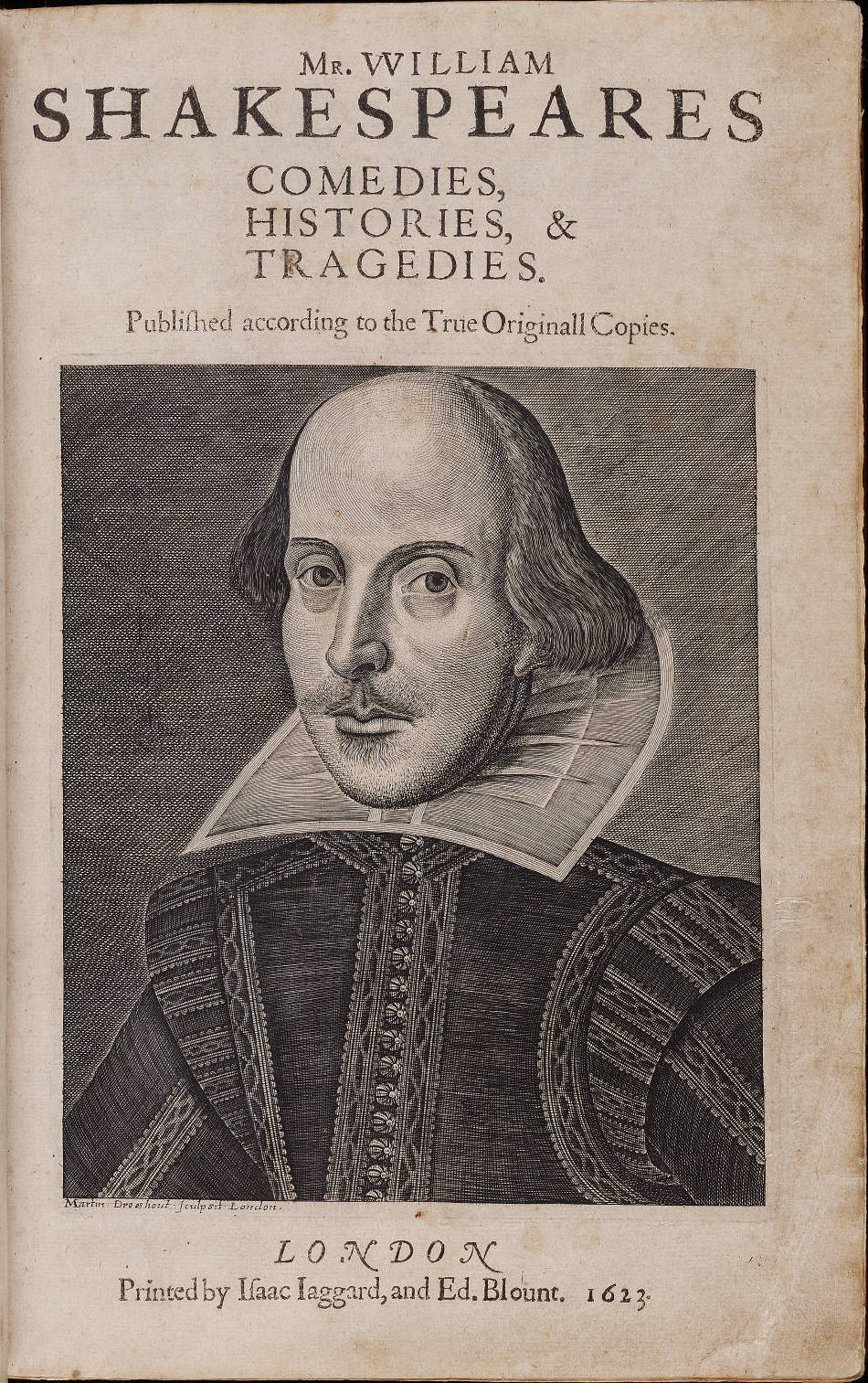
Asking the question “Breaking Bad or The Wire?” is a lot like asking the question “Shakespeare or Tolstoy?” The feel of Breaking Bad has a lot in common with Shakespeare’s plays, and the aesthetic of The Wire calls to mind Tolstoy.

Walter White is almost as amazing as my neck ruff.

First off, what drives Breaking Bad, like what drives Shakespeare’s plays, is an extreme and profound focus on human nature, on characters and the traits that are the key to their rise and downfall. In Richard III, the titular king is extremely clever and ambitious, which serves him well until he ends up going too far and dying on the battlefield. In Hamlet, the main character’s reticence serves him well and keeps him from becoming a pawn of craftier people (cf. Laertes, whose anger at his father’s death allows Claudius to control him utterly). That is, it serves him well until it results in the deaths of basically his entire family. In Breaking Bad, Walt’s intelligence, ambition, and pride serve him extremely well. That is, until they don’t. There are similarities between the two on the believability front as well. Breaking Bad is not hyper-focused on realism, but neither is Shakespeare. Let’s look at Hamlet again: an extremely frank and subtle exploration of human nature and motivation, but in a realistic world, when Claudius sends him to be executed by the King of England, he should have died, end of story. What actually happens is that, on the way to England, Hamlet is rescued by fucking pirates. Out of nowhere, pirates accost the ship and take him away. In The Winter’s Tale, a main plot point of the story is that one character, Perdita, is actually of noble blood but was raised by a shepherd. She was raised by a shepherd because Antigonus, the man tasked with getting rid of her as a baby, is about to keep her because who leaves a little girl in the wild alone, but then, in one of the best stage directions in the history of theater, is chased off and “exit[s], pursued by bear.” In Romeo and Juliet, we are led to believe that no one, not one person can intercept Romeo and tell him “Oh no, just kidding, we’re playing a trick, she’s not actually dead.” Finally, the focus on action and entertainment unite the two. Breaking Bad is full of twists, explosions, and fast pacing. Shakespeare is full of action, intrigue, and swordfights.

Tolstoy liked to keep things realistic.

The Wire is more like Anna Karenina. There is an extreme focus on realism. For a lot of the book, Anna Karenina is just Russian dudes walking around doing shit in Russia. Like The Wire, it engages the sociopolitical issues of the day deeply and unflinchingly. It also has the same character pattern as The Wire. There are a ton of characters, nearly all of them are well-put-together and well-explained, no one is a cardboard cutout, but still, with so many it’s hard to focus very closely on just one (with the exception of Anna herself). The focus of Anna Karenina, like The Wire, is on psychological realism and the consequences of people’s actions.

V.

So that brings us back to the question posed at the beginning of this article: Which one is better? I think more than anything that is just a poorly formed question. Both shows are so different that they are hard to compare. Both are absolutely amazing, and at this level of television, it’s hard to objectively declare one thing better than another. I personally prefer Breaking Bad to The Wire, but telling someone who prefers The Wire that they’re wrong is a really hard case to make. Some people prefer Shakespeare to Tolstoy and vice versa. Both are amazing, both are flawless artists. Much like those two authors, neither of these shows really does anything wrong, so it’s really hard to call, but ultimately, it’s not necessary to call. Just watch and enjoy your damned television.

Andrew Findlay has strong opinions about things (mostly literature) and will share them with you loudly and confidently.
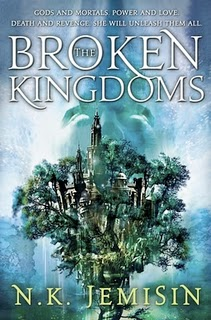
Image sources: AMC and HBO

What the Story of Two Women and a Cheating Bastard Says About Video Games as Literature

192444-222

Alex Russell

You are a real bastard.

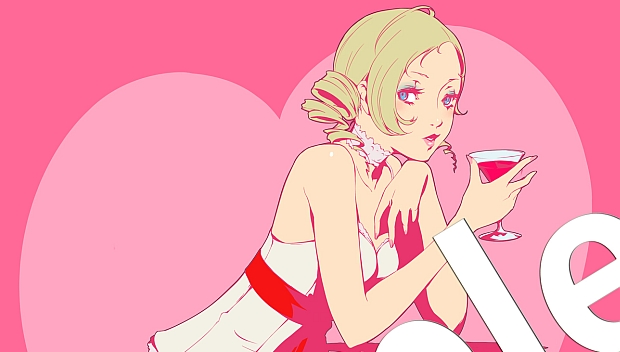
Well, you are when you’re Vincent Brooks in Catherine, a 2011 multi-platform release that shocked the video game world. It’s a unique part-puzzle part-simulation game based on the morality of choice and what people do when no one is watching.

You play Vincent, a 30-something guy drifting through both life and an aimless relationship with a woman named Katherine. Katherine wants to get married and start a life, Vincent wants to avoid making any big decisions. Katherine wants to have long lunch dates about the future, Vincent wants to get drunk with his friends at the corner tap.

Depending on how stereotypical your life is, this may be hitting pretty close to home.

The story unfolds through cinematics where you watch Vincent and Katherine try to reach an understanding on various issues. It feels very real, even if the relationship itself feels flimsy. People really are scared to commit. In most narratives this would be where there would need to be a discussion of gender roles, but dear Vince has to be the nervous manchild here, because of what happens when he goes to sleep.

When Vincent sleeps he is forced to climb towers. These play out as incredibly hard puzzle elements which start unforgiving and somehow get even more brutal as the game goes on. Vincent must climb to escape something he fears — always something Katherine mentioned during the day — and reach the top of the tower to run away rather than facing adulthood, children, marriage, or whatever it may be that night. A good example: one is a horrific, monstrous baby that knows Vincent is the father.

It’s a strange game. Every night ends in the same bar, where Vincent recaps his day with Katherine to his buddies who are also in various states of arrested development. It gets extra complicated when Vincent wakes up with a (younger, blonder) woman also named Catherine, spelled with a C. Everything goes full cliche with the entrance of a younger temptress, but the world of Catherine the game needs these cliches to make choice seem as stark as possible.

It’s important to note that both Catherine and Katherine are full characters, and Vincent’s actions constantly reveal him to be a dipshit. “Competent woman/incompetent man” is a stock relationship in a lot of forms of narrative, but Catherine is interested in more complex interactions. If Vincent’s choices make him act like an asshole to either woman, that woman will respond in a full way. Neither of their lives revolve around Vincent, and even though the story plays out through his eyes, it isn’t a story of two damsels hoping that their prince will pick them.

Every decision made in the game influences a meter that tilts between good and evil. If you’re connected online, the game also tells you what percentage of people around the world made the same choice. This allows for a certain molding of Vincent – he can either accept Katherine and all of the joys that come with adulthood, or he can hide in youth with Catherine and escape for a little longer. The meter is clear which is the “good” choice, and to borrow a line one of the monsters you escape from screams at you: take responsibility.

These choices influence the ending. There are nine options, which mostly follow the traditional Dungeons and Dragons school of morality: neutral good, lawful good, chaotic evil, etc. Can a game with multiple endings still be literature? It’s a fair criticism that there isn’t “one” story since you can end up in a multitude of different situations with Katherine and Catherine. Without giving it away, though the game has nine endings it has but one lesson. There are variations, but the game constantly reminds you that escaping your future is only temporary. Not taking the phone call from Katherine because you think she has bad news only delays it. You have to deal with the people in your life – including yourself. Even if a sadistic otherworldly being won’t throw you in a tower with a bunch of sheep to enact metaphors every night as you fight for your life, the bell will still find a way to toll for thee.

It’s a solid narrative that is shaped by the world it exists in. It feels very Japanese at times, but it generally just feels like a world we’ve all definitely been in before. It also “reads” well because all of the gameplay is separate from the narrative structure in the bar. It’s a nice companion piece to the type of literature that people read when they first realize they aren’t a teenager. Catherine is the story of someone’s 20s. It’s about realizing that interactions with other people matter — to others and to ourselves — and it tells the tale of what happens when that falls by the wayside as well as anything could.

Alex Russell lives in Chicago and is set in his ways. Disagree with him about anything at readingatrecess@gmail.com or on Twitter at @alexbad.

 Image source: Destructoid

Anne Carson’s Red Doc> – An Artwork on the Edge of Sense

red-doc_2615908b

Austin Duck

In Read This or Kill Yourself we get tough with you about your bookshelf and what had damn well better be on it.

Where you headed /
bit further along the road /
why

you running / oh I often do
/ are you

meeting someone / yes
/ who / a stranger / how
will

you recognize each other /
in a strange way / strange

to both of you / that

would have been a
problem / it’s no longer a
problem / no

(p. 119)


To call Anne Carson’s work, in general, very difficult would probably be an understatement. I mean, it’s not inaccessible nor is it written in cryptograms (though, for a very interesting interpretation of conceptual, cryptographic poetry, check this out), but it’s definitely the kind of work that, if you found yourself on an overseas flight—or stuck on a very long journey—and all you had was Red Doc>, you might be a little upset. But you shouldn’t be.

Red Doc> is a kind of follow-up to Carson’s 1998 title Autobiography of Red, a myth-in-novel-in-verse (thing) retelling Herakles’ tenth labor, to kill Geryon, from a different perspective, instead exploring Geryon’s coming of age, coming to terms with his homosexual love for his pal Herakles, and his artistry as a photographer. What may be most vital to understanding about Autobiography of Red, for my purposes anyway, is that it makes sense. It’s clearly more committed to behaving like a novel-in-verse, a transmission of plot with moments of elevation. It’s coming of age, at times moving, and well reviewed by The New York Times Book Review. Red Doc>, on the other hand, is not. In fact, why don’t you take a minute to peruse other reviews of this book. Seriously. I’ll wait.

Whether you chose to or not, what you’ll find is that, largely, no one knows what to do with it. Daisy Fried of The New York Times praises Carson, recommends you read it, and goes on to call it a failed novel but that it “succeeds at linguistic confrontation” (whatever that means) while The Guardian goes a bit further, kind of paraphrasing the plot (because yes, there is a kind of plot) before ruminating over the title itself. Both agree that the heart of the work (because both reviewers believe poetry has such a thing) lies in Geryon (here G)’s final conversations with his mother at the end.

For the time being, though, I’d like to avoid talking about the ending, the place where we see a somewhat traditional rumination on time, mortality, mothers and sons, etc. because there are approximately 150 pages that deal with all sorts of other, in my mind more vital (and certainly more useful), thoughts, ideas, and tropes. Buckle up; this will be as silly as it is pretentious.

Let me get the kind-of plot out of the way. The book opens on G, middle-aged, having trouble coping with age, the loss of his looks, his friends, while still (sort of) tending a herd of musk oxen. He meets back up with Herakles, here Sad But Great (Sad for short) who’s deeply troubled with post-war PTSD, and they go on a kind of picaresque road-trip with the artist Ida to a glacial lake (which features a glacial rift leading toward a cavern filled with “ice bats” who live in—I kid you not—Batcatraz), and then to an autoshop / clinic, presumably for people with mental health issues. There are volcanic eruptions and riots and eventually G returns to his mother.

The plot, though, comes across as kind of meaningless. And maybe it is. Even Carson, talking through one of the characters in the book (I tried hard to find it; I really did), claims that plot is a house and poetry is the man on fire running through it. So why have it at all? Why waste time jerking us around, forcing us to re-orient ourselves again and again in different, less and less comprehensible situations, obscuring real understanding of G or Sad of Ida or 4NO, each characters who—whether haunted by the past or the rapidly coming future (4NO is a prophet of five seconds into the future)—are unable to access the present moment. Why not just write a book of poems thematically structured so that we may comfortably interrogate the man on fire?

I think that, for two reasons, the answer lies in the poem/section I provided in the epigraph. First (and probably most obvious) is that this book isn’t an interrogation of a single character; it works as dialectic (a conversation between at least two parties). Many of the poems are structured as conversations, and, section to section, character to character, what we are left with is this. Try as we might, there is no patterned similarity or concern linking these various players. They’re just, fundamentally, different. But wait Austin, I’m sure you’re thinking (because I’m thinking it too), what about the fact that none of the mains can access the present moment? That each is driven, in some way or another, by some subconscious concern, be it the past or the future? Isn’t that a pattern?

Yes. Yes it is. Sort of. However, to simply link these characters together—one obsessed with his aging body, his sexuality, his herd, another whose mind is ravaged by way, another who’s only access to the present is only seeing five seconds into the future—under such an abstract pattern is incredibly reductive. It seems that, were we being asked to drop the specifics of each concern, to generalize and lump together each character to fit our idea of coherence, what’s lost is profoundly strange and profoundly real. Yes, I do think that the pattern of similarity is important—it is, after all, what makes us culturally (maybe even ontologically) recognizable to one another, empathizable with one another—but I think that, with the jumps in plot considered against the organization of the book (which poems/sections come after each other), we’ll see a kind of freedom, an intentional strangeness that’s pointing toward itself.

Which brings me to the second reason I chose the epigraph that I did: the lines “how will you recognize each other / in a strange way.” What we’re being pointed toward, even with the goddamned > in the book’s title, is not simply Anne Carson’s I’m a super badass hijinks. Instead, it’s a statement of strange recognition, a new kind of identification that occurs beyond what we, as a culture of people, are conscious of. I’d bet dollars to donuts (because I love donuts) that the majority of you look at the title and think that looks like a file I’d save on my computer, and it is! That’s the whole story of how Carson titled the book. But beyond that, it’s a piece of information that communicates similarity and similar understandings to us despite the fact that, linguistically/grammatically/philosophically, it is meaningless and just plain strange. The surrealist picaresque plot of the book, then, the organization, the characters’ relationships with one another, the fact that this is sort of a novel, doesn’t exist to create what most of us would classically think of as coherence. After all, we all know what a novel does: It uses plot to move a theme toward resolution with characters either furthering or impeding that progress. And a poem: It’s a pattern of language that makes the incoherent cohere. Here, we have those things, but also we don’t. As much as there seems to be a plot, seems to be patterns coalescing toward an identifiable meaning, there isn’t. What we come to instead is a profound strangeness and a profound identification alike (with characters and poems and forms and genres), an experience of the unheimlich, the uncanny, a thing both twisted and recognizable, home and not. We see the human, the mythic, the literary, the poetic, the cultural, and, at the same time, we see none of it, just strangeness, some unidentifiable piece of work existing completely on its own and in a vacuum.

When I made the statement in the title that Red Doc> exists on the edge of sense, I meant that sincerely and even as a kind of celebration. This is not a conceptual poetry that can’t be read, but, at the same time, it certainly isn’t the kind of poetry or novel that you’re likely used to reading. It’s an artwork of the mind and its reality, of the dissimilarity that each of us knows to be true about ourselves and, ultimately, what it means to connect with another, to be alongside them in life, on a journey, in time when this is the case. To never escape our shit while moving forward through time. To be with another and to know nothing of them, to see their cruelty and damage and violence and insanity and their capacity to care, to feel, to empathize and identify. To “be / suspended in the lives of/ others and still not.” This is a book about being.

Austin Duck lives and blogs in DC. He can be reached at jaustinduck@gmail.com.

Image source: Telegraph

Life After the Star Wars Expanded Universe: Jose Saramago’s Blindness

Andrew Findlay

In Life After the Star Wars Expanded Universe, we take a look at science fiction and fantasy, why they’re great, and what they say about where our species has been and where it’s going.

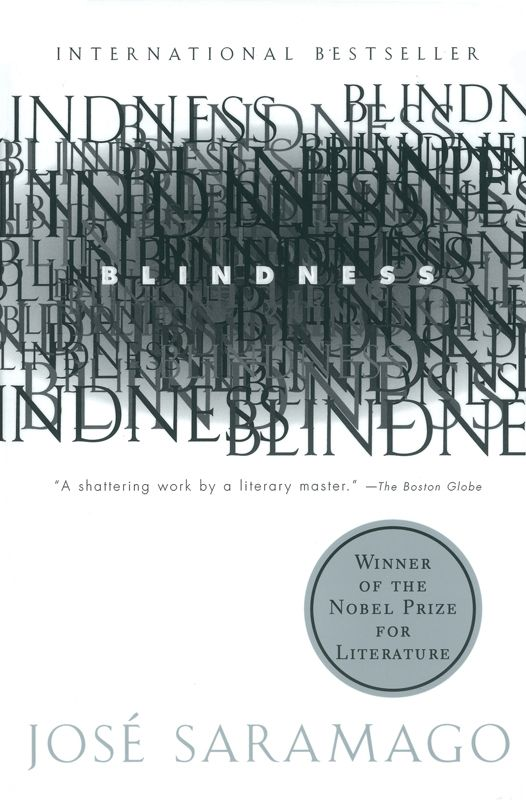
Blindness is a novel like Infinite Jest in that it has strong science-fictional traits, but many would throw out terms like counterfactual or speculative instead of going whole-hog and calling it SF. I’ll just say the main premise of the book and let you decide for yourself: In an unnamed city in an unnamed country, people are going about their lives as normal until suddenly, out of nowhere, people start going blind. There seems to be no contagion, no reasonable epidemiology to explain why this is occurring. Some people go blind, some do not. The blindness is not a lack of sight, but a complete whitewashing of your vision – all the stricken can see, all the time, is a wall of white.

The greatest SF explores what happens to society in the face of great change, and that’s exactly what Blindness is going for. Saramago takes away one tiny little thing – sight – and it completely upends the world. The first man to go blind does so at a stoplight, so when it turns green he does not move and pisses a bunch of people off. When those around him understand that he’s been struck blind, they get less angry and one even offers to drive him home. In an action that foreshadows the societal breakdown to come, this shitty samaritan then steals his car. He is the second person to go blind. The government’s response to a seeming disease that they can neither control nor understand is to freak out and force everyone affected to into an old asylum that they have repurposed to house them. A large portion of the book takes place in this asylum, and it is there that Saramago explores in depth what happens to people when they are pushed to the edge.

This seems like a rational response to people going blind.

The main characters of the novel, as much as there are main characters, are the doctor and his wife. The doctor, hilariously, is an ophthalmologist. His wife is inexplicably not affected by the disease – she pretends to be blind so as not to lose her husband to the asylum. In the first group of asylum inhabitants, this pair serves as the voice of reason and tamps down the group anxiety to manageable and sane levels. They build a tenuous society within those asylum walls, which are patrolled by soldiers who will shoot them if they attempt to leave. Nothing lasts, and everything is subject to strain and decay, so however much those first inhabitants can work together, their way of life is shattered as the epidemic builds up to full steam and the asylum is flooded with the newly blind. In the beginning, soldiers would send them food, now there is not enough. In the beginning, the inhabitants would share and work together, now gangs are forming and fighting with each other for food and, horrifyingly, women. It used to be possible to maintain some cleanliness, but with the facilities overflowing with people, the latrines overflow with waste. Blind, imprisoned, and with all agency taken from him by the authorities, the doctor keeps a stiff upper lip, but his breaking point is trying to use the bathroom:

The stench choked him. He had the impression of having stepped on some soft pulp, the excrement of someone who had missed the hole of the latrine or who had decided to relieve himself without any consideration for others. He tried to imagine what the place must look like, for him it was all white, luminous, resplendent, he had no way of knowing whether the walls and ground were white and he came to the absurd conclusion that the light and whiteness there were giving off the awful stench. We shall go mad with horror, he thought. Then he tried to clean himself but there was no paper. He ran his hand over the wall behind him, where he expected to find the rolls of toilet paper or nails, where in the absence of anything better, any old scraps of paper had been stuck up. Nothing. He felt unhappy, disconsolate, more unfortunate than he could bear, crushed there, protecting his trousers which were brushing against that disgusting floor, blind, blind, blind, and, unable to control himself, he began to weep quietly.

There’s a lot going on in this excerpt. First off, it communicates the horror and squalor of their physical situation: this character just identified shit by his sense of touch. He’s stuck in a bathroom where no one can ever hit the target because no one can see it. His sight is gone, but his smell is not, and his surroundings assault it powerfully. Secondly, it highlights how difficult and degrading the simplest tasks can become when we lose one simple thing. Sure, of course blind people cannot drive, but the frightening thing about this novel is that all these newly blind people who have not had time to adjust to their condition struggle even with wiping themselves. Thirdly, it explores the spiritual effect this lack of ability has on people. In this excerpt, we have the doctor – married, successful, in the business of confidently helping others – sitting in a shit-stained bathroom unable to take care of his most basic physical needs. His lack of control in the physical world leads directly to his loss of emotional control, which results in him weeping quietly in a bathroom.

When this is one your main nemeses in life, you are in a bad spiritual place.

This helplessness and despair eventually spreads to most of the city. The guards start falling prey to the blindness epidemic, and, in the absence of soldiers or any overarching social order, the inmates wander out of the asylum and stumble through their transformed city. Blindness demonstrates intensely and convincingly exactly how little it would take for our society to crumble. Everyone is familiar with the idea of the world ending due to violent illness, resource scarcity, or nuclear war. It does not even take that much – the world will end if filled with a bunch of perfectly healthy people who have lost the ability to see. Evolutionarily, this makes sense. Sight is humanity’s primary sense. In the way way back, it, along with bipedalism, gave us an advantage in our primal environment: we could stand taller and see farther than other animals on the plain. We no longer need to hunt for and run from other animals, but the primacy of sight still exists. Think about it: When cops are searching for a fugitive, they don’t put his scent on the APB, they put his image. Movies and television, two of the most popular forms of mass entertainment, require sight to fully enjoy. Reading is, has been, and for the foreseeable future will be the main method of information transfer in our society. Without sight, you would not be able to understand this article. When sight disappears, a big part of how we adapt to and interact with the world disappears with it.

Science fiction is an exploration of humanity in extremity. It imagines a different world and explores how we deal with it. How does a man condemned to perpetual loneliness in Moon deal? How does a man who has come unstuck in time and exposed to all the psychological awkwardness of that state in Slaughterhouse-Five deal? How do the handful of survivors of a world-wrapping biopocalypse in MaddAddam deal? Saramago crafts a beautiful and concise exploration of humanity in extremity by changing one tiny aspect of our current world. It’s not even in the realm of SF that people go blind – that happens daily. The only change Saramago makes is that it happens inexplicably, and it happens to everyone. He pulls at one small string, and the entire fabric of human society unravels. It is important to keep in mind how fragile and impermanent our way of life is, and how little it would take to completely wreck it.

Andrew Findlay has strong opinions about things (mostly literature) and will share them with you loudly and confidently.

Image sources: Wiki, Amazon

Read This or Kill Yourself: The Invention of Influence by Peter Cole

Invention_of_Influence_300_448

Austin Duck

In Read This or Kill Yourself we get tough with you about your bookshelf and what had damn well better be on it.

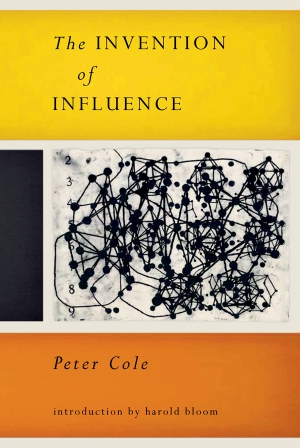
“Who wants to read Kabbalist poetry?” asked no one, ever. In fact, when this book was recommended to me (I’m a sucker for New Directions Press and a friend said it was pretty good), I didn’t have any sense of what a Jewish poetry might even look like, much less a Kabbalistic Jewish poetry. Yet here we are, and I can’t recommend it enough.

Really, truly, this book (parts of it anyway) are knock-your-face-off-shit-your-pants good. And I don’t say that often. A drunk and very sad guy I know recently sent me a tweet-manifesto decreeing, “contemporary poetry has stagnated.” Obviously, this is stupid. Fields don’t stagnate.

What this guy was actually talking about (though he was likely far too drunk to realize it) is that his own particular expectation of poetry — his idea of poems — wasn’t being met. And that’s fine; I get that. In fact, on a particularly good day (today isn’t one), I might go so far as to make the claim that if you don’t find that, largely, current poetry (i.e. a body of poetry that hasn’t been eroded to its core by time, if you will) is unsatisfying, (though not stagnant), then you’re fucking stupid, but I won’t because I don’t feel well, and I’m tired of defending myself against the anyone-can-write-poetry crowd who believe that phone books, framed in just the right way, are art. What I will say is this: there’s a reason that, Charles Wright (in some poem I spent half an hour looking for but couldn’t find) writes “make your song/your favorite”; that with something so diverse, so culturally and intellectually and ideologically differentiated within itself as poetry is, idiosyncratic preferences are going to express themselves, whether or not you’re too lazy or drunk to realize it.

I say all this to impress upon you two separate things:

1) that this book speaks to me, my sensibilities and concerns as a poet and a human being, it is the ice-axe to break the frozen sea inside [me] (Kafka) that I’ve been looking for for about six months and, more importantly,

2) my little aside gets at the core of the book’s intellectual project: that (in the Kabbalist idiom) angels, which become synonymous with epiphanies and artworks throughout the text, are the product of influence… but not in a bad way. Rather, the angel/epiphany/artwork is the result of what’s learned, inherited, through blood and culture and socialization, internalized by you, and changed so that, when you see it/speak it/write it in the outside world, it is both you and not, an unknown knowledge you’ve received and re-articulated as your self. It is both you and not you, and, in being so, it changes you.

Now, I know that last paragraph reads like heady grad-school crap. I know it. So, let me try to make a metaphor (though Cole’s are much more arresting): Imagine moving to a new, profoundly regional part of the country (say, Alabama) and moving into your grandmother’s old house. By living there, interacting there, you’ll be inherently changed, you’ll adapt and adjust without even realizing it, but you’ll still retain who you were prior to the move. Some day, you look in the mirror and think: Fuck, I’m not who I used to be at all. That’s the sort of commonplace, everyone-has-experienced-this-thing dulling of Cole’s project. Now, take that experience of moving and internalizing and realizing, and amplify it to mystico-spiritual, super-introspective heights. Are you starting to get the picture?

At the center of this book (literally, section II of III), the titular (title poem) “The Invention of Influence: An Agon” rests, a behemoth of a poem completely obsessed with (and in many parts, comprised of the writing of) the tragic Victor Tausk, a suicide and disciple of Freud who was the first to use the language “The Influencing Machine” to consider a schizophrenic’s perception of his/her own mental capacity. The “influencing machine” Cole-as-Tausk writes “makes them see pictures. It produces/thoughts and feelings, and also removes them,/by means of mysterious forces./It brings about changes within the body—/ sensation and even emission,/ a palpable kind of impregnation,/ as one becomes host.” With this idea, Cole weaves a thread through mental illness, the Kabbalist Jewish experience (which he takes very seriously), and Tausk’s suicide (resulting, it seems, from his inability to stop doing the work Freud was doing, to remove the influence of his teacher and to do his own work, to see that he has his own, individuated vision of psychoanalysis (as opposed to regurgitation of another master’s thoughts)). And what’s amazing, what truly sets all this apart, is, formally, just how well he does it.

I’m sure the non-poetry crowd is, at this point, thinking I don’t give a fuck. Stop talking or I’ll stop reading. They’re thinking please don’t talk about how nearly the entire book is written, classically in couplets or quatrains and then juxtaposed, fragmented, against each other, or how most poems are rhymed (some not quite so silently as I’d like, though maybe that’s the point), how the poem “On Coupling” argues that couplets are used to join unlike things (remember the vision of the angel as simultaneously the self and the internalized influence??) and that rhyme creates the effect of simultaneously going backward (into what we’ve internalized) and forward (into the exterior world in the present moment and beyond), that quatrains, two rhymes set in four lines, are as “Ezekiel’s/four-faced cherubs facing at once/every direction.”

So I won’t. I won’t talk about it. Instead, I’ll suggest that you give a long, hard thought to why Cole might write in such a kind of modern/postmodern, jagged classicism, or in a verse-form itself so dedicated to joining two things at once, so appropriate for moving backwards (in rhyme) and forwards (because we can’t read the same two goddamn lines forever) when talking about influence and artwork and angels.

This book walks a fine line between the pointedly post-modern—pastiche, fracture and juxtaposition, and ambiguity—and the pointedly classical—rhymed, measured, searching for “wisdom” and “truth” and all that shit no one believes exists anymore—, and it’s gorgeous. Really.

What I’ll leave you with is a great, difficult, short poem from the book. If you don’t read the book, kill yourself. If you don’t read this poem, kill yourself twice.

The Reluctant Kabbalist’s Sonnet

It is known that “desire” is, numerologically, … “the essence of speech.”

Avraham Abulafia, “The Treasures of the Hidden Eden.”

It’s hard to explain What was inside came
through what had been between, although it seems
that what had been within remained the same
Is that so hard to explain It took some time
which was, in passing, made distinctly strange
As though the world without had been rearranged,
forcing us to change: what was beyond
suddenly lying within, and what had lain
deep inside—now… apparently gone
Words are seeds, like tastes on another’s tongue
Which doesn’t explain—how what’s inside comes
through what is always in between, that seam
of being For what’s within, within remains,
as though it had slipped across the lips of a dream

Austin Duck lives and blogs in DC. He can be reached at jaustinduck@gmail.com.

Image source: New Directions