Movies

Worst Best Picture: Is The Bridge on the River Kwai Better or Worse Than Crash?

1958_iconic_actor_guiness

Alex Russell

In “Worst Best Picture” we search every single Best Picture Oscar winner of all time from 1927 to present to uncover the worst of them all. Conventional wisdom says that 2005’s winner Crash is the worst winner in history. We won’t stop until we’ve tested every last one. Read the the first, our review of Crash, here. All posts should be considered to have a blanket “spoiler alert” on them. Today’s installment is the 1957 winner The Bridge on the River Kwai. Is it better than Crash?

There’s a reason it’s Ron Swanson’s favorite movie: It’s about building a bridge.

The Bridge on the River Kwai is every dad’s favorite Best Picture winner. It’s about brutality and masculinity in unexpected ways. From the opening shot of two men digging graves to the closing raid on the bridge itself, there couldn’t be more masculinity built into this movie unless it actually crossed the three-hour mark it comes close to crossing.

Every story is about conflict. The Bridge on the River Kwai is a war movie, but the fact that the British soldiers are in a prison camp only matters as an establishing detail. Alec Guinness leads his men through their stint as prisoners of war with the standard British resilience, and it definitely starts out as a movie about brutal conditions and harsh realities of war. The strict head of the camp Colonel Saito (Sessue Hayakawa) tries to force the British troops to build a militarily important bridge, the British troops refuse and do a terrible job on purpose, and the officers steel themselves for organized resistance.

When it becomes clear that they will build the bridge or die resisting it, Guinness decides that they may as well build it well if they must build it at all. There’s a very Catch-22 element to this thought process that’s both darkly funny and very sad. The tone’s lighter than you might expect at times for a movie about dying in prison camp, but as the movie stops being about one thing and becomes the story of how a project galvanizes people it really walks a fine line without seeming too absurd.

The Best Part: Saito could be portrayed in some really awful ways and isn’t. Wondering about the portrayal of the Japanese head of a prison camp in a movie made in 1957 really, really makes you wince when you start the film, but he presents an interesting perspective. Saito has to finish his bridge and the British have to survive and endure. There’s a lot more going on, but at a basic level it’s a movie about how people apply the skills they’ve learned in normal life when life becomes anything but. Two halves of a whole, and all that.

The Worst Part: It’s tough to talk about this without spoiling it too much, but the less subtle B-plot of the movie is a lot. William Holden’s character Shears is forced into many different roles over three hours, and not all of them are very interesting. People have debated if the film portrays British people well, but it’s Holden’s American character that really has some extreme moments.

Is It Better or Worse than CrashIt’s nearly 50 years older and it is more racially sensitive. There’s definitely some complicated emotions tied up in the portrayal of what “Britishness” means, but it is a movie less concerned with painting good and evil than with showing a side of war that most people don’t consider. In one scene Alec Guinness walks around the hospital tent and sends the “best off” of the men to finish the bridge. It’s a truly dark scene; these men are going to die as they finish a military asset for their enemies. Guinness plays it calmly and that elevates the performance. It’s a serious and compelling tradeoff: He believes it is more important to keep the men feeling useful than it is to not finish the bridge. The premise is ridiculous, but it’s rational and it’s quiet. There aren’t two words that describe Crash less.

Worst Best Picture Archives: Crash | Terms of Endearment | Forrest Gump | All About Eve | The Apartment | No Country for Old Men | Gentleman’s Agreement |12 Years a SlaveThe Last Emperor | The Silence of the Lambs | The Artist | A Man for All Seasons | Platoon | The Lord of the Rings: The Return of the King | The King’s Speech | Rain Man | The Departed |

Alex Russell lives in Chicago and is set in his ways. Disagree with him about anything at readingatrecess@gmail.com or on Twitter at @alexbad.

 Image source: Oscars.org

Worst Best Picture: Is The Departed Better or Worse Than Crash?

damon_cadet_jpg

Alex Russell

In “Worst Best Picture” we search every single Best Picture Oscar winner of all time from 1927 to present to uncover the worst of them all. Conventional wisdom says that 2005’s winner Crash is the worst winner in history. We won’t stop until we’ve tested every last one. Read the the first, our review of Crash, here. All posts should be considered to have a blanket “spoiler alert” on them. Today’s installment is the 2006 winner The Departed. Is it better than Crash?

What is there to say about Martin Scorsese that hasn’t already been said?

He’s arguably the most-acclaimed living director in America. He made Taxi Driver. His reputation speaks for itself, so it’s surprising that The Departed was his first Best Picture Oscar win.

The Departed is the story of two moles: One is a real cop embedded into a fake life of crime and the other is a fake cop raised to infiltrate the police to protect organized crime. It provides the necessary interesting twists and it plays with the idea of loyalty and reality. Even though we know Matt Damon is the fake cop and Leonardo DiCaprio is the fake mobster, it’s repeatedly tough to tell who is in too deep. Kurt Vonnegut said it best: “We are what we pretend to be, so we must be careful about what we pretend to be.”

There’s also Alec Baldwin, Martin Sheen, and Mark Wahlberg as real cops and a series of standard “tough guys” as Jack Nicholson’s crew of bad dudes from Boston. It’s well-acted and immersive, which is tough to do for a movie about mobsters from Boston. It’s a great movie for a reason, but beyond a different take on personal identity and loyalty, there’s not really a whole lot of message.

The Best Part: There are lots and lots of movies like this. The director of Goodfellas and Taxi Driver should be expected to make a sound mob movie in Boston, but it’s still amazing that a good one came out of the late 2000s. It’s only been a few years, but it already seems like 20 versions of this movie came out in about 10 years. Much like how every TV show about a dark hero is going to have a tough time establishing itself as original for awhile, the mob genre is done for a few decades now.

The Worst Part: It feels a little silly to fill this section in on some movies. The Departed isn’t one of my favorite movies, but it’s an outstanding cinematic achievement. It feels slight to even say this, but it’s the last shot of the entire movie. It doesn’t give anything away to say this: Do you really need to have a literal rat scurry across the screen in a movie about two competing informants? The entire plot of the movie is about mixed identity and the duality of “rats.” We get it. After nearly three hours, we get it.

Is It Better or Worse than CrashLike Crash, The Departed has an ensemble cast. There’s a million people in both movies — well, a million men. Crash paints women as evil and petty while The Departed prefers them to be absent. Only two women in The Departed have more than two minutes of screen time, and only one of them does anything more than have sex with Jack Nicholson. Neither movie is a strong contender to pass the Bechdel test. Is absent better than terrible? I guess so. The Departed makes lots of strange choices. Characters turn on and off racism and homophobia to paint the “authenticity” of Boston, but it’s never consistent or dealt with completely. The movie is mostly lots of bar fights and yelling, but it still comes off less cynical than Crash. Even if you leave out all the good parts and take The Departed as just a mean-spirited view of Boston, it’s better.

Worst Best Picture Archives: Crash | Terms of Endearment | Forrest Gump | All About Eve | The Apartment | No Country for Old Men | Gentleman’s Agreement |12 Years a SlaveThe Last Emperor | The Silence of the Lambs | The Artist | A Man for All Seasons | Platoon | The Lord of the Rings: The Return of the King | The King’s Speech | Rain Man |

Alex Russell lives in Chicago and is set in his ways. Disagree with him about anything at readingatrecess@gmail.com or on Twitter at @alexbad.

 Image source: Oscars.org

The Wolf of Wall Street is About Excess and Debauchery: Should You See It?

wows

Stephanie Feinstein

In our rarely-running kinda-series Should You See It? we talk about movies that just came out. You can figure out the rest of the premise from the title of the series. That’s right: We talk recipes. Should you see The Wolf of Wall Street?

Spoilers, of course.

First of all, this was a really long 180 minutes, and the first 45 are just 2000’s Boiler Room all over again.

This is a true story: The real deal Jordan Belfort wrote a memoir about how he swindled the hell out of America, and Scorsese decided that would make a good movie. But unlike so many other debauchery-focused films, it lacks reflection and remorse.

This lack of victims, of consequence, of remorse, of pain, are my issues with Scorsese’s latest. The movie spirals down a hole of moral ambiguity, drowning in its own self-righteousness.

“But he gets caught!” You might argue, “He pays for his sins!” I disagree. A 36-month stint in a Nevada white-collar prison does not atonement make. Referring to the incarceration as a respite from his money-hungry life, he feels no remorse for what put him there.

There is a lack of remorse for cheating on his first wife, and we see no repercussions of divorce. There is no aftermath of her marriage, no additional hospitality or hurt. No or media backlash; no paparazzi-fueled tabloids.

When his yacht sinks during a hellacious storm, no one is harmed and only the yacht (which I assume to be heavily insured), suffers. His wife is fine, their friends are fine, no crew is lost. The plane coming to rescue them after the wreck? It explodes, killing three people. Do we see the funerals, the anguish of having ruined other lives? No. He does not even openly acknowledge the explosion, glossing over it in a smooth voice over, paving the way for his reluctant sobriety.

The two scenes that most display the lack of morality and compass do not use yachts, planes, or pussy to make a point. When Belfort Lemmon-ludes up and over at the country club, he chooses to drive his expensive-ass car home, despite a total lack of motor skills. He claims to have made it home without a scratch on himself or the gleaming Lamborghini. As the audience, we believe him until officers show up the next day, ready for an arrest.

If this were a tale of moral understanding and growth, more than just a fender and door would be damaged. In screenplay-land, this is the time to show us a bit of blood on the hood and imply that Belfort cost someone more than just their savings. This moral resolution does not appear; the charges of DWI are dropped without evidence.

Another car, a Mercedes with a passenger, and another great display. During Belfort’s slide further down the amoral rabbit hole, his model wife Naomi LaPaglia (Margot Robbie) challenges his life and he flips his shit. Destroying a sofa in search of his “small stash” (what I assume to be about ¼ pound of uncut cocaine), he buries his nose into the powder before snatching up his eldest child and attempting to flee the property. As expected, the car crashes, and although the child is absolutely not large enough or old enough to be in the front seat safely in an accident, no great harm is done.

As before, if this story was to have a lesson — a moral, an actual resolve beyond greed –that child would not have arrived unscathed. But like so many other things, Belfort’s life continues unruffled, no matter what he is facing.

As for the rest of the film, the side characters are by far the best. Cristin Milioti as the suffering first wife (Teresa Petrillo), has a beautiful emotional breakdown after finding DiCaprio’s Belfort cheating. A recent television sensation (she’s the mother in How I Met Your Mother), she plays the Jersey hairdresser delightfully.

Jonah Hill (Donnie Azoff) is another surprising standout, as I was not really expecting much from him (Protip: To understand how I feel about Jonah, please watch 2008’s Strange Wilderness.) His meandering, pseudo-improvised diatribes are often humorous, but feel disjointed. It was great to see him jacking off at the party, smoking crack, or rip-torn on blow and pills, but the “chops” didn’t feel as genuine.

Anyone out there remember Early Edition? Crime solving with psychic newspapers? Kyle Chandler remembers, as he plays ineffectual FBI agent Patrick Denham in Wolf, making little money and an even smaller impact in the financial world. (His will-they-won’t-they bribe scene is pretty great.). Would the story be stronger if Chandler was again paired with a psychic newspaper? Maybe.

The cameos of television actors don’t end there, as Kenneth Choi (Sons of Anarchy), Jon Bernthal (The Walking Dead) and Thomas Middleditch (Silicon Valley) make appearances with different ends. The addition of seasoned veterans Rob Reiner, Jon Favreau, and Jean Dujardin rounds out the strong cast, but no one can save the film. Even the real Jordan Belfort, cleverly hidden in the end as an announcer in Auckland, cannot give enough gravitas or remorse to save it all.

Best Part: Matthew McConaughey’s Mark Hanna. A single real scene, the introduction of drugs, a weirdly racist chest thumping, and the drive of the all-mighty dollar, McConaughey was better than the movie deserved. I wanted so much for him to return in the end, check up on Jordan, challenge him in some way, but to no avail. The chest-thumping remains, but McConaughey leaves us far too soon.

 2nd Best Part: DiCaprio’s worm flailing at the country club. Hilarious, as well as a great look at an actor not known for his physicality in roles (Gilbert Grape notwithstanding.) The fact it so delightfully mimicked his dancing at his wedding made it all the better.

Overall: In the kidnapping-car crash, Jordan receives a small wound on his forehead, and a trickle of blood is our only real indication of his pain. We see no recovery, no regret, no growth.

In The Wolf of Wall Street, Jordan Belfort bleeds, but it is never enough.

Should You See It? (Well, now rent it): Sure. I will say that I am super-duper glad I did not see this in theaters, as the debauchery of it all would have been too great, with no great Hunter S. reflection. At home, on the sofa, it’s a great watching experience. The story is surprisingly fun, once you get past all the moral ineptitude.

Stephanie Feinstein yells at her television daily, and you will never change that. You can challenge her at stephanie.feinstein@gmail.com.

Worst Best Picture: Is Rain Man Better or Worse Than Crash?

1989_iconic_rainman1

Alex Russell

In “Worst Best Picture” we search every single Best Picture Oscar winner of all time from 1927 to present to uncover the worst of them all. Conventional wisdom says that 2005’s winner Crash is the worst winner in history. We won’t stop until we’ve tested every last one. Read the the first, our review of Crash, here. All posts should be considered to have a blanket “spoiler alert” on them. Today’s installment is the 1988 winner Rain Man. Is it better than Crash?

Rain Man is complicated.

Even if you haven’t seen it,  you’re no doubt aware of Dustin Hoffman’s character on a basic level. He plays Raymond “Rain Man” Babbitt, the autistic brother of Tom Cruise’s Charlie Babbitt. It’s an iconic performance that locked up 1988’s Oscar in a way that few individual efforts before or since have.

Rain Man is terrific, but Hoffman’s performance is what really sticks with you when you watch it 25 years later. He sells the distress and the panic and the wonder of the condition so totally. It’s a full figure of a person just as much as “Rain Man” is a shorthand for the condition of autism itself. It’s a delicate topic — many Oscar-winners are about delicate topics, but few are about something like mental illness — and it’s handled in a way that holds up a quarter century later. This is an accomplishment all by itself, and it struck me as similar to the high points of the much-earlier Gentleman’s Agreement‘s handling of race.

In Rain Man, Tom Cruise’s character is forced to reunite with a brother he doesn’t know he has. It combines the classic “road movie” tropes with the “long-lost person” ones as Cruise drives Dustin Hoffman across the country to LA. Along the way he learns a little bit about autism and even more about himself. That sentence feels sappy and reductive, but it’s the high school book report summation of the “feelings” in Rain Man.

Most of the supporting roles have suffered with the passing of time — it’s especially strange to see some scenes where people appear to have never acted in their life just delivering bland line readings — but Cruise and Hoffman play the two sides of human experience so perfectly. Cruise is an interesting choice for a villain here and honestly, a mostly-evil protagonist is an interesting choice overall. It works because there are so many sad pieces to connect in Rain Man. “Meet your brother and try to earn back the three million bucks from Dad’s will” is a pretty fantastical plot,  but “learn to live with your family and your place in it” is something much simpler to understand and believe.

The Best Part: The reverse arcs of Tom Cruise becoming less worldly and Dustin Hoffman becoming a bigger part of the outside world are excellent. It’s the exact kind of obvious development that feels terrible when it’s over-messaged. There aren’t moments where people look into the camera and explain the pain and the difficulty, so they feel less like plot points and more like actual, impactful parts of a life. I always think of the worst version of this: In Man on the Moon, Danny DeVito is forced to say “You’re insane… but you might also be brilliant.” Rain Man is never that insulting.

The Worst Part: Surprisingly, it’s the iconic casino scene. It may be the only one you’re sure to know if you haven’t seen it. Tom Cruise takes his brother to Vegas and exploits his autism to count cards at blackjack. The scene starts with them testing it out on the back of a car. As soon as Cruise is satisfied it will work, they loudly peel out with the cards fluttering in the wind and the dust. The next scene opens with a full montage of both of them getting suits and haircuts. It’s full 80s in the worst way, and it’s ridiculous out of time. It’s bonkers and it immediately dates what is otherwise a really powerful, timeless story. Seriously, watch it.

Is It Better or Worse than Crash? It is better. I’ve only just scratched the surface of what’s wrong with Crash as a Best Picture winner. Crash is an awkward, meandering few hours of cinema by itself, but it’s when you compare it to the great accomplishments of the artform that it really looks bad. Tom Cruise in Rain Man and Matt Dillon in Crash have similar character arcs. Both men have lives where they can choose to either become better parts of society or continue on in their own ways. Both choose a form of redemption after decidedly not choosing redemption, but Dillon comes off much worse. Rain Man is about bettering yourself for your family, Crash is about needing a miracle just to care about the world at all.

Worst Best Picture Archives: Crash | Terms of Endearment | Forrest Gump | All About Eve | The Apartment | No Country for Old Men | Gentleman’s Agreement |12 Years a SlaveThe Last Emperor | The Silence of the Lambs | The Artist | A Man for All Seasons | Platoon | The Lord of the Rings: The Return of the King | The King’s Speech |

Alex Russell lives in Chicago and is set in his ways. Disagree with him about anything at readingatrecess@gmail.com or on Twitter at @alexbad.

 Image source: Oscars.org

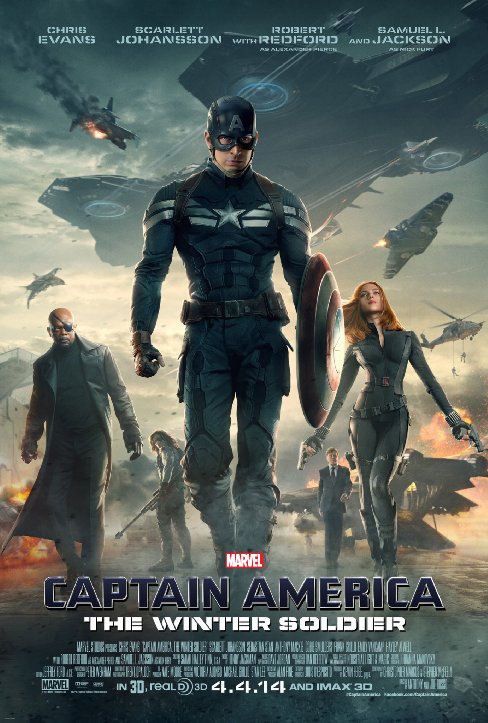
Should You See It: Captain America: The Winter Soldier

MV5BMjM2NzUzNzQwNl5BMl5BanBnXkFtZTgwMDQ1MDkwMTE@._V1__SX1537_SY723_

Andrew Findlay

In our rarely-running kinda-series Should You See It? we talk about movies that just came out. You can figure out the rest of the premise from the title of the series. That’s right: We talk recipes. Should you see Captain America: The Winter Soldier?

The movie opens with Captain (America) Steve Rogers jogging laps on the National Mall. His “jogging,” as a superhuman recipient of Dr. Abraham Erskine’s super-soldier serum, amounts to a full sprint for an Olympic athlete. He laps another jogger, a young, fit man, so many times that the other guy gets pissed off and tries to sprint to catch him, which progresses to two army veterans talking about war, which is ended by S.H.I.E.L.D. picking Cap up in a fast car. Solid intro.

The intro of Steve Rogers jogging says something important about the character: He actually needs to exercise and train to maintain his strength. He’s strong and great, but still pretty normal. I was amazed when Marvel took Captain America, clearly just the worst superhero ever when I was nine, and made him into one of the most appealing franchises in movies today. Nine-year-old me thought he was stupid because basically he is just in really good shape with a weird shield. Superman is invincible and Batman has an endless supply of cool toys, so what’s in it for a Steve Rogers fan? The appeal of Captain America, aside from the movies doing a great job focusing on the human side of him and helping audiences empathize with his life, is that he is the absolute, be-all end-all specimen of human perfection, but his superpowers end there. He’s the ultimate athlete, the ultimate patriot, and the ultimate gentleman, but he is still fundamentally human, unlike Superman, who has to shave with laser vision.

This is either the dumbest or the greatest thing I’ve ever seen. 

The fast car takes him to a jet which takes him to the location of the first action set piece. These set pieces are the definite high points of the movie. They are most of what the movie is, and for each and every one, I was literally leaning forward thinking, as much as I thought anything, “yes yes yes yes yes” on repeat until Captain America stopped slamming his shield into people’s faces. The combat is more complicated and varied than that, though. One scene in particular that stands out is an amazing car chase through Northwest D.C. with Nick Fury at the helm of an SUV that’s so well-equipped it’s really more of a spaceship. Samuel L. Jackson truly lives up to his laconic badass persona in this role, participating in one of the most exciting parts in a movie filled with super-soldiers. Marvel has been doing crowd-pleasing action for years now, and they have become exceedingly efficient at it.

Trinity_in_screens

Pictured: Stan Lee

The plot is believable and full of suspense. It never drags or makes you roll your eyes, which is admirable when a plot is serving mostly as spackle between action scenes. The twist (SPOILER – there’s a twist) is pretty horrifying and plausible when it happens, and gives Captain America plenty of opportunity for research on the relative durability of shields versus faces (hint: in 9 out of 10 studies, the shield demonstrated higher levels of durability). There are certain things that, if you think really hard about them, seem to not quite fit together right for plausibility or continuity, but if you’re thinking that hard about it, you’re doing it wrong, anyway. They’re seriously minor things that I hate myself for noticing, and you won’t think about them. This is not the awful era of the horrendous post-Keaton late-90s Batman movie. This is not Ben Affleck in Daredevil. Superhero movies are A Thing now, and any plot holes that exist aren’t big enough to fall through unless you dig them out yourself.

Should you see it? 

You should definitely see this movie. It is one of the best vehicles for action scenes this year, and it achieves what a lot of really impressive action movies don’t: Those over-the-top scenes are actually tied together really well with a strong story. Yes, the exploding and shooting and hitting are definitely the focus of the movie, but their weight doesn’t shatter the rest of the film into kindling.

Andrew Findlay has strong opinions about things (mostly literature) and will share them with you loudly and confidently. You can email him at afindlay.recess@gmail.com.

Image: IMDB

Worst Best Picture: Is The King’s Speech Better or Worse Than Crash?

The King's Speech

Alex Russell

In “Worst Best Picture” we search every single Best Picture Oscar winner of all time from 1927 to present to uncover the worst of them all. Conventional wisdom says that 2005’s winner Crash is the worst winner in history. We won’t stop until we’ve tested every last one. Read the the first, our review of Crash, here. All posts should be considered to have a blanket “spoiler alert” on them. Today’s installment is the 2010 winner The King’s Speech. Is it better than Crash?

The toughest job The King’s Speech has is convincing the the audience that it’s rough out there for the King of England.

The premise is amazingly simple: The king has a stutter, but he has to give a speech to rally England against Hitler. This is a movie that was up against Inception for Best Picture in 2010, and it’s hard to imagine two movies farther apart on the “complicated” spectrum. If anything, The King’s Speech feels even simpler than that boiled-down plot. It doesn’t always suffer from starkness, but it’s almost entirely devoid of supporting characters, solo scenes, or anything else that would distract from the absolute brass tacks of one man teaching another man to enunciate.

King George VI (Colin Firth, who won an Oscar for the role) starts the movie as just a mere prince, and the movie opens with him speaking to a massive assembled crowd. He cracks and can’t do it, and thus a conflict is born. He understands the importance of public speaking, but his brash older would-be-king brother is next in line anyway. His brother ascends and descends the throne, and there’s your ballgame: George has to learn to speak publicly.

His wife (played by Helena Bonham Carter, who was also Oscar-nominated for the role despite really not getting enough to do) enlists the Australian Lionel Logue (Geoffrey Rush, nominated as well) to work a miracle. I mention the “‘Australian” there because it’s always remarkable how often a movie about high class British society has to remind the world that you can turn anything into an excuse to belittle someone.

Firth said after filming the movie that it was somewhat of a challenge to fully return to normal speech after affecting the stutter for the role. It’s a remarkable performance, to be sure, and it really sells the “journey” of the character. Rush is mostly there for Firth to bounce off of, and everyone else in the movie is barely there at all. There’s a particularly — this is the only word for it — distracting performance by Timothy Spall as Winston Churchill which just comes off as intensely weird. Firth is intense and Rush is light-hearted, but that’s all we’re sure of. The movie isn’t always sure what to do with everyone else.

The movie’s “awesome” in the way that all movies about British royalty are big and flamboyant. A lot of the criticism for The King’s Speech centers on how the movie doesn’t deal with Britain’s role in appeasement with Germany leading up to World War II, but aside from the two main leads, it doesn’t really take time to do much of anything. It’s hard to see where they’d find the screentime.

The Best Part: The final, titular speech is great, sure, but the real gem is the lead up to that. Just as King George VI is finally finding his voice, Logue is found out to be a self-trained speech therapist. Their conversation in Westminster Abbey is superb. I don’t know what kind of person would take my word on this but just watch one scene, but if that’s you, get to it.

The Worst Part: At one point Helena Bonham Carter (when she’s still just a duchess) appears to Logue to ask for his services. She wants to be discreet about asking for treatment for the Duke of York, and he clearly has no idea who she is. Later in the film — though at this point she is the new queen, I suppose — Logue’s wife is speechless upon running into her. In both scenes Carter’s character is who she needs to be in the moment, but in neither scene is the movie interested with why characters react that way to her. It’s a slight complaint, but it’s the kind of thing that makes the characters so strange in this movie. No one cared enough to spend time on those little details, which is odd. Maybe I just love Helena Bonham Carter?

Is It Better or Worse than CrashYeah, this one passes the test as better than Crash. It’s a powerful movie even the second time around. It made me consider this, as well: What movies will be remembered as “the greats” from this era? Everyone will always list The Godfather and Casablanca as legends of a previous era, but what does the 2010s have? It already feels weird that this and The Artist made that list. I have to think that 30 years from now if someone asked about The King’s Speech someone would remember it as a “powerful” movie more than a “great” one, but there’s certainly no shame in just being something worthy of note.

Worst Best Picture Archives: Crash | Terms of Endearment | Forrest Gump | All About Eve | The Apartment | No Country for Old Men | Gentleman’s Agreement |12 Years a SlaveThe Last Emperor | The Silence of the Lambs | The Artist | A Man for All Seasons | Platoon | The Lord of the Rings: The Return of the King |

Alex Russell lives in Chicago and is set in his ways. Disagree with him about anything at readingatrecess@gmail.com or on Twitter at @alexbad.

 Image source: Daily Mail

Nymphomaniac is Five Hours of Lars von Trier Trying to Offend You: Should You See It?

Nymphomaniac poster

Jonathan May

In our rarely-running kinda-series Should You See It? we talk about movies that just came out. You can figure out the rest of the premise from the title of the series. That’s right: We talk recipes. Should you see Nymphomaniac?

“Beneath the gazes, beneath the hands, beneath the sexes that defiled her, the whips that rent her, she lost herself in a delirious absence from herself which restored her to love and, perhaps, brought her to the edge of death.” —from The Story of O

Parenthesis in Greek means ‘put in beside’ so it’s only fitting that the title of Lars von Trier’s latest film includes an empty set (it’s stylized as “Nymph()maniac“), a nothing story inside a nothing story. The story operates on the frame tale level; that is, our protagonist Joe relates her tale of sexual deviance from childhood forward to the eager ears of Seligman, an older male virgin (which later becomes important) after he finds her in an alleyway, obviously beaten up.

The main problem with the film is that Joe is constantly interrupted in her telling by Seligman, an obsequious listener if there ever was one. The film must center safely back around to its frame at the end, which deflates what’s at stake for the viewer. And center around it does; this was the moment of unexpectedness though. What transpires between Joe and Seligman in those final moments completely derails the film and its message, but I will not be the one to spoil it for the reader.

What I will take umbrage with is the fact that the more “salacious” aspects of the film (the erect penises, the S&M, the graphicness of the presentation, Joe screaming “Fill all my holes”) are not nearly as “offending” (though I’m very hesitant to use this word) as the moral statements made by the director through his characters. It becomes very obvious when Joe is talking and when Lars von Trier is talking through Joe. Von Trier all but preaches about how we should not silence aspects of our vocabulary for fear that we silence ourselves; but then he launches, through Joe, into a tirade about how pedophilia is like any other sexuality and how the 96% of pedophiles who don’t act on their urges should be “given a medal” for bravely squelching their desires. I take huge insult to these claims. Pedophilia is learned behavior, not innate. Not acting on desire or lust is not commensurate to bravery. Once again, von Trier sacrifices in terms of actual filmic development to focus on his status as a provocateur. Unfortunately this game is tired and boring, especially coming in the middle of a combined five-hour romp. I feel like I was constantly being prodded into offense; luckily for me, I’m offended by very little. But I still felt like the whole story amounts to nothing more than a way for von Trier to poke a stick at his audience. What he loses in this, of course, is the sincerity of Joe and her story. She unapologetically owns her sexuality at several points throughout the film. To have her become nothing more than a soapbox is typical of von Trier’s treatment of women.

Should you see it?

If you want original story, see the film Salo by Pasolini or read its precursor, The 120 Days of Sodom by the Marquis de Sade. Or you can read The Story of O by Pauline Reage. If it’s a good Lars von Trier movie you want to see, try Melancolia or Dancer in the Dark. But you can safely pass on Nymphomaniac.

Jonathan May watches too much television, but he’s just playing catch-up from a childhood spent in Zimbabwe. You can read his poetry at owenmay.com, follow him on Twitter at @jonowenmay, or email him at owen.may@gmail.com.

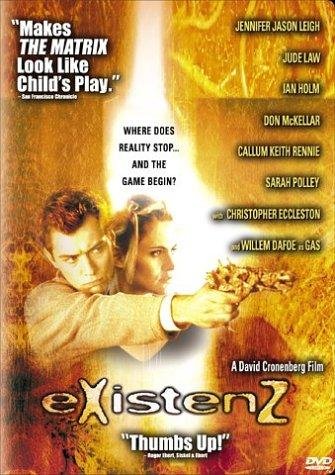
Life After the Star Wars Expanded Universe: David Cronenberg’s eXistenZ

existenz

Andrew Findlay

In Life After the Star Wars Expanded Universe, we take a look at science fiction and fantasy, why they’re great, and what they say about where our species has been and where it’s going.

It is important that we set parameters early for how bizarre this film is, so I’m going to start by telling you that within the first 15 minutes, one of the main characters gets shot by an organic gun that uses human teeth as projectiles. This happens to her as she is fondling a gadget that looks like nothing so much as a mass of tumorous nipples stitched together and made animate. And it just gets weirder.

existenz

This is the centerpiece of the entire movie

Before we really dive in, let’s stop and talk about why this is a world of toothguns and nipple masses. The overview of the film is that Allegra Geller, programming genius, is doing beta testing for her new game, eXistenZ. Technology in this world has invested all of its R&D in biorganic gadgets. Scientists use genetics to grow tech instead of building it in a traditional way. As such, sometimes guns are grown of bone and shoot teeth. Video games are played through game pods. Game pods start out as some type of frog, but are heavily bioengineered into what is in the picture above. The technology involved here goes beyond virtual reality, as the game pod connects directly to the player through a “bioport,” a hole drilled into the back of anyone who wants to use a game pod. It not only draws its running power from the player’s body but directly accesses their central nervous system to create such a realistic experience that it is indistinguishable from actual existence.

A group of fans has gathered together and are patiently waiting to “port” together and experience the game en masse. eXistenZ appears to be a standard sandbox game. There are general objectives and obstacles, and the player is expected to wander around figuring out what’s going on. The main difference is that the immersion is so complete that the player basically enters an alternate universe where NPC actions are scripted.

This abandonment of reality rubs some people the wrong way, which is why a terrorist uses a molar gun to attempt to assassinate the game designer. There’s a lot of commotion and death, but Allegra (Jennifer Jason Leigh) and Ted Pikul (Jude Law) escape and go on the run. The attack damaged Allegra’s game pod, so they have to port into the game to run it and find out if eXistenZ will still work. They do so, but things get complicated when the story in the game mirrors what is happening in reality. In the game, there is an assassination plot and a toothgun. Ted and Allegra try to unravel the attempt on her life by progressing through the game world, but more worrisome than the murder attempt is that, when Ted unplugs from the game to take a break, reality no longer feels real.

MagrittePipe

This movie asks big, important questions. What is technology? Where is it going? How do we react to it, and how does it change us? Cronenberg’s modus operandi is to select a technology or science that exists or seems close to existing, then to exaggerate and extrapolate to explore its effects on humanity. He covers chemical-induced accidental mutation in Scanners and television broadcasts in Videodrome. In eXistenZ, it’s video games. As an avid gamer, it’s gratifying to see a movie dedicated entirely to the societal effects of one of my chosen pastimes. The movie sets up a plausible direction for video games and then shows its effects on individuals and society at large. Societally, there are people who escape into alternate realities as recreation and other people who murder the designers of those alternate realities on moral principle. On the individual level, people range from the squeamish and reluctant Ted Pikul, who does not even have a bioport installed until he has to enter eXistenZ because he is afraid of body modification, to Gas, played by Willem Dafoe, who is a manic-eyed devotee of Allegra Geller’s work. Dafoe has one of the best lines in the movie. The fleeing main pair stop at a gas station, and Dafoe’s character recognizes them and starts gushing about how Allegra’s games changed his life. Ted, who has yet to enter the world of total-immersion gaming, asks him how his life was different because of Allegra Geller. The response is priceless.

Ted: What was your life like before?

Gas: Before?

Ted: Before it was changed by Allegra Geller.

Gas: I operated a gas station.

Ted: You still operate a gas station, don’t you?

Gas: Only on the most pathetic level of reality.

Willem Dafoe’s line is so great because it sums up perfectly what video games do for those who play them (or really any media for those who read, watch, or listen to them): absolutely nothing. If you read a book, watch a movie, or play a video game, it changes absolutely nothing in your external life, but the external is just “the most pathetic level of reality.” The changes that happen within the consumer of media are what’s important – relaxation, an expanded consciousness, heightened emotion – it’s all fake, none of it’s real, but our ability to recognize, respond to, and create fake shit is the trait that makes us human, shared only, and even then only partially, by a handful of the higher animals (chimpanzees, dolphins, elephants, etc).

Reality versus irreality ends up being the central conflict of the movie. After entering the perfect simulation of the game, it’s hard to tell what is and is not real. The “what if life is just like, a simulation, man?” conversation seems like an argument that would only be had over a table full of Taco Bell in a room full of pungent smoke, but it’s actually a very old and well-respected existential question. If we are living in an absolutely perfect simulation of reality, there is literally no way for us to tell. A truly perfect simulation would be indistinguishable from reality. Think about it – grab an object next to you and heft it in your hand. Toss it up and down a couple of times. Are you, through the messaging apparatus in your nerves, transferring chemical energy from your muscles to whatever you grabbed, or is a machine stimulating neurons in your unconscious brain to make you perceive all of the effects of that action?

I don’t care about the answer one way or the other, much as I don’t care about whether or not free will exists, because it changes nothing about my life and how I lead it. Right now, I am either choosing to drink bourbon and write this article, or I am predestined to drink bourbon and write this article. Either way, I’m tipsy and typing. In much the same way, a simulation that’s just as good as the real thing is, after all, just as good as the real thing. In the movie, it becomes more of a moral question, as they are actively dropping in and out of a simulation, and killing people in both the simulation and the real world means that it’s difficult to tell if you just shot a piece of code or a human being with a spouse and kids.

You should watch this. It’s one of those movies that Netflix tags “cerebral,” which mostly means that, even if it’s good, you’ll know at all times exactly how many minutes are left until the credits roll. Even if it moves kind of slow and gets kind of confusing, the future it envisions and the important questions it raises make it more than worthwhile. Right now, the closest thing we have to simulated reality is the Oculus Rift:

existenz

She looks so happy in there. Maybe she’s eating salad.

With current technological limitations, it’s pretty obvious what is and is not real, but humanity loves entertainment so much that it probably will not stop striving towards a perfect simulacrum of existence. Cronenberg explores what might happen if we make it there.

Andrew Findlay has strong opinions about things (mostly literature) and will share them with you loudly and confidently.

Images: Business Insider, IMDB

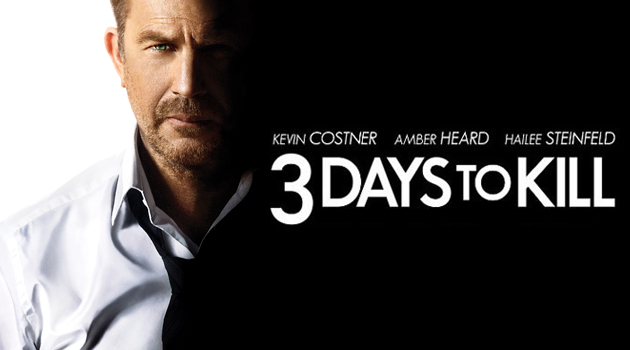
3 Days to Kill is Two Hours of Kevin Costner Acting Ridiculous: Should You See It?

movies-3-days-to-kill-banner

Brent Hopkins

In our rarely-running kinda-series Should You See It? we talk about movies that just came out. You can figure out the rest of the premise from the title of the series. That’s right: We talk recipes. Should you see 3 Days to Kill?

3 Days to Kill stars Kevin Costner as Ethan Renner, a CIA agent who is the best cleaner in the business. He is in the middle of a job when he gets a notification that it is his daughter’s birthday. Being the awesome dad that Kevin Costner is, he decides to take a break from killing everyone to call home. As CIA operations are wont to do, things go south quickly and he ends up going head to head against bomb smuggler “The Albino.”

You can tell he’s a bad guy, as he has no hair or eyebrows. Ethan has The Albino dead to rights and then he suddenly starts coughing and bleeding from the nose. End scene, and the next time we see Ethan he is told that he only has a few months to live due to a terminal illness.

This leads Kevin to retire from the business and go to his family, a wife and daughter in Paris, to reconnect, as he has been a vacant father and husband for a few years. He goes to his separate home and comes to find a full African family squatting in his place. They have redecorated and rearranged everything, and he reacts about as crotchety as you would expect old Kevin Costner to react. He chooses not to murder the whole lot — there are more than a few children and a pregnant girl — and we see the grinch in him slightly melt. He chooses to make amends with his final months but gets a new lease on life when a CIA operative Vivi Delay (played by Amber Heard), asks him to help kill quite a few people (namely The Albino and The Wolf) in exchange for an experimental drug that will keep him alive, 50,000 dollars, and a million-dollar life insurance policy. The twist is, of course, that there are side effects to the experimental drug that keep rearing their ugly head at the worst times for Ethan.

There are the requisite awkward family reunions that take place with Ethan trying to pick up as if his daughter hasn’t aged a bit and their worlds collide fittingly. That is actually what the whole movie feels like, multiple worlds slamming into one another and never quite aligning properly. This movie is all over the place and it is definitely a bad film. The thing is, the movie is so scatterbrained that it comes off as aggressively fun as opposed to just hours of wasted time.

The violence is graphic but never really that excessive. The daughter-father story is brown-sugar sweet, yet I found myself chuckling at the ridiculousness of their interactions more than anything else. The bad guys are named The ALBINO and The WOLF, the former being a creepy lunatic and the latter being anything but a wolf. Vivi Delay is supposedly equal in skill to Ethan, but for the life of me it felt like a showcase of how much sexier Vivi looks than everything else in Paris.

9532112

Also, smoldering seriousness is a must.

This is a bad movie. Kevin Costner places this corpse of a script on his back and carries the whole thing. Without him this movie would be worth walking out of in the first 15 minutes, but there is something about Costner in this film where I actually felt like he thought the whole thing was as ridiculous as it actually is and just ran with it. There are so many moments in this film that left me saying “Well, that is not what I expected from Hollywood.” Costner takes it in stride and constantly makes this face… and I love him for it.

Kevin_Costner_in_The_Upside_of_Anger_Wallpaper_1_1024

I have no idea what’s happening either, folks.

Should You See It? Yes, if you are not a film snob, this movie was bad but quite fun. It takes the Taken premise but removes most of the stress from the plot and replaces it with quirky scenes.

Images: Film School Rejects 

What is Reading at Recess? It’s (Popular) Cultural Reading

playground

Austin Duck

Recently, at a party, someone considering coming to write for Reading at Recess expressed her hesitation to me; she said “Austin, I don’t work in a field where we attempt to elevate things. The blog comes off as pretentious, as a bunch of guys with semi-valid credentials writing as if they actually know something, as if they have the cultural authority to write toward taste and value or the knowledge to sort out this from that,” and, I’ll admit, it took me aback.

I never really considered our project here at RAR to be about superiority or ethos-building, a kind of talking from the Silicon tower (if you will), but maybe it is. I don’t know. But I feel like, and perhaps I’m a bit misguided here, that our project is not so much pretentious (if you take a look back at the majority of the posts [mine excluded because I am, in fact, pretentious] you’ll see that most are just fan-boy diary entries) as it is an effort in cultural reading.

As you may have noticed, our title Reading at Recess has very little to do with reading in the traditional sense. Sure, I normally write about books, and Andrew Findlay writes about sci-fi, and Jon May definitely touches on the literary from time to time, but this isn’t, and has never been, a blog about books. Instead, RAR is about reading culture (well, elements of it anyway) and presenting responses to those readings (which, inevitably, are so intertwined with our particular tastes and our socio-economic positions as middle-class men who came of age in America that it’s impossible to separate the objective (Hah, that doesn’t exist! Suck it, Science) from the subjective). I don’t think, though, that this failure of impartiality or this desire to elevate our topics—video games, movies, television, or other cultural miscellany—is useless, invaluable, or altogether insensitive to the desires of our readers to access, be informed of, or make up their own minds regarding the texts (and I use text in terms of any piece of information that we interpret) we focus on. Instead, you could think of our discussions here at RAR as corollary to your own, as models for personal cultural inquiry (though that, I think, might be a bit of a self-aggrandizing vision on my part), or just as our desire to have these conversations with each other and ourselves, a kind of self-obligation we set forth toward always writing, being critical of what we see, using what we know and where we’re from to make some kind of sense of the element(s) of culture that obsess us.

And that’s what cultural reading really is. It’s engaging what obsesses you, exploring it far beyond what most people have with it, a casual relationship, and, most importantly, not interacting with it passively. At this point, I don’t read a sentence in a book without thinking why is that here? What’s it doing? and it’s not because I think I’m smarter than anyone else, nor because I want to be perceived as that guy who does those things. It’s because, at a baseline, I’ve become so involved with literary texts that I want to see what they really are, how they work, how they’re made, and why they’re made that way. Because, however they’re made (and for whatever reason), I too am made that way; I am a construction of the same language, the same culture—possibly we (the text and I) are separated by history, but in that way I am of it, a response to it, the next (or next to next) logical (or illogical but extant) step in linguistic, grammatical, philosophical, scientific, historical systems.

Sure, that sounds grandiose and crazy, and it is, but I’ve written it that way because it’s important. Because that’s how I experience it. I gave up on reading for pleasure a long time ago because I discovered that, through work, pleasure comes in the cultural (and, by extension, the self-reflexive) discovery of the real-to-me, those iterations and patterns and texts that become more than books or movies or games, that become part of my thinking and thereby reveal (if I’m willing to look) what elements of culture inform me and my decisions, what makes me up and allows me to see (a little) beyond the scope of myself precisely because I’m able to see a piece of my self’s scope.

If you’re starting to think to yourself that this project sounds very selfish, that’s because it is. But be real with yourself. You’re not reading this because you care about the content. Good content lives in straight journalism, where writing disappears and all that’s left are ideas. Go to Vox or The New York Times or something if you want that. You come to these blogs to learn about new things, movies you haven’t seen, games you might want to play, sure, but you come here, likely, not for what we’ve selected but why we’ve selected it; because we care. Because it obsesses us. Because every time we sit down to meet our weekly deadline, it’s not rote or filler or because we have to because we don’t. Each of us, in our own small, sometimes glib way, is engaged in a kind of cultural self-discovery and everything the comes with it: the biases, the crass reality, the meaningless, waste-of-time attentiveness, the existential void that opens up every time you realize your entire life is built on the words of others, TV shows, shitty commercials, and movies you were told were good but just aren’t. Cultural reading, then, fills the void, one text at a time, by making sense of it, at least from one perspective, so that we don’t get even more lost.

That’s not to say we’ll ever be found, or find ourselves, or that RAR specifically will help at all. It’s not about help, or us believing we know something you don’t. Yes, we’re writing to you because you are also we (just look at Whitman’s “Crossing Brooklyn Ferry”), but, more-so, to discover why we write, to ask questions we don’t know the answers to, to identify (and, in identifying, attempt to come to some understanding of) the fundamental impasses, paradoxes, hypocrisies, and identifications with the (popular) cultural of our moment that seem, to us, to mean something (or not).

For the love of god come write with us.

Austin Duck lives and blogs in DC. He can be reached at jaustinduck@gmail.com.

Image: NBC