TV

Symbols and Sociopaths: Hannibal Season 2, Episode 9

Hannibal episode 9

Jonathan May

(Massive spoilers, and I totally called Will being groomed by Lecter into becoming a serial killer like three episodes ago. C’mon, story gods!)

Everything in this episode acts in opposition to what has been. This week’s killer suffers from what Hannibal terms species dysphoria, but, on the whole, the episode operates thematically under what I like to call reverse personification. The killer, wanting to be an animal, acts not only in opposition to nature, but to his own nature as well. Will, on the other hand, finally actualizes as a killer, acting against what he knows to be good (akrasia) and aligning with what he knows to be wrong. When he brings up the question of right and wrong to Dr. Lecter, the good doctor responds that those are inconsequential to a God who enjoys human suffering and joy the same, and that he thinks of God when he kills; I think he’s really just thinking of himself, having been “resurrected” from the cross by Jack and Dr. Bloom in the foiled plot by Will against him.

When Will arrives at Hannibal’s door at the episode’s end with the killer’s body in tow, it’s as if he too has become animalistic, like a dog or cat bringing home a dead bird for the master. I almost expected Hannibal to pet him. So we know, or at least we think we know, that Will is now apt student to the good doctor; could this be a ploy on Will’s end to finally expose Lecter, or is this a genuine turn in character? I only bring up the former possibility because this season’s arc has been a bit wobbly, and I wouldn’t put it past the story gods to throw a big “Gotcha!” at us. But, as Will stated, now they’re both “even Steven.” All that said, I stand by my thoughts from three weeks ago: Will is becoming the monster Hannibal always meant him to become, his most successful therapeutic result. My predictions for tonight’s episode are that Will finally realizes some artistic killing projects of his own, something morbid will happen to Dr. Bloom or Jack’s wife (or is she dead? so far, we don’t know!), and Margot will continue to bore me to death. Did the production really need another affluent person to sit around the story’s perimeters this late in the game?

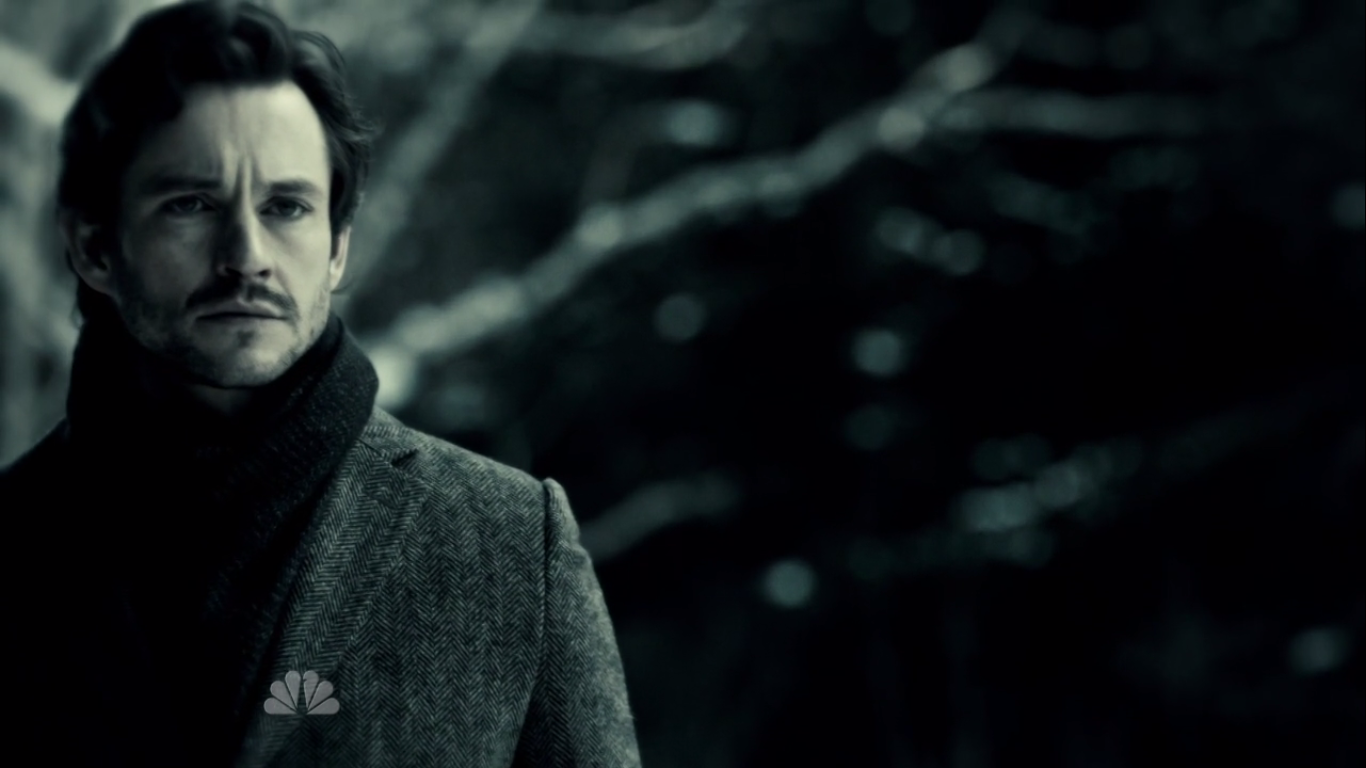
Minor note: Whoever put on Hugh Dancy’s eye makeup this week needs to calm down.

Jonathan May watches too much television, but he’s just playing catch-up from a childhood spent in Zimbabwe. You can read his poetry at owenmay.com, follow him on Twitter at @jonowenmay, or email him at owen.may@gmail.com.

Hannibal airs Friday nights on NBC. You can read our pieces about previous episodes here.

Image: NBC

Another Look at the Endings of Lost, Breaking Bad, and The Wire

Television_set_from_the_early_1950s

Andrew Findlay

In this so far nameless segment, regular contributor Andrew Findlay takes issue with another person’s opinions. Think of it as a “letter to the editor” except it’s always from the same defiant person and the “editor” in that example writes for the same site. This one has spoilers for The Wire, Breaking Bad, Battlestar Galactica, Lost, and a previous post on Reading at Recess about TV.

Extremely popular, long-running television shows struggle with sticking the landing. It is known. It has been known ever since the ending of Lost caused about half of its die-hard fanbase to swear never to watch another episode. It has been known since people internet-complained at the less-than-ideal end to Battlestar Galactica. However, it is strange to pick as the most relevant representatives of this phenomenon two of the most critically acclaimed shows of all time, one of which was showered with accolades for achieving the impossible and having a nearly perfect final episode.

Terrible endings exist and are unfortunate. At the end of Battlestar Galactica, the survivors sent their entire fleet into the sun so they could join/create humanity and live through the Dark Ages alongside them instead of significantly lessening human misery by holding on to their tech, which seemed like a weird choice. The ending of Lost, a show built almost entirely on mystery and suspense, completely dismissed the big final mystery and betrayed a legion of fans that had spent a significant portion of their lives tuning in every week. When you promise answers for years and years, and then the answer is “Oh, just unplug the island, any IT person worth his salt will tell you the usefulness of power cycling,” it creates a vast and deep well of rage. Who created the plug? What is that glowing room? Why are you just giving your viewership more mysteries instead of actually answering anything? When you go from a level of dedication that creates the YouTube video below to undiluted hatred, you have written a terrible ending.

I teared up watching this, remembering how it felt to be a part of the viewership of this show. Not sure if I’ll ever watch an episode again.

The Wire and Breaking Bad ended really well. Season five of The Wire may have been a little weaker compared to the others, but there was no nosedive. The state of affairs at the end of the final episode were either good or emphasized the whole underlying theme of the show: The game is the game, and the game never ends. It is absolutely believable that McNulty’s arrogant ass would get himself killed, but the detective’s wake in the last episode is actually fake, and he is actually escaping from his self-destructive career path. Omar, probably the most universally liked character on the show, is murdered in a convenience store by a little kid. This happens because he is not a civilian – he is a player of the game, and the game never ends, and anything can happen. Almost no one escapes, and if they do, they are lucky.

I don’t have as much an issue with that as with the idea of Breaking Bad’s final episode being a failure. It is almost universally praised as a near-flawless ending. It is almost perfect because Walt gets exactly everything he deserves, but he also gets everything he wants. This paradox exists because Walt, after five seasons of being driven by anger and pride, finally realizes and repents all the mistakes he made. He realizes what he deserves and is only concerned with doing right by those he loves. Who does he love (who is still alive at this point)? Jesse, Skyler, and his son and daughter. What has his arrogance done to them throughout the series? His family has lost everything, been terrorized, and been forced to abandon their home. Jesse has lost the woman he loves, been completely broken psychologically, and been enslaved by an Aryan Brotherhood gang. This is some bad shit that Walt has done. The reason that Walt can get what he deserves and what he wants is that, for the first time, what he wants is not centered around himself. He finally, finally, realizes what he actually needs to do, not for his own ego, but for the people he loves.

This is one of the greatest scenes in television, period.

This growth and shift of character makes the final episode what it is. He is out for money, but only for his family after he is gone. He is out for vengeance, but mostly to rescue Jesse from the position he put him in and to punish them for what they did to Hank. After so much greed and vanity and selfishness, Walt finally realizes what he has done and what he needs to do to make it right, whether he survives or not. Walt, after years of denial and repression and blame-shifting and anger, accepts who he is and what he does, and formulates a plan. This plan is absolutely successful. He finds a way to provide for the family he destroyed by intimidating his old work colleague. He rescues Jesse by single-handedly wiping out a gang. Then, after having actually done right by the people he loves, after five seasons of only paying lip service to that sentiment, he dies. It seems to me he dies from blood loss, as he’s been leaking for quite a while at this point and is leaving blood on everything he touches, but regardless of the cause, the important thing is that he died after achieving all of his goals. Walter White achieving all of his goals and then escaping from justice yet again would be a repugnant ending, but he does not escape justice, and he is not the same Walter White. Sure, he doesn’t get arrested, but he spends most of the second half of season five dealing with the consequences of his actions. The complete ruination of his own life, the life of his family, and the life of someone who is like a son to him, is consequence enough. What the hell are the police going to be able to do that he hasn’t already done to himself? These consequences and the pain of dealing with them set a process, if not of redemption, then at least of remorse and planning. The Walt of the last 20 minutes of the show is not the Walt who is in the “empire-building business,” but a Walt willing to sacrifice himself to do right by everyone else. This profound character transformation makes it possible for us to root for Walt again, and this is the trick that makes the ending of Breaking Bad so appealing. As for Jesse, who is driving away into the night, it doesn’t really matter where he’s going. He is free from the physical enslavement of the Aryan gang and the psychological enslavement of Walt. Wherever he is headed, it cannot possibly be worse than where he was.

This cultural moment has been called, many times, the Golden Age of television. It is an edifice built on the foundations of The Sopranos and The Wire. It is the result of a shift in perception, where television writers are responsible for creating a quality product and not just creating ratings. It consists of many different shows of deep emotional impact, strong plotting, and important thematic development. The result is that we consume our acclaimed television more like we consume our acclaimed novels, voraciously and as important art. The reason people are analyzing TV shows now is not that there is some mystical relationship between TV and novels or that one is replacing the other, but that TV has gotten really, ridiculously good in the past decade, and that humans love spinning commentary on really, ridiculously good things. Sure, there are some grievous missteps here and there, but The Wire and Breaking Bad are not examples of them.

Andrew Findlay has strong opinions about things (mostly literature) and will share them with you loudly and confidently. You can email him at afindlay.recess@gmail.com.

Symbols and Sociopaths: Hannibal Season 2, Episode 8

hannibal, episode 8

Jonathan May

(As always, massive spoiler alert)

This episode was unremarkable in a number of ways that I do not care to elucidate. We have the character of Margot thrown in, an unnecessary and late-coming red herring if there ever was one. Like most of the women in this show, she merely acts as a soundboard to the male characters, in this case Hannibal. As if to beat a dead horse (ha ha), we also have gratuitous (and not in terms of skin shown) scenes between Hannibal and Dr. Bloom, who has become yet another glass fawn in Lecter’s menagerie.

The dance between Will and Hannibal starts off slow enough in the episode and remains at an agonizingly slow tempo throughout; we learn no new information about their relationship. We head no further down the road of resolution, as we soon should given there are but five episodes left. We still, as I dutifully remind, need to catch up to the frame that opened the season between Jack and Hannibal.

The whole business with Will attempting to kill the social worker sociopath on behalf of the brain-damaged man was abysmal; Hannibal’s explanation of the event concurrent to its unfolding was equally banal. Unless we’re to learn something new through all of this madness, I don’t see the point. The image of the live bird inside the dead woman inside the dead horse was disarming, but just that.

We need to get back to the solid storyline: Hannibal’s eventual discovery and the chase. Throwing in characters at the last minute doesn’t bode well for the arc of the storyline. Let’s hope the story gods bring us back around this Friday.

Jonathan May watches too much television, but he’s just playing catch-up from a childhood spent in Zimbabwe. You can read his poetry at owenmay.com, follow him on Twitter at @jonowenmay, or email him at owen.may@gmail.com.

Hannibal airs Friday nights on NBC. You can read our pieces about previous episodes here.

Image: NBC

Johnny-Come-Lately: America’s Next Top Model, Cycles 9-14

tyra_banks

Jonathan May

Jonathan May grew up in Zimbabwe as a child of missionaries and missed a lot of “important” American things along the way. He chronicles his journey to catch up in a feature called “Johnny-Come-Lately.”

Over the past three weekends, I’ve watched cycles 9-14 of the CW’s America’s Next Top Model, and by God if I haven’t tried to smile with my eyes (“smize”) in the mirror at least a few times during the process. I’ve practiced using my space and being fierce and throwing shade with the very best, Ms. Tyra Banks, in my head. This show would quite literally be nothing without her; she’s never afraid to be goofy and fierce and smoldering, sometimes all in the same five minutes. But that, as she points out, is the essence of being a supermodel: being able to be memorable, yet a chameleon. She emphasizes the three C’s of modeling: catalogue, commercial, and couture. And the girls worship her. Who wouldn’t, with that flawless skin and that bravado?

The show focuses on different types of beauty (plus-size, petite, alien, masculine, strong bone structure) through the different girls picked to enter the competition; every cycle is usually “fair” in its makeup, although that’s a hard task when you’re literally trying to find the most beautiful girl out there. Luckily Tyra and the judges emphasize personality and inner beauty throughout; the girls have to interview and make conversation. They must participate in social graces, sometimes in totally different countries for those girls lucky enough to make it that far. This is very attractive as a quality in the show; rarely does a complete bitch make it to the top two. While being fair to the reality format, the show consistently delivers the message that in order to win in the fashion industry, people need to like you; ergo, don’t be a bitch.

So, we have 13-14 girls who learn about modeling and walking and posing, who get makeovers (there are inevitable tears), who are winnowed down week by week for their participation in challenges, overall attitude and appearance, and weekly photograph challenges. During the course of this madness, the viewer becomes endearingly acquainted with Jay Manuel (creative director of photo shoots) and “Ms. J” Alexander, a fierce modeling coach who works it with the best of the ladies; these two help the girls along to the best of their abilities, but ultimately the girls must want it for themselves the most.

Why do I watch so obsessively? First of all, the judges and coaches show in their own behavior that having a genuine personality is what makes a real top model; girls of all looks and sizes have won the coveted top prize, but they all share the same warmness of a real girl shining through the model. Second, the transformations of the girls are remarkable, both mental and physical; by the end, the girls look and act totally foreign to themselves just weeks prior. The house drama among that many girls of course has its dramatic appeal, but for me, the winners usually aren’t the instigators or the participants in the whole she-said, she-said. Third, girls can literally come from nothing and become something; even the girls who don’t win often receive contracts after appearing on the show. Who doesn’t love a good American Dream story, complete with pretty women? In the end, I like a show that emphasizes the positive aspects of one’s emotional character. I don’t think the show promotes a typical standard of beauty, but rather many types of beauty.

My advice if you want to audition: Know your designers, photographers, and top models. Practice in front of a mirror. Take a look at your wardrobe to see if it’s fresh. And be fierce.

Jonathan May watches too much television, but he’s just playing catch-up from a childhood spent in Zimbabwe. You can read his poetry at owenmay.com, follow him on Twitter at @jonowenmay, or email him at owen.may@gmail.com

Bad Last Chapters or How Television is the New Terrible Novel

How I Met Your Mother Finale

 Stephanie Feinstein

Note: Serious spoilers for a bunch of shows, notably How I Met Your Mother, Roseanne, The Sopranos, True Detective, and Breaking Bad.

Devoting seven years to something is a serious commitment. To Hollywood, seven years of marriage is the equivalence of 25 years to mere mortals in lesser zip codes. Seven years of a vice may easily be called an addiction; seven years of school sees a full turn of your DNA. Seven years is literally the length of time one needs to become an entirely new person.

Seven years is too long to hold onto the same story, same ending, same turns. Sure, many an MFA could argue to me that grand books arose out of more than seven years of imaginings, rewrites, and edits, but I shall counter argue that those novels surely found new pathways by the end. An author grows and evolves with his or her work, expanding into the sunshine of new thought and wisdom.

I have a dear friend in the heady throes of editing her first novel for publication, and having known her for more than seven years, she has had to rewrite much as her knowledge and self expanded.

Do not dare to tell me that television writers do not suffer so.

How I Met Your Mother ran for nine seasons, I realize, but it was in its second when I began watching and when the show filmed its ending. According to Alan Sepinwall of HitFix.com, it was also the ending used in the initial sitcom pitch to CBS. It was always supposed to be Robin.

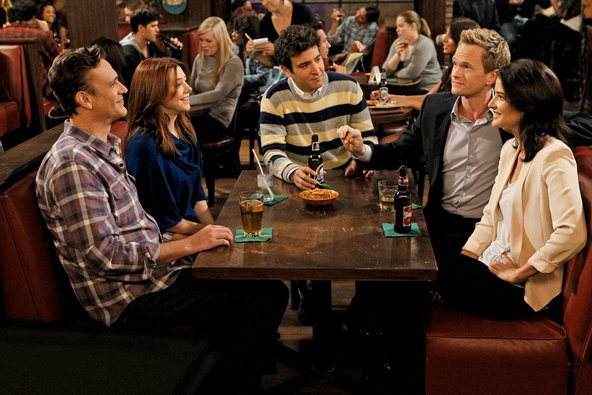
In Austin Duck’s article concerning the teleology of HIMYM, he asserts that the Robin-not-mother ending completes the circular nature of the show, a common feature of sitcom writing. While I will agree that the show, like many others, is highly dependent on circuitous routes within its plot, as viewer and fan, I disagree with the balance of the ending on several accounts. For a show so devoted to wrapping up loose ends, the final episode created more questions. Examples of the queries I have posed to myself and other fans: Who was 31? Didn’t Ted make Robin get rid of the dogs last time? What killed the mother? How long did that illness last? How often does Aunt Robin come over for dinner? So, is Lily a stay-at-home mom now? Does she still work for the Captain? Does Barney have full custody? Did he marry the mother? But I digress from Robin and Ted.

In “Last Forever: How They Conned Us All,” Sepinwall points out that the relationship of Robin and Ted devolves over the nine-season run, turning toxic and incomplete, thus forcing them together at the end leaves the viewer dissatisfied, as we have been told over and over again all the reasons the relationship will not work. I agree, and I use this as my basis for why endings in television are the new terrible novel.

I love terrible novels. Much like Jonathan May loves to hate-watch television, I truly enjoy hate-reading poorly written or executed stories. That may sound harsh, as I have yet to publish anything, much less anything excellent or terrible. But if I can’t be pretentious on a website, then why the hell do I have a degree in literature?

Bad writing can be bad for many reasons: poor editing, bad grammar, sloppy story lines, lost symbolism… the list is really endless. A terrible novel will need more than just bad writing technicalities… it needs to create holes that it cannot fill, force relationships that do not fit, and waste opportunities for symbolism and allusion. HIMYM suffers from a stubbornness to characterization in forcing its ending. The writers cursed themselves from the beginning by deciding exactly how the story would end. A novelist may not be very successful if they begin an epic novel knowing exactly how the story will end, and refusing to ever back down from the singular scenario. Unless one can throw in some seriously killer Edith Wharton twists (Oh, you want to stay Mattie to stay, Ethan? Oh, really? How badly do you want her to stay…?), the completed work will be stilted and forced. If we consider HIMYM as a novel constructed over seven years, the characters have grown in unexpected ways. Lily’s role of mother not only evolves through action, but through reaction, as she steps away from early childhood education into a role of art curator. On screen, the character evolves even further, as Alyson Hannigan has gone through more than one pregnancy in her real life, even when her character was still childless. The written relationship of Robin and Ted blossomed and died over multiple seasons, with varying stages of “this is the last time; I’m really letting go.” In the final season, final episodes, we as viewers witness Ted giving up the role of finder, of hero, of conquering knight. When faced with a vulnerable, scared bride, he is chivalrous, wise, telling her that she is already with the right man. Smiling, Ted explains that he simply must find the right woman for himself, confirming that it is not Robin. For a sitcom, this moment was bittersweet, tainting the usual “happily ever after” endings of today, but I believe that modern audiences want a storyline that can be real. The idea of Ted abandoning the obsessive thought of Robin is comforting to audiences, assuring us that new chances at happiness are possible when we open ourselves to possibility. Ted’s meeting and short relationship with Tracy was sweet, honest, and felt very real. It was also cut awkwardly short to a “And then she got sick, and that was six years ago that we lost her.” “Dad, you should date Aunt Robin!” (Okay, so that is not how the official dialogue went down, but close enough.)

So, the ending of How I Met Your Mother was stilted, forced, and a terrible novel of television. Great until the last chapter, which weirdly dragged, with a cop-out of an ending.

But I’m not done there. How I Met Your Mother is not alone in its novel terribleness. Other terrible novels of television include Roseanne and the “it’s all a damn dream” ending, The Sopranos meets Tristram Shandy‘s inked out page of an ending, and The Wire.

Shut up, all of you. I loved The Wire, and I will argue all damn day that it is far more Shakespearean than Breaking Bad could ever hope to be. Tragic McNulty, the Benvolio-esque Bunk, the shut-the-hell-up-this-is-new-literature showdown between Omar and Brother Mouzone (Michael K. Williams and Michael Potts, respectively)… I love that shit. But the final act of that beautiful play fell flat for me, and left a depressingly Irish-whiskey flavored tang in my throat.

And Breaking Bad! I watched the full run up to the final season in a single summer, with the final season happening in real time. And, I found it less than lackluster. Perhaps it was weak characters, perhaps it was a whole handful of misogynistic men and weak women. But most of all, I really despised the ending. Our final scene of Walter, stripped of his glory as he stumbles among his scientific vats, now worth nothing, tapping the dial fronts of the equipment. Then he falls, a blood stain left across the shiny aluminum surface. Blood loss? Chemical Poisoning? The cancer finally doing him in? We have no idea. (Note: There are not words to express how much I wanted a massive meth explosion in those final moments. I am from the South, and everyone knows moonshine stills and meth labs eventually explode). But instead, we get the soft wailing of an inept police department, with Walter already too far gone to atone for his sins. And what the hell with Jesse just driving into the sunset, just in time to star in Need For Speed? Terrible. The novel equivalent of “To Be Continued” with absolutely no plans for a sequel. Do I have greater hopes for Better Call Saul? Not really. Will I watch it? Of course… that’s irrelevant.

Now, my next television novel that has failed me is really less novel and more first short story in a series. Why are anthologies the new rage? Are we bored with following evolving characters over a span of years, aging and acquiring wisdom with them? Are actors just not willing to commit the time and energy into evolving these characters? I don’t know, but, oh, how I wish I did.

True Detective season one filled a void in my cultural soul that I did not realize was empty. Well, the first seven-and-a-half episodes (There are only eight total.). Being a Southern lady, I devoured the swampy nature, the Louisiana drawls and old-French tones. In college, I randomly attended a lecture series about rural Louisiana Mardi Gras and Easter traditions, strange rituals with masks and pagan origins. I went to find new inspiration for poetry, but the images of those presentations have stuck with me for years. True Detective‘s use of the arcanely ritualistic culture of the backwoods bayou delighted me, and I waited for deep significance of these images to emerge within the show.

Michael Hughes published a great article on io9.com shortly after the first few episodes aired, illuminating a new set of allusions form the writers. In “The One Literary Reference You Must Know to Appreciate True Detective, Hughes cites Robert Chambers’ The King in Yellow, a selection of short stories published in the late Victorian era, as being quoted by central characters within the episodes, if not contributing to the larger story. I quickly acquired the text from Gutenberg Press and I devoured the stories, exclaiming every few pages as a new revelation or theory was uncovered to me. (Mask of deception! Women in stone! Repairer of reputations!) I watched the rest of the season waiting for Carcosa to come to light, a Yellow King to be crowned, the wave of insanity to mask us all in truth.

The final episode of True Detective season one was thrilling but flat. A “to be continued” vibe was given, but next season has already been announced to have a new cast, location, and story line. We will no longer be traipsing the back bayous in search of pederasts and twig sculptures. I will not be able to find out: How those scars happened? Who else was involved? How did the old black maid know about Carcosa? Why the spiral? Why did Hart’s daughters have a sexual violence storyline but not? Why did the killer have a British accent for only, like, ¼ of his scenes? Why was his dad tied up? I may never know.

I hope we will never reach a point as society where television sitcoms and dramas replace great literature. In fact, I think the two can greatly benefit from one another. What if we, as intelligent minds of the internet, band together to rewrite television history? FAN FICTION. Granted, fan fiction has been around as long as fans have found disappointment with story lines. But I am calling for a new age of fan-fueled fiction, where the endings are reinvented to be stronger, more beautiful.

You see, my aforementioned novelist friend had a terrible quandary after the How I Met Your Mother finale aired. Her sister, a devoted fan, had missed the initial airing, but my novelist friend was fretting over hoer own disappointment. “I want her to see it, but not the last five minutes,” she lamented. “I want her to turn off the television with five minutes remaining, and then read a chapter I’ve written instead.”

She ultimately did not, letting the writers of the show have their ending.

BUT WHAT IF…

…fan fiction reached a new level. What if those of us with the degrees, sources, and talent band together to override what society has deemed as “appropriate endings?” Because I am dissatisfied with television, even when it leads me on for so very long.

When True Detective fell short of my literary expectations, I sought out fans. Now, I don’t know if I am just unable to locate the hidden fan fiction files of the internet, or if there just isn’t anything out there, but the results were very limited. Yet, the theories presented through the five stories I found were intriguing, provocative, and creative. Still not what I wanted as the ending, but it gave me something.

So, a call to all those who fan fictionalize their television serials, write me new endings! Breaking Bad, The Wire, Roseanne, True Detective, How I Met Your Mother… send it all to me! I will read each personally, and with any luck, the best to my mind will be presented on this site.

You can reach Stephanie Feinstein at stephanie.feinstein@gmail.com.

Image: New York Times
“Archer Vice” Season Review and How We React to Disappointment

archer-628

Alex Russell

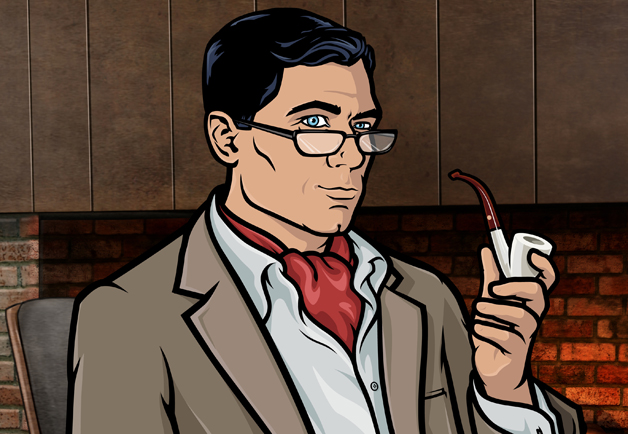
Some weeks ago, I called myself an idiot for missing the point about Archer. I talked about how showrunner Adam Reed succeeded in keeping Archer fresh by making the show about the characters and the stakes rather than the setting. I suggested that those truths made the show’s shift to Archer “Vice” — this season’s change in setting from a spy agency to a series of international cocaine deals — a change that didn’t matter. It wouldn’t mean a thing, I said.

Archer “Vice” (henceforth just Archer) turned out to be 13 weird episodes that showcased just how far a show can fall. Archer is a great show that found some purchase with viewers after establishing itself. All it apparently took was this season’s reboot to destroy that following: Archer‘s ratings dropped by nearly half from last season.

The change of setting truly doesn’t matter. Archer is a show a show about spies as much as Parks and Recreation is a show about local government. The spy stuff was there just as framework for jokes. The real problem wasn’t a location switch. The real problem was that they just don’t care anymore.

In the 12th episode characters question out loud why they are making certain decisions. When a character unlocks a jail cell the prisoner asks her where she got the key. She says she has no idea and the situation is dropped. Another character — one of the relatively important “bad guys” in the season — is killed (by a tiger, for just about no reason) because the show runs out of stuff for him to do. There’s no explanation given for some of the stupid decisions, and most of the best parts of Archer have revolved around people finding reasons for seemingly senseless acts.

An important point here: No one on Archer is ever “random.” They make mistakes because they’re stupid, or selfish, or shortsighted. They succeed because they make the right decision for the wrong reason. These things don’t just happen, because that wouldn’t be funny or interesting. The good part of Archer has always been the why, and this season was far less interested with why.

As for the finale itself, I won’t give away the ending because it’s still worth your time. It’s good at what Archer is good at: depth, character development, and a hard reset. Without giving it away, I can still mention that the jokes are terribleArcher has always been about mixing “high” and “low” at the same time. People set up more complex situational jokes with slap contests and puns. A lot of this season has been lazier one-off stuff, and that is never more obvious than a half-hearted sex joke in the finale that you can even hear Pam’s voice actress not care about as she delivers it. The “stupid jokes” don’t feel like they’re done on purpose anymore. What’s worse, and I would have said this was impossible, is that this season of Archer just wasn’t very damn funny.

I didn’t watch How I Met Your Mother, but it provided an interesting commentary on television and disappointment this year. People waited and waited to see how the story would wrap up, and they seem to have been, for the most part, disappointed. People often couched their anger with the ending in a kind of “I deserved better” sentiment. The argument seemed to be that they felt “owed” a better ending for the time they invested. We feel like television is part of our life experience now. We meet people and we get to know them. Even on a joke machine like Archer, we meet people and we want to be interested in their lives.

Adam Reed doesn’t owe me better episodes of Archer, but he might want to consider making some next season anyway. I rather like this show, and another season like Archer “Vice” will probably be the end of the series.

Alex Russell lives in Chicago and is set in his ways. Disagree with him about anything at readingatrecess@gmail.com or on Twitter at @alexbad.

Image:  GQ

Symbols and Sociopaths: Hannibal Season 2, Episode 7

hannibal, episode 7

Jonathan May

(As always, massive spoiler alert)

Every 15 minutes or so, I let out an audible groan while watching this latest episode. Miriam Lass returns after being found by Jack, only to kill Dr. Chilton out of an impulse she can’t control. Oh Miriam, made into just a simple plot device. Oh Dr. Chilton, made into just a simple plot device. So now we have a freed Will, a Hannibal no longer under suspicion, and a bewildered audience.

We still haven’t caught up to the frame with which the season opened, so we know the showdown between Hannibal and Jack is imminent. What will bring them together in this way? What will finally open Jack’s eyes? He jumped on the Dr. Chilton Is Guilty Train pretty hard, but when he finally catches the poor bastard in the snow, we see immediately that Jack knows Chilton is innocent. Miriam’s impulsive killing of Chilton is obviously the result of psychological transference on Lecter’s part; by using recordings of Chilton’s voice and light-disruption therapy, he was able to train Miriam into believing that Chilton, not Hannibal, was the Chesapeake Ripper and her captor. Hopefully Will can bring Jack around to this, forcing his move against Hannibal.

Some may misinterpret the depiction of the Wound Man in this episode as an obvious symbol of superiority, drawn from medieval medical books and rendered lovingly by Hannibal on graphite in his office. However, the Wound Man operates more as a bastardization here of the Hanged Man, a pittura infamante that quite literally symbolizes resurrection. Hannibal sees this opportunity through Chilton as a way to resurrect as a new creature and move on; though I doubt he’ll give up the grisly trade, he sees this as an opportunity to escape. Will’s appearance at the end, though, signals that we are not finished with this reddish business by a long shot. Will would like to resume his therapy, and we shall see where it takes him.

Jonathan May watches too much television, but he’s just playing catch-up from a childhood spent in Zimbabwe. You can read his poetry at owenmay.com, follow him on Twitter at @jonowenmay, or email him at owen.may@gmail.com.

Hannibal airs Friday nights on NBC. You can read our pieces about previous episodes here.

Symbols and Sociopaths: Hannibal Season 2, Episode 6

closeupepisode6

Jonathan May

(As always, massive spoiler alert)

Just a reminder: We’re only halfway through the season and have yet to catch up to the frame of this tale. In the first episode, we open with the struggle between Jack and Hannibal, then flash back eight weeks. So we’re still catching up (quickly, I posit) to a showdown. Also, we haven’t touched on Jack’s wife in the past two episodes really, so I’m sure they will kill her off any episode now in the most maudlin fashion imaginable.

Fact: Mads Mikkelsen played Igor Stravinsky in the gorgeous period film Coco Chanel and Igor Stravinsky (2009). I saw the film in theaters, and the recreation of the opening night of The Rite of Spring in Paris is probably one of my favorite moments in film history. You eventually see Stravinsky and Chanel naked in the many stages of coitus (one memorable scene includes some sex on the piano bench). So it’s a little jarring to open with Hannibal at the harpsichord, composing music to “move past” what Will “did” to him and even more disturbing to later see Dr. Bloom and Hannibal giving it the old college try on the harpsichord bench. Mikkelsen brought some of Stravinsky into this episode with an awareness of his own mortality, and ultimately the end game is revealed by this awareness. As Hannibal becomes more afraid of Will, he must be able to get to him, so he “frees” Will through exoneration by committing a murder using pieces of Will’s supposed victims. Will, by virtue of this whole ordeal, burns in revenge, being trained by Lecter into becoming his replacement. What will complete this transformation is the eventual murder of Dr. Bloom by Hannibal.

In addition to Stravinsky, we have not-so-subtle references to the movie Hannibal with Will stating that Lecter thinks of his victims as pigs and later in the scene where Abel Gideon eats his own thigh (à la Liotta). I have no idea why they gave such a close adaptation of that scene; the affinities between them only made this incarnation seem weak with a bloated Eddie Izzard succumbing willingly to death. However, the preparation of Gideon’s thigh in clay was lovingly rendered on film. The strongest moments in the series consistently involve food, and this is definitely a strong moment, but then it’s ruined by Gideon trying to be funny. Perhaps the most arresting visual of the episode was the tree-person made by Lecter, like a perverted Daphne ripe with flowers.

Bringing back Miriam Lass at this point seems inanely cruel. We already know who’s committing the murders; Jack’s wife is going to die of cancer, so will her reappearance really matter that much? Call me callous, but I feel like this will end up being another emotional red herring, and honestly, I wish we’d just stick to the point. With Will now free to claim vengeance, the race is between Will killing Hannibal or Jack locking him away.

Note: Hopefully the “history” between Drs. Bloom and Lecter will be elucidated for those of us who don’t write the show, if the story gods are listening.

Jonathan May watches too much television, but he’s just playing catch-up from a childhood spent in Zimbabwe. You can read his poetry at owenmay.com, follow him on Twitter at @jonowenmay, or email him at owen.may@gmail.com.

Hannibal airs Friday nights on NBC. You can read our pieces about previous episodes here.

What is Reading at Recess? It’s (Popular) Cultural Reading

playground

Austin Duck

Recently, at a party, someone considering coming to write for Reading at Recess expressed her hesitation to me; she said “Austin, I don’t work in a field where we attempt to elevate things. The blog comes off as pretentious, as a bunch of guys with semi-valid credentials writing as if they actually know something, as if they have the cultural authority to write toward taste and value or the knowledge to sort out this from that,” and, I’ll admit, it took me aback.

I never really considered our project here at RAR to be about superiority or ethos-building, a kind of talking from the Silicon tower (if you will), but maybe it is. I don’t know. But I feel like, and perhaps I’m a bit misguided here, that our project is not so much pretentious (if you take a look back at the majority of the posts [mine excluded because I am, in fact, pretentious] you’ll see that most are just fan-boy diary entries) as it is an effort in cultural reading.

As you may have noticed, our title Reading at Recess has very little to do with reading in the traditional sense. Sure, I normally write about books, and Andrew Findlay writes about sci-fi, and Jon May definitely touches on the literary from time to time, but this isn’t, and has never been, a blog about books. Instead, RAR is about reading culture (well, elements of it anyway) and presenting responses to those readings (which, inevitably, are so intertwined with our particular tastes and our socio-economic positions as middle-class men who came of age in America that it’s impossible to separate the objective (Hah, that doesn’t exist! Suck it, Science) from the subjective). I don’t think, though, that this failure of impartiality or this desire to elevate our topics—video games, movies, television, or other cultural miscellany—is useless, invaluable, or altogether insensitive to the desires of our readers to access, be informed of, or make up their own minds regarding the texts (and I use text in terms of any piece of information that we interpret) we focus on. Instead, you could think of our discussions here at RAR as corollary to your own, as models for personal cultural inquiry (though that, I think, might be a bit of a self-aggrandizing vision on my part), or just as our desire to have these conversations with each other and ourselves, a kind of self-obligation we set forth toward always writing, being critical of what we see, using what we know and where we’re from to make some kind of sense of the element(s) of culture that obsess us.

And that’s what cultural reading really is. It’s engaging what obsesses you, exploring it far beyond what most people have with it, a casual relationship, and, most importantly, not interacting with it passively. At this point, I don’t read a sentence in a book without thinking why is that here? What’s it doing? and it’s not because I think I’m smarter than anyone else, nor because I want to be perceived as that guy who does those things. It’s because, at a baseline, I’ve become so involved with literary texts that I want to see what they really are, how they work, how they’re made, and why they’re made that way. Because, however they’re made (and for whatever reason), I too am made that way; I am a construction of the same language, the same culture—possibly we (the text and I) are separated by history, but in that way I am of it, a response to it, the next (or next to next) logical (or illogical but extant) step in linguistic, grammatical, philosophical, scientific, historical systems.

Sure, that sounds grandiose and crazy, and it is, but I’ve written it that way because it’s important. Because that’s how I experience it. I gave up on reading for pleasure a long time ago because I discovered that, through work, pleasure comes in the cultural (and, by extension, the self-reflexive) discovery of the real-to-me, those iterations and patterns and texts that become more than books or movies or games, that become part of my thinking and thereby reveal (if I’m willing to look) what elements of culture inform me and my decisions, what makes me up and allows me to see (a little) beyond the scope of myself precisely because I’m able to see a piece of my self’s scope.

If you’re starting to think to yourself that this project sounds very selfish, that’s because it is. But be real with yourself. You’re not reading this because you care about the content. Good content lives in straight journalism, where writing disappears and all that’s left are ideas. Go to Vox or The New York Times or something if you want that. You come to these blogs to learn about new things, movies you haven’t seen, games you might want to play, sure, but you come here, likely, not for what we’ve selected but why we’ve selected it; because we care. Because it obsesses us. Because every time we sit down to meet our weekly deadline, it’s not rote or filler or because we have to because we don’t. Each of us, in our own small, sometimes glib way, is engaged in a kind of cultural self-discovery and everything the comes with it: the biases, the crass reality, the meaningless, waste-of-time attentiveness, the existential void that opens up every time you realize your entire life is built on the words of others, TV shows, shitty commercials, and movies you were told were good but just aren’t. Cultural reading, then, fills the void, one text at a time, by making sense of it, at least from one perspective, so that we don’t get even more lost.

That’s not to say we’ll ever be found, or find ourselves, or that RAR specifically will help at all. It’s not about help, or us believing we know something you don’t. Yes, we’re writing to you because you are also we (just look at Whitman’s “Crossing Brooklyn Ferry”), but, more-so, to discover why we write, to ask questions we don’t know the answers to, to identify (and, in identifying, attempt to come to some understanding of) the fundamental impasses, paradoxes, hypocrisies, and identifications with the (popular) cultural of our moment that seem, to us, to mean something (or not).

For the love of god come write with us.

Austin Duck lives and blogs in DC. He can be reached at jaustinduck@gmail.com.

Image: NBC

Why Aren’t People Watching Parks and Recreation?

Parks and Recreation- Season 6

Alex Russell

Remember when Liz Lemon was everywhere?

For a few years it seemed like you couldn’t load Tumblr or Facebook without seeing at least five Liz Lemon memes. There’s nothing necessarily wrong with that; 30 Rock was a tremendous show. It was a lot of things, but above all else it was the critically-acclaimed anchor to NBC’s very weird (but very great) Thursday night that included The OfficeCommunity, and Parks and Recreation.

The Office faltered late, as everyone knows. 30 Rock managed to do OK just because it was consistently being hailed as the best show on television. Community‘s story is still unfolding, but the fanbase is rabid enough that it will probably end up fine. But what of Leslie Knope and the Liz-Lemon-meme-worthy Ron Swanson?

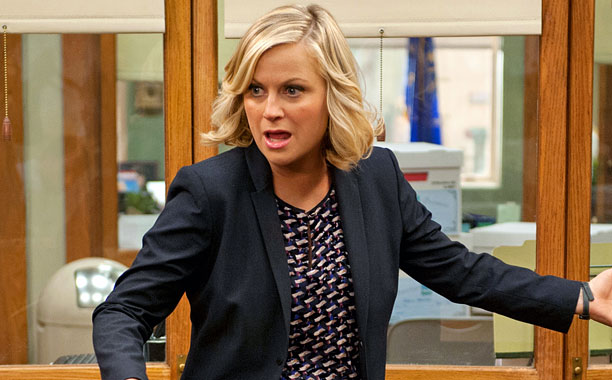
Let’s tell it straight: People are not watching Parks and Recreation anymore. Numbers-wise, the show has done a little bit worse every season, especially after losing The Office as a lead-in. Everyone who loves Parks and Rec will tell you that it doesn’t really find its footing until the end of the first season, but America really disagrees. The first season held a huge percentage of Office fans, even though it debuted after one of the dumbest storylines in Office history (“Michael Scott Paper Company” was the lead-in episode for the pilot).

Season two of Parks and Rec is some of the greatest sitcom TV of the last fifteen years, but it did a little bit worse (between four and six million people per episode) than the weird first season. Second three — which followed the final Michael Scott episodes of The Office and was the first season with Rob Lowe and Adam Scott as regulars — did even worse, sometimes dropping below four million. The three seasons since have done worse in the ratings, and sometimes far worse.

A lot of this is on NBC. 30 Rock did even worse than Parks and Rec during its decline and even The Office, the one your mom liked sometimes, barely managed four million viewers a night by the end. Community seemed unstoppable, but it’s tanking this year in the ratings. Parenthood, once one of NBC’s most reliable shows, is doing the same.

Thursday night on the other networks? Fox has Hell’s Kitchen and American Idol. CBS has The Big Bang Theory and Two and a Half Men. ABC has Scandal. NBC’s support for its sitcoms is Hollywood Game Night.

It’s impossible to convince someone to definitely watch something unless they already might, but you really should be DVRing Parks and Rec. The show stumbled a little with an ambitious plot for main character Leslie Knope, but it’s still one of the only consistently funny, consistently great sitcoms on network TV. NBC renewed it for next year, but based on the competition and the current trend, Parks and Rec is dead in the water. Come stay awhile with it every week, like you would an elderly relative. Ron Swanson is still there Ron-Swansoning around, and that really should be enough to earn your 22 minutes a week.

Alex Russell lives in Chicago and is set in his ways. Disagree with him about anything at readingatrecess@gmail.com or on Twitter at @alexbad.

Image: NBC