movie

Worst Best Picture: Is Driving Miss Daisy Better or Worse Than Crash?

dmd

Alex Russell

In “Worst Best Picture” we search every single Best Picture Oscar winner of all time from 1927 to present to uncover the worst of them all. Conventional wisdom says that 2005’s winner Crash is the worst winner in history. We won’t stop until we’ve tested every last one. Read the the first, our review of Crash, here. Posts will be relatively spoiler free, but there may be some details revealed. Today’s installment is the 1989 winner Driving Miss Daisy. Is it better than Crash?

I was a history major in college. In every good discussion of race through American history, someone always mentioned that context was king. It’s easy to say “times were different and people were worse,” but you have to be able to put yourselves in some historical shoes to really get it. It’s not just about America’s troubling past, it’s about why people believe what they believe and act like they act.

A movie like Driving Miss Daisy does a lot of “what” without a lot of “why.” It’s a story you probably know to some degree: Morgan Freeman drives an old white lady around. That’s basically it. The old white lady (Jessica Tandy) in question is also Jewish, which I wasn’t aware of going in, but most of the “otherness” of the movie is all in white vs. black.

I gave it away in the intro, but if you had to guess what year a movie about an older black man driving an older white woman around as they learn about cultural differences and how to overcome them came out, would you have said 1989? The year the Berlin Wall reopened? That’s the craziest part, to me. The movie spans a few decades around the 50s and 60s, which helps to complicate the “should I feel this gross watching this?” element of it all.

It’s not a racist movie. The duo talks about MLK. They experience racial violence and are disgusted. They get stopped by racist cops. They share experiences over most of the twilight of their lives. It’s not racist, but it’s… awkward.

There’s just not a lot going on here. The lesson seems to be that if you’re already not racist in Georgia, you won’t be extra racist to Morgan Freeman. It just feels so unnecessary and so hokey outside of a few genuinely touching moments. It’s not quite sunny enough to feel as surreal as Gigi but it certainly is on-the-nose enough about race to feel at home on the shelf with Gentleman’s Agreement. The journey isn’t “mean racist lady” to “nice old lady,” it’s “mean old lady who hates Morgan Freeman” to “somewhat less mean old lady who loves Morgan Freeman.”

Watching this in 2014 is weird, but not for the same reason a lot of these are weird. With this one you just start to wonder what people will think about 1989 that people then needed this movie. It’s a well done buddy movie with an interesting pairing — James Earl Jones and Angela Lansbury are playing the duo now, and man, what? — but it ends up feeling pretty slight compared to some movies on this list.

The Best Part: The near-universal love for Morgan Freeman is deserved. He’s pretty spectacular in this role. He’s warm and hopeful, but he’s also a complete character. He’s loyal to the characters he’s sided himself with, but he’s not above making a play for a raise through leverage. He’s fascinating, and he’s what saves this from being a full-on weird relic.

The Worst Part: Dan Aykroyd was nominated for a Best Supporting Actor Oscar for his role as the son who hires Morgan Freeman. I’ll admit I’m sour on Aykroyd a little now because he’s become somewhat of a professional weirdo and hasn’t been in a good movie for a very long time, but he’s still downright bizarre in this movie. His Southern accent involves lots of “o” sounds, and he’s given the unfortunate task of violating “show don’t tell” to remind the audience they’re watching a movie set in Georgia. He keeps walking on screen and announcing things like, “You sound like Governor Talmadge!”

Is It Better or Worse than Crash? The character of Miss Daisy is Sandra Bullock’s character from Crash, but with some sort of a lesson. I talk about this part of Crash a lot. If you’re curious, most of her part of the movie is actually on YouTubeCrash is all built on people going from bad to worse in one way or another, but only poor Sandy goes from worse to… no change at all. They don’t redeem her or punish her. She’s just left as a constant device. Miss Daisy’s character doesn’t have much of an arc, either, but at least her relationship with her chauffeur does. Once again, the world of Crash is a meaner place than a movie where two cops call Morgan Freeman “boy.”

Worst Best Picture Archives: Crash | Terms of Endearment | Forrest Gump | All About Eve | The Apartment | No Country for Old Men | Gentleman’s Agreement |12 Years a SlaveThe Last Emperor | The Silence of the Lambs | The Artist | A Man for All Seasons | Platoon | The Lord of the Rings: The Return of the King | The King’s Speech | Rain Man | The Departed | The Bridge on the River Kwai | Marty | Gigi | It Happened One Night |

Alex Russell lives in Chicago and is set in his ways. Disagree with him about anything at readingatrecess@gmail.com or on Twitter at @alexbad.

Maleficent Tries to be Sleeping Beauty for Both Children and Adults: Should You See It?

Maleficent

Jonathan May

In our rarely-running kinda-series Should You See It? we talk about movies that just came out. You can figure out the rest of the premise from the title of the series. That’s right: We talk recipes. Should you see Maleficent?

Trying to make a movie appeal to everyone can be problematic. If it’s meant for children, studio executives/producers feel the need to also make sure the adults are in on the laughs and tears. While this might satiate everyone slightly, the end result is something almost unclassifiable: a hybrid movie with all the plot motivation and CGI a child could want with the postmodern self-consciousness and humor an adult would expect. Many times in the theater, I heard a child whisper to the attendant parent, “What’s happening?” If this question is asked during the run of a children’s film, then it is almost certainly a failure. The beauty of the original Sleeping Beauty film is in its simplicity; Maleficent, however, adds complication after plot complication, giving “adult” realness and motivation to the main character, ultimately making her more relatable to adults than children. This is the movie’s main flaw.

I wouldn’t want to spoil the ending in any way, but the complexity the film tries to attain through this ending certainly confused this viewer. I had assumed the Raven fellow (a stand-in for the companions of Odin: Huginn and Muninn) would end up being the one to break the spell; in that regard, I was wrong. However, I feel like the way the story was built (with Maleficent and her servant watching over Aurora), we were supposed to feel that way. I’m by no means begrudging the ending and its representation of the many different kinds of true love; I was just mystified by the movie’s many attempts to lead us astray in order to keep us guessing.

Should you see it?

Will this film be watched with the same fervor as Sleeping Beauty in 20 years? I quite doubt it. Though Angelina Jolie was a powerful force in this film, her power almost mutes the depiction of the other characters. Ultimately, this film falls between two worlds, an ever-widening divide as long as studio executives are calling the shots rather than the story-makers.

Jonathan May watches too much television, but he’s just playing catch-up from a childhood spent in Zimbabwe. You can read his poetry at owenmay.com, follow him on Twitter at @jonowenmay, or email him at owen.may@gmail.com.

Neighbors: Should You See It?

Neighbors (from The Daily Mail)

Jonathan May

In our rarely-running kinda-series Should You See It? we talk about movies that just came out. You can figure out the rest of the premise from the title of the series. That’s right: We talk recipes. Should you see Neighbors?

Neighbors is a movie that tries to bridge two kinds of comedies: the buddy comedy and the relationship comedy. The couple (Rogen and Byrne) uses the standard “bros before hos” as part of its trap against the fraternity invaders, backfiring wildly into what seems to be the start of a very different film. Needless to say, the film is billed as a comedy, so by stricter terms, it follows on its promise, reaffirming the relationship between the couple at the film’s heart. However, when I asked my friend Elizabeth what she thought about the focus of the film, she said it was more of a misguided bildungsroman for Zac Efron’s upper half, and I would have to agree. The movie tries to affirm some kind of epiphany on the part of the fraternity president as to what must come after graduation, yet it also clings more so to the couple’s determination to face what they must together. The new parents commit vandalism, trespassing, and (some may say) negligence to enact their wild schemes against the admittedly loud and obnoxious fraternity house 24-hour party machine; does this bring them down, or make it clear that some people will do almost anything to achieve comfort?

I’m no stoic; I laughed out loud plenty of times. Sex and drug jokes abound, reaffirming pot as the social drug of the new century. What really held the film together were the ancillary characters: Lisa Kudrow as the Dean, Hannibal Buress as the policeman, the fraternity as its own character. While I was compelled by the main plot(s) of the film as a comedy of manners, I found Efron to be stiff in front of the camera in contrast to the couple, a veteran pair in their own rights. Perhaps it’s because the film is of two minds that he seems weak in comparison; I’d never seen him in a movie previously. I did appreciate the continuation of the depiction of the American couple as two people who can be fun together, despite their seeming nefariousness as they manipulate others.

Should you see it?

What to take away? We get older, and it sucks sometimes, but sometimes it’s really cool. Abs help?

Jonathan May watches too much television, but he’s just playing catch-up from a childhood spent in Zimbabwe. You can read his poetry at owenmay.com, follow him on Twitter at @jonowenmay, or email him at owen.may@gmail.com.

Image: The Daily Mail

Worst Best Picture: Is It Happened One Night Better or Worse Than Crash?

ithappenedonenight

Alex Russell

In “Worst Best Picture” we search every single Best Picture Oscar winner of all time from 1927 to present to uncover the worst of them all. Conventional wisdom says that 2005’s winner Crash is the worst winner in history. We won’t stop until we’ve tested every last one. Read the the first, our review of Crash, here. This is intended to be mostly spoiler-free, but there may be minor details mentioned. Today’s installment is the 1934 winner It Happened One Night. Is it better than Crash?

It’s very strange to consider what has become the “canon” of romantic films. Movies like CasablancaRoman Holiday, and Annie Hall are the standards by which every portrayal of romance is judged. It Happened One Night escaped my radar for the most part, but it’s definitely a movie that is in that list of ideal films.

As I watch every Best Picture Oscar winner I am struck by how few of these I’ve actually seen. There are a ton of movies — How Green Was My Valley comes to mind whenever I look at the full list — that I am vaguely aware of, but mostly they just don’t exist in my mental database. I don’t claim to be a qualified judge of all of film history, but I do appreciate a good movie. It Happened One Night is a good movie.

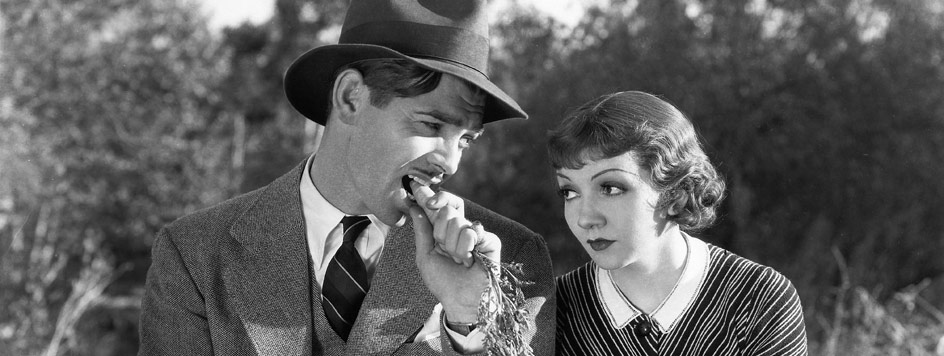
Clark Gable is a down-on-his-luck reporter, and he stumbles across the biggest news story in the country when Claudette Colbert enters his life. She’s on the run from her rich father and on the way to New York to be with her new husband. There’s a reward for her return, and Gable plans to either collect or to cash in by telling her story. He’s just gotta not fall in love along the way, d’awww!

I won’t pretend I walked into a movie from 1934 expecting something genuinely sweet and funny. There are an insane number of cuts — one extremely important scene in a bedroom cuts three times in as many minutes — and some of the wackier stuff doesn’t really work. In the opening scene, Claudette Colbert jumps off of a boat to swim to Florida. A man runs into a swamp because he’s afraid. Another man is tied to a tree and left to die, and that story is just abandoned. A guy lands a helicopter at a wedding. There’s some wild madness going on in the background, but the leading couple carries the load of it well. They both give superhuman performances; they’re both interesting, memorable, and sincerely funny even by modern standards.

Some classics are “important” and some are good. I can’t speak to how crucial It Happened One Night is to the rom-com as a genre, but it’s a movie from eight decades ago that wouldn’t need much updating to be released this summer. It’s worth your time, even if you aren’t watching all 86 of these.

The Best Part: On their first night alone together the couple is forced to pretend to be married to avoid suspicion. It’s a very sweet scene, and it’s played with a mix of playfulness and restraint. Paired with a scene in the morning where they throw a fake fight/screaming match to convince the cops they’re actually married, it’s damned excellent. It would need zero updating to work in 2014.

The Worst Part: On the way to New York the couple hitchhikes with a guy who sings everything he says. He is completely unexplained. I cannot tell you why this man sings his sentences. At one point someone flies an “autogyro” into a wedding, and I can explain that more than this man.

Is It Better or Worse than CrashIt’s a Clark Gable romantic comedy from the 1930s. You don’t need me to write this to know it’s “a good movie.” It’s the kind of movie that makes this whole thing silly. Is it better than Crash? It has Clark Damn Gable in it. The point of this project is to explore the idea that awards and praise don’t necessarily mean a movie is “great,” but of course this one is. Above all else it’s fascinating how timeless much of it is. Some plot elements — a woman runs away and is front page news for weeks in a row — are absurd now, but the jokes all still work. It’s actually funny even in 2014. Crash was instantly dated and will get more so as time advances. This, so long as people can forget some of their cynicism for a second, will endure.

Worst Best Picture Archives: Crash | Terms of Endearment | Forrest Gump | All About Eve | The Apartment | No Country for Old Men | Gentleman’s Agreement |12 Years a SlaveThe Last Emperor | The Silence of the Lambs | The Artist | A Man for All Seasons | Platoon | The Lord of the Rings: The Return of the King | The King’s Speech | Rain Man | The Departed | The Bridge on the River Kwai | Marty | Gigi |

Alex Russell lives in Chicago and is set in his ways. Disagree with him about anything at readingatrecess@gmail.com or on Twitter at @alexbad.

 Image source: Oscars.org

Worst Best Picture: Is Gigi Better or Worse Than Crash?

Gigi Still #1

Alex Russell

In “Worst Best Picture” we search every single Best Picture Oscar winner of all time from 1927 to present to uncover the worst of them all. Conventional wisdom says that 2005’s winner Crash is the worst winner in history. We won’t stop until we’ve tested every last one. Read the the first, our review of Crash, here. All posts should be considered to have a blanket “spoiler alert” on them. Today’s installment is the 1958 winner Gigi. Is it better than Crash?

I don’t read a lot (any?) BuzzFeed, but when they put together a ranking of all of the movies that had won the Oscar for Best Picture, Gigi came in dead last. Since the stated goal of this whole thing is to find a worse movie than Crash that has earned the award, I figured the musical from 1958 deserved some immediate attention.

Leslie Caron plays the title character, a (very) young French woman in the process of learning to be a courtesan. Her older friend Gaston (yep) is famous for being rich, or something, and the two are star-crossed if for no other reason than they seem to be the only two people they’ve each ever met that aren’t immediate blood relatives.

They never say Gigi’s exact age, but she’s absolutely supposed to be a young teenager. She spends the entire first hour of the musical in ridiculously infantilizing clothing as her aunt teaches her the finer points of accepting jewelry and living to serve a man who owns her. I point this out to say that, yeah, it’s definitely a movie about some weird sexual politics, but it’s also completely divorced from “romance.” It’s about transactions.

BuzzFeed’s wrong on this one; I’m only 20 movies into the entire 86-film roster at this point and I know this one’s not the worst. That said, it’s assuredly strange six decades years later. There’s no place in modernity for a two-hour explanation of why you don’t have to put on the red light, and if there is, there isn’t a place for it to pretend that it’s one of history’s great romances.

The Best Part: Maurice Chevalier plays a ridiculous perpetual bachelor who spends the entire movie telling everyone how awesome it is to be old and not in love. He shares a song about it with an old lover and though I’m no big musical buff, I couldn’t help but smile at “I Remember It Well.” It’s “funny for a musical” but it’s very close to “actually funny.” It’s a big improvement over the supremely strange “Thanks Heaven for Little Girls.”

The Worst Part: Poor Eva Gabor shows up for about five minutes as the “cheating mistress.” She’s sleeping with another guy — note this is “another guy” on top of someone who treats her as property — and when she is discovered it gets put in the newspaper. This in the first 20 minutes of the film, so I can say this without a spoiler: Everyone then has a bunch of literal laughs about Eva Gabor’s character’s supposed attempted suicide. The movie explains this away as just part of being a bought woman in 1900, but this movie pairs well with The Apartment as tone-deaf with suicide jokes. How many more movies with suicide jokes could there be?

Is It Better or Worse than CrashGigi is a musical, so your milage may vary based on how much you can stand a movie with 15 songs in it. Both movies certainly have roughly the same message about women: Only miraculous ones can escape the social ties that bind their respective times. They differ in that Gigi is a kind of loud, proud class warfare movie about how awful it is to be low status, and Crash thinks that status doesn’t matter at all. Everyone in Crash is awful, and that’s sorta the whole point of the world it sets up. They’re both “mean” messages, but Gigi‘s is delivered in an oblivious song with bright costumery. There is an argument that a big dumb musical about how love doesn’t matter as much as being rich is a bad movie, but it feels more like a historical oddity than the death-march against social change that is Crash.

Worst Best Picture Archives: Crash | Terms of Endearment | Forrest Gump | All About Eve | The Apartment | No Country for Old Men | Gentleman’s Agreement |12 Years a SlaveThe Last Emperor | The Silence of the Lambs | The Artist | A Man for All Seasons | Platoon | The Lord of the Rings: The Return of the King | The King’s Speech | Rain Man | The Departed | The Bridge on the River Kwai | Marty |

Alex Russell lives in Chicago and is set in his ways. Disagree with him about anything at readingatrecess@gmail.com or on Twitter at @alexbad.

 Image source: oscarwinningfilms.blogspot.com

Worst Best Picture: Is Marty Better or Worse Than Crash?

Ernest_Borgnine-Betsy_Blair_in_Marty_trailer

Alex Russell

In “Worst Best Picture” we search every single Best Picture Oscar winner of all time from 1927 to present to uncover the worst of them all. Conventional wisdom says that 2005’s winner Crash is the worst winner in history. We won’t stop until we’ve tested every last one. Read the the first, our review of Crash, here. All posts should be considered to have a blanket “spoiler alert” on them. Today’s installment is the 1955 winner Marty. Is it better than Crash?

Clara (Betsy Blair) meets Marty (Ernest Borgnine) after being left on the dance floor by her terrible date. The two see themselves as similar and hit it off. It’s a date movie! Love is in the air! Kinda.

Marty is a fat — I mention the “fat” because he does a lot — butcher and the last single person in his family. His ma is ready to be rid of him, so she sends him down to the dance hall to meet a nice Italian girl. He meets Clara, a “dog” of a woman — I use that term only because every single character does even more than you can imagine for real it is crazy — who also has the audacity to be a schoolteacher. There’s a lot of 50s mores going on in this movie: Marty is obsessed with talking about how being a butcher makes him no good, everyone is worried about dying alone in their 20s, one character has to be talked down from saying every man should be 20 years older than their wives, etc.

The world of the 50s explains a lot of what’s going on, but it doesn’t explain Clara’s personality. Nathan Rabin invented the term “manic pixie dream girl” to describe a specific character archetype in film: poorly written female characters that exist solely to further the emotional development of sad, lonely men. Marty is plenty sad — he talks about suicide on his first date with Clara — but Clara isn’t even enough to be considered the shell of a personality that the manic pixie occupies. Clara is nothing; she almost never even speaks. She’s upsetting in a 2014 sense because she struggles in a world that can’t accept her, but she’s ridiculous even in a 1955 sense because she just seems so damn bored in her world.

The Best Part: Marty is a great character, even if the rest of his world is pretty damned mean-spirited. The movie goes pretty far to establish his happy-go-lucky attitude by raining emotional garbage on him from every direction, but it’s a testament to the performance that Ernest Borgnine still seems to be playing a real, unfortunate person.

The Worst Part: It seems like my “worst part” is “the female characters aren’t developed” fairly often, but in a movie like Marty it becomes really impossible to ignore. Everyone in the world of Marty is fairly simple and awful — aside from Marty, of course — but his blushing would-be bride is full-on tabula rasa. She gets no dialogue outside of some short responses and one monologue full of information Marty tells her to say. Betsy Blair does as much as there is to do, but damn there’s not much to do.

Is It Better or Worse than CrashLet us consider a part of Crash we have not considered thus far: Could it be seen as a love story? It’s an absurd way to view a movie that is best summed up as “a defense of racism as the only justifiable ethos,” but it is the way we must view it to compare it to Marty. Both films have essentially only one married couple. In Marty it’s the main character’s miserable brother and his new bride. In Crash it’s a black television director and his wife. Both sets of couples are miserable, but only in Marty is it treated as a sad situation. In Crash, like all the other awfulness, marriage is treated as a sad, unavoidable result of living in the miserable world that Crash creates. In this way, yet again, Marty is a better movie because even a film about loneliness and almost giving up is more hopeful than a boot stomping on the face of joy forever.

Worst Best Picture Archives: Crash | Terms of Endearment | Forrest Gump | All About Eve | The Apartment | No Country for Old Men | Gentleman’s Agreement |12 Years a SlaveThe Last Emperor | The Silence of the Lambs | The Artist | A Man for All Seasons | Platoon | The Lord of the Rings: The Return of the King | The King’s Speech | Rain Man | The Departed | The Bridge on the River Kwai |

Alex Russell lives in Chicago and is set in his ways. Disagree with him about anything at readingatrecess@gmail.com or on Twitter at @alexbad.

 Image source: Oscars.org

Worst Best Picture: Is The Bridge on the River Kwai Better or Worse Than Crash?

1958_iconic_actor_guiness

Alex Russell

In “Worst Best Picture” we search every single Best Picture Oscar winner of all time from 1927 to present to uncover the worst of them all. Conventional wisdom says that 2005’s winner Crash is the worst winner in history. We won’t stop until we’ve tested every last one. Read the the first, our review of Crash, here. All posts should be considered to have a blanket “spoiler alert” on them. Today’s installment is the 1957 winner The Bridge on the River Kwai. Is it better than Crash?

There’s a reason it’s Ron Swanson’s favorite movie: It’s about building a bridge.

The Bridge on the River Kwai is every dad’s favorite Best Picture winner. It’s about brutality and masculinity in unexpected ways. From the opening shot of two men digging graves to the closing raid on the bridge itself, there couldn’t be more masculinity built into this movie unless it actually crossed the three-hour mark it comes close to crossing.

Every story is about conflict. The Bridge on the River Kwai is a war movie, but the fact that the British soldiers are in a prison camp only matters as an establishing detail. Alec Guinness leads his men through their stint as prisoners of war with the standard British resilience, and it definitely starts out as a movie about brutal conditions and harsh realities of war. The strict head of the camp Colonel Saito (Sessue Hayakawa) tries to force the British troops to build a militarily important bridge, the British troops refuse and do a terrible job on purpose, and the officers steel themselves for organized resistance.

When it becomes clear that they will build the bridge or die resisting it, Guinness decides that they may as well build it well if they must build it at all. There’s a very Catch-22 element to this thought process that’s both darkly funny and very sad. The tone’s lighter than you might expect at times for a movie about dying in prison camp, but as the movie stops being about one thing and becomes the story of how a project galvanizes people it really walks a fine line without seeming too absurd.

The Best Part: Saito could be portrayed in some really awful ways and isn’t. Wondering about the portrayal of the Japanese head of a prison camp in a movie made in 1957 really, really makes you wince when you start the film, but he presents an interesting perspective. Saito has to finish his bridge and the British have to survive and endure. There’s a lot more going on, but at a basic level it’s a movie about how people apply the skills they’ve learned in normal life when life becomes anything but. Two halves of a whole, and all that.

The Worst Part: It’s tough to talk about this without spoiling it too much, but the less subtle B-plot of the movie is a lot. William Holden’s character Shears is forced into many different roles over three hours, and not all of them are very interesting. People have debated if the film portrays British people well, but it’s Holden’s American character that really has some extreme moments.

Is It Better or Worse than CrashIt’s nearly 50 years older and it is more racially sensitive. There’s definitely some complicated emotions tied up in the portrayal of what “Britishness” means, but it is a movie less concerned with painting good and evil than with showing a side of war that most people don’t consider. In one scene Alec Guinness walks around the hospital tent and sends the “best off” of the men to finish the bridge. It’s a truly dark scene; these men are going to die as they finish a military asset for their enemies. Guinness plays it calmly and that elevates the performance. It’s a serious and compelling tradeoff: He believes it is more important to keep the men feeling useful than it is to not finish the bridge. The premise is ridiculous, but it’s rational and it’s quiet. There aren’t two words that describe Crash less.

Worst Best Picture Archives: Crash | Terms of Endearment | Forrest Gump | All About Eve | The Apartment | No Country for Old Men | Gentleman’s Agreement |12 Years a SlaveThe Last Emperor | The Silence of the Lambs | The Artist | A Man for All Seasons | Platoon | The Lord of the Rings: The Return of the King | The King’s Speech | Rain Man | The Departed |

Alex Russell lives in Chicago and is set in his ways. Disagree with him about anything at readingatrecess@gmail.com or on Twitter at @alexbad.

 Image source: Oscars.org

Worst Best Picture: Is The Departed Better or Worse Than Crash?

damon_cadet_jpg

Alex Russell

In “Worst Best Picture” we search every single Best Picture Oscar winner of all time from 1927 to present to uncover the worst of them all. Conventional wisdom says that 2005’s winner Crash is the worst winner in history. We won’t stop until we’ve tested every last one. Read the the first, our review of Crash, here. All posts should be considered to have a blanket “spoiler alert” on them. Today’s installment is the 2006 winner The Departed. Is it better than Crash?

What is there to say about Martin Scorsese that hasn’t already been said?

He’s arguably the most-acclaimed living director in America. He made Taxi Driver. His reputation speaks for itself, so it’s surprising that The Departed was his first Best Picture Oscar win.

The Departed is the story of two moles: One is a real cop embedded into a fake life of crime and the other is a fake cop raised to infiltrate the police to protect organized crime. It provides the necessary interesting twists and it plays with the idea of loyalty and reality. Even though we know Matt Damon is the fake cop and Leonardo DiCaprio is the fake mobster, it’s repeatedly tough to tell who is in too deep. Kurt Vonnegut said it best: “We are what we pretend to be, so we must be careful about what we pretend to be.”

There’s also Alec Baldwin, Martin Sheen, and Mark Wahlberg as real cops and a series of standard “tough guys” as Jack Nicholson’s crew of bad dudes from Boston. It’s well-acted and immersive, which is tough to do for a movie about mobsters from Boston. It’s a great movie for a reason, but beyond a different take on personal identity and loyalty, there’s not really a whole lot of message.

The Best Part: There are lots and lots of movies like this. The director of Goodfellas and Taxi Driver should be expected to make a sound mob movie in Boston, but it’s still amazing that a good one came out of the late 2000s. It’s only been a few years, but it already seems like 20 versions of this movie came out in about 10 years. Much like how every TV show about a dark hero is going to have a tough time establishing itself as original for awhile, the mob genre is done for a few decades now.

The Worst Part: It feels a little silly to fill this section in on some movies. The Departed isn’t one of my favorite movies, but it’s an outstanding cinematic achievement. It feels slight to even say this, but it’s the last shot of the entire movie. It doesn’t give anything away to say this: Do you really need to have a literal rat scurry across the screen in a movie about two competing informants? The entire plot of the movie is about mixed identity and the duality of “rats.” We get it. After nearly three hours, we get it.

Is It Better or Worse than CrashLike Crash, The Departed has an ensemble cast. There’s a million people in both movies — well, a million men. Crash paints women as evil and petty while The Departed prefers them to be absent. Only two women in The Departed have more than two minutes of screen time, and only one of them does anything more than have sex with Jack Nicholson. Neither movie is a strong contender to pass the Bechdel test. Is absent better than terrible? I guess so. The Departed makes lots of strange choices. Characters turn on and off racism and homophobia to paint the “authenticity” of Boston, but it’s never consistent or dealt with completely. The movie is mostly lots of bar fights and yelling, but it still comes off less cynical than Crash. Even if you leave out all the good parts and take The Departed as just a mean-spirited view of Boston, it’s better.

Worst Best Picture Archives: Crash | Terms of Endearment | Forrest Gump | All About Eve | The Apartment | No Country for Old Men | Gentleman’s Agreement |12 Years a SlaveThe Last Emperor | The Silence of the Lambs | The Artist | A Man for All Seasons | Platoon | The Lord of the Rings: The Return of the King | The King’s Speech | Rain Man |

Alex Russell lives in Chicago and is set in his ways. Disagree with him about anything at readingatrecess@gmail.com or on Twitter at @alexbad.

 Image source: Oscars.org

The Wolf of Wall Street is About Excess and Debauchery: Should You See It?

wows

Stephanie Feinstein

In our rarely-running kinda-series Should You See It? we talk about movies that just came out. You can figure out the rest of the premise from the title of the series. That’s right: We talk recipes. Should you see The Wolf of Wall Street?

Spoilers, of course.

First of all, this was a really long 180 minutes, and the first 45 are just 2000’s Boiler Room all over again.

This is a true story: The real deal Jordan Belfort wrote a memoir about how he swindled the hell out of America, and Scorsese decided that would make a good movie. But unlike so many other debauchery-focused films, it lacks reflection and remorse.

This lack of victims, of consequence, of remorse, of pain, are my issues with Scorsese’s latest. The movie spirals down a hole of moral ambiguity, drowning in its own self-righteousness.

“But he gets caught!” You might argue, “He pays for his sins!” I disagree. A 36-month stint in a Nevada white-collar prison does not atonement make. Referring to the incarceration as a respite from his money-hungry life, he feels no remorse for what put him there.

There is a lack of remorse for cheating on his first wife, and we see no repercussions of divorce. There is no aftermath of her marriage, no additional hospitality or hurt. No or media backlash; no paparazzi-fueled tabloids.

When his yacht sinks during a hellacious storm, no one is harmed and only the yacht (which I assume to be heavily insured), suffers. His wife is fine, their friends are fine, no crew is lost. The plane coming to rescue them after the wreck? It explodes, killing three people. Do we see the funerals, the anguish of having ruined other lives? No. He does not even openly acknowledge the explosion, glossing over it in a smooth voice over, paving the way for his reluctant sobriety.

The two scenes that most display the lack of morality and compass do not use yachts, planes, or pussy to make a point. When Belfort Lemmon-ludes up and over at the country club, he chooses to drive his expensive-ass car home, despite a total lack of motor skills. He claims to have made it home without a scratch on himself or the gleaming Lamborghini. As the audience, we believe him until officers show up the next day, ready for an arrest.

If this were a tale of moral understanding and growth, more than just a fender and door would be damaged. In screenplay-land, this is the time to show us a bit of blood on the hood and imply that Belfort cost someone more than just their savings. This moral resolution does not appear; the charges of DWI are dropped without evidence.

Another car, a Mercedes with a passenger, and another great display. During Belfort’s slide further down the amoral rabbit hole, his model wife Naomi LaPaglia (Margot Robbie) challenges his life and he flips his shit. Destroying a sofa in search of his “small stash” (what I assume to be about ¼ pound of uncut cocaine), he buries his nose into the powder before snatching up his eldest child and attempting to flee the property. As expected, the car crashes, and although the child is absolutely not large enough or old enough to be in the front seat safely in an accident, no great harm is done.

As before, if this story was to have a lesson — a moral, an actual resolve beyond greed –that child would not have arrived unscathed. But like so many other things, Belfort’s life continues unruffled, no matter what he is facing.

As for the rest of the film, the side characters are by far the best. Cristin Milioti as the suffering first wife (Teresa Petrillo), has a beautiful emotional breakdown after finding DiCaprio’s Belfort cheating. A recent television sensation (she’s the mother in How I Met Your Mother), she plays the Jersey hairdresser delightfully.

Jonah Hill (Donnie Azoff) is another surprising standout, as I was not really expecting much from him (Protip: To understand how I feel about Jonah, please watch 2008’s Strange Wilderness.) His meandering, pseudo-improvised diatribes are often humorous, but feel disjointed. It was great to see him jacking off at the party, smoking crack, or rip-torn on blow and pills, but the “chops” didn’t feel as genuine.

Anyone out there remember Early Edition? Crime solving with psychic newspapers? Kyle Chandler remembers, as he plays ineffectual FBI agent Patrick Denham in Wolf, making little money and an even smaller impact in the financial world. (His will-they-won’t-they bribe scene is pretty great.). Would the story be stronger if Chandler was again paired with a psychic newspaper? Maybe.

The cameos of television actors don’t end there, as Kenneth Choi (Sons of Anarchy), Jon Bernthal (The Walking Dead) and Thomas Middleditch (Silicon Valley) make appearances with different ends. The addition of seasoned veterans Rob Reiner, Jon Favreau, and Jean Dujardin rounds out the strong cast, but no one can save the film. Even the real Jordan Belfort, cleverly hidden in the end as an announcer in Auckland, cannot give enough gravitas or remorse to save it all.

Best Part: Matthew McConaughey’s Mark Hanna. A single real scene, the introduction of drugs, a weirdly racist chest thumping, and the drive of the all-mighty dollar, McConaughey was better than the movie deserved. I wanted so much for him to return in the end, check up on Jordan, challenge him in some way, but to no avail. The chest-thumping remains, but McConaughey leaves us far too soon.

 2nd Best Part: DiCaprio’s worm flailing at the country club. Hilarious, as well as a great look at an actor not known for his physicality in roles (Gilbert Grape notwithstanding.) The fact it so delightfully mimicked his dancing at his wedding made it all the better.

Overall: In the kidnapping-car crash, Jordan receives a small wound on his forehead, and a trickle of blood is our only real indication of his pain. We see no recovery, no regret, no growth.

In The Wolf of Wall Street, Jordan Belfort bleeds, but it is never enough.

Should You See It? (Well, now rent it): Sure. I will say that I am super-duper glad I did not see this in theaters, as the debauchery of it all would have been too great, with no great Hunter S. reflection. At home, on the sofa, it’s a great watching experience. The story is surprisingly fun, once you get past all the moral ineptitude.

Stephanie Feinstein yells at her television daily, and you will never change that. You can challenge her at stephanie.feinstein@gmail.com.

Worst Best Picture: Is Rain Man Better or Worse Than Crash?

1989_iconic_rainman1

Alex Russell

In “Worst Best Picture” we search every single Best Picture Oscar winner of all time from 1927 to present to uncover the worst of them all. Conventional wisdom says that 2005’s winner Crash is the worst winner in history. We won’t stop until we’ve tested every last one. Read the the first, our review of Crash, here. All posts should be considered to have a blanket “spoiler alert” on them. Today’s installment is the 1988 winner Rain Man. Is it better than Crash?

Rain Man is complicated.

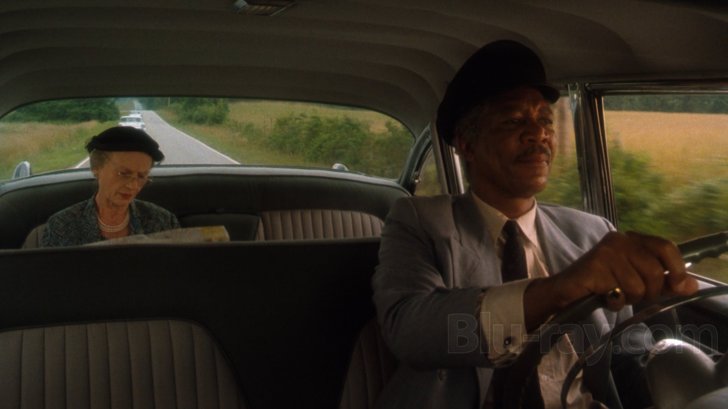
Even if you haven’t seen it,  you’re no doubt aware of Dustin Hoffman’s character on a basic level. He plays Raymond “Rain Man” Babbitt, the autistic brother of Tom Cruise’s Charlie Babbitt. It’s an iconic performance that locked up 1988’s Oscar in a way that few individual efforts before or since have.

Rain Man is terrific, but Hoffman’s performance is what really sticks with you when you watch it 25 years later. He sells the distress and the panic and the wonder of the condition so totally. It’s a full figure of a person just as much as “Rain Man” is a shorthand for the condition of autism itself. It’s a delicate topic — many Oscar-winners are about delicate topics, but few are about something like mental illness — and it’s handled in a way that holds up a quarter century later. This is an accomplishment all by itself, and it struck me as similar to the high points of the much-earlier Gentleman’s Agreement‘s handling of race.

In Rain Man, Tom Cruise’s character is forced to reunite with a brother he doesn’t know he has. It combines the classic “road movie” tropes with the “long-lost person” ones as Cruise drives Dustin Hoffman across the country to LA. Along the way he learns a little bit about autism and even more about himself. That sentence feels sappy and reductive, but it’s the high school book report summation of the “feelings” in Rain Man.

Most of the supporting roles have suffered with the passing of time — it’s especially strange to see some scenes where people appear to have never acted in their life just delivering bland line readings — but Cruise and Hoffman play the two sides of human experience so perfectly. Cruise is an interesting choice for a villain here and honestly, a mostly-evil protagonist is an interesting choice overall. It works because there are so many sad pieces to connect in Rain Man. “Meet your brother and try to earn back the three million bucks from Dad’s will” is a pretty fantastical plot,  but “learn to live with your family and your place in it” is something much simpler to understand and believe.

The Best Part: The reverse arcs of Tom Cruise becoming less worldly and Dustin Hoffman becoming a bigger part of the outside world are excellent. It’s the exact kind of obvious development that feels terrible when it’s over-messaged. There aren’t moments where people look into the camera and explain the pain and the difficulty, so they feel less like plot points and more like actual, impactful parts of a life. I always think of the worst version of this: In Man on the Moon, Danny DeVito is forced to say “You’re insane… but you might also be brilliant.” Rain Man is never that insulting.

The Worst Part: Surprisingly, it’s the iconic casino scene. It may be the only one you’re sure to know if you haven’t seen it. Tom Cruise takes his brother to Vegas and exploits his autism to count cards at blackjack. The scene starts with them testing it out on the back of a car. As soon as Cruise is satisfied it will work, they loudly peel out with the cards fluttering in the wind and the dust. The next scene opens with a full montage of both of them getting suits and haircuts. It’s full 80s in the worst way, and it’s ridiculous out of time. It’s bonkers and it immediately dates what is otherwise a really powerful, timeless story. Seriously, watch it.

Is It Better or Worse than Crash? It is better. I’ve only just scratched the surface of what’s wrong with Crash as a Best Picture winner. Crash is an awkward, meandering few hours of cinema by itself, but it’s when you compare it to the great accomplishments of the artform that it really looks bad. Tom Cruise in Rain Man and Matt Dillon in Crash have similar character arcs. Both men have lives where they can choose to either become better parts of society or continue on in their own ways. Both choose a form of redemption after decidedly not choosing redemption, but Dillon comes off much worse. Rain Man is about bettering yourself for your family, Crash is about needing a miracle just to care about the world at all.

Worst Best Picture Archives: Crash | Terms of Endearment | Forrest Gump | All About Eve | The Apartment | No Country for Old Men | Gentleman’s Agreement |12 Years a SlaveThe Last Emperor | The Silence of the Lambs | The Artist | A Man for All Seasons | Platoon | The Lord of the Rings: The Return of the King | The King’s Speech |

Alex Russell lives in Chicago and is set in his ways. Disagree with him about anything at readingatrecess@gmail.com or on Twitter at @alexbad.

 Image source: Oscars.org