oscars

Worst Best Picture: Is It Happened One Night Better or Worse Than Crash?

ithappenedonenight

Alex Russell

In “Worst Best Picture” we search every single Best Picture Oscar winner of all time from 1927 to present to uncover the worst of them all. Conventional wisdom says that 2005’s winner Crash is the worst winner in history. We won’t stop until we’ve tested every last one. Read the the first, our review of Crash, here. This is intended to be mostly spoiler-free, but there may be minor details mentioned. Today’s installment is the 1934 winner It Happened One Night. Is it better than Crash?

It’s very strange to consider what has become the “canon” of romantic films. Movies like CasablancaRoman Holiday, and Annie Hall are the standards by which every portrayal of romance is judged. It Happened One Night escaped my radar for the most part, but it’s definitely a movie that is in that list of ideal films.

As I watch every Best Picture Oscar winner I am struck by how few of these I’ve actually seen. There are a ton of movies — How Green Was My Valley comes to mind whenever I look at the full list — that I am vaguely aware of, but mostly they just don’t exist in my mental database. I don’t claim to be a qualified judge of all of film history, but I do appreciate a good movie. It Happened One Night is a good movie.

Clark Gable is a down-on-his-luck reporter, and he stumbles across the biggest news story in the country when Claudette Colbert enters his life. She’s on the run from her rich father and on the way to New York to be with her new husband. There’s a reward for her return, and Gable plans to either collect or to cash in by telling her story. He’s just gotta not fall in love along the way, d’awww!

I won’t pretend I walked into a movie from 1934 expecting something genuinely sweet and funny. There are an insane number of cuts — one extremely important scene in a bedroom cuts three times in as many minutes — and some of the wackier stuff doesn’t really work. In the opening scene, Claudette Colbert jumps off of a boat to swim to Florida. A man runs into a swamp because he’s afraid. Another man is tied to a tree and left to die, and that story is just abandoned. A guy lands a helicopter at a wedding. There’s some wild madness going on in the background, but the leading couple carries the load of it well. They both give superhuman performances; they’re both interesting, memorable, and sincerely funny even by modern standards.

Some classics are “important” and some are good. I can’t speak to how crucial It Happened One Night is to the rom-com as a genre, but it’s a movie from eight decades ago that wouldn’t need much updating to be released this summer. It’s worth your time, even if you aren’t watching all 86 of these.

The Best Part: On their first night alone together the couple is forced to pretend to be married to avoid suspicion. It’s a very sweet scene, and it’s played with a mix of playfulness and restraint. Paired with a scene in the morning where they throw a fake fight/screaming match to convince the cops they’re actually married, it’s damned excellent. It would need zero updating to work in 2014.

The Worst Part: On the way to New York the couple hitchhikes with a guy who sings everything he says. He is completely unexplained. I cannot tell you why this man sings his sentences. At one point someone flies an “autogyro” into a wedding, and I can explain that more than this man.

Is It Better or Worse than CrashIt’s a Clark Gable romantic comedy from the 1930s. You don’t need me to write this to know it’s “a good movie.” It’s the kind of movie that makes this whole thing silly. Is it better than Crash? It has Clark Damn Gable in it. The point of this project is to explore the idea that awards and praise don’t necessarily mean a movie is “great,” but of course this one is. Above all else it’s fascinating how timeless much of it is. Some plot elements — a woman runs away and is front page news for weeks in a row — are absurd now, but the jokes all still work. It’s actually funny even in 2014. Crash was instantly dated and will get more so as time advances. This, so long as people can forget some of their cynicism for a second, will endure.

Worst Best Picture Archives: Crash | Terms of Endearment | Forrest Gump | All About Eve | The Apartment | No Country for Old Men | Gentleman’s Agreement |12 Years a SlaveThe Last Emperor | The Silence of the Lambs | The Artist | A Man for All Seasons | Platoon | The Lord of the Rings: The Return of the King | The King’s Speech | Rain Man | The Departed | The Bridge on the River Kwai | Marty | Gigi |

Alex Russell lives in Chicago and is set in his ways. Disagree with him about anything at readingatrecess@gmail.com or on Twitter at @alexbad.
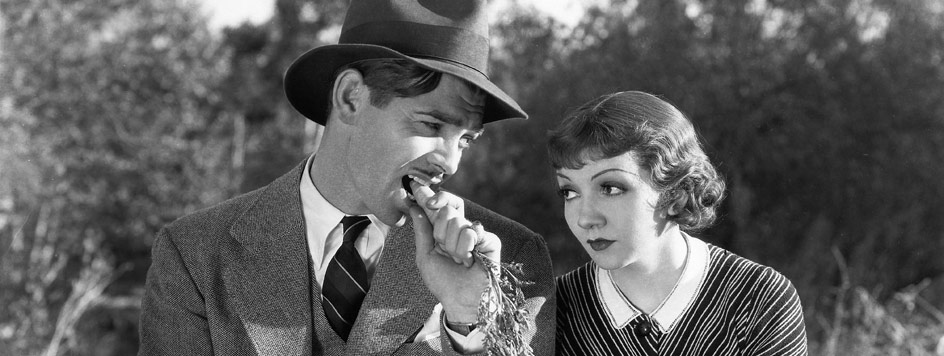
 Image source: Oscars.org

Worst Best Picture: Is Gigi Better or Worse Than Crash?

Gigi Still #1

Alex Russell

In “Worst Best Picture” we search every single Best Picture Oscar winner of all time from 1927 to present to uncover the worst of them all. Conventional wisdom says that 2005’s winner Crash is the worst winner in history. We won’t stop until we’ve tested every last one. Read the the first, our review of Crash, here. All posts should be considered to have a blanket “spoiler alert” on them. Today’s installment is the 1958 winner Gigi. Is it better than Crash?

I don’t read a lot (any?) BuzzFeed, but when they put together a ranking of all of the movies that had won the Oscar for Best Picture, Gigi came in dead last. Since the stated goal of this whole thing is to find a worse movie than Crash that has earned the award, I figured the musical from 1958 deserved some immediate attention.

Leslie Caron plays the title character, a (very) young French woman in the process of learning to be a courtesan. Her older friend Gaston (yep) is famous for being rich, or something, and the two are star-crossed if for no other reason than they seem to be the only two people they’ve each ever met that aren’t immediate blood relatives.

They never say Gigi’s exact age, but she’s absolutely supposed to be a young teenager. She spends the entire first hour of the musical in ridiculously infantilizing clothing as her aunt teaches her the finer points of accepting jewelry and living to serve a man who owns her. I point this out to say that, yeah, it’s definitely a movie about some weird sexual politics, but it’s also completely divorced from “romance.” It’s about transactions.

BuzzFeed’s wrong on this one; I’m only 20 movies into the entire 86-film roster at this point and I know this one’s not the worst. That said, it’s assuredly strange six decades years later. There’s no place in modernity for a two-hour explanation of why you don’t have to put on the red light, and if there is, there isn’t a place for it to pretend that it’s one of history’s great romances.

The Best Part: Maurice Chevalier plays a ridiculous perpetual bachelor who spends the entire movie telling everyone how awesome it is to be old and not in love. He shares a song about it with an old lover and though I’m no big musical buff, I couldn’t help but smile at “I Remember It Well.” It’s “funny for a musical” but it’s very close to “actually funny.” It’s a big improvement over the supremely strange “Thanks Heaven for Little Girls.”

The Worst Part: Poor Eva Gabor shows up for about five minutes as the “cheating mistress.” She’s sleeping with another guy — note this is “another guy” on top of someone who treats her as property — and when she is discovered it gets put in the newspaper. This in the first 20 minutes of the film, so I can say this without a spoiler: Everyone then has a bunch of literal laughs about Eva Gabor’s character’s supposed attempted suicide. The movie explains this away as just part of being a bought woman in 1900, but this movie pairs well with The Apartment as tone-deaf with suicide jokes. How many more movies with suicide jokes could there be?

Is It Better or Worse than CrashGigi is a musical, so your milage may vary based on how much you can stand a movie with 15 songs in it. Both movies certainly have roughly the same message about women: Only miraculous ones can escape the social ties that bind their respective times. They differ in that Gigi is a kind of loud, proud class warfare movie about how awful it is to be low status, and Crash thinks that status doesn’t matter at all. Everyone in Crash is awful, and that’s sorta the whole point of the world it sets up. They’re both “mean” messages, but Gigi‘s is delivered in an oblivious song with bright costumery. There is an argument that a big dumb musical about how love doesn’t matter as much as being rich is a bad movie, but it feels more like a historical oddity than the death-march against social change that is Crash.

Worst Best Picture Archives: Crash | Terms of Endearment | Forrest Gump | All About Eve | The Apartment | No Country for Old Men | Gentleman’s Agreement |12 Years a SlaveThe Last Emperor | The Silence of the Lambs | The Artist | A Man for All Seasons | Platoon | The Lord of the Rings: The Return of the King | The King’s Speech | Rain Man | The Departed | The Bridge on the River Kwai | Marty |

Alex Russell lives in Chicago and is set in his ways. Disagree with him about anything at readingatrecess@gmail.com or on Twitter at @alexbad.

 Image source: oscarwinningfilms.blogspot.com

Worst Best Picture: Is Marty Better or Worse Than Crash?

Ernest_Borgnine-Betsy_Blair_in_Marty_trailer

Alex Russell

In “Worst Best Picture” we search every single Best Picture Oscar winner of all time from 1927 to present to uncover the worst of them all. Conventional wisdom says that 2005’s winner Crash is the worst winner in history. We won’t stop until we’ve tested every last one. Read the the first, our review of Crash, here. All posts should be considered to have a blanket “spoiler alert” on them. Today’s installment is the 1955 winner Marty. Is it better than Crash?

Clara (Betsy Blair) meets Marty (Ernest Borgnine) after being left on the dance floor by her terrible date. The two see themselves as similar and hit it off. It’s a date movie! Love is in the air! Kinda.

Marty is a fat — I mention the “fat” because he does a lot — butcher and the last single person in his family. His ma is ready to be rid of him, so she sends him down to the dance hall to meet a nice Italian girl. He meets Clara, a “dog” of a woman — I use that term only because every single character does even more than you can imagine for real it is crazy — who also has the audacity to be a schoolteacher. There’s a lot of 50s mores going on in this movie: Marty is obsessed with talking about how being a butcher makes him no good, everyone is worried about dying alone in their 20s, one character has to be talked down from saying every man should be 20 years older than their wives, etc.

The world of the 50s explains a lot of what’s going on, but it doesn’t explain Clara’s personality. Nathan Rabin invented the term “manic pixie dream girl” to describe a specific character archetype in film: poorly written female characters that exist solely to further the emotional development of sad, lonely men. Marty is plenty sad — he talks about suicide on his first date with Clara — but Clara isn’t even enough to be considered the shell of a personality that the manic pixie occupies. Clara is nothing; she almost never even speaks. She’s upsetting in a 2014 sense because she struggles in a world that can’t accept her, but she’s ridiculous even in a 1955 sense because she just seems so damn bored in her world.

The Best Part: Marty is a great character, even if the rest of his world is pretty damned mean-spirited. The movie goes pretty far to establish his happy-go-lucky attitude by raining emotional garbage on him from every direction, but it’s a testament to the performance that Ernest Borgnine still seems to be playing a real, unfortunate person.

The Worst Part: It seems like my “worst part” is “the female characters aren’t developed” fairly often, but in a movie like Marty it becomes really impossible to ignore. Everyone in the world of Marty is fairly simple and awful — aside from Marty, of course — but his blushing would-be bride is full-on tabula rasa. She gets no dialogue outside of some short responses and one monologue full of information Marty tells her to say. Betsy Blair does as much as there is to do, but damn there’s not much to do.

Is It Better or Worse than CrashLet us consider a part of Crash we have not considered thus far: Could it be seen as a love story? It’s an absurd way to view a movie that is best summed up as “a defense of racism as the only justifiable ethos,” but it is the way we must view it to compare it to Marty. Both films have essentially only one married couple. In Marty it’s the main character’s miserable brother and his new bride. In Crash it’s a black television director and his wife. Both sets of couples are miserable, but only in Marty is it treated as a sad situation. In Crash, like all the other awfulness, marriage is treated as a sad, unavoidable result of living in the miserable world that Crash creates. In this way, yet again, Marty is a better movie because even a film about loneliness and almost giving up is more hopeful than a boot stomping on the face of joy forever.

Worst Best Picture Archives: Crash | Terms of Endearment | Forrest Gump | All About Eve | The Apartment | No Country for Old Men | Gentleman’s Agreement |12 Years a SlaveThe Last Emperor | The Silence of the Lambs | The Artist | A Man for All Seasons | Platoon | The Lord of the Rings: The Return of the King | The King’s Speech | Rain Man | The Departed | The Bridge on the River Kwai |

Alex Russell lives in Chicago and is set in his ways. Disagree with him about anything at readingatrecess@gmail.com or on Twitter at @alexbad.

 Image source: Oscars.org

Worst Best Picture: Is The Bridge on the River Kwai Better or Worse Than Crash?

1958_iconic_actor_guiness

Alex Russell

In “Worst Best Picture” we search every single Best Picture Oscar winner of all time from 1927 to present to uncover the worst of them all. Conventional wisdom says that 2005’s winner Crash is the worst winner in history. We won’t stop until we’ve tested every last one. Read the the first, our review of Crash, here. All posts should be considered to have a blanket “spoiler alert” on them. Today’s installment is the 1957 winner The Bridge on the River Kwai. Is it better than Crash?

There’s a reason it’s Ron Swanson’s favorite movie: It’s about building a bridge.

The Bridge on the River Kwai is every dad’s favorite Best Picture winner. It’s about brutality and masculinity in unexpected ways. From the opening shot of two men digging graves to the closing raid on the bridge itself, there couldn’t be more masculinity built into this movie unless it actually crossed the three-hour mark it comes close to crossing.

Every story is about conflict. The Bridge on the River Kwai is a war movie, but the fact that the British soldiers are in a prison camp only matters as an establishing detail. Alec Guinness leads his men through their stint as prisoners of war with the standard British resilience, and it definitely starts out as a movie about brutal conditions and harsh realities of war. The strict head of the camp Colonel Saito (Sessue Hayakawa) tries to force the British troops to build a militarily important bridge, the British troops refuse and do a terrible job on purpose, and the officers steel themselves for organized resistance.

When it becomes clear that they will build the bridge or die resisting it, Guinness decides that they may as well build it well if they must build it at all. There’s a very Catch-22 element to this thought process that’s both darkly funny and very sad. The tone’s lighter than you might expect at times for a movie about dying in prison camp, but as the movie stops being about one thing and becomes the story of how a project galvanizes people it really walks a fine line without seeming too absurd.

The Best Part: Saito could be portrayed in some really awful ways and isn’t. Wondering about the portrayal of the Japanese head of a prison camp in a movie made in 1957 really, really makes you wince when you start the film, but he presents an interesting perspective. Saito has to finish his bridge and the British have to survive and endure. There’s a lot more going on, but at a basic level it’s a movie about how people apply the skills they’ve learned in normal life when life becomes anything but. Two halves of a whole, and all that.

The Worst Part: It’s tough to talk about this without spoiling it too much, but the less subtle B-plot of the movie is a lot. William Holden’s character Shears is forced into many different roles over three hours, and not all of them are very interesting. People have debated if the film portrays British people well, but it’s Holden’s American character that really has some extreme moments.

Is It Better or Worse than CrashIt’s nearly 50 years older and it is more racially sensitive. There’s definitely some complicated emotions tied up in the portrayal of what “Britishness” means, but it is a movie less concerned with painting good and evil than with showing a side of war that most people don’t consider. In one scene Alec Guinness walks around the hospital tent and sends the “best off” of the men to finish the bridge. It’s a truly dark scene; these men are going to die as they finish a military asset for their enemies. Guinness plays it calmly and that elevates the performance. It’s a serious and compelling tradeoff: He believes it is more important to keep the men feeling useful than it is to not finish the bridge. The premise is ridiculous, but it’s rational and it’s quiet. There aren’t two words that describe Crash less.

Worst Best Picture Archives: Crash | Terms of Endearment | Forrest Gump | All About Eve | The Apartment | No Country for Old Men | Gentleman’s Agreement |12 Years a SlaveThe Last Emperor | The Silence of the Lambs | The Artist | A Man for All Seasons | Platoon | The Lord of the Rings: The Return of the King | The King’s Speech | Rain Man | The Departed |

Alex Russell lives in Chicago and is set in his ways. Disagree with him about anything at readingatrecess@gmail.com or on Twitter at @alexbad.

 Image source: Oscars.org

Worst Best Picture: Is The Departed Better or Worse Than Crash?

damon_cadet_jpg

Alex Russell

In “Worst Best Picture” we search every single Best Picture Oscar winner of all time from 1927 to present to uncover the worst of them all. Conventional wisdom says that 2005’s winner Crash is the worst winner in history. We won’t stop until we’ve tested every last one. Read the the first, our review of Crash, here. All posts should be considered to have a blanket “spoiler alert” on them. Today’s installment is the 2006 winner The Departed. Is it better than Crash?

What is there to say about Martin Scorsese that hasn’t already been said?

He’s arguably the most-acclaimed living director in America. He made Taxi Driver. His reputation speaks for itself, so it’s surprising that The Departed was his first Best Picture Oscar win.

The Departed is the story of two moles: One is a real cop embedded into a fake life of crime and the other is a fake cop raised to infiltrate the police to protect organized crime. It provides the necessary interesting twists and it plays with the idea of loyalty and reality. Even though we know Matt Damon is the fake cop and Leonardo DiCaprio is the fake mobster, it’s repeatedly tough to tell who is in too deep. Kurt Vonnegut said it best: “We are what we pretend to be, so we must be careful about what we pretend to be.”

There’s also Alec Baldwin, Martin Sheen, and Mark Wahlberg as real cops and a series of standard “tough guys” as Jack Nicholson’s crew of bad dudes from Boston. It’s well-acted and immersive, which is tough to do for a movie about mobsters from Boston. It’s a great movie for a reason, but beyond a different take on personal identity and loyalty, there’s not really a whole lot of message.

The Best Part: There are lots and lots of movies like this. The director of Goodfellas and Taxi Driver should be expected to make a sound mob movie in Boston, but it’s still amazing that a good one came out of the late 2000s. It’s only been a few years, but it already seems like 20 versions of this movie came out in about 10 years. Much like how every TV show about a dark hero is going to have a tough time establishing itself as original for awhile, the mob genre is done for a few decades now.

The Worst Part: It feels a little silly to fill this section in on some movies. The Departed isn’t one of my favorite movies, but it’s an outstanding cinematic achievement. It feels slight to even say this, but it’s the last shot of the entire movie. It doesn’t give anything away to say this: Do you really need to have a literal rat scurry across the screen in a movie about two competing informants? The entire plot of the movie is about mixed identity and the duality of “rats.” We get it. After nearly three hours, we get it.

Is It Better or Worse than CrashLike Crash, The Departed has an ensemble cast. There’s a million people in both movies — well, a million men. Crash paints women as evil and petty while The Departed prefers them to be absent. Only two women in The Departed have more than two minutes of screen time, and only one of them does anything more than have sex with Jack Nicholson. Neither movie is a strong contender to pass the Bechdel test. Is absent better than terrible? I guess so. The Departed makes lots of strange choices. Characters turn on and off racism and homophobia to paint the “authenticity” of Boston, but it’s never consistent or dealt with completely. The movie is mostly lots of bar fights and yelling, but it still comes off less cynical than Crash. Even if you leave out all the good parts and take The Departed as just a mean-spirited view of Boston, it’s better.

Worst Best Picture Archives: Crash | Terms of Endearment | Forrest Gump | All About Eve | The Apartment | No Country for Old Men | Gentleman’s Agreement |12 Years a SlaveThe Last Emperor | The Silence of the Lambs | The Artist | A Man for All Seasons | Platoon | The Lord of the Rings: The Return of the King | The King’s Speech | Rain Man |

Alex Russell lives in Chicago and is set in his ways. Disagree with him about anything at readingatrecess@gmail.com or on Twitter at @alexbad.

 Image source: Oscars.org

Worst Best Picture: Is Rain Man Better or Worse Than Crash?

1989_iconic_rainman1

Alex Russell

In “Worst Best Picture” we search every single Best Picture Oscar winner of all time from 1927 to present to uncover the worst of them all. Conventional wisdom says that 2005’s winner Crash is the worst winner in history. We won’t stop until we’ve tested every last one. Read the the first, our review of Crash, here. All posts should be considered to have a blanket “spoiler alert” on them. Today’s installment is the 1988 winner Rain Man. Is it better than Crash?

Rain Man is complicated.

Even if you haven’t seen it,  you’re no doubt aware of Dustin Hoffman’s character on a basic level. He plays Raymond “Rain Man” Babbitt, the autistic brother of Tom Cruise’s Charlie Babbitt. It’s an iconic performance that locked up 1988’s Oscar in a way that few individual efforts before or since have.

Rain Man is terrific, but Hoffman’s performance is what really sticks with you when you watch it 25 years later. He sells the distress and the panic and the wonder of the condition so totally. It’s a full figure of a person just as much as “Rain Man” is a shorthand for the condition of autism itself. It’s a delicate topic — many Oscar-winners are about delicate topics, but few are about something like mental illness — and it’s handled in a way that holds up a quarter century later. This is an accomplishment all by itself, and it struck me as similar to the high points of the much-earlier Gentleman’s Agreement‘s handling of race.

In Rain Man, Tom Cruise’s character is forced to reunite with a brother he doesn’t know he has. It combines the classic “road movie” tropes with the “long-lost person” ones as Cruise drives Dustin Hoffman across the country to LA. Along the way he learns a little bit about autism and even more about himself. That sentence feels sappy and reductive, but it’s the high school book report summation of the “feelings” in Rain Man.

Most of the supporting roles have suffered with the passing of time — it’s especially strange to see some scenes where people appear to have never acted in their life just delivering bland line readings — but Cruise and Hoffman play the two sides of human experience so perfectly. Cruise is an interesting choice for a villain here and honestly, a mostly-evil protagonist is an interesting choice overall. It works because there are so many sad pieces to connect in Rain Man. “Meet your brother and try to earn back the three million bucks from Dad’s will” is a pretty fantastical plot,  but “learn to live with your family and your place in it” is something much simpler to understand and believe.

The Best Part: The reverse arcs of Tom Cruise becoming less worldly and Dustin Hoffman becoming a bigger part of the outside world are excellent. It’s the exact kind of obvious development that feels terrible when it’s over-messaged. There aren’t moments where people look into the camera and explain the pain and the difficulty, so they feel less like plot points and more like actual, impactful parts of a life. I always think of the worst version of this: In Man on the Moon, Danny DeVito is forced to say “You’re insane… but you might also be brilliant.” Rain Man is never that insulting.

The Worst Part: Surprisingly, it’s the iconic casino scene. It may be the only one you’re sure to know if you haven’t seen it. Tom Cruise takes his brother to Vegas and exploits his autism to count cards at blackjack. The scene starts with them testing it out on the back of a car. As soon as Cruise is satisfied it will work, they loudly peel out with the cards fluttering in the wind and the dust. The next scene opens with a full montage of both of them getting suits and haircuts. It’s full 80s in the worst way, and it’s ridiculous out of time. It’s bonkers and it immediately dates what is otherwise a really powerful, timeless story. Seriously, watch it.

Is It Better or Worse than Crash? It is better. I’ve only just scratched the surface of what’s wrong with Crash as a Best Picture winner. Crash is an awkward, meandering few hours of cinema by itself, but it’s when you compare it to the great accomplishments of the artform that it really looks bad. Tom Cruise in Rain Man and Matt Dillon in Crash have similar character arcs. Both men have lives where they can choose to either become better parts of society or continue on in their own ways. Both choose a form of redemption after decidedly not choosing redemption, but Dillon comes off much worse. Rain Man is about bettering yourself for your family, Crash is about needing a miracle just to care about the world at all.

Worst Best Picture Archives: Crash | Terms of Endearment | Forrest Gump | All About Eve | The Apartment | No Country for Old Men | Gentleman’s Agreement |12 Years a SlaveThe Last Emperor | The Silence of the Lambs | The Artist | A Man for All Seasons | Platoon | The Lord of the Rings: The Return of the King | The King’s Speech |

Alex Russell lives in Chicago and is set in his ways. Disagree with him about anything at readingatrecess@gmail.com or on Twitter at @alexbad.

 Image source: Oscars.org

Worst Best Picture: Is The King’s Speech Better or Worse Than Crash?

The King's Speech

Alex Russell

In “Worst Best Picture” we search every single Best Picture Oscar winner of all time from 1927 to present to uncover the worst of them all. Conventional wisdom says that 2005’s winner Crash is the worst winner in history. We won’t stop until we’ve tested every last one. Read the the first, our review of Crash, here. All posts should be considered to have a blanket “spoiler alert” on them. Today’s installment is the 2010 winner The King’s Speech. Is it better than Crash?

The toughest job The King’s Speech has is convincing the the audience that it’s rough out there for the King of England.

The premise is amazingly simple: The king has a stutter, but he has to give a speech to rally England against Hitler. This is a movie that was up against Inception for Best Picture in 2010, and it’s hard to imagine two movies farther apart on the “complicated” spectrum. If anything, The King’s Speech feels even simpler than that boiled-down plot. It doesn’t always suffer from starkness, but it’s almost entirely devoid of supporting characters, solo scenes, or anything else that would distract from the absolute brass tacks of one man teaching another man to enunciate.

King George VI (Colin Firth, who won an Oscar for the role) starts the movie as just a mere prince, and the movie opens with him speaking to a massive assembled crowd. He cracks and can’t do it, and thus a conflict is born. He understands the importance of public speaking, but his brash older would-be-king brother is next in line anyway. His brother ascends and descends the throne, and there’s your ballgame: George has to learn to speak publicly.

His wife (played by Helena Bonham Carter, who was also Oscar-nominated for the role despite really not getting enough to do) enlists the Australian Lionel Logue (Geoffrey Rush, nominated as well) to work a miracle. I mention the “‘Australian” there because it’s always remarkable how often a movie about high class British society has to remind the world that you can turn anything into an excuse to belittle someone.

Firth said after filming the movie that it was somewhat of a challenge to fully return to normal speech after affecting the stutter for the role. It’s a remarkable performance, to be sure, and it really sells the “journey” of the character. Rush is mostly there for Firth to bounce off of, and everyone else in the movie is barely there at all. There’s a particularly — this is the only word for it — distracting performance by Timothy Spall as Winston Churchill which just comes off as intensely weird. Firth is intense and Rush is light-hearted, but that’s all we’re sure of. The movie isn’t always sure what to do with everyone else.

The movie’s “awesome” in the way that all movies about British royalty are big and flamboyant. A lot of the criticism for The King’s Speech centers on how the movie doesn’t deal with Britain’s role in appeasement with Germany leading up to World War II, but aside from the two main leads, it doesn’t really take time to do much of anything. It’s hard to see where they’d find the screentime.

The Best Part: The final, titular speech is great, sure, but the real gem is the lead up to that. Just as King George VI is finally finding his voice, Logue is found out to be a self-trained speech therapist. Their conversation in Westminster Abbey is superb. I don’t know what kind of person would take my word on this but just watch one scene, but if that’s you, get to it.

The Worst Part: At one point Helena Bonham Carter (when she’s still just a duchess) appears to Logue to ask for his services. She wants to be discreet about asking for treatment for the Duke of York, and he clearly has no idea who she is. Later in the film — though at this point she is the new queen, I suppose — Logue’s wife is speechless upon running into her. In both scenes Carter’s character is who she needs to be in the moment, but in neither scene is the movie interested with why characters react that way to her. It’s a slight complaint, but it’s the kind of thing that makes the characters so strange in this movie. No one cared enough to spend time on those little details, which is odd. Maybe I just love Helena Bonham Carter?

Is It Better or Worse than CrashYeah, this one passes the test as better than Crash. It’s a powerful movie even the second time around. It made me consider this, as well: What movies will be remembered as “the greats” from this era? Everyone will always list The Godfather and Casablanca as legends of a previous era, but what does the 2010s have? It already feels weird that this and The Artist made that list. I have to think that 30 years from now if someone asked about The King’s Speech someone would remember it as a “powerful” movie more than a “great” one, but there’s certainly no shame in just being something worthy of note.

Worst Best Picture Archives: Crash | Terms of Endearment | Forrest Gump | All About Eve | The Apartment | No Country for Old Men | Gentleman’s Agreement |12 Years a SlaveThe Last Emperor | The Silence of the Lambs | The Artist | A Man for All Seasons | Platoon | The Lord of the Rings: The Return of the King |

Alex Russell lives in Chicago and is set in his ways. Disagree with him about anything at readingatrecess@gmail.com or on Twitter at @alexbad.

 Image source: Daily Mail

Worst Best Picture: Is The Lord of the Rings: The Return of the King Better or Worse Than Crash?

Frodo_and_Sam_at_Mt_Doom

Alex Russell

In “Worst Best Picture” we search every single Best Picture Oscar winner of all time from 1927 to present to uncover the worst of them all. Conventional wisdom says that 2005’s winner Crash is the worst winner in history. We won’t stop until we’ve tested every last one. Read the the first, our review of Crash, here. All posts should be considered to have a blanket “spoiler alert” on them. Today’s installment is the 2003 winner The Lord of the Rings: The Return of the King. Is it better than Crash?

You’re not supposed to read comments online. Everyone knows that. I try not to, but I had to see what people hated about one of the most decorated Best Picture Oscar winners of all time.

There are 15 negative reviews for The Lord of the Rings: The Return of the King on Rotten Tomatoes. One review says that the epic story of orcs, hobbits, and elves lacks “believability.” One calls it racist. One says it “lacks substance.” None of these are actually reviews of the movie, they’re reviews of the book masquerading as movie reviews. They are all written from a perspective wherein the reviewer either isn’t aware of the wildly popular source material or doesn’t care. All 15 are varying degrees of mad at Peter Jackson for supposedly making “The Lord of the Rings” idea up, and they all seem to believe he shouldn’t have bothered.

Whenever you can’t stand something that everyone likes it can be easy to entrench yourself. All 15 reviewers there saw a movie that made a billion dollars and tied Titanic and Ben-Hur as the most decorated Academy Award-winning movie of all time. They saw this movie, they hated it, and they demanded the world know of their hate. Awards and box office totals aren’t the only measures of a good movie – Crash won three Oscars and made nearly 100 million dollars and the entire point of this series is to prove that it is a very specific kind of awful movie – but it is easy to see how those 15 people had to swing for the fences.

The final Lord of the Rings movie went up against Lost in Translation for its Best Picture award. The contrast there is interesting, and I have to wonder if there’s a bigger possible disparity between “loud” and “quiet” in two movies. The Return of the King was a slam dunk in many ways, especially because its award seemed like destiny after A Beautiful Mind and Chicago beat the first two installments.

It’s a strange experience to rewatch it in 2014. It’s very hard to avoid the Lord of the Rings movies in our world. There has to be some broadcast law about one of them being on TNT or FX every single day. I sat down and watched it again and was left with a feeling of great contentedness. I was glad to see that a movie I remembered as a masterpiece held up. It’s strange at times and wonderful in unexpected ways at others, but it is a mammoth achievement of filmmaking that deserves the accolades it gets.

I also briefly considered exploring how Faramir’s attempts to earn his father’s respect parallel the attempts of Terrence Howard’s character in Crash, but then again, life is way too short to think about that even long enough to finish this sentennnnnnnnc ugh ugh ugh ugh.

The Best Part: The fight at Minas Tirith feels huge and important, and the shifting perspective from inside and outside the castle walls makes it feel more like a fully realized fight. There are multiple “starts” to the fight that all allow for different discussions of heroics and bravery. There’s nothing to not like about how the whole thing is handled, and the most fascinating part of it is just how early it happens in the movie. There’s an entire hour of “climax” after Minas Tirith, but it’s in that battle that the movie won its Oscar. Watch something like Troy try to do the same thing and you will gain more respect for it.

The Worst Part: It’s tempting to call this the length – the unextended version is well over three hours – but it’s more just the ending itself. The movie is great at pacing until it absolutely is not, at all. This is especially telling because the actual end to the novel has even more than the movie does. It seems like if they had already decided to cut off a big part of the ending, then what’s the harm in going even farther?

Is It Better or Worse than CrashCrash has no hobbits in it, so of course it is a lesser movie. No, but really, it’s possible to consider The Return of the King an oversized popcorn movie or to judge it on length. It’s also worth discussing to question if it represents the source material completely; there’s a lot left out that some viewers might see as worthy of inclusion. Whatever stones you turn over to try to pick apart the best of the Lord of the Rings trilogy, though, you will not find a problem that helps you compare it to Crash.

Worst Best Picture Archives: Crash | Terms of Endearment | Forrest Gump | All About Eve | The Apartment | No Country for Old Men | Gentleman’s Agreement |12 Years a SlaveThe Last Emperor | The Silence of the Lambs | The Artist | A Man for All Seasons | Platoon |

Alex Russell lives in Chicago and is set in his ways. Disagree with him about anything at readingatrecess@gmail.com or on Twitter at @alexbad.
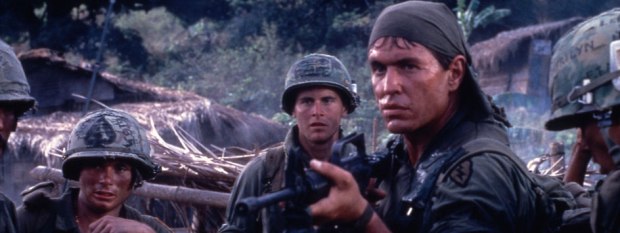
 Image source: Oscars.org

Worst Best Picture: Is Platoon Better or Worse Than Crash?

1987_iconic_picture_platoon

Alex Russell

In “Worst Best Picture” we search every single Best Picture Oscar winner of all time from 1927 to present to uncover the worst of them all. Conventional wisdom says that 2005’s winner Crash is the worst winner in history. We won’t stop until we’ve tested every last one. Read the the first, our review of Crash, here. All posts should be considered to have a blanket “spoiler alert” on them. Today’s installment is the 1986 winner Platoon. Is it better than Crash?

If someone asked you to see a movie about the evils of war and the dual nature of man with regard to good and evil, you might be on board. If someone told you that movie had Charlie Sheen at the center, you would need to ask what year it was.

Charlie Sheen’s career is a curious one. A few years back people were going to Charlie Sheen live shows just to see what he’d do. He went crazy in public and everyone gawked at it because mental stability is razor-thin. Everyone is afraid to lose their mind. Everyone is fascinated to watch it happen to someone that, apparently, no one really wants to help.

Tiger blood and whatever aside, Platoon is Charlie Sheen in Oliver Stone’s manifesto about how war is hell. He joins a huge cast that also includes Forest Whitaker, Willem Dafoe, John C. McGinley, Keith David, and Tom Berenger all yelling at each other about how best to handle being left in Vietnam with no clear purpose. It’s certainly about Vietnam, but it’s also about how adversity changes a person. The titular platoon is divided into two camps. One follows Dafoe’s by-the-book approach of not murdering and raping people, the other sides with the crazed Berenger and his apparent plan to save the village by destroying it.

This may sound odd, but there’s an awful lot of actual war in this war movie. People who watch Full Metal Jacket for the first time are often surprised that the entirety of the scenes and quotes they know all happen in the first half hour or so. All of Full Metal Jacket‘s cultural cache happens before they even get to the damn war. Not so with Platoon. Oliver Stone makes a deliberate choice to keep the camera on the violence. Over and over, the cast is thrust into the jungle to get shot at again. It’s a two hour movie and at least a full hour of it takes place with gunfire in the background.

The effect is very real: War is everywhere, and when you are at war, doubly so. It makes for an uneasy viewing that constantly drills home what Oliver Stone wanted to say: Do not ever romanticize this. He’s said that he made the movie because he felt that too often audiences were only presented with positive and heroic portrayals of war.

Platoon is a brutal movie. When McGinley’s character saves himself during a firefight by hiding under dead bodies, it is both frightening and sad. The Vietnam War is never an easy subject to discuss in American history, but the general consensus seems to be that it was at the very least a damned shame. Platoon is essential viewing to understand the American experience, and whatever you think of Oliver Stone’s personal politics, this movie’s only agenda is tough to debate.

The Best Part: For sheer memorability, the scene where McGinley covers himself with a body to survive stands out. The firefights are so arresting that even 30 years later they still create a sense of anxiety and dread. Forrest Gump‘s ‘Nam is very similar, but it doesn’t feel like it matters. This feels real — too real — and the movie hums because it scares and depresses the viewer.

The Worst Part: Berenger’s character is a brutal villain. War movies often only show one side of a conflict, so it can be tough to discern a “villain” in the classic sense. In this movie, it’s definitely him. He tries to sow dissent through violence and threats. He reacts to someone saying that he should cool down by burning down a town. He’s the violence in all of us wrapped up into one scarred up guy. If there’s an issue with him, it’s that he’s never really explained. He’s left as this uber-asshole, just a guy who wants chaos for chaos’ sake. Those people assuredly exist, but he could be deeper with some motive.

Is It Better or Worse than Crash? It can be tempting to just say that Platoon is good and Crash is not, but it’s about the whyPlatoon stirs the pot by forcing Americans to watch one of their greatest nightmares on camera. Crash stirs the pot by demanding that present day is worse than we admit. War and racism are both complicated and both bad, but we’re on board for that. The challenge is to find something new to say, and Platoon does. The “good” guys in Platoon are still burning down a town and at war. They’re still racists and violent lunatics — they’re just less so than their counterparts. Platoon introduces shades of grey into what war does to a person. Crash suggests that shades of grey are just what we pretend exist because we won’t open our eyes. Both are negative messages, but one is without hope, and that’s just not interesting. It’s not the pessimism that dooms Crash, it’s how damn happy to be “right” about its message that does.

Worst Best Picture Archives: Crash | Terms of Endearment | Forrest Gump | All About Eve | The Apartment | No Country for Old Men | Gentleman’s Agreement |12 Years a SlaveThe Last Emperor | The Silence of the Lambs | The Artist | A Man for All Seasons |

Alex Russell lives in Chicago and is set in his ways. Disagree with him about anything at readingatrecess@gmail.com or on Twitter at @alexbad.

 Image source: Oscars.org

Worst Best Picture: Is A Man for All Seasons Better or Worse Than Crash?

image source: the guardian

image source: the guardian

Alex Russell

In “Worst Best Picture” we search every single Best Picture Oscar winner of all time from 1927 to present to uncover the worst of them all. Conventional wisdom says that 2005’s winner Crash is the worst winner in history. We won’t stop until we’ve tested every last one. Read the the first, our review of Crash, here. All posts should be considered to have a blanket “spoiler alert” on them. Today’s installment is the 1966 winner A Man for All Seasons. Is it better than Crash?

Country music is an unbeatable source for stories about divorce. Tammy Wynette sang the classically-sad “D-I-V-O-R-C-E” in 1968, a song about the then-revolutionary idea that women also experience sadness in a divorce.

It must have been going around, because just two years earlier two films obsessed with divorce were nominated for the Oscar for Best Picture: Who’s Afraid of Virginia Woolf? and A Man for All Seasons. The former is the better movie. Woolf? is a rager of a film, the story of four people’s lives finally going over the falls of madness and sadness at the same time over one night of debauchery and delusion. The latter, A Man for All Seasons, is the quiet story of a man sticking to his principles up until the point that they send him to his death.

A Man for All Seasons is the story of the end of Sir Thomas More, the man who refused to sanction Henry VIII’s divorce… mostly because it involved Henry VIII usurping the Pope and creating a new religion for the entire nation. More stands his ground as the last reasonable man of God in his world, and he’s pretty much right. His only crime is refusing to give the King what he demands, but in his day that’s about the worst you could do.

It’s the story of principles and the lack thereof. More is played as a saint right up until the end. His antagonists scream at him and threaten him and call him an idiot. More takes it all in stride — though he does imply that they’re all going to Hell, so, well, maybe let’s put “stride” in quotes — but he really handles it well until the court scene at the end. He refuses to give a slimy guy named Richard Rich a job in his court over and over because he sees him as disloyal and opportunistic. When Rich perjures himself to send More to death and More loses his damned mind on him, it’s really a popcorn moment in a pretty dry drama about principles and honesty. It’s weird, but it’s awesome.

I’m just going to come out and say that this movie did not blow me away at first. It feels capital-I Important, for sure, but it doesn’t really get going until the second act. The closing court scene is rousing, but there’s a ton of setup to get there. Everyone is very serious — I mean, the King’s killing folks — but even in the context it gets to be a bit much.

Paul Scofield, though! I’ll admit to not being up on my Paul Scofield knowledge, but he’s apparently in rarefied air: He died one letter short of the EGOT. His performance in this movie is amazing. He earns the hell out of his Best Actor award in 1966 for his portrayal of Sir Thomas More, and beats Richard Burton, Alan Arkin, Michael Caine, and Steve McQueen for the honor. If you aren’t going to invest the full two hours to watch Scofield’s fall, you should do some YouTubing for the courtroom scene at the end at the very least. He shines extremely brightly in a movie that’s not necessarily one for the ages.

The Best Part: A crazy, drunk-off-his-ass looking Orson Welles! He plays Cardinal Wolsey, the brief boss of Sir Thomas More. I say brief because he has two scenes: He shows up and yells at More and then gets hauled off to die immediately in prison. The movie’s cast may be largely unknown to the average modern viewer, but it’s impossible to miss Orson Welles. He looks enormous in Cardinal robes and it’s impossible to imagine that he lived for two more decades after this performance. It’s amazing.

The Worst Part: The setup of the story of Sir Thomas More’s undoing is an interesting part of English history, but it’s not a very fascinating thing to watch. This thing wakes up like it doesn’t want to go to school in the morning. It’s almost 40% of the way into the movie before anything “happens” in a sense.

Is It Better or Worse than Crash? It’s absolutely not an unremarkable movie, but it feels like an odd choice for Best Picture. Crash seems a ridiculous choice. It seems absurd that it would even be thought of in a positive light in the first place, much less the most positive light. A Man for All Seasons maintains all of the gravitas that won it Best Picture all those years ago, but it doesn’t feel essential. It does feel good, though, so it’s several magnitudes better than Crash.

Worst Best Picture Archives: Crash | Terms of Endearment | Forrest Gump | All About Eve | The Apartment | No Country for Old Men | Gentleman’s Agreement |12 Years a SlaveThe Last Emperor | The Silence of the Lambs | The Artist |

Alex Russell lives in Chicago and is set in his ways. Disagree with him about anything at readingatrecess@gmail.com or on Twitter at @alexbad.

 Image source: Oscars.org