review

What I Did With My Summer Vacation: Bob’s Burgers

Bobs-Burgers

Alex Russell

In What I Did With My Summer Vacation we explore shows you should catch up on during TV’s slowest season. This week: how Bob’s Burgers is what Modern Family isn’t.

The Simpsons didn’t get nominated for an Emmy this year, and that’s apparently big news. I haven’t been a Simpsons watcher for some time now, but I know that it being left off the nominations list speaks to how much animation on TV has changed lately.

Bob’s Burgers is about to return to finish its fourth season (it comes back on October 5, my birthday, so thanks, Fox). The show started hemorrhaging viewers in the fourth season, so if you’ve been gone, it’s time to come back. You can’t let this one die on us. Bob’s Burgers is the only place on television that “heart” isn’t a dirty word.

Modern Family, one of the most popular shows on television, is built on the idea of “heart.” It’s a kind of The Wonder Years moral machine where someone learns a lesson and then tells it to the audience. In an episode about learning to love your gay son, Dad learns his lesson visually and then explains it through narration just before the end of the 22 minutes. It’s insulting on a colossal scale. It’s lazy and it’s infuriatingly bad television.

Bob’s Burgers has episodes that are also about learning things, but it has mastered “show, don’t tell.” The family in Bob’s Burgers has to learn to love each other through some pretty tough times, but they do so without turning to the camera and saying “you know, we have to learn to love each other through some pretty tough times.” It’s television, animated or no, the way it’s supposed to be.

You can read elsewhere about how the voice acting is amazing or how the music is the glue that keeps the show together. A note on that last bit, you absolutely should check out Song Exploder‘s episode about the theme song. You can read elsewhere about how it’s smart and funny and quick and worth your time. All I want you to know is that the last show on earth about being good to your family — without a garbage tagline at the end or a heartwarming guitar song — is coming back soon. Go watch the last few so you’re ready.

You can watch Bob’s Burgers on Netflix or Fox’s website or, on television, I guess. You’re so smart, you find it.

Alex Russell lives in Chicago and is set in his ways. Disagree with him about anything at readingatrecess@gmail.com or on Twitter at @alexbad.

Life After the Star Wars Expanded Universe: Bong Joon-ho’s Snowpiercer

 Snowpiercer-Movie-Poster-Chris-Evans

Andrew Findlay

In Life After the Star Wars Expanded Universe, we take a look at science fiction and fantasy, why they’re great, and what they say about where our species has been and where it’s going. 

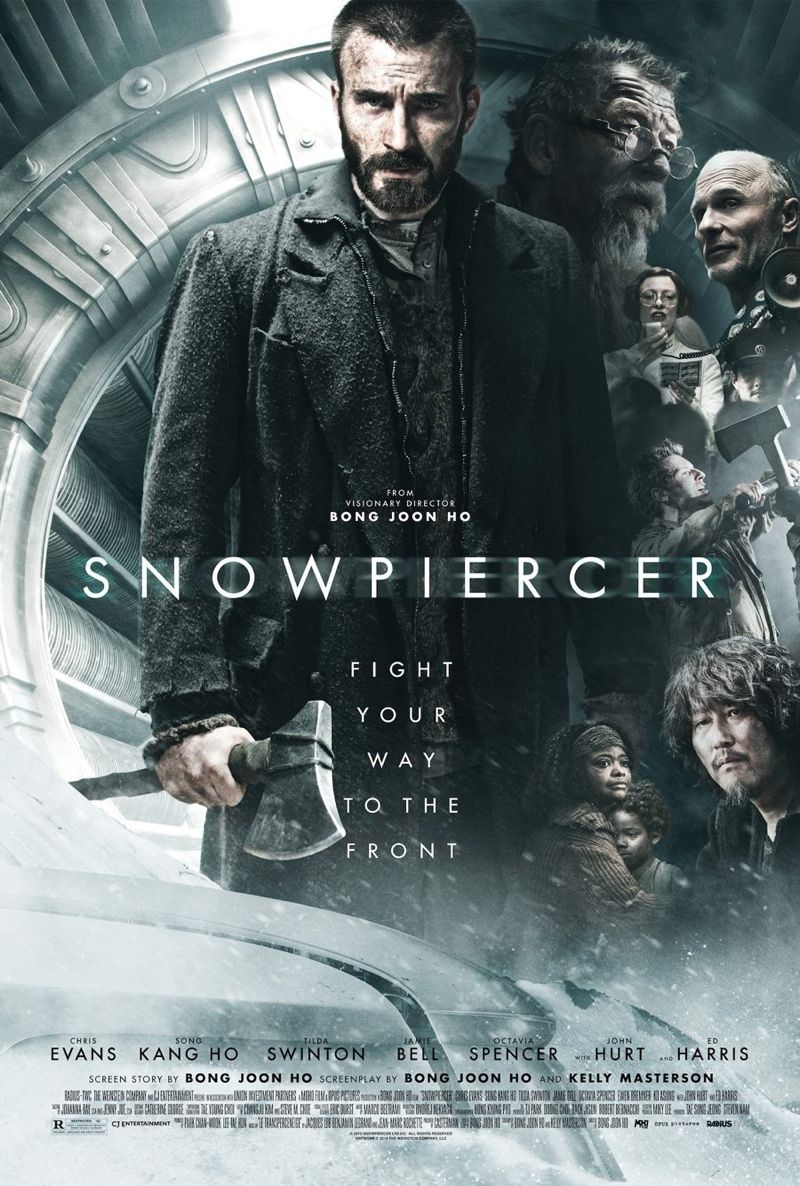
Snowpiercer is a delightful sci-fi concept film. The concept is that, amid concerns of climate change, humanity released a relatively untested “cooling” chemical into the upper atmosphere – an anthropogenic solution for an anthropogenic problem. By the way, if you are a person who still denies that something is happening to the climate and that humanity is largely responsible for it, please leave. Even offering a counterargument to deniers is creating a semblance of rational disagreement and debate, which only serves to allow major actors to continue down a path that, unmitigated, will quite literally end the world as we know it. Many scientists are worried that there is a point of no return, and that, once we pass it, there might be a runaway greenhouse gas effect that will radically alter the makeup of the only known body in the solar system that can support human life. Current governmental response to it is insane. Not only are they not freaking out, a full 58% of Republican lawmakers – over half of one major political party – doubt that it exists. The people responsible for legislating measures that might save us aren’t doing anything because a quarter of them are idiots. As a brief aside – a lot of climate change deniers are also evolution deniers. Evolution denial is similar to climate change denial, if the consequences of denying evolution made the whole human race lose their neocortex. That’s the thing – you can deny evolution all you want, and it will change nothing. Dismissing sound climate science, or even just fostering the appearance of any debate on the issue, weakens our ability to respond, in a measured and timely fashion, to a set of circumstances that could lead to mass famine, destruction, and loss of life. I don’t get it. During the Cold War, everyone was terrified of the world ending in a nuclear holocaust. There’s an outside chance the world might end if we don’t stop freely burning fossil fuels, and about a quarter of us are responding with  “Eh, fuck it.” (25% being the rough number of people that actually deny it. Probably a lot more don’t give a shit).

In Kim Stanley Robinson’s Mars trilogy, around 2128, Mars and its citizens stood as an oppressed colony of Terran corporate interests. Martians get a fighting chance when a major humanitarian crisis strikes Earth and diverts resources from harvesting efforts on Mars to relief efforts on the homeworld – the West Antarctic Ice Sheet collapses, dooming all Terran coastal areas with slow but inexorable inundation. Robinson, writing a far-future novel in 1996, trying to think of a semi-plausible disaster for purposes of his plot, came up with that. It happened eighteen years later. If that isn’t enough to terrify you, a science-fiction author’s future apocalypse scenario coming true less than two decades after his book was published, I don’t know what is.

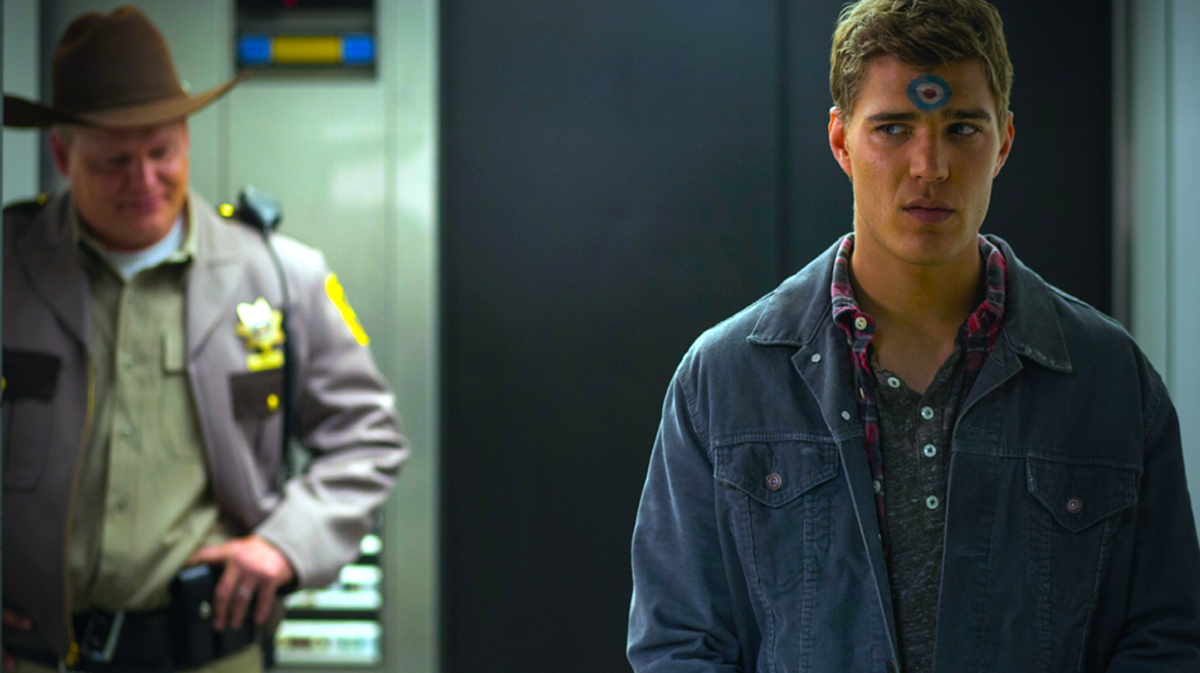
Anyway, they release this quick-fix chemical into the upper atmosphere, and the immediate consequence is that they cool the Earth to far below the threshold for sustaining an ecosystem. All life on Earth is flash-frozen, save for a small enclave on a constantly-moving train run by a perpetual motion engine. Snowpiercer is a great example of the type of science fiction that takes a real science problem from the world, extrapolates it, and then uses it as a backdrop to have Captain America beat the crap out of people. Chris Evans, of Captain America fame, plays the rebellion leader Curtis Everett. Don’t come here for that though – other than hitting people with blunt (or sharp) objects, he’s not very Captainy. This film is way too grim for that.

fan2d

He also starred in this movie. We do not speak its name.

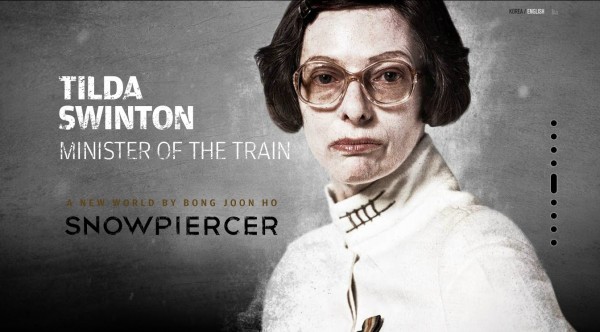
The grimness comes from the fact that on the train housing the last remnant of humanity, you have your first-class passengers, your coach passengers, and your oh-my-god-the-world-is-ending-let-me-on passengers. This last category is kept in constant poverty and misery, beaten by guards, and despoiled by the rich. They eat protein gelatin while first-classers eat steak and fish. They pile in squalid bunks while the rich lounge in private cars. The whole drive of the movie is Chris Evans’ character fomenting a rebellion, the stated purpose of which is to reach the front of the train and gain control of the engine, thus gaining control of the entire train. There is a lot of ingrained hierarchy and a lot of guards in place to keep them from doing just that. There is also a lot of propaganda, whereby the owner of the train is cast in a numinous aura of near-godliness. The lead propagandist is probably my favorite character in the film, and she is played marvelously by a ridiculous Tilda Swinton.

tilda

Oh, Tilda.

The most remarkable achievement of the film is its transformation of the vertical, metaphorical rich on top/poor on bottom dynamic into a horizontal, literal rich in front/poor in back dynamic. The protagonist and his band struggle through car after car, moving from industrial-revolution level squalor, to clean and economical, to absurdly elegant and polished. This results in visual cues signaling Curtis’ progress – the further up he gets, the nicer everything is. It is a physical diorama of oppression. Another thing the film does nicely is the action – there is plenty of gritty, bloody scuffling as they inch forward to the engine. Much of the killing is done with improvised weaponry, as the oppressed poor are of course not permitted firearms. Some of the scenes, while not nearly as cool, reminded me of the transcendental hammer hallway fight scene from Oldboy. If you have not seen Oldboy, it is on Netflix. You should probably see Oldboy. Here’s the scene I’m talking about:

This is pretty much what happens as they move through the train cars.

The movie is well worth seeing. Its idea-driven plot, its ambition, its worldbuilding, and its unique sets more than win it the right to your time. However, it does fall apart in some areas. First off, the majority of the characters are pretty simply sketched out. There’s no real change or development throughout the film. Also, the ending is one of the stupidest things I’ve ever seen. It’s fine, it’s fine – I still like the movie. But watch out for that ending. Overall, it’s nice to see small concept-driven sci-fi being produced as opposed to ginormous explosion-driven sci-fi (cough Transformers cough). Take an afternoon for yourself and check it out.

Andrew Findlay has strong opinions about things (mostly literature) and will share them with you loudly and confidently. You can email him at afindlay.recess@gmail.com.

Postmodern Rapture – The Leftovers Episode Four – B.J. and the A.C.

leftovers.recap_.atichrit

Colton Royle

Every week Colton Royle discusses the newest episode of HBO’s new show about a new kind of rapture, The Leftovers. You can also read our review of the book the show is based on.

Many spoilers ahead.

One of the valid questions to ask The Leftovers is, “Will the show’s symbolism and larger themes be applicable beyond itself?” Will the show keep its Lost style of supernatural answers close? Or will it turn into something new?

The manufactured 20 inch baby introduction to the disappearance of the baby Jesus in the nativity scene is an incredible and haunting display of the attempts to continue games of standard Mapleton living. From Jill’s remark to her father about replacing Jesus as “cheating,” to the Guilty Remnant cult leader writing “There is no family,” to Tommy talking at his phone at the bus stop begging for a reason to protect Christine for Wayne, establishes a key point that just because characters decide to hold it together, it doesn’t mean things will turn out sane. Laurie wants a divorce. Kevin’s recovery of Jesus was blocked by Matt’s replacement. Tommy receives an automated message. “What is the right answer to that question?” Kevin asks Nora in the school hallway. Answers are only shortcuts to more questions.

However, there are some serious supernatural points that are beginning to cause throwaway lines like, “Just like in your dream” that ruin such indelible images like the manufactured cadavers on the road. What is also a parallel to the manufactured babies is also right here in manufactured people. I mean, that’s a good enough metaphor, just stick with it. The naked fight scene that ends with “I know what’s inside you,” is laughable. It’s hard to believe it’s happening in general, much less with a man naked only from the waist down.

Some things are relatively certain, or we hope to be certain: Nora and Kevin will have sex, and it’s going to be cynical and great.

But there is an overarching symphony that suggests a conductor, so to speak, and it’s happening too soon. Or is it? Is it okay to have a show throw both beginning narratives of characters and divine underpinnings simultaneously?

Take Jill for example: while she is trying to avoid every choice of the sacred and the profane in cult joining or God or shooting Jesus with a nerf gun on fire, she is untouched narratively, and has little character beyond a simple dry teenager who is aggressive with her elbows on the field. But because of Tommy’s burden he becomes a Lancelot upholding his vow to Wayne and Christine, and in a sense he has accepted being damned. Is it okay for the divine to supplement characters?

While I say all this, The Leftovers does an excellent job of displaying memories as gray and muddled things. We assume that Tommy was Kevin’s only to realize Laurie had another relationship before. Doug really did cheat on Nora. Kevin cheated on his wife. Between Matt’s paper and the Guilty Remnant’s theft of photographs, they are hammering down that history is a fool’s errand.

Maybe The Leftovers is striving to measure the limits of what it means to be human, and as characters discover each other they come to understand that those limits are felt now more than ever. From Garvey’s family to the manger, being human is beyond broken.

Colton Royle is a reader of mostly American fiction and non-fiction. He is currently teaching in Fort Worth, Texas.

Image: Mashable

What I Did With My Summer Vacation: Louie

Louie_headoverheels_1280x720_236191299626

Alex Russell

In What I Did With My Summer Vacation we explore shows you should catch up on during TV’s slowest season. This week: Louie, Louie, Louie, Louie.

FX just announced that Louie and Fargo are coming back with new seasons. This is great news for anyone that loves TV. You have roughly a year to prepare. Go watch all of Fargo, I already told you to do that last week. This week’s column is just an extension of the same argument I have with people every week: you have to watch Louie.

There is a ton of ink spilled over Louis CK every year. We’re certainly guilty of spilling ink sometimes at Reading at Recess (to the point where we specifically defended it) but overall, it’s just important to make an argument and to defend it. I don’t mind the thinkpieces about how Louie isn’t funny anymore. I think it’s definitely something worth discussing.

I’m not going to argue over if Louie is or isn’t a funny show. I’m going to tell you it’s a show that’s out to do something else. If you want jokes, Bob’s Burgers, Broad City, Inside Amy Schumer, and Review are all also coming back. Louie wants you to be uncomfortable.

This last season was hard to watch, but that’s what I want out of it. Louie made poor decisions as a protagonist. He approached feminism and body image and consent as topics, because those are the topics we’re talking about. I don’t think he always did so with as much grace as he could have. I do think he did it when no one else really was.

Right now Louis CK has the mic in pop culture. Your mom knows who he is and he’s the most popular stand up with your friend who has some actual cultural cred. His show isn’t wildly popular, but he’s the subject of thinkpieces (I hate that term and now I’ve used it twice, but it’s really all that works) because there’s something in his show that’s worth thinking about.

This last season was not my favorite season of Louie. I think Parker Posey’s character from season three will be my favorite part of my favorite show for a long time to come. My favorite moments in Louie have always felt to me like I wasn’t exactly sure what was being intended by them. What Louie is to me is not what Louie is to you. It’s not because I’m special; it’s because everyone is going to take away something else from that strange view of the world.

Louie isn’t very funny anymore. There are still great moments — this, the opening to the season with the garbage truck, is the hardest I’ve laughed in 2014 — but I don’t need to laugh at Louis CK on his show. I need him to take some risks. I need him to try to talk about delicate topics and not always do a great job. I need a full world that’s uncomfortable, like the couple next to you at the restaurant getting rude with the waiter. It’s awful, but that’s what actually happens when you go outside sometimes.

Louie can be dark or light, depending on the episode and your personal temperament, but it is always something considering. Season four had big character development (and undevelopment, at times) but it can also be the story of learning how to talk to your kid about drugs. It’s a lumbering beast at this point, and I totally understand if you don’t like what you see. Just keep in mind that for some of us, that’s part of the point.

You can watch Louie on FX’s website or on Hulu. You can also read our recap series about season four where we tried to find larger life lessons in each episode.

Alex Russell lives in Chicago and is set in his ways. Disagree with him about anything at readingatrecess@gmail.com or on Twitter at @alexbad.

Dating Naked: VH1’s New Reality Dating Show Mixes Dating and… Naked People

Dating Naked

Jonathan May

I watched the premiere of VH1’s Dating Naked over the weekend, and it was about as floppy as many of the blurred out genitals during the course of the dates. The premise is achingly simple: one girl and one guy meet and go on a naked date, and then a proper date with clothes. The next day, each go on a date with a different person (also naked), ending with each date being brought back to the house for subtle inspection by all parties. This happens one more time. So on the last night, there are three girls and three guys, usually all naked, in the pool. The spin isn’t terribly original, nor are any of the jokes made about nudity during the surprisingly endless 30 minutes.

The truly unfortunate part is that, in this episode in any case, the initial woman falls for the initial man much harder than he for her; I can’t tell if the show’s production was adept at finding the right obsessively emotional girl, or if they just picked one of many. The show makes the tacit statement that women are more emotionally needy than men, and through careful casting and a splash of alcohol, it achieves its effect. Men are cast as untamable lotharios, and women as needy vixens. What’s new?

But the initial pair doesn’t enter quite so jaded. Each speaks to the camera of looking for The One and finding someone who is genuine, but as soon as gorgeous naked bodies come into play, a lot of the emotional criteria fall by the way. By the end of the episode, the initial Adam and Eve pair must each pick one person whom they’d like to date later; they are free to pick each other as well. I won’t ruin the ending, but needless to say, the production of the show rests soundly on the scant bits of blur on otherwise completely naked, mostly attractive, Americans.

Like all reality dating shows, this focuses on minor bitchy dramas and sexual farces to keep it moving; it’s unclear how much is scripted and how much might actually be sincere, but it feels like sincerity is beside the point in a show where all the contestants are nude. It’s safe to say Dating Naked isn’t breaking any new ground, but it was still more interesting than any other dating show I’ve seen on television in the past few years. Though I doubt the show will create any kind of fandom, I’ll probably still be tuning in next week.

Jonathan May watches too much television, but he’s just playing catch-up from a childhood spent in Zimbabwe. You can read his poetry at owenmay.com, follow him on Twitter at @jonowenmay, or email him at owen.may@gmail.com.

Life After the Star Wars Expanded Universe: Harlan Ellison’s Dangerous Visions

DangerousVisions(1stEd)

Andrew Findlay

In Life After the Star Wars Expanded Universe, we take a look at science fiction and fantasy, why they’re great, and what they say about where our species has been and where it’s going.

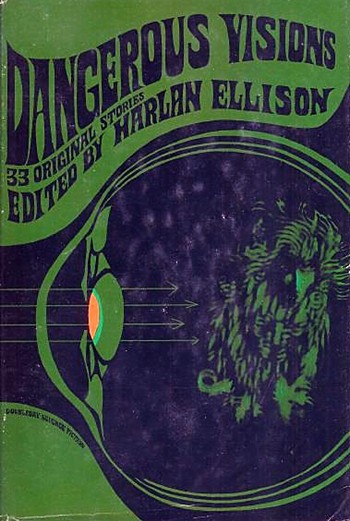
The title of this article is Harlan Ellison’s Dangerous Visions, but the book is actually the work of 32 different authors. Harlan Ellison serves as both contributor and editor. At the time, and in many ways still now, this was a New and Important book. Ellison put out a call for new, experimental, push-the-boundaries-of-the-genre type fiction, fiction that, due either to editorial opinion or censorship, could not get published in the contemporary market. What he collected is 33 stories, most of which are very good, a third of which are truly impressive, and a handful of which are kinda crappy. It is the distillation of a lot of ideas floating about in the heads of new SF writers at the time. In the 60s environment of general rebellion, experimentation, and radicalization, many SF writers wanted to push the limits of the form, aspire to the quality of general literature, and break with the aliens-and-robots standards of the past. While the ideas behind the movement had been circulating for a few years, Harlan Ellison gave them all a place to roost.

Harlan himself is a very interesting character. He is an important, genre-influencing author, with short stories like I Have No Mouth and I Must Scream, which you can read here, and which is one of the most terrifying stories I’ve ever found. He also spent a lot of time writing SF for television, and his “City on the Edge of Forever” is one of the most highly acclaimed Star Trek: TOS episodes ever. His accomplishments as an author have been slightly overshadowed by his accomplishments as an editor and SF personality, but that is only because he edited such an important anthology and he has such a unique personality. One word to describe that personality would be abrasive, and I probably don’t have to tell you any more than that he has a section in his Wikipedia article entitled “Controversies and disputes,” and that it takes up nearly half his entry, for you to get an idea of just how abrasive. This is the man behind one of the most important science fiction books ever written.
800px-Harlan_Ellison_at_the_LA_Press_Club_19860712

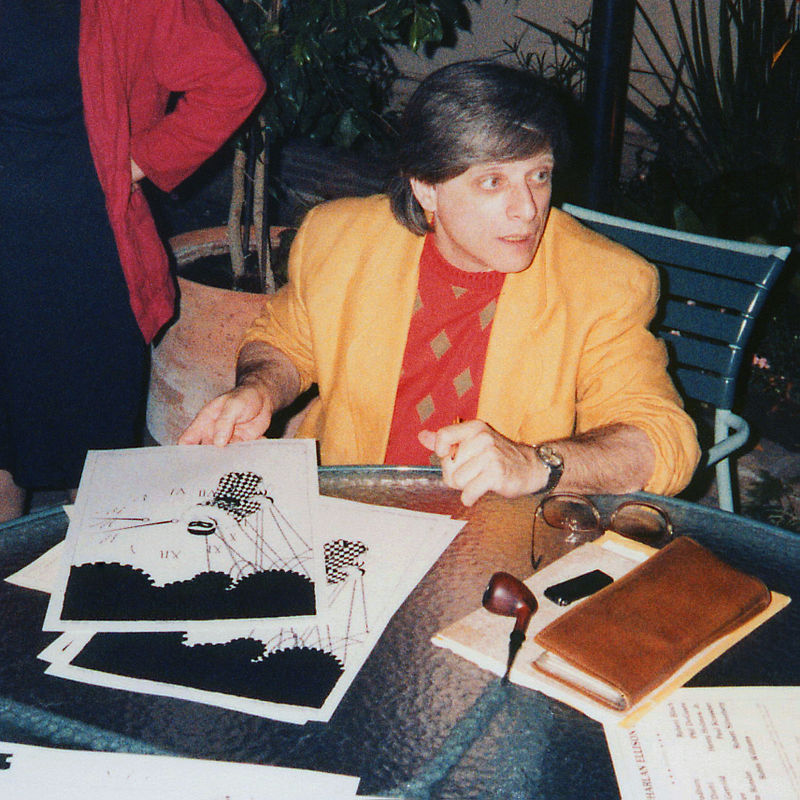
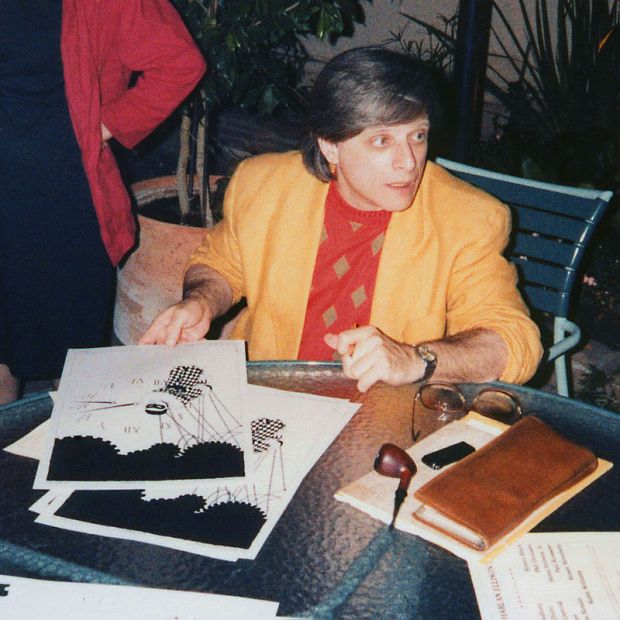
Harlan Ellison in the 80s. Possibly my favorite picture on Wikipedia. Why is there a pipe?

So what’s so great about this book he put together? It largely lives up to its ambitions, presenting stories that are highly experimental, that break social taboos, and that aspire to literary quality. “Evensong” explores a future where God is on the run from his chosen people, who have transcended his guidance, which would be controversial if published today, 47 years on. Larry Niven’s “The Jigsaw Man” is a horrifying portrait of a time when the incarcerated are cut into bits for their organs and body parts, thus conferring immortality on the unimprisoned. Philip K. Dick’s “Faith of our Fathers” explores a totalitarian world where the protagonist is dosed with anti-hallucinogens, and when he looks at the benevolent leader when sober, it isn’t human. In “Shall the Dust Praise Thee?” God shows up with his angels, all raring to blow their horns and start the Apocalypse, but all they see is dust and ashes. The angel responsible for turning the seas to blood can’t find the seas. Eventually, they find inscribed on the wall of a bunker, “We were here. Where were You?” In the amazingly named “If All Men Were Brothers, Would You Let One Marry Your Sister?” the happiest and most productive planet in the galaxy is so healthy because it actively practices incest, which, even as a thought experiment, is highly uncomfortable to read. I could keep on listing and describing the great stories in this book. I made a list of about twelve of them, but it would be better for you to just read it for yourself.

As groundbreaking as this book is, it is not without problems. It is open-minded about sex, taboo, and stylistic experimentation, but it strongly maintains some taboos while transgressing others. One example of this is when, in a story about gambling, the protagonist Joe finds himself playing craps with someone sinister. Fine, games of chance against the devil that don’t go so well for the other player are ingrained in our storytelling tradition. The problem is, when Joe starts getting worried about it, he “[finds] himself wondering if he’d got into a game with a [racial slur], maybe a witchcraft-drenched Voodoo man whose white make-up was wearing off.” What? In addition to the slur being a problem, the author decided to use blackness as shorthand for the hidden, threatening Other. Before, it was a game between compatriots, and as it turns sinister, the main character wonders if maybe he’s not playing against someone of his own race. That’s fucked up. Another example of backwards thinking is in a story called “Ersatz,” which is a pretty standard future-war post-atomic apocalypse story. A soldier finds his way to a care station and starts eating and drinking a bunch of ersatz stuff, because with the world basically over, they can’t get the real thing. He eats a steak made of bark, smokes tobacco made of not tobacco. The post-apocalyptic world is not a nice place, and so far this story is pretty standard. The ending of the story is one of the stupidest things I’ve ever read. It turns out that, in addition to the other ersatz comforts, the woman that works at the care station and who had attracted the attention of the soldier (there were descriptions of curves) turns out to be wearing a wig and a stuffed bra, and surprise, she wasn’t born a woman. The reason this is the stupidest ending I’ve ever read is that the soldier’s response to this is hitting Eleanora (that’s her name) and running back out into the wasteland, without armor or weapons, to certain death. First off, really? A hardened soldier is so terrified of a penis that he runs in terror to certain death? Secondly, this is a really disgusting portrayal of trans women. This is a story about how everything humanity used to enjoy is fake. The big reveal was supposed to be, oh no! even sexytimes with women are now fake! What it really communicates is the author’s ignorance, and what it states is that trans women are fake women, which is actively reactionary, not ground-breaking. Let me quote part of the ending for you: “He struck the creature with all the strength in his fist, and it fell to the floor, weeping bitterly, its skirt hoisted high on the muscular, hairy legs.” So if you are surprised by a trans woman, who is a fake woman, the correct response is physical violence towards “the creature.” That is the moral of this disgusting little polyp of a story.

Polypen_einer_Gorgonie

A nice picture of a sea polyp, as you probably don’t want to see a picture of the type of polyp I have in mind.

The editor of this anthology also has problematic attitudes towards homosexuality. In one introduction to a story, he communicates that families with weak fathers often end up raising homosexual children. In another intro, he discusses the old aphorism that you should never meet the person behind the art you love, which, yes, but one of the examples he uses is “the writer of swashbuckling adventures [turns out to be] a pathetic little homosexual who still lives with his invalid mother.” What? Is Ellison implying that he is pathetic because he is gay? Is there something wrong with living with and caring for your sick mom? It’s just weird, and it’s an indication that, however progressive they were then (Ellison participated in the 1965 civil rights march from Selma to Montgomery), you knock one piece of backwards, reactionary thought garbage down, and there’s more bullshit to take its place. There’s also a story, “Riders of the Purple Wage,” wherein a man’s girlfriend says yes, let’s have unprotected sex to have a baby. She changes her mind afterwards and goes to her bathroom to use spermicide. This future contraceptive method is a bottle of some sort that you can insert into the relevant orifice, push the relevant button, and spray the relevant area with spermicide. Since this is the future, one bottle is good for 40,000 sprays. The boyfriend (the fucking protagonist) becomes so enraged at this that he superglues the contraceptive bottle inside of his girlfriend and makes the button stuck, thus continuously and painfully injecting spermicide into her. I’m not sure if this was supposed to be comical or what, but it comes off as horrifying. Hi, you don’t want to do with your body what I want you to do with your body, I will therefore practice violence upon you and cause you great and humiliating physical harm.

Aside from the repugnant stance on some social issues, some of the stories are just not that great. There’s one that is told from the POV of a three-year-old as he thinks about how square his parents are. There’s another, “The Man Who Went to the Moon Twice,” wherein a kid in a small town lies about going to the moon and becomes a local sensation because everyone is too bored to check facts, and then he does it again as an old man because he is sad that no one cares about him (big twist: it’s noteworthy that he’s been to the moon as an old man because at that time, Mars is the main colony). The whole story is just really boring and saccharine. Also, one of the most celebrated stories in the anthology, “Riders of the Purple Wage,” of violence-against-women fame, gets credit all the time for being “Joycean.” Man, there are about two pages at the beginning of this story that are lyrically inventive and that require some exertion to figure out, and then it falls back into pretty standard narrative technique. Ulysses is “Joycean” because it is inexhaustibly inventive, and nearly every single chapter showcases a new, different, and innovative style. This guy writes confusingly for two pages and gets credited as “Joycean?” No.

James_Joyce_by_Alex_Ehrenzweig,_1915_restored

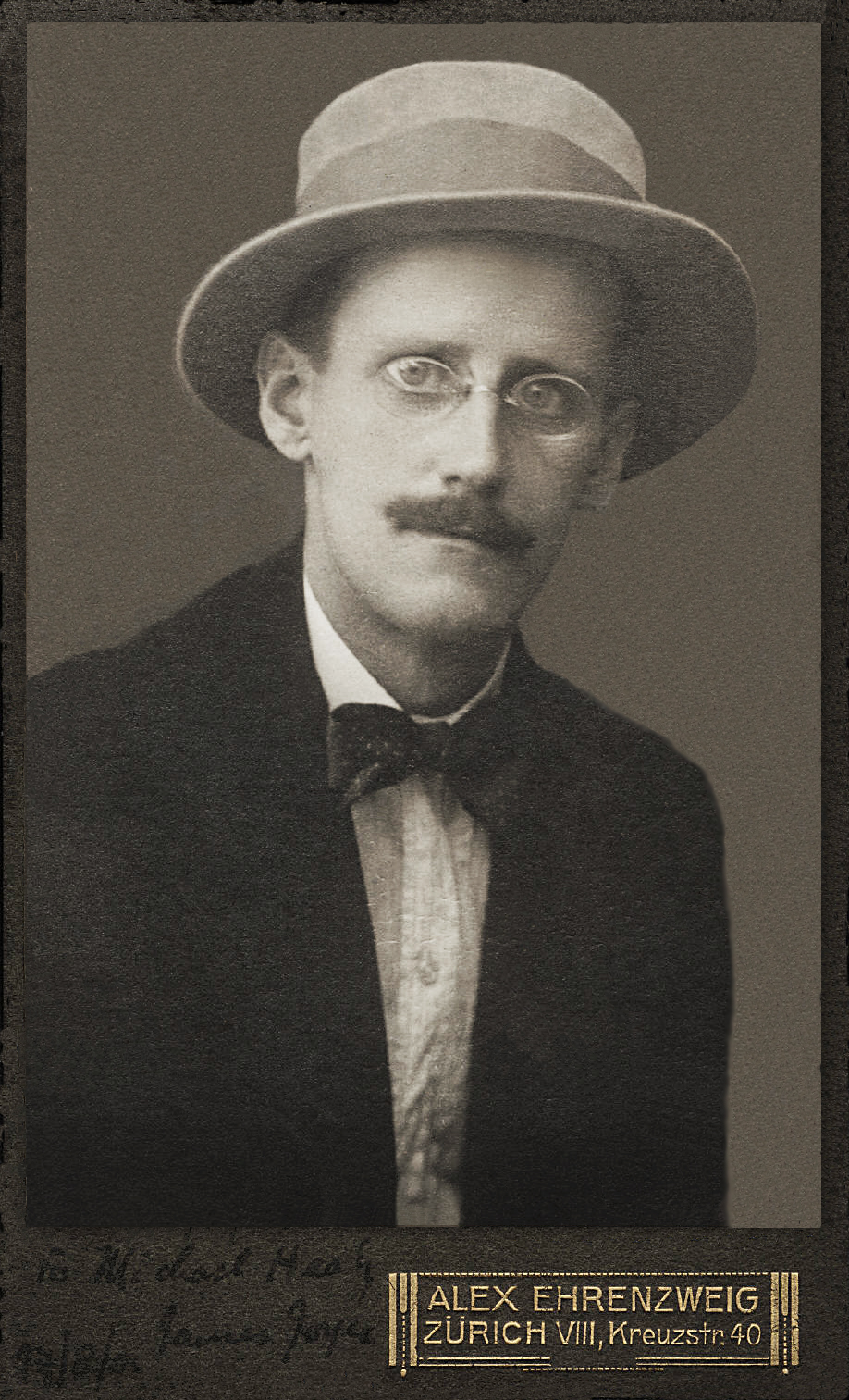
This man’s work was Joycean. Not sure anyone else’s ever was.

This book is rife with problems. Let me restate that. This book is not rife with problems, but whenever a problem rears its head, it’s a huge one. As a book that purports to be on the cutting-edge of social advancement and fearless in its striking down of taboos, the reactionary attitudes of some of these authors towards many aspects of social justice are highly incongruous. It might have been impressively open-minded for 1967, but not so much for 2014. You should still read it, though. One reason is that it is a monolith in the field of SF’s past and helped set the stylistic tone for a generation of writers. Another is that, as truly repugnant as some of these stories are, the grand majority of them are not, and the anthologized nature of it means that even if Henry Slesar writes like an asshole, you can still enjoy the weird, mind-bending visions of Lester del Rey or Philip K. Dick contained in the same book. In addition, it is important to read and understand even the repugnant stories, as their presence in a book lauded as taboo-breaking in the 1960s underline the nature of social progress – there is no finish line, and we must always move forward.

Andrew Findlay has strong opinions about things (mostly literature) and will share them with you loudly and confidently. You can email him at afindlay.recess@gmail.com.
Postmodern Rapture – The Leftovers Episode Three – Two Boats and a Helicopter

article-2654110-1EA2AAB600000578-391_634x356

Colton Royle

Every week Colton Royle discusses the newest episode of HBO’s new show about a new kind of rapture, The Leftovers. You can also read our review of the book the show is based on.

Many spoilers ahead.

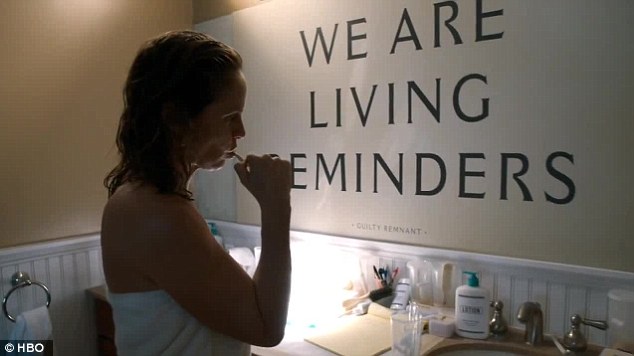
The Leftovers stares religion in the face with the new episode focusing entirely on Matt Jamison, Mapleton’s minister, as he pushes the line between madness and divine power that arises as a theme once again. Where the previous two episodes have felt frayed at the edges and had us viewers grabbing for a metaphorical bucket dropping into a well, here was an episode that felt tight, feverish, and much more indicative thematically.

Matt Jamison preaching to a near empty church was an interesting and unexpected turn when you consider how much emphasis is placed on the rapture in Christian doctrine, and this brings up a theme of the episode which to me was ambiguity in suffering. I mean here is a guy who lost his congregation and now he’s gonna lose his church, and he can’t get the money from his sister and he eventually does get the money but he almost gets mugged and THEN he gets hit with a rock and misses the deadline and his wife is…I mean WTF, I don’t even know if I have a heart left after all these emotional stab wounds straight to it.

Three arrivals of the pigeons in key locations and colors for a massive gambling success only to have him miss the deadline to buy his church back by three days establishes the point Nora (his sister!?) makes that even with all the “good news,” or even divine help, does it make the situation of life, life in the modern world, any better? To me, The Leftovers is starting to make some massive questions very concrete in this episode, and even the varied tones in which they depicted Matt, from beautiful and serene during the baptism scene, to his eventual nightmare in the hospital and his jagged anger in chiaroscuro lighting, leads us to question each of these characters in multiple settings. It’s not simply binary; it’s not just this and that, but rather a polyphony of reactions.

All this I say, yet when the Guilty Remnants buy Matt’s church, it builds a rage in Jamison that is building all through Mapleton that is very much an “us and them” story. Will it turn violent for the cult? Tethered to all this melancholy and hysteria is this building desire from the citizens for all of post-departed life to mean something more, and with that comes “responsibility” and “retribution” and “redemption” and a bunch of other five dollar words to say that these people want it to matter. So while The Leftovers builds ambiguity and uncertainty, it also meddles with characters who are trying to push against it. Case in point, when asked “what denomination?” in reference to casino chips and Matt (the minister) replies, “does it matter?” we start nodding and going, “okay now I get it.”

This is interesting. It’s interesting to me because at the heart of it is storytelling in general and what television takes for granted in particular and the friction between plot development and real life coming to a head could lead to some super interesting and way too academic analyses (see previous 507 words).

But really this episode was gripping and really hurt and had some more reveals (“Roy, you deserve this” –K.G.) that will make you butt-bump up and down on the couch and clap. You want to see other people (not just us) try and make sense of life in erratic and strange ways? Follow follow follow follow…

Colton Royle is a reader of mostly American fiction and non-fiction. He is currently teaching in Fort Worth, Texas.

What I Did With My Summer Vacation: Fargo

allison-tolman-fargo-tv

Alex Russell

In What I Did With My Summer Vacation we explore shows you should catch up on during TV’s slowest season. This week: Fargo, morality, and lots and lots of snow.

I mean, you watched Fargo, right?

Something I’ve become fascinated with lately is “missing” culture. I haven’t seen True Detective yet, and I have to add the yet there as quickly as I can whenever I say that. Of course I’m going to watch True Detective. How could I not, with how people talk about it?

That’s what happens with shows now. People either watch the “not optional” ones or they spend time at parties telling people that they’re “a few seasons behind.” The entire premise of this series — to get you to hopefully watch a show you should catch up on — requires that you be some sort of mythical beast that doesn’t already have a few lifetimes of TV ahead of you.

Let’s assume you have the time, but you need to be persuaded to spend it with Fargo. You saw the movie at least, right? OK. Well, start there, I guess?

Fargo the show exists in the same world as Fargo the movie, but that’s essentially all you need to know. The show is interested in some of the same themes — what we deserve, especially — but it’s refreshingly its own thing. There are a handful of Coen brothers homages peppered through the season, but they are more affirming than they are distracting. They exist to bring up questions about the bigger universe of both Fargo the show and Fargo the movie. They’re meant as little easter eggs more than big “oh, that guy!” moments.

It feels too slight to just say that it’s not just a cousin to the movie, but it’s an important starting place when discussing the show. I came in skeptical; Fargo is one of my favorite movies. I wasn’t disappointed. The show looks poised to pick up just about every miniseries Emmy available, too, so people have bought into this world.

I’m not going to rundown the plot of the first season. Since the first season is self-contained (supposedly, but some members of the cast broke out so much that I wouldn’t be surprised if that gets reconsidered) this story is “over.” These people, such as they are now, are done in the world of Fargo. This is a completely closed story, and you don’t get too many of those.

Fargo is a hard show to not spoil. I don’t want to give any details here because I want you to go watch this damn thing, but it’s a show that is not uncomfortable taking risks. I’ll say that. Any show where your cast doesn’t even have to last the season — much less the episode — is a show with just an unbelievable amount of suspense. It’s not all blood and death, but man, sometimes it sure is. There’s just something about the contrast of blood and snow. It’s a really striking show, even when there’s nothing too bonkers happening.

I think you should watch Fargo. It’s not that long and you already know the world, somewhat. You don’t know Billy Bob Thornton in it, though. You might wanna check that out, no matter what else you have on your plate.

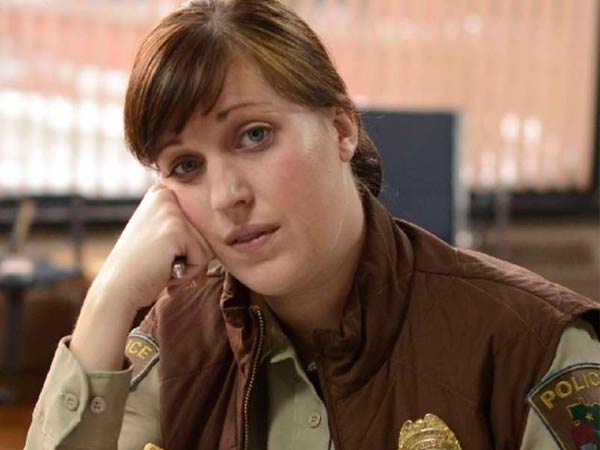
You can watch Fargo’s first season on FX’s website or on Hulu. You can also read our previous piece about Molly, the cop who subverts the trope of the evil hero in modern TV.

Alex Russell lives in Chicago and is set in his ways. Disagree with him about anything at readingatrecess@gmail.com or on Twitter at @alexbad.

Life After the Star Wars Expanded Universe: Philip K. Dick’s The Three Stigmata of Palmer Eldritch

TheThreeStigmataOfPalmerEldritch(1stEd)

Andrew Findlay

In Life After the Star Wars Expanded Universe, we take a look at science fiction and fantasy, why they’re great, and what they say about where our species has been and where it’s going.

Editor’s note: an earlier version of this article mentioned that Philip K. Dick took a lot of LSD and wrote solely genre fiction. They’re both only partially true, and the article has been updated as a result.

Philip K. Dick is the ultimate psychedelic writer. His explorations of the mutability of reality and the fragility of the human psyche are vivid, incisive, and hallucinogenic. Roberto Bolaño described him as “a kind of Kafka steeped in LSD and rage.” However much altered states influenced his writing, PKD did not actually do that much LSD – it gave him unpleasant experiences. Yup, he was just your run-of-the-mill, square, SoCal writer, ingesting massive quantities of amphetamines as he wrote feverishly, and as he wrote this book, he hadn’t even tried LSD for the first time. As I explain the concept of this book, it is very important to remember that Dick had not yet ingested lysergic acid. He was this crazy beforehand. I’m assuming every single novel PKD ever wrote deals with the nature of reality, its uncertainty and unknowability. I can definitely declare that each one I’ve read by him has always had someone losing their goddamn mind. In this 1965 novel, Dick explores the ramifications of self-medication when the medicine you use is powerful enough to make the universe drunk.

This book starts out in the far future, with many of the trappings of futuristic societies. Due to climate change, it is now too hot to be safely outside, and people have to wear special AC suits to prevent combusting while walking to work. The rich and powerful of the world vacation in Antarctica, which is nice and balmy. Most of the moons and planets of the solar system are colonized, but not happily. The UN runs the world, and in order to preserve humanity from the crumbling, condemned planet Earth, they instituted a draft for emigration. A certain percentage of Earthlings have to be induced to go to space colonies. They have to be induced because colonization sucks. On Mars, there’s nothing to do but tend your dying farm and hang out in your subterranean bunker. Well, that and taking powerful psychoactive drugs. Most of the action of the novel centers around the use of Can-D, a “translation” drug. Can-D is useless without Perky Pat Layouts, a company that makes miniature versions of all the stuff that can be found on Earth (this company also illicitly manufactures the drug). Think Polly Pocket, but extremely realistic.

Sol454_Marte_spirit

Your new backyard, colonist!

It is so realistic because Can-D “translates” its users into the world of the layout. Therefore, if you take Can-D, some type of fungal hallucinogen, while sitting in front of a layout with a beach and a convertible, you get to spend a set amount of time living the life of either Pat, the woman, or Walt, her boyfriend, as they enjoy a seaside holiday. For some reason, the hallucination is dependent upon the layout – if you want to take a beach vacation, you better buy miniaturized beach towels and sun umbrellas. A feature that further complicates this already strange experience is that there are only two possible surrogates for the drug-user’s consciousness: either mini-Pat or mini-Walt. Women become Pat, and men become Walt. This means that if three male/female couples trip together in front of the same layout, all three women will be in Pat, and all three men will be in Walt, directing each as one member of a group conscious. Supremely weird, but honestly, if you were exiled to a barren sandscape where, if you’re lucky and terraforming is advanced enough, you might be able to go outside, wouldn’t you indulge in powerful psychotropics? Everyone in this book does, and that is the most plausible part of it – the human reaction to complete loss and mental stultification is to take stimulation wherever it can be found.

The conflict in the book starts when Palmer Eldritch, a kind of insane, spacefaring Richard Branson, returns from a ten-year voyage to Proxima Centauri with another fungus – Chew-Z. He begins marketing it immediately, and the Perky Pat people react with professional terror, because Chew-Z is a reality-altering drug that requires no layout, which means it is perfectly poised to put them out of business. Chew-Z is similar to Can-D in that it creates an alternate mode of existence for whoever takes it. However, it is much more powerful than Can-D. It can translate you into whichever existence you most want to be in – it is chewable wish-fulfillment. The problem is that, whatever new universe you make for yourself, Palmer Eldritch is there, and he exerts some type of control over your personal reality. If that sounds creepy, wait till you hear what his stigmata are: giant metal teeth, robotic eyes, and a metal arm. These are the three indicating marks you see on the people in your hallucination if Eldritch is taking control of them. Worst. Trip. Ever.

super-01

If I could hallucinate my very own universe, it would be the one in which the Nic Cage Superman movie happened.

A lot of the framework of this novel is pretty generic SF – spaceships that move fast and zip between planets, strange genetic therapies, and space colonization, but the social analysis and the ontological questions raised by drug use in this book make it interesting. First off, it is absolutely believable that the disaffected and depressed legions of press-ganged colonists would escape their bleak existence through whatever means necessary. The implications of their method of escape is also terrifying – if this creates a vivid surrogate reality, how do you tell when the high is over? Do you ever get out? Is this reality any less real than the one you experienced pre-dosing? Does it matter if it is or isn’t? These questions are hammered home again and again, and their lack of resolution strengthens the sense of loss and uncertainty and creepiness that permeate the book.

philip-k-dick-primer

I love this man.

Philip K. Dick is fast carving out a very special place in my brain. I went on an expedition through his work after rewatching Blade Runner a couple of weeks ago. I have moved through three of his novels in the past couple of weeks, and each one is extraordinary. He went through a lot of his life very poor because, despite his prodigious output, he had trouble making money because critics relegated him to the genre fiction backwater. His catalog is overwhelmingly genre fiction, undoubtedly and unapologetically. What is important though is that this man always, always swung for the fences. It’s like he couldn’t help it. The characters might be lopsided, the plot might have pacing issues, and the setting might be overly lurid or unbalanced, but every one of his novels ends with you questioning existence, reality, and your conception of yourself. I have been a committed atheist for half my life, and one of his books had me (briefly) seriously considering the benefits of Gnostic Christianity. His writing is that powerful – while other books might explore what the problem is, his has you worrying over what “what” even signifies. I will take a sloppy book that asks what existence is any day over a perfectly-balanced artifact of a book that explores the problems of one neurotic family whose daddy didn’t give out enough love (I will never stop hating you, The Corrections).

Andrew Findlay has strong opinions about things (mostly literature) and will share them with you loudly and confidently. You can email him at afindlay.recess@gmail.com.
Images: Lit Reactor and IGN

Postmodern Rapture – The Leftovers Episode Two – Penguin One, Us Zero

article-2678245-1F5677FC00000578-381_634x789

Colton Royle

Every Tuesday Colton Royle discusses the newest episode of HBO’s new show about a new kind of rapture, The Leftovers. Since two episodes have already aired, we covered episode one on Friday and here is episode two. You can also read our review of the book the show is based on.

To repeat, massive spoilers ahead.

I cannot believe I’m saying this: there are too many guns. Already in episode two a SWAT team is getting sent into Wayne’s establishment to rob so many Asian girls it’s comical. This action that happens way too soon gets multiplied by Tom “saving” Christine by killing with a gunshot to the neck. Yes, I’m enjoying the parallels to his father, Kevin’s, shooting of the dogs last episode, and yes, we’re debating whether the identities created so far are because of the massive departed, or whether the personality was something there all along, but it’s too much too fast. The violence left the rest of the episode in a fog.

More questions of identity: Kevin Garvey’s mental disturbances mimic the continued parallel to the supernatural plot developments of Stephen King’s The Stand and Under the Dome, and we’re unaware if it is truly madness or divine intervention, which is so 15th Century. It has that Lost feel to it that makes me want to bite down on live electrical wire.

The quick edits to the dog shooting during the therapy session were too quick and not subtle and loud and just…etc.

Kevin’s “Investigation of the Missing Bagels,” felt like a Blue’s Clues episode, but this combined with questioning the shooter’s existence to his father’s schizophrenia was layered extremely well, and featured that adult paranoia that seems to be building in Mapleton.

Yet Jill observing Nora purposely break the coffee mug to get out of paying for her breakfast was easily the most engaging moment in the episode. Is she using her tragic story for profit? Is she simply playing around with suburban niceties? This coincides with her role in “departed insurance” which is literally profit made on the disappearance three years ago.

Jill is at a crossroads, and is the last Garvey to commit to any kind of altered behavior post-disappearance. Playing detective with both the dead dog last episode and Nora this episode has her seeing all the avenues. Again: so much identity.

Meg Abbott swinging an axe is one of those odd totally-a-cult procedures that gets remarked on by Laurie Garvey as “not a cult,” and this is a problem. It’s a problem when handwriting is with blue ink on little white notepads that make us feel like we’re teaching the sixth grade because we’re squinting at the screen. It’s a problem when dialogue moves fast and handwriting and reading don’t. There are some major complexities with the Guilty Remnants that are going to be missed or incorrectly assumed or told without elegance.

Tom’s repeated yelling from underwater last episode to above water this episode was an excellent progression of the suffering that Wayne says he wants, “without salvation,” and perhaps Tom assumes in some way that he is already damned.

Will Kevin uncover the truth about his supposedly “sent” friend? Will Jill and Aimee steal more stale gummy bears? Is Christine really everything? Will Liv Tyler build a log cabin? We’ll let Wayne decide.

Colton Royle is a reader of mostly American fiction and non-fiction. He is currently teaching in Fort Worth, Texas.

Image: The Daily Mail