television

Symbols and Sociopaths: Hannibal Season 2, Episode 3

hannibal-two

Jonathan May

We start with a montage of Will and Hannibal, each dressing for the morning; The whole scene is a lovely aubade to their relationship. Hannibal has placed himself into Will’s life violently, but why? This seems to be the central question of this season: What exactly does Hannibal want from Will? If it’s just a kindred spirit, then he and Will could certainly bro it up in a number of narrative ways. I think he wants Will to best him, because he believes Will is the better man. Again, this is all speculation, the darkness set against the relief that accentuates the more disjointed parts of the episode.

As to that, we are reminded, for whatever reason, that Jack’s wife is dying of cancer, something he (and I) seemed to have forgotten. This felt like a weak and poorly timed attempt to garner some more sympathy in Jack’s corner, when really we should be feeling for Will. Then, the reporter reemerges to give totally boring testimony. It’s like, Oh right, we forgot about all of these ancillary plots and characters, so why don’t we just throw them all in the mix? Throughout, Will’s lawyer makes the worst jokes. Honestly, the only standout things about this episode were Cynthia Nixon, who plays an internal investigator for the FBI, and the judge’s gruesome murder.

Against the obviousness of the trial, the episode only peers slightly further into whatever the hell is going on with Will and Hannibal. His fevered dream sequence of possible escape is squelched by Lecter, which only mirrors the let-down of Hannibal as a courtroom witness. We see, in the barest and darkest terms possible, their relationship changing, though this early in the season it feels glacial. I hope in the next episode their relationship is brought more to the forefront of the relief structure.

I do wish we’d seen whatever it is that happened to the judge’s brain. Call me morbid, but the whole courtroom aspect left me wishing for a more gory palate cleanser. Also, what in God’s name kind of outfit is Hannibal wearing here?

Hannibal, episode 3

My predictions for this week’s episode: We know Dr. Katz is going to take a central role, but I predict her doubt of Will falls away like scales from her eyes. Dr. Bedelia (Gillian Anderson) appears to Will in a vision/dream/hallucination. Cynthia Nixon will wear another power suit. Jack’s wife will die sooner than his in-the-works trip to Italy.

Jonathan May watches too much television, but he’s just playing catch-up from a childhood spent in Zimbabwe. You can read his poetry at owenmay.com, follow him on Twitter at @jonowenmay, or email him at owen.may@gmail.com.

Hannibal airs Friday nights on NBC. You can read our piece about the previous episode here.

Image source: Comingsoon.net 

How Did I Like This? How Did I Like the Show “VR Troopers?”

VR-Rangers

Brent Hopkins

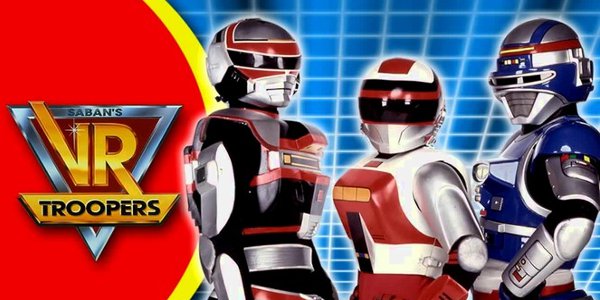
In “How Did I Like This?” someone looks back at something they loved as a child and wonders how they were ever so wrong. Today Brent Hopkins looks at the TV show VR Troopers (1994-1996), which somehow couldn’t break the 100 episode mark even though it had virtual reality and a rapping dog.

vr-hr-kaitlin

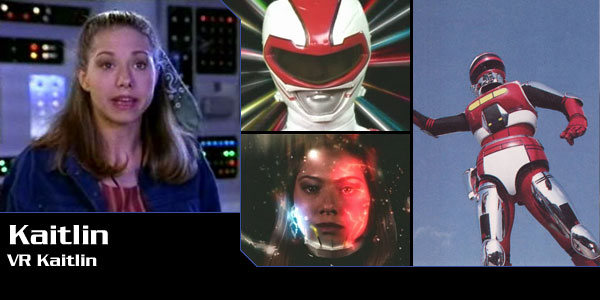
The main reason was preteen lust, but that the lust lasted for this long is shameful. #1994Swoon

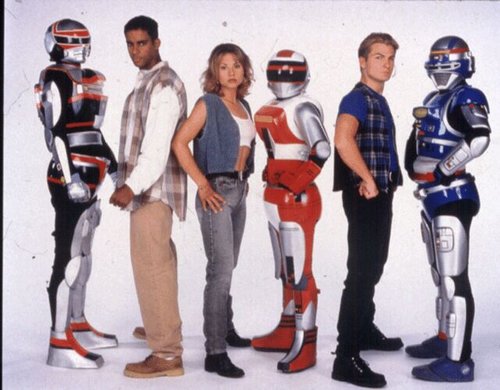
My first take on this series is going to be focused on the mid-90’s show VR Troopers. For those of you that don’t know, VR Troopers was a show in the same vein as the Mighty Morphin’ Power Rangers. The heroes were always able to overcome incredible odds due to whatever robotic augments they happened to pick up from the thrift shop. The selling point for this show was that the battle was on two fronts: The real world — where the characters normally resided as a martial arts protege, a reporter, and a computer nerd — and the virtual reality (VR) world, which was threatening to merge with the real world and be run by the series villain Grimlord.

As opposed to the massive mecha that the Rangers rocked, the VR Troopers had to settle with being locked mainly to the ground in their VR suits. They had vehicles, but they mainly fought in judo/karate style group battles.

1123533197026

We thuggin’ and mean muggin’

This show absolutely captivated me as a 10 year old I will admit I would get bummed out when I had plans after school, because I would miss the next episode. The one thing I have always recalled about this show was that it had a super catchy theme song that still gets stuck in my head today. I insist you watch this for at least thirty seconds to be amazed.

Watching this theme you, may notice that this show somehow manages to look even more bargain basement quality than Power Rangers. This is due to the show being spliced together from three Japanese shows to form the action scenes. This worked well for Power Rangers, but at the end of the day watching Mega Man boss rejects fight compared to the Godzilla-like monsters the former show provided just looks comical today. This was made worse by the sets the fights took place on, which apparently included a rock quarry. That’s it. The vast majority of the fights took place in a rock quarry and it was as gray and depressing as one would hope.

Carrieres

This actually has too many props in it for VR Troopers.

That being said, the show had its own unique feel to it with all of the stock footage, and since there were fewer characters to follow it actually allowed for more character development. The thing is, while the main characters could be pretty 2D and stale, they made sure to add in those weird characters you might forget after years. One in particular was the talking dog Jeb, (the Meowth of the show) who added in snarky one-liners here and there. Yet the one thing that I remember the most from good old Jeb is this:

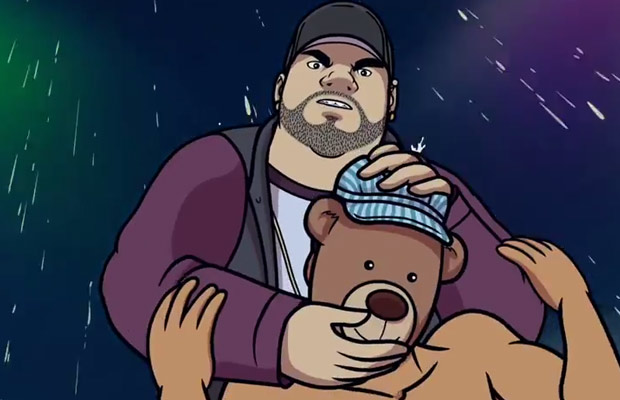
Everything must have rap it is the mid-90s!!!

There was no expense paid to make the dog even look like it was actually talking instead of eating. The fact that this AI super-computer is being burnt out by the rapping of a dog… I would say if something this simple could bring down the main line of technological defense against the VR invasion, humanity is over and done with.

I recently sat and watched a few episodes and clips and I am amazed that this show was able to make it 92 episodes before getting “cancelled.” I put quotes around cancelled because, amazingly enough, the only reason we don’t still have the VR Troopers is because there just wasn’t enough stock footage to pull from and the show had to end. This show had bad effects, bad acting, ridiculous characters, and the worst sets humanly possible but Sarah Joy Brown kept me glued to this show. +1 to the Nielsen ratings, -1 to my childhood.

Brent Hopkins considers himself jack-o-all-trades and a great listener. Chat with him about his articles or anything in general at brentahopkins@gmail.com.

Image sources: Whatculture.com, Tokucentral.com

Symbols and Sociopaths: Hannibal Season 2, Episode 2

hannibal-two

Jonathan May

Like, massive spoiler alert.

Watching the second episode of Hannibal, I couldn’t help but selfishly wonder if somehow, some way, the show’s producers had read my post from last week and decided to give me everything I wanted. If it’s foolish to dream, then I’m foolish. All to say, this episode gave me the heebie-jeebies—it scratched my blood itch and left me wanting next Friday like it was payday.

We’re presented this season around with Lecter stepping into Will Graham’s role as a forensic/psychological expert, a role Hannibal relishes. In this episode, this relationship is brought to the forefront, and we get to see how Dr. Lecter reacts to the close quarters of the FBI’s investigative minds at work. I was completely delighted to see the use of symbolic imagery play out in this episode; the dark antlered man as Lecter read well for the overall thematics, which concerned the relation of God to man, creator to subject.

This unfolded through the serial killer obsessed with a “human palette” made of resined bodies of various shades sown together in a silo. Lecter, wise to his own ilk, finds the killer before everyone else and adds him to the picture, and then his plate. The cooking scene in this episode took a lot of care to show the many stages of preparation for a human thigh; I was even hungry for a moment.

The juxtaposition of closed and open spaces made me wonder exactly who is caged and who is caging, which was doubled down when Lecter’s psychologist (played by Gillian Anderson) decides to exeunt with all relevant information. She even stops by to see Will Graham and tells him, “I believe you.” Of course, she disappears immediately thereafter.

This bit of maddening information must certainly fan Will’s flames as he heads to trial in next week’s episode.

Thankfully, Dr. Beverly Katz (played by Hettienne Park) landed a central role in this season’s events. She really adds a keen and watchful eye to the situation, while still being a great unaware foil to Lecter; their awkward “dance” in the forensics room gave great comedic evidence for this.

My predictions for this week: Hannibal is a witness, Gillian Anderson is dead/missing, Dr. Katz gets real with Lecter. And hopefully more food porn.

Jonathan May watches too much television, but he’s just playing catch-up from a childhood spent in Zimbabwe. You can read his poetry at owenmay.com, follow him on Twitter at @jonowenmay, or email him at owen.may@gmail.com.

Hannibal airs Friday nights on NBC. You can read our piece about the previous episode here.

Image source: Comingsoon.net 

Can Chozen Follow Archer?

chozenlead

Jonathan May

FX’s Chozen features, at its core, an outcast in a lot of ways. Our eponymous star is not only a white rapper and a convict, but also a homosexual. Luckily for its audience, the show focuses little on how these elements make Chozen (voiced by Bobby Moynihan) different from other people; the show does, however, focus on how gross he is. We see Chozen peeing, farting, getting head, burping, offending; the show basically begs us to congratulate it on presenting the non-gay gay. But what’s the situation?

Out of prison, Chozen lives in his sister’s college apartment while trying to figure out how to best gain revenge on the man who framed him, thereby sending him to jail. They say living well is the best revenge, and living it up seems to be his and the show’s main purpose. We see lots of partying, drugs, alcohol, implied and boldly stated sex acts. There’s lots of talk about the rap game, but very little rapping. Each episode, almost as an afterthought, devotes scant attention to the story’s overarching concern, instead lingering on stupid race jokes, obvious sex jokes, and lots of slapstick influence. So why do I watch?

Initially, what I appreciated about the show was its non-standard representation of gay men. I see more gay men who look like Chozen than men who look like the guys in HBO’s Looking. At first Chozen acknowledged its own stereotypes and often subjugated them with ironic force; the frat dude who hankers after Chozen is seemingly out and wants a relationship. What a lovely twist, I thought. But it’s unfortunate that the show’s “awww” moments end there. On closer inspection, the show tends to conflate “straight male behavior” with “gay male sexuality” to produce its now-tired effect. It’s like the producers were like, “How can we make the gay character more relatable? Oh, I know. Let’s just make him more straight-acting.” While this does provide welcome differentiation in gay portrayals, it wearies the viewer very quickly into the season.

Speaking of the show as a whole and its motivation, I hope it centers back onto the main plot point: revenge. We’ve spent more than half a season engaged in college high jinks, crass sexual jokes, and attempts at moral lessons on friendship. We need to get back to the story, or else Chozen will be nothing more than that show that comes on after Archer.

Jonathan May watches too much television, but he’s just playing catch-up from a childhood spent in Zimbabwe. You can read his poetry at owenmay.com, follow him on Twitter at @jonowenmay, or email him at owen.may@gmail.com.

Chozen can be seen on Monday nights alongside Archer, and you can read our examination of Chozen as a spiritual successor to Kenny Powers here.

Image source: Complex

Galveston, a Novel: True Detective’s Nic Pizzolatto Fails to Find the Spirit of Noir

tdew

Austin Duck

Typically, and, most likely, to your chagrin, I write about high-minded (read: pretentious) writing because, honestly, that’s what does it for me. I’m a bit of a douchebag, yes, (though who in English grad school isn’t?), but, more than that, I’ve spent so much time reading around, trying to find something that was intellectually and emotionally nourishing…

See, I stopped reading for fun or to be entertained a long time ago (I’ve never forget a lit. theory professor walking into our undergrad class and explaining “If you love to read, get the hell out of here. If you want to work, you’re where you belong” [she was a superbadass lady, obvs.]) and, instead, have grown to expect, even delight in reading a page and thinking to myself: What the fuck just happened? Where could this possibly be going? Why would the author say/do that, make that move, allude to that, etc.?

Sure, it gives me pleasure to think that I can keep up with, even anticipate, the moves of some of our most sophisticated artistic minds (again, because I’m a douchebag), but it also works to shape how I (and a lot of people I know) do other things: watch TV (just look at Jon May’s writing on this site), see movies, hell, sometimes (not always, but sometimes), it’ll affect how you read a restaurant menu. What I’m trying to say is that a pursuit like this, as needless (arguable) and pretentious (assuredly) as it may be, is powerfully altering.

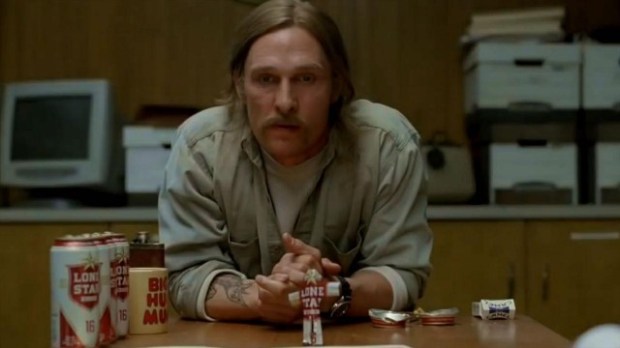
And that’s why I get so mad when something that could be outstanding — that, with all available evidence, should be outstanding — simply isn’t. I know a lot of you watch True Detective; you should; it’s completely excellent. I certainly won’t be trashing TD here because, various misguided (or not so) criticisms of gender, pacing, and over-dramatization aside, True Detective is an outstanding television show, and one that easily rivals (in its acting, its plot, its engagement with larger philosophical ideas) any Breaking Bad-esque show that keeps fanboys salivating and arguing its Shakespearean merits. Yes, it’s really that good. And what seems to make it so good is that the entire series (eight episodes) is directed by one person and written by one. There’s no room of writers kicking around ideas on this one; instead, it’s a developed, articulate, and extremely focused exploration of human depravity, corruption, and negativist philosophy.

So obviously, I was sold. I was like Nic Pizzolatto, where have you been all my life? Seriously. Noir and detective novels have always been something that I enjoyed, and, when I found out this guy started as a fiction writer and an academic, I was fucking stoked. Like the closet Homer Simpson that I am dutifully set aside my (now pretty serious) foray into contemporary Hungarian literature (I know, I’ll kill myself later), got some bourbon, and prepared myself for a good, old-fashioned page turner.

And then the problems started. Perhaps, though, my expectations just weren’t primed for the experience; I, after all, expected a sort of crime thriller, a novel similar in apparatus and execution to the show that’s put Pizzolatto on the map. Galveston (Scribner, 2011), however, is a completely different beast, a true noir centered around that a classic noir-trope: a search for a home that doesn’t exist, that was invented to give meaning to, and soothe the wounds of, the present.

It starts with seedy “bag-man” Roy Cady discovering he has lung cancer, learning that his girl has gone on to fuck his boss, and him being sent to do a “job” that he clearly isn’t meant to survive. However, of course, he does (as does the young prostitute Rocky) and the rest (or, at least, the majority thereof) is spent with these characters running from said boss, to Galveston specifically, to stay in the seediest ocean-front motel imaginable with a cast of characters that seem to be in constant competition to determine who’s the most revolting and outrageous.

So far, so good, right?

Wrong. Pizzolatto makes two fatal mistakes, ones that haunt the book through and through in their miscalculations. First (and foremost), what we know about Roy, the man we’re supposed to empathize with, to see ourselves in, to discover the nature of the American noir in: he’s dying, he has no problem killing people, and, sometimes, he’s willing to sacrifice himself for other people. That’s it. Obviously, this is a problem. The novel begins with this and, coupled with Roy’s fumblingly hard-boiled persona (one that works so well in classic noir fiction because, there, the impetus is plot over personal revelation), he never… really… grows. Sure, he’s a little bit of a softy, but we know that at the beginning when he takes Rocky along for the ride rather than leaving her for dead (and from his insistence that she’s too young for him, that he’ll never have sex with her). In fact, throughout, nothing about Roy, except the currency for which he kills (first for money, later for someone else’s well-being), changes dynamically.

As a result, Galveston seems to want to have it both ways: to show us Roy the hard-boiled bagman, the seedy, intentionally flat noir anti-hero who finds his way through a troubling and increasingly grotesque situation and to characterize, to develop, in Roy and Rocky, a wandering loneliness, a longing for things to go back to a way that they never were. Unfortunately, here, these points don’t converge.

Roy is always a bit aloof (though we follow him for the entirety of the novel), a little too-constructed by the traditional demands of the noir- and detective-genres, a little too flat, for his despair to be real. He’s just a variation on a cliché: a hitman with a heart of gold, a man who, in seeing his coming death, decides to help others. It all seems a little too easy. Instead, we’re left with a book that, though it is a page-turner and will quickly pass a lonely evening, doesn’t understand the story it wants to tell, doesn’t want to commit to the tragedy of being a piece of human garbage with a conscience (as we see in True Detective’s Rust Cohle), or to the remove and plot-focus of a dime-store mystery novel. Instead, it wants to walk a line between the two, a plot-driven noir with a bit of humanistic MFA-fiction learning (developing characters, creating emotional/philosophical centers that revolve around memory and trying to get back what’s lost) and, unfortunately, Pizzolatto doesn’t quite pull it off. The characters just simply aren’t present enough to join the two threads. And maybe that’s where True Detective succeeds; actors (especially really good ones) do have a way of injecting a little humanity.

Austin Duck lives and blogs in DC. He can be reached at jaustinduck@gmail.com.

Image source: EW

Symbols and Sociopaths: Hannibal’s Season Two Premiere

hannibal-two

Jonathan May

I’m a huge fan of the first season of NBC’s Hannibal, with Mads Mikkelsen in the eponymous role and Hugh Dancy starring alongside as the ever-lovable Will Graham. It was a literal phantasmagoria of the culinary and the sociopathic. The episode names were, in order, all the courses of a full, formal French menu, and it was quite like eating a slow, delicious meal over the course of the season. Would Will Graham be framed? Would they catch the nefarious Hannibal? Each episode brought us closer to a pulsing edge, pushing our palates further than we had known, not only in terms of character development, but also in exquisitely crafted shots of food juxtaposed with the grisly doings of our dear Dr. Lecter.

I can’t spoil the ending of the first season for you uninitiated who, particularly and with great haste, still need to watch the show. The ancillary characters provide welcome relief from the steadfast and grim tone. Will, our protagonist, has a sort-of love interest. There’s some humor provided by the medical examination team. But at the core of the show is its unique set of symbols: the dark stag (representing Lecter), the kitchen knives, the disfigured clock. These symbols appear over and over, building in their usage and intensity as the show plays out. Suffice to say, do yourself a favor and watch the first season.

The following section contains spoilers:

Now, for those of you who caught the first episode of season two, what? I mean, what? Where is the trademark, always-stylish gore? Where is the saucy game of cat-and-mouse? We’re thrown in media res to a scene briefly, only to travel back 12 weeks into the past, where the season begins. More darkness is hinted at between Gillian Anderson’s character and Hannibal, but what does he have on her? This opener left me with a ton of unresolved questions, doing the faithful job of an episode meant to re-pique your interest after a long lull (termed appropriately on Tumblr as the “HeAteUs”). I hope we get back to the symbols at the show’s core, but to do that, I think we’ll need a little more Hugh Dancy on-screen. His brief interactions with the dark, antlered man in his mind suggest the obvious: that Hannibal inhabits his mind; but we don’t get much more than that. I’m hoping the next episode makes better use of Will’s “inner space.” We can’t just be flashed dark, mythic-looking things without them being held accountable to a reality within Will.

My prediction for this week’s episode: new “serial killer” introduced formally, way more of Gillian Anderson, maybe a flaming stag this time, a lot of people visit Will in prison asking for advice.

Image source: Comingsoon.net 

The World After Project Runway: Squirming Under the Gunn

tim-gunn

Jonathan May

Lifetime’s Under the Gunn, starring Tim Gunn of Project Runway fame, is many things: the brainchild of Gunn and Heidi Klum, the logical highpoint of a career borne of the academy and blooming on national television, a show about design and fashion, set in LA. But God, is it confusing. What I loved about Project Runway was its reliability in terms of production; almost every week, someone was the winner, and one unlucky designer was auf-d by Heidi. Tim mentored, Heidi hosted, the designers designed,

God’s in His heaven, all’s right with the world. But now we have Under the Gunn: a much anticipated sister show where, indeed, one designer is the winner and one designer (usually) is out. So why do I seem to like it so much less? It’s not so much that Heidi Klum is missing (although for me, she is dearly missed); it’s that an additional aspect has been added to the show: mentoring.

The thrust of Under the Gunn is not just that one fashion designer wins at the end, but that he or she wins through with his or her mentor. These mentors are Project Runway-alum: season two designer Nick Verreos, season eight contender and PR All-Stars winner Mondo Guerra, and season-nine winner Anya Ayoung-Chee. Each of these three starts the show by building groups of four designers to mentor. Tim Gunn, in turn, mentors each of the mentors. You start to see where my appreciation flags. What I loved about Project Runway was its pure American attitude: from nothing and by virtue of talent and hard work, one can rise above the competition and win a life-changing prize. That, unfortunately, seems to be filtered through this additional lens of mentoring. We spend half the episodes hearing the mentors talk about their process rather than seeing the designers (on whom the mentors’ ambitions succeed or fail as well) work on making beautiful clothing.

Avid Project Runway fans have complained for some time that the show’s focus has moved from the fashion produced per challenge to the inner dramatic structure of the 16 designers competing. While I appreciate a little drama as much as anyone, I felt betrayed that what was missing was an attenuation to fashion, its beauty, its transformative qualities. With this new show, Under the Gunn, we move further away, focusing our attention on these three mentors and how they successfully (or not) mentor the design process of others, often with that designer’s point of view falling casualty.

Everything is yet again filtered, and we move further away from fashion design toward a contemporary “cult of personality”-type show. This may be blasphemy, but as much as I enjoy a whole show about Tim Gunn, I miss Project Runway’s deep look into each designer as a hopeful competitor, straining against personal and creative forces to emerge as the victor, having sown solely a 10-12 look fashion collection.

With the addition of another winner (one designer and his or her mentor), we water down the stakes further. We reward, inherently, someone for coaching another person along, something that was Tim Gunn’s sole purpose in Project Runway. It just feels like another instance of piggy-backing, of creating and sustaining tangential importance, of lessening the creative accomplishment of one by acknowledging the “help” of another. The main problem I have with this is that the mentor’s role is one of background subservience, of leading by not leading, of questioning. When we vault this role into one worthy of prizes and fame, we lessen the value of the vatic in society.

Image source: Comedy Central

The Walking Dead Has Become a Show About Nothing

seinfeldnydailynews


Alex Russell

The Walking Dead is pulling in 12-15 million viewers a week consistently. For perspective, that’s roughly seven times more than most episodes in the last season of Breaking Bad. The last 21 in a row all had more viewers than the finale of Breaking Bad. I use that show because it’s on the same network and because the difference should be shocking. Breaking Bad was certainly a niche experience that blew up into the one thing everyone you knew talked about, but the finale was appointment television. It is very likely going to be remembered as “the show” of this generation of television.

I say again: more people are watching The Walking Dead, on the same channel, in the slow season than the most-anticipated episode of the most exciting show of this generation.

The Walking Dead isn’t a bad show. It’s a pretty exciting show, for starters. If you’re not one of the tens of millions tuning it, it’s a show about zombies attacking people who survived the end of the world. Scattered groups of survivors interact with zombies and learn the eternal lesson that even after a more obvious threat emerges, the ultimate villain is always man.

It’s tough to label it innovative, because that paragraph both A. made your eyes glaze over and B. describes the entire world of The Walking Dead. If you want zombie television, you’ve found it. It looks like all the other zombie stuff you’ve ever seen: dark, brooding, lonely, and violent. Sometimes the groups meet other dangerous groups. Sometimes they make tentative friends. Sometimes they attempt to live a normal life. It’s all of the challenges of the end of days mixed in with the challenges of every day. Cool. Check. Got it.

But the most common complaint lobbed at a drama that’s nearly 50 episodes deep holds especially true for The Walking Dead: nothing happens.

It feels ridiculous to say that about a show that features people losing limbs and family members by the month, but the show has a habit of bogging down. A new group will show up, we’ll meet everyone, some people will get character (and some won’t), some people will die for a reason (and some won’t), and we’ll rinse and repeat with a new batch. The setting changes a little bit and poor Andrew Lincoln has to teach a whole new group of people the true meaning of friendship.

The show was loosely following the plot and characters from the graphic novels of the same name, but now it’s on its own. Sure, people want to see people with big swords and big guns blow up clearly-evil zombies, but you need a hook. You need to care, or you’re just making pulp. Is there any reason to care?

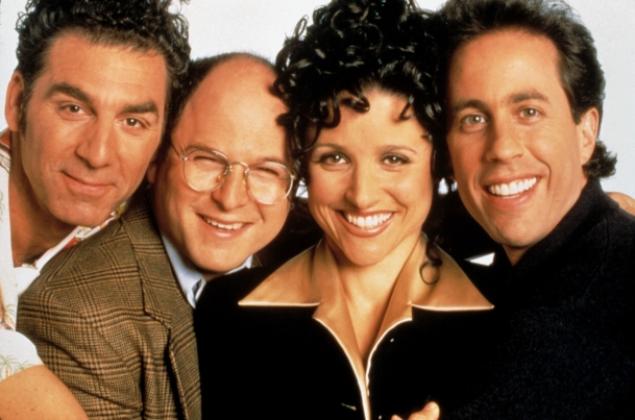
Seinfeld has famously been called a show about “nothing.” The point was that it was to show how people really interacted when they were at their worst, because Larry David thought everyone was most honest at their worst. The Walking Dead would buy that line of thought, but it also seems to buy the idea behind the classic comedy, as well.

The most recent episodes of the show have seen the cast divided up after a terminal event at the mid-season point. Everyone is split, which is fine, but everyone is also battling their own hopelessness in a dead world. If it sounds like that’s an easy way to slip into darkness, well, yeah. This show’s closet is always full of a lot of blacks and grays, but right now we’re in an even darker place than normal.

That’s not necessarily a bad thing. It helps to reset the expectations: Civilization, as we know it, is over. It’s been enough time since the zombie outbreak that everyone knows help is never coming. Everyone’s seen death and loss in droves. It’s definitely time for a glass-half-full outlook. The darkness isn’t what stagnates The Walking Dead, though. It’s literal non-movement.

For two solid hours two characters hole up in a house and wander around the enclosed space. There are elements of people that are revealed and we, as an audience, see our humanity through their choices… kinda. For the most part people just wander around the same dirty, dead spaces and don’t do anything. It’s supposed to remind us that there’s nowhere to go and there’s no hope, but at a certain point that starts to feel like, well, nothing.

Seinfeld was funny because the cast was a reflection of our true selves. The Walking Dead succeeds when it shows us that we are all at a loss in a tough situation. I’d never tell you that Seinfeld missed a step, but the whole idea was to go out on top. The Walking Dead seems to have made every point about humanity that it has to make. It’ll keep demolishing in the ratings because it is entertaining and well-made visually, but the story is about nothing now, and that’s certainly not intentional.


Image source; NY Daily News

How is The Walking Dead like Dave Matthews Band?

dave matthews band performs 220210

Scott Phillips

I like to think of The Walking Dead as the modern television version of the Dave Matthews Band. Remember how in the late 90s and early 2000s seemingly everyone liked Dave Matthews Band because it was safe to do so?

You could get asked by any adult, co-worker, or kid if you liked the Dave Matthews Band and if you said, “yes,” 95 percent of society would accept that answer while only five percent would call you out on your bullshit.

Most people “sorta” liked Dave Matthews Band, but just wanted to fit in and give the answer easiest in doing so, so I feel like they became a bigger thing than they should have been. I can’t tell you how many kids I went to high school with who were so pumped to see “Dave” in concert yet NEVER speak about that band anymore. Not ever.

I feel the same way with The Walking Dead.

(Writer’s Note: This article — and subsequent thoughts — are strictly about The Walking Dead television show and not the graphic novels, or correlations to the novels or any other weird shit like that. I watch television, so that is what I’m strictly writing about here.)

It’s the most watched basic cable television show in history and I don’t know anyone that truly enjoys the show. Everyone sorta likes The Walking Dead; just like DMB. It can be amusing sometimes. The action-driven scenes involving zombies are decent enough.

But Rick is the same mindless character the last three seasons and his son Carl needs to die. Or maybe the producers saw that Carl couldn’t even play dead as a zombie and believed they would be best served keeping him alive and alternating episodes where he isn’t in the plotline. The kid that plays Carl is so bad that he makes the kid that played A.J. Soprano look like Tom Hanks. Michonne is finally getting a back story now of all times? And the new characters: Why should anyone care about them and their fate?

Do you ever go into each week begging for the next episode of TWD? The next episode is just always sort of there. I don’t know anyone that would list The Walking Dead as their favorite show on television. If they do, they’ve probably taken every Buzzfeed quiz about which television character they are or which deli meat they would be.

I just don’t understand how this show about zombies — with minimal character development and really mediocre acting — is the top-rated cable television show of all time. This show regularly has five-to-six times the audience of Breaking Bad and Mad Men (!!!!!!!!!!!!, !!!!!!!!!!!!!) yet, I couldn’t name a soul that would say The Walking Dead is better than those shows.

Is America really filled with this many people that are iffy on entertainment options? Talking Dead, a show ABOUT a show, gets ratings this season that are nearly even with Breaking Bad‘s final season. That’s fucking insane… Do these people not know True Detective exists? Do this many people not get HBO?

Not to insult DMB or The Walking Dead as the worst thing ever; that’s not my intent with that comparison. Both are perfectly good forms of their respective entertainment with things they do well (Dave: live shows, Carter Beauford and percussion implementation with the band; TWD: good at cliffhangers and battle scenes, it’s diverse?), I’m just at a loss to see how both became so universally popular other than having mass appeal.

The Walking Dead: Working Despite Itself

amctwd

Mike Hannemann

WARNING – Full spoilers for the entire series so far for The Walking Dead are in the article below. Read at your own risk (or lack thereof, if you don’t give a damn). Oh, there’s also a pretty easy joke about Lost that may or may not ruin that so… use caution if you haven’t seen a show that ended in 2010, I guess.

The Walking Dead is back and has a few episodes under its belt for the final half of its fourth season. This is a peculiar show for someone who follows around a lot of pop culture for two reasons. The people I know who love quality television (and will debate it endlessly) watch every episode… and hate it. On the other side of the coin, the people I know who watch things like Duck Dynasty or Pawn Stars watch every episode… and love it. This is a very odd thing in 2014.

What is it about this show that has both sides of the spectrum coming back? What is drawing in people who lambaste it yet discuss it in length the next day and simultaneously those who will just post “OMG, Walking Dead!! So great!!” on Facebook every Sunday night? As someone well-versed in this particular undead universe, I’d like to try to figure this out.

Before the show aired its very first episode, I read the first 70 or so comics. The show is based on a graphic novel by Robert Kirkman, and he is involved in the show, so I figured I’d give the source material a whirl. When the first episode aired, I knew many of the characters already since they came from the books. I had my favorites and my least favorites. Ones I reviled and was looking forward to their on-screen demises. But… a lot of it just didn’t happen the same way. I can’t blame the creators, they needed to differentiate themselves from the source material so they could tell their own stories. “Ok,” I thought, “more time with these characters, I guess.” But then I realized something.

I don’t actually like any of these people. Why the hell don’t I like any of these people?

It’s because the show can’t recover from the shadow of its greatest and biggest character. Its break-out star. What made the show a ratings smash. I’m referring to the actual, physical, nightmarish world the characters live in. The world is a more important character than any person you ever see on screen. A show’s world is always a big part of the storytelling. Pawnee, Indiana is its own background character on Parks and Recreation. The Simpsons have a reliable backup every week: the town of Springfield. Hell, even a show with such brilliant characters as Breaking Bad gains a little bit of charm from the fact that it’s set in Albuquerque, NM. The Walking Dead turned this television trope on its head by making the setting the star attraction. Everyone else is just there as backup. The closest comparison is Lost, but that show had the narrative framework that included 20 minutes of flashbacks per episode and the possibility that “everything is magic all the time.”

This criticism applies to every instance the show slows down. When it stops for smaller character beats or long pointless monologues so you can learn how one survivor feels about religion, on the back of everyone’s mind is when we’re going to get back to the world falling apart. It’s not as much fun to watch people farming when you know just on the horizon is something horrifying. And because of this, when horrible things DO happen, (first major spoiler: things only sometimes happen) while it’s viscerally enjoyable, there’s no real emotional stake to it.

No one knew this was going to be a smash hit. It’s why the opening episode starts the same way the comics do. There’s an introduction to the sheriff for a few pages. Sheriff gets shot. Sheriff wakes up from a coma months later to find that the world has gone to hell and there’s no one really left. Why would you care, though? This is just some dude who it looks like woke up in a horror movie halfway through the second act. The show tries, desperately, to make you feel for these people on a deep level but it’s nearly impossible to because there’s no room for solid foundation. In a show about the world in ruins and only a handful of survivors, people actually can make the criticism “Well, nothing happened in THAT episode.”

I can only imagine how amazing this show could have built itself into if it had started with a slow burn. A first season of 12 episodes where we meet these characters, spread throughout Georgia, with occasional scenes of the world starting to go to shit. Give these characters something that’s worth caring about before pulling back the curtain to reveal the star of the show. Care about two characters’ marriage for a different reason than “Hey! They’re married! And marriage is supposed to be great, right?” Or, hell, care about a kid’s actions outside of other than “LOOK AT THE BOY ON THE SCREEN!”

It’s harsh criticism, but it’s true. The show’s writers do their best with the materials they have. Occasionally, there are times when you do care about the people on screen. But it’s not often enough to really drive the show anywhere. And, to be fair, most of the people who are watching this show aren’t asking for much more. They want to see a screwdriver to a zombie’s head and call it a day. They can get by with a character nicknaming a newborn “Lil’ Asskicker” because that isn’t important to them. And, maybe, a show like this doesn’t need to have compelling character arcs. But if you try to shoehorn them into the REAL reason everyone is watching, you’re just going come across as hacky. You’re working from a disadvantage, but at least acknowledge this and try to tell a fun story.

I’m fine, The Walking Dead, with you occasionally taking a breather from incessant mayhem to give characters room to grow. But you are a show about gross-out scares and the end of the world. It’s OK to not be better than that.

Image source: AMC