terrible

Worst Best Picture: Is Chicago Better or Worse Than Crash?

chicago

Alex Russell

In “Worst Best Picture” we search every single Best Picture Oscar winner of all time from 1927 to present to uncover the worst of them all. Conventional wisdom says that 2005’s winner Crash is the worst winner in history. We won’t stop until we’ve tested every last one. Read the the first, our review of Crash, here. Posts will be relatively spoiler free, but there may be some details revealed. Today’s installment is the 2002 winner Chicago. Is it better than Crash?

When I mention this project to people they always have the same general response. People always mention the movie they think is the worst Oscar winner ever. Usually it’s Crash. Sometimes it’s not.

When someone says a different movie, I desperately want to see it. I don’t have a plan for if something is worse than Crash, but I want to have to figure that out. I want one of the other 85 movies between Wings and 12 Years a Slave to be so bad that I have to retitle this whole damn thing. So far, through roughly a third of them, nothing has really approached it.

The closest so far is probably The Artist. I don’t have a great case to make there, I just thought it was obsessed with the wrong parts of itself. I thought it was somehow both indulgent and uninteresting. I didn’t love Shakespeare in Love, either, but neither movie was so odious that I could justify hate like I have hate for Crash.

All of this is to say that people told me that Chicago had a chance to dethrone the king of the list. When I heard that, I got excited. I wanted to see a musical that had a shot at being worse than the sledgehammer-gentle message of Crash that “everyone is bad, forever.”

There are a handful of musicals that have won Best Picture over the years. They’re mostly iconic films like My Fair Lady and West Side Story. Some of them are oddities like Gigiwhich BuzzFeed called the worst Best Picture winner of all time in their listGigi is strange, to be sure, but it’s not terrible. It’s actually pretty fun, which is what I assume people mostly want out of a musical.

Chicago is also supposed to be fun, and I was definitely surprised to find that I really enjoyed it. The songs are catchy and the dancing is flashy and it has Taye Diggs. Are you going to tell me you hate Taye Diggs?

The thing is, I don’t really have a lot to say about Chicago, because I went in with some weird expectations. I expected a movie that was “big” and “loud” in obnoxious ways, but I got something charming and refreshing. Chicago “worked” on me. There’s no love story to get in the way and there’s no real development, but it’s fun. It’s a bunch of songs and visuals that combine to form something mostly worth looking at. I think that’s all a musical is supposed to be, right?

The Best Part: A lot of the reviews for Chicago talk about the dancing being largely smoke and mirrors. I’m not a sharp enough dance critic (let no one tell you otherwise!) to know, but it seemed pretty great to me. I do not generally like movies like Chicago, but the “Cell Block Tango” performance was pretty excellent.

The Worst Part: I’m not in love with the ending. I don’t think it’s really a spoiler to say how a musical ends, but it just feels really haphazardly tied up. You can’t fault this version for how the actual story of Chicago ends, but “the smooth guy is smooth, the putz is a putz, and everyone else is whatever” isn’t exactly dynamic.

Is It Better or Worse than CrashI’ve recently decided I need to go back and rewatch Crash, because I’m running out of extremely specific complaints about my subject matter. Both movies have a cynical view of the world, but again, Chicago has more subtlety about its cynicism despite having a scene where a guy controls characters with strings. Crash deserves to be raked over the coals for a lot of faults, but none more than how obvious it is.

Worst Best Picture Archives: Crash | Terms of Endearment | Forrest Gump | All About Eve | The Apartment | No Country for Old Men | Gentleman’s Agreement |12 Years a SlaveThe Last Emperor | The Silence of the Lambs | The Artist | A Man for All Seasons | Platoon | The Lord of the Rings: The Return of the King | The King’s Speech | Rain Man | The Departed | The Bridge on the River Kwai | Marty | Gigi | It Happened One Night | Driving Miss Daisy | Shakespeare in Love | Wings | Midnight Cowboy | Rocky | Gone with the Wind|

Alex Russell lives in Chicago and is set in his ways. Disagree with him about anything at readingatrecess@gmail.com or on Twitter at @alexbad.


Worst Best Picture: Is Gone with the Wind Better or Worse Than Crash?

Vivien_Leigh_Gone_Wind_Restaured

Alex Russell

In “Worst Best Picture” we search every single Best Picture Oscar winner of all time from 1927 to present to uncover the worst of them all. Conventional wisdom says that 2005’s winner Crash is the worst winner in history. We won’t stop until we’ve tested every last one. Read the the first, our review of Crash, here. Posts will be relatively spoiler free, but there may be some details revealed. Today’s installment is the 1939 winner Gone with the Wind. Is it better than Crash?

History has both been extremely kind and extremely unkind to Gone with the Wind. It’s one of the most successful, well-reviewed films in American history, but it’s a film with a Wikipedia “analysis” section that includes “racial criticism” and “depiction of marital rape.” No matter what part of Gone with the Wind you’re talking about, you’re talking about something capital-I Important.

Gone with the Wind is one of the few “great” Best Picture winners that I’d actually seen before starting this, though it was years earlier. I was too young to understand the dynamic between Scarlett and Rhett. All I remembered was how terrible the burning of Atlanta scenes were (not wrong, there, young me) and how awkward the movie’s racial tensions were (the seriousness of which was definitely lost on teenage me).

When you watch Gone with the Wind in one sitting you are struck not just by the length — it’s the longest Best Picture winner ever, by a lot — but by how much of the film isn’t about “the film.” Even aside from overtures and extended credit sequences that are relics of the time, there are huge sequences that don’t advance the plot. The cast of 20 or 30 relatively major characters doesn’t help with that sensation, either.

Gone with the Wind gets rethought critically because it’s racist and sexist and honestly, a little dumb. Scarlett and Rhett are interesting, but most of the rest of the cast is made up of simple people with simple desires. That contributes to why some scenes feel like a slog. Sometimes you’re watching someone mad at Scarlett for marrying a shopkeeper and you feel like you maybe started the movie when you were a much younger person. Maybe you’ll never get to leave.

There’s not enough room here to talk about a movie with problems as complicated as Gone with the Wind, but I will say this: it is crazy to me that I have had as many conversations as I have in my life about this movie without talking about the drunken argument Rhett and Scarlett have. The racial depictions are downright awful, but you really need to see this scene again if you haven’t seen it recently. It’s unexpected and it’s foul. It’s really the only thing I’m sure I’ll remember about Gone with the Wind this time around. I’ve never seen anything like it in a “romance.”

The Best Part: The final fourth of the movie works as a stand-alone in a way. The time Rhett and Scarlett are actually married and trying to deal with it feels well-paced and interesting. There are monstrous parts and there are acidic exchanges, but the only part of Gone with the Wind that feels like what we know today as a complete story is this one.

The Worst Part: Where to begin? Race, sexuality, sex, marriage, family, money, war? There’s a lot going on in the world of Gone with the Wind, but there aren’t any real good messages here. There’s not enough time here to condemn it where it needs to be condemned, and that’s better left to better critics, anyway. For pure film, I’m going either Atlanta burning or the character who dies on a horse. Both would be less jarring in Gone with the Wind if they were anime.

Is It Better or Worse than Crash? How will history remember Crash? That’s a question I’ve pondered in this space before. I have to think that history will wonder what race relations in America were like in 2005, and they will look to Crash to find their answer. Just as The Apartment suffers because of modern opinions on mental health and Gentleman’s Agreement suffers because it is too simplistic with anti-racism, Crash and Gone with the Wind both suffer because they feel like sad products of sadder times. We want our world to be better now and we want our history to be better then. It wasn’t, to be sure, but Gone with the Wind is a little too gleeful about it. Crash is at least unhappy about the world it glorifies, though neither world is one I want to live in. Gone with the Wind is better, but the similarities are there.

Worst Best Picture Archives: Crash | Terms of Endearment | Forrest Gump | All About Eve | The Apartment | No Country for Old Men | Gentleman’s Agreement |12 Years a SlaveThe Last Emperor | The Silence of the Lambs | The Artist | A Man for All Seasons | Platoon | The Lord of the Rings: The Return of the King | The King’s Speech | Rain Man | The Departed | The Bridge on the River Kwai | Marty | Gigi | It Happened One Night | Driving Miss Daisy | Shakespeare in Love | Wings | Midnight Cowboy | Rocky |

Alex Russell lives in Chicago and is set in his ways. Disagree with him about anything at readingatrecess@gmail.com or on Twitter at @alexbad.
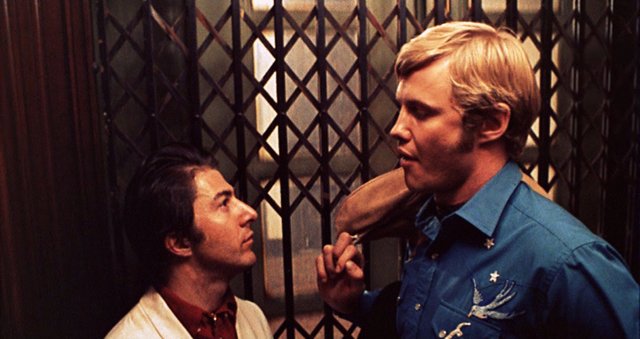
Image credit: here.

Worst Best Picture: Is Rocky Better or Worse Than Crash?

rocky37ul1.6843

Alex Russell

In “Worst Best Picture” we search every single Best Picture Oscar winner of all time from 1927 to present to uncover the worst of them all. Conventional wisdom says that 2005’s winner Crash is the worst winner in history. We won’t stop until we’ve tested every last one. Read the the first, our review of Crash, here. Posts will be relatively spoiler free, but there may be some details revealed. Today’s installment is the 1976 winner Rocky. Is it better than Crash?

Network and Taxi Driver both came out in 1976, the same year Sylvester Stallone cemented his place in pop culture with Rocky. There is absolutely no question that the endurance of Rocky as an underdog story and the permanent representation of boxing is deserved. It’s Rocky. You don’t need me to tell you what Rocky is.

It’s strange, though, to consider it as a “film great” against Network and Taxi Driver. They’re both better movies, but not to the degree that this is some kind of historical slight. I’ve never heard anyone call 1976 a travesty in the way people talk about Saving Private Ryan losing to Shakespeare in Love or The English Patient beating Fargo. The official Oscars website has a big picture of Frances McDormand on their page for 1997 despite the loss, but 1976 belongs to Sly and Rocky.

There are many movies on this list that I’ve never seen, but there’s only a few that seem strange to me to have missed. Until a few days ago, I had never actually watched all of Rocky. It’s a weird thing to do for the first time. I’ve seen so many parodies and homages and references to it, but I’d never seen the source material.

The overwhelming thing about Rocky is that you just about can’t understand a damn word Sly Stallone says. Rocky the character is supposed to be a sleepy, kinda-dumb-kinda-not every-man, of course, but it’s weird to have heard so many impressions and then hear how much weirder the voice actually is. Sly’s the same weird guy in every movie, but as Rocky he’s full-on marblemouth. You probably already know that, but it’s no less weird to finally hear it happen.

He’s a boxer who never got a shot and then he gets one. He fights the heavyweight champ. He gets the girl, though he’s always had the girl. It doesn’t need to be more than it is. It’s Rocky, the feel-good punching story of our lives. It’s not the chilling tale of Taxi Driver and it’s not the risky parable of Network, but it’s fine. Rocky shouldn’t be what we have as the history of 1976, but it’s no huge insult to its betters, either.

The Best Part: The climactic fight is great, of course, but it’s the bit you already know: the training montage with the art museum steps and the glass of eggs and the train tracks and the song. The movie wanders around Rocky’s love life for a long time and they spend too much time establishing that you should feel bad for this lug, but the montage is iconic for a reason. It’s hard not to get excited, even though you know what’s coming.

The Worst Part: I spent a lot of time thinking about Talia Shire, the woman who plays Rocky’s love interest Adrian. She’s trapped in a weird place in Rocky. Rocky genuinely loves her and her life’s a mess, so it’s probably for the best that she falls for him, but she still doesn’t really get a lot to do. No one other than Rocky himself really gets much to do, honestly. There’s nothing really below the surface for anyone else, and some of the “emotional” outbursts from other people feel strange because they’re mostly ciphers.

Is It Better or Worse than Crash? I’ve mostly used this space to assault Crash as a dumb, hateful view of race in America. It’s definitely that, but it’s also the story of unlikable people becoming likeable and vice versa. Crash wants to play with your emotions; the good guys aren’t always good and the bad guys are usually complicated. Crash gets a lot of hate because it’s ham-fisted, but it’s trying to do something complicated. Rocky isn’t trying to do anything complicated at all. If these were both made with the same amount of care, Crash would be the far better story. They’re not, though, and Sly Stallone’s love-song to underdogs is more compelling.

Worst Best Picture Archives: Crash | Terms of Endearment | Forrest Gump | All About Eve | The Apartment | No Country for Old Men | Gentleman’s Agreement |12 Years a SlaveThe Last Emperor | The Silence of the Lambs | The Artist | A Man for All Seasons | Platoon | The Lord of the Rings: The Return of the King | The King’s Speech | Rain Man | The Departed | The Bridge on the River Kwai | Marty | Gigi | It Happened One Night | Driving Miss Daisy | Shakespeare in Love | Wings | Midnight Cowboy | Rocky |

Alex Russell lives in Chicago and is set in his ways. Disagree with him about anything at readingatrecess@gmail.com or on Twitter at @alexbad.

Image credit: here.

Worst Best Picture: Is Midnight Cowboy Better or Worse Than Crash?

midnight

Alex Russell

In “Worst Best Picture” we search every single Best Picture Oscar winner of all time from 1927 to present to uncover the worst of them all. Conventional wisdom says that 2005’s winner Crash is the worst winner in history. We won’t stop until we’ve tested every last one. Read the the first, our review of Crash, here. Posts will be relatively spoiler free, but there may be some details revealed. Today’s installment is the 1969 winner Midnight Cowboy. Is it better than Crash?

Midnight Cowboy has the distinction of being the only movie rated X to ever win the Oscar for Best Picture. The story of the rating system in American film history is a little absurd. I talked about that a little bit with regards to Terms of Endearment, a really brutal movie with frequent sex scenes and more frequent “adult situations,” getting a PG rating in the early 80s. Still, “X” jumps right off the page. It makes you wonder just how raw Midnight Cowboy could be.

We’re definitely in a different world in 2014. This isn’t an “X” movie, but damn it’s a tough one. Midnight Cowboy is the tale of Joe Buck’s (Jon Voight) plan to leave Texas and be a male prostitute in New York City. He’s a hayseed of the highest order, but his character really shines because he has the depressing trait of “assumed street smarts.” Joe thinks he’s figured out all the angles in every situation, and that’s the worst thing to think when you haven’t at all.

He hooks up with Rico “Ratso” Rizzo (Dustin Hoffman, who is excellent), a conman who lives in a condemned building. Joe tries to convince people to have sex with him for money and Ratso tries to convince Joe that he’s more than he seems. Joe is immediately unsuccessful and “moves in” to Ratso’s hole-in-the-wall.

It’s a story about hope and image. Both men think they have the tools to make it in the world, they just need the shot. Ratso needs a guy like Joe that he can “manage” and Joe just needs “customers.” Ratso won’t stoop to shining shoes like his old man and Joe won’t go back to washing dishes like he did in Texas. They want more for themselves, reality be damned.

We all want a little more for ourselves, and you’ll be missing the forest if you pay too much attention to the sex in Midnight Cowboy. It’s certainly a movie about sex, but the sex doesn’t matter. The main thing going on in Midnight Cowboy happens when two people shiver and get sick in an old tenement house because they can’t swallow their pride. The main thing is that we all know that guy who could get it together “if he could just make it to Florida.”

You don’t need to go to Florida. You need something else.

The Best Part: The sadness of the lead characters is extremely hard to handle. In one scene during the “hopeful” part of the movie, Jon Voight’s character has to ask a woman for crackers that he can put ketchup on to not starve to death. It takes a dip towards the depressing after that, but it’s still on the upswing, then! I list this in the “best” because the movie isn’t a direct arc, which is interesting. It’s a risky way to tell a story, but it’s like an actual life with highs and lows rather than one constant line up or down.

The Worst Part: As much as I want to make this about a downright stupid Andy Warhol storyline (sigh), it has to be the entire handling of homosexuality. This movie is from 1969, and that’s a definitive year in gay history in America. Midnight Cowboy came out a month before Stonewall, and it’s a movie about a guy from Texas being scared of being gay. It’s tough to discuss without spoiling it, but Joe frequently finds that he can make a living in NYC as a prostitute, but he’ll have to sleep with men. He’s not willing to – which is not the problem – but the anger and the weirdness of the way they deal with it in the most explosive year in gay history in America is very strange. I can’t fully condemn a movie from more than four decades ago for not handling gay issues head-on. I can be weirded out by hearing Dustin Hoffman say a gay slur about twelve times in a row.

Is It Better or Worse than Crash? We’re across the country in Midnight Cowboy, but we’ve got the same kind of “gritty city” story. The NYC of Midnight Cowboy is a sad, angry, lonely place. It’s not dissimilar to the LA that Crash wants to talk about, but this is 1969 New York City. It’s the city before they took all the porn out of Times Square. It’s the bad old days, the days talked about in really good and really bad literature. It’s a piece locked in a time that doesn’t exist anymore, and the grit is there to explain what “1969” is to the audience. Crash, as I’ve said before, exists in a mythical 2005. Racism is extremely real, but as the story of anywhere real in 2005, Crash is a bad destination movie.

Worst Best Picture Archives: Crash | Terms of Endearment | Forrest Gump | All About Eve | The Apartment | No Country for Old Men | Gentleman’s Agreement |12 Years a SlaveThe Last Emperor | The Silence of the Lambs | The Artist | A Man for All Seasons | Platoon | The Lord of the Rings: The Return of the King | The King’s Speech | Rain Man | The Departed | The Bridge on the River Kwai | Marty | Gigi | It Happened One Night | Driving Miss Daisy | Shakespeare in Love | Wings

Alex Russell lives in Chicago and is set in his ways. Disagree with him about anything at readingatrecess@gmail.com or on Twitter at @alexbad.
Worst Best Picture: Is Wings Better or Worse Than Crash?

MV5BMTUwNDY0MDUyMl5BMl5BanBnXkFtZTcwOTY4NTM2Nw@@._V1_SX640_SY720_

Alex Russell

In “Worst Best Picture” we search every single Best Picture Oscar winner of all time from 1927 to present to uncover the worst of them all. Conventional wisdom says that 2005’s winner Crash is the worst winner in history. We won’t stop until we’ve tested every last one. Read the the first, our review of Crash, here. Posts will be relatively spoiler free, but there may be some details revealed. Today’s installment is the 1927 and 1928 winner Wings. Is it better than Crash?

The story of movie history isn’t the story of how we got to 12 Years a Slave any more than it is how we started with Wings, the first Best Picture winner. Different movies achieve immortality for different reasons. Wings was the first Oscar winner, back before they even called them that, but is it anything more than that?

It’s surreal to watch Wings in 2014. I try to keep the time period a movie is from in my mind when I watch it, but that’s not the challenge here. Rain Man is a fantastic movie that someone spilled 80s all over; Wings is pure 1927. It’s the only true silent movie to win (The Artist doesn’t count and should be ignored), for starters. A two-and-a-half hour silent movie seems like it would be a tough sell in 2014, but it’s worth exploring the first Best Picture.

Wings is the story of two boys who love the same gal, Sylvia. They both want to date her, but she only likes one back. The other guy’s cute friend is into him, but he’s only got eyes for Sylvia. I had to look up Sylvia’s name because she’s in about sixteen seconds of this movie. The boys go off to World War I, plucky female friend goes off to drive an ambulance in the war, and Sylvia presumably dies of Spanish flu, or something. Everyone kinda forgets her. It’s weird. The movie is unbelievably long, but that’s the end of that plotline, let’s go to war.

If Wings has a claim to fame beyond the first Best Picture Oscar, it’s two million dollars worth of plane combat effects. They’re impressive (to a degree, don’t expect much) considering what they had to work with in 1927. The conventions of silent film mean that you’re going to watch a lot of flying time, so at least it’s well done.

The main characters — Jack and David — are completely nondescript. They both love America, flying, this possibly dead woman, and just about nothing else. Wings is a patriotic movie before it is anything else, and it too often is willing to forego any interesting characterization to sell that patriotism. Of particular interest is a German-American character played to be incompetent and useless. He consistently mucks up simple tasks and has to demonstrate that he belongs in the war because he has an American flag tattoo. The creators of Wings knew that people wouldn’t buy him any other way.  The third or fourth time that happens, though, you start to wonder if this might have even been too long for people in 1927.

Clara Bow got top billing on Wings. She was a movie star of the highest order, and her portrayal of the rough-and-tumble “best friend/love interest” for Jack is as close as the movie gets to “interesting characterization.” It never quite gets all the way there, but she at least gets to drive an ambulance around and tell Jack that he’s brave and strong. Hoo-boy, that sentence really tells you where 1927 was at, doesn’t it?

The Best Part: Wings is not especially worth your time in 2014, but if you decide to watch it you’ll end up with a compelling movie. It’s way, way too long (largely because it feels totally unedited) but it eventually turns out an interesting climax that is somewhat surprising.

The Worst Part: Jack and David get some leave from the military and go to Paris to get drunk on champagne. They’re called back to provide needed air support, but Jack is too drunk to remember what the military is. Internet tells me that Charles “Buddy” Rogers, the guy that plays Jack, had never been drunk before the scene. To create a realistic portrayal, they just got him drunk in real life. It comes through like that, and it’s as hard to watch as any real-life drunk. Clara Bow eventually shows up to try to get him to go back to war, which helps, but the scene ends with Jack seeing “bubbles” everywhere. The mixture of a real drunk person on screen and some terrible bubble special effects creates a really, really bad scene.

Is It Better or Worse than CrashThe discussion of race in Wings is one of “real” Americans. The German-American is hated because he is not “authentic.” The women are hated because they are not men. Men are hated because they are not “real soldiers.” The world of Wings has no room for diversity, and it’s roughly as interested in a positive message about diversity as Crash is. But there’s 78 years between Crash and Wings, and honestly, I felt like Wings was a little more progressive. The only message of Wings is “be a man, fly a plane!” Crash would be improved by being just about that.

Worst Best Picture Archives: Crash | Terms of Endearment | Forrest Gump | All About Eve | The Apartment | No Country for Old Men | Gentleman’s Agreement |12 Years a SlaveThe Last Emperor | The Silence of the Lambs | The Artist | A Man for All Seasons | Platoon | The Lord of the Rings: The Return of the King | The King’s Speech | Rain Man | The Departed | The Bridge on the River Kwai | Marty | Gigi | It Happened One Night | Driving Miss Daisy | Shakespeare in Love

Alex Russell lives in Chicago and is set in his ways. Disagree with him about anything at readingatrecess@gmail.com or on Twitter at @alexbad.
Worst Best Picture: Is Shakespeare in Love Better or Worse Than Crash?

1999_iconic_picture_actress_paltorw_fiennes

Alex Russell

In “Worst Best Picture” we search every single Best Picture Oscar winner of all time from 1927 to present to uncover the worst of them all. Conventional wisdom says that 2005’s winner Crash is the worst winner in history. We won’t stop until we’ve tested every last one. Read the the first, our review of Crash, here. Posts will be relatively spoiler free, but there may be some details revealed. Today’s installment is the 1998 winner Shakespeare in Love. Is it better than Crash?

While most Western storytelling owes an indirect debt to Shakespeare, there are two Best Picture winners that are directly Shakespearean: 1948’s Hamlet and 1998’s Shakespeare in LoveHamlet will have to wait.

The whole point of watching all 86 Best Picture winners is to gain an appreciation for nearly a century of film history. I wanted to see where film had come from and to watch that transformation through the films that the Academy had deemed “the best” every year. It’s not a perfect science for a number of reasons — taste chief among them — but it’s as good as guide as any.

hated Crash when I saw it. I hated it so much that I thought that it couldn’t possibly be as bad as I remembered it and I bought it to watch it again. It was worse — much, much worse — and thus this began. This is the 25% mark. We’re 23 down, 63 to go. Shakespeare in Love, a movie often called romantic but forgettable, seems as good as any for a benchmark.

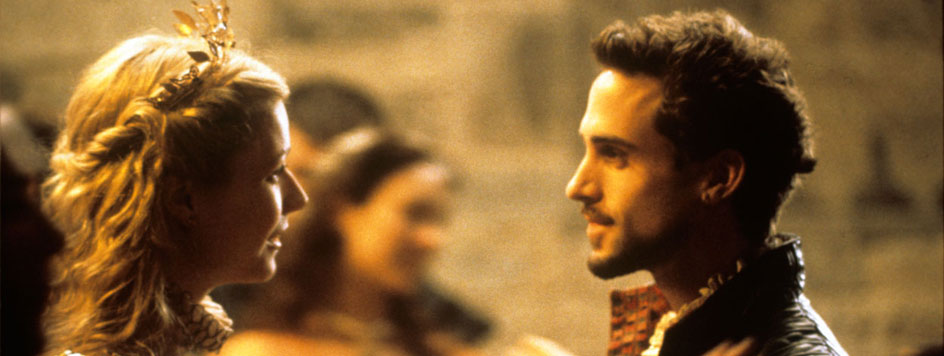
Shakespeare in Love is the story of young Shakespeare trying to write what would eventually become Romeo and Juliet. He struggles, he falls in love with a woman who is promised to a man she does not love, and he finds his muse through a secret love affair. It’s a fine movie, the same way that waffles without butter and syrup are still fine.

There is absolutely nothing in Shakespeare and Love that is challenging or interesting. It’s just a series of events, well told and well acted, but not one that really engages. I didn’t get into The Artist, but I saw how someone could. I’m not entirely sure how someone could be swept away by Shakespeare in Love. It’s a film without challenges.

I’m loathe to invoke the odious “chick flick” as a term, and I won’t, but this movie feels like it’s just attempting “heart.” It feels like someone telling you to feel “warm” rather than making you feel warm. I was a sucker for the warmth of It Happened One Night, so I’ve got red blood in my veins. You don’t have to have Clark Gable to make me care about a love story, but man, this one just feels hollow. It certainly isn’t bad, but then again, it isn’t much of anything.

The Best Part: The acting is all over the map in this one, but Judi Dench is phenomenal as Elizabeth I. She gets in most of the movie’s best lines, which is good, because it would be a shame to waste her. I also like Gwyneth Paltrow’s portrayal of the female lead, and I haven’t really liked her in anything other than The Royal Tenenbaums.

The Worst Part: A movie about Shakespeare is obviously going to have to use some Shakespearean plot devices, but the scene where a man must portray a female servant to gain knowledge of someone’s plans is as subtle as an aircraft carrier. Gender swapping is a crucial part of the movie, and that’s fine, but still… eh. The whole movie just seems to have this lack of effort surrounding it, but I may be heavily influenced by the weirdness of Ben Affleck in the whole deal.

Is It Better or Worse than CrashForgettable is better than horrible. I cannot imagine what would cause Shakespeare in Love to be someone’s favorite movie, but I would want to know. If Crash is anyone’s favorite movie, that’s an entirely different story. That needs to inspire some kind of quarantine area situation.

Worst Best Picture Archives: Crash | Terms of Endearment | Forrest Gump | All About Eve | The Apartment | No Country for Old Men | Gentleman’s Agreement |12 Years a SlaveThe Last Emperor | The Silence of the Lambs | The Artist | A Man for All Seasons | Platoon | The Lord of the Rings: The Return of the King | The King’s Speech | Rain Man | The Departed | The Bridge on the River Kwai | Marty | Gigi | It Happened One Night | Driving Miss Daisy |

Alex Russell lives in Chicago and is set in his ways. Disagree with him about anything at readingatrecess@gmail.com or on Twitter at @alexbad.
Worst Best Picture: Is Driving Miss Daisy Better or Worse Than Crash?

dmd

Alex Russell

In “Worst Best Picture” we search every single Best Picture Oscar winner of all time from 1927 to present to uncover the worst of them all. Conventional wisdom says that 2005’s winner Crash is the worst winner in history. We won’t stop until we’ve tested every last one. Read the the first, our review of Crash, here. Posts will be relatively spoiler free, but there may be some details revealed. Today’s installment is the 1989 winner Driving Miss Daisy. Is it better than Crash?

I was a history major in college. In every good discussion of race through American history, someone always mentioned that context was king. It’s easy to say “times were different and people were worse,” but you have to be able to put yourselves in some historical shoes to really get it. It’s not just about America’s troubling past, it’s about why people believe what they believe and act like they act.

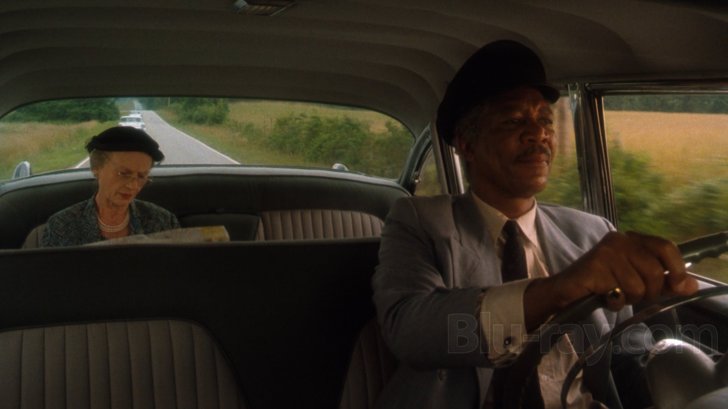
A movie like Driving Miss Daisy does a lot of “what” without a lot of “why.” It’s a story you probably know to some degree: Morgan Freeman drives an old white lady around. That’s basically it. The old white lady (Jessica Tandy) in question is also Jewish, which I wasn’t aware of going in, but most of the “otherness” of the movie is all in white vs. black.

I gave it away in the intro, but if you had to guess what year a movie about an older black man driving an older white woman around as they learn about cultural differences and how to overcome them came out, would you have said 1989? The year the Berlin Wall reopened? That’s the craziest part, to me. The movie spans a few decades around the 50s and 60s, which helps to complicate the “should I feel this gross watching this?” element of it all.

It’s not a racist movie. The duo talks about MLK. They experience racial violence and are disgusted. They get stopped by racist cops. They share experiences over most of the twilight of their lives. It’s not racist, but it’s… awkward.

There’s just not a lot going on here. The lesson seems to be that if you’re already not racist in Georgia, you won’t be extra racist to Morgan Freeman. It just feels so unnecessary and so hokey outside of a few genuinely touching moments. It’s not quite sunny enough to feel as surreal as Gigi but it certainly is on-the-nose enough about race to feel at home on the shelf with Gentleman’s Agreement. The journey isn’t “mean racist lady” to “nice old lady,” it’s “mean old lady who hates Morgan Freeman” to “somewhat less mean old lady who loves Morgan Freeman.”

Watching this in 2014 is weird, but not for the same reason a lot of these are weird. With this one you just start to wonder what people will think about 1989 that people then needed this movie. It’s a well done buddy movie with an interesting pairing — James Earl Jones and Angela Lansbury are playing the duo now, and man, what? — but it ends up feeling pretty slight compared to some movies on this list.

The Best Part: The near-universal love for Morgan Freeman is deserved. He’s pretty spectacular in this role. He’s warm and hopeful, but he’s also a complete character. He’s loyal to the characters he’s sided himself with, but he’s not above making a play for a raise through leverage. He’s fascinating, and he’s what saves this from being a full-on weird relic.

The Worst Part: Dan Aykroyd was nominated for a Best Supporting Actor Oscar for his role as the son who hires Morgan Freeman. I’ll admit I’m sour on Aykroyd a little now because he’s become somewhat of a professional weirdo and hasn’t been in a good movie for a very long time, but he’s still downright bizarre in this movie. His Southern accent involves lots of “o” sounds, and he’s given the unfortunate task of violating “show don’t tell” to remind the audience they’re watching a movie set in Georgia. He keeps walking on screen and announcing things like, “You sound like Governor Talmadge!”

Is It Better or Worse than Crash? The character of Miss Daisy is Sandra Bullock’s character from Crash, but with some sort of a lesson. I talk about this part of Crash a lot. If you’re curious, most of her part of the movie is actually on YouTubeCrash is all built on people going from bad to worse in one way or another, but only poor Sandy goes from worse to… no change at all. They don’t redeem her or punish her. She’s just left as a constant device. Miss Daisy’s character doesn’t have much of an arc, either, but at least her relationship with her chauffeur does. Once again, the world of Crash is a meaner place than a movie where two cops call Morgan Freeman “boy.”

Worst Best Picture Archives: Crash | Terms of Endearment | Forrest Gump | All About Eve | The Apartment | No Country for Old Men | Gentleman’s Agreement |12 Years a SlaveThe Last Emperor | The Silence of the Lambs | The Artist | A Man for All Seasons | Platoon | The Lord of the Rings: The Return of the King | The King’s Speech | Rain Man | The Departed | The Bridge on the River Kwai | Marty | Gigi | It Happened One Night |

Alex Russell lives in Chicago and is set in his ways. Disagree with him about anything at readingatrecess@gmail.com or on Twitter at @alexbad.

Worst Best Picture: Is It Happened One Night Better or Worse Than Crash?

ithappenedonenight

Alex Russell

In “Worst Best Picture” we search every single Best Picture Oscar winner of all time from 1927 to present to uncover the worst of them all. Conventional wisdom says that 2005’s winner Crash is the worst winner in history. We won’t stop until we’ve tested every last one. Read the the first, our review of Crash, here. This is intended to be mostly spoiler-free, but there may be minor details mentioned. Today’s installment is the 1934 winner It Happened One Night. Is it better than Crash?

It’s very strange to consider what has become the “canon” of romantic films. Movies like CasablancaRoman Holiday, and Annie Hall are the standards by which every portrayal of romance is judged. It Happened One Night escaped my radar for the most part, but it’s definitely a movie that is in that list of ideal films.

As I watch every Best Picture Oscar winner I am struck by how few of these I’ve actually seen. There are a ton of movies — How Green Was My Valley comes to mind whenever I look at the full list — that I am vaguely aware of, but mostly they just don’t exist in my mental database. I don’t claim to be a qualified judge of all of film history, but I do appreciate a good movie. It Happened One Night is a good movie.

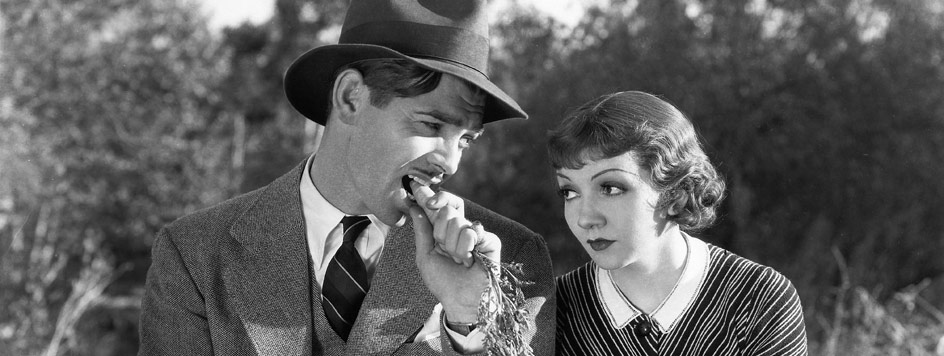
Clark Gable is a down-on-his-luck reporter, and he stumbles across the biggest news story in the country when Claudette Colbert enters his life. She’s on the run from her rich father and on the way to New York to be with her new husband. There’s a reward for her return, and Gable plans to either collect or to cash in by telling her story. He’s just gotta not fall in love along the way, d’awww!

I won’t pretend I walked into a movie from 1934 expecting something genuinely sweet and funny. There are an insane number of cuts — one extremely important scene in a bedroom cuts three times in as many minutes — and some of the wackier stuff doesn’t really work. In the opening scene, Claudette Colbert jumps off of a boat to swim to Florida. A man runs into a swamp because he’s afraid. Another man is tied to a tree and left to die, and that story is just abandoned. A guy lands a helicopter at a wedding. There’s some wild madness going on in the background, but the leading couple carries the load of it well. They both give superhuman performances; they’re both interesting, memorable, and sincerely funny even by modern standards.

Some classics are “important” and some are good. I can’t speak to how crucial It Happened One Night is to the rom-com as a genre, but it’s a movie from eight decades ago that wouldn’t need much updating to be released this summer. It’s worth your time, even if you aren’t watching all 86 of these.

The Best Part: On their first night alone together the couple is forced to pretend to be married to avoid suspicion. It’s a very sweet scene, and it’s played with a mix of playfulness and restraint. Paired with a scene in the morning where they throw a fake fight/screaming match to convince the cops they’re actually married, it’s damned excellent. It would need zero updating to work in 2014.

The Worst Part: On the way to New York the couple hitchhikes with a guy who sings everything he says. He is completely unexplained. I cannot tell you why this man sings his sentences. At one point someone flies an “autogyro” into a wedding, and I can explain that more than this man.

Is It Better or Worse than CrashIt’s a Clark Gable romantic comedy from the 1930s. You don’t need me to write this to know it’s “a good movie.” It’s the kind of movie that makes this whole thing silly. Is it better than Crash? It has Clark Damn Gable in it. The point of this project is to explore the idea that awards and praise don’t necessarily mean a movie is “great,” but of course this one is. Above all else it’s fascinating how timeless much of it is. Some plot elements — a woman runs away and is front page news for weeks in a row — are absurd now, but the jokes all still work. It’s actually funny even in 2014. Crash was instantly dated and will get more so as time advances. This, so long as people can forget some of their cynicism for a second, will endure.

Worst Best Picture Archives: Crash | Terms of Endearment | Forrest Gump | All About Eve | The Apartment | No Country for Old Men | Gentleman’s Agreement |12 Years a SlaveThe Last Emperor | The Silence of the Lambs | The Artist | A Man for All Seasons | Platoon | The Lord of the Rings: The Return of the King | The King’s Speech | Rain Man | The Departed | The Bridge on the River Kwai | Marty | Gigi |

Alex Russell lives in Chicago and is set in his ways. Disagree with him about anything at readingatrecess@gmail.com or on Twitter at @alexbad.

 Image source: Oscars.org

Worst Best Picture: Is Gigi Better or Worse Than Crash?

Gigi Still #1

Alex Russell

In “Worst Best Picture” we search every single Best Picture Oscar winner of all time from 1927 to present to uncover the worst of them all. Conventional wisdom says that 2005’s winner Crash is the worst winner in history. We won’t stop until we’ve tested every last one. Read the the first, our review of Crash, here. All posts should be considered to have a blanket “spoiler alert” on them. Today’s installment is the 1958 winner Gigi. Is it better than Crash?

I don’t read a lot (any?) BuzzFeed, but when they put together a ranking of all of the movies that had won the Oscar for Best Picture, Gigi came in dead last. Since the stated goal of this whole thing is to find a worse movie than Crash that has earned the award, I figured the musical from 1958 deserved some immediate attention.

Leslie Caron plays the title character, a (very) young French woman in the process of learning to be a courtesan. Her older friend Gaston (yep) is famous for being rich, or something, and the two are star-crossed if for no other reason than they seem to be the only two people they’ve each ever met that aren’t immediate blood relatives.

They never say Gigi’s exact age, but she’s absolutely supposed to be a young teenager. She spends the entire first hour of the musical in ridiculously infantilizing clothing as her aunt teaches her the finer points of accepting jewelry and living to serve a man who owns her. I point this out to say that, yeah, it’s definitely a movie about some weird sexual politics, but it’s also completely divorced from “romance.” It’s about transactions.

BuzzFeed’s wrong on this one; I’m only 20 movies into the entire 86-film roster at this point and I know this one’s not the worst. That said, it’s assuredly strange six decades years later. There’s no place in modernity for a two-hour explanation of why you don’t have to put on the red light, and if there is, there isn’t a place for it to pretend that it’s one of history’s great romances.

The Best Part: Maurice Chevalier plays a ridiculous perpetual bachelor who spends the entire movie telling everyone how awesome it is to be old and not in love. He shares a song about it with an old lover and though I’m no big musical buff, I couldn’t help but smile at “I Remember It Well.” It’s “funny for a musical” but it’s very close to “actually funny.” It’s a big improvement over the supremely strange “Thanks Heaven for Little Girls.”

The Worst Part: Poor Eva Gabor shows up for about five minutes as the “cheating mistress.” She’s sleeping with another guy — note this is “another guy” on top of someone who treats her as property — and when she is discovered it gets put in the newspaper. This in the first 20 minutes of the film, so I can say this without a spoiler: Everyone then has a bunch of literal laughs about Eva Gabor’s character’s supposed attempted suicide. The movie explains this away as just part of being a bought woman in 1900, but this movie pairs well with The Apartment as tone-deaf with suicide jokes. How many more movies with suicide jokes could there be?

Is It Better or Worse than CrashGigi is a musical, so your milage may vary based on how much you can stand a movie with 15 songs in it. Both movies certainly have roughly the same message about women: Only miraculous ones can escape the social ties that bind their respective times. They differ in that Gigi is a kind of loud, proud class warfare movie about how awful it is to be low status, and Crash thinks that status doesn’t matter at all. Everyone in Crash is awful, and that’s sorta the whole point of the world it sets up. They’re both “mean” messages, but Gigi‘s is delivered in an oblivious song with bright costumery. There is an argument that a big dumb musical about how love doesn’t matter as much as being rich is a bad movie, but it feels more like a historical oddity than the death-march against social change that is Crash.

Worst Best Picture Archives: Crash | Terms of Endearment | Forrest Gump | All About Eve | The Apartment | No Country for Old Men | Gentleman’s Agreement |12 Years a SlaveThe Last Emperor | The Silence of the Lambs | The Artist | A Man for All Seasons | Platoon | The Lord of the Rings: The Return of the King | The King’s Speech | Rain Man | The Departed | The Bridge on the River Kwai | Marty |

Alex Russell lives in Chicago and is set in his ways. Disagree with him about anything at readingatrecess@gmail.com or on Twitter at @alexbad.

 Image source: oscarwinningfilms.blogspot.com

Worst Best Picture: Is Marty Better or Worse Than Crash?

Ernest_Borgnine-Betsy_Blair_in_Marty_trailer

Alex Russell

In “Worst Best Picture” we search every single Best Picture Oscar winner of all time from 1927 to present to uncover the worst of them all. Conventional wisdom says that 2005’s winner Crash is the worst winner in history. We won’t stop until we’ve tested every last one. Read the the first, our review of Crash, here. All posts should be considered to have a blanket “spoiler alert” on them. Today’s installment is the 1955 winner Marty. Is it better than Crash?

Clara (Betsy Blair) meets Marty (Ernest Borgnine) after being left on the dance floor by her terrible date. The two see themselves as similar and hit it off. It’s a date movie! Love is in the air! Kinda.

Marty is a fat — I mention the “fat” because he does a lot — butcher and the last single person in his family. His ma is ready to be rid of him, so she sends him down to the dance hall to meet a nice Italian girl. He meets Clara, a “dog” of a woman — I use that term only because every single character does even more than you can imagine for real it is crazy — who also has the audacity to be a schoolteacher. There’s a lot of 50s mores going on in this movie: Marty is obsessed with talking about how being a butcher makes him no good, everyone is worried about dying alone in their 20s, one character has to be talked down from saying every man should be 20 years older than their wives, etc.

The world of the 50s explains a lot of what’s going on, but it doesn’t explain Clara’s personality. Nathan Rabin invented the term “manic pixie dream girl” to describe a specific character archetype in film: poorly written female characters that exist solely to further the emotional development of sad, lonely men. Marty is plenty sad — he talks about suicide on his first date with Clara — but Clara isn’t even enough to be considered the shell of a personality that the manic pixie occupies. Clara is nothing; she almost never even speaks. She’s upsetting in a 2014 sense because she struggles in a world that can’t accept her, but she’s ridiculous even in a 1955 sense because she just seems so damn bored in her world.

The Best Part: Marty is a great character, even if the rest of his world is pretty damned mean-spirited. The movie goes pretty far to establish his happy-go-lucky attitude by raining emotional garbage on him from every direction, but it’s a testament to the performance that Ernest Borgnine still seems to be playing a real, unfortunate person.

The Worst Part: It seems like my “worst part” is “the female characters aren’t developed” fairly often, but in a movie like Marty it becomes really impossible to ignore. Everyone in the world of Marty is fairly simple and awful — aside from Marty, of course — but his blushing would-be bride is full-on tabula rasa. She gets no dialogue outside of some short responses and one monologue full of information Marty tells her to say. Betsy Blair does as much as there is to do, but damn there’s not much to do.

Is It Better or Worse than CrashLet us consider a part of Crash we have not considered thus far: Could it be seen as a love story? It’s an absurd way to view a movie that is best summed up as “a defense of racism as the only justifiable ethos,” but it is the way we must view it to compare it to Marty. Both films have essentially only one married couple. In Marty it’s the main character’s miserable brother and his new bride. In Crash it’s a black television director and his wife. Both sets of couples are miserable, but only in Marty is it treated as a sad situation. In Crash, like all the other awfulness, marriage is treated as a sad, unavoidable result of living in the miserable world that Crash creates. In this way, yet again, Marty is a better movie because even a film about loneliness and almost giving up is more hopeful than a boot stomping on the face of joy forever.

Worst Best Picture Archives: Crash | Terms of Endearment | Forrest Gump | All About Eve | The Apartment | No Country for Old Men | Gentleman’s Agreement |12 Years a SlaveThe Last Emperor | The Silence of the Lambs | The Artist | A Man for All Seasons | Platoon | The Lord of the Rings: The Return of the King | The King’s Speech | Rain Man | The Departed | The Bridge on the River Kwai |

Alex Russell lives in Chicago and is set in his ways. Disagree with him about anything at readingatrecess@gmail.com or on Twitter at @alexbad.

 Image source: Oscars.org