video games

The Need to Achieve: One Finger Death Punch

ofdp_box

Matt Matuszak and Brent Hopkins

In our new feature The Need to Achieve, two friends who don’t always see eye-to-eye evaluate a game they’ve both played just for the achievements. Beating 100% of a game can be both challenging and frustrating… How does One Finger Death Punch stack up?

First up on the list of games we have the dreams of attaining 100% in is One Finger Death Punch, an indie game that came out on Steam this year. The game was developed by Silver Dollar Games, which has a history of making low-budget games that tend to receive equally low-budget reviews. OFDP is the game that breaks the mold and has received rave reviews from media outlets because the concept is simple and pulled off intuitively.

Gameplay

Brent: C-
Matt: D (at best)

Brent: OFDP has you use the left and right mouse buttons to attack stick-men that converge on your character from the left or right side of the screen. One button press yields one punch, and through patterns you complete a variety of levels. This is akin to many rhythm games where memorization and rote muscle movement yield success.

The actual game itself is a bit of a mess. There are three difficulties, around six stage types, and over 100 stages to complete. You unlock special abilities (most of which are horribad) by beating stages. That means you will have to play this game a lot to get everything. This game gets old instantly and the stage variety is misleading, as half of them are filters added to obscure information and the other half are standard levels with either boss enemies or fast-moving weak enemies. This game is a grind and it loses its luster by the time you finish the tutorials.

Matt: OFDP starts off with five tutorial levels to explain that left click hits left and right click hits right. This should take 15 seconds to explain, but the developers must have thought they truly needed to teach everyone the difference between left and right. Once you get through the five tutorial levels, you get to just do the same thing 100+ more times because you’ve already done everything the game has to offer in those first five levels. You spend more time looking at where the enemy is coming from than watching the kung-fu moves your character is performing on the enemies.

Controls 

Brent: A
Matt: A

Brent: Since everything is one-to-one, the controls are as good as the user. You can’t really ask for tighter controls than this.

Matt: I’m going to agree with Brent because left is left and right is right; it doesn’t get any more complex.

Sound/Music

Brent: F
Matt: F

Brent: The commentator in this game is horrible. He uses a fake Asian sensei accent and constantly babbles during the game. Worse yet, even if you turn off the sounds they immediately turn back on when the game starts up. The music was equally grating to me and I found that I instantly turned both off. The in-game sound effects (which you can’t turn off) are OK and help you keep up with the fighting on screen. The whole game is a bit too loud though, and I think Silver Dollar Games tried a bit too hard to make the game feel and sound like a old kung-fu movie and instead just made it sound grating.

Matt: This is the worst part of the game for me; there is no actual sound volume control. You have mute or not mute in the startup, but this data doesn’t save to your local machine so it always turns on when you start the game. The in-game sound effects are OK but the basic breaking or punching sound effects just play over and over again.

Story

Brent: F-
Matt: F

Brent: If there is a story I completely missed it for the last few hours I played this game. You are a stick man and you traverse levels, beat bosses, and learn kung-fu techniques. There is no development beyond that, though I suppose the game doesn’t require it.

Matt: There is no story in this game. You are a stick man that just has to fight the same things over and over again for no apparent reason.

Graphics

Brent: B+
Matt: C-

Brent: The game is very similar in style to the stick man fighting Flash videos made popular by Xiao Xiao in the early 2000s.

We know you all remember this.

This simplicity in design makes the game run smoothly and makes you feel like you’re playing as a stick man bad-ass. There are a variety of animations used, so it isn’t just jab left and jab right. The animations are smooth, though the way the game play works you don’t truly get to take in the action.

Matt: This is a very simple 2D game. There won’t ever be knockout graphics in a 2D game. However, they did a good job with the background imaging — which you will only notice if you can look up for longer than a second before another enemy comes from the left or right. The models for your character and enemies are both differently shaded stick figures.

Achievements

Brent: F
Matt: F

Brent: This is where the money is at. I chose this game without looking at the achievement list and that was a bit of a (huge) mistake. This game has 152 achievements and around half of them are easy to get on the lowest difficulty level. The other achievements are the ridiculous, as they ask you to kill THOUSANDS of enemies in a row on an endless mode with ever-increasing speed. Doing the normal levels with 200 enemies is crap, but trying to do 7000 is tiring to say the least.

Matt: I love out-of-reach achievements, so a game that has one extremely hard-to-get achievement I can appreciate. This game has 25 extremely hard-to-obtain achievements out of 152. 17% of the game’s achievements are near unobtainable unless you play a few hundred hours, and the gameplay isn’t worth a few hundred hours.

Overall

Brent: D
Matt: F

Brent: Too many achievements, repetitive gameplay, and sound that will make you pause and step outside are too much for me to recommend this game for hardcore gamers or achievement hunters. It’s a great casual game for some time-wasting, though.

Matt: Don’t buy this game! There are better games that meet the casual indie genre that have more story in the first five minutes of game than this entire game does. I dreaded having to play this game to write about it and am upset it lowered my average game completion percentage on my Steam profile.
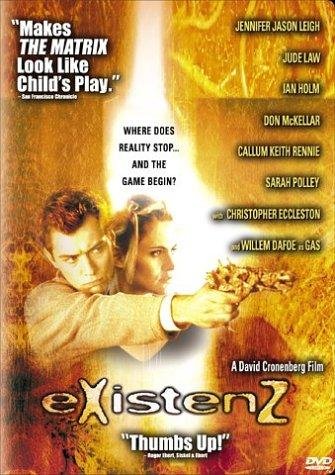
Life After the Star Wars Expanded Universe: David Cronenberg’s eXistenZ

existenz

Andrew Findlay

In Life After the Star Wars Expanded Universe, we take a look at science fiction and fantasy, why they’re great, and what they say about where our species has been and where it’s going.

It is important that we set parameters early for how bizarre this film is, so I’m going to start by telling you that within the first 15 minutes, one of the main characters gets shot by an organic gun that uses human teeth as projectiles. This happens to her as she is fondling a gadget that looks like nothing so much as a mass of tumorous nipples stitched together and made animate. And it just gets weirder.

existenz

This is the centerpiece of the entire movie

Before we really dive in, let’s stop and talk about why this is a world of toothguns and nipple masses. The overview of the film is that Allegra Geller, programming genius, is doing beta testing for her new game, eXistenZ. Technology in this world has invested all of its R&D in biorganic gadgets. Scientists use genetics to grow tech instead of building it in a traditional way. As such, sometimes guns are grown of bone and shoot teeth. Video games are played through game pods. Game pods start out as some type of frog, but are heavily bioengineered into what is in the picture above. The technology involved here goes beyond virtual reality, as the game pod connects directly to the player through a “bioport,” a hole drilled into the back of anyone who wants to use a game pod. It not only draws its running power from the player’s body but directly accesses their central nervous system to create such a realistic experience that it is indistinguishable from actual existence.

A group of fans has gathered together and are patiently waiting to “port” together and experience the game en masse. eXistenZ appears to be a standard sandbox game. There are general objectives and obstacles, and the player is expected to wander around figuring out what’s going on. The main difference is that the immersion is so complete that the player basically enters an alternate universe where NPC actions are scripted.

This abandonment of reality rubs some people the wrong way, which is why a terrorist uses a molar gun to attempt to assassinate the game designer. There’s a lot of commotion and death, but Allegra (Jennifer Jason Leigh) and Ted Pikul (Jude Law) escape and go on the run. The attack damaged Allegra’s game pod, so they have to port into the game to run it and find out if eXistenZ will still work. They do so, but things get complicated when the story in the game mirrors what is happening in reality. In the game, there is an assassination plot and a toothgun. Ted and Allegra try to unravel the attempt on her life by progressing through the game world, but more worrisome than the murder attempt is that, when Ted unplugs from the game to take a break, reality no longer feels real.

MagrittePipe

This movie asks big, important questions. What is technology? Where is it going? How do we react to it, and how does it change us? Cronenberg’s modus operandi is to select a technology or science that exists or seems close to existing, then to exaggerate and extrapolate to explore its effects on humanity. He covers chemical-induced accidental mutation in Scanners and television broadcasts in Videodrome. In eXistenZ, it’s video games. As an avid gamer, it’s gratifying to see a movie dedicated entirely to the societal effects of one of my chosen pastimes. The movie sets up a plausible direction for video games and then shows its effects on individuals and society at large. Societally, there are people who escape into alternate realities as recreation and other people who murder the designers of those alternate realities on moral principle. On the individual level, people range from the squeamish and reluctant Ted Pikul, who does not even have a bioport installed until he has to enter eXistenZ because he is afraid of body modification, to Gas, played by Willem Dafoe, who is a manic-eyed devotee of Allegra Geller’s work. Dafoe has one of the best lines in the movie. The fleeing main pair stop at a gas station, and Dafoe’s character recognizes them and starts gushing about how Allegra’s games changed his life. Ted, who has yet to enter the world of total-immersion gaming, asks him how his life was different because of Allegra Geller. The response is priceless.

Ted: What was your life like before?

Gas: Before?

Ted: Before it was changed by Allegra Geller.

Gas: I operated a gas station.

Ted: You still operate a gas station, don’t you?

Gas: Only on the most pathetic level of reality.

Willem Dafoe’s line is so great because it sums up perfectly what video games do for those who play them (or really any media for those who read, watch, or listen to them): absolutely nothing. If you read a book, watch a movie, or play a video game, it changes absolutely nothing in your external life, but the external is just “the most pathetic level of reality.” The changes that happen within the consumer of media are what’s important – relaxation, an expanded consciousness, heightened emotion – it’s all fake, none of it’s real, but our ability to recognize, respond to, and create fake shit is the trait that makes us human, shared only, and even then only partially, by a handful of the higher animals (chimpanzees, dolphins, elephants, etc).

Reality versus irreality ends up being the central conflict of the movie. After entering the perfect simulation of the game, it’s hard to tell what is and is not real. The “what if life is just like, a simulation, man?” conversation seems like an argument that would only be had over a table full of Taco Bell in a room full of pungent smoke, but it’s actually a very old and well-respected existential question. If we are living in an absolutely perfect simulation of reality, there is literally no way for us to tell. A truly perfect simulation would be indistinguishable from reality. Think about it – grab an object next to you and heft it in your hand. Toss it up and down a couple of times. Are you, through the messaging apparatus in your nerves, transferring chemical energy from your muscles to whatever you grabbed, or is a machine stimulating neurons in your unconscious brain to make you perceive all of the effects of that action?

I don’t care about the answer one way or the other, much as I don’t care about whether or not free will exists, because it changes nothing about my life and how I lead it. Right now, I am either choosing to drink bourbon and write this article, or I am predestined to drink bourbon and write this article. Either way, I’m tipsy and typing. In much the same way, a simulation that’s just as good as the real thing is, after all, just as good as the real thing. In the movie, it becomes more of a moral question, as they are actively dropping in and out of a simulation, and killing people in both the simulation and the real world means that it’s difficult to tell if you just shot a piece of code or a human being with a spouse and kids.

You should watch this. It’s one of those movies that Netflix tags “cerebral,” which mostly means that, even if it’s good, you’ll know at all times exactly how many minutes are left until the credits roll. Even if it moves kind of slow and gets kind of confusing, the future it envisions and the important questions it raises make it more than worthwhile. Right now, the closest thing we have to simulated reality is the Oculus Rift:

existenz

She looks so happy in there. Maybe she’s eating salad.

With current technological limitations, it’s pretty obvious what is and is not real, but humanity loves entertainment so much that it probably will not stop striving towards a perfect simulacrum of existence. Cronenberg explores what might happen if we make it there.

Andrew Findlay has strong opinions about things (mostly literature) and will share them with you loudly and confidently.

Images: Business Insider, IMDB

What is Reading at Recess? It’s (Popular) Cultural Reading

playground

Austin Duck

Recently, at a party, someone considering coming to write for Reading at Recess expressed her hesitation to me; she said “Austin, I don’t work in a field where we attempt to elevate things. The blog comes off as pretentious, as a bunch of guys with semi-valid credentials writing as if they actually know something, as if they have the cultural authority to write toward taste and value or the knowledge to sort out this from that,” and, I’ll admit, it took me aback.

I never really considered our project here at RAR to be about superiority or ethos-building, a kind of talking from the Silicon tower (if you will), but maybe it is. I don’t know. But I feel like, and perhaps I’m a bit misguided here, that our project is not so much pretentious (if you take a look back at the majority of the posts [mine excluded because I am, in fact, pretentious] you’ll see that most are just fan-boy diary entries) as it is an effort in cultural reading.

As you may have noticed, our title Reading at Recess has very little to do with reading in the traditional sense. Sure, I normally write about books, and Andrew Findlay writes about sci-fi, and Jon May definitely touches on the literary from time to time, but this isn’t, and has never been, a blog about books. Instead, RAR is about reading culture (well, elements of it anyway) and presenting responses to those readings (which, inevitably, are so intertwined with our particular tastes and our socio-economic positions as middle-class men who came of age in America that it’s impossible to separate the objective (Hah, that doesn’t exist! Suck it, Science) from the subjective). I don’t think, though, that this failure of impartiality or this desire to elevate our topics—video games, movies, television, or other cultural miscellany—is useless, invaluable, or altogether insensitive to the desires of our readers to access, be informed of, or make up their own minds regarding the texts (and I use text in terms of any piece of information that we interpret) we focus on. Instead, you could think of our discussions here at RAR as corollary to your own, as models for personal cultural inquiry (though that, I think, might be a bit of a self-aggrandizing vision on my part), or just as our desire to have these conversations with each other and ourselves, a kind of self-obligation we set forth toward always writing, being critical of what we see, using what we know and where we’re from to make some kind of sense of the element(s) of culture that obsess us.

And that’s what cultural reading really is. It’s engaging what obsesses you, exploring it far beyond what most people have with it, a casual relationship, and, most importantly, not interacting with it passively. At this point, I don’t read a sentence in a book without thinking why is that here? What’s it doing? and it’s not because I think I’m smarter than anyone else, nor because I want to be perceived as that guy who does those things. It’s because, at a baseline, I’ve become so involved with literary texts that I want to see what they really are, how they work, how they’re made, and why they’re made that way. Because, however they’re made (and for whatever reason), I too am made that way; I am a construction of the same language, the same culture—possibly we (the text and I) are separated by history, but in that way I am of it, a response to it, the next (or next to next) logical (or illogical but extant) step in linguistic, grammatical, philosophical, scientific, historical systems.

Sure, that sounds grandiose and crazy, and it is, but I’ve written it that way because it’s important. Because that’s how I experience it. I gave up on reading for pleasure a long time ago because I discovered that, through work, pleasure comes in the cultural (and, by extension, the self-reflexive) discovery of the real-to-me, those iterations and patterns and texts that become more than books or movies or games, that become part of my thinking and thereby reveal (if I’m willing to look) what elements of culture inform me and my decisions, what makes me up and allows me to see (a little) beyond the scope of myself precisely because I’m able to see a piece of my self’s scope.

If you’re starting to think to yourself that this project sounds very selfish, that’s because it is. But be real with yourself. You’re not reading this because you care about the content. Good content lives in straight journalism, where writing disappears and all that’s left are ideas. Go to Vox or The New York Times or something if you want that. You come to these blogs to learn about new things, movies you haven’t seen, games you might want to play, sure, but you come here, likely, not for what we’ve selected but why we’ve selected it; because we care. Because it obsesses us. Because every time we sit down to meet our weekly deadline, it’s not rote or filler or because we have to because we don’t. Each of us, in our own small, sometimes glib way, is engaged in a kind of cultural self-discovery and everything the comes with it: the biases, the crass reality, the meaningless, waste-of-time attentiveness, the existential void that opens up every time you realize your entire life is built on the words of others, TV shows, shitty commercials, and movies you were told were good but just aren’t. Cultural reading, then, fills the void, one text at a time, by making sense of it, at least from one perspective, so that we don’t get even more lost.

That’s not to say we’ll ever be found, or find ourselves, or that RAR specifically will help at all. It’s not about help, or us believing we know something you don’t. Yes, we’re writing to you because you are also we (just look at Whitman’s “Crossing Brooklyn Ferry”), but, more-so, to discover why we write, to ask questions we don’t know the answers to, to identify (and, in identifying, attempt to come to some understanding of) the fundamental impasses, paradoxes, hypocrisies, and identifications with the (popular) cultural of our moment that seem, to us, to mean something (or not).

For the love of god come write with us.

Austin Duck lives and blogs in DC. He can be reached at jaustinduck@gmail.com.

Image: NBC

What the Story of Two Women and a Cheating Bastard Says About Video Games as Literature

192444-222

Alex Russell

You are a real bastard.

Well, you are when you’re Vincent Brooks in Catherine, a 2011 multi-platform release that shocked the video game world. It’s a unique part-puzzle part-simulation game based on the morality of choice and what people do when no one is watching.

You play Vincent, a 30-something guy drifting through both life and an aimless relationship with a woman named Katherine. Katherine wants to get married and start a life, Vincent wants to avoid making any big decisions. Katherine wants to have long lunch dates about the future, Vincent wants to get drunk with his friends at the corner tap.

Depending on how stereotypical your life is, this may be hitting pretty close to home.

The story unfolds through cinematics where you watch Vincent and Katherine try to reach an understanding on various issues. It feels very real, even if the relationship itself feels flimsy. People really are scared to commit. In most narratives this would be where there would need to be a discussion of gender roles, but dear Vince has to be the nervous manchild here, because of what happens when he goes to sleep.

When Vincent sleeps he is forced to climb towers. These play out as incredibly hard puzzle elements which start unforgiving and somehow get even more brutal as the game goes on. Vincent must climb to escape something he fears — always something Katherine mentioned during the day — and reach the top of the tower to run away rather than facing adulthood, children, marriage, or whatever it may be that night. A good example: one is a horrific, monstrous baby that knows Vincent is the father.

It’s a strange game. Every night ends in the same bar, where Vincent recaps his day with Katherine to his buddies who are also in various states of arrested development. It gets extra complicated when Vincent wakes up with a (younger, blonder) woman also named Catherine, spelled with a C. Everything goes full cliche with the entrance of a younger temptress, but the world of Catherine the game needs these cliches to make choice seem as stark as possible.

It’s important to note that both Catherine and Katherine are full characters, and Vincent’s actions constantly reveal him to be a dipshit. “Competent woman/incompetent man” is a stock relationship in a lot of forms of narrative, but Catherine is interested in more complex interactions. If Vincent’s choices make him act like an asshole to either woman, that woman will respond in a full way. Neither of their lives revolve around Vincent, and even though the story plays out through his eyes, it isn’t a story of two damsels hoping that their prince will pick them.

Every decision made in the game influences a meter that tilts between good and evil. If you’re connected online, the game also tells you what percentage of people around the world made the same choice. This allows for a certain molding of Vincent – he can either accept Katherine and all of the joys that come with adulthood, or he can hide in youth with Catherine and escape for a little longer. The meter is clear which is the “good” choice, and to borrow a line one of the monsters you escape from screams at you: take responsibility.

These choices influence the ending. There are nine options, which mostly follow the traditional Dungeons and Dragons school of morality: neutral good, lawful good, chaotic evil, etc. Can a game with multiple endings still be literature? It’s a fair criticism that there isn’t “one” story since you can end up in a multitude of different situations with Katherine and Catherine. Without giving it away, though the game has nine endings it has but one lesson. There are variations, but the game constantly reminds you that escaping your future is only temporary. Not taking the phone call from Katherine because you think she has bad news only delays it. You have to deal with the people in your life – including yourself. Even if a sadistic otherworldly being won’t throw you in a tower with a bunch of sheep to enact metaphors every night as you fight for your life, the bell will still find a way to toll for thee.

It’s a solid narrative that is shaped by the world it exists in. It feels very Japanese at times, but it generally just feels like a world we’ve all definitely been in before. It also “reads” well because all of the gameplay is separate from the narrative structure in the bar. It’s a nice companion piece to the type of literature that people read when they first realize they aren’t a teenager. Catherine is the story of someone’s 20s. It’s about realizing that interactions with other people matter — to others and to ourselves — and it tells the tale of what happens when that falls by the wayside as well as anything could.

Alex Russell lives in Chicago and is set in his ways. Disagree with him about anything at readingatrecess@gmail.com or on Twitter at @alexbad.

 Image source: Destructoid

They Made a Video Game Out of The Office: Five Terrible Games Based on TV Shows

0

Mike Hannemann

South Park: The Stick of Truth was released recently for the Xbox 360 and Playstation 3. The long-awaited game had finally managed to overcome development hell and several delays. The final product is exactly what you would and wouldn’t expect for a game based on South Park. All the crude elements one associates with the show are there: racist, sexist, fart jokes… all of it. Here’s the part no one really expected: It’s… actually… good. The development team worked closely with the creators of the show and delivered a definitive South Park experience. The writing is genuinely funny and when you play it actually feels like you’re controlling an episode of the show. But you’ll find that on any review site. Instead, let’s consider how unlikely this was.

Video games based on franchises are usually doomed from the start. Occasionally, movies will be spared from this but then something like the Rambo game will come out (in 2014, and if I could type a year in all caps I would to drive the point home) and set the bar back to square one. This has always been the nature of video games and pop culture. Something is introduced, blows up in popularity, and a video game is released to capitalize on that. Hell, South Park did that several times before this entry. It’s easy to make a quick buck because (insert flavor of the week here) can have a quick tie-in. This was especially true of the 1990s. It didn’t take much to make an NES or even an SNES or Sega Genesis game, so we saw hundreds of terrible franchise nonsense. The Super Star Wars games, while remembered fondly by some, barely even followed the plots of the movies. Hell, even commercials were franchised. I wake up with nightmares of playing games based on Domino’s Pizza’s The Noid or Chester Cheetah.

Let’s give the 1990s a pass here. Let’s turn and look at the past 12 years. Next generation consoles. These games cost money to make. Even when creators were involved, they still missed the mark. I submit the following five entries into the catalog of video games based on TV shows that left a sour taste in the mouth of any fan.

5. Lost

The Lost video game was basically just a middle finger to the fanbase. Lost was a show that was built on mysteries, fans were rabid to find clues hidden in each scene that may or may not mean anything. The creators encouraged it, it let to fan mania. Then, during the middle of season four, a game was released for the Playstation 3 and Xbox 360. The game had the player assume the role of a new survivor, waking up among the wreckage of Oceanic flight 815. The game took place during the events of the show, taking place on various days during the shows run. Plotted by the creative forces behind the show, the game promised “revelations” on the main plot. Not only was the gameplay terrible, you couldn’t help but feel overwhelmingly this was shoehorned in as a cash grab. If any of this mattered, why did characters on the show never mention it? Fans of the show don’t even talk about it. For a show where fans obsessed over what number was on a calendar in a background shot of a dream, I think that’s the most damning thing I could say.

4. Futurama

This one is hard to talk about. Admittedly, I wanted this game to work. Based on one of the better animated sitcoms, the sci-fi nature of the show lends itself perfectly to a video game. Honestly, the story was pretty great. It was funny, deftly acted by the original voice cast, and made fun of a ton of video game tropes (in-game parody was still uncommon at this point). Hell, the show was canceled that year (2003) and again fans were willing to do anything for more content. Unfortunately, no script would be tight enough to make up for poor gameplay mechanics. Transferring a 2-D cartoon into a 3-D world just doesn’t work. The character models were blocky, the platforming was sub-par, and the camera was essentially non-functional. The Futurama game is something fans admit exist, but would never consider bringing up at a party. You know, all those Futurama parties people go to.

3. 24

In a list of sad examples, this one is particularly tragic. 24 is another show that a video game just makes sense to make. It’s a turn-your-brain-off action show. Basically just take a Modern Warfare game and replace the main character with Kiefer Sutherland’s Jack Bauer and there you go. As is the common trend here, the creators and actors were all involved. Released in 2006 and taking place between seasons two and three, this game for the Playstation 2 and Xbox pledged to tell a canonical story explaining the time that took place between the two. For once, this actually MADE SENSE for a game based on a serialized TV show. 24 jumps ahead years at a time between seasons. Logically, something could have happened in that time. The problem isn’t the story. The problem isn’t the acting. Hell, the problem isn’t even the gameplay. The problem is that the game wanders around, not knowing what it wants to be. There are heavy action levels, sniping levels, car-only levels, and puzzle missions. You play as Jack Bauer’s daughter, Kim, in one where you just crawl around in air vents. The game never commits to what kind of game it wants to be, and by making it a “controllable season of the show” it suffers. I remember playing this and thinking it was sad how close to a genuinely good game this was.

2. The Office

Didn’t know there was a game based on the US version of The Office? I apologize for being the one to break the news. Seriously. Next time we see each other, you can punch me in the face, I won’t block. Following the smash success of the early season(s) of The Office, a licensed game was greenlit. It was released only for PC. It was a collection of mini games. Which I guess is the harshest thing I could say about the definition of the word “games.” There was no complexity to it. There was also, coincidentally, no point to it. The saving grace is that it didn’t claim to be anything more than it was. It wasn’t The Office experience. It was a $4.99 mini game pack. I probably shouldn’t complain too much about a game I didn’t actually buy. What needs to be remembered, though, is there is never ever an excuse to release a video game based on a sitcom. Unless it’s a trivia game. And it’s free online. And I guess you’re really, really bored.

1. The Walking Dead: Survival Instincts

I saved the most recent for last because while all of the aforementioned games are insulting in some aspect (even The Office) this one misfired on all cylinders. Think about how hard this is to screw up. The Walking Dead is, and remains, the most popular show on cable television. Ok, it’s also set in the zombie apocalypse which is a video game setting — that is a no-brainer. The more popular characters are back to do voices and provide some background on their past. Makes sense right? The end result of this Xbox 360/Playstation 3 title was a mixed bag of terrible plot points and gameplay mechanics that wouldn’t work with another two years of work. It deliver, though, one true element of The Walking Dead, the show: It left you wondering what more talented people could have done with the property.

(Disclaimer: The Walking Dead is also a game released by Telltale Games that is a huge success, but this is more based on the comic than the show. The game makes no attempt to tie the two together, so I have excluded it.)

So there it is. The worst games based on some of the best shows. These will always be the reasons I worry when I hear about “TV Show! The Game!” being developed, but at least South Park: The Stick of Truth proves the law of averages.

Image source: The Daily Beast

Video Games as Literature and The Ending a Different Kind of Story: BioShock Infinite’s Final Episode

2013-11-17_00007

Alex Russell

[Editor’s note: There are very, very light BioShock and BioShock Infinite spoilers in this. Nothing specific is given away, but if you’re the sort of person that wouldn’t want to know who won the war in Gone with the Wind, be warned.]

Albert Einstein said “I know not with what weapons World War III will be fought, but World War IV will be fought with sticks and stones.” His point is that whatever weapons evolve out of the nuclear age are going to be so destructive that they will reset the entirety of technology. His point is that whatever comes next will be huge, because what’s here is already huge.

He meant that in a bad way, of course, but it opens up discussions of the meaning of “progress” in the development of weapons. There’s a similar discussion (though one of much less importance) about “art” with regard to progress. Were the best stories told in oral tradition? Is typing a novel rather than physically writing it on paper so removed from the page that it can never be as good? Is digital visual art still art?

It’s a big thing to say something “isn’t art.” Robert Ebert famously said that video games weren’t, and that made a lot of people angry. A younger version of myself was disappointed that such a great man could make such a statement. Now, I suppose that art is subjective. People came at a film genius and demanded he love something else just like film. What did anyone expect? He can’t be entirely blamed for that one.

Art aside (that’s another debate), video games are definitely stories. The story may be as simple as saving the Princess (capital P, because you know the one) or it may be as complex as the dawn of an empire (or an Age of some, say). They can be well-told or not, good-looking or not, and positive or not. They are as complex — though definitely not on a percentage basis, don’t misunderstand me — as any other way to tell a story, and one of the largest, most ambitious tales to tell in video games just came to an end.

With BioShock Infinite: Burial at Sea‘s second-and-final episode’s release yesterday, the story of Rapture and Columbia and of Booker and Elizabeth is over. Ken Levine, the director behind the BioShock series, shut down his studio after the downloadable episode was finished. He released nearly all of the staff that made the games and effectively relinquished control of the BioShock brand. It’s rare in the world of games that a story is done,  but this one is done.

If you didn’t play the games, I can offer a simple summary. Very light spoilers follow, and you’re free to read as ‘thpoilers’ in your head, if you like. In the 1950s world of BioShock, an Ayn Rand-inspired businessman named Andrew Ryan sets up an undersea city called Rapture and establishes himself as a larger-than-life icon of the new paradise for people who are tired of government and welfare. He exiles the first charismatic figure to rise up against him and sinks a portion of his underwater city to throw rebels and dissidents into a watery prison. In BioShock Infinite (the third game, but the second that is really necessary for the main story) a religious zealot named Father Comstock rules Columbia, a city in the clouds above Rapture. Columbia is designed as a neo-America for the early 1900s, including “racial purity” among its supposedly vaunted ideals.

The settings provide unique storytelling opportunities, but they are designed as mirrors on purpose. In both, people asked for and received isolation. In both, people believed that a fresh start in a new community would allow for a better society – and in both they were wrong.

The final episode is a five-to-six hour (depending on how slowly you go) final attempt to bind the two settings together. Infinite — an extremely popular choice for “Game of the Year” from much of the gaming journalism world — ended with an important part of Columbia sinking from the sky into Rapture. Now that the final episode is over, it’s fascinating to see just how much of this was all planned when BioShock originally debuted seven years ago. This was meant to be a continuous story, and the final episode takes you all the way back to the start of BioShock.

There is a ton to praise about these games, but what people keep saying — when they say anything negative — is that too much combat breaks up the story. People want to get to the next big reveal. I touched on this when I talked about Gone Home, a game that is entirely story, earlier this year. The final episode dumps combat almost entirely and rewards you for ducking through the shadows. Since it’s played in flashback, this offers your character a lot of chances to sit in air ducts and shadows and watch the previously untold parts of the story you already know.

This style of narrative is as important as what’s being said, and the stealthy run-through-the-shadows effect really supports it well. In the previous game you played as a brash private eye who ran into situations guns blazing. Now you’re forced into a more agile role — the wily, brilliant, and sassy Elizabeth — and the gameplay adjusts to match.

It’s certainly sacrilege to a lot of people, but one of the best “books” I’ve “read” this year is one I played with a controller in my hand. That certainly won’t be true forever — the game came out yesterday, and the effect of recently-consumed culture is obviously inflated — but it’s more than a rebuttal to the opinion of Roger Ebert at this point. Arguing if games are a narrative isn’t the argument anymore – it’s if, in some ways, they’re the best one we’ve got.

Alex Russell lives in Chicago and is set in his ways. Disagree with him about anything at readingatrecess@gmail.com or on Twitter at @alexbad.

 Image source: Wiki

Casual Commitments: 10,000,000, a Game for Casual and Hardcore Gamers Alike

screen_shot_2013-01-14_at_9.22.23_am.0_cinema_1280.0

Brent Hopkins

The past few weeks I have been putting some time into a game called 10,000,000 (which will be shortened to 10M for the remainder of this article) developed by EightyEight Games. This game is available on the iOS, and Android app stores, as well as Mac, Linux, and Windows via Steam.

The game is a puzzle-roleplaying mish-mash that really comes together into a fun little package. The game stars your hero (who is nameless) who is locked in a decrepit keep where he must score the titular 10M points to escape. To score points he must make his way through a dungeon killing monsters and collecting gold, wood, stone, and experience points to get stronger. The stronger he gets the longer he can survive in the dungeon and the higher his score can climb.

The story is not something that will keep you engrossed in the game and as it is a casual game that can be expected. The gameplay is where the strength really lies and it will keep you coming back for one round after another. The game uses the infinite run formula made popular by games like Temple Run to display the dungeon battles. Your adventurer moves from the left side of the screen to the right and if you get pushed too far left you lose and return to your bed to spend your spoils.

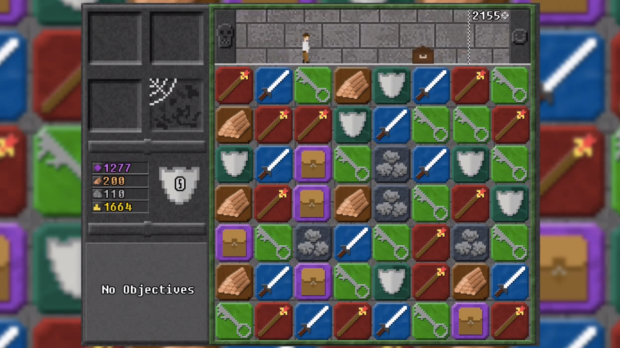
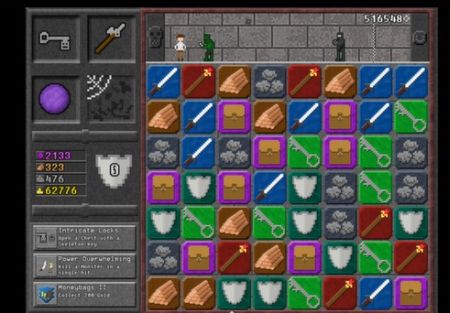
To fight the monsters you play a match-three style puzzle game with different matches doing different things. The sword and the staff do damage, the chests give you items, the keys unlock chests and doors, the shields give defense to attacks, and the stone and wood give you resources to fix your prison keep.

The game also throws in up to three quests per run for the so you have something to try and accomplish instead of just blindly trying to get the highest score each time. They are all explained succinctly and rarely take any special play to achieve.

10000000game

Your typical 10M game board.

The difficulty in 10M comes from the general passing of time and enemies whose attacks slowly push your hero further and further left until he dies. Since there are so many different tiles and you are constantly on a time limit, you may find yourself needing to open a chest but instead you have a board full of stones to deal with. This pressure is what keeps the game flowing, but if that were all there was the game would be tragically boring. The RPG elements are the second side of this glorious puzzle game and really make it a complete package.

10000000_pc2

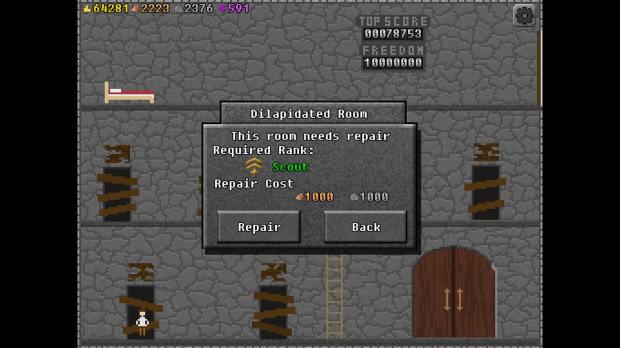
This is what your adventurer’s base tends to look like when you start.

The hub for 10M is where most the RPG elements are found and they come in a few different flavors. They will either make your attacks stronger or make your defense higher so you can take more hits from monsters. These are permanent, and this is where all the gold, materials, and experience will get used. Wood and stone are used for repairing your keep, which unlocks higher upgrades. Experience is used to give you passive benefits every run, which make the game easier. Gold is used for all of the armor and weapon upgrades. These are all pretty standard fare and won’t take anything but time to unlock. The game throws the player for a loop with the last upgrade area’s potions. Each potion you unlock has a plus and a minus so the player must choose what they want each run.

The game is addictive and fun as you see your little adventurer getting stronger each time you lose and have to upgrade back at the hub. As you repair your place you get this sense of fighting from the absolute bottom –where even the rooms don’t want you– to fighting with Excalibur and slaying dragons. The potions are also a great addition to this type of game. Instead of feeling like you are wasting time matching objects if you have fully upgraded your hub area with wood and stone, you can activate a potion to turn those into gold or experience instead.

The game just flows along and because the rounds are really quick you never feel this burden of loading it up and suddenly having to invest 40 minutes like you would with a game like Triple Town or Candy Crush Saga, where you only get so many chances then you must pay or wait to play again. The achievements are also well made for the Steam platform, since they follow the natural progression of the game and test your skill and determination. One achievement requires the player to use every potion in the game and get 10M points. This is interesting because there are many overlapping potions and the player should have upgraded everything to tackle this as well.

I have dumped about nine hours into this game and I am sure to play quite a few more (still need that potion achievement). I highly recommend picking this up on a mobile device or Steam for $4.99 as it fits great for hardcore gamers and casuals alike.

I give 10000000 4/5 stars, because it is the perfect idle game to play.

Casual Commitments: To The Moon

TTM

Brent Hopkins

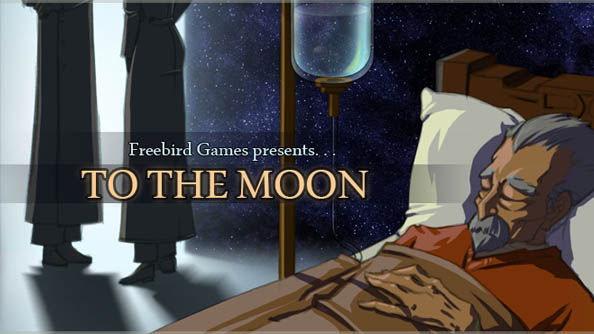
This week’s review is on a game more akin to the first gaming article written here on Gone Home than the others I have written. This is a review about a game that isn’t quite “a game” but more of an interactive story. This is To The Moon, developed and published by Freebird Games, a $9.99 indie game available on Steam.

To The Moon falls into the recent genre of pseudo-games that was kicked off by much touted and much maligned 2010 AAA title Heavy Rain by Quantic Dream, wherein the player isn’t so much as playing a game but interacting in a kind of “visual novel.” Heavy Rain was an absolutely stunning game that was thrown under the bus because of the linearity and seeming lack of choice in the outcome of events. Gamers felt like they had paid to read a book or watch a TV show and not to actually “play” a game. Thanks to Heavy Rain falling on the sword of being the first one in its class released, indie companies like Freebird Games are now able to produce like-minded games and find commercial success with their niche audiences.

To The Moon is the story of two scientists and an old dying man who has a final wish to go to the moon. The scientists live in a time that could be the future but really feels like a mixture of future tech and modern history. The player takes the role of one of the two scientists named Dr. Rosalene and Dr. Watts. Rosalene is the straight shooter of the group and she is all business when it comes to their very special job. Watts, on the other hand, is a bit of a goofball and makes a lot of jokes which are humorously incorporated pop references that should put a smile on the face of any gamer.

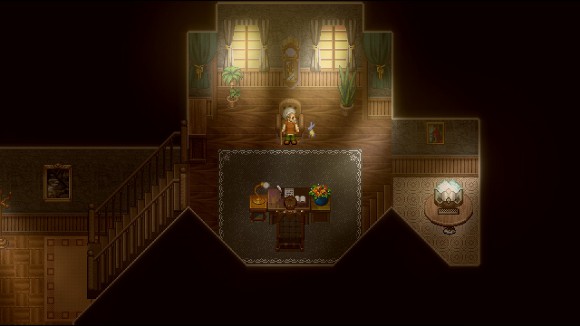
The graphics are very simple and clean — they almost look like they were made in RPG Maker. They will remind you of The Legend of Zelda: A Link to the Past and even with the simplicity you get drawn into the story and the characters completely.

To-The-Moon-PC-Steam-Launch-Announcement-Screenshot-5

The graphics are helped along by the musical score, which is impressive, and the main theme still gets stuck in my head from weeks ago. The tunes are simple, yet endearing and I never found myself wanting to mute the background music at all.

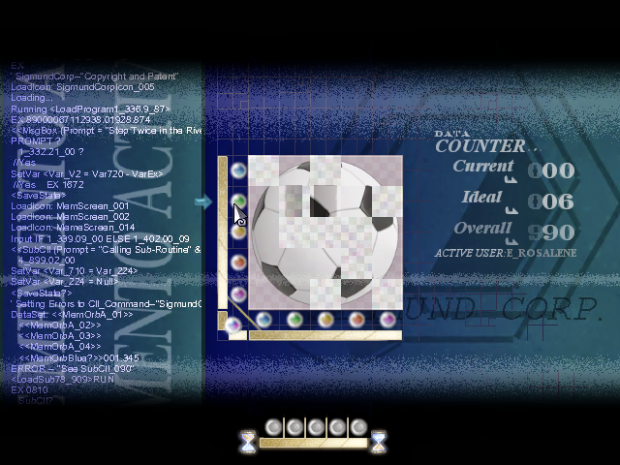
The special job I referenced is the hinge point of the game. The doctors are employed by a company called Sigmund Corporation and they meet with dying patients and implant permanent memories into the patient so they can feel as if they have fulfilled this goal in their actual lives. They use a machine to go into the memories of the patient and figure out at what point in life they would be able to best influence this person to fulfill their dream and then they augment the events until it becomes a reality… in the dying patients’ mind, at least. The reasoning for it only being done to dying folks is because if the person were to  wake up and suddenly be back in their real life the conflicting memories would be extremely stressful and damaging, thus the last thing this patient will know is a dream come true.

This aspect of the game is really fascinating and I found myself thinking about what I would fulfill if I had the ability to change my life, even if only in my mind. This is something I think many people have pondered, but adding in the immediate mortality of the situation and a complete reset of everything that you have truly known in exchange for a lie that will be your last memory is weighty to think about.

The story is one of the best that I have ever played through and really going into too much detail would be like explaining Bioshock Infinite‘s story to someone who hasn’t played it but wants to. Therefore I won’t be spoiling the plot at all.

The patient in question, named Johnny, seems like a simple man but the doctors soon find that his memories are far more complex to traverse than the average patient. The player explores the memories by solving exceedingly simple puzzles and clicking on objects like in an adventure game.

to the moon screenshot 8

These puzzles are a bit too easy.

They ask his caretakers for more information about him, but they find that they will have to really dig through his memories to find out why they need to get this man to the Moon. You play through his life moment by moment. There are twists and turns throughout the game and it takes surprisingly in-depth looks at how disorders, tragedy, love, and loss can all compound into a bittersweet tale.

The game lasts a brief four hours and I actually sat and played them all in one sitting because I got really sucked into it. The small puzzles and adventure-like exploring are more used as page turners than actually inserted to challenge the player. There is only one achievement, which is to “beat” the game or, in essence, read the whole story.

There is no replay value and that makes it hard to swallow the $10 price point that is set on Steam. I snagged this game on sale and since it came out a few years ago I worry that it won’t get the play it deserves. There is a sequel planned for this year, so I highly recommend this game to anyone who is a fan of quality stories.

I give to To The Moon 4.5 rockets out of 5 because while the story is amazing, I found the game sections more annoying than entertaining.

Image source: PC Games N, Entertainment Depot

Casual Commitments: Type:Rider

typerider

Brent A. Hopkins

In Casual Commitments, we explore the ups and downs of casual gaming.

You will not be confused by what you are playing.

I would like to start off by dedicating this article to a bunch of my friends from Bradley University as I thought about you all quite a bit when playing this game. I was a business major, yet most of my close friends were art or language art majors. I was brought into the art fold gently and one of the things I recall is the seriousness of choosing the correct font for a project. This game put me right back in that mindset, which is a good thing.

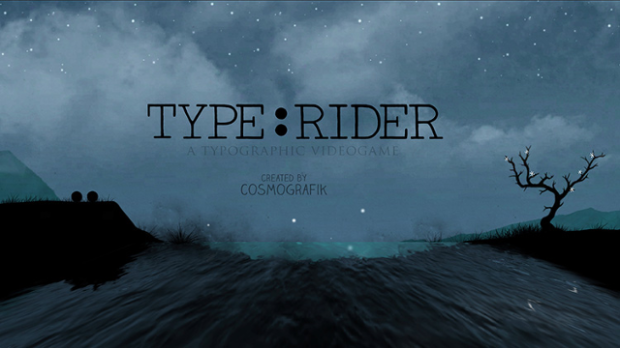
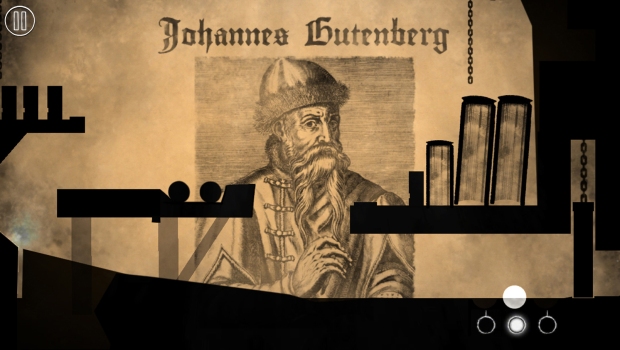
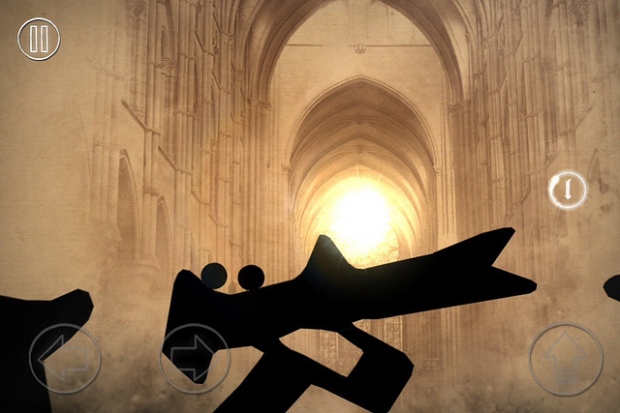
Type:Rider is, at its core, a very simple game that takes the player through the history of typeface through physics-based platforming. There is no character development, really as the player takes control of two dots — a colon — and ventures into different levels based on famous typefaces. The controls are simple, with the left and right arrows guiding your dots around and the space bar for jumping. That is it, and everything else is left to you to figure out.

The levels are split up into four sections: two general platforming sections and two gate sections. The gate sections are always brief and require you to solve a simple puzzle to get a third white dot into an unlocking mechanism to open a door. This repeats for all the stages but the last which is something I will talk about later.

type-rider-18414

Ebony and ivory will lead you to success.

I played this game on Steam as I don’t really enjoy playing cell phone games and one thing that instantly caught my attention was just how atmospheric the game is. This game is easily the most graphically-pleasing game I have reviewed here. The backgrounds are clean and crisp and really fit with the typeface they are supposed to represent.

typerider03

This just oozes Gothic.

The thing with any game is that no matter how good it looks the soundtrack is what really ties it together, and when you get both going you can really suck in your audience. This is another area in which the game excels. This game sounds phenomenal and from the moment I hit play I was surprised at how excited I was to see how the next area would look and sound.

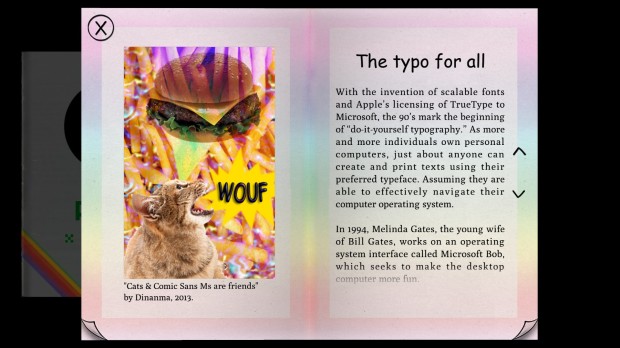
The gameplay itself is nothing to write home about. Each level has the entire alphabet, six asterisks, and an ampersand to collect. The alphabet and asterisks are extremely easy to find and take practically no skill to get. The asterisks are special in that they unlock book pages for that typeface, which share the history of that typeface for the player. Collect all six and get the entire history. You unlock knowledge (which is something I wish you would see more in games) and I found myself reading them out of genuine interest after playing through the unique stages. The ampersand on each stage is harder to find and while it doesn’t unlock anything in game, it gives you a reason to search around the level and really take in everything the designer had in mind. The game tracks the total for all of these and you get achievements for getting them all.

The game overall is solid and gets the point across of learning to love your typefaces, even the much chagrined Comic Sans, which is used in joke form not just on the Internet, but also in this game. The whole experience takes about three to four hours to complete so it never feels too long or boring.

typeriders

When your typeface history looks like it comes from Reddit, you’re probably learning about Comic Sans.

There is one major issue I have with the game though, and it is very important to any game… the controls. This game is extremely easy to play but the physics engine leaves a lot to be desired, and a part of you will wish for more direct control of your dots as you die again and again. This may not be an issue for most of you if you play it casually, as you will breeze through this but the allure of achievements sadly drives me. That being said, there is one that requires you to complete a stage without dying, which honestly added an extra 40 minutes to my play time.

Overall, I would highly recommend this to the designer/gaming subset of folks out there and honestly, to anyone who likes a good looking and aurally arousing gaming diversion. This game gets an easy 4/5 tildes from me. There is practically no replay value, but for the cheap price of $3.49 I was more than satisfied.

Type:Rider is published by BulkyPix and is available on the App Store, Steam, or Google Play for Android.

Image sources: Fast Company, Steam, Hyperallergic.com

What is a Japanese Arcade Like?

bright

Brent Hopkins

Back again with a shorter entry. This one will be gaming related, but not a review. This one is a cultural story. Last weekend I went to Osaka, Kobe, and Kyoto in Japan for vacation. They are about two hours away from Seoul by flight and it was my first foray into the land of video game history. I was with a friend who is not a gamer in the least, so I knew this wasn’t going to be a nerdcation. Still, we started out in Kobe and while we were walking around looking for some sweet Kobe beef we happened upon an arcade. Now, one thing about me that my gaming friends know is that I am an avid Sega fan — the Sega Saturn is my favorite system — and I’ve debated with myself over getting a Sega-flavor tattoo on my person.

This was a Sega arcade and when I walked in it was like all the synapses in my brain fired at once. I went from travel-weary to gleeful. The arcades in Japan are different than the ones I’ve been to in America and Korea in that the peripherals are extremely ornate. There are cards to save your profiles, there are fishing controllers, there are built in mouse and keyboards for PC-like gaming, there is just everything. Korea is close to this but as a PC-gaming nation the arcades are small and they focus more on dancing and light-gun games. America doesn’t really have arcades and the peripherals are almost always broken and mangled so it tends to be just light-gun, racing, and a few fighting games.

The thing I noticed most about this Sega arcade is the atmosphere of it. The men there (my travel buddy was the only woman) looked really serious and did not appear to be playing for fun. Some were grinding characters in games others were practicing combos in fighting games but the general air was serious gaming. I only had a short time to play so I say down and played some solo BlazBlue (a fighting game) and I had a blast. The games all appeared to cost about 100 yen (which is about a dollar, which is expensive) but there was no worrying about not having the right change after exchanging bills.

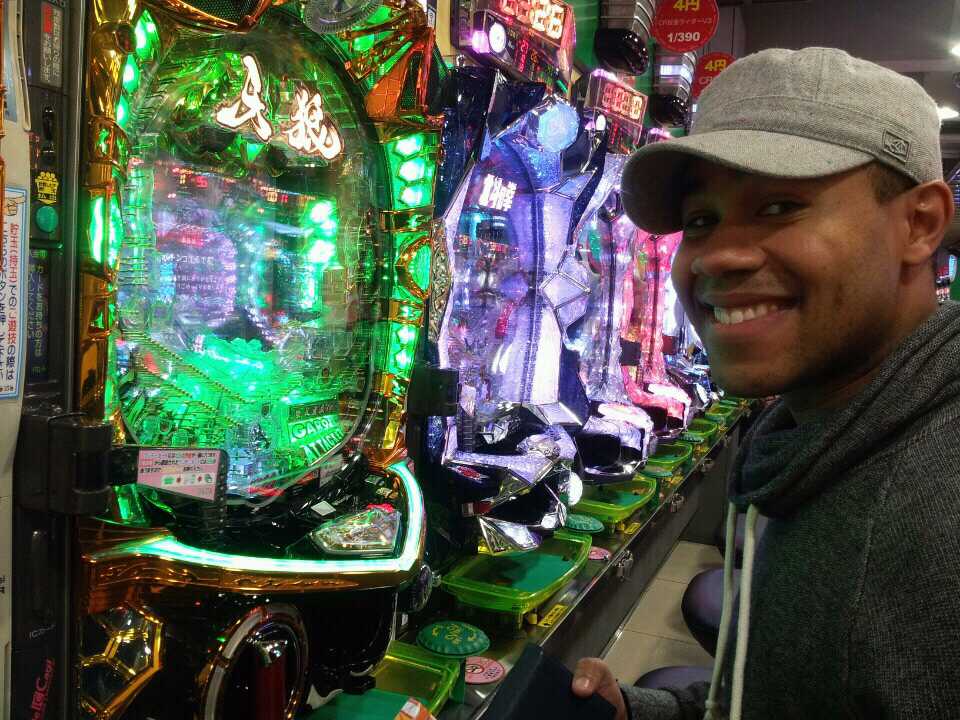
Later on in the trip we headed to Osaka where we spent most of our time and I got to go to a few more arcades. Sega has really cornered the market on the arcade scene in Osaka and Kobe at least with about 80% of the arcades being Sega branded. There was a large Namco (think Pac-Man and Tekken) arcade in Kobe but that was the only one I saw the entire time I was in Japan. The first Sega arcade I went to with the grumpy men was also the smallest I saw. The few Sega arcades I went to in Osaka were MASSIVE with the largest being a six-to-eight floor themeland with claw machines, pachinko, and photo booths. It felt closer to an amusement park than an actual arcade.

I love arcades and miss being able to go to them freely in America due to the console scene but they appear to be doing fine in Japan. There are plenty of really amazing games I wish would be released outside of Japan. The entire country is not as game-crazy as is oft perceived of Japan (especially not in the Kansai region) but you see Pokemon here and there and lots of anime characters (One Piece being the hands down most prevalent). I tried hard to pick up some nerd swag (goods, not swagger) while I was there and did find a few things, but it was hard (the best being Nintendo-brand playing cards, which is what the company originally made before video games). If you want your gaming fix I would recommend going to Tokyo, not elsewhere.