Author: Alex Russell

“Archer Vice” Season Review and How We React to Disappointment

archer-628

Alex Russell

Some weeks ago, I called myself an idiot for missing the point about Archer. I talked about how showrunner Adam Reed succeeded in keeping Archer fresh by making the show about the characters and the stakes rather than the setting. I suggested that those truths made the show’s shift to Archer “Vice” — this season’s change in setting from a spy agency to a series of international cocaine deals — a change that didn’t matter. It wouldn’t mean a thing, I said.

Archer “Vice” (henceforth just Archer) turned out to be 13 weird episodes that showcased just how far a show can fall. Archer is a great show that found some purchase with viewers after establishing itself. All it apparently took was this season’s reboot to destroy that following: Archer‘s ratings dropped by nearly half from last season.

The change of setting truly doesn’t matter. Archer is a show a show about spies as much as Parks and Recreation is a show about local government. The spy stuff was there just as framework for jokes. The real problem wasn’t a location switch. The real problem was that they just don’t care anymore.

In the 12th episode characters question out loud why they are making certain decisions. When a character unlocks a jail cell the prisoner asks her where she got the key. She says she has no idea and the situation is dropped. Another character — one of the relatively important “bad guys” in the season — is killed (by a tiger, for just about no reason) because the show runs out of stuff for him to do. There’s no explanation given for some of the stupid decisions, and most of the best parts of Archer have revolved around people finding reasons for seemingly senseless acts.

An important point here: No one on Archer is ever “random.” They make mistakes because they’re stupid, or selfish, or shortsighted. They succeed because they make the right decision for the wrong reason. These things don’t just happen, because that wouldn’t be funny or interesting. The good part of Archer has always been the why, and this season was far less interested with why.

As for the finale itself, I won’t give away the ending because it’s still worth your time. It’s good at what Archer is good at: depth, character development, and a hard reset. Without giving it away, I can still mention that the jokes are terribleArcher has always been about mixing “high” and “low” at the same time. People set up more complex situational jokes with slap contests and puns. A lot of this season has been lazier one-off stuff, and that is never more obvious than a half-hearted sex joke in the finale that you can even hear Pam’s voice actress not care about as she delivers it. The “stupid jokes” don’t feel like they’re done on purpose anymore. What’s worse, and I would have said this was impossible, is that this season of Archer just wasn’t very damn funny.

I didn’t watch How I Met Your Mother, but it provided an interesting commentary on television and disappointment this year. People waited and waited to see how the story would wrap up, and they seem to have been, for the most part, disappointed. People often couched their anger with the ending in a kind of “I deserved better” sentiment. The argument seemed to be that they felt “owed” a better ending for the time they invested. We feel like television is part of our life experience now. We meet people and we get to know them. Even on a joke machine like Archer, we meet people and we want to be interested in their lives.

Adam Reed doesn’t owe me better episodes of Archer, but he might want to consider making some next season anyway. I rather like this show, and another season like Archer “Vice” will probably be the end of the series.

Alex Russell lives in Chicago and is set in his ways. Disagree with him about anything at readingatrecess@gmail.com or on Twitter at @alexbad.

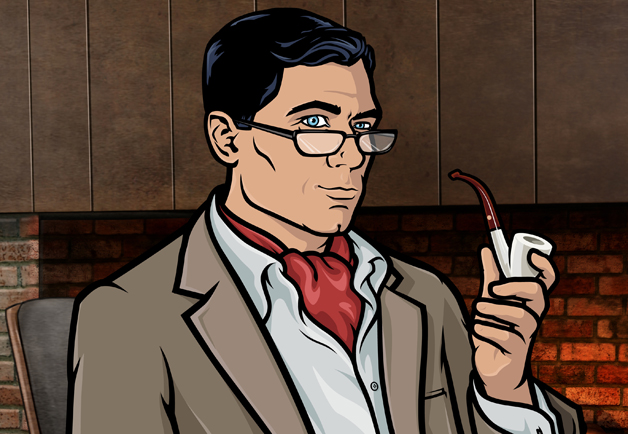
Image:  GQ

Is Money in Politics All Bad? McCutcheon v. FEC and the “Money is Speech” Discussion

94307-004-B97FF416

Alex Marino

It was January 2012 and I had just moved down to North Carolina to work for the Obama campaign. It was the first time I had ever moved somewhere new without really knowing anyone. My only acquaintance was my boss whom I had met on a couple of occasions at national trainings. We certainly got along but we definitely weren’t close. It’s unsettling when you move somewhere and don’t really know anyone, because there are constant reminders about how few friends you now have. For me the first one was the Super Bowl. Where the hell do you watch the Super Bowl when you don’t know anyone? Do you just wait to be invited somewhere by one of my coworkers? Because it’s a political campaign, do your coworkers even have their own place to live or are they living in supporter housing? Luckily enough, a donor/bundler had everyone over to their place.

The Tuttle family had a beautiful home. Mrs. Tuttle exhibited that traditional southern hospitality through offering us every kind of football food under the sun. Nachos? Pizza? Chili? Are you still hungry? Do you want me to bring down some cookies for everyone? It was comforting to see a family invite 20 people they didn’t really know over to their place because they knew we didn’t have any plans. That night gave me the reassurance that I would find my place in Raleigh.

The Tuttle family would be a steady presence throughout the campaign. They had an extra bedroom that housed multiple staffers over the course of the year. They invited everyone over for the opening ceremony of the Beijing OIympics. Every now and again they’d buy the entire office pizza knowing that we likely hadn’t eaten that day. Mrs. Tuttle would make sure to take all the leftover food from a fundraiser and bring it to the office so it didn’t go to waste. Mr. Tuttle would show up at the office every now and again to check up on everyone and talk about the state of the race. The Tuttle family felt like a Raleigh staple and it was comforting to know that we had someone so knowledgeable of the community and state politics on our side.

Mr. and Mrs. Tuttle were two of the few non-campaign people that hung out with us on election night. Everyone in the office made sure to sign an OFA 2012 sign thanking them for everything they had done for us. They were incredibly helpful and supportive and I couldn’t have been happier to have met them during my time in Raleigh.

Earlier this month the Supreme Court decided the case McCutcheon v. FEC, abolishing aggregate limits on political donations. For those that don’t know, previously a person was allowed to donate up to $2,600 per candidate per election with an aggregate limit of $48,600 each two-year election cycle. Primary and general elections are considered separate, so an individual could give up to $5,200 per candidate. Before this decision, an individual could give the max to up to ~9 candidates before reaching their limit. McCutcheon v. FEC ruled this aggregate cap a violation of the First Amendment, since the court has established that money is speech.

It’s easy to get angry at this decision. Giving too much money to candidates can be seen as a corrupting influence. Oftentimes money buys access that regular people just can’t get. For the most part that’s true, but I think it’s wrong to view all big donors through this evil empire lens of corruption and absurd wealth. On the rare occasions where my boss would be asked by Mr. Tuttle about our internal polling, he’d definitely let him know about the general direction of the race without providing specifics. We’d answer their questions as quickly as possible but they didn’t influence how we ran the race. The Tuttles had access, but it wasn’t because of their checkbook. For many members of the campaign, they were surrogate parents that supported us in all the ways I’ve already mentioned and more.

More money in politics isn’t always a good thing. While the Tuttles may have been benevolent donors, not everyone is like them. There are entitled assholes on both sides of the political spectrum. Most people’s exposure to campaign spending consists of non-stop political commercials starting in August of each election year, so greater campaign spending feels like it’ll translate to even more annoying TV and radio ads. But in the world of political data more money means a larger budget for targeting and analytics. More money in politics made sure that I was employed. We had eight data staffers in NC in 2012 with one Geographic Informations Specialist. In 2008 I would have been laughed at if I asked for funding for a guy whose specialty was making maps.

McCutcheon v. FEC is troubling, but it’s not the end of democracy. The trend of allowing a very small number of extremely wealthy families to have a disproportionately large political voice is a terrible thing. But the trend of more resources being put in the hands of the state and national parties allows for smarter, more sophisticated campaigns. Unfortunately, in the current political environment we need a Supreme Court that believes that money isn’t speech. To get that we need a president and a Senate that will appoint and confirm someone that supports that belief. And to get that, the best thing you can do is donate to the campaigns and party organizations that support those individuals.

Image: Getty

Life After the Star Wars Expanded Universe: Jules Verne’s Twenty Thousand Leagues Under the Sea

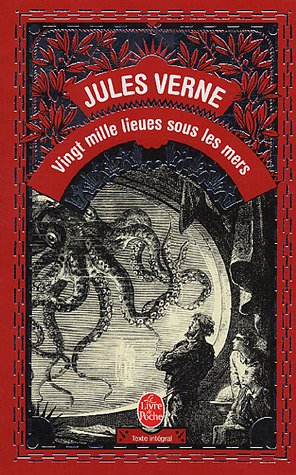
vernebook

Andrew Findlay

In Life After the Star Wars Expanded Universe, we take a look at science fiction and fantasy, why they’re great, and what they say about where our species has been and where it’s going.

Writing about Jules Verne is daunting. A science fiction enthusiast talking about a book like Twenty Thousand Leagues Under the Sea is like a music writer discussing Revolver. It’s important to talk about and remember, but Jules Verne, like The Beatles, had such an outsize influence on his field that it’s hard to even approach. There were others before him, sure. Voltaire’s Micromégas chronicles the adventures of a 20,000 foot tall man from the Sirian system, and Shelley’s Frankenstein introduces the world to mad scientists. The former is really more of a philosophical fable, and Frankenstein is to Mary Shelley what “Sex and Candy” is to Marcy Playground.

Sure, this song is great. Name another one they wrote.

Point is, Verne is the first author to focus specifically on the “science” part of science fiction and put out a huge body of work that is consistently centered around technology. This body of work is hugely popular – the only author translated into more languages than Jules Verne is William Shakespeare. Verne achieves this popularity by taking the science that’s available to him, exaggerating it, and weaving a story around it. Around the World in Eighty Days focuses on transportation technology, Journey to the Center of the Earth focuses on geographical exploration, and Twenty Thousand Leagues Under the Sea focuses on marine exploration.

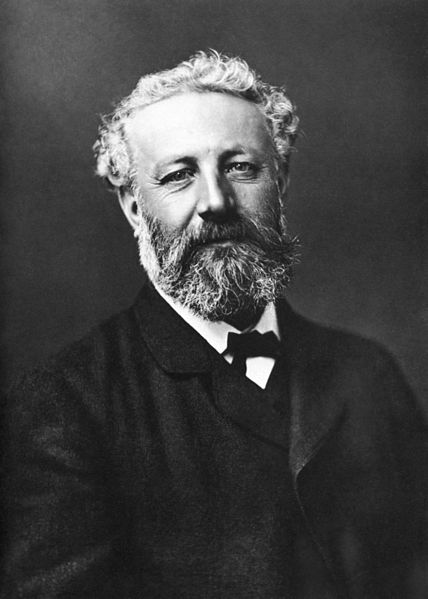
Félix_Nadar_1820-1910_portraits_Jules_Verne_(restoration)

Jules Verne. Just look at this magnificent bastard.

This book is, above all things, an adventure novel. One misconception that may be as widespread as “Frankenstein” being the name of the monster is that the titular 20,000 leagues is how deep the submarine goes. Seeing as how the average depth of the world’s oceans comes to three miles and that 20,000 leagues equal about 69,000 miles, the leagues in the title refer to how much ground (water?) the submarine covers. Nemo and his crew travel nearly far enough to circumnavigate the Earth three times. Who is in his crew, and how did they get there?

Nemo’s official crew are a bunch of faceless sailors recruited from here and there around the world. The main characters of the novel, however, enter his vessel, The Nautilus, in a much more interesting way. Early in the book, all the nations of the world decide that the Nautilus, which is observed going around sinking ships and surfacing while jetting water all over the place, is some heretofore unknown sea monster. Pierre Aronnax, scientist, Ned Land, harpoonist, and Conseil, Aronnax’s servant, are all on an American warship sent to dispatch this creature. The ship fails miserably, and Aronnax et al find themselves on the back of the creature, which surprisingly feels a lot like metal. Nemo appears, makes introductions, and informs his charges that they are his prisoners, as maintaining the secrecy of the Nautilus is important.

As prisons go, the Nautilus is not a bad one. Verne did not invent the concept of the submarine, but his version is a lot nicer than what was puttering about in the world in 1870. The Plongeur, the first machine-powered submarine, was launched in 1863. The Nautilus is extremely advanced compared to the Plongeur. Substrate of actual science, upon which Verne builds his fiction. First off, the Nautilus can travel underwater for five consecutive days thanks to its mercury-sodium batteries (the sodium for which is extracted from seawater). When it has to surface, it is to replenish the air supply in the ship. It also has distillation facilities to create drinking water and food processing facilities to draw all the nutrients the crew need from the sea (lots of kelp and fish). Finally, the luxury of the Nautilus sets it apart from its contemporaries. Captain Nemo has a massive viewing gallery with a huge wall of tempered glass affording views of the ocean, a dining hall, and a study/library with an organ, lounging chairs, biological specimens, and a massive collection of books.

20000_Nautilus_Salon

The Nautilus’ main room, complete with pipe organ.

Alright, so we have the setup. In Twenty Thousand Leagues Under the Sea, the main characters pretty much just go around in a submarine looking at cool shit under the sea. The most compelling part of the book is Nemo’s story. Nemo means “no one” in Greek, and Nemo is a man who has, after some barely-referenced atrocity, withdrawn himself from the society of men and started living for revenge. He takes his revenge by using the superiority of his vessel to sink pretty much any ship he runs across. He is kind of evil, but he is also a super-genius, and we all know how much audiences love intelligence and competence regardless of the moral questions involved. There are two parallel plots. One is what mostly defines the book in the cultural consciousness: going around the ocean and doing cool stuff. The other is the growing conflict between Captain Nemo and his three prisoners. I don’t want to spoil you on the latter, but talking about the former won’t hurt anything.

I said earlier this is above all things an adventure novel, and adventure novels are nothing without destinations. The destinations of the Nautilus include the South Pole, an enchanting underwater forest (through which the principal characters hunt using electric harpoon guns and scuba suits), old shipwrecks (the gold from which finances Nemo’s outfit), and the lost city of Atlantis (dead and gone, with columns sticking out of the ocean floor). Aside from the extremely technical descriptions of how all of Nemo’s gadgets work and the central maelstrom of Nemo’s dark personality, the main appeal of the novel comes from the ability of Nemo to take the reader into the unexplored regions of the world, for the narrator to describe outlandish adventures there, and for everyone to then retire to the comfort of a luxury liner and discuss their excursion over algae salad and walrus steak.

If you decide to read this, be careful not to get a bad translation. One of the main reasons Verne is considered more a literary author in France and more a genre author worldwide is that his work suffers from notoriously bad translations. While we’re talking about language, I’ll say that the linguistic feel of the book is a lot like a Charles Dickens novel – it might be a little work, and the formulation of character thoughts and dialogue may be a bit drier than we’re used to, but it’s more than worth it. Bad translation or not, outmoded dialogue or not, this is a seminal work of science fiction. Humanity’s fascination with the unexplored is what wins Verne’s masterpiece its place of primacy in today’s culture. The modern reader can still get a lot of mileage out of this book. After all, we have still only explored five percent of the ocean. Who’s to say Atlantis is not actually down there?

Andrew Findlay has strong opinions about things (mostly literature) and will share them with you loudly and confidently. You can email him at afindlay.recess@gmail.com.

Tough Questions: If You Had to Do Something Every Day for a Year that You Don’t Already Do, What Would You Pick?

question-mark

Every week we ask everyone who hangs out around here to answer a tough question. This week:

If You Had to Do Something Every Day for a Year that You Don’t Already Do, What Would You Pick?

Rules are simple: When are you gonna finally shape up? This tough question forces you to collect your aspirations and put them into one actionable damn thing. What would you fix about the crumbling house that is your life, if you had to pick one daily thing? Would you do good deeds? Or would you at least stop doing evil ones as often? Look, it’s rough out there. You don’t know my life.

Alex Russell

Pete Holmes (comedian, TV host, and fictional advertizing baby) often talks about the idea that to create an hour of stand up you only need to write a minute a day. It’s an easy idea, but we’re all terrible at compartmentalizing ourselves. We don’t think in chunks; we think in finish lines. I would want to write one joke every day. I’m a weird obsessive about stand up comedy and I liked the (VERY, VERY) brief experiences I had trying to sell my own bullshit on a microphone. A kick in the ass every day to do some more would do me some good and a lot of audiences a whole lotta bad.

Jonathan May

Since there’s no way I’m going to start doing CrossFit or yoga on the regular, I’m going to have to go with prank-calling people from the payphone in the mall. The calls will be short, so I really just need a little spare change every day. Now you may say, “Jon, the mall isn’t open every day,” and you would be right. So on days following holidays, I would make up the calls I’d missed. Heading into my thirties, it seems like I should pick something more sensible like doing crunches or household chores, but honestly, this will be much better for the soul.

Andrew Findlay

I would go to bed by 10:30 every weeknight. This is just the lamest personal goal ever, but six hours versus eight hours of sleep makes a huge difference in overall levels of happiness and effectiveness in life. The problem is, I never, ever recognize that at 10:3011:30, or 12:30. It always seems like reading a little bit more, watching some television, or wasting time on the internet will make my life better, then I wake up very sad in the morning. Seeing as how the phrasing of the question is if you had to, this unfortunate pattern probably won’t change anytime soon.

Austin Duck

If there was something I could commit to for a year but haven’t yet, it’d definitely be doing something every day that I’m proud of. I spend so much time making stupid fucking mistakes, but if I could exercise, read, and write every day (if I had the fucking willpower), I’d love to commit to it. 

Brent Hopkins

The one thing I would commit to would be some flavor of art. As a kid I always wanted to learn an instrument but after failing repeatedly I completely gave it up and it has been a chip on my shoulder for years. With the time to do it every day, I think I could will myself to stop being awful and at least learn something simple to play like the recorder or ukulele. That being said, I am also terrible at general art, so I wouldn’t mind learning to draw or learning to paint either. I like solo relaxing activities so these would meld best with my personality.

Mike Hannemann

The easy answer here is exercise. But if I went with the easy answer, this wouldn’t be a tough question.  I would probably commit to reading War & Peace, every day, for 30 minutes. Being able to claim that I have read that monstrous tome has been on my bucket list for years. However, when a book has over 130 characters and you’re used to consuming media with a character called “The Ice King,” this can be extremely daunting. At the end of the day, doing this every day for a year may not get me to the end of the seventh longest novel ever written, but maybe I’d be able to tell who at least four of the characters are. That’s something I can’t boast about the recent season of The Walking Dead.

Scott Phillips

I read every single day. No, I’m not talking about Twitter and Facebook and other internet material, I’m talking biographies and a lot of nonfiction books. As a career sports writer, I tend to be fascinated by nonfiction writing because I want to mold my writing to emulate some of my favorite authors that have followed sports teams or athletes like Jeff Pearlman, Jack McCallum, or David Halberstam.

But between my job(s), my social life, and those nonfiction entries it doesn’t leave me a lot of time to read great works of fiction. I wish I read fiction every single day; it pains me deeply that I don’t. Most of my fiction reading comes in the form of the television shows that I digest while I work around the house or to give myself a break from writing or researching. I would love to dive into George R.R. Martin or Stephen King, or even re-discover Tolkien after my childhood hobbit fixation.

So I know I could easily commit to reading great works of fiction every day for a year, I just wish there was more time in a day.

Symbols and Sociopaths: Hannibal Season 2, Episode 7

hannibal, episode 7

Jonathan May

(As always, massive spoiler alert)

Every 15 minutes or so, I let out an audible groan while watching this latest episode. Miriam Lass returns after being found by Jack, only to kill Dr. Chilton out of an impulse she can’t control. Oh Miriam, made into just a simple plot device. Oh Dr. Chilton, made into just a simple plot device. So now we have a freed Will, a Hannibal no longer under suspicion, and a bewildered audience.

We still haven’t caught up to the frame with which the season opened, so we know the showdown between Hannibal and Jack is imminent. What will bring them together in this way? What will finally open Jack’s eyes? He jumped on the Dr. Chilton Is Guilty Train pretty hard, but when he finally catches the poor bastard in the snow, we see immediately that Jack knows Chilton is innocent. Miriam’s impulsive killing of Chilton is obviously the result of psychological transference on Lecter’s part; by using recordings of Chilton’s voice and light-disruption therapy, he was able to train Miriam into believing that Chilton, not Hannibal, was the Chesapeake Ripper and her captor. Hopefully Will can bring Jack around to this, forcing his move against Hannibal.

Some may misinterpret the depiction of the Wound Man in this episode as an obvious symbol of superiority, drawn from medieval medical books and rendered lovingly by Hannibal on graphite in his office. However, the Wound Man operates more as a bastardization here of the Hanged Man, a pittura infamante that quite literally symbolizes resurrection. Hannibal sees this opportunity through Chilton as a way to resurrect as a new creature and move on; though I doubt he’ll give up the grisly trade, he sees this as an opportunity to escape. Will’s appearance at the end, though, signals that we are not finished with this reddish business by a long shot. Will would like to resume his therapy, and we shall see where it takes him.

Jonathan May watches too much television, but he’s just playing catch-up from a childhood spent in Zimbabwe. You can read his poetry at owenmay.com, follow him on Twitter at @jonowenmay, or email him at owen.may@gmail.com.

Hannibal airs Friday nights on NBC. You can read our pieces about previous episodes here.

Read This or Kill Yourself: Maud Casey’s The Man Who Walked Away

the-man-who-walked-away-cover

Austin Duck

In Read This or Kill Yourself we get tough with you about your bookshelf and what had damn well better be on it.

It’s not often that I finish a book, especially one I really liked, where I have nothing to say. I tend to be able to situate it somewhere in my mind, somewhere among the various books of various types that I’ve sat down with, be it cultures or subcultures of literature, genre fiction, mass-market texts, or theory. Typically, I’m able to find some angle to enter with. But this book, Maud Casey’s The Man Who Walked Away, is not exactly typical. Let me explain.

Set in 19th century France during the dawn of psychiatry, this novel tells the story of Albert, a man who, again and again, wakes to find himself walking across Europe (from Paris to Constantinople and everywhere in between), pathologically walking, blacking out, masturbating, and walking some more, until one day, he walks himself back to his hometown and is placed in an asylum and under the care of the Doctor. But this isn’t exactly the story. The novel also tells the story of the Doctor, a man who’s unsatisfied with the current psychiatric suggestion that mental illness is neurological, who, in his own trauma, sees something in the newly arrived Albert and begins, in equal parts professional care-giving and obsession, to help Albert uncover if not the story of his illness, the source of it, the “invisible lesion” that set him walking in the first place.

Though that’s not exactly right either. The novel also sets out to tell the story of telling stories from pieces, of how to make coherence (and even something larger, art) arise from one man’s story with an unremembered plot, another man’s obsession whose motivations are similarly psychologically inaccessible, and from the voices of a handful of other patients at the asylum, each with their own invisible lesions, their own traumas that fail to cohere, become too large for them to bear, and which Casey consciously avoids fleshing out. In other words, this is not a psychological mystery during which we, with the help of the Doctor, piece back together anyone’s broken story as a way of healing, of getting over things. Instead, we get the pieces, the voices, the gaps in story and sense, and the story of using those gaps to create, in Casey’s words, “astonishment,” but that of a very particular, almost Stein-ien kind.

I really can’t help but recall the beginning of the “Objects” section in Gertrude Stein’s Tender Buttons:

A CARAFE, THAT IS A BLIND GLASS.

A kind in glass and a cousin, a spectacle and nothing strange a single hurt color and an arrangement in a system to pointing. All this and not ordinary, not unordered in not resembling. The difference is spreading.

Reading Stein, to me, produces the same kind of astonishment as The Man Who Walked Away. While not nearly so experimental in her prose style (of which we’re all, I think, eternally grateful), Casey’s mode—of alternating chapters centering around Albert and the Doctor, of italicized refrains of “Listen” and “He returns”, of different pieces of a fable in which a boy grows up with one arm a bird-wing—creates a calculated confusion that, combined with her sure-footed writing style, comes across as ethereal, otherworldly, as if the novel were written with a different set of rules in which story doesn’t matter (though I assure you that there’s a classical plot guiding everything), information is everywhere, and psychological access to anyone is next to impossible. We get the characters’ problems, their stories, but never their pathologies; pathology, in a way, becomes synonymous with astonishment and is always just out of reach, just beyond sense, but which, for us as readers trained to psychologize as a part of reading and for the patients and doctors desperate to cure and be cured, hangs just outside what’s written, demanding to be discovered.

In many ways, the novel works as similar to one of the text’s recurring tropes: the vase. In various places the asylum is referred to as a vase, the body a vase, the mind making sense of experience a vase. For Casey, the idea of a vase, fundamentally, is not a place to display dead flowers but a container that makes sense of difference, that creates and maintains a kind of homeostasis by gathering and displaying together everything it’s gathered. This becomes synonymous with well-being; not the discarding of dead flowers or the fertilizing of the water but the simple fact of everything being held together, everything able to be acknowledged, to fit in a single container. Disturbance (which only receives positive or negative value when the experiencer acknowledges or fails to grasp his/her “vase”), then, is a vase overflowing, a too-much-ness in which one is unable to account for every piece inside the container; instead, there’s an excess/access problem in which something overwhelming is just a bit out of reach, whether it be coherence, a moment forgotten, an unknown cause; something known but not quite grasped which, nevertheless, acts and causes action. To put it another way, Casey’s astonishment is created by being comfortably contained while experiencing an excess while the text’s illness/pathology is created by lacking a sense of containment while still being overwhelmed by the surety that there’s even more one can’t see.

So when I say that this is an astonishing novel, please do not misunderstand me as using a praise-y abstraction to avoid getting to the meat of the text. This is a book that, on the sentence-level, the chapter-level, and the book-level, creates a sense of coherence, of stability and story and pleasure while simultaneously disorienting, overwhelming with stories and moments and juxtapositions. While never out of control, the text is always, and assuredly so, too much, at any moment, to think or speak. This book is as simple and complex, accessible and inaccessible, as we are, and that, achievement enough, is astonishing.

Austin Duck lives and blogs in DC. He can be reached at jaustinduck@gmail.com.

Image: NPR

Comic Review: The Punisher MAX

Punisher-FrankCastle1

Brent Hopkins

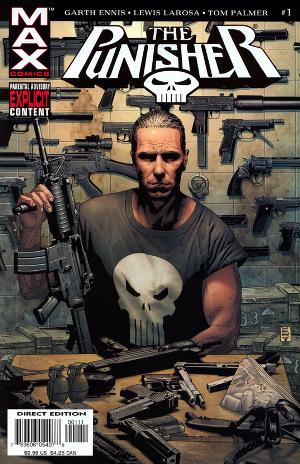
The Punisher is probably one of the strangest comic book heroes out there. Unlike more traditional heroes, he’s just a normal man with an extreme grudge that fuels him on his adventures. Most people know the general story of Frank Castle: a war veteran who returns from the Vietnam War and settles down into family life. Things are going well, until tragedy befalls him when he sees his wife and two children gunned down in Central Park. That tends to be the extent of knowledge people have of The Punisher and that really is what this The Punisher MAX series is about.

The Story

The comic is about the life of Frank and how he operates over a long span of time, about 30 to 40 years. One of the things I always found hard to swallow with The Punisher was how he could take bullets and broken bones but continue to function with almost no downtime. This series makes the whole thing make sense. Since he has years and year to operate, you hear things framed in terms of years passed since a major punishment last took place. This makes him feel far less like a superhuman and far more like a “normal” person.

Going along these lines, there is still a surprising lack of superheroes in this world. This means that Spiderman never comes to save the day and problems like war and international relations issues aren’t fixed just because an immovable object shows up to save the day. When the world goes bad it doesn’t get better, it merely gets worse and worse.

The series is also broken into storylines instead of one long series. Each storyline is five or six issues long and it keeps things interesting, because there are always different depraved people that need to be punished.

Lastly, because this falls under the MAX Marvel line, the story and artwork can be as brutal as need be. There is a bevy of swearing, brutality, and racism throughout the comic and it truly feels like a bunch of gangsters and hoodlums interacting with one another and not just the writer getting his jollies off.

Art

The art throughout the series is well done though you can tell when the artists change volume to volume. This isn’t really a problem because it remains dark and seedy, and the emotions really come through well.

Writing

The writing here is solid. Each character has a strong personality and since you know they’ll probably be alive for at least six issues you get to see what makes them tick. One thing that pleased me was the fact that there was never a single point in time where I felt like the authors wanted me to like Frank Castle. He is a complete and utter lunatic yet, throughout the comic, he seems to acknowledge it but is incapable of stopping himself from essentially being a mass murderer. His superpower is scaring the police away from arresting him and honestly, that is a superpower that usually is only left to the privileged. It is interesting to see this “liberty” extended to a calculated psychopath and to read what he does with it.

Worth the read and time to complete?

I will give this an emphatic, YES. This 75-issue series has quick arcs and relatively interesting characters throughout. You won’t really feel endeared to the characters, but isn’t that the point of a vigilante who takes far more than the law in his hands and uses the training he received from the military to exact his brutal revenge? This will not be for everyone, but if you have any interest in the character this is the series I would recommend reading from start to finish, which took about a week reading six or so 25-pages issue a night.

Brent Hopkins considers himself jack-o-all-trades and a great listener. Chat with him about his articles or anything in general at brentahopkins@gmail.com.

Opinion: George R. R. Martin Is Not Your “Bitch,” He’s Your Dealer

Game of Thrones

Andrew Findlay

Disclaimer: There are no direct spoilers in the review. You might be able to infer something, but that’s it. Also, the most recent book came out three years ago, so if you don’t want to be spoiled by anything ever again, go read that.

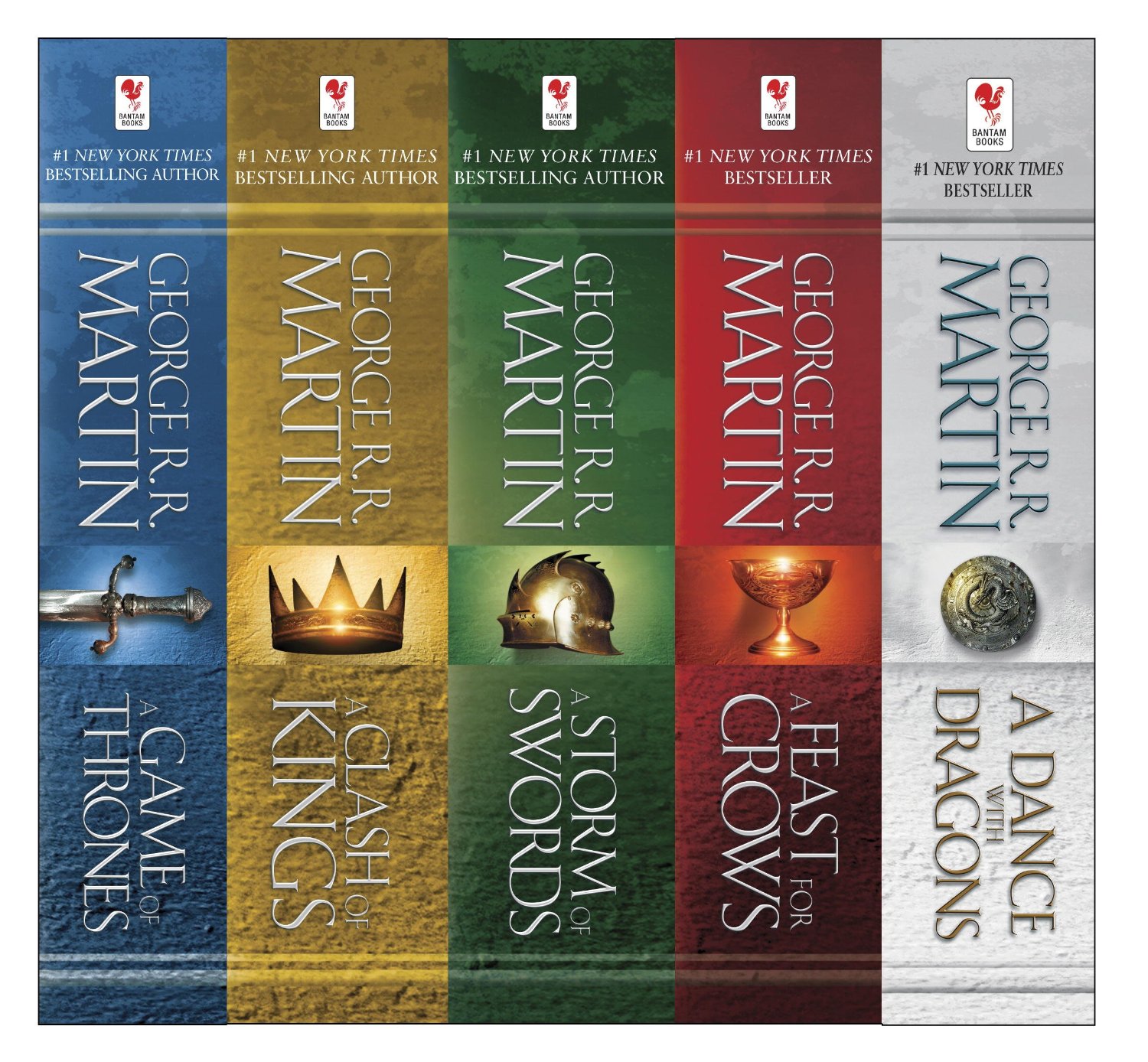
A Song of Ice and Fire is an amazing series. The gritty realism in a fantasy locale, the compelling characters, the whip-crack plotting and suspense – all of these traits combine to forge the cultural juggernaut that is ASOIAF. I love these books. I came a little bit late to the party. I read them around December 2010, 14 years after the start of the series, when the first four books had already been published. I read those four books in one month. The paperback versions for tally up to 3,844 pages, meaning that for the month of December, I read an average of 128 pages a day. That’s how good this series is. For an entire month, If I was not working or sleeping, I was what-the-fuck-noooo-i-loved-that-character-ing my way across Westeros. In the same time and at that rate, I could have read the Lord of the Rings three times, the entire Harry Potter series, or thirteen normal-sized (300 pages, let’s say) books. That is dedication. That is a clear sign of an enjoyable series. The problem is that George R. R. Martin has fans that read 128 pages a day, but he writes .76 pages a day.

The addictiveness and scarcity of the product creates a rabid fanbase composed of people who make strange decisions about these books. For example, a day after the release of A Dance With Dragons (book five, July 2011), I had to drive 15 hours from D.C. to Memphis with my fiancee for the purpose of marriage. She was behind the wheel the whole way, and I read that book the entire 15 hours. Relevant factoid: Reading in the car makes me violently carsick. I ignored nausea for 15 hours to get through as much of the book as I could. When I got home, in a city surrounded by family and friends I see only rarely, I still read at least four hours a day. Luckily, I finished the book before my marriage.

Also luckily, no one played this at my wedding.

Since then, I have been trying not to think about the series at all, because that creates visceral longing for resolution to all the cliffhangers on par with what I imagine someone in the grip of a Schedule I drug experiences. GRRM has created a legion of addicts. Addicts do not respond well when they are cut off from their substance of choice, and in the past three years, there has not been another fix. This has famously led to fans expressing dismay that GRRM watches football on Sundays in the fall, that he works on other book projects, and that he basically does anything but sit in a box with one bald light swinging over his head and a typewriter in front of him. The most crass concern expressed is that GRRM, who is 65, will die before finishing the series. The first few are strange, because Martin has the right to do whatever he pleases. The last one is heartless, as those fans are placing the completion of a series they love over the life of a human being.

1C6694189-emilia-clarke-photo-keith-bernstein-hbo-2.blocks_desktop_medium

ASOIAF. Not even once.

The problem is that this series, originally planned to be three books but having since ballooned into seven, has been going since 1996. To compare, the entire Lord of the Rings trilogy was published from July 1954 to October 1955. All the way from Gandalf freaking out an innocent Frodo in the Shire to the final collapse and defeat of the Dark Lord (spoiler alert!), readers had to wait just over a single year for the conclusion to a story so massive its weight is felt in nearly every entry into the fantasy genre since (to be fair, Tolkien had basically written the whole thing before publishing the first part). I only jumped on this train five years ago, but some poor bastards have been waiting nearly two decades to get to the station. This ballooning and extension of the books is due to a phenomenon which is weakening the series as a whole: success killing editorial power. The first three books of this series are incredibly, world-changingly good. Books four and five aren’t necessarily bad, but really only bask in the reflected glory of what came before. In a series known for page-turning action, plotting, and suspense, there was a whole lot of material in book four that no one cared about, material that did not do much to advance the plot or tie the main threads of the story together more tightly. Why is this happening? Why are the editors allowing GRRM to bloat the series? It is because, at this point, if he published a book that just said “The North Remembers” and nothing else for fifty pages, everyone would still buy it. Why do we get point of view chapters from people we do not care about? Because GRRM is writing for addicts, and if he cuts the product, we will still buy it. The editors know this and thus give him free reign because their company makes money regardless. ASOIAF is a victim of its own success.

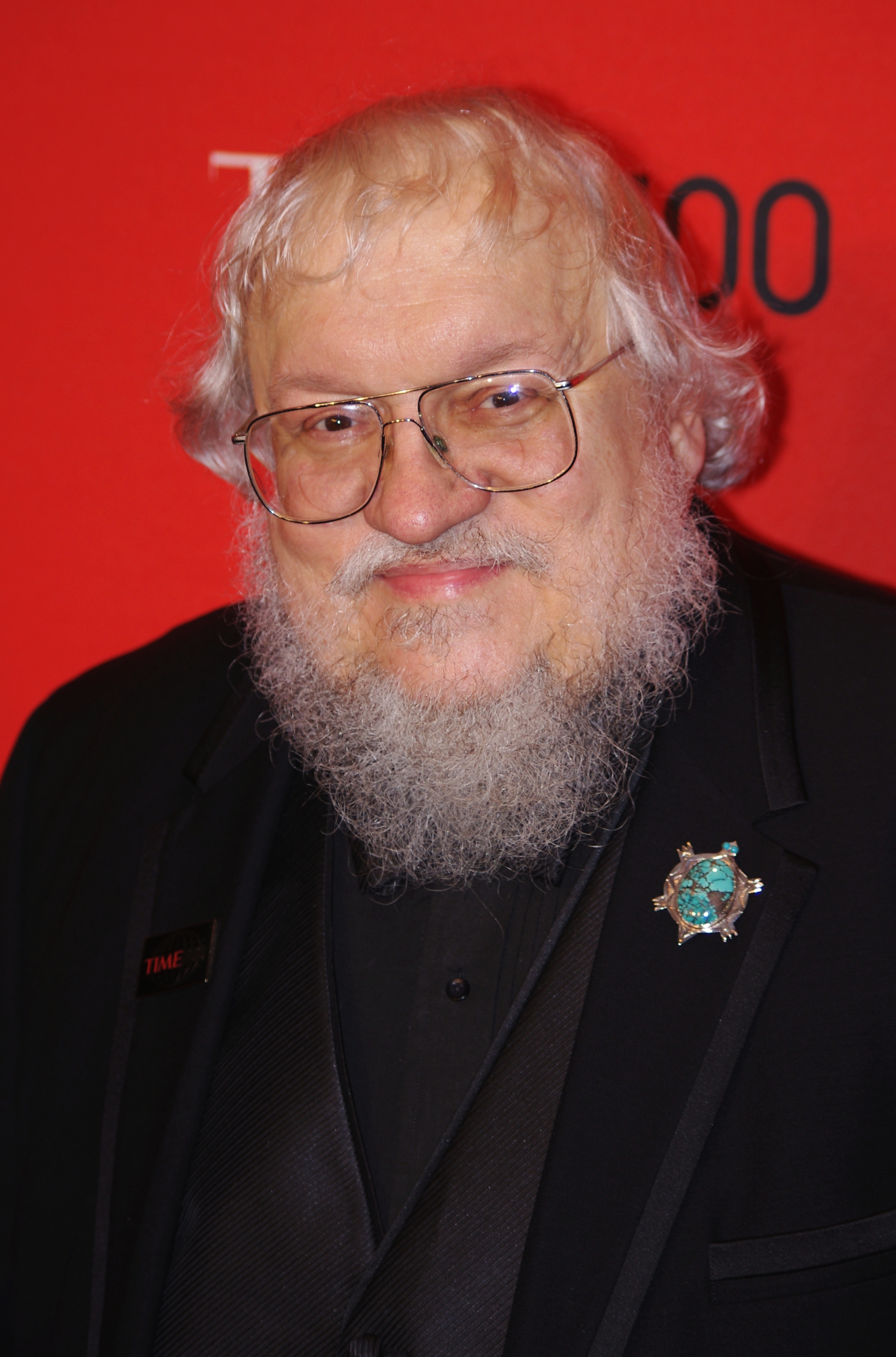
George_R_R_Martin_2011_Shankbone

Pictured: GRRM, escaped from his writing box

Speaking of success, another issue affecting the books is its serialization on HBO. I have yet to watch the show. I’m sure it’s amazing, but something in me is forcing me to finish the books, all of them, before starting in on the show. This may no longer be possible. The show is now halfway through the third of five books, and there is so much fluff in books four and five that the showrunners could conceivably fit it all into one season. Assuming HBO sticks to a yearly production schedule, that gives GRRM one year to write book six and one year to finish it up with book seven. His total output for the past 15years is two books, so unless something drastically changes, there is every possibility I will be watching instead of reading the conclusion to this story.

I do not want to be forced to another medium to find out what happens in the books I love. There is nothing wrong with the show, but it is not the same thing as the books. Not having watched much of it, I can’t speak to specific differences, but it’s clear that there cannot be nearly as much detail to the world – in order to make something watchable, you have to cut it down significantly. The size, the texture, and the depth of the books is part of what makes it for me. The backstories, the tiny defeats and victories for every single character, the flashbacks, the red herrings and true clues packed into the pages of A Song of Ice and Fire are flying through my head right now, and there is no way they fly as thick and fast in the HBO version.

Another strangeness created by the success of the show, because TV popularity is orders of magnitude above book popularity, is that there are new legions of addicts who do not want to be spoiled. A huge event happens at the end of season three of the show (which I did watch on YouTube, because holy shit), and everyone was understandably concerned about spoilers, but that same event happened in a book published while Bill Clinton was still president. If you really care about spoilers and desperately want to know what happens next, read the damned books.

Neil Gaiman famously responded to a fan question about GRRM’s writing pace with “GRRM is not your bitch.” Good response, absolutely true, but a little bit simplistic. When you write something so great that you have a significant percentage of the human population wishing that you would just sit in a box typing for 18 hours a day, there are consequences. One consequence is that you become famous and fabulously wealthy, afforded the freedom to engage in whatever projects you like. Another is that the fervor of fans that catapulted you to the top can quickly turn to anger if they feel you are not fulfilling your obligations to them. It is ridiculous that people wanted Martin to stop watching football so he could write. It is terrible that fans are more concerned about their series concluding than his life ending (although at this point, I’m mildly concerned that my death will come before book seven is published). Even still, George has an obligation to his fans. Edit more judiciously, tie plots together more tightly, and return to the transcendence of A Storm of Swords. I desperately want to see the North remember, and I want to see it in print.

Andrew Findlay has strong opinions about things (mostly literature) and will share them with you loudly and confidently.

Worst Best Picture: Is The King’s Speech Better or Worse Than Crash?

The King's Speech

Alex Russell

In “Worst Best Picture” we search every single Best Picture Oscar winner of all time from 1927 to present to uncover the worst of them all. Conventional wisdom says that 2005’s winner Crash is the worst winner in history. We won’t stop until we’ve tested every last one. Read the the first, our review of Crash, here. All posts should be considered to have a blanket “spoiler alert” on them. Today’s installment is the 2010 winner The King’s Speech. Is it better than Crash?

The toughest job The King’s Speech has is convincing the the audience that it’s rough out there for the King of England.

The premise is amazingly simple: The king has a stutter, but he has to give a speech to rally England against Hitler. This is a movie that was up against Inception for Best Picture in 2010, and it’s hard to imagine two movies farther apart on the “complicated” spectrum. If anything, The King’s Speech feels even simpler than that boiled-down plot. It doesn’t always suffer from starkness, but it’s almost entirely devoid of supporting characters, solo scenes, or anything else that would distract from the absolute brass tacks of one man teaching another man to enunciate.

King George VI (Colin Firth, who won an Oscar for the role) starts the movie as just a mere prince, and the movie opens with him speaking to a massive assembled crowd. He cracks and can’t do it, and thus a conflict is born. He understands the importance of public speaking, but his brash older would-be-king brother is next in line anyway. His brother ascends and descends the throne, and there’s your ballgame: George has to learn to speak publicly.

His wife (played by Helena Bonham Carter, who was also Oscar-nominated for the role despite really not getting enough to do) enlists the Australian Lionel Logue (Geoffrey Rush, nominated as well) to work a miracle. I mention the “‘Australian” there because it’s always remarkable how often a movie about high class British society has to remind the world that you can turn anything into an excuse to belittle someone.

Firth said after filming the movie that it was somewhat of a challenge to fully return to normal speech after affecting the stutter for the role. It’s a remarkable performance, to be sure, and it really sells the “journey” of the character. Rush is mostly there for Firth to bounce off of, and everyone else in the movie is barely there at all. There’s a particularly — this is the only word for it — distracting performance by Timothy Spall as Winston Churchill which just comes off as intensely weird. Firth is intense and Rush is light-hearted, but that’s all we’re sure of. The movie isn’t always sure what to do with everyone else.

The movie’s “awesome” in the way that all movies about British royalty are big and flamboyant. A lot of the criticism for The King’s Speech centers on how the movie doesn’t deal with Britain’s role in appeasement with Germany leading up to World War II, but aside from the two main leads, it doesn’t really take time to do much of anything. It’s hard to see where they’d find the screentime.

The Best Part: The final, titular speech is great, sure, but the real gem is the lead up to that. Just as King George VI is finally finding his voice, Logue is found out to be a self-trained speech therapist. Their conversation in Westminster Abbey is superb. I don’t know what kind of person would take my word on this but just watch one scene, but if that’s you, get to it.

The Worst Part: At one point Helena Bonham Carter (when she’s still just a duchess) appears to Logue to ask for his services. She wants to be discreet about asking for treatment for the Duke of York, and he clearly has no idea who she is. Later in the film — though at this point she is the new queen, I suppose — Logue’s wife is speechless upon running into her. In both scenes Carter’s character is who she needs to be in the moment, but in neither scene is the movie interested with why characters react that way to her. It’s a slight complaint, but it’s the kind of thing that makes the characters so strange in this movie. No one cared enough to spend time on those little details, which is odd. Maybe I just love Helena Bonham Carter?

Is It Better or Worse than CrashYeah, this one passes the test as better than Crash. It’s a powerful movie even the second time around. It made me consider this, as well: What movies will be remembered as “the greats” from this era? Everyone will always list The Godfather and Casablanca as legends of a previous era, but what does the 2010s have? It already feels weird that this and The Artist made that list. I have to think that 30 years from now if someone asked about The King’s Speech someone would remember it as a “powerful” movie more than a “great” one, but there’s certainly no shame in just being something worthy of note.

Worst Best Picture Archives: Crash | Terms of Endearment | Forrest Gump | All About Eve | The Apartment | No Country for Old Men | Gentleman’s Agreement |12 Years a SlaveThe Last Emperor | The Silence of the Lambs | The Artist | A Man for All Seasons | Platoon | The Lord of the Rings: The Return of the King |

Alex Russell lives in Chicago and is set in his ways. Disagree with him about anything at readingatrecess@gmail.com or on Twitter at @alexbad.

 Image source: Daily Mail

Nymphomaniac is Five Hours of Lars von Trier Trying to Offend You: Should You See It?

Nymphomaniac poster

Jonathan May

In our rarely-running kinda-series Should You See It? we talk about movies that just came out. You can figure out the rest of the premise from the title of the series. That’s right: We talk recipes. Should you see Nymphomaniac?

“Beneath the gazes, beneath the hands, beneath the sexes that defiled her, the whips that rent her, she lost herself in a delirious absence from herself which restored her to love and, perhaps, brought her to the edge of death.” —from The Story of O

Parenthesis in Greek means ‘put in beside’ so it’s only fitting that the title of Lars von Trier’s latest film includes an empty set (it’s stylized as “Nymph()maniac“), a nothing story inside a nothing story. The story operates on the frame tale level; that is, our protagonist Joe relates her tale of sexual deviance from childhood forward to the eager ears of Seligman, an older male virgin (which later becomes important) after he finds her in an alleyway, obviously beaten up.

The main problem with the film is that Joe is constantly interrupted in her telling by Seligman, an obsequious listener if there ever was one. The film must center safely back around to its frame at the end, which deflates what’s at stake for the viewer. And center around it does; this was the moment of unexpectedness though. What transpires between Joe and Seligman in those final moments completely derails the film and its message, but I will not be the one to spoil it for the reader.

What I will take umbrage with is the fact that the more “salacious” aspects of the film (the erect penises, the S&M, the graphicness of the presentation, Joe screaming “Fill all my holes”) are not nearly as “offending” (though I’m very hesitant to use this word) as the moral statements made by the director through his characters. It becomes very obvious when Joe is talking and when Lars von Trier is talking through Joe. Von Trier all but preaches about how we should not silence aspects of our vocabulary for fear that we silence ourselves; but then he launches, through Joe, into a tirade about how pedophilia is like any other sexuality and how the 96% of pedophiles who don’t act on their urges should be “given a medal” for bravely squelching their desires. I take huge insult to these claims. Pedophilia is learned behavior, not innate. Not acting on desire or lust is not commensurate to bravery. Once again, von Trier sacrifices in terms of actual filmic development to focus on his status as a provocateur. Unfortunately this game is tired and boring, especially coming in the middle of a combined five-hour romp. I feel like I was constantly being prodded into offense; luckily for me, I’m offended by very little. But I still felt like the whole story amounts to nothing more than a way for von Trier to poke a stick at his audience. What he loses in this, of course, is the sincerity of Joe and her story. She unapologetically owns her sexuality at several points throughout the film. To have her become nothing more than a soapbox is typical of von Trier’s treatment of women.

Should you see it?

If you want original story, see the film Salo by Pasolini or read its precursor, The 120 Days of Sodom by the Marquis de Sade. Or you can read The Story of O by Pauline Reage. If it’s a good Lars von Trier movie you want to see, try Melancolia or Dancer in the Dark. But you can safely pass on Nymphomaniac.

Jonathan May watches too much television, but he’s just playing catch-up from a childhood spent in Zimbabwe. You can read his poetry at owenmay.com, follow him on Twitter at @jonowenmay, or email him at owen.may@gmail.com.