Author: Alex Russell

Symbols and Sociopaths: Hannibal Season 2, Episode 3

hannibal-two

Jonathan May

We start with a montage of Will and Hannibal, each dressing for the morning; The whole scene is a lovely aubade to their relationship. Hannibal has placed himself into Will’s life violently, but why? This seems to be the central question of this season: What exactly does Hannibal want from Will? If it’s just a kindred spirit, then he and Will could certainly bro it up in a number of narrative ways. I think he wants Will to best him, because he believes Will is the better man. Again, this is all speculation, the darkness set against the relief that accentuates the more disjointed parts of the episode.

As to that, we are reminded, for whatever reason, that Jack’s wife is dying of cancer, something he (and I) seemed to have forgotten. This felt like a weak and poorly timed attempt to garner some more sympathy in Jack’s corner, when really we should be feeling for Will. Then, the reporter reemerges to give totally boring testimony. It’s like, Oh right, we forgot about all of these ancillary plots and characters, so why don’t we just throw them all in the mix? Throughout, Will’s lawyer makes the worst jokes. Honestly, the only standout things about this episode were Cynthia Nixon, who plays an internal investigator for the FBI, and the judge’s gruesome murder.

Against the obviousness of the trial, the episode only peers slightly further into whatever the hell is going on with Will and Hannibal. His fevered dream sequence of possible escape is squelched by Lecter, which only mirrors the let-down of Hannibal as a courtroom witness. We see, in the barest and darkest terms possible, their relationship changing, though this early in the season it feels glacial. I hope in the next episode their relationship is brought more to the forefront of the relief structure.

I do wish we’d seen whatever it is that happened to the judge’s brain. Call me morbid, but the whole courtroom aspect left me wishing for a more gory palate cleanser. Also, what in God’s name kind of outfit is Hannibal wearing here?

Hannibal, episode 3

My predictions for this week’s episode: We know Dr. Katz is going to take a central role, but I predict her doubt of Will falls away like scales from her eyes. Dr. Bedelia (Gillian Anderson) appears to Will in a vision/dream/hallucination. Cynthia Nixon will wear another power suit. Jack’s wife will die sooner than his in-the-works trip to Italy.

Jonathan May watches too much television, but he’s just playing catch-up from a childhood spent in Zimbabwe. You can read his poetry at owenmay.com, follow him on Twitter at @jonowenmay, or email him at owen.may@gmail.com.

Hannibal airs Friday nights on NBC. You can read our piece about the previous episode here.

Image source: Comingsoon.net 

This Looks Terrible: The Preview for “50 to 1”

50-1_1-Sheet_77.indd

Alex Marino

In “This Looks Terrible” we look at previews for upcoming movies. We… probably look too closely.

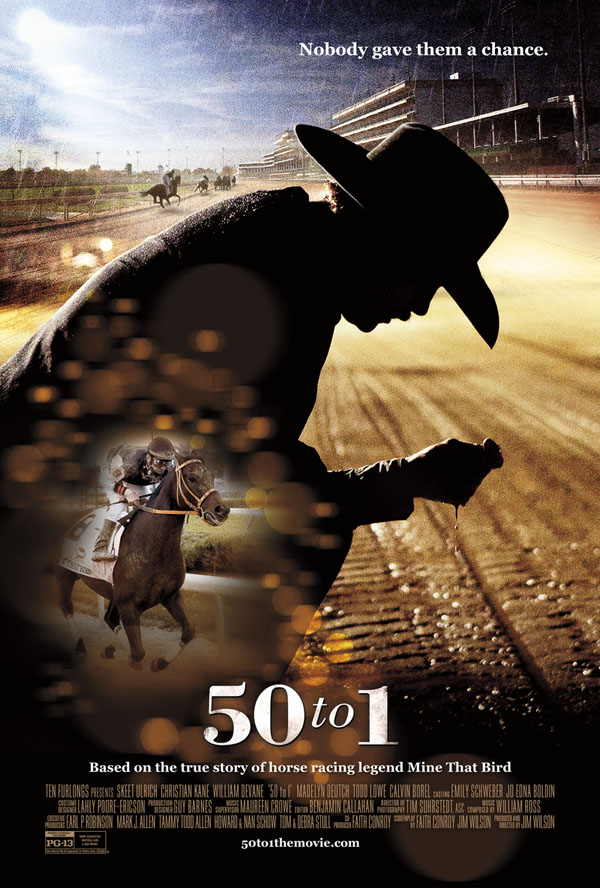
My brain hurts from trying to understand the rationale behind making a movie about an event that people only care about for three days a year and forget about two days after the event. The movie is called 50 to 1 and it’s about Mine That Bird’s improbable Kentucky Derby win in 2009. Oh, you don’t remember Mine That Bird? Well maybe the star-studded cast of Skeet Ulrich, Christian Kane, and William Devane will draw you to the theaters. Oh, you don’t know who they are either? I’m hoping their marketing strategy involves a TV trailer that includes rave twitter reviews, otherwise maybe 100 people will see it.

This trailer NEEDS you to know that they have cowboys in it. Ulrich and Kane are just two REG’LA COWBOYS with one last shot at making it. It actually contains a scene where there’s a fight at a saloon and a guy goes through the front window like in every shitty western you saw on AMC as a kid. They might as well have used the Benny Hill theme for the first half of it.

And it doesn’t matter that they had Calvin Borel, one of the hottest jockeys at the time, riding the horse. Mine That Bird was a longshot! Except that after the Kentucky Derby he got second and third in the Preakness Stakes and Belmont Stakes, respectively.

But let’s not be too picky. Just know that this film is in the trusted hands of a company called Ten Furlongs. While I thought making a movie about a sport no ones gives a shit about was a bad idea, some idiots decided to make a production company dedicated to it. They spared no expense in getting their visual effects from a company named “Great FX”,,which sounds like the film equivalent of getting dinner from “Solid Restaurant.” With a production budget of $10 million there’s a chance this film will make its money back, but it won’t be with any of mine.

Image source:

Worst Best Picture: Is The Artist Better or Worse Than Crash?

video-artist-anatomy-articleLarge-v2

Alex Russell

In “Worst Best Picture” we search every single Best Picture Oscar winner of all time from 1927 to present to uncover the worst of them all. Conventional wisdom says that 2005’s winner Crash is the worst winner in history. We won’t stop until we’ve tested every last one. Read the the first, our review of Crash, here. All posts should be considered to have a blanket “spoiler alert” on them. Today’s installment is the 2011 winner The Artist. Is it better than Crash?

There are 228 reviews of the 2011 Best Picture Oscar winner The Artist on review aggregate site Rotten Tomatoes. 224 of them are positive. The people have spoken: The Artist is apparently fantastic.

It’s also a slog to watch, and not just because it’s a silent movie made in the last five years. There’s no problem with the artistic choice to make a silent movie the better part of a century after the end of the artform. That much is ambitious and that much is why Moneyball and The Help and everything else that year had absolutely no chance against it.

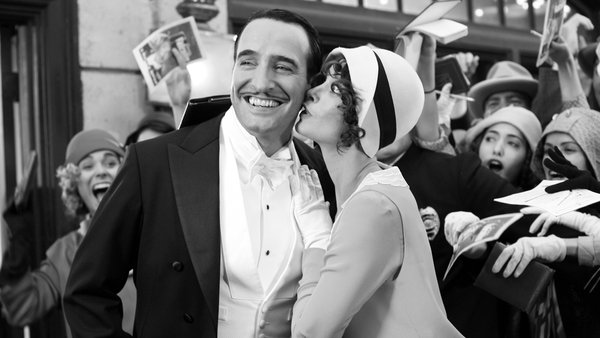
It’s not “boring,” though that criticism might show up on a lot of personal reviews of The Artist. It’s the story of a silent film star on top of the world who gets dethroned by a young, unknown starlet. They coexist at the top of their game for a while, but she is willing to make movies with sound and he decidedly is not. Sound comes, audiences leave silent films in the dust, and our poor hero refuses to change with the times. Oh, and there’s about 75 minutes of dog tricks. For real.

The Artist made me feel like a teenager in an art gallery. It gave me the feeling of being able to recognize that something is “important” but not being able to pry out why everyone else is fawning over it. The grandeur of the silent film era and the nostalgia for a time gone by is easy to understand. The film pours this on thick as it opens with the cast waiting for an audience to clap after watching a zany sped-up silent film. Everyone loves it, silent movies are just movies, and time is frozen in the Greatest Generation of cinema.

The switch from silent films to “talkies” has a nice effect in the film as the main character starts to actually hear sounds in his life. It’s a neat element of the “silent film about the end of silent films shot after the end of silent films” movie, and it’s a bright spot in a movie that doesn’t take any other risks at all.

The climactic scene of the silent film star burning his original reels carries some heft to it, but it’s almost impressive how slight the entire film feels. This is one of film history’s greatest shifts — and there are scenes where a guy tries to burn down his house and shoot himself — but it embodies the campy feel of a silent movie so strongly that no one ever gets a chance to matter. No one learns any lessons, though they do grow. They grow for no intended reason, however, so the moral is apparently something akin to “just wait and life will work out, even if you try to burn down your house.”

Even if you buy it into it as a period piece (which you must, apparently) it is just such a slow movie. It’s only 100 minutes long — insanely short for a Best Picture winner — but it drags from start to finish. Almost all of the film is in the window dressing, and so if you don’t get into the aesthetic you certainly won’t be wowed by the plot. You’re far better off with All About Eve – just about the same story just a few decades later in time with much, much, much more venom. You might recognize that movie as the way people really behave.

The Best Part: It’s surprisingly sweet at times. There is a very sweet moment where the leads exchange fleeting glances as the silent star walks down a staircase out of the movie studio and the young starlet ascends it. For how hamfisted most of the mugging is later in the movie, this image will persist long after the film is forgotten.

The Worst Part: There was a campaign around the release of the movie to nominate the dog for Best Supporting Actor. I love dogs. In the spirit of a piece where I compare pieces of cinema, this would mean equating Robert De Niro with a dog.

Is It Better or Worse than Crash? I would not suggest that it’s worse, but a lot of that has to do with genre. It’s impossible to compare a movie about the end of an era with a movie like Crash, especially because Crash insists that “post 9/11” is the era of today, tomorrow, and the century after that. The Artist is about growing out of your notions about the future and learning to adapt in a way that you still feel valid. Crash is about how any growth or development is a myth that should be responded to with distrust. You have to change in the world of The Artist. You never can — even if you try, which you shouldn’t — in Crash. How is a movie about the end of a loved artform more hopeful than anything?

Worst Best Picture Archives: Crash | Terms of Endearment | Forrest Gump | All About Eve | The Apartment | No Country for Old Men | Gentleman’s Agreement |12 Years a SlaveThe Last Emperor | The Silence of the Lambs |

Alex Russell lives in Chicago and is set in his ways. Disagree with him about anything at readingatrecess@gmail.com or on Twitter at @alexbad.

 Image source: NY Times

Casual Commitments: 10,000,000, a Game for Casual and Hardcore Gamers Alike

screen_shot_2013-01-14_at_9.22.23_am.0_cinema_1280.0

Brent Hopkins

The past few weeks I have been putting some time into a game called 10,000,000 (which will be shortened to 10M for the remainder of this article) developed by EightyEight Games. This game is available on the iOS, and Android app stores, as well as Mac, Linux, and Windows via Steam.

The game is a puzzle-roleplaying mish-mash that really comes together into a fun little package. The game stars your hero (who is nameless) who is locked in a decrepit keep where he must score the titular 10M points to escape. To score points he must make his way through a dungeon killing monsters and collecting gold, wood, stone, and experience points to get stronger. The stronger he gets the longer he can survive in the dungeon and the higher his score can climb.

The story is not something that will keep you engrossed in the game and as it is a casual game that can be expected. The gameplay is where the strength really lies and it will keep you coming back for one round after another. The game uses the infinite run formula made popular by games like Temple Run to display the dungeon battles. Your adventurer moves from the left side of the screen to the right and if you get pushed too far left you lose and return to your bed to spend your spoils.

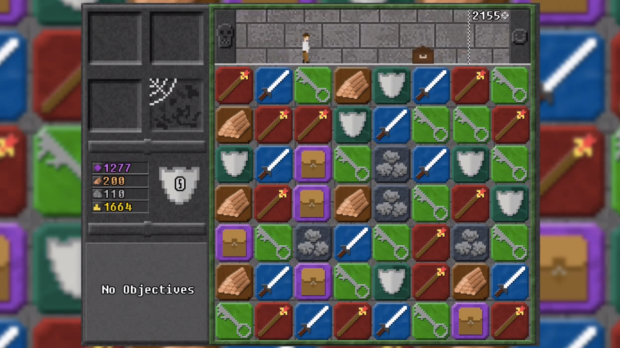
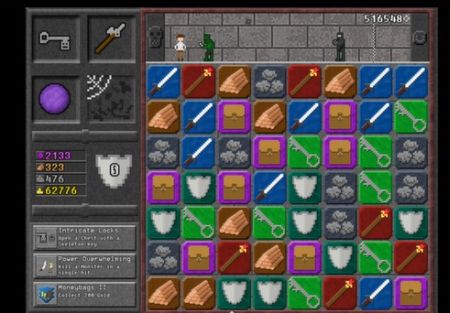
To fight the monsters you play a match-three style puzzle game with different matches doing different things. The sword and the staff do damage, the chests give you items, the keys unlock chests and doors, the shields give defense to attacks, and the stone and wood give you resources to fix your prison keep.

The game also throws in up to three quests per run for the so you have something to try and accomplish instead of just blindly trying to get the highest score each time. They are all explained succinctly and rarely take any special play to achieve.

10000000game

Your typical 10M game board.

The difficulty in 10M comes from the general passing of time and enemies whose attacks slowly push your hero further and further left until he dies. Since there are so many different tiles and you are constantly on a time limit, you may find yourself needing to open a chest but instead you have a board full of stones to deal with. This pressure is what keeps the game flowing, but if that were all there was the game would be tragically boring. The RPG elements are the second side of this glorious puzzle game and really make it a complete package.

10000000_pc2

This is what your adventurer’s base tends to look like when you start.

The hub for 10M is where most the RPG elements are found and they come in a few different flavors. They will either make your attacks stronger or make your defense higher so you can take more hits from monsters. These are permanent, and this is where all the gold, materials, and experience will get used. Wood and stone are used for repairing your keep, which unlocks higher upgrades. Experience is used to give you passive benefits every run, which make the game easier. Gold is used for all of the armor and weapon upgrades. These are all pretty standard fare and won’t take anything but time to unlock. The game throws the player for a loop with the last upgrade area’s potions. Each potion you unlock has a plus and a minus so the player must choose what they want each run.

The game is addictive and fun as you see your little adventurer getting stronger each time you lose and have to upgrade back at the hub. As you repair your place you get this sense of fighting from the absolute bottom –where even the rooms don’t want you– to fighting with Excalibur and slaying dragons. The potions are also a great addition to this type of game. Instead of feeling like you are wasting time matching objects if you have fully upgraded your hub area with wood and stone, you can activate a potion to turn those into gold or experience instead.

The game just flows along and because the rounds are really quick you never feel this burden of loading it up and suddenly having to invest 40 minutes like you would with a game like Triple Town or Candy Crush Saga, where you only get so many chances then you must pay or wait to play again. The achievements are also well made for the Steam platform, since they follow the natural progression of the game and test your skill and determination. One achievement requires the player to use every potion in the game and get 10M points. This is interesting because there are many overlapping potions and the player should have upgraded everything to tackle this as well.

I have dumped about nine hours into this game and I am sure to play quite a few more (still need that potion achievement). I highly recommend picking this up on a mobile device or Steam for $4.99 as it fits great for hardcore gamers and casuals alike.

I give 10000000 4/5 stars, because it is the perfect idle game to play.

How Did I Like This? How Did I Like the Show “VR Troopers?”

VR-Rangers

Brent Hopkins

In “How Did I Like This?” someone looks back at something they loved as a child and wonders how they were ever so wrong. Today Brent Hopkins looks at the TV show VR Troopers (1994-1996), which somehow couldn’t break the 100 episode mark even though it had virtual reality and a rapping dog.

vr-hr-kaitlin

The main reason was preteen lust, but that the lust lasted for this long is shameful. #1994Swoon

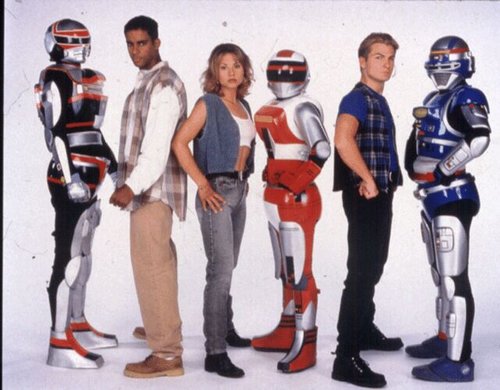
My first take on this series is going to be focused on the mid-90’s show VR Troopers. For those of you that don’t know, VR Troopers was a show in the same vein as the Mighty Morphin’ Power Rangers. The heroes were always able to overcome incredible odds due to whatever robotic augments they happened to pick up from the thrift shop. The selling point for this show was that the battle was on two fronts: The real world — where the characters normally resided as a martial arts protege, a reporter, and a computer nerd — and the virtual reality (VR) world, which was threatening to merge with the real world and be run by the series villain Grimlord.

As opposed to the massive mecha that the Rangers rocked, the VR Troopers had to settle with being locked mainly to the ground in their VR suits. They had vehicles, but they mainly fought in judo/karate style group battles.

1123533197026

We thuggin’ and mean muggin’

This show absolutely captivated me as a 10 year old I will admit I would get bummed out when I had plans after school, because I would miss the next episode. The one thing I have always recalled about this show was that it had a super catchy theme song that still gets stuck in my head today. I insist you watch this for at least thirty seconds to be amazed.

Watching this theme you, may notice that this show somehow manages to look even more bargain basement quality than Power Rangers. This is due to the show being spliced together from three Japanese shows to form the action scenes. This worked well for Power Rangers, but at the end of the day watching Mega Man boss rejects fight compared to the Godzilla-like monsters the former show provided just looks comical today. This was made worse by the sets the fights took place on, which apparently included a rock quarry. That’s it. The vast majority of the fights took place in a rock quarry and it was as gray and depressing as one would hope.

Carrieres

This actually has too many props in it for VR Troopers.

That being said, the show had its own unique feel to it with all of the stock footage, and since there were fewer characters to follow it actually allowed for more character development. The thing is, while the main characters could be pretty 2D and stale, they made sure to add in those weird characters you might forget after years. One in particular was the talking dog Jeb, (the Meowth of the show) who added in snarky one-liners here and there. Yet the one thing that I remember the most from good old Jeb is this:

Everything must have rap it is the mid-90s!!!

There was no expense paid to make the dog even look like it was actually talking instead of eating. The fact that this AI super-computer is being burnt out by the rapping of a dog… I would say if something this simple could bring down the main line of technological defense against the VR invasion, humanity is over and done with.

I recently sat and watched a few episodes and clips and I am amazed that this show was able to make it 92 episodes before getting “cancelled.” I put quotes around cancelled because, amazingly enough, the only reason we don’t still have the VR Troopers is because there just wasn’t enough stock footage to pull from and the show had to end. This show had bad effects, bad acting, ridiculous characters, and the worst sets humanly possible but Sarah Joy Brown kept me glued to this show. +1 to the Nielsen ratings, -1 to my childhood.

Brent Hopkins considers himself jack-o-all-trades and a great listener. Chat with him about his articles or anything in general at brentahopkins@gmail.com.

Image sources: Whatculture.com, Tokucentral.com

Tough Questions: What’s the Weirdest Place You’ve Ended Up on a Trip?

question-mark

Every Monday we ask everyone who hangs out around here to answer a tough question. This week:

What’s the Weirdest Place You’ve Ended Up on a Trip?

Rules are simple: Where did you end up when you didn’t mean to go anywhere? We’ve all ended up in weird places – like a cookout with an ex or Iowa – but the weirdest of them all are the unexpected ones. Where were you most surprised to find yourself, and how many goats were there with you?

Alex Russell

I went to London for a month in 2005, supposedly to learn how to teach middle school. I guess I did that, but I also spent a lot of that January in the pub you can see in the opening credits of Black Books. I was there with some people I knew and some I didn’t and we managed to make friends with the staff of the pub. It was a weird experience, because usually when I travel I keep to myself. This time, though, a spunky British lesbian and a gruff bartender became my travel companions for a really weird week. I still remember ordering a boilermaker (there are many ways to order one, but I wanted a shot of whiskey dropped in a beer) and having to explain what I meant to the guy. I spent a lot of time apologizing for being American, but never more than when he asked me plainly: “Why can’t you Americans just drink?

Brent Hopkins

The weirdest place I ended up on a trip had to have been when I went to Cambodia and ended up at a private house party. I was traveling with my friend Sara and we had a really nice tour guide to help us get to all the sites (the killing fields are more depressing than you’d imagine and Angkor Wat is far more impressive). He was a fascinating guy and told us about his life and how being a tour guide had allowed him to buy some land and start building his own house for his family. I really wanted to to drink palm wine, but we found it a bit hard to come by so on the last day we were there he invited us to his still-under-construction abode. This was far from the main tourist drag we had been on and he picked up a special treat for us when we were on the way… grilled dog. The meat was pretty good, though it wasn’t the first time I had dog, and I got quite drunk sitting outside with about 25 to 30 people for an impromptu housewarming.

Austin Duck

The strangest, most surreal place I’ve ever ended up on a trip was a Denny’s in Orlando, FL. Ena had never been to Disney World as a child so, right before she graduated college, we took a bus down, rented a cheap motel, and went to Disney and Universal. And here’s the bitch of it: The Atlanta bus station–with shoeless children eating nacho cheese from plastic containers with forks–was not the weirdest place. The Greyhound bus, where, as soon as we boarded (and sat next to the toilet because there were three of us), a toothless woman threw in a styrofoam cup, rendering it completely useless and, for the next eight hours, we were tasked with denying desperate customers their bathroom privileges… this wasn’t the weirdest. No, the weirdest was, after taking the “convenient shuttle” from our hotel to Disney (2 hrs), after wading through oceans of children so Ena could have the prototypical American experience, after It’s a Small World and The Haunted Mansion (sans Eddie Murphy) and Pirates of the Caribbean and a $15 burger and fries and the 100+ degree heat with full humidity and after waiting in a parking lot for an hour for that fucking shuttle to take us back to our hotel, we stumbled, numb, into Denny’s in some kind of psychedelic/psychotic daze, laughing through course after course of over-salted, brown food, me in a ridiculous Hawaiian shirt, Ena in shock at the heat and the awfulness that is Orlando, the waiters and residents of Kissimmee or wherever the fuck we were just staring at us… We definitely brought the weirdness–after all, it was just Denny’s–but, nevertheless.

Jonathan May

In 2010, I went to LA to visit my friend Cody with my friends Jenny and Ben. I love LA. The great people, all the great shows, Korean BBQ. But inevitably, I’m drawn inland toward Joshua Tree National Park. So we went. Cody’s family had a house there outside the national park. Now, the desert has always been one of my ideal landscapes. I love the hot and cold, the weird creatures, the rock formations; hence, I love Joshua Tree. Well, in the town of Joshua Tree (population 7,414 as of the 2010 Census), there happens to be one world famous museum. I had no idea such a thing existed, there on the outskirts of the brutal California desert, on the edge of the civilized world. But lo, on the rim of the city, off the highway, is the World Famous Crochet Museum. The two photos cannot possible illustrate how small this thing is. Literally three people, and no more, can fit inside. And inside? Inside?! Stuffed to the brim with crocheted objects, including the pictured taco (a personal favorite). I literally stood outside the small green building, looking around, hoping we were too far from LA to be Punk’d. It’s a surreal place to be in the middle of so much harshness.

crochet tacoworld famous crochet museum

Andrew Findlay

The weirdest place I ever ended up was the catacombs underneath Paris. I can’t really say “ended up” as if I didn’t plan to go there – it’s a major tourist attraction. It’s also creepy as hell. The quick history is that the limestone used to build Paris was mostly mined from underneath the city itself, a practice which continued until streets started falling into the tunnels honeycombing the city. The city leaders made further mining illegal, but still had all these tunnels, all these people, and all these overflowing cemeteries. Instead of exhuming old corpses and burying new ones ad infinitum, whoever was running Paris at the time decided to just toss all the old bones into the old mining tunnels. In recent years, it has become a tourist attraction, and people organize and manage upkeep for all that calcium. There are skulls stacked in artistic arrangements. Walls of bones. It is creepy to be shuffling through the tight, cramped underground of one of the most famous cities in the world, and it is doubly creepy to be surrounded by the remains who used to walk, live, and breathe just like you. Seriously – a cemetery is just a bunch of stone and memories. Being hemmed in on all sides by human remains is a completely different psychological experience, and the catacombs are one of the weirdest places I have ever been.

Mike Hannemann

I wasn’t the most traditional college student. I missed out on a lot of milestones that you see cliched in movies – most notably the road trip. I never really take vacations that aren’t somehow family related. I left the state for weddings but never had an epic Spring Break or drove to x place to see y event. The closest I have, after reflecting on it, is Wisconsin Dells. Yeah, that crappy water resort north of Chicago that families go to. A group of friends decided it would be a great place to go for a weekend in the summer. Hindsight is 20/20. The highlight of the trip took place after 60 minutes and one game of Drinking Mario Party. Turns out the area didn’t really sell beer after 10 and we were desperately low. People drinking eight beers in an hour will have that outcome. We asked the receptionist at our hotel if anywhere was selling beer and she said yes. A gas station. Two miles away. With no cabs to be found, we decided to walk it. Now, as I mentioned, eight beers in an hour will have another outcome: You’ll desperately need to relieve yourself. As we reached a breaking point, we walked past a tourist attraction with large recreations of historical monuments. This all builds to the weirdest place I ended up on a trip: peeing on the leg of a replica of the Trojan Horse, towering above me.

Alex Marino

Tanzania is a weird place. I loved the two weeks I spent there back in 2007 but in retrospect it was such a crazy experience. If you ever get the chance to go you MUST go to Zanzibar. It’s an island just off the coast of Dar es Salaam. We spent a few days at a coastal town called Jambiani. “Town” might be too nice of a word. It was basically three hut-lined streets going north/south with some bungalows on the beachfront. My friend and I went on a quest to find booze which turned out to be especially difficult. A local identified with our struggle and said he knew a place to get us booze. He demanded we call him “Flea” and lead us down a weaving pathway of identical huts. We ended up in this little courtyard with a large pile of rocks stacked four feet high in the middle of it. He told us we had to wait there as he went into his friend’s house to get us the booze. He then proceeded to reach into the pile of rocks and pull out an empty bottle to put our booze in. At that point we had to politely tell him that getting us booze and putting it in a used empty bottle pulled from a pile of rocks was not okay.

Life After the Star Wars Expanded Universe: Patrick Rothfuss’ The Wise Man’s Fear

Andrew Findlay

In Life After the Star Wars Expanded Universe, we take a look at science fiction and fantasy, why they’re great, and what they say about where our species has been and where it’s going.

Warning: While I wouldn’t really call anything I discuss a big spoiler, absolute purists may want to tread lightly. I discuss some general plot points.

The Wise Man’s Fear has generated a lot of excitement in fantasy circles in recent years. Book Two of The Kingkiller Chronicles, it continues the story of Kvothe, master wizard, musician, and warrior. The framing device for The Kingkiller Chronicles is that Kvothe, the titular kingkiller, has gone into hiding as an unassuming innkeeper in a nowhere town. He has taken the name Kote and spends his time pressing apples for cider and cooking mutton for guests. A chronicler happens upon the inn, recognizes him, and asks to take down his story. Kvothe obliges, and the story starts. It’s an appealing bildungsroman, underdog-against-all-odds type of tale. At the time that Kote/Kvothe is telling his story, he has achieved legendary fame, accomplished a ridiculous amount even by the standards of heroic fantasy, and then retired. When I say “accomplished a ridiculous amount,” maybe I would best make my point by quoting the beginning of his account of his life:

“I have stolen princesses back from sleeping barrow kings. I burned down the town of Trebon. I have spent the night with Felurian and left with both my sanity and my life. I was expelled from the University at a younger age than most people are allowed in. I tread paths by moonlight that others fear to speak of during day. I have talked to gods, loved women, and written songs that make the minstrels weep. You may have heard of me.”
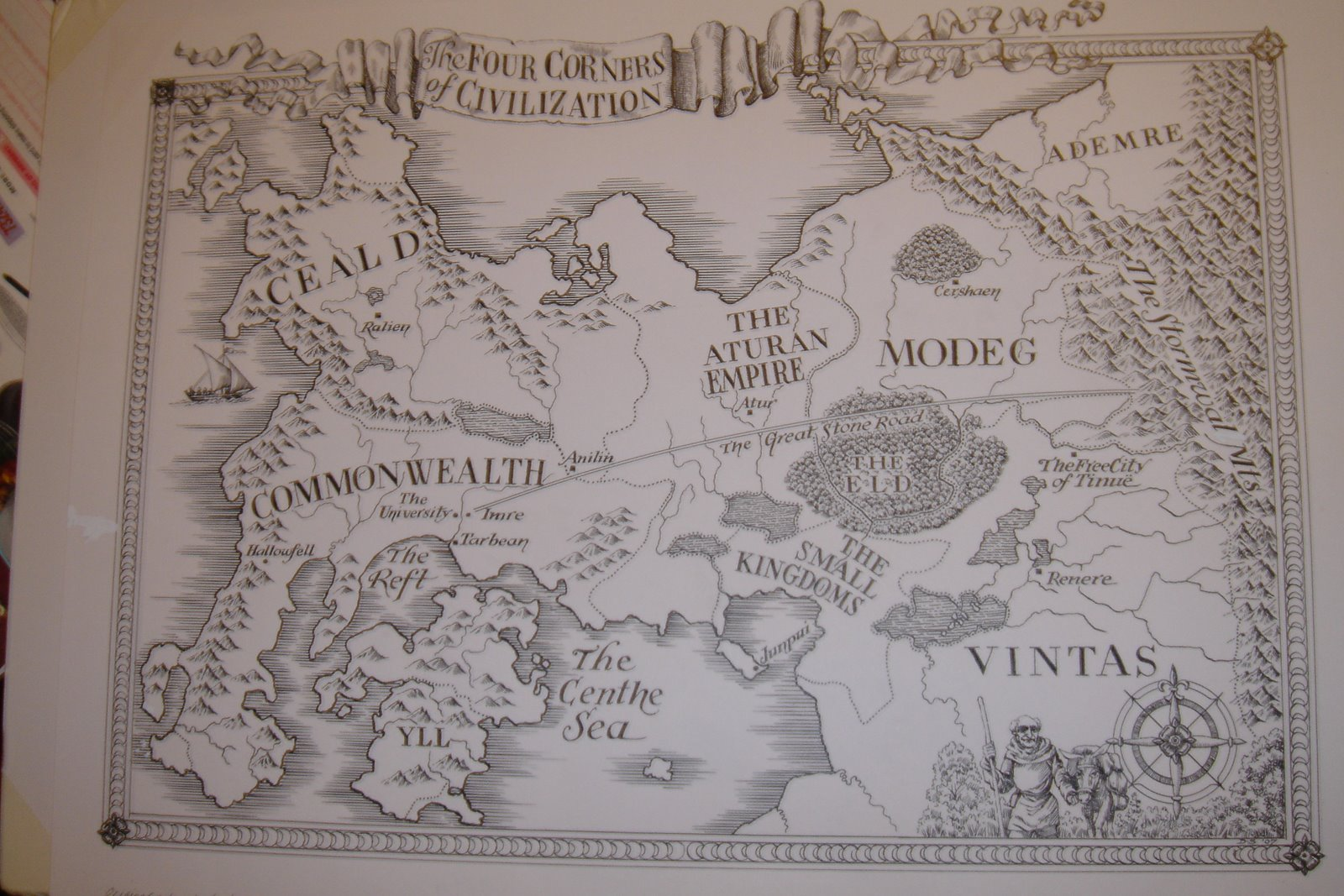
Also, here’s a map. I don’t think you’re allowed to write fantasy without a map.

Kvothe was a big problem for me for a very long time because Rothfuss would hammer down the “Kvothe is so cool!” nail relentlessly throughout the entire first book. The strongest criticism against the character is that he’s a definite Mary Sue. He’s an underdog because he’s a poor orphan, but he is anything but poor talent-wise. He breezes past his magic school entrance exams, grows extremely powerful in magecraft, and is a master musician. The problems Kvothe confronts in the first book seem contrived. Oh, he’s really poor? That must really suck when you’re the most powerful young magician in the entire freaking world. After finishing the first book in the series, I did not come back to it for years, as I’d read in a blurb somewhere that he meets Felurian, an ancient sex goddess who either kills men or drives them insane with her vulvic talents. He escapes, because it turns out that he is so naturally good at sex that he impresses a five-thousand-year-old GODDESS OF SEX with his skills. As a virgin. This was a breaking point for me, as Rothfuss seemed to be building a character like you used to build characters when you were sub-10 and playing superheroes: OK, he’s as strong as Hulk, as fast as Flash, also he can breathe underwater and shoot fire from his hands. And he can shoot ice like Subzero, too. The Penny Arcade guys love this series, but even they take Rothfuss to task for this:
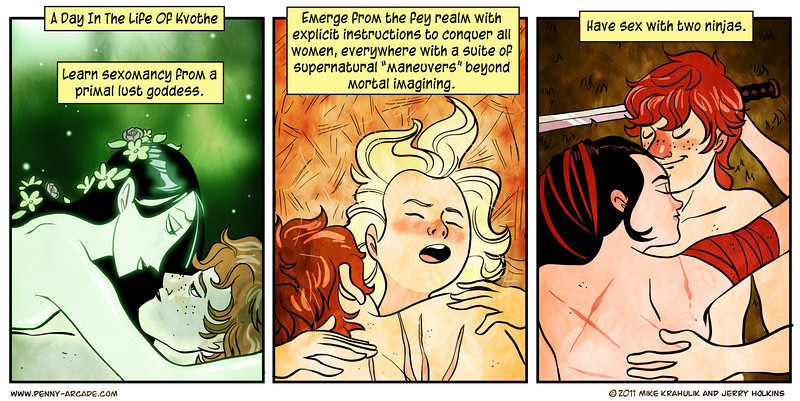
With all that being said, the Mary Sueness is improving. In The Wise Man’s Fear, he’s still way too good at everything, but at least he has some believable flaws. His ego is causing serious problems for him, he is struggling in some of his classes, and there are many things he does not know. Even his meeting with the sex goddess Felurian went down differently than the blurb made me think – he didn’t sex her so good that she fell in love with him. He was almost killed but fought with pure will and magic until he achieved victory. He still learns sexomancy from a lust fairy, but the problem was not his talent, it was that he was extremely talented at just about anything he tried. Him besting Felurian is fine, because he did it with unbelievably impressive magic, and being unbelievably impressive at one thing is fine as long as it’s not all the things. His character is easier to swallow in The Wise Man’s Fear because he faces more real struggles and he’s not just the absolute best at everything. Well, not every single thing. The Mary Sue problem still exists, it’s just no longer unforgivable. The thing is though, as an American reader, I can’t help but think of Superman. He is the most famous comic book character in the world for a reason, and one could argue that he’s way too talented – barring exposure to an extremely rare radioactive element, he’s unstoppable. The Kvothe of The Name of the Wind is insufferable, whereas the Kvothe of The Wise Man’s Fear is merely stuck within a Superman complex – over the top, but not story-breaking.
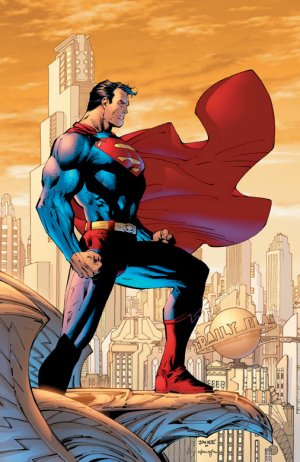
Fuck plot armor. I’m explicitly unkillable!

The strength of The Kingkiller Chronicles lies in its reverence for the art of storytelling. The framing device for the whole book is the protagonist telling a story about himself. Within that story, there are a lot of common, insignificant myths that do a lot to increase the texture and weight of the world. There are stories about religion. Travelers pass the time around campfires in telling each other tales. These range from rumors and gossip passed along on the road to old creation stories. In addition, the main quest of the series is Kvothe’s desire to find a group of seven immortal demons. Most people think these seven, the Chandrian, are just a silly children’s tale, but that’s because these monsters have spent the last few millennia obliterating any trace of themselves from the stories of men. Kvothe’s father begins researching them, and they show up and murder Kvothe’s entire family. Kvothe’s main motivation throughout the books is to gain enough knowledge and power to find and kill the beings who made him an orphan. His search for knowledge explores the beautiful patchwork nature of human storytelling – he manages to find a piece here, a sliver there, but all the stories are slightly different, the names added to or worn away by time, minimized or aggrandized by whichever culture acted as the story’s steward from the time it was created to the time Kvothe found it. Why did the Chandrian work so hard to make these stories so few and far between? It has something to do with the magic system of the book – knowing the true names of these creatures would give Kvothe some measure of power over them.

Pictured: The most powerful weapon in the fight against evil

One of the standout features of The Kingkiller Chronicles is its compelling magic system. Magic systems are important. They define the way mages can influence the world around them, which is a major concern of most fantasy. Rothfuss’ is inventive and intricate. The author includes many detailed, rule-bound systems and schools of magic, but all of these different techniques are children playing with matches compared to the roaring conflagration of Naming. Naming as a form of magic used to be widespread, but now only a handful of extremely talented people can manage it (Kvothe is, of course, among them). Naming consists of being able to intuitively know and call the true name of different things – wind, fire, rock, even blood or bone, even people. If a Namer calls something by its true name, he or she can control it. This is much more powerful than the other forms of magic. A Namer can break a hole through a thick stone wall by speaking to it. He can kill by calling the name of the wind and sucking the breath out of the lungs of his enemy. Naming, the true and accurate use of the perfect word at the perfect moment, is the most powerful form of magic in this world. This, along with the lovingly crafted myths that permeate this narrative, emphasizes the importance and power of writers and writing. The right words can kill an enemy, burn down a forest, or break through a wall. This focus of The Kingkiller Chronicles will appeal deeply to lovers of words and stories.

Wearing one of these is a really, really bad idea in this world.

Ironically, for all of its care and focus on the nature and power of stories, The Wise Man’s Fear has taken a lot of flack for its own storytelling. One of the main complaints is that, although it’s book two of three in The Kingkiller Chronicles, there is yet to be a kingkilling. Many are concerned with the pacing of the story – with only one book left, how will Kvothe kill a king, find his parents’ murderers, and bring the story he’s telling up to the present day? Another major criticism of The Wise Man’s Fear is that it seems like a mass of stitched-together short stories about Kvothe instead of a cohesive novel. Kvothe at school, Kvothe hunting bandits in the forest, Kvothe in the Fae realm, Kvothe with the desert swordsmen, et cetera. I see the point of this complaint, but I don’t care because all of these stitched-together stories are entertaining and well-written. Rothfuss has a gift for vivid, clear, and immediate writing, and he’s very good at describing knuckle-whitening fight scenes. Honestly, as a fantasy writer, if you can describe a duel involving magic, swordplay, or both with energy and deftness, you can be forgiven for a host of other niggling complaints.

In conclusion, the book is flawed but well worth a read. I’m a strong believer in the phrase “don’t let perfect be the enemy of good,” and just because this novel is not perfection does not mean it’s not enjoyable. Sure, the main character is Mary Sueish. Sure, this book consisted of what felt like a bunch of sidequests. Here’s the thing though – the character is driven and compelling through the sheer force of his skill. The sidequests are engrossing and fun standing by themselves. Also, the pure power of the narrative is a roaring river – hard to resist. I read this book for hours at a time. Finally, the languorous love affair with tales of any and all kinds that Rothfuss builds into the book, along with the idea of writer as Namer and words as power, serves to forge this series into a paean to the strength and gift of human communication and storytelling, which is a worthwhile accomplishment.

Andrew Findlay has strong opinions about things (mostly literature) and will share them with you loudly and confidently.

Image sources: Wiki, Penny-Arcade, and io9

Worst Best Picture: Is The Silence of the Lambs Better or Worse Than Crash?

1992_iconic_actor_hopkins

Alex Russell

In “Worst Best Picture” we search every single Best Picture Oscar winner of all time from 1927 to present to uncover the worst of them all. Conventional wisdom says that 2005’s winner Crash is the worst winner in history. We won’t stop until we’ve tested every last one. Read the the first, our review of Crash, here. All posts should be considered to have a blanket “spoiler alert” on them. Today’s installment is the 1992 winner The Silence of the Lambs. Is it better than Crash?

I can’t be sure, but The Silence of the Lambs might be the most decorated movie in history to use the c-word twice in the first 15 minutes.

The Silence of the Lambs is all about ugliness. It’s about what we consider ugly (deviancy) and what is ugly (violent madness). It’s about how brilliance goes two different ways, but how those paths can fork out even after that.

Everyone knows the basic story: Buffalo Bill is kidnapping and killing women, Hannibal Lecter is the only man crazy enough to know how he thinks, and Clarice Starling is the only woman who can maybe find the link between the two in time. Spoiler alert or no, you know this. You know this because everyone knows this.

It’s worth bringing up here that a quest to see every single Best Picture Oscar winner means watching a lot of movies everyone already knows. Everyone knows (more or less) the story of Braveheart and Rocky and Casablanca and Gone with the Wind. It can be easy to dismiss stories that iconic with a sort of “eh, I know those, I’m good.”

You cannot do that with The Silence of the Lambs. You must not do that. You need to see Jodie Foster and Anthony Hopkins in this movie if for no other reason than to gain new appreciation for what you think you already know. You need to replace your acting benchmarks for greatness.

The Silence of the Lambs is one of three movies ever to win “the big five” Oscar awards (screenplay, both acting awards, director, and picture) and shares that honor with It Happened One Night and One Flew Over the Cuckoo’s Nest. To keep the frame of reference for when Lambs came out, that year also saw the release of JFKBeauty and the Beast, and HookLambs was an immediate part of the pop culture landscape. Billy Crystal hosted the Oscars that year and came out in Hannibal Lecter’s trademark dolly and mask. America’s concept of the criminally insane was forever changed, both by Buffalo Bill and by Hannibal Lecter.

America also got a new favorite line to do in a creepy voice (an award previously held, I hope, by anything Vincent Price ever said) with Lecter’s line about eating someone’s liver. You know the line. I’m not going to include it; I don’t even need to list it. Everyone you’ve ever met has told everyone they’ve ever met that line. The American Film Institute listed it as even more iconic than “Bond. James Bond.” in their list. It is an instantly recognizable representation of evil and madness. It’s tidy that way.

What is lost along the legacy of that line is that it is surrounded by an incredible, outstanding scene of Lecter meeting Clarice for the first time. The scene’s most chilling elements have nothing to do with Lecter saying he ate someone – they are everything else. The best part is the chill that we feel for Clarice as she tries to act unafraid. The line itself is outstanding, but it’s a blunt object at this point. The rest of the scene is all finesse in its horror. It is terrifying with opportunity, because the unaccustomed viewer knows Lecter says this one creepy thing, but they don’t know about his love of control. They don’t know that his madness manifests in creating and solving puzzles more than outward acts of terror and mayhem. He’s mostly a quiet kind of insane – but yeah, he’ll also eat your liver.

The Best Part: The meeting scene. It happens 15 minutes into the movie, but it perfectly establishes everything in the movie’s world. Clarice is inwardly strong but outwardly terrified, and that combination just might keep her both sane and alive. Lecter is defensive, but also willing to tip his hand if he thinks he needs to do so. The audience wants Clarice to hold back, but we love that she can bare herself – even though in this case it’s to a demented cannibal.

The Worst Part: This feels very, very small, but I kept noticing it. An important part of the tension of The Silence of the Lambs is about how Clarice has enemies that aren’t literal. She’s haunted by her past as much as she’s ever hunted by murderers. They handle her past well — it spawns the title — but the attempts to remind everyone that she’s a lady and ladies have it tough don’t all land. Some, like a discussion between Clarice and her boss about establishing that she’s not lesser because she’s a woman really work despite being obvious. Others, like how every single man she encounters stands too close and checks her out, are maybe too obvious.

Is It Better or Worse than Crash? The common thread between the two movies? Relentlessness. Lambs is about pursuit in the face of danger and Crash is about confirming or rejecting your biases. One character in Crash wants to so strongly be an anti-racist (one of the only ones in the film) and ends up shooting someone of another race before abandoning his car to hide the body. Lambs teaches that pursuit can be dangerous but rewarding, and that not everyone can pay that price. Crash teaches that all attempts to better yourself or achieve anything will be met with failure. Lambs lacks a distinct moral on purpose, Crash has a terrible moral on accident.

Worst Best Picture Archives: Crash | Terms of Endearment | Forrest Gump | All About Eve | The Apartment | No Country for Old Men | Gentleman’s Agreement |12 Years a SlaveThe Last Emperor |

Alex Russell lives in Chicago and is set in his ways. Disagree with him about anything at readingatrecess@gmail.com or on Twitter at @alexbad.

 Image credit: Oscars.org

Symbols and Sociopaths: Hannibal Season 2, Episode 2

hannibal-two

Jonathan May

Like, massive spoiler alert.

Watching the second episode of Hannibal, I couldn’t help but selfishly wonder if somehow, some way, the show’s producers had read my post from last week and decided to give me everything I wanted. If it’s foolish to dream, then I’m foolish. All to say, this episode gave me the heebie-jeebies—it scratched my blood itch and left me wanting next Friday like it was payday.

We’re presented this season around with Lecter stepping into Will Graham’s role as a forensic/psychological expert, a role Hannibal relishes. In this episode, this relationship is brought to the forefront, and we get to see how Dr. Lecter reacts to the close quarters of the FBI’s investigative minds at work. I was completely delighted to see the use of symbolic imagery play out in this episode; the dark antlered man as Lecter read well for the overall thematics, which concerned the relation of God to man, creator to subject.

This unfolded through the serial killer obsessed with a “human palette” made of resined bodies of various shades sown together in a silo. Lecter, wise to his own ilk, finds the killer before everyone else and adds him to the picture, and then his plate. The cooking scene in this episode took a lot of care to show the many stages of preparation for a human thigh; I was even hungry for a moment.

The juxtaposition of closed and open spaces made me wonder exactly who is caged and who is caging, which was doubled down when Lecter’s psychologist (played by Gillian Anderson) decides to exeunt with all relevant information. She even stops by to see Will Graham and tells him, “I believe you.” Of course, she disappears immediately thereafter.

This bit of maddening information must certainly fan Will’s flames as he heads to trial in next week’s episode.

Thankfully, Dr. Beverly Katz (played by Hettienne Park) landed a central role in this season’s events. She really adds a keen and watchful eye to the situation, while still being a great unaware foil to Lecter; their awkward “dance” in the forensics room gave great comedic evidence for this.

My predictions for this week: Hannibal is a witness, Gillian Anderson is dead/missing, Dr. Katz gets real with Lecter. And hopefully more food porn.

Jonathan May watches too much television, but he’s just playing catch-up from a childhood spent in Zimbabwe. You can read his poetry at owenmay.com, follow him on Twitter at @jonowenmay, or email him at owen.may@gmail.com.

Hannibal airs Friday nights on NBC. You can read our piece about the previous episode here.

Image source: Comingsoon.net 

How Did I Like This? Tim McGraw’s “Indian Outlaw”

Tim_McGraw_-_Indian_Outlaw

Alex Russell

In “How Did I Like This?” someone looks back at something they loved as a child and wonders how they were ever so wrong. We start it off with Tim McGraw’s 1994 country single “Indian Outlaw.” Introduce yourself (or reintroduce yourself!) to the song and the video below: 

Almost everything is bizarre about Tim McGraw’s song “Indian Outlaw” except that it came out in 1994. This entire music video screams 1994 as loud as possible. This song is 20 years old, but even if you didn’t have a year to go off you could ballpark it with the video. What the hell was going on in 1994?

Music videos at the time had stories (every Aerosmith music video from the 90s is roughly 34 minutes long) presumably because every famous band in the 1990s looked like they belonged in the 1990s. Nothing looked good. Everything looked like a foreign language textbook. If you don’t believe me, dig up an old photo of yourself and return to this once you have died of shame twice.

Even if you don’t know country music from the 1990s –which you shouldn’t, but I’m from Tennessee, so I took it third period in school for three years– you probably still know Tim McGraw. He was one of the biggest names in music. He did a song with Nelly. He hosted Saturday Night LivePlaygirl magazine once named him one of the sexiest men in the world. I’m just listing the weird stuff from his Wikipedia now, so I’m just going to assume that you are at least vaguely aware of Tim “Live Like You Were Dying” McGraw.

He eventually became a massive success outside of his own genre (when country music started to show up in college students’ AIM profile quotes and every terrible bar’s “white trash” nights), but even before then he had chart success with songs like “Indian Outlaw.”

I don’t hate country music. I don’t really listen to it now, but a lot of the songs I liked when I was younger I can still listen to with a sort of wistful attitude. I regret that I was listening to Garth Brooks when other kids were getting music from their cool older brothers (television has told me that this is the experience of every other kid alive, so I have adopted this as true) but I cannot stand this song.

I pulled it up on YouTube a few months ago while listening to other things gone by. I found it, I watched it, and I was horrified. This shit is absolutely not okay. I mentioned I grew up in Tennessee, but not, you know, Tennessee.

The South has a complicated history (and present, and future, and any other parallel concept of time) with race but often the discussion of race leaves out Native Americans. There’s a certain blindness to it all that comes up whenever the debate over the name “Washington Redskins” flares up and a lot of us are forced to deal with the fact that whoa that is like, insanely racist that we say that!

But if the wheel of time on that change feels like it’s moving slowly, does this sound like something that only came out two decades ago?

You can find me in my wigwam
I’ll be beatin’ on my tom-tom
Pull out the pipe and smoke you some
Hey and pass it around

What would your guess of a release date be if you didn’t know? Would it be during Bill Clinton’s presidency? I damn well hope not.

People who didn’t grow up with this song get really uncomfortable when they hear it, rightfully so. I get uncomfortable with it. It’s racist — insensitive at best — but it’s also got this weird sexual element to it. A lot of country music talks about sex without talking about sex, but check it:

They all gather ’round my teepee
Late at night tryin’ to catch a peek
At me in nothin’ but my buffalo briefs
I got em standin’ in line

Gross, Tim McGraw. He followed this up with his first real monster hit, “Don’t Take the Girl.” That song is about a boy who learns to love a woman so much that he’d rather die than see ill will befall her. This song is… not about that. If you aren’t totally sold on hating this song, check out the dance mix. (Pro tip: Do not check out the dance mix.) It’s not even that different, but I guess this was too early for the Dubstep Indian Outlaw Remix… which I refuse to think about for another second.)

Alex Russell lives in Chicago and is set in his ways. Disagree with him about anything at readingatrecess@gmail.com or on Twitter at @alexbad.

Image source: Wiki