Author: Alex Russell

Rick and Morty: Midseason Review

Mike Hannemann

It’s got to be hard pitching a show to Adult Swim. The network is famous for giving shows a chance that couldn’t have possibly gained an audience (Google Saul of the Mole Men some time when you have five minutes to kill and want to waste precious brain cells). So, in theory, if you can get enough momentum behind an idea and some clout, there’s a chance you can get it on there. However, Adult Swim original shows are also forever associated with things like Aqua Teen Hunger Force: stupid, pointless shows that get more laughs out of randomness than pathos.

Sure, there are exceptions. The Venture Brothers is a front runner of mixing absurdity and character depth to mine laughs. I have a feeling that when Dan Harmon (of Community) pitched his current 22-minute long cartoon, Rick and Morty, he was well aware of that.

Rick and Morty has aired six episodes so far, so we’re at midseason now. Before I jump into whether or not this is working, here’s a quick synopsis: the titular characters are an alcoholic scientist (Rick) and his pubescent grandson (Morty). It’s essentially Back to the Future if Doc Brown did cocaine, Marty was a constantly-wound ball of nerves, and the universe was about to explode every second. A wealth of storylines from previous sci-fi ventures are mined, including the “shrinking down to go into someone’s body to stop a virus” just to name one example. There’s a handful of supporting characters coming from their family: Chris Parnell plays the part of Morty’s father in a role that seems to have been written for him simply because they saw an episode of Archer. That’s pretty much all you need to know.

The show is clearly cynical, which most “adult” cartoons are. The kind characters get beaten within an inch of their life and the bastards seem to get away with everything. Morty, in the role of put-upon reluctant voice of reason, is thrown into situations by his grandfather that are sociopathic. Constantly on the verge of death, the show reaches for humor in seeing this kid go through some extremely rough situations where his victory is “well, he didn’t die.” Rick, on the other hand, is an alcoholic. He does whatever serves his current purposes (be it money or revenge) and usually gets away with it all. There’s no hug at the end and no moment of warmth. It looks, on its surface, to be just another tick on Adult Swim’s soon-to-be-cancelled list…

…except for the fact that the creators clearly respect their medium. As a 22-minute show, Rick and Morty is allowed to be a little loose with time. There’s time for establishing shots, grand epic sets, and whatever action sequences need to take place. This isn’t thrown together last-minute flash animation. The visuals have a retro feel to them. They look like the action scenes from the cartoons you remember watching as a kid. Clarification is needed here: it doesn’t look like something from the early 1990s that you’d pull up on YouTube. They look like how you remember they did. For a minute you forget the monster on the screen is actually a gigantic mutant strain of gonorrhea. It’s just plain fun.

Adult Swim is broadcasting this show on Mondays, which is uncommon for their new programming. It’s also airing at an earlier time slot – in between reruns of Family Guy and American Dad! It’s early enough to give the show a chance to reach audiences that are used to just binging their usual reruns. And while you can say what you will about both of those options, animation has always been something they’ve excelled at. It’s almost like Adult Swim is saying “Ok, Fox, we know you can do this. So can we.”

All of this wouldn’t matter much if the characters haven’t slowly been able to grow, as well. Much like the best comedies, the heart shows through just infrequently enough to catch you off guard and feel earned. There’s never going to be a sitcom-esque wrap up where everyone grows and learns. But in the midst of escaping from a virtual AI simulation on an alien spaceship, there may be a brief moment where the kid and his grandfather have a makeshift snowball fight (in this case, I replace “crystals an alcoholic wants to sell for booze money” with “snowball”). It isn’t much to drive a show, but it’s enough to keep the viewer engaged in the story. It’s the most real element of a show that makes it a point to go as far away from that description as possible.

All in all? This is something to have on your radar. Rick and Morty could become something much more than what it is now. There are flaws, of course. The jokes are often visual and for shock value (everything you expect from Adult Swim, honestly). The weaker characters remain weak and one-note. The premise could easily get overdone if not handled in a creative way. I wouldn’t say the cards are stacked against Rick and Morty working. They’re evenly doled out on either side.

Right now, it isn’t must-watch television… but in a few years, I could see people binging on three seasons in a Memorial Day weekend on Netflix because their friends told them to check it out. I hope to be one of those annoying friends.

Recommended Viewing: If you want to give this show a try, check out episode five: “M. Night Shyam-Aliens!” You don’t need to watch the show in sequential order and this one nails the elements I mentioned above.

Rick and Morty airs at 9:30 p.m. CST on Adult Swim.

Image source: Adult Swim

Casual Commitments: Tiny Thief

Brent A. Hopkins

In Casual Commitments, we explore the ups and downs of casual gaming.

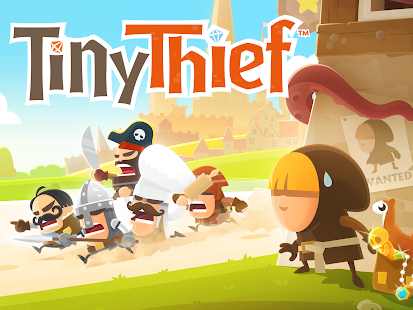
The second time waster on my list is called Tiny Thief, a game that has had a bit of controversy surrounding it thanks to the publisher, Rovio. You all probably know Rovio for its hyper-popular Angry Birds franchise, which has spawned more merchandise than Star Wars over the last few years, and when a company is making that kind of money one of the first things to slide is its morals. The issue is with the insane markup for Tiny Thief on the Steam platform compared to the App Store. The normal retail price on Steam is about 4,000% more expensive than the App Store version which has caused consumers to be, picket the Rovio offices, mad. I bought the game for two dollars, so I don’t have that same grief with the company.

In my opinion, Tiny Thief is to the adventure genre what Final Fantasy VII is to RPGs. This game is probably the best introduction to the genre that you can possibly have and it makes you want to try your hand at more difficult adventures once you have completed its journey.

The whole atmosphere of the game is a bright fairy tale where you play the role of a Robin Hood like thief who must steal a particular item on each level to advance. This would be a bit simple even for a casual game, so there are also bonus items to steal and your pet ferret to find. Completing all of these nets you a star, with a perfect completion getting you three stars for the stage.

Most adventure games give you very few hints to progress the story, which can make them infuriatingly hard if you can’t wrap your mind around the puzzles. Oft times the developers make completely random connections like string-plus-alcohol-plus-birthday-candles makes a flamethrower. This flamethrower will be used with duct tape and a KFC bucket to make a hot air balloon. There is nothing clever about this and I personally hate that feeling of “ARE YOU F’ING SERIOUS!” that comes along with “solving” these riddles.

Tiny Thief gets big points from me because almost all of the interactions open to the player make sense. The interface is also very smooth as it is click to move and click to interact. The interactions come in two varieties: first is the thief that you move around and use to grab objects to solve puzzles and second are background interactions. The background interactions are things the player has to find on the level to solve separate puzzles and help the lil’ thief achieve his dreams of larceny.

That really sums up what you have to do. There is a story in the game but it is just the avenue through which the game is delivered. Tiny Thief falls for Tiny Princess and must steal his way to her. Sweet like aspartame.

New for Steam are Tiny Thief achievements. Most of these are just completion based where you finish a level or you don’t use the hint option for multiple rounds and at the end of the chapter (there are six, one being a tutorial) and you get the achievement. To add some more flair to the game there are hidden achievements which I won’t spoil here, but they tend to deal with humans being weirdoes and accosting the poor pixel people. It is an easy game to perfect if that’s your thing.

I will give Tiny Thief a 5 out of 5 Diamonds on PC (buy it on sale if possible). It is the perfect game to play for five to ten minutes and I look forward to some DLC levels if they ever happen.

Tiny Thief is produced by Rovio Entertainment.

Image source: Google Play

Infinite Entertainment: Postmodern Maximalism and the Serial Television of Today

Austin Duck

Pages want to be filled” –Stanley Plumly

Lately (and by lately I mean over the past five years or so), I’ve become transfixed by two things: postmodern maximalist literature (read: big fucking books written after 1970) and serial television. I would actually go so far as to argue that they produce the same effect across two different mediums, that great serial television and long, long novels employ the same techniques toward the same effect, but in different mediums. And they both completely obsess us. They drive us day after day to watch hours of Netflix, to lug around huge tomes like Infinite Jest or 2666 or The Luminaries or Seiobo There Below on the subway while looking like assholes, to have us struggling and stuttering when we’re asked things like “doesn’t that seem like a waste of time,” because really, no, it doesn’t, but it’s not easy to say why I can justify watching 30 hours of TV in a weekend or spending a month reading a novel, but I know it’s vital. I know it is.

Yes, both require time, considerable time, hours and hours of our lives invested in both plots and characters, but also in the cities of their settings, the minutiae of daily lives, and the large-scale, totalizing cultural patterns that exist in the narrative’s “eye.” (Sorry, I don’t know how to talk about both the scope of a novel and a TV show simultaneously in a non-pretentious way… it is, after all, an ‘eye/I’ that we’re watching all this though… Okay, my head’s out of my ass now). And, ultimately, as simple as it seems, that is what unites these two mediums; they take a lot of time, and give themselves the space to be simultaneously obsessed by individuated lives while archetypalizing (is that a word?) those thousands of individual patterns to make a larger statement about the “eye’s” culture(s).

For too long, people have tried and tried to equate film and novel, and it just doesn’t work. Novels, in general, are too complex. I’ll assume that you all read in high school and acknowledge that Baz Luhrmann’s The Great Gatsby was a colossal pile of crap. Yes, you can hack out the basic plot of a novel for a movie, and yes, you can create period sets and costumes and just really evoke the shit out of culture of the text, but you’ll never get it. And you’ll never get it for this reason: film, like poetry, can rarely (if ever) accommodate more than a handful of characters. Think about it.

Poems can rarely handle more than one character and, while exceptions do exist, primarily revolve around a single “I” speaking the text. Everything included, then, is meant to weigh on the I, to create empathy with the I so that you, the reader, can experience the revelation as the “I.” While I know better than to make totalizing statements about “what poems do,” I’ll say that, majority of the time, in English language poetry from the mid 18th century to now, the object has been to create empathy with a speaking I (“Dead white-guy poetry,” I think they call it). As I’m sure you already know, movies are, by and large, the same. Rarely can a film tell the story of more than one person, unless the other parties involved are directly linked to and involved in the action of the primary character, the hero (think any of the Ocean’s movies, for example). In film, the hero’s narrative controls the landscape of other characters, creating a singular story.

This is where those train-wreck movies like Love Actually and Valentine’s Day fail; they create too many narratives that become, in a way, abstract. They fail because they take on the architecture of a maximalist novel (or of serialized television), but they don’t have the space to become stories; instead, they watch as hypothetical, as constructed; we feel their intentions because we are having the same single-sentence synopsis (“You will find the love you deserve on Valentine’s Day”) reiterated 10-12 times over the course of 100 minutes. Sure, these movies are great cash-grabs, packing the screen-time with more celebrities than I can even pretend to know (I’m more of a TV guy, remember?) but they have always failed and will always because there’s no texture, no space, no way to allow these characters to transition from an undergraduate thesis statement to living, breathing characters.

Postmodern maximalism, on the other hand, is all-space all the time; it comes with a commitment of its own. Its investment lies not in telling a quick, punchy story; you will literally never read a book over 600 pages and think “wow, that went by fast,” and this will never happen for a reason: one cannot sustain that kind of attention or argument (because, honestly, all art is argument) on plot alone. Instead, these works (just like serial television) rely on small details of characters, what they eat for breakfast, what kind of drugs they take, a complete filmography documenting the life’s work of their auteur father, etc. They rely on multiple compelling plots coming to the surface, creating mirrors of one another to make a single, more complex point (the “eye’s culture” as I pretentiously claimed before) without actually saying it aloud. Think about it this way: maximalist literature and serial television work less to “tell a good story” than they do to build a kind of collage, you know the kind, where they use a bunch of little pictures to make a big picture. That’s what this kind of art does; it’s meta.

But so the fuck what, right? What do you care? Postmodern pastiche and cultural meta-analysis belong in one place (and that’s up the asses of bearded white guys with thick plastic glasses, amiright?) Well, yes, you are, in a way. But think about it my way (says the bearded white guy with thick plastic glasses): these serial TV shows are drawing us to our Netflix queues (do they still call them that?) day after day for these binges. I don’t think a day goes by when I don’t hear someone talking about Girls, The Wire, Mad Men, or Breaking Bad and there’s a reason for that. I don’t know what it is, but I think this is my forum for guessing, and I’ll take a shot. We’re fucking tired of the simplicity of narrative transmission. That doesn’t mean the old way is bad (or that postmodernism is better than anything else, because jesus shit, it’s really not); it simply means that, for most of us consuming this stuff, we’ve grown up in a “multicultural, multilingual, linguistically and epistemologically decentered” world. We live in a world of relativism where there is no Truth, no God, only small, subjective truths and gods. And maximalism represents that complexity.

We don’t have a hero because there are no heroes; instead, we have a foreboding structural presence (whether it is economics, bureaucracy, neo-liberal capitalism, or the entertainment) that drives all of our poor stories to play out in one way or another while we, as silly as we are, try being human despite it all.

Image credit: The Guardian

This Looks Terrible – Divergent

Alex Marino

This is the trailer for the movie Divergent based on a book of the same name. It’s the new Hunger Games with a similar awful love story that takes place in a dystopian society where teens are the center of attention.

I’ve never liked trailers that are meant for people that have read the source material. Any film company with half a brain should be trying to expand their viewing audience with a trailer that captures peoples’ attention. But if you haven’t read Divergent this trailer makes it seem like the movie is about Shailene Woodley taking a shot of Hpnotiq, failing at dreaming, and going to war over it. Along the way she falls in love with a cheaper, younger James Franco that has the same tattoo on his back as the girl from Waterworld. And he just gets her.

If this trailer’s goal is to get every 14 year old girl that has already read the entire trilogy excited about the film then they’ve succeeded, but I’m guessing that audience was going to see this opening weekend no matter what. I’m just hoping Summit Entertainment recognizes that this movie has the rare opportunity to take a middle-of-the-road young adult book with a lot of potential and turn it into something Veronica Roth (the author) couldn’t do: something good.

Image source: Yahoo

Two Great Tastes

Alex Russell

One of my favorite things about this site’s development has been the range, so far. Today we’ve got two great tastes: Alex Marino railing at a young adult literature adaptation and Austin Duck talking about the connections between the TV we should be watching, the books we should be reading, and the movies we are watching.

The rest of the week is more about casual gaming, some new TV commentary, and some other treats. We’ll also continue our search for the worst Oscar winner of all time, if I can stand to talk about Crash again.

Keep in mind that if you have an idea for a piece, we want to hear from you. Especially you, after what you did.

Image credit: Health.com (irony!)

The Less Things Change: Archer is Back and Still Amazing

Alex Russell

A year ago, some idiot wrote an article about the fourth season of Archer. He said the following:

The agency on Archer feels full and the characters have developed relationships with each other that they can mine for jokes during bigger plots, but no one is in any danger of becoming reasonable or compassionate. That’s how they can keep turning out new episodes without jumping any kind of shark, ever: there’s no shark to jump if no one ever moves.

That idiot was me, and that idiot was wrong.

Archer didn’t jump the shark in season four. Quite the opposite: season four of Archer proved that creator Adam Reed knew his characters better than I did, thankfully. The titular (like I said in my last review, there’s a word he’d never let me say without comment) Sterling Archer managed to do the one thing no one thought he would in season four. Sterling Archer grew a little bit.

So did the rest of ISIS, the spy agency that served as the setting for most of the first 49 episodes of the show. Archer, for the uninitiated, is a show about people in a spy agency trying to succeed before tripping over themselves through relationships, personal conquests, and sometimes (though increasingly rarely) actual spying.

It’s a surprise that season five of Archer will be “Archer Vice” instead of spy show and center around the cast trying to sell off millions of dollars worth of cocaine, but it’s not a big surprise. The show was never really about the spying. The spying and the agency were just there to hold all the characters together. They were there to explain why an accountant, an HR rep, a scientist, and a millionaire were all hanging out with James Bond. Adam Reed thought that the use of the spy elements wasn’t necessary anymore, so he designed this season as a change of scenery.

The season is now two episodes old. How is it different?

The first episode (“White Elephant”) of season five is almost entirely setup. ISIS gets raided and it turns out that none of this spying stuff was strictly legal. Everyone’s headed to jail forever but then, by way of Malory’s uncanny ability to have dirt on everyone, they’re free to go.

Then there’s a five minute montage of clips from “Archer Vice,” and that’s apparently what we’re going to experience over the next few months. It’s all biker gangs and catchphrases and shootouts. The parallels are easy: spies and coke dealers are apparently not so different, and the show won’t really change that much as a result.

The second episode (“Archer Vice: A Kiss While Dying”) is a bit of a step backwards in the joke department, but it gives a much better feel to how the season will work. Carol/Cheryl Tunt is a country singer who only sounds great when no one is watching. This seems like it’s going to be a big part of the season, but it still goes largely unexplored two episodes in. The bulk of the episode is just Archer, Lana, and Pam Poovey trying to execute a drug deal in Miami. It feels like an episode that could happen at any point in the series. When you start to dissect it you realize that it basically has happened before. Most of what I liked about the first episode is absent here, but most of what there is to love about Archer in general is still intact. It’s funny, it’s paced well, and it’s definitely servicing (again, as Archer himself would tell me, phrasing) a bigger story.

The thing I keep coming back to is a joke in the middle of the first episode. Archer and the newly-pregnant Lana Kane are handcuffed to an interrogation desk at the FBI. After some typically silly escape tactics, Archer mentions that the child shouldn’t have to grow up without a father. Lana says that she’d rather it have no father than Archer as one, and Archer starts to cry.

It’s an extremely quick shift in tone. It’s immediately played for a joke when Lana buys into his devastated response, but it does force you to realize that you would believe either result. If Lana actually had hurt Archer by talking about his difficult relationship with paternity (in more ways than one) or if Archer really was baiting Lana into only thinking she had hurt him for a joke, we aren’t sure. We don’t know because Archer the character is more complicated than the scotch-soaked spy of previous seasons. He’s real now.

Everyone’s real now. Cyril Figgis, the accountant, has been constantly played for laughs. He’s slowly become a full-fledged member of the team with his own specific deficiencies and successes. He’s not the punching bag for everything now, he’s the punching bag for his own specific reasons. In the world of Adam Reed, that’s a big damn step up.

And of course: the show was never just about things like Burt Reynolds (“I wanna say Burt Reynolds!”). All too often over the last few seasons the show used the spy narrative to loosely set themselves up for whatever story they wanted to tell, not the other way around. Some things were obviously “why would spies be doing blank” rather than figuring out what spies would actually be doing. Now they are free to tell the cocaine story without resetting every episode and pretending this has to make sense. It just does make sense. It’s “grounded” (sorta) because they’ve already convinced the audience: the gang couldn’t spy anymore, so now they sell coke.

More people are watching Archer now than ever before. That’s fantastic. I thought the show’s success hinged on unchanging characters that everyone grew to love even though they were unlovable. I thought it was just a joke machine. Like 30 Rock, though, Archer has managed to make me care about someone that I thought was more of a symbol than a character. I’ll never call Archer a show primarily about compassion or growth, but the loss of setting goes down smoother because these people finally, somehow, matter.

 Image credit: GQ

Conversations with my Future Son: Deion Sanders

Scott Phillips

Every once in awhile, I see a “celebrity” of our era and try to think what it would be like to explain that person to my future son, King Phillips.

(Please note that King Phillips, my future NBA-playing son, has been a running joke among friends of mine for over a decade, except they’re totally unsure if I’m actually serious about using that name. It’s fucking fantastic; my girlfriend hates it.)

Kids ask a lot of questions — a lot of blunt, honest questions — and I know that I asked my Dad about plenty of obscure celebrities when I was growing up.

Who is Boy George? Who is Corey Feldman? Who is Ross Perot? Who is Milli Vanilli?

God, I feel bad for my old man. I probably peppered him with questions every week about useless people that he knew next to nothing about or didn’t feel like explaining in-detail to his prepubescent oldest son.

But these future conversations with my son, King, are the things I think about late at night.

So what would it be like if my son, King, asked me about 1990s multi-sport athlete and NFL All-Pro cornerback Deion Sanders?

Here’s how it might transcribe:

King: Dad, who is Deion Sanders?

Scott: You mean “Leon Sandcastle?” (starts laughing out loud)

King: (Stares blankly)

Scott: Sorry, that was a joke from a long time ago.

King: Why do you always laugh at your own jokes, Dad?

Scott: I do not.

King: Yes, you do. Mom and I always just look at each other and don’t know what to do.

Scott: (Interrupting son) Well, King, Deion Sanders was an All-Pro cornerback. One of the best cornerbacks to ever play the game of football, actually.

King: Better than Richard Sherman?

Scott: Oh yeah, definitely better than Richard Sherman.

King: But Richard Sherman is always on TV talking about how he was the best ever.

Scott: Richard may destroy Deion on television, but Prime Time was the coolest two-sport athlete of my day. Deion was an unreal football player, but he also played for the Atlanta Braves for a few years.

King: You mean Deion Sanders played two sports?

Scott: Yup, pretty cool huh?

King: Didn’t Michael Jordan do that too?

Scott: We don’t talk about Michael’s baseball career, son. That never happened. Understand?

King: Okay, okay…

Scott: So why the question about Deion Sanders? What made you bring him up?

King: They showed a highlight reel of NFL players that danced on “SportsCenter” and Deion was on there high-stepping and dancing. Why was he wearing a bandana?

Scott: People in the ’90s and early 2000s thought that bandanas were a lot cooler back then.

King: So how come you liked Deion Sanders so much? I found an old jersey in your closet.

Scott: Well, I liked the Dallas Cowboys for a few years when I was a kid because every kid goes through a soul-sucking phase where they root for a team that’s just really good for no reason.

King: Kind of like how I like the Charlotte Bobcats (just kidding, let’s try that line again)

King: Kind of like how I like the Los Angeles Clippers?

Scott: Yeah, just like that. You like Blake Griffin and the Clippers because they win a lot, yeah.

King: Yeah, and Derrick Rose is always injured.

Scott: (under breath) I hate you, son.

King: What, Dad?

Scott: (Turns on radio loudly and drives a touch faster) Nothing, son. Dad needs to stop at Binny’s.

Image credit: NFL.com

Tuesday Morning

Alex Russell

Welcome to Tuesday Morning. In attempting to find something interesting to say about Tuesdays in general I stumbled across the Wiki for Tuesday Morning, that store that sells lamps your mom likes. The article is marked NPOV because it’s “written like an ad.” I don’t know, I’d say telling people that Tuesday Morning is a “no-frills environment” is just their way of saying “it’s dirty so we can pass the savings on to you.”

I’m not here just to rep T.M., though. Today we’ve got Scott Phillips with another installment of his “Conversations with my Future Son” series. Learn about Neon Deion if you’re Scott’s son from the future or if you’re someone else entirely. After that, I’ll be back to wrap up the first two weeks of this season of Archer. I never know in the daily update, do I still spell it out and call myself Alex Russell, even with a byline on this news post? It’s indecision like that that cost me my position as Community Manager for Tuesday Morning.

Image source: Wiki

Casual Commitments: Triple Town

Brent A. Hopkins

In Casual Commitments, we explore the ups and downs of casual gaming.

Ah, PC gaming… how I have missed you.

To start, I describe myself as a gamer through and through. One of my first memories is sitting in my living room with my older brother and sister playing the original Nintendo. I remember we were playing two games in particular that day. Double Dribble (White Team: LA vs. Green Team: NY by Konami) and the classic Super Mario Brothers. That being said, I have grown old and bitter. I turned into a gamer hipster. Like most people who deem themselves purist of something I had a pretty lengthy phase where I hated casual games.

Things suddenly changed when I wanted to game and I was actually getting slammed with work and graduate classes. My stress relief has always been 1) gaming 2) shopping or 3) reading and I couldn’t sit and play an RPG for 10 hours or really anything for a lengthy period of time so I turned to Candy Crush. This game kept me from slowly ending all of my friendships with my old man grumpiness and I had to concede the casual market wasn’t so bad.

Then came the winter of 2013 and I was even busier with graduate school, my sister visiting me in Korea, looking for a new job, and work. So I turned on my computer, loaded up Steam, and bought between 60 and 80 games during the winter sale. I am not a man of moderation, by the way. Quite a few of the games were purchased with the intent of being used on my new tablet, the Microsoft Surface 2 Pro, and these two games have gotten the most play by far.

Triple Town

I picked this game up for around $2.50 on Steam with no actual knowledge of the game other than, “Dawww, look at the cute bears” and “Hey! The little citizens look like Mii avatars.” This was enough for me to install the game and I would say that is good advertising on developer SpryFox’s part. The game is an odd combination of space management, city design, and puzzle solving which you can’t really find anywhere else.

The game has two parts that the player has to deal with, the first being their hometown and the second being the towns that they go to and try and develop. I will explain the player’s town first as it is also used as the main hub for the game.

The player’s town is an open field that can be developed by matching three like resource nodes. This will upgrade to the next level and you can rinse and repeat this process leveling things up further and further. The difficulty arises when you have to match three of a high level resource with lower ones because there is a finite amount of space.

This is what the main game focuses on and it is much harder than you would think. The puzzle aspect of the game is that if you run out of spaces to place new tiles the round is over and you get money to upgrade your hometown and you must start over from the beginning. The towns are semi-populated with grass, trees, rocks, and houses that you must build around and use and the next piece you are given is randomly generated as well so you can’t rely on getting a piece you need to save you.

There are some amenities the player is given to help the town along, the most important of which are the crystal and the reserve space. The crystal is the wildcard of the game and matches two pieces into the next highest so two grasses and a crystal make a bush and so on. If the player does not have two matches on the board the crystal is a game ender because it turns into a rock which is almost impossible to match (you must use other crystals to make more rocks). The reserve space is a spot where you can keep valued pieces for later use but you only have one reserve space so while it seems like a great idea to save a crystal forever there is little to do when you have two crystals saved up.

The game is incredibly simple to get into but very hard to master, especially if you don’t think spatially. The first few rounds I just threw down bushes and trees and ended up with a lot of wasted spaces where I couldn’t build. This got me some coins but in the end my rounds were short and my scores were low. Then I started really trying to get the best buildings which go all the way up to floating sky castles. This is the part that really sucks you in.

The rounds take an extremely long time when you are doing well because you can’t just mindlessly click and I found myself playing for upwards of 30 to 40 minutes sometimes. This is actually a problem with the game because for a casual title you can’t always just drop it and go do something else, because your towns do not save.

There are different starting towns to choose from as well with various benefits and drawbacks. Some have more space but spawn bears and ninja bears; others get rid of the bear menace and leave you with less space to build on. I am an achievement hunter and this is something that the Steam game has over the app store versions of the game. When you build that new level of castle you get a nice achievement for your work and it helps motivate you to plan out your town and spend the 40 minutes getting floating cyber castles.

I would give the game 4 out of 5 stars. It is easy to play yet hard to master. As a casual game the rounds do tend to take too long if you are looking for a quick satisfying fix.

Triple Town is developed by SpryFox, LLC

Iain M.Banks: Life After the Star Wars Expanded Universe

Andrew Findlay

Iain Banks died last June. He announced a couple months beforehand that he had been diagnosed with gallbladder cancer and that he didn’t have long to live. He was not mistaken. Iain Banks’ first really popular novel was The Wasp Factory. It was published in 1984, and it was about a kid that kills animals, murders siblings, and is just generally fucked up. It was very well received in the literary community, so much so that Banks made a list of the top fifty British writers of the 20th century. That’s not the Banks I knew. I knew Iain M. Banks. Iain M. Banks wrote science fiction.

The need for many in the literary community to separate science fiction from literary fiction is something I’ve been whinging about for years. The assumption that a novel with spaceships cannot also have well-developed prose, plot, and characterization has kept a lot of people from reading a lot of really good fiction. In general the plots of SF novels are put together a lot more tightly and with a lot more craftsmanship than those of a lot of modern literary fiction novels, the worst of which consist of a lot of standing around, speaking words, and doing nothing. I’m reminded of the Eddie Izzard bit about British cinema (“What is it Sebastian, I’m arranging matches”). You can’t eat popcorn to that.

In any case, Banks started to write science fiction while continuing to write literary fiction, and his publisher decided that, to prevent confusion, Iain Banks would be his Serious Fiction name, and Iain M. Banks would be his science fiction moniker. I have read nothing with Iain Banks on the cover. I have read almost everything with Iain M. Banks on the cover. What exactly does Iain M. Banks write about? He mostly writes about the Culture.

The Culture is present in almost all of Banks’ science fiction books. It is arguably his greatest creation – this galactic society is the cornerstone of his vast fame in the science fiction community. The Culture is an extraordinarily advanced post-scarcity society. It’s an anarchistic civilization, but in a society that has the material means to make anarchy a feasible proposition, “being an anarchist” isn’t really a considered position as much as it is a fact of life. Energy is limitless, technology meets every physical need of every citizen, and there is true equality because, with all of their basic needs more than met, people basically just hang out. Healthcare is at such an advanced stage that Culture citizens are freed from nearly every constraint that comes with being a meatsack. People are biologically immortal unless they decide not to be (which happens often – people get sick of breathing after a millennium of it). Most are implanted with drug glands that generate any of many combinations of drugs – uppers to stay awake, downers to relax, mind-enhancing cocktails for high-stress situations, etc – without any type of hangover effect or physiological drawback.

All these biological hacks are great, but what highly advanced spacefaring society is really worthy of the name without really cool spaceships? Culture ships are more than just transport – they also house the entities that make the Culture possible – the (capital M) Minds. A Mind is an AI in the post-bootstrap stage. Skynet became sentient and decimated humanity, the Minds became sentient and were a whole lot nicer than Skynet. They like humanity, and they work with humanity to help improve everyone’s lot. Each ship houses a Mind in a relationship in which the ship is the Mind – what your body is to your brain, the ship is to the Mind. Each Mind has a distinct personality, and its name reflects an important aspect of that personality. These names range from fairly silly or esoteric for standard vehicles (What is The Answer and Why?, Experiencing a Significant Gravitas Shortfall) to vaguely threatening for warships (the firmly tongue-in-cheek Frank Exchange of Views, the terrifyingly ominous You’ll Clean That Up Before You Leave).

Wait, why does a perfect utopian society need warships? Well, there are other people in the universe, and the general attitude of Culture Minds is that you can’t really be free if you can’t also blow the hell out of anyone who might threaten that freedom. In order to ensure their own growth and survival, the Culture created a covert branch called Special Circumstances. Life is unadulterated freedom and happiness if you actually live in the Culture, but that would be boring as hell to explore (Sebastian, Matches). SC is where the mayhem is, and as a result, it attracts an element that most members of the Culture find strange or even distasteful. Impatient, violent, impulsive, both ship Minds and people. This is where you see fewer ships with names like Not Invented Here and What Are The Civilian Applications? and more ships with names like Hand Me The Gun and Ask Me Again or Outstanding Contribution to the Historical Process. Banks almost always sets the Culture up against a less advanced civilization. The end result of the massive technological gap between the two societies in conflict is one of the great pleasures of the series, where the protagonist usually outmatches their enemy to such a ridiculous extent that it creates a strange feeling of glee, like when some asshole with a switchblade tries to attack Batman in a dark alley. He doesn’t have a chance, that’s not the point, but it’s so fun to watch Batman give him what’s coming to him. It is fiction candy to watch dumb, violent thugs get obliterated by the frighteningly intelligent, violent psychopaths in Special Circumstances.

But wait wait wait – how is this type of meddling and big-stick-carrying not imperialism, pure and simple? It seems diametrically opposed to the love, peace, and understanding vibe of the Culture as a whole. This is addressed somewhat in the books, but mostly Banks explains it away with the “those decisions are made by unimaginably advanced and hyperintelligent AIs, so just Trust Them” defense. Morally, it’s not really an acceptable position, but this is where suspension of disbelief comes in. It’s not really harder to accept that Minds really do know best when it comes to waging just war than it is to accept that superhuman intelligence manifests and then decides to be humanity’s best buddy.

The series is amazing, but some of the individual books suffer from plot momentum, wherein the major issues of a 627-page book barrel into the last twenty pages at full steam, entirely unresolved. Those twenty pages are absurdly entertaining, but the overall fabric of the plot frays a little if the ending is this rushed. Each separate book is not the point though. The world Banks builds is the greater gem by far. You have to take each book as a part of the whole, and the whole is a massively free, open, and just society where humanity (or a single humanoid society at least) is untrammeled by hierarchy, taboo, or power.

The belief that such a society could exist under any circumstances is an act of optimism. The future of humanity on Earth will branch one of two ways – either we’ll utterly destroy ourselves with any one of hundreds of man-made catastrophes or hang in there long enough for our technology to propel us to what we poor 21st-century slobs would consider Garden of Eden status. I choose the act of optimism. It’s important to be able to look through a window at a place that is not insane, in this time when people are still killing each other for worshiping a different man in the sky, when the basic climatological makeup of our world is about to change drastically and irreversibly, and when twenty percent of children in the most obscenely wealthy nation on this rock have trouble getting enough food to eat. Flirting with and making entertainment out of our imminent self-destruction is a very popular pastime – just look at The Road, Fallout 3, The Walking Dead, 1984, etc. This is all well and good, and it’s important to process just how fucked we all might be, but it’s equally important to hold on to a little optimism, to believe in what could be, and to hope that, against all odds, our dumb-as-hell, shoot-yourself-in-the-foot little species can make it somewhere nice. I recommend starting your journey with Player of Games.

Image credits: Wiki, NASA, space.com