Author: Alex Russell

Tough Questions: Which of Your Last Twenty Status Updates Would You Want to Be Your Last One Ever?

question-mark

Every Monday we ask everyone who hangs out around here to answer a tough question. This week?

Which of Your Last Twenty Status Updates Would You Want to Be Your Last One Ever?

Rules are simple: take one of your last twenty Facebook or Twitter updates and have that be your last one, forever. If someone looked you up on the Google, they’d find your social media. What would you want them to find that represents you FOREVER?

Scott Phillips

My Facebook statuses usually alternate between being appreciative or silly — and sometimes salty — observational humor. Since I don’t want to go out looking like a chump for thanking Luol Deng or my Facebook “friends” for a great 2013, I’ll go with my Facebook status about the worst NFL player of the year: Chicago Bears starting safety Chris Conte.

In case you don’t know who Conte is, he’s made blunder-after-blunder throughout the 2013 season, missing tackles, being out of place in coverage and generally getting burned by faster receivers on a regular basis.

Don’t know what any of that football jargon means? That’s okay. You do know what a tackle is, right?

So, when Conte made a crucial blunder against the hated rival Green Bay Packers that pretty much cost the Bears the game, and the season, in their final home loss — among many other blunders, but it was the pinnacle moment of a particularly pathetic season for Conte — Chicagoans naturally took to social media to ridicule Conte.

He received death threats. Seriously.

I hate Chris Conte, but it’s a sports hate. I’d never say anything bad to his face because I’ve certainly fucked up a job before and never wanted anyone giving me shit about it, let alone death threats.

So, I made a Facebook status at 7:45 p.m. on December 29th that doubled as a Conte joke:

“Chris Conte probably misses when he attempts to give hugs to family members.”

It’s non-offensive, topical, shows my hatred of Chris Conte in a subtle way and I think that most people can generally understand the gist of the joke.

Plus, did I mention how much I hate Chris Conte?

Mike Hannemann

This is easy because I use Facebook solely as a joke machine (with the occasional spot of sentiment if something so important the moment truly warrants it).  I was especially pleased with “Ah, TBOX. The one special day a year that people of all faiths and denominations set aside their differences and gather together to agree that people are just the worst.” because, well, I’m vain and laugh at my own jokes.  It’s funny and mean spirited just to the point of not offending any one particular person. Which I think that is the closest representation to the type of humor I try to bring to my very important social media platform.

Alex Marino

“The Subway-Hunger Games commercial is our advertising Icarus moment.” Remember the days when a fast food movie sponsorship just meant you got a shitty collector’s cup or some toy in the kid’s meal that your child can choke on?  Now everyone tries to make some awful pun or compare a product to the themes of the movie.  In the NBA they promote some action movie by showing an explosion from the movie and then a dunk from LeBron James because they’re just so explosive (kill me).  So when the marketing execs at Subway sat down and tried to come up with how their brand related to The Hunger Games: Catching Fire they realized the word “Fire” was in the movie’s title and also they had a spicy sandwich.  It’s the laziest marketing I’ve ever seen.  And let’s not overlook the irony of a fast food company sponsoring a movie where one of the main plot points is that the people of Jennifer Lawrence’s district are STARVING.  Go to hell Subway.

Alex Russell

“WHY CAN’T I BE FOURSQUARE MAYOR OF THIS PLANE?”

I don’t know why I use Foursquare. I have no idea why I care about this thing. I checked in at a fucking grocery store today. I think there’s no better way for someone to get a sense of what I’m all about than to see just how stupid my whole world really is. Most of the rest of it is all jokes, but you better believe I went to that Trader Joe’s. You don’t even have to ask me. You’ll just fuckin’ KNOW.

Andrew Findlay

“Faulkner used the word “dingdong” in his Nobel speech. #fuckyes #thesouth #whuskey”

I guess I’d want this to be my last tweet because it would serve as a good epitaph. I was born and raised in Memphis, but I don’t live there anymore. Coming off of the Christmas family visit back home, I am suffering through a heavy nostalgia attack (listening to B.B. King as I write this). I claim Faulkner as part of my home city’s cultural heritage. People in Oxford probably have a better claim, but I’d like to remind them that Faulkner once said that Mississippi begins in the lobby of a Memphis, Tennessee hotel, and that many of his novels, most notably The Reivers, feature Memphis as a central setting. I also love the rumors that he gave his Nobel speech while blind drunk. Finally, I love whiskey, any and all types. I draw the line just this side of Kentucky Gentleman, but respect those who go beyond it. Besides, this tweet makes me look a hell of a lot classier than the ones about my wife preventing me from eating a Cinnabon or me puncturing my foot by stepping on an earring.

Brent Hopkins

Looking over my social media history I think I would have to pick my Facebook post from New Year’s Eve / New Year’s Day. (“Got to watch the first sunrise of the year about as far east as I will ever be.”) I live in South Korea, so when the New Year rolls around it is pretty common for people to pack up and travel to the eastern coast to see the first sunrise of the year (romantic, I know). I tend to have a mediocre time on New Year’s and I really do think it is a bit overrated in terms of importance but I had a terrible 2013 so I thought this would be a nice “reset” of sorts emotionally. I went there and pretty much froze to death because it is the middle of the winter on the coast. I happened to go with my ex-girlfriend whom I am still quite close with because we are both gluttons for emotional punishment and we took pictures and posted them on Facebook. The aftermath of this trip was a nice lady I had been dating (not my ex) seeing this post on Facebook and angrily calling me stating how much she hates me and how I wasn’t honest with her (untrue as I told her about my the trip and my ex) and how bad a guy I am. I usually am a bit of a fighter for women but I just agreed with her and said have a nice life. Looking back on that it really sums up my love life and just general living. Good intentions with explosive and somewhat comical results. I wouldn’t mind leaving that as a warning beacon to all women that search for me.

New Kids

Alex Russell

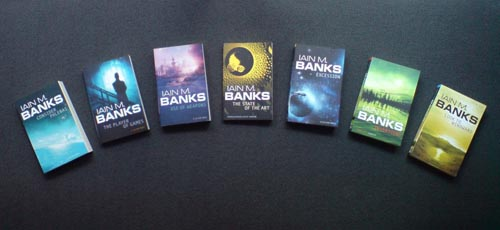
Another week! We’ve got two new kiddos with us moving forward. Andrew Findlay will be by to talk about sci-fi lit in just a few minutes – love him like one of your own. It’s a helluva read. After that, we’ll hear from our official gaming correspondent Brent Hopkins in a new feature about the good stuff and bad stuff about casual gaming. It’s more than Candy Crush. We promise.

We’re also answering another Tough Question this week. What would you want your last status update ever to be? What comes up when you Google yourself? Mine’s boring – but that’s because they haven’t found what I buried yet.

Put your feet up, stay awhile.

Image source: Amazing picture from Wiki.

Worst Best Picture: Is Crash the Worst Oscar Winner of All Time?

crash-4-large

Alex Russell

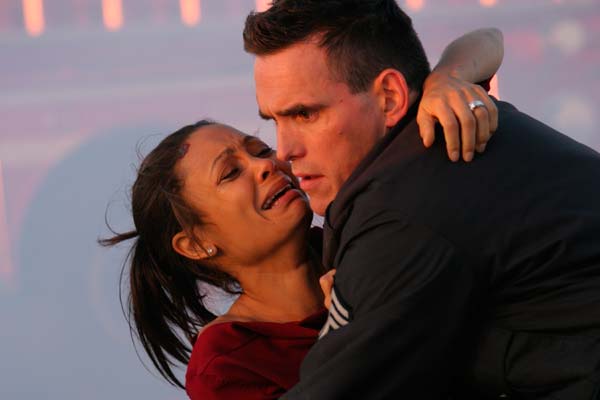
On March 5th, 2006, America watched the Academy of Motion Picture Arts and Sciences award Crash the Academy Award for Best Picture. I didn’t personally watch the 78th Oscars, but I like a good movie as much as the next person. A few years later, I put Crash on my Netflix queue (back when people still had a Netflix queue for discs) and I waited.

Crash came. I watched Crash. I did not like Crash.

I still remember watching it on a tiny TV in a kitchen in Memphis. I remember wondering what I was missing and what everyone else had figured out. I watched the climax twice to try to pull out whatever beauty that other people saw in it. I couldn’t figure out what was wrong with me.

History has not remembered Crash fondly. It tops a number of lists of “worst” Oscar winners ever. Now that we’ve had plenty of time to crown other winners and compare them to Crash, we’ve got enough time before it and time after it to ask this question:

Is Crash the worst movie to ever win the Oscar for Best Picture?

With Argo last year, there are 84 other choices. We’re going to check them all.

In 2014, we’re going to watch every single movie that has ever been named best of the year. We’ll compare all of them to that most-hated-of-them-all Crash. Future editions of this feature will explore one of the other winners and then compare it to Crash, but we’ve gotta start somewhere.

We’ve gotta rewatch Crash itself.

I bought Crash with actual, real money. It turns out that it’s cheaper to buy the damn DVD than to get it any other way online. So now I have this shame capsule, forever. Some part of me wants to justify this purchase as “research materials” or “sources” or “self-inflicted punishment” The truth is that I had to know if it was as bad as I remembered it. I’ve actually only seen about 20 or 30 Best Picture winners, and for all of them I am going to revisit them completely. Crash can be no different.

The first thing you notice when you watch Crash is just how quickly it is… stupid. Calling a movie “stupid” is a simple criticism that should generally be reserved for much more base subject matter, but Crash starts off with an onslaught of some of the most asinine and insulting dialogue ever put to film. The first five minutes has dozens and dozens of slurs. You are struck, as a viewer, at how this not only isn’t the best movie of 2004, but how it barely feels like a movie at all. It feels more like a play written in a creative writing class full of teenagers. It is relentless with its message, and it assumes that you, as a viewer, will forget what it means to say if it ever stops saying it for one second.

For those of you who have not seen it, Crash is about racism. A handful of people in Los Angeles interact with the classic “other” stereotypes that they are most afraid of until they are all connected by a shoestring plot. Everything that happens in the movie serves to “challenge” the viewer. No one is “good” and no one is “bad,” everyone is just afraid of the “other.” Black people get pulled over and are mistreated by white people. A Chinese man gets run over by black people who essentially leave him to die. A white lady feels threatened by a Latino who is fixing her lock. There’s no reason to delve into the specifics of the plot. It is enough to know that Crash really, really wants you to think about what you think you know about racists. Surprise, everyone is racist at all times, to everyone.

It becomes a challenge to find any character with any redeeming qualities. People don’t act like people, they act like stand-ins for evil ideas. You know when you read an obvious allegory and someone’s name is like, Charity, or Hope or something and you roll your eyes because the author thought you were so stupid that you might not understand anything not spelled all the way out for you? Crash is worried you will miss the forest, the trees, and the ground. It’s shocking people aren’t wearing T-shirts that list the themes they represent on them.

In one of the opening scenes, Ludacris carjacks the Defense Attorney of Los Angeles. He does this after giving a long speech about how he felt discriminated against when he didn’t get enough coffee with his spaghetti at an Italian restaurant. You can accuse me of leaving out parts to make that sound absurd, but then you’d have to see Crash, wouldn’t you?

Is Crash all bad? No, not by a long shot. There are actually some decent scenes in the second act of the movie, but they are all shattered by these interjected lines. Every time some tension develops or a conflict goes somewhere, someone all but screams a slur at the camera. It robs the movie of any authenticity. This gets especially meta when one of the characters on a movie set hears from Tony Danza that a black character isn’t “authentic” enough. It’s clearly supposed to make the recipient of the message uncomfortable, but it is not something an authentic person would say. The movie is evil and calls this “normal.” If you want to make a movie about how no one is truly good or evil, you can’t make everyone evil all the time. There’s no baseline. It’s sci-fi without rules.

Some special attention needs to be given to the music. Nearly every “important” scene where two stories intersect has this weird Gladiator-style choral music over it. The effect is that even when a scene is in danger of getting to a good place, it takes you out of it. It happens every time the movie gets really, really proud of itself. It never happens deservedly.

If it was just some movie that came on TBS on a Saturday afternoon you would watch five minutes of it, snap back into yourself, and turn on some other horrible movie. The biggest sin of Crash is that the people who tell us what the good movies are say it was the best of them. It should just be a forgotten, weird piece of 2004. It’s not, though, and that’s why we embark on this journey.

The Best Part: There’s an OK scene with Terrence Howard. He does OK in one scene where he gets carjacked. That scene immediately becomes one of the worst of the movie when cops with shotguns stand down after they are asked real nice.

The Worst Part: At one point, a character shoots a kid. The kid doesn’t die (because the gun is filled with blanks) and then the family walks away and leaves the shooter standing in broad daylight. If you shoot at my kid, we’re at least going to have a conversation.

Honorable mention for worst goes to Sandra Bullock, who plays a completely useless character that does not drive any element of the plot. I’m not anti-Sandra Bullock, but whoa. To call her “misused” implies that they made an attempt. They did not.

Next time we’ll be back to compare Crash to another movie. We will not stop until we have done our due diligence. We’ll answer this, once and for all: what is the Worst Best Picture?

 Image credit: IMDB

In Defense of The Big Bang Theory

Mike Hannemann

Here’s an argument defending why that show currently holds a one out of three thumbs up on my TiVo.

The Big Bang Theory can be a touchy topic to talk about. On the one hand, it’s the highest rated sitcom on TV. On the other, it’s been called incredibly lazy (and even offensive) television. I’d like to point out some word choice there because it’s crucial for my argument.

This show is a “sitcom.” Not a “comedy.” That’s an incredibly important distinction. The two can oftentimes be one and the same, but sometimes a show will draw a line in the sand and decidedly state what they intend to be. Sitcoms are rarely, if ever, truly great television. Cheers  and Seinfeld, yeah, these were sitcoms that redefined their genre. But not every comedy is a sitcom. I’m not saying that BBT is comparable to Archer, Louie, Parks and Recreation, or even Workaholics. A sitcom is a decisive format. There is an X, Y, and Z to every script. There’s even three set locations that most of the major scenes will always take place because they have to be built, on a sound stage, and filmed sometimes still in front of an audience. It’s popcorn TV. It’s something to throw on after dinner. In a landscape of Last Man Standing, Modern Family, The Middle, and Men at Work (TBS is really trying to produce sitcoms these days) my argument is simply that it does deserve to fall on the higher end of things.

Objection 1: The easy joke

Let’s call this one out right away: the most common criticism I hear is that show isn’t funny because it falls back on that stereotypical nerd joke over and over again. That guys who read comics can’t talk to girls and have no social skills and can speak Klingon. It’s the same joke that’s been done on everything, including The Simpsons (hell, that show created the mold many of the characters on BBT are based on). If you can’t get past this fact, stop reading. You won’t be able to access the better part of the show. If you can muster it up to roll your eyes at the softballs there’s something better there.

This is largely character based. Reactions to jokes are just as enjoyable as the comedy itself. The actors can deliver physical comedy and read lines the right way to make it more amusing when on paper it’s probably pretty brutal. You can forgive a comic or even a friend for making saying something stupid in jest if they’re likable. It’s what makes easy jokes OK. A lot of times, something isn’t funny because of the words used – it’s funny because that specific character said it. The more time spent with the cast, the more you appreciate that. More on this shortly.

Objection 2: Interest

Regardless of a show’s writing staff’s ability to write jokes, it’s far worse if they can’t write anything interesting. I would argue that a sitcom with lame jokes but an interesting setting is far more acceptable than a sitcom that’s just boring. A sitcom with puns and fart jokes that can hold your attention is better than anything ABC churns out where you can’t even remember any of the characters’ names by the end. BBT offers something to the television landscape to at least define itself as something with the possibility for stories that haven’t been done to death.

Set at a university and having a majority of the characters academic successes allows the writers to explore cliches in different settings. It’s a sitcom – it’s nearly impossible to think “this hasn’t been done before” but the new benchmark in the genre is “this hasn’t been done THIS WAY before.”

Objection 3: The characters

This is actually the biggest strength the show has going for it. People see the Sheldon character (Jim Parsons’ role that won him Emmys over Steve Carell on The Office year after year) and are immediately turned off. I’ll give ground on this. A lot of the focused on his eccentricities which you can compare to Seinfeld’s Kramer (at best) and Family Matters‘ Steve Urkel (at worst). It’s jarring and off putting – but it isn’t all that’s there. You have to get past this point.

The show wisely realized it couldn’t carry the same joke over and over again for multiple seasons and actually had characters grow and develop to the point where the joke couldn’t be made anymore. Hell, jokes made at the expense of others but all of the main characters are hugely successful over the course of the series run thus far. BBT doesn’t treat its characters as punching bags (well, not all the time) when it comes to real issues – just in the moment of the easy joke. As the characters develop, bits and pieces of lame easy jokes fall to the wayside for the better character driven humor. And better defined characters were added to the current cast.

I’m specifically referring to the women added to the show, this is another. As much as the early seasons relied on Sheldon being… well, weird, to attract viewers the staff added more female characters to the show. Non stereotypical ones that blended naturally with the developing cast. They’re a highlight on the show now and are actually written well. It isn’t the usual Chuck Lorre Two and a Half Men treatment. Sure, there are still stereotypes (it is CBS after all), but now there’s a fully fleshed out cast.

Closing argument:

I doubt this will change any minds as to whether someone will ever watch this show, but I offer this up as an explanation for the millions of people who do. This isn’t ground breaking television. Hell, it feels silly analyzing it this in depth (even though the AV Club does it weekly). But as far as sitcoms go, it’s on the higher end. It’s something to throw on if you have a bad day and just need some popcorn TV to relax. Get past the things people who don’t watch the show already know about it and you’ll find the reasons people do.

This Looks Terrible – Ride Along

Ride Along (2014)

Alex Marino

In “This Looks Terrible” we look at previews for upcoming movies. We… probably look too closely.

This poster kills me. Why the hell are Kevin Hart and Ice Cube looking at each others’ foreheads? Is this actually some sort of weird forehead fetish movie that’s being billed as an awful semi-buddy cop film? Maybe they want to make this movie seem like a waste of time so only the hardcore forehead-fetish enthusiasts see it?

This trailer has everything I look for in a “haha this person shouldn’t be doing this job!!!!” movie. Startle the skittish main character? Haha look at him overreact and dramatically break everything not bolted to the ground! Oh man Kevin Hart is about to fire a shotgun when he obviously doesn’t know how! And hehe look at him get catapulted backwards because he underestimated the kickback! Original! Lol Kevin Hart shot a guy when he didn’t mean to! Accidental gun violence is hilarious! And don’t forget to make tons of jokes in the face of mortal peril!

But movies like Ride Along are supposed to be stupid. You’re not going for awards when you have Ice Cube and Kevin Hart as your leads. But they’re perfect for these roles and if you aren’t sick of Kevin Hart yet (what is wrong with you?) you’re probably going to enjoy it. If I had to spend 100 minutes with Ice Cube and Kevin Hart I’d just rather watch this video with Conan 10 times.

Image credit: IMDB

THEY BLEW IT UP!

Alex Russell

Today we’re gettin’ into it.

Alex Marino will be by in a few minutes to tell you about the trailer for Ride Along. There’s a solid Conan clip with it, so if nothing else you can enjoy that.

Mike Hannemann closes us out today with a strong defense of a show that it hurts me to even mention. I can’t believe it – but this man offers a defense of The Big Bang Theory. Maybe you’ll agree with it and maybe you won’t. I have strong opinions about the show, but we cast a wide net here.

Big tent! Big ideas! We’re tackling the big stories here, kiddos. Tomorrow we’ll be back with a new feature and hot dogs, Cokes, and balloons for the kids.

Note: Some of that statement is false. Some of this is true. Tricks!

Image source: screened.com

This Looks Terrible – Jack Ryan: Shadow Recruit

Alex Marino

Watch this shitty trailer for Jack Ryan: Shadow Recruit. This is a great example of a “phoning it in” film where all the stars are just doing it for the money. Chris Pine is just looking for a paycheck while he waits for the next Star Trek movie to start filming, Keira Knightley is praying to be cast in another film adaptation of a literary classic, and Kevin Costner still can’t figure out how to make another great baseball movie.

My favorite part about this trailer is the awful audio editing. The first two words are “Jack” and “Ryan” and it’s painfully obvious they are from two different scenes in the movie. It blows my mind that they couldn’t find an audio clip where those two words — the name of the fucking title character — were spoken consecutively. At first I thought it was just lazy but isn’t it actually more work to splice the audio together than to find the part in the movie where they speak his full name?

But the crown jewel of this trailer is its inability to match up the dialogue with what the characters are actually saying. While Kevin and Chris are on the bench and Pine says that “there’s gonna be a coordinated attack on U.S. soil” (which is also spliced audio) you can see during the closeup he’s saying exactly zero of those words. At 0:21 Costner says “secrets” but his mouth looks like he’s actually saying “five” which is probably an optimistic IMDB score for this shit tier movie. They’re not even trying at 0:17 when Pine sees Knightley in his hotel room. She’s supposed to be saying “say they are” but it looks more like “good job,” which coincidentally is the opposite of the quality of work the editors did on this trailer.

In all honesty this movie is going to be great for what it is: a garbage action thriller where Chris Pine has to kill Kevin Costner so he can morph into Smaug and eat Martin Freeman by next Christmas.

Image credit: IMDB

Poetry For People Who Hate Poetry: You Might Avoid This Dog

Austin Duck

I want to talk about Frank Bidart’s newest book of poems, Metaphysical Dog, not because it’s good necessarily (I’m not sure if it is), but because it’s garnered so much critical attention and praise from high profile places. In fact, it’s listed as one of only two books on poems on The New York Times 100 best books of 2013 list and has, as of a few days ago, been shortlisted for The National Book Critics Circle prize, one of the most prestigious in the (po)biz. The problem with this is that I know, for certain, Metaphysical Dog is not that good.

While I think we all know how poetry prize-ry works (haha just kidding. No one cares!), I’ll explain it here: poets do great work when they’re younger, win nothing because they’re thought of as idiots and assholes and upstarts, grow older, make friends, write worse poetry, and win a big prize because of work they’ve previously done. Sure, this sounds reasonable, finally getting what is owed and the like, but it’s fucking confusing. Allow me to make an example: imagine a world that gave a Nobel equivalent to the writers of horror stories. Now, we all know that, eventually, Stephen King would get one, probably for The Stand (because it rules). Now, imagine if, 30 years after writing The Stand and getting nothing, King won for that really bad book about evil cell phones. You’d be confused, right? You’d want to say Hey, why did this pile of garbage win when there was much less-garbage-y stuff around? I mean, if his peers pass him up when he’s brilliant, does he then deserve to be rewarded retroactively for continuing to produce, even if the later word is much less compelling? I don’t know.

And that’s where I come to Metaphysical Dog. It isn’t a bad book (note: when I say “bad” in terms of poetry, I mean James Franco bad, who Bidart, incidentally, is obsessed with); it carries forward everything characteristic of Bidart’s work: the highly personal subject matter, the heavy reliance on abstraction to redirect narrative situations, the kind of “yelling” he does with CAPITAL LETTERS, and his use of sections. However, somehow, it does so with less gusto than his previous work. In many ways, it feels less imperative, despite the fact that, in many ways, the subject matter should be quite the opposite.

Throughout the book, Bidart weaves together his concerns about his homosexuality, mourning the death of his mother (who never knew he was gay and would, likely, not have been super cool with it), the disagreement of body and spirit, failure at love, obsession with art, creation (and Creation), art as metempsychosis (I know, I know), and, ultimately, the way in which whatever you find “hardest to/swallow, most indigestible” becomes your (private, inarticulable) food (“Of His Bones Are Coral Made”). And, remarkably, it all comes together, adds up, the sum of the poems in the book are coherent(ish) and meaningful, accessible to the reader (at least ones who are more familiar with reading poetry).

At this point, I’m sure you’re thinking why is this guy being such a prick about this book? Being able to fit all of that stuff in 108 pages and it not come out total slop sounds like quite a feat. And it is, you’re right. But, despite the mastery of narrative patchwork and creating, among disparate narratives, a kind of mirror, there’s a lack of urgency characteristic of Bidart (see “Herbert White”. Really. This is poetry for people with no interest in poetry. I got 30 frat boys into a 3-hour discussion over this last spring). I think, though, I’ve already articulated all of what I’ve been struggling with; I just haven’t yet put it together for myself or for you. My apologies. I’ll do it now.

Metaphysical Dog is ultimately a book of silences. I know, I know, I’m being a poetic dick-bag again, but bear with me. Ultimately, the private, inarticulable food that concludes the book, the “private accommodations” for us “poor mortals” (“For an Unwritten Opera”) that amount to meaningful experience (in love, in dealing with the body, the death of a mother, the philosophical problems of history and mourning and sexuality and the relationship between the mind, the body, and culture) is just too much, too private to Bidart’s own. And I mean private as in not shared, not as in not universal enough. Though he argues in “Writing ‘Ellen West’” that “the particularity inherent in almost all narrative… tells the story of the encounter with the particularity that flesh…must make” (i.e. that the narrative particulars are what makes an art-object speak), he himself, in the work that follows, fails to make flesh. Instead, we are given, both in content and in structure, space.

Many of the poems are spaced like this and just as abstract:

“Name the Bed”

Halflight just after dawn. As you turned back

in the doorway, you to whom the ordinary

sensuous world seldom speaks

expected to see in the thrown-off

rumpled bedclothes nothing.

*

Scream stretched across it.

*

Someone wanted more from that bed

than was found there.

*

Name the bed that’s not true of.

*

Bed where your twin

died. Eraser bed.

And, while you might be willing to give in to the indulgence in a poem or two, think to yourself Wow, that’s cool, I sort of know what he means, poem after poem reveal a book that effectively works against itself, obscuring everything it wants to uncover. Too many are the places in the text where we’re tempted to “read into them” the way we read into popular art or music—not as empathy machines through which we’d experience (i.e. feel AND understand) others as ourselves, but as endless mirrors that reinforcing our own emotions (like the way, in second grade, I thought that Tonic song “If You Could Only See” was about me explaining to my mother why I was going to marry this girl I was in second-grade love with.) Basically, the structure and abstraction ask us to read ourselves into parts of any given poem because the poems themselves don’t sufficiently tell a story. Bidart ultimately doesn’t give us enough of the personal for us to empathize; many of these poems just don’t have enough flesh to make them human.

And I’m not saying that poems shouldn’t leap associatively from one subject to another. But there has to be a logic there, a full-enough-ness for us to see the mind of the poem (rather than filling in ourselves for that absent mind).

So that’s why I’m confused. It’s a good book of poems and a bad one, and, yeah, Bidart’s written some real stunners in the past (like 20-30 years ago), but I’m just not convinced that’s enough to suck this Dog’s dick (that might be too much. Sorry y’all).

Breaking New Ground!

Alex Russell

Day three here and we’ve got two new features! Austin Duck joins us today to share some “Poetry for People Who Hate Poetry” which, when you think about it, is for you no matter who you are, right? There’s some salty language in that one, but we’re all adults here.

Alex Marino also launches a feature today as he breaks down previews for upcoming less-than-masterpieces with his feature “This Looks Terrible.” Today is the new Jack Ryan movie. Watch it with us, won’t you?

Well, watch the preview with us.


The Game for People That Don’t Play Games: Gone Home

Alex Russell

If you play games, you have probably already made up your mind about Gone Home. You either played it on recommendation from just about everyone’s top 10 lists from 2013 or you decided it wasn’t for you and moved on. Whichever camp you fall into, I’m not going to be the deciding vote. I’m not going to be the reason you play Gone Home if you already play games.

That’s because I don’t think it’s necessarily best suited for that crowd. Gone Home is entirely story-driven. You play a girl who comes home from a vacation abroad to find that no one is at home in her family’s house. You wander the creaky halls and get occasionally freaked out by the storm outside. From the moment you launch the game on the patio outside and start looking for clues, you are drawn into a world that doesn’t seem to have a lot of answers.

It raises plenty of questions. You find out about your own life from postcards that are collected on end tables. You uncover your mother’s struggles at work and your father’s minor downfall as a fringe author through the minutia of their lives in notes and letters. The more you pay attention to letters behind false backings in desks and the little details of the house itself the more you are likely to uncover the full story.

It’s tough to ignore the parallels with mystery. The meat of the story is your younger sister Sam, and the main storytelling device is her narration. As you find the different “big” parts of the story Sam speaks to you right out of her notebook. There’s no good way to talk about this and still have this serve as a call to action to play the game, so let it be enough to say that Sam has the conflict. The key to a good story is to make the character want something, and Sam definitely wants something.

On Metacritic, Gone Home has an 86 from critics and a 5.4/10 from users. That kind of disparity between critical success and the average person’s feelings on the Internet isn’t shocking. It’s easy to oversimplify and say that gamers don’t “get it,” but I don’t think that’s it. Gone Home probably isn’t what people expect to play when they hear that it is a “game of the year” candidate.

Gone Home is played from the same perspective and with the same ambiance as a million other games. The great majority of games that happen in worlds like this have zombies or ghosts or madmen or something else, waiting to stab you the shadows. Those games aren’t more or less than Gone Home, and I made it the entire way through the game still expecting something to jump out and ruin my world. I firmly believed this, all the way through the “last level” which is especially spooky. A run through the basement that I played with my lights in my apartment turned off got to me as much as any Resident Evil game ever did.

Gone Home is clearly happy to live in this expectation. They want the average gamer to expect to deal with the undead, but they probably also want to freak you out if this is the only game you play all year. The controls are as simple as any browser game and it’s impossible to not understand what’s being asked of you. It is a game that lives on expectations, tone, and mood.

So that’s probably why the response differs so much. It won’t challenge you in the way you might expect to be challenged by a video game. The “puzzles” boil down to things like finding a safe’s code in a book or figuring out how to knock something off a shelf by throwing a can at it. None of that matters to me.

What matters is that the critical praise for Gone Home says a little bit about the insecurity of people who play games. Gone Home is one of the greatest stories I’ve seen in a game, but it’s simple. Bioshock Infinite told a much more complex, winding story in 2013 and did so with a lot more of what I’d consider “gameplay.” But I walked away from Gone Home with a better experience.

A lot of people’s first criticism of video games is that they are violent, but Bioshock Infinite even got criticized by the best gaming journalists as too violent. People labelled the carnage distracting, and I certainly found myself frustrated sometimes that it wasn’t spending more time on the story I loved so much. We’re going in the right direction when that’s a criticism: more story, less traditional “game.”

People might argue, “why don’t you just watch a movie?” Gone Home is the best argument 2013 has, and it is definitely time for you to consider playing a game.

Gone Home is available on Steam for $19.99, and it does go on sale from time to time.

Image source: The Fullbright Company