Movies

Worst Best Picture: Is The Lord of the Rings: The Return of the King Better or Worse Than Crash?

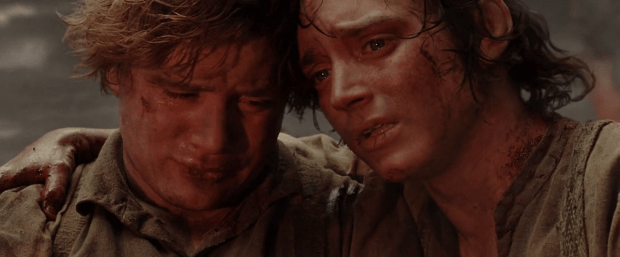
Frodo_and_Sam_at_Mt_Doom

Alex Russell

In “Worst Best Picture” we search every single Best Picture Oscar winner of all time from 1927 to present to uncover the worst of them all. Conventional wisdom says that 2005’s winner Crash is the worst winner in history. We won’t stop until we’ve tested every last one. Read the the first, our review of Crash, here. All posts should be considered to have a blanket “spoiler alert” on them. Today’s installment is the 2003 winner The Lord of the Rings: The Return of the King. Is it better than Crash?

You’re not supposed to read comments online. Everyone knows that. I try not to, but I had to see what people hated about one of the most decorated Best Picture Oscar winners of all time.

There are 15 negative reviews for The Lord of the Rings: The Return of the King on Rotten Tomatoes. One review says that the epic story of orcs, hobbits, and elves lacks “believability.” One calls it racist. One says it “lacks substance.” None of these are actually reviews of the movie, they’re reviews of the book masquerading as movie reviews. They are all written from a perspective wherein the reviewer either isn’t aware of the wildly popular source material or doesn’t care. All 15 are varying degrees of mad at Peter Jackson for supposedly making “The Lord of the Rings” idea up, and they all seem to believe he shouldn’t have bothered.

Whenever you can’t stand something that everyone likes it can be easy to entrench yourself. All 15 reviewers there saw a movie that made a billion dollars and tied Titanic and Ben-Hur as the most decorated Academy Award-winning movie of all time. They saw this movie, they hated it, and they demanded the world know of their hate. Awards and box office totals aren’t the only measures of a good movie – Crash won three Oscars and made nearly 100 million dollars and the entire point of this series is to prove that it is a very specific kind of awful movie – but it is easy to see how those 15 people had to swing for the fences.

The final Lord of the Rings movie went up against Lost in Translation for its Best Picture award. The contrast there is interesting, and I have to wonder if there’s a bigger possible disparity between “loud” and “quiet” in two movies. The Return of the King was a slam dunk in many ways, especially because its award seemed like destiny after A Beautiful Mind and Chicago beat the first two installments.

It’s a strange experience to rewatch it in 2014. It’s very hard to avoid the Lord of the Rings movies in our world. There has to be some broadcast law about one of them being on TNT or FX every single day. I sat down and watched it again and was left with a feeling of great contentedness. I was glad to see that a movie I remembered as a masterpiece held up. It’s strange at times and wonderful in unexpected ways at others, but it is a mammoth achievement of filmmaking that deserves the accolades it gets.

I also briefly considered exploring how Faramir’s attempts to earn his father’s respect parallel the attempts of Terrence Howard’s character in Crash, but then again, life is way too short to think about that even long enough to finish this sentennnnnnnnc ugh ugh ugh ugh.

The Best Part: The fight at Minas Tirith feels huge and important, and the shifting perspective from inside and outside the castle walls makes it feel more like a fully realized fight. There are multiple “starts” to the fight that all allow for different discussions of heroics and bravery. There’s nothing to not like about how the whole thing is handled, and the most fascinating part of it is just how early it happens in the movie. There’s an entire hour of “climax” after Minas Tirith, but it’s in that battle that the movie won its Oscar. Watch something like Troy try to do the same thing and you will gain more respect for it.

The Worst Part: It’s tempting to call this the length – the unextended version is well over three hours – but it’s more just the ending itself. The movie is great at pacing until it absolutely is not, at all. This is especially telling because the actual end to the novel has even more than the movie does. It seems like if they had already decided to cut off a big part of the ending, then what’s the harm in going even farther?

Is It Better or Worse than CrashCrash has no hobbits in it, so of course it is a lesser movie. No, but really, it’s possible to consider The Return of the King an oversized popcorn movie or to judge it on length. It’s also worth discussing to question if it represents the source material completely; there’s a lot left out that some viewers might see as worthy of inclusion. Whatever stones you turn over to try to pick apart the best of the Lord of the Rings trilogy, though, you will not find a problem that helps you compare it to Crash.

Worst Best Picture Archives: Crash | Terms of Endearment | Forrest Gump | All About Eve | The Apartment | No Country for Old Men | Gentleman’s Agreement |12 Years a SlaveThe Last Emperor | The Silence of the Lambs | The Artist | A Man for All Seasons | Platoon |

Alex Russell lives in Chicago and is set in his ways. Disagree with him about anything at readingatrecess@gmail.com or on Twitter at @alexbad.

 Image source: Oscars.org
Worst Best Picture: Is Platoon Better or Worse Than Crash?

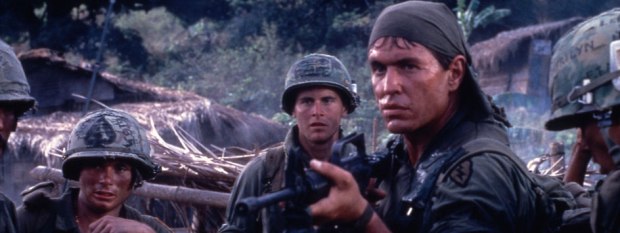
1987_iconic_picture_platoon

Alex Russell

In “Worst Best Picture” we search every single Best Picture Oscar winner of all time from 1927 to present to uncover the worst of them all. Conventional wisdom says that 2005’s winner Crash is the worst winner in history. We won’t stop until we’ve tested every last one. Read the the first, our review of Crash, here. All posts should be considered to have a blanket “spoiler alert” on them. Today’s installment is the 1986 winner Platoon. Is it better than Crash?

If someone asked you to see a movie about the evils of war and the dual nature of man with regard to good and evil, you might be on board. If someone told you that movie had Charlie Sheen at the center, you would need to ask what year it was.

Charlie Sheen’s career is a curious one. A few years back people were going to Charlie Sheen live shows just to see what he’d do. He went crazy in public and everyone gawked at it because mental stability is razor-thin. Everyone is afraid to lose their mind. Everyone is fascinated to watch it happen to someone that, apparently, no one really wants to help.

Tiger blood and whatever aside, Platoon is Charlie Sheen in Oliver Stone’s manifesto about how war is hell. He joins a huge cast that also includes Forest Whitaker, Willem Dafoe, John C. McGinley, Keith David, and Tom Berenger all yelling at each other about how best to handle being left in Vietnam with no clear purpose. It’s certainly about Vietnam, but it’s also about how adversity changes a person. The titular platoon is divided into two camps. One follows Dafoe’s by-the-book approach of not murdering and raping people, the other sides with the crazed Berenger and his apparent plan to save the village by destroying it.

This may sound odd, but there’s an awful lot of actual war in this war movie. People who watch Full Metal Jacket for the first time are often surprised that the entirety of the scenes and quotes they know all happen in the first half hour or so. All of Full Metal Jacket‘s cultural cache happens before they even get to the damn war. Not so with Platoon. Oliver Stone makes a deliberate choice to keep the camera on the violence. Over and over, the cast is thrust into the jungle to get shot at again. It’s a two hour movie and at least a full hour of it takes place with gunfire in the background.

The effect is very real: War is everywhere, and when you are at war, doubly so. It makes for an uneasy viewing that constantly drills home what Oliver Stone wanted to say: Do not ever romanticize this. He’s said that he made the movie because he felt that too often audiences were only presented with positive and heroic portrayals of war.

Platoon is a brutal movie. When McGinley’s character saves himself during a firefight by hiding under dead bodies, it is both frightening and sad. The Vietnam War is never an easy subject to discuss in American history, but the general consensus seems to be that it was at the very least a damned shame. Platoon is essential viewing to understand the American experience, and whatever you think of Oliver Stone’s personal politics, this movie’s only agenda is tough to debate.

The Best Part: For sheer memorability, the scene where McGinley covers himself with a body to survive stands out. The firefights are so arresting that even 30 years later they still create a sense of anxiety and dread. Forrest Gump‘s ‘Nam is very similar, but it doesn’t feel like it matters. This feels real — too real — and the movie hums because it scares and depresses the viewer.

The Worst Part: Berenger’s character is a brutal villain. War movies often only show one side of a conflict, so it can be tough to discern a “villain” in the classic sense. In this movie, it’s definitely him. He tries to sow dissent through violence and threats. He reacts to someone saying that he should cool down by burning down a town. He’s the violence in all of us wrapped up into one scarred up guy. If there’s an issue with him, it’s that he’s never really explained. He’s left as this uber-asshole, just a guy who wants chaos for chaos’ sake. Those people assuredly exist, but he could be deeper with some motive.

Is It Better or Worse than Crash? It can be tempting to just say that Platoon is good and Crash is not, but it’s about the whyPlatoon stirs the pot by forcing Americans to watch one of their greatest nightmares on camera. Crash stirs the pot by demanding that present day is worse than we admit. War and racism are both complicated and both bad, but we’re on board for that. The challenge is to find something new to say, and Platoon does. The “good” guys in Platoon are still burning down a town and at war. They’re still racists and violent lunatics — they’re just less so than their counterparts. Platoon introduces shades of grey into what war does to a person. Crash suggests that shades of grey are just what we pretend exist because we won’t open our eyes. Both are negative messages, but one is without hope, and that’s just not interesting. It’s not the pessimism that dooms Crash, it’s how damn happy to be “right” about its message that does.

Worst Best Picture Archives: Crash | Terms of Endearment | Forrest Gump | All About Eve | The Apartment | No Country for Old Men | Gentleman’s Agreement |12 Years a SlaveThe Last Emperor | The Silence of the Lambs | The Artist | A Man for All Seasons |

Alex Russell lives in Chicago and is set in his ways. Disagree with him about anything at readingatrecess@gmail.com or on Twitter at @alexbad.

 Image source: Oscars.org
Noah is about Vegetarianism, Religion, and the Nature of Man: Should You See It?

noah

Brent Hopkins

In our rarely-running kinda-series Should You See It? we talk about movies that just came out. You can figure out the rest of the premise from the title of the series. That’s right: We talk recipes. Should you see Noah?

I watched Noah a week ago in theaters and I must say I was completely caught off-guard by what I witnessed. To start, I am not a particularly religious person but I have beliefs and I took the smallest bit of them and my fuzzy knowledge of Old Testament scripture with my girlfriend (who is more Buddhist than anything) to the theaters to see the latest Bible film.

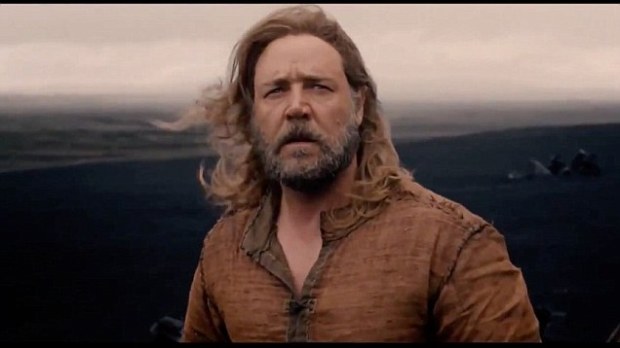
Right from the opening scenes you know that this is not going to be a bright and sunny telling. There is the hunting of an animal for its meat and the immediate comeuppance from Noah (Russell Crowe) showing that hunting animals and consuming them is bad for your health because he will murder punch you into seeing his side of the story. This gives a slightly Gladiator-esque feel to the movie, but instead of fighting Rome, Crowe is now pitted against the fallen of humanity. This is an even more epic scale and the film does a good job of portraying this.

The film is relatively visceral, as much of the Old Testament is, but there are definitely a lot of modern day problems brought up by director Darren Aronofsky. The one that kind of turned me off the most was the heavy handed message that eating animals and general lack of conservation is the stem of humanity losing itself. One of the first things you hear Noah tell his sons is why the humans are hunting animals for meat. He tells them it is because humans are ignorant and think that the meat gives them strength. That was such an in-your-face advertisement for vegetarianism that I felt like I got hit with a Whole Foods ad. This theme is the main thread that continues throughout the film and each time it rears its head I just wanted to scream “I GET IT! ANIMALS ARE SACRED.”

Noah has always been a story about a boat big enough to hold two of every animal. The logistics of this have always been fascinating to me and now that technology and computer graphics have advanced enough to maybe handle this I was intrigued to see how Noah would build this thing and keep all the animals from massacring one another. The world Noah lives in is completely barren of vegetation and animals for the most part. Humans have ravaged the land and nothing is really left. Noah finds a workaround for this by planting a seed that gives him plenty of treesources (get it) to build his Ark. Even still, this would be an impossible task for just Noah and his family (three male children, his wife, and a girl they saved) so Noah gets more physical labor help from The Watchers. These guys are stone-covered golems who have been punished for going against The Creator’s (“God” is never used in the entire film) wishes by being bound to terra firma as opposed to being allowed to fly freely as they once could. They were mostly slaughtered by the evil humans but the remaining ones decide to help Noah as he is the only person they have met to have contact with God in a very long time.

The Ark is built over the course of a few months and the way the animals are dealt with is a huge letdown. They just quietly come in groups of two, they don’t really fight, they don’t really do anything, they just go inside then get put to sleep with a concoction Noah’s wife creates. This is a bit of a copout and I felt like it ignored probably the biggest characters in the Noah story.

Now this would be a pretty boring movie if there was no conflict and well, this is a blockbuster film, so revenue must be made. The conflict comes from Cain, the other side of the human coin. He is the king of the humans and when he notices that all this forest has sprung forth and all this meat is traveling to one location he takes the right amount of interest in the situation and has to see what the deal is. Cain is a savage man who has no qualms with killing animals, humans, and everything in between. He feels The Creator abandoned humans so he is just making do with what he has left. Noah says the people aren’t welcome on the Ark and Cain lays down the gauntlet by saying “when this deluge comes to end humanity I am going to come and take this Ark from you and The Watchers and we will eat all of the animals.” You know he will keep his word and the story gets its big action conflict.

This would have made for a good film but this take pushes the envelope in a great way by focusing on Noah as a human. The Creator has said that animals are the innocent on Earth so Noah takes this extremely literally and makes the jump that he must kill himself and the rest of his family must die as well. You watch the deconstruction of a righteous man over the entire course of the film and the pressure that is placed on a family when going against a higher being. Noah becomes a person you grow to somewhat despise over the film, and by the time he and his family are on the Ark it feels less like a new beginning for the world and more like a suspense thriller. You know something is going to have to give but you don’t know how Darren Aronofsky is going to take the story.

Should You See It? 

I would have to say yes. This is not the best film I have ever seen, but I will say it raised a lot of questions for me and really makes you think about the story of a human dealing with a superhuman situation. You never think about all the people that Noah has to knowingly leave to perish or how a person would have to deal with unclear directions from The Creator. I have had more conversations with people about this film than many others I have seen over the years, and it has something for religious and non-religious persons alike. I can see why this caused controversy among a bunch of different factions because it is not a movie to please one group or the other, it is merely an adaptation of a story that does have some open-endedness to it.

Image source: Daily Mail

Worst Best Picture: Is A Man for All Seasons Better or Worse Than Crash?

image source: the guardian

image source: the guardian

Alex Russell

In “Worst Best Picture” we search every single Best Picture Oscar winner of all time from 1927 to present to uncover the worst of them all. Conventional wisdom says that 2005’s winner Crash is the worst winner in history. We won’t stop until we’ve tested every last one. Read the the first, our review of Crash, here. All posts should be considered to have a blanket “spoiler alert” on them. Today’s installment is the 1966 winner A Man for All Seasons. Is it better than Crash?

Country music is an unbeatable source for stories about divorce. Tammy Wynette sang the classically-sad “D-I-V-O-R-C-E” in 1968, a song about the then-revolutionary idea that women also experience sadness in a divorce.

It must have been going around, because just two years earlier two films obsessed with divorce were nominated for the Oscar for Best Picture: Who’s Afraid of Virginia Woolf? and A Man for All Seasons. The former is the better movie. Woolf? is a rager of a film, the story of four people’s lives finally going over the falls of madness and sadness at the same time over one night of debauchery and delusion. The latter, A Man for All Seasons, is the quiet story of a man sticking to his principles up until the point that they send him to his death.

A Man for All Seasons is the story of the end of Sir Thomas More, the man who refused to sanction Henry VIII’s divorce… mostly because it involved Henry VIII usurping the Pope and creating a new religion for the entire nation. More stands his ground as the last reasonable man of God in his world, and he’s pretty much right. His only crime is refusing to give the King what he demands, but in his day that’s about the worst you could do.

It’s the story of principles and the lack thereof. More is played as a saint right up until the end. His antagonists scream at him and threaten him and call him an idiot. More takes it all in stride — though he does imply that they’re all going to Hell, so, well, maybe let’s put “stride” in quotes — but he really handles it well until the court scene at the end. He refuses to give a slimy guy named Richard Rich a job in his court over and over because he sees him as disloyal and opportunistic. When Rich perjures himself to send More to death and More loses his damned mind on him, it’s really a popcorn moment in a pretty dry drama about principles and honesty. It’s weird, but it’s awesome.

I’m just going to come out and say that this movie did not blow me away at first. It feels capital-I Important, for sure, but it doesn’t really get going until the second act. The closing court scene is rousing, but there’s a ton of setup to get there. Everyone is very serious — I mean, the King’s killing folks — but even in the context it gets to be a bit much.

Paul Scofield, though! I’ll admit to not being up on my Paul Scofield knowledge, but he’s apparently in rarefied air: He died one letter short of the EGOT. His performance in this movie is amazing. He earns the hell out of his Best Actor award in 1966 for his portrayal of Sir Thomas More, and beats Richard Burton, Alan Arkin, Michael Caine, and Steve McQueen for the honor. If you aren’t going to invest the full two hours to watch Scofield’s fall, you should do some YouTubing for the courtroom scene at the end at the very least. He shines extremely brightly in a movie that’s not necessarily one for the ages.

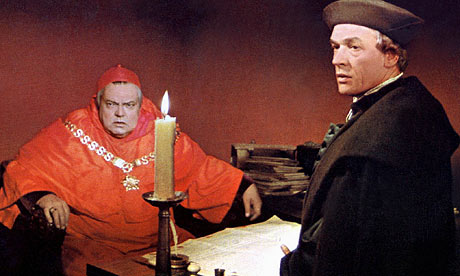
The Best Part: A crazy, drunk-off-his-ass looking Orson Welles! He plays Cardinal Wolsey, the brief boss of Sir Thomas More. I say brief because he has two scenes: He shows up and yells at More and then gets hauled off to die immediately in prison. The movie’s cast may be largely unknown to the average modern viewer, but it’s impossible to miss Orson Welles. He looks enormous in Cardinal robes and it’s impossible to imagine that he lived for two more decades after this performance. It’s amazing.

The Worst Part: The setup of the story of Sir Thomas More’s undoing is an interesting part of English history, but it’s not a very fascinating thing to watch. This thing wakes up like it doesn’t want to go to school in the morning. It’s almost 40% of the way into the movie before anything “happens” in a sense.

Is It Better or Worse than Crash? It’s absolutely not an unremarkable movie, but it feels like an odd choice for Best Picture. Crash seems a ridiculous choice. It seems absurd that it would even be thought of in a positive light in the first place, much less the most positive light. A Man for All Seasons maintains all of the gravitas that won it Best Picture all those years ago, but it doesn’t feel essential. It does feel good, though, so it’s several magnitudes better than Crash.

Worst Best Picture Archives: Crash | Terms of Endearment | Forrest Gump | All About Eve | The Apartment | No Country for Old Men | Gentleman’s Agreement |12 Years a SlaveThe Last Emperor | The Silence of the Lambs | The Artist |

Alex Russell lives in Chicago and is set in his ways. Disagree with him about anything at readingatrecess@gmail.com or on Twitter at @alexbad.

 Image source: Oscars.org
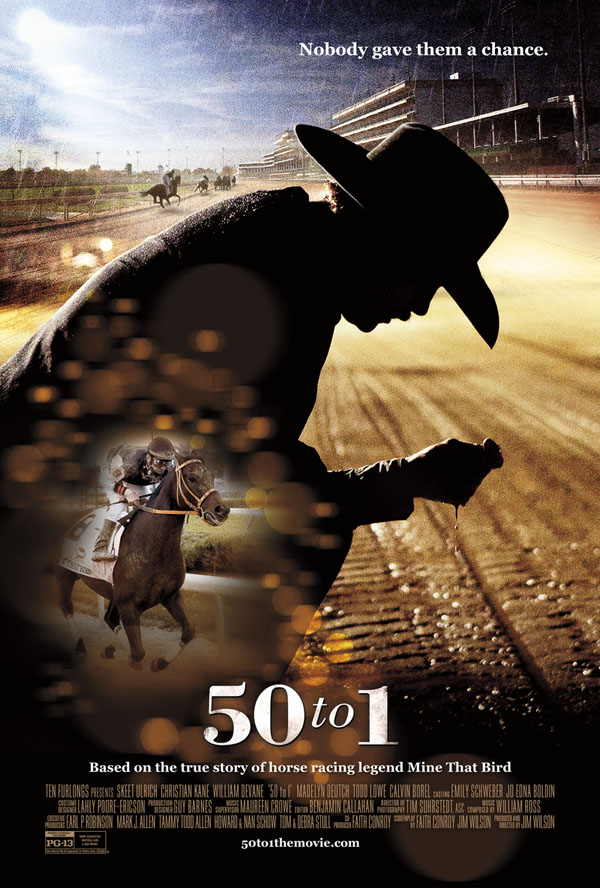
This Looks Terrible: The Preview for “50 to 1”

50-1_1-Sheet_77.indd

Alex Marino

In “This Looks Terrible” we look at previews for upcoming movies. We… probably look too closely.

My brain hurts from trying to understand the rationale behind making a movie about an event that people only care about for three days a year and forget about two days after the event. The movie is called 50 to 1 and it’s about Mine That Bird’s improbable Kentucky Derby win in 2009. Oh, you don’t remember Mine That Bird? Well maybe the star-studded cast of Skeet Ulrich, Christian Kane, and William Devane will draw you to the theaters. Oh, you don’t know who they are either? I’m hoping their marketing strategy involves a TV trailer that includes rave twitter reviews, otherwise maybe 100 people will see it.

This trailer NEEDS you to know that they have cowboys in it. Ulrich and Kane are just two REG’LA COWBOYS with one last shot at making it. It actually contains a scene where there’s a fight at a saloon and a guy goes through the front window like in every shitty western you saw on AMC as a kid. They might as well have used the Benny Hill theme for the first half of it.

And it doesn’t matter that they had Calvin Borel, one of the hottest jockeys at the time, riding the horse. Mine That Bird was a longshot! Except that after the Kentucky Derby he got second and third in the Preakness Stakes and Belmont Stakes, respectively.

But let’s not be too picky. Just know that this film is in the trusted hands of a company called Ten Furlongs. While I thought making a movie about a sport no ones gives a shit about was a bad idea, some idiots decided to make a production company dedicated to it. They spared no expense in getting their visual effects from a company named “Great FX”,,which sounds like the film equivalent of getting dinner from “Solid Restaurant.” With a production budget of $10 million there’s a chance this film will make its money back, but it won’t be with any of mine.

Image source:

Worst Best Picture: Is The Artist Better or Worse Than Crash?

video-artist-anatomy-articleLarge-v2

Alex Russell

In “Worst Best Picture” we search every single Best Picture Oscar winner of all time from 1927 to present to uncover the worst of them all. Conventional wisdom says that 2005’s winner Crash is the worst winner in history. We won’t stop until we’ve tested every last one. Read the the first, our review of Crash, here. All posts should be considered to have a blanket “spoiler alert” on them. Today’s installment is the 2011 winner The Artist. Is it better than Crash?

There are 228 reviews of the 2011 Best Picture Oscar winner The Artist on review aggregate site Rotten Tomatoes. 224 of them are positive. The people have spoken: The Artist is apparently fantastic.

It’s also a slog to watch, and not just because it’s a silent movie made in the last five years. There’s no problem with the artistic choice to make a silent movie the better part of a century after the end of the artform. That much is ambitious and that much is why Moneyball and The Help and everything else that year had absolutely no chance against it.

It’s not “boring,” though that criticism might show up on a lot of personal reviews of The Artist. It’s the story of a silent film star on top of the world who gets dethroned by a young, unknown starlet. They coexist at the top of their game for a while, but she is willing to make movies with sound and he decidedly is not. Sound comes, audiences leave silent films in the dust, and our poor hero refuses to change with the times. Oh, and there’s about 75 minutes of dog tricks. For real.

The Artist made me feel like a teenager in an art gallery. It gave me the feeling of being able to recognize that something is “important” but not being able to pry out why everyone else is fawning over it. The grandeur of the silent film era and the nostalgia for a time gone by is easy to understand. The film pours this on thick as it opens with the cast waiting for an audience to clap after watching a zany sped-up silent film. Everyone loves it, silent movies are just movies, and time is frozen in the Greatest Generation of cinema.

The switch from silent films to “talkies” has a nice effect in the film as the main character starts to actually hear sounds in his life. It’s a neat element of the “silent film about the end of silent films shot after the end of silent films” movie, and it’s a bright spot in a movie that doesn’t take any other risks at all.

The climactic scene of the silent film star burning his original reels carries some heft to it, but it’s almost impressive how slight the entire film feels. This is one of film history’s greatest shifts — and there are scenes where a guy tries to burn down his house and shoot himself — but it embodies the campy feel of a silent movie so strongly that no one ever gets a chance to matter. No one learns any lessons, though they do grow. They grow for no intended reason, however, so the moral is apparently something akin to “just wait and life will work out, even if you try to burn down your house.”

Even if you buy it into it as a period piece (which you must, apparently) it is just such a slow movie. It’s only 100 minutes long — insanely short for a Best Picture winner — but it drags from start to finish. Almost all of the film is in the window dressing, and so if you don’t get into the aesthetic you certainly won’t be wowed by the plot. You’re far better off with All About Eve – just about the same story just a few decades later in time with much, much, much more venom. You might recognize that movie as the way people really behave.

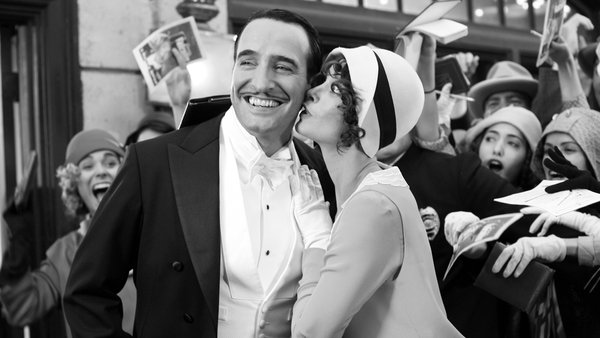
The Best Part: It’s surprisingly sweet at times. There is a very sweet moment where the leads exchange fleeting glances as the silent star walks down a staircase out of the movie studio and the young starlet ascends it. For how hamfisted most of the mugging is later in the movie, this image will persist long after the film is forgotten.

The Worst Part: There was a campaign around the release of the movie to nominate the dog for Best Supporting Actor. I love dogs. In the spirit of a piece where I compare pieces of cinema, this would mean equating Robert De Niro with a dog.

Is It Better or Worse than Crash? I would not suggest that it’s worse, but a lot of that has to do with genre. It’s impossible to compare a movie about the end of an era with a movie like Crash, especially because Crash insists that “post 9/11” is the era of today, tomorrow, and the century after that. The Artist is about growing out of your notions about the future and learning to adapt in a way that you still feel valid. Crash is about how any growth or development is a myth that should be responded to with distrust. You have to change in the world of The Artist. You never can — even if you try, which you shouldn’t — in Crash. How is a movie about the end of a loved artform more hopeful than anything?

Worst Best Picture Archives: Crash | Terms of Endearment | Forrest Gump | All About Eve | The Apartment | No Country for Old Men | Gentleman’s Agreement |12 Years a SlaveThe Last Emperor | The Silence of the Lambs |

Alex Russell lives in Chicago and is set in his ways. Disagree with him about anything at readingatrecess@gmail.com or on Twitter at @alexbad.

 Image source: NY Times

Life After the Star Wars Expanded Universe: Patrick Rothfuss’ The Wise Man’s Fear

Andrew Findlay

In Life After the Star Wars Expanded Universe, we take a look at science fiction and fantasy, why they’re great, and what they say about where our species has been and where it’s going.

Warning: While I wouldn’t really call anything I discuss a big spoiler, absolute purists may want to tread lightly. I discuss some general plot points.

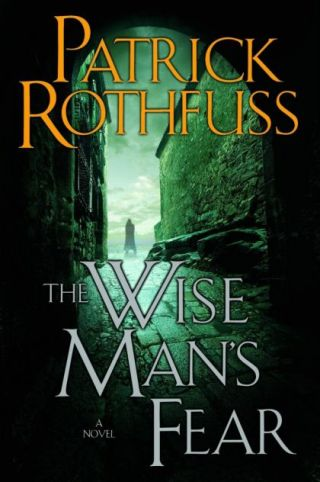
The Wise Man’s Fear has generated a lot of excitement in fantasy circles in recent years. Book Two of The Kingkiller Chronicles, it continues the story of Kvothe, master wizard, musician, and warrior. The framing device for The Kingkiller Chronicles is that Kvothe, the titular kingkiller, has gone into hiding as an unassuming innkeeper in a nowhere town. He has taken the name Kote and spends his time pressing apples for cider and cooking mutton for guests. A chronicler happens upon the inn, recognizes him, and asks to take down his story. Kvothe obliges, and the story starts. It’s an appealing bildungsroman, underdog-against-all-odds type of tale. At the time that Kote/Kvothe is telling his story, he has achieved legendary fame, accomplished a ridiculous amount even by the standards of heroic fantasy, and then retired. When I say “accomplished a ridiculous amount,” maybe I would best make my point by quoting the beginning of his account of his life:

“I have stolen princesses back from sleeping barrow kings. I burned down the town of Trebon. I have spent the night with Felurian and left with both my sanity and my life. I was expelled from the University at a younger age than most people are allowed in. I tread paths by moonlight that others fear to speak of during day. I have talked to gods, loved women, and written songs that make the minstrels weep. You may have heard of me.”

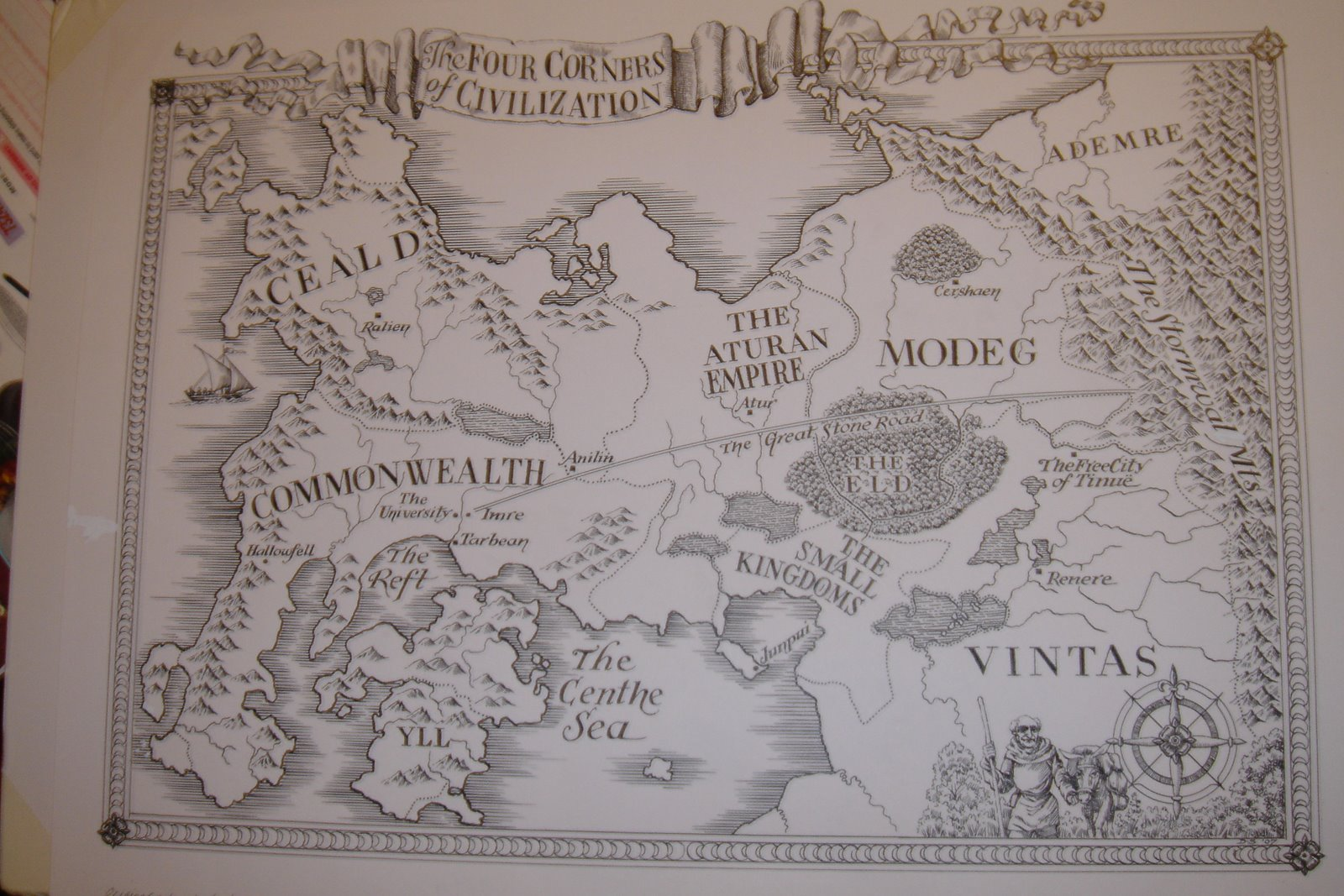
Also, here’s a map. I don’t think you’re allowed to write fantasy without a map.

Kvothe was a big problem for me for a very long time because Rothfuss would hammer down the “Kvothe is so cool!” nail relentlessly throughout the entire first book. The strongest criticism against the character is that he’s a definite Mary Sue. He’s an underdog because he’s a poor orphan, but he is anything but poor talent-wise. He breezes past his magic school entrance exams, grows extremely powerful in magecraft, and is a master musician. The problems Kvothe confronts in the first book seem contrived. Oh, he’s really poor? That must really suck when you’re the most powerful young magician in the entire freaking world. After finishing the first book in the series, I did not come back to it for years, as I’d read in a blurb somewhere that he meets Felurian, an ancient sex goddess who either kills men or drives them insane with her vulvic talents. He escapes, because it turns out that he is so naturally good at sex that he impresses a five-thousand-year-old GODDESS OF SEX with his skills. As a virgin. This was a breaking point for me, as Rothfuss seemed to be building a character like you used to build characters when you were sub-10 and playing superheroes: OK, he’s as strong as Hulk, as fast as Flash, also he can breathe underwater and shoot fire from his hands. And he can shoot ice like Subzero, too. The Penny Arcade guys love this series, but even they take Rothfuss to task for this:

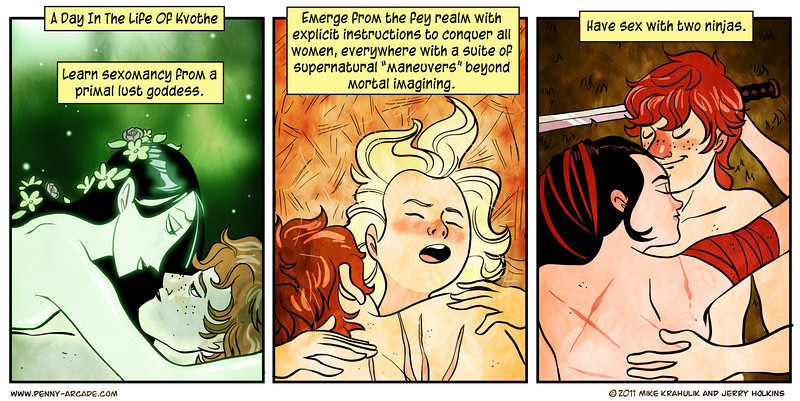
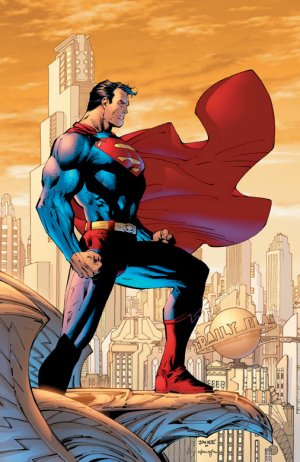
With all that being said, the Mary Sueness is improving. In The Wise Man’s Fear, he’s still way too good at everything, but at least he has some believable flaws. His ego is causing serious problems for him, he is struggling in some of his classes, and there are many things he does not know. Even his meeting with the sex goddess Felurian went down differently than the blurb made me think – he didn’t sex her so good that she fell in love with him. He was almost killed but fought with pure will and magic until he achieved victory. He still learns sexomancy from a lust fairy, but the problem was not his talent, it was that he was extremely talented at just about anything he tried. Him besting Felurian is fine, because he did it with unbelievably impressive magic, and being unbelievably impressive at one thing is fine as long as it’s not all the things. His character is easier to swallow in The Wise Man’s Fear because he faces more real struggles and he’s not just the absolute best at everything. Well, not every single thing. The Mary Sue problem still exists, it’s just no longer unforgivable. The thing is though, as an American reader, I can’t help but think of Superman. He is the most famous comic book character in the world for a reason, and one could argue that he’s way too talented – barring exposure to an extremely rare radioactive element, he’s unstoppable. The Kvothe of The Name of the Wind is insufferable, whereas the Kvothe of The Wise Man’s Fear is merely stuck within a Superman complex – over the top, but not story-breaking.

Fuck plot armor. I’m explicitly unkillable!

The strength of The Kingkiller Chronicles lies in its reverence for the art of storytelling. The framing device for the whole book is the protagonist telling a story about himself. Within that story, there are a lot of common, insignificant myths that do a lot to increase the texture and weight of the world. There are stories about religion. Travelers pass the time around campfires in telling each other tales. These range from rumors and gossip passed along on the road to old creation stories. In addition, the main quest of the series is Kvothe’s desire to find a group of seven immortal demons. Most people think these seven, the Chandrian, are just a silly children’s tale, but that’s because these monsters have spent the last few millennia obliterating any trace of themselves from the stories of men. Kvothe’s father begins researching them, and they show up and murder Kvothe’s entire family. Kvothe’s main motivation throughout the books is to gain enough knowledge and power to find and kill the beings who made him an orphan. His search for knowledge explores the beautiful patchwork nature of human storytelling – he manages to find a piece here, a sliver there, but all the stories are slightly different, the names added to or worn away by time, minimized or aggrandized by whichever culture acted as the story’s steward from the time it was created to the time Kvothe found it. Why did the Chandrian work so hard to make these stories so few and far between? It has something to do with the magic system of the book – knowing the true names of these creatures would give Kvothe some measure of power over them.

Pictured: The most powerful weapon in the fight against evil

One of the standout features of The Kingkiller Chronicles is its compelling magic system. Magic systems are important. They define the way mages can influence the world around them, which is a major concern of most fantasy. Rothfuss’ is inventive and intricate. The author includes many detailed, rule-bound systems and schools of magic, but all of these different techniques are children playing with matches compared to the roaring conflagration of Naming. Naming as a form of magic used to be widespread, but now only a handful of extremely talented people can manage it (Kvothe is, of course, among them). Naming consists of being able to intuitively know and call the true name of different things – wind, fire, rock, even blood or bone, even people. If a Namer calls something by its true name, he or she can control it. This is much more powerful than the other forms of magic. A Namer can break a hole through a thick stone wall by speaking to it. He can kill by calling the name of the wind and sucking the breath out of the lungs of his enemy. Naming, the true and accurate use of the perfect word at the perfect moment, is the most powerful form of magic in this world. This, along with the lovingly crafted myths that permeate this narrative, emphasizes the importance and power of writers and writing. The right words can kill an enemy, burn down a forest, or break through a wall. This focus of The Kingkiller Chronicles will appeal deeply to lovers of words and stories.

Wearing one of these is a really, really bad idea in this world.

Ironically, for all of its care and focus on the nature and power of stories, The Wise Man’s Fear has taken a lot of flack for its own storytelling. One of the main complaints is that, although it’s book two of three in The Kingkiller Chronicles, there is yet to be a kingkilling. Many are concerned with the pacing of the story – with only one book left, how will Kvothe kill a king, find his parents’ murderers, and bring the story he’s telling up to the present day? Another major criticism of The Wise Man’s Fear is that it seems like a mass of stitched-together short stories about Kvothe instead of a cohesive novel. Kvothe at school, Kvothe hunting bandits in the forest, Kvothe in the Fae realm, Kvothe with the desert swordsmen, et cetera. I see the point of this complaint, but I don’t care because all of these stitched-together stories are entertaining and well-written. Rothfuss has a gift for vivid, clear, and immediate writing, and he’s very good at describing knuckle-whitening fight scenes. Honestly, as a fantasy writer, if you can describe a duel involving magic, swordplay, or both with energy and deftness, you can be forgiven for a host of other niggling complaints.

In conclusion, the book is flawed but well worth a read. I’m a strong believer in the phrase “don’t let perfect be the enemy of good,” and just because this novel is not perfection does not mean it’s not enjoyable. Sure, the main character is Mary Sueish. Sure, this book consisted of what felt like a bunch of sidequests. Here’s the thing though – the character is driven and compelling through the sheer force of his skill. The sidequests are engrossing and fun standing by themselves. Also, the pure power of the narrative is a roaring river – hard to resist. I read this book for hours at a time. Finally, the languorous love affair with tales of any and all kinds that Rothfuss builds into the book, along with the idea of writer as Namer and words as power, serves to forge this series into a paean to the strength and gift of human communication and storytelling, which is a worthwhile accomplishment.

Andrew Findlay has strong opinions about things (mostly literature) and will share them with you loudly and confidently.

Image sources: Wiki, Penny-Arcade, and io9

Worst Best Picture: Is The Silence of the Lambs Better or Worse Than Crash?

1992_iconic_actor_hopkins

Alex Russell

In “Worst Best Picture” we search every single Best Picture Oscar winner of all time from 1927 to present to uncover the worst of them all. Conventional wisdom says that 2005’s winner Crash is the worst winner in history. We won’t stop until we’ve tested every last one. Read the the first, our review of Crash, here. All posts should be considered to have a blanket “spoiler alert” on them. Today’s installment is the 1992 winner The Silence of the Lambs. Is it better than Crash?

I can’t be sure, but The Silence of the Lambs might be the most decorated movie in history to use the c-word twice in the first 15 minutes.

The Silence of the Lambs is all about ugliness. It’s about what we consider ugly (deviancy) and what is ugly (violent madness). It’s about how brilliance goes two different ways, but how those paths can fork out even after that.

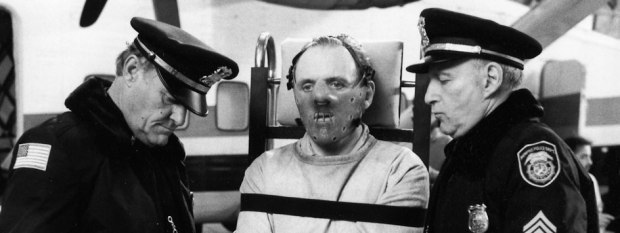
Everyone knows the basic story: Buffalo Bill is kidnapping and killing women, Hannibal Lecter is the only man crazy enough to know how he thinks, and Clarice Starling is the only woman who can maybe find the link between the two in time. Spoiler alert or no, you know this. You know this because everyone knows this.

It’s worth bringing up here that a quest to see every single Best Picture Oscar winner means watching a lot of movies everyone already knows. Everyone knows (more or less) the story of Braveheart and Rocky and Casablanca and Gone with the Wind. It can be easy to dismiss stories that iconic with a sort of “eh, I know those, I’m good.”

You cannot do that with The Silence of the Lambs. You must not do that. You need to see Jodie Foster and Anthony Hopkins in this movie if for no other reason than to gain new appreciation for what you think you already know. You need to replace your acting benchmarks for greatness.

The Silence of the Lambs is one of three movies ever to win “the big five” Oscar awards (screenplay, both acting awards, director, and picture) and shares that honor with It Happened One Night and One Flew Over the Cuckoo’s Nest. To keep the frame of reference for when Lambs came out, that year also saw the release of JFKBeauty and the Beast, and HookLambs was an immediate part of the pop culture landscape. Billy Crystal hosted the Oscars that year and came out in Hannibal Lecter’s trademark dolly and mask. America’s concept of the criminally insane was forever changed, both by Buffalo Bill and by Hannibal Lecter.

America also got a new favorite line to do in a creepy voice (an award previously held, I hope, by anything Vincent Price ever said) with Lecter’s line about eating someone’s liver. You know the line. I’m not going to include it; I don’t even need to list it. Everyone you’ve ever met has told everyone they’ve ever met that line. The American Film Institute listed it as even more iconic than “Bond. James Bond.” in their list. It is an instantly recognizable representation of evil and madness. It’s tidy that way.

What is lost along the legacy of that line is that it is surrounded by an incredible, outstanding scene of Lecter meeting Clarice for the first time. The scene’s most chilling elements have nothing to do with Lecter saying he ate someone – they are everything else. The best part is the chill that we feel for Clarice as she tries to act unafraid. The line itself is outstanding, but it’s a blunt object at this point. The rest of the scene is all finesse in its horror. It is terrifying with opportunity, because the unaccustomed viewer knows Lecter says this one creepy thing, but they don’t know about his love of control. They don’t know that his madness manifests in creating and solving puzzles more than outward acts of terror and mayhem. He’s mostly a quiet kind of insane – but yeah, he’ll also eat your liver.

The Best Part: The meeting scene. It happens 15 minutes into the movie, but it perfectly establishes everything in the movie’s world. Clarice is inwardly strong but outwardly terrified, and that combination just might keep her both sane and alive. Lecter is defensive, but also willing to tip his hand if he thinks he needs to do so. The audience wants Clarice to hold back, but we love that she can bare herself – even though in this case it’s to a demented cannibal.

The Worst Part: This feels very, very small, but I kept noticing it. An important part of the tension of The Silence of the Lambs is about how Clarice has enemies that aren’t literal. She’s haunted by her past as much as she’s ever hunted by murderers. They handle her past well — it spawns the title — but the attempts to remind everyone that she’s a lady and ladies have it tough don’t all land. Some, like a discussion between Clarice and her boss about establishing that she’s not lesser because she’s a woman really work despite being obvious. Others, like how every single man she encounters stands too close and checks her out, are maybe too obvious.

Is It Better or Worse than Crash? The common thread between the two movies? Relentlessness. Lambs is about pursuit in the face of danger and Crash is about confirming or rejecting your biases. One character in Crash wants to so strongly be an anti-racist (one of the only ones in the film) and ends up shooting someone of another race before abandoning his car to hide the body. Lambs teaches that pursuit can be dangerous but rewarding, and that not everyone can pay that price. Crash teaches that all attempts to better yourself or achieve anything will be met with failure. Lambs lacks a distinct moral on purpose, Crash has a terrible moral on accident.

Worst Best Picture Archives: Crash | Terms of Endearment | Forrest Gump | All About Eve | The Apartment | No Country for Old Men | Gentleman’s Agreement |12 Years a SlaveThe Last Emperor |

Alex Russell lives in Chicago and is set in his ways. Disagree with him about anything at readingatrecess@gmail.com or on Twitter at @alexbad.

 Image credit: Oscars.org

Life After the Star Wars Expanded Universe: Europa Report

Andrew Findlay

Science fiction is a rich and varied genre. There are many different ways to put together a good SF story. There’s far future SF like Banks’ Culture series, in which everything is so advanced that almost anything is possible. There’s future past like Gene Wolfe’s Book of the New Sun, in which the story actually happens in the far future, but there’s been some sort of cataclysm that has reduced everyone to a semi-medieval style of living. Future past has a fantasy feel to it, as many powerful artifacts are lying around from the past that may as well be magic. There’s also science fantasy, where works like Star Wars exist: The jedi are spaceship mages. The niche that Europa Report fills is the near-future space exploration subgenre. We are advanced beyond what we currently have, but not by much. We are interested in exploration and colonization of our own solar system, but it’s still really difficult. Finally, there’s a gritty realism that may not be present in some of the other subgenres.

Europa Report is a movie about a mission to Europa, one of Jupiter’s moons. Europa is an ice moon, and there are indications that there is a liquid ocean underneath the ice. As such, it is one of the best locations to search for extraterrestrial life. The cool thing about this type of SF is everything I just said is simple science – there is no fiction yet. Scientists really do think there could be life under Europa’s ice. The fictional bit occurs when a privately-funded space exploration organization puts a team of humans on a ship to Jupiter to figure all of this stuff out.

This movie is a little terrifying. The problem with exploring space is that it’s dangerous as hell. Even Nixon, who presided over the moon landing, hedged his bets and had an oh shit speech prepared just in case Aldrin and Armstrong got stranded in the Sea of Tranquility. Astronauts are people who agree to strap themselves into a small room on top of 500 tons of explosives, have those explosives lit, and ride that small room away from an environment where they can live and breathe and into an environment that can kill them through freezing their blood, popping their blood vessels, or suffocating them. The only thing between them and death is a layer of titanium. Astronauts are insane. If something goes wrong with the propulsion system halfway to Jupiter, you just sit in space until you die. If your transportation breaks on the highway, you curse, get out of your car, take a deep breath to sigh in frustration, and call AAA. If your transportation breaks in space, going outside will kill you, taking a deep breath will exhaust your tenuous oxygen supply even faster, and no one can get any assistance to you.

Yes, the top of this cone of flame is the most rational place for me to be right now.

This danger, the risk and nobility of accepting a long-term space mission, is the central focus of this movie. To borrow a line from Nixon’s speech, space explorers are willing to “[lay] down their lives in mankind’s most noble goal: the search for truth and understanding.” Yes, astronauts are insane, but I love that Earth produces a class of people for whom the pursuit of knowledge is worth the sacrifice of their lives. The tension created by the constant risk in this movie is explored through cramped, short camera shots. There are a lot of closeups on faces and the set design is a nest of tiny rooms that all look very similar and give a mild claustrophobic effect. The structure of the movie itself emphasizes the danger inherent in space travel – the framing device for the narrative is found footage cut with a press conference with the space company’s CEO explaining what went wrong with the mission. This device is an interesting way to tell the story, but one drawback is that I was not really sure what exactly was happening for the first half hour of the movie.

The characters are appealing, but not very well fleshed-out. A week after watching the movie, I do not remember anyone’s name. There’s no-nonsense captain man, bubbly and excited science girl, loving father man (played by Sharlto Copley), and grizzled Russian engineer. The cardboard nature of the characters does not detract from the story itself, as it just underlines the fact that these people have subjugated themselves entirely to The Mission. It does exacerbate one issue with the movie – the camera shots are clean and spare, everything looks great, and the concept of the movie is interesting, but I found myself getting more and more bored as the movie went on. More in-depth characterization and better dialogue would have done a lot to alleviate this problem.

If you like space, you should watch this movie. Its editing can make it confusing, the characters are as empty as the space that surrounds them, and the pacing could have been tighter, but it looks good, attacks an interesting concept, and carries one of the most important themes in art: the pursuit of knowledge is the greatest good, and we do not matter in the face of that. The sacrifices explorers have made throughout history have bettered mankind. The drive to explore and push the physical bounds of what we know is one of humanity’s greatest traits, and this movie glorifies that impulse.

Image sources: Wiki

Worst Best Picture: Is The Last Emperor Better or Worse Than Crash?

lastemp

Alex Russell

In “Worst Best Picture” we search every single Best Picture Oscar winner of all time from 1927 to present to uncover the worst of them all. Conventional wisdom says that 2005’s winner Crash is the worst winner in history. We won’t stop until we’ve tested every last one. Read the the first, our review of Crash, here. All posts should be considered to have a blanket “spoiler alert” on them. Today’s installment is the 1987 winner The Last Emperor. Is it better than Crash?

If you need to know what kind of year 1987 was, it was the year that Throw Mama from the Train earned an Oscar nomination for Best Supporting Actress. Anne Ramsey (who played Danny DeVito’s horrible, angry mother) lost the award to Michael Dukakis’ cousin, who was in a movie with Cher.

That’s what the world was watching in 1987, when The Last Emperor beat Fatal Attraction and Moonstruck for the Oscar for Best Picture.

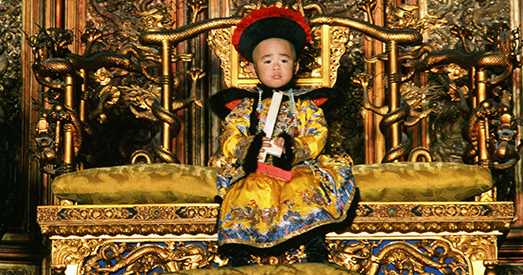
The Last Emperor is a true story, more or less, and you watch a true story differently than the average movie. The film is set in a difficult time for Asia that Western audiences will never understand the entirety of, but the basics are simple: China dethrones the Emperor (Pu Yi, the titular last Emperor), Japan invades part of China and sets up a puppet government led by the ousted emperor Pu Yi, and China throws him out again after Japan loses the war. World War II is in many ways a more complicated time in history than “good” and “bad” and thankfully, the movie doesn’t do much to paint anyone as necessarily any better than anyone else.

It’s not a movie about rightness or goodness; it’s just a movie about Pu Yi. He is born into his ruling life in the Forbidden City and sees no reason to question that he’s in charge. He grows up untroubled by the country he supposedly leads until he finds out that he’s not actually as in charge as he’s been told. He senses that the end is coming far before it does, and the movie is about the development of the kind of person who ruled everyone he’d ever met into… well, a regular person.

He learns much of the world outside of the Forbidden City through his tutor (Peter O’Toole). O’Toole gives a surreal performance as he rides a bike around and talks about tennis and manhood. This tutor apparently existed for the real Pu Yi, but while it’s nice that the film wanted to nail this bit of accuracy it’s just a really odd performance. O’Toole has the gravitas to not ruin the tone of the epic itself, but his performance is so rushed and spotty that it seems like he feels like he has a more important movie to be in at times.

Pu Yi learns, he marries (two women at the same time), and he leaves. The army throws him out and he wanders Asia for a bit before returning to a form of his throne during a Japanese invasion. Once the Japanese are expelled by Russian troops, Pu Yi is captured and forced to tell his life story as part of his war criminal rehab. The movie uses this life story retelling as a structure for “why” we see all of Pu Yi’s life. It’s an effective technique, but the movie aims to include so damn much of his life in this telling that it ends up being something they would definitely cut into pieces in 2014. It’s a really full movie — I would like to go into his wives and opium and pregnancy, but that part of the movie drags a bit — and it can be tough to watch as a result. The payoff is good, but the movie could have benefited by being more judicious with the editing.

There’s no spoiling the end of a true story, especially a biography. Pu Yi lives to see Mao’s rise and Maoists in the streets. He is just another gardener by the end of the movie, and it’s hard to determine if he minds having lost his royal roots. China has changed. He is both better and worse off. He won’t be part of the Great Leap Forward, but he also knows what it’s like to be a real man. Such is the cost of progress.

As far as Crash is concerned, I’ve talked a ton about a particular scene where Terrence Howard’s character is carjacked. In the scene, Howard turns the attempted carjacking into a police chase through the suburbs and eventually gets into a standoff with the LAPD. The short of it is that he is disrespected earlier in the movie (a few times, once by the cops) and the scene is meant to show that he has reached his breaking point. He needs to exert control over the universe to feel like he is still the arbiter of his world. Pu Yi has the same impulse when he makes a power play as the puppet ruler of Manchukuo during the Japanese occupation.

The easy difference here is that one happened and one didn’t, but even treating them both as elements of fiction they are stark. Howard’s character risks his life to feel in control of anything in his life, even something this risky. Pu Yi sides against his home country to rule his home state, risking his life if the Chinese take the state back. Howard risks his life because his wife yelled at him. Pu Yi risks his life because his ancestral homeland has been stolen from him by the march of time. The stakes are different, which is always going to be true, but it takes some real work to understand Howard’s motivation — and I picked the best damn character in Crash. Pick anyone else and that sounds even dumber.

The Best Part: The final hour. It’s the developed arc of the life of Pu Yi. Usually a journey is more fun to watch than a result in a movie, but not this time. The first hour drags impossibly and the narrative technique of flashing back to present-day Pu Yi telling his story to an interrogator works to weave multiple parts of his life together but it does not work to make the movie feel fluid. The connective tissue feeling ends for the last hour and the film’s ambiance really takes hold. It’s immensely satisfying as a viewer when it pays off. 

The Worst Part: A lot of critical response judges the length — it’s almost three hours long — but this has to go to Peter O’Toole. In my review of 12 Years a Slave I judged Brad Pitt for his accent, but whoa. The single worst performance in a movie on this list so far has to go to the legendary Peter O’Toole in this one. He’s so clearly cashing a paycheck that he often seems to have just read from a cue card and told them “use that take or don’t, why would I care?”

Is It Better or Worse than Crash? It’s better, but it’s different entirely. They are both arcs of development, but in Crash the development is for the worse. People essentially look at the camera to say what they’ve learned by interacting with other races and classes, and what they’ve learned is that they hated people that are different for good reason. The Last Emperor is about one man’s journey through a life he never really controls. He is born into a world he cannot change. He is neutered even when he becomes Emperor again. He lives his life and the world changes around him. His arc is his own and the arc of China, the real story of the movie, is changed with him, not by him.

Worst Best Picture Archives: Crash | Terms of Endearment | Forrest Gump | All About Eve | The Apartment | No Country for Old Men | Gentleman’s Agreement |12 Years a Slave |

 Image credit: AFI