books

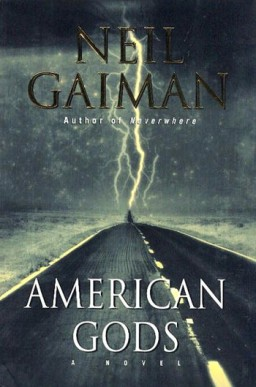
Life After the Star Wars Expanded Universe: Neil Gaiman’s American Gods

png;base647a670ee3cff69c24

Andrew Findlay

Neil Gaiman has been a darling of fantasy fiction for years. His profile is huge and unassailable – multiple awards, multiple movie adaptations – this is a writer who goes on late night talk shows and people watch those shows specifically to see him. Any two or three of his works are enough to qualify him as a game-changing writer. If you have not read Sandman, go do that right now. It is the best thing he’s ever written, and one of the best 15 things written in the last 50 years. I can’t get into it right now because the story is massively complex and free-roaming, but do yourself a favor and check it out. Today’s book, American Gods, won the Hugo, Nebula, and Locus awards. To give an idea of how big a deal that is, only 10 books have ever done that, and two of them were written by Isaac Asimov and Arthur C. Clarke, respectively.

American Gods is fantasy, which is a really important genre as it’s the first there ever was. Think about it: In Gilgamesh the main character is the son of a goddess, befriends a wild man, slays an ogre, rejects the advances of the goddess of sex, and slays the skybull she sends to destroy him in revenge. In The Odyssey, the main character blinds an ogre, pisses off a sea god, and is assisted by and given gear by a war goddess. Any number of old stories contain fantastic elements: humans made of clay, humans made of thrown rocks, world-wrapping floods, and so on. These early stories are special, as they all attempt to explain humanity, its place in the world, and how they both came about. There is no whiny asshole running around with daddy issues (I’m looking at you, The Corrections). At the dawn of human cultural life, all of the stories were concerned with how we got here and what we should do about it. Of course, people back then had no fucking clue and just made shit up. The results were amazing. Modern fantasy stems from either that initial efflorescence or from all the stuff J.R.R. Tolkien single-handedly standardized. American Gods is the former. It goes old and deep for its mythology.
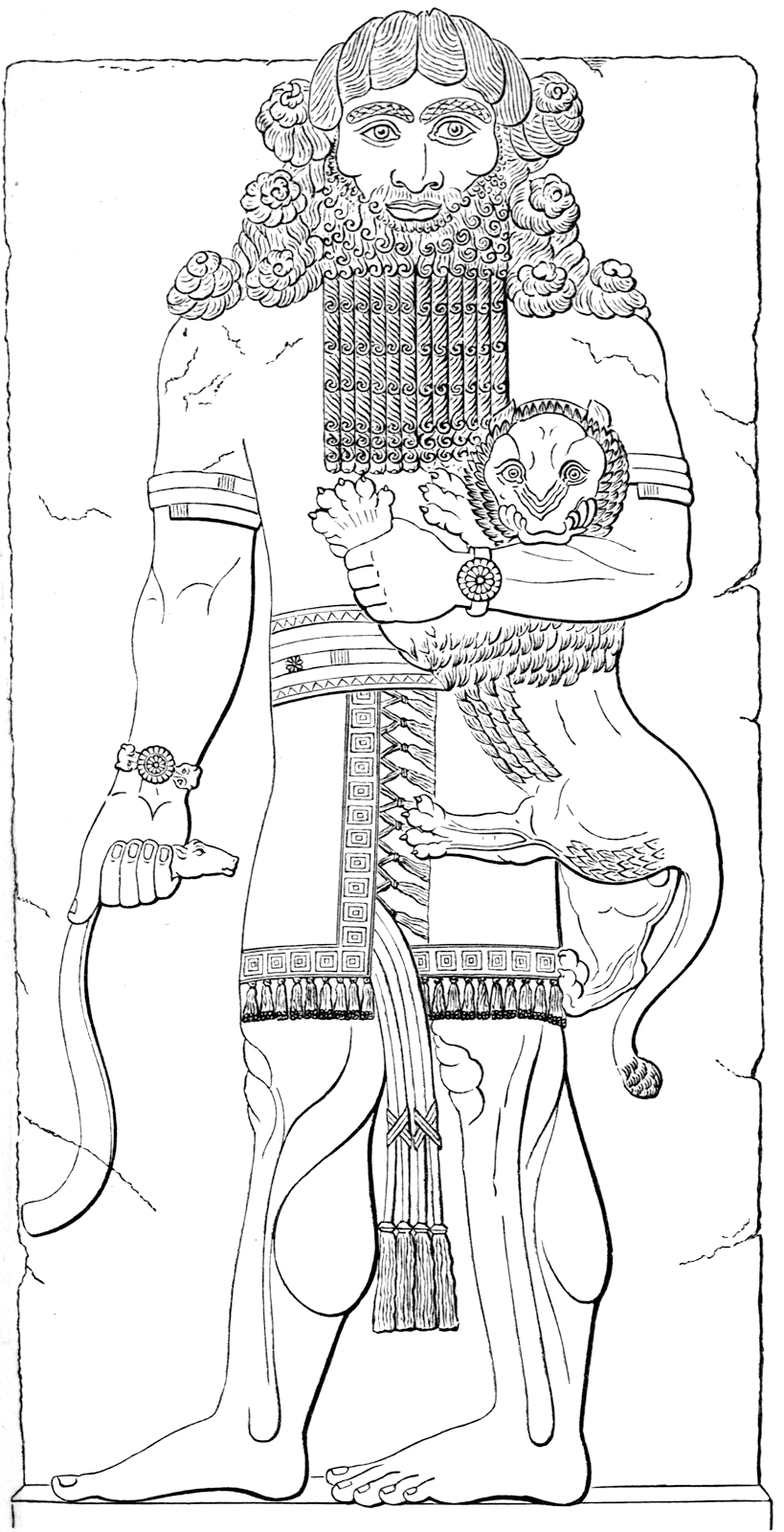
I am the oldest character in all of literature, and my beard rings are amazing.

Some people hate American Gods, and those people are wrong. There is plenty to hate, but a lot more to love. The first big hit is that the main character’s name is Shadow, which is usually not a good sign quality-wise. In general, the characters are there to advance the plot and to do cool things. There’s depth there, but not a lot. Shadow is a pretty simple guy who is set up a little maladroitly as a big strong silent type, but with hidden feelings. At the start of the novel, he finishes a three-year bid in prison. Later in the novel, he remembers being a kid and crying while reading Gravity’s Rainbow in a hospital while his mother died of cancer. Jarring mismatches like that rub you wrong and don’t deserve to be forgiven, but there is just so much good to go with the bad. Most of the good comes from the premise in the title itself.

What exactly are American gods? The premise that makes the book is that gods are generated by human thought and belief. For example, Odin (who is a main character), first popped up in America when Vikings visited the Americas, got into conflict, and slew a native in a ritualistic way. The power of their belief created him. Then they left, and Odin spent the next few centuries kicking around the continental US as “Mr. Wednesday” (Wednesday = Wōdnesdæg or Odin’s Day). This method of god creation is upliftingly anthropocentric – our belief is not just their payment or due, but the key to their existence. Unfortunately for the gods, lack of faith leads to lack of food. Without constant, strong belief, they weaken and, if they can find no substitute, they die. The substitutes available normally consist of some type of human interaction tangentially related to their godhead. For example, the half-djinn Queen of Sheba, Bilquis, achieved fame and drew belief as a great seducer. In American Gods, she is working as a prostitute and drawing her power and sustenance from that. An American incarnation of Anubis, the Egyptian death god, runs a funeral home and draws his power and sustenance from that. The hardscrabble landscape of American belief has transmogrified Mr. Wednesday, an incarnation of the Norse god of war, wisdom, and poetry, into a confidence man. There is definitely a precedent for Odin as a type of trickster god, and his godhood being shaped and reflected by American culture emphasizes and feeds this aspect of him. He gains strength and survives through bamboozlement. For example, he needs money, so he finds an ATM, dresses up like a security guard, handcuffs a briefcase to his hand, and marks the ATM as out of order. When anyone comes up to make a deposit, he apologizes, takes their money, and painstakingly writes them a receipt. He then walks away with a ton of money. He not only gets cash this way, but also acquires the “worship” necessary for his continued existence. The problems associated with lack of spiritual nourishment create the central conflict of the book.

I’m going to need a little bit more than that to survive, Ron.

Old gods are scattered across all of America. All of the immigrants who ever came here, and all of their beliefs, created sub-pantheons filled with strangely reduced gods. Old cultures come over with their old beliefs, then slowly buy in to the new ones. Up to the time of the book, these gods have only had to deal with their transformation and weakening due to the acculturation of their worshipers, but problems arise when they enter into direct competition with the new gods, avatars of tech, finance, and the like. As Americans worship these things with more fervor, so do their respective avatars gain power, to the direct detriment and weakening of the old gods. Once created, gods have staying power, but if they are completely cut off, they will simply fade into nothing. This is an undesirable outcome, so the main plot of the book deals with the old gods’ actions to preserve themselves in the face of the onslaught of the modern world.

Yes, the plot is linear and simple. Yes, the characters could have a little more depth. Yes, the protagonist’s name is Shadow Moon. Do any of those things make this a bad book? I mean, yes, they would, if there wasn’t more to it. American Gods is an exploration of American belief, American places, and the American psyche. Neil Gaiman is an Englishman who settled in Minnesota, and this is his love letter to his adopted country. The whole presents a mythic America, one where the salt of the Earth is the center of the nation and where roadside attractions are the most sacred and powerful locations in the country. The climax of the novel takes place in the holiest spot in the United States – Rock City, just outside Chattanooga, TN. The swindler habits of a major character – Mr. Wednesday – dovetail with the venerable American tradition of getting one over on people not as clever as yourself, from Tom Sawyer getting people to paint a fence all the way down to a more modern Sawyer.
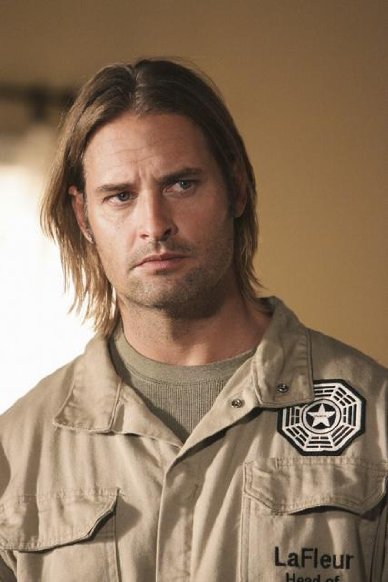
Son of a bitch.

Ultimately, this novel’s passion for Americana and its in-depth commentary on the nature and power of human belief far outweigh any niggling concerns with naming or plot pacing. Much like taking a road trip (which occupies most of the plot), you might go to some less-than-ideal places, but you will still have an amazing time there because of the idea of the road trip. The idea of this novel transcends any flaws that mar its execution. I believe it is a great novel, and as Neil Gaiman himself writes in the novel:

People believe…[i]t’s what people do. They believe.

And then they will not take responsibility for their beliefs; they conjure things,

and do not trust the conjurations. People populate the darkness; with ghosts,

with gods, with electrons, with tales. People imagine, and people believe: and

it is that belief, that rock-solid belief, that makes things happen.

It is not a perfect novel, but any book containing the above quote has my vote. It is not flawless, but much like the nation it enshrines, the monumental good overwhelms the (admittedly) searing bad.

Image sources: IMDB, Wiki

Tough Questions: What Do you Keep Recommending that No One Will Believe is Good?

question-mark

Every Monday we ask everyone who hangs out around here to answer a tough question. This week:

What Do You Keep Recommending that No One Will Believe is Good?

Rules are simple: what do you find yourself telling every person you come across to check out that no one will listen to you about? What would totally be someone’s favorite show/book/movie/Chinese food menu item that’s being overlooked?

Mike Hannemann

The thing I love that I find myself never able to convince anyone is good is the tacos at Burger King. I normally hate the guy that goes to a Mexican restaurant and orders a burger but these are LEGIT. They cost $1.19 for two and yet no one takes the chance despite my urging. They’re fried, filled with a meat-like substance, a half piece of Kraft american cheese, and a slice of lettuce, all topped with a weird taco sauce. I can’t explain why they’re amazing. I can’t explain how an airplane flies, either. I just know two things: a plane can fly and these tacos are good.

Alex Marino

I swear if you’re still using that shitty shower head that was there when you moved in you need to get rid of that shit right now. Get on Amazon and order yourself one of these. Yes, it’s expensive. Yes, it’s completely worth it. You’ve probably spent $100 on some shitty sweater you wear once every few weeks. Why not spend that on something you do every day? Instead of a shower just being that thing you do before you go to work, you actually enjoy it. You’re fucking WELCOME.

Alex Russell

The funniest thing you don’t listen to is My Brother, My Brother and Me. It’s a podcast on the Maximum Fun podcast network that’s hosted by three brothers. They answer questions from Yahoo! Answers and from people who email them their pressing questions. Want to know what to do if you think you’re in love with a goose? Need to learn to box but refuse to learn how to block? Unsure if shoplifting is really illegal? You need to listen to the brothers. I’ve suggested this to every single person I’ve met that likes comedy in the last two years. “You need to listen to this podcast” is tantamount to asking someone for both of their kidneys, but seriously check out the sampler

Austin Duck

Poetry.

Andrew Findlay

I have been asking my coworkers to watch Breaking Bad for a year and a half. To my knowledge, only one has taken me up on the offer. This is frustrating. The worst part is that a guy I work closely with kept recommending The Wire to me, and I kept recommending Breaking Bad to him. We would have arguments over which was better without us having seen an episode of the show we were putting in second place. I have since watched all 60 episodes of The Wire, and he has not watched the pilot of Breaking Bad. I’m sure everyone believes it’s good, but a disheartening number of people don’t believe it’s good enough to actually sit down and watch.

Brent Hopkins

The thing that I always recommend to other people that no one seems to think is good is a series called The Mistborn Trilogy by Brandon Sanderson. This is a fantasy series that keeps you engaged from start to finish and has enough twists and turns to keep you in the dark until the final few pages. There is plenty of action, romance, and mystery in these books and it was one of the best things I read over the last year. I am not necessarily huge into fantasy but I found myself reading until I passed out with my Nook on my chest. I have quite a few friends I think would love it when they started it but they always come up with other things they need to do. READ THIS SERIES, SERIOUSLY!

Jonathan May

Two words: Big Love. That Bill Paxton love-bonanza had its crazy ups and downs. Even Chloë Sevigny described the fourth season (of five) as a telenovela. But fuck if I didn’t cry consistently during the last episode. This show, as Stefon from Saturday Night Live would say, has everything: polygamy, Jeanne Tripplehorn, home goods superstores, Memphian Ginnifer Goodwin, Indian casinos, conversations with God, running for State office, and polygamy (you have to say it at least twice). But no one, besides me and my friend Kyle, seems to have given this gem the time of day. It’s only five seasons, people. I get that polygamy and Mormonism are “sensitive” topics, but the character arcs you experience are incredible. I was blown away by how the women ended up. Utterly blown away. So watch it.

What is Poetry and Why Do We Care?

Austin Duck

“What is poetry” is a question I’m asked a lot and one that I can’t answer. In fact, everywhere I go, every job interview I have, every time someone asks “what’s your degree in,” they follow up with some permutation of that question. You see, I’ve got a Master of Fine Arts in Poetry (along with a few other useless degrees) and, expectedly, I’m constantly bouncing between jobs, looking for the next big thing which requires near-constant explanation of how I got here and why I made the choices I did. And my god, you should see the looks on their faces (unless someone in their family too has made this… choice) when I start stammering and trying to explain myself: pity, embarrassment, amusement that an adult would proudly (sort of) admit that he spent years (YEARS) reading poems, writing about poems, and, most questionably (because academia and the idea of a PhD still hold some cultural capital) learning to write them himself… It’s a dark time to be a poet (though I suspect that, outside of Eastern Europe [where poets are celebrated] it probably always has been).

Not everyone, though, is totally unreceptive to the choice of poetry. For some, poetry still holds its place as a kind of epicenter for literary bad-boy-ness (after all, poets work in shorter bursts of clarity and don’t require the same kind of discipline as someone writing something long-form that is either narratively or argumentatively coherent): hard drinkers, sexers (is that a thing?), druggers and live-r’s that occupy that very thin line between intellectual and indigent, the Jim Morrisons of the not-quite-so-fucking-stupid, the arty guy or gal who, even though they manage social media and blogging at a major corporation (guilty), still has a deeply mysterious and deeply sexual wilderness in their heart.

For others, poetry itself has a kind of heroic capital. It allows one to project the image of hyper intelligence (just look at the number of poets who win MacArthur genius grants and you’ll see that poetry and physics seem to fish from the same pond) and a kind of bohemian “casting off” of economics, of choosing to pursue “art” when really you should have gone into investment banking but this makes you more pure. It sounds fucking stupid, doesn’t it? It is.

The trouble, for me, of people believing these myths—of the poetic bad boy and/or the self-sacrificing genius—is that it creates a cultural expectation of the “poet” as a thing to which young, narcissistic, self-righteous fucking losers (guilty) flock to prove themselves the next Rilke, the next wild Jack Gilbert, the next (ugh) Charles Bukowski, and, in doing so, they build a scene. They themselves (with all of their ideas) create an idea of poetry, promulgate a notion of poetry as sexy or smart, and, in doing so, recreate the culture of poetry.

However, that’s not to say that I’m here to bemoan it; to believe that the state of anything isn’t in flux is naive and prescriptive and hey, I forgot to put on underwear this morning so I’m probably not the best person to make a totalizing statement what is right or wrong for poetry as a whole. I say it’s a trouble for me because it so deeply complicates what poetry is, really. If I had to give a totally uninformative (but accurate) definition, I might say that it’s the silently agreed-upon, written production of a continuously changing group of half-educated, half-myth-drunk twenty-somethings with progressively more impressive resumes continuously reinventing something so fundamental to humans that it existed before God. But that wouldn’t be entirely right.

Sure, that’s the bottom of the scene right now (if you want to think about it hierarchically), but it tells nothing about the multitudes of unpaid apprenticeships with those “living masters”—old people writing poetry who their peer-group agrees is writing the best poetry—of the unpaid publications used to build reputations used to leverage shitty-paying jobs so that one day you and your group can sit among the “living masters” all while under the cold scrutiny of critics who constantly remind you that there are dead masters too, that you’ll never approach them, because history, because craft, because they didn’t get paid to watch Twitter for 8 hours a day while wishing for a different life.

And even that isn’t exactly right when you consider the fact that poetry, for all of its shared resources, doesn’t have a single, unified community; there are groups upon groups, each with slightly different aesthetic- and philosophical-projects, and then there are those who aren’t, exactly, part of groups, who have participated—to some degree—in various groups and projects, have gone through various apprenticeships (or not), who read books that are recommended by friends, or old colleagues, or whose covers and back-blurbs and first poems look appealing at a bookstore (though this is becoming less and less an option) and each one of these people, each one of these groups, is making a case -through-example of what poetry is, can be, does, or (sometimes) what it really shouldn’t do.

So what is poetry (or, really, more accurately, what is American poetry [because each culture has its own organic process for bringing up poets, its own poetics, etc.])? I don’t know. I used to ask my students this question on their final exams just to see their faces fill with terror like mine does each time I’m asked. When asked this question, I usually answer with something along the lines of:

an empathy machine, a text that appears to be written in lines but which actually is a dramatic rendering of a scene, no matter how brief, when the speaker of the poem (usually the “I”) interacts with a specific problem, usually in the realms of nature, language, memory, or culture, outside the self and, in that interaction, is changed, though it’s not enough to tell the reader that the speaker has changed, the mechanics have to be there, the change has to be structural, linguistic, imagistic (made with images), sonic (made with sound), so that, by the end of the poem the audience has had the same experience, their very brain has processed the same images presented in the same way, heard the same sounds, stumbled over the same sentence constructions, and thought the same sentences in the same order so that the speaker and the audience are, for a second, the same person, the other, so that the reader is not confirmed in their own experience but is instead forced into a new one, understanding, yes, both intellectually and emotionally, thinking and feeling as another person. Oh and did I mention that poems “should” almost never go where you think they’re going, that they contain surprise for the reader, the writer, there must be a ghost you didn’t know come to inhabit the body you’re only starting to get a sense that you’re looking at?

I do tend to get sort of breathless (even in writing, apparently) when writing about “what poetry is” because imagine that last paragraph taking place in a single instant; imagine that you were able to achieve what I’ve just described (either as a writer or a reader) and now think about the community differences I’ve described above. To say specifically “what poetry is” is impossible and even to say what it should do is pretty dubious.

In the end, my take on it (above) will yield a pretty classical American/English poem (or, at least, I think that it will), but won’t account for more than 5% of what’s been produced, what you will search through—line by line for some organizing pattern (because poetry is fundamentally [and equally unhelpfully] patterned language).

So why do it at all (reading or writing)? Aside from the fact that some people will think you’re a sexy genius and others will bathe you with counter-cultural social capital, why?

Fundamentally, the interaction of poetry will get you closer to another person’s mind, more fully engaged in empathy, understanding, learning, compassion, joy, sadness, recognition, than literally anything else on the planet. Music for your ears, visual arts for your eyes, writing, particularly poetry which is so often concerned with the instantaneous, the momentous, for wherever your mind and your humanity mix.

For more equally incomprehensible definitions of poetry, go here.

Image source: The Guardian

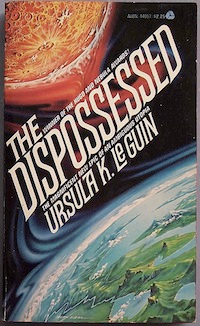
Life After the Star Wars Expanded Universe: Ursula K. Le Guin’s The Dispossessed

Andrew Findlay

The Dispossessed is a perfect novel. It is great not just because of plot, characterization, or prose, but because Ursula K. Le Guin structured it in a way that makes it almost an architectural marvel. The general plot is fairly basic – in the Tau Ceti system, there is a binary planet – a system in which two planets orbit each other. The original world, Urras, lush, green, and rich, is at the mercy of a massive revolution led by a woman named Odo. To defuse the situation, the government makes a deal with these Odonians to send them to Anarres, the other world. The revolutionaries take the deal, even though Anarres is basically a planetary desert. The story opens a couple of centuries later, when a famous Anarresti physicist, Shevek, is invited to Urras to help work on a mathematical equation which would enable faster-than-light travel. He heads to Urras on a journey that will finally unite his people and make life better for everyone, the end. Except Le Guin puts it together in a way that makes it so much more complicated and rewarding.

Science fiction is a spectacular vehicle for social critique, as it can either propose worlds and social constructs that have never existed and show how much better they are than what we have, or mirror and exaggerate the systems we currently live by in order to scrutinize the problems inherent in them. The Dispossessed accomplishes the latter. The binary planetary system does more than separate an Earth-standard planet from a worldwide desert, it separates a world of capitalists from a world of anarcho-syndicalists. Shevek, the protagonist, comes from Anarres, the anarchist moon. He is raised in a society where there is no such thing as wages, where if someone needs something they just go and pick it up at the village dispensary, where room and board is free and people can do or not do mostly what they want, except for work necessary to support society (farming, sewage treatment, construction) that all members do in short rotations. This society stands in sharp contrast with that of Urras, which is propertarian, patriarchal, and filled with nationalist conflict. It is a stand-in for 1970s Earth, complete with a world-dominant continent-wide capitalist country (A-Io) and a nation with a massively centralized and authoritarian government resulting from a workers’ revolution (Thu). A lesser author would have used the moon dichotomy to demonstrate how evil and backwards the Earth stand-in is. Le Guin is not a lesser author. Her exploration of the contrast between the two worlds is complex and subtle for two reasons. One is that the anarchist from Anarres who visits Urras, Shevek, is not the righteous voice of morality, come to indict a degenerate culture. While some parts of Urrasti society do disturb him, he mostly just does not understand it. When he is shown into his private quarters on Urras, they are so big he assumes he is to share it with three or four other people. His mind is blown by the amount of water wasted when he flushes the toilet. When he asks his scientist companions on Urras why there are no women scientists, they answer with a lot of claptrap about differences between the genders, the purity of women, and the intellectual superiority of men. In one of my favorite tongue-in-cheek exchanges in all of literature, Shevek explains how things are on Anarres:

“You Odonians let women study science?” Oiie inquired.

“Well, there are many in the sciences, yes.” [Shevek responds]

“Not many, I hope.”

“Well, about half.”

This simple exchange highlights the absolute gulf of understanding between the two societies – Shevek cannot see why you would waste half of the human race, while his companions are horrified at anything that challenges male primacy.

Go fuck yourself, Urras. Love, Mme Curie.

The second reason the story is subtle and complex is that, although people try to be equal above all on Anarres, and people try to extend their own power and make money above all on Urras, Le Guin does not set up an all good/all bad dynamic. When Shevek first sees the open, green fields of Urras, he is taken aback by how beautiful everything is. When he sees their workers, he is surprised at the ingenuity, drive and desire that they exhibit – to him, any work done simply for money is inherently debasing and demoralizing, so he cannot reconcile the quality and effectiveness of Urrasti work with what he has been taught his entire life. On the other side of things, the completely egalitarian society of Anarres is not without flaw. It becomes clear as the story progresses that there is something not quite right. Power has a tendency to cohere, thicken, and spread. While nearly everything on Anarres is decentralized, no society can work without some type of organizing force. This force on Anarres, the PDC, is responsible for inventory, personnel, and communication worldwide. It started out as just a coordinating body, but its members have won themselves a type of personal power. For example, if a scientist wants to publish a paper that the PDC does not agree with, it will not get published. Someone of whom they disapprove might have trouble finding a job that matches his or her skill set. A math teacher could end up being assigned to dig ditches every single work rotation instead of receiving a teaching post. Anarres is still held up as a “better” society, as some true atrocities are committed on Urras, but the flaws in the “good” example and the beauty in the “bad” example serve to show that nothing is ever perfect, and nothing is ever all one thing or the other. The answer is just never that simple.

Unless the question is “Is Hoobastank a good band?”

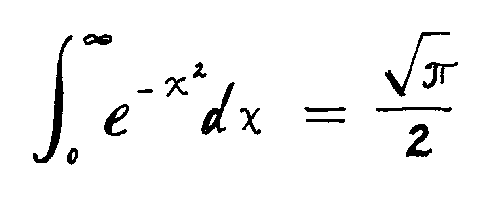
Most well-known science fiction is a normal story that simply happens to take place in a universe where technology is extremely advanced. Star Wars: A New Hope could easily have taken place in a much less advanced society with just a few plot changes. Some Star Trek episodes deal specifically with problems that come from advanced technology, but many are simple shoot-em-ups where the cowboys have absurdly complex toys. What is glorious about The Dispossessed as a science fiction novel is that science is at its core. The entire motivation for the Urrasti to receive Shevek on their planet is because he is the most brilliant physicist of the century. He is on the cusp of working out the General Temporal Theory, which would enable instantaneous travel over interstellar distances. Propertarians that they are, the Urrasti invite Shevek to their world so that they can own the completed equation. What exactly does the equation accomplish?

The General Temporal Theory, if completed, would unite two seemingly contradictory theories of time. In the novel, sequency physicists believe time occurs linearly, in discrete bits, one right after the other. Simultaneity physicists believe everything is happening all at the same time. There is stiff disagreement between the two camps, but Shevek, the brilliant scientist, believes the theories can be unified. If everything is happening all at the same time, and the sequence of step-by-step time that we perceive can be linked to simultaneity, then there is no obstacle to having a ship wink out of existence in one time and place and wink back into existence wherever its captain wants to take her, as everything is happening at the same time anyway. This represents a huge source of power and profit to the Urrasti scientists.

We are gonna monetize the shit out of this.

This equation does more than just drive the main action of the book. The entire structure and thematic development of the novel mirror it. Thematically, the book addresses problems created by false division and limns the benefits of unity. Capitalism and anarchism, Urras and Anarres, the self and the group: all of these things suffer from being pulled apart and considered absolute opposites. Structurally, the book jumps backwards and forwards in time, with the odd chapters starting with Shevek’s arrival on Urras, and the even chapters starting with his childhood on Anarres. The even chapters trace his childhood, adolescence, and adulthood on Anarres, and the odd chapters cover his adventures on Urras. The chapters saw back and forth until the last even chapter is Shevek and his wife discussing a possible trip to Urras, and the last odd chapter is Shevek returning home from Urras. The chapter design itself leads to unity between the sequency and simultaneity of time.

Le Guin pulls so much off with this book. She crafts a novel that shows all the true subtlety and real problems of moral governance. She organizes it so that science is not just its setting, but its main driving force, absolutely essential to the plot and theme of the book itself. The science fiction here is not laser guns and biological horrors, but clear, cold math alongside a profound exploration of the impact of that math on the societal underpinnings of two civilizations. Le Guin refuses easy divisions and classifications, she refuses simple morals, and she refuses easy answers. It is something for which all science fiction writers, and all writers in general, should strive.

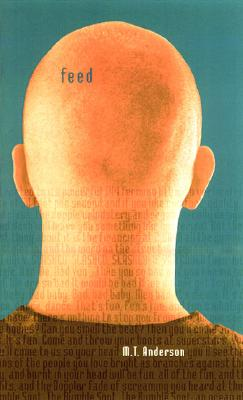
Life After the Star Wars Expanded Universe: M.T. Anderson’s Feed

Andrew Findlay

I read a buttload. I track it, and last year alone I completed 37 books. So far this year, I am halfway through Blue Mars, Blood Meridian, and Les Jours Etranges de Nostradamus and have finished Green Mars, The Reivers, and Feed. That last book is the one I want to talk about today. It is a young adult science fiction book, which is a double-whammy of literary marginalization. The same style of thought that leads serious readers away from science fiction also has them skip YA fiction. It’s a shame, not only because YA is vital to the vibrancy and growth of our literary culture, but because it is worthwhile in its own right.

I mention how much I now read by way of comparison. When I was young, I did not enjoy reading. Why sit around and look at pages when there’s so much other shit to do? My discovery of Goosebumps changed everything. Young Adult fiction builds generations of readers. 10-year-olds probably can’t be interested in Cormac McCarthy, much like you probably can’t step outside and run a marathon right now. It takes practice. Progress happens in increments and the process has a beginning and an end. The path that leads to successful completion and enjoyment of Infinite Jest starts with The Berenstain Bears. I discovered Goosebumps when I was 10, and I now have a heroin-level addiction to reading.

Who needs reasons when you’ve got books?

If you never read any Goosebumps, I question whether you are a normal human with a childhood or if you sprang full-formed from a cultivation vat. By fifth grade, I’d moved on to my first semi-adult book, Tyrant’s Test, book three of the Blackfleet Crisis series in the Star Wars Expanded Universe. At the time, I didn’t really understand the problem of starting with the third one. Anyway, I read it, and there were a lot of words I had simply never seen before. One of my clearest reading-related memories is running across a new word and asking my dad what “ad-juh-kent” meant. He responded that “adjacent” meant “next to.” That was the first of many exchanges that made me an etymological nut, to the extent that I can tell you that “buttload” is not in the same class as “fuckload” or “metric shit-ton,” but actually represents 126 imperial gallons of liquid, as that was the size of a “butt,” something used to store wine. YA fiction entices and cultivates new generations of readers, without which American literary culture would be in worse decline than it already is, but that’s not all it does. The best YA fiction does some heavy philosophical lifting in the formation of young minds. One of the best examples of this is The Giver, which teaches middle-school age kids that nothing can be perfect without a price. That is a huge concept. If you are not familiar with The Giver, again, you are probably a clone.

    It’s a boy!

Feed, like The Giver, attacks big issues in bites digestible by young minds. The title of the book comes from its main concept – about three-fourths of citizens have “feeds,” which are like Google Glass but implanted directly into the brain and entwined with the limbic system. Corporations can advertise directly to people with banner ads that scroll  across feed users’ field of vision. Think of how annoying pop-up ads are, and then imagine them being inside of your brain. Data mining is prevalent, with corporations using purchase history and even biological information to target their advertisements. In one particularly surreal scene, a character is in a life-threatening situation, and because she is sweating, Feednet shows her an advertisement for deodorant. There are a lot of dystopic elements to this book, one being that most people live in environment bubbles because the actual outdoors is mostly too toxic to survive in. However, the main focus of the book is the effect of the feed on society. It is the creation and the sustainer of an overwhelmingly lazy culture of consumption. People with feeds are capable of buying anything they want at any time and having it flown to them. People with feeds can look up any piece of information they want at any time, leading to a general decline in critical thinking, memory formation, and language. The decline of language and thought instigated by the Feed is clear throughout the book. One example of character speech: “It was meg big big loud. There was everything there.” This type of dialogue really turned me off of the book for the first few chapters, but you get used to it, and besides it’s just another symptom of the social decline set off by misuse of technology, so it actually serves to strengthen the themes of the book.

The vanguard of civilization’s downfall. Also, it makes you look like an asshole.

The unifying plot is very simple. Boy and girl meet, boy and girl kind of like each other, things go wrong, things end badly. The complexity of the story comes from the setting and from character interactions with the feed. The simplicity of the plot merges with the complexity of the social milieu of the story to create an artifact science fiction is very good at manufacturing: the intellectual beach read. Sentence wizards are great, but it takes a special kind of person to read nothing but DFW, Joyce, and Faulkner. In science fiction, there is an emphasis on clear and direct speech, plot, and characterization. Sure, there are still books like Dhalgren (the Ulysses of science fiction. I only got 200 pages into it because I took it to an actual beach, which was not the best decision ever), but Hemingway-clarity is a feature of most science fiction. The text itself represents very little challenge, yet the ideas discussed therein are intriguing and nourishing. This alchemical melding of simplicity and complexity trigger a lung-gom-pa style of reading in which, unimpeded by overwrought sentences and spurred on by intellectual interest, a reader can consume vast amounts of text in a short amount of time. In this state, reading is exhilaration. This feature makes Feed is a great entry into the constellation of young adult literature. If we want to build a strong reading culture, we need authors who put out literature that can stimulate and exhilarate young minds. Feed is the gateway drug that creates the addicts that would do anything for just one more hit of The Brothers Karamazov.

Image credits: Wiki and IMDB.

Response: Infinite Jest is Probably Not Science Fiction

Austin Duck

(Editor’s note: This may or may not be a response to a previous post here by someone else. It’s certainly at least related, so you may want to open the other one in a new tab.)

Before I begin, I think it necessary to make one thing absolutely clear: I wholeheartedly believe that science fiction can be literature. Margaret Atwood and Ursula Le Guin, these women write literature.

Reader, I think you’ve been misled. You were told that I’d be here to “throw down” with Andrew Findlay, that Infinite Jest (henceforth IJ) is a work of science fiction, that I have a heart of gold (if you read AF’s final footnote), and, unfortunately, none of this is true.

I’m sure you’re thinking to yourself, right now, “how are you not going to argue with AF while fundamentally disagreeing (and claiming that you’ll address that disagreement),” and, honestly, that’s the predicament I’m finding myself in. You see, I don’t find any particular pleasure in launching what will inevitably be a pointless argument about a book that no one reads (though everyone owns a copy). However, I can’t help but talk because I find problems not with the claim that IJ engages sci-fi elements but with the way it has been presented to you as being sci-fi.

The truth of the matter is that, so far as I can tell, IJ is not a sci-fi novel given the criteria I use when I approach it. This criteria seems to differ from Findlay’s in a single, meaningful way. But, before I get to that, let’s revisit the criteria he laid out on Monday:

  • Takes place in the future
  • Strange changes in government, cartography, or the overall structure of the world
  • Extrapolated technologies
  • Thematic development of the plot centers around a certain piece of technology

All of this, very superficially, seems to create a sci-fi novel. I say superficially because, aside from the last criterion (which I’ll address below), none of these elements are inherently anything but set-dressing, asides, bits of information that require more willful suspension of disbelief but do not fundamentally alter anything in a text. If, for some reason that I don’t quite understand, we were to assume that realism were the only capital-L “Literature,” then yes, absolutely, this criteria would hold, but as we’ve seen in our postmodern literary landscape, that’s not quite the case. Do we inherently classify something as sci-fi because it engages these set-pieces? Is White Noise sci-fi? Or Gravity’s Rainbow? Does Haruki Murakami write fantasy novels? I just don’t think so.

To be completely honest, I don’t really have a full grasp on what’s changed since modernism that would allow Murakami to be regarded in the same vein as Faulkner or Atwood as with Stein or Cather, but one thing’s for certain: it happened. Sci-fi fans can disclaim the statements of “literary heavyweights” like Jonathan Franzen, but, ultimately, people like Franzen don’t influence literary tastes nearly so much as critics, intellectuals, and popular culture and, fuck, just look around. Sci-fi is everywhere, and everywhere in high regard. So fuck Jonathan Franzen. Seriously.

I think that what’s happened is the result of post-structural linguistics, post-colonial literatures, and politico-ideological theories of gender, race, and sexuality. I’m not going to get into why (because you’ll fall asleep) but, to give a profoundly abridged version, the prevalent critical consensus of the last 30 years at least (though you could easily trace it back 50) is that “Art” exists beyond a white, Latinate, logocentric (sorry) realism. It just does. There are too many experiences and too many minds for prescription of what creates art, experience, or meaning.

I know it seems like I’ve gone pretty far from IJ, but trust me, I haven’t. IJ, begun somewhere in the late 80s and published in 1996, is a direct inheritor of all of this literary/cultural upheaval. It occurs, it is composed, in a time where experimentation—of different forms, idioms, genres, voices, styles, etc.—makes it perfectly acceptable to cannibalize, to pull from the highest culture (the title refers, in addition to the film that Findlay discussed, to a line in Hamlet) and the lowest (the dime store fantasy or science fiction novel) to make something new, a device consistently utilized by Pynchon, whom Wallace developed a lot of chops imitating.

So does it mean that, to borrow elements of a genre makes a work itself of that genre? In some ways, yes, it does, in the sense that IJ could not exist, as it does, without the existence of the sci-fi genre. Just as I am of my father, so too is IJ of sci-fi. But is it actually a sci- fi novel?

Of Findlay’s above-mentioned criteria, I think no, IJ is not a sci-fi novel. Yes, it is sort of set in the future (or really, for us, the now), and yes, there is a differently arranged America, giant bugs, and advanced technologies, but none of this, and I mean none. of. it. has any actual bearing on the novel itself. Of the approximately 1,000,000,000 plots engaged in IJ, the two most prevalent are of tennis prodigy and aspiring drug addict Hal Incandenza and former junky and street criminal Don Gately. Engagement with these characters (or something closely related to them (the tennis school that Hal attends or the halfway house that Gately oversees)) occupies approximately 75% of the book (that’s over 750 pages to you and me) and the sci-fi elements of the plot occupy exactly none of these pages. Neither Hal nor Don ever hear anything concerning the more fantastic elements of the film Infinite Jest, nor do they ever encounter giant insects or interact meaningfully with the reconfigured United States (neither character leaves Boston during the entire novel).

Instead, both characters (each in their own ways) are obsessed with drugs, with doing them or not doing them, and with the material conditions of living in a world that encourages escape—through drugs, through Netflix (which Wallace calls the Interlace viewer with streaming and cartridge capabilities), through work and family and games—while hiding the consequences of quitting—the psychosis, the inability to relate to other people, the inability to function in a way that makes the world less lonely. And, as a result, that’s what the book hovers over, brings forward as the theme, as to what is truly important. The world then, with its years having been named by companies (for example, instead of 2002, the year is officially called The Year of the Whopper) and its giant insects created by a former-actor-and-ultimately-incompetent-president as the result of turning the upper Northeast into a giant trash bin, does not drive the plot(s). Instead, these set pieces exist as hyperbole, they exist to make larger statements about a culture at large. Ultimately, they exist to be metaphorically, hyperbolically similar to those real plots of Incandenza and Gately, to explode them, rendering them generalizable (i.e. evident in other aspects of the culture) without making them generalities.

And I think this is an important distinction: IJ is not a book about characters. Yes, there are characters, loads of them, some of whom you’ll get very attached to, who will show you yourself and your world in very uncomfortable ways. But really, truly, IJ is an analysis of the culture, a hard look at a culture of escapism, of shirking responsibility, of letting go toward achieving pure, individuated pleasure, and is invested in showing the material outcomes. Sure there are big bugs, but they’re the effects. They don’t matter, they don’t really do anything except exist, and, in their existence, they remind us of the realities beneath the stories being told to us, the stories we’ve invested and of which we are not likely to escape.

Which brings us finally to Findlay’s fourth claim—that thematic development of the plot centers around a certain piece of technology—and its relationship to the film Infinite Jest (which, for those of you just tuning in, is a film created by Hal’s optical-physicist-gone-auteur-filmmaker-father that is so entertaining anyone who views it never stops watching and dies.) I do agree that there is something to this film’s presence in the text that goes pretty far beyond what I’ve discussed above in terms of adding a serious sci-fi element to the text. The story of the film’s effects does come across as being the third most important plot in IJ (right behind Don and Hal, though occupying much less actual page-space) and its existence is pervasive, showing up directly in nearly every minor-character arc in the book.

Despite this, I’m still not convinced that this element makes the book sci-fi; yes, IJ definitely makes a strongly sci-fi move, but not, it seems to a sci-fi effect. Let me try that again. Here are three reasons why I don’t think that the film Infinite Jest makes the book Infinite Jest sci-fi :

1) while this film is a technology that doesn’t exist, it doesn’t seem to be the effects of radically advanced science that make the difference as it does the effects of experimental art (much more in line with the structure of the book, the meta-textual, self-conscious foot-noting, etc.),

2) that, rather than a specific material/technological aspect that makes the film “addictive,” it seems that IJ (the movie) stands in for a Platonic idea of entertainment (i.e. something completely, purely entertaining) as a means for hyperbolizing the novel’s themes (as mentioned above), and

3) (most importantly) that, to me that what makes a piece of literature quintessentially sci-fi is not the engagement of specific science-materials in a text, but an in-depth study of what, logically, could come of the use of those materials and their effects on humanity. IJ ultimately isn’t speculative because it’s not concerned with what the effects of Netflix or the film’s particular technology will be; it’s concerned with what’s already here and uses these sci-fi pieces to hyperbolize and generalize, to exemplify cultural patterns in these objects that affect multiple lives.

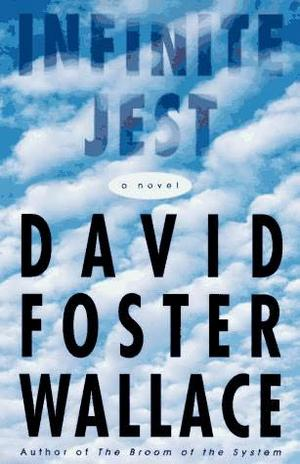
It’s undeniable that Infinite Jest contains sci-fi elements. However, rather than calling it sci-fi (which is not derogatory; it’s just not accurate), let’s just call it what it is: an enormous, important, genre-bending book that cuts to the core of the contemporary American experience of pleasure and addiction. It’s simple to read, nearly impossible to think about, and you are truly at a loss if you don’t read it just because it weighs like 20 pounds or because you’d rather watch Girls.

Life After the Star Wars Expanded Universe: Infinite Jest as Science Fiction

Andrew Findlay

This article’s shtick is reviewing great science fiction, so before I start in on my review, I’ll make my case that this book belongs here. What are some major features of science fiction?

1. Takes place in the future

2. Strange changes in government, cartography, or the overall structure of the world

3. Extrapolated technologies

4. Thematic development of the plot centers around a certain piece of technology

All of these characteristics are strong predictors of science fictional status, and all are strongly present in Infinite Jest. We’ll take it number by number.

Infinite Jest takes place in a (#1) near-future America. It’s hard to tell exactly, but Stephen Burns estimates that the time of the main part of the book roughly matches 2009. That’s fifteen years in the future from the 1994 date of publication. In this future, the reigning method of North American political interaction is O.N.A.N.ism (#2). I don’t think there’s ever been a more intentional masturbation joke, but O.N.A.N. stands for the Organization of North American Nations, a souped-up NAFTA in which the American president basically has the final say on everything. One of the things the president does is create the Great Concavity, where the far northeast of the U.S.A is given to Canada, and then becomes a massive, region-wide landfill.

Fuck you, Montpelier!

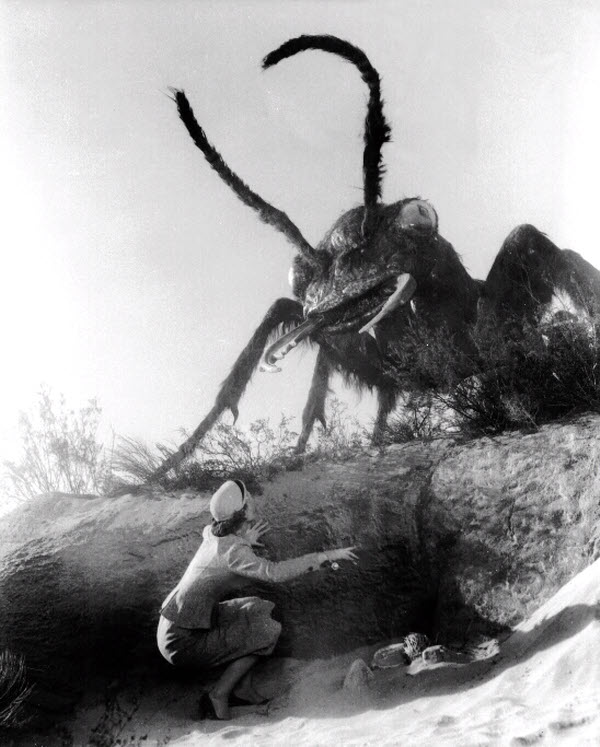
Every single bit of America’s waste is sent to that place, which is now legally Canada, so America does not have to deal with it. There’s even a new term for this unprecedented gifting of land to a neighboring country: experialism. There’s also (#3) a bunch of new technologies. I’ll start with a big one: unlimited clean energy. Well, kind of clean. Annular fusion is the whole reason for drowning Vermont and Maine in toxic waste and creating what Americans call the Great Concavity. Annular fusion is a counterintuitive clean energy system that uses hideous amounts of toxic material to initiate fusion that is so clean that it not only purifies the materials used in the process but also sucks every toxin and radioactive particle out of every location in a wide circumference. The whole reason they have to send massive amounts of waste into the area is that the process of annular fusion removes every poison from everything in the area, leading to massive, lush, unbelievable overgrowth. This entails huge trees, lush grass, even gigantic animals and insects.¹

Continual bombardment with poison is the only way to keep these animals/plants from growing out of control and taking over the surrounding areas. DFW includes many additional near-future innovations in this novel, but the most important one is Infinite Jest. The book title references a short film from within the novel itself, a piece of video technology (#4) that is central to the plot and theme. Infinite Jest is an unreleased video that is so entertaining or appealing that, once someone starts watching it, it is so pleasurable that they never stop… ever. Police would know that someone died from watching the video when they saw a self-befouled, dehydrated husk sitting in a recliner. That is, they would know that if the electricity to the entertainment system had been cut. If it hadn’t and the video was still running, they would just sit down and watch, and the exact same thing would happen to them.

This is great! Let’s do this until we die.

Whenever people hear of Infinite Jest, they don’t think science fiction. I didn’t even know it was set in the future until I read it. The issue is that Infinite-Jest-as-science-fiction is not part of Little, Brown’s marketing strategy. Very often these days, booksellers and publishers decide what is and is not science fiction. There’s also a specious assumption that Serious Literature and science fiction are mutually exclusive. In Ursula Le Guin’s brilliant “On Serious Literature,”² she takes this type of thinking to task:

Had he not even understood the importance of the distinction between sci fi and counterfactual fiction? Could he not see that Cormac McCarthy — although everything in his book (except the wonderfully blatant use of an egregiously obscure vocabulary) was remarkably similar to a great many earlier works of science fiction about men crossing the country after a holocaust — could never under any circumstances be said to be a sci fi writer, because Cormac McCarthy was a serious writer and so by definition incapable of lowering himself to commit genre?

The Road is obviously science fiction.³ End of days, world of ash, single wanderer with companion trying to make his way? Except The Road was not billed or sold as science fiction, because Cormac McCarthy. Infinite Jest is the victim of the same type of thinking. This way of looking at things persists across literature. For example, Margaret Atwood’s Oryx and Crake is not sold as science fiction even though an honest-to-god mad fucking scientist is a title character. Gravity’s Rainbow, almost the entire focus of which was the Nazi’s V2 missile program, the direct technological parent of the rockets that put men on the Moon, is rarely considered science fiction, although there’s a fairly strong argument there from the standpoint of #4.

Yep, looks pretty sciencey to me.

So, back to Infinite Jest. It’s science fiction, so I’m allowed to review it. The thing that surprised me most about it was how easy it was to read. It’s on the same cultural level as Ulysses and Gravity’s Rainbow – a Big Important Novel you want people to see you reading on the train. I’m not saying Ulysses and Gravity’s Rainbow aren’t worthwhile, but they are most definitely a fucking trek. Infinite Jest isn’t. There are some advanced bits, and yes there are footnotes,⁴ but for the most part it’s just long as hell. To prove my point, following are excerpts from each book, chosen by opening the book to a random page and typing what I found.

Infinite Jest:

Katherine, I am, in English, moribund. I have no legs, no Swiss honor, no leaders who will fight the truth. I am not alive, Katherine. I roll from skiing lodge to tavern, frequently drinking, alone, wishing for my death, locked inside my pain in the heart. I wish for my death but have not the courage to make actions to cause death. I twice try to roll over the side of a tall Swiss hill but cannot bring myself. I curse myself for cowardice and inutile.⁵

Ulysses:

Lynch! Hey? Sign on long o me. Denzille lane this way. Change here for Bawdyhouse. We two, she said, will seek the kips where shady Mary is. Righto, any old time. Laetabuntur in cubilibus suis. You coming long? Whisper, who the sooty hell’s the johnny in the black duds? Hush! Sinned against the light and even now that day is at hand when he shall come to judge the world by fire. Pflaap! Ut implerentur scripturae. Strike up a ballad.⁶

Gravity’s Rainbow:

He used to pick and shovel at the spring roads of Berkshire, April afternoons he’s lost, “Chapter 81 work,” they called it, following the scraper that clears the winter’s crystal attack-from-within, its white necropolizing…picking up rusted beer cans, rubbers yellow with preterite seed, Kleenex wadded to brain shapes hiding preterite snot, preterite tears, newspapers, broken glass, pieces of automobile, days when in superstition and fright he could make it all fit, seeing clearly in each an entry in a record, a history: his own, his winter’s, his country’s…instructing him, dunce and drifter, in ways deeper than he can explain…⁷

Above are excerpts from the trifecta of Modern Novels You Must Read. I hope they make it clear that Infinite Jest is comparatively accessible and smooth reading. It’s also one of the funniest books I’ve ever read. Most “funny” books have me smiling a little as I consider how good that last joke was, but Infinite Jest had me in tears multiple times a day. So now we come to the main point of this article: read Infinite Jest. It is funny, compelling, and important. I spent most of my time discussing why certain features of this book put it within my science fiction purview, so Austin Duck⁸ will be along on Wednesday to talk about a massively more crucial subject: what makes Infinite Jest so damn important?

NOTES AND ERRATA

1. This is key, considering that outsized insects were almost as important to early pulp SF as words were.

2.  Read this. Following that link is undeniably a better use of your time than reading this article. It leads to a tongue-in-cheek piece of brilliant microfiction Le Guin wrote in response to a reviewer of Michael Chabon stating that he “has spent considerable energy trying to drag the decaying corpse of genre fiction out of the shallow grave where writers of serious literature abandoned it.” This statement put Ursula Le Guin, goddess of fantasy and science fiction that she is, in high dudgeon. Her response is facetiousness perfected.

3. Or so obviously indebted to it that not acknowledging it is an act of ingratitude.

4. I recommend using an ereader to go through Infinite Jest. It’s gigantic and physically difficult to hold up. Also, clicking on a number to go directly to the footnote is a lot easier than flipping back and forth.

5. If given the context that a French Quebecois man in a wheelchair is speaking this in a second language, I can pretty easily figure out what’s going on here. No challenge at all.

6. What the fuck. What in the actual fuck. Is that Latin? Why? Why is that Latin?

7.  Okay, I know all the words here. All of them. Let’s just put them… together… hm. I can piece this together with some effort, but the fact remains that the author chose to write “rubbers yellow with preterite seed” instead of “used condoms,” so I don’t know.

8. Kind of a dick, but smart as hell and with a heart of gold. Read his article!

Image credits: Allmedia.com, Wiki, and Infinitesummer.org

Read This or Kill Yourself: Seiobo There Below by Laszlo Krasznahorkai

seiobo

Austin Duck

In Read This or Kill Yourself, we get tough with you about your bookshelf and what had damn well better be on it.

If you haven’t heard of Laszlo Krasznahorkai, you’re not in the minority. To be completely honest, the only reason I’m aware of him (and this book) is that I was trying to impress the book reviewer at The Washington Post so he’d help me get a better job (look how well that worked out).

Cool story, huh?

Anyway, Krasznahorkai is Hungarian, super allusive, and has only had a handful of books translated into English over the last decade or so. To us readers of English literature (even us grad school pricks), he’s pretty fucking remote. But, as with many things we’ve never heard of (or are just starting to see creeping up on our cultural radar screens), this guy is really, really good. Just read this excerpt. Can you believe how. fucking. good. this. guy. is?

Let me start again.

It might help to describe the basics of this book first. It’s hard to say whether Seiobo There Below (henceforth STB) is a novel or a collection of stories, but I’m not sure that the distinction between the two would be, in any way, meaningful to the understanding of the book. It’s definitely divided into sections (that are numbered using primes to imply a kind of “golden spiral” relationship between the sections [hence the impossibility of determining whether to read it as a whole or as discrete stories]), none of which are connected in any way but by theme. All of these pieces, in their own ways, are obsessed with the moment of transcendence through art, following various makers, protégés, and tourists through strange times, places, and works of art.

For example, in STB, you’ll read incredibly thorough accounts of a character consumed by the process of crafting a mask for the Japanese Noh Theater, another wandering through Italy to stare at an artwork he’s seen before, another exploring the Alhambra trying to make sense of the impossibility of knowing what the architectural masterpiece could have possibly been intended for, and another watching a bird standing in the middle of a river. Even as I’m writing this, I’m thinking to myself, it’s impossible that this book isn’t the most boring, most pretentious thing in town, but it’s not! It just isn’t. And I think I know why.

While some people love a good plot, some love great characters, and some (academic assholes) get off on meaning or cultural implication or philosophical value, I find that (and it seems like others agree) what really matters in the creation of great, meaningful literature—what really sets it apart from journalism, grocery-store fiction, bad genre fiction, etc.—is the sentence. That’s it. Now, perhaps it’s because I’ve thought about ways to aggrandize my life as a poet for a bit too long (because, shit, I still have to explain that to myself each morning), but for me (and a lot of other people much smarter and less pretentious than me) the sentence is what separates the good from the bad, what can create empathy with the reader or destroy the possibility of it. Think about it.

Sentences comprise our entire material experience of any book; sure, they are the units of thinking used to build meaning, understanding, and communication, but, left at that, all you have is really good journalism or a really meaningfully essay. Great sentences, on the other hand, call attention to themselves as sentences. Yes, they carry logic and information, but they have rhythms, they pause strategically, they themselves (as opposed to the content they carry) create ironies with what you expect sentences to be. Sentences are the basic units of organization, and organization in art is what allows us to experience it, to feel it rather than just read it. Sentences are fucking cool, y’all, and there’s no doubt in my mind that Krasznahorkai is one of our living masters of such.

I’d really like to show you one, but the average sentence in this book is easily 15-20 pages long, so I’ll spare you (and my genius editors here [ed note: thanks). If you’d like to see one, check out the link above. In a nutshell, these sentences are long (lol), difficult, and unlike anything I’ve seen in American literature. They are different (and difficult) because, unlike Faulkner’s, or Foster Wallace’s, or even our old ex-friend Frank Bidart’s, contrary to the basic logic of a sentence, they don’t build forward momentum. Let me say that another way (so you don’t kill yourself with boredom): the average sentence (even the more wonderful, more artful one) operates like a car rolling down a hill toward a brick wall; the speed increases and the overall tone gets more dire, an expectation is created (i.e. that the car will hit the wall) and, in some ways, you’re waiting for and preparing yourself for the full stop, the experience of collision with meaning.

Krasznahorkai’s sentences in STB, on the other hand, are a bit more like taking a tour bus around an unfamiliar city. You get on, somewhat oriented, and go and go and go, and there’s a tour guide saying look here and did you know about this; things feel assembled piecemeal, there’s chatter, honking horns, you stop briefly at stoplights (ahhh, the semicolon) and, yes, there’s a destination, but that seems less important, or, rather, distantly important; you’re here to get lost in the miscellany one piece at a time so that when you finally arrive at the conclusion, you know that you’ve had a meaningful experience that had more to do with the sum of the tour, all of the little meaningful (or not so much) pieces of your experience, than it did where you ended up.

But where you end up is important too; after the tour, after you get to know the texture and contours and history of the place, winding up in the Upper West Side can be pretty revelatory, despite the fact that you only started a few blocks away in Times Square.

These are not the sentences of a beach read (unless you like to inflict this kind of work on yourself while on vacation); these are the sentences of a major artwork that you will feel working on you, changing you, bending you around its purpose. You will get tired of them; you will beg the sentences to end, the paragraphs to end, the sections to end, because my God I just wanted something to read on the subway, let me out of your fucking world, but, in a way, I think that’s the point. Just as there’s the ambiguity between short-story collection and novel at play, so too is there a sense that these sentences could be shorter, should be shorter, but, because they’re all joined, some larger book-length, sentence-length ritual is being enacted, something vital you could miss if you don’t stick around. And that’s the pleasure of this book: it wraps you up meaningfully; it makes you work meaningfully. It’s written, sentence by sentence, section by section, in such a way that you can’t help but see the structure, feel its constraints, and experience the pleasures of the each section’s yield as the result. This book is a full-scale interrogation of art as holy and will force you into the repetitions, the rituals, and the cramped spaces of the makers; you will see and feel what is so large, so vital, in objects so small.

Image source: NPR

Life After the Star Wars Expanded Universe: Kim Stanley Robinson’s Mars Trilogy

Andrew Findlay

Humanity has been around as a species for about 200,000 years. Good job, guys! Pat yourselves on the back. The problem is that, even discounting the existence of bloodthirsty, upjumped apes too stupid to realize that their drive to power will eventually destroy the world, we don’t stand a great chance in the very long term. Earth has a bad habit of going through extinction events. There have been five major ones where about half the animal species on Earth died. Notice I didn’t say half the animals on Earth died – half the species on the planet disappeared. Even if we stand a good chance of going through a global disaster, it still wouldn’t be pleasant to be here when it hits. The “don’t put all your eggs on one planet” mode of thought has led to the colonization of other planets being of high scientific interest, both in fiction and reality.

Mars, which has a nominal atmosphere and plenty of frozen water, is one of our best options for settlement. It takes less than a year to send stuff (or theoretical people) to the red planet. In Kim Stanley Robinson’s Mars trilogy, that’s exactly what we do. It is written as a future history – a subgenre in which the author explores a possible future as a historian would – realistically and with minute attention to detail. In the chronology of the trilogy, the first thing that happens is that in the year 2026, the U.N. selects the First Hundred to send on a mission to Mars. Since the titles of the books in the trilogy are Red Mars, Green Mars, and Blue Mars, I won’t be spoiling anything to tell you that their terraforming efforts are successful. However, with one hundred people in close quarters, there’s a lot of disagreement and conflict. This problem is exacerbated as Earth begins sending up more colonists to follow in the footsteps of the First Hundred. After a while, Mars is populated by dozens of competing interests. There are disagreements among the First Hundred scientists – terraform the whole planet or live in tent cities to preserve the primal environment, serve as an outpost to Earth or break away entirely, work only on science or try to create a brand new planet. On top of this, there are immigrants from all over Earth, all trying to hold on to their individual traditions and cultures and make a place for themselves.

Home sweet home

It’s an extremely important series on three fronts: science, characters, and politics. First off, every scientific discovery, experiment, or occurrence is explained. Robinson weaves proven and hypothetical scientific treatises into the narrative of the story with minimal drag – each explanation is closely associated with a necessary plot point. How do they achieve orbit once they get to Mars? Robinson tells you all about aerobreaking. How do they start seeding life on Mars? Robinson explains all the plant species they use and all the biological hacks and environmental modifications that increase the hospitableness of the planet. How do they deal with all the radiation exposure from the voyage over and from just being on the surface? Robinson explains how one of the biologists on the mission finds a way to scan for and fix DNA transcription errors caused by radiation. Incidentally, this process also doubles as a longevity treatment – with genetic damage being one of the main factors of aging, this treatment halts the age of those who undergo it at a perpetually spry 70ish. Characters that live for a millennium give Robinson a lot of time for character development. From the character standpoint, the trilogy is extremely ambitious. It follows the lives of dozens of people, a large number of which are POV characters. Many POV characters are fully realized, and even those that aren’t very well fleshed-out are still more than just skin and bones. Reading about events from the perspectives of many different characters over the course of the three books and 200 years of the series leads to a very close, subtle understanding of the inner workings of many of them and of all the psychological variety that exists across the human species. Having all of these extremely opinionated and well-realized characters try to settle a world together leads to my favorite part of the series – political conflict.

The politics of the Mars trilogy is where Robinson really shines. Unlike the ideal politics of the Culture or the complete wiping out of the old order in the MaddAddam trilogy, the Mars trilogy presents the realistic, gritty, step-by-step rise of a new and humane society out of the ruins of the old exploitative order. The major conflict that develops in the series is that of the new Martians against corporate interests back on Earth. The situation on Earth declines significantly, to the point where transnationals (companies that transcend nations – phase two of our current multinationals) control everything and have bought out the U.N. Mars represents a huge opportunity for profit, so outside forces start treating the Martians’ home as just another economic interest. The series has very little good to say about Earth, where corporations currently own many politicians and in Robinson’s future simply own whole countries outright. When trying to settle on what economic system to follow, one of his characters rails against the old order on Earth:

That is what capitalism is – a version of feudalism in which capital replaces land,

and business leaders replace kings. But the hierarchy remains. And so we still hand over

our lives’ labor, under duress, to feed rulers who do no real work.

The beautiful thing about this quotation is not that it calls out capitalism for what it is – an easy way for the powerful to exploit the weak, a hierarchy in which if you do not have a job, you starve, a system in which the productivity of the worker enriches the rich while leaving scraps for everyone else – but that it was said in the context of rational argument between multiple people trying to decide on the best way to run an entire planet. At one point in the series, the colonists convene a Martian analogue to the Continental Congress. Pages and pages are dedicated to all the conflicts, shouting matches, and debates that are involved in forming a viable government. There’s a common saying about politics that no one wants to see the sausage being made, but Robinson applies the same exactitude and detail of his scientific explanations to the politics of the series. He takes us through the entire process, from slaughtering the hog to grinding the meat to stuffing the casing. His point is that, without being intricately involved in the sausage-making, you can’t ensure that what you end up eating isn’t a bunch of pigshit.

As far as recommending that you read this, it depends on what kind of person you are. It is to the era of space colonization what War and Peace is to the Napoleonic era: massive in size and scope (nearly 2000 pages), tracing the paths of a heap of characters through the events of the story, making a Big Statement about culture and politics. My caveat is that above all, it is a book of detail – the minutiae of the lives of all the characters, accurate and long scientific descriptions, pages filled with parliamentary procedure – for some readers, this is a huge strength that will capture their imagination and passion, for others it is a huge weakness that will bore them to tears. I’ll admit my eyes kind of glass over whenever Robinson describes Martian geology in intricate detail. The important thing about this series with regard to science fiction is that, as a future history, it doesn’t just show us the horrible end our stupid selves trigger or the ideal future we somehow make it to (Fallout 3 and Star Trek,respectively), but charts a possible course correction for our current disastrous path and expounds upon it using an epic plot and interesting characters.

Image credits: Wiki and IMDB.

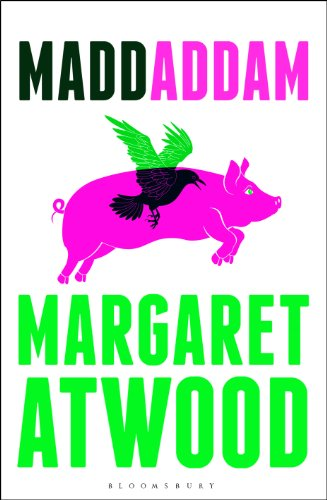
Life After the Star Wars Expanded Universe: Margaret Atwood’s MaddAddam Trilogy

Andrew Findlay

Margaret Atwood is a very special lady. She is an extremely talented writer and one of the best living for simple wordsmithery. If you haven’t read her The Handmaid’s Tale, stop reading this article, go to Amazon, and buy the Kindle version so you can start reading as soon as possible. No, seriously. Atwood the author is unassailably great, and Atwood the public persona is quick, witty, and charming. One reason I like her so much is that, in contrast to many other knights of cultural development, she loves the changes being wrought by the Internet and social media. Unlike crotchety Jonathan Franzen, who once had the balls to say of Salman Rushdie’s Twitter use that he should know better, and that 140 characters blah blah death of English blah blah blah. Authors who say things like that seem bizarrely out of touch with media, considering that media is the vehicle for their success. Atwood, on the other hand, loves the Internet, mainly because basic literacy (I said basic literacy) is a prerequisite for participation, and it gives youth a platform for writing, getting their writing published, and receiving criticism, a platform that was not present when she was coming up.

This type of forward thinking, openness to technology, and general flexibility of mind has led her into the realm of speculative fiction. Speculative fiction is a euphemism for science fiction used by people who think that once science fiction gets too smart you have to call it something else. Her justification is that spaceships and aliens cannot actually happen, but that the events she writes about can actually occur with the technology available to us today. She’s so damned good at it that she can call it whatever she wants. Her main claim to fame in the SF world, other than the previously mentioned The Handmaid’s Tale (buy it now) is the recently concluded MaddAddam trilogy, a post-apocalyptic series.


The world of the series is a near-future extrapolation of how things currently are. Corporations have become megaconglomerates that have more power than most nation-states. If you have a job with one of them, you live in a compound, which is like a gated community but with much better security. If you do not have a job with them, you live in the pleeblands, which is a wasteland of crime, poverty, and questionable foodstuffs. One of the most successful restaurants is Secret Burger – where the source of protein in your hamburger is always a surprise! Secret Burger is very popular with many criminal organizations. I’ll let you connect that for yourself.

Atwood’s dystopia arises from bioengineering. We get glimpses of some of the biogenetic horrors of the world in the lead up to the apocalypse. One example is the extremely popular Chickienobs, which are genetically modified chickens. They no longer have neurons, or beaks, or much of anything other than meat. They are giant, bulbous amalgamations of breasts and drumsticks with a tube of nutrients that goes in at one end and a tube of waste that comes out the other. Another questionable transgenic organism is the pigoon – pigs that have been modified to grow replacement organs for humans. These pigs are gigantic because they have to have space to grow extra lungs, livers, hearts, and even cortical tissue. None of these things – the massively impoverished populace, the overpowered corps, or the questionably engineered animals – actually bring about the end of the world. A massive outbreak of an Ebola-like virus basically melts humanity where it stands. The narrative of the first book, Oryx and Crake, starts after the apocalypse and explores the buildup to the biocatastrophe through flashbacks. The book’s post-apocalyptic start means the action opens on the sole survivor of The End: grim, frightened, and alone. The first few paragraphs are my favorite start of any book ever:

Snowman wakes before dawn. He lies unmoving, listening to the tide coming in,

wave after wave sloshing over the various barricades, wish-wash, wish-wash, the rhythm

of heartbeat. He would so like to believe he is still asleep.

On the eastern horizon there’s a greyish haze, lit now with a rosy, deadly glow.

Strange how that colour still seems tender. The offshore towers stand out in dark silhouette

against it, rising improbably out of the pink and pale blue of the lagoon. The shrieks of the

birds that nest out there and the distant ocean grinding against the ersatz reefs of rusted

car parts and jumbled bricks and assorted rubble sound almost like holiday traffic.

Out of habit he looks at his watch – stainless-steel case, burnished aluminum band,

still shiny although it no longer works. He wears it now as his only talisman. A blank face

is what it shows him: zero hour. It causes a jolt of terror to run through him, this absence

of official time. Nobody nowhere knows what time it is.

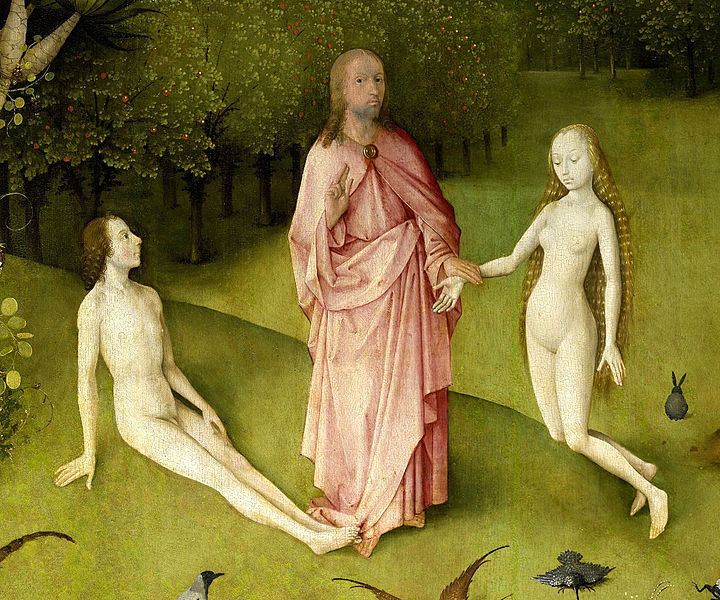
Atwood accomplishes so much in so few paragraphs. The protagonist waking up and wishing he were just not there anymore, the artifacts of a crumbled civilization discarded in the ocean, and most hauntingly, the fact that “[n]obody nowhere knows what time it is,” because as far as Snowman knows, there is nobody nowhere. A horrifying and deft way to signal just how alone he is. Well, not quite alone. One of the characters that we meet through flashbacks, Crake, a brilliant geneticist, has bioengineered a perfect humanity. He started with human stock and made modifications until he ended up with post-humans. To name just a few modifications, the children of Crake are not physiologically predisposed to violence, they can survive by just walking around eating leaves and grass, and their sweat repels insects. They represent a new origin story, a modern Genesis.


Snowman’s main motivation for the book is taking care of these “Crakers,” who survive the outbreak. Caring for this fresh-out-of-the-box humanity, even just surviving himself, is a dubious proposition in the new world. Most obviously, the old methods of food delivery, medical care, and shelter building disappeared with the disappearance of humanity. Most unsettlingly, many of the previously innocuous gene-spliced species now pose a danger to Snowman. The best example of this is the pigoons, which have escaped and are now approaching human-level intelligence. In one scene of the book, they almost trap Snowman raptor-style. How the hell are they this smart? Well…

Life, ah, finds a way.

In the absence of humans to keep them under control and penned in, the pigoons escape their enclosures and the human brain tissue they were growing for transplantation gives them the capacity for thought. This is just one of the endless bioengineered dangers Snowman has to deal with in the world he wakes up in.

Oryx and Crake is a great book, but it is also part of a great trilogy. The trilogy does not progress in time as most do. In the present of the narrative, it inches forward as its flashbacks cycle to fill in more and more of the blanks in the pre-apocalypse world, fleshing out the past more with each book. The two sequels sometimes lose something in treading over similar ground, but Atwood is such a talented worldbuilder that any depth or texture she adds is welcome. Each cycle back builds more and more on the circumstances that led to the end of the world, and explores more and more deeply how a sick civilization dies and how a new civilization continues after an extinction event. I mentioned earlier that Atwood considers her work speculative (not science) fiction because it projects a plausible future based on the technology and society we have now. That plausibility factor makes this trilogy all the more compelling and terrifying. Do yourself a favor and check it out.

Image credits: Wiki, Drinking Cinema (take a guess which one)