comedy

Obvious Child is a Romantic Comedy About How People Actually Meet. Should You See it?

obviouschild

Alex Russell

In our rarely-running kinda-series Should You See It? we talk about movies that just came out. You can figure out the rest of the premise from the title of the series. That’s right: we talk recipes. Should you see Jenny Slate’s romantic comedy Obvious Child?

One of the weirdest parts of pop culture now is that if you really love something, it starts to feel like it’s one of the biggest things in the world even when it isn’t. You can follow a hashtag or go down a Tumblr or YouTube hole and suddenly that one Comedy Central show you really, really like feels like it just must be something everyone you know is all about.

Obvious Child inundated my digital life last week. It’s a movie that did well enough at Sundance earlier this year to earn a bigger release this month. Jenny Slate (Kroll Show, Parks and Recreation, Bob’s Burgers) did a sort of “comedy nerd” press junket to promote it on a lot of podcasts, but it’s entirely possible you haven’t heard much about it.

Jenny Slate plays a stand up comic who gets dumped after being too open on stage about her relationship. She’s in that mid-20s period where people have to make decisions about how to stop taking money from their parents, how to have a stable relationship and still be their own person, and how to get and keep a job that doesn’t suck. It’s a relatable premise.

Then, well, let’s get this out of the way: even though the director has said it’s not “an abortion comedy,” it is definitely a film that deals with abortion. Jenny Slate’s character has a one-night stand and decides to have an abortion. That’s not giving anything away; it’s the hook of the whole experience.

Questions come up. How do you have a conversation about this with someone you don’t know? How do you tell your parents? How do you tell your friends? How do you tell a group of strangers that you talk to with a microphone?

Obvious Child will rub people different ways based on their feelings about abortion, but it may also have the same effect based on how people feel about relationships in general. Jenny Slate’s character is funny and goofy, but she’s also “independent” even though that word has lost some specific meaning in some ways. The portrayal of her decision to have an abortion is absolute; she asks a friend if the experience hurts or not, but it’s clearly not part of the decision. This is not a movie that wants to tell you if you should have an abortion or not, but Jenny Slate’s character is a look into what the process looks like for someone who has their mind made up.

Should You See It? 

Well, someone sure should. Obvious Child made $133,000 this weekend in 18 theaters. It’s still in limited release (Frozen is still in more theaters than that in week 30 of release and The LEGO Movie is in over 15 times that many in week 20) but you should try to see it if you can. It’s an extremely refreshing romantic comedy both in subject matter and in characterization; these are real people who meet because they get a little drunk and flirt with each other. Every movie should try to show an interesting version of an emotion you understand or feel on some level, and the weight of an important decision when life is already weighing very heavily is spot damn on for that.

Obvious Child is in limited release until June 27, when it is released everywhere. See the trailer here.

Image source: Sundance

Undateable: NBC’s New Comedy Set in Detroit… that Doesn’t Want to Talk About Detroit

Undateable

Jonathan May

NBC’s Undateable is set in present-day Detroit, Michigan and plays this fact for laughs approximately one time in the six episodes that have aired so far. This is its main fault; most great comedies make great use of the cities in which they’re set. Curb had Los Angeles, Seinfeld had New York City. Often the nature of a show is dependent on where its set, but the fact that Undateable is filmed in front of a live studio audience makes it somehow more germane and less specific to Detroit and its comedic possibilities.

Like other sitcoms, this one is set in a bar and follows its fastidious, young owner Justin, his sexy, swaggering roommate Danny, and their motley crew consisting of Danny’s sister, a gay man, a black man, a openly misogynist nerd, and a hot female server. While the variety of the group unfolds many possibilities, unfortunately these roles are mostly played to stereotype. While I laughed out loud many times over the past six episodes, I can’t help but feel empty about most of the characters; the two main men find ladies very early on, and the ancillary characters languish listlessly in the background, ready to serve up another clever off-color joke or ubiquitous cultural reference when needed. But the show doesn’t seem to be addressing any central problem that would give it more focus. No one is really in jeopardy; nothing much is at stake. And ultimately, for a show to be set in Detroit in 2014, as the city goes through the insane bureaucratic process of insolvency, and not address any of this is the worst kind of audience letdown.

For a show like Undateable to make it another season (and possibly the rest of this one), it will need to establish a problem, preferably one which connects to Detroit’s problems at large, giving it a more empathetic context. Perhaps its characters might not seem so flat if they discuss, openly struggle, and make fun of the crippling issues of public service, safety, corruption, and government failure that they could. A comedy like Broad City highlights the complexities of getting around, working, and living in New York City, but in Undateable, we miss out on all the potential fun, being constricted by the format to scenes set in the apartment and the bar. I’ll be tuning in for the laughs, but I just wish the show would give us something memorable.

Jonathan May watches too much television, but he’s just playing catch-up from a childhood spent in Zimbabwe. You can read his poetry at owenmay.com, follow him on Twitter at @jonowenmay, or email him at owen.may@gmail.com.

Image: NBC

The Pete Holmes Show is Canceled and Why I’m Not Quitting

tbs-features-pete-holmes-705x405_110420130454

Alex Russell

The Pete Holmes Show got 80 episodes on TBS. Per a very personal post from Pete Holmes himself, the variety/comedy/interview/sketch/whatever show is now over and will air its final episodes within the next month.

The comedy nerd world has been both insanely good and insanely bad to Pete. He’s one of the biggest comedians that your parents probably don’t also know, but he’s also the target of a metric ton of hate by way of his sometimes-infuriating-but-always-interesting podcast You Made it Weird and his career as a baby that sold insurance on television. If all you know about Pete Holmes is that he has a podcast where he sometimes talks about astral projection and healthy juicing for upwards of two (or three) hours a week and that he sold insurance on TV, sure, why did they give that guy a show is a reasonable question.

But he’s also one of the ten funniest people in the world right now, and that’s not something I say lightly. He’s a better standup than he is anything else, and 80 episodes of The Pete Holmes Show showed that he’s a pretty damn good “anything else.”

Every episode wasn’t always my favorite — though part of the joy of Pete Holmes is his persona that he sometimes calls “fun dad,” so he’s in on the joke that he’s sometimes just so much — but I watched every single episode because I was so in awe. Pete Holmes got to do sketches based on in-jokes and interview segments where he clearly ignored publicists. He got to make what “The Pete Holmes Show” without the italics would be if he had his say. He made his show.

This week we passed 10,000 total hits on Reading at Recess. This week we hit 175 unique posts from nine different people. Despite what I’d call “success,” I still almost gave up.

I started Reading at Recess earlier this year to have an outlet to write about culture. I figured that the world didn’t necessarily need another recap of Louie or an ode to Walter White. That said, I think there’s space for what we write about Louie and our thoughts about Walter White’s opposite on Fargo. I think there’s room for an Obama campaign worker’s review of Mitt as oddly humanizing. I think there’s room for covering things everyone else is talking about, like How I Met Your Mother‘s weird ending and Archer‘s lull of a season and why half of the audience of Girls seems to be watching for strange reasons.

At the end of the day, this is just a blog. It’s just a place that I hope you spend five minutes of your website time every weekday. But if it’s more than that, it’s somewhere you might learn something about feminism and parody in anime, or art design’s influence on gameplay in video games, or about data’s influence on politics.

What it hasn’t been is consistent. We’re all over the place. We’re a shotgun, not a sniper rifle. When you watch The Pete Holmes Show, you’re looking at what Pete wanted you to see. When you’re here, you’re kinda seeing something that’s far too unfocused.

We’re taking Thursday and Friday off to regroup. When you come back on Monday — and I do hope you come back on Monday — you’ll see something that looks a lot like what you’re used to, but better, more consistent, and more focused. You’ll see our real show, because it’s what we wanted to show you from the get-go.

Want to write for us? We’re accepting contributors! Reach out through our submit page.

Alex Russell lives in Chicago and is set in his ways. Disagree with him about anything at readingatrecess@gmail.com or on Twitter at @alexbad.

Image: TBS

Neighbors: Should You See It?

Neighbors (from The Daily Mail)

Jonathan May

In our rarely-running kinda-series Should You See It? we talk about movies that just came out. You can figure out the rest of the premise from the title of the series. That’s right: We talk recipes. Should you see Neighbors?

Neighbors is a movie that tries to bridge two kinds of comedies: the buddy comedy and the relationship comedy. The couple (Rogen and Byrne) uses the standard “bros before hos” as part of its trap against the fraternity invaders, backfiring wildly into what seems to be the start of a very different film. Needless to say, the film is billed as a comedy, so by stricter terms, it follows on its promise, reaffirming the relationship between the couple at the film’s heart. However, when I asked my friend Elizabeth what she thought about the focus of the film, she said it was more of a misguided bildungsroman for Zac Efron’s upper half, and I would have to agree. The movie tries to affirm some kind of epiphany on the part of the fraternity president as to what must come after graduation, yet it also clings more so to the couple’s determination to face what they must together. The new parents commit vandalism, trespassing, and (some may say) negligence to enact their wild schemes against the admittedly loud and obnoxious fraternity house 24-hour party machine; does this bring them down, or make it clear that some people will do almost anything to achieve comfort?

I’m no stoic; I laughed out loud plenty of times. Sex and drug jokes abound, reaffirming pot as the social drug of the new century. What really held the film together were the ancillary characters: Lisa Kudrow as the Dean, Hannibal Buress as the policeman, the fraternity as its own character. While I was compelled by the main plot(s) of the film as a comedy of manners, I found Efron to be stiff in front of the camera in contrast to the couple, a veteran pair in their own rights. Perhaps it’s because the film is of two minds that he seems weak in comparison; I’d never seen him in a movie previously. I did appreciate the continuation of the depiction of the American couple as two people who can be fun together, despite their seeming nefariousness as they manipulate others.

Should you see it?

What to take away? We get older, and it sucks sometimes, but sometimes it’s really cool. Abs help?

Jonathan May watches too much television, but he’s just playing catch-up from a childhood spent in Zimbabwe. You can read his poetry at owenmay.com, follow him on Twitter at @jonowenmay, or email him at owen.may@gmail.com.

Image: The Daily Mail

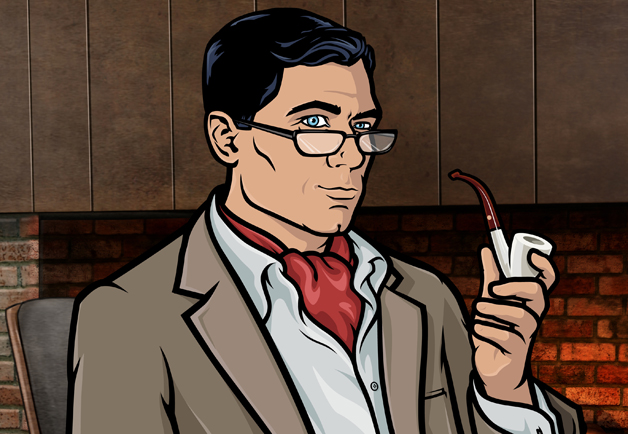
“Archer Vice” Season Review and How We React to Disappointment

archer-628

Alex Russell

Some weeks ago, I called myself an idiot for missing the point about Archer. I talked about how showrunner Adam Reed succeeded in keeping Archer fresh by making the show about the characters and the stakes rather than the setting. I suggested that those truths made the show’s shift to Archer “Vice” — this season’s change in setting from a spy agency to a series of international cocaine deals — a change that didn’t matter. It wouldn’t mean a thing, I said.

Archer “Vice” (henceforth just Archer) turned out to be 13 weird episodes that showcased just how far a show can fall. Archer is a great show that found some purchase with viewers after establishing itself. All it apparently took was this season’s reboot to destroy that following: Archer‘s ratings dropped by nearly half from last season.

The change of setting truly doesn’t matter. Archer is a show a show about spies as much as Parks and Recreation is a show about local government. The spy stuff was there just as framework for jokes. The real problem wasn’t a location switch. The real problem was that they just don’t care anymore.

In the 12th episode characters question out loud why they are making certain decisions. When a character unlocks a jail cell the prisoner asks her where she got the key. She says she has no idea and the situation is dropped. Another character — one of the relatively important “bad guys” in the season — is killed (by a tiger, for just about no reason) because the show runs out of stuff for him to do. There’s no explanation given for some of the stupid decisions, and most of the best parts of Archer have revolved around people finding reasons for seemingly senseless acts.

An important point here: No one on Archer is ever “random.” They make mistakes because they’re stupid, or selfish, or shortsighted. They succeed because they make the right decision for the wrong reason. These things don’t just happen, because that wouldn’t be funny or interesting. The good part of Archer has always been the why, and this season was far less interested with why.

As for the finale itself, I won’t give away the ending because it’s still worth your time. It’s good at what Archer is good at: depth, character development, and a hard reset. Without giving it away, I can still mention that the jokes are terribleArcher has always been about mixing “high” and “low” at the same time. People set up more complex situational jokes with slap contests and puns. A lot of this season has been lazier one-off stuff, and that is never more obvious than a half-hearted sex joke in the finale that you can even hear Pam’s voice actress not care about as she delivers it. The “stupid jokes” don’t feel like they’re done on purpose anymore. What’s worse, and I would have said this was impossible, is that this season of Archer just wasn’t very damn funny.

I didn’t watch How I Met Your Mother, but it provided an interesting commentary on television and disappointment this year. People waited and waited to see how the story would wrap up, and they seem to have been, for the most part, disappointed. People often couched their anger with the ending in a kind of “I deserved better” sentiment. The argument seemed to be that they felt “owed” a better ending for the time they invested. We feel like television is part of our life experience now. We meet people and we get to know them. Even on a joke machine like Archer, we meet people and we want to be interested in their lives.

Adam Reed doesn’t owe me better episodes of Archer, but he might want to consider making some next season anyway. I rather like this show, and another season like Archer “Vice” will probably be the end of the series.

Alex Russell lives in Chicago and is set in his ways. Disagree with him about anything at readingatrecess@gmail.com or on Twitter at @alexbad.

Image:  GQ

Broad City: Season Review

broadcity

Jonathan May

I’m just going to come out and say it—Broad City is one of the funniest damn shows I’ve ever seen. It’s everything Girls fails to be and so, so much more. The jokes are uninhibited, surprising, and recurring. Cultural references abound. But the wacky, lovable, goofy best friendship Ilana and Abbi share makes up the core of this comedy set in Brooklyn. I’m comforted by a show that’s not afraid to portray every relationship as not being wrought with peril.

The comedy duo, Ilana and Abbi, have been doing this show on YouTube from 2009-2011. Amy Poehler saw them, and the rest is history. Luckily they’ve maintained most of the writing credits, as they are best able to draw out the nuances from their relationship and its quotidian nature. I discovered later that my favorite episode (“Working Girls”) wasn’t written by them, but in that episode, the two spend most of their time apart. Curious.

This isn’t a show that’s trying to be smart, and thank God. The show tries to be, and amply succeeds in being, hilarious—a much higher virtue for television. There are many references to this being the Golden Age of television, as if we were all being written about by Hesiod. The seriousness with which people approach this idea extends into most shows themselves, making them bland and self-important, as if we are supposed to find reflections from life or higher meanings; it’s also the result of presentist thought reigning in the current cultural dialectic, a presumptuous and vain attitude. Broad City is a great reminder that television can simply be for entertainment, and there’s nothing wrong with that.

If you don’t like jokes about weed or vaginas or bodily functions, this is, in fact, probably not the show for you. But if you have a sense of humor, you should definitely binge-watch the first season (10 episodes). The secondary characters are brilliantly rendered; the cameos are few, but incredibly well-chosen (Rachel Dratch and Janeane Garofalo to name a few). And to those happy fans, rejoice!—a second season is in the works. I know I’ll be watching.

Jonathan May watches too much television, but he’s just playing catch-up from a childhood spent in Zimbabwe. You can read his poetry at owenmay.com, follow him on Twitter at @jonowenmay, or email him at owen.may@gmail.com.

Image source: Comedy Central

“Dumb Starbucks” is Part of Something Bigger and You Really Shouldn’t Be Missing It

Alex Russell

On Friday, the new twitter account @dumbstarbucks announced the dawning of a new business. Dumb Starbucks is open and is very real.

Maybe you saw a post about it and maybe you didn’t. Even if you’ve read up on it, though, there’s just not that much to know about Dumb Starbucks. It’s a supposed art exhibit (that’s their argument, they are an artistic parody of Starbucks, so they can use the name) that sells coffee as art. They stuck the word “dumb” in front of everything about the most famous coffee chain in the world, from their business name to their specific drink sizes (get a Dumb Venti, etc) and opened to the world.

The video above was released today, from the “owner.” That’s comedian Nathan Fielder, who is most likely best known for his series of Twitter pranks. He asked people to text their parents and significant others incendiary comments like “I haven’t been fully honest with you” just to see the response. He’s fascinated by what we all are: how bad can it get? Everyone who has ever thought about pushing someone down the stairs but held off because you’re not supposed to act like that can appreciate Nathan Fielder. There’s a lot to love about doing what you’re not supposed to do.

It’s funny to read about someone telling their significant other something terrible because it is funny to think of how our own friends would react. How would your mom handle getting a text from you that asked about buying drugs? How would your girlfriend respond to a text that appears to precede bad news about your relationship? You can imagine — but you won’t test it because you are presumably not a monster.

Some people are monsters.

Nathan Fielder is the star of Comedy Central’s very strange and very beautiful Nathan For You. There’s a ton of it on Comedy Central’s site, I highly suggest you check some out. The show ran for one eight-episode season last year during a very strong season of new shows for a network that is relatively infamous now for throwing pilot after pilot out and then forsaking them all. They picked up another season of Nathan For You that is set to air this year at some point.

The show is about Nathan agreeing to help small businesses with aggressive new strategies. He demands that a pizza place offer a free pizza if they don’t meet their delivery goal, but then the pizza is the size of a quarter. He inspires an ice cream place to create a disgusting flavor to get people in the door. In one truly inspired episode, he creates a rebate for gasoline that is so impossible to redeem that it ends up being a hike and sleepover in the mountains with lunatics.

The joy of Nathan For You is in the moment that you realize everything has escalated beyond what you thought could be possible. How intense can the process for redeeming a gas rebate be? It involves impossible riddles and your own spirit journey. How could it? Really, how could it?

This is clearly — on some level, though surely not entirely — the best possible ad for Nathan For You. There will be more reveals and Starbucks will sue them to death and this will end up being all about getting you to watch season two of a weird show that you might not know about. It’s a pretty great joke by itself, but if it gets you to at least click on Comedy Central’s site and watch a few Nathan For You bits, then it’s even better.

Nathan For You will return to Comedy Central Summer 2014.

The Less Things Change: Archer is Back and Still Amazing

Alex Russell

A year ago, some idiot wrote an article about the fourth season of Archer. He said the following:

The agency on Archer feels full and the characters have developed relationships with each other that they can mine for jokes during bigger plots, but no one is in any danger of becoming reasonable or compassionate. That’s how they can keep turning out new episodes without jumping any kind of shark, ever: there’s no shark to jump if no one ever moves.

That idiot was me, and that idiot was wrong.

Archer didn’t jump the shark in season four. Quite the opposite: season four of Archer proved that creator Adam Reed knew his characters better than I did, thankfully. The titular (like I said in my last review, there’s a word he’d never let me say without comment) Sterling Archer managed to do the one thing no one thought he would in season four. Sterling Archer grew a little bit.

So did the rest of ISIS, the spy agency that served as the setting for most of the first 49 episodes of the show. Archer, for the uninitiated, is a show about people in a spy agency trying to succeed before tripping over themselves through relationships, personal conquests, and sometimes (though increasingly rarely) actual spying.

It’s a surprise that season five of Archer will be “Archer Vice” instead of spy show and center around the cast trying to sell off millions of dollars worth of cocaine, but it’s not a big surprise. The show was never really about the spying. The spying and the agency were just there to hold all the characters together. They were there to explain why an accountant, an HR rep, a scientist, and a millionaire were all hanging out with James Bond. Adam Reed thought that the use of the spy elements wasn’t necessary anymore, so he designed this season as a change of scenery.

The season is now two episodes old. How is it different?

The first episode (“White Elephant”) of season five is almost entirely setup. ISIS gets raided and it turns out that none of this spying stuff was strictly legal. Everyone’s headed to jail forever but then, by way of Malory’s uncanny ability to have dirt on everyone, they’re free to go.

Then there’s a five minute montage of clips from “Archer Vice,” and that’s apparently what we’re going to experience over the next few months. It’s all biker gangs and catchphrases and shootouts. The parallels are easy: spies and coke dealers are apparently not so different, and the show won’t really change that much as a result.

The second episode (“Archer Vice: A Kiss While Dying”) is a bit of a step backwards in the joke department, but it gives a much better feel to how the season will work. Carol/Cheryl Tunt is a country singer who only sounds great when no one is watching. This seems like it’s going to be a big part of the season, but it still goes largely unexplored two episodes in. The bulk of the episode is just Archer, Lana, and Pam Poovey trying to execute a drug deal in Miami. It feels like an episode that could happen at any point in the series. When you start to dissect it you realize that it basically has happened before. Most of what I liked about the first episode is absent here, but most of what there is to love about Archer in general is still intact. It’s funny, it’s paced well, and it’s definitely servicing (again, as Archer himself would tell me, phrasing) a bigger story.

The thing I keep coming back to is a joke in the middle of the first episode. Archer and the newly-pregnant Lana Kane are handcuffed to an interrogation desk at the FBI. After some typically silly escape tactics, Archer mentions that the child shouldn’t have to grow up without a father. Lana says that she’d rather it have no father than Archer as one, and Archer starts to cry.

It’s an extremely quick shift in tone. It’s immediately played for a joke when Lana buys into his devastated response, but it does force you to realize that you would believe either result. If Lana actually had hurt Archer by talking about his difficult relationship with paternity (in more ways than one) or if Archer really was baiting Lana into only thinking she had hurt him for a joke, we aren’t sure. We don’t know because Archer the character is more complicated than the scotch-soaked spy of previous seasons. He’s real now.

Everyone’s real now. Cyril Figgis, the accountant, has been constantly played for laughs. He’s slowly become a full-fledged member of the team with his own specific deficiencies and successes. He’s not the punching bag for everything now, he’s the punching bag for his own specific reasons. In the world of Adam Reed, that’s a big damn step up.

And of course: the show was never just about things like Burt Reynolds (“I wanna say Burt Reynolds!”). All too often over the last few seasons the show used the spy narrative to loosely set themselves up for whatever story they wanted to tell, not the other way around. Some things were obviously “why would spies be doing blank” rather than figuring out what spies would actually be doing. Now they are free to tell the cocaine story without resetting every episode and pretending this has to make sense. It just does make sense. It’s “grounded” (sorta) because they’ve already convinced the audience: the gang couldn’t spy anymore, so now they sell coke.

More people are watching Archer now than ever before. That’s fantastic. I thought the show’s success hinged on unchanging characters that everyone grew to love even though they were unlovable. I thought it was just a joke machine. Like 30 Rock, though, Archer has managed to make me care about someone that I thought was more of a symbol than a character. I’ll never call Archer a show primarily about compassion or growth, but the loss of setting goes down smoother because these people finally, somehow, matter.

 Image credit: GQ