comics

“East of West” Comic Review: Art that Shushes Your Inner Critic

east-of-west-3cover-artjpg-30b4bb_610w (1)

Gardner Mounce

As we consumers of culture grow older, our inner critic grows louder. A new band we might have liked ten years ago we now quickly brush off as a carbon copy of an earlier incarnation. The latest Coen brothers’ could never be as good as past efforts. With every passing year, we append new cultural experiences to our collected “Experience,” thus making it increasingly rarer to experience that work of art that shushes your inner critic so that you can actually enjoy it. Not to say that critiquing (or even tearing apart) works of art isn’t its own form of enjoyment. But that’s for another article.
STK527769.jpg

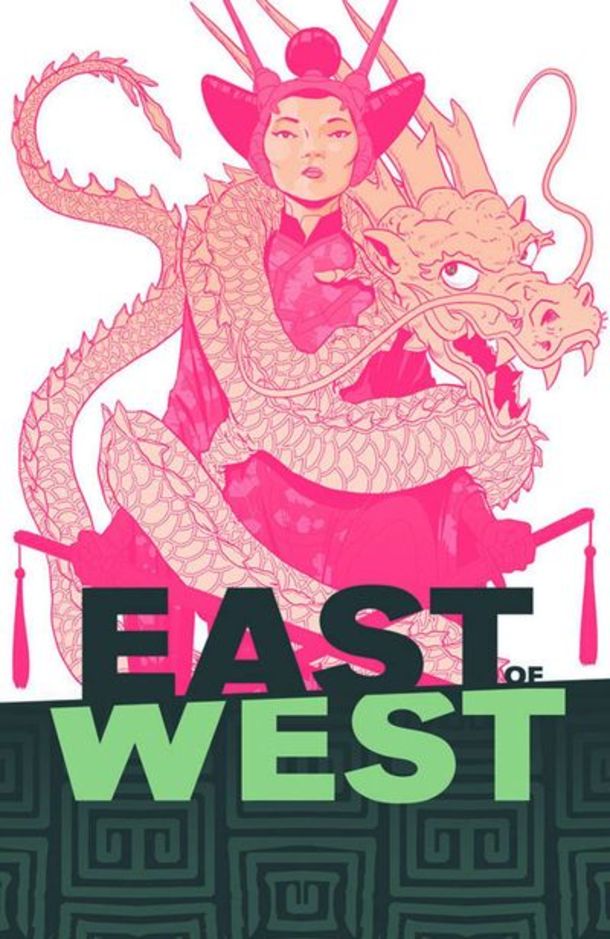
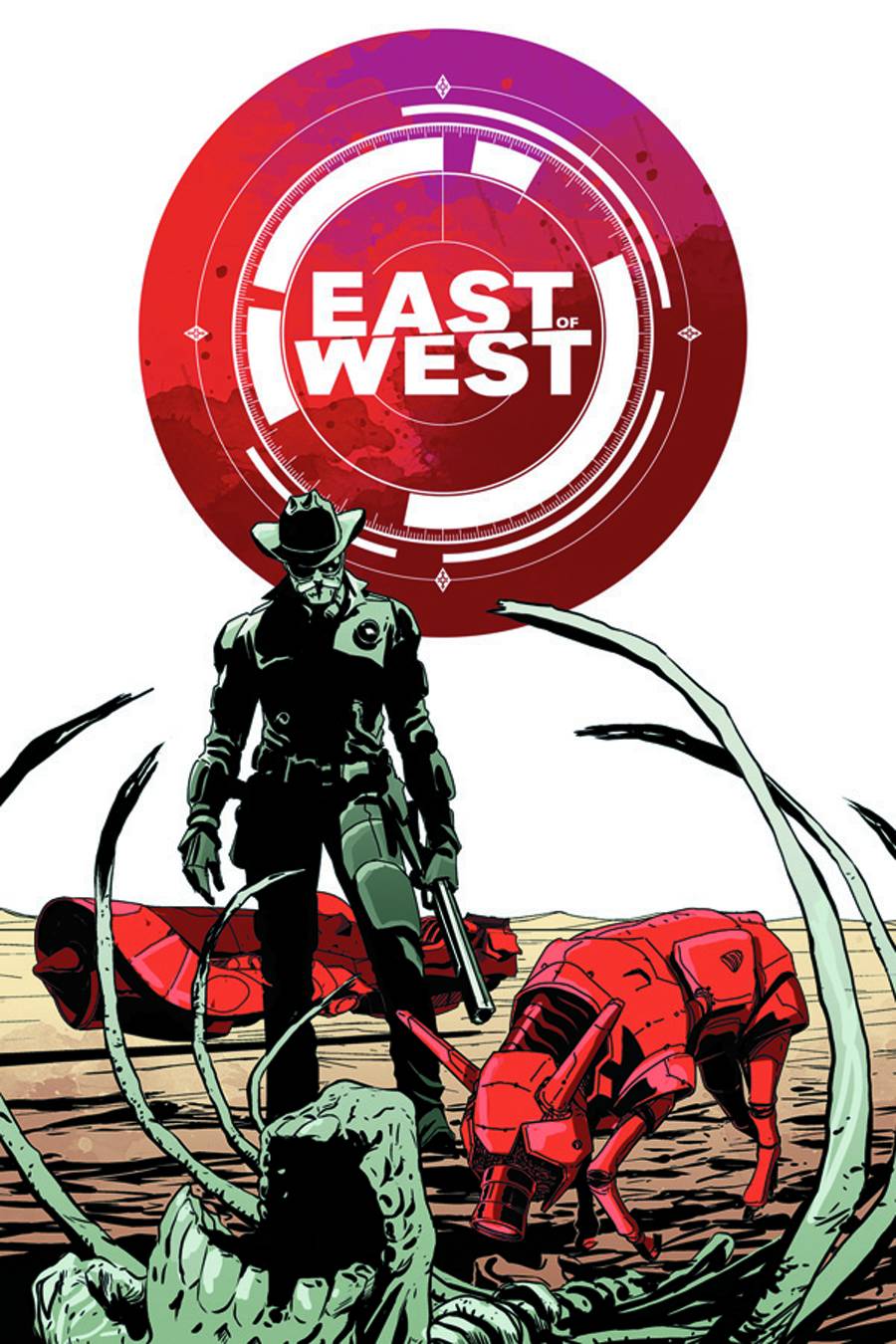
It wasn’t until undergrad that I got into graphic novels. It wasn’t until after grad school that I got into comic books. If you don’t know the difference, here’s a clip (courtesy of ABC Family) of someone asking the question and then two people kissing. All that to say, even though I haven’t been a lifelong fan, I feel that I’ve read enough to know when I’ve found that rare specimen. That specimen, in this case, being Jonathan Hickman’s and Nick Dragotta’s East of West.

How to describe it? I use the word “badass” selectively. Sure, I live in the South where badass is an endearment ascribed to everything from camouflaged iPhone cases to comely sunsets. I used it once at a Nine Inch Nails show when Trent Reznor kicked over his keyboard, and in spite of myself at a monster truck show when Grave Digger jumped an improbable number of wrecks. Like I said: I’m Southern.

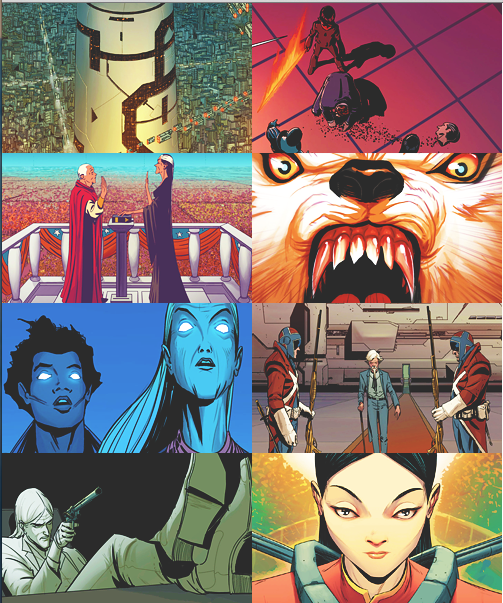
I think I want to give East of West that most Southern laurel because of how much weight Dragotta’s art carries, how every panel is filled with gravity and action and consequence, with no frills, nothing wasted. It’s like reading the storyboard of a Darren Aronofsky film: every shot means something. The following is a collection of unrelated panels (no spoilers) that I’ll use for example. Every shot is packed with a story that demands to be read, understood, savored.
Screen Shot 2014-06-10 at 5.10.11 PM.png

It’s the color palette, it’s the framing, it’s the energy in each panel that whispers “I know something you don’t know”, and so drives us onward. Dragotta fully realizes Hickman’s dystopian sci-fi world, a grand scale epic that includes vast cityscapes, a cadre of unique characters, and wonderfully offbeat technologies like horse-bikes. It’s artwork like this that primarily hushes my inner critic. Even if the story wasn’t good, the artwork alone sweeps you up. But the story. Oh, man, the story

If Sturgeon’s law is to believed, 90% of everything is crap. This is definitely true for comic books, where at least 80% of comics are about superheroes with dead parents–nothing lightweight about dead parents, but come on, comic book writers, pick a new backstory for Chrissake. The story behind East of West is…complicated. In a nutshell, it’s a dystopian sci fi story about three of the four horsemen of the apocalypse–Famine, War, and Conquest–who arrive on earth to end it all, but the fourth horseman, Death, doesn’t show. Death, personified as a colorless Clint Eastwood-esque cowboy, is off on an errand of his own. As the three horsemen track him down, elite members of the warring nation-states plot to end the world rather than settle their differences.

What makes the story so special is that Hickman embraces the essence of American mythology: there is not one, but many American mythologies. Contained in East of West is the myth of the cowboy, the religious zealot, the industrialist, the South vs. the North, the South (white wealth) vs. the South (free slaves), tradition vs. technology, the indigenous vs. the immigrant, and more. Hickman collects these multifarious mythologies and we get to watch them squirm. As crowded as that sounds, as rife as that premise is with the potential to wholly miss its mark, it somehow doesn’t. There are worlds contained in East of West, and, so far, its creators have told its story well enough that when I open up a new issue, my inner critic takes a walk.

Where to Start?

Luckily, the series is only 12 issues in. Get the first five in trade paperback for under $9 on Amazon or for around $10 at your local comic book store.

Gardner Mounce is a writer, speaker, listener, husband, wife, truck driver, detective, liar. When asked to describe himself in three words, Gardner Mounce says: humble, humble, God-sent.

Image: IGN

Comic Review: The League of Extraordinary Gentlemen (1999-2007)

league-of-extraordinary-gent

Brent Hopkins

The League of Extraordinary Gentlemen is probably best known for the horrible, career ending movie that starred Sir Sean Connery in his last major motion picture. The movie is a disjointed mess and takes almost nothing from the source material other than the characters’ names.

The comic, on the other hand, is an interesting romp with an entire world built around it. The main concept of the comic is that many literary fiction characters are actually real characters that have retained their otherworldly abilities. They come together as a crime-solving troupe, but, as they are human, they retain all of the issues they have interacting with one another and overcoming being better than an average human.

The Story

Written by Alan Moore (of Watchmen and various other comics fame) the story follows Mina Harker, Captain NemoAllan QuatermainDr. Jekyll, and Hawley Griffin from 1898 to 2009 solving crimes with antagonists from literary history. These include Fu Manchu, Professor Moriarty from Sherlock Holmes, and even the aliens from The War of the Worlds.

download (1)

Characters and Writer

The protagonists are often seen as interesting, but not entirely bad, in modern culture. Moore is not that type of writer, and each of the “heroes” in this comic are, for lack better phrasing, miserable fucking bastards. Each of them exploits their myriad abilities in exactly the worst ways possible — murdering, drug using, and raping — because there is no one that can truly stop them. They get a completely free pass on this, because when aliens come from Mars and threaten to liquidate the entire human race you have to let the superhuman characters handle it.

There is quite a bit of death in this comic and it is dished out to the good and bad alike. The strange thing is I never really connected with the good guys because they were all pretty deplorable people in their own right.

Art

The art is done really solidly throughout. There is only one artist from start to finish, so it is very cohesive. Those that like steampunk flair will adore this, as the whole span of time from 1898 to present day has a decidedly steampunk feel. The comic consistently feels like a viewing of the imagination of someone reading a book, which is precisely how it should feel. The characters are all very unique and it feels like you are viewing a real alternate timeline where pen and paper make reality come to life.

Writing

Moore is a world builder. He has done this with Watchmen and here he has managed to do the same thing. While The League of Extraordinary Gentlemen isn’t long per se, Moore includes so much side text and so many appendices from the world that you never really feel lost. These are necessary reads to get the full effect of the world these characters reside in and they are entertaining in their own right. Each character is also consistent throughout the story, never suddenly becoming more than they were like many superhero novels do. Once insane, always insane, and that helps engross even more.

Worth the read and time to complete?

Kinda??? I read this in its entirety in about two weeks and I did enjoy it quite a bit, yet it is hard reading something with a bunch of people you don’t entirely like. The main characters are Allan Quartermain and Mina Harker and they’re relatively interesting, but their cohorts were far more intense and crazy which made me sad when they departed from the story (These departures are amazing though).

Brent Hopkins considers himself jack-o-all-trades and a great listener. Chat with him about his articles or anything in general at brentahopkins@gmail.com.

Images: Litreactor and Indiewire.

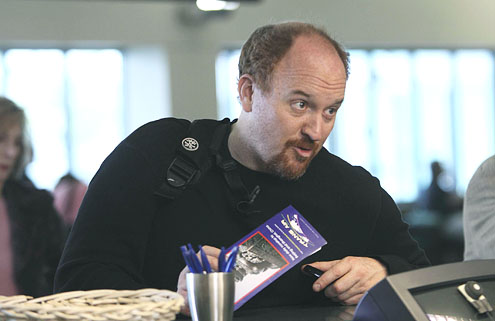
Life Lessons from Episodes of Louie: “Pamela 2” and “Pamela 3”

louie-3

Alex Russell

Louis C.K.’s critically acclaimed show Louie’s fourth season runs as two episodes every Monday night. Rather than just answering the question of “are these episodes good,” (because the answer is always yes) we’ll talk about the big lessons imparted in each episode. This week: the season ends.

Episode 13: “Pamela 2”

Whenever you see someone on television wake up after they’ve had sex, they look like no real person ever looks after sex. It’s just the way sex is always shot, it seems even more unrealistic than it does in, well, real life. Real sex is awkward and full of absurd, funny moments.

In Louie, when people have sex, they have to think about taking their shoes off. They have to have their pants taken off both legs at the same time. They have to figure out how to get to the bed, because no one just sits on a bed. They sit on a couch. The bed is later.

This may seem overly simplistic to point out. Louie is a show obsessed with the “what is real” question in a narrative sense, but it’s also a show fascinated by the mundane. Louis C.K. became one of the most famous comics in America on the strength of the mundane as a comedic source. His show is less about how it’s all funny and more about how it all is consistent. Everyone takes their shoes off before they have sex and no one knows how to do it. There’s no sexy — or even practical — way to take off your shoes in a hurry.

It’s not all sex, but everything is that moment. Everything is taking your shoes off quickly to not let a moment pass or convincing someone to do something spontaneous before they make a joke. Everything in life is making the moment what it can be before it passes. When Louie is a sad show, it’s about missing those moments. Sometimes it’s something else, and this one is mostly something else. Just go out there and try, dummy. That’s all you can do.

Episode 14: “Pamela 3”

The choice to run all 14 of these episodes over seven weeks seemed weird when this all started. But now, after all of the “Elevator” saga and “Pamela,” it’s clear that this was the only way to run this. It could have just as easily been a one-night binge, I guess, but then I’d be dead. This was all rough.

I don’t want to spend too much time on recapping the season, but let’s review for a very short paragraph. This is the season of a show on television where Louis C.K. rescued an old woman from a stuck elevator, went on dates with three women (four women, maybe, hard to say with the model), and opened for Jerry Seinfeld. That’s what happened. Oh, and he also went back in time to show the breakdown of his marriage and his childhood and his family and his psyche and…

…back to “Pamela 3.” Long-time viewers of Louie (hello, all 13 of you) know that Louie and Pamela have an aggressive — but familiar — relationship. They rag on each other and riff and talk in dumb voices. Even one of the most romantic moments in Louie history was Pamela getting on a plane as she yelled “wave to me, dummy,” which was mistaken for “wait for me.” Pamela and Louie have had chances, but they’ve always been caught up in the armor of acting like you don’t give a damn.

But they do. It’s just hard to tell someone else that you’re going to finally drop the cynicism or the sarcasm or whatever your deal is and engage with them. It’s hard to actually be a person, because jokes are easier a lot of the time. We make jokes at funerals because funerals suck. We’d rather not engage.

It’s an old lesson, far older than most of the ones in this season of Louie. “Pamela 3” is about not getting what you want, but it’s about something even better than that. It will make you more kind, and it’s something that I struggle with all the time. The lesson in the finale of this season of Louie has to be that you have to let other people be themselves, because that’s all anyone should ever be. If you do that, and you still like them, then that’s what love is. Not anything else.

We’ll be back next week with a different show. If you have suggestions, leave a comment.

Alex Russell lives in Chicago and is set in his ways. Disagree with him about anything at readingatrecess@gmail.com or on Twitter at @alexbad.

When Superman Was a Communist: A Review of Superman: Red Son (2003)

Superman_Red_Son_1


Brent Hopkins

Everyone needs a Comrade sometimes.

This comic comes from the Elseworlds series of comics from DC wherein slight changes in how the superheroes personalities and actions affect the world they live in. This particular story follows typical Superman over three issues. He has the power, speed, and boring invincibility he always has. If this was another tale of Superman insta-winning his conflicts through sheer unkillability it wouldn’t be worth writing about. However, there is much meat in this short arc.

The Story

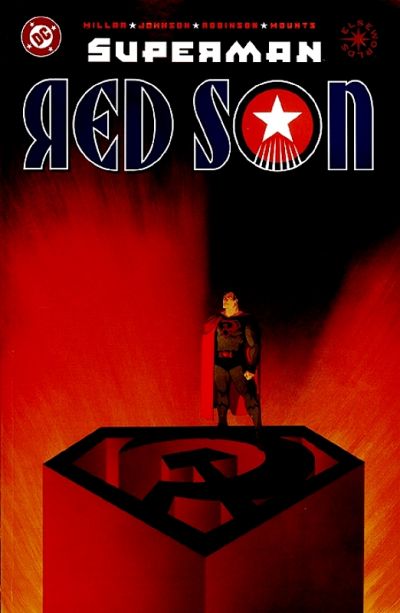
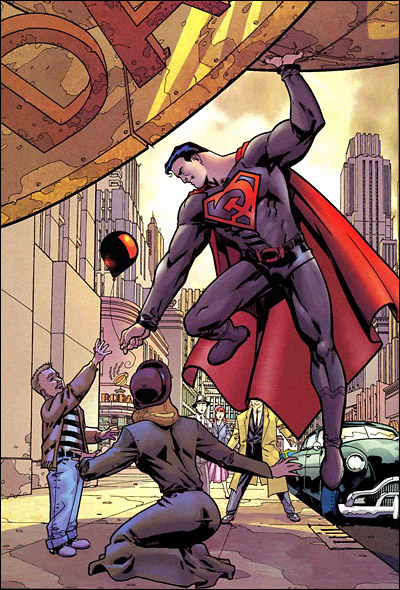
The storyline divergence comes from Superman not landing in the United States, but instead landing in the Soviet Union during the height of the Cold War. As you can tell from the image, he goes hardcore communist and that changes the personality of Superman completely. Throughout the normal DC universe, Superman has always intervened in humanity’s affairs but tends to believe that humans deserve to have their own free will to make decisions. Red Son Superman eschews that silly freedom thing completely and takes over the communist regime using superpowers to convert nation after nation to communism. When you have a live-in god to protect you and all of your people from disasters it is amazing how good any flavor of government can be — and Superman is big brother. Eventually, the only country resisting communism is the United States, run by Lex Luthor.

The main conflicts in the series come from Lex Luthor trying to bring down Superman with all of the economic backing of a democratic America he has managed to keep from complete ruin without the constant intervention of Superman. This goes against the entire notion that Superman’s method is the only method of salvation in the world.

There are also internal conflicts within the Soviet Union, with a few usurpers to Superman’s throne (child Stalin for one). Batman and Wonder Woman both make appearances, though Batman is also a member of the Soviet Union this time around and Wonder Woman is the only person who can relate to being the nigh-unkillable leader of a nation with Superman.

Art

1204635-redson

The art in this is fantastic. It really makes you feel like Superman isn’t residing in America, which is critical to the premise. I actually felt like Superman looked and came off better as a Soviet monolith than he does as Captain “Almostmerica” because there is no question of why he doesn’t just conquer the world. Russia remains the same throughout with the artists making the technological advances feel as if they were made more by Russian minds than a more Western-influenced superpower.

Writing

The writing for Red Son focuses a lot less on the action of Superman, since he is seen as a god on Earth. That being said, there is a lot more focus on the questions most people have asked about what Superman is like when he isn’t tethered by the complete morality expected of the American Man of Steel. You never quite want Superman to win and his means of keeping dissent under control is more akin to One Flew Over the Cuckoo’s Nest — forced brainwashing for those that rock the boat — than anything sane. This just leads to someone with ultimate power and more or less omniscient capabilities slowly feeding into their own quest to save humanity from themselves. This is portrayed amazingly well and still manages to include enough familiar faces to make sure the series doesn’t feel like it’s taking place on an entirely different world.

Worth the read and time to complete?

I was able to read all three issues of this in one sitting. Comics are naturally pretty quick reads no matter how long they are but I found the plot development in this to be almost perfect. Considering how little time the author and artists have to explain an entire world, a reader with a little background knowledge of Superman in general will feel like they are picking up right where another issue has finished. This is definitely worth the read and I would honestly like to see this as a Superman movie because it is captivating and everyone likes a nice “what if” story.

Brent Hopkins considers himself jack-o-all-trades and a great listener. Chat with him about his articles or anything in general at brentahopkins@gmail.com.

Image: Comic Vine

Comic Review: The Punisher MAX

Punisher-FrankCastle1

Brent Hopkins

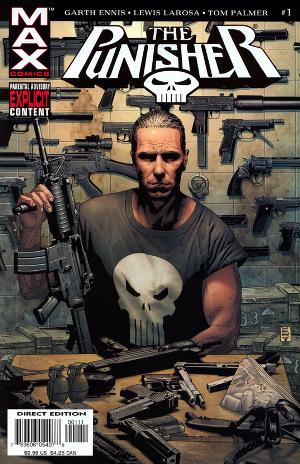
The Punisher is probably one of the strangest comic book heroes out there. Unlike more traditional heroes, he’s just a normal man with an extreme grudge that fuels him on his adventures. Most people know the general story of Frank Castle: a war veteran who returns from the Vietnam War and settles down into family life. Things are going well, until tragedy befalls him when he sees his wife and two children gunned down in Central Park. That tends to be the extent of knowledge people have of The Punisher and that really is what this The Punisher MAX series is about.

The Story

The comic is about the life of Frank and how he operates over a long span of time, about 30 to 40 years. One of the things I always found hard to swallow with The Punisher was how he could take bullets and broken bones but continue to function with almost no downtime. This series makes the whole thing make sense. Since he has years and year to operate, you hear things framed in terms of years passed since a major punishment last took place. This makes him feel far less like a superhuman and far more like a “normal” person.

Going along these lines, there is still a surprising lack of superheroes in this world. This means that Spiderman never comes to save the day and problems like war and international relations issues aren’t fixed just because an immovable object shows up to save the day. When the world goes bad it doesn’t get better, it merely gets worse and worse.

The series is also broken into storylines instead of one long series. Each storyline is five or six issues long and it keeps things interesting, because there are always different depraved people that need to be punished.

Lastly, because this falls under the MAX Marvel line, the story and artwork can be as brutal as need be. There is a bevy of swearing, brutality, and racism throughout the comic and it truly feels like a bunch of gangsters and hoodlums interacting with one another and not just the writer getting his jollies off.

Art

The art throughout the series is well done though you can tell when the artists change volume to volume. This isn’t really a problem because it remains dark and seedy, and the emotions really come through well.

Writing

The writing here is solid. Each character has a strong personality and since you know they’ll probably be alive for at least six issues you get to see what makes them tick. One thing that pleased me was the fact that there was never a single point in time where I felt like the authors wanted me to like Frank Castle. He is a complete and utter lunatic yet, throughout the comic, he seems to acknowledge it but is incapable of stopping himself from essentially being a mass murderer. His superpower is scaring the police away from arresting him and honestly, that is a superpower that usually is only left to the privileged. It is interesting to see this “liberty” extended to a calculated psychopath and to read what he does with it.

Worth the read and time to complete?

I will give this an emphatic, YES. This 75-issue series has quick arcs and relatively interesting characters throughout. You won’t really feel endeared to the characters, but isn’t that the point of a vigilante who takes far more than the law in his hands and uses the training he received from the military to exact his brutal revenge? This will not be for everyone, but if you have any interest in the character this is the series I would recommend reading from start to finish, which took about a week reading six or so 25-pages issue a night.

Brent Hopkins considers himself jack-o-all-trades and a great listener. Chat with him about his articles or anything in general at brentahopkins@gmail.com.

Broodhollow: Dreadful Light Reading in Webcomic Form

broodhollow


When I was growing up, I really only had one career goal: I wanted to be a cartoonist. Yeah, I took the popular way out back then. That never panned out (spoiler alert, I actually don’t draw Dennis the Menace) but watching the medium grow up with me has gone in a lot of very interesting directions. With print media dying, of course, the age of the online world picked up where they left off. End of great set up.

Webcomics exploded onto the scene back in the late 1990s.  Your co-workers send you links to them all the time, especially likely if you write for or read the content here on this site.  You’ve got your break out stars like Penny-Arcade and Achewood and then your lesser known ones like Brawl in the Family that are pleasant little surprises you fins on your own.  It’s a landscape you can’t really avoid online anymore if you appreciate the art form.  There is one entry, however, that deserves mention.

Kris Straub has been doing webcomics since 2000 with Checkerboard Nightmare. He went on to do an epic sci-fi story that spanned seven years at StarSlip Crisis and currently makes most of his revenue through Chainsawsuit (a gag-a-day strip that never fails to get me). Recently, he’s embarked on an entirely new strip that is unlike anything on the web that I’ve seen.

Enter:  Broodhollow.

Broodhollow lives in its own weird little corner of the internet.  It’s a cosmic-horror-humor strip. Set in the town of Broodhollow during the Great Depression it follows the curious story of Wadsworth Zane, a failed encyclopedia salesman called to this town through the will of a recently-deceased yet obscure relative. The drawings are light and simple. The colors are somewhat faded but only indicate very faint feelings of dread. The characters look like they could be in the background of an early Mickey Mouse cartoon.

Then a reanimated mangled corpse shows up.

Broodhollow takes the idea of telling a horror story and turns it on its head. There are laughs but only occasionally. Some strips end without a punchline, just a sense of foreboding as the story progresses. As the reader progresses further into the mystery of this town, as Wadsworth does, things take a Lovecraftian turn for the nasty. He encounters other characters: a young woman working for her father’s law office, the group of mill workers who enjoy spending their nights at the bar, a psychiatrist who may know more than he lets on. There’s even a secret council involved that avoids the cliché nature of such an idea and still feels like something that could have happened in the early 1930s. To tell any more of the story would be to ruin it. The important note is that the world and the characters you’re looking at are drawn and painted – they aren’t real, they’re just pixels. Much as the town of Broodhollow feels, as you learn about it and its residents, a “painted” version of what actually exists underneath.

And that doesn’t even begin to explain the unique nature of the art involved. In the middle of a lightly drawn strip will be the horrible image of some monstrosity that looks simultaneously human and anything but. Straub walks a fine line throughout the entire story: light mystery and horrific dread. The images aren’t terrifying but the way they’re presented is. Light and painted backgrounds contrast with the drawings of the characters to draw the eye to a certain detail, making you almost miss the horrors drawn away from where you’re looking.  

This isn’t to say it’s perfect. It’s an ambitious project to take on. To have a strip that can deliver laughs but then also do a loving homage to the style of storytelling H.P. Lovecraft embraced. But that’s what makes it so much more interesting than anything else being published online right now. There isn’t the cheap joke because “this is a comic strip, it has to end with a joke!”. All said and done, it’s a evenly paced narrative that has one goal:  to tell a story that hasn’t been told before. The fact that it’s a webcomic is purely coincidental.  

Straub is approaching the project in a smart way. Instead of promising one strip a day, he’s focusing on three a week. Every few months will tell another chapter in the story, which then can be bought as a book. He takes a few months off to work on the next chapter and then comes back. It made the wait between chapters infuriating but all the more rewarding when it came back. He recently started a Kickstarter and more than raised enough funds to keep making the project and then some. In an age where you can call people on the internet “the worst” and no judge would convict you, it’s also an age where people who are dedicated to a project can come together and help artists out. For every Zach Braff trying to raise millions without having to spend his own millions, there’s a guy like Straub who just wanted to take a chance to show people something they wouldn’t be able to get anywhere else. To show them Broodhollow.

If you’re looking for some light reading, the first book is available for free online at Straub’s Broodhollow homepage here.  It won’t take you more than an hour and it’s worth it.

Image source: Kickstarter