review

Undateable: NBC’s New Comedy Set in Detroit… that Doesn’t Want to Talk About Detroit

Undateable

Jonathan May

NBC’s Undateable is set in present-day Detroit, Michigan and plays this fact for laughs approximately one time in the six episodes that have aired so far. This is its main fault; most great comedies make great use of the cities in which they’re set. Curb had Los Angeles, Seinfeld had New York City. Often the nature of a show is dependent on where its set, but the fact that Undateable is filmed in front of a live studio audience makes it somehow more germane and less specific to Detroit and its comedic possibilities.

Like other sitcoms, this one is set in a bar and follows its fastidious, young owner Justin, his sexy, swaggering roommate Danny, and their motley crew consisting of Danny’s sister, a gay man, a black man, a openly misogynist nerd, and a hot female server. While the variety of the group unfolds many possibilities, unfortunately these roles are mostly played to stereotype. While I laughed out loud many times over the past six episodes, I can’t help but feel empty about most of the characters; the two main men find ladies very early on, and the ancillary characters languish listlessly in the background, ready to serve up another clever off-color joke or ubiquitous cultural reference when needed. But the show doesn’t seem to be addressing any central problem that would give it more focus. No one is really in jeopardy; nothing much is at stake. And ultimately, for a show to be set in Detroit in 2014, as the city goes through the insane bureaucratic process of insolvency, and not address any of this is the worst kind of audience letdown.

For a show like Undateable to make it another season (and possibly the rest of this one), it will need to establish a problem, preferably one which connects to Detroit’s problems at large, giving it a more empathetic context. Perhaps its characters might not seem so flat if they discuss, openly struggle, and make fun of the crippling issues of public service, safety, corruption, and government failure that they could. A comedy like Broad City highlights the complexities of getting around, working, and living in New York City, but in Undateable, we miss out on all the potential fun, being constricted by the format to scenes set in the apartment and the bar. I’ll be tuning in for the laughs, but I just wish the show would give us something memorable.

Jonathan May watches too much television, but he’s just playing catch-up from a childhood spent in Zimbabwe. You can read his poetry at owenmay.com, follow him on Twitter at @jonowenmay, or email him at owen.may@gmail.com.

Image: NBC

Life Lessons from Episodes of Louie: “Pamela 2” and “Pamela 3”

louie-3

Alex Russell

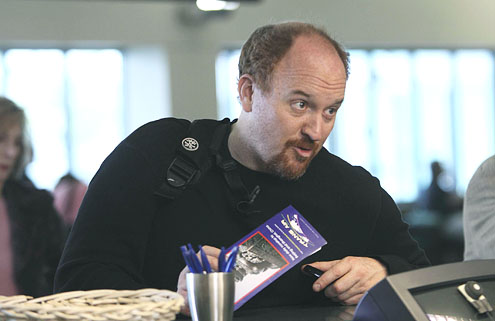
Louis C.K.’s critically acclaimed show Louie’s fourth season runs as two episodes every Monday night. Rather than just answering the question of “are these episodes good,” (because the answer is always yes) we’ll talk about the big lessons imparted in each episode. This week: the season ends.

Episode 13: “Pamela 2”

Whenever you see someone on television wake up after they’ve had sex, they look like no real person ever looks after sex. It’s just the way sex is always shot, it seems even more unrealistic than it does in, well, real life. Real sex is awkward and full of absurd, funny moments.

In Louie, when people have sex, they have to think about taking their shoes off. They have to have their pants taken off both legs at the same time. They have to figure out how to get to the bed, because no one just sits on a bed. They sit on a couch. The bed is later.

This may seem overly simplistic to point out. Louie is a show obsessed with the “what is real” question in a narrative sense, but it’s also a show fascinated by the mundane. Louis C.K. became one of the most famous comics in America on the strength of the mundane as a comedic source. His show is less about how it’s all funny and more about how it all is consistent. Everyone takes their shoes off before they have sex and no one knows how to do it. There’s no sexy — or even practical — way to take off your shoes in a hurry.

It’s not all sex, but everything is that moment. Everything is taking your shoes off quickly to not let a moment pass or convincing someone to do something spontaneous before they make a joke. Everything in life is making the moment what it can be before it passes. When Louie is a sad show, it’s about missing those moments. Sometimes it’s something else, and this one is mostly something else. Just go out there and try, dummy. That’s all you can do.

Episode 14: “Pamela 3”

The choice to run all 14 of these episodes over seven weeks seemed weird when this all started. But now, after all of the “Elevator” saga and “Pamela,” it’s clear that this was the only way to run this. It could have just as easily been a one-night binge, I guess, but then I’d be dead. This was all rough.

I don’t want to spend too much time on recapping the season, but let’s review for a very short paragraph. This is the season of a show on television where Louis C.K. rescued an old woman from a stuck elevator, went on dates with three women (four women, maybe, hard to say with the model), and opened for Jerry Seinfeld. That’s what happened. Oh, and he also went back in time to show the breakdown of his marriage and his childhood and his family and his psyche and…

…back to “Pamela 3.” Long-time viewers of Louie (hello, all 13 of you) know that Louie and Pamela have an aggressive — but familiar — relationship. They rag on each other and riff and talk in dumb voices. Even one of the most romantic moments in Louie history was Pamela getting on a plane as she yelled “wave to me, dummy,” which was mistaken for “wait for me.” Pamela and Louie have had chances, but they’ve always been caught up in the armor of acting like you don’t give a damn.

But they do. It’s just hard to tell someone else that you’re going to finally drop the cynicism or the sarcasm or whatever your deal is and engage with them. It’s hard to actually be a person, because jokes are easier a lot of the time. We make jokes at funerals because funerals suck. We’d rather not engage.

It’s an old lesson, far older than most of the ones in this season of Louie. “Pamela 3” is about not getting what you want, but it’s about something even better than that. It will make you more kind, and it’s something that I struggle with all the time. The lesson in the finale of this season of Louie has to be that you have to let other people be themselves, because that’s all anyone should ever be. If you do that, and you still like them, then that’s what love is. Not anything else.

We’ll be back next week with a different show. If you have suggestions, leave a comment.

Alex Russell lives in Chicago and is set in his ways. Disagree with him about anything at readingatrecess@gmail.com or on Twitter at @alexbad.

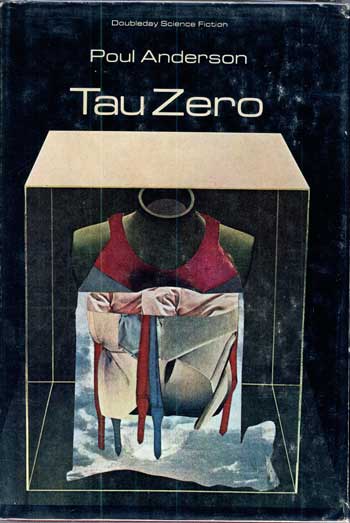
Life After the Star Wars Expanded Universe: Poul Anderson’s Tau Zero

 114510

Andrew Findlay

In Life After the Star Wars Expanded Universe, we take a look at science fiction and fantasy, why they’re great, and what they say about where our species has been and where it’s going. 

There are two main classes of SF author: those who have broken into mainstream success, and those who have, while creating a vibrant and diverse body of work, remained largely unknown outside of the hallowed halls of SF fandom. In the first category, you have your Ursula K. Le Guins (who is actually in a category all by herself because dear God is she amazing), your Neal Stephensons, and your Robert Heinleins. In the second category, you have your Roger Zelaznys, your Vonda McIntyres, and your Poul Andersons. The work of those in the second category is not necessarily worse than those in the first. Indeed, many of the ideas explored are right on par or better than those from the first-category authors. Their work simply tends to be less geared towards wider audiences, so it does not have the wider appeal of the first-category authors.

One way to make SF appeal less to wider audiences is to construct a hard SF tale. Hard and soft SF are terms which denote an overwhelming focus on technology and innovation for the one and a focus more on the social developments and psychological effects of technology for the other. In hard SF, you’ll get an explanation of how the propulsion system of the spacecraft works, the main character will be an engineer, and the main conflict will be his struggle to repair the craft before everyone dies. In soft SF, everyone will be on the same spaceship, but it’ll just fly because that’s what spaceships do, and the narrative focus will be more on character development and social concerns. These two directions are not mutually exclusive – you can have good explanation of tech in soft SF, and you can have strong character development in hard SF – it’s just a question of focus. Tau Zero is considered a perfect example of hard SF.

First off, the name itself is a scientific term. Tau is the symbol which denotes proper time in physics. Proper time is time as measured by a moving observer, meaning that at relativistic speeds, proper time for someone in a ship is very different than proper time for someone outside the ship. Time dilation is a central concept of this book, and tau is a central measure in time dilation. According to Anderson (Wikipedia says he fudged this a bit), as tau approaches zero, the gap between experienced and objective time becomes more and more significant. This is the main conflict of the book.

A team of scientists boards the Leonora Christine, a new ship with a Bussard ramjet propulsion system. Bussard ramjets are theoretical engines that use massive magnetic fields to collect hydrogen from space as they travel interstellar distances. The faster the ship goes, the faster the hydrogen is collected. The magnetic fields and the acceleration combine to compress the hydrogen to the point where it fuses and creates a massive amount of energy, which is then directed by those magnetic fields out the back of the engine, creating thrust. This proposed propulsion system solves the problem of holding onto fuel for interstellar travel – no ship would be able to lug around all the crap it would need to burn to get from one star to another – the prohibitively high weight would render it infeasible.

Anyway, they got themselves a ramjet, and they’re using it to go on a twenty-year exploratory mission. The way the trip works is that the ship spends half of its time accelerating and half of its time decelerating, so at the midpoint it turns its engines around and reverses thrust. The astronauts are prepared for time dilation to make twenty years go by on Earth, but there’s a hitch. Right before the midpoint, the ship passes through a nebula. All that dust collides with the deceleration system and renders it nonfunctional. The astronauts cannot slow down, so they sit and try to solve the problem while everyone they have ever known dies on Earth. They decide to accelerate even more and go to an entirely new galaxy, so they kiss human civilization goodbye and ramp up their speed. The main struggle of the book is fixing the decelerator and finding a place to live now that all of human civilization has been gone for millions of years.

The character development of the book is severely lacking. It exists, and it is passable, but it was clearly not a priority. They were so paper-thin that they had less substance than the gangsters from that fake mob movie that Kevin McCallister watches in Home Alone. A grizzled war veteran holds the entire crew together as they bounce from crisis to crisis, never giving up hope because he’s just got too much damned grit. That in itself is a pretty slipshod job of character building, and he’s really the only character I remember from the book. That and the fact that I spent more than half of this article talking about spaceships and about five percent of it talking about characters should indicate the severity of this book’s character problem.

Despite all that, I enjoyed it. The overarching direction of the book is humanity boldly going where no one has gone before, which I’m a sucker for. A very simple, clear, and horrifying problem arises when their propulsion system goes on the fritz, and the hard work of a handful of dedicated individuals solves the problem in a very interesting way. It has a very interesting and clear central idea, but the surrounding elements do not quite come together. It is a novel expanded from a short story, and maybe it should have stayed a short story. Problems aside, you should give this one a shot.

Andrew Findlay has strong opinions about things (mostly literature) and will share them with you loudly and confidently. You can email him at afindlay.recess@gmail.com.

Image from here.

You Should Be Watching Season Two of Orange is the New Black

OITNB-logo

Stephanie Feinstein

Minor season two spoilers.

If you haven’t watched season one of Orange is the New Black, then stop reading this and go watch it now. NOW.

For those who have made it diligently through season one, rejoice! You are probably already done with season two!

On June 6, season two was released in its entirety on Netflix. A hit since the beginning, OITNB was a semi-experiment for Netflix, embarking into the world of truly original programming (I do not count the 4th season of Arrested Development as “original”). Along with other hits like House of Cards, this new generation of streaming television addresses directly the demographics and preferences of the target audiences. People were watching David Fincher movies, Kevin Spacey movies, and presidential/political dramas…. so they made a political Kevin Spacey drama, directed by David Fincher. We asked, they gave. In the case of Orange is the New Black, I guess we were all thirsting for some female drama that did not include Friday night dates or working at a hospital, where little focus can be given to a character’s wardrobe and men are not the only love option.

For OITNB, season one was good, but not amazing. I got really tired of the first-world problems of our main character, as the true storytelling was hidden among the myriad of inmates. Jenji Kohan, mastermind of the hit Weeds, is also the creator of OITNB, and she has gone on record that Piper’s story got us in the door, but what will keep viewers around are the otherwise untold tales of incarcerated minorities. Piper Kerman is a real woman, who did get incarcerated because of drug-running mistakes of her youth, she did have a fiance and a lesbian lover, but Piper Kerman only shares so much with Piper Chapman. Real people rarely make captivating television, so the glory of fiction rounds out less fascinating dents, and sometimes other people’s dents are more interesting. With a bevy of flashbacks highlighting key moments of the women’s lives, we glimpse depth and understanding beyond the orange and beige jumpsuits. Heavy issues of race, poverty, sexual violence, drugs, and motherhood are all addressed, in addition to a fairly scathing view of the privatized prison system. You do have to put up with a lot of Laura Prepon, though.

One of my favorite aspects of OITNB this season? Jodie Foster.

An occasional director for season one, Foster directed the opening episode of season two. Oh the fear! I am a great Foster fan, mainly because the fear she portrays on screen becomes so hauntingly real that it can give me nightmares (Silence of the Lambs, Panic Room). Foster pulled out all of the stops for this episode, drenching viewers in uncertainty and panic. Small homages to Hannibal Lecter, with beautifully placed airplanes, masks, and talks of false freedom. My skin crawled from the hungry looks of men, the implied violence around each turn, the tension of unknown destinations. It was a home run of an episode.

In the week since it all was delivered to Netflix, I have finished season two and I recommend it to everyone I see. Most of my issues with season one have since been resolved, the acting has increased, the story has power, and prison life has become fascinating. You should be watching it.

Stephanie Feinstein spends more time than she should yelling at her television, and that may never change. You can contact her at stephanie.feinstein@gmail.com

Another Look at Maleficent: Should You See It?

Maleficent

Brent Hopkins

In our rarely-running kinda-series Should You See It? we talk about movies that just came out. You can figure out the rest of the premise from the title of the series. That’s right: We talk recipes. Should you see Maleficent?

I saw this with my sometimes girlfriend and I will admit I had no idea what it was, going into it. I had forgotten the name of the antagonist from classic animation and I just didn’t put the pieces together until the film started. As Mr. May put it, the film is about pleasing boththe parents and children of the audience with a reimagining of a simple good vs. evil story. This is something I think it does rather poorly, as I could not imagine enjoying this as a child because it is a gritty retelling. There are all the magical elements and attempts at humor to please younger audiences, but throughout I never got a lighthearted vibe from the film.

The film is awkwardly chopped up into three acts with the real weight of the story in the beginning and the end. The middle tries to be fun and happy, but the setup is so grim it feels truly empty. You are introduced to Maleficent and the humans and you instantly are slammed with the knowledge that humans are the worst things to ever exist. Maleficent is tricked in probably one of the most uncomfortable rape analogies that will assuredly go over a child’s head but will not for any adult. She is drugged and has her power (the most important thing to her) forcibly taken from her by someone she thought she could trust. Once this happens there is no point in time where I wanted anything but for Maleficent to reclaim her power. Angelina Jolie is captivating in this role and I am not sure any other actress could have owned the role as well. That being said, most of the other characters are flat in comparison.

Should you see it?

Yes, much like the movie Noah, which I wrote about before, Maleficent has its fair share of flaws and pacing issues, but I think any adult who has seen the original animation from Disney will be stunned that the same company put out this film. I can’t say if it was good or bad, but just that it left thinking about it more than the new X-Men movie did.

Brent Hopkins considers himself jack-o-all-trades and a great listener. Chat with him about his articles or anything in general at brentahopkins@gmail.com.


BBC’s Whites: Should You See It?

whites BBC

Jonathan May

In our rarely-running kinda-series Should You See It? we talk about movies that just came out. You can figure out the rest of the premise from the title of the series. That’s right: We talk recipes. Should you see BBC’s Whites?

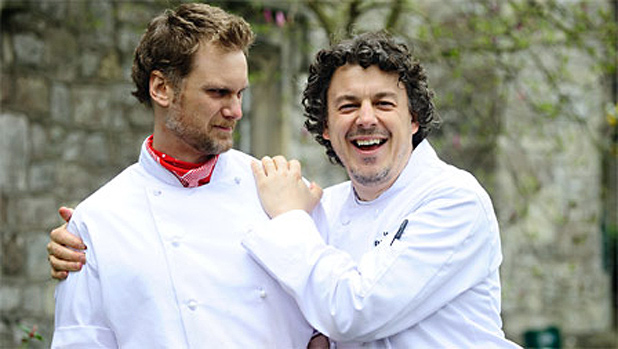
BBC’s Whites follows one Roland White, head chef at the White House, a restaurant and hotel in a traditional British manor, as he attempts to abuse everything under his care in return for his own happiness. It’s unfortunate then for Roland, and everyone else, that he has no idea what happiness is. While he attempts to please himself in various ways, his tall, blond sous-chef, Bib, runs the kitchen. First episode in, Bib, at the end of his wits, demands help in the kitchen. The agency sends over a not-too-bright chap named Skoose, whose sole purpose in life is to make Bib miserable. Throw in a beautiful female manager and a doe-eyed, clueless server, and the rest basically writes itself, or appears to, in its effortlessness.

It’s good that the show centers on such an egotistical figure—a sort of comedic, pathetic Prince Hamlet to a crumbling Elsinore. Roland, in his pursuit of drinking and women, has abandoned his creativity, his friends, and a tight hand on his restaurant. An inspector’s visit doesn’t go so well, and we’re left to wonder where the humor is when someone essentially turns out to be a real asshole. As with most comedies that are built around someone you are supposed to hate, Whites makes sure that its ancillary characters are in dire need of viewer sympathy. Poor Bib is overworked; you almost weep for the thin bastard. And is the beautiful manager really dating a gay guy?

Should you see it?

This six-episode gem really never took off due to financial difficulty (the actors were all trained in a professional kitchen). It’s a shame because as the last episode ended, you could feel the show brimming with fresh energy for another round. Oh well. I can’t recommend this show highly enough. At 30 minutes each, the episodes are ripe for a Hulu binge. One pro tip: don’t watch hungry, because by the end, you’ll be trying to make every fancy thing you’ve never tried to make in your kitchen.

Jonathan May watches too much television, but he’s just playing catch-up from a childhood spent in Zimbabwe. You can read his poetry at owenmay.com, follow him on Twitter at @jonowenmay, or email him at owen.may@gmail.com.

Image: The Daily Mail

Life Lessons from Episodes of Louie: “In the Woods”

louie-3

Alex Russell

Louis C.K.’s critically acclaimed show Louie’s fourth season runs as two episodes every Monday night. Rather than just answering the question of “are these episodes good,” (because the answer is always yes) we’ll talk about the big lessons imparted in each episode. This week: Louie struggles with “do as I say, not as I do.”

Episodes 11 and 12: “In the Woods”

This episode is dedicated to Philip Seymour Hoffman. It is about drugs.

Louie catches his oldest daughter smoking pot. Louie gets upset. She says, “what do you even know about it?” Louie remembers. That’s all you need to know about the “what” of the episode.

It’s almost entirely told in flashback, which is amazing. There have been a number of reality jumps and flashbacks in Louie over the years, but this one is the most fully realized. It helps that it’s a kind of double episode. You feel the pain of Louie’s mother as she feels her son slipping away. You feel the distance of Louie’s father as he both tries to help and shrugs at the same time. You feel the world of young Louie, which is both the actual history of the character and a dream state.

“Real” Louie has a brother on the show, but the brother’s not in the flashback. In a previous episode, a flashback revealed his wife to be white when she’s black in the “reality” of Louie. This all means something.

It never matters what happens. It matters what you take away from it.

Teenage Louie in the flashback gets obsessed with pot. He dedicates his life to obtaining pot and escaping his boring life by getting high. An episode dedicated to a man who recently died of a heroin overdose is about pot, which at first seems weird…

…but it’s not about pot. It’s about the ways we hide from the people that care about us. It’s about booze and pornography and music and general deceit and exercise and biking and cooking and smoking and comic books and religion and politics and whatever else your particular crutch is, really. It’s about Louie, a teenager, who is getting high not because he’s mad or sad or lonely, but because he just is getting high. It costs him his sense of self. It costs him the girl — and the scenes where he and a young classmate look longingly at each other over the gulf of addiction are dreadfully perfect — and it costs him the closeness of his family.

Adult Louie has to decide how to turn this memory into a lesson for his daughter. He has to figure out what we all have to figure out: how do you make your past mistakes productive? He wants to be a warning, but when she asks him if he’s going to yell at her, he knows he has to be careful.

There’s no way to spoil this episode. This is the pause between “Pamela 1” and next week’s season finale of “Pamela 2” and “Pamela 3.” This whole season has been about Louie’s love life, but it’s been more interesting to see how we got to the version of adult Louie in the show. The explosion is more noteworthy, sure, but watching the fuse is more fun. Louie’s childhood isn’t necessarily atomic, but it’s sad and relatable because Louie is some version of who we all were and — some days — still are. This one is heavy on the intended morals, but I take the following:

Pay attention to who you were, if only to be damned sure you aren’t ever them again.

Alex Russell lives in Chicago and is set in his ways. Disagree with him about anything at readingatrecess@gmail.com or on Twitter at @alexbad.

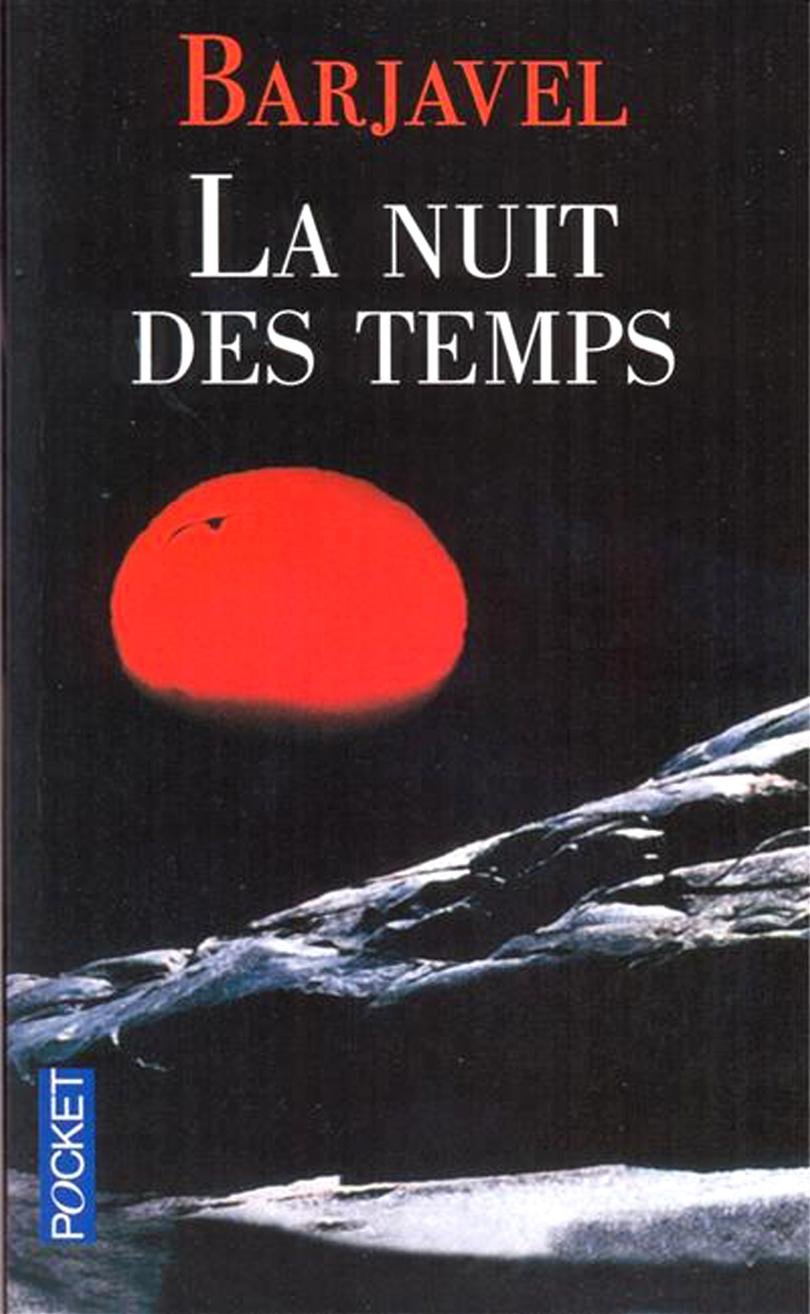
Life After the Star Wars Expanded Universe: René Barjavel’s La nuit des temps (The Ice People)

61XrbaM5ntL

Andrew Findlay

In Life After the Star Wars Expanded Universe, we take a look at science fiction and fantasy, why they’re great, and what they say about where our species has been and where it’s going. 

French SF is relatively unknown in the United States. Discounting La planète des singes (Planet of the Apes) and Jules Verne, it has not carved out a strong presence in America. It might be that high-quality domestic product is glutting the market, as the only nation ever to put human beings anywhere other than Earth is also kind of a world leader in producing fiction about space and science. Most everyone who cares at all about books knows the names Isaac Asimov, Robert Heinlein, and Philip K. Dick. Let’s repeat that list with some big French SF authors: Jean-Marc Ligny, Xavier Mauméjean, and Pierre Bordage. If the final question at bar trivia had asked about anyone on that second list, would your team have been anywhere close to winning a free pitcher? I understand this imbalance to a certain extent. Having a strong French presence in the American SF market would make about as much sense as California merlot being the best-selling wine in Paris. The weird thing is, there’s almost no French presence in the market. Its profile is so minor that it’s the equivalent of people in Paris not knowing that California exists. It’s not because of lack of quality. La nuit des temps is among the best 1960s SF I’ve read. It’s certainly the best French SF I’ve read since Vingt-mille lieues sous les mers. Its quality derives from a combination of technical inventiveness, delightful early-SF pulpiness, and haunting social commentary.
7204moon_landing

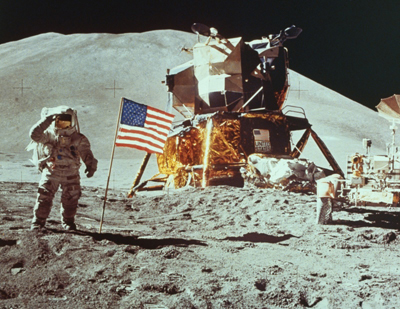
America: being amazing since 1776

The opening paragraph of La nuit des temps (translated literally as The Night of Time, sold in Anglophone countries as The Ice People) signals a Big Problem from the get-go:

My beloved one, my abandoned one, my lost one, I left you there at the bottom of the world, I returned to my city apartment with its familiar furniture over which I’ve so often run my hands, the hands that love them, with its books that nourished me, with its old cherry bed where my childhood slept, and where, tonight, I sought in vain to sleep. All of this decor which witnessed me grow up, grow bigger, become me, today seemed to me strange and impossible. This world which is not yours has become a false world, in which I have never had a place.

Already, on page one, the narrator is reflecting upon the loss of his beloved. The reader knows from the start that this story does not end well, and this creates a tension that builds higher the closer the ending gets. The general background of the story is that, during the Cold War, a team of French scientists discover the ruins of an ancient civilization deep under the ice of Antarctica. When carbon dating places the ruins at 900,000 years old, hundreds of thousands of years older than human civilization, it incites international interest and passion. Pretty soon, an international team of scientists and a new research station are assembled at the location. They dig, and they find a buried city filled with wonders. Unfortunately, all of these wonders melt with the ice that held their molecules in place. All except one – the contents of a special Egg. Within the Egg, there is a strange generator and two human forms, male and female, encased in solid helium, preserved in a state of suspended animation at near absolute zero. The scientists decide to revive the female first. She wakes up, and the main narrative takes off. The main storyline is twofold. The first is concerned with international reaction to scientific developments at the station, the interrogation and assistance of Eléa, and the general tensions of the modern world. The second concerns the story of Eléa’s life in her ancient world, which the reader also knows will not end happily because her civilization has been annihilated.

The inventiveness of Bajarvel is a pleasure, and the book is filled with little pieces of technology either invented by the scientists or recovered from the ruins. One of the first that he introduces is the “eating machine,” which supplies Eléa with nourishment. It is a squat dome with buttons. She presses those buttons in a certain order, and the device produces colored spheres. These spheres are perfectly-balanced nutrition, and when the scientific team dismantles the device, they cannot find any raw materials. Eléa says the food is created from universal energy, the use of which her society had mastered through Zoran’s equation (the prospect of plucking limitless energy and materials out of thin air gets everyone on Earth’s attention). Unfortunately, Eléa is not a scientist and does not know the equation.

247px-Barjavel_equation_zoran.svg

This is Zoran’s equation. Yea, the Antarctic scientists didn’t know either.

Another invention is the “serums” of her society, one of which increases the hardiness of the human organism, so much so that the word “fatigue” all but fell out of Eléa’s language. An experimental one that she took in order to survive the freezing process of suspended animation confers biological immortality. Biological immortality means that if you get hit by a truck, you still die, but you’ll never die from old age. Sadly, most futurists predict that, were humans biologically immortal, the average life expectancy would still be only about 200, because shit happens. Anyway, attractive tech. I love the next two examples of technology because they are so blatantly story-enabling. First off, there is a giant computer, the Translator, whose basic function is to provide translation between the many different languages of the international scientific team. Everyone wears an earbud connected to the computer, and the computer takes in whatever is said to the person, converts it to their language, and pipes it back into their ear. The blatantly story-enabling part of this machine is that they feed all the data they have on Eléa’s language into it, and after not really that long, her 900,000-year-old language is one the computer fully understands, enabling communication.

C-3PO_droid

Did someone say implausible but plot-essential translation skills?

The other piece of tech that’s more narrative trickery than a machine is a brainwave reader. This is a device that, when put on the head, transmits thoughts. Its intended use is to pair it with another such device, thus allowing two people to communicate directly by thought. The scientists modify it so that it broadcasts to a television, meaning that, instead of Eléa having to talk about her life, she just puts on the circles, and up it pops on the Jumbotron. After they recover her, communicate with her, and turn the inside of her brain into quality TV programming, the narrative switches directly to describing what happens on the screen as the scientists watch. It explores the ancient civilization, which leads to a lot of the delightful pulpiness of the book.

First off, Eléa’s country is called Gondawa. It existed on Earth during a time when there was really only it and one other country, Enisor, on the same technological level with a few weaker nations scattered here and there (sound familiar?). The majority of their country was leveled by nuclear bombardment from Enisor, so they lived in extensive and beautiful underground cities, filled with plants and animals bioengineered to subterranean life. There are factories on the lowest levels of each city, factories which use Zoran’s equation to manufacture tools, structures, and implements from nothing. A central computer calculates the GDP of the country each year, and disburses an allowance equally to each citizen, to be used to purchase clothing, transport, and housing, and whatever other luxuries they might need. Very few people spend through their entire allowance, and it disappears at the end of every year to prevent the accrual of wealth. All of the machines and services are activated by a special ring worn by all citizens after their Designation ceremony. The Designation is a rite of passage from child to adult, at which citizens receive their numerical identification (Eléa’s is 3-19-07-91), their rings, and their partners. Yup, there is no dating in Gondawa. The central computer matches personality profiles of children to each other, finds ideal pairings, and designates them. This is probably the most utopian dream of the book, as the pairings result mostly in great happiness and sometimes in ineffable joy. Even bad matches are amiable and peaceful. Eléa had one of the second kind of matches, the perfect, soul-shatteringly intense level of love. The tragedy and pain Eléa feels from the second she regains consciousness is that as far as she knows, the love of her life, Paikan, has been dead for nine thousand centuries. The modern narrative circles around her inability to recover from this, and the ancient narrative circles on the development of her relationship with Paikan. The pulpiest parts of the book come from this relationship, which is high-octane, high-emotion, crowd-pleasing idealism. It is Romeo and Juliet, except the two people involved are not separated by a misunderstanding, but by the death of a civilization. The personal tragedy of two lovers is just one casualty of worldwide destruction, which forms the basis of this novel’s social commentary.
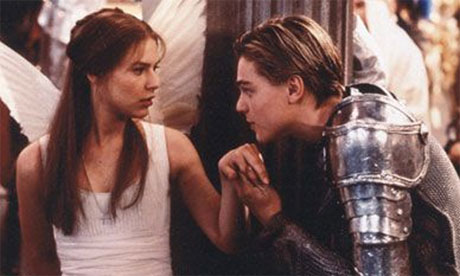
Claire Danes and Leonardo DiCaprio in ROMEO AND JULIET

Their match.com profiles were 95% compatible!

There’s the standard advanced-civilization-versus-ours dynamic at play here, in which our society seems barbaric by comparison to the society of the visitor, but little things like Eléa not understanding why nudity is such a big deal (1960s male SF writer, folks) are not the main punch of the commentary. The frightening social commentary of La nuit des temps, doubly frightening when it was published at the height of the Cold War and when the collective insanity of Mutually Assured Destruction was in vogue, centers around the fact that an ancient humanity existed on a world with two superpowers and that there is now almost no trace left of that civilization. I will not get into specifics, but the Gondawans, in an attempt to avoid another war, built “l’Arme Solaire,” the Sun Weapon, as a deterrent. The function of the Sun Weapon is to concentrate the Sun’s rays on Enisor and basically melt the entire country. It backfired, both as a deterrent and as a weapon. The civilization that gave birth to it was wiped from the face of the Earth. Terrifying stuff to read, in 1968 especially.

You should give French SF a chance. Sure, if you search “Best French SF” on Google, the entire first page of results consists of the highest quality French restaurants in San Francisco, but you can always go to the French science fiction wikipedia page to look for good stuff. It is a vibrant and inventive branch of the genre. It produced La nuit des temps, which is a great novel filled with a heart-wrenching love story, fear-inducing social commentary, and a rewarding exploration of an extremely advanced society.

Andrew Findlay has strong opinions about things (mostly literature) and will share them with you loudly and confidently. You can email him at afindlay.recess@gmail.com.

Games Worth Going Back For: Asura’s Wrath

asuras_wrath-1639037

Brent Hopkins

In Games Worth Going Back For we look at recent games that you may have skipped that should be picked up sooner rather than later. Today: Asura’s Wrath for the PlayStation 3.

Overview

Asura’s Wrath for the PS3 is an action game made by Capcom that is a completely unique experience. The game plays more like an extended anime episode, with credits rolling with each new chapter and the characters coming off as caricatures of some of your favorite childhood characters. The game is quite fun and is easy to play bit-by-bit to completion. You play the role of the God Asura and set out to get vengeance for the wrongs committed against you. Think Taken the game.

Story

The story of Asura’s Wrath is pretty simple. On a planet similar to Earth called Gaea, an eternal struggle is being fought between eight Buddhist-inspired Gods against the hellish race called Gohma. The Gods and their soldiers are situated in space and the Gohma (led by Vlitra, a massive Gohma that takes up a huge chunk of the planet’s surface each time it spawns) spawn from Gaea itself. After each major battle Vlitra sleeps and gets stronger and the Gods kill the lesser Gohma between each skirmish.

Deus, the leader of the eight Gods, wants to end the struggle once and for all but requires a power source called Mantra, which comes from people’s souls, to strike a massive blow against Vlitra. Small world that Gaea is, Asura’s daughter is a priestess who can manipulate Mantra and empower those she prays for.

Deus, being the upstanding guy he is, kidnaps Asura’s daughter and personally kills Asura. Asura, being known for his rage, actually doesn’t fade away into Mantra, but instead takes hundreds of years to resurrect to get his vengeance. There is friendship, family, and fights throughout and it is just fun to play through. It is a crazy story but really is very simple to follow.

Gameplay

The gameplay is pretty standard beat-em-up fare with a few combos here and there. You don’t really learn new skills or obtain new abilities throughout the game. The fights are all based on a health/damage bar you must fill by hitting your opponent. Once the bar is filled, you are taken to a quick time sequence, where you either defeat the enemy or are taken to the next stage of the fight. If you hate QTEs (quick time events), this game is not for you, as the set pieces are so insane in this game that they are used extensively to allow the player to watch the action like it was an anime.

Like Dragonball Z, Asura unlocks more powerful forms instead of items and abilities, which make him hit harder and move faster. It truly feels like you start as Goku and end up at Super Saiyan 4 by the end of the game.

Capcom also throws in a nice break where you get to play as another god named Yasha. He doesn’t have as many power changes as Asura as he starts out stronger, but he’s extremely fast and a hard hitter. I really loved playing as Yasha and I am glad he is a major part of the game. Oddly, enough, that isn’t my favorite thing about Yasha though but I’ll explain what is later.

Graphics

This game looks relatively good. I found that some of the backgrounds were quite underwhelming but the detail given to the characters really does make you feel like you’re fighting as a god against other gods. If you have played God of War’s epic battles you will get much the same feel.

Asuras-Wrath-0010

A bit sepia toned for my liking

Sound

The sound and music are really nice in this game, but one track in particular stood out for me and that would be, Yasha’s Theme. It fits so well when it is played throughout the game and honestly reminded me of two of my favorite animes from my youth: Cowboy Bebop and Trigun.

Always a perfect kickoff for blowing up beasts and fighting gods.

The rest of the soundtrack gives off the appropriate epicness of playing as a Buddhist god with lots of Eastern flourishes as opposed to the standard classical scores you get from most, “war of the ages” soundtracks.

Overall

This game would not necessarily be worth the full price on release, but now that it has dropped in price I must say I was thoroughly entertained throughout. The characters are over the top, but they are each unique enough to get you some favorites here or there. The fights are extravagant as well and everything is held together well over the eight or nine hour play time. I think most people had an interest in playing a DBZ fight scene in all its grandeur, and this was the first time in my life that feeling was sated. Capcom seemed to have had a completely self-serving time with this game and even included DLC to further the mystique of the world’s best fighters with fights available against Ryu and Akuma from Street Fighter.

Brent Hopkins considers himself jack-o-all-trades and a great listener. Chat with him about his articles or anything in general at brentahopkins@gmail.com.

Maleficent Tries to be Sleeping Beauty for Both Children and Adults: Should You See It?

Maleficent

Jonathan May

In our rarely-running kinda-series Should You See It? we talk about movies that just came out. You can figure out the rest of the premise from the title of the series. That’s right: We talk recipes. Should you see Maleficent?

Trying to make a movie appeal to everyone can be problematic. If it’s meant for children, studio executives/producers feel the need to also make sure the adults are in on the laughs and tears. While this might satiate everyone slightly, the end result is something almost unclassifiable: a hybrid movie with all the plot motivation and CGI a child could want with the postmodern self-consciousness and humor an adult would expect. Many times in the theater, I heard a child whisper to the attendant parent, “What’s happening?” If this question is asked during the run of a children’s film, then it is almost certainly a failure. The beauty of the original Sleeping Beauty film is in its simplicity; Maleficent, however, adds complication after plot complication, giving “adult” realness and motivation to the main character, ultimately making her more relatable to adults than children. This is the movie’s main flaw.

I wouldn’t want to spoil the ending in any way, but the complexity the film tries to attain through this ending certainly confused this viewer. I had assumed the Raven fellow (a stand-in for the companions of Odin: Huginn and Muninn) would end up being the one to break the spell; in that regard, I was wrong. However, I feel like the way the story was built (with Maleficent and her servant watching over Aurora), we were supposed to feel that way. I’m by no means begrudging the ending and its representation of the many different kinds of true love; I was just mystified by the movie’s many attempts to lead us astray in order to keep us guessing.

Should you see it?

Will this film be watched with the same fervor as Sleeping Beauty in 20 years? I quite doubt it. Though Angelina Jolie was a powerful force in this film, her power almost mutes the depiction of the other characters. Ultimately, this film falls between two worlds, an ever-widening divide as long as studio executives are calling the shots rather than the story-makers.

Jonathan May watches too much television, but he’s just playing catch-up from a childhood spent in Zimbabwe. You can read his poetry at owenmay.com, follow him on Twitter at @jonowenmay, or email him at owen.may@gmail.com.