tv show

Why Aren’t People Watching Parks and Recreation?

Parks and Recreation- Season 6

Alex Russell

Remember when Liz Lemon was everywhere?

For a few years it seemed like you couldn’t load Tumblr or Facebook without seeing at least five Liz Lemon memes. There’s nothing necessarily wrong with that; 30 Rock was a tremendous show. It was a lot of things, but above all else it was the critically-acclaimed anchor to NBC’s very weird (but very great) Thursday night that included The OfficeCommunity, and Parks and Recreation.

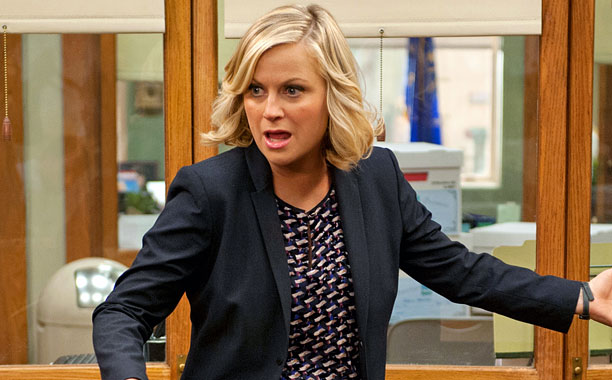
The Office faltered late, as everyone knows. 30 Rock managed to do OK just because it was consistently being hailed as the best show on television. Community‘s story is still unfolding, but the fanbase is rabid enough that it will probably end up fine. But what of Leslie Knope and the Liz-Lemon-meme-worthy Ron Swanson?

Let’s tell it straight: People are not watching Parks and Recreation anymore. Numbers-wise, the show has done a little bit worse every season, especially after losing The Office as a lead-in. Everyone who loves Parks and Rec will tell you that it doesn’t really find its footing until the end of the first season, but America really disagrees. The first season held a huge percentage of Office fans, even though it debuted after one of the dumbest storylines in Office history (“Michael Scott Paper Company” was the lead-in episode for the pilot).

Season two of Parks and Rec is some of the greatest sitcom TV of the last fifteen years, but it did a little bit worse (between four and six million people per episode) than the weird first season. Second three — which followed the final Michael Scott episodes of The Office and was the first season with Rob Lowe and Adam Scott as regulars — did even worse, sometimes dropping below four million. The three seasons since have done worse in the ratings, and sometimes far worse.

A lot of this is on NBC. 30 Rock did even worse than Parks and Rec during its decline and even The Office, the one your mom liked sometimes, barely managed four million viewers a night by the end. Community seemed unstoppable, but it’s tanking this year in the ratings. Parenthood, once one of NBC’s most reliable shows, is doing the same.

Thursday night on the other networks? Fox has Hell’s Kitchen and American Idol. CBS has The Big Bang Theory and Two and a Half Men. ABC has Scandal. NBC’s support for its sitcoms is Hollywood Game Night.

It’s impossible to convince someone to definitely watch something unless they already might, but you really should be DVRing Parks and Rec. The show stumbled a little with an ambitious plot for main character Leslie Knope, but it’s still one of the only consistently funny, consistently great sitcoms on network TV. NBC renewed it for next year, but based on the competition and the current trend, Parks and Rec is dead in the water. Come stay awhile with it every week, like you would an elderly relative. Ron Swanson is still there Ron-Swansoning around, and that really should be enough to earn your 22 minutes a week.

Alex Russell lives in Chicago and is set in his ways. Disagree with him about anything at readingatrecess@gmail.com or on Twitter at @alexbad.

Image: NBC

Symbols and Sociopaths: Hannibal Season 2, Episode 5

hannibal episode 5

Jonathan May

(As always, massive spoiler alert)

We start with the second in a series of split montages, this one featuring breakfast. As Hannibal lovingly prepares his meal in the comfort of his own home, Will stares down the tray lumped with what barely passes for breakfast. The first time we see this split montage is when Hannibal and Will are dressing for trial; this time is different in that it highlights the relative high and low of their respective situations. The high and low is important in this episode, as its juxtaposition implies a classical dramatic structure, that of the protagonist falling from a high place to a low place. It’s unfortunate that the dramatic casualty of this thematic exactness is Dr. Beverly Katz. From the high point of living and finally discovering Hannibal for what he is, Dr. Katz is brought down to lowness, being killed and sliced in a “performance piece” better than any by Damien Hirst (The Cell with Jennifer Lopez also comes to mind). And what exquisite sadness I felt upon seeing Dr. Katz laid out as if prepared for examination under a microscope. RIP, Dr. Katz.

Eddie Izzard is brought back in as the serial killer Abel Gideon in order to act as a sounding board for Hannibal, Will, and the others. But I could just as easily have done without him in this episode. His character brought nothing but lowness, spitting out pithy dialogue like the old man from Pet Cemetery. (An example, speaking of Hannibal: “He is the devil, Mr. Graham. He is smoke. You’ll never catch the ripper. He won’t be caught. If you want him, you will have to kill him.”) The obviousness of this is mortifying; I never, in a million years, imagined that this story would end neatly with Hannibal being meted out justice through the courts. Blood will always be repaid with blood in proper tragedies.

But speaking of courtly justice, what of Will’s trial? And where the hell is Cynthia Nixon to add some perspective to this mess? Instead of Cynthia, we’re given the orderly of the psychiatric ward, a gorgeous pale fellow who readily accedes to Will’s demand that he kill Hannibal. Will, of course, fears becoming Hannibal (hence the horror he feels as the antlers grow through his back), but he’s still willing to “transcend” justice in order to be justified. Will has shifted here from justice to revenge, a tragic flaw; it’s unfortunate that he had to resort to such extremes in an attempt to attain rightness.

The scene between Hannibal and the orderly is properly “high” in its beauty; the camerawork here captures the chiaroscuro of Hannibal’s bleeding body as he hangs Christ-like with his feet on a bucket. It’s almost like a Caravaggio. And that beautiful line which gives us all of Hannibal—“Only if you eat me.” Such a high moment, capable, on the brink of annihilation. And then we’re brought crashing down as the orderly is shot, dashing Will’s plan and possible hopes for ever leaving the psychiatric ward.

Jonathan May watches too much television, but he’s just playing catch-up from a childhood spent in Zimbabwe. You can read his poetry at owenmay.com, follow him on Twitter at @jonowenmay, or email him at owen.may@gmail.com.

Hannibal airs Friday nights on NBC. You can read our piece about the previous episode here.

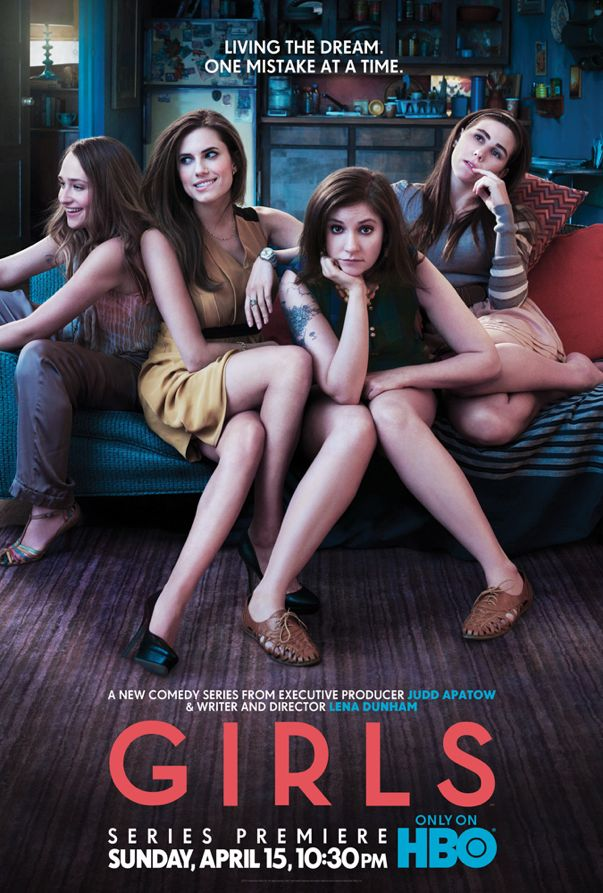
Counterpoint: What if Girls is Actually Great?

Andrew Findlay

Our resident sci-fi nerd Andrew Findlay apparently took issue with Jonathan May’s coverage of hate-watching the Girls season finale enough that he wanted to gush about it here. Here’s the opposite of hate-watching, which might just be watching? Here’s the first in our 46,750 part series “Counterpoint.”

Girls is an amazing television show. It is a perfect comedy of the awkward: the discomfort and hilarity rolling off of each episode in waves is a great accomplishment. Within this comedy, the writers also attempt to explore authentic reactions and emotions that actual people, not sitcom approximations, have.

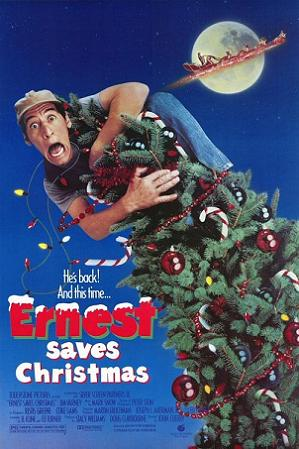
A lot of people are annoyed by how ridiculous and terrible the main characters are, but honestly, have you seen people lately? Most of them are ridiculous and terrible. Think of your own friends: some might be paragons of virtue, but how many have some terrible habits and make dumbass decisions? How many don’t, God love ‘em, annoy the shit out of you sometimes? I posit that if your best friend’s actions have never filled you with rage, you might not be best friends. The show deals in hyperreality. It takes actual personality patterns, exaggerates them until they become semi-caricatures, and then explores the emotional ramifications of human behavior. Yes, all of these people are terrible. Yes, they are too much. The thing is though, that’s the point. Taking Girls to task for being filled with terrible people is like taking the Ernest movies to task because the main character is implausibly stupid.

Come now, a man of his intellectual ability could not save anything, much less Christmas

Even within this implausible framework, the show inserts interactions and situations that are startlingly real. The foundation of the fights between Adam and Hannah might be absurd, but the language they use in fighting and the way they deal with emotional conflict matches reality very closely. I have no firsthand knowledge of this, but my wife informs me that not all, but many of the conversations among the girls reflect how women really do talk to each other, which is “fucking refreshing” when compared to the SATC ladies discussing dick size over mimosas. Also, Girls has a realistic portrayal of post-coital conversation and body language. After sex, Hannah walks around talking naked, because why would you hide your body from the person you just fucked? Think about it – if you had sex with someone in real life, and they immediately tore all your bedsheets off your bed and wrapped them around themselves to hide their nudity, wouldn’t you be a little freaked out? This brings me to a point that isn’t really part of my main argument, but I feel it needs to be mentioned: Hannah is not conventionally attractive and walks around naked, ew! Well, sorry that modern culture has led you to expect only flat-bellied, buxom goddesses to be inflicted upon your vision. Seriously – Hannah’s body type is how a lot of women look, and there is nothing wrong with it. Check your privileged expectations.

Speaking of expectations, Girls is a comedy from HBO, the only show on television that passes the Bechdel test, and because of that, people heap a mountain of expectations upon it, expectations the showrunners never outright claimed or even hinted at. The people saying Hannah represents the voice of a generation, and the other people getting enraged at how bad a picture she paints of the current generation? Dunham never said anything about any generation. Yes, the main character of the show muses whether she may be the voice of her generation, but the main character of the show is remarkably narcissistic and was also high on opium at the time. Oh, all the show’s main characters are privileged and there isn’t enough diversity? Ha! I’m not laughing because that’s not true, I’m laughing because it’s true of nearly every television show. Again, for some reason, Girls is held to higher expectations than other shows, expectations no one set up aside from the people complaining about them. Where is the diversity on Friends or How I Met Your Mother? Where is the exploration of underprivileged characters on Sex and the City, where the four main characters go on endless brunches and shopping sprees, where one is a Harvard-educated lawyer, another grows up rich and marries extremely rich, another is a successful PR executive, and the last is a successful columnist with an on-off relationship with a man of fantastic means? Fuck’s sake, at least some of the characters on Girls actually struggle with unemployment. I’m not saying these criticisms of Girls hold no weight, I’m simply confused as to why Friends, SATC, and How I Met Your Mother get a pass for the exact same problems, whereas the response to Girls is virulent hatred.

This show is really great. My wife and I laugh during every episode, feel feelings for most of them, and are just generally amused and glad this show exists. If you hate-watch it, of course you’re going to focus on all these terrible people doing terrible things, but your perspective will suffer from confirmation bias, where you only see the bad and draw conclusions to support your preexisting idea that the show is terrible. Check it out. It’s great, and unlike anything else I watch on television.


Symbols and Sociopaths: Hannibal Season 2, Episode 4

nbchan

Jonathan May

This episode was really just all over the place. We start out in Will’s head as he teaches Abigail Hobbs to fish; the terrible fishing metaphors fly hard and fast (“the one that got away” could also work as a Katy Perry song title). By incorporating Abigail into his interior space, we’re able to see more clearly Will’s goal in this trial: to lure out the beast in Hannibal and expose it to the light. So Will succumbs to the greedy desire of the hospital psychiatric director for exclusive “therapy” to regain his memories. We’ll see if this pays off in the long run.

But then we segue into an apiarist serial killer who freely admits to her crimes when confronted (albeit in a controlled insane way) halfway through the episode. The swiftness with which this was handled confused me and left me wanting more.

So what did we linger on the most? We see laid out, in brutal coldness, Bella’s acceptance of death as a cure to living. Perhaps the only echo in this episode is the image of the honeycomb, Bella’s body honeycombed with cancer. Just a thought. The whole slow dance toward death Jack must acknowledge is lightened by the novel plot introduction of medical marijuana. As Jack and Bella smoke purple kush, we feel imminently the frailty of even this small moment of levity. And, as the plot gods would have it, happiness comes at great cost.

My prediction that Dr. Beverly Katz would discover Hannibal for what he was came to startling life at the episode’s end. I was riveted in my seat as she gaped in shock at something. I am so, so thankful we did not see what she saw. It’s always more horrible what we imagine ourselves. But this unfortunate interaction could lead to the demise of my favorite character.

All to say, Friday could not come sooner. I’ve been trolling the Hannibal Tumblr and Facebook page, like a dutiful #fannibal, so we’ll see if the story gods repay. If they’re out there, listening, I have but one humble request: better music. The whole episode was plagued with shrieking strings and obvious, eerie auditory leitmotifs. Let’s lay off a little moving forward.

My predictions for this week’s episode: Alas, Dr. Katz is held by Hannibal, but hopefully not killed. Will Graham moves forward with his new therapy and fills in his missing narrative. Bella lingers on; Jack feels it necessary to stay beside her, when Dr. Katz needs him most. And where the hell is Cynthia Nixon?

Jonathan May watches too much television, but he’s just playing catch-up from a childhood spent in Zimbabwe. You can read his poetry at owenmay.com, follow him on Twitter at @jonowenmay, or email him at owen.may@gmail.com.

Hannibal airs Friday nights on NBC. You can read our piece about the previous episode here.

Image source: NBC

Symbols and Sociopaths: Hannibal Season 2, Episode 3

hannibal-two

Jonathan May

We start with a montage of Will and Hannibal, each dressing for the morning; The whole scene is a lovely aubade to their relationship. Hannibal has placed himself into Will’s life violently, but why? This seems to be the central question of this season: What exactly does Hannibal want from Will? If it’s just a kindred spirit, then he and Will could certainly bro it up in a number of narrative ways. I think he wants Will to best him, because he believes Will is the better man. Again, this is all speculation, the darkness set against the relief that accentuates the more disjointed parts of the episode.

As to that, we are reminded, for whatever reason, that Jack’s wife is dying of cancer, something he (and I) seemed to have forgotten. This felt like a weak and poorly timed attempt to garner some more sympathy in Jack’s corner, when really we should be feeling for Will. Then, the reporter reemerges to give totally boring testimony. It’s like, Oh right, we forgot about all of these ancillary plots and characters, so why don’t we just throw them all in the mix? Throughout, Will’s lawyer makes the worst jokes. Honestly, the only standout things about this episode were Cynthia Nixon, who plays an internal investigator for the FBI, and the judge’s gruesome murder.

Against the obviousness of the trial, the episode only peers slightly further into whatever the hell is going on with Will and Hannibal. His fevered dream sequence of possible escape is squelched by Lecter, which only mirrors the let-down of Hannibal as a courtroom witness. We see, in the barest and darkest terms possible, their relationship changing, though this early in the season it feels glacial. I hope in the next episode their relationship is brought more to the forefront of the relief structure.

I do wish we’d seen whatever it is that happened to the judge’s brain. Call me morbid, but the whole courtroom aspect left me wishing for a more gory palate cleanser. Also, what in God’s name kind of outfit is Hannibal wearing here?

Hannibal, episode 3

My predictions for this week’s episode: We know Dr. Katz is going to take a central role, but I predict her doubt of Will falls away like scales from her eyes. Dr. Bedelia (Gillian Anderson) appears to Will in a vision/dream/hallucination. Cynthia Nixon will wear another power suit. Jack’s wife will die sooner than his in-the-works trip to Italy.

Jonathan May watches too much television, but he’s just playing catch-up from a childhood spent in Zimbabwe. You can read his poetry at owenmay.com, follow him on Twitter at @jonowenmay, or email him at owen.may@gmail.com.

Hannibal airs Friday nights on NBC. You can read our piece about the previous episode here.

Image source: Comingsoon.net 

Symbols and Sociopaths: Hannibal Season 2, Episode 2

hannibal-two

Jonathan May

Like, massive spoiler alert.

Watching the second episode of Hannibal, I couldn’t help but selfishly wonder if somehow, some way, the show’s producers had read my post from last week and decided to give me everything I wanted. If it’s foolish to dream, then I’m foolish. All to say, this episode gave me the heebie-jeebies—it scratched my blood itch and left me wanting next Friday like it was payday.

We’re presented this season around with Lecter stepping into Will Graham’s role as a forensic/psychological expert, a role Hannibal relishes. In this episode, this relationship is brought to the forefront, and we get to see how Dr. Lecter reacts to the close quarters of the FBI’s investigative minds at work. I was completely delighted to see the use of symbolic imagery play out in this episode; the dark antlered man as Lecter read well for the overall thematics, which concerned the relation of God to man, creator to subject.

This unfolded through the serial killer obsessed with a “human palette” made of resined bodies of various shades sown together in a silo. Lecter, wise to his own ilk, finds the killer before everyone else and adds him to the picture, and then his plate. The cooking scene in this episode took a lot of care to show the many stages of preparation for a human thigh; I was even hungry for a moment.

The juxtaposition of closed and open spaces made me wonder exactly who is caged and who is caging, which was doubled down when Lecter’s psychologist (played by Gillian Anderson) decides to exeunt with all relevant information. She even stops by to see Will Graham and tells him, “I believe you.” Of course, she disappears immediately thereafter.

This bit of maddening information must certainly fan Will’s flames as he heads to trial in next week’s episode.

Thankfully, Dr. Beverly Katz (played by Hettienne Park) landed a central role in this season’s events. She really adds a keen and watchful eye to the situation, while still being a great unaware foil to Lecter; their awkward “dance” in the forensics room gave great comedic evidence for this.

My predictions for this week: Hannibal is a witness, Gillian Anderson is dead/missing, Dr. Katz gets real with Lecter. And hopefully more food porn.

Jonathan May watches too much television, but he’s just playing catch-up from a childhood spent in Zimbabwe. You can read his poetry at owenmay.com, follow him on Twitter at @jonowenmay, or email him at owen.may@gmail.com.

Hannibal airs Friday nights on NBC. You can read our piece about the previous episode here.

Image source: Comingsoon.net 

Can Chozen Follow Archer?

chozenlead

Jonathan May

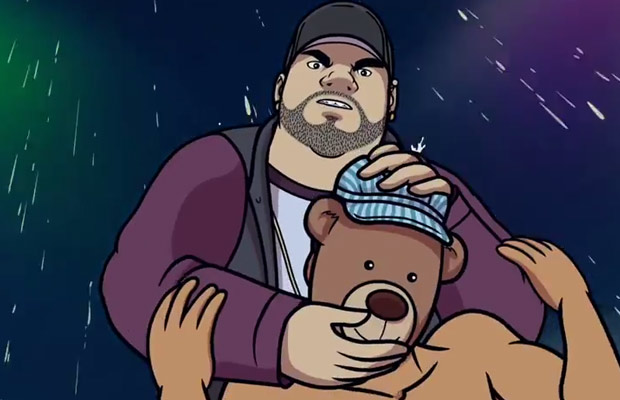
FX’s Chozen features, at its core, an outcast in a lot of ways. Our eponymous star is not only a white rapper and a convict, but also a homosexual. Luckily for its audience, the show focuses little on how these elements make Chozen (voiced by Bobby Moynihan) different from other people; the show does, however, focus on how gross he is. We see Chozen peeing, farting, getting head, burping, offending; the show basically begs us to congratulate it on presenting the non-gay gay. But what’s the situation?

Out of prison, Chozen lives in his sister’s college apartment while trying to figure out how to best gain revenge on the man who framed him, thereby sending him to jail. They say living well is the best revenge, and living it up seems to be his and the show’s main purpose. We see lots of partying, drugs, alcohol, implied and boldly stated sex acts. There’s lots of talk about the rap game, but very little rapping. Each episode, almost as an afterthought, devotes scant attention to the story’s overarching concern, instead lingering on stupid race jokes, obvious sex jokes, and lots of slapstick influence. So why do I watch?

Initially, what I appreciated about the show was its non-standard representation of gay men. I see more gay men who look like Chozen than men who look like the guys in HBO’s Looking. At first Chozen acknowledged its own stereotypes and often subjugated them with ironic force; the frat dude who hankers after Chozen is seemingly out and wants a relationship. What a lovely twist, I thought. But it’s unfortunate that the show’s “awww” moments end there. On closer inspection, the show tends to conflate “straight male behavior” with “gay male sexuality” to produce its now-tired effect. It’s like the producers were like, “How can we make the gay character more relatable? Oh, I know. Let’s just make him more straight-acting.” While this does provide welcome differentiation in gay portrayals, it wearies the viewer very quickly into the season.

Speaking of the show as a whole and its motivation, I hope it centers back onto the main plot point: revenge. We’ve spent more than half a season engaged in college high jinks, crass sexual jokes, and attempts at moral lessons on friendship. We need to get back to the story, or else Chozen will be nothing more than that show that comes on after Archer.

Jonathan May watches too much television, but he’s just playing catch-up from a childhood spent in Zimbabwe. You can read his poetry at owenmay.com, follow him on Twitter at @jonowenmay, or email him at owen.may@gmail.com.

Chozen can be seen on Monday nights alongside Archer, and you can read our examination of Chozen as a spiritual successor to Kenny Powers here.

Image source: Complex

Symbols and Sociopaths: Hannibal’s Season Two Premiere

hannibal-two

Jonathan May

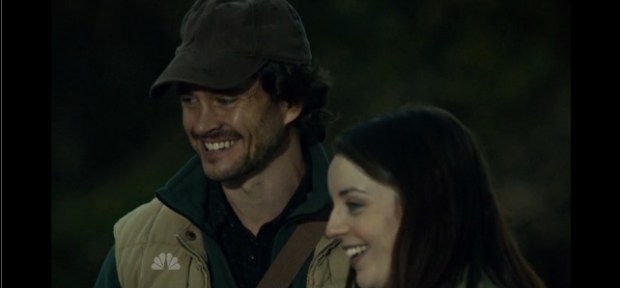
I’m a huge fan of the first season of NBC’s Hannibal, with Mads Mikkelsen in the eponymous role and Hugh Dancy starring alongside as the ever-lovable Will Graham. It was a literal phantasmagoria of the culinary and the sociopathic. The episode names were, in order, all the courses of a full, formal French menu, and it was quite like eating a slow, delicious meal over the course of the season. Would Will Graham be framed? Would they catch the nefarious Hannibal? Each episode brought us closer to a pulsing edge, pushing our palates further than we had known, not only in terms of character development, but also in exquisitely crafted shots of food juxtaposed with the grisly doings of our dear Dr. Lecter.

I can’t spoil the ending of the first season for you uninitiated who, particularly and with great haste, still need to watch the show. The ancillary characters provide welcome relief from the steadfast and grim tone. Will, our protagonist, has a sort-of love interest. There’s some humor provided by the medical examination team. But at the core of the show is its unique set of symbols: the dark stag (representing Lecter), the kitchen knives, the disfigured clock. These symbols appear over and over, building in their usage and intensity as the show plays out. Suffice to say, do yourself a favor and watch the first season.

The following section contains spoilers:

Now, for those of you who caught the first episode of season two, what? I mean, what? Where is the trademark, always-stylish gore? Where is the saucy game of cat-and-mouse? We’re thrown in media res to a scene briefly, only to travel back 12 weeks into the past, where the season begins. More darkness is hinted at between Gillian Anderson’s character and Hannibal, but what does he have on her? This opener left me with a ton of unresolved questions, doing the faithful job of an episode meant to re-pique your interest after a long lull (termed appropriately on Tumblr as the “HeAteUs”). I hope we get back to the symbols at the show’s core, but to do that, I think we’ll need a little more Hugh Dancy on-screen. His brief interactions with the dark, antlered man in his mind suggest the obvious: that Hannibal inhabits his mind; but we don’t get much more than that. I’m hoping the next episode makes better use of Will’s “inner space.” We can’t just be flashed dark, mythic-looking things without them being held accountable to a reality within Will.

My prediction for this week’s episode: new “serial killer” introduced formally, way more of Gillian Anderson, maybe a flaming stag this time, a lot of people visit Will in prison asking for advice.

Image source: Comingsoon.net 

The Walking Dead Has Become a Show About Nothing

seinfeldnydailynews


Alex Russell

The Walking Dead is pulling in 12-15 million viewers a week consistently. For perspective, that’s roughly seven times more than most episodes in the last season of Breaking Bad. The last 21 in a row all had more viewers than the finale of Breaking Bad. I use that show because it’s on the same network and because the difference should be shocking. Breaking Bad was certainly a niche experience that blew up into the one thing everyone you knew talked about, but the finale was appointment television. It is very likely going to be remembered as “the show” of this generation of television.

I say again: more people are watching The Walking Dead, on the same channel, in the slow season than the most-anticipated episode of the most exciting show of this generation.

The Walking Dead isn’t a bad show. It’s a pretty exciting show, for starters. If you’re not one of the tens of millions tuning it, it’s a show about zombies attacking people who survived the end of the world. Scattered groups of survivors interact with zombies and learn the eternal lesson that even after a more obvious threat emerges, the ultimate villain is always man.

It’s tough to label it innovative, because that paragraph both A. made your eyes glaze over and B. describes the entire world of The Walking Dead. If you want zombie television, you’ve found it. It looks like all the other zombie stuff you’ve ever seen: dark, brooding, lonely, and violent. Sometimes the groups meet other dangerous groups. Sometimes they make tentative friends. Sometimes they attempt to live a normal life. It’s all of the challenges of the end of days mixed in with the challenges of every day. Cool. Check. Got it.

But the most common complaint lobbed at a drama that’s nearly 50 episodes deep holds especially true for The Walking Dead: nothing happens.

It feels ridiculous to say that about a show that features people losing limbs and family members by the month, but the show has a habit of bogging down. A new group will show up, we’ll meet everyone, some people will get character (and some won’t), some people will die for a reason (and some won’t), and we’ll rinse and repeat with a new batch. The setting changes a little bit and poor Andrew Lincoln has to teach a whole new group of people the true meaning of friendship.

The show was loosely following the plot and characters from the graphic novels of the same name, but now it’s on its own. Sure, people want to see people with big swords and big guns blow up clearly-evil zombies, but you need a hook. You need to care, or you’re just making pulp. Is there any reason to care?

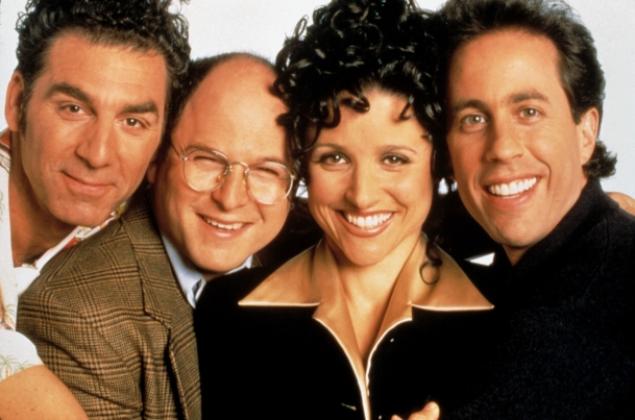
Seinfeld has famously been called a show about “nothing.” The point was that it was to show how people really interacted when they were at their worst, because Larry David thought everyone was most honest at their worst. The Walking Dead would buy that line of thought, but it also seems to buy the idea behind the classic comedy, as well.

The most recent episodes of the show have seen the cast divided up after a terminal event at the mid-season point. Everyone is split, which is fine, but everyone is also battling their own hopelessness in a dead world. If it sounds like that’s an easy way to slip into darkness, well, yeah. This show’s closet is always full of a lot of blacks and grays, but right now we’re in an even darker place than normal.

That’s not necessarily a bad thing. It helps to reset the expectations: Civilization, as we know it, is over. It’s been enough time since the zombie outbreak that everyone knows help is never coming. Everyone’s seen death and loss in droves. It’s definitely time for a glass-half-full outlook. The darkness isn’t what stagnates The Walking Dead, though. It’s literal non-movement.

For two solid hours two characters hole up in a house and wander around the enclosed space. There are elements of people that are revealed and we, as an audience, see our humanity through their choices… kinda. For the most part people just wander around the same dirty, dead spaces and don’t do anything. It’s supposed to remind us that there’s nowhere to go and there’s no hope, but at a certain point that starts to feel like, well, nothing.

Seinfeld was funny because the cast was a reflection of our true selves. The Walking Dead succeeds when it shows us that we are all at a loss in a tough situation. I’d never tell you that Seinfeld missed a step, but the whole idea was to go out on top. The Walking Dead seems to have made every point about humanity that it has to make. It’ll keep demolishing in the ratings because it is entertaining and well-made visually, but the story is about nothing now, and that’s certainly not intentional.


Image source; NY Daily News

Rick and Morty: Midseason Review

Mike Hannemann

It’s got to be hard pitching a show to Adult Swim. The network is famous for giving shows a chance that couldn’t have possibly gained an audience (Google Saul of the Mole Men some time when you have five minutes to kill and want to waste precious brain cells). So, in theory, if you can get enough momentum behind an idea and some clout, there’s a chance you can get it on there. However, Adult Swim original shows are also forever associated with things like Aqua Teen Hunger Force: stupid, pointless shows that get more laughs out of randomness than pathos.

Sure, there are exceptions. The Venture Brothers is a front runner of mixing absurdity and character depth to mine laughs. I have a feeling that when Dan Harmon (of Community) pitched his current 22-minute long cartoon, Rick and Morty, he was well aware of that.

Rick and Morty has aired six episodes so far, so we’re at midseason now. Before I jump into whether or not this is working, here’s a quick synopsis: the titular characters are an alcoholic scientist (Rick) and his pubescent grandson (Morty). It’s essentially Back to the Future if Doc Brown did cocaine, Marty was a constantly-wound ball of nerves, and the universe was about to explode every second. A wealth of storylines from previous sci-fi ventures are mined, including the “shrinking down to go into someone’s body to stop a virus” just to name one example. There’s a handful of supporting characters coming from their family: Chris Parnell plays the part of Morty’s father in a role that seems to have been written for him simply because they saw an episode of Archer. That’s pretty much all you need to know.

The show is clearly cynical, which most “adult” cartoons are. The kind characters get beaten within an inch of their life and the bastards seem to get away with everything. Morty, in the role of put-upon reluctant voice of reason, is thrown into situations by his grandfather that are sociopathic. Constantly on the verge of death, the show reaches for humor in seeing this kid go through some extremely rough situations where his victory is “well, he didn’t die.” Rick, on the other hand, is an alcoholic. He does whatever serves his current purposes (be it money or revenge) and usually gets away with it all. There’s no hug at the end and no moment of warmth. It looks, on its surface, to be just another tick on Adult Swim’s soon-to-be-cancelled list…

…except for the fact that the creators clearly respect their medium. As a 22-minute show, Rick and Morty is allowed to be a little loose with time. There’s time for establishing shots, grand epic sets, and whatever action sequences need to take place. This isn’t thrown together last-minute flash animation. The visuals have a retro feel to them. They look like the action scenes from the cartoons you remember watching as a kid. Clarification is needed here: it doesn’t look like something from the early 1990s that you’d pull up on YouTube. They look like how you remember they did. For a minute you forget the monster on the screen is actually a gigantic mutant strain of gonorrhea. It’s just plain fun.

Adult Swim is broadcasting this show on Mondays, which is uncommon for their new programming. It’s also airing at an earlier time slot – in between reruns of Family Guy and American Dad! It’s early enough to give the show a chance to reach audiences that are used to just binging their usual reruns. And while you can say what you will about both of those options, animation has always been something they’ve excelled at. It’s almost like Adult Swim is saying “Ok, Fox, we know you can do this. So can we.”

All of this wouldn’t matter much if the characters haven’t slowly been able to grow, as well. Much like the best comedies, the heart shows through just infrequently enough to catch you off guard and feel earned. There’s never going to be a sitcom-esque wrap up where everyone grows and learns. But in the midst of escaping from a virtual AI simulation on an alien spaceship, there may be a brief moment where the kid and his grandfather have a makeshift snowball fight (in this case, I replace “crystals an alcoholic wants to sell for booze money” with “snowball”). It isn’t much to drive a show, but it’s enough to keep the viewer engaged in the story. It’s the most real element of a show that makes it a point to go as far away from that description as possible.

All in all? This is something to have on your radar. Rick and Morty could become something much more than what it is now. There are flaws, of course. The jokes are often visual and for shock value (everything you expect from Adult Swim, honestly). The weaker characters remain weak and one-note. The premise could easily get overdone if not handled in a creative way. I wouldn’t say the cards are stacked against Rick and Morty working. They’re evenly doled out on either side.

Right now, it isn’t must-watch television… but in a few years, I could see people binging on three seasons in a Memorial Day weekend on Netflix because their friends told them to check it out. I hope to be one of those annoying friends.

Recommended Viewing: If you want to give this show a try, check out episode five: “M. Night Shyam-Aliens!” You don’t need to watch the show in sequential order and this one nails the elements I mentioned above.

Rick and Morty airs at 9:30 p.m. CST on Adult Swim.

Image source: Adult Swim