Author: Alex Russell

Worst Best Picture: Is Wings Better or Worse Than Crash?

MV5BMTUwNDY0MDUyMl5BMl5BanBnXkFtZTcwOTY4NTM2Nw@@._V1_SX640_SY720_

Alex Russell

In “Worst Best Picture” we search every single Best Picture Oscar winner of all time from 1927 to present to uncover the worst of them all. Conventional wisdom says that 2005’s winner Crash is the worst winner in history. We won’t stop until we’ve tested every last one. Read the the first, our review of Crash, here. Posts will be relatively spoiler free, but there may be some details revealed. Today’s installment is the 1927 and 1928 winner Wings. Is it better than Crash?

The story of movie history isn’t the story of how we got to 12 Years a Slave any more than it is how we started with Wings, the first Best Picture winner. Different movies achieve immortality for different reasons. Wings was the first Oscar winner, back before they even called them that, but is it anything more than that?

It’s surreal to watch Wings in 2014. I try to keep the time period a movie is from in my mind when I watch it, but that’s not the challenge here. Rain Man is a fantastic movie that someone spilled 80s all over; Wings is pure 1927. It’s the only true silent movie to win (The Artist doesn’t count and should be ignored), for starters. A two-and-a-half hour silent movie seems like it would be a tough sell in 2014, but it’s worth exploring the first Best Picture.

Wings is the story of two boys who love the same gal, Sylvia. They both want to date her, but she only likes one back. The other guy’s cute friend is into him, but he’s only got eyes for Sylvia. I had to look up Sylvia’s name because she’s in about sixteen seconds of this movie. The boys go off to World War I, plucky female friend goes off to drive an ambulance in the war, and Sylvia presumably dies of Spanish flu, or something. Everyone kinda forgets her. It’s weird. The movie is unbelievably long, but that’s the end of that plotline, let’s go to war.

If Wings has a claim to fame beyond the first Best Picture Oscar, it’s two million dollars worth of plane combat effects. They’re impressive (to a degree, don’t expect much) considering what they had to work with in 1927. The conventions of silent film mean that you’re going to watch a lot of flying time, so at least it’s well done.

The main characters — Jack and David — are completely nondescript. They both love America, flying, this possibly dead woman, and just about nothing else. Wings is a patriotic movie before it is anything else, and it too often is willing to forego any interesting characterization to sell that patriotism. Of particular interest is a German-American character played to be incompetent and useless. He consistently mucks up simple tasks and has to demonstrate that he belongs in the war because he has an American flag tattoo. The creators of Wings knew that people wouldn’t buy him any other way.  The third or fourth time that happens, though, you start to wonder if this might have even been too long for people in 1927.

Clara Bow got top billing on Wings. She was a movie star of the highest order, and her portrayal of the rough-and-tumble “best friend/love interest” for Jack is as close as the movie gets to “interesting characterization.” It never quite gets all the way there, but she at least gets to drive an ambulance around and tell Jack that he’s brave and strong. Hoo-boy, that sentence really tells you where 1927 was at, doesn’t it?

The Best Part: Wings is not especially worth your time in 2014, but if you decide to watch it you’ll end up with a compelling movie. It’s way, way too long (largely because it feels totally unedited) but it eventually turns out an interesting climax that is somewhat surprising.

The Worst Part: Jack and David get some leave from the military and go to Paris to get drunk on champagne. They’re called back to provide needed air support, but Jack is too drunk to remember what the military is. Internet tells me that Charles “Buddy” Rogers, the guy that plays Jack, had never been drunk before the scene. To create a realistic portrayal, they just got him drunk in real life. It comes through like that, and it’s as hard to watch as any real-life drunk. Clara Bow eventually shows up to try to get him to go back to war, which helps, but the scene ends with Jack seeing “bubbles” everywhere. The mixture of a real drunk person on screen and some terrible bubble special effects creates a really, really bad scene.

Is It Better or Worse than CrashThe discussion of race in Wings is one of “real” Americans. The German-American is hated because he is not “authentic.” The women are hated because they are not men. Men are hated because they are not “real soldiers.” The world of Wings has no room for diversity, and it’s roughly as interested in a positive message about diversity as Crash is. But there’s 78 years between Crash and Wings, and honestly, I felt like Wings was a little more progressive. The only message of Wings is “be a man, fly a plane!” Crash would be improved by being just about that.

Worst Best Picture Archives: Crash | Terms of Endearment | Forrest Gump | All About Eve | The Apartment | No Country for Old Men | Gentleman’s Agreement |12 Years a SlaveThe Last Emperor | The Silence of the Lambs | The Artist | A Man for All Seasons | Platoon | The Lord of the Rings: The Return of the King | The King’s Speech | Rain Man | The Departed | The Bridge on the River Kwai | Marty | Gigi | It Happened One Night | Driving Miss Daisy | Shakespeare in Love

Alex Russell lives in Chicago and is set in his ways. Disagree with him about anything at readingatrecess@gmail.com or on Twitter at @alexbad.


Tough Questions: What Would You Pick as Your Theme Song?

question-mark

Every week we ask everyone who hangs out around here to answer a tough question. This week:

What would you pick as your theme song?

Rules are simple: what’s your jam? At this year’s NFL Draft, they let the first round picks pick out the song that would play when they went on stage. The results are ridiculous. It got us thinking: what’s your personal theme song? What’s your at-bat music? More sports references! But really, if you’re not gonna go with No Doubt, what’s your theme song? I just assume everyone’s first choice is No Doubt… right?

Alex Russell

Musical tastes have a way of changing every few years. I don’t really listen to as much Ben Folds Five as I did in college, but “Best Imitation of Myself” is still hard to ignore as a candidate here. I think it might be sacrilege for me to not go with a song from my favorite band of my all time, though, so I have to go with “Ox Baker Triumphant” by The Mountain Goats. It’s a song about how you get through some shit and come back to defeat the people who started it all. I think we all have revenge fantasies, even those of us that don’t have revenge to enact. You can listen to John Darnielle explain why he wrote a song about a wrestler who wore a shirt that said “I Like to Hurt People” here, and I highly, highly suggest that you do.

Jonathan May

My theme song is constantly changing. I’m one of those people who listens to one song over and over again until it transcends its original pop intentions and becomes more like musique concrete, which I attribute to years of listening to experimental music and Björk. Currently, however, my song de jour is definitely “Baby’s On Fire” by Die Antwoord (June 2012). Those two crazy South Africans sure know how to make some sick dance music and hilarious videos. After all this time in America, it’s hilarious to me that I’ve become stuck on two Afrikaners and their irreverent, ballsy style of rap. In the particular song mentioned, I don’t actually much care for the chorus, which is comprised of Ninja shouting the same few lines over and over; what draws me in (and has kept me there for a bit now) is Yo-Landi’s infectious verses and voice. She works that little girl insouciance to perverse effect, rapping about her wild child interior and sexual antics. While lacking almost any higher moral value, the song definitely holds up its dance-y proposition.

Stephanie Feinstein

“Better Son/Daughter” by Rilo Kiley.

Andrew Findlay

“Cheese and Dope” by Project Pat. It’s not really my theme song (not about that life) as much as a song I listen to all the time. It is one of the greats. DJ Paul and Juicy J are two of the greatest producers that have ever been in the game, and it is obvious here. Multiple interwoven, complex beats throughout the song, beat switches, and that sweet Memphis tappity-tap with Project Pat’s smooth smooth flow riding over everything combine to make instant listening transcendence. Listen. Listen.

Brent Hopkins

I worked in a job where we had to do entrance dances and go through an interview process for students who were coming for week-long camps. I was quickly tagged as the guy who liked every woman (a playboy) so my song was Hyuna & Jang Hyun Seung – “Trouble Maker MV“. This lasted for two years and fit the whole time.

Gardner Mounce

I had trouble picking this because I was skating back and forth over the line: do I want my song to be cool like Pixies or TV on the Radio (because I’m so cool, duh) or do I want to be ironic and funny by choosing a song that shaped my formative years, which, sadly, happened to include Creed’s Human Clay. But, no, I’m going to try to honestly choose a song that represents me now. Today. So, I am choosing for my theme song: “Almost Ready” by Dinosaur Jr. First of all, it kicks ass. The guitars scream, the drums thunder, the bass chugs; juxtapose those with J Mascis’s warm drawl and boy, oh, boy. Additionally, the lyrics speak to where I am in life: mid-20s, in a job I like but wonder if, in the larger scheme of things, I’m making a dent. The song’s about that point, about being on the cusp of demanding something more of life, but hesitating, and about the recursive, messy way we all go about finding what the hell we’re doing with our lives, etc. and then, you know, guitar solos.

“East of West” Comic Review: Art that Shushes Your Inner Critic

east-of-west-3cover-artjpg-30b4bb_610w (1)

Gardner Mounce

As we consumers of culture grow older, our inner critic grows louder. A new band we might have liked ten years ago we now quickly brush off as a carbon copy of an earlier incarnation. The latest Coen brothers’ could never be as good as past efforts. With every passing year, we append new cultural experiences to our collected “Experience,” thus making it increasingly rarer to experience that work of art that shushes your inner critic so that you can actually enjoy it. Not to say that critiquing (or even tearing apart) works of art isn’t its own form of enjoyment. But that’s for another article.

STK527769.jpg

It wasn’t until undergrad that I got into graphic novels. It wasn’t until after grad school that I got into comic books. If you don’t know the difference, here’s a clip (courtesy of ABC Family) of someone asking the question and then two people kissing. All that to say, even though I haven’t been a lifelong fan, I feel that I’ve read enough to know when I’ve found that rare specimen. That specimen, in this case, being Jonathan Hickman’s and Nick Dragotta’s East of West.

How to describe it? I use the word “badass” selectively. Sure, I live in the South where badass is an endearment ascribed to everything from camouflaged iPhone cases to comely sunsets. I used it once at a Nine Inch Nails show when Trent Reznor kicked over his keyboard, and in spite of myself at a monster truck show when Grave Digger jumped an improbable number of wrecks. Like I said: I’m Southern.

I think I want to give East of West that most Southern laurel because of how much weight Dragotta’s art carries, how every panel is filled with gravity and action and consequence, with no frills, nothing wasted. It’s like reading the storyboard of a Darren Aronofsky film: every shot means something. The following is a collection of unrelated panels (no spoilers) that I’ll use for example. Every shot is packed with a story that demands to be read, understood, savored.

Screen Shot 2014-06-10 at 5.10.11 PM.png

It’s the color palette, it’s the framing, it’s the energy in each panel that whispers “I know something you don’t know”, and so drives us onward. Dragotta fully realizes Hickman’s dystopian sci-fi world, a grand scale epic that includes vast cityscapes, a cadre of unique characters, and wonderfully offbeat technologies like horse-bikes. It’s artwork like this that primarily hushes my inner critic. Even if the story wasn’t good, the artwork alone sweeps you up. But the story. Oh, man, the story

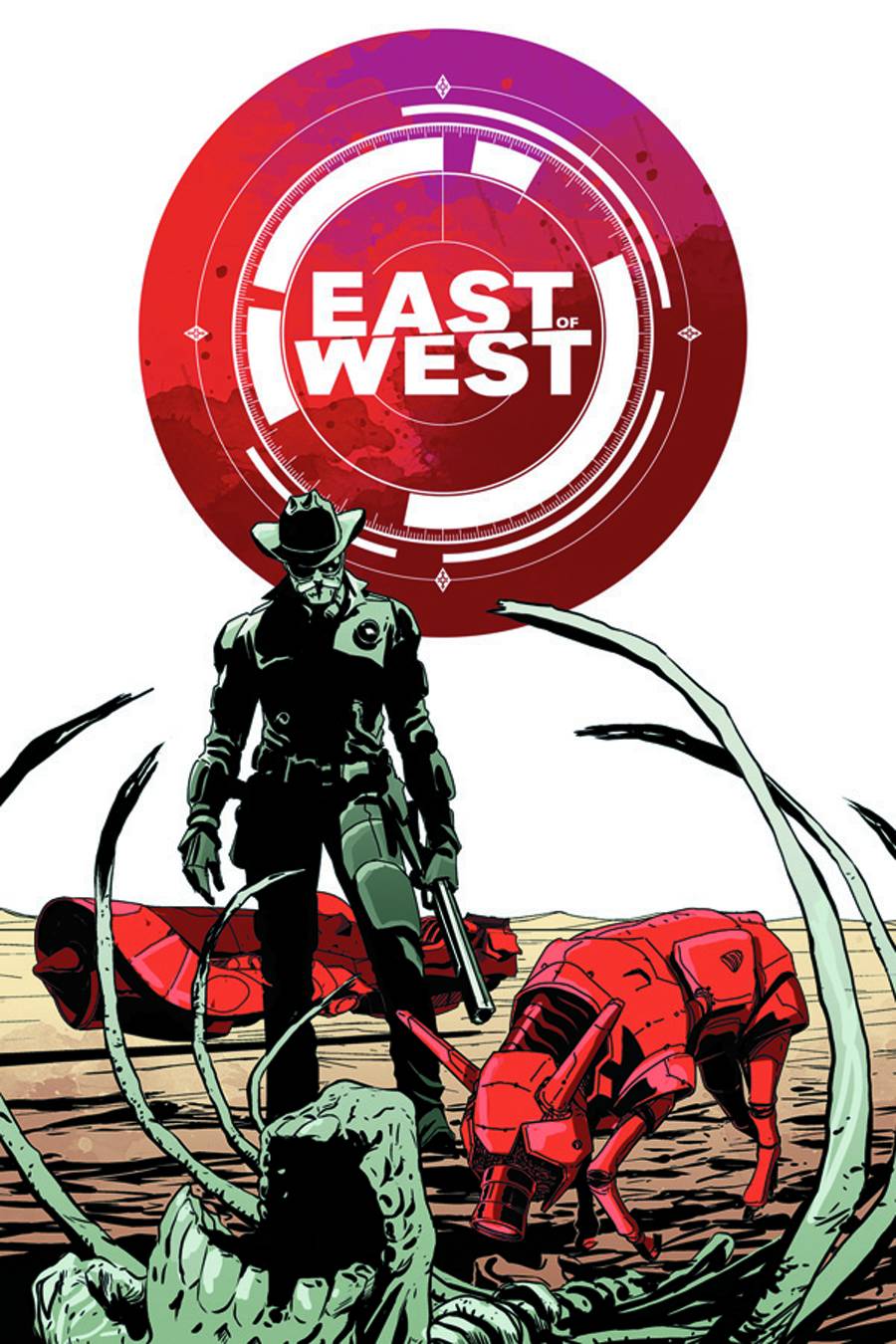
If Sturgeon’s law is to believed, 90% of everything is crap. This is definitely true for comic books, where at least 80% of comics are about superheroes with dead parents–nothing lightweight about dead parents, but come on, comic book writers, pick a new backstory for Chrissake. The story behind East of West is…complicated. In a nutshell, it’s a dystopian sci fi story about three of the four horsemen of the apocalypse–Famine, War, and Conquest–who arrive on earth to end it all, but the fourth horseman, Death, doesn’t show. Death, personified as a colorless Clint Eastwood-esque cowboy, is off on an errand of his own. As the three horsemen track him down, elite members of the warring nation-states plot to end the world rather than settle their differences.

What makes the story so special is that Hickman embraces the essence of American mythology: there is not one, but many American mythologies. Contained in East of West is the myth of the cowboy, the religious zealot, the industrialist, the South vs. the North, the South (white wealth) vs. the South (free slaves), tradition vs. technology, the indigenous vs. the immigrant, and more. Hickman collects these multifarious mythologies and we get to watch them squirm. As crowded as that sounds, as rife as that premise is with the potential to wholly miss its mark, it somehow doesn’t. There are worlds contained in East of West, and, so far, its creators have told its story well enough that when I open up a new issue, my inner critic takes a walk.

Where to Start?

Luckily, the series is only 12 issues in. Get the first five in trade paperback for under $9 on Amazon or for around $10 at your local comic book store.

Gardner Mounce is a writer, speaker, listener, husband, wife, truck driver, detective, liar. When asked to describe himself in three words, Gardner Mounce says: humble, humble, God-sent.

Image: IGN

Comic Review: The League of Extraordinary Gentlemen (1999-2007)

league-of-extraordinary-gent

Brent Hopkins

The League of Extraordinary Gentlemen is probably best known for the horrible, career ending movie that starred Sir Sean Connery in his last major motion picture. The movie is a disjointed mess and takes almost nothing from the source material other than the characters’ names.

The comic, on the other hand, is an interesting romp with an entire world built around it. The main concept of the comic is that many literary fiction characters are actually real characters that have retained their otherworldly abilities. They come together as a crime-solving troupe, but, as they are human, they retain all of the issues they have interacting with one another and overcoming being better than an average human.

The Story

Written by Alan Moore (of Watchmen and various other comics fame) the story follows Mina Harker, Captain NemoAllan QuatermainDr. Jekyll, and Hawley Griffin from 1898 to 2009 solving crimes with antagonists from literary history. These include Fu Manchu, Professor Moriarty from Sherlock Holmes, and even the aliens from The War of the Worlds.

download (1)

Characters and Writer

The protagonists are often seen as interesting, but not entirely bad, in modern culture. Moore is not that type of writer, and each of the “heroes” in this comic are, for lack better phrasing, miserable fucking bastards. Each of them exploits their myriad abilities in exactly the worst ways possible — murdering, drug using, and raping — because there is no one that can truly stop them. They get a completely free pass on this, because when aliens come from Mars and threaten to liquidate the entire human race you have to let the superhuman characters handle it.

There is quite a bit of death in this comic and it is dished out to the good and bad alike. The strange thing is I never really connected with the good guys because they were all pretty deplorable people in their own right.

Art

The art is done really solidly throughout. There is only one artist from start to finish, so it is very cohesive. Those that like steampunk flair will adore this, as the whole span of time from 1898 to present day has a decidedly steampunk feel. The comic consistently feels like a viewing of the imagination of someone reading a book, which is precisely how it should feel. The characters are all very unique and it feels like you are viewing a real alternate timeline where pen and paper make reality come to life.

Writing

Moore is a world builder. He has done this with Watchmen and here he has managed to do the same thing. While The League of Extraordinary Gentlemen isn’t long per se, Moore includes so much side text and so many appendices from the world that you never really feel lost. These are necessary reads to get the full effect of the world these characters reside in and they are entertaining in their own right. Each character is also consistent throughout the story, never suddenly becoming more than they were like many superhero novels do. Once insane, always insane, and that helps engross even more.

Worth the read and time to complete?

Kinda??? I read this in its entirety in about two weeks and I did enjoy it quite a bit, yet it is hard reading something with a bunch of people you don’t entirely like. The main characters are Allan Quartermain and Mina Harker and they’re relatively interesting, but their cohorts were far more intense and crazy which made me sad when they departed from the story (These departures are amazing though).

Brent Hopkins considers himself jack-o-all-trades and a great listener. Chat with him about his articles or anything in general at brentahopkins@gmail.com.

Images: Litreactor and Indiewire.

Obvious Child is a Romantic Comedy About How People Actually Meet. Should You See it?

obviouschild

Alex Russell

In our rarely-running kinda-series Should You See It? we talk about movies that just came out. You can figure out the rest of the premise from the title of the series. That’s right: we talk recipes. Should you see Jenny Slate’s romantic comedy Obvious Child?

One of the weirdest parts of pop culture now is that if you really love something, it starts to feel like it’s one of the biggest things in the world even when it isn’t. You can follow a hashtag or go down a Tumblr or YouTube hole and suddenly that one Comedy Central show you really, really like feels like it just must be something everyone you know is all about.

Obvious Child inundated my digital life last week. It’s a movie that did well enough at Sundance earlier this year to earn a bigger release this month. Jenny Slate (Kroll Show, Parks and Recreation, Bob’s Burgers) did a sort of “comedy nerd” press junket to promote it on a lot of podcasts, but it’s entirely possible you haven’t heard much about it.

Jenny Slate plays a stand up comic who gets dumped after being too open on stage about her relationship. She’s in that mid-20s period where people have to make decisions about how to stop taking money from their parents, how to have a stable relationship and still be their own person, and how to get and keep a job that doesn’t suck. It’s a relatable premise.

Then, well, let’s get this out of the way: even though the director has said it’s not “an abortion comedy,” it is definitely a film that deals with abortion. Jenny Slate’s character has a one-night stand and decides to have an abortion. That’s not giving anything away; it’s the hook of the whole experience.

Questions come up. How do you have a conversation about this with someone you don’t know? How do you tell your parents? How do you tell your friends? How do you tell a group of strangers that you talk to with a microphone?

Obvious Child will rub people different ways based on their feelings about abortion, but it may also have the same effect based on how people feel about relationships in general. Jenny Slate’s character is funny and goofy, but she’s also “independent” even though that word has lost some specific meaning in some ways. The portrayal of her decision to have an abortion is absolute; she asks a friend if the experience hurts or not, but it’s clearly not part of the decision. This is not a movie that wants to tell you if you should have an abortion or not, but Jenny Slate’s character is a look into what the process looks like for someone who has their mind made up.

Should You See It? 

Well, someone sure should. Obvious Child made $133,000 this weekend in 18 theaters. It’s still in limited release (Frozen is still in more theaters than that in week 30 of release and The LEGO Movie is in over 15 times that many in week 20) but you should try to see it if you can. It’s an extremely refreshing romantic comedy both in subject matter and in characterization; these are real people who meet because they get a little drunk and flirt with each other. Every movie should try to show an interesting version of an emotion you understand or feel on some level, and the weight of an important decision when life is already weighing very heavily is spot damn on for that.

Obvious Child is in limited release until June 27, when it is released everywhere. See the trailer here.

Image source: Sundance

Undateable: NBC’s New Comedy Set in Detroit… that Doesn’t Want to Talk About Detroit

Undateable

Jonathan May

NBC’s Undateable is set in present-day Detroit, Michigan and plays this fact for laughs approximately one time in the six episodes that have aired so far. This is its main fault; most great comedies make great use of the cities in which they’re set. Curb had Los Angeles, Seinfeld had New York City. Often the nature of a show is dependent on where its set, but the fact that Undateable is filmed in front of a live studio audience makes it somehow more germane and less specific to Detroit and its comedic possibilities.

Like other sitcoms, this one is set in a bar and follows its fastidious, young owner Justin, his sexy, swaggering roommate Danny, and their motley crew consisting of Danny’s sister, a gay man, a black man, a openly misogynist nerd, and a hot female server. While the variety of the group unfolds many possibilities, unfortunately these roles are mostly played to stereotype. While I laughed out loud many times over the past six episodes, I can’t help but feel empty about most of the characters; the two main men find ladies very early on, and the ancillary characters languish listlessly in the background, ready to serve up another clever off-color joke or ubiquitous cultural reference when needed. But the show doesn’t seem to be addressing any central problem that would give it more focus. No one is really in jeopardy; nothing much is at stake. And ultimately, for a show to be set in Detroit in 2014, as the city goes through the insane bureaucratic process of insolvency, and not address any of this is the worst kind of audience letdown.

For a show like Undateable to make it another season (and possibly the rest of this one), it will need to establish a problem, preferably one which connects to Detroit’s problems at large, giving it a more empathetic context. Perhaps its characters might not seem so flat if they discuss, openly struggle, and make fun of the crippling issues of public service, safety, corruption, and government failure that they could. A comedy like Broad City highlights the complexities of getting around, working, and living in New York City, but in Undateable, we miss out on all the potential fun, being constricted by the format to scenes set in the apartment and the bar. I’ll be tuning in for the laughs, but I just wish the show would give us something memorable.

Jonathan May watches too much television, but he’s just playing catch-up from a childhood spent in Zimbabwe. You can read his poetry at owenmay.com, follow him on Twitter at @jonowenmay, or email him at owen.may@gmail.com.

Image: NBC

Life Lessons from Episodes of Louie: “Pamela 2” and “Pamela 3”

louie-3

Alex Russell

Louis C.K.’s critically acclaimed show Louie’s fourth season runs as two episodes every Monday night. Rather than just answering the question of “are these episodes good,” (because the answer is always yes) we’ll talk about the big lessons imparted in each episode. This week: the season ends.

Episode 13: “Pamela 2”

Whenever you see someone on television wake up after they’ve had sex, they look like no real person ever looks after sex. It’s just the way sex is always shot, it seems even more unrealistic than it does in, well, real life. Real sex is awkward and full of absurd, funny moments.

In Louie, when people have sex, they have to think about taking their shoes off. They have to have their pants taken off both legs at the same time. They have to figure out how to get to the bed, because no one just sits on a bed. They sit on a couch. The bed is later.

This may seem overly simplistic to point out. Louie is a show obsessed with the “what is real” question in a narrative sense, but it’s also a show fascinated by the mundane. Louis C.K. became one of the most famous comics in America on the strength of the mundane as a comedic source. His show is less about how it’s all funny and more about how it all is consistent. Everyone takes their shoes off before they have sex and no one knows how to do it. There’s no sexy — or even practical — way to take off your shoes in a hurry.

It’s not all sex, but everything is that moment. Everything is taking your shoes off quickly to not let a moment pass or convincing someone to do something spontaneous before they make a joke. Everything in life is making the moment what it can be before it passes. When Louie is a sad show, it’s about missing those moments. Sometimes it’s something else, and this one is mostly something else. Just go out there and try, dummy. That’s all you can do.

Episode 14: “Pamela 3”

The choice to run all 14 of these episodes over seven weeks seemed weird when this all started. But now, after all of the “Elevator” saga and “Pamela,” it’s clear that this was the only way to run this. It could have just as easily been a one-night binge, I guess, but then I’d be dead. This was all rough.

I don’t want to spend too much time on recapping the season, but let’s review for a very short paragraph. This is the season of a show on television where Louis C.K. rescued an old woman from a stuck elevator, went on dates with three women (four women, maybe, hard to say with the model), and opened for Jerry Seinfeld. That’s what happened. Oh, and he also went back in time to show the breakdown of his marriage and his childhood and his family and his psyche and…

…back to “Pamela 3.” Long-time viewers of Louie (hello, all 13 of you) know that Louie and Pamela have an aggressive — but familiar — relationship. They rag on each other and riff and talk in dumb voices. Even one of the most romantic moments in Louie history was Pamela getting on a plane as she yelled “wave to me, dummy,” which was mistaken for “wait for me.” Pamela and Louie have had chances, but they’ve always been caught up in the armor of acting like you don’t give a damn.

But they do. It’s just hard to tell someone else that you’re going to finally drop the cynicism or the sarcasm or whatever your deal is and engage with them. It’s hard to actually be a person, because jokes are easier a lot of the time. We make jokes at funerals because funerals suck. We’d rather not engage.

It’s an old lesson, far older than most of the ones in this season of Louie. “Pamela 3” is about not getting what you want, but it’s about something even better than that. It will make you more kind, and it’s something that I struggle with all the time. The lesson in the finale of this season of Louie has to be that you have to let other people be themselves, because that’s all anyone should ever be. If you do that, and you still like them, then that’s what love is. Not anything else.

We’ll be back next week with a different show. If you have suggestions, leave a comment.

Alex Russell lives in Chicago and is set in his ways. Disagree with him about anything at readingatrecess@gmail.com or on Twitter at @alexbad.
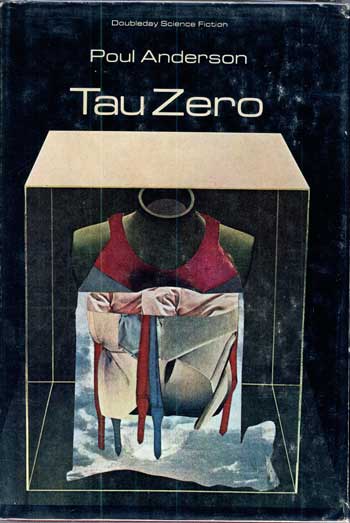
Life After the Star Wars Expanded Universe: Poul Anderson’s Tau Zero

 114510

Andrew Findlay

In Life After the Star Wars Expanded Universe, we take a look at science fiction and fantasy, why they’re great, and what they say about where our species has been and where it’s going. 

There are two main classes of SF author: those who have broken into mainstream success, and those who have, while creating a vibrant and diverse body of work, remained largely unknown outside of the hallowed halls of SF fandom. In the first category, you have your Ursula K. Le Guins (who is actually in a category all by herself because dear God is she amazing), your Neal Stephensons, and your Robert Heinleins. In the second category, you have your Roger Zelaznys, your Vonda McIntyres, and your Poul Andersons. The work of those in the second category is not necessarily worse than those in the first. Indeed, many of the ideas explored are right on par or better than those from the first-category authors. Their work simply tends to be less geared towards wider audiences, so it does not have the wider appeal of the first-category authors.

One way to make SF appeal less to wider audiences is to construct a hard SF tale. Hard and soft SF are terms which denote an overwhelming focus on technology and innovation for the one and a focus more on the social developments and psychological effects of technology for the other. In hard SF, you’ll get an explanation of how the propulsion system of the spacecraft works, the main character will be an engineer, and the main conflict will be his struggle to repair the craft before everyone dies. In soft SF, everyone will be on the same spaceship, but it’ll just fly because that’s what spaceships do, and the narrative focus will be more on character development and social concerns. These two directions are not mutually exclusive – you can have good explanation of tech in soft SF, and you can have strong character development in hard SF – it’s just a question of focus. Tau Zero is considered a perfect example of hard SF.

First off, the name itself is a scientific term. Tau is the symbol which denotes proper time in physics. Proper time is time as measured by a moving observer, meaning that at relativistic speeds, proper time for someone in a ship is very different than proper time for someone outside the ship. Time dilation is a central concept of this book, and tau is a central measure in time dilation. According to Anderson (Wikipedia says he fudged this a bit), as tau approaches zero, the gap between experienced and objective time becomes more and more significant. This is the main conflict of the book.

A team of scientists boards the Leonora Christine, a new ship with a Bussard ramjet propulsion system. Bussard ramjets are theoretical engines that use massive magnetic fields to collect hydrogen from space as they travel interstellar distances. The faster the ship goes, the faster the hydrogen is collected. The magnetic fields and the acceleration combine to compress the hydrogen to the point where it fuses and creates a massive amount of energy, which is then directed by those magnetic fields out the back of the engine, creating thrust. This proposed propulsion system solves the problem of holding onto fuel for interstellar travel – no ship would be able to lug around all the crap it would need to burn to get from one star to another – the prohibitively high weight would render it infeasible.

Anyway, they got themselves a ramjet, and they’re using it to go on a twenty-year exploratory mission. The way the trip works is that the ship spends half of its time accelerating and half of its time decelerating, so at the midpoint it turns its engines around and reverses thrust. The astronauts are prepared for time dilation to make twenty years go by on Earth, but there’s a hitch. Right before the midpoint, the ship passes through a nebula. All that dust collides with the deceleration system and renders it nonfunctional. The astronauts cannot slow down, so they sit and try to solve the problem while everyone they have ever known dies on Earth. They decide to accelerate even more and go to an entirely new galaxy, so they kiss human civilization goodbye and ramp up their speed. The main struggle of the book is fixing the decelerator and finding a place to live now that all of human civilization has been gone for millions of years.

The character development of the book is severely lacking. It exists, and it is passable, but it was clearly not a priority. They were so paper-thin that they had less substance than the gangsters from that fake mob movie that Kevin McCallister watches in Home Alone. A grizzled war veteran holds the entire crew together as they bounce from crisis to crisis, never giving up hope because he’s just got too much damned grit. That in itself is a pretty slipshod job of character building, and he’s really the only character I remember from the book. That and the fact that I spent more than half of this article talking about spaceships and about five percent of it talking about characters should indicate the severity of this book’s character problem.

Despite all that, I enjoyed it. The overarching direction of the book is humanity boldly going where no one has gone before, which I’m a sucker for. A very simple, clear, and horrifying problem arises when their propulsion system goes on the fritz, and the hard work of a handful of dedicated individuals solves the problem in a very interesting way. It has a very interesting and clear central idea, but the surrounding elements do not quite come together. It is a novel expanded from a short story, and maybe it should have stayed a short story. Problems aside, you should give this one a shot.

Andrew Findlay has strong opinions about things (mostly literature) and will share them with you loudly and confidently. You can email him at afindlay.recess@gmail.com.

Image from here.

Tough Questions: What Would You Eat for Your Last Meal?

question-mark

Every week we ask everyone who hangs out around here to answer a tough question. This week:

What would you eat for your last meal?

Rules are simple: What’s that one special dish? This doesn’t necessarily have to be a meal you eat in prison but knowing your kind, it probably will be. I like to think of it as your last meal before you evolve beyond the need for food. Is that better? Hard to say.

Alex Russell

On my Yelp profile (a thing I created at an age when I thought I would need a Yelp profile) I answered this question with the terrible joke “the antidote!” Here I will offer a more sincere answer: a full pound of pulled pork, coleslaw, BBQ beans, and the hottest, smokiest sauce you can get your hands on. Add four fingers of bourbon with three ice cubes and an unsettling amount of dill pickle chips on the side. My plan is to fall asleep in a food coma, because if I’m going out I’m at least gonna be so drunk on pork that I don’t even care.

Jonathan May

I’m assuming this is meant to be my last meal in prison. Given that there exist no special last meal restrictions in Tennessee (in Oklahoma, the cap is $15; Florida $40), I would request the ingredients to make beef bourguignon: cubed tenderloin, onions, carrots, tomato, an herb bouquet, bacon, beef stock, and red wine (preferably something dry and expensive). This dish, made famous by Julia Child, takes around four hours to make, during which time I would drink the remainder of the red wine. Around two hours in, the aroma starts to waft around me, reminding me of all the happier times under which I’d made this fragrant stew. I would request to share the meal with the prison warden; why not dine with the man who signs away your life? For dessert? Ice-cold M&M’s.

Stephanie Feinstein

Soup Course: Tonkotsu ramen (“muddy pork broth”, it is magical) with extra nori and bamboo, with Hana Awaka sparkling sake

Main Course:  My mom’s chicken tetrazzini, that I cannot replicate correctly at my own home, accompanied by pillowy crescent sticks, with Sofia Blanc de Blanc sparkling wine

Dessert Course: a gigantic slice of tiramisu, traditional style, with an espresso dopio to drink.

Mike Hannemann

Last meal is tricky. You can either go comfort food you know you enjoy or something you would never be able to afford had you not done whatever it is you are about to be put to death for (I assume this is a Green Mile scenario). Honestly, I’d go simple: a couple dinner rolls, a small steak filet, maybe some potatoes. The real treat would be a glass of fine, vintage scotch. Not a dinkin’ scotch. One you sip two fingers of, over the course of an hour to experience the moment. It’s how I celebrated the weddings of my brother and two of my best friends so I figure that’s also worthy of my last hours on Earth.

Oh, and maybe the spiral kind of macaroni and cheese, but not the normal kind, because it tastes better.

Andrew Findlay

What a morbid question. My last meal will probably be a rich buffet of fear and confusion as I feel my life leaving my body, which, God, how terrifying. Assuming there is a flawless prediction and I have been told with indubitable accuracy when I will die, I would prepare myself multiple meals:

  1. Ribeye steak cooked rare, roasted asparagus, and Lagavulin.
  2. A nice pinot noir from Burgundy, duck confit, and a plate of Brie, Camembert, and other selections much runnier and smellier.
  3. Like 84 hot wings. Actually, this last one is probably what would kill me.

Brent Hopkins

My last meal would be the best cheeses, meats, and crackers I could find, washed down with a nice red wine. May as well go out classy as F&^*. A cigar would also be on that list, if that counts as dessert.

Worst Best Picture: Is Shakespeare in Love Better or Worse Than Crash?

1999_iconic_picture_actress_paltorw_fiennes

Alex Russell

In “Worst Best Picture” we search every single Best Picture Oscar winner of all time from 1927 to present to uncover the worst of them all. Conventional wisdom says that 2005’s winner Crash is the worst winner in history. We won’t stop until we’ve tested every last one. Read the the first, our review of Crash, here. Posts will be relatively spoiler free, but there may be some details revealed. Today’s installment is the 1998 winner Shakespeare in Love. Is it better than Crash?

While most Western storytelling owes an indirect debt to Shakespeare, there are two Best Picture winners that are directly Shakespearean: 1948’s Hamlet and 1998’s Shakespeare in LoveHamlet will have to wait.

The whole point of watching all 86 Best Picture winners is to gain an appreciation for nearly a century of film history. I wanted to see where film had come from and to watch that transformation through the films that the Academy had deemed “the best” every year. It’s not a perfect science for a number of reasons — taste chief among them — but it’s as good as guide as any.

hated Crash when I saw it. I hated it so much that I thought that it couldn’t possibly be as bad as I remembered it and I bought it to watch it again. It was worse — much, much worse — and thus this began. This is the 25% mark. We’re 23 down, 63 to go. Shakespeare in Love, a movie often called romantic but forgettable, seems as good as any for a benchmark.

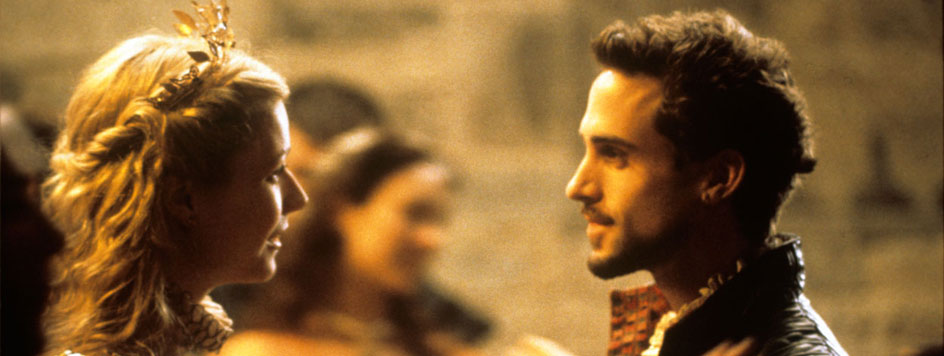
Shakespeare in Love is the story of young Shakespeare trying to write what would eventually become Romeo and Juliet. He struggles, he falls in love with a woman who is promised to a man she does not love, and he finds his muse through a secret love affair. It’s a fine movie, the same way that waffles without butter and syrup are still fine.

There is absolutely nothing in Shakespeare and Love that is challenging or interesting. It’s just a series of events, well told and well acted, but not one that really engages. I didn’t get into The Artist, but I saw how someone could. I’m not entirely sure how someone could be swept away by Shakespeare in Love. It’s a film without challenges.

I’m loathe to invoke the odious “chick flick” as a term, and I won’t, but this movie feels like it’s just attempting “heart.” It feels like someone telling you to feel “warm” rather than making you feel warm. I was a sucker for the warmth of It Happened One Night, so I’ve got red blood in my veins. You don’t have to have Clark Gable to make me care about a love story, but man, this one just feels hollow. It certainly isn’t bad, but then again, it isn’t much of anything.

The Best Part: The acting is all over the map in this one, but Judi Dench is phenomenal as Elizabeth I. She gets in most of the movie’s best lines, which is good, because it would be a shame to waste her. I also like Gwyneth Paltrow’s portrayal of the female lead, and I haven’t really liked her in anything other than The Royal Tenenbaums.

The Worst Part: A movie about Shakespeare is obviously going to have to use some Shakespearean plot devices, but the scene where a man must portray a female servant to gain knowledge of someone’s plans is as subtle as an aircraft carrier. Gender swapping is a crucial part of the movie, and that’s fine, but still… eh. The whole movie just seems to have this lack of effort surrounding it, but I may be heavily influenced by the weirdness of Ben Affleck in the whole deal.

Is It Better or Worse than CrashForgettable is better than horrible. I cannot imagine what would cause Shakespeare in Love to be someone’s favorite movie, but I would want to know. If Crash is anyone’s favorite movie, that’s an entirely different story. That needs to inspire some kind of quarantine area situation.

Worst Best Picture Archives: Crash | Terms of Endearment | Forrest Gump | All About Eve | The Apartment | No Country for Old Men | Gentleman’s Agreement |12 Years a SlaveThe Last Emperor | The Silence of the Lambs | The Artist | A Man for All Seasons | Platoon | The Lord of the Rings: The Return of the King | The King’s Speech | Rain Man | The Departed | The Bridge on the River Kwai | Marty | Gigi | It Happened One Night | Driving Miss Daisy |

Alex Russell lives in Chicago and is set in his ways. Disagree with him about anything at readingatrecess@gmail.com or on Twitter at @alexbad.