Tough Questions: What’s the Most Meaningless Game You’ve Ever Cheated In?

question-mark

Every week we ask everyone who hangs out around here to answer a tough question. This week:

What’s the most meaningless game you’ve ever cheated in?

Rules are simple: what are you capable of doing to win, even when the chips aren’t down? A story about cheating to win is still a story about winning. A story about cheating in something meaningless — something truly, truly meaningless — is a story about depravity.

Alex Russell

Either only children cheat in games more often or that’s what I tell myself to excuse my shitty behavior. I was ruthless as a kid. I would move pieces when people looked away. I would do anything it took to give me an upper hand. There’s a great term in the world of video games for this now, a euphemism for some kinds of cheating: “clever use of game mechanics.” I’ll take my best moments to my grave, but my dumbest “use of game mechanics” surely has to have happened in a bowling alley. I have a ton of hubris about my bowling (which is dumb in a different way), but like anyone else with too much pride, I fear the fall. I’ll talk in your backswing. As the expression goes, “It is not enough that I succeed, others must fail.” Bowling doesn’t matter, but damn if I don’t forget that instantly in those places.

Jonathan May

Monopoly: the game my mother calls a “marriage ender.” It’s the kind of game where people generally agree upon “house rules” beforehand, but I generally also operate on a few private rules of my own. For instance, I make deals with players concerning property and free passes and such, and I’ve been accused of cheating many times while taking the “Free Parking” money. But I just consider those who call “cheat” to be jealous. Monopoly is totally the kind of game that reveals everything about someone. It should definitely be played with Xanax.

Brent Hopkins

I don’t remember the last time I cheated in a game. I am a bit of a “knight” when it comes to competition and I’d rather get beaten badly than win unfairly. That’s probably why I never accept handicaps in games, also. How else am I supposed to be the very best? Like no one ever was.

Andrew Findlay

I do not resort to cheating. I mostly just yell loudly at whoever is beating me. I am going to tell of the most egregious cheating that has ever been practiced upon me. I was at a wedding in Germany with a lot of good friends and my wife. German weddings are uh, kind of next-level when it comes to festivities. I don’t even mean drinking – I mean all the skits and games the ones close to the bride and groom are supposed to come up with. The groom’s best man, his brother, decided that his contribution would be to introduce dizzy bat to Germany. He was successful, and it was great. It was also girls versus boys. The men stood up, taking this very seriously, most having already tied quite a few on. All of us were very dedicated, and I can definitely say that spinning around on a bat, drinking an entire pint, then running down the room is almost a terrifying experience. I cannot remember any other time in my life where, running, I could literally not tell where the ground was going to be the next time my foot hit it. Anyway, we committed. The women went through their whole relay a split second before we did – damn, we lost! Then we saw five entirely full beers on a table right next to their team. They were just setting the beers to the side, and our entire team was too into competing to even notice.

Gardner Mounce

I’m sure I cheated at games a lot when I was a kid, but nothing sticks out except for this dick move I’d do when my older sister got “Free Parking” in Monopoly where I’d dig my fingers under the board–really get both hands under there, as close to center as possible–and I’d try to make the board hit the ceiling. Then I’d laugh like it was funny, like no one else had been enjoying the game either and I had just livened the mood. Except everyone had been enjoying the game, especially my older sister. It’s okay. I hate myself, too.

Colton Royle

I could insert any video game from the 1990s into this category. In all seriousness though, our family played Bible Trivia, which is just a religious Trivia Pursuit. We would have a weekly bible study and my sister and I would try to convince my parents to play trivia instead. During these games I would do anything I could, whether it was keeping a bible in the bathroom, or just something simple like looking behind a card, to get the “answers.” I can’t tell if I was a either good player for being desperate for answers or a terrible person for cheating at bible games.

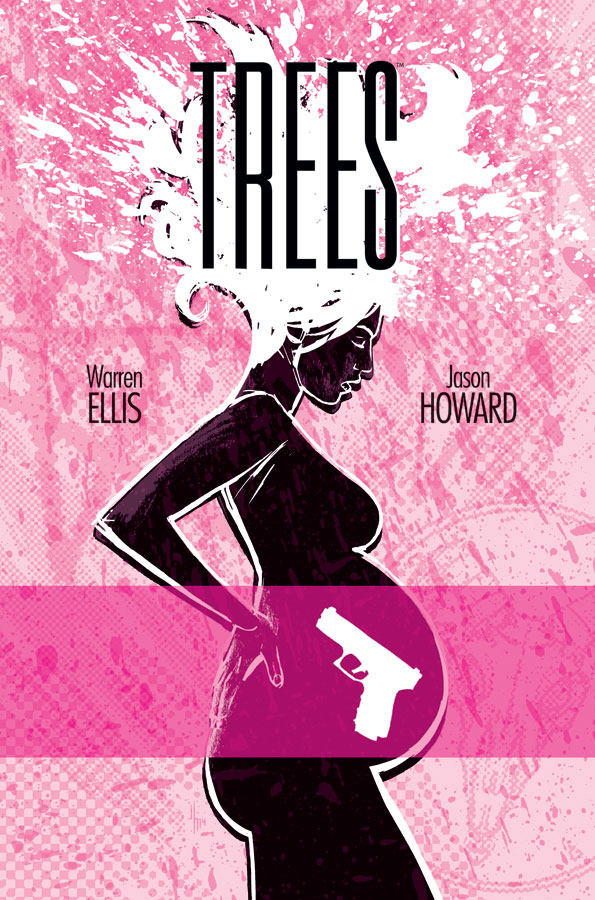
Major Issues: Trees #3

8665.jpg

In Major Issues, we look at one newly released comic book each week. Updated Fridays.

Gardner Mounce

Trees #3
Written by Warren Ellis
Art by Jason Howard
Published by Image Comics
Published: 7/24/14

As pop culture would have it, there are two ways that aliens are going to invade. There’s the Invasion of the Body Snatchers/Men in Black type where one day we find out that the aliens have been living right under our noses for years. And there’s the Independence Day/The Hitchhiker’s Guide to the Galaxy type where the aliens just announce that they’re here and in a few seconds we’ll all be dead. The first thing we notice is that Will Smith has saved us from both types. The second thing we notice is that, in both scenarios, the aliens are accessible antagonists—they’re here among us for us to interact with or fight or whatever, or they’re above us in spaceships for us to throw rocks at. But imagine if an alien race left some undeniable symbol of their presence and utter superiority, and then just left us to scratch our heads about it.

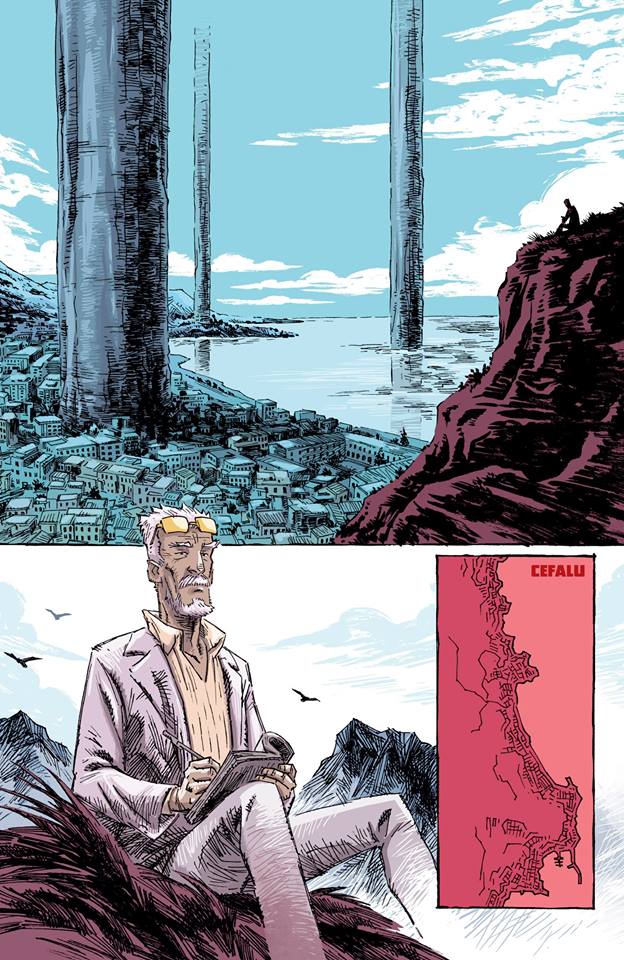
In Warren Ellis and Jason Howard’s Trees, an alien race has punctured the globe with monumental, sky-scraping towers (which humanity has dubbed “trees”)—and then vanished, like, your move, humans, and haven’t returned or made contact for over a decade. Less us-versus-them-story and more human drama, Trees tracks a number of story lines that span the globe, from an ex-professor in Cefalu and the fascist’s girlfriend who stalks him to scientists in Antarctica studying a mysterious black bloom growing at the base of a “tree.”

Ellis handles it all with incredible subtlety. A lesser writer would have written swathes of heavy-handed narration, but after some necessary exposition in the first issue Ellis constructs the world scene-by-scene with zero narration at all. A narrator-less story gives the sense that the reader knows just as much as the characters do about the trees—hardly anything. It also stresses the importance of the present moment: the world has halted since the trees arrived; they are ever-present, in nearly every scene; timeless and unchanging; dominating the landscape and laying waste to our sense of importance and human scale of time. Subtle also is Ellis’ dialogue. It’s been ten years since the trees arrived, so it’s only natural that people aren’t having exposition-heavy conversations about them. People are solving small problems on their own small stages, leaving the reader to synthesize bits of information to form the larger picture. The dialogue is smart, clipped, and avoids pandering.

Jason Howard is one of those imminently readable artists whose art is so functional that it’s almost invisible. It takes a keen eye to discern his moves. He uses the same types of panels over and over, and, taken together, the pages form a rhythm. There are the borderless panels that suggest timelessness, the bordered action panels that break the borderless panels up, and the white-backgrounded panels that strip the world down to action, reaction, and emotion. The borderless panels often establish expansive spaces like arctic vistas, sterile cafeterias, and “tree”-dotted Italian landscapes. These ground us in the sense of timelessness that the “trees” have imposed. These borderless panels are the arena on which the story takes place, and the places to which we always return: huge silent spaces punctuated by human action. Much rides on Howard’s colors, which he uses to establish mood. From cool conciliatory blues to altercation-accompanying yellows and pinks, his art is about subtlety.

Alien invasion stories are generally heavy on action and light on mystery. And we usually know the invaders’ intentions by the end of act one, which gives us plenty of time for preparing for fighting, fighting, and high-fiving over the fighting that just occurred. Trees stands apart because, first of all, there are no roles for Will Smith to play in the movie adaptation, and second of all, we don’t have any idea why the aliens dropped these “trees” down on us. To study us? To suck the life from our planet? To mess with us? The whole fun is that not knowing makes us feel out-of-the-loop and insignificant, and that fear of our insignificance spurs us. Fun, right?

tree-2.jpg

Should You Get it?

Absolutely. As a writer, Ellis is confident as hell, and treats his readers with respect. These first three issues have been slim on action and heavy on establishing world, character, and conflict. He will not spoon feed, he will not pander. This is a serious comic for serious readers, and as with almost any Ellis comic, will most likely have tremendous payoff. Though, I will say, this comic might be more satisfying in trade paperback form where you can read a lot in one sitting.

Gardner Mounce is a writer, speaker, listener, husband, wife, truck driver, detective, liar. When asked to describe himself in three words, Gardner Mounce says: humble, humble, God-sent. You can find him at gardnermounce.tumblr.com or email him at gmounce611@gmail.com 

Worst Best Picture: Is Cavalcade Better or Worse Than Crash?

Cavalcade12

Alex Russell

In “Worst Best Picture” we search every single Best Picture Oscar winner of all time from 1927 to present to uncover the worst of them all. Conventional wisdom says that 2005’s winner Crash is the worst winner in history. We won’t stop until we’ve tested every last one. Read the the first, our review of Crash, here. Posts will be relatively spoiler free, but there may be some details revealed. Today’s installment is the 1932/1933 winner Cavalcade. Is it better than Crash?

What’s the first “modern” movie that won an Oscar? What does that even mean? Cavalcade is a great place to start that discussion, mostly because it’s basically impossible to approach Cavalcade without engaging the fact that it’s nearly a century old.

Cavalcade is about a high society British family dealing with the events of the first 30 years of the 20th century. This involves a bit of history lesson at times, since an American in 2014 can be forgiven for not knowing the intricacies of the Second Boer War offhand. No one should be completely lost, though, because it eventually shifts to a love story about the Titanic and a dramatic climax involving World War I.

You can’t deal with Cavalcade the way you deal with Rain Man or Platoon. This is another world of movies, and it’s not really something you can judge by today’s standards. Cavalcade was the sixth winner — just a few years after the silent film Wings won the first Oscar — and it won in a generation where people wanted something entirely different out of a film. Lines are stepped all over, characters are never established, and huge diversions from the plot are common. That last one is the strangest trend about early Hollywood: everything made the final cut, no matter if it mattered for characterization, or the plot, or neither.

Cavalcade wanders around in a lot of ways, but it benefits from being the story of how a family changes through time. So, unlike the half-hour diversions in Wings, everything in Cavalcade is at least part of “the story.” A family experiences loss and a family grieves. Some of it is really strange — people just die in all of the early movies, it’s shockingly common for someone to just get hit by a truck or die in a plane crash or get shot — but it’s all part of a bigger thing.

I enjoyed it, largely. It won’t stick with me, and I know that because I watched it a week ago and I already am losing little bits of it. I feel like this is one of the few that’s on the fence for me. It’s a fine movie within the context of the 30s, but its one you can skip if you’re not a completionist.

The Best Part: There’s a haunting scene where soldiers are shown walking through time passing as they die in World War I. One of the most interesting terms in history is that of the “lost generation” in World War I. It means different things to different cultures, but the British use it to refer to the fact that nearly an entire generation of young men died at once. Cavalcade may not be an essential movie, but there’s no better way to illustrate that terrifying idea.

The Worst Part: You know how people sometimes say that Forrest Gump is a little silly because Forrest was “somehow” at every major world event in his lifetime? Well, that, but not a joke. There people really got the full British experience. Like, too much of it.

Is It Better or Worse than CrashIt’s tough to even compare these. Cavalcade makes absolutely no attempt to deal with race or class — it’s about early century London, so duh — and I still say no attempt at all is better than the one in Crash.

Worst Best Picture Archives: Crash | Terms of Endearment | Forrest Gump | All About Eve | The Apartment | No Country for Old Men | Gentleman’s Agreement |12 Years a SlaveThe Last Emperor | The Silence of the Lambs | The Artist | A Man for All Seasons | Platoon | The Lord of the Rings: The Return of the King | The King’s Speech | Rain Man | The Departed | The Bridge on the River Kwai | Marty | Gigi | It Happened One Night | Driving Miss Daisy | Shakespeare in Love | Wings | Midnight Cowboy | Rocky | Gone with the Wind| Chicago | Gladiator | Cavalcade |

Alex Russell lives in Chicago and is set in his ways. Disagree with him about anything at readingatrecess@gmail.com or on Twitter at @alexbad.

Image: The Guardian

Final Fantasy VII and the Expanded Advent Children Universe

FF7-G3AR

Brent Hopkins

The title should let you know that this is going to be about a rather old game. Final Fantasy VII was released back in 1997 on the original PlayStation and immediately became the poster child for what RPGs could be. The graphics were amazing, the story was stellar, and the game itself spanned three discs, which was nigh unheard of. As I decided to write this article Alex Russell asked, “What is there new to say about FF7?” He had a good point and I held off writing for a few days because I wanted to make sure that I wasn’t just rehashing what thousands of others had said. I finally settled this inner argument because I actually ended up with two different ideas, and neither of them really focuses on the game. Instead, they focus more on implications and revelations of what Squaresoft/Square Enix has accomplished. There will be no review of the game or achievement rating. These two articles will purely be about FF7 and how they relate to the real world.

The first aspect I want to focus on is why Advent Children and the various spinoffs should be the general direction games –especially RPGs– should go in. So, spoilers.

FF7 is a game about a group called AVALANCHE that wants to save the planet. They do this through terrorist acts against the government, Shinra, which is stealing the life force of the planet to create usable energy. Imagine if when we used all the gasoline Earth would implode. They decide to use this opportunity and kill a bunch of people (AVALANCHE members and the poor) by literally crushing the entire town where AVALANCHE is headquartered. The government wants to move forward with draining the energy from the planet and decides to use an alien object called Jenova to do so. Jenova corrupts one of the most powerful humans in the world and he calls forth a meteor that will impact the planet and kill everyone. The main cast must race against time to stop this from happening.

That is the extremely watered down version of what occurs in the game, but just from that you can get the feeling that this is intense. The first few times I played through this game I was absolutely blown away by the story and the characters. There was no game that I had played where so many characters were fleshed out so well. This didn’t just include the main villain and the main cast, but side characters and family members as well. There were so many people that impacted the main story that it was easy to forget just how integral they were to the story. This led to an issue that occurs across all forms of entertainment: I was really interested in knowing more about these characters that received second billing and there was no avenue to get more.

There is an oddly accepted gaming mindset that once the game ends, that is that. FF7 ends with a meteor almost wiping out the entire planet. It is now 2014 and I know that I never really asked myself after 20 something playthroughs “What happened?” I, and most everyone I know who played it, accepted that the planet survived and some things lived. You see Red XIII in the post credits. This is unfulfilling, but that’s just the life of a game, it isn’t a real world.

Square then started releasing supplementary material to help flesh out the story of FF7, and most of it was solid in terms of world building. The two biggest projects were Crisis Core and Advent Children. Crisis Core is a prequel to FF7 and follows a character you hear a lot about in the main game, Zack Fair. This guy is probably the most important person in the story (he personally interacts with Cloud, Aeris, and Sephiroth, the triumvirate of plot driving characters) and Cloud more or less absorbs his life into his own. This prequel is stunning in that it manages to completely work on its own without using the main cast as crutches to push the plot along. Zack manages to be a beautifully tragic hero when his own story is told. This is a far cry from the sentiment you get when playing FF7, where you think, “Oh, so that’s where that sword came from.” You start Crisis Core knowing precisely how it is going to end and it carries that weight the whole way through. The general air for FF7 is tragedy. Zack is a purely bright star that is a foil to the general squalor and misery every other character is in constantly in 7.

3048242-zack+fair

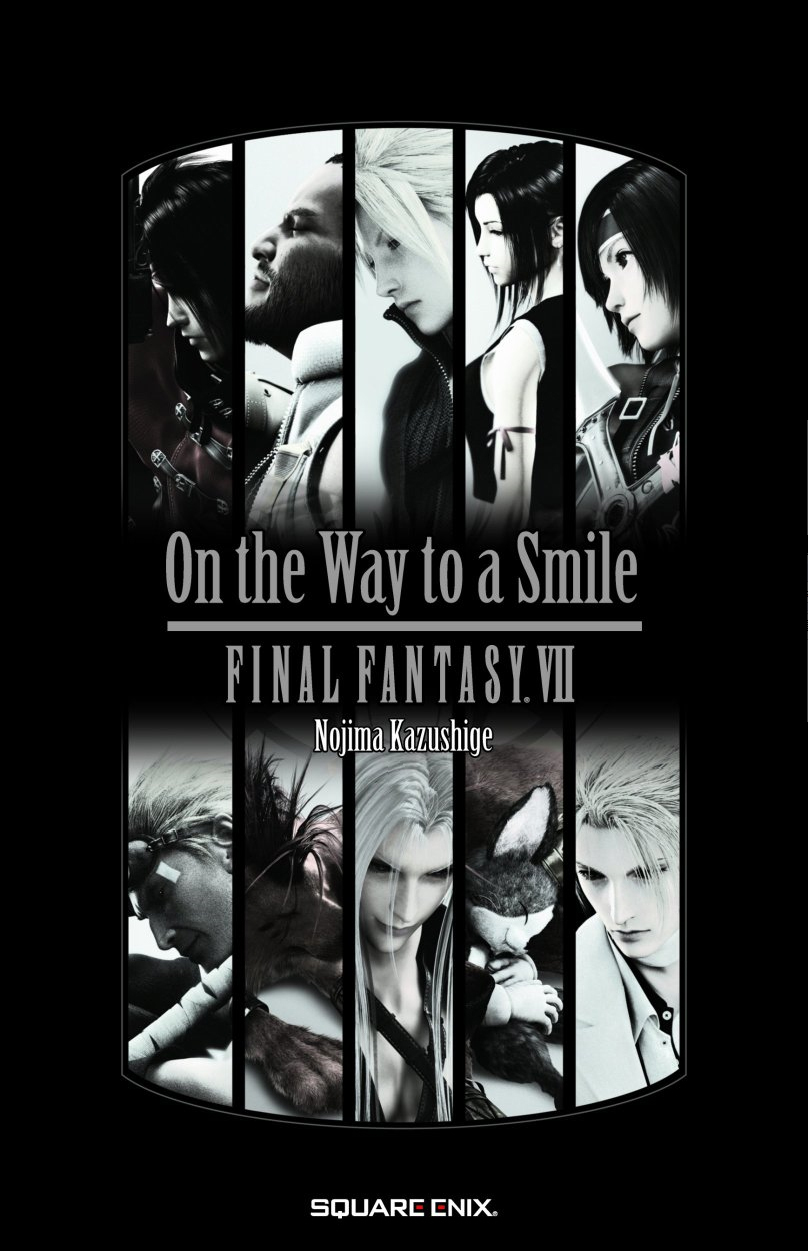
The misery is the next focus and that comes through in spades in Advent Children. It’s an animation that also has an accompanying collection of short stories, On the Way to a Smile. These stories take place in between the end of FF7 the game and the animation portion of Advent Children.

Square initially released Advent Children on its own and it was great to see all the characters fully rendered and running around the various locales you played through in the game. The problem was it came off as extremely heavy-handed because there was a lot of omitted information and it forced you to just accept: THIS is what happened in two years. There is a new disease called Geostigma which is killing people since the meteor was stopped by the planet. People seem to think it is the planet’s punishment for draining the energy. Also, Sephiroth is back after being completely stomped at the end of the game. These are all a bit crazy and just seem like a thoughtless means of bringing the Cloud and Sephiroth conflict to the big screen.

The 2009 release of On the Way to a Smile alongside Advent Children Complete changed everything. These stories manage to explain things that the creators clearly had thought about but were incapable of putting into a game or animation. Geostigma is explained as the corruption Sephiroth/Jenova is spreading through the Lifestream. The main means of infection? Attacking those who are fearful of death. How can Sephiroth exist in the Lifestream when most spirits simply dissipate into it? Through sheer hatred, and the memories that people have of him (Cloud in particular).

On_the_Way_to_a_Smile

The stories follow different characters from the game, but there is no story following Cloud or Vincent. Cloud has the most stories told about him in the series and Vincent received his own spinoff game so I find this omission understandable. The stories expand on each character’s personalities and occasionally overlap with one another to show that there are still ties that bind them to one another. This is done eloquently and it makes the reader/player really ask how the world would rebuild after such a close calamity. You always get the sense that everyone would just celebrate and everything would go back to normal. Square shows that this is far from the case and even the heroes don’t return unscathed.

This is the most jarring realization I got while reading OTWTAS: this world is HORRIBLE. They have the ability to use magic and all the technology of the modern world, but every single person is merely surviving. Throughout the game you have a slew of speeches to motivate the characters and they all culminate in a victory over the bad dude. The ending always felt a bit cheap since there was no real celebration like most games have, but really there is nothing to celebrate for anyone. These people were on the brink of destruction and then what they are left with is worldwide pain and suffering. Maybe it was because I was young, but I always thought it would have been amazing to be one of these super powerful characters. This quickly goes away when you realize that no level of power, even that of a god, saves anyone in this series. This led me to think about other games and you quickly realize that, yes, you technically won, but was the world still doomed (Looking at you, FF6).

The whole point of this article is really to ask why games are one of the few mediums where the happy or tragic ending is often seen as adequate. There used to be a lot of backstory and information in the booklets of games, but there was still that same sense of “great, I won and the game is complete.” More companies should run with the example that Square and Blizzard have set and give canonical story to the consumers. Many games set out to simulate life, yet there are tragically few that have realized that a game is usually not capable of relaying all of the details that make a story engrossing. Invest in animations, books, and sequels and consumers will keep coming back for another slice of these characters’ lives.

Brent Hopkins considers himself jack-o-all-trades and a great listener. Chat with him about his articles or anything in general at brentahopkins@gmail.com.

Worst Best Picture: Is Gladiator Better or Worse Than Crash?

Russell-Crowe-in-Gladiato-001

Alex Russell

In “Worst Best Picture” we search every single Best Picture Oscar winner of all time from 1927 to present to uncover the worst of them all. Conventional wisdom says that 2005’s winner Crash is the worst winner in history. We won’t stop until we’ve tested every last one. Read the the first, our review of Crash, here. Posts will be relatively spoiler free, but there may be some details revealed. Today’s installment is the 2000 winner Gladiator. Is it better than Crash?

Gladiator may be the only Best Picture winner that has absolutely nothing to say. There are worse movies, to be sure, but there aren’t any that attempt to do less. You probably saw it — we all saw it — but do you remember it? Is there even anything to remember?

I committed myself to rewatching every Best Picture winner for this project. I’ve seen some of them so many times that it doesn’t seem necessary — American Beauty and Annie Hall are among my favorite movies — but I want to give every single movie the same chance to be worse than Crash. I want all 86 movies to get the same treatment. As I see more and more of Hollywood’s most anointed, I am definitely noticing some trends.

People talk about “Oscar bait” a lot. People define the term differently, but they usually mean something that was clearly made just to win an Oscar. Maybe it’s the flash (The Last Emperor is an enormous movie, even if that’s all it is) and maybe it’s the message (The King’s Speech and Rain Man both take on challenging themes, though your mileage about if that is ‘bait’ or not will vary) but people think better of a movie that was clearly made just to tell a great story.

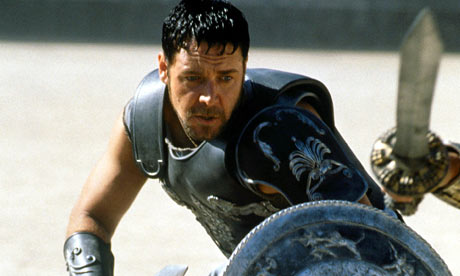
Gladiator was definitely not made to do that. Gladiator was made to put butts in seats. It’s a “popcorn movie” through-and-through. It’s the story of the Roman general Maximus (Russell Crowe) who is betrayed and cast into slavery by the murderous Emperor Commodus (Joaquin Phoenix). Maximus has to get out of slavery by winning his freedom as a gladiator. If you haven’t seen it, well, you’re caught up.

There are other characters, but it’s really hard to call them that. No one exists for any reason other than to further Maximus’ stoic goodness or Commodus’ relentless evil. Both characters are dull cartoons of morality. There’s just about no attempt made to establish either of them, either. Just: Commodus is a bad guy and Maximus is a good guy. You know this because this is a story about the good guy. Characters are for movies that don’t have lions! Look at the lions!

To call Gladiator a stupid movie is to stop short of the truth. Nothing at all matters in this movie. What even is the moral? “Don’t be an unceasing asshole all the time?” or “Do try to be a good guy and don’t murder anyone unless they try to murder you with a trident first?” OK, got it. Real groundbreaking stuff here, Russell Crowe.

People are dismissive of Gladiator because it’s ambitious only in scope. It does feel like Rome. It feels “epic” at times. That said, it’s just not a movie about anything. If you want a story about a hero’s journey down to nothing and back up, you can watch any other movie. And you should.

The Best Part: The closest Gladiator comes to an interesting character is Proximo (Oliver Reed). He’s a former gladiator who now makes a living selling out current gladiators for fights. That should set him up for some interesting commentary on the duality of the sold sometimes becoming the sellers, but it doesn’t. Proximo does offer a little bit of complexity in that he can’t decide if he wants to help or not. That’s enough praise for this.

The Worst Part: Can I say everything? The worst part is that this won the same award The Godfather won. It’s not an interesting story and it offers no challenges along the way. The fact that the villain’s motivation is essentially “being evil” makes Gladiator a little less complicated morally than some Disney movies.

Is It Better or Worse than Crash? Gladiator isn’t a worse movie, but it’s certainly a less interesting one. I hate the message of Crash, but it has one. There’s nothing worth gleaning from Gladiator. It’s just a long series of events that offer no commentary on human existence. Crash is worse because it’s bad, but damned if Gladiator isn’t about as close to zero without going under as it gets.

Worst Best Picture Archives: Crash | Terms of Endearment | Forrest Gump | All About Eve | The Apartment | No Country for Old Men | Gentleman’s Agreement |12 Years a SlaveThe Last Emperor | The Silence of the Lambs | The Artist | A Man for All Seasons | Platoon | The Lord of the Rings: The Return of the King | The King’s Speech | Rain Man | The Departed | The Bridge on the River Kwai | Marty | Gigi | It Happened One Night | Driving Miss Daisy | Shakespeare in Love | Wings | Midnight Cowboy | Rocky | Gone with the Wind| Chicago

Alex Russell lives in Chicago and is set in his ways. Disagree with him about anything at readingatrecess@gmail.com or on Twitter at @alexbad.

Image: The Guardian

Postmodern Rapture – The Leftovers Episode Four – B.J. and the A.C.

leftovers.recap_.atichrit

Colton Royle

Every week Colton Royle discusses the newest episode of HBO’s new show about a new kind of rapture, The Leftovers. You can also read our review of the book the show is based on.

Many spoilers ahead.

One of the valid questions to ask The Leftovers is, “Will the show’s symbolism and larger themes be applicable beyond itself?” Will the show keep its Lost style of supernatural answers close? Or will it turn into something new?

The manufactured 20 inch baby introduction to the disappearance of the baby Jesus in the nativity scene is an incredible and haunting display of the attempts to continue games of standard Mapleton living. From Jill’s remark to her father about replacing Jesus as “cheating,” to the Guilty Remnant cult leader writing “There is no family,” to Tommy talking at his phone at the bus stop begging for a reason to protect Christine for Wayne, establishes a key point that just because characters decide to hold it together, it doesn’t mean things will turn out sane. Laurie wants a divorce. Kevin’s recovery of Jesus was blocked by Matt’s replacement. Tommy receives an automated message. “What is the right answer to that question?” Kevin asks Nora in the school hallway. Answers are only shortcuts to more questions.

However, there are some serious supernatural points that are beginning to cause throwaway lines like, “Just like in your dream” that ruin such indelible images like the manufactured cadavers on the road. What is also a parallel to the manufactured babies is also right here in manufactured people. I mean, that’s a good enough metaphor, just stick with it. The naked fight scene that ends with “I know what’s inside you,” is laughable. It’s hard to believe it’s happening in general, much less with a man naked only from the waist down.

Some things are relatively certain, or we hope to be certain: Nora and Kevin will have sex, and it’s going to be cynical and great.

But there is an overarching symphony that suggests a conductor, so to speak, and it’s happening too soon. Or is it? Is it okay to have a show throw both beginning narratives of characters and divine underpinnings simultaneously?

Take Jill for example: while she is trying to avoid every choice of the sacred and the profane in cult joining or God or shooting Jesus with a nerf gun on fire, she is untouched narratively, and has little character beyond a simple dry teenager who is aggressive with her elbows on the field. But because of Tommy’s burden he becomes a Lancelot upholding his vow to Wayne and Christine, and in a sense he has accepted being damned. Is it okay for the divine to supplement characters?

While I say all this, The Leftovers does an excellent job of displaying memories as gray and muddled things. We assume that Tommy was Kevin’s only to realize Laurie had another relationship before. Doug really did cheat on Nora. Kevin cheated on his wife. Between Matt’s paper and the Guilty Remnant’s theft of photographs, they are hammering down that history is a fool’s errand.

Maybe The Leftovers is striving to measure the limits of what it means to be human, and as characters discover each other they come to understand that those limits are felt now more than ever. From Garvey’s family to the manger, being human is beyond broken.

Colton Royle is a reader of mostly American fiction and non-fiction. He is currently teaching in Fort Worth, Texas.

Image: Mashable

What I Did With My Summer Vacation: Louie

Louie_headoverheels_1280x720_236191299626

Alex Russell

In What I Did With My Summer Vacation we explore shows you should catch up on during TV’s slowest season. This week: Louie, Louie, Louie, Louie.

FX just announced that Louie and Fargo are coming back with new seasons. This is great news for anyone that loves TV. You have roughly a year to prepare. Go watch all of Fargo, I already told you to do that last week. This week’s column is just an extension of the same argument I have with people every week: you have to watch Louie.

There is a ton of ink spilled over Louis CK every year. We’re certainly guilty of spilling ink sometimes at Reading at Recess (to the point where we specifically defended it) but overall, it’s just important to make an argument and to defend it. I don’t mind the thinkpieces about how Louie isn’t funny anymore. I think it’s definitely something worth discussing.

I’m not going to argue over if Louie is or isn’t a funny show. I’m going to tell you it’s a show that’s out to do something else. If you want jokes, Bob’s Burgers, Broad City, Inside Amy Schumer, and Review are all also coming back. Louie wants you to be uncomfortable.

This last season was hard to watch, but that’s what I want out of it. Louie made poor decisions as a protagonist. He approached feminism and body image and consent as topics, because those are the topics we’re talking about. I don’t think he always did so with as much grace as he could have. I do think he did it when no one else really was.

Right now Louis CK has the mic in pop culture. Your mom knows who he is and he’s the most popular stand up with your friend who has some actual cultural cred. His show isn’t wildly popular, but he’s the subject of thinkpieces (I hate that term and now I’ve used it twice, but it’s really all that works) because there’s something in his show that’s worth thinking about.

This last season was not my favorite season of Louie. I think Parker Posey’s character from season three will be my favorite part of my favorite show for a long time to come. My favorite moments in Louie have always felt to me like I wasn’t exactly sure what was being intended by them. What Louie is to me is not what Louie is to you. It’s not because I’m special; it’s because everyone is going to take away something else from that strange view of the world.

Louie isn’t very funny anymore. There are still great moments — this, the opening to the season with the garbage truck, is the hardest I’ve laughed in 2014 — but I don’t need to laugh at Louis CK on his show. I need him to take some risks. I need him to try to talk about delicate topics and not always do a great job. I need a full world that’s uncomfortable, like the couple next to you at the restaurant getting rude with the waiter. It’s awful, but that’s what actually happens when you go outside sometimes.

Louie can be dark or light, depending on the episode and your personal temperament, but it is always something considering. Season four had big character development (and undevelopment, at times) but it can also be the story of learning how to talk to your kid about drugs. It’s a lumbering beast at this point, and I totally understand if you don’t like what you see. Just keep in mind that for some of us, that’s part of the point.

You can watch Louie on FX’s website or on Hulu. You can also read our recap series about season four where we tried to find larger life lessons in each episode.

Alex Russell lives in Chicago and is set in his ways. Disagree with him about anything at readingatrecess@gmail.com or on Twitter at @alexbad.

Dating Naked: VH1’s New Reality Dating Show Mixes Dating and… Naked People

Dating Naked

Jonathan May

I watched the premiere of VH1’s Dating Naked over the weekend, and it was about as floppy as many of the blurred out genitals during the course of the dates. The premise is achingly simple: one girl and one guy meet and go on a naked date, and then a proper date with clothes. The next day, each go on a date with a different person (also naked), ending with each date being brought back to the house for subtle inspection by all parties. This happens one more time. So on the last night, there are three girls and three guys, usually all naked, in the pool. The spin isn’t terribly original, nor are any of the jokes made about nudity during the surprisingly endless 30 minutes.

The truly unfortunate part is that, in this episode in any case, the initial woman falls for the initial man much harder than he for her; I can’t tell if the show’s production was adept at finding the right obsessively emotional girl, or if they just picked one of many. The show makes the tacit statement that women are more emotionally needy than men, and through careful casting and a splash of alcohol, it achieves its effect. Men are cast as untamable lotharios, and women as needy vixens. What’s new?

But the initial pair doesn’t enter quite so jaded. Each speaks to the camera of looking for The One and finding someone who is genuine, but as soon as gorgeous naked bodies come into play, a lot of the emotional criteria fall by the way. By the end of the episode, the initial Adam and Eve pair must each pick one person whom they’d like to date later; they are free to pick each other as well. I won’t ruin the ending, but needless to say, the production of the show rests soundly on the scant bits of blur on otherwise completely naked, mostly attractive, Americans.

Like all reality dating shows, this focuses on minor bitchy dramas and sexual farces to keep it moving; it’s unclear how much is scripted and how much might actually be sincere, but it feels like sincerity is beside the point in a show where all the contestants are nude. It’s safe to say Dating Naked isn’t breaking any new ground, but it was still more interesting than any other dating show I’ve seen on television in the past few years. Though I doubt the show will create any kind of fandom, I’ll probably still be tuning in next week.

Jonathan May watches too much television, but he’s just playing catch-up from a childhood spent in Zimbabwe. You can read his poetry at owenmay.com, follow him on Twitter at @jonowenmay, or email him at owen.may@gmail.com.

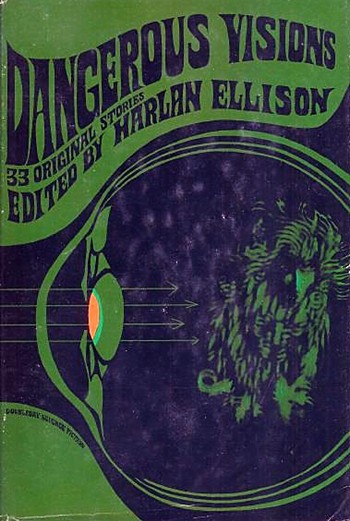
Life After the Star Wars Expanded Universe: Harlan Ellison’s Dangerous Visions

DangerousVisions(1stEd)

Andrew Findlay

In Life After the Star Wars Expanded Universe, we take a look at science fiction and fantasy, why they’re great, and what they say about where our species has been and where it’s going.

The title of this article is Harlan Ellison’s Dangerous Visions, but the book is actually the work of 32 different authors. Harlan Ellison serves as both contributor and editor. At the time, and in many ways still now, this was a New and Important book. Ellison put out a call for new, experimental, push-the-boundaries-of-the-genre type fiction, fiction that, due either to editorial opinion or censorship, could not get published in the contemporary market. What he collected is 33 stories, most of which are very good, a third of which are truly impressive, and a handful of which are kinda crappy. It is the distillation of a lot of ideas floating about in the heads of new SF writers at the time. In the 60s environment of general rebellion, experimentation, and radicalization, many SF writers wanted to push the limits of the form, aspire to the quality of general literature, and break with the aliens-and-robots standards of the past. While the ideas behind the movement had been circulating for a few years, Harlan Ellison gave them all a place to roost.

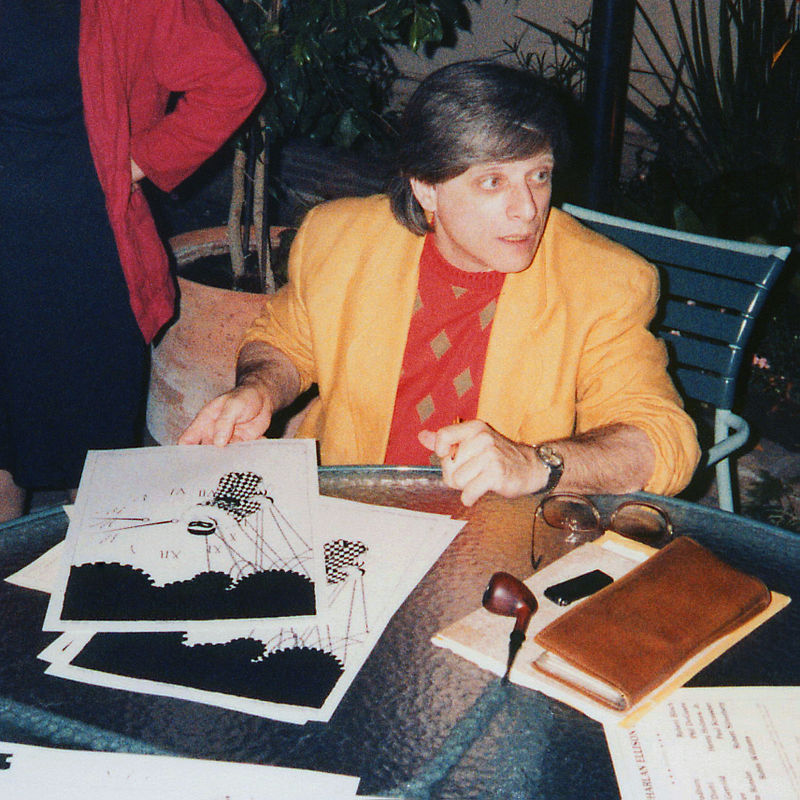
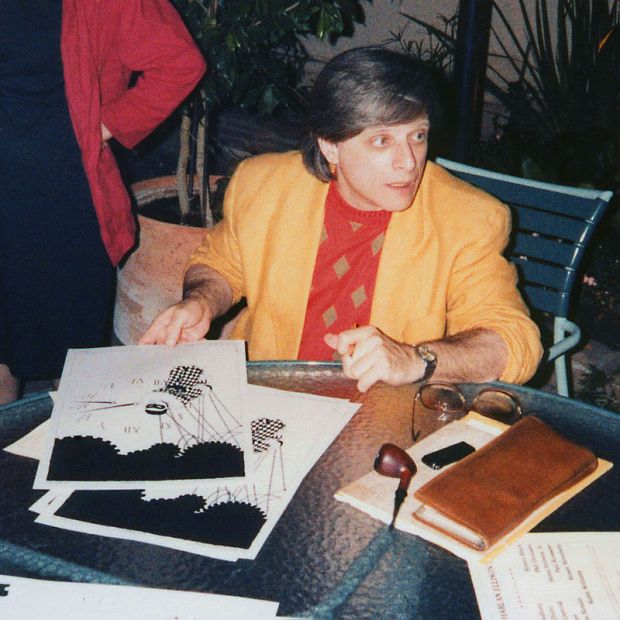
Harlan himself is a very interesting character. He is an important, genre-influencing author, with short stories like I Have No Mouth and I Must Scream, which you can read here, and which is one of the most terrifying stories I’ve ever found. He also spent a lot of time writing SF for television, and his “City on the Edge of Forever” is one of the most highly acclaimed Star Trek: TOS episodes ever. His accomplishments as an author have been slightly overshadowed by his accomplishments as an editor and SF personality, but that is only because he edited such an important anthology and he has such a unique personality. One word to describe that personality would be abrasive, and I probably don’t have to tell you any more than that he has a section in his Wikipedia article entitled “Controversies and disputes,” and that it takes up nearly half his entry, for you to get an idea of just how abrasive. This is the man behind one of the most important science fiction books ever written.
800px-Harlan_Ellison_at_the_LA_Press_Club_19860712

Harlan Ellison in the 80s. Possibly my favorite picture on Wikipedia. Why is there a pipe?

So what’s so great about this book he put together? It largely lives up to its ambitions, presenting stories that are highly experimental, that break social taboos, and that aspire to literary quality. “Evensong” explores a future where God is on the run from his chosen people, who have transcended his guidance, which would be controversial if published today, 47 years on. Larry Niven’s “The Jigsaw Man” is a horrifying portrait of a time when the incarcerated are cut into bits for their organs and body parts, thus conferring immortality on the unimprisoned. Philip K. Dick’s “Faith of our Fathers” explores a totalitarian world where the protagonist is dosed with anti-hallucinogens, and when he looks at the benevolent leader when sober, it isn’t human. In “Shall the Dust Praise Thee?” God shows up with his angels, all raring to blow their horns and start the Apocalypse, but all they see is dust and ashes. The angel responsible for turning the seas to blood can’t find the seas. Eventually, they find inscribed on the wall of a bunker, “We were here. Where were You?” In the amazingly named “If All Men Were Brothers, Would You Let One Marry Your Sister?” the happiest and most productive planet in the galaxy is so healthy because it actively practices incest, which, even as a thought experiment, is highly uncomfortable to read. I could keep on listing and describing the great stories in this book. I made a list of about twelve of them, but it would be better for you to just read it for yourself.

As groundbreaking as this book is, it is not without problems. It is open-minded about sex, taboo, and stylistic experimentation, but it strongly maintains some taboos while transgressing others. One example of this is when, in a story about gambling, the protagonist Joe finds himself playing craps with someone sinister. Fine, games of chance against the devil that don’t go so well for the other player are ingrained in our storytelling tradition. The problem is, when Joe starts getting worried about it, he “[finds] himself wondering if he’d got into a game with a [racial slur], maybe a witchcraft-drenched Voodoo man whose white make-up was wearing off.” What? In addition to the slur being a problem, the author decided to use blackness as shorthand for the hidden, threatening Other. Before, it was a game between compatriots, and as it turns sinister, the main character wonders if maybe he’s not playing against someone of his own race. That’s fucked up. Another example of backwards thinking is in a story called “Ersatz,” which is a pretty standard future-war post-atomic apocalypse story. A soldier finds his way to a care station and starts eating and drinking a bunch of ersatz stuff, because with the world basically over, they can’t get the real thing. He eats a steak made of bark, smokes tobacco made of not tobacco. The post-apocalyptic world is not a nice place, and so far this story is pretty standard. The ending of the story is one of the stupidest things I’ve ever read. It turns out that, in addition to the other ersatz comforts, the woman that works at the care station and who had attracted the attention of the soldier (there were descriptions of curves) turns out to be wearing a wig and a stuffed bra, and surprise, she wasn’t born a woman. The reason this is the stupidest ending I’ve ever read is that the soldier’s response to this is hitting Eleanora (that’s her name) and running back out into the wasteland, without armor or weapons, to certain death. First off, really? A hardened soldier is so terrified of a penis that he runs in terror to certain death? Secondly, this is a really disgusting portrayal of trans women. This is a story about how everything humanity used to enjoy is fake. The big reveal was supposed to be, oh no! even sexytimes with women are now fake! What it really communicates is the author’s ignorance, and what it states is that trans women are fake women, which is actively reactionary, not ground-breaking. Let me quote part of the ending for you: “He struck the creature with all the strength in his fist, and it fell to the floor, weeping bitterly, its skirt hoisted high on the muscular, hairy legs.” So if you are surprised by a trans woman, who is a fake woman, the correct response is physical violence towards “the creature.” That is the moral of this disgusting little polyp of a story.

Polypen_einer_Gorgonie

A nice picture of a sea polyp, as you probably don’t want to see a picture of the type of polyp I have in mind.

The editor of this anthology also has problematic attitudes towards homosexuality. In one introduction to a story, he communicates that families with weak fathers often end up raising homosexual children. In another intro, he discusses the old aphorism that you should never meet the person behind the art you love, which, yes, but one of the examples he uses is “the writer of swashbuckling adventures [turns out to be] a pathetic little homosexual who still lives with his invalid mother.” What? Is Ellison implying that he is pathetic because he is gay? Is there something wrong with living with and caring for your sick mom? It’s just weird, and it’s an indication that, however progressive they were then (Ellison participated in the 1965 civil rights march from Selma to Montgomery), you knock one piece of backwards, reactionary thought garbage down, and there’s more bullshit to take its place. There’s also a story, “Riders of the Purple Wage,” wherein a man’s girlfriend says yes, let’s have unprotected sex to have a baby. She changes her mind afterwards and goes to her bathroom to use spermicide. This future contraceptive method is a bottle of some sort that you can insert into the relevant orifice, push the relevant button, and spray the relevant area with spermicide. Since this is the future, one bottle is good for 40,000 sprays. The boyfriend (the fucking protagonist) becomes so enraged at this that he superglues the contraceptive bottle inside of his girlfriend and makes the button stuck, thus continuously and painfully injecting spermicide into her. I’m not sure if this was supposed to be comical or what, but it comes off as horrifying. Hi, you don’t want to do with your body what I want you to do with your body, I will therefore practice violence upon you and cause you great and humiliating physical harm.

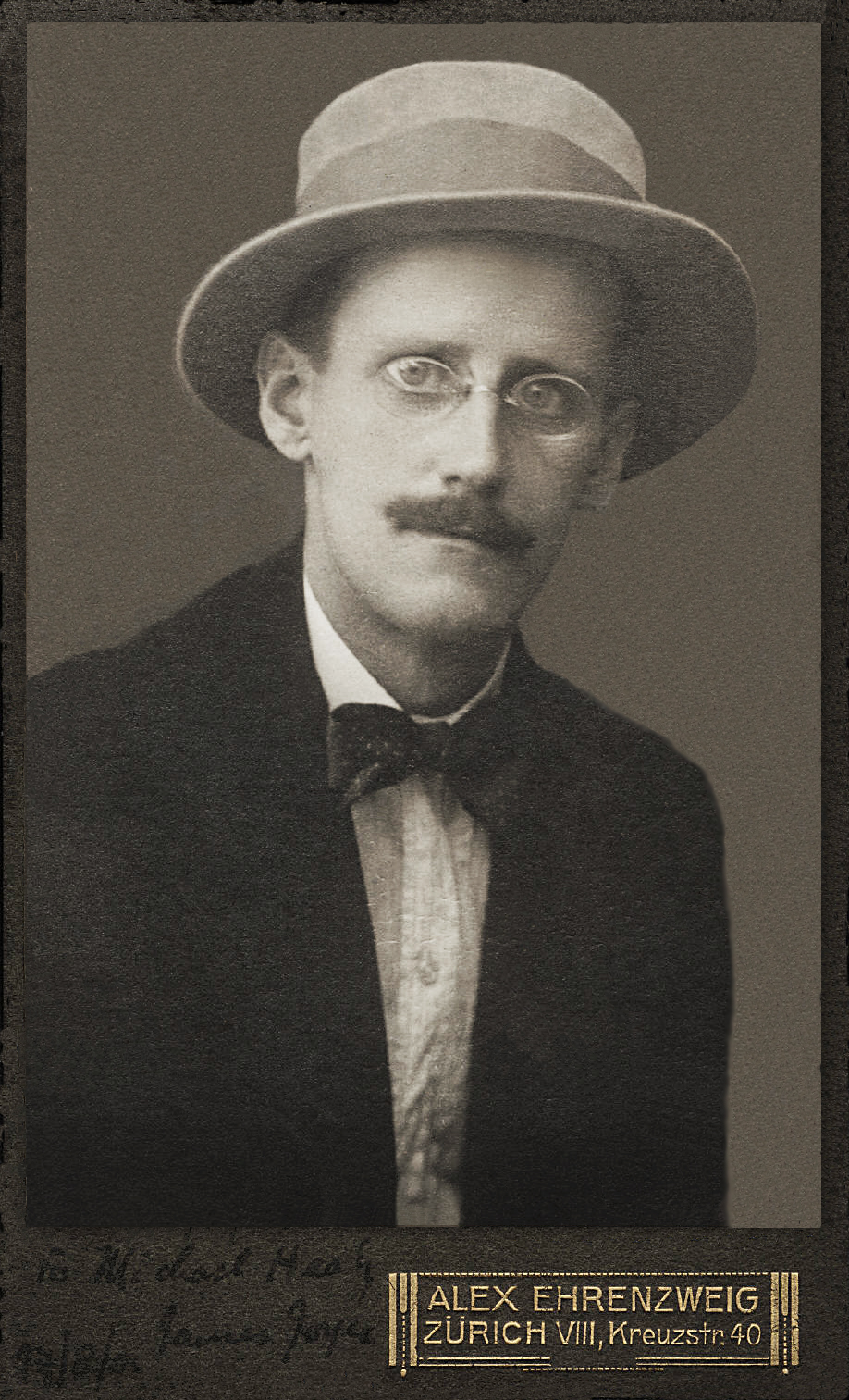
Aside from the repugnant stance on some social issues, some of the stories are just not that great. There’s one that is told from the POV of a three-year-old as he thinks about how square his parents are. There’s another, “The Man Who Went to the Moon Twice,” wherein a kid in a small town lies about going to the moon and becomes a local sensation because everyone is too bored to check facts, and then he does it again as an old man because he is sad that no one cares about him (big twist: it’s noteworthy that he’s been to the moon as an old man because at that time, Mars is the main colony). The whole story is just really boring and saccharine. Also, one of the most celebrated stories in the anthology, “Riders of the Purple Wage,” of violence-against-women fame, gets credit all the time for being “Joycean.” Man, there are about two pages at the beginning of this story that are lyrically inventive and that require some exertion to figure out, and then it falls back into pretty standard narrative technique. Ulysses is “Joycean” because it is inexhaustibly inventive, and nearly every single chapter showcases a new, different, and innovative style. This guy writes confusingly for two pages and gets credited as “Joycean?” No.

James_Joyce_by_Alex_Ehrenzweig,_1915_restored

This man’s work was Joycean. Not sure anyone else’s ever was.

This book is rife with problems. Let me restate that. This book is not rife with problems, but whenever a problem rears its head, it’s a huge one. As a book that purports to be on the cutting-edge of social advancement and fearless in its striking down of taboos, the reactionary attitudes of some of these authors towards many aspects of social justice are highly incongruous. It might have been impressively open-minded for 1967, but not so much for 2014. You should still read it, though. One reason is that it is a monolith in the field of SF’s past and helped set the stylistic tone for a generation of writers. Another is that, as truly repugnant as some of these stories are, the grand majority of them are not, and the anthologized nature of it means that even if Henry Slesar writes like an asshole, you can still enjoy the weird, mind-bending visions of Lester del Rey or Philip K. Dick contained in the same book. In addition, it is important to read and understand even the repugnant stories, as their presence in a book lauded as taboo-breaking in the 1960s underline the nature of social progress – there is no finish line, and we must always move forward.

Andrew Findlay has strong opinions about things (mostly literature) and will share them with you loudly and confidently. You can email him at afindlay.recess@gmail.com.

Video Games as Literature and The Novelist’s View of Work/Life Balance

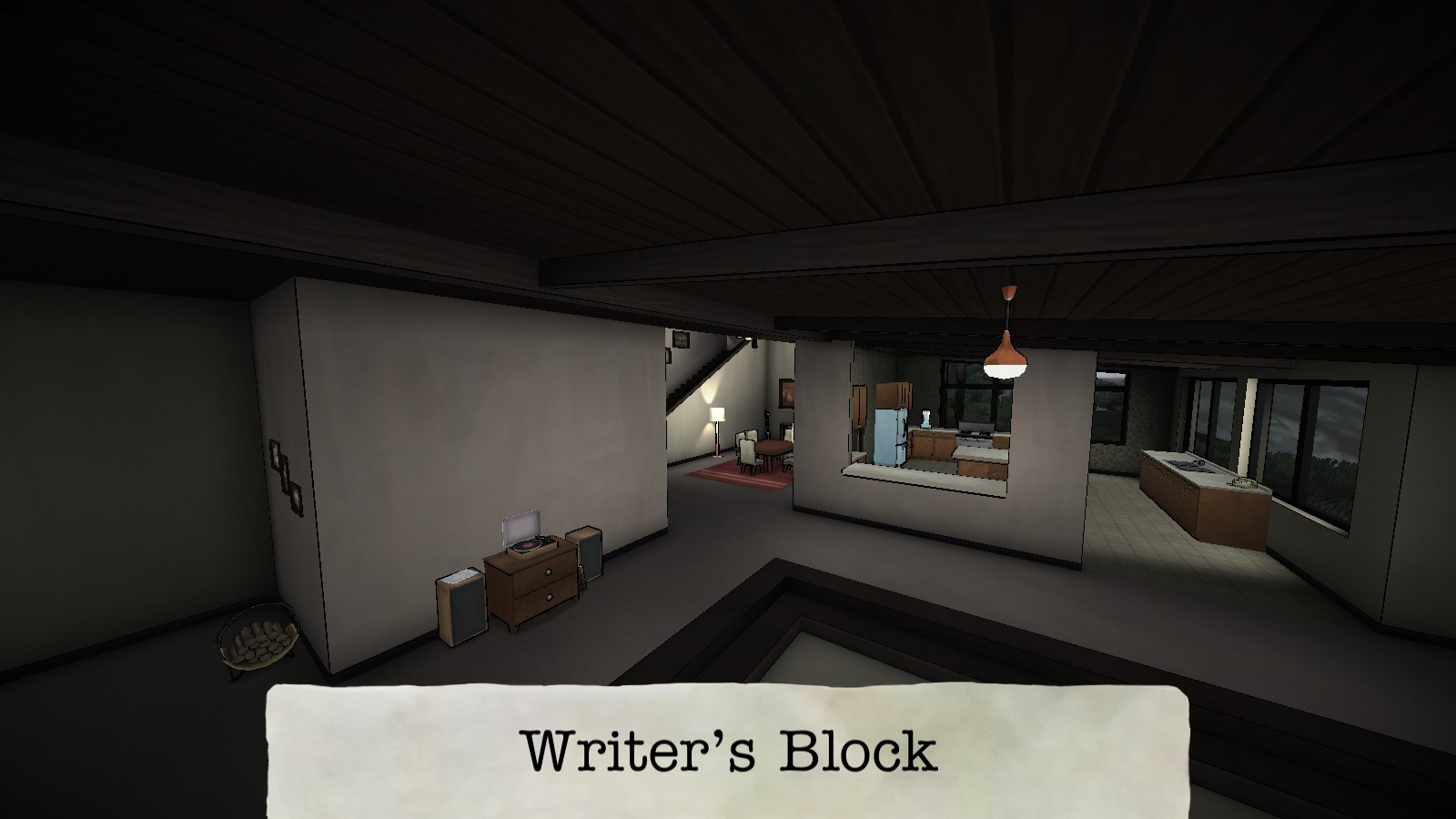
novelistwritersblock

Alex Russell

If you’ve ever had to make a hard choice between work and the rest of your life, well, that’s normal. The Novelist is about what happens when you make the wrong one. Oh, and they’re all wrong.

You play The Novelist as a ghost that’s inhabiting a vacation house by the water. The Kaplans (Dan, Linda, and their son Tommy) are on vacation for the summer, and they each want something different out of the trip. Dan wants to finish his second book. Linda wants to work on her painting. Tommy wants to have a fun summer. You might say to yourself that those don’t sound like they’re at odds with each other, but in the world of The Novelist they are violently opposed to one another.

The game unfolds over a series of chapters all centered around important events in the summer. In one chapter, the Kaplan family has to deal with a funeral. In another, Linda has an art show in town. In another, Tommy has a friend over. They all start out as mundane pieces of a family’s life, but the game’s actual narrative is all in how you respond to them.

It’s an interesting choice that you’re not any of the characters. You influence decisions by wandering around the house during the day and observing each family member. Once you feel like you have a grasp on what everyone wants, you signal the family to go to sleep. Then you whisper your choice to the family while they sleep. Whatever you decide will play out in a cut scene, and the results will influence how everyone feels about everyone else (and themselves) in the days to come.

For example, I decided to focus on Linda’s happiness in my playthrough. On one day, I opted to have Dan spend a night talking with Linda instead of working on his novel or playing with Tommy. The next day, Linda felt better about her marriage, Dan felt worried about his book, and Tommy felt neglected by both parents. Me? I felt really sad for everyone.

novelistdialogue

The choices are tough because each choice is also the lack of two other choices. It’s intended to simulate life — if you go out tonight and drink with your friends you don’t get anything done at home, etc — but it’s brutal nonetheless. You know Dan has to finish his novel over the summer, but every single choice of “write” instead of “play with your son” or “talk to your wife” drives him away from his family emotionally. Any choice to not do exactly what the family’s young son wants makes him miserable. I guess that’s realistic to a degree, but it’s too much sometimes. As another example, if you choose to have Dan not play with Tommy and a toy car outside, Tommy leaves the car in the rain and it gets ruined. What is sadder than a lonely child’s ruined toy?

I didn’t side with Tommy very often. My version of Tommy drew angry crayon drawings of his father neglecting him. My version of Linda, who was happy with her art career but unhappy with her husband, never seemed to get exactly what she wanted. My version of Dan was a wreck. Your milage may vary, but it’s hard to imagine any set of choices resulting in true happiness for these people.

It’s certainly true that any choice means you’re eliminating others, but it needn’t be this stark. I don’t want to give away any of the endings, but by only siding with Tommy a handful of times I essentially ruined the kid. It had a really damaging effect on me; I was actually saddened that I had failed this digital child. In that sense I have to say that the narrative (or the narrative in my playthrough) really works. The feelings are real, they’re not “video game feelings.”

The Novelist is a little repetitive – the gameplay isn’t worth mentioning at all, it’s even less of a traditional “game” than Gone Home – and it’s frustrating at times. The challenge of keeping all three people happy is a kind of story-based The Sims; every mood bar is depleting at the same rate, and you’ve gotta keep them all happy to win. I don’t know that I “won” The Novelist, but the mental image of that car in the mud is going to stick with me for a long time.

Alex Russell lives in Chicago and is set in his ways. Disagree with him about anything at readingatrecess@gmail.com or on Twitter at @alexbad.