classic film

Worst Best Picture: Is In the Heat of the Night Better or Worse Than Crash?

image source: nytimes.com

image source: nytimes.com

Alex Russell

In “Worst Best Picture” we search every single Best Picture Oscar winner of all time from 1927 to present to uncover the worst of them all. Conventional wisdom says that 2005’s winner Crash is the worst winner in history. We won’t stop until we’ve tested every last one. Read the the first, our review of Crash, here. Posts will be relatively spoiler free, but there may be some details revealed. Today’s installment is the 1967 winner In the Heat of the Night. Is it better than Crash?

Sometimes I look through the list of nominees for a year and I’m blown away. 1967 is just such a year, since The Graduate and Bonnie and Clyde both came out, and lost, to In the Heat of the Night. It’s really pointless to argue what the best movie in that trio is — some would say it’s pointless to compare them all to some dumb movie about racism but those people are wrong we’re gonna do this damnit.

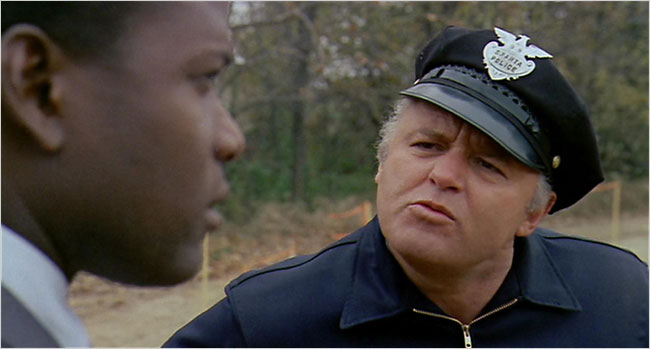
There’s a chance you only know a few things about In the Heat of the Night. Maybe you just know Sidney Poitier’s “they call me Mister Tibbs” line. Mister Tibbs himself has to work with an all-white police department in Mississippi to get to the bottom of a particularly complicated murder case. That’s Rod Steiger as the town sherriff who certainly doesn’t think he needs help from a city boy, up there in the photo. There’s a lot more going on than the black-guy-in-the-South drama of man vs. just about damned everybody, but that’s the best part.

It’s part mystery and part racial play, and it’s excellent at both. It stays tense — there’s a ton of twists as Poitier and Steiger get closer to figuring out what actually happened — and it does so in more ways than one. Every time I expected a heavy handed treatment of race in a situation I was surprised. Right down to the eventual physical fight where Poitier has to literally run away from racists, it’s difficult, but it’s all the better for it.

I’m from the South and I was home this weekend for a visit. I generally tell people that the South is everything they think it is, and that that means whatever you need it to mean, depending on the situation. I can’t say my world was Poitier’s world, but it feels like a real one. It’s important to remember that not all racists are obvious villains and that hate isn’t always as clear as stories make it seem. Crash is offensive because it wants to tell this same lesson, but it does so with a megaphone rather than a reasoned argument. In the Heat of the Night is almost contemplative by comparison. It’s a movie about race and about solving a murder, but it’s about how we interact with “the other,” as well. That part is what will stick with you.

The Best Part: Our heroes go to investigate the motives of one of the dead man’s enemies, and the conversation turns hostile once he knows what they’re asking. It’s 1967. Remember that when you watch this two-minute clip. Pull up a list of other things that happened in 1967 for context. Smear the number “1967” on a mirror in red lipstick and then watch this video next to it. Well, maybe not that, but just think about the world around these two men, and how people must have reacted when they saw this:

ICE. COLD.

The Worst Part: The leads are both excellent, but most of the supporting cast is downright goofy. The town of Sparta, Mississippi is supposed to be ridiculous but it’s probably not supposed to be as silly as I found it. I honestly loved In the Heat of the Night, but c’mon, guys. This is me grasping at straws, but everyone other than Poitier and Steiger is largely interchangeable. Ignore this section. Go watch that slap video again. Pow!

Is It Better or Worse than Crash? There is a scene where the two men bond with some good drink and try to get to the bottom of the whole mess. That scene is in every movie, and it usually is so obvious. This one adds some important depth to Steiger’s character, who easily could have just been a white cop that says “dagflabbit” and “boy-ah” a lot. He’s more than that, and you notice it play out slowly over the movie, it just finally pops in that big scene. These are the small pieces that make up smart movies. These are the quiet, but significant, chunks of great storytelling. Crash is loud and big and dumb in the exact opposite ways. There is no nuance to Crash, and I can’t think of a better example of “no, do it like this” than In the Heat of the Night, which came out nearly 40 years earlier.

Worst Best Picture Archives: Crash | Terms of Endearment | Forrest Gump | All About Eve | The Apartment | No Country for Old Men | Gentleman’s Agreement |12 Years a SlaveThe Last Emperor | The Silence of the Lambs | The Artist | A Man for All Seasons | Platoon | The Lord of the Rings: The Return of the King | The King’s Speech | Rain Man | The Departed | The Bridge on the River Kwai | Marty | Gigi | It Happened One Night | Driving Miss Daisy | Shakespeare in Love | Wings | Midnight Cowboy | Rocky | Gone with the Wind | Chicago | Gladiator | Cavalcade | The Greatest Show on Earth | You Can’t Take It With You | The Best Years of Our Lives | The GodfatherCasablancaGrand Hotel | Kramer vs. Kramer | The French Connection | In the Heat of the Night

Alex Russell lives in Chicago and is set in his ways. Disagree with him about anything at readingatrecess@gmail.com or on Twitter at @alexbad.
Worst Best Picture: Is The French Connection Better or Worse Than Crash?

gene hackman the french connection

image source: oscars.org

Alex Russell

In “Worst Best Picture” we search every single Best Picture Oscar winner of all time from 1927 to present to uncover the worst of them all. Conventional wisdom says that 2005’s winner Crash is the worst winner in history. We won’t stop until we’ve tested every last one. Read the the first, our review of Crash, here. Posts will be relatively spoiler free, but there may be some details revealed. Today’s installment is the 1971 winner The French Connection. Is it better than Crash?

If anyone ever asks you if you’ve seen The French Connection, all you have to do is say “oh, man, that car chase is awesome!” That’s it. Maybe mumble something about Gene Hackman. Then change the subject and ask whoever you’re talking to about a neat fish you saw once. You made it out of that conversation, and I’m proud of you.

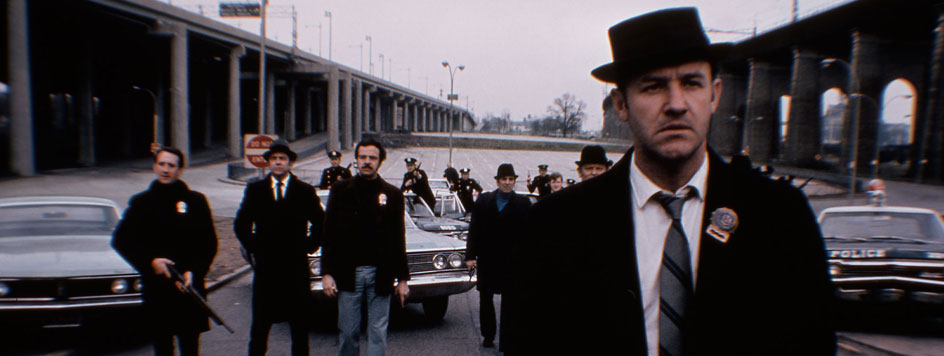
The French Connection is all about a good cop who ain’t all that good, y’know? Gene Hackman plays “Popeye” Doyle, a cop bent on bringing down the drug trade. Some street arrests and small-time guys lead him to some French druglords in the heroin game, and there’s your movie. Let’s get after it.

Shit, do they ever get after it. There’s just about no time invested in character in The French Connection, which usually strikes me as obnoxious in a movie. Popeye should come off as stiff or uninteresting, but instead it’s clear that everyone involved in this movie knew where to find the meat. It’s 100% tone: everything is about dirty, gritty New York and the intensity of the cat-and-mouse chase. Every line exists to hammer home those things and only those things.

It’s an action movie, and there’s nothing necessarily wrong with that. The French Connection is the greatest version of something that’s become pretty awful in the last few decades. It never goes deeper than the frustration of the chase or the desire to escape, but that’s all okay, too. Plenty of action movies on this list look at more intense themes — there’s plenty of action in movies like Platoon and No Country for Old Men– but few of them stand as a love letter to a genre as well as this one.

The Best Part: The iconic scene is rarely actually the best part, but in this case I’ll make an exception:

The Worst Part: It comes across as a little slight when compared directly with the rest of this list. Just as Marty is just a love story, The French Connection is just an action movie. There are worse things to be, though, and it is rare that a movie does everything it set out to do.

Is It Better or Worse than Crash? They both have driving! Other than that, the best comparison is the fact that Gene Hackman’s character is a bit of a racist (he calls the head French druglord “Frog One,” though I guess that guy is an international heroin dealer, so, well, uhm) and an asshole, just like everyone in Crash. This comparison goes back to one of the first topics considered in this space: is it better to try to say nothing and say nothing or try to say something deep and fail? One of these two movies achieved everything it meant to. You’ll never guess which one.

Worst Best Picture Archives: Crash | Terms of Endearment | Forrest Gump | All About Eve | The Apartment | No Country for Old Men | Gentleman’s Agreement | 12 Years a SlaveThe Last Emperor | The Silence of the Lambs | The Artist | A Man for All Seasons | Platoon | The Lord of the Rings: The Return of the King | The King’s Speech | Rain Man | The Departed | The Bridge on the River Kwai | Marty | Gigi | It Happened One Night | Driving Miss Daisy | Shakespeare in Love | Wings | Midnight Cowboy | Rocky | Gone with the Wind | Chicago | Gladiator | Cavalcade | The Greatest Show on Earth | You Can’t Take It With You | The Best Years of Our Lives | The Godfather | CasablancaGrand Hotel | Kramer vs. Kramer | The French Connection

Alex Russell lives in Chicago and is set in his ways. Disagree with him about anything at readingatrecess@gmail.com or on Twitter at @alexbad.

Worst Best Picture: Is Kramer vs. Kramer Better or Worse Than Crash?

kramer vs. kramer

Alex Russell

In “Worst Best Picture” we search every single Best Picture Oscar winner of all time from 1927 to present to uncover the worst of them all. Conventional wisdom says that 2005’s winner Crash is the worst winner in history. We won’t stop until we’ve tested every last one. Read the the first, our review of Crash, here. Posts will be relatively spoiler free, but there may be some details revealed. Today’s installment is the 1979 winner Kramer vs. Kramer. Is it better than Crash?

My parents saw Kramer vs. Kramer on one of their first dates. My parents, both relatively recently divorced at the time, weren’t really in the right place to watch it. It’s also not really a great “date movie” on account of it being a movie about a divorce and a custody battle.

It’s been a long-running joke in my family that Kramer vs. Kramer was the last movie my mom got to pick out while they dated. It’s easy to see why: this is a damn brutal movie. I have no children and I haven’t been divorced and it hit me like a truck carrying another truck. If you’ve got some deeper connections to the themes, well, prepare yourself.

Within the first ten minutes, Joanna (Meryl Streep) leaves Ted (Dustin Hoffman). We aren’t given a lot of insight into exactly what’s wrong, but it’s clear that Joanna is unhappy, and she’s apparently unhappy enough to leave their son Billy (Justin Henry) behind, as well. Ted has to learn to balance a demanding job and a single parent household, and Billy has to learn to forgive his dad without really having any explanation for why his mom left. It’s hard stuff, but mom left completely, so everyone involved has to learn to start over.

Meryl Streep is out of the movie for a solid hour. It’s entirely about Ted and Billy bonding, and the mix of heartfelt moments and tough moments is effective. Billy wants his mom back, sure, but if all he has is dad then he’s going to make the best of it. Ted’s worn out and frustrated — one scene involves him making a drink and staring at a wall for a brief moment — but he’s proud of himself for being able to take over parenthood alone.

That makes it all the more difficult when Joanna comes back and wants to be in Billy’s life again. The custody battle is the bulk of the movie’s conflict, and it deserves not being spoiled at all. It’s emotional and powerful, and it’s amazing to see Dustin Hoffman and Meryl Streep both give (possibly) their best performances in the same movie. If I’m wrong there, then perhaps you can downgrade them both to “excellent” here.

What stands out the most is the difficult line that the story walks about who the “hero” is. We spend a full hour with Ted, but Joanna tells the court the story of the Ted we never got to see: married Ted. The real answer isn’t that Ted is a good father or that Joanna is a bad wife or that Ted is a bad husband or that Joanna is a good mother, it’s much more complicated than that. I think there’s a lot of interpretation to be done and Kramer vs. Kramer will hit different people different ways, but I really am struck by the complexity of everyone involved. Terms of Endearment has a similarly complicated view of how we interact with the people we love, but this is a much more difficult topic. Everything in Kramer vs. Kramer is a little difficult, but it manages to be emotional without being manipulative.

The Best Part: The courtroom scene is fantastic, of course. Both leads give outstanding performances and earn their respective acting Oscars many times over, but it’s Ted’s lawyer that stuck with me. Played by Howard Duff, he’s tasked with destroying Joanna on the stand. He’s brutal, and it speaks to the fact that even though Ted and Joanna are trying to make this as positive as they can, no one escapes these situations that way.

The Worst Part: Many Oscar winners go through some revision after the fact. Kramer vs. Kramer‘s version of that is a disagreement with my notion that both sides are played equally in the custody battle. Since the movie is from Ted’s perspective, mostly, it can be easy to side with him against Joanna or to paint her as flighty or “crazy.” I can definitely see the argument that it’s a proto version of “men’s rights” nonsense, but I disagree with that take.

Is It Better or Worse than Crash? I’ve said this a million times at this point, but it all goes back to realism. I feel for Ted and Joanna. Ted wants to make enough money to provide for his family and Joanna wants to hold her family together. No one is “bad” in Kramer vs. Kramer, they just make bad choices because they don’t have time to consider if they’re even making a specific choice or not. Ted works too much and Joanna keeps her problems inside. Neither of them works on their marriage with the other one and thus it fails them and Billy suffers. The message of Kramer vs. Kramer is that you have to be well-rounded in your life and take care of every aspect of your humanity. Crash would tell you that it doesn’t matter, because all people are villains at their core and all people are waiting to literally kill each other at the slightest provocation. When the “divorce-and-custody-battle” movie is the happier, more hopeful movie then you’ve really taken a wrong turn.

Worst Best Picture Archives: Crash | Terms of Endearment | Forrest Gump | All About Eve | The Apartment | No Country for Old Men | Gentleman’s Agreement | 12 Years a SlaveThe Last Emperor | The Silence of the Lambs | The Artist | A Man for All Seasons | Platoon | The Lord of the Rings: The Return of the King | The King’s Speech | Rain Man | The Departed | The Bridge on the River Kwai | Marty | Gigi | It Happened One Night | Driving Miss Daisy | Shakespeare in Love | Wings | Midnight Cowboy | Rocky | Gone with the Wind| Chicago | Gladiator | Cavalcade | The Greatest Show on Earth | You Can’t Take It With You | The Best Years of Our Lives | The Godfather | Casablanca | Grand Hotel | Kramer vs. Kramer

Alex Russell lives in Chicago and is set in his ways. Disagree with him about anything at readingatrecess@gmail.com or on Twitter at @alexbad.

Worst Best Picture: Is Grand Hotel Better or Worse Than Crash?

image source: wiki

Alex Russell

In “Worst Best Picture” we search every single Best Picture Oscar winner of all time from 1927 to present to uncover the worst of them all. Conventional wisdom says that 2005’s winner Crash is the worst winner in history. We won’t stop until we’ve tested every last one. Read the the first, our review of Crash, here. Posts will be relatively spoiler free, but there may be some details revealed. Today’s installment is the 1931/1932 winner Grand Hotel. Is it better than Crash?

You aren’t going to watch Grand Hotel unless you’re watching all 86 of these. There’s just no other reason to see it now.

It Happened One Night won the seventh Best Picture award in 1934 and earned a spot in the canon of romantic classics at the same time. It’s the first winning film that you might have cause to see on your own. The rest of the early winners, Grand Hotel included, are strange looks into 30s Hollywood. They’re fascinating in a way, but they don’t hold up in the way we think of “stories” today. Just as the audience in 1931 wouldn’t have known what to do with No Country for Old Men, we don’t really know what to do with the busy, crazy, dramatic Grand Hotel.

A brief plot summary is probably required. Grand Hotel apparently was the first movie where a lot of characters interacted with each other without realizing they’re all connected. It gave birth to the term “grand hotel theme” which describes just such a story. In Grand Hotel itself, the characters are all at the finest hotel in Berlin for various reasons. One man is dying of a mysterious disease, a businessman is trying to close an important deal for a merger, a performer is in hiding, and a jewel thief is, well, thievin’ jewels. They all are connected, and the movie’s whole point is to show the audience how.

The jewel thief robs the performer and falls in love. The dying man works in the businessman’s factory. The businessman hires a stenographer, and the stenographer turns out to be an aspiring actress. The stenographer thinks the businessman should be nicer to the dying man. The dying man just wants to drink all the champagne in Germany. It’s pretty busy.

This is old Hollywood at its old-Hollywood-est. It’s a crazy story that likely works well as a play but doesn’t make a ton of sense as a film. It’s not really fair to judge the original for the crimes of the copycats, but “thief with a heart of gold” and “performer who is tired of her fans” are well worn tropes at this point. The industrialist businessman is ridiculous. The dying man is a full-on cartoon character brought to life. The cast is too “big” and too crazy and the story itself isn’t interesting enough to hold together for two hours. It’s hard to even nail down what the right complaint is about Grand Hotel, because once you pull on any thread you unravel how you feel about all of it.

The Best Part: Lionel Barrymore plays Otto Kringelein, the man dying of a mysterious illness. He’s best known as the villain in It’s a Wonderful Life, but he’s best known in this series as the most insane part of You Can’t Take It With You, which is saying a lot. Kringelein is a fascinating character, and Barrymore clearly decided that he was just going to be a crazy motherfucker for two hours. Greta Garbo is in this, but she’s reasonably forgettable. Even if you hate Grand Hotel, you’re going to remember Barrymore slamming champagne and yelling as Kringelein.

The Worst Part: Wallace Beery’s General Director Preysing (pictured above). He’s the factory owner that hates all the simple folk that work in his employ. He’s clearly supposed to be the “villain” of the movie, so much as it has one, and they don’t really work to make him anything else. Only Gladiator has a less complicated antagonist, and since that’s the problem with Gladiator (well, it’s one of the problems) it’s also the problem here.

Is It Better or Worse than Crash? These just aren’t the same thing. It’s like asking if green is more than eight. It’s hard to compare the idiotic message of Crash (trust no one! everyone is evil! beware the OTHER! learn nothing!) and the device of Grand Hotel (what if, like, we’re all connected?), but since I forced myself to do it, I’ll do it. They both feature people who wake up at the start of the movie determined to be a bastard — John Barrymore in Grand Hotel, Matt Dillon in Crash — who redeem themselves for questionably relevant narrative reasons. They both fall apart if you look at them too closely, but for Grand Hotel it’s because it came out literally three years after the invention of sliced bread. For Crash it’s because Crash is terrible.

Worst Best Picture Archives: Crash | Terms of Endearment | Forrest Gump | All About Eve | The Apartment | No Country for Old Men | Gentleman’s Agreement |12 Years a SlaveThe Last Emperor | The Silence of the Lambs | The Artist | A Man for All Seasons | Platoon | The Lord of the Rings: The Return of the King | The King’s Speech | Rain Man | The Departed | The Bridge on the River Kwai | Marty | Gigi | It Happened One Night | Driving Miss Daisy | Shakespeare in Love | Wings | Midnight Cowboy | Rocky | Gone with the Wind| Chicago | Gladiator | Cavalcade | The Greatest Show on Earth | You Can’t Take It With You | The Best Years of Our Lives | The Godfather | Casablanca | Grand Hotel

Alex Russell lives in Chicago and is set in his ways. Disagree with him about anything at readingatrecess@gmail.com or on Twitter at @alexbad.

Worst Best Picture: Is Casablanca Better or Worse Than Crash?

casablanca

Alex Russell

In “Worst Best Picture” we search every single Best Picture Oscar winner of all time from 1927 to present to uncover the worst of them all. Conventional wisdom says that 2005’s winner Crash is the worst winner in history. We won’t stop until we’ve tested every last one. Read the the first, our review of Crash, here. Posts will be relatively spoiler free, but there may be some details revealed. Today’s installment is the 1943 winner Casablanca. Is it better than Crash?

I’m not going to lie, it’s difficult to find something new to say about Casablanca. Fresh off The Godfather, I have to find something new to tell people about one of the other consensus picks for greatest movie of all time (G.M.O.A.T., which is not a great acronym). I think it’s this: Casablanca is one of the rare things in life that is as good as you hope it is.

We constantly expect disappointment from the supposed canon now. Just yesterday someone was telling me about a guy who wouldn’t watch Citizen Kane because he didn’t expect it to live up to the hype. I still haven’t read any of the (stop it) Game of Thrones (I know) books yet (note the yet, I said yet, you don’t have to tell me to) and I’m skeptical that they could possibly be as good as people say. None of us will take “this show is hilarious” as enough reason to watch something. We just tell people “oh, I’m sure, I’ll check it out” and then we continue with whatever we were going to watch anyway.

Is that so wrong? Do we need to be broadening ourselves on recommendations of the people we surround ourselves with or the cultural arbiters of our world? Casablanca exists as a monument to the argument that we do. The beautiful lines are still beautiful, 70 years later. The performances are incredible; Humphrey Bogart’s Rick has become one of American film’s most enduring characters, even though he didn’t win Best Actor for it that year. The love feels like love actually feels: complicated, painful, and overwhelming. Casablanca is a romantic movie and a war movie and it’s never one at the detriment of the other. It defies you to pick one of those to describe it.

I think that’s what comes through the most: it’s so many things. For the uninitiated, it’s the story of a brief period of time in Rick’s Cafe Americain, a bar/casino/nightclub/etc in Morocco in the early 40s. Rick doesn’t want to deal with the war, he just wants to drink and quip one liners to his patrons. His life of rolling his eyes at everyone’s silly “war” is broken up when his ex Ilsa shows up with her new beau Victor. It’s more complicated than all that (because it always is) but the movie depends on this triangle. It also depends on the war, but Casablanca is such a great war movie precisely because the war is never the biggest thing in any one scene. It’s not about combat, it’s about the realities of war outside the battlefield. Just how The Best Years of Our Lives is a war movie with no real war going on, Casablanca is a war movie that happens entirely in tensions between people. Oh, and a really loud version of “La Marseillaise.”

Gushing about one of the greatest triumphs in film history is a bad use of time. Let me say this, and we’ll move on to Crash: you’ve got to watch it. Just the same as I’ve got to find out about this throne and the wall and the debts and all that, you’ve got to fill in your cultural blanks. If one is Casablanca, you should start there.

The Best Part: This has to be the piano scene. Ilsa wants to hear “her song” “As Time Goes By” but Rick has banned it from his club because it pains him. We’ve all got that song. The melancholy of hurting yourself with music that’s so deeply connected to an old, beautiful time is an extremely specific emotion, but even though “As Time Goes By” is intensely dated by itself, the scene is timeless.

The Worst Part: Paul Henreid was supposedly worried that his portrayal of Victor Laszlo would typecast him as being “a stiff.” It’s a necessary character for the movie, of course, but you can definitely see where he was coming from. He’s the Scottie Pippen of the greatest movie of all time: a guy who only looks worse because he’s right next to Bogie’s Jordan.

Is It Better or Worse than Crash? I wrote this question and I’m offended by it. Casablanca is perfect in a lot of ways, but matched up against Crash you start to notice why subtlety is so important. Casablanca is about a tense time in a tense country, but it never feels forced. As you watch it you are aware of the political realities of the characters (like when the police look the other way for most things, but can’t ignore internationally important incidents) without people reading explanations into the camera. The meaning in Casablanca is there for you to find. Crash is a lesser movie in every way, but it’s specifically lesser in that it is so terrible about telling rather than showing. Casablanca hopes you’re smart enough to find everything in it; Crash thinks too little of you to even hide anything worth finding.

Worst Best Picture Archives: Crash | Terms of Endearment | Forrest Gump | All About Eve | The Apartment | No Country for Old Men | Gentleman’s Agreement |12 Years a SlaveThe Last Emperor | The Silence of the Lambs | The Artist | A Man for All Seasons | Platoon | The Lord of the Rings: The Return of the King | The King’s Speech | Rain Man | The Departed | The Bridge on the River Kwai | Marty | Gigi | It Happened One Night | Driving Miss Daisy | Shakespeare in Love | Wings | Midnight Cowboy | Rocky | Gone with the Wind| Chicago | Gladiator | Cavalcade | The Greatest Show on Earth | You Can’t Take It With You | The Best Years of Our Lives | The Godfather | Casablanca

Alex Russell lives in Chicago and is set in his ways. Disagree with him about anything at readingatrecess@gmail.com or on Twitter at @alexbad.

Image: rogerebert.com