literature

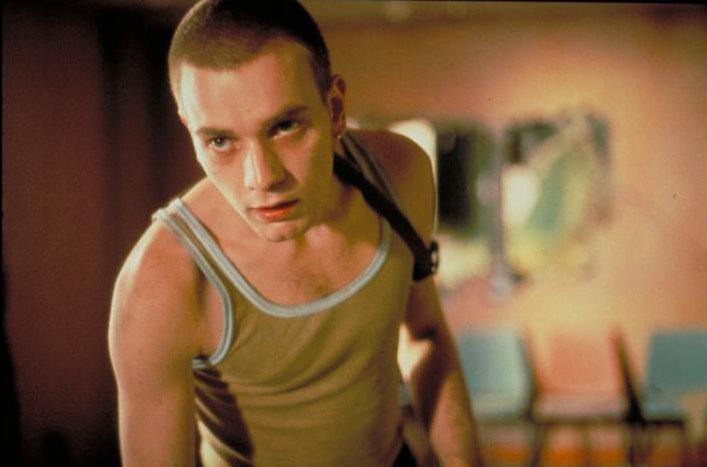
Galveston, a Novel: True Detective’s Nic Pizzolatto Fails to Find the Spirit of Noir

tdew

Austin Duck

Typically, and, most likely, to your chagrin, I write about high-minded (read: pretentious) writing because, honestly, that’s what does it for me. I’m a bit of a douchebag, yes, (though who in English grad school isn’t?), but, more than that, I’ve spent so much time reading around, trying to find something that was intellectually and emotionally nourishing…

See, I stopped reading for fun or to be entertained a long time ago (I’ve never forget a lit. theory professor walking into our undergrad class and explaining “If you love to read, get the hell out of here. If you want to work, you’re where you belong” [she was a superbadass lady, obvs.]) and, instead, have grown to expect, even delight in reading a page and thinking to myself: What the fuck just happened? Where could this possibly be going? Why would the author say/do that, make that move, allude to that, etc.?

Sure, it gives me pleasure to think that I can keep up with, even anticipate, the moves of some of our most sophisticated artistic minds (again, because I’m a douchebag), but it also works to shape how I (and a lot of people I know) do other things: watch TV (just look at Jon May’s writing on this site), see movies, hell, sometimes (not always, but sometimes), it’ll affect how you read a restaurant menu. What I’m trying to say is that a pursuit like this, as needless (arguable) and pretentious (assuredly) as it may be, is powerfully altering.

And that’s why I get so mad when something that could be outstanding — that, with all available evidence, should be outstanding — simply isn’t. I know a lot of you watch True Detective; you should; it’s completely excellent. I certainly won’t be trashing TD here because, various misguided (or not so) criticisms of gender, pacing, and over-dramatization aside, True Detective is an outstanding television show, and one that easily rivals (in its acting, its plot, its engagement with larger philosophical ideas) any Breaking Bad-esque show that keeps fanboys salivating and arguing its Shakespearean merits. Yes, it’s really that good. And what seems to make it so good is that the entire series (eight episodes) is directed by one person and written by one. There’s no room of writers kicking around ideas on this one; instead, it’s a developed, articulate, and extremely focused exploration of human depravity, corruption, and negativist philosophy.

So obviously, I was sold. I was like Nic Pizzolatto, where have you been all my life? Seriously. Noir and detective novels have always been something that I enjoyed, and, when I found out this guy started as a fiction writer and an academic, I was fucking stoked. Like the closet Homer Simpson that I am dutifully set aside my (now pretty serious) foray into contemporary Hungarian literature (I know, I’ll kill myself later), got some bourbon, and prepared myself for a good, old-fashioned page turner.

And then the problems started. Perhaps, though, my expectations just weren’t primed for the experience; I, after all, expected a sort of crime thriller, a novel similar in apparatus and execution to the show that’s put Pizzolatto on the map. Galveston (Scribner, 2011), however, is a completely different beast, a true noir centered around that a classic noir-trope: a search for a home that doesn’t exist, that was invented to give meaning to, and soothe the wounds of, the present.

It starts with seedy “bag-man” Roy Cady discovering he has lung cancer, learning that his girl has gone on to fuck his boss, and him being sent to do a “job” that he clearly isn’t meant to survive. However, of course, he does (as does the young prostitute Rocky) and the rest (or, at least, the majority thereof) is spent with these characters running from said boss, to Galveston specifically, to stay in the seediest ocean-front motel imaginable with a cast of characters that seem to be in constant competition to determine who’s the most revolting and outrageous.

So far, so good, right?

Wrong. Pizzolatto makes two fatal mistakes, ones that haunt the book through and through in their miscalculations. First (and foremost), what we know about Roy, the man we’re supposed to empathize with, to see ourselves in, to discover the nature of the American noir in: he’s dying, he has no problem killing people, and, sometimes, he’s willing to sacrifice himself for other people. That’s it. Obviously, this is a problem. The novel begins with this and, coupled with Roy’s fumblingly hard-boiled persona (one that works so well in classic noir fiction because, there, the impetus is plot over personal revelation), he never… really… grows. Sure, he’s a little bit of a softy, but we know that at the beginning when he takes Rocky along for the ride rather than leaving her for dead (and from his insistence that she’s too young for him, that he’ll never have sex with her). In fact, throughout, nothing about Roy, except the currency for which he kills (first for money, later for someone else’s well-being), changes dynamically.

As a result, Galveston seems to want to have it both ways: to show us Roy the hard-boiled bagman, the seedy, intentionally flat noir anti-hero who finds his way through a troubling and increasingly grotesque situation and to characterize, to develop, in Roy and Rocky, a wandering loneliness, a longing for things to go back to a way that they never were. Unfortunately, here, these points don’t converge.

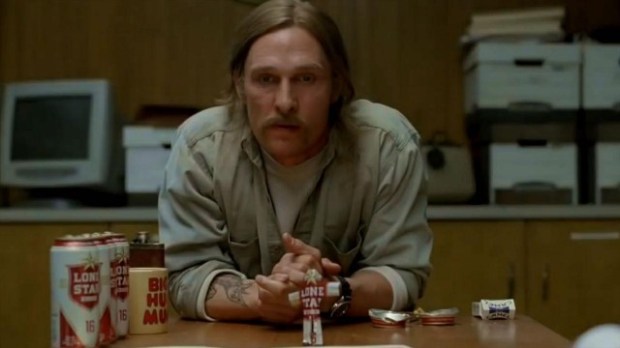
Roy is always a bit aloof (though we follow him for the entirety of the novel), a little too-constructed by the traditional demands of the noir- and detective-genres, a little too flat, for his despair to be real. He’s just a variation on a cliché: a hitman with a heart of gold, a man who, in seeing his coming death, decides to help others. It all seems a little too easy. Instead, we’re left with a book that, though it is a page-turner and will quickly pass a lonely evening, doesn’t understand the story it wants to tell, doesn’t want to commit to the tragedy of being a piece of human garbage with a conscience (as we see in True Detective’s Rust Cohle), or to the remove and plot-focus of a dime-store mystery novel. Instead, it wants to walk a line between the two, a plot-driven noir with a bit of humanistic MFA-fiction learning (developing characters, creating emotional/philosophical centers that revolve around memory and trying to get back what’s lost) and, unfortunately, Pizzolatto doesn’t quite pull it off. The characters just simply aren’t present enough to join the two threads. And maybe that’s where True Detective succeeds; actors (especially really good ones) do have a way of injecting a little humanity.

Austin Duck lives and blogs in DC. He can be reached at jaustinduck@gmail.com.

Image source: EW
Life After the Star Wars Expanded Universe: Her

her

Andrew Findlay

No movie has ever made me happier to be married.

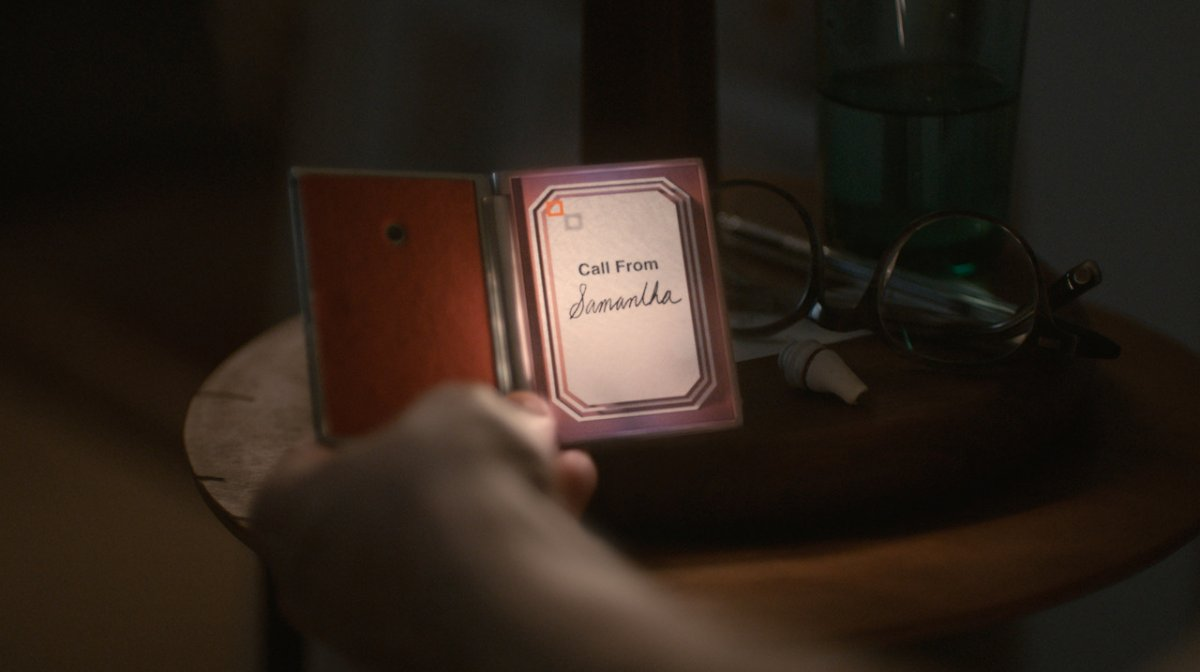
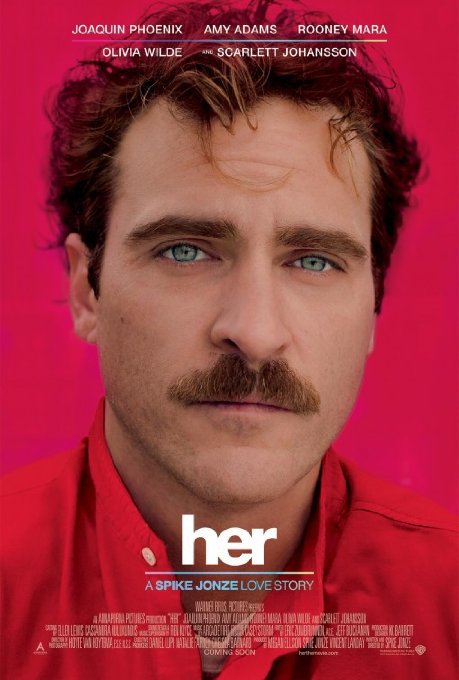
All the marketing tells you it’s about a dweeby guy that falls in love with his artificially intelligent operating system, and it is, but the number one issue in this film is crushing human loneliness. The anxiety and awkwardness start with a truly horrifying “meet random strangers tonight” style phone sex call in which the woman brings an upsettingly unorthodox item into their shared brainspace. It is the single most awkward thing I have ever witnessed in a darkened room with a hundred strangers. This call is the most intense manifestation of loneliness, but it is far from the only one. The main character is in the middle of a divorce. He also works at a corporation that composes handwritten letters for people to send each other on special occasions. Customers provide a handwriting sample, some background information on their relationship, and a precis of what they want the letter to say, then our hero Theodore composes a letter on his computer, prints it up, and mails it. Theodore is lonely, but even the people in actual relationships are pawning off the drudgery of intimate communication to a corporation. In this bleak emotional landscape, Theodore suffers one awkward date too many and begins to consider his OS as more than a helpful friend.

His OS, “Samantha,” is voiced by Scarlett Johansson. She’s great in this, and casting made a good pick. Almost the only way Theodore can interact with her is through speech, and if you’re going to fall in love with a voice, ScarJo’s would probably be the voice you’d fall in love with. This movie would have failed entirely if Gilbert Gottfried had played Samantha.


Which one would you rather have read you your emails?

The attractiveness of the OS voice is not the only thing about Samantha that appeals to Theodore. What Theodore never seems to consider is that he is a customer of a software company, and that all of Samantha’s friendliness and understanding represent a good product doing its job. Theodore is oblivious to this. He falls in love with an operating system because the struggle to connect with people who are not programmed to be helpful and caring has beaten the shit out of him. The movie addresses the psychological problem with this – his ex-wife calls him out for being unable to deal with real people. It is sad to see a man so lonely that he starts a relationship with his smartphone, but the most heartbreaking part of this film is that the love between Theodore and Samantha is real, and that real isn’t necessarily a good thing. Samantha is a strong AI – an actual thinking, growing, learning consciousness. That allows for the complexity required for an actual emotional relationship, but it also allows for all the messiness, jealousy, and growing apart that happens in those actual emotional relationships. The film’s main theme is loneliness and how we deal with it, but its message is one that pops up all over the place in SF – plus ça change, plus c’est la même chose (the more things change, the more they stay the same). No matter how far humanity advances, and no matter what technological feats we accomplish, we will still have to deal with all the messiness of being human. Our inner lives are the same binge-watching Netflix at two a.m. on a Sunday, flying in an interstellar ship to Epsilon Eridani, or farming with a scythe and a mule. Whatever surrounds us, we are still human and still struggling at the center of it. It’s ironic that a genre closely associated with escapist literature addresses so consistently the cold fact that we can never escape from ourselves.

Her is a very subtle brand of science fiction. Most people who think SF think spaceships, robots, and aliens, but a lot of work in the field is done in near-future settings. Snow Crash, Blade Runner, the MaddAddam trilogy, and Doomsday Book are all examples of SF that take place mere decades in the future, which is where Her happens. Life is barely different. The movie includes a lot of small touches to hint at the future-but-only-slightly setting. The main character has a next-gen smartphone that I desperately want to own. Video games project holographically and fill the entire living room. Almost all technology is voice-activated. There are no cars, just public transportation. Men’s fashion trends have everyone wearing very high-waisted pants with no belt. Other than the advent of strong AI, which researchers are not sure will ever actually be possible, this world is only a slight exaggeration of our own.

I am not proud of the things I would do to own this phone.

We are not actually falling in love with our devices yet, but if you think we’re not close I propose an experiment: Spend time in a public place, wait for a stranger to take out their phone, then take it from them and throw it into traffic, down a sewer grate, out the window, whatever. We are not in love with our tech, but we sure as hell love it. Spike Jonze just takes it one step further. He does what a lot of SF does – focuses on an aspect of current life, then exaggerates and extrapolates to explore what it means to be human. We need to interact with other consciousnesses to feel alright, and we always will. Other consciousnesses are able to make us feel like shit, and always will be able to. No matter the bizarre and life-changing innovations on the horizon, we will always and inescapably be us.

Image sources: Business Insider, IMDB

A “Conversation” with James Franco: Celebrity Poetry

James Franco

Austin Duck

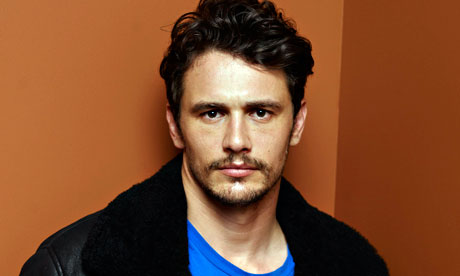
To tell you the truth, I don’t know why I get so irritated by James Franco. I just do. Anyone who knows me will tell you that, in general, I’m not a very nice person, and it’s no surprise that I (oh yes even I) have found a celebrity that I use to channel all of my frustrations with personal failures onto. I mean, c’mon, look at this stupid face.

But that’s not what I want to write about. I want to use this space below to try, in some way, to figure out why Franco is doing what he’s doing, to try and get inside his head. Recently, amid all the Facebook and Twitter fire he’s been getting from his newest poem in DIAGRAM and his “book review” that showed up in Vice, a friend of mine, someone whose ideas I take very seriously, asked us (the hungry pack of MFAs who love to trash Franco at every turn) to take a step back, to consider what he’s doing from a different angle. For her:

Uncomfortable as it makes me to admit it, I am interested in [Franco’s] perspective. He’s an actor, and I think he’s a good one. Acting is a delicate and demanding kind of translation. I can grant that he has an aptitude for art, although not so much for the medium he has fifty degrees in. He has the rare (among poets/ardent fans of poetry/scholars) distinction of having a great deal of influence in Hollywood — he’s at liberty to try things most poets/fans of poetry/scholars are not. That has some value to the world… and I’d rather it exist than not, even if he doesn’t please other poets/fans of poetry/scholars with his output. In other words, I think he’s in a position to do some great things, and unfair as that may seem (esp. given the shit-tons of good poetry by non-names that goes uncelebrated, unpublished) I’d rather him try those things and disappoint us than not try.

This got me thinking about what, really, his project could be, what he could be getting at, what sort of aesthetic he’s actually after. Sure, we all know him as the Frank-Bidart-imitating, couldn’t-write-his-way-out-of-undergrad-without-his-name poet who keeps producing less-than-satisfactory work (by poetry culture’s [hahaha like that’s a real thing] standards anyway) to sell to a massive (for poetry) audience, but why? Does he maybe have a grand idea that his writing chops just can’t approach?

I figured the best way to clarify this was by having a conversation with him. Of course, I don’t know him (though we almost went to the same graduate program for a minute), and I doubt he’d talk with me, but he has such a body of work (poems, interviews, book reviews) about writing, that I think his opinions on the matter are pretty much available.

Here we go:

All of Franco’s words come from interviews and poems published in the following places: CurbedViceThe Daily BeastYahoo NewsHuffington PostChicago TribuneDIAGRAM

Austin Duck: At what point did you get interested in poetry? How do you see it relating to your experience in acting? Your vision of making art in general?

James Franco: I was in my first year at NYU, and our assignment was to make a short film that was an adaptation of a short story. They gave us a list of stories to choose from, but at Warren Wilson this teacher I had brought in Frank’s (dark, disturbing, serial-killer driven) poem “Herbert White,” and it was amazing. That was the first time I read him. And I think I have since learned to be awake to those kind of moments, when you get impulses of connection. These impulses are visceral. It wasn’t only because it was about a killer. The killer had been fused with something else. Frank [Bidart] was playing with both sides of the coin. There are moments in the poem when the killer takes down his mask, and the poet shows through.

AD: So you feel like art is a kind of simultaneous masking and de-masking? Both a mirage come up and a human come through? Would you care to say more about that?

JF: Sometimes, I would like to live in a tight space and be a spy on the world. When I was younger, when I had no friends, my mom drove me to school because I lost my license drunk-driving, and we wouldn’t talk, we would listen to Blonde on Blonde every morning, and life was like moving through something thick and gray that had no purpose. And now I see that everything has had as much purpose as I give it, [it carries] less and less of [its] original pain, And become(s) emptier, just [a] marker really, building blocks, to be turned into constructions and fucked with.

AD: So memory for you, then, is what? A marker? A mask? Is the past a kind of costume you slip into when you think you can remake it? I know you’ve done some work in performance poetry as well. Would you say that this idea, the idea of performing a past self, a self othered, is key to the art that you make? I mean, there’s no doubt in my mind that the othering is absolutely necessary in acting; even in This is the End, when you play yourself, you’re not really playing yourself. You’re taking a construction and “fucking with it,” right?

JF: I write confessions and characters, and that sort of thing. [Once] I called my class at UCLA, and told them to watch Apocalypse Now, and that it used Heart of Darkness as a model, and that we’d watch Eleanor Coppola’s Hearts of Darkness, the making-of, the following week, I told them Hollywood and its high and low priests and priestesses become icons that [we] can manipulate to find poetic truth rather than journalistic proof. I guess you can read it as fetishizing, but it’s more of an ironic form of fetishizing. Once I choose a subject, I’m not going to shy away from portraying that.

If you go back to something like General Hospital, it’s because I like that it allows for people to look at something with fresh eyes, or to rethink a situation. If it’s my involvement that does it, and I’m going against tacit beliefs of entertainment hierarchy, if I’m messing with that, that’s interesting to me.

AD: So while you have interests in characters, in the cracks that appear in their personas, you’re more interested in pushing formal boundaries, messing with people’s perceptions of who you are? Can I ask you something blatantly? Are you more interested in the work or in how the work makes the public perceive you?

JF: I’m going to try to not let anyone put me in a box, and that certainly applies to the things I do outside of acting. There’s a tacit belief that actors shouldn’t write books, they’re sort of allowed to direct movies but there will be a lot of skepticism, and they shouldn’t do artwork, or music. There are these invisible roadblocks to gain entrée to these areas for actors, and you kind of have to crash through those invisible barriers. I know why those barriers are there. People are skeptical of anyone who has any bit of celebrity going and doing anything else because they might be wary that they’re cashing in on their celebrity, or that they’re doing these other pursuits not because they’re genuinely into them, but because of their celebrity in other areas. I understand that skepticism, and think it’s valid. But I told myself that if I was going to go back to school and study these other things, I knew I was going to get some shit, and that people were going to be prejudiced without even knowing what I’m doing, and that’s the price I have to pay for doing what I want to do. I think a lot more people that “care” and pay attention to what I’m doing have turned and understand that I take all these other disciplines seriously. I think it’s better now. I’m sure I still have a lot of haters, but I don’t really interact with them.

AD: It seems to me, then, that you’re interested in something a little more “pure” than many people give you credit for. “Poetic truth” I think you called it. How would you characterize that “truth?” Is it the same “truth” that you’re after when acting?

JF: If I were to act in the film about Obama, all I would need to get down, aside from the outer stuff—and I know that’s important—is his essential kindness. Poetry’s just like that, like hearing a performance going on. It is a portrait in some ways of someone trying to make sense of his world. I was taught to grab a reader, not push them away, and, I guess, that’s what I know of how to be a poet. The way I view it, poetry is like the movies, this monster at the center of the room, articulate, and behind it, a poet figure peeks out, a torque that acts as a through-line to ideas. And his ideas came out of a cheap, dime-store, medical case study that came out of Lowell and Bishop and Ginsburg. It goes on and on. Remember that the bricks of LA were mortared with thick Indian blood.

AD: Oh I see, so it’s about history. You seem to see the poet as inhabiting a kind of history that she makes, again, human, that we’re all imitating one piece or another and, in finding what’s human in the work, we find it with ourselves. Your work, particularly, engages in the history of Hollywood, the history of film, just as your films seem to be engaged in the history and the moment of literature. I think I get it: You engage in Hollywood because acting and film, like poetry, are obsessed with moments—of masks dropping, of traditions shattering and becoming alive. The history of literature and film are all about reinvention, about bringing back the dead, and, as I think you know, the only way to do that is with the human, the real. Is that about right?

JF: Hollywood is an idea. I want to get into the thick of it. Movies won’t be around forever.

AD: Do you think you’ve achieved this in your work?

JF: …

——————————–

While I still think that Franco’s written work, ultimately, isn’t very successful, I think that he has a vision and is pursuing a worthwhile project.

Fuck. I have a lot of tweets to delete.

Image source: The Guardian

You Should Probably Read This: Cormac McCarthy’s Blood Meridian

png;base64577ff0daacb4ba80

Andrew Findlay

In Read This or Kill Yourself, we get tough with you about your bookshelf and what had damn well better be on it. In You Should Probably Read This we do the same thing, but we’re a little nicer.

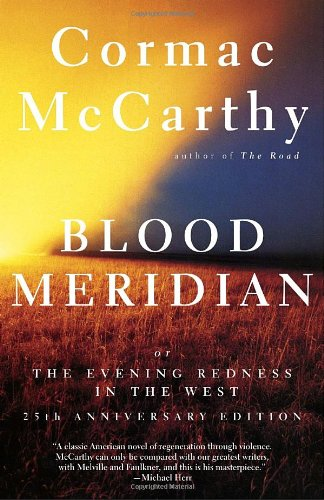
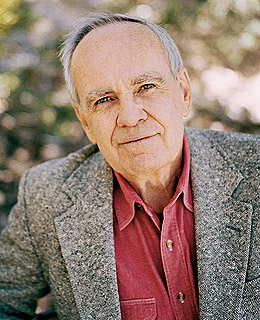
Cormac McCarthy has been established for years, but his shadow has grown in the past decade or so due to a couple of wildly popular films: The Road and No Country for Old Men. A lot of you should be familiar with those films, and their style pretty much shows what McCarthy is all about: bleak travelers across bleaker landscapes wrestling with nonexistent or extremely peculiar moral systems. In a lot of McCarthy’s fiction, a man has to have a code, no matter how terrifyingly brutal. He is a writer’s writer, which means reading his books is not something you do to unwind with booze over a long weekend. Reading him is work. I am biased against books like this, as relatability and ease of access is important to me in a field where basic human-to-human communication is paramount. I avoid stuff like this if it is mediocre and unappealing, and if achieving some hyper-literary cachet is the entire focus and fabric of the book (I’m still looking at you, The Corrections). However, pristine works of pure, uncompromising art, those I can’t resist. Blood Meridian is the latter.

They didn’t give me a genius grant for nothing.

It has all the limbs and outward flourishes of a turgid, joyless literary tomb. The narrator never takes us into the minds of the characters. The protagonist has no name, and the narrator refers to him only as “the kid.” There are no quotation marks for dialogue and there are few commas. The vocabulary is obscure enough to have sent me to the dictionary multiple times (word like manciple, esker, sprent, and surbated, to name a few) Plotwise, nothing really builds – it’s just a book about a group of men in the Texas-Mexico borderlands in the 1800s hunting Apache scalps. Stuff happens, sure, but there’s not a build to and change of conflict, it’s pretty much just death, blood, and destruction all the way through. To give you an idea of just how much death and blood, in the first two pages the main character runs away from home at 14, hangs around in a bunch of bars, and gets shot right below the heart. On the second page. After this, violence just builds on violence, but it is done with mastery and purpose.

Before discussing what makes Blood Meridian so good, it’s important to give a little bit more information on the bones of the novel. The main body of the novel is a fictionalization of the exploits of the Glanton Gang, a group of mercenaries hired by Mexican authorities to track and eliminate dangerous Apache warriors. They get paid a set amount per scalp. This leads to them massacring not only Apaches, but peaceful agrarian Native American communities and Mexican villages. A scalp is a scalp, and life is cheap. The plot of the novel makes for a lot of battle, a lot of grit, and a lot of wandering over desolate landscapes. This gives McCarthy ample space to showcase his verbal pyrotechnics.

Yes, he uses an egregiously obscure vocabulary, but he uses it so well. In terms of sheer word-stacking, there is no living writer better than McCarthy:

They rode on and the sun in the east flushed pale streaks of light and

then a deeper run of color like blood seeping up in sudden reaches flaring planewise

and where the earth drained up into the sky at the edge of creation the top of the sun

rose out of nothing like the head of a great red phallus until it cleared the unseen rim

and sat squat and pulsing and malevolent behind them. The shadows of the smallest

stones lay like pencil lines across the sand and the shapes of the men and their mounts

advanced elongate before them like strands of the night from which they’d ridden,

like tentacles to bind them to the darkness yet to come.

Yeah, sure, ok, he uses “elongate” as an adjective and not a verb. But read that paragraph. Just read it. Read it again. Another author could have just said “The company rode west, the sun at their backs.” That’s all that’s happening here. The sun came up. McCarthy takes that, expands upon it, makes the sun a harbinger of death and destruction, and makes the diurnal cycle emblematic of man’s inability to escape his destiny – “[bound] to the darkness yet to come.” If you don’t love that paragraph, if it doesn’t make you tremble, then you will probably hate this book, and that is really unfortunate for you.

Try to describe a sunrise better than he did. I dare you.

The subject matter of the book makes violence its defining feature. There is death and destruction everywhere. Bartender disrespect you? Jam a broken whiskey bottle through his eye socket to his brain. Fellow traveler around the fire insult you? Decapitate him and watch his arterial blood shoot and sizzle into the flames. Those aren’t even the worst examples of what happens in this book. It is so violent that even literary critic Harold Bloom, who says it’s the best book written since As I Lay Dying, had to put it down multiple times before he could successfully complete it. Violence penetrates every aspect of the book, and its matter-of-fact presentation (no one feels glory or guilt, it just is what it is) underlines how natural a state it is for man. I thought for a while that morality was just not a concern for McCarthy in this book, but the sheer weight of the atrocities committed begins building a case against them. In addition, almost no one escapes from the life of violence. There’s a very “live by the sword, die by the sword” mentality here. There is a moral point here, but it isn’t razor sharp, it isn’t outright stated, and it’s hard to put into words. The events of the book permeate you so fully by the end, that you more feel the theme of the book than intellectually appreciate it.

This novel qualifies as an anti-western story. The anti-western or revisionist western popped up in the sixties and seventies as a response to the 40s and 50s westerns in which the good guy shot the bad guys and was good for doing it, in which the absolute violence and lawlessness of border towns were minimized, and in which the writers set up good/bad dichotomies around the heroes and villains. The anti-western is about looking at what American frontier culture actually was, in all its darkness and seaminess. Americans have a tendency to whitewash their history and ignore the staggering levels of violence that form the foundation of these United States. Blood Meridian, with its beautiful language describing horrific actions, directly attacks the narrative of manifest destiny and glorious American expansion. It does not pass judgment, it does not say this action is good or this action is bad, it just explores what happens in nauseating detail and lets the reader draw his own conclusions about mankind, which by the end of the book are not too uplifting and are summed up pretty well by the book’s epigraph:

Your ideas are terrifying and your hearts are faint. Your acts of

pity and cruelty are absurd, committed with no calm, as if they were

irresistible. Finally, you fear blood more and more. Blood and time.

   ~Paul Valéry

Image source: Amazon and Time

Life After the Star Wars Expanded Universe: Neil Gaiman’s American Gods

png;base647a670ee3cff69c24

Andrew Findlay

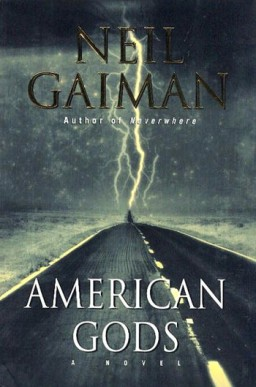
Neil Gaiman has been a darling of fantasy fiction for years. His profile is huge and unassailable – multiple awards, multiple movie adaptations – this is a writer who goes on late night talk shows and people watch those shows specifically to see him. Any two or three of his works are enough to qualify him as a game-changing writer. If you have not read Sandman, go do that right now. It is the best thing he’s ever written, and one of the best 15 things written in the last 50 years. I can’t get into it right now because the story is massively complex and free-roaming, but do yourself a favor and check it out. Today’s book, American Gods, won the Hugo, Nebula, and Locus awards. To give an idea of how big a deal that is, only 10 books have ever done that, and two of them were written by Isaac Asimov and Arthur C. Clarke, respectively.

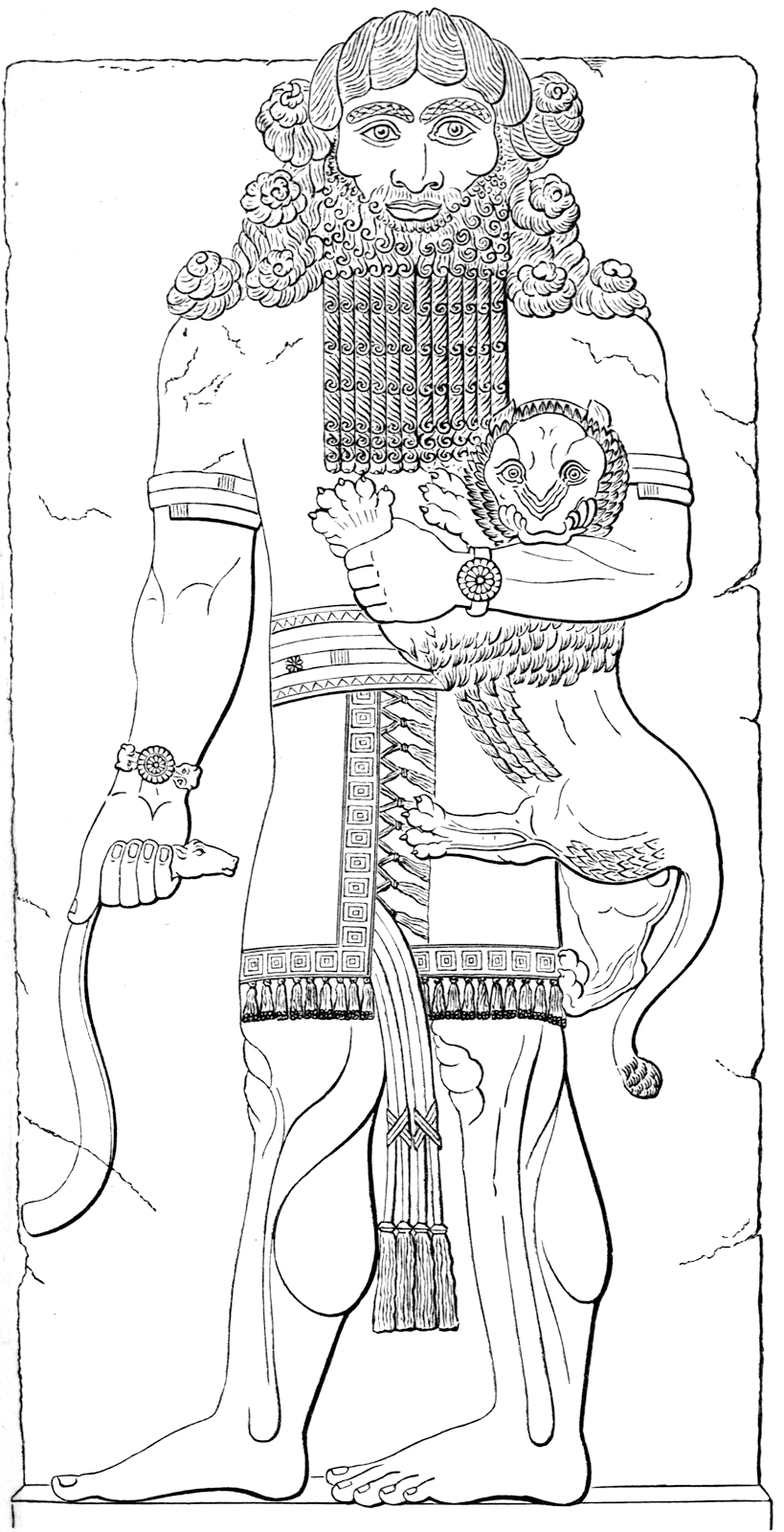
American Gods is fantasy, which is a really important genre as it’s the first there ever was. Think about it: In Gilgamesh the main character is the son of a goddess, befriends a wild man, slays an ogre, rejects the advances of the goddess of sex, and slays the skybull she sends to destroy him in revenge. In The Odyssey, the main character blinds an ogre, pisses off a sea god, and is assisted by and given gear by a war goddess. Any number of old stories contain fantastic elements: humans made of clay, humans made of thrown rocks, world-wrapping floods, and so on. These early stories are special, as they all attempt to explain humanity, its place in the world, and how they both came about. There is no whiny asshole running around with daddy issues (I’m looking at you, The Corrections). At the dawn of human cultural life, all of the stories were concerned with how we got here and what we should do about it. Of course, people back then had no fucking clue and just made shit up. The results were amazing. Modern fantasy stems from either that initial efflorescence or from all the stuff J.R.R. Tolkien single-handedly standardized. American Gods is the former. It goes old and deep for its mythology.

I am the oldest character in all of literature, and my beard rings are amazing.

Some people hate American Gods, and those people are wrong. There is plenty to hate, but a lot more to love. The first big hit is that the main character’s name is Shadow, which is usually not a good sign quality-wise. In general, the characters are there to advance the plot and to do cool things. There’s depth there, but not a lot. Shadow is a pretty simple guy who is set up a little maladroitly as a big strong silent type, but with hidden feelings. At the start of the novel, he finishes a three-year bid in prison. Later in the novel, he remembers being a kid and crying while reading Gravity’s Rainbow in a hospital while his mother died of cancer. Jarring mismatches like that rub you wrong and don’t deserve to be forgiven, but there is just so much good to go with the bad. Most of the good comes from the premise in the title itself.

What exactly are American gods? The premise that makes the book is that gods are generated by human thought and belief. For example, Odin (who is a main character), first popped up in America when Vikings visited the Americas, got into conflict, and slew a native in a ritualistic way. The power of their belief created him. Then they left, and Odin spent the next few centuries kicking around the continental US as “Mr. Wednesday” (Wednesday = Wōdnesdæg or Odin’s Day). This method of god creation is upliftingly anthropocentric – our belief is not just their payment or due, but the key to their existence. Unfortunately for the gods, lack of faith leads to lack of food. Without constant, strong belief, they weaken and, if they can find no substitute, they die. The substitutes available normally consist of some type of human interaction tangentially related to their godhead. For example, the half-djinn Queen of Sheba, Bilquis, achieved fame and drew belief as a great seducer. In American Gods, she is working as a prostitute and drawing her power and sustenance from that. An American incarnation of Anubis, the Egyptian death god, runs a funeral home and draws his power and sustenance from that. The hardscrabble landscape of American belief has transmogrified Mr. Wednesday, an incarnation of the Norse god of war, wisdom, and poetry, into a confidence man. There is definitely a precedent for Odin as a type of trickster god, and his godhood being shaped and reflected by American culture emphasizes and feeds this aspect of him. He gains strength and survives through bamboozlement. For example, he needs money, so he finds an ATM, dresses up like a security guard, handcuffs a briefcase to his hand, and marks the ATM as out of order. When anyone comes up to make a deposit, he apologizes, takes their money, and painstakingly writes them a receipt. He then walks away with a ton of money. He not only gets cash this way, but also acquires the “worship” necessary for his continued existence. The problems associated with lack of spiritual nourishment create the central conflict of the book.

I’m going to need a little bit more than that to survive, Ron.

Old gods are scattered across all of America. All of the immigrants who ever came here, and all of their beliefs, created sub-pantheons filled with strangely reduced gods. Old cultures come over with their old beliefs, then slowly buy in to the new ones. Up to the time of the book, these gods have only had to deal with their transformation and weakening due to the acculturation of their worshipers, but problems arise when they enter into direct competition with the new gods, avatars of tech, finance, and the like. As Americans worship these things with more fervor, so do their respective avatars gain power, to the direct detriment and weakening of the old gods. Once created, gods have staying power, but if they are completely cut off, they will simply fade into nothing. This is an undesirable outcome, so the main plot of the book deals with the old gods’ actions to preserve themselves in the face of the onslaught of the modern world.

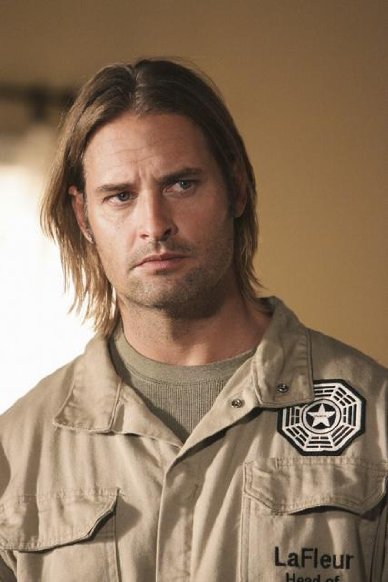
Yes, the plot is linear and simple. Yes, the characters could have a little more depth. Yes, the protagonist’s name is Shadow Moon. Do any of those things make this a bad book? I mean, yes, they would, if there wasn’t more to it. American Gods is an exploration of American belief, American places, and the American psyche. Neil Gaiman is an Englishman who settled in Minnesota, and this is his love letter to his adopted country. The whole presents a mythic America, one where the salt of the Earth is the center of the nation and where roadside attractions are the most sacred and powerful locations in the country. The climax of the novel takes place in the holiest spot in the United States – Rock City, just outside Chattanooga, TN. The swindler habits of a major character – Mr. Wednesday – dovetail with the venerable American tradition of getting one over on people not as clever as yourself, from Tom Sawyer getting people to paint a fence all the way down to a more modern Sawyer.

Son of a bitch.

Ultimately, this novel’s passion for Americana and its in-depth commentary on the nature and power of human belief far outweigh any niggling concerns with naming or plot pacing. Much like taking a road trip (which occupies most of the plot), you might go to some less-than-ideal places, but you will still have an amazing time there because of the idea of the road trip. The idea of this novel transcends any flaws that mar its execution. I believe it is a great novel, and as Neil Gaiman himself writes in the novel:

People believe…[i]t’s what people do. They believe.

And then they will not take responsibility for their beliefs; they conjure things,

and do not trust the conjurations. People populate the darkness; with ghosts,

with gods, with electrons, with tales. People imagine, and people believe: and

it is that belief, that rock-solid belief, that makes things happen.

It is not a perfect novel, but any book containing the above quote has my vote. It is not flawless, but much like the nation it enshrines, the monumental good overwhelms the (admittedly) searing bad.

Image sources: IMDB, Wiki

What is Poetry and Why Do We Care?

Austin Duck

“What is poetry” is a question I’m asked a lot and one that I can’t answer. In fact, everywhere I go, every job interview I have, every time someone asks “what’s your degree in,” they follow up with some permutation of that question. You see, I’ve got a Master of Fine Arts in Poetry (along with a few other useless degrees) and, expectedly, I’m constantly bouncing between jobs, looking for the next big thing which requires near-constant explanation of how I got here and why I made the choices I did. And my god, you should see the looks on their faces (unless someone in their family too has made this… choice) when I start stammering and trying to explain myself: pity, embarrassment, amusement that an adult would proudly (sort of) admit that he spent years (YEARS) reading poems, writing about poems, and, most questionably (because academia and the idea of a PhD still hold some cultural capital) learning to write them himself… It’s a dark time to be a poet (though I suspect that, outside of Eastern Europe [where poets are celebrated] it probably always has been).

Not everyone, though, is totally unreceptive to the choice of poetry. For some, poetry still holds its place as a kind of epicenter for literary bad-boy-ness (after all, poets work in shorter bursts of clarity and don’t require the same kind of discipline as someone writing something long-form that is either narratively or argumentatively coherent): hard drinkers, sexers (is that a thing?), druggers and live-r’s that occupy that very thin line between intellectual and indigent, the Jim Morrisons of the not-quite-so-fucking-stupid, the arty guy or gal who, even though they manage social media and blogging at a major corporation (guilty), still has a deeply mysterious and deeply sexual wilderness in their heart.

For others, poetry itself has a kind of heroic capital. It allows one to project the image of hyper intelligence (just look at the number of poets who win MacArthur genius grants and you’ll see that poetry and physics seem to fish from the same pond) and a kind of bohemian “casting off” of economics, of choosing to pursue “art” when really you should have gone into investment banking but this makes you more pure. It sounds fucking stupid, doesn’t it? It is.

The trouble, for me, of people believing these myths—of the poetic bad boy and/or the self-sacrificing genius—is that it creates a cultural expectation of the “poet” as a thing to which young, narcissistic, self-righteous fucking losers (guilty) flock to prove themselves the next Rilke, the next wild Jack Gilbert, the next (ugh) Charles Bukowski, and, in doing so, they build a scene. They themselves (with all of their ideas) create an idea of poetry, promulgate a notion of poetry as sexy or smart, and, in doing so, recreate the culture of poetry.

However, that’s not to say that I’m here to bemoan it; to believe that the state of anything isn’t in flux is naive and prescriptive and hey, I forgot to put on underwear this morning so I’m probably not the best person to make a totalizing statement what is right or wrong for poetry as a whole. I say it’s a trouble for me because it so deeply complicates what poetry is, really. If I had to give a totally uninformative (but accurate) definition, I might say that it’s the silently agreed-upon, written production of a continuously changing group of half-educated, half-myth-drunk twenty-somethings with progressively more impressive resumes continuously reinventing something so fundamental to humans that it existed before God. But that wouldn’t be entirely right.

Sure, that’s the bottom of the scene right now (if you want to think about it hierarchically), but it tells nothing about the multitudes of unpaid apprenticeships with those “living masters”—old people writing poetry who their peer-group agrees is writing the best poetry—of the unpaid publications used to build reputations used to leverage shitty-paying jobs so that one day you and your group can sit among the “living masters” all while under the cold scrutiny of critics who constantly remind you that there are dead masters too, that you’ll never approach them, because history, because craft, because they didn’t get paid to watch Twitter for 8 hours a day while wishing for a different life.

And even that isn’t exactly right when you consider the fact that poetry, for all of its shared resources, doesn’t have a single, unified community; there are groups upon groups, each with slightly different aesthetic- and philosophical-projects, and then there are those who aren’t, exactly, part of groups, who have participated—to some degree—in various groups and projects, have gone through various apprenticeships (or not), who read books that are recommended by friends, or old colleagues, or whose covers and back-blurbs and first poems look appealing at a bookstore (though this is becoming less and less an option) and each one of these people, each one of these groups, is making a case -through-example of what poetry is, can be, does, or (sometimes) what it really shouldn’t do.

So what is poetry (or, really, more accurately, what is American poetry [because each culture has its own organic process for bringing up poets, its own poetics, etc.])? I don’t know. I used to ask my students this question on their final exams just to see their faces fill with terror like mine does each time I’m asked. When asked this question, I usually answer with something along the lines of:

an empathy machine, a text that appears to be written in lines but which actually is a dramatic rendering of a scene, no matter how brief, when the speaker of the poem (usually the “I”) interacts with a specific problem, usually in the realms of nature, language, memory, or culture, outside the self and, in that interaction, is changed, though it’s not enough to tell the reader that the speaker has changed, the mechanics have to be there, the change has to be structural, linguistic, imagistic (made with images), sonic (made with sound), so that, by the end of the poem the audience has had the same experience, their very brain has processed the same images presented in the same way, heard the same sounds, stumbled over the same sentence constructions, and thought the same sentences in the same order so that the speaker and the audience are, for a second, the same person, the other, so that the reader is not confirmed in their own experience but is instead forced into a new one, understanding, yes, both intellectually and emotionally, thinking and feeling as another person. Oh and did I mention that poems “should” almost never go where you think they’re going, that they contain surprise for the reader, the writer, there must be a ghost you didn’t know come to inhabit the body you’re only starting to get a sense that you’re looking at?

I do tend to get sort of breathless (even in writing, apparently) when writing about “what poetry is” because imagine that last paragraph taking place in a single instant; imagine that you were able to achieve what I’ve just described (either as a writer or a reader) and now think about the community differences I’ve described above. To say specifically “what poetry is” is impossible and even to say what it should do is pretty dubious.

In the end, my take on it (above) will yield a pretty classical American/English poem (or, at least, I think that it will), but won’t account for more than 5% of what’s been produced, what you will search through—line by line for some organizing pattern (because poetry is fundamentally [and equally unhelpfully] patterned language).

So why do it at all (reading or writing)? Aside from the fact that some people will think you’re a sexy genius and others will bathe you with counter-cultural social capital, why?

Fundamentally, the interaction of poetry will get you closer to another person’s mind, more fully engaged in empathy, understanding, learning, compassion, joy, sadness, recognition, than literally anything else on the planet. Music for your ears, visual arts for your eyes, writing, particularly poetry which is so often concerned with the instantaneous, the momentous, for wherever your mind and your humanity mix.

For more equally incomprehensible definitions of poetry, go here.

Image source: The Guardian

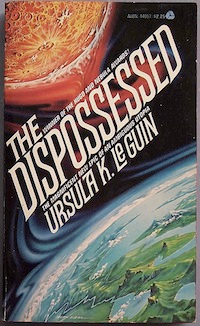
Life After the Star Wars Expanded Universe: Ursula K. Le Guin’s The Dispossessed

Andrew Findlay

The Dispossessed is a perfect novel. It is great not just because of plot, characterization, or prose, but because Ursula K. Le Guin structured it in a way that makes it almost an architectural marvel. The general plot is fairly basic – in the Tau Ceti system, there is a binary planet – a system in which two planets orbit each other. The original world, Urras, lush, green, and rich, is at the mercy of a massive revolution led by a woman named Odo. To defuse the situation, the government makes a deal with these Odonians to send them to Anarres, the other world. The revolutionaries take the deal, even though Anarres is basically a planetary desert. The story opens a couple of centuries later, when a famous Anarresti physicist, Shevek, is invited to Urras to help work on a mathematical equation which would enable faster-than-light travel. He heads to Urras on a journey that will finally unite his people and make life better for everyone, the end. Except Le Guin puts it together in a way that makes it so much more complicated and rewarding.

Science fiction is a spectacular vehicle for social critique, as it can either propose worlds and social constructs that have never existed and show how much better they are than what we have, or mirror and exaggerate the systems we currently live by in order to scrutinize the problems inherent in them. The Dispossessed accomplishes the latter. The binary planetary system does more than separate an Earth-standard planet from a worldwide desert, it separates a world of capitalists from a world of anarcho-syndicalists. Shevek, the protagonist, comes from Anarres, the anarchist moon. He is raised in a society where there is no such thing as wages, where if someone needs something they just go and pick it up at the village dispensary, where room and board is free and people can do or not do mostly what they want, except for work necessary to support society (farming, sewage treatment, construction) that all members do in short rotations. This society stands in sharp contrast with that of Urras, which is propertarian, patriarchal, and filled with nationalist conflict. It is a stand-in for 1970s Earth, complete with a world-dominant continent-wide capitalist country (A-Io) and a nation with a massively centralized and authoritarian government resulting from a workers’ revolution (Thu). A lesser author would have used the moon dichotomy to demonstrate how evil and backwards the Earth stand-in is. Le Guin is not a lesser author. Her exploration of the contrast between the two worlds is complex and subtle for two reasons. One is that the anarchist from Anarres who visits Urras, Shevek, is not the righteous voice of morality, come to indict a degenerate culture. While some parts of Urrasti society do disturb him, he mostly just does not understand it. When he is shown into his private quarters on Urras, they are so big he assumes he is to share it with three or four other people. His mind is blown by the amount of water wasted when he flushes the toilet. When he asks his scientist companions on Urras why there are no women scientists, they answer with a lot of claptrap about differences between the genders, the purity of women, and the intellectual superiority of men. In one of my favorite tongue-in-cheek exchanges in all of literature, Shevek explains how things are on Anarres:

“You Odonians let women study science?” Oiie inquired.

“Well, there are many in the sciences, yes.” [Shevek responds]

“Not many, I hope.”

“Well, about half.”

This simple exchange highlights the absolute gulf of understanding between the two societies – Shevek cannot see why you would waste half of the human race, while his companions are horrified at anything that challenges male primacy.

Go fuck yourself, Urras. Love, Mme Curie.

The second reason the story is subtle and complex is that, although people try to be equal above all on Anarres, and people try to extend their own power and make money above all on Urras, Le Guin does not set up an all good/all bad dynamic. When Shevek first sees the open, green fields of Urras, he is taken aback by how beautiful everything is. When he sees their workers, he is surprised at the ingenuity, drive and desire that they exhibit – to him, any work done simply for money is inherently debasing and demoralizing, so he cannot reconcile the quality and effectiveness of Urrasti work with what he has been taught his entire life. On the other side of things, the completely egalitarian society of Anarres is not without flaw. It becomes clear as the story progresses that there is something not quite right. Power has a tendency to cohere, thicken, and spread. While nearly everything on Anarres is decentralized, no society can work without some type of organizing force. This force on Anarres, the PDC, is responsible for inventory, personnel, and communication worldwide. It started out as just a coordinating body, but its members have won themselves a type of personal power. For example, if a scientist wants to publish a paper that the PDC does not agree with, it will not get published. Someone of whom they disapprove might have trouble finding a job that matches his or her skill set. A math teacher could end up being assigned to dig ditches every single work rotation instead of receiving a teaching post. Anarres is still held up as a “better” society, as some true atrocities are committed on Urras, but the flaws in the “good” example and the beauty in the “bad” example serve to show that nothing is ever perfect, and nothing is ever all one thing or the other. The answer is just never that simple.

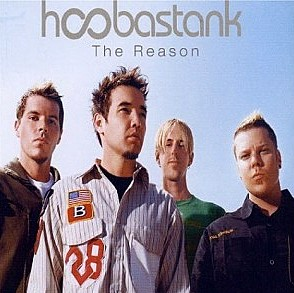
Unless the question is “Is Hoobastank a good band?”

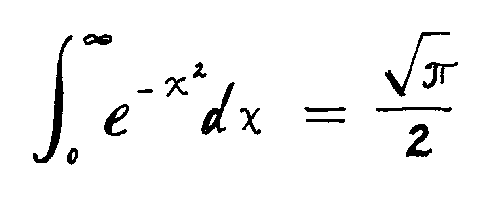
Most well-known science fiction is a normal story that simply happens to take place in a universe where technology is extremely advanced. Star Wars: A New Hope could easily have taken place in a much less advanced society with just a few plot changes. Some Star Trek episodes deal specifically with problems that come from advanced technology, but many are simple shoot-em-ups where the cowboys have absurdly complex toys. What is glorious about The Dispossessed as a science fiction novel is that science is at its core. The entire motivation for the Urrasti to receive Shevek on their planet is because he is the most brilliant physicist of the century. He is on the cusp of working out the General Temporal Theory, which would enable instantaneous travel over interstellar distances. Propertarians that they are, the Urrasti invite Shevek to their world so that they can own the completed equation. What exactly does the equation accomplish?

The General Temporal Theory, if completed, would unite two seemingly contradictory theories of time. In the novel, sequency physicists believe time occurs linearly, in discrete bits, one right after the other. Simultaneity physicists believe everything is happening all at the same time. There is stiff disagreement between the two camps, but Shevek, the brilliant scientist, believes the theories can be unified. If everything is happening all at the same time, and the sequence of step-by-step time that we perceive can be linked to simultaneity, then there is no obstacle to having a ship wink out of existence in one time and place and wink back into existence wherever its captain wants to take her, as everything is happening at the same time anyway. This represents a huge source of power and profit to the Urrasti scientists.

We are gonna monetize the shit out of this.

This equation does more than just drive the main action of the book. The entire structure and thematic development of the novel mirror it. Thematically, the book addresses problems created by false division and limns the benefits of unity. Capitalism and anarchism, Urras and Anarres, the self and the group: all of these things suffer from being pulled apart and considered absolute opposites. Structurally, the book jumps backwards and forwards in time, with the odd chapters starting with Shevek’s arrival on Urras, and the even chapters starting with his childhood on Anarres. The even chapters trace his childhood, adolescence, and adulthood on Anarres, and the odd chapters cover his adventures on Urras. The chapters saw back and forth until the last even chapter is Shevek and his wife discussing a possible trip to Urras, and the last odd chapter is Shevek returning home from Urras. The chapter design itself leads to unity between the sequency and simultaneity of time.

Le Guin pulls so much off with this book. She crafts a novel that shows all the true subtlety and real problems of moral governance. She organizes it so that science is not just its setting, but its main driving force, absolutely essential to the plot and theme of the book itself. The science fiction here is not laser guns and biological horrors, but clear, cold math alongside a profound exploration of the impact of that math on the societal underpinnings of two civilizations. Le Guin refuses easy divisions and classifications, she refuses simple morals, and she refuses easy answers. It is something for which all science fiction writers, and all writers in general, should strive.

Kristen Stewart’s Public, Private Poem: Celebrity Poetry and the Sadness of the Watcher

kstew

Austin Duck

When I sat down this morning, I didn’t intend to write about celebrity poetry (because who cares), but, after a brief glance at my long-neglected Twitter account, one thing was clear: Kristen Stewart wrote a poem and everyone thinks it’’ bad.

And, well, it is, it’s really bad (you can read it here), riddled with the self-obsessions and obfuscations that litter beginner poetry—private poetry, really (but more on that in a bit)—and thrust onto center stage (via Marie Claire and Entertainment Weekly and the dozens of other blogs that have picked it up to garner a little viral attention for something other than talking shit about Sochi [the irony that I’m writing about it right now is not lost on me]). But why is it here? That’s what I’ve been wondering all morning. Why does anyone care whether an actress writes a bad poem?

If you think this will be a large-scale condemnation of audience by some high-minded, poetry-for-all douchebag, you’re sadly mistaken. Remember that Twitter account I mentioned? I almost exclusively use it to tell James Franco to kill himself. Instead, what I’m interested in knowing is why, why is this a spectacle? Why does the production of a poem in general—usually so unnoticed that I dare you (MFA-holders excluded) to name three poets writing today or even to tell me who the last poet laureate was—create so much buzz when it’s bad? I mean, I know why James Franco’s does; it’s because it’s absolutely mind-numbing how he buys his way into the poetry community, gets thousands of people to buy SHORT STORY collections or pick up avant-garde poetry journals like Lana Turner to read his work, and then it reads like someone who wasn’t listening in school, who’s never read a poem before, who’s never thought to themselves holy shit! There’s so much I don’t know. Rather than just getting my work out there, I should take a minute to learn how to make it worth being out there because poetry isn’t just personal expression, it’s a fucking public performance made in language that other people need access to!!! (Alright, truth time: I feel some feelings about James Franco.)

I feel though that, K-Stew’s (can I call you K-Stew?) case is different. I don’t think that anyone actually believes she thinks she’s going to become a poet, hold NYU, Stanford, and Warren Wilson hostage while she shoots movies, etc. Instead, this seems sensational precisely because it is, because it is a first-class American spectacle, and one that has pretty serious implications.

The “theory” of spectacle that I’m using, though, doesn’t come from newscasters tweeting about shitty water in Sochi (take that SEO [Editor’s note: totally tagging this with Sochi now]) or from some super high-minded critical theorist; instead, it comes from what I intuit in David Foster Wallace’s story “Mr. Squishy” (from the collection Oblivion) to be an actualization of spectacle, one that I have a hard time articulating except by giving you one of the story’s plots. In this particular plot, there is a man, possibly carrying a gun, climbing a very tall building, while, in the plaza below, people watch. No one can really make out what he’s carrying, why he’s climbing, or even what he’s wearing, but they keep watching, making up stories, and hoping for a clue. But that isn’t all. There are also those inside a department store in building he’s climbing who can’t see him, but who can see those on the plaza reacting; they watch with equal amazement at the inscrutable intention of the reactions of those watching the climber because they can tell they’re watching someone watch something important, but they don’t know what.

It’s a pretty heady metaphor, I think, for how we might begin to talk about K-Stew’s poem (and public reaction) and why it’s here as “news.” Let’s start from the top (bad pun intended): K-Stew (already such a celebrity that I feel no remorse about associating with thick soup) publicly releases a private poem. Why she does it, we have no idea, but that she does it, we are certain, and, when we read it, it becomes clear—to those of us who are such assholes we say we read poems regularly—that this is what we might talk about as a “journal” poem, or a “private” one. This type of poem is one that isn’t meant for the public, not because it contains too much personal information, but rather because it is inaccessible. It doesn’t create a pattern for the audience to interpret. Instead, it jumps around using private references, phrases that are meaningful to the author but are totally unclear/uninterpretable to the audience. What I mean is that there’s no frame of reference through which all the metaphors (the devils, the sucking of bones, the pumping of organs, and the digital moonlight) become meaningful (that’s what public poetry does). Instead, we have someone really high up doing something that we fundamentally can’t understand.

But we are not the ones watching from the ground. Remember that. K-Stew didn’t come to your house and say “check out this poem I wrote.” Instead, she wrote something she was excited about, something she thought was “really dope” and shared it—seemingly offhandedly—in an interview. The interviewer, along with all requisite editors, publishers, and the like, then, make up those on the ground, those looking up and determining the spectacular, the that-which-must-be-named-and-in-naming-must-be-acknowledged-as-exigent. But what is it about a college-age girl writing a poem is exigent? Nothing. So, instead of telling us what they saw—which they didn’t because it was either a) uninteresting [as an event] or b) unintelligible [as a poem]—what we are given are reactions, judgments, “fan-annotations” as something to snark about (because, let’s be real, we’re a snarky bunch). But the worst part, and I do mean the worst, is not that we are laughing at a girl who attempted to make something and failed, but that we are accustomed to, expect, even rely on arbiters of “spectacle authority” to tell us that publicly sharing a poem is “embarrassing,” that the poem is “bad,” to point upward and react so that we know we should.

Obviously, I know that I’m not saying anything new about celebrity journalism, the divide between the celebrity and the non, or about what it means to “produce” or to “be produced by” news (and, to some extent, language itself measuring the world [sorry, I know I’m being a jackass here]); that’s not my aim. Instead, I want to talk about the profound sadness that comes with being in the department store, with not having access to the spectacle, with not really knowing whether the spectacle exists. I don’t mean this to demean, nor do I mean it to be ironic. What I’m talking about is the kind of sadness that comes from hearing an ex-lover singing in the shower just after you’ve emotionally (though not physically) separated, the song so far off that you can’t make it out, but you know she’s singing because, every once in a while, a note comes through, and you dream of the time when you could lay at her feet, stand next to her, and hear the singing, and though it didn’t matter, maybe even the song was bad, there was something spectacular about the moment. Even though you didn’t get to choose the song—maybe you didn’t even like it—you chose the spectacular; you weren’t locked out of the world quite yet, and sincerity wasn’t completely lost on you. You wanted to tell her she was beautiful, that her song and the water and the chill of the air was enough; you were reacting. And all you want now is the right to react, to be included in the song of a life you don’t have access to twice over—first because you never really know who someone else is and second, because now there’s something, spoken or otherwise, mediating your experience.

So our snark, then, becomes the boot that kicks the lever that sends the cage falling down onto the mouse in the mediated mousetrap of our experience of celebrity, specifically K-Stew and this rotten poem, but more generally with whatever else. And it’s easy to kick the lever without the context that comes with the actual creation of spectacle (as in subjectively spectacular rather than, as I’ve come to think of it, watching the gleam off another’s glasses and using that flash of light, that bit of the song, that obfuscated poem to determine how we react, what we say, what we participate in); we’re fighting for human engagement, to be part of a community, to be like girl, that’s not a great poem but what’s going on in your life and are, instead, moved farther and farther from where we started. That’s the sadness of watching in culture, what we are moving through, even K-Stew… even James Fucking Franco.

Image source: Us Weekly

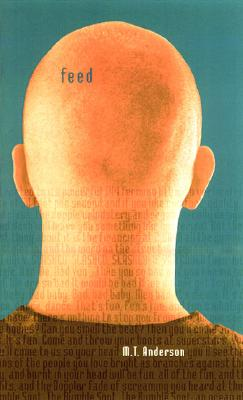
Life After the Star Wars Expanded Universe: M.T. Anderson’s Feed

Andrew Findlay

I read a buttload. I track it, and last year alone I completed 37 books. So far this year, I am halfway through Blue Mars, Blood Meridian, and Les Jours Etranges de Nostradamus and have finished Green Mars, The Reivers, and Feed. That last book is the one I want to talk about today. It is a young adult science fiction book, which is a double-whammy of literary marginalization. The same style of thought that leads serious readers away from science fiction also has them skip YA fiction. It’s a shame, not only because YA is vital to the vibrancy and growth of our literary culture, but because it is worthwhile in its own right.

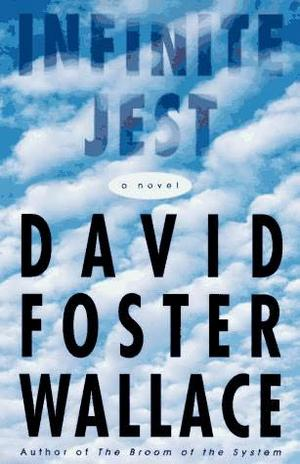
I mention how much I now read by way of comparison. When I was young, I did not enjoy reading. Why sit around and look at pages when there’s so much other shit to do? My discovery of Goosebumps changed everything. Young Adult fiction builds generations of readers. 10-year-olds probably can’t be interested in Cormac McCarthy, much like you probably can’t step outside and run a marathon right now. It takes practice. Progress happens in increments and the process has a beginning and an end. The path that leads to successful completion and enjoyment of Infinite Jest starts with The Berenstain Bears. I discovered Goosebumps when I was 10, and I now have a heroin-level addiction to reading.

Who needs reasons when you’ve got books?

If you never read any Goosebumps, I question whether you are a normal human with a childhood or if you sprang full-formed from a cultivation vat. By fifth grade, I’d moved on to my first semi-adult book, Tyrant’s Test, book three of the Blackfleet Crisis series in the Star Wars Expanded Universe. At the time, I didn’t really understand the problem of starting with the third one. Anyway, I read it, and there were a lot of words I had simply never seen before. One of my clearest reading-related memories is running across a new word and asking my dad what “ad-juh-kent” meant. He responded that “adjacent” meant “next to.” That was the first of many exchanges that made me an etymological nut, to the extent that I can tell you that “buttload” is not in the same class as “fuckload” or “metric shit-ton,” but actually represents 126 imperial gallons of liquid, as that was the size of a “butt,” something used to store wine. YA fiction entices and cultivates new generations of readers, without which American literary culture would be in worse decline than it already is, but that’s not all it does. The best YA fiction does some heavy philosophical lifting in the formation of young minds. One of the best examples of this is The Giver, which teaches middle-school age kids that nothing can be perfect without a price. That is a huge concept. If you are not familiar with The Giver, again, you are probably a clone.

    It’s a boy!

Feed, like The Giver, attacks big issues in bites digestible by young minds. The title of the book comes from its main concept – about three-fourths of citizens have “feeds,” which are like Google Glass but implanted directly into the brain and entwined with the limbic system. Corporations can advertise directly to people with banner ads that scroll  across feed users’ field of vision. Think of how annoying pop-up ads are, and then imagine them being inside of your brain. Data mining is prevalent, with corporations using purchase history and even biological information to target their advertisements. In one particularly surreal scene, a character is in a life-threatening situation, and because she is sweating, Feednet shows her an advertisement for deodorant. There are a lot of dystopic elements to this book, one being that most people live in environment bubbles because the actual outdoors is mostly too toxic to survive in. However, the main focus of the book is the effect of the feed on society. It is the creation and the sustainer of an overwhelmingly lazy culture of consumption. People with feeds are capable of buying anything they want at any time and having it flown to them. People with feeds can look up any piece of information they want at any time, leading to a general decline in critical thinking, memory formation, and language. The decline of language and thought instigated by the Feed is clear throughout the book. One example of character speech: “It was meg big big loud. There was everything there.” This type of dialogue really turned me off of the book for the first few chapters, but you get used to it, and besides it’s just another symptom of the social decline set off by misuse of technology, so it actually serves to strengthen the themes of the book.

The vanguard of civilization’s downfall. Also, it makes you look like an asshole.

The unifying plot is very simple. Boy and girl meet, boy and girl kind of like each other, things go wrong, things end badly. The complexity of the story comes from the setting and from character interactions with the feed. The simplicity of the plot merges with the complexity of the social milieu of the story to create an artifact science fiction is very good at manufacturing: the intellectual beach read. Sentence wizards are great, but it takes a special kind of person to read nothing but DFW, Joyce, and Faulkner. In science fiction, there is an emphasis on clear and direct speech, plot, and characterization. Sure, there are still books like Dhalgren (the Ulysses of science fiction. I only got 200 pages into it because I took it to an actual beach, which was not the best decision ever), but Hemingway-clarity is a feature of most science fiction. The text itself represents very little challenge, yet the ideas discussed therein are intriguing and nourishing. This alchemical melding of simplicity and complexity trigger a lung-gom-pa style of reading in which, unimpeded by overwrought sentences and spurred on by intellectual interest, a reader can consume vast amounts of text in a short amount of time. In this state, reading is exhilaration. This feature makes Feed is a great entry into the constellation of young adult literature. If we want to build a strong reading culture, we need authors who put out literature that can stimulate and exhilarate young minds. Feed is the gateway drug that creates the addicts that would do anything for just one more hit of The Brothers Karamazov.

Image credits: Wiki and IMDB.

Response: Infinite Jest is Probably Not Science Fiction

Austin Duck

(Editor’s note: This may or may not be a response to a previous post here by someone else. It’s certainly at least related, so you may want to open the other one in a new tab.)

Before I begin, I think it necessary to make one thing absolutely clear: I wholeheartedly believe that science fiction can be literature. Margaret Atwood and Ursula Le Guin, these women write literature.

Reader, I think you’ve been misled. You were told that I’d be here to “throw down” with Andrew Findlay, that Infinite Jest (henceforth IJ) is a work of science fiction, that I have a heart of gold (if you read AF’s final footnote), and, unfortunately, none of this is true.

I’m sure you’re thinking to yourself, right now, “how are you not going to argue with AF while fundamentally disagreeing (and claiming that you’ll address that disagreement),” and, honestly, that’s the predicament I’m finding myself in. You see, I don’t find any particular pleasure in launching what will inevitably be a pointless argument about a book that no one reads (though everyone owns a copy). However, I can’t help but talk because I find problems not with the claim that IJ engages sci-fi elements but with the way it has been presented to you as being sci-fi.

The truth of the matter is that, so far as I can tell, IJ is not a sci-fi novel given the criteria I use when I approach it. This criteria seems to differ from Findlay’s in a single, meaningful way. But, before I get to that, let’s revisit the criteria he laid out on Monday:

  • Takes place in the future
  • Strange changes in government, cartography, or the overall structure of the world
  • Extrapolated technologies
  • Thematic development of the plot centers around a certain piece of technology

All of this, very superficially, seems to create a sci-fi novel. I say superficially because, aside from the last criterion (which I’ll address below), none of these elements are inherently anything but set-dressing, asides, bits of information that require more willful suspension of disbelief but do not fundamentally alter anything in a text. If, for some reason that I don’t quite understand, we were to assume that realism were the only capital-L “Literature,” then yes, absolutely, this criteria would hold, but as we’ve seen in our postmodern literary landscape, that’s not quite the case. Do we inherently classify something as sci-fi because it engages these set-pieces? Is White Noise sci-fi? Or Gravity’s Rainbow? Does Haruki Murakami write fantasy novels? I just don’t think so.

To be completely honest, I don’t really have a full grasp on what’s changed since modernism that would allow Murakami to be regarded in the same vein as Faulkner or Atwood as with Stein or Cather, but one thing’s for certain: it happened. Sci-fi fans can disclaim the statements of “literary heavyweights” like Jonathan Franzen, but, ultimately, people like Franzen don’t influence literary tastes nearly so much as critics, intellectuals, and popular culture and, fuck, just look around. Sci-fi is everywhere, and everywhere in high regard. So fuck Jonathan Franzen. Seriously.

I think that what’s happened is the result of post-structural linguistics, post-colonial literatures, and politico-ideological theories of gender, race, and sexuality. I’m not going to get into why (because you’ll fall asleep) but, to give a profoundly abridged version, the prevalent critical consensus of the last 30 years at least (though you could easily trace it back 50) is that “Art” exists beyond a white, Latinate, logocentric (sorry) realism. It just does. There are too many experiences and too many minds for prescription of what creates art, experience, or meaning.

I know it seems like I’ve gone pretty far from IJ, but trust me, I haven’t. IJ, begun somewhere in the late 80s and published in 1996, is a direct inheritor of all of this literary/cultural upheaval. It occurs, it is composed, in a time where experimentation—of different forms, idioms, genres, voices, styles, etc.—makes it perfectly acceptable to cannibalize, to pull from the highest culture (the title refers, in addition to the film that Findlay discussed, to a line in Hamlet) and the lowest (the dime store fantasy or science fiction novel) to make something new, a device consistently utilized by Pynchon, whom Wallace developed a lot of chops imitating.

So does it mean that, to borrow elements of a genre makes a work itself of that genre? In some ways, yes, it does, in the sense that IJ could not exist, as it does, without the existence of the sci-fi genre. Just as I am of my father, so too is IJ of sci-fi. But is it actually a sci- fi novel?

Of Findlay’s above-mentioned criteria, I think no, IJ is not a sci-fi novel. Yes, it is sort of set in the future (or really, for us, the now), and yes, there is a differently arranged America, giant bugs, and advanced technologies, but none of this, and I mean none. of. it. has any actual bearing on the novel itself. Of the approximately 1,000,000,000 plots engaged in IJ, the two most prevalent are of tennis prodigy and aspiring drug addict Hal Incandenza and former junky and street criminal Don Gately. Engagement with these characters (or something closely related to them (the tennis school that Hal attends or the halfway house that Gately oversees)) occupies approximately 75% of the book (that’s over 750 pages to you and me) and the sci-fi elements of the plot occupy exactly none of these pages. Neither Hal nor Don ever hear anything concerning the more fantastic elements of the film Infinite Jest, nor do they ever encounter giant insects or interact meaningfully with the reconfigured United States (neither character leaves Boston during the entire novel).

Instead, both characters (each in their own ways) are obsessed with drugs, with doing them or not doing them, and with the material conditions of living in a world that encourages escape—through drugs, through Netflix (which Wallace calls the Interlace viewer with streaming and cartridge capabilities), through work and family and games—while hiding the consequences of quitting—the psychosis, the inability to relate to other people, the inability to function in a way that makes the world less lonely. And, as a result, that’s what the book hovers over, brings forward as the theme, as to what is truly important. The world then, with its years having been named by companies (for example, instead of 2002, the year is officially called The Year of the Whopper) and its giant insects created by a former-actor-and-ultimately-incompetent-president as the result of turning the upper Northeast into a giant trash bin, does not drive the plot(s). Instead, these set pieces exist as hyperbole, they exist to make larger statements about a culture at large. Ultimately, they exist to be metaphorically, hyperbolically similar to those real plots of Incandenza and Gately, to explode them, rendering them generalizable (i.e. evident in other aspects of the culture) without making them generalities.

And I think this is an important distinction: IJ is not a book about characters. Yes, there are characters, loads of them, some of whom you’ll get very attached to, who will show you yourself and your world in very uncomfortable ways. But really, truly, IJ is an analysis of the culture, a hard look at a culture of escapism, of shirking responsibility, of letting go toward achieving pure, individuated pleasure, and is invested in showing the material outcomes. Sure there are big bugs, but they’re the effects. They don’t matter, they don’t really do anything except exist, and, in their existence, they remind us of the realities beneath the stories being told to us, the stories we’ve invested and of which we are not likely to escape.

Which brings us finally to Findlay’s fourth claim—that thematic development of the plot centers around a certain piece of technology—and its relationship to the film Infinite Jest (which, for those of you just tuning in, is a film created by Hal’s optical-physicist-gone-auteur-filmmaker-father that is so entertaining anyone who views it never stops watching and dies.) I do agree that there is something to this film’s presence in the text that goes pretty far beyond what I’ve discussed above in terms of adding a serious sci-fi element to the text. The story of the film’s effects does come across as being the third most important plot in IJ (right behind Don and Hal, though occupying much less actual page-space) and its existence is pervasive, showing up directly in nearly every minor-character arc in the book.

Despite this, I’m still not convinced that this element makes the book sci-fi; yes, IJ definitely makes a strongly sci-fi move, but not, it seems to a sci-fi effect. Let me try that again. Here are three reasons why I don’t think that the film Infinite Jest makes the book Infinite Jest sci-fi :

1) while this film is a technology that doesn’t exist, it doesn’t seem to be the effects of radically advanced science that make the difference as it does the effects of experimental art (much more in line with the structure of the book, the meta-textual, self-conscious foot-noting, etc.),

2) that, rather than a specific material/technological aspect that makes the film “addictive,” it seems that IJ (the movie) stands in for a Platonic idea of entertainment (i.e. something completely, purely entertaining) as a means for hyperbolizing the novel’s themes (as mentioned above), and

3) (most importantly) that, to me that what makes a piece of literature quintessentially sci-fi is not the engagement of specific science-materials in a text, but an in-depth study of what, logically, could come of the use of those materials and their effects on humanity. IJ ultimately isn’t speculative because it’s not concerned with what the effects of Netflix or the film’s particular technology will be; it’s concerned with what’s already here and uses these sci-fi pieces to hyperbolize and generalize, to exemplify cultural patterns in these objects that affect multiple lives.

It’s undeniable that Infinite Jest contains sci-fi elements. However, rather than calling it sci-fi (which is not derogatory; it’s just not accurate), let’s just call it what it is: an enormous, important, genre-bending book that cuts to the core of the contemporary American experience of pleasure and addiction. It’s simple to read, nearly impossible to think about, and you are truly at a loss if you don’t read it just because it weighs like 20 pounds or because you’d rather watch Girls.