movie

Life After the Star Wars Expanded Universe: Bong Joon-ho’s Snowpiercer

 Snowpiercer-Movie-Poster-Chris-Evans

Andrew Findlay

In Life After the Star Wars Expanded Universe, we take a look at science fiction and fantasy, why they’re great, and what they say about where our species has been and where it’s going. 

Snowpiercer is a delightful sci-fi concept film. The concept is that, amid concerns of climate change, humanity released a relatively untested “cooling” chemical into the upper atmosphere – an anthropogenic solution for an anthropogenic problem. By the way, if you are a person who still denies that something is happening to the climate and that humanity is largely responsible for it, please leave. Even offering a counterargument to deniers is creating a semblance of rational disagreement and debate, which only serves to allow major actors to continue down a path that, unmitigated, will quite literally end the world as we know it. Many scientists are worried that there is a point of no return, and that, once we pass it, there might be a runaway greenhouse gas effect that will radically alter the makeup of the only known body in the solar system that can support human life. Current governmental response to it is insane. Not only are they not freaking out, a full 58% of Republican lawmakers – over half of one major political party – doubt that it exists. The people responsible for legislating measures that might save us aren’t doing anything because a quarter of them are idiots. As a brief aside – a lot of climate change deniers are also evolution deniers. Evolution denial is similar to climate change denial, if the consequences of denying evolution made the whole human race lose their neocortex. That’s the thing – you can deny evolution all you want, and it will change nothing. Dismissing sound climate science, or even just fostering the appearance of any debate on the issue, weakens our ability to respond, in a measured and timely fashion, to a set of circumstances that could lead to mass famine, destruction, and loss of life. I don’t get it. During the Cold War, everyone was terrified of the world ending in a nuclear holocaust. There’s an outside chance the world might end if we don’t stop freely burning fossil fuels, and about a quarter of us are responding with  “Eh, fuck it.” (25% being the rough number of people that actually deny it. Probably a lot more don’t give a shit).

In Kim Stanley Robinson’s Mars trilogy, around 2128, Mars and its citizens stood as an oppressed colony of Terran corporate interests. Martians get a fighting chance when a major humanitarian crisis strikes Earth and diverts resources from harvesting efforts on Mars to relief efforts on the homeworld – the West Antarctic Ice Sheet collapses, dooming all Terran coastal areas with slow but inexorable inundation. Robinson, writing a far-future novel in 1996, trying to think of a semi-plausible disaster for purposes of his plot, came up with that. It happened eighteen years later. If that isn’t enough to terrify you, a science-fiction author’s future apocalypse scenario coming true less than two decades after his book was published, I don’t know what is.

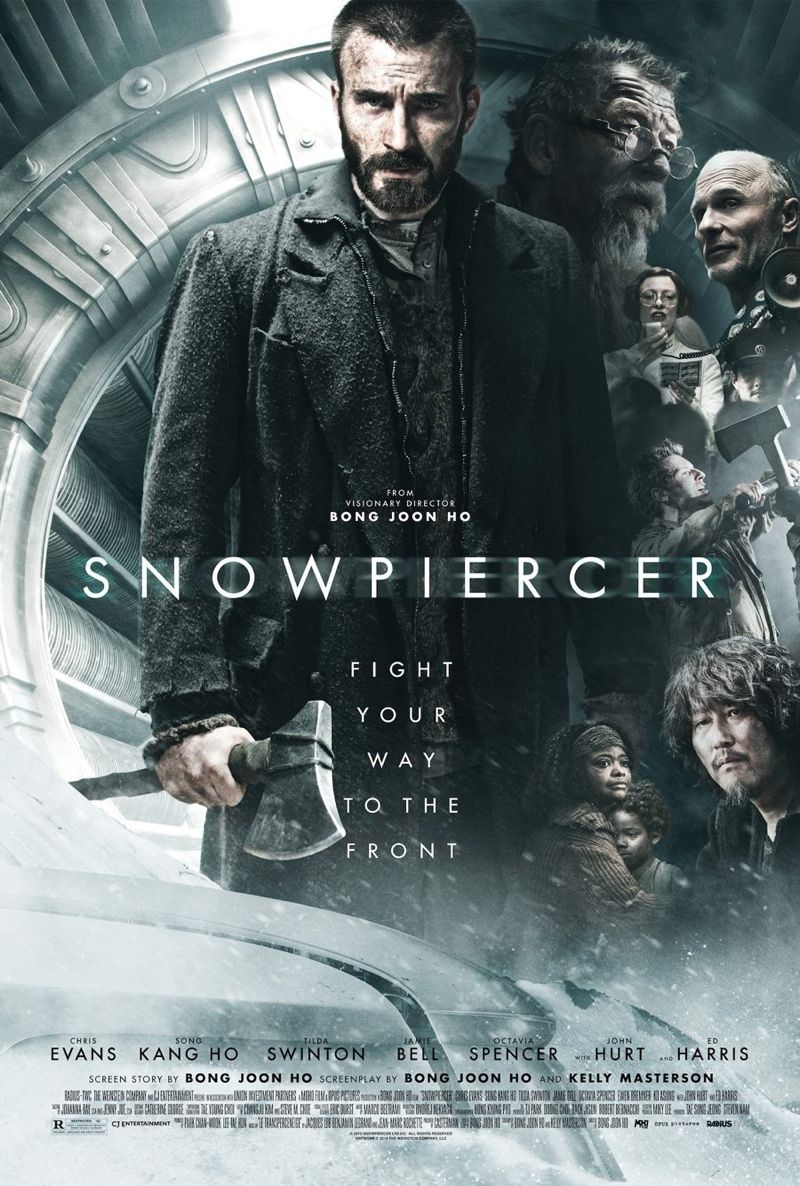
Anyway, they release this quick-fix chemical into the upper atmosphere, and the immediate consequence is that they cool the Earth to far below the threshold for sustaining an ecosystem. All life on Earth is flash-frozen, save for a small enclave on a constantly-moving train run by a perpetual motion engine. Snowpiercer is a great example of the type of science fiction that takes a real science problem from the world, extrapolates it, and then uses it as a backdrop to have Captain America beat the crap out of people. Chris Evans, of Captain America fame, plays the rebellion leader Curtis Everett. Don’t come here for that though – other than hitting people with blunt (or sharp) objects, he’s not very Captainy. This film is way too grim for that.

fan2d

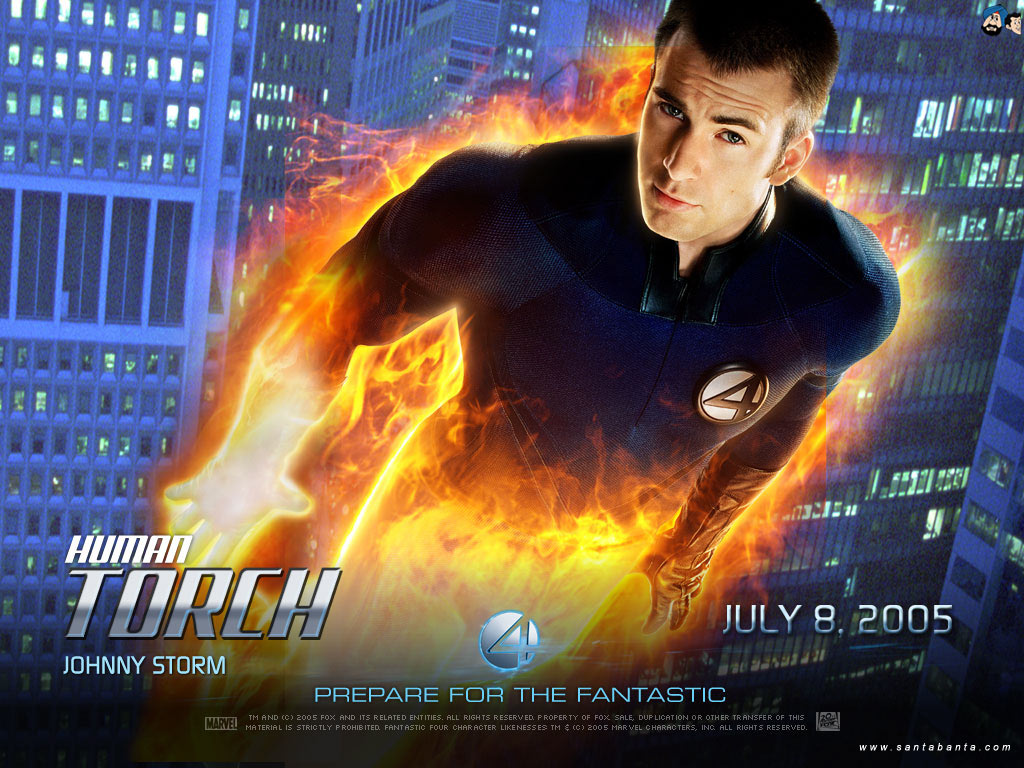
He also starred in this movie. We do not speak its name.

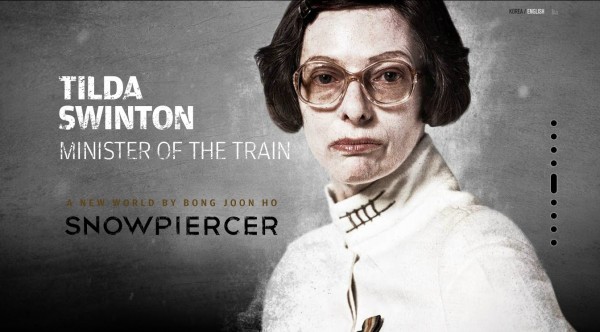
The grimness comes from the fact that on the train housing the last remnant of humanity, you have your first-class passengers, your coach passengers, and your oh-my-god-the-world-is-ending-let-me-on passengers. This last category is kept in constant poverty and misery, beaten by guards, and despoiled by the rich. They eat protein gelatin while first-classers eat steak and fish. They pile in squalid bunks while the rich lounge in private cars. The whole drive of the movie is Chris Evans’ character fomenting a rebellion, the stated purpose of which is to reach the front of the train and gain control of the engine, thus gaining control of the entire train. There is a lot of ingrained hierarchy and a lot of guards in place to keep them from doing just that. There is also a lot of propaganda, whereby the owner of the train is cast in a numinous aura of near-godliness. The lead propagandist is probably my favorite character in the film, and she is played marvelously by a ridiculous Tilda Swinton.

tilda

Oh, Tilda.

The most remarkable achievement of the film is its transformation of the vertical, metaphorical rich on top/poor on bottom dynamic into a horizontal, literal rich in front/poor in back dynamic. The protagonist and his band struggle through car after car, moving from industrial-revolution level squalor, to clean and economical, to absurdly elegant and polished. This results in visual cues signaling Curtis’ progress – the further up he gets, the nicer everything is. It is a physical diorama of oppression. Another thing the film does nicely is the action – there is plenty of gritty, bloody scuffling as they inch forward to the engine. Much of the killing is done with improvised weaponry, as the oppressed poor are of course not permitted firearms. Some of the scenes, while not nearly as cool, reminded me of the transcendental hammer hallway fight scene from Oldboy. If you have not seen Oldboy, it is on Netflix. You should probably see Oldboy. Here’s the scene I’m talking about:

This is pretty much what happens as they move through the train cars.

The movie is well worth seeing. Its idea-driven plot, its ambition, its worldbuilding, and its unique sets more than win it the right to your time. However, it does fall apart in some areas. First off, the majority of the characters are pretty simply sketched out. There’s no real change or development throughout the film. Also, the ending is one of the stupidest things I’ve ever seen. It’s fine, it’s fine – I still like the movie. But watch out for that ending. Overall, it’s nice to see small concept-driven sci-fi being produced as opposed to ginormous explosion-driven sci-fi (cough Transformers cough). Take an afternoon for yourself and check it out.

Andrew Findlay has strong opinions about things (mostly literature) and will share them with you loudly and confidently. You can email him at afindlay.recess@gmail.com.

Worst Best Picture: Is Cavalcade Better or Worse Than Crash?

Cavalcade12

Alex Russell

In “Worst Best Picture” we search every single Best Picture Oscar winner of all time from 1927 to present to uncover the worst of them all. Conventional wisdom says that 2005’s winner Crash is the worst winner in history. We won’t stop until we’ve tested every last one. Read the the first, our review of Crash, here. Posts will be relatively spoiler free, but there may be some details revealed. Today’s installment is the 1932/1933 winner Cavalcade. Is it better than Crash?

What’s the first “modern” movie that won an Oscar? What does that even mean? Cavalcade is a great place to start that discussion, mostly because it’s basically impossible to approach Cavalcade without engaging the fact that it’s nearly a century old.

Cavalcade is about a high society British family dealing with the events of the first 30 years of the 20th century. This involves a bit of history lesson at times, since an American in 2014 can be forgiven for not knowing the intricacies of the Second Boer War offhand. No one should be completely lost, though, because it eventually shifts to a love story about the Titanic and a dramatic climax involving World War I.

You can’t deal with Cavalcade the way you deal with Rain Man or Platoon. This is another world of movies, and it’s not really something you can judge by today’s standards. Cavalcade was the sixth winner — just a few years after the silent film Wings won the first Oscar — and it won in a generation where people wanted something entirely different out of a film. Lines are stepped all over, characters are never established, and huge diversions from the plot are common. That last one is the strangest trend about early Hollywood: everything made the final cut, no matter if it mattered for characterization, or the plot, or neither.

Cavalcade wanders around in a lot of ways, but it benefits from being the story of how a family changes through time. So, unlike the half-hour diversions in Wings, everything in Cavalcade is at least part of “the story.” A family experiences loss and a family grieves. Some of it is really strange — people just die in all of the early movies, it’s shockingly common for someone to just get hit by a truck or die in a plane crash or get shot — but it’s all part of a bigger thing.

I enjoyed it, largely. It won’t stick with me, and I know that because I watched it a week ago and I already am losing little bits of it. I feel like this is one of the few that’s on the fence for me. It’s a fine movie within the context of the 30s, but its one you can skip if you’re not a completionist.

The Best Part: There’s a haunting scene where soldiers are shown walking through time passing as they die in World War I. One of the most interesting terms in history is that of the “lost generation” in World War I. It means different things to different cultures, but the British use it to refer to the fact that nearly an entire generation of young men died at once. Cavalcade may not be an essential movie, but there’s no better way to illustrate that terrifying idea.

The Worst Part: You know how people sometimes say that Forrest Gump is a little silly because Forrest was “somehow” at every major world event in his lifetime? Well, that, but not a joke. There people really got the full British experience. Like, too much of it.

Is It Better or Worse than CrashIt’s tough to even compare these. Cavalcade makes absolutely no attempt to deal with race or class — it’s about early century London, so duh — and I still say no attempt at all is better than the one in Crash.

Worst Best Picture Archives: Crash | Terms of Endearment | Forrest Gump | All About Eve | The Apartment | No Country for Old Men | Gentleman’s Agreement |12 Years a SlaveThe Last Emperor | The Silence of the Lambs | The Artist | A Man for All Seasons | Platoon | The Lord of the Rings: The Return of the King | The King’s Speech | Rain Man | The Departed | The Bridge on the River Kwai | Marty | Gigi | It Happened One Night | Driving Miss Daisy | Shakespeare in Love | Wings | Midnight Cowboy | Rocky | Gone with the Wind| Chicago | Gladiator | Cavalcade |

Alex Russell lives in Chicago and is set in his ways. Disagree with him about anything at readingatrecess@gmail.com or on Twitter at @alexbad.

Image: The Guardian

Worst Best Picture: Is Gladiator Better or Worse Than Crash?

Russell-Crowe-in-Gladiato-001

Alex Russell

In “Worst Best Picture” we search every single Best Picture Oscar winner of all time from 1927 to present to uncover the worst of them all. Conventional wisdom says that 2005’s winner Crash is the worst winner in history. We won’t stop until we’ve tested every last one. Read the the first, our review of Crash, here. Posts will be relatively spoiler free, but there may be some details revealed. Today’s installment is the 2000 winner Gladiator. Is it better than Crash?

Gladiator may be the only Best Picture winner that has absolutely nothing to say. There are worse movies, to be sure, but there aren’t any that attempt to do less. You probably saw it — we all saw it — but do you remember it? Is there even anything to remember?

I committed myself to rewatching every Best Picture winner for this project. I’ve seen some of them so many times that it doesn’t seem necessary — American Beauty and Annie Hall are among my favorite movies — but I want to give every single movie the same chance to be worse than Crash. I want all 86 movies to get the same treatment. As I see more and more of Hollywood’s most anointed, I am definitely noticing some trends.

People talk about “Oscar bait” a lot. People define the term differently, but they usually mean something that was clearly made just to win an Oscar. Maybe it’s the flash (The Last Emperor is an enormous movie, even if that’s all it is) and maybe it’s the message (The King’s Speech and Rain Man both take on challenging themes, though your mileage about if that is ‘bait’ or not will vary) but people think better of a movie that was clearly made just to tell a great story.

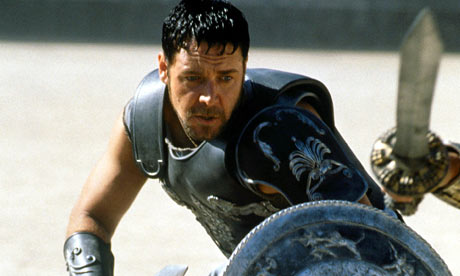
Gladiator was definitely not made to do that. Gladiator was made to put butts in seats. It’s a “popcorn movie” through-and-through. It’s the story of the Roman general Maximus (Russell Crowe) who is betrayed and cast into slavery by the murderous Emperor Commodus (Joaquin Phoenix). Maximus has to get out of slavery by winning his freedom as a gladiator. If you haven’t seen it, well, you’re caught up.

There are other characters, but it’s really hard to call them that. No one exists for any reason other than to further Maximus’ stoic goodness or Commodus’ relentless evil. Both characters are dull cartoons of morality. There’s just about no attempt made to establish either of them, either. Just: Commodus is a bad guy and Maximus is a good guy. You know this because this is a story about the good guy. Characters are for movies that don’t have lions! Look at the lions!

To call Gladiator a stupid movie is to stop short of the truth. Nothing at all matters in this movie. What even is the moral? “Don’t be an unceasing asshole all the time?” or “Do try to be a good guy and don’t murder anyone unless they try to murder you with a trident first?” OK, got it. Real groundbreaking stuff here, Russell Crowe.

People are dismissive of Gladiator because it’s ambitious only in scope. It does feel like Rome. It feels “epic” at times. That said, it’s just not a movie about anything. If you want a story about a hero’s journey down to nothing and back up, you can watch any other movie. And you should.

The Best Part: The closest Gladiator comes to an interesting character is Proximo (Oliver Reed). He’s a former gladiator who now makes a living selling out current gladiators for fights. That should set him up for some interesting commentary on the duality of the sold sometimes becoming the sellers, but it doesn’t. Proximo does offer a little bit of complexity in that he can’t decide if he wants to help or not. That’s enough praise for this.

The Worst Part: Can I say everything? The worst part is that this won the same award The Godfather won. It’s not an interesting story and it offers no challenges along the way. The fact that the villain’s motivation is essentially “being evil” makes Gladiator a little less complicated morally than some Disney movies.

Is It Better or Worse than Crash? Gladiator isn’t a worse movie, but it’s certainly a less interesting one. I hate the message of Crash, but it has one. There’s nothing worth gleaning from Gladiator. It’s just a long series of events that offer no commentary on human existence. Crash is worse because it’s bad, but damned if Gladiator isn’t about as close to zero without going under as it gets.

Worst Best Picture Archives: Crash | Terms of Endearment | Forrest Gump | All About Eve | The Apartment | No Country for Old Men | Gentleman’s Agreement |12 Years a SlaveThe Last Emperor | The Silence of the Lambs | The Artist | A Man for All Seasons | Platoon | The Lord of the Rings: The Return of the King | The King’s Speech | Rain Man | The Departed | The Bridge on the River Kwai | Marty | Gigi | It Happened One Night | Driving Miss Daisy | Shakespeare in Love | Wings | Midnight Cowboy | Rocky | Gone with the Wind| Chicago

Alex Russell lives in Chicago and is set in his ways. Disagree with him about anything at readingatrecess@gmail.com or on Twitter at @alexbad.

Image: The Guardian

Worst Best Picture: Is Chicago Better or Worse Than Crash?

chicago

Alex Russell

In “Worst Best Picture” we search every single Best Picture Oscar winner of all time from 1927 to present to uncover the worst of them all. Conventional wisdom says that 2005’s winner Crash is the worst winner in history. We won’t stop until we’ve tested every last one. Read the the first, our review of Crash, here. Posts will be relatively spoiler free, but there may be some details revealed. Today’s installment is the 2002 winner Chicago. Is it better than Crash?

When I mention this project to people they always have the same general response. People always mention the movie they think is the worst Oscar winner ever. Usually it’s Crash. Sometimes it’s not.

When someone says a different movie, I desperately want to see it. I don’t have a plan for if something is worse than Crash, but I want to have to figure that out. I want one of the other 85 movies between Wings and 12 Years a Slave to be so bad that I have to retitle this whole damn thing. So far, through roughly a third of them, nothing has really approached it.

The closest so far is probably The Artist. I don’t have a great case to make there, I just thought it was obsessed with the wrong parts of itself. I thought it was somehow both indulgent and uninteresting. I didn’t love Shakespeare in Love, either, but neither movie was so odious that I could justify hate like I have hate for Crash.

All of this is to say that people told me that Chicago had a chance to dethrone the king of the list. When I heard that, I got excited. I wanted to see a musical that had a shot at being worse than the sledgehammer-gentle message of Crash that “everyone is bad, forever.”

There are a handful of musicals that have won Best Picture over the years. They’re mostly iconic films like My Fair Lady and West Side Story. Some of them are oddities like Gigiwhich BuzzFeed called the worst Best Picture winner of all time in their listGigi is strange, to be sure, but it’s not terrible. It’s actually pretty fun, which is what I assume people mostly want out of a musical.

Chicago is also supposed to be fun, and I was definitely surprised to find that I really enjoyed it. The songs are catchy and the dancing is flashy and it has Taye Diggs. Are you going to tell me you hate Taye Diggs?

The thing is, I don’t really have a lot to say about Chicago, because I went in with some weird expectations. I expected a movie that was “big” and “loud” in obnoxious ways, but I got something charming and refreshing. Chicago “worked” on me. There’s no love story to get in the way and there’s no real development, but it’s fun. It’s a bunch of songs and visuals that combine to form something mostly worth looking at. I think that’s all a musical is supposed to be, right?

The Best Part: A lot of the reviews for Chicago talk about the dancing being largely smoke and mirrors. I’m not a sharp enough dance critic (let no one tell you otherwise!) to know, but it seemed pretty great to me. I do not generally like movies like Chicago, but the “Cell Block Tango” performance was pretty excellent.

The Worst Part: I’m not in love with the ending. I don’t think it’s really a spoiler to say how a musical ends, but it just feels really haphazardly tied up. You can’t fault this version for how the actual story of Chicago ends, but “the smooth guy is smooth, the putz is a putz, and everyone else is whatever” isn’t exactly dynamic.

Is It Better or Worse than CrashI’ve recently decided I need to go back and rewatch Crash, because I’m running out of extremely specific complaints about my subject matter. Both movies have a cynical view of the world, but again, Chicago has more subtlety about its cynicism despite having a scene where a guy controls characters with strings. Crash deserves to be raked over the coals for a lot of faults, but none more than how obvious it is.

Worst Best Picture Archives: Crash | Terms of Endearment | Forrest Gump | All About Eve | The Apartment | No Country for Old Men | Gentleman’s Agreement |12 Years a SlaveThe Last Emperor | The Silence of the Lambs | The Artist | A Man for All Seasons | Platoon | The Lord of the Rings: The Return of the King | The King’s Speech | Rain Man | The Departed | The Bridge on the River Kwai | Marty | Gigi | It Happened One Night | Driving Miss Daisy | Shakespeare in Love | Wings | Midnight Cowboy | Rocky | Gone with the Wind|

Alex Russell lives in Chicago and is set in his ways. Disagree with him about anything at readingatrecess@gmail.com or on Twitter at @alexbad.

Worst Best Picture: Is Gone with the Wind Better or Worse Than Crash?

Vivien_Leigh_Gone_Wind_Restaured

Alex Russell

In “Worst Best Picture” we search every single Best Picture Oscar winner of all time from 1927 to present to uncover the worst of them all. Conventional wisdom says that 2005’s winner Crash is the worst winner in history. We won’t stop until we’ve tested every last one. Read the the first, our review of Crash, here. Posts will be relatively spoiler free, but there may be some details revealed. Today’s installment is the 1939 winner Gone with the Wind. Is it better than Crash?

History has both been extremely kind and extremely unkind to Gone with the Wind. It’s one of the most successful, well-reviewed films in American history, but it’s a film with a Wikipedia “analysis” section that includes “racial criticism” and “depiction of marital rape.” No matter what part of Gone with the Wind you’re talking about, you’re talking about something capital-I Important.

Gone with the Wind is one of the few “great” Best Picture winners that I’d actually seen before starting this, though it was years earlier. I was too young to understand the dynamic between Scarlett and Rhett. All I remembered was how terrible the burning of Atlanta scenes were (not wrong, there, young me) and how awkward the movie’s racial tensions were (the seriousness of which was definitely lost on teenage me).

When you watch Gone with the Wind in one sitting you are struck not just by the length — it’s the longest Best Picture winner ever, by a lot — but by how much of the film isn’t about “the film.” Even aside from overtures and extended credit sequences that are relics of the time, there are huge sequences that don’t advance the plot. The cast of 20 or 30 relatively major characters doesn’t help with that sensation, either.

Gone with the Wind gets rethought critically because it’s racist and sexist and honestly, a little dumb. Scarlett and Rhett are interesting, but most of the rest of the cast is made up of simple people with simple desires. That contributes to why some scenes feel like a slog. Sometimes you’re watching someone mad at Scarlett for marrying a shopkeeper and you feel like you maybe started the movie when you were a much younger person. Maybe you’ll never get to leave.

There’s not enough room here to talk about a movie with problems as complicated as Gone with the Wind, but I will say this: it is crazy to me that I have had as many conversations as I have in my life about this movie without talking about the drunken argument Rhett and Scarlett have. The racial depictions are downright awful, but you really need to see this scene again if you haven’t seen it recently. It’s unexpected and it’s foul. It’s really the only thing I’m sure I’ll remember about Gone with the Wind this time around. I’ve never seen anything like it in a “romance.”

The Best Part: The final fourth of the movie works as a stand-alone in a way. The time Rhett and Scarlett are actually married and trying to deal with it feels well-paced and interesting. There are monstrous parts and there are acidic exchanges, but the only part of Gone with the Wind that feels like what we know today as a complete story is this one.

The Worst Part: Where to begin? Race, sexuality, sex, marriage, family, money, war? There’s a lot going on in the world of Gone with the Wind, but there aren’t any real good messages here. There’s not enough time here to condemn it where it needs to be condemned, and that’s better left to better critics, anyway. For pure film, I’m going either Atlanta burning or the character who dies on a horse. Both would be less jarring in Gone with the Wind if they were anime.

Is It Better or Worse than Crash? How will history remember Crash? That’s a question I’ve pondered in this space before. I have to think that history will wonder what race relations in America were like in 2005, and they will look to Crash to find their answer. Just as The Apartment suffers because of modern opinions on mental health and Gentleman’s Agreement suffers because it is too simplistic with anti-racism, Crash and Gone with the Wind both suffer because they feel like sad products of sadder times. We want our world to be better now and we want our history to be better then. It wasn’t, to be sure, but Gone with the Wind is a little too gleeful about it. Crash is at least unhappy about the world it glorifies, though neither world is one I want to live in. Gone with the Wind is better, but the similarities are there.

Worst Best Picture Archives: Crash | Terms of Endearment | Forrest Gump | All About Eve | The Apartment | No Country for Old Men | Gentleman’s Agreement |12 Years a SlaveThe Last Emperor | The Silence of the Lambs | The Artist | A Man for All Seasons | Platoon | The Lord of the Rings: The Return of the King | The King’s Speech | Rain Man | The Departed | The Bridge on the River Kwai | Marty | Gigi | It Happened One Night | Driving Miss Daisy | Shakespeare in Love | Wings | Midnight Cowboy | Rocky |

Alex Russell lives in Chicago and is set in his ways. Disagree with him about anything at readingatrecess@gmail.com or on Twitter at @alexbad.

Image credit: here.

Worst Best Picture: Is Rocky Better or Worse Than Crash?

rocky37ul1.6843

Alex Russell

In “Worst Best Picture” we search every single Best Picture Oscar winner of all time from 1927 to present to uncover the worst of them all. Conventional wisdom says that 2005’s winner Crash is the worst winner in history. We won’t stop until we’ve tested every last one. Read the the first, our review of Crash, here. Posts will be relatively spoiler free, but there may be some details revealed. Today’s installment is the 1976 winner Rocky. Is it better than Crash?

Network and Taxi Driver both came out in 1976, the same year Sylvester Stallone cemented his place in pop culture with Rocky. There is absolutely no question that the endurance of Rocky as an underdog story and the permanent representation of boxing is deserved. It’s Rocky. You don’t need me to tell you what Rocky is.

It’s strange, though, to consider it as a “film great” against Network and Taxi Driver. They’re both better movies, but not to the degree that this is some kind of historical slight. I’ve never heard anyone call 1976 a travesty in the way people talk about Saving Private Ryan losing to Shakespeare in Love or The English Patient beating Fargo. The official Oscars website has a big picture of Frances McDormand on their page for 1997 despite the loss, but 1976 belongs to Sly and Rocky.

There are many movies on this list that I’ve never seen, but there’s only a few that seem strange to me to have missed. Until a few days ago, I had never actually watched all of Rocky. It’s a weird thing to do for the first time. I’ve seen so many parodies and homages and references to it, but I’d never seen the source material.

The overwhelming thing about Rocky is that you just about can’t understand a damn word Sly Stallone says. Rocky the character is supposed to be a sleepy, kinda-dumb-kinda-not every-man, of course, but it’s weird to have heard so many impressions and then hear how much weirder the voice actually is. Sly’s the same weird guy in every movie, but as Rocky he’s full-on marblemouth. You probably already know that, but it’s no less weird to finally hear it happen.

He’s a boxer who never got a shot and then he gets one. He fights the heavyweight champ. He gets the girl, though he’s always had the girl. It doesn’t need to be more than it is. It’s Rocky, the feel-good punching story of our lives. It’s not the chilling tale of Taxi Driver and it’s not the risky parable of Network, but it’s fine. Rocky shouldn’t be what we have as the history of 1976, but it’s no huge insult to its betters, either.

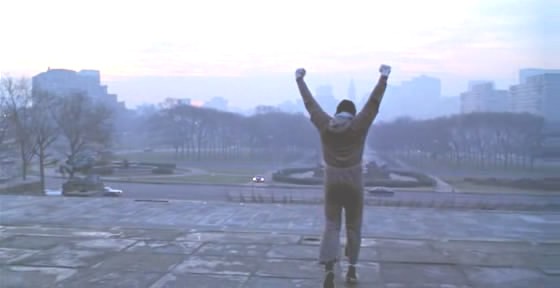
The Best Part: The climactic fight is great, of course, but it’s the bit you already know: the training montage with the art museum steps and the glass of eggs and the train tracks and the song. The movie wanders around Rocky’s love life for a long time and they spend too much time establishing that you should feel bad for this lug, but the montage is iconic for a reason. It’s hard not to get excited, even though you know what’s coming.

The Worst Part: I spent a lot of time thinking about Talia Shire, the woman who plays Rocky’s love interest Adrian. She’s trapped in a weird place in Rocky. Rocky genuinely loves her and her life’s a mess, so it’s probably for the best that she falls for him, but she still doesn’t really get a lot to do. No one other than Rocky himself really gets much to do, honestly. There’s nothing really below the surface for anyone else, and some of the “emotional” outbursts from other people feel strange because they’re mostly ciphers.

Is It Better or Worse than Crash? I’ve mostly used this space to assault Crash as a dumb, hateful view of race in America. It’s definitely that, but it’s also the story of unlikable people becoming likeable and vice versa. Crash wants to play with your emotions; the good guys aren’t always good and the bad guys are usually complicated. Crash gets a lot of hate because it’s ham-fisted, but it’s trying to do something complicated. Rocky isn’t trying to do anything complicated at all. If these were both made with the same amount of care, Crash would be the far better story. They’re not, though, and Sly Stallone’s love-song to underdogs is more compelling.

Worst Best Picture Archives: Crash | Terms of Endearment | Forrest Gump | All About Eve | The Apartment | No Country for Old Men | Gentleman’s Agreement |12 Years a SlaveThe Last Emperor | The Silence of the Lambs | The Artist | A Man for All Seasons | Platoon | The Lord of the Rings: The Return of the King | The King’s Speech | Rain Man | The Departed | The Bridge on the River Kwai | Marty | Gigi | It Happened One Night | Driving Miss Daisy | Shakespeare in Love | Wings | Midnight Cowboy | Rocky |

Alex Russell lives in Chicago and is set in his ways. Disagree with him about anything at readingatrecess@gmail.com or on Twitter at @alexbad.

Image credit: here.

Worst Best Picture: Is Midnight Cowboy Better or Worse Than Crash?

midnight

Alex Russell

In “Worst Best Picture” we search every single Best Picture Oscar winner of all time from 1927 to present to uncover the worst of them all. Conventional wisdom says that 2005’s winner Crash is the worst winner in history. We won’t stop until we’ve tested every last one. Read the the first, our review of Crash, here. Posts will be relatively spoiler free, but there may be some details revealed. Today’s installment is the 1969 winner Midnight Cowboy. Is it better than Crash?

Midnight Cowboy has the distinction of being the only movie rated X to ever win the Oscar for Best Picture. The story of the rating system in American film history is a little absurd. I talked about that a little bit with regards to Terms of Endearment, a really brutal movie with frequent sex scenes and more frequent “adult situations,” getting a PG rating in the early 80s. Still, “X” jumps right off the page. It makes you wonder just how raw Midnight Cowboy could be.

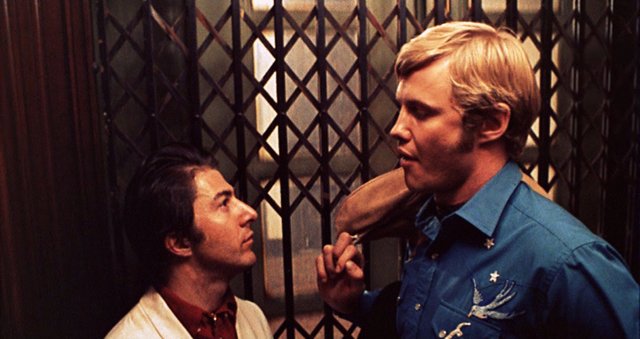
We’re definitely in a different world in 2014. This isn’t an “X” movie, but damn it’s a tough one. Midnight Cowboy is the tale of Joe Buck’s (Jon Voight) plan to leave Texas and be a male prostitute in New York City. He’s a hayseed of the highest order, but his character really shines because he has the depressing trait of “assumed street smarts.” Joe thinks he’s figured out all the angles in every situation, and that’s the worst thing to think when you haven’t at all.

He hooks up with Rico “Ratso” Rizzo (Dustin Hoffman, who is excellent), a conman who lives in a condemned building. Joe tries to convince people to have sex with him for money and Ratso tries to convince Joe that he’s more than he seems. Joe is immediately unsuccessful and “moves in” to Ratso’s hole-in-the-wall.

It’s a story about hope and image. Both men think they have the tools to make it in the world, they just need the shot. Ratso needs a guy like Joe that he can “manage” and Joe just needs “customers.” Ratso won’t stoop to shining shoes like his old man and Joe won’t go back to washing dishes like he did in Texas. They want more for themselves, reality be damned.

We all want a little more for ourselves, and you’ll be missing the forest if you pay too much attention to the sex in Midnight Cowboy. It’s certainly a movie about sex, but the sex doesn’t matter. The main thing going on in Midnight Cowboy happens when two people shiver and get sick in an old tenement house because they can’t swallow their pride. The main thing is that we all know that guy who could get it together “if he could just make it to Florida.”

You don’t need to go to Florida. You need something else.

The Best Part: The sadness of the lead characters is extremely hard to handle. In one scene during the “hopeful” part of the movie, Jon Voight’s character has to ask a woman for crackers that he can put ketchup on to not starve to death. It takes a dip towards the depressing after that, but it’s still on the upswing, then! I list this in the “best” because the movie isn’t a direct arc, which is interesting. It’s a risky way to tell a story, but it’s like an actual life with highs and lows rather than one constant line up or down.

The Worst Part: As much as I want to make this about a downright stupid Andy Warhol storyline (sigh), it has to be the entire handling of homosexuality. This movie is from 1969, and that’s a definitive year in gay history in America. Midnight Cowboy came out a month before Stonewall, and it’s a movie about a guy from Texas being scared of being gay. It’s tough to discuss without spoiling it, but Joe frequently finds that he can make a living in NYC as a prostitute, but he’ll have to sleep with men. He’s not willing to – which is not the problem – but the anger and the weirdness of the way they deal with it in the most explosive year in gay history in America is very strange. I can’t fully condemn a movie from more than four decades ago for not handling gay issues head-on. I can be weirded out by hearing Dustin Hoffman say a gay slur about twelve times in a row.

Is It Better or Worse than Crash? We’re across the country in Midnight Cowboy, but we’ve got the same kind of “gritty city” story. The NYC of Midnight Cowboy is a sad, angry, lonely place. It’s not dissimilar to the LA that Crash wants to talk about, but this is 1969 New York City. It’s the city before they took all the porn out of Times Square. It’s the bad old days, the days talked about in really good and really bad literature. It’s a piece locked in a time that doesn’t exist anymore, and the grit is there to explain what “1969” is to the audience. Crash, as I’ve said before, exists in a mythical 2005. Racism is extremely real, but as the story of anywhere real in 2005, Crash is a bad destination movie.

Worst Best Picture Archives: Crash | Terms of Endearment | Forrest Gump | All About Eve | The Apartment | No Country for Old Men | Gentleman’s Agreement |12 Years a SlaveThe Last Emperor | The Silence of the Lambs | The Artist | A Man for All Seasons | Platoon | The Lord of the Rings: The Return of the King | The King’s Speech | Rain Man | The Departed | The Bridge on the River Kwai | Marty | Gigi | It Happened One Night | Driving Miss Daisy | Shakespeare in Love | Wings

Alex Russell lives in Chicago and is set in his ways. Disagree with him about anything at readingatrecess@gmail.com or on Twitter at @alexbad.

Worst Best Picture: Is Wings Better or Worse Than Crash?

MV5BMTUwNDY0MDUyMl5BMl5BanBnXkFtZTcwOTY4NTM2Nw@@._V1_SX640_SY720_

Alex Russell

In “Worst Best Picture” we search every single Best Picture Oscar winner of all time from 1927 to present to uncover the worst of them all. Conventional wisdom says that 2005’s winner Crash is the worst winner in history. We won’t stop until we’ve tested every last one. Read the the first, our review of Crash, here. Posts will be relatively spoiler free, but there may be some details revealed. Today’s installment is the 1927 and 1928 winner Wings. Is it better than Crash?

The story of movie history isn’t the story of how we got to 12 Years a Slave any more than it is how we started with Wings, the first Best Picture winner. Different movies achieve immortality for different reasons. Wings was the first Oscar winner, back before they even called them that, but is it anything more than that?

It’s surreal to watch Wings in 2014. I try to keep the time period a movie is from in my mind when I watch it, but that’s not the challenge here. Rain Man is a fantastic movie that someone spilled 80s all over; Wings is pure 1927. It’s the only true silent movie to win (The Artist doesn’t count and should be ignored), for starters. A two-and-a-half hour silent movie seems like it would be a tough sell in 2014, but it’s worth exploring the first Best Picture.

Wings is the story of two boys who love the same gal, Sylvia. They both want to date her, but she only likes one back. The other guy’s cute friend is into him, but he’s only got eyes for Sylvia. I had to look up Sylvia’s name because she’s in about sixteen seconds of this movie. The boys go off to World War I, plucky female friend goes off to drive an ambulance in the war, and Sylvia presumably dies of Spanish flu, or something. Everyone kinda forgets her. It’s weird. The movie is unbelievably long, but that’s the end of that plotline, let’s go to war.

If Wings has a claim to fame beyond the first Best Picture Oscar, it’s two million dollars worth of plane combat effects. They’re impressive (to a degree, don’t expect much) considering what they had to work with in 1927. The conventions of silent film mean that you’re going to watch a lot of flying time, so at least it’s well done.

The main characters — Jack and David — are completely nondescript. They both love America, flying, this possibly dead woman, and just about nothing else. Wings is a patriotic movie before it is anything else, and it too often is willing to forego any interesting characterization to sell that patriotism. Of particular interest is a German-American character played to be incompetent and useless. He consistently mucks up simple tasks and has to demonstrate that he belongs in the war because he has an American flag tattoo. The creators of Wings knew that people wouldn’t buy him any other way.  The third or fourth time that happens, though, you start to wonder if this might have even been too long for people in 1927.

Clara Bow got top billing on Wings. She was a movie star of the highest order, and her portrayal of the rough-and-tumble “best friend/love interest” for Jack is as close as the movie gets to “interesting characterization.” It never quite gets all the way there, but she at least gets to drive an ambulance around and tell Jack that he’s brave and strong. Hoo-boy, that sentence really tells you where 1927 was at, doesn’t it?

The Best Part: Wings is not especially worth your time in 2014, but if you decide to watch it you’ll end up with a compelling movie. It’s way, way too long (largely because it feels totally unedited) but it eventually turns out an interesting climax that is somewhat surprising.

The Worst Part: Jack and David get some leave from the military and go to Paris to get drunk on champagne. They’re called back to provide needed air support, but Jack is too drunk to remember what the military is. Internet tells me that Charles “Buddy” Rogers, the guy that plays Jack, had never been drunk before the scene. To create a realistic portrayal, they just got him drunk in real life. It comes through like that, and it’s as hard to watch as any real-life drunk. Clara Bow eventually shows up to try to get him to go back to war, which helps, but the scene ends with Jack seeing “bubbles” everywhere. The mixture of a real drunk person on screen and some terrible bubble special effects creates a really, really bad scene.

Is It Better or Worse than CrashThe discussion of race in Wings is one of “real” Americans. The German-American is hated because he is not “authentic.” The women are hated because they are not men. Men are hated because they are not “real soldiers.” The world of Wings has no room for diversity, and it’s roughly as interested in a positive message about diversity as Crash is. But there’s 78 years between Crash and Wings, and honestly, I felt like Wings was a little more progressive. The only message of Wings is “be a man, fly a plane!” Crash would be improved by being just about that.

Worst Best Picture Archives: Crash | Terms of Endearment | Forrest Gump | All About Eve | The Apartment | No Country for Old Men | Gentleman’s Agreement |12 Years a SlaveThe Last Emperor | The Silence of the Lambs | The Artist | A Man for All Seasons | Platoon | The Lord of the Rings: The Return of the King | The King’s Speech | Rain Man | The Departed | The Bridge on the River Kwai | Marty | Gigi | It Happened One Night | Driving Miss Daisy | Shakespeare in Love

Alex Russell lives in Chicago and is set in his ways. Disagree with him about anything at readingatrecess@gmail.com or on Twitter at @alexbad.

Worst Best Picture: Is Shakespeare in Love Better or Worse Than Crash?

1999_iconic_picture_actress_paltorw_fiennes

Alex Russell

In “Worst Best Picture” we search every single Best Picture Oscar winner of all time from 1927 to present to uncover the worst of them all. Conventional wisdom says that 2005’s winner Crash is the worst winner in history. We won’t stop until we’ve tested every last one. Read the the first, our review of Crash, here. Posts will be relatively spoiler free, but there may be some details revealed. Today’s installment is the 1998 winner Shakespeare in Love. Is it better than Crash?

While most Western storytelling owes an indirect debt to Shakespeare, there are two Best Picture winners that are directly Shakespearean: 1948’s Hamlet and 1998’s Shakespeare in LoveHamlet will have to wait.

The whole point of watching all 86 Best Picture winners is to gain an appreciation for nearly a century of film history. I wanted to see where film had come from and to watch that transformation through the films that the Academy had deemed “the best” every year. It’s not a perfect science for a number of reasons — taste chief among them — but it’s as good as guide as any.

hated Crash when I saw it. I hated it so much that I thought that it couldn’t possibly be as bad as I remembered it and I bought it to watch it again. It was worse — much, much worse — and thus this began. This is the 25% mark. We’re 23 down, 63 to go. Shakespeare in Love, a movie often called romantic but forgettable, seems as good as any for a benchmark.

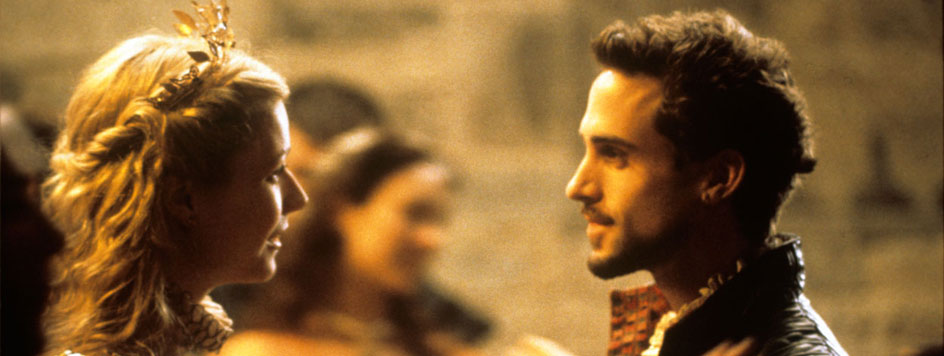
Shakespeare in Love is the story of young Shakespeare trying to write what would eventually become Romeo and Juliet. He struggles, he falls in love with a woman who is promised to a man she does not love, and he finds his muse through a secret love affair. It’s a fine movie, the same way that waffles without butter and syrup are still fine.

There is absolutely nothing in Shakespeare and Love that is challenging or interesting. It’s just a series of events, well told and well acted, but not one that really engages. I didn’t get into The Artist, but I saw how someone could. I’m not entirely sure how someone could be swept away by Shakespeare in Love. It’s a film without challenges.

I’m loathe to invoke the odious “chick flick” as a term, and I won’t, but this movie feels like it’s just attempting “heart.” It feels like someone telling you to feel “warm” rather than making you feel warm. I was a sucker for the warmth of It Happened One Night, so I’ve got red blood in my veins. You don’t have to have Clark Gable to make me care about a love story, but man, this one just feels hollow. It certainly isn’t bad, but then again, it isn’t much of anything.

The Best Part: The acting is all over the map in this one, but Judi Dench is phenomenal as Elizabeth I. She gets in most of the movie’s best lines, which is good, because it would be a shame to waste her. I also like Gwyneth Paltrow’s portrayal of the female lead, and I haven’t really liked her in anything other than The Royal Tenenbaums.

The Worst Part: A movie about Shakespeare is obviously going to have to use some Shakespearean plot devices, but the scene where a man must portray a female servant to gain knowledge of someone’s plans is as subtle as an aircraft carrier. Gender swapping is a crucial part of the movie, and that’s fine, but still… eh. The whole movie just seems to have this lack of effort surrounding it, but I may be heavily influenced by the weirdness of Ben Affleck in the whole deal.

Is It Better or Worse than CrashForgettable is better than horrible. I cannot imagine what would cause Shakespeare in Love to be someone’s favorite movie, but I would want to know. If Crash is anyone’s favorite movie, that’s an entirely different story. That needs to inspire some kind of quarantine area situation.

Worst Best Picture Archives: Crash | Terms of Endearment | Forrest Gump | All About Eve | The Apartment | No Country for Old Men | Gentleman’s Agreement |12 Years a SlaveThe Last Emperor | The Silence of the Lambs | The Artist | A Man for All Seasons | Platoon | The Lord of the Rings: The Return of the King | The King’s Speech | Rain Man | The Departed | The Bridge on the River Kwai | Marty | Gigi | It Happened One Night | Driving Miss Daisy |

Alex Russell lives in Chicago and is set in his ways. Disagree with him about anything at readingatrecess@gmail.com or on Twitter at @alexbad.

Another Look at Maleficent: Should You See It?

Maleficent

Brent Hopkins

In our rarely-running kinda-series Should You See It? we talk about movies that just came out. You can figure out the rest of the premise from the title of the series. That’s right: We talk recipes. Should you see Maleficent?

I saw this with my sometimes girlfriend and I will admit I had no idea what it was, going into it. I had forgotten the name of the antagonist from classic animation and I just didn’t put the pieces together until the film started. As Mr. May put it, the film is about pleasing boththe parents and children of the audience with a reimagining of a simple good vs. evil story. This is something I think it does rather poorly, as I could not imagine enjoying this as a child because it is a gritty retelling. There are all the magical elements and attempts at humor to please younger audiences, but throughout I never got a lighthearted vibe from the film.

The film is awkwardly chopped up into three acts with the real weight of the story in the beginning and the end. The middle tries to be fun and happy, but the setup is so grim it feels truly empty. You are introduced to Maleficent and the humans and you instantly are slammed with the knowledge that humans are the worst things to ever exist. Maleficent is tricked in probably one of the most uncomfortable rape analogies that will assuredly go over a child’s head but will not for any adult. She is drugged and has her power (the most important thing to her) forcibly taken from her by someone she thought she could trust. Once this happens there is no point in time where I wanted anything but for Maleficent to reclaim her power. Angelina Jolie is captivating in this role and I am not sure any other actress could have owned the role as well. That being said, most of the other characters are flat in comparison.

Should you see it?

Yes, much like the movie Noah, which I wrote about before, Maleficent has its fair share of flaws and pacing issues, but I think any adult who has seen the original animation from Disney will be stunned that the same company put out this film. I can’t say if it was good or bad, but just that it left thinking about it more than the new X-Men movie did.

Brent Hopkins considers himself jack-o-all-trades and a great listener. Chat with him about his articles or anything in general at brentahopkins@gmail.com.