review

Life Lessons from Episodes of Louie: “Elevator (Part 6)” and “Pamela (Part 1)”

louie-3

Alex Russell

Louis C.K.’s critically acclaimed show Louie’s fourth season runs as two episodes every Monday night. Rather than just answering the question of “are these episodes good,” (because the answer is always yes) we’ll talk about the big lessons imparted in each episode. This week: Louie rents a car in a hurricane and forgets himself.

Episode 9: “Elevator (Part 6)”

These are two very different episodes of television. It’s been difficult some times during this (especially during the previous five parts of “Elevator”) to draw a meaningful distinction between the two episodes. That is not difficult now.

They’re set up that way on purpose. “Elevator (Part 6)” is the conclusion of what’s now a film-length dramatic romance told in six parts. No one could have expected Amia to stay, of course, but the act of her leaving is still brutal. Louie, like so many of us, hoped that the joy he could draw from a relationship with a forced expiration date was worth the expiration itself. To get inside Louie’s head, I’ll just ask you: Was yours?

The episode also features a hurricane, but that’s all visuals. It’s shot in a way that nothing on TV right now really is; you’re constantly lost and worried for the characters. Louie is forced to drive into a New York storm that will remind you of another recent one, and honestly, I couldn’t help but remember friends I had in New York at the time and the reality of Sandy. As someone who has never lived near a coast, it just seems unimaginable.

As Louie the show is about showing the world of Louie the character’s New York, the in-show disaster does a great job. Louie is lost and often helpless, but he will drive into the storm to try. He knows the direction he wants to go — be it towards his family or towards love with Amia — but he has no idea about anything beyond that. We’ll sum it up as he does: Move towards your goals, even if you only have two birthday candles, a light bulb, a flashlight, and a banana.

Episode 10: “Pamela (Part 1)

The end of the “Elevator” saga brings the start of the “Pamela” one, and it’s not an easy episode to discuss. I’m dedicated to not “spoiling” Louie, but there is one central element to the episode’s ending that has to come up in a discussion of the episode. If you haven’t seen it and are going to, go do so.

Yeah, right? See what I mean?

Pamela is played by Pamela Adlon, the voice of Bobby Hill on King of the Hill and Louis CK’s wife on his earlier show Lucky Louie. She’s the closest to a real “love interest” that Louie has ever had — there are others, but they don’t even seem to be real people, which is a whole different discussion about the “reality” of Louie that I will have with you over a pot of coffee sometime — and she is also the closest character in tone to Louie himself. They’re brash at times and they’re sweet at times (in a fashion) and they’re there for each other when it matters.

Louie loves Pamela. Pamela loves Louie, but Louie says no because he’s with Amia. Amia goes back to Hungary, Louie tells Pamela he’s ready, Pamela says it’s too late. A tale as old as time, and I’m being serious.

How often have you only too late noticed that you had a connection with someone? Or maybe you did notice in time, but it was too late for them, or vice versa? These are the real ways we interact, and they’re especially real because we recognize everything that comes along with them…

…until we don’t. Louie tries to kiss Pamela very forcefully when he comes home to relieve her from babysitting his kids. Pamela’s not interested, but Louie says that she said earlier that she was. The show briefly deals with this earlier in the episode by having Louie and Pamela share a “why are you so mean to me” and “why do you like it?” exchange. It’s fortunate that we know these people, because it reduces some of the horror of Louie’s monstrous act and it explains some of Pamela’s reluctance as emotional armor. It doesn’t do either act of explaining enough, but that’s on purpose. This is supposed to be a gross scene, and it really, really is.

I’m very intrigued to see the second and third parts of “Pamela” to see how they address what is just a kiss, but is also something awful at the same time. The lesson from arguably the worst thing the show has made Louie do? It’s most important with Pamela herself, but it’s also an episode full of Louie making little choices (he sits next to a guy talking to no one on the train and later tells a man to not spit on the bus) that are noble but ultimately pointless. Louie’s scale for “good” is way off. Remember to actually be good when you can, not “good.”

Alex Russell lives in Chicago and is set in his ways. Disagree with him about anything at readingatrecess@gmail.com or on Twitter at @alexbad.

Life After the Star Wars Expanded Universe: Haruki Murakami’s Hard-Boiled Wonderland and The End of the World

 51wuFG4IlsL

Andrew Findlay

In Life After the Star Wars Expanded Universe, we take a look at science fiction and fantasy, why they’re great, and what they say about where our species has been and where it’s going. 

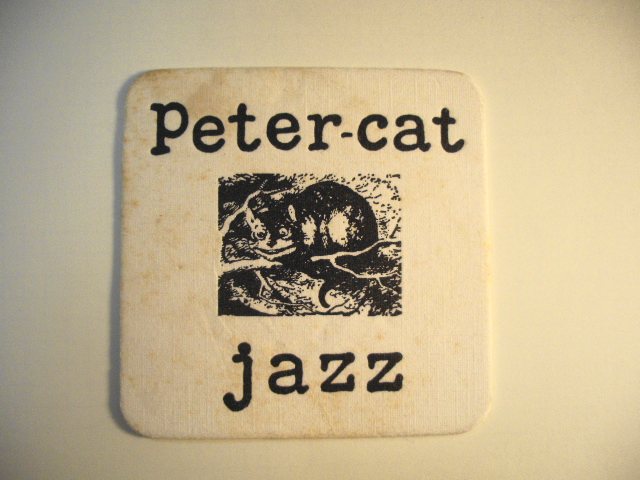
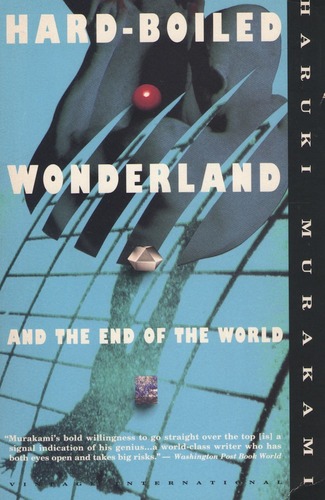
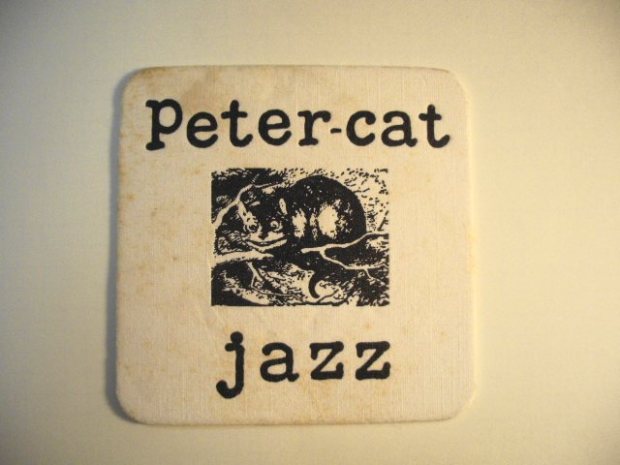
Haruki Murakami has an awesome how-I-became-a-writer story. His parents expected him to snag a job with Mitsubishi and find a nice wife once he was secure. He married young and started a jazz bar, the Peter Cat. One: That is an awesome jazz bar name. Two: Something about saying “fuck stable employment, I’m going to open a jazz bar” seems like an especially risky thing to do in Japan. He continued running the bar until, at 29 years old, he saw a player hit a home run at a baseball game, and he suddenly knew he could write a novel. A lot of people say “I can write a novel!” to themselves. Not a lot then immediately go home and write an award-winning one, which is what Murakami did. At 65, he is one of the foremost practitioners of the post-modern novel of the weird. He usually builds the reality of his book out of the materials at hand, i.e the real world, but then takes those parts and subtly bends them until the world he bases on this one becomes haunting, unsettling, and strange. The proximity of the completely normal, unassuming world with the depths and strangenesses Murakami weaves through it creates a tension that is central to most of his work. In Hard-Boiled Wonderland and the End of the World, that dynamic is in full play, but he more explicitly includes science-fiction and fantasy in the mix.
20101124_1297590

I desperately want to travel back in time to the Peter Cat Jazz Bar.

Hard-Boiled Wonderland and the End of the World comprises two interwoven narratives, one science-fiction and one fantasy, that play out in alternating chapters. In the SF world, a data encryption specialist gets in way over his head. In the fantasy world, a newcomer with no memory of his self gives up his shadow in order to enter a strange town. The weaving itself is impressive – one of the signature Murakami pieces of weirdness is that these narratives are connected in a strange and unknown way that is very hazy at the beginning of the book. What is extraordinary is how perfectly Murakami hits the tone of each genre in the alternating chapters. In the SF chapters, Murakami creates a gritty, slightly grim world of loneliness and serious men doing serious things reminiscent of cyberpunk, and in the fantasy chapters, he perfectly captures the importance of place and the sense of timelessness that permeate a lot of the genre.

In the SF chapters (Hard-Boiled Wonderland), the narrative follows a man as he gets more and more involved in a dangerous conspiracy that he does not understand. The main science-fictional element of this world is that the main character is a Calcutec, an individual who has undergone brain surgery and training to transform his subconscious into a data-shuffling device. He takes a series of numbers, puts a pencil in his hand, goes into a trance, and then when he wakes up, he has run the data through his subconscious and shuffled it into a new, nearly-uncrackable code. Something about the uniqueness of each person’s consciousness and the chaos of the human mind make this the most secure form of data encryption – without the key, there is almost no way to decrypt the information. This is important, as the System, the giant data-protection agency which fields Calcutecs, is battling the Factory, an underground organization composed of Semiotecs whose main motivation is finding, decrypting, and selling top-secret information. The protagonist is hired by a mad scientist to protect his cutting-edge research. He does his normal thing, encrypts the data, but then people who desperately want that data make his life difficult. The main conflict in the Hard-Boiled chapters comes from the protagonist’s desire to stay safe and discover what is going on and why people are chasing him.

In the fantasy chapters, the narrative follows a newcomer around a mysterious town as he tries to figure out what is going on and reunite with his shadow. There are many magical elements to The End of the World, such as the protagonist having to give up his shadow, which becomes a separate, autonomous entity. There are unicorns that wander around the town during the day and are sent out the West gate at night. The central magic of these chapters, however, is dreamreading. The protagonist is assigned a job, as all inhabitants of the town are assigned a job. His is dreamreading, which consists of going to the library at night, going into the stacks, which contain shelves of unicorn skulls, taking them down, tracing the glowing lines on each skull with his fingers, and attempting to read the thoughts and dreams contained within. The point and method of this process is just as mysterious and unknown as the data encryption in the SF world, and each protagonist is just as confused and lost as the other. In addition to the magical aspect, another trait that makes these chapters a strong example of fantasy is Murakami’s attention to maps and places.
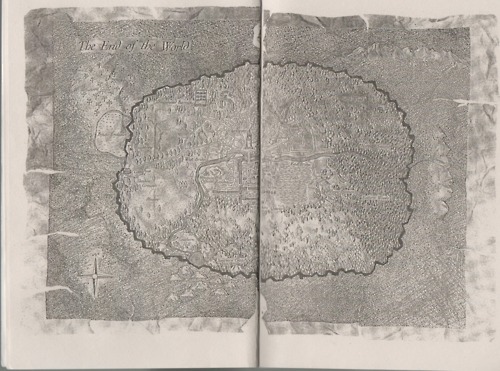
map-of-the-end-of-the-world

I’ve said it before and I’ll say it again: It ain’t fantasy without a map.

The Town itself is a major character of the fantasy chapters, and one of the major differences between the two narratives is how much more important not just what is happening but where it’s happening is important to this one. The Town is a community which stands at the End of the World. It is surrounded by a gigantic, perfect wall, with only one exit: the West Gate, which is tended by the Gatekeeper. These locations are primal: There is only the Library, the Woods, the Pool, the Barracks, et cetera. Each location is just the capital-letter archetype of what it represents, and there are no clear place names. This adds to the haziness and nonspecificity of these chapters. All of the characters here are named for their occupation: the Librarian, the Colonel, and the Dreamreader, in addition to the Gatekeeper. A mildly sinister tone is set in the first chapter when the protagonist has to give up his shadow, and when the Gatekeeper starts seeming more like a warden than a keeper. The main conflict in The End of the World chapters comes from the main character’s desire to find out what the secret of the Town is and to reunite with his shadow.

The greatest success of this book is the flawless interweaving of each separate narrative into a cohesive, if jagged, whole, and Murakami’s masterful switching between tones and styles each chapter. To give an example of the perfect and nuanced difference in style, following are two excerpts from the book.

First paragraph of first SF chapter:

The elevator continued its impossibly slow ascent. Or at least I imagined it was ascent. There was not telling for sure: it was so slow that all sense of direction simply vanished. It could have been going down for all I knew, or maybe it wasn’t moving at all. But let’s just assume it was going up. Merely a guess. Maybe I’d gone up twelve stories, then down three. Maybe I’d circled the globe. How would I know? 

First paragraph of first fantasy chapter:

With the approach of autumn, a layer of long golden fur grows over their bodies. Golden in the purest sense of the word, with not the least intrusion of another hue. Theirs is a gold that comes into this world as gold and exists in this world as gold. Poised between all heaven and earth, they stand steeped in gold.

In the SF opening, the focus is on the thoughts of the narrator as he interacts with a piece of technology – an elevator. Rational, analytical thought dissecting all possibilities of movement and speed for the elevator he is riding to his job. In the fantasy opening, the focus is on rich, mythical description. The narrator describes the autumn coats of the unicorns, and they are not just gold and pretty; their coat color is a Platonic form of gold, “poised between all heaven and earth.” The focus is not so much on the analysis of the mundane as it is on the observation and experience of the mythical. This slight but powerful stylistic difference reverberates throughout each narrative, keeping them distinct even as the reader discovers how they are connected.

The main pleasure of this book comes from the dense accumulation of small, vivid details. The SF narrator spends a lot of time drinking whiskey, listening to jazz, and reading books. The fantasy narrator spends a lot of time going on long walks within the town walls. These sound boring, but Murakami’s descriptive power makes it pleasurable to read about the SF narrator eating a sandwich or the fantasy narrator walking to the Library looking at the sky. That is, Murakami’s talent makes his book interesting in parts that a lesser author would make unforgivably boring. Another strong point of this novel is its deep meditation on the nature of self. As the narratives cycle more and more tightly around each other, the major thematic focus of the novel shifts to questioning who each narrator actually is, what the significance of self is, and what identity means. The SF narrator becomes more and more preoccupied with who he is and what motivates him:

Once, when I was younger, I thought I could be someone else. I’d move to Casablanca, open a bar, and I’d meet Ingrid Bergman. Or more realistically – whether actually more realistic or not – I’d tune in on a better life, something more suited to my true self. Toward that end, I had to undergo training. I read The Greening of America, and I saw Easy Rider three times. But like a boat with a twisted rudder, I kept coming back to the same place. I wasn’t going anywhere. I was myself, waiting on the shore for me to return.

Everyone deals with constructing their own identity, trying to modify themselves either by strengthening their identity or trying to get away from it, and Murakami profoundly captures the futility and beauty of the struggle with that amazing line, “I was myself, waiting on the shore for me to return.” In addition to these discrete thoughts on self and identity, the narratives begin spiraling around each other in a way that structurally supports meditations on what existence is – I can’t really get into that part of it without hitting spoilers.

If you’ve been hearing buzz about Murakami for years but have not yet read anything of his, this is the place to start. It is not as long and sprawling as 1Q84, is more plot-driven than The Wind-up Bird Chronicle, and is a great book all on its own. The creation and sustainment of two distinct but intertwined worlds, the depth of detail he creates in each narrative, and the shattering profundity of the final reflection on what selfhood means all mark this as a book well worth your time.

Andrew Findlay has strong opinions about things (mostly literature) and will share them with you loudly and confidently. You can email him at afindlay.recess@gmail.com.

Images: Map from here and Jazz Bar from here.
Symbols and Sociopaths: Hannibal Season 2, Episode 13

Hannibal season 2 finale

Jonathan May

Mega-spoiler alert.

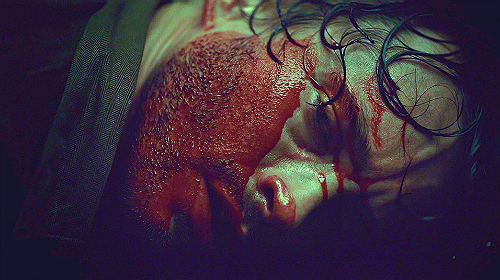
So of course after asking for Cynthia Nixon’s character to come back for weeks now, the story gods deliver in the most obscene way possible, tightening the plot’s noose with bureaucratic nonsense. Of course Jack and Will are stymied now and must move forward by themselves. And then Abigail reappears! And then she kills Alana! And then Hannibal murders Jack, Will, and Abigail! People were killed with such rapid abandon I thought I was watching a short, homoerotic Shakespeare production with mood lighting. But let’s not kid ourselves, Shakespeare this wasn’t.

Like, what? The first thirty minutes were boring, boring, boring, and then the swift successive murders of the cast at large? I don’t even know what to say. Perhaps now is a good time to view properly Hannibal as a critique of the aesthete, free from financial concern. He literally walks away from the action, like so many bankers and traders during the recent financial collapse. I’m not going to claim that financial ruin as the results of others’ actions is tantamount to murder, but they share tragic qualities. If Hannibal simply walks away now, the chase is on. Maybe for the third season, Cynthia Nixon will helm the ship in pursuit of Lecter; perhaps we’ll go to Italy.

As for this season as a whole, I feel like too many tertiary characters were introduced only to be broiled. The lack of resolution with Jack’s wife Bella upsets me, as well. It’s as if by not showing her death, she experiences purgatory, always suffering in that bed. The only other one who makes it out of the fray (seemingly) is Freddie Lounds; she knew to get when the getting was good.

So folks, I’ll be tuning in for the beginning of season three, and if it’s a bunch of malarkey, I’ll be sure to tell you all about it.

Jonathan May watches too much television, but he’s just playing catch-up from a childhood spent in Zimbabwe. You can read his poetry at owenmay.com, follow him on Twitter at @jonowenmay, or email him at owen.may@gmail.com.

You can read our pieces about previous episodes here.

Image: NBC

Neighbors: Should You See It?

Neighbors (from The Daily Mail)

Jonathan May

In our rarely-running kinda-series Should You See It? we talk about movies that just came out. You can figure out the rest of the premise from the title of the series. That’s right: We talk recipes. Should you see Neighbors?

Neighbors is a movie that tries to bridge two kinds of comedies: the buddy comedy and the relationship comedy. The couple (Rogen and Byrne) uses the standard “bros before hos” as part of its trap against the fraternity invaders, backfiring wildly into what seems to be the start of a very different film. Needless to say, the film is billed as a comedy, so by stricter terms, it follows on its promise, reaffirming the relationship between the couple at the film’s heart. However, when I asked my friend Elizabeth what she thought about the focus of the film, she said it was more of a misguided bildungsroman for Zac Efron’s upper half, and I would have to agree. The movie tries to affirm some kind of epiphany on the part of the fraternity president as to what must come after graduation, yet it also clings more so to the couple’s determination to face what they must together. The new parents commit vandalism, trespassing, and (some may say) negligence to enact their wild schemes against the admittedly loud and obnoxious fraternity house 24-hour party machine; does this bring them down, or make it clear that some people will do almost anything to achieve comfort?

I’m no stoic; I laughed out loud plenty of times. Sex and drug jokes abound, reaffirming pot as the social drug of the new century. What really held the film together were the ancillary characters: Lisa Kudrow as the Dean, Hannibal Buress as the policeman, the fraternity as its own character. While I was compelled by the main plot(s) of the film as a comedy of manners, I found Efron to be stiff in front of the camera in contrast to the couple, a veteran pair in their own rights. Perhaps it’s because the film is of two minds that he seems weak in comparison; I’d never seen him in a movie previously. I did appreciate the continuation of the depiction of the American couple as two people who can be fun together, despite their seeming nefariousness as they manipulate others.

Should you see it?

What to take away? We get older, and it sucks sometimes, but sometimes it’s really cool. Abs help?

Jonathan May watches too much television, but he’s just playing catch-up from a childhood spent in Zimbabwe. You can read his poetry at owenmay.com, follow him on Twitter at @jonowenmay, or email him at owen.may@gmail.com.

Image: The Daily Mail

Life Lessons from Episodes of Louie: “Elevator (Part 4)” and “Elevator (Part 5)”

louie-3

Alex Russell

Louis C.K.’s critically acclaimed show Louie’s fourth season runs as two episodes every Monday night. Rather than just answering the question of “are these episodes good,” (because the answer is always yes) we’ll talk about the big lessons imparted in each episode. This week: Louie looks at his love life and does not like what he sees; Louie deals with Mentos.

Episode 7: “Elevator (Part 4)”

It’s very difficult to separate “Elevator” into episodes. Louie has always been compared to film in a stylistic sense — it’s much more like film than television — but only now is the structure of the show an actual damn movie. “Elevator” concludes next week, but we already know enough to work with it now.

Louie owns up to the fact that he isn’t really doing anything productive with his love life, and that’s a hard thing to admit. We’ve all had to admit to a drunk friend that we’re in a relationship that’s well past the expiration date, but Louie’s got the opposite problem: He can’t actually date Amia, because she’s going back to Hungary soon. He can’t start a relationship.

Louie is a “dark” show. When I’ve met people that aren’t into it, the most common complaint is that it isn’t funny. There’s nothing funny about Louie’s plight with Amia, or with his struggles to stay cordial with his ex-wife so that his kids will be happy, or his general life in the world of the show. The laughs are there, but that can’t be why you show up.

During a flashback, Louie deals with one night on a trip where he and his then-wife stay in a hotel room. It is the most realistic portrayal of a long relationship I’ve seen in months, and it’s that realism that makes the show feel cinematic. It’s not an episode of television that happens in a hotel room; it’s a look into people that have to leave that hotel room and go back to life later. I don’t want to spoil it, but the lesson is the same one any good Eagle Scout knows: Be prepared.

Episode 8: “Elevator (Part 5)

It’s hard to say how the fifth part is without the sixth, but the problem in it for Louie could exist outside of any continuity. Louie has to deal with what his relationship with Amia means if it doesn’t mean sex.

The best part about this whole story is that Louie loves Amia as an ideal. He loves someone who seems nice and fun and happy, but he just doesn’t really know that much about her. This kind of love story makes my eyes roll in most situations because there’s nothing worse than someone in love with the idea of love. You want someone to love specifics, not just “the essence of Sarah.” No one’s essence alone will get you to year two.

It works in Louie because it helps Louie understand that he’s not actually furthering himself. He’s just spending time with someone that feels like a partner, not a partner. This same story would be a happy one in a rom-com. It’s more than a little sad here because it reinforces the idea that everyone is a person first, and if you love them as an ideal then you’re just not actually in love with anyone who really exists. You’re not being honest with them or yourself.

Louie‘s love story will conclude next week and with that episode will be a larger lesson. Today’s, though, is a healthy part of a grown-up diet: Love someone for who they are, because all of that other shit will fade in two months.

Alex Russell lives in Chicago and is set in his ways. Disagree with him about anything at readingatrecess@gmail.com or on Twitter at @alexbad.

Symbols and Sociopaths: Hannibal Season 2, Episode 12

Hannibal, episode 12

Jonathan May

Spoiler alert, as always.

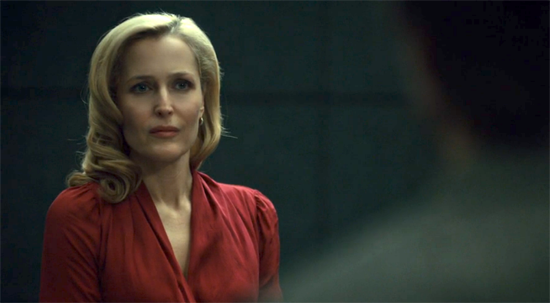
This episode was the kick in the pants that this season needed heading into the finale. What made this episode so big and bold? Gillian Anderson. She rocked her role as Dr. Bedelia Du Maurier, revealing everything in the suggestions and silences. Her ghostly, incantatory tone as she spoke there in the interrogation room gave me chills. And finally clarity was added, showing us what Jack and Will have been up to this whole time. Bedelia was fated to return as soon as she uttered her belief of Will’s innocence to him in the asylum. By bringing in someone who hasn’t been sullied by the lacklusterness of the past six or seven episodes, we, and the show’s characters, are able to take a step back and reevaluate the madness into which we’ve been drawn. Jack and Will are trying to bait Hannibal? Seriously? Though it’s easily their worst conceived plan, it does give great excuse for Will’s obsequious fanboy attitude toward Hannibal these past few weeks. What had bordered on the homoerotic now can be easily enough explained as an attempt at intimacy. And intimate we get.

Bedelia states that Hannibal can be made prey to his own aesthetic whimsy, a clever choice of words on her part, given how Hannibal views his victims. Ultimately this could be a critique of the aesthete, that echelon of society outside of financial worry, wherein one has time and means to enact one’s fantasies. How this will become a trap for Hannibal isn’t immediately apparent, but I predict they will have to dispense with this advice if they actually want to catch the bastard.

The scene where Hannibal convinces Mason Verger, by way of amyl nitrate, to scrape off his own face is wholly incredible; I was literally disgusted by the wet noises and the voice thinning out. Without the veiling of chiaroscurist darkness, this certainly wouldn’t have been able to air on network television. But this scene showed off what the production of this show can really do. And the episode as a whole was well shot; we had lots of close-ups of faces and people seen through the negative spaces left by others. These kinds of choices really make us examine everyone in a new light, which is perfect as we head into the final episode for this season.

So, what’s going down tonight? We know, via the first episode, that Jack and Hannibal will have their showdown. The catalyst for this could be anything, but I think it will have to do with Alana, who’s been strangely absent. Hopefully we’re over this whole Mason and Margot business. Now that NBC has bought a third season, we know this charade must continue. But if we’re left tonight with some horrible impossibility or vagueness, I might not be tuning in next time around.

Jonathan May watches too much television, but he’s just playing catch-up from a childhood spent in Zimbabwe. You can read his poetry at owenmay.com, follow him on Twitter at @jonowenmay, or email him at owen.may@gmail.com.

Hannibal airs Friday nights on NBC. You can read our pieces about previous episodes here.

Image: NBC

Life Lessons from Episodes of Louie: “Elevator (Part 2)” and “Elevator (Part 3)”

louie-3

Alex Russell

Louis C.K.’s critically acclaimed show Louie’s fourth season runs as two episodes every Monday night. Rather than just answering the question of “are these episodes good,” (because the answer is always yes) we’ll talk about the big lessons imparted in each episode. This week: Louie takes a woman to two stores on a date and has to decide if his daughter needs to go to private school.

Episode 4: “Elevator (Part 2)”

“Elevator” is a six-part episode, soeven at two episodes a week there’s much more to tell. Louie is in love with a woman he can’t really communicate with, though that leads to some outstanding pantomime in a drug store as the two try to exchange the idea of “hair dryer” back and forth.

Louie being in love with a woman who doesn’t speak English has some pretty obvious connections to his inability to communicate with women in general, and this wouldn’t be Louie if it stopped there. It’s not just that they can’t communicate, it’s that Louie the charactacter throws himself into something so fully that he turns down Pamela, the “love of his life” character on the show, when she comes back from Barcelona. Is Pamela back for Louie? Does Louie turn her down because he resents that she left, because he loves this new woman, or a little of both? This might be stand up for yourself when people act like assholes but with Louie, the flipside of that oft-given advice might be more important by the time this tale is told.

Episode 5: “Elevator (Part 3)

These two are also about Louie’s troublesome daughter Jane. Jane’s in trouble at school, but she’s acting out because she doesn’t buy into the established authority of the world. Louis C.K.’s comedy is a lot of things, but it’s definitely about the supposed “rules” that society needs to keep working. Things go poorly because people take too many cookies or they drive like assholes or they don’t leave their rental car at the counter. These rules, and our decisions to follow them, keep the whole damn puzzle together.

If that premise is Louis C.K.’s worldview, his jokes are about how we love to not play by those rules. Breaking down jokes is tough and mostly pointless, but the serious realities of Louie work the same way. Jane doesn’t like that she set up rules with a friend about time on a thing at the playground and the friend didn’t follow them. Jane’s not mean, Jane’s just frustrated that the world wasn’t fair when she was.

The episode is about love and how we fall in it, and our kids and how we want them to have better lives, and our lot in life and how we choose to view it. Louie runs into his doctor and a three-legged dog in the lobby of his building, and that scene doesn’t deserve me spoiling it. It does reinforce a beautiful lesson, though, and that’s that you can smash anything with a bat that you want, but you’ll always be your responses to the things you cannot change.

Alex Russell lives in Chicago and is set in his ways. Disagree with him about anything at readingatrecess@gmail.com or on Twitter at @alexbad.

Bad Men Doing Bad Things: How Fargo’s Molly Solverson is the Anti-Walter White

allison-tolman-fargo-tv

Mike Hannemann

(Note: This article, outside of character names, contains no spoilers for the show Fargo. There’s a minor one about Dexter, but you probably weren’t going to watch that anyway.)

Before I jump into the point I want to make, I’d like to walk you through my thought process of getting there. I sat down to watch the series finale of Dexter, hoping to find some angle to discuss about jumping into a series-ending episode after not watching the three seasons prior. About halfway through, it dawned on me that the end-game scenario most fans were rooting for was for two serial killers to get out of the country. These people literally hacked their victims into bits and the audience was rooting for them to escape? Something’s wrong here.

It’s not news that television audiences are enamored with the genre “Bad Men Doing Bad Things.” We have Dexter, Mad Men, Breaking Bad…the list goes on and on. What makes these stories work is that, despite their reprehensible actions, the actors portraying the leading men bring enough to the roles where it doesn’t feel wrong to root for Don Draper as he cheats on (another) wife or to hope that Walter White becomes the drug kingpin he aspires to be. For as perfect as those shows are (I’m not including you on this list, you know what you did, Dexter) they have one glaring flaw: For the most part, the female roles are pushed aside due to the intrigue of the Bad Man Doing Bad Things.

Take Breaking Bad for example. I fully admit that it’s my favorite show of all time. However, the fan base was furious at the lead female character because she…wanted a drug dealer away from her kids? The only imperfection on this show was its fans. How could you honestly judge someone for wanting to be out of a bad situation? All of her actions were natural, ones any normal person would have, but because she was in the way of the hook of the show the fan outcry was overly negative and completely unjustified.

But…then there’s Fargo, a show very loosely tied to the movie of the same name, but it also falls into the aforementioned genre. There are some very bad men and they are doing some very bad things. It could easily be another show where the performance of the leading villain (in this case, Billy Bob Thornton’s character Malvo) is the hook. Seeing the next step of his plan, and the gruesome trail of death that lies in his wake, is gripping. It’s addictive. It isn’t why I come back to it week after week, though.

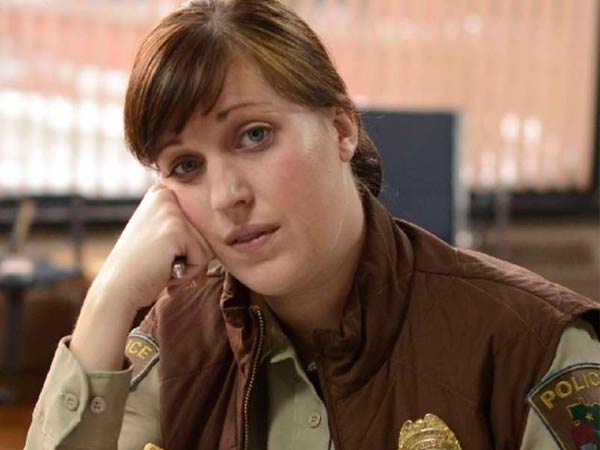
Fargo breaks the mold by finally introducing a strong female character that overcomes the appeal of the bad man doing bad things. Allison Tolman (a name I’d never heard before) plays Molly Solverson, one of the only characters thus far to be the moral compass of the show. When I watch, I don’t care what the villains are up to. I want to know more about Molly’s story. I want her to win. She’s a wonderfully written, fully realized character. She overcomes the hook of the show, the black comedy and murder, as a shining beacon of justice and morality.

I sincerely hope television writers take notice. The female role doesn’t need to be the put-upon wife or just used as a plot device to make the protagonist’s story more complicated. Molly surely does this on Fargo but it’s not done in a way to make the villains have to change their plans. Her story is the more important one. You sympathize with her more than whatever the stereotypical “cool” characters are doing (and, granted, they do some pretty interesting things in their own right). She’s a roadblock, and damn right she is.

This isn’t to say other female characters on television aren’t well written – that’s not the implication. There are amazing performances, but in the eyes of the masses they get overlooked. Don Draper is a household name (even my parents know who he is), even though I would argue that Peggy Olsen should be, too. I hope this is finally turning the corner on televised dramas. Bad men will still be doing bad things, but more empowered women will be a part of the story and not just a plot device to be overlooked by the immorality if the leading man. In comedy, the male performances often unjustly overshadow the female ones. Sitcom characters Liz Lemon and Leslie Knope were able to overcome this and change TV comedy. If people pay enough attention, I have a feeling Molly Solverson is going to do the same for drama.

Something, I may add, that is long overdue.

Image: Philly.com

Life After the Star Wars Expanded Universe: Alfonso Cuarón’s Gravity

 Gravity_Poster

Andrew Findlay

In Life After the Star Wars Expanded Universe, we take a look at science fiction and fantasy, why they’re great, and what they say about where our species has been and where it’s going. 

Gravity is a space film. It is also the winningest movie of the 86th Academy Awards, bringing home seven Oscars. It deserves every single one. It took me half a year to actually watch this, which is strange considering how I prioritize my media consumption mostly by putting anything that involves spaceships on the top of the pile. What I watched when I finally got around to it was a sparse, tightly-woven film about what happens when something minor goes wrong in an extremely hostile environment. Gravity is devastating in its simplicity. After a fairly brief intro period, there is only one character, and her only enemy is the title of the movie – the force of gravitation.

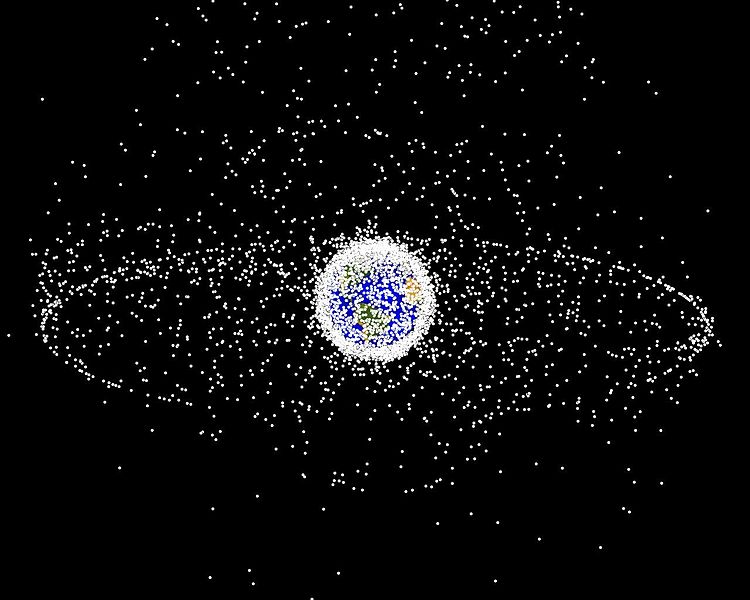
Gravity’s great! It keeps you from flying off the face of the Earth! Wonderful! However, if you are in orbit, your relationship to gravity becomes markedly less benevolent. Orbit amounts to controlled freefall. In orbit, you are falling at an exact velocity and an exact trajectory that maintains you or your craft in a circle around the planet. At the end of the day, you are still just falling, so if anything at all goes wrong, your orbit will turn into a more everyday type of fall, and you will catch fire and burn to death in the mesosphere. In addition to the falling problem, Earth’s gravity keeps an impressive amount of space debris in a cloud around the planet (19,000 discrete pieces over two inches). It’s fine if it’s just sitting there, but if it or you is moving fast, there is a significant collision danger. The International Space Station orbits at around 17,000 mph. Imagine getting hit in the face with a professionally-thrown baseball (90 mph). Now imagine one or many baseball-sized things hitting your orbital craft at 200 times that speed. This is basically what happens in the first fifteen minutes of Gravity.

750px-Debris-GEO1280

Each white dot is something that could kill you

The initial destruction caused by space debris leaves Dr. Ryan Stone (Sandra Bullock) completely alone in space, desperate to find a way back home. Well, a survivable way back home. If she lowered her standards, she could get home by simply pushing off in the general direction of Earth. In addition to the general destruction of devices and networks meant to keep humans alive in low Earth orbit, communications satellites are also down, which means Stone is alone not only physically but psychologically. With absolutely no communication with Houston and the nearest human being about 200-300 miles straight down, Bullock’s character becomes the most isolated individual in human history. This isolation and Stone’s lopsided struggle with a hostile and decaying environment combine to make one of the cleanest, most perfect pieces of suspense fiction of the past few years.

With only one main character bouncing around in a terrifying situation she neither asked nor prepared for, all the the viewer’s chips are in one pot, so to speak. In Aliens, everyone around Ripley just dies and dies and dies, and that only serves to ramp up the tension for Ripley’s own survival. In Gravity, you only get one, and if you break it, that’s it. From almost the beginning of the conflict, this dynamic forces a stronger level of investment in the character and results in a higher level of terror. The total focus on one character also allows the deep exploration of that character’s psyche – she talks to herself because there is no one else to talk to, and she talks about her daughter, her life, her hopes, and her fears. Following her on her journey from space installation to space installation in her desperate quest to survive is one of the most enjoyable narrative achievements of the past year.

MV5BMTc0ODc4NjM4MV5BMl5BanBnXkFtZTgwMTgwNzIyMDE@._V1__SX1537_SY680_

Probably the best-done female character in all of science fiction

Gravity is billed as a science fiction film, and an interesting question is why? There is no futuristic technology, no aliens, no psychic powers or mutation. This film uses no technology that does not exist, so why is it science fiction? SF is about more than the future, time travel, and warp drives. It is about technology, the changes engendered by it, and the relationship of humanity to it. One of the best science fiction novels out there, Cryptonomicon by Neal Stephenson, has at its core cryptography and information science. The science fictional aspects of the book focus on a well-developed technology that has existed since time. It specifically explored its use and misuse in WWII and the 1990s. As the pace of change and technological development increases, science fiction becomes more and more just normal fiction. It is not the milieu into which we project our imaginations, but the milieu in which we live. In the Middle Ages in Europe, the life the grandfather led was the life the father led was the life the son led. My grandfather started a family when color television was a pretty swell new thing, my father started a family when personal computers could process text, process numbers, and play Snake, and now I’m living in a world where this single machine on which I am typing gives me access to more information than I could process in my entire life, videophones are a reality (FaceTime and Skype), people walk around with mobile computers in their pocket more powerful than the NASA computer that sent men to the Moon, medical professionals can literally print human organs, and human beings temporarily live in space. We cannot escape from SF as the basis of many of our stories because the future arrived yesterday, and continues arriving yesterday every time the sun rises. It is simple to build an entire narrative from the basic theories and problems of space habitation as they exist now.

Candy_Crush_Saga_game_setup_example

Pictured: the OS mission control used during the Apollo 11 flight

Cuarón built Gravity on the theory of gravitation (sure) and the problem of the Kessler syndrome. I’ve already discussed the problem of orbit as a controlled fall, but the Kessler syndrome is a very real concern of space agencies today. Basically, there’s so much crap floating around above us that one little explosion or impact could cause an ablation cascade, wherein the fallout from one event then collides with and destroys other objects, the fallout from which then collides with and destroys more objects, on and on until everything upstairs is well and truly fucked. NASA’s main concern with this possibility is that it could take out many of our satellites and render space unusable for generations, but in Gravity, this ablation cascade directly threatens the main character’s life. Bonus: due to gravity, she gets to deal with 17000 mph debris circling around the Earth and returning for another hit every 90 minutes! The danger, isolation, and unknowability of space come to the fore in this film. Terror in the face of the unknown or in the face of forces much larger than we could control or comprehend is a main theme of SF. Gravity shows us that we do not need to go to Alpha Centauri to find those forces – one of them exists right here, keeping our feet firmly glued to the ground.

Andrew Findlay has strong opinions about things (mostly literature) and will share them with you loudly and confidently. You can email him at afindlay.recess@gmail.com.

Symbols and Sociopaths: Hannibal Season 2, Episode 11

Jonathan May

Spoiler alert, as always.

With two episodes left and the reappearance of Freddie Lounds at large, the question on everyone’s mind is, what’s going on between Will and Hannibal? Is Will playing Hannibal, or playing everyone else on his behalf? Is Dr. Bloom next on Hannibal’s menu, and is that what it will take for Jack to finally wake up? This week, I present the tweets each character would have sent during the action of episode 11.

@Will_Graham: A certain someone was in my dream again last night J

@Will_Graham: Wtf? I have to eat a songbird whole?

@FBI_Jack: Does anyone else think Will and Hannibal are….closer than normal?

@Mason_Pigmaster: I said I only want Tanqueray. Wtf do I pay these people for?

@Alana_Bloom: Hey guys, just running over to Will’s. Someone call me in like an hour.

@Hannibal: If I have to listen to this piggishness further, I might have to whip up a nice Paupiettes de porc later… @Will_Graham will I see you there?

@Will_Graham: I’ll bring the wine.

@Hannibal: You know I like to pick the wine L

@Freddie_Lounds: And then I said to her, How was my funeral, bitch?

Hannibal, episode 11

Jonathan May watches too much television, but he’s just playing catch-up from a childhood spent in Zimbabwe. You can read his poetry at owenmay.com, follow him on Twitter at @jonowenmay, or email him at owen.may@gmail.com.

Hannibal airs Friday nights on NBC. You can read our pieces about previous episodes here.

Image: NBC