awful

Worst Best Picture: Is How Green Was My Valley Better or Worse Than Crash?

how green was my valley

Alex Russell

In “Worst Best Picture” we search every single Best Picture Oscar winner of all time from 1927 to present to uncover the worst of them all. Conventional wisdom says that 2005’s winner Crash is the worst winner in history. We won’t stop until we’ve tested every last one. Read the the first, our review of Crash, here. Posts will be relatively spoiler free, but there may be some details revealed. Today’s installment is the 1941 winner How Green Was My Valley. Is it better than Crash?

They aren’t all fun. Hell, most of them aren’t any fun, but How Green Was My Valley is the distinct opposite of “fun.”

You’re forgiven for not knowing anything about it. For years it was just my default guess at bar trivia whenever I had no idea about a movie from the 40s. It is the ur-movie-from-the-40s, really. It’s a sad, voiceover-filled retrospective about a time gone by. There’s really no better way to sum up this subset of Oscar history, so at least that can be said for this one. It’s about mine disasters and the death of the mining economy in Wales in the 19th century. Feelgood story it ain’t.

Through the perspective of young Huw Morgan, we follow the travails of the Morgan family as they are injured, degraded, humiliated, shamed, and abused by the impossible economy of brute force underground in a mine. The light moments are all about how the family came together even in the face of misery and a lack of hope. If I sound like I’m describing something Hard to Watch then I am doing a good job.

How Green Was My Valley exists these days mostly as a good sign of what things were like in film decades and decades ago. The tone is bleak throughout. The narrator gets beat up at school and the solution offered by his family is to reward him for getting hurt fighting. If you need to know how bleak this all is, the “good” solution to “our kid is getting beat up at school” is to send some family members down there to kick his teacher’s ass, which they do in front of the class. The problem is thus solved, we out.

How Green Was My Valley isn’t bad, but it’s a relic. It doesn’t really make sense anymore. It fills you with sadness for a people you can’t help. For an economy that has already bottomed out. In America we bemoan the death of our industrial cities, but How Green Was My Valley will put it in perspective: it has been thus for a long damn time.

The Best Part: Watching the dudes beat up a teacher in a classroom — even though I was very nearly a teacher — is hilarious. We deserve it. But for real, it’s an insane scene. It really deserves to be seen.

The Worst Part: There’s some good stuff in here, but it’s overshadowed by the relentless darkness of it all. At one point the patriarch of the family is challenged for wanting to stand by his ethics of “hard work” in opposition to a strike. There’s a chance to make a statement, but most of the movie is spent on darker, less complicated material.

Is It Better or Worse than Crash? Better, but slower. How Green Was My Valley and Crash are definitely at opposite ends of every spectrum. Crash may be more interesting to a modern viewer — it’s in color — but it’s a dumber message that doesn’t deserve to be listened to. You’re better off slogging through the sad history of Welsh mining, and I realize how insane that sounds. Take that as a slight to Crash and put it on the box: less interesting than the history of mining.

Worst Best Picture Archives: Crash | Terms of Endearment | Forrest Gump | All About Eve | The Apartment | No Country for Old Men | Gentleman’s Agreement | 12 Years a SlaveThe Last Emperor | The Silence of the Lambs | The Artist | A Man for All Seasons | Platoon | The Lord of the Rings: The Return of the King | The King’s Speech | Rain Man | The Departed | The Bridge on the River Kwai | Marty | Gigi | It Happened One Night | Driving Miss Daisy | Shakespeare in Love | Wings | Midnight Cowboy | Rocky | Gone with the Wind | Chicago | Gladiator | Cavalcade | The Greatest Show on Earth | You Can’t Take It With You | The Best Years of Our Lives | The GodfatherCasablancaGrand Hotel | Kramer vs. Kramer | The French Connection | In the Heat of the Night | An American in Paris | Patton | Mrs. Miniver | Amadeus | Crash, Revisited | How Green Was My Valley

Alex Russell lives in Chicago and is set in his ways. Disagree with him about anything at readingatrecess@gmail.com or on Twitter at @alexbad.
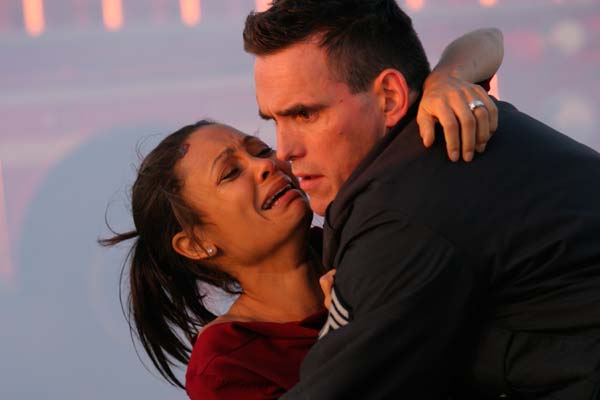
Worst Best Picture: Halfway Through the List, Let’s Revisit Crash. Is it Really that Bad?

crash

Alex Russell

In “Worst Best Picture” we search every single Best Picture Oscar winner of all time from 1927 to present to uncover the worst of them all. Conventional wisdom says that 2005’s winner Crash is the worst winner in history. We won’t stop until we’ve tested every last one. Read the the first, our review of Crash, here. Posts will be relatively spoiler free, but there may be some details revealed. Today’s installment is… Crash. Again. Damnit.

I just wanted to find an excuse to watch all the Best Picture winners. That’s all this was supposed to be, and now it is breaking me. Crash is winning. How did we get here?

There are 86 movies that have won Best Picture, though technically some of them won before it was called that exactly. The point is that there are 86 movies that The People That Make Such Decisions have said are the best of the best. There are other ways to watch 86 of the supposed greatest movies of all time, but there are no other ways to think about Crash, the 2005 winner, every single week for a year.

It’s an inane project to compare the other 85 to Crash — clearly — but it serves a purpose to me. It forces my hand. It’s much easier to give up on something when you don’t have to represent yourself publicly. For that reason, these are sometimes just for me. No one really cares what I thought about Mrs. Miniver or You Can’t Take It With You, I don’t have any delusions about that. What I do have is a need to see all 86 of these damn movies in 2014, and the way to do that is to have a space to come talk about each one. Hopefully I’m doing so in a way that’s interesting, albeit it Crash-filled. You be the judge of that.

The point is this is the halfway point. At the bottom of the page you’ll see 43 links to 43 articles about 43 movies. Some of them, like It Happened One NightMidnight Cowboy, and Kramer vs. Kramer, will stick with me for the rest of my life. Some of them, like Amadeus, Shakespeare in Love, and The Last Emperor, are already beginning to fade in my mind. As with any list of things, it is not a perfect summary of greatness in film history.

But is that the rub with the entire project? Has anyone ever said “these are the best?” I’d argue that they have, even though some of them have rightfully faded from memory. You have to get real deep in film history for anyone to care about Cavalcade or Grand Hotel, both rightfully so, but on the flip side some modern films on the list, like The Silence of the Lambs and No Country for Old Men, are instant classics. The list must be considered to at least be a summary of what people found great at the time, and thus can be used as a functional canon for what has constituted a “great film” over history.

So why in the hell is Crash on there?

None of the first 42 other movies came close to Crash. I hated The Artist, I was bored by Shakespeare in Love and A Man for All Seasons, and I can’t wrap my mind around the inherent strangeness of You Can’t Take It With You, but none of those came even close. They all have merits, and after watching Crash again last night, I still contend that Crash has none.

The weirdest part is that this is a divisive opinion; not everyone hates Crash. It’s certainly the movie that comes up the most in lists of the worst, but it’s by no means considered a “bad movie” on its own. The hate seems to have come from people putting it on a list with Casablanca and The Godfather.

I originally felt that way. I thought Crash was a little dumb, but not offensively so. It’s only after spending so much of my free time considering what Crash is and what it hopes to be that I feel a real hate for it, like an embittered ex-spouse. We are having a prolonged, public divorce and I never loved you, anyway, movie about racism.

After 43 straight posts about it, I got worried that I was losing touch with the source material. Rewatching it unearthed some new feelings, which I will now share with the class:

  • The very first scene of Crash opens with a car crash, where a white woman asks an Asian woman if she noticed her “blake lights” instead of brake lights. It sets the tone early, in the way that a fire will eventually be a pile of soot. It is completely unnecessary.
  • It’s moments like “blake lights” that make you wonder just how worried the writers of Crash were that people would miss their DEEP AND COMPLICATED MESSAGE about racism. There are films on this list that talk about race better than Crash. Some of them are six decades older than it. That is inexcusable.
  • “Hey Osama, plan a jihad on your own time” is said in scene two of Crash. I’m not going to go scene-by-scene, but you have to understand that these things happen essentially while there are still credits rolling on the screen. It feels like a tonal suckerpunch. You haven’t even had time to understand this world yet, but you already know that everyone is terrible all the time.
  • Ludacris enters the movie with a monologue about not getting offered coffee while eating spaghetti. This may be the best part of the movie, because no one ever addresses that these things are incongruous. When I was 15 I had to find a fancy dish to add some specificity to a short story I was writing and I went with something insane — turkey parm, I think — the point is that any decent editor would fix that, but they left in this insane coffee/spaghetti pairing. No one has ever had coffee with spaghetti.
  • The general direction for the acting in Crash seems to have been “no, even angrier.” Everyone is mad at everyone for every reason. This is supposed to feel “gritty” and “tense” but it feels “forced” and “ridiculous.” People treat the attempted murder of their children with less malice than a door not closing right.
  • Tony Danza. Don’t watch Crash, but if you do, watch it just for the scene where Tony Danza confronts Terrence Howard about someone not sounding “black enough.” Within the narrative of the movie it’s supposed to feel racially uncomfortable, but Tony Danza is a little too silly for how shameful this is supposed to be. It also happens after a much more intense white vs. black racial interaction with Terrence Howard, but this breaks him. Maybe being berated by Tony Danza is the most shameful thing possible. I take this back.
  • Don Cheadle does a good job with a complicated role. They make him say some really stupid things because Crash was written without an editor (“can’t talk mom, I’m having sex with a white lady” is hall-of-fame-bad) but he’s a tragic figure that I actually really connected with this time around. Great job doing more with less than less.
  • Brendan Frasier is married to Sandra Bullock and their storyline is terrible. Sandra Bullock may play the least compelling character in film history in this movie. Every single line she says is supposed to establish that she’s a terrible racist, but everyone is a terrible racist, so she just seems to be some kind of sociopath.

We have 43 movies to go. There are some classics on the remaining list, like The Deer HunterWest Side Story, and The Godfather II. There are also some famous duds, like Around the World in 80 DaysCimarron, and Dances With Wolves. All 43 will be compared to Crash. All must be judged. We came here to find something worse than Crash. So far, the task has been unfinished. I’m going back into the breach.

The Best Part: Don Cheadle.

The Worst Part: Sandra Bullock. Or Brendan Frasier. Or Tony Danza. Or Matt Dillon. Or the writing. Or the editing. You pick.

Is It Better or Worse than Crash? It is Crash. It is terrible.

Worst Best Picture Archives: Crash | Terms of Endearment | Forrest Gump | All About Eve | The Apartment | No Country for Old Men | Gentleman’s Agreement | 12 Years a SlaveThe Last Emperor | The Silence of the Lambs | The Artist | A Man for All Seasons | Platoon | The Lord of the Rings: The Return of the King | The King’s Speech | Rain Man | The Departed | The Bridge on the River Kwai | Marty | Gigi | It Happened One Night | Driving Miss Daisy | Shakespeare in Love | Wings | Midnight Cowboy | Rocky | Gone with the Wind | Chicago | Gladiator | Cavalcade | The Greatest Show on Earth | You Can’t Take It With You | The Best Years of Our Lives | The GodfatherCasablancaGrand Hotel | Kramer vs. Kramer | The French Connection | In the Heat of the Night | An American in Paris | Patton | Mrs. Miniver | Amadeus | Crash Revisited |

Alex Russell lives in Chicago and is set in his ways. Disagree with him about anything at readingatrecess@gmail.com or on Twitter at @alexbad.

Worst Best Picture: Is Amadeus Better or Worse Than Crash?

image source: virtual-history.com

image source: virtual-history.com

Alex Russell

In “Worst Best Picture” we search every single Best Picture Oscar winner of all time from 1927 to present to uncover the worst of them all. Conventional wisdom says that 2005’s winner Crash is the worst winner in history. We won’t stop until we’ve tested every last one. Read the the first, our review of Crash, here. Posts will be relatively spoiler free, but there may be some details revealed. Today’s installment is the 1984 winner Amadeus. Is it better than Crash?

If you haven’t seen Amadeus yet, are you going to? Are you, really? Yeah, see?

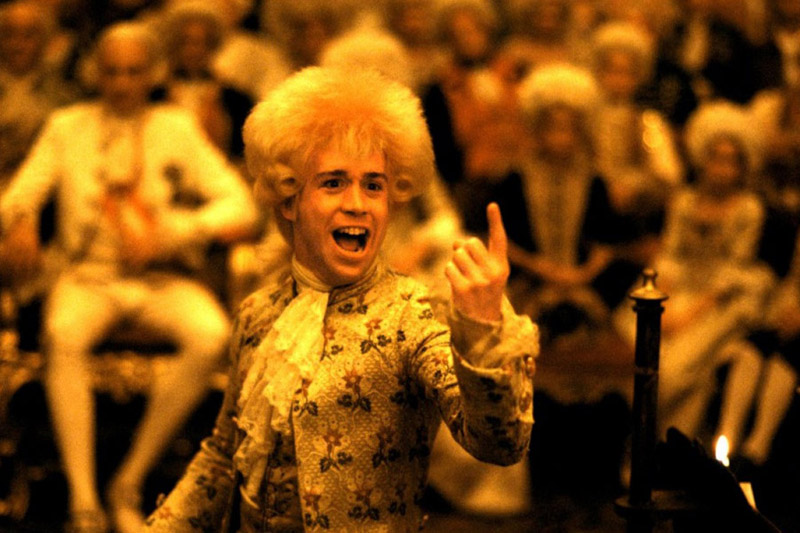
I would have gone my entire life without seeing this, and I’m still trying to process how I feel about it. I don’t think I’m done with Amadeus, even a few weeks later. It’s an insanely long movie, but unlike a lot of the longer slogs on the list, there’s a ton to cover. Mozart is a young buck who just wants to flirt and get drunk and act like an asshole, while Salieri wants to create the music that will secure his legacy. Just as in life, in Amadeus the asshole is rewarded.

It’s complicated, though, which makes this worth your time. The movie happens in the framing device of an elderly Salieri detailing the sins of his life to a priest. It’s a neat device — and it’s done much better than the nearly identical one in The Last Emperor — and it allows for the telling of a ton of absurd stories. All it needs to be is the central Mozart vs. Salieri conflict, but it’s largely the story of Mozart’s sad life behind his giggling demeanor. There’s some heavy stuff with his dad and his family that feels much more compelling than the standard “he only cares about his work!” stuff in your typical movie about a mad genius. It’s not impressive because it’s risky, it’s impressible because of the scope of the story.

That said, I led this off the way I did because this is definitely what you think it is. It’s a movie about two men battling with classical music, so don’t expect it to wow you if that kind of thing doesn’t wow you. You’re not going to give an eighth of a day to it at this point if you haven’t already, but you will be missing something unique if you don’t.

The Best Part: I rolled my eyes a lot during Amadeus, but Tom Hulce is just a damn delight as Mozart. His laugh will stick with me for a long time, so here’s some guy on YouTube that made a supercut of all of it:

The Worst Part: Holy shit, this is a long movie. A significant number of Best Picture winners are more than three hours long, but few of them feel as long as Amadeus. The most important conflict of the film is that Salieri can’t handle Mozart at all. It’s a compelling conflict, but it centers on Salieri’s shortcomings compared to the great composer. Maybe this is crass, but it’s definitely a bit difficult to feel for a guy whose main failing is that he kinda sucks compared to Mozart.

Is It Better or Worse than Crash? This is the halfway point with 43 down and 43 to go. I’m not entirely sure where my mind is at after talking about Crash for most of a year, but it’s nowhere good. I like Crash far less than when I started, which I certainly didn’t think was possible, but I also love a lot of these movies so far. Next week I’m going to do a rewatch of Crash to remind myself what even happens in it, because I’m much clearer on the list of great movies that follows this paragraph now. Comparing it to Amadeus seems impossible. One is the story of a man’s lifetime struggle with the reality that genius pays off more than hard work and one is a testament to how our process for rewarding movies with the “Best Picture” distinction made (at least) one tragic error. I guess they are alike. I did it. Don’t check my work.

Worst Best Picture Archives: Crash | Terms of Endearment | Forrest Gump | All About Eve | The Apartment | No Country for Old Men | Gentleman’s Agreement | 12 Years a SlaveThe Last Emperor | The Silence of the Lambs | The Artist | A Man for All Seasons | Platoon | The Lord of the Rings: The Return of the King | The King’s Speech | Rain Man | The Departed | The Bridge on the River Kwai | Marty | Gigi | It Happened One Night | Driving Miss Daisy | Shakespeare in Love | Wings | Midnight Cowboy | Rocky | Gone with the Wind | Chicago | Gladiator | Cavalcade | The Greatest Show on Earth | You Can’t Take It With You | The Best Years of Our Lives | The GodfatherCasablancaGrand Hotel | Kramer vs. Kramer | The French Connection | In the Heat of the Night | An American in Paris | Patton | Mrs. Miniver | Amadeus

Alex Russell lives in Chicago and is set in his ways. Disagree with him about anything at readingatrecess@gmail.com or on Twitter at @alexbad.

Worst Best Picture: Is Mrs. Miniver Better or Worse Than Crash?

image source: nicksflickpicks.com

image source: nicksflickpicks.com

Alex Russell

In “Worst Best Picture” we search every single Best Picture Oscar winner of all time from 1927 to present to uncover the worst of them all. Conventional wisdom says that 2005’s winner Crash is the worst winner in history. We won’t stop until we’ve tested every last one. Read the the first, our review of Crash, here. Posts will be relatively spoiler free, but there may be some details revealed. Today’s installment is the 1942 winner Mrs. Miniver. Is it better than Crash?

If Patton is the story of people who choose to make war their entire life, Mrs. Miniver is the story of people who don’t have a choice about it. It’s an entire movie about the homefront in war. It focuses on events at home — both mundane and not — and how they are complicated by the ridiculous nature of war. Cavalcade and The Best Years of Our Lives are also about that, but they’ve got much different messages than Mrs. Miniver.

This one is entirely about suffering and liking it. In another setting, a movie about being resilient in the face of strife on this scale would be a tough sell. A movie about the British resistance at home during WWII, though, we’re comfortable with that story. The entire international perception of England was changed by WWII. It is taken as fact that the British are tough and can handle the worst without complaint. It’s just one of those “things” now, and Mrs. Miniver was an important part of that myth-making.

There’s nothing going on in Mrs. Miniver other than the war. Men decide they need to go to war to protect Britain and the women need to stay home and be brave and true and good. It’s full on propaganda, but it’s distinctly Western propaganda (and Allied, I suppose, which is an even easier sell) so an American audience may not feel as manipulated. It’s just two hours of bad things happening and good people staring into the middle distance while they wonder how they’ll move on.

They’ll move on because they’re British and because they must, is the message, and it’s told again and again. There’s no real reason to watch this in 2014. You’ll get everything you need from any particularly badly written history book. The bombing of London is one of the iconic domestic tragedies of our time and a movie about the bravery and difficulty involved in surviving it is nothing to roll your eyes at, but at one point the entire family reads Alice’s Adventures in Wonderland under a staircase and it’s just a ton. It’s heavy and it should be, but other than the patriotism, there’s no there there.

The Best Part: The titular Mrs. Miniver captures a German soldier in her garden and they have a terrifying conversation in her kitchen. She makes him a meal at gunpoint before getting his gun away from him. This scene is either the greatest or worst part of the movie, and it probably depends on what you want Mrs. Miniver to be. If you want to marvel at strangeness, look no further.

The Worst Part: The entire movie is “climax” but my least favorite dramatic scene is a flower competition, and I would write more about it, but it’s a flower competition. Right before it there’s an unexpected death and right after it there’s a bombing. You can skip the flower competition. Please skip the flower competition.

Is It Better or Worse than Crash? I hate to say it, but I’m only 100% sure I’ll never watch Mrs. Miniver again, of the two. I’m going to watch Crash again this week for a rewatch, but I feel no need to watch Mrs. Miniver again. I got it. It’s not a bad movie, but it’s one-note and it’s fairly repetitive. Crash is much worse, to be sure, but only because there’s not really that much in Mrs. Miniver to love or hate. If you boiled down any movie to three words you’d be missing nuance, but I don’t think you miss anything with a three-word summary here: British people endure.

Worst Best Picture Archives: Crash | Terms of Endearment | Forrest Gump | All About Eve | The Apartment | No Country for Old Men | Gentleman’s Agreement | 12 Years a SlaveThe Last Emperor | The Silence of the Lambs | The Artist | A Man for All Seasons | Platoon | The Lord of the Rings: The Return of the King | The King’s Speech | Rain Man | The Departed | The Bridge on the River Kwai | Marty | Gigi | It Happened One Night | Driving Miss Daisy | Shakespeare in Love | Wings | Midnight Cowboy | Rocky | Gone with the Wind | Chicago | Gladiator | Cavalcade | The Greatest Show on Earth | You Can’t Take It With You | The Best Years of Our Lives | The GodfatherCasablancaGrand Hotel | Kramer vs. Kramer | The French Connection | In the Heat of the Night | An American in Paris | Patton | Mrs. Miniver

Alex Russell lives in Chicago and is set in his ways. Disagree with him about anything at readingatrecess@gmail.com or on Twitter at @alexbad.

Worst Best Picture: Is Patton Better or Worse Than Crash?

image source: oscars.org

image source: oscars.org

Alex Russell

In “Worst Best Picture” we search every single Best Picture Oscar winner of all time from 1927 to present to uncover the worst of them all. Conventional wisdom says that 2005’s winner Crash is the worst winner in history. We won’t stop until we’ve tested every last one. Read the the first, our review of Crash, here. Posts will be relatively spoiler free, but there may be some details revealed. Today’s installment is the 1970 winner Patton. Is it better than Crash?

I’ll say this: this was the easiest movie on the list to pick out a picture for.

Patton is dramatic, funny, and challenging. It’s a sweeping view of one part of one person, but it’s by no means simple. George C. Scott won — and refused — an Oscar for his portrayal of General George S. Patton, and I’m not sure anyone has ever done a better job of portraying a character.

It’s a character, for sure, because it’s such a thin version of a person. Patton doesn’t care about anything aside from military conquest. He can’t keep control of his troops because he keeps screwing up basic stuff, but he’s a brilliant tactician on the battlefield. He, like so many of us, can’t do the dumb things he’s gotta do every day — like, well, not piss off Russia — to get to the part of life that he cares about. He just wants his troops to follow him, unwavering, to battle. He cares about conquest and victory in a very romantic sense. He’s a warrior-poet, emphasis on both, and he needs his story told in blood.

What makes it work so well is that it isn’t a sort of un-Full Metal Jacket. It’s still not a very rosy view of military life or battle, it’s just a more complicated view of the men who care about such things. Patton isn’t the everyman and he isn’t supposed to be a suggestion of the proper way to feel about patriotism or war. He’s supposed to be an over-the-top view of the military. He’s what we’d all be if we actually gave ourselves to work. He’s too far gone.

War movies are almost always the story of why we shouldn’t go to war. Those are fine — many on this list are more than fine — but Patton wants to talk about George S. Patton more than war. It’s about how we love our heroes when they’re being heroic, but we don’t want to deal with the things that keep those people human. We want them to go back into a box until there’s more heroism needed. George C. Scott’s Patton wants to keep being heroic all the time, and when he runs out of villains to find he starts constructing them himself.

The Best Part: Maybe it came across here, but if there’s any doubt I shall put it to rest: GEORGE. C. SCOTT. Go watch the first 10 minutes of Patton. It’s the iconic “pep talk” scene in front of the giant flag. Go do it, right now. Don’t even read the rest of this section first. I could put anything here, because no one is reading it, because you are watching the first 10 minutes of Patton. I’m gonna put my Social Security number here.

The Worst Part: I hate to keep coming back to length. A good third of Best Picture winners are 2.5 hours or longer, and most of them definitely don’t need to be. Patton doesn’t sag under the weight of 170 minutes, but it’s impossible to not mention. It’s supposed to feel enormous, like the full weight of the man’s struggle against the system he so didn’t understand, and it does. It just wanders a little bit toward the middle; there’s some especially repetitive scenes of Patton losing his shit and losing his army that don’t add to anyone’s understanding of the General himself.

Is It Better or Worse than Crash? Patton, if nothing else, is the triumph of George C. Scott. He’s exceptional in Dr. Strangelove, but he’s all-time great, here. It would not be unreasonable to say that this is possibly the greatest single performance on the list, and this is one hell of a list. There are flaws with Patton, to be sure, but none of them come from Scott’s consistent, terrifying performance. He sells you on a difficult concept: that a man who loves war, and only war, is more than a monster. Exceptional art challenges the viewer, and Patton does. I’m not even going to talk about the other movie right now.

Worst Best Picture Archives: Crash | Terms of Endearment | Forrest Gump | All About Eve | The Apartment | No Country for Old Men | Gentleman’s Agreement |12 Years a SlaveThe Last Emperor | The Silence of the Lambs | The Artist | A Man for All Seasons | Platoon | The Lord of the Rings: The Return of the King | The King’s Speech | Rain Man | The Departed | The Bridge on the River Kwai | Marty | Gigi | It Happened One Night | Driving Miss Daisy | Shakespeare in Love | Wings | Midnight Cowboy | Rocky | Gone with the Wind | Chicago | Gladiator | Cavalcade | The Greatest Show on Earth | You Can’t Take It With You | The Best Years of Our Lives | The GodfatherCasablancaGrand Hotel | Kramer vs. Kramer | The French Connection | In the Heat of the Night | An American in Paris | Patton

Alex Russell lives in Chicago and is set in his ways. Disagree with him about anything at readingatrecess@gmail.com or on Twitter at @alexbad.
Worst Best Picture: Is An American in Paris Better or Worse Than Crash?

image source: classichollywoodcentral.com

image source: classichollywoodcentral.com

Alex Russell

In “Worst Best Picture” we search every single Best Picture Oscar winner of all time from 1927 to present to uncover the worst of them all. Conventional wisdom says that 2005’s winner Crash is the worst winner in history. We won’t stop until we’ve tested every last one. Read the the first, our review of Crash, here. Posts will be relatively spoiler free, but there may be some details revealed. Today’s installment is the 1951 winner An American in Paris. Is it better than Crash?

“Well, you do hate musicals.”

I cannot tell you how many times people have told me this supposed fact about myself this year. If you hate a musical, you apparently hate all musicals. This isn’t true for any other damn genre — I hate Crash, if you haven’t picked up on it, but I don’t hate everything vaguely like it — but it’s apparently true for movies with singing and dancing in them.

I don’t! I swear I don’t! I even liked Gigi, and Gigi was BuzzFeed’s worst Best Picture winner ever. I thought it was charming, if a little misguided with regards to message. I mean, you can only sing “Thank Heaven for Little Girls” so many times before it starts to sound odd. But as for other musicals, I think I like most of them. I like the ones everyone likes. I kinda hated Moulin Rouge!, but I saw that as a 15-year-old. It never stood a chance.

I’m now at the age where I assume that if I hate something out of my comfort zone, I’m the asshole. I assume that the problem is genuinely with me. I assume that I simply haven’t given myself over to the experience; I haven’t said yes to life. I decided that I was going to say yes to George Gershwin and Gene Kelly.

The result? Did I love An American in Paris? No. I powered through An American in Paris the way someone watches the reset episode of a drama they like. I made it to the credits because I wanted to see what was next. I probably wouldn’t have even finished it if not for this project, but then, that’s the whole point of the thing.

In An American in Paris, Gene Kelly has to dance a lot to delight children, win over a young woman, and discuss love with his friends. There’s a lot of dancing in this movie, which is sort of like saying a restaurant has a lot of food, but I really have to express to you just how much damn dancing is in this movie. There is an entire quarter of an hour of dialogue-less dancing in this film. In a movie that clocks in under two hours, that feels crazy. Gene Kelly is the best there ever was at what he does, but make damn sure you want to see a ton of it.

There is so much music in this — a musical with the creation of music as a story element is laying it on pretty thick — that some songs are interrupted by other songs. A traditional musical would interrupt a story element to cut to a musical number, but An American in Paris interrupts its own music for more music. You got your musical in my musical!

But Gene Kelly is Gene Kelly, so some moments are just “magical” enough to work. He performs “I Got Rhythm” while French children crowd around him and form a call-and-response group. That part really sticks with me, and it’s apparently the only song from the film to make AFI’s top 100 songs from film list. The love is love. It’s not annoying. Maybe I don’t love musicals, but I certainly don’t hate them. I’m lukewarm on the sprawling, ridiculous An American in Paris because I’m not very interested in what it has to say, not because I hate the whole genre.

The Best Part: 

It’s kinda fun, isn’t it? The French kids don’t know any English beyond what they say in the song, either, so now you know that.

The Worst Part: “Risky” is as nice of a word as I can use to describe the ending. I hate this ending. I hate, hate, hate it. It’s not spoiling it to say it ends with a “daydream” sequence that plays out as a ballet. I know it’s iconic and it’s exceptional and dazzling and all that, but it’s exactly what people think of when they say they “hate musicals.” West Side Story is three hours long and nothing in it feels as shoehorned in as the ballet here.

Is It Better or Worse than Crash? I’m not a big fan of this one, but I don’t think it would even make my bottom five. The visuals are bright, the characters are fun, and the dancing can’t be beat. I found myself really in love with moments of it, but it couldn’t keep me hooked from start to finish. Only the ballet really bored me, and that brings this all back to a debate had often in this space: is it better to be terrible or boring? We’re rapidly approaching the halfway mark here, and we’re going to have to find a good answer for that by then. I’ll say An American in Paris is better because the highs are much, much higher, but I was just about as angry at that ballet as I was at some of the mild awfulness in Crash. Nothing comes close to that police chase scene in Crash, though, so Crash retains the top (bottom?) spot in a walk.

Worst Best Picture Archives: Crash | Terms of Endearment | Forrest Gump | All About Eve | The Apartment | No Country for Old Men | Gentleman’s Agreement |12 Years a SlaveThe Last Emperor | The Silence of the Lambs | The Artist | A Man for All Seasons | Platoon | The Lord of the Rings: The Return of the King | The King’s Speech | Rain Man | The Departed | The Bridge on the River Kwai | Marty | Gigi | It Happened One Night | Driving Miss Daisy | Shakespeare in Love | Wings | Midnight Cowboy | Rocky | Gone with the Wind| Chicago | Gladiator | Cavalcade | The Greatest Show on Earth | You Can’t Take It With You | The Best Years of Our Lives | The GodfatherCasablancaGrand Hotel | Kramer vs. Kramer | The French Connection | In the Heat of the Night | An American in Paris

Alex Russell lives in Chicago and is set in his ways. Disagree with him about anything at readingatrecess@gmail.com or on Twitter at @alexbad.
Worst Best Picture: Is In the Heat of the Night Better or Worse Than Crash?

image source: nytimes.com

image source: nytimes.com

Alex Russell

In “Worst Best Picture” we search every single Best Picture Oscar winner of all time from 1927 to present to uncover the worst of them all. Conventional wisdom says that 2005’s winner Crash is the worst winner in history. We won’t stop until we’ve tested every last one. Read the the first, our review of Crash, here. Posts will be relatively spoiler free, but there may be some details revealed. Today’s installment is the 1967 winner In the Heat of the Night. Is it better than Crash?

Sometimes I look through the list of nominees for a year and I’m blown away. 1967 is just such a year, since The Graduate and Bonnie and Clyde both came out, and lost, to In the Heat of the Night. It’s really pointless to argue what the best movie in that trio is — some would say it’s pointless to compare them all to some dumb movie about racism but those people are wrong we’re gonna do this damnit.

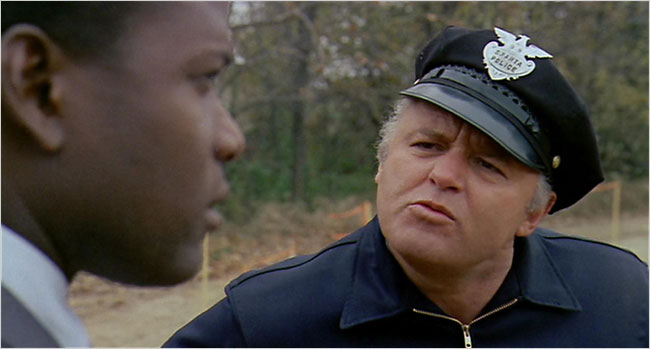
There’s a chance you only know a few things about In the Heat of the Night. Maybe you just know Sidney Poitier’s “they call me Mister Tibbs” line. Mister Tibbs himself has to work with an all-white police department in Mississippi to get to the bottom of a particularly complicated murder case. That’s Rod Steiger as the town sherriff who certainly doesn’t think he needs help from a city boy, up there in the photo. There’s a lot more going on than the black-guy-in-the-South drama of man vs. just about damned everybody, but that’s the best part.

It’s part mystery and part racial play, and it’s excellent at both. It stays tense — there’s a ton of twists as Poitier and Steiger get closer to figuring out what actually happened — and it does so in more ways than one. Every time I expected a heavy handed treatment of race in a situation I was surprised. Right down to the eventual physical fight where Poitier has to literally run away from racists, it’s difficult, but it’s all the better for it.

I’m from the South and I was home this weekend for a visit. I generally tell people that the South is everything they think it is, and that that means whatever you need it to mean, depending on the situation. I can’t say my world was Poitier’s world, but it feels like a real one. It’s important to remember that not all racists are obvious villains and that hate isn’t always as clear as stories make it seem. Crash is offensive because it wants to tell this same lesson, but it does so with a megaphone rather than a reasoned argument. In the Heat of the Night is almost contemplative by comparison. It’s a movie about race and about solving a murder, but it’s about how we interact with “the other,” as well. That part is what will stick with you.

The Best Part: Our heroes go to investigate the motives of one of the dead man’s enemies, and the conversation turns hostile once he knows what they’re asking. It’s 1967. Remember that when you watch this two-minute clip. Pull up a list of other things that happened in 1967 for context. Smear the number “1967” on a mirror in red lipstick and then watch this video next to it. Well, maybe not that, but just think about the world around these two men, and how people must have reacted when they saw this:

ICE. COLD.

The Worst Part: The leads are both excellent, but most of the supporting cast is downright goofy. The town of Sparta, Mississippi is supposed to be ridiculous but it’s probably not supposed to be as silly as I found it. I honestly loved In the Heat of the Night, but c’mon, guys. This is me grasping at straws, but everyone other than Poitier and Steiger is largely interchangeable. Ignore this section. Go watch that slap video again. Pow!

Is It Better or Worse than Crash? There is a scene where the two men bond with some good drink and try to get to the bottom of the whole mess. That scene is in every movie, and it usually is so obvious. This one adds some important depth to Steiger’s character, who easily could have just been a white cop that says “dagflabbit” and “boy-ah” a lot. He’s more than that, and you notice it play out slowly over the movie, it just finally pops in that big scene. These are the small pieces that make up smart movies. These are the quiet, but significant, chunks of great storytelling. Crash is loud and big and dumb in the exact opposite ways. There is no nuance to Crash, and I can’t think of a better example of “no, do it like this” than In the Heat of the Night, which came out nearly 40 years earlier.

Worst Best Picture Archives: Crash | Terms of Endearment | Forrest Gump | All About Eve | The Apartment | No Country for Old Men | Gentleman’s Agreement |12 Years a SlaveThe Last Emperor | The Silence of the Lambs | The Artist | A Man for All Seasons | Platoon | The Lord of the Rings: The Return of the King | The King’s Speech | Rain Man | The Departed | The Bridge on the River Kwai | Marty | Gigi | It Happened One Night | Driving Miss Daisy | Shakespeare in Love | Wings | Midnight Cowboy | Rocky | Gone with the Wind | Chicago | Gladiator | Cavalcade | The Greatest Show on Earth | You Can’t Take It With You | The Best Years of Our Lives | The GodfatherCasablancaGrand Hotel | Kramer vs. Kramer | The French Connection | In the Heat of the Night

Alex Russell lives in Chicago and is set in his ways. Disagree with him about anything at readingatrecess@gmail.com or on Twitter at @alexbad.

Worst Best Picture: Is The French Connection Better or Worse Than Crash?

gene hackman the french connection

image source: oscars.org

Alex Russell

In “Worst Best Picture” we search every single Best Picture Oscar winner of all time from 1927 to present to uncover the worst of them all. Conventional wisdom says that 2005’s winner Crash is the worst winner in history. We won’t stop until we’ve tested every last one. Read the the first, our review of Crash, here. Posts will be relatively spoiler free, but there may be some details revealed. Today’s installment is the 1971 winner The French Connection. Is it better than Crash?

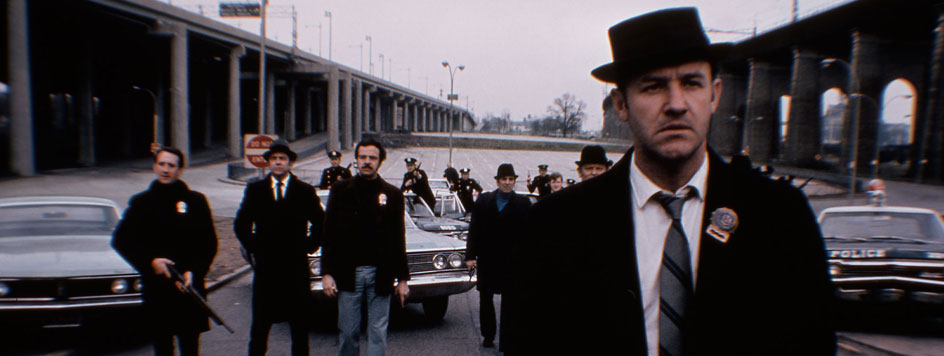
If anyone ever asks you if you’ve seen The French Connection, all you have to do is say “oh, man, that car chase is awesome!” That’s it. Maybe mumble something about Gene Hackman. Then change the subject and ask whoever you’re talking to about a neat fish you saw once. You made it out of that conversation, and I’m proud of you.

The French Connection is all about a good cop who ain’t all that good, y’know? Gene Hackman plays “Popeye” Doyle, a cop bent on bringing down the drug trade. Some street arrests and small-time guys lead him to some French druglords in the heroin game, and there’s your movie. Let’s get after it.

Shit, do they ever get after it. There’s just about no time invested in character in The French Connection, which usually strikes me as obnoxious in a movie. Popeye should come off as stiff or uninteresting, but instead it’s clear that everyone involved in this movie knew where to find the meat. It’s 100% tone: everything is about dirty, gritty New York and the intensity of the cat-and-mouse chase. Every line exists to hammer home those things and only those things.

It’s an action movie, and there’s nothing necessarily wrong with that. The French Connection is the greatest version of something that’s become pretty awful in the last few decades. It never goes deeper than the frustration of the chase or the desire to escape, but that’s all okay, too. Plenty of action movies on this list look at more intense themes — there’s plenty of action in movies like Platoon and No Country for Old Men– but few of them stand as a love letter to a genre as well as this one.

The Best Part: The iconic scene is rarely actually the best part, but in this case I’ll make an exception:

The Worst Part: It comes across as a little slight when compared directly with the rest of this list. Just as Marty is just a love story, The French Connection is just an action movie. There are worse things to be, though, and it is rare that a movie does everything it set out to do.

Is It Better or Worse than Crash? They both have driving! Other than that, the best comparison is the fact that Gene Hackman’s character is a bit of a racist (he calls the head French druglord “Frog One,” though I guess that guy is an international heroin dealer, so, well, uhm) and an asshole, just like everyone in Crash. This comparison goes back to one of the first topics considered in this space: is it better to try to say nothing and say nothing or try to say something deep and fail? One of these two movies achieved everything it meant to. You’ll never guess which one.

Worst Best Picture Archives: Crash | Terms of Endearment | Forrest Gump | All About Eve | The Apartment | No Country for Old Men | Gentleman’s Agreement | 12 Years a SlaveThe Last Emperor | The Silence of the Lambs | The Artist | A Man for All Seasons | Platoon | The Lord of the Rings: The Return of the King | The King’s Speech | Rain Man | The Departed | The Bridge on the River Kwai | Marty | Gigi | It Happened One Night | Driving Miss Daisy | Shakespeare in Love | Wings | Midnight Cowboy | Rocky | Gone with the Wind | Chicago | Gladiator | Cavalcade | The Greatest Show on Earth | You Can’t Take It With You | The Best Years of Our Lives | The Godfather | CasablancaGrand Hotel | Kramer vs. Kramer | The French Connection

Alex Russell lives in Chicago and is set in his ways. Disagree with him about anything at readingatrecess@gmail.com or on Twitter at @alexbad.

Worst Best Picture: Is Kramer vs. Kramer Better or Worse Than Crash?

kramer vs. kramer

Alex Russell

In “Worst Best Picture” we search every single Best Picture Oscar winner of all time from 1927 to present to uncover the worst of them all. Conventional wisdom says that 2005’s winner Crash is the worst winner in history. We won’t stop until we’ve tested every last one. Read the the first, our review of Crash, here. Posts will be relatively spoiler free, but there may be some details revealed. Today’s installment is the 1979 winner Kramer vs. Kramer. Is it better than Crash?

My parents saw Kramer vs. Kramer on one of their first dates. My parents, both relatively recently divorced at the time, weren’t really in the right place to watch it. It’s also not really a great “date movie” on account of it being a movie about a divorce and a custody battle.

It’s been a long-running joke in my family that Kramer vs. Kramer was the last movie my mom got to pick out while they dated. It’s easy to see why: this is a damn brutal movie. I have no children and I haven’t been divorced and it hit me like a truck carrying another truck. If you’ve got some deeper connections to the themes, well, prepare yourself.

Within the first ten minutes, Joanna (Meryl Streep) leaves Ted (Dustin Hoffman). We aren’t given a lot of insight into exactly what’s wrong, but it’s clear that Joanna is unhappy, and she’s apparently unhappy enough to leave their son Billy (Justin Henry) behind, as well. Ted has to learn to balance a demanding job and a single parent household, and Billy has to learn to forgive his dad without really having any explanation for why his mom left. It’s hard stuff, but mom left completely, so everyone involved has to learn to start over.

Meryl Streep is out of the movie for a solid hour. It’s entirely about Ted and Billy bonding, and the mix of heartfelt moments and tough moments is effective. Billy wants his mom back, sure, but if all he has is dad then he’s going to make the best of it. Ted’s worn out and frustrated — one scene involves him making a drink and staring at a wall for a brief moment — but he’s proud of himself for being able to take over parenthood alone.

That makes it all the more difficult when Joanna comes back and wants to be in Billy’s life again. The custody battle is the bulk of the movie’s conflict, and it deserves not being spoiled at all. It’s emotional and powerful, and it’s amazing to see Dustin Hoffman and Meryl Streep both give (possibly) their best performances in the same movie. If I’m wrong there, then perhaps you can downgrade them both to “excellent” here.

What stands out the most is the difficult line that the story walks about who the “hero” is. We spend a full hour with Ted, but Joanna tells the court the story of the Ted we never got to see: married Ted. The real answer isn’t that Ted is a good father or that Joanna is a bad wife or that Ted is a bad husband or that Joanna is a good mother, it’s much more complicated than that. I think there’s a lot of interpretation to be done and Kramer vs. Kramer will hit different people different ways, but I really am struck by the complexity of everyone involved. Terms of Endearment has a similarly complicated view of how we interact with the people we love, but this is a much more difficult topic. Everything in Kramer vs. Kramer is a little difficult, but it manages to be emotional without being manipulative.

The Best Part: The courtroom scene is fantastic, of course. Both leads give outstanding performances and earn their respective acting Oscars many times over, but it’s Ted’s lawyer that stuck with me. Played by Howard Duff, he’s tasked with destroying Joanna on the stand. He’s brutal, and it speaks to the fact that even though Ted and Joanna are trying to make this as positive as they can, no one escapes these situations that way.

The Worst Part: Many Oscar winners go through some revision after the fact. Kramer vs. Kramer‘s version of that is a disagreement with my notion that both sides are played equally in the custody battle. Since the movie is from Ted’s perspective, mostly, it can be easy to side with him against Joanna or to paint her as flighty or “crazy.” I can definitely see the argument that it’s a proto version of “men’s rights” nonsense, but I disagree with that take.

Is It Better or Worse than Crash? I’ve said this a million times at this point, but it all goes back to realism. I feel for Ted and Joanna. Ted wants to make enough money to provide for his family and Joanna wants to hold her family together. No one is “bad” in Kramer vs. Kramer, they just make bad choices because they don’t have time to consider if they’re even making a specific choice or not. Ted works too much and Joanna keeps her problems inside. Neither of them works on their marriage with the other one and thus it fails them and Billy suffers. The message of Kramer vs. Kramer is that you have to be well-rounded in your life and take care of every aspect of your humanity. Crash would tell you that it doesn’t matter, because all people are villains at their core and all people are waiting to literally kill each other at the slightest provocation. When the “divorce-and-custody-battle” movie is the happier, more hopeful movie then you’ve really taken a wrong turn.

Worst Best Picture Archives: Crash | Terms of Endearment | Forrest Gump | All About Eve | The Apartment | No Country for Old Men | Gentleman’s Agreement | 12 Years a SlaveThe Last Emperor | The Silence of the Lambs | The Artist | A Man for All Seasons | Platoon | The Lord of the Rings: The Return of the King | The King’s Speech | Rain Man | The Departed | The Bridge on the River Kwai | Marty | Gigi | It Happened One Night | Driving Miss Daisy | Shakespeare in Love | Wings | Midnight Cowboy | Rocky | Gone with the Wind| Chicago | Gladiator | Cavalcade | The Greatest Show on Earth | You Can’t Take It With You | The Best Years of Our Lives | The Godfather | Casablanca | Grand Hotel | Kramer vs. Kramer

Alex Russell lives in Chicago and is set in his ways. Disagree with him about anything at readingatrecess@gmail.com or on Twitter at @alexbad.

Worst Best Picture: Is Grand Hotel Better or Worse Than Crash?

image source: wiki

Alex Russell

In “Worst Best Picture” we search every single Best Picture Oscar winner of all time from 1927 to present to uncover the worst of them all. Conventional wisdom says that 2005’s winner Crash is the worst winner in history. We won’t stop until we’ve tested every last one. Read the the first, our review of Crash, here. Posts will be relatively spoiler free, but there may be some details revealed. Today’s installment is the 1931/1932 winner Grand Hotel. Is it better than Crash?

You aren’t going to watch Grand Hotel unless you’re watching all 86 of these. There’s just no other reason to see it now.

It Happened One Night won the seventh Best Picture award in 1934 and earned a spot in the canon of romantic classics at the same time. It’s the first winning film that you might have cause to see on your own. The rest of the early winners, Grand Hotel included, are strange looks into 30s Hollywood. They’re fascinating in a way, but they don’t hold up in the way we think of “stories” today. Just as the audience in 1931 wouldn’t have known what to do with No Country for Old Men, we don’t really know what to do with the busy, crazy, dramatic Grand Hotel.

A brief plot summary is probably required. Grand Hotel apparently was the first movie where a lot of characters interacted with each other without realizing they’re all connected. It gave birth to the term “grand hotel theme” which describes just such a story. In Grand Hotel itself, the characters are all at the finest hotel in Berlin for various reasons. One man is dying of a mysterious disease, a businessman is trying to close an important deal for a merger, a performer is in hiding, and a jewel thief is, well, thievin’ jewels. They all are connected, and the movie’s whole point is to show the audience how.

The jewel thief robs the performer and falls in love. The dying man works in the businessman’s factory. The businessman hires a stenographer, and the stenographer turns out to be an aspiring actress. The stenographer thinks the businessman should be nicer to the dying man. The dying man just wants to drink all the champagne in Germany. It’s pretty busy.

This is old Hollywood at its old-Hollywood-est. It’s a crazy story that likely works well as a play but doesn’t make a ton of sense as a film. It’s not really fair to judge the original for the crimes of the copycats, but “thief with a heart of gold” and “performer who is tired of her fans” are well worn tropes at this point. The industrialist businessman is ridiculous. The dying man is a full-on cartoon character brought to life. The cast is too “big” and too crazy and the story itself isn’t interesting enough to hold together for two hours. It’s hard to even nail down what the right complaint is about Grand Hotel, because once you pull on any thread you unravel how you feel about all of it.

The Best Part: Lionel Barrymore plays Otto Kringelein, the man dying of a mysterious illness. He’s best known as the villain in It’s a Wonderful Life, but he’s best known in this series as the most insane part of You Can’t Take It With You, which is saying a lot. Kringelein is a fascinating character, and Barrymore clearly decided that he was just going to be a crazy motherfucker for two hours. Greta Garbo is in this, but she’s reasonably forgettable. Even if you hate Grand Hotel, you’re going to remember Barrymore slamming champagne and yelling as Kringelein.

The Worst Part: Wallace Beery’s General Director Preysing (pictured above). He’s the factory owner that hates all the simple folk that work in his employ. He’s clearly supposed to be the “villain” of the movie, so much as it has one, and they don’t really work to make him anything else. Only Gladiator has a less complicated antagonist, and since that’s the problem with Gladiator (well, it’s one of the problems) it’s also the problem here.

Is It Better or Worse than Crash? These just aren’t the same thing. It’s like asking if green is more than eight. It’s hard to compare the idiotic message of Crash (trust no one! everyone is evil! beware the OTHER! learn nothing!) and the device of Grand Hotel (what if, like, we’re all connected?), but since I forced myself to do it, I’ll do it. They both feature people who wake up at the start of the movie determined to be a bastard — John Barrymore in Grand Hotel, Matt Dillon in Crash — who redeem themselves for questionably relevant narrative reasons. They both fall apart if you look at them too closely, but for Grand Hotel it’s because it came out literally three years after the invention of sliced bread. For Crash it’s because Crash is terrible.

Worst Best Picture Archives: Crash | Terms of Endearment | Forrest Gump | All About Eve | The Apartment | No Country for Old Men | Gentleman’s Agreement |12 Years a SlaveThe Last Emperor | The Silence of the Lambs | The Artist | A Man for All Seasons | Platoon | The Lord of the Rings: The Return of the King | The King’s Speech | Rain Man | The Departed | The Bridge on the River Kwai | Marty | Gigi | It Happened One Night | Driving Miss Daisy | Shakespeare in Love | Wings | Midnight Cowboy | Rocky | Gone with the Wind| Chicago | Gladiator | Cavalcade | The Greatest Show on Earth | You Can’t Take It With You | The Best Years of Our Lives | The Godfather | Casablanca | Grand Hotel

Alex Russell lives in Chicago and is set in his ways. Disagree with him about anything at readingatrecess@gmail.com or on Twitter at @alexbad.