Worst Best Picture

Worst Best Picture: Is Argo Better or Worse Than Crash?

image source: telegraph

image source: telegraph

Alex Russell

In “Worst Best Picture” we search every single Best Picture Oscar winner of all time from 1927 to present to uncover the worst of them all. Conventional wisdom says that 2005’s winner Crash is the worst winner in history. We won’t stop until we’ve tested every last one. Read the the first, our review of Crash, here. Posts will be relatively spoiler free, but there may be some details revealed. Today’s installment is the 2012 winner Argo. Is it better than Crash?

I don’t know how, but I somehow missed every single nominee for Best Picture in 2012. I don’t always see every nominee or anything, but missing all nine of them the first time around almost seems deliberate. It wasn’t, though, and Argo was one of those movies I just always figured I’d see, somehow. After watching it, I don’t feel like my position on it changed at all. There are some good-to-great performances, especially from the supporting cast, and it’s certainly exciting, but it isn’t the kind of movie that usually does it for me.

It’s a dramatic retelling of the rescue of six American diplomats during the Iran hostage crisis. The movie portrays a small group of film executives working with a small group of government officials to stage a fake space movie filming in Iran. The plan is to break the hostages out by appearing to require them for the movie’s production. It’s outlandish, but it has the added benefit of being (sorta) true, so everything that happens “works” as a real story. Typically, as with every “true” story in an Oscar movie, almost every criticism is about how events actually happened. I think those criticisms are valid from a historical standpoint, but I don’t think they need discussion in this context. If your story doesn’t do the history justice, that’s on you, I just want to find out if you made the worst Best Picture Oscar winner of all time.

For a really intense movie, the pacing is strange in Argo. The hostages are in constant danger and the plan is always about to fall apart and everyone is always tense and everything else you want from a good caper movie, but it also feels very straightforward. It happens how you think it’ll happen, more or less. Aside from one really great hitch towards the end, I never felt like anything too shocking happened. That may be like the Titanic version of “you know the boat sinks, don’t see it” complaint, but it affected my viewing.

Honestly, if anything is remarkable about Argo it’s that it’s awfully funny for a drama. Alan Arkin and John Goodman do a lot of heavy lifting in that department, and a bit role for Richard Kind never hurts. It’s ridiculous: they make a space movie in Iran to save six people. That’s essentially what happens in Argo, which is totally bonkers. The script allows for most everyone to lean into the crazy without detracting from the suspense, and that’s definitely worth noting.

The Best Part: During a very tense scene, an Iranian soldier has to call the actual production company to verify the existence of this fake movie. The “will they pick up?!” tension of a phone call that isn’t supposed to happen is very real and really works. I couldn’t believe how much it got me.

The Worst Part: I don’t know if this will be a minority opinion, but I didn’t love Ben Affleck or Bryan Cranston in this. I think they both do a fine enough job, but neither performance really stands out now a few weeks later. The supporting cast steals the show.

Is It Better or Worse than Crash? It’s better, but it will be interesting to see what the legacy of Argo is. I do wonder if people will rethink it at all, or if they possibly already have. The worst thing I can say about Argo is that it doesn’t stand out when judged alongside other Best Picture winners. It’s just a mostly true story, told well, with good performances. Hardly an insult. Crash is none of those things, and the weaker supporting cast of Crash looks really rough in comparison.

Worst Best Picture Archives: Crash | Terms of Endearment | Forrest Gump | All About Eve | The Apartment | No Country for Old Men | Gentleman’s Agreement | 12 Years a SlaveThe Last Emperor | The Silence of the Lambs | The Artist | A Man for All Seasons | Platoon | The Lord of the Rings: The Return of the King | The King’s Speech | Rain Man | The Departed | The Bridge on the River Kwai | Marty | Gigi | It Happened One Night | Driving Miss Daisy | Shakespeare in Love | Wings | Midnight Cowboy | Rocky | Gone with the Wind | Chicago | Gladiator | Cavalcade | The Greatest Show on Earth | You Can’t Take It With You | The Best Years of Our Lives | The GodfatherCasablancaGrand Hotel | Kramer vs. Kramer | The French Connection | In the Heat of the Night | An American in Paris | Patton | Mrs. Miniver | Amadeus | Crash, Revisited | How Green Was My Valley | American Beauty | West Side Story | The Sting | Tom Jones | Dances with Wolves | Going My Way | The Hurt Locker | The Life of Emile Zola | Slumdog Millionaire | The Deer Hunter | Around the World in 80 Days  | Chariots of Fire | Mutiny on the Bounty | Argo

Alex Russell lives in Chicago and is set in his ways. Disagree with him about anything at readingatrecess@gmail.com or on Twitter at @alexbad.

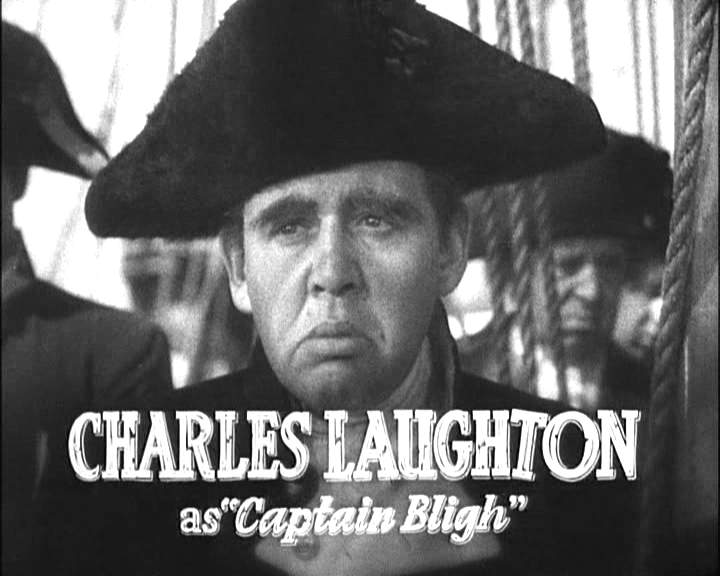
Worst Best Picture: Is Mutiny on the Bounty Better or Worse Than Crash?

Charles_Laughton_in_Mutiny_on_the_Bounty_trailer

Alex Russell

In “Worst Best Picture” we search every single Best Picture Oscar winner of all time from 1927 to present to uncover the worst of them all. Conventional wisdom says that 2005’s winner Crash is the worst winner in history. We won’t stop until we’ve tested every last one. Read the the first, our review of Crash, here. Posts will be relatively spoiler free, but there may be some details revealed. Today’s installment is the 1935 winner Mutiny on the Bounty. Is it better than Crash?

When people make lists of the great performances in great films, they inevitably miss some. I’m not going to pretend my list would  have included someone in Mutiny on the Bounty when I started this, but it most certainly does now. Charles Laughton’s performance as the insane, duty-driven, bloodthirsty Captain Bligh is really something you need to see.

Mutiny on the Bounty is a retelling of a retelling of an actual event, and with that many steps removed historical accuracy no longer matters. It’s not about the actual Captain Bligh or the actual mutiny, and none of that matters. The performances matter. Charles Laughton clearly decided to play Captain Bligh as furious as absolutely possible without going over into comedy. The movie opens with Bligh’s men drafting everyone they can find into service on a two-year journey across the Pacific. The idea of that is difficult enough to imagine — someone interrupts you at dinner and demands you go across the ocean for a significant percentage of your life, no, thanks, I’m good — but doing it with Captain Bligh is the kicker.

Almost immediately and for almost nothing, Bligh demands that a man be killed by being thrown overboard while still tied to the boat. There’s the “tone” of this movie. Captain Bligh wants you dead, period. It’s not even clear that he cares about the mission or a sense of duty, he’s just a madman. Sometimes that kind of villain loses effectiveness because it feels unrealistic, but Bligh feels all-too real. He’s not a force of nature, he’s just a representation of what unlimited power can do to a man, especially when no one has anywhere to go to get away.

His opposition comes mostly in the form of starved, crazed men who gain the strength to resist under Clark Gable’s Fletcher Christian. Christian starts as Bligh’s right-hand man, but his conscience slowly chips at him until he has no chance but to lead a rebellion. Gable sells the “good guy just doing what’s right” role, but he’s less complicated and less interesting than the villain. There a dozen outstanding Clark Gable roles, but this one is merely a mirror to Laughton.

The whole thing meanders a bit whenever the story leaves the boat. It takes too long to get going, it gets lost on some islands, and it definitely slows down during the ending, but it’s worth your time. It’s not perfect, but judged among the other 1930s winners like You Can’t Take It With YouCavalcade, and Cimarron, it starts to feel very special. It works in a modern setting, though it would need some tightening to work now.

The Best Part: It’s not spoiling anything to say there’s a mutiny, but the mutiny itself has nothing on Bligh’s response. He’s forced to sail away in a tiny boat with a skeleton crew, and the scenes of his angry, steely resistance steal the show. Laughton, Gable, and the third lead were all nominated for Best Actor, but all three lost that year to the lead from The Informer.

The Worst Part: There’s an extended part of the second act that takes place on Tahiti that is largely forgettable. Clark Gable makes all the beautiful island women fall in love with him and a bunch of mildly silly, mildly sexy stuff happens. It doesn’t feel necessary, and since Bligh’s pure insanity is enough of a motivating factor to force the plot, it feels tacked on to add a love story. Even so, it doesn’t add much of one.

Is It Better or Worse than Crash? It’s a much better movie. It’s exciting and interesting and does things that movies are still relatively afraid to do with main characters. Some of the ending is extremely stupid, and a lot of the “message” (such as it is) is pretty worthless. It’s just a movie about two men locked in a power struggle, and one is clearly in the wrong. It’s truth-to-power, which is difficult, and it’s done so with a regard for the difficulty that these men clearly faced. When the chain of command isn’t right, what do you do? How do you put your life at risk when it may not even matter? These are hard questions, and Crash’s “why is everyone so awful all the time” isn’t.

Worst Best Picture Archives: Crash | Terms of Endearment | Forrest Gump | All About Eve | The Apartment | No Country for Old Men | Gentleman’s Agreement | 12 Years a SlaveThe Last Emperor | The Silence of the Lambs | The Artist | A Man for All Seasons | Platoon | The Lord of the Rings: The Return of the King | The King’s Speech | Rain Man | The Departed | The Bridge on the River Kwai | Marty | Gigi | It Happened One Night | Driving Miss Daisy | Shakespeare in Love | Wings | Midnight Cowboy | Rocky | Gone with the Wind | Chicago | Gladiator | Cavalcade | The Greatest Show on Earth | You Can’t Take It With You | The Best Years of Our Lives | The GodfatherCasablancaGrand Hotel | Kramer vs. Kramer | The French Connection | In the Heat of the Night | An American in Paris | Patton | Mrs. Miniver | Amadeus | Crash, Revisited | How Green Was My Valley | American Beauty | West Side Story | The Sting | Tom Jones | Dances with Wolves | Going My Way | The Hurt Locker | The Life of Emile Zola | Slumdog Millionaire | The Deer Hunter | Around the World in 80 Days  | Chariots of Fire | Mutiny on the Bounty

Alex Russell lives in Chicago and is set in his ways. Disagree with him about anything at readingatrecess@gmail.com or on Twitter at @alexbad.
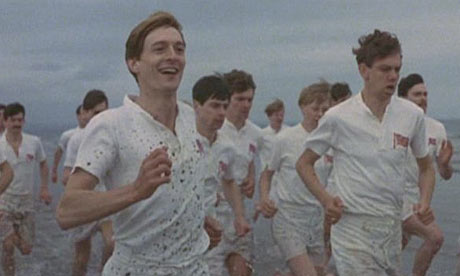
Worst Best Picture: Is Chariots of Fire Better or Worse Than Crash?

chariots of fire

image source: the guardian

Alex Russell

In “Worst Best Picture” we search every single Best Picture Oscar winner of all time from 1927 to present to uncover the worst of them all. Conventional wisdom says that 2005’s winner Crash is the worst winner in history. We won’t stop until we’ve tested every last one. Read the the first, our review of Crash, here. Posts will be relatively spoiler free, but there may be some details revealed. Today’s installment is the 1981 winner Chariots of Fire. Is it better than Crash?

Your typical sports movie is the story of an underdog either defeating a superior enemy or competing valiantly and losing. Chariots of Fire doesn’t exactly follow the template, but it’s assuredly still a sports movie that is about a bigger struggle.

It’s the story of a Christian missionary and a Jewish student at Cambridge and their struggles as they prepare to run in the 1924 Olympics. The actual running itself is iconic, you almost certainly know the training scenes and the song even if you haven’t seen it, but it mostly doesn’t deserve commentary. It’s standard sports-movie fare: one guy beats the other, the other trains hard in suspect ways, they meet again in a final showdown for personal glory and country and all that. It’s the background of Chariots of Fire that is much more interesting.

Most commentary on the movie uses the same word to describe it: quiet. That’s not a bad word, for sure, since most of the other Best Picture winners are about war or a great struggle, but while no great army descends on France in Chariots of Fire, there’s plenty of struggle. Harold Abrahams, the Jewish runner, faces continual antisemitism that ranges from some teasing on his first day at Cambridge about the ethnicity associated with his last name to some deeper insinuations about why he wants to train so hard to win Olympic gold. One of the great strengths of the film is the ability to sell the difficulty of being Jewish in this life — Cambridge, the Olympics, and Britain in the 20s — without being too heavy handed.

The missionary, Eric Liddell, faces his own off-track problems. He’s Scottish and comes from an intense family full of people who wish he would quit running and go be a proper missionary. I found myself particularly moved by the idea that this man who had a chance to become one of the all-time greats in his field was being constantly reminded that “his field” was supposed to be something altogether different. Parents just don’t understand, even 90 years ago in Scotland.

Liddell has to balance his running with his dedication to his faith, and as in all things one has to lose. His ultimate test comes when he is told at the last second that the most important race of his life is not on a normal day as he was told, but on Sunday. It’s a particularly interesting idea of a personal challenge, as most movies wouldn’t be able to handle the tone required.

The Best Part: After insisting that he will not race on a Sunday, Liddell is met by a series of increasingly important people who try to lean on him. It’s understated — no one yells at him — and that’s a great strength of the sequence. They respect his convictions, but they’ve got to win this damned race. The scale of the Olympics in 1924 is also pretty wonderful. It looks more like a high school football game in a very small town, which is charming.

The Worst Part: A lot of the Scottish missionary scenes tend to feel out of place in a narrative that otherwise goes very directly towards the final race. It’s important to establish Liddell as conflicted, but it may not be necessary to do it to this degree. The Americans towards the end also feel a bit silly, but that’s me speaking as one of them. It’s amazing how consistent “Americans” are treated in films like this, and at least my countrymen get out of Chariots of Fire mostly as silent plot points.

Is It Better or Worse than Crash? It’s certainly better, if for no other reason than that “quiet” distinction. Chariots of Fire isn’t a template a lot of movies can reuse, but it’s a tone that anyone attempting to get a message across like this could stand to benefit from. It’s a way to tell a story and make a point without yelling into the camera. Crash is terrified you won’t “get it” and Chariots of Fire trusts that you can watch the movie and take it in on your own.

Worst Best Picture Archives: Crash | Terms of Endearment | Forrest Gump | All About Eve | The Apartment | No Country for Old Men | Gentleman’s Agreement | 12 Years a SlaveThe Last Emperor | The Silence of the Lambs | The Artist | A Man for All Seasons | Platoon | The Lord of the Rings: The Return of the King | The King’s Speech | Rain Man | The Departed | The Bridge on the River Kwai | Marty | Gigi | It Happened One Night | Driving Miss Daisy | Shakespeare in Love | Wings | Midnight Cowboy | Rocky | Gone with the Wind | Chicago | Gladiator | Cavalcade | The Greatest Show on Earth | You Can’t Take It With You | The Best Years of Our Lives | The GodfatherCasablancaGrand Hotel | Kramer vs. Kramer | The French Connection | In the Heat of the Night | An American in Paris | Patton | Mrs. Miniver | Amadeus | Crash, Revisited | How Green Was My Valley | American Beauty | West Side Story | The Sting | Tom Jones | Dances with Wolves | Going My Way | The Hurt Locker | The Life of Emile Zola | Slumdog Millionaire | The Deer Hunter | Around the World in 80 Days  | Chariots of Fire

Alex Russell lives in Chicago and is set in his ways. Disagree with him about anything at readingatrecess@gmail.com or on Twitter at @alexbad.

Worst Best Picture: Is Around the World in 80 Days Better or Worse Than Crash?

around the world in 80 days

Alex Russell

In “Worst Best Picture” we search every single Best Picture Oscar winner of all time from 1927 to present to uncover the worst of them all. Conventional wisdom says that 2005’s winner Crash is the worst winner in history. We won’t stop until we’ve tested every last one. Read the the first, our review of Crash, here. Posts will be relatively spoiler free, but there may be some details revealed. Today’s installment is the 1956 winner Around the World in 80 Days. Is it better than Crash?

I’ve become fascinated by the disconnect between how a movie was seen at the time and how it looks now, and there may not be a better contender to break that down than this one. The 1956 Best Picture Oscar winner Around the World in 80 Days was produced by Michael Todd, and the poster for it claims “Michael Todd’s show makes this a better world.”

That’s a bold damn statement, on the one hand. If you’re considering seeing a movie or not, the fact that it has been declared a net positive for humanity is as good a reason as any. On the other hand, all that sentence really means is that someone considered if Around the World in 80 Days made the world a worse place to live and said “no, I wouldn’t go that far.”

I might. This is a tremendously bad movie. It’s tough to even decide where to begin. Let’s break this down.

The movie starts with a 10-minute fake newsreel about the history of travel from Edward R. Murrow. To some degree, that’s a novelty. It’s so strange to see a time when people would go see a fanciful “road movie” and then be delighted to see the leading newsman of the day explain travel as an idea to them. It really sets the tone for next three hours.

The rest of the movie falls into place, and I mean that term in the worst sense. You get the sensation that the creators cast a ton of big names and secured some exotic locations and then picked moments from Jules Verne’s book that fit those. There is no larger narrative beyond “go around the world.” David Niven bets a bunch of stuffy British people that he can go around the world in 80 days. There you go. You can skip it now.

If you do see it, you’ll see some absurdities. Chief among these might be the legendary Mexican actor Cantinflas fighting some bulls for half an hour, which, again, they just heard they could get Cantinflas and filmed around it. He’s charming and funny in it, but it’s just such a strange performance. It has nothing on Shirley MacLaine as the exceedingly white Indian bride that they save from being burned alive in ritual practice. The less said about the view of 1956 India — or the very, very white woman they meet there — the better. Yikes.

The prevailing emotion after watching this epic is one of wonder, but more wonder at a time that does not exist now. This is a terrible movie. It’s far too long and feels even longer, and it’s chock-full of easy, obvious things to cut. An entire trip to the Wild West does nothing for the story at all. India introduces the terrible love story, and that’s it. The setup itself takes half an hour, and if the idea was “show all these great locations” you may as well start out with the champagne in the hot air balloon.

It would be difficult to imagine the kind of person that would like this movie in 2014. From it’s time, though, it does represent a monumental achievement in scope, though one that throws out narrative and any hope of meaning to do so.

The Best Part: The saving grace here, such as it is, is that some of the performances are great. Cantinflas is funny and David Niven is crafty, and both of those are good, because they’re both on screen for almost three solid hours.

The Worst Part: This has to be the unexplained Shirley MacLaine role. She’s excellent in The Apartment and Terms of Endearment, but there is no excuse for this disaster. The movie’s length is what it’s remembered for, and don’t get me wrong, it’s absurdly long. But MacLaine in India is just one long wince in 2014.

Is It Better or Worse than Crash? One of the debates in this space has been if “nothing” is better than “bad something.” I think here the racial stereotypes and the cringe factor are as high as they are in Crash, so I have to default to a standard decision maker for CrashAround the World in 80 Days is five decades older. Crash is certainly less boring, but all Around the World in 80 Days will do is waste your time and leave a taste in your mouth. Crash feels like an earnest attempt to make something, which is worse.

Worst Best Picture Archives: Crash | Terms of Endearment | Forrest Gump | All About Eve | The Apartment | No Country for Old Men | Gentleman’s Agreement | 12 Years a SlaveThe Last Emperor | The Silence of the Lambs | The Artist | A Man for All Seasons | Platoon | The Lord of the Rings: The Return of the King | The King’s Speech | Rain Man | The Departed | The Bridge on the River Kwai | Marty | Gigi | It Happened One Night | Driving Miss Daisy | Shakespeare in Love | Wings | Midnight Cowboy | Rocky | Gone with the Wind | Chicago | Gladiator | Cavalcade | The Greatest Show on Earth | You Can’t Take It With You | The Best Years of Our Lives | The GodfatherCasablancaGrand Hotel | Kramer vs. Kramer | The French Connection | In the Heat of the Night | An American in Paris | Patton | Mrs. Miniver | Amadeus | Crash, Revisited | How Green Was My Valley | American Beauty | West Side Story | The Sting | Tom Jones | Dances with Wolves | Going My Way | The Hurt Locker | The Life of Emile Zola | Slumdog Millionaire | The Deer Hunter | Around the World in 80 Days

Alex Russell lives in Chicago and is set in his ways. Disagree with him about anything at readingatrecess@gmail.com or on Twitter at @alexbad.

Worst Best Picture: Is The Deer Hunter Better or Worse Than Crash?

image source: director's guild of america

image source: director’s guild of america

Alex Russell

In “Worst Best Picture” we search every single Best Picture Oscar winner of all time from 1927 to present to uncover the worst of them all. Conventional wisdom says that 2005’s winner Crash is the worst winner in history. We won’t stop until we’ve tested every last one. Read the the first, our review of Crash, here. Posts will be relatively spoiler free, but there may be some details revealed. Today’s installment is the 1978 winner The Deer Hunter. Is it better than Crash?

The most common element in a Best Picture winner is either Dustin Hoffman or war. This one’s a war movie, but it’s so much more than that.

We are fascinated with war because it’s the biggest, craziest thing we can think of. One whole loosely defined group goes up against another loosely defined group and they duke it out over something. In The Deer Hunter, a group of Pennsylvania steelworkers has a lavish wedding party before serving in the Vietnam War. They drink and dance and then go off to war. It feels inevitable.

The Vietnam War is the one we don’t really know how to talk about the most, perhaps, and it certainly was in 1978. Every single element of The Deer Hunter is designed to feel like a march towards something terrible. The men go through a wedding but are gripped by the thrill/fear of going to war. They go hunting but are more consumed by their thoughts than by the hunt. They go to war and are made to not just shoot at other people, but to turn the guns on themselves. Through iconic Russian roulette games, Robert De Niro and Christopher Walken are as chilling as anything in any other movie on this list. The Deer Hunter will break you down into your smallest pieces.

The Hurt LockerPlatoon, and The Best Years of Our Lives are all “war” movies that are about the external struggle as well as the internal struggle, but the “war” itself in The Deer Hunter almost doesn’t matter. The guys have to go to war to have their psyches opened, but they were always, partially, these people. It’s traditional in that it has the whole “your own worst enemy” thing going on where the internal struggle plays a larger role than the literal war, but it’s almost surprising how little Vietnam there seems to be in this Vietnam War movie.

It’s depressing, intense, and dramatic. It’s probably too much of all three of those things, though that will depend on what you want out of The Deer Hunter. Even if you think the whole thing is too much — and some of the symbolism can’t be said to be anything but “too much” — you will get something out of it. It will make you feel something for this unfortunate group of men. It’ll definitely do that.

The Best Part: The performances here are all spot-on: peak Robert De Niro, 30-year-old Meryl Streep, stone-serious and terrifying Christopher Walken, and the final film role of John Cazale. Everyone’s perfect here, which is good, because they have to pull off some insane stuff. I found it tense in a great way, but it’s definitely possible that the entire thing will feel too ridiculous to you. That seems to be the primary rethinking of The Deer Hunter, though I think it goes right to edge of madness without tipping over.

The Worst Part: The film works in thirds: America, trip to Vietnam, back to America. That first third is supposed to set up the characters, but they don’t really matter until they are changed. People always come at Tarantino for not editing, but this has to be the most unnecessary act in film history. It’s nearly an hour long and does about five minutes of work. There’s something to be said for establishing a tone, but “happy at a wedding before the war” does not need to be as long as the war itself.

Is It Better or Worse than Crash? The Deer Hunter has been rethought a lot since it came out and shocked everyone, and I think that’s probably the only thing that could have happened. Most of what makes it so great is the shock. The Russian roulette scenes are all terrifying, the brutality of the war scenes are terrifying, the trip home is terrifying. Everything truly excellent in The Deer Hunter is excellent because you can’t believe what you’re seeing. I’ve mostly skirted the specifics here to try to keep this what it needs to be: something that you don’t see coming. Even if you have a vague awareness of The Deer Hunter, it’s much like needing to see Rain Man. Just knowing what it is isn’t enough, you have to witness it. You don’t need to see Crash, you can just take my word on that one.

Worst Best Picture Archives: Crash | Terms of Endearment | Forrest Gump | All About Eve | The Apartment | No Country for Old Men | Gentleman’s Agreement | 12 Years a SlaveThe Last Emperor | The Silence of the Lambs | The Artist | A Man for All Seasons | Platoon | The Lord of the Rings: The Return of the King | The King’s Speech | Rain Man | The Departed | The Bridge on the River Kwai | Marty | Gigi | It Happened One Night | Driving Miss Daisy | Shakespeare in Love | Wings | Midnight Cowboy | Rocky | Gone with the Wind | Chicago | Gladiator | Cavalcade | The Greatest Show on Earth | You Can’t Take It With You | The Best Years of Our Lives | The GodfatherCasablancaGrand Hotel | Kramer vs. Kramer | The French Connection | In the Heat of the Night | An American in Paris | Patton | Mrs. Miniver | Amadeus | Crash, Revisited | How Green Was My Valley | American Beauty | West Side Story | The Sting | Tom Jones | Dances with Wolves | Going My Way | The Hurt Locker | The Life of Emile Zola | Slumdog Millionaire | The Deer Hunter

Alex Russell lives in Chicago and is set in his ways. Disagree with him about anything at readingatrecess@gmail.com or on Twitter at @alexbad.

Worst Best Picture: Is Slumdog Millionaire Better or Worse Than Crash?

slumdog

Alex Russell

In “Worst Best Picture” we search every single Best Picture Oscar winner of all time from 1927 to present to uncover the worst of them all. Conventional wisdom says that 2005’s winner Crash is the worst winner in history. We won’t stop until we’ve tested every last one. Read the the first, our review of Crash, here. Posts will be relatively spoiler free, but there may be some details revealed. Today’s installment is the 2008 winner Slumdog Millionaire. Is it better than Crash?

The poster for Slumdog Millionaire calls it “the feel-good film of the decade.” Most of the other 85 winners to date are decided not “feel-good” movies, so Slumdog at least has that going for it. Honestly, your enjoyment of Slumdog is going to come down to your answer to that basic question: was this fun for you?

Slumdog is the story of two boys who grow up together but fork off into different paths. They both grow up in the streets, but one, Salim, joins a crime ring and one, Jamal, ends up working in a call center. Jamal uses the call center’s database to look up a long-lost love and then uses the Indian version of Who Wants to Be a Millionaire? to try to reunite with her. It’s an interesting plot point and likely the only thing you’d know about Slumdog without seeing it. As of now, the show is still on in the US (though it’s not the phenomenon it once was) and thus this doesn’t feel all that dated to me, yet. It’ll be interesting to see how that ends up in 20 years. Could you imagine if Midnight Cowboy had an extended scene in the middle based on Password?

Everything here is about the game show. Jamal works his way through the show’s questions because he miraculously knows every answer from some small moment of his life. He knows a question about cricket because he was in a dangerous situation where a TV was on, playing that cricket match. He knows a question about a $100 US bill because he got one, one time, from some American tourists. It’s all about coincidence — or fate! — and your tolerance for that sort of thing will determine if Slumdog is cute or tortuous for you.

I generally hate unexplained luck like that in a movie, but it works here. Slumdog is fun without leaning too heavily on why Jamal is so lucky. He knows all this stuff because he needs to know it to be on the show. He’s on the show because this is the only public platform he can think of to reach out to the girl he loves. Sure, okay, that all checks out. Without the internal doubt of the movie — Jamal is repeatedly accused of being a fraud, because no one would know all this stuff from his station in life — this is just a starry eyed movie about the triumph of love. With it, it’s an implausible story, to be sure, but it’s one that feels almost possible.

The Best Part: The performances are all pretty lackluster (most everyone is a teenager or a gangster in this movie) compared to the standard Oscar fare, so thankfully Anil Kapoor is exceptional as the host of Who Wants to Be a Millionaire? He’s brash and cocky and does a good job of selling the show-within-a-film as real. It feels like a show people would actually watch; he is the ultimate “host” in this movie.

The Worst Part: Oh, man, do I not care about this love story. Jamal is a complete cipher for “goodness.” He never develops an opinion or feeling of his own, he’s just the prism through which good intentions bends into actions. Latika, the girl of his dreams, is a girl that he barely gets to know as a child. There’s something we buy as an audience about two people who met when they were insanely young and then lost touch being in love, but think about that person in your life. Think about “risking it all” for that girl or boy from the first decade of your life. People may be mad at the conceit of a game show where a boy knows all the answers — and only these answers — but I just wish there would be a love story where the people had time to actually fall in love.

Is It Better or Worse than Crash? Is a game show more convenient than a car crash as a catalyst? I guess that’s a push. The only non-Indian people in Slumdog Millionaire are two ridiculously stupid tourists that are either actually in fanny packs or just act like they are, so it’s difficult to offer a traditional “race” viewing of the movie. Certainly there is something worth considering in that Danny Boyle (a white British guy) directed the most iconic Indian Best Picture, but within the film itself there isn’t much to go on. The comparison here is one of believability. If you hate the main element of Slumdog (the game show) as much as I hate the main element of Crash (everything is connected, man) then you will see these as very similar. It’s possible that Slumdog is your pick for the worst on the list. I say it’s nothing compared to most of these, but it’s certainly less harmless than the assault-on-plot-and-character that is Crash.

Worst Best Picture Archives: Crash | Terms of Endearment | Forrest Gump | All About Eve | The Apartment | No Country for Old Men | Gentleman’s Agreement | 12 Years a SlaveThe Last Emperor | The Silence of the Lambs | The Artist | A Man for All Seasons | Platoon | The Lord of the Rings: The Return of the King | The King’s Speech | Rain Man | The Departed | The Bridge on the River Kwai | Marty | Gigi | It Happened One Night | Driving Miss Daisy | Shakespeare in Love | Wings | Midnight Cowboy | Rocky | Gone with the Wind | Chicago | Gladiator | Cavalcade | The Greatest Show on Earth | You Can’t Take It With You | The Best Years of Our Lives | The GodfatherCasablancaGrand Hotel | Kramer vs. Kramer | The French Connection | In the Heat of the Night | An American in Paris | Patton | Mrs. Miniver | Amadeus | Crash, Revisited | How Green Was My Valley | American Beauty | West Side Story | The Sting | Tom Jones | Dances with Wolves | Going My Way | The Hurt Locker | The Life of Emile Zola | Slumdog Millionaire

Alex Russell lives in Chicago and is set in his ways. Disagree with him about anything at readingatrecess@gmail.com or on Twitter at @alexbad.
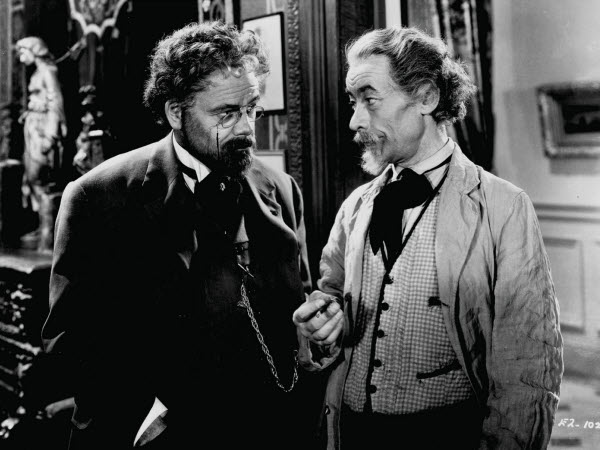
Worst Best Picture: Is The Life of Emile Zola Better or Worse Than Crash?

image source: allmovie.com

image source: allmovie.com

Alex Russell

In “Worst Best Picture” we search every single Best Picture Oscar winner of all time from 1927 to present to uncover the worst of them all. Conventional wisdom says that 2005’s winner Crash is the worst winner in history. We won’t stop until we’ve tested every last one. Read the the first, our review of Crash, here. Posts will be relatively spoiler free, but there may be some details revealed. Today’s installment is the 1937 winner The Life of Emile Zola. Is it better than Crash?

I had to watch The Life of Emile Zola twice to really get it. It’s one of the shorter Oscar winners — almost none of them clock in at under two hours — but it’s still an unbelievable slog to watch in 2014. It’s a courtroom drama that mostly happens outside of the courtroom and it’s an exploration of race that never mentions race at all.

The film is a biography of Emile Zola and a look at his involvement with the Dreyfus affair, a French political scandal where a Jewish man was convicted by the court of public opinion (and, well, real court) and sentenced to life in prison for a crime he didn’t commit. The film centers around Zola’s decision to speak out publicly for Dreyfus and to demand that the trial be reopened, but it’s also about the risk of challenging authority. The army has said that Dreyfus was treasonous, and challenging the army is challenging the state itself. It is not done.

The first half hour is all about establishing that Emile Zola doesn’t give a shit about what isn’t done. He writes dozens of books that challenge authority and is met every time by a different fanciful, official, French person that thinks he’s being a real asshole. He builds a life out of rebellion, though, even though his newly gained status and riches cost him his spot among the “battered” artistic class. There’s a quietness to this part of the film that I really like, and it’s a classic problem: how do you reconcile the fact that selling things to bring down the establishment makes you the new establishment?

The trial itself is much louder. Poor Paul Muni who plays Zola screams every word he says in court as he tries to stand up for Dreyfus. I can’t really motivate you to go see a political drama from before World War II, but if you see it you will be struck by the lack of one topic. Dreyfus is Jewish and it’s made very clear that the army believes him to be the traitor because he’s a Jew, but no one in the entire movie ever comes out and says so. The Dreyfus affair in history is 100% about some very ugly stereotypes and beliefs, but The Life of Emile Zola is 116 minutes about the Dreyfus affair without one mention of Judaism.

It’s sometimes necessary to talk about these early Best Picture winners with a caveat sentence. The Lost Weekend, a 1945 look at alcoholism, is pretty goofy in 2014. Gentleman’s Agreement, a 1947 movie where Gregory Peck pretends to be Jewish to write an article, doesn’t really know how to talk about everything it wants to talk about. Even when these films take on the right complicated, challenging subjects they sometimes do so like surgery with a shotgun. You have to watch The Life of Emile Zola knowing they mean Jewish, and that probably won’t be enough for you. It’s great that they wanted to make a movie about the unfair imprisonment of a man because of his faith, it’s just a shame they didn’t want to tell you that’s what they made.

The Best Part: The French officer that “captures” Dreyfus hands him a gun with the implication that he can choose to shoot himself rather than undergo the humiliation of a treason conviction. “I’ve been instructed to offer you the usual alternative.” is a line for the ages, as is “I’m not so stupid… as to provide you with a perfect case!” Awesome.

The Worst Part: After he first appears in the paper denouncing the army, Zola is met in the street by an angry mob. One of the hallmarks of early film like this is a fear that the audience won’t be able to follow motivations, but having a guy in the crowd shout “There’s Zola himself! Let’s kill him!” is a pretty hilarious moment in the middle of a lot of tension.

Is It Better or Worse than Crash? The obvious connection here is race. Both of these movies are designed to shine a light on tough racial topics but neither of them really does a great job of doing so. Crash because of hamfisted dialogue and extremely poor character development and The Life of Emile Zola because they were terrified to come right out and say “Jew” in 1937. One exists as a relic of a time gone by and the other is from 1937. But seriously, the right way to make both of these movies is somewhere in the middle of the two, and The Life of Emile Zola certainly deserves more forgiveness because it is nearly a century old.

Worst Best Picture Archives: Crash | Terms of Endearment | Forrest Gump | All About Eve | The Apartment | No Country for Old Men | Gentleman’s Agreement | 12 Years a SlaveThe Last Emperor | The Silence of the Lambs | The Artist | A Man for All Seasons | Platoon | The Lord of the Rings: The Return of the King | The King’s Speech | Rain Man | The Departed | The Bridge on the River Kwai | Marty | Gigi | It Happened One Night | Driving Miss Daisy | Shakespeare in Love | Wings | Midnight Cowboy | Rocky | Gone with the Wind| Chicago | Gladiator | Cavalcade | The Greatest Show on Earth | You Can’t Take It With You | The Best Years of Our Lives | The GodfatherCasablancaGrand Hotel | Kramer vs. Kramer | The French Connection | In the Heat of the Night | An American in Paris | Patton | Mrs. Miniver | Amadeus | Crash, Revisited | How Green Was My Valley | American Beauty | West Side Story | The Sting | Tom Jones | Dances with Wolves | Going My Way | The Hurt Locker | The Life of Emile Zola

Alex Russell lives in Chicago and is set in his ways. Disagree with him about anything at readingatrecess@gmail.com or on Twitter at @alexbad.

Worst Best Picture: Is The Hurt Locker Better or Worse Than Crash?

image source: fanpop.com

image source: fanpop.com

Alex Russell

In “Worst Best Picture” we search every single Best Picture Oscar winner of all time from 1927 to present to uncover the worst of them all. Conventional wisdom says that 2005’s winner Crash is the worst winner in history. We won’t stop until we’ve tested every last one. Read the the first, our review of Crash, here. Posts will be relatively spoiler free, but there may be some details revealed. Today’s installment is the 2009 winner The Hurt Locker. Is it better than Crash?

The 82nd Academy Awards are especially memorable for me. It was the first year I watched the entire broadcast of the event, and I can tell you right now that is almost always a mistake. The actual 3+ hour event of the Oscars is generally brutal — it was even more brutal before Twitter offered up a much more interesting barrage of dumb jokes about it — but the 82nd one had a twist: Avatar was nominated for a truckload of things.

People ask me if there’s a way anything could be worse than Crash to me. If Avatar had won, this whole damn thing would be about that. Avatar is a horrible, horrible movie.

Just like Crash, the message of Avatar is read through a megaphone. Both movies are insulting and simple; both movies have no regard for subtlety at all. 50 years from now, people will be more embarrassed by Avatar than Crash, in a just future. We’re count on you, future people, to hate a movie where blue cat people tried to save the world from the evils of progress. Progress bad! Trees good! An environmental message does not necessarily tank a movie, but anything that sacrifices character and depth to be sure you aren’t missing The Big Picture has failed at a basic level.

I mention all this because it really felt foregone at the time. The Oscars had returned to a 10-nominee Best Picture category at the time, but most of the movies didn’t feel like they had a shot. An Education is a solid film but no real contender, District 9 is interesting but not the kind of movie people reward like that, and as much as I liked Up in the Air and A Serious Man, they just didn’t feel like movies for the ages.

I’m never any good at judging what will win. Maybe The Hurt Locker was the obvious choice. I jumped up and down in a hotel room when it won, half because it beat Avatar and half because it’s actually very well done. It hits a lot of the typical Oscar high notes: war film, film about a contemporary problem, moral questions. It is everything you’d want out of an Oscar winner, so why does it feel strange on the list?

Mankind is never good at immediate judgement of history, it’s kinda the nature of the beast. The Hurt Locker is about a small group of bomb disposal specialists that have to respond to reports of explosives around Iraq during the Iraq War. We’re not ready to talk about that yet. World War I and World War II certainly have their films on this list — and lots of them came out RIGHT around both conflicts — but this one is different. We want to view people who put their lives at risk for the greater good in a solely positive light, but everyone is complicated. Jeremy Renner’s character can’t figure out if he wants to live or die on the job or to stay in Iraq or go home, and that complication mirrors our difficult understanding of what is going on in the world. We’re not sure if all of this is necessary or a good idea, and the character aren’t either. They get up and go to work because they have to,  but they aren’t sure that’s how this all should be.

A war movie that solely glorifies war is a bad war movie, and The Hurt Locker passes the test because it does as much to make you rethink the experience as The Deer Hunter. It’s not a screaming mess of “stop all the fighting and love one another” because it’s realistic. We need to do some soul searching about how we feel about war and the people who fight it. This movie is a good start.

The Best Part: Jeremy Renner is incredible in this. The entire movie is a series of brief, loud moments surrounded by long periods of quiet, but a particular scene where Renner and another soldier have to stake out a position with a long rifle with a scope is particularly tense. The exciting bits are exciting, but they work because they are buffered by enough time to let it all build back up.

The Worst Part: There is a thread of the plot where everyone is concerned that a well-liked Iraqi boy may have died. Jeremy Renner at one point goes into the city to look for him and breaks into an Iraqi professor’s house. There’s definitely a need to show “normal” people in Iraq, but I don’t know how well this scene accomplishes that goal.

Is It Better or Worse than Crash? It is better. Both movies want to lock their current worldview in amber and show generations in the future what their time was like. I’ve said it before, but I just don’t know what Crash adds to the conversation. The Hurt Locker may make you mad in a productive way, and at the very least it will complicate your view of what you think you know. The idea of people doing such a tense job also having to keep their personal relationships with each other up in the middle of a literal war zone? Yikes, yikes, yikes. It won’t be for everyone, but The Hurt Locker could not be said to be uninteresting.

Worst Best Picture Archives: Crash | Terms of Endearment | Forrest Gump | All About Eve | The Apartment | No Country for Old Men | Gentleman’s Agreement | 12 Years a SlaveThe Last Emperor | The Silence of the Lambs | The Artist | A Man for All Seasons | Platoon | The Lord of the Rings: The Return of the King | The King’s Speech | Rain Man | The Departed | The Bridge on the River Kwai | Marty | Gigi | It Happened One Night | Driving Miss Daisy | Shakespeare in Love | Wings | Midnight Cowboy | Rocky | Gone with the Wind | Chicago | Gladiator | Cavalcade | The Greatest Show on Earth | You Can’t Take It With You | The Best Years of Our Lives | The GodfatherCasablancaGrand Hotel | Kramer vs. Kramer | The French Connection | In the Heat of the Night | An American in Paris | Patton | Mrs. Miniver | Amadeus | Crash, Revisited | How Green Was My Valley | American Beauty | West Side Story | The Sting | Tom Jones | Dances with Wolves | Going My Way | The Hurt Locker

Alex Russell lives in Chicago and is set in his ways. Disagree with him about anything at readingatrecess@gmail.com or on Twitter at @alexbad.

Worst Best Picture: Is Going My Way Better or Worse Than Crash?

Barry Fitzgerald and Bing Crosby in Going My Way

Alex Russell

In “Worst Best Picture” we search every single Best Picture Oscar winner of all time from 1927 to present to uncover the worst of them all. Conventional wisdom says that 2005’s winner Crash is the worst winner in history. We won’t stop until we’ve tested every last one. Read the the first, our review of Crash, here. Posts will be relatively spoiler free, but there may be some details revealed. Today’s installment is the 1944 winner Going My Way. Is it better than Crash?

The 1940s is the last decade where a majority of the films that won Best Picture feel significantly dated. Mrs. MiniverHow Green Was My Valley, and The Lost Weekend all have their charms, but they require significant suspension of modern film opinion to enjoy. Going My Way is dated, but in a different way. Let me be frank: the chief conflict in Going My Way is about if Bing Crosby can love both golf and God or if that’s a bridge too far.

Conflict drives all story, and Going My Way is the clash of Bing Crosby’s young, hip priest and Barry Fitzgerald’s old, stuffy priest. Bing Crosby shows up with a song in his heart and a desire to make the church a place the kids want to hang out and stay out of trouble. Fitzgerald wants Bing Crosby to shut the hell up about golf and baseball and all his  other worldly nonsense.

It’s a simple enough plot, but it really hinges on how believable you find their disagreements and how much you like the two leads. Barry Fitzgerald’s character is supposed to be elderly, but he’s established as somewhere around 700 years old based on his personality. Bing Crosby is eternal to a certain generation, to be sure, but I was born too late to have the automatic reverence. I’m not going to sit here and say that he has a bad performance here, but the scenes that require the viewer to be shocked and aghast that he has a shirt with a baseball team’s name on it — such behaviors do not befit a man of the cloth! — don’t resonate anymore. Some of it is that Bing Crosby as the “young upstart” seems silly, some of it is that it isn’t 1944. All of it is that this movie is like looking into a dead civilization, lost to time.

Going My Way is mostly fun, though, so it has that going for it. The third act focuses on Bing Crosby’s character’s singing career, because of course it does. It would be a waste to put one of the great singers of the day in a movie and not have him sing, but within the narrative it feels badly shoehorned. It turns out the priest always wanted to write songs and his beautiful ex-girlfriend always wanted to sing songs and let’s get this show on the road!

The whole movie’s plot is fairly slight, though the ideas behind it aren’t. The ideas of a religion wanting to appeal to a new generation and the old generation being afraid to try new tactics still resonates all these decades later. The theme of giving way to your future is still universal, but the way it happens in Going My Way feels a little dumb towards the end.

The Best Part: While Going My Way isn’t a “musical” in the way we’d think of one now, there are a helluva lot of songs in it. Some of these are fun. There are other redemptive qualities, but I will say that the obvious “Bing Crosby sings some songs” vehicle has some good Bing Crosby songs, so that’s for the best.

The Worst Part: The setup to establish Bing Crosby as “cool” is pretty silly in the light of 2014. It’s not really fair to judge Going My Way for how cool 1944 Bing Crosby isn’t these days, but man, I really couldn’t stop myself from enjoying how out-of-date it feels now. “C’mon, kids, let’s go watch some baseball!” What teenager wouldn’t want to go to a baseball game with his priest?

Is It Better or Worse than Crash? I can’t honestly decide if I would recommend Going My Way to someone. It’s a middle-of-the-pack Oscar winner in that it’s fine, I guess, but it has a ton of problems that keep it from being a “classic” in my eyes. It’s better than most of the things you could watch, and Bing Crosby had the kind of career where you should watch his Best Actor-winning performance. It’s dated significantly these days, but so is Crash and that came out less than a decade ago. No discussion of race at all in Going My Way, so all we can compare them on is that this movie from 1944 is set in a world that you will recognize a little more than the one in Crash.

Worst Best Picture Archives: Crash | Terms of Endearment | Forrest Gump | All About Eve | The Apartment | No Country for Old Men | Gentleman’s Agreement | 12 Years a SlaveThe Last Emperor | The Silence of the Lambs | The Artist | A Man for All Seasons | Platoon | The Lord of the Rings: The Return of the King | The King’s Speech | Rain Man | The Departed | The Bridge on the River Kwai | Marty | Gigi | It Happened One Night | Driving Miss Daisy | Shakespeare in Love | Wings | Midnight Cowboy | Rocky | Gone with the Wind| Chicago | Gladiator | Cavalcade | The Greatest Show on Earth | You Can’t Take It With You | The Best Years of Our Lives | The GodfatherCasablancaGrand Hotel | Kramer vs. Kramer | The French Connection | In the Heat of the Night | An American in Paris | Patton | Mrs. Miniver | Amadeus | Crash, Revisited | How Green Was My Valley | American Beauty | West Side Story | The Sting | Tom Jones | Dances with Wolves | Going My Way

Alex Russell lives in Chicago and is set in his ways. Disagree with him about anything at readingatrecess@gmail.com or on Twitter at @alexbad.

Worst Best Picture: Is Dances with Wolves Better or Worse Than Crash?

dances with wolves

Alex Russell

In “Worst Best Picture” we search every single Best Picture Oscar winner of all time from 1927 to present to uncover the worst of them all. Conventional wisdom says that 2005’s winner Crash is the worst winner in history. We won’t stop until we’ve tested every last one. Read the the first, our review of Crash, here. Posts will be relatively spoiler free, but there may be some details revealed. Today’s installment is the 1990 winner Dances with Wolves. Is it better than Crash?

The director’s cut of Dances with Wolves is two minutes shorter than the longest version of Gone with the Wind, which would have made it the second longest Best Picture winner ever. The original version is significantly shorter — at the trim, tight running time of three hours long — so we’ll go off that, here.

No matter what version of the “modern classic” you watch, you’re in for a metric ton of Kevin Costner. Your enjoyment of Dances with Wolves will depend on two main things:

  1. How much you like Kevin Costner
  2. How much tolerance you have for a white guy saving a bunch of Native Americans

The plot is simple: Kevin Costner gets sent to the frontier and mans a military post. Through a series of freak accidents and occurrences, he ends up manning said post by himself. He meets some Native Americans. They take him in, because he is a Good White Person. He assimilates and meets the other Good White Person (Mary McDonnell) they have in their tribe. The Bad White People come back to find Kevin Costner, everyone fights, loyalties are questioned, etc.

It’s a simple plot and it results in a mostly insulting view of race. I capitalize my insulting terms in the preview paragraph because it feels so insulting in the film. Kevin Costner and Mary McDonnell are infinitely compassionate and patient, every other white character is an insane murderer. The reality of white/Native American interactions on the frontier is absolutely a terrible one, and the painting of there being only Lawful Good and Chaotic Evil with no in between is lazy. This is a tragic time in America’s history, and this portrayal is reductive.

There is a lot of controversy around the accuracy of the language in Dances with Wolves, but it fails at a much more basic level than specific authenticity. You don’t need to get into that sort of detail. Dances with Wolves is exactly the movie you think it is, and that’s not good. When Kevin Costner befriends a wolf, the lone wolf symbolism is like a battering ram. Every interaction will make your eyes roll. It’s just not very carefully done.

Like Driving Miss Daisy, you can tell that Dances with Wolves was a genuine attempt to make something that took on race relations in a historic context. It’s not fair to call either movie “racist,” at least with regard to intent. They won back-to-back in 1989 and 1990 and both have aged so terribly, so quickly, that it’s remarkable. The combo is bookended by Rain Man and Silence of the Lambsso it’s not like the world was crazy for a decade. Race is challenging, and a lot of people refer to movies like this as “Oscar bait” because they try to tackle the topic. They may be right, but winning the Oscar and being remembered fondly are different accomplishments. Dances with Wolves is just too hamfisted.

The Best Part: The setup to get Costner’s Lt. Dunbar out to the frontier is memorable for its strangeness. The first 15 minutes or so sticks with me more than the last three hours.

The Worst Part: The return of the troops to look for Costner, definitely. Everyone’s playing their roles like they’re the pirates in Hook. It’s so gruesome and over-the-top that it’s silly.

Is It Better or Worse than Crash? It’s not worse, but it’s only because it seems like a more earnest attempt. They’re both unnecessary films that at least partially deserve their “Oscar bait” descriptor. Dances with Wolves and Crash both fail because they are unnecessary looks at topics better served by more care. If you are going to make a movie about the harsh treatment of Native Americans during the American expansion period or race relations in modern Los Angeles, fine, both of those are challenging topics. You need to remember you’re not making Gladiator if you’re going to do that, though, and make something with more nuance.

Worst Best Picture Archives: Crash | Terms of Endearment | Forrest Gump | All About Eve | The Apartment | No Country for Old Men | Gentleman’s Agreement | 12 Years a SlaveThe Last Emperor | The Silence of the Lambs | The Artist | A Man for All Seasons | Platoon | The Lord of the Rings: The Return of the King | The King’s Speech | Rain Man | The Departed | The Bridge on the River Kwai | Marty | Gigi | It Happened One Night | Driving Miss Daisy | Shakespeare in Love | Wings | Midnight Cowboy | Rocky | Gone with the Wind| Chicago | Gladiator | Cavalcade | The Greatest Show on Earth | You Can’t Take It With You | The Best Years of Our Lives | The GodfatherCasablancaGrand Hotel | Kramer vs. Kramer | The French Connection | In the Heat of the Night | An American in Paris | Patton | Mrs. Miniver | Amadeus | Crash, Revisited | How Green Was My Valley | American Beauty | West Side Story | The Sting | Tom Jones | Dances with Wolves

Alex Russell lives in Chicago and is set in his ways. Disagree with him about anything at readingatrecess@gmail.com or on Twitter at @alexbad.