I Tortured Myself with the Pilot of ABC’s “Selfie” and it’s Even Worse Than You Think

selfie

Alex Russell

I don’t even know where to start with this. I wasn’t really excited for any new TV coming out, so I checked out all of the A.V. Club’s preview of fall TV. Their review of ABC’s Selfie intrigued me. They said “The sitcom wants to be a critique and exploration of selfie culture—and the vapidity it breeds. However, it comes off more as a scathing and heavy-handed mess that at times teeters into slut-shaming territory.”

Yikes, right? I’m not really a big fan of bad TV that’s just boring or stupid, I only want to watch it if it’s a full-on tire fire. I watched Rob Schneider’s Rob for a previous blog and I thought nothing could ever take that show’s spot as The Worst Thing I’ve Ever Watched, but ABC absolutely demands to be in the conversation with the pilot for Selfie.

You can watch it online (don’t) before it debuts in two weeks, but you should also prepare yourself for the commercials. I don’t know what they’re going to find to clip out of this to make this seem funny, so it’s mostly going to be poor Karen Gillan screaming “Instagramification!” at you.

I guess we should start with the premise. Karen Gillan plays Eliza, and Eliza, like, totally doesn’t get the “offline” world. She only cares about selfies and likes, and she doesn’t care about your dumb business meeting, or whatever. The character is so far off the deep end that it’s not even funny anymore, like if a stand up comic was trying to do five jokes at the same time. There are so many buzz words it feels like the writers are terrified that if they don’t consistently remind you that they “get it” that you’ll lose interest. It feels desperate.

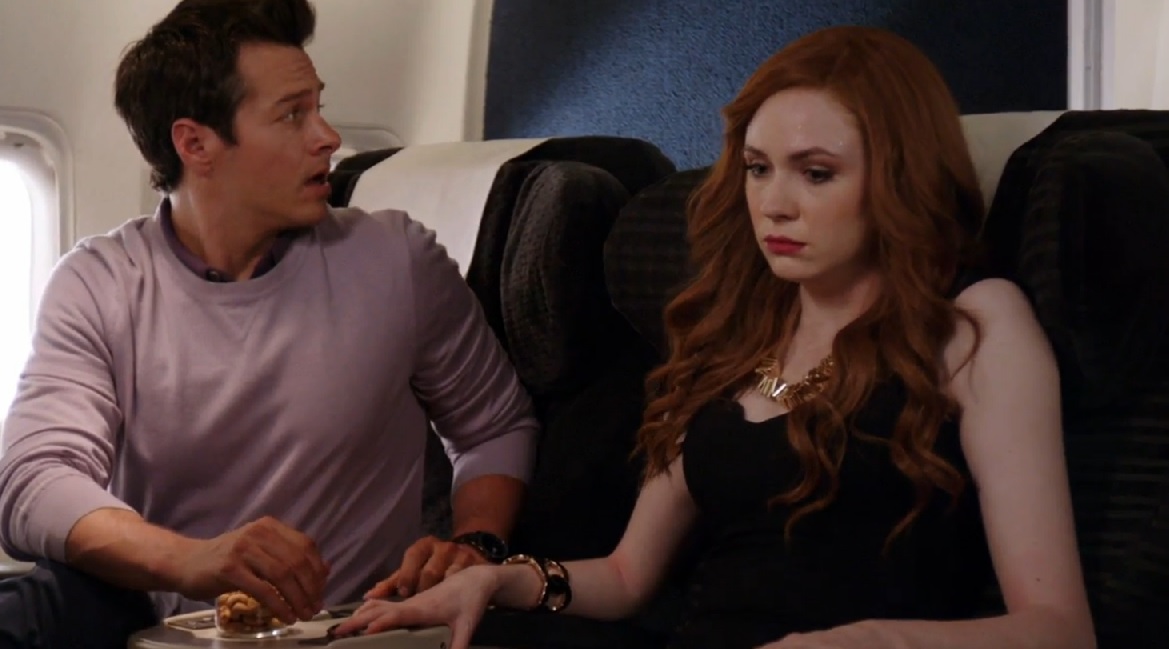
It starts absurd with a gross-out puke scene on a plane that contains the following real, not-at-all-made-up-by-me phrases:

  • “Panic pudding” (this is “puke” of course, because why wouldn’t it be ugh ugh ugh)
  • “Grindr’s remorse” (god damn you ABC)
  • “Gif yourself through this” (GO TO WORD JAIL.)

“Gif yourself through this” alone is one of the most horrifying zeitgeist grabs I’ve ever heard. In another context, it would be a biting satire of our tech-obsessed culture, and I have to assume that’s what they’re going for, here. I’m certain ABC wants to have it both ways and to successfully make something people view as both a celebration of and a mockery of the same thing. It didn’t work for me. It really did not work for me.

Things get worse when her boss, who totally does care about your business meeting and stuff, shows up. John Cho plays Henry, the super-serious, no-fun-at-all businessman character who needs to convince Eliza to put down her phone and care about What Really Matters. It’s a classic pairing of fun vs. serious that honestly may work better as the series goes on. In the pilot, he’s out to prove to her that she needs to learn everything he knows — after she says “if you don’t like me, then change me” which is repulsive — and she responds with a comment about how she won’t do “backdoor stuff” with him. You have your choice of what component of that makes you angriest. They’re all fine options.

He scolds her in rhymeA grown adult who is the boss of another adult scolds her in a rhyme oh my god this is so gross. It’s an entire rhyme about how she should dress and act at a wedding they’re going to together. Since her character is played more like a tall child — and she knows about life, dummy, just a different life! — Selfie thinks you’ll look past all this. You shouldn’t, but even if you do, you’ll find that it’s a travesty just as a comedy.

The main character in this comedy in 2014 says the following, which I’m going to bold: “I waited until the coast was clear, like Katy Perry on Proactiv.” If that’s “subversive” then I’m too stupid to get their takedown of a skincare product commercial.

People are going to argue for Selfie, which is fine. There’s music by Aimee Mann and M.I.A. There’s a series of running jokes about how her neighbor is a misunderstood indie girl like Zooey Deschanel. That’s… about as good as the jokes get. Hopefully this will get better after the pilot, because it certainly can’t get worse.

But as a whole, this is a miserable 22 minutes. People should not be saying hashtag out loud, period. Maybe it makes me sound like someone’s grandfather, but jokes about how girls like Zooey Deschanel like ukuleles and how people post too much food on Instagram are played out in 2014. If you’re going to “take down” social media culture, pick some better targets.

Alex Russell lives in Chicago and is set in his ways. Disagree with him about anything at readingatrecess@gmail.com or on Twitter at @alexbad.


Song of the Summer? “Beware the Dog” by The Griswolds

“Beware the Dog” by The Griswolds

Jonathan May

Fresh, and I mean fresh, from Australia comes this fun and bold summer hit! Thank God! I was afraid the perfect track would elude me, but here, at summer’s end, we arrive at the perfect song of the summer. From their debut album Be Impressive, “Beware the Dog” examines how a person in a relationship can turn crazy in front of your eyes. Lyrically this is accomplished by a juxtaposition of harsh lyrics (“but now you’re fucking crazy, crazy, crazy”) with (self-admitted) Vampire Weekendish-sounding beats—all rhythm, percussion, and energy! The video dramatically turns kitsch into perfect counterpoint; with the introduction of a horror/werewolf motif, we’re given balance to the otherwise upbeat positivity the music would imply. This song is all about contrast: hard and soft, beachy yet realistic, rock but by way of pop. These elements all combine into an undeniable toe-tapping, ass-shaking, certifiable hit in my book. What gets me most about this song is its undeniable sense of fun. It doesn’t take itself too seriously, because it’s all about the consequences of change in a relationship. You can tell the writers of the song wanted something fun to give relief to some very Harry Nilsson feelings. Like Nilsson, the song takes what ostensibly was private (or created to appear so) and gives it away to the world, as if to say, “Who cares? Let’s have some laughs!” While this song certainly hits many of the points on this particular critic’s checklist, its broad appeal lies in the screamability of its refrain at parties and on the road, its percussive consistency, and its use of the word “fuck” as a winking eye or cheeky grin. With the warm sunny days coming to an end for the year, I’m relieved to declare “Beware the Dog” to be my 2014 song of the summer.

Jonathan May watches too much television, but he’s just playing catch-up from a childhood spent in Zimbabwe. You can read his poetry at owenmay.com, follow him on Twitter at @jonowenmay, or email him at owen.may@gmail.com

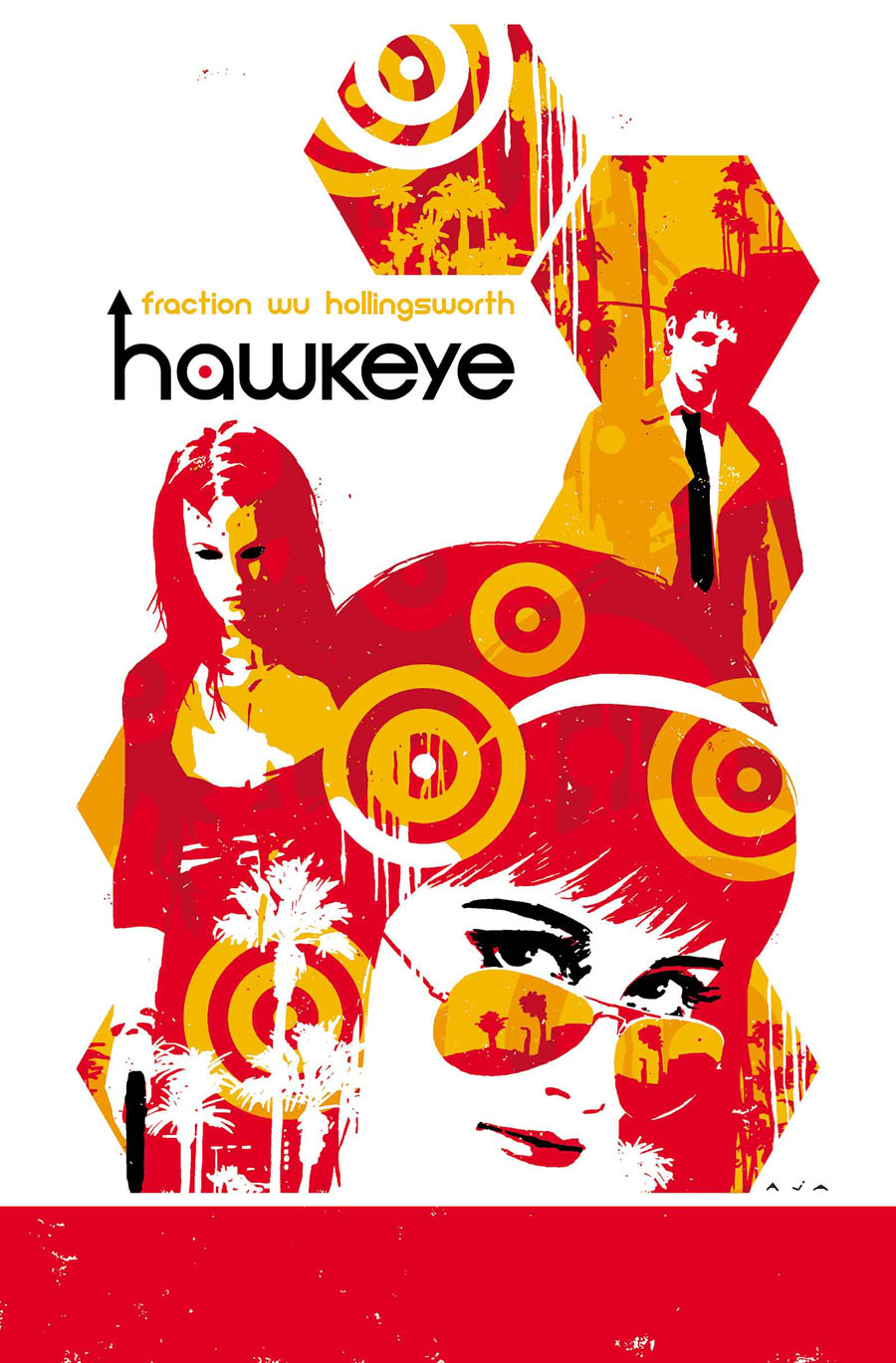
Major Issues: Hawkeye #20 and Why It’s the Best Superhero Comic Around

Hawkeye_Vol_4_20_Textless.jpg

In Major Issues, we look at one newly-released comic book each week. Updated Mondays.

Gardner Mounce

Hawkeye #20
Written by Matt Fraction
Cover artist: David Aja
Art: Annie Wu
Published by Marvel, 8/18/14

My problem with most superhero stories is that superheroes are defined by their privilege rather than their problems. The first question we ask about a superhero is “What powers (privilege) does the hero have?” instead of “What problems do they face?” Superman has super speed and super strength. Spiderman can shoot webs. Wolverine has claws and can heal himself. In all of these cases, the power is more important than the problem the hero faces.

This is bad writing because we can’t emotionally relate to privilege. We can’t relate to a person who has super speed or strength or laser vision. We can relate to Rick in Casablanca because of his problem: he’s torn between the love of a woman and helping a Nazi resistance movement. Now, if we just threw in there that Rick also has the ability to fly, then we’d expect for his ability to fly to play a big role in the movie. If he can fly, then the chance for Rick to solve his problems in a relatable, human way is over. Now the movie is about how he’ll solve his problems in a superhuman way that we can’t emotionally relate with.

Hawkeye doesn’t completely avoid this problem. After all, we know Hawkeye for his power. He is the person who’s great with a bow and arrow. But writer Matt Fraction sets this iteration of Hawkeye on a human (rather than superhuman) scale. For example, the whole series kicks off not with a display of might, but with an injury that puts Clint Barton (aka Hawkeye) in the hospital. No matter how good Hawkeye is with a bow, he is but human.

Why is this better than a superhero comic? Because we can relate to it. Clint Barton is an Avenger, but a human one with really shitty “powers” compared to Thor and Iron Man and the others. His pride in his abilities causes him to fly too close to the sun, time and time again. It’s not his powers that keep us rooting for him, but his lack of powers. Unlike Superman, who can only be harmed by some ultra rare element, Hawkeye can be defeated by anything. Fraction doesn’t have to keep inventing bigger and badder super villains to compete with Hawkeye’s abilities. Because he’s human, Hawkeye can be defeated by gravity, or even his rent.

Not only does Hawkeye have relatively shitty “powers” but there’s not even just one Hawkeye. There are two: Clint Barton and Kate Bishop. They’re just human, after all, so why not share the responsibility of being a hero? This male-female counterpart dynamic could potentially blow the door right open for some sexist, rigid, gender role bullshit, but Matt Fraction makes both characters not only equally as talented, but allows both to have their own quirks, neuroses, senses of humor, and charms. Personally, I like Kate Bishop more. She’s a hell of a lot funnier.

What Fraction can be praised for more than anything else is that he’s made this comic about the characters rather than hokey cliffhangers or a single central conflict. There are overarching conflicts, but many issues are standalone stories, and oftentimes about completely innocuous things like what Clint Barton’s dog does when Barton’s out of the apartment (Fraction’s just skilled enough to make those issues the most endearing [seriously, pick up the dog issue, it’s amazing]).

Should You Get It?

If you start reading Hawkeye, you’ll be hooked. Not because it offers a glimpse of superheroes punching each other, but because Matt Fraction has written a couple of great characters dealing with relatable problems both big and small.

Gardner Mounce is a writer, speaker, listener, husband, wife, truck driver, detective, liar. When asked to describe himself in three words, Gardner Mounce says: humble, humble, God-sent. You can find him at gardnermounce.tumblr.com or email him at gmounce611@gmail.com 

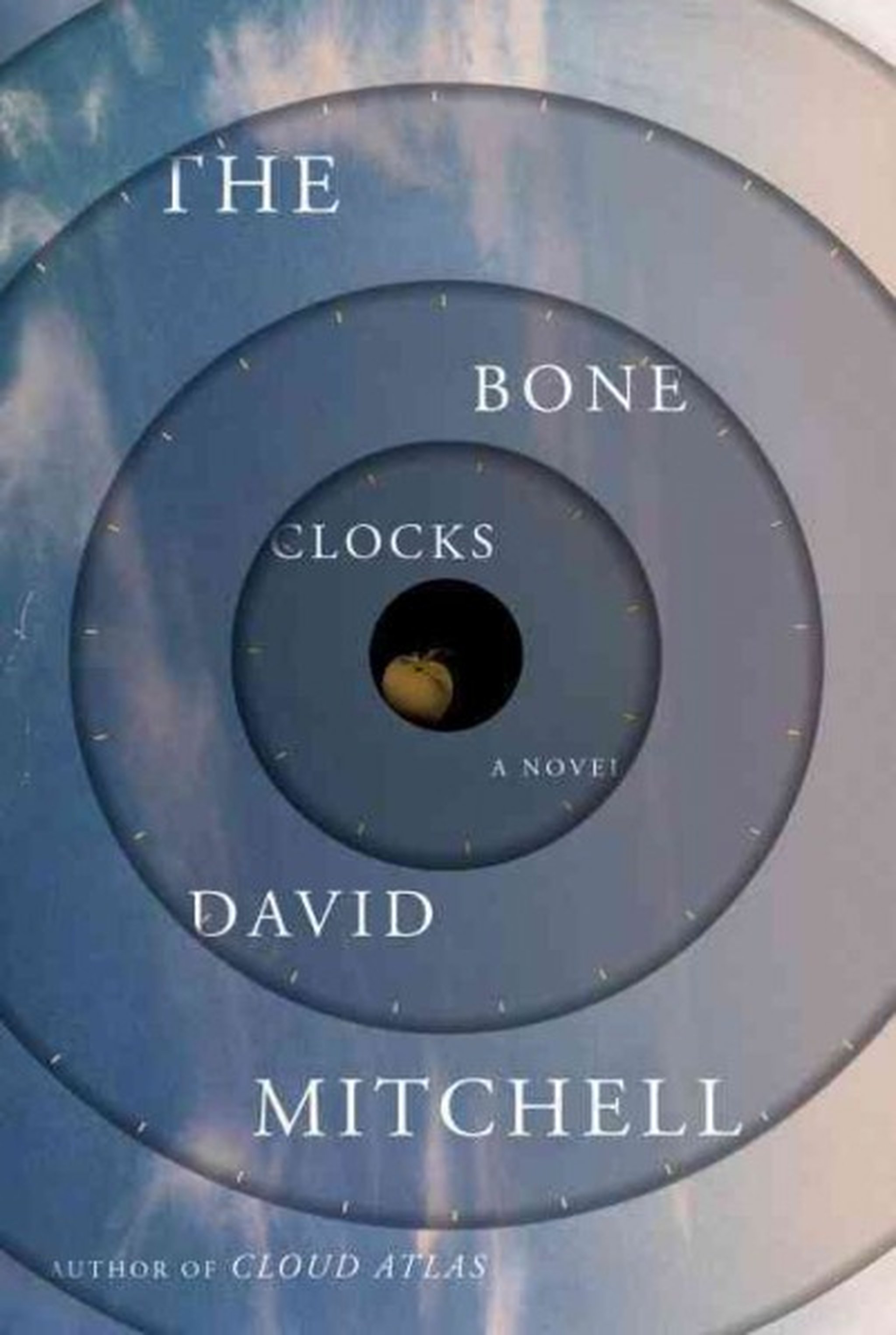
Life After the Star Wars Expanded Universe: David Mitchell’s The Bone Clocks

image source: NPR

image source: NPR

Andrew Findlay

In Life After the Star Wars Expanded Universe, we take a look at science fiction and fantasy, why they’re great, and what they say about where our species has been and where it’s going.

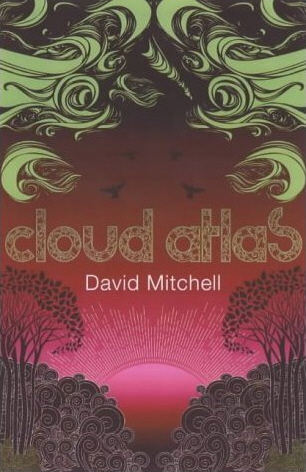
As soon as I heard about David Mitchell’s The Bone Clocks, released September 2nd, I bought a copy on the strength of two of his previous novels, Cloud Atlas and The Thousand Autumns of Jacob de Zoet. He’s got a few more books out there, but those were the two I’d read, and both of them are in my personal top 50. Cloud Atlas consists of six nested stories all intimately connected to each other and spanning a cycle of reincarnation that stretches from an 1850s sea voyage to a far-future post-apocalypse society. The Thousand Autumns of Jacob de Zoet plays like an exhaustively researched and excellently penned historical novel about Dejima, a Dutch trading post in 1800s Japan, but it takes a really weird and delicious turn about three-fourths of the way through. Mitchell’s ability to move in established literary circles while cultivating and applying his high-octane imagination makes him one of my favorite authors. He releases books with prose like cut gems and imaginative mythos like the sea in storm, and the juxtaposition is sumptuous and rewarding.

Cloud atlas

The Bone Clocks is organized similarly to Cloud Atlas, in that it consists of six interconnected novellas as opposed to one homogeneous narrative. The first one is the story of 15-year-old Holly Sykes, living in Gravesend in 1984. Holly is the key character in the book. She is at least a supporting character in each section, and she is the POV character in the beginning 1984 section and the final 2043 section. Mitchell sets her up as an extremely identifiable and appealing character from the get-go by tapping into an emotion and life-situation with which everyone is intimately familiar: helpless teenage angst. Holly is dating a skeezy older boyfriend, Vinny, her mom finds out, and the massive fight between the two leads to Holly running away. She runs to her boyfriend’s house and finds him in bed with her best friend, the poor girl. Really freaked out by this point, she sets off on a walking tour of all of bloody Kent. She ends up picking strawberries at a farm to make enough money to extend her time away from home enough to really make sure her mom feels bad, but then one of her friends finds her at the farm and tells her her little brother is missing, so she comes home. This section introduces Holly as a naive young girl and gets the reader to identify with her, but it also starts setting up some of the weirdness of the novel. Mitchell’s modus operandi is to write a completely standard narrative that could stand all on its own, then fill it with the bizarre. Holly, while internally monologuing, talks about hearing voices, which she refers to as “The Radio People,” while she was young. She is taken to a doctor who touches her forehead and appears to cure her. Before she was cured, she was hallucinating a woman named Miss Constantin, who would visit her in her bedroom. Other weird stuff happens in this section, but I do not want to spoil the mythos for you. This part introduces Holly, shows her making a dumb mistake, and explores her heartbreak deeply enough to get the reader to root for her throughout the remaining 60 years of her life that this book covers. In each future section, Holly is powerful, no-nonsense, and able to detect bullshit from a distance of about one AU, probably due to her earlier experience with the lying, smarmy Vinny. The next section follows the charming, driven, and borderline sociopathic Cambridge scholarship student Hugo Lamb as he poses, lies, and cheats his way through the 1990s to make sure he gets to where he wants in life. He meets Holly during a ski trip to Switzerland, during which they spend one night together. The third section follows Ed Brubeck, a war reporter addicted to adrenaline who has to choose between risking his life reporting on the Iraq War in 2004 and dedicating himself to his young daughter Aoife, the mother of whom is Holly Sykes. The fourth section, set in 2015, follows a past-his-prime English novelist as he deals with various failures in his personal and professional life. He becomes friends with Holly because she has published a book about her paranormal experiences, and they run into each other on various book tours. The fifth section gets its own paragraph — I’ll come back to it. In the sixth section, 2043, the narrative follows a very aged Holly Sykes as she putters about her farm on Sheep’s Head Ireland and attempts to survive and raise her granddaughter and an orphan in a post-Fall society. Some unnamed cataclysm occurred, electricity is hard to come by, the internet is falling apart, and since we relied on it so heavily, so is civilization.

What's up pussy cat? Whoa-oh-oh!

Wikipedia and cat pictures are the lifeblood of civilization.

My two favorite sections are with Ed Brubeck in 2004, because it flawlessly interweaves the conflict and tragedy of the Iraq War with the trials and travails of satisfying the people you love. I also very much liked the final section, with Holly scraping together a living in a post-apocalyptic setting, which allowed Mitchell to bring his full extrapolative powers to bear. Section five gets its own analysis because it is paradoxically the coolest and least successful section. The Bone Clocks is a fantasy novel, but for most of the book, the fantasy lives on the margins. Inexplicable events which range from terrifyingly violent to mildly head-scratching occur to each and every main character, but they are not the main focus and they come off with a subtle touch. I avoided talking about it mostly because I did not want to spoil any big reveals for you, and if you do not want to be spoiled, skip the rest of this paragraph. So, here’s the framing narrative that links all six sections: immortality is real, and there are two main types: the type people who reincarnate naturally enjoy (very rare), and the type people who use artifacts to eat the souls of others enjoy (yep, soul vampires). Miss Constantin from the first section is a member of The Anchorites of the Dusk Chapel of the Blind Cathar. Said chapel has a painting of the Blind Cathar in it who, if its devotees bring a psychically gifted child before it, will distill that child’s soul into Black Wine, the life-extending elixir of the soul vampires. They also have magic powers — they study the Shaded Way, which gives them the ability to fire psychic bolts and control matter with funny hand gestures. On the “Good Guys” side of the field, we have the Horologists, who naturally reincarnate, also have psychic powers (from studying the Deep Stream, none of that nasty Shaded Way magic thank you very much), and some of whom have been around since pretty much the start of civilization. The protagonist of this section is Marinus, one of the Horologists. He is living as Dr. Iris Fenby at the time of his section, but was child psychologist Dr. Yu Leon Marinus when he “cured” Holly of the Radio People (going back a bit, Constantin was appearing to Holly in order to harvest her psychically powerful soul, and Marinus stopped this by closing her third eye by touching her forehead).  This name struck a bell, and I had to think for a while before I realized that one of the main characters from The Thousand Autumns of Jacob de Zoet was this immortal bastard, then going by Lucas Marinus. There is nothing, absolutely nothing that happens in de Zoet which indicates Marinus is in any way supernatural. He is a doctor who befriends the main character. He dies late in the book, and he refers to his passing as a snake shedding his skin. The reader assumes he is just being a stoic 19th-century scientist trying to comfort his friend, but nope, he really was just shedding one body for another. All of Mitchell’s books are interconnected, but a b-character from another novel actually being a member of a secret society of immortals is a joyful Mitchellian flourish. The sixth section serves as a coda to the narrative streams of the other parts of the novel, but the fifth section is where the main conflict is resolved. All the little hints and strangenesses of the previous sections, that prowled outside the main narrative like hungry wolves outside the city walls, end up front and center in this here. The horologists launch a plan to invade the Dark Chapel, engage in psychovoltaic (Mitchell’s neologism) battles, and end the reign of these carnivores. This section is full of people beating each other up with their brains, casting psychic shields and throwing bolts from their hands. The fight itself, the final maneuver of the Horologists against the Anchorites, is the main focus, and the book suffers from the shift from realistic, character-driven plotting tinged with the supernatural to all-out fantasy warfare. Mitchell’s gift is in fusing the fantastic with the real, and he leans too far over into fantasy here. It is still rewarding and fun to read, but this section seems somehow cheap compared with the others. It also suffers because it serves as an info-dump – after the delicious anticipation of the previous sections as the reader wonders what the hell is going on, the reader is strapped to a chair with their eyes taped open and bombarded with all the answers at once.

clockwork orange

I mean, it was extremely satisfying getting all the answers, but this is how it happened.

This novel is triumphant and amazing. It is not flawless, but who cares? First-rate imagination melded with first-rate character building and prose results in a product anyone and everyone should read. It gets a little ridiculous in the final battle of section five, but that type of failing is a lot better than being subjected to a novelist whose books all “deal with contemporary Londoners whose upper-middle-class lives have their organs ripped out by catastrophe or scandal” (quote from the past-his-prime English novelist). At this point, Mitchell has more than proven himself, and I will continue reading whatever he continues writing.

Andrew Findlay has strong opinions about things (mostly literature) and will share them with you loudly and confidently. You can email him at afindlay.recess@gmail.com.

Tough Questions: What’s the Grossest Food You Still Love?

question-mark

Every week we ask everyone who hangs out around here to answer a tough question. This week:

What’s the grossest food you still love?

Rules are simple: what are you eating? We all have some secret shame around food. I once knew a guy who made what he called “Oreo Sandwiches” out of individually wrapped cheese slices and Oreo cookies. You might say “that’s disgusting” but I’m certain you eat something that you don’t want to share with the class, either. What’s yours?

Alex Russell

In third grade we had a taste test in class to learn about taste buds. We all had to eat bitter chocolate, sweet candy, salty chips, and sour pickles. I’d never had a pickle before that moment. I’ve essentially never stopped. Sometimes I’ll make my own pickles, but it’s mostly just the insanely salty dill pickles you get in any grocery store. I’ll drink the juice. I’ll eat half a jar in one sitting. I’ll put them on things they don’t belong in — if you’ve never diced up some pickles in fried rice, you’re missin’ out — to the point where the meal is largely pickle-based with a suggestion of other foods. Pickles may be a simple food, but the look on someone’s face when you take a swig from a jar of pickle juice told me that maybe, just maybe, that’s not standard behavior.

Jonathan May

I’m not sure the food itself is gross, but the way I eat it definitely is (according to loved ones). Whenever I eat a baked potato, I scrape everything out of the hardened, brown skin and mash it together with a fork, over and over, until the cheese and chives and bacon and butter and sour cream all form an indistinguishable yellowish goo. I then plop this all back inside of the potato skin and proceed to eat it that way. Then I eat the skin slowly. I’ve done this ever since I was a child, and people still give me horrified looks whenever they see me eating baked potatoes. But the actual grossest food I love are probably Krystal Chiks with mustard instead of mayo. Seriously, that shit is gross, but I can’t stop. (I need to stop.)

Brent Hopkins

SPAM. I friggin’ love spam, raw or cooked. The saltiness and unique flavor of it just makes my taste buds sing. I picked this up from my dad and it just stuck with me ever since.

Andrew Findlay

The grossest thing I still eat and hate myself for is any form of fast food. I spend most of my time eating pretty well, and I read all those articles about pink slime, but I cannot stop. Every few weeks, I cannot resist going to Taco Bell, McDonald’s, or Sonic, ordering three times as much food as I should, and stuffing it into my face. Every time, I am so happy while I’m doing it, then I feel terrible for the rest of the night. Not like, morally terrible. Physically ill.
Gardner Mounce
Rocky Mountain Oysters (aka bull testicles) are the grossest things I’ve ever eaten and would eat again. They weren’t whole testicles, like I had expected, but chopped into slices and fried–frying them reduces them to crunchy, salty crisps. Though I’d eat them again fried, I’d never eat them baked or boiled or raw. Gross.

Song of the Summer? “I’m Not the Only One” by Sam Smith feat. A$AP Rocky

https://soundcloud.com/samsmithworld/samsmithasaprocky

“I’m Not the Only One” by Sam Smith feat. A$AP Rocky

Jonathan May

I’ve avoided writing about Sam Smith for a while now, even in my review of “Latch” by Disclosure. I’ve avoided the topic because I was waiting for a song like this to come along and show off his ability to mix with so many disparate musical genres and figures, blending it all into a mélange of subtle vocal perfection. This love-song-gone-wrong starts off with A$AP Rocky laying down the first verse over some very church sounding piano, which certainly isn’t a complaint, given the beauty and ascendancy to which the song rises. And then Sam Smith enters, his voice ebbing out over the piano and background rhythms and holding; his is an instrument of true staying power. His melismatic ability is evident here without sounding produced, and it’s quite lovely to hear him achieve the vision he set out to with those notes. The song is a sad acknowledgment of love gone away or wrong; the heart commits sometimes to another, as is often the case. I’m reading Madame Bovary for the first time, and this song hearkens to me the idea of her poor, sad husband. This is a quiet, but strong, anthem for people who have been given love and then its cold shoulder. I was surprised by the softness of A$AP Rocky here, which I attribute to Smith’s musical sensibilities overall. His masculinity sounds refined in this track, and Smith, by virtue of including him, also gives himself a bit more of that roguish edge in lovely, sustained lines. This is a song that reminds me of morning, of getting up and facing truths; best heard with some coffee, probably.

Jonathan May watches too much television, but he’s just playing catch-up from a childhood spent in Zimbabwe. You can read his poetry at owenmay.com, follow him on Twitter at @jonowenmay, or email him at owen.may@gmail.com

Worst Best Picture: Is In the Heat of the Night Better or Worse Than Crash?

image source: nytimes.com

image source: nytimes.com

Alex Russell

In “Worst Best Picture” we search every single Best Picture Oscar winner of all time from 1927 to present to uncover the worst of them all. Conventional wisdom says that 2005’s winner Crash is the worst winner in history. We won’t stop until we’ve tested every last one. Read the the first, our review of Crash, here. Posts will be relatively spoiler free, but there may be some details revealed. Today’s installment is the 1967 winner In the Heat of the Night. Is it better than Crash?

Sometimes I look through the list of nominees for a year and I’m blown away. 1967 is just such a year, since The Graduate and Bonnie and Clyde both came out, and lost, to In the Heat of the Night. It’s really pointless to argue what the best movie in that trio is — some would say it’s pointless to compare them all to some dumb movie about racism but those people are wrong we’re gonna do this damnit.

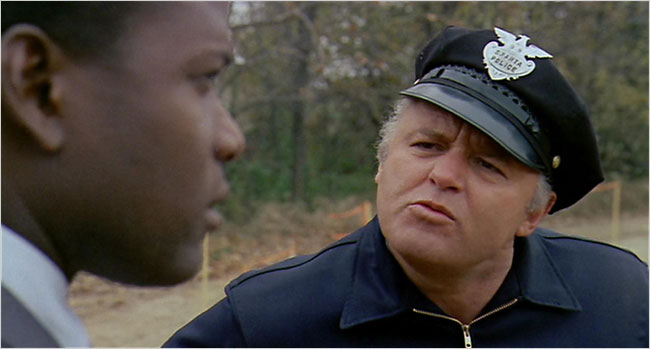
There’s a chance you only know a few things about In the Heat of the Night. Maybe you just know Sidney Poitier’s “they call me Mister Tibbs” line. Mister Tibbs himself has to work with an all-white police department in Mississippi to get to the bottom of a particularly complicated murder case. That’s Rod Steiger as the town sherriff who certainly doesn’t think he needs help from a city boy, up there in the photo. There’s a lot more going on than the black-guy-in-the-South drama of man vs. just about damned everybody, but that’s the best part.

It’s part mystery and part racial play, and it’s excellent at both. It stays tense — there’s a ton of twists as Poitier and Steiger get closer to figuring out what actually happened — and it does so in more ways than one. Every time I expected a heavy handed treatment of race in a situation I was surprised. Right down to the eventual physical fight where Poitier has to literally run away from racists, it’s difficult, but it’s all the better for it.

I’m from the South and I was home this weekend for a visit. I generally tell people that the South is everything they think it is, and that that means whatever you need it to mean, depending on the situation. I can’t say my world was Poitier’s world, but it feels like a real one. It’s important to remember that not all racists are obvious villains and that hate isn’t always as clear as stories make it seem. Crash is offensive because it wants to tell this same lesson, but it does so with a megaphone rather than a reasoned argument. In the Heat of the Night is almost contemplative by comparison. It’s a movie about race and about solving a murder, but it’s about how we interact with “the other,” as well. That part is what will stick with you.

The Best Part: Our heroes go to investigate the motives of one of the dead man’s enemies, and the conversation turns hostile once he knows what they’re asking. It’s 1967. Remember that when you watch this two-minute clip. Pull up a list of other things that happened in 1967 for context. Smear the number “1967” on a mirror in red lipstick and then watch this video next to it. Well, maybe not that, but just think about the world around these two men, and how people must have reacted when they saw this:

ICE. COLD.

The Worst Part: The leads are both excellent, but most of the supporting cast is downright goofy. The town of Sparta, Mississippi is supposed to be ridiculous but it’s probably not supposed to be as silly as I found it. I honestly loved In the Heat of the Night, but c’mon, guys. This is me grasping at straws, but everyone other than Poitier and Steiger is largely interchangeable. Ignore this section. Go watch that slap video again. Pow!

Is It Better or Worse than Crash? There is a scene where the two men bond with some good drink and try to get to the bottom of the whole mess. That scene is in every movie, and it usually is so obvious. This one adds some important depth to Steiger’s character, who easily could have just been a white cop that says “dagflabbit” and “boy-ah” a lot. He’s more than that, and you notice it play out slowly over the movie, it just finally pops in that big scene. These are the small pieces that make up smart movies. These are the quiet, but significant, chunks of great storytelling. Crash is loud and big and dumb in the exact opposite ways. There is no nuance to Crash, and I can’t think of a better example of “no, do it like this” than In the Heat of the Night, which came out nearly 40 years earlier.

Worst Best Picture Archives: Crash | Terms of Endearment | Forrest Gump | All About Eve | The Apartment | No Country for Old Men | Gentleman’s Agreement |12 Years a SlaveThe Last Emperor | The Silence of the Lambs | The Artist | A Man for All Seasons | Platoon | The Lord of the Rings: The Return of the King | The King’s Speech | Rain Man | The Departed | The Bridge on the River Kwai | Marty | Gigi | It Happened One Night | Driving Miss Daisy | Shakespeare in Love | Wings | Midnight Cowboy | Rocky | Gone with the Wind | Chicago | Gladiator | Cavalcade | The Greatest Show on Earth | You Can’t Take It With You | The Best Years of Our Lives | The GodfatherCasablancaGrand Hotel | Kramer vs. Kramer | The French Connection | In the Heat of the Night

Alex Russell lives in Chicago and is set in his ways. Disagree with him about anything at readingatrecess@gmail.com or on Twitter at @alexbad.

An Interview with “The Kingdom” Creator Jason Bienvenu

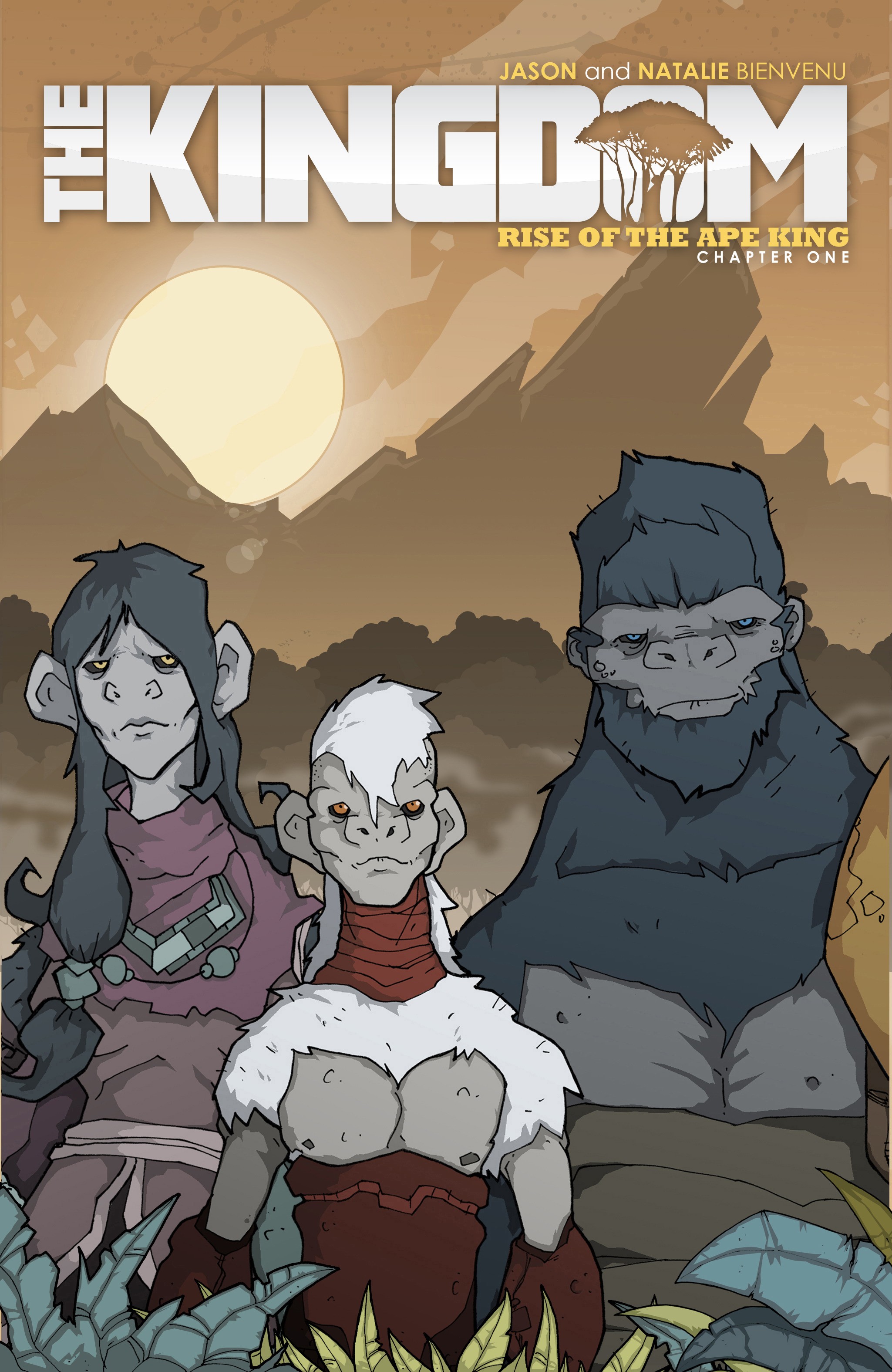
the kingdom cover

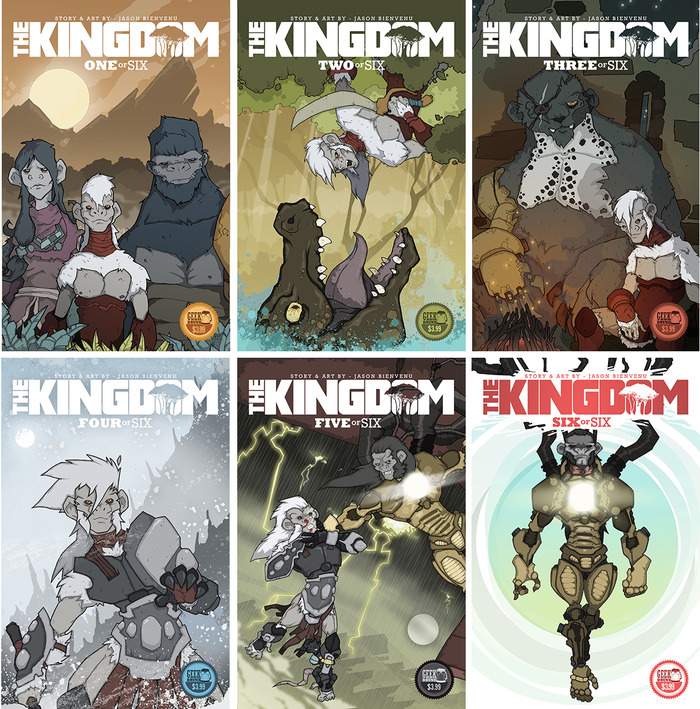
Our own Gardner Mounce recently spoke with Jason Bienvenu, the creator of The Kingdoma comic about “a magical realm where animals have evolved in the absence of mankind.” You can also read Gardner’s coverage of the series here.

GARDNER MOUNCE: First, tell us a little about yourself and your background.

JASON BIENVENU: Jason Bienvenu (b. 1979). I’m an illustrator and designer born and raised in South Central Louisiana (Lafayette). I received my Bachelor’s Degree in Fine Arts, with a concentration in graphic design from the University of Louisiana at Lafayette. I love collecting action figures, playing video games, and hanging out with my wife, Natalie, and my daughter, Elizabeth.

GM: When did you first know you wanted to write comic books?

JB: In the fall of 2011 I did a lot of animation work for an Xbox XNA game that never got produced leaving me frustrated that I had done so much work on a project that wouldn’t see the light of day. At that point I decided that I wanted to take on a project from start to finish that won’t cost me an arm and a leg; a project that I could learn as I go.

From there I began making little Post-it notes on the look of some of the characters and jotting down ideas. By the spring of 2011 I had begun what would become the first issue of The Kingdom.  I had a story arc/road map of where I wanted the series to go, but nothing set in stone. At that point I was still learning how to create my first comic and wasn’t even sure I would finish the first issue!

While struggling through the first issue, I realized how fun and rewarding it was, and my wife Natalie and I would go over dialog together and it really began to come together.  By the time I finished the first issue I told myself, “Okay, you can do this.”  So I created a Kickstarter to help fund the printing of the books and the rest is history!

GM: Which comic book creators inspire you most?

JB: When I was doing my comic research I picked up Mike Mignola’s Hellboy books and studied them and took in as much as I could from them. They are still a huge influence on me today.

But in a real face-to-face sense I would have to say my friends Kody Chamberlain of Sweets and Punks and Rob Guillory of Chew really helped me out more than I could ever convey in words. We were friends before I decided to start doing comics and I was actually shy about asking them for the longest time, but once I did they gave me really invaluable advice on everything comic wise, from the art and how to transfer line art to digital format to how to have a successful showing at comic conventions. I can’t thank them enough for that.

GM: What are your ambitions for your writing career?

JB: I know a lot of people want to work on the “big” books like Batman and Captain America, but right now for me, I have stories that I want to tell and I have several writing partners on other projects that I am super excited about, so at the end of the day, for now, I would say I want to be able to continue creating comics and would love for the work I create and will produce in the future to be published so that more readers will have the chance to enjoy it.

GM: What was the most challenging aspect of working on The Kingdom?

JB: I’d say the most challenging part of working on The Kingdom was the last two issues of the story arc. I would work my day job, then stay up until 2 a.m. working on each issue, which took about three months to finish both of them. My wife and I had just had our beautiful little girl so there was no guarantee that when I was done at 2 a.m. that I would actually get to sleep the rest of the night, ha!

GM: What was the most thrilling?

JB: I’d say the most thrilling part for me was when I received the trade paperback edition in the mail and I felt the weight of it in my hands and flipped through the pages, and just looked at what I created with the help of my wife and all the Kickstarter backers. It was one of those, “wow, you really did it, kid” type of moments.

GM: What is one unexpected thing you learned while working on The Kingdom?

JB: That I am a comic book creator! This was the first comic book I ever created and I honestly wasn’t sure if I would ever finish it, but once I got the first issue down I felt like I had found my groove and I really feel like I found out what I’m supposed to be doing with my life. That was a great feeling.

GM: Which character in The Kingdom do you most identify with?

JB: I’d say Pale. Pale is basically me, but Thane has a lot of aspects of me in him as well, ha!

GM: As the sole creator of The Kingdom, you don’t have the difficulty of explaining your story to an artist or interpreting a writer’s story. With that in mind, what is your process for creating an issue? Do you write a script first?

JB: Whenever I created the story I knew where I wanted it to go. I had a “roadmap” but I felt like the story should be very organic. I wanted to let the story unfold and I had a lot of fun surprises along the way. For instance the rat Reekey was basically only a plot device to get Pale from point A to B, but I wound up liking him so much that he became this major part of the story and I really like to work that way. Also my wife, Natalie, is listed as editor but in future prints she’ll be listed as writer, as she helped me with much of the dialog, especially between Mala and Thane, who are basically me and her.

The process: whenever I start an issue I look at my road map. Then I close my eyes and literally envision the entire issue one page at a time. As I finish a page I draw it out as a “thumbnail” sketch in my sketchpad and add dialog, like a good joke or important plot point, and continue on until that book is completely thumbnailed out. Then I move onto the dialog and finally start on the artwork itself. Once all the artwork is completed I go in and add all the word bubbles. Then I print it out and Natalie and I go over all of the dialog and make sure it all fits and sounds right and that there are no typos, etc.

GM: Do you have a day job? If so, what is it and how do you balance your day job with working on comics?

JB: I still have a day job, so I do lot of comic work on weekends and at night and during holidays, which can be really grueling and difficult at times, but also very rewarding.

GM: When writing The Kingdom, did you outline the entire plot in advance or did you create it issue by issue?

JB: Yes I outlined the entire story arc, but it was more of a “roadmap” as I knew where I wanted the story to go but I allowed for it flow and have a more organic feel, which allowed me to take what I had built up from the previous issue and incorporate it into the next.

GM: Is there a type of scene that’s harder for you to write than others? (Love, action, suspense)

JB: I found from working on other comics that for me a large page of dialogue between a couple of people was difficult because as the artist I have to make several panels of people sitting on a sofa look engaging and interesting, which was really challenging but fun at the same time!

GM: What advice would you give to young writers?

JB: Never wait for permission to follow your dreams.  Once you know what you want in life, go for it. You’ll make mistakes but it’s the best way to learn and never be afraid to fail.

GM: How would you have been stereotyped in high school? Jock? Band nerd? Theater kid?

JB: I’d have to go with class clown, ha!

GM: What are you reading right now?

JB: I try not to read anything while I’m writing, and I’m working on issue eight of The Kingdom right now.  However, the last thing I read was The Hobbit, which was a Christmas gift from my wife. I would sit in bed and read one chapter at a time and just take it all in; what an amazing book!

GM: What’s next for you? Any future projects?

JB: My next project is called Vamped, about a group of nerds being introduced to the world of Vampers. It’s a dark comedy written by Donny Broussard and illustrated by me. Think Clerks meets The Lost Boys! We are three issues into a six issue story arc and have recently started work on issue four. I’m also working on a sci-fi noir with Brando Gary called Dusk, which I’ll start on when Vamped is completed this summer.

GM: Is there anything you’d like our readers to know about you or The Kingdom?

JB: This project started out as a personal challenge and turned into an inspirational project for me. Growing up with dyslexia presented its own set of challenges, so I tended to fall back on the amazing 80s era that was around when I was a kid. The same era that promoted fun and joy is what I wanted to bring back and share with you guys. I hope that this story inspires you to share in that same nostalgia and that you have enjoyed the story as much as I have enjoyed creating it.

GM: The character designs in The Kingdom are wonderful. Do you have a favorite one?

JB: Thanks! I have to say that character design is one of the aspects that I enjoy the most when creating comics.  Pale’s character design is very near and dear to my heart, even though his look evolves throughout this story arc.

I really wanted his outward appearance to suggest what was going on under the surface in his mind and heart. I also wanted the reader to worry a little that he wouldn’t wind up being the hero they thought he was.

GM: Can you describe the process of developing the design of that character?

JB: With respect to the character design of The Kingdom, I was very focused on each character’s look and feel, and the first thing I thought was “each character has to be distinct!” I wanted the reader to know who they were even if they were in total silhouette.

After I got their look and feel down, I focused on the color scheme. I found a lot of inspiration from the 1980s Masters of the Universe and Thundercat cartoons and toys. Those characters had very bold and wild color schemes that in some cases should not have worked, but they really did and it taught me a lot about my own color palette.
Life After the Star Wars Expanded Universe: On the Importance of Pulp Fiction

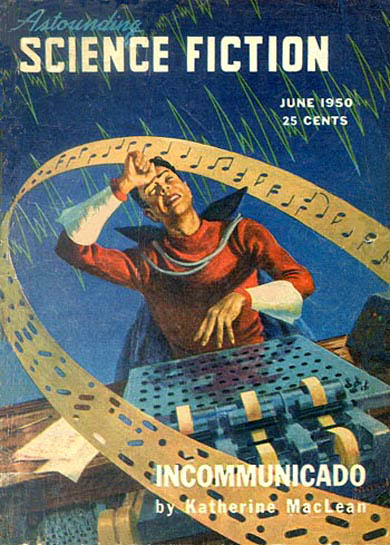
astounding science fiction cover

Andrew Findlay

In Life After the Star Wars Expanded Universe, we take a look at science fiction and fantasy, why they’re great, and what they say about where our species has been and where it’s going.

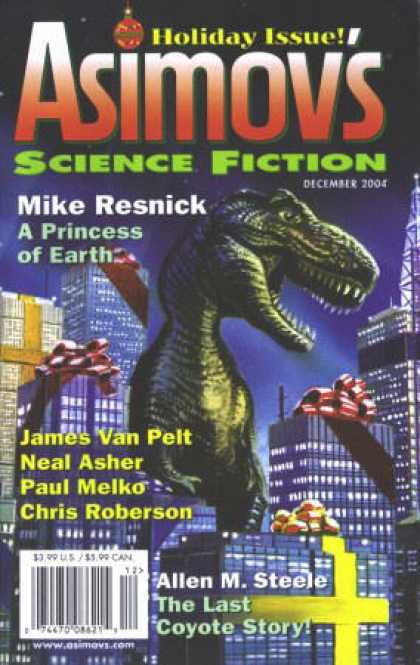
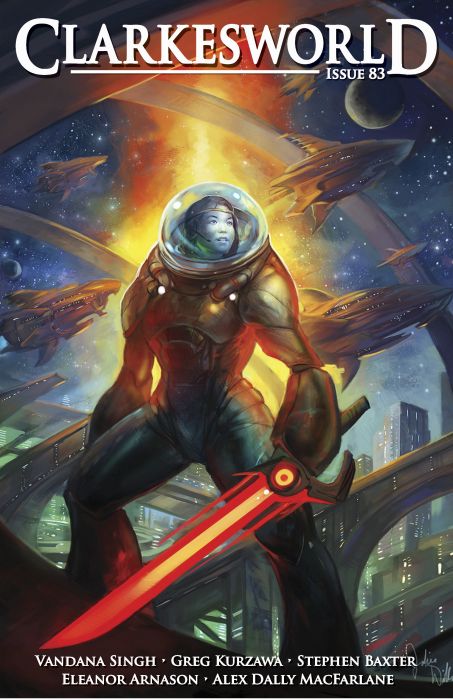
Remember the pulps? The old science fiction, mystery, and fantasy magazines published on cheap paper and read in the Golden Age of SF on trains, on buses, and by flashlight under blankets after bedtime? Well, they are still alive, well, and thriving. At the very least, dozens (link takes some scrolling down) are still publishing stories and paying authors. It is a vibrant, vital part of SF, but many superfans who have read every book Asimov ever wrote or won costume contests at ‘cons overlook them. There are tons of them, but two of the most famous are Analog and Clarkesworld. There are many benefits to reading these magazines.

First off, these rough, newspapery pages contain plenty of variety. Each magazine is usually filled with (shortest to longest) short stories, novelettes, and novellas, so the reader can choose how much time they want to invest and pick up the magazine for ten minutes, thirty minutes, or an hour. They are also full of informational articles that range from editorial commentary, to the state of the field today, to straight scientific fact to supplement the fiction. An article I just read in Analog explained some of the risks of climate change, and the factoid that stuck with me was that, if Greenland’s glaciers melt, the inundation of freshwater into the ocean might stop the North Atlantic Current, which currently brings warm air to Great Britain and keeps it relatively warm. Without this current, it would have a climate comparable to the Yukon. In addition to the variety of features, the collection of stories itself is extremely diverse. Just glancing at the table of contents of the November 2014 issue of Analog, there is a story about a Venusian colonist’s transport breaking and her having to survive in the high-pressure, acid-rich cloud layers of Venus while avoiding falling to the certain-death lower levels, another story about a convict with a life sentence appealing that sentence due to new immortality treatments rendering it a cruel and unusual punishment, and another whose plot concerns an AI who went on an apparent spree murdering dozens of his fellow AIs. Within that small sample, three of the eight stories on offer in the magazine, there is a story that deals with space colonization, one that deals with the social impact of longevity treatments, and one that touches on the dangers and nature of AI. That’s a broad range, and no matter what your interests, you’ll find something that interests you.

asimov

The next major reason that getting a subscription to a few of these is worthwhile is that the publishing environment fostered by the editors of these magazines fights off the bloat of success. Everyone who has read serial fantasy especially has run across this phenomenon: an author writes an amazing first novel that sells on a galactic scale. It is entertaining, the plot is tightly woven, and the characters are identifiable. The second and third entries are similar, but then the quality nosedives, and all of the sudden you are reading about characters you don’t care about in locations that bore you to tears while learning about the finer points of societal etiquette, which makes you feel like you’ve fallen into cotillion class as opposed to the rough-and-tumble who-dares-wins environment of the first book. This, friends, is because the author’s name is now more important than their work. The publisher knows that, whatever is written, it will sell a gazillion copies, so the editor backs off and the book bloats and bloats and bloats. Not so in the magazines. First, the stories average around 5,000 words, so the author has very little time in which to communicate what they need to. Characters, setting, and conflict are all usually extremely clear in the first two pages, after which the action goes gallivanting off towards resolution with nary a hesitation. Second, the editors make choices based entirely on what they think will give the readers who buy their magazine reason to buy it again: stories that entertain. If the characters are hard to identify with, if the ideas and technology explored in the story are not interesting, and if there is no satisfying plot, the editor will not buy the story and the magazine will not subject you to it. It is a hardscrabble environment where only the leanest, fittest stories survive.

clarkesworld

Let’s assume I have you convinced, and you’re raring to subscribe to a magazine or three. Where should you go? Analog Science Fiction and Fact is probably the most storied. It started life as Astounding Stories in the 1930s, and a few name changes later stands as the longest-running continuously published magazine in the genre. Its most famous editor is John W. Campbell, who is to Heinlein and Asimov what Max Perkins is to Hemingway and Fitzgerald. It is old, it is established, and it is a must-have for anyone starting down this path. For a shot of the new, check out Clarkesworld Magazine. Started in 2006, it has grown quickly. It and its authors have been nominated for and won the Hugo multiple times. It has achieved a huge profile in a relatively short time mostly due to the quality of its stories, but also because of its distribution method. It exists almost entirely as an online entity, with all of its stories available for free online in text and podcast form. A physical anthology is published each year, and ebook subscriptions are available, but the free podcast is the best way to experience the magazine. I listen to podcast stories relatively frequently, but so many readers have either a voice not suited to hold attention or one made so goofy by putting on a radio announcer style that I have trouble getting into the story. Not so with Kate Baker, the reader for every Clarkesworld podcast. Her voice is clear, normal, with enough variety to hold attention but not so much you feel you’re listening to a circus impresario. I recently listened to her read “Seven Years from Home” by Naomi Novik, one of the most satisfying world-building stories I’ve seen this year. It’s quality, it’s free, it’s multiformat, and you can check it out now with no commitment.

The magazine market is vital to the science fiction community at large. There are the monuments of the genre, the Neuromancers, the Stranger in a Strange Lands, and the Do Androids Dream of Electric Sheep?s, but the beating heart of SF is in these magazines, where the work of old pros and new blood meet and keep the body of SF as a whole vigorous and alive. Do your part to keep SF healthy and subscribe.

Andrew Findlay has strong opinions about things (mostly literature) and will share them with you loudly and confidently. You can email him at afindlay.recess@gmail.com.

Major Issues: The Kingdom – Rise of the Ape King

1723a58d0c5e661e776811a0dbe75a5c_large.jpg

Gardner Mounce

In Major Issues, we look at one newly-released comic book each week. Updated Mondays.

The Kingdom – Rise of the Ape King
Story and Art by Jason Bienvenu
Published by Kingdom Publishing

In the afterword to The Kingdom, writer-artist Jason Bienvenu states that his goal with this project was to create a story reminiscent of the 80s cartoons he grew up with. And though you won’t find fighting robots or cats with boobs in The Kingdom, you will find a lovably familiar good vs evil story with a knack for cheesy one-liners. So in that regard, Bienvenu succeeded.

The story is archetypal and familiar: Pale, the outcast hero, rises to power in the wilderness only to come back to save the kingdom–like Luke Skywalker, Simba, and David did before him. He wears the hero of Joseph Campbell’s monomyth thousandth face. In any case, the series’ raison d’etre isn’t its story, but its art.

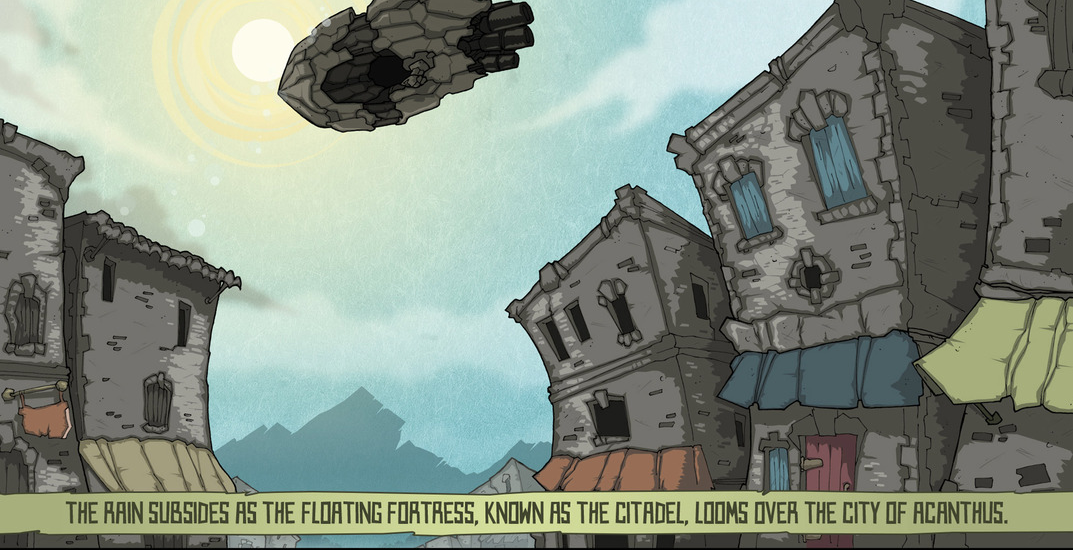
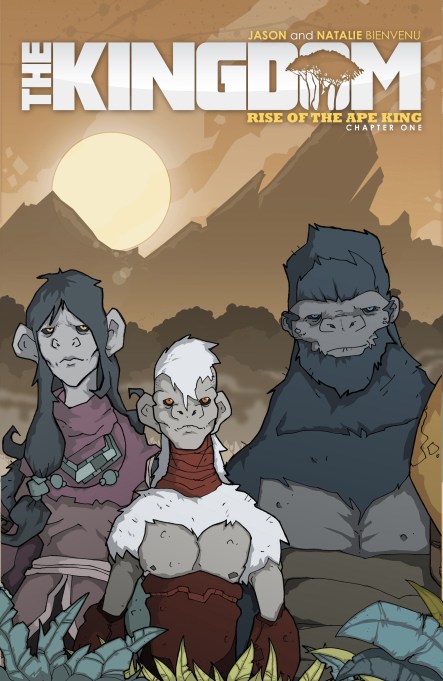
Character design, in particular, may be Bienvenu’s special gift. Bienvenu communicates his characters’ essences through their designs. Trepidacious, naive Pale wears showy red armor that nonetheless doesn’t fully protect him; his white mohawk and hard features reveal a youthful determination. Pale’s father, the lovable oaf, hardly wears any armor to show that he’s cocky and unconcerned. The Boar-O, a giant [mega]bear, wears nothing but an eyepatch and a metal arm–exposed, vulnerable, but fully confident. Even without backstory or dialogue, these characters are three-dimensional.

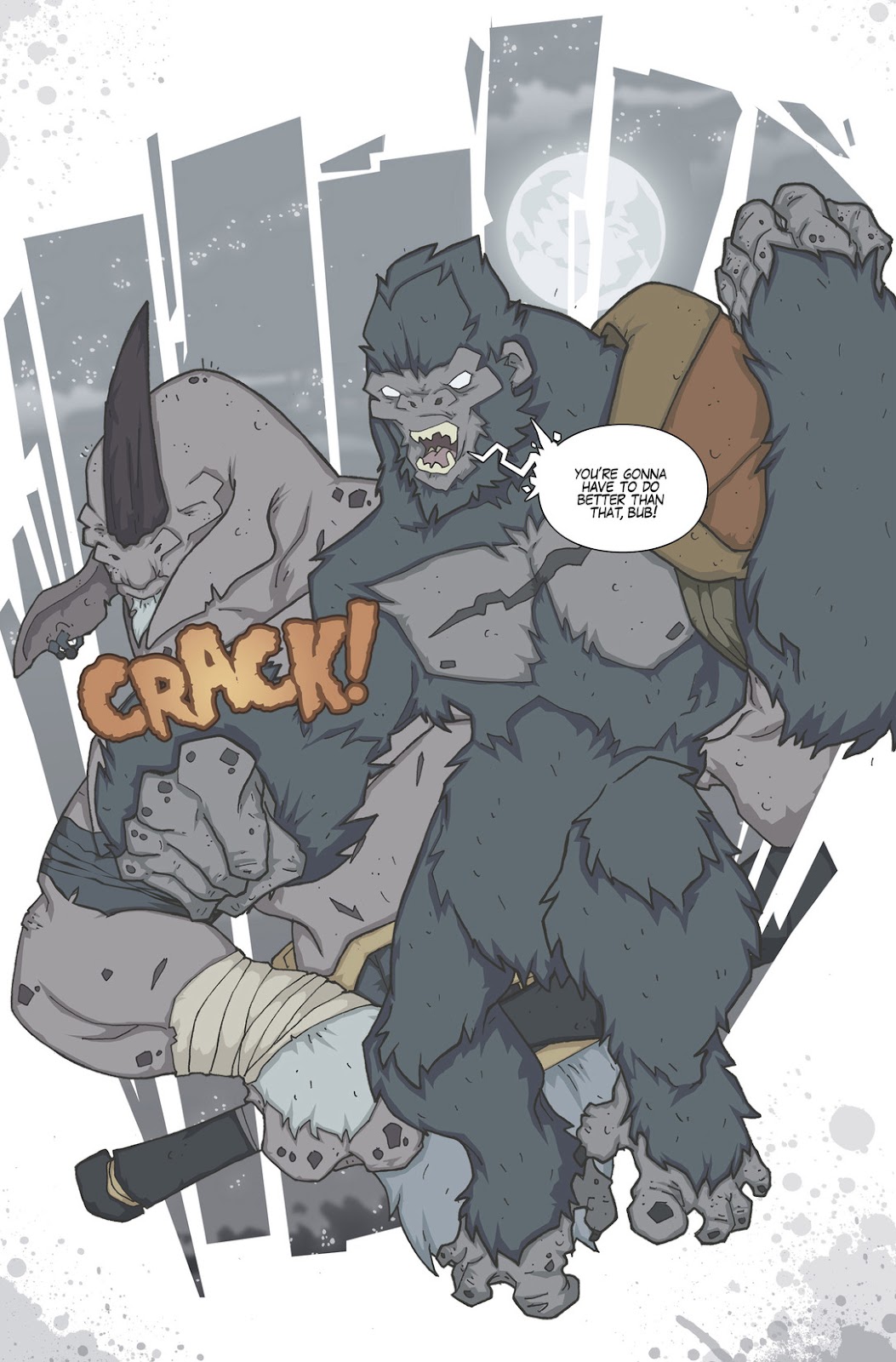
With such attention to detail, it’s frustrating that Bienvenu feels the need to over-explain the comic through dialogue and narration. The first issue is the most guilty of this, and acknowledges a lack of confidence in Bienvenu to tell a visual story. However, as the story progresses, the narration takes more of a back seat. By issue two, Bienvenu makes bolder moves in page layout, sequencing, and framing. By issue three, his confidence is perceptible. And issues three and four show Bienvenu at his most confident. The narration is minimal, the dialogue enhances rather than hinders, and the art flies off the page. Take the following splash page, for example. Among other things, Bienvenu breaks the background environment into broken panels, like cracked glass, to reflect the sudden violence of the scene.

6f7d8ea2baa10ee04940db6f90b73b60.jpg

Speaking of environments–as a native Louisianian, Bienvenu understands how to communicate the heat and humidity of the jungle with muted greens, muddy browns, and a sun that emits waves of feverish heat. Conversely, his night scenes communicate quiet awe for a pre-electricity view of the stars. The cities of The Kingdom are designed with similar attention to detail. Each has its own style of architecture and mood. My only wish is that he would have made some of these environments splash pages for us to drool over.

Screen Shot 2014-09-07 at 9.54.33 AM.png

Though The Kingdom oftentimes runs through the motions of the hero myth, it never takes itself too seriously. Bienvenu set out to have fun, and he did. The story is full of wise-cracking corny stepdad jokes, but that’s sort of what makes it so fun. In any event, it puts on full display a new artistic voice who will no doubt helm exciting future projects.

Where to get it:

Comixology
Amazon

Gardner Mounce is a writer, speaker, listener, husband, wife, truck driver, detective, liar. When asked to describe himself in three words, Gardner Mounce says: humble, humble, God-sent. You can find him at gardnermounce.tumblr.com or email him at gmounce611@gmail.com