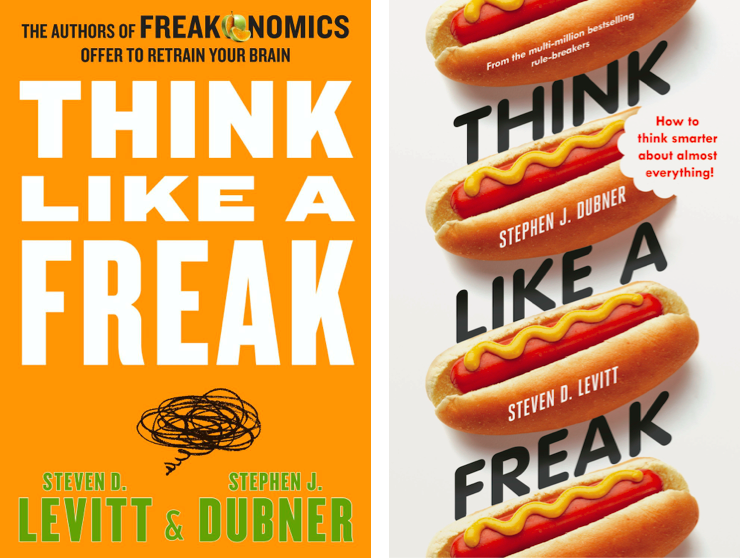
Book Review: “Think Like a Freak” by Steven D. Levitt and Stephen J. Dubner

image source: freakonomics.com

image source: freakonomics.com

Brent Hopkins

I have rarely harped on it when writing here, (too busy raging at games and reviewing comic books) but I am a huge business and economics fan. I have my undergraduate in International Business and am currently working on a master’s degree in Human Resource Management, so something is always drawing me to this side of literature. That being said, I am no economist, but I think it is fascinating how certain things are correlated.

Steven D. Levitt and Stephen J. Dubner came to prominence with their collaboration Freakonomics. This book and its sequel, SuperFreakonomics, used economics (though you can argue it’s a lot of sociology and criminology as well) to help explain the correlation between a myriad of things that would seem ridiculous to a normal person. This goes from abortion affecting the crime rate to teachers cheating to boost grades. There have been some issues brought up from other researchers with their methods and phrasing, but as long as you read with a reasonable mindset the books are incredibly engrossing.

This brings us to the third book, Think Like a Freak, which was released this summer. The book takes a break from telling stories about how approaching problems with a different mindset can lead to unique solutions and instead uses little tales to try and get the reader to think uniquely in various situations. The entire book comes off as almost a self-help work, but refrains from really pointing out direct flaws in people that need to be fixed. Instead, the authors explain how problems don’t always have simple solutions, but when you think like a “freak” amazing things could, not will, happen.

I am a pretty practical and positive person so it was a treat to read something that resonates with me at the age of 28. Two topics in particular stuck with me as they talked about quitting and redefining problems to help redefine solutions. They used two rather fascinating stories to draw the readers in: one focused on Takeru Kobayashi, the famous Japanese eating champion, and how he figured out how to eat hot dogs so quickly and another story about a company that invents things but often has to give up on ideas if they aren’t feasible. The line “Fail Quick and Fail Cheap” is simple but makes a lot of sense from a business mindset. These topics will make the reader step back and ask: “Could I handle doing that?” which I feel is precisely what the authors set out to do.

This book is largely about self-limitations, fear, and dealing with pride. Most of the situations brought up are not about external issues, but instead about how people get so focused on either being right or setting up artificial boundaries that they can never get to the next level. Think Like a Freak holds your hand through these issues and packs a lot of depth for such a short read.

Should You Read It?

Yes. It may not change your life, but I think it has enough depth to really be applicable to anyone’s life.

Brent Hopkins considers himself jack-o-all-trades and a great listener. Chat with him about his articles or anything in general at brentahopkins@gmail.com.

Worst Best Picture: Is The French Connection Better or Worse Than Crash?

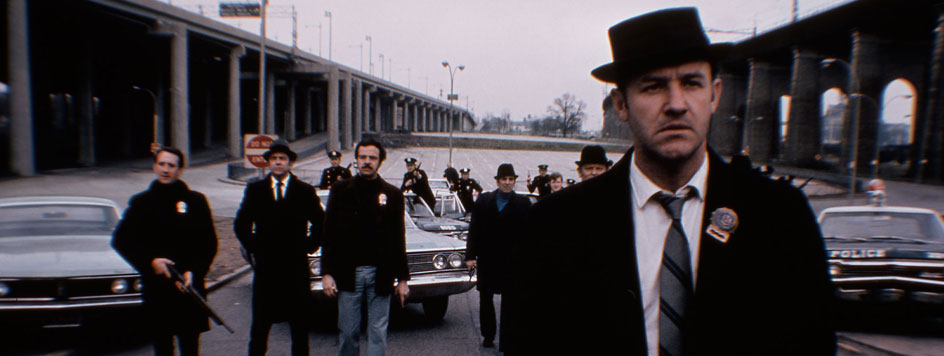
gene hackman the french connection

image source: oscars.org

Alex Russell

In “Worst Best Picture” we search every single Best Picture Oscar winner of all time from 1927 to present to uncover the worst of them all. Conventional wisdom says that 2005’s winner Crash is the worst winner in history. We won’t stop until we’ve tested every last one. Read the the first, our review of Crash, here. Posts will be relatively spoiler free, but there may be some details revealed. Today’s installment is the 1971 winner The French Connection. Is it better than Crash?

If anyone ever asks you if you’ve seen The French Connection, all you have to do is say “oh, man, that car chase is awesome!” That’s it. Maybe mumble something about Gene Hackman. Then change the subject and ask whoever you’re talking to about a neat fish you saw once. You made it out of that conversation, and I’m proud of you.

The French Connection is all about a good cop who ain’t all that good, y’know? Gene Hackman plays “Popeye” Doyle, a cop bent on bringing down the drug trade. Some street arrests and small-time guys lead him to some French druglords in the heroin game, and there’s your movie. Let’s get after it.

Shit, do they ever get after it. There’s just about no time invested in character in The French Connection, which usually strikes me as obnoxious in a movie. Popeye should come off as stiff or uninteresting, but instead it’s clear that everyone involved in this movie knew where to find the meat. It’s 100% tone: everything is about dirty, gritty New York and the intensity of the cat-and-mouse chase. Every line exists to hammer home those things and only those things.

It’s an action movie, and there’s nothing necessarily wrong with that. The French Connection is the greatest version of something that’s become pretty awful in the last few decades. It never goes deeper than the frustration of the chase or the desire to escape, but that’s all okay, too. Plenty of action movies on this list look at more intense themes — there’s plenty of action in movies like Platoon and No Country for Old Men– but few of them stand as a love letter to a genre as well as this one.

The Best Part: The iconic scene is rarely actually the best part, but in this case I’ll make an exception:

The Worst Part: It comes across as a little slight when compared directly with the rest of this list. Just as Marty is just a love story, The French Connection is just an action movie. There are worse things to be, though, and it is rare that a movie does everything it set out to do.

Is It Better or Worse than Crash? They both have driving! Other than that, the best comparison is the fact that Gene Hackman’s character is a bit of a racist (he calls the head French druglord “Frog One,” though I guess that guy is an international heroin dealer, so, well, uhm) and an asshole, just like everyone in Crash. This comparison goes back to one of the first topics considered in this space: is it better to try to say nothing and say nothing or try to say something deep and fail? One of these two movies achieved everything it meant to. You’ll never guess which one.

Worst Best Picture Archives: Crash | Terms of Endearment | Forrest Gump | All About Eve | The Apartment | No Country for Old Men | Gentleman’s Agreement | 12 Years a SlaveThe Last Emperor | The Silence of the Lambs | The Artist | A Man for All Seasons | Platoon | The Lord of the Rings: The Return of the King | The King’s Speech | Rain Man | The Departed | The Bridge on the River Kwai | Marty | Gigi | It Happened One Night | Driving Miss Daisy | Shakespeare in Love | Wings | Midnight Cowboy | Rocky | Gone with the Wind | Chicago | Gladiator | Cavalcade | The Greatest Show on Earth | You Can’t Take It With You | The Best Years of Our Lives | The Godfather | CasablancaGrand Hotel | Kramer vs. Kramer | The French Connection

Alex Russell lives in Chicago and is set in his ways. Disagree with him about anything at readingatrecess@gmail.com or on Twitter at @alexbad.

Song of the Summer? Nicki Minaj – “Anaconda”

“Anaconda” by Nicki Minaj

Jonathan May

As so succinctly summarized by Ms. Minaj at the end of “Anaconda”—“I got a big fat ass.” Indeed, without her ass as an answer to Sir Mix-A-Lot’s ubiquitous hit, the song would be nothing more than an ode to asses. But Nicki Minaj here sets out to reinvent the ass, so to speak. We come to her on her terms, willingly complicit in the gaze she’s created. I am by no means claiming this song as a feminist manifesto of any sorts, but rather a clumsy cut up of what has preceded it. Using every available cliché at its aid, the song makes no apology for its origins or its subject matter. Though I rarely hear the song on the radio, since it appeared on YouTube last week, it’s acquired over 100 million hits. This speaks more than anything to the fact that the song fails to stand alone as an aural hit; it needs the video to actualize as the message she intends. Without her colorful, expected visual motifs of fruit and fetishistic outfits, the song (as music) is literally all over the place. There’s lots of direct quotation from “Baby Got Back,” mismatched verse structures, talking, braggadocia in various forms. But what is said, beyond the mere fatness of her ass? Call me a curmudgeon, but shouldn’t there somehow be more to a “hit” than this? I can barely listen to the vaguely wandering five minutes without looking to the progress bar at the bottom of the screen every twenty seconds or so. There are so many things this song could have been, but there’s no point in eulogizing over modal realities. “Anaconda” insults its audience by being so lazy; the song, even possibly meant as an ironic statement on plasticity in pop, definitely doesn’t stand up to attempts to parse its coarseness. Put it back in the oven; remove in another ten years.

Jonathan May watches too much television, but he’s just playing catch-up from a childhood spent in Zimbabwe. You can read his poetry at owenmay.com, follow him on Twitter at @jonowenmay, or email him at owen.may@gmail.com

Life After the Star Wars Expanded Universe: Doctor Who – There’s a New Doctor in Town

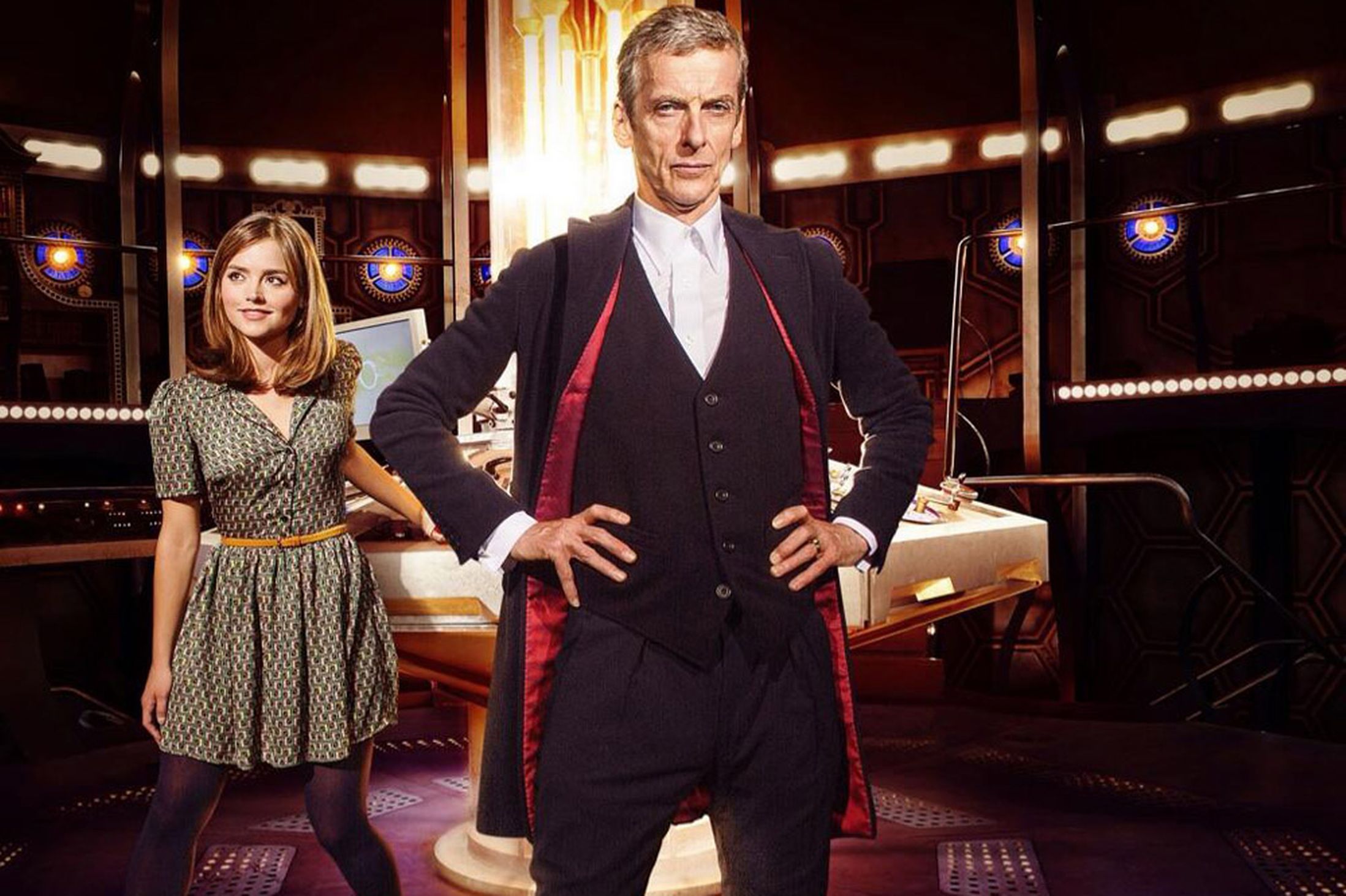
image source: mirror

image source: mirror

Andrew Findlay

In Life After the Star Wars Expanded Universe, we take a look at science fiction and fantasy, why they’re great, and what they say about where our species has been and where it’s going. 

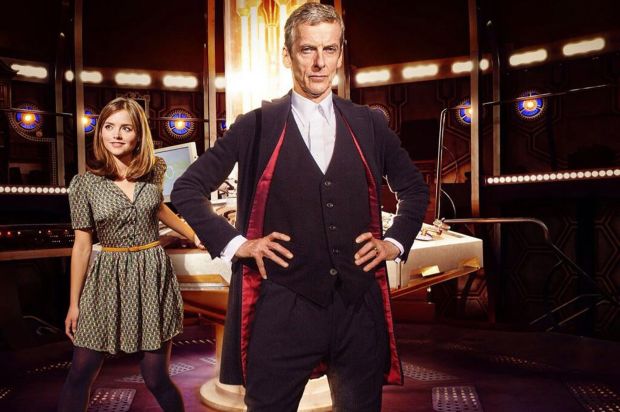
Doctor Who is back, and they’ve got a new doctor. Peter Capaldi, an old, celebrated, and cantankerous Scotsman, is taking over from Matt Smith. On the season premiere night, I sat with equal parts dread and anticipation, hoping that the hole into which the show has been falling since Moffat took over would be filled in somewhat. Good news: it has been. Somewhat.

The major problems of season seven, the glaring, show-ruining problems, included breaking the internally consistent rules of the Whoniverse, not giving a rat’s ass about personal character development (any character from season seven could have died with absolutely no emotional response from me), and a complete lack of dedication to any type of overarching season narrative, which has been a fairly standard piece of television fiction since Buffy the Vampire Slayer. Many of these problems have been fixed (on the evidence of two episodes) with varying degrees of success.

First off, there is a new doctor. Matt Smith was fine and all, but I always had trouble understanding the rabid fan dedication to him. He could not communicate the smoldering menace and goofiness of nine, nor could he fully handle the mercy/anger dichotomy and manic wonder of ten. Each new regeneration is a completely new doctor, so it’s completely excusable that he was not the same, but I feel like what he brought to the role was a lot less than his predecessors. He seemed to be running a poor emulation of the last two doctors with an extra dash of silliness, and his acting chops were not equal to the complexity of the character. It also didn’t help that the guy cast to play a millennia-old alien looked like a twelve-year-old. Peter Capaldi’s showing in the beginning of this season gives me hope.

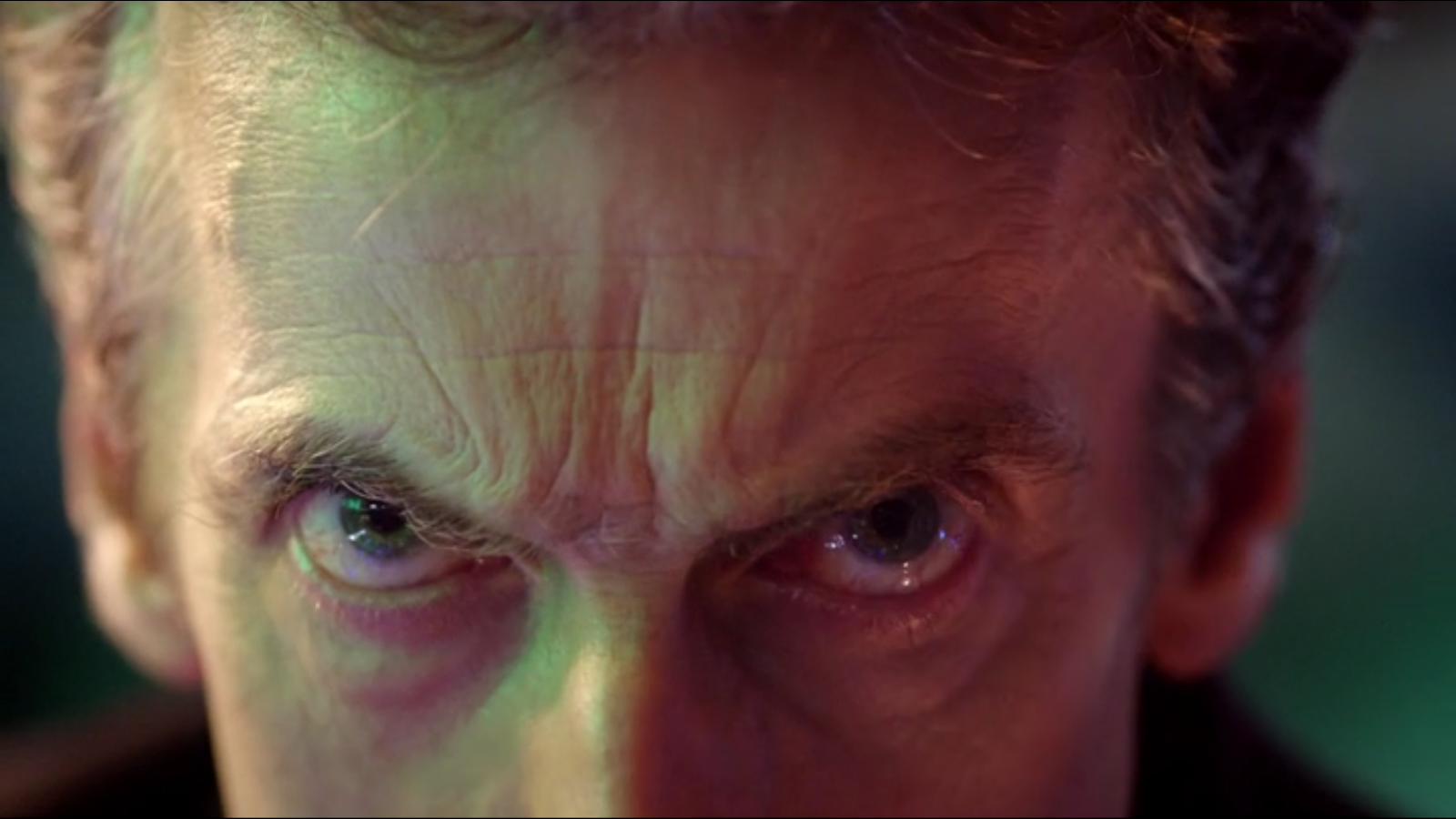
Capaldi is 56 years old. His extensive acting experience and his gray hair help to lend some much-needed gravitas to the role. Doctor Who has always straddled a line between seriousness and silliness, and Smith’s fez-loving incarnation took it too far over the silliness line. Capaldi’s eyes and age help him communicate the anger and weariness of a man who has been trying to save the universe for millennia. Another welcome personality change is that this Doctor is downright mean.
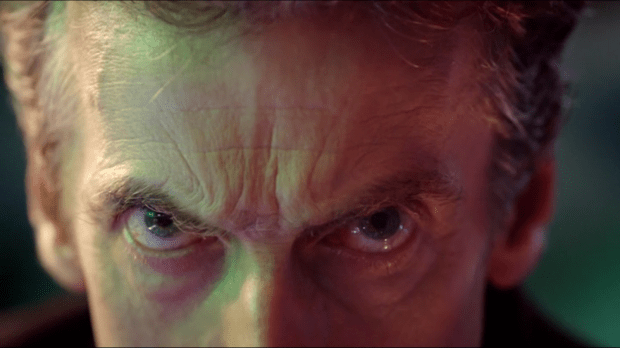
image source: gawker

image source: gawker

These are not the eyes of a man who wears fezzes. Fezzi?

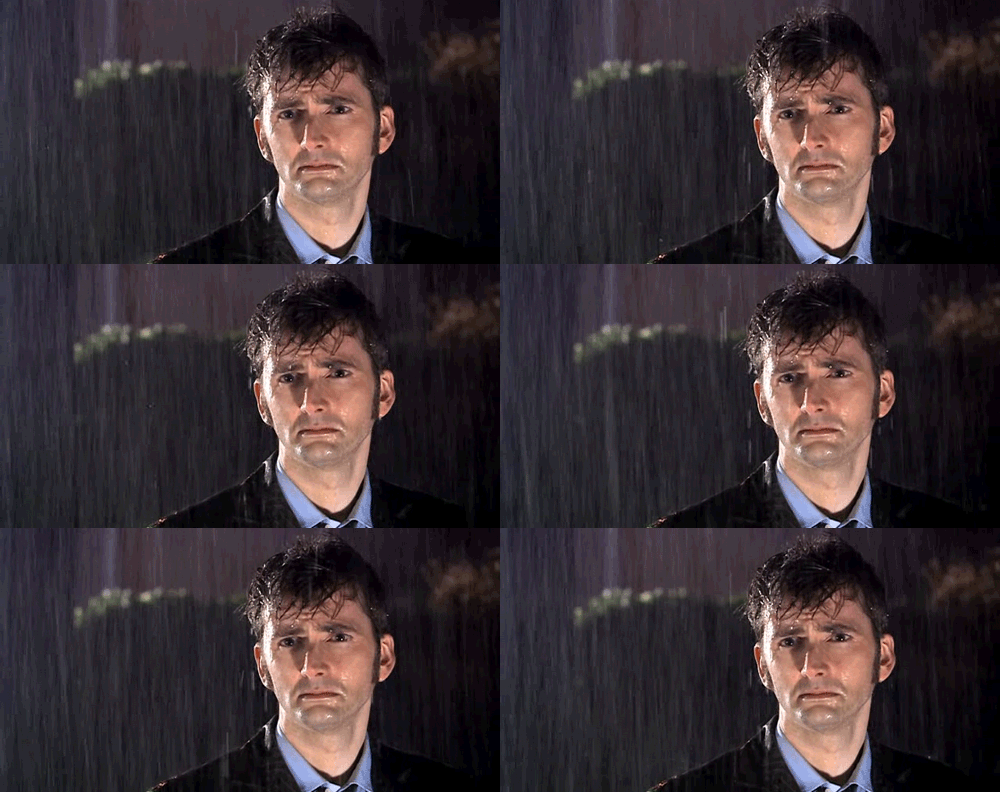
He is old, he is angry, and he wants to do good, but he could not give less of a shit about your feelings. In the beginning of episode two, he rescues a soldier while leaving her brother to die. She expresses anger and loss, and the Doctor’s only response is basically to call her out as an ingrate. In the first episode, when Clara (his companion) and he get in a tight spot, he straight up abandons her. He does the calculation, realizes if he leaves then he has a better chance of saving both of them, and then just goes. At another point in the season, a man is about to die. The Doctor gives him something to swallow, and the audience expects him to be saved, but he is dissolved by the attacker and the Doctor does nothing. Clara yells at the Doctor for this extremely callous act, and he responds by saying the pill was a tracker, and they will now be able to figure out where the remains are stored. This Doctor shows a practical and unfeeling acceptance of death as part of the territory, an attitude that makes sense in his line of work, and one that was conspicuously absent in other incarnations. He also insults Clara repeatedly, but this may be due more to social ineptitude than any intent to cause harm. After David Tennant’s run, in which he would apologize profusely to anyone who was about to die or whom he was about to kill, and Matt Smith’s run, which for some reason I can only picture as him jumping around giving lollipops to everyone he meets, it is an interesting direction to have a Doctor who is still dedicated to doing good, but is significantly less squeamish about the moral dilemma of means versus ends.
nBecdKf

I loved Tennant in the role, but he was a bit of a softy.

The writing team is also doing a better job giving actual depth to the supporting characters. Clara is written as a little egomaniacal and pushy, which is better than being written as the nothing of the previous season. She is still a basically good person, but she has some depth this time around because she has some flaws. In the second episode of this season, a recurring character is introduced and was given a backstory which immediately made me care if he lived or died, something the writers in season seven failed to accomplish over the entire season arc.

The other glaring fault that ruined season seven of Doctor Who was a complete disregard for complex storytelling or internal consistency. It is hard to tell just two episodes in, but that seems to have improved as well. The plot of both episodes so far is pretty simple and silly, but that is absolutely okay — that is part of what Doctor Who is — a handful of stunning episodes supported by a bed of rough-and-tumble, uncomplicated space opera. What was inexcusable in season seven and what is not happening now is that the plot resolution never made sense, was deus ex machina every time, or was just completely unsatisfying and forgettable. As far as complex storytelling, they are doing a much better job setting up the Big Bad and an overarching season enemy. Some of the people who die in each episode end up in a very nice garden setting, greeted by a woman who calls herself Missy and tells them they have made it to heaven. Something in the carriage of the woman or the too-good-to-be-trueness of the afterlife makes it ring false, and this subtle sense of something being wrong makes it ominous.

To really know if the show is coming out of a slump, we’ll have to wait and see how they handle the entire season, but current data hints that our favorite Gallifreyan might be back in the saddle. I fully intend to watch this show for the rest of my life, and I fully expect its quality to roller-coaster up and down over the years, but here’s hoping we’re currently on an upswing.

Andrew Findlay has strong opinions about things (mostly literature) and will share them with you loudly and confidently. You can email him at afindlay.recess@gmail.com.
Major Issues: Wayward #1

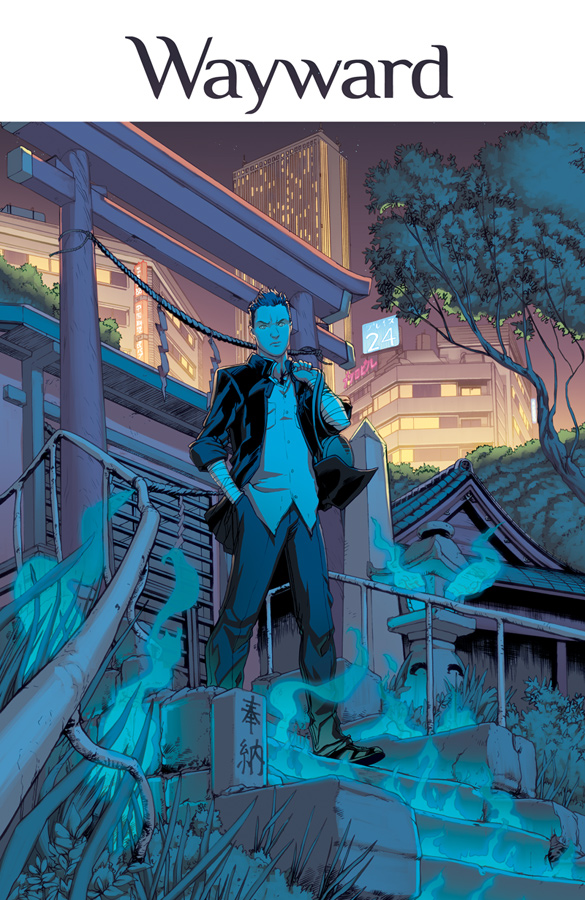
Wayward02A-585x900-web.jpg

In Major Issues, we look at one newly-released comic book each week. Updated Mondays.

Gardner Mounce

Wayward #1
Written by Jim Zub
Art by Steve Cummings
Colors by John Rauch and Jim Zub
Letters by Marshall Dillon
Published by Image Comics 8/27/14

My high school English teacher taught me that it’s bad form to begin an essay with a quote, and that’s why I’m saving it for sentence two. Someone once said that anyone can write a first act. It’s fun and easy to come up with a group of characters and establish a conflict; it’s in act two where things get tricky. Even so, a first act can be told poorly. Wayward’s problem is that it sets up its pieces so quickly that it doesn’t seem to enjoy its own premise.

Issue one falls into the trap of trying too quickly to get to the action. It assumes readers don’t have patience for the setup and are rolling their eyes until someone draws a sword. Protagonist Rori Lane, an Irish-Japanese high school student, lands in Japan to start a new life with her mom. For some reason, her mom doesn’t pick her up from the airport, which conveniently allows Rori to discover her new superpower–the ability to see her literal future path displayed for her in a red line (exactly like Donnie Darko’s ability to see his future path in a blue line). She catches up with her mom over dinner and explores Japan a little. Three men in an alleyway accost her. She’s saved by a ninja girl. They fight them off. The guys end up being turtle monsters, she discovers she can jump buildings for some reason, etc, etc.

This would be too much for one issue anyways, but writer Jim Zub dumps additional exposition on us in gobs of narration. Comics are a combination of words and pictures, but I’d argue that they’re a visual medium first. I hold them to Alfred Hitchcock’s standard that, like film, if they are played “silently” (without narration) the story should still work. It’s the cliche: show don’t tell. Narration should never do the work that the visual element could do. Most of the narration in Wayward could have been relayed to the reader visually, but oftentimes the narration just parrots what the comic is already showing. For instance, in one scene Rori struggles to take an afternoon nap, but is unable to do so due to jet lag. There are three frames. In frame one, Rori is lying down, staring at the ceiling. The narrator says, “I wonder if my brain will stop whirling long enough to take a nap.” The second frame is the same shot, to show that time has passed. The third frame shows Rori sitting up, indicating that, no, her brain won’t stop whirling long enough for her to take a nap. The reader understands this and needs no further indication, but Zub provides two additional layers of narration. First, Rori says, “Nope!” Second, the narrator says, “I guess it’s time to go exploring!”, which is an unnecessary line since the next panel shows Rori exploring. Zub commits this crime of over explaining constantly in issue one. The overall effect is that it reads like a rough draft, like Zub is still in the process of learning what his characters want and hasn’t yet found a way to tell the story in an interesting visual way.

Artist Steve Cummings and colorist John Rauch created this comic for a niche audience: the anime-ers. Skin is translucent. Hair is green or blue. Everyone’s dressed like they’re in attendance at Anime Expo. I’m not an anime or manga fan, so the art doesn’t feel like an homage to a Japanese style so much as it feels derivative of it. However, Cummings’s perspectives are noteworthy. Wide shots distort like wide angle lenses, giving the effect that the comic is filmed. It gives issue one a slick cinematic feel that definitely catches the eye. Now, if only Zub would trust him enough to take that camera eye and show us Japan and Rori Lane’s knotty relationship to her parents rather than tell us about it.

Should You Get It?

No. Unless manga is an obsession for you, and you’ve read all the manga, and you need anything that looks like manga or anime right now.

Gardner Mounce is a writer, speaker, listener, husband, wife, truck driver, detective, liar. When asked to describe himself in three words, Gardner Mounce says: humble, humble, God-sent. You can find him at gardnermounce.tumblr.com or email him at gmounce611@gmail.com 

Tough Questions: What’s the Worst Book You’ve Ever Read All Of?

question-mark

Every week we ask everyone who hangs out around here to answer a tough question. This week:

What’s the worst book you’ve ever read all of?

Rules are simple: how’s your judgement? When did you last dedicate a significant amount of your precious, fleeting life to something you didn’t want to finish in the first place? This week we’re talking dedication for dedication’s sake. Let’s get to it, because wasting time in a thing about wasted time is just too much.

Alex Russell

I once got State by State: A Panoramic Portrait of America as a gift. Look at this damned list of some of the contributors: Louise Erdrich, Jonathan Franzen, Ann Patchett, Anthony Bourdain, William T. Vollmann, S.E. Hinton, Dave Eggers, Myla Goldberg, Rick Moody, and Alexander Payne. Those people can’t make a bad book, can they? They didn’t, but they all certainly wrote some essays that appeared in a bad book. State by State is a series of 50 essays, each written by someone with a connection to that specific state. Some of them are great. Some of them are not. I was going to put in my least favorite one here but it makes me way too angry. The precious, scientific ways people write about their own states in this tome can be the worst. They are the opposite of love letters. That said, “Kansas” by Jim Lewis is fantastic, though if you Google it the first thing that comes up is an article from my college town’s newspaper about how bad it is. No one likes anything.

Gardner Mounce

I generally have a strict 50-page policy. Life is too short to read bad books and if a book can’t impress me in fifty pages then I have no qualms about ditching it. However, I did stick with all of The Half-Made World by Felix Gilman. It was awful, but interesting in the awful choices it made.

Mike Hannemann

The easy direction to go is to name something forced upon you in high school, but All the King’s Men takes the cake. The book before I read was Grapes of Wrath and it was followed by Invisible Man. Both of those novels are some of my favorites of all time. Wedged in the middle was a political drama which played out exactly how you’d expect. I compare it to Dances With Wolves. You know exactly where the plot is going the minute you start reading the book. There are a few twists here and there, but it lacks originality. When the most fascinating character is a simple Irish guy who eats sugar cubes, there’s something wrong with your story. Maybe I was too young to appreciate it, but “noble politician becomes corrupt” isn’t exactly groundbreaking storytelling. That said, I do sympathize with the Irish. And sugar cubes.

Jonathan May

There are so many contenders for this question. The worst book I’ve ever read in its entirety must be The Book of Mormon, which Mark Twain called “chloroform in print.” Not to anger any Mormons out there, but damn if it isn’t the most boring thing I’ve ever read. Compared to other religious texts, the battles are lame and the language stilted. The Bhagavad-Gita this ain’t. Mostly centered in language borrowed from the Masonic texts and translations of The Bible available at the time, this product of the early American 19th century could really lose a lot of clunky verbiage and focus rather on its chronologically-challenged plot. While religious adherents may find it to be divinely inspired, I find more inspiration from even the most unreadable of Dickens’: The Tale of Two Cities, my close second-place choice. If you disagree (and I assume many will), please do yourself a favor and read The Bible, The Upanishads, The Bhagavad-Gita, The Heart Sutra, or almost any other religious text and get back to me.

Andrew Findlay

This is difficult. For most of the past decade, if a book was terrible or even just not what I wanted to read right then and there, I just didn’t finish it. Any truly terrible books that I finished before that time are terrible enough to be supremely forgetful. It was probably one of the ranked masses of Star Wars Expanded Universe books I read in middle school, before I knew enough to be like, “This dialogue is laughable. Han wouldn’t say that. Besides, it’s nerf herder, not nerftender.” You know what, I’m willing to bet $100 that it was The Phantom Menace, released alongside the movie so George Lucas could squeeze even more blood out of his gasping, mangled franchise.

Brent Hopkins

This is assuredly not the worst book I have ever read cover to cover, but I will say it left the most vivid disappointment in me in recent years. George R.R. Martin’s 4th novel in The Song of Ice and Fire series A Feast for Crows takes the prize for me.  As has been mentioned by many other reviewers and general readers alike, this book is the equivalent of a fluff episode. Most of the characters focused on feel like the B-list of the tale, and after the massive cliffhanger at the end of the previous book you will read these pages and feel teased. The concept of splitting the books into regions as opposed to chronological order is cool and all, but it works a lot worse when all the cool kids are in one place and the wallflowers are in another. This also led to a bit of a muddling of the 5th book because many of the references are things the reader already knows, so it isn’t entirely as new as you’d hope. Knowing the answer to characters questions works sometimes, but not constantly.

Worst Best Picture: Is Kramer vs. Kramer Better or Worse Than Crash?

kramer vs. kramer

Alex Russell

In “Worst Best Picture” we search every single Best Picture Oscar winner of all time from 1927 to present to uncover the worst of them all. Conventional wisdom says that 2005’s winner Crash is the worst winner in history. We won’t stop until we’ve tested every last one. Read the the first, our review of Crash, here. Posts will be relatively spoiler free, but there may be some details revealed. Today’s installment is the 1979 winner Kramer vs. Kramer. Is it better than Crash?

My parents saw Kramer vs. Kramer on one of their first dates. My parents, both relatively recently divorced at the time, weren’t really in the right place to watch it. It’s also not really a great “date movie” on account of it being a movie about a divorce and a custody battle.

It’s been a long-running joke in my family that Kramer vs. Kramer was the last movie my mom got to pick out while they dated. It’s easy to see why: this is a damn brutal movie. I have no children and I haven’t been divorced and it hit me like a truck carrying another truck. If you’ve got some deeper connections to the themes, well, prepare yourself.

Within the first ten minutes, Joanna (Meryl Streep) leaves Ted (Dustin Hoffman). We aren’t given a lot of insight into exactly what’s wrong, but it’s clear that Joanna is unhappy, and she’s apparently unhappy enough to leave their son Billy (Justin Henry) behind, as well. Ted has to learn to balance a demanding job and a single parent household, and Billy has to learn to forgive his dad without really having any explanation for why his mom left. It’s hard stuff, but mom left completely, so everyone involved has to learn to start over.

Meryl Streep is out of the movie for a solid hour. It’s entirely about Ted and Billy bonding, and the mix of heartfelt moments and tough moments is effective. Billy wants his mom back, sure, but if all he has is dad then he’s going to make the best of it. Ted’s worn out and frustrated — one scene involves him making a drink and staring at a wall for a brief moment — but he’s proud of himself for being able to take over parenthood alone.

That makes it all the more difficult when Joanna comes back and wants to be in Billy’s life again. The custody battle is the bulk of the movie’s conflict, and it deserves not being spoiled at all. It’s emotional and powerful, and it’s amazing to see Dustin Hoffman and Meryl Streep both give (possibly) their best performances in the same movie. If I’m wrong there, then perhaps you can downgrade them both to “excellent” here.

What stands out the most is the difficult line that the story walks about who the “hero” is. We spend a full hour with Ted, but Joanna tells the court the story of the Ted we never got to see: married Ted. The real answer isn’t that Ted is a good father or that Joanna is a bad wife or that Ted is a bad husband or that Joanna is a good mother, it’s much more complicated than that. I think there’s a lot of interpretation to be done and Kramer vs. Kramer will hit different people different ways, but I really am struck by the complexity of everyone involved. Terms of Endearment has a similarly complicated view of how we interact with the people we love, but this is a much more difficult topic. Everything in Kramer vs. Kramer is a little difficult, but it manages to be emotional without being manipulative.

The Best Part: The courtroom scene is fantastic, of course. Both leads give outstanding performances and earn their respective acting Oscars many times over, but it’s Ted’s lawyer that stuck with me. Played by Howard Duff, he’s tasked with destroying Joanna on the stand. He’s brutal, and it speaks to the fact that even though Ted and Joanna are trying to make this as positive as they can, no one escapes these situations that way.

The Worst Part: Many Oscar winners go through some revision after the fact. Kramer vs. Kramer‘s version of that is a disagreement with my notion that both sides are played equally in the custody battle. Since the movie is from Ted’s perspective, mostly, it can be easy to side with him against Joanna or to paint her as flighty or “crazy.” I can definitely see the argument that it’s a proto version of “men’s rights” nonsense, but I disagree with that take.

Is It Better or Worse than Crash? I’ve said this a million times at this point, but it all goes back to realism. I feel for Ted and Joanna. Ted wants to make enough money to provide for his family and Joanna wants to hold her family together. No one is “bad” in Kramer vs. Kramer, they just make bad choices because they don’t have time to consider if they’re even making a specific choice or not. Ted works too much and Joanna keeps her problems inside. Neither of them works on their marriage with the other one and thus it fails them and Billy suffers. The message of Kramer vs. Kramer is that you have to be well-rounded in your life and take care of every aspect of your humanity. Crash would tell you that it doesn’t matter, because all people are villains at their core and all people are waiting to literally kill each other at the slightest provocation. When the “divorce-and-custody-battle” movie is the happier, more hopeful movie then you’ve really taken a wrong turn.

Worst Best Picture Archives: Crash | Terms of Endearment | Forrest Gump | All About Eve | The Apartment | No Country for Old Men | Gentleman’s Agreement | 12 Years a SlaveThe Last Emperor | The Silence of the Lambs | The Artist | A Man for All Seasons | Platoon | The Lord of the Rings: The Return of the King | The King’s Speech | Rain Man | The Departed | The Bridge on the River Kwai | Marty | Gigi | It Happened One Night | Driving Miss Daisy | Shakespeare in Love | Wings | Midnight Cowboy | Rocky | Gone with the Wind| Chicago | Gladiator | Cavalcade | The Greatest Show on Earth | You Can’t Take It With You | The Best Years of Our Lives | The Godfather | Casablanca | Grand Hotel | Kramer vs. Kramer

Alex Russell lives in Chicago and is set in his ways. Disagree with him about anything at readingatrecess@gmail.com or on Twitter at @alexbad.

Video Games as Literature: Thomas Was Alone and Sentient AI

image source: wiki

image source: wiki

Brent Hopkins

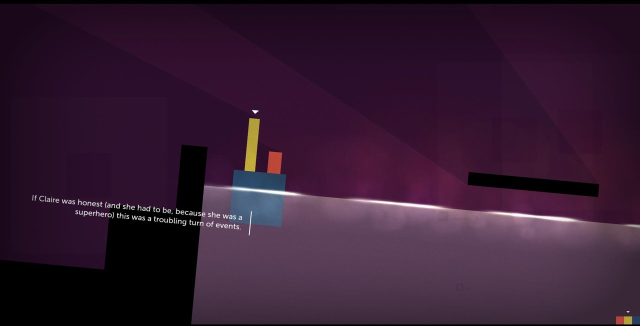
Thomas Was Alone is an indie game developed by Mike Bithell that was originally a simple flash game, but was then expanded upon to become a full release for major platforms. I had the pleasure to play this game through Steam after picking it up on sale for something like 30 cents.

The game itself is a simple platformer that asks you to take basic four-sided shapes and help them reach their portals located somewhere in the stage. This is simple enough, and the learning curve may be the best one I have seen in a puzzle platformer. I never felt the game was too easy and, on the other end of the spectrum, I never had to resort to looking at a guide to solve an unfairly complex puzzle. This all benefits the game overall since this allows a lot of focus on the story of Thomas Was Alone.

The narrative of Thomas Was Alone is by far its strong suit. Bithell manages to use the 100 levels of the main game to bestow personality onto the most basic shapes you can have. This is done through narration that either occurs at the beginning of a level or at certain trigger points in a level. The narrator is perfect at  giving each shape a special flair when they are talking  and I must admit it doesn’t hurt that it is a pleasant British one to boot (I feel like semi-snarky, British narrators are practically a must have for text and dialogue-heavy games).

Thomas is the first shape that you meet and you quickly learn that he and his other cohorts are artificial intelligences that have become sentient. Their goal is to acquire knowledge and escape the system, which in terms of the real world would mean floating around freely in the internet. This is a pretty interesting story for a rather short game (I beat it in 4.6 hours, according to Steam) but there are some flaws. The most obvious issue with the narrative is that nothing is really fleshed out. You have a team of shapes and they are very clearly unique: one can float in water, one can double-jump, and Thomas is the “Mario” of the team as the all-around shape. The personalities portrayed also help flesh out the characters, as each is a relative extreme. I found myself thinking “Orange Square is a dick but his relationship with Long Rectangle is endearing, so let’s make sure they help each other a lot.” This is a complete success in storytelling and I am happy that I found myself making these little mental decisions in much the same way I did in the game Journey.

The design decision to go level by level with snippets of the story means that the end has to come by chapter 100. This is a platformer though, so it is obvious that you can’t have the player sitting and waiting for the narrator to shut up to finish a level. I think Bithell hit a relatively sweet spot in Thomas Was Alone, but I was definitely left wanting just a bit more story by the end.

Another issue with the story is that at times it completely interrupts the gameplay, or vice versa. I found myself on more than one occasion going through a level too quickly when the narrator was far from done, so it turned into an audio novel as opposed to a game. The same thing happened when I was expecting more narration in a level and it wrapped up really quickly. It could be argued that this wanting of more storyline is a success, but it truly just felt disjointed and too noticeable.

Thomas Was Alone takes the bare minimum in terms of graphics and gameplay and gives some heart and soul to it. Each character has their strengths and weaknesses, but together they accomplish something far greater than all of their parts. The growing of the AI characters throughout reminded me of the film Her, where I could imagine this being the prequel of sorts to the story of the AI represented in that film. In both, the AI are never portrayed as malicious, but instead as beings with the ability to absorb and attain knowledge at a rate that far exceeds that of humans. This vast knowledge doesn’t lead to a Terminator type insurrection from appliances but instead shows that AI quickly pass the human emotions phase. Skip the murder everything phase and get right to wanting to be seen as equal “beings.”

I kind of like this new approach to AI that Hollywood and the gaming industry have begun to take, because it really opens up a lot of interesting thoughts about what could happen if computers grew feelings. The 80s and 90s automatically figured that nothing good could possibly come from it, but these days, as computers become as much a part of life as breathing, it is nice to see that there are more options for narratives to take than that of The Matrix and its ilk.

Thomas Was Alone is a good game, not great by any means, but well worth the price and time that it asks you to invest.

Brent Hopkins considers himself jack-o-all-trades and a great listener. Chat with him about his articles or anything in general at brentahopkins@gmail.com.

Worst Best Picture: Is Grand Hotel Better or Worse Than Crash?

image source: wiki

Alex Russell

In “Worst Best Picture” we search every single Best Picture Oscar winner of all time from 1927 to present to uncover the worst of them all. Conventional wisdom says that 2005’s winner Crash is the worst winner in history. We won’t stop until we’ve tested every last one. Read the the first, our review of Crash, here. Posts will be relatively spoiler free, but there may be some details revealed. Today’s installment is the 1931/1932 winner Grand Hotel. Is it better than Crash?

You aren’t going to watch Grand Hotel unless you’re watching all 86 of these. There’s just no other reason to see it now.

It Happened One Night won the seventh Best Picture award in 1934 and earned a spot in the canon of romantic classics at the same time. It’s the first winning film that you might have cause to see on your own. The rest of the early winners, Grand Hotel included, are strange looks into 30s Hollywood. They’re fascinating in a way, but they don’t hold up in the way we think of “stories” today. Just as the audience in 1931 wouldn’t have known what to do with No Country for Old Men, we don’t really know what to do with the busy, crazy, dramatic Grand Hotel.

A brief plot summary is probably required. Grand Hotel apparently was the first movie where a lot of characters interacted with each other without realizing they’re all connected. It gave birth to the term “grand hotel theme” which describes just such a story. In Grand Hotel itself, the characters are all at the finest hotel in Berlin for various reasons. One man is dying of a mysterious disease, a businessman is trying to close an important deal for a merger, a performer is in hiding, and a jewel thief is, well, thievin’ jewels. They all are connected, and the movie’s whole point is to show the audience how.

The jewel thief robs the performer and falls in love. The dying man works in the businessman’s factory. The businessman hires a stenographer, and the stenographer turns out to be an aspiring actress. The stenographer thinks the businessman should be nicer to the dying man. The dying man just wants to drink all the champagne in Germany. It’s pretty busy.

This is old Hollywood at its old-Hollywood-est. It’s a crazy story that likely works well as a play but doesn’t make a ton of sense as a film. It’s not really fair to judge the original for the crimes of the copycats, but “thief with a heart of gold” and “performer who is tired of her fans” are well worn tropes at this point. The industrialist businessman is ridiculous. The dying man is a full-on cartoon character brought to life. The cast is too “big” and too crazy and the story itself isn’t interesting enough to hold together for two hours. It’s hard to even nail down what the right complaint is about Grand Hotel, because once you pull on any thread you unravel how you feel about all of it.

The Best Part: Lionel Barrymore plays Otto Kringelein, the man dying of a mysterious illness. He’s best known as the villain in It’s a Wonderful Life, but he’s best known in this series as the most insane part of You Can’t Take It With You, which is saying a lot. Kringelein is a fascinating character, and Barrymore clearly decided that he was just going to be a crazy motherfucker for two hours. Greta Garbo is in this, but she’s reasonably forgettable. Even if you hate Grand Hotel, you’re going to remember Barrymore slamming champagne and yelling as Kringelein.

The Worst Part: Wallace Beery’s General Director Preysing (pictured above). He’s the factory owner that hates all the simple folk that work in his employ. He’s clearly supposed to be the “villain” of the movie, so much as it has one, and they don’t really work to make him anything else. Only Gladiator has a less complicated antagonist, and since that’s the problem with Gladiator (well, it’s one of the problems) it’s also the problem here.

Is It Better or Worse than Crash? These just aren’t the same thing. It’s like asking if green is more than eight. It’s hard to compare the idiotic message of Crash (trust no one! everyone is evil! beware the OTHER! learn nothing!) and the device of Grand Hotel (what if, like, we’re all connected?), but since I forced myself to do it, I’ll do it. They both feature people who wake up at the start of the movie determined to be a bastard — John Barrymore in Grand Hotel, Matt Dillon in Crash — who redeem themselves for questionably relevant narrative reasons. They both fall apart if you look at them too closely, but for Grand Hotel it’s because it came out literally three years after the invention of sliced bread. For Crash it’s because Crash is terrible.

Worst Best Picture Archives: Crash | Terms of Endearment | Forrest Gump | All About Eve | The Apartment | No Country for Old Men | Gentleman’s Agreement |12 Years a SlaveThe Last Emperor | The Silence of the Lambs | The Artist | A Man for All Seasons | Platoon | The Lord of the Rings: The Return of the King | The King’s Speech | Rain Man | The Departed | The Bridge on the River Kwai | Marty | Gigi | It Happened One Night | Driving Miss Daisy | Shakespeare in Love | Wings | Midnight Cowboy | Rocky | Gone with the Wind| Chicago | Gladiator | Cavalcade | The Greatest Show on Earth | You Can’t Take It With You | The Best Years of Our Lives | The Godfather | Casablanca | Grand Hotel

Alex Russell lives in Chicago and is set in his ways. Disagree with him about anything at readingatrecess@gmail.com or on Twitter at @alexbad.

Song of the Summer? Rae Sremmurd – “No Flex Zone”

“No Flex Zone” by Rae Sremmurd

Jonathan May

One of the summer’s more fun rap constructions appeared this June with a video released earlier this month. Sung by two brothers who hail from Tupelo and live in Atlanta, this song has all of the bravado and gloating of boastful youth coupled with imaginative visual rendering and a simple beat that won’t leave your head; even the duo’s name reconfigured (Ear Drummers) lets you know they’re down with wordplay, though they work within an inherited narrative structured well before their spin on the scene. The song centers on everything young rappers consistently brag about—drugs, sex, a party lifestyle, smoking weed—but manages to be insouciant in its naïveté, like a bumptious puppy parading around its new bone. I would compare this, easily, to anything Miley Cyrus has done recently, in terms of overall concern and mood. The childish background melody reminds me of a music-box, while the vocal overlays scratch into it, adding some needed tension; the duo was not afraid to leave their voices scratchy and pubescent, possibly to further add a level of realism to their enterprise. Visually, the video does a great job of turning rap clichés on their heads, the main example being the literal laser-like “No Flex” zone that floats, a la Tron, around them as they sing and drive. Also, small touches like the gold vampire grill were a nice touch. Overall, the song carries with it all the joys of privileged youth, and who wants to rain on such a weird and fanciful, but somehow unique parade? Certainly not me. I’ll be turning up the dial as this summer approaches its end.

Jonathan May watches too much television, but he’s just playing catch-up from a childhood spent in Zimbabwe. You can read his poetry at owenmay.com, follow him on Twitter at @jonowenmay, or email him at owen.may@gmail.com