Month: September 2014

An Interview with “The Kingdom” Creator Jason Bienvenu

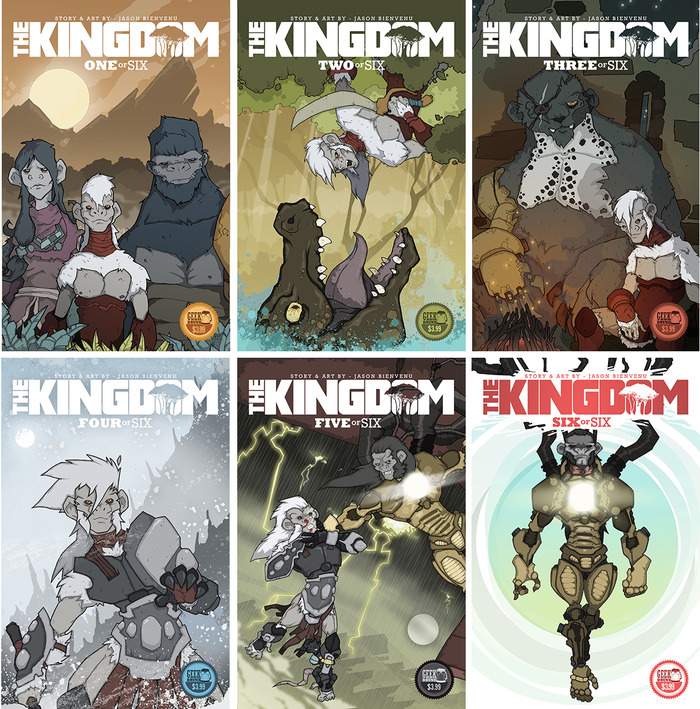
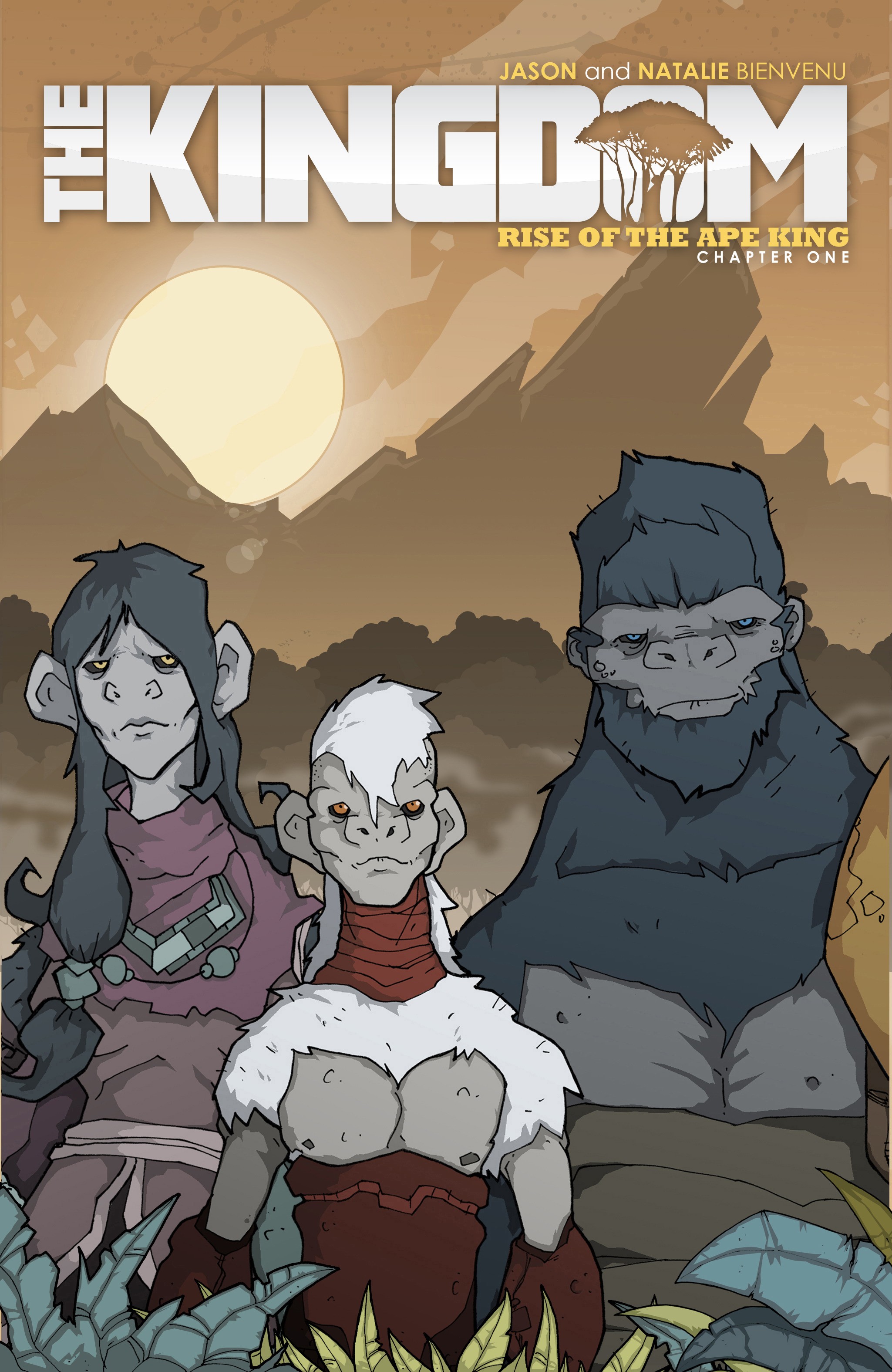
the kingdom cover

Our own Gardner Mounce recently spoke with Jason Bienvenu, the creator of The Kingdoma comic about “a magical realm where animals have evolved in the absence of mankind.” You can also read Gardner’s coverage of the series here.

GARDNER MOUNCE: First, tell us a little about yourself and your background.

JASON BIENVENU: Jason Bienvenu (b. 1979). I’m an illustrator and designer born and raised in South Central Louisiana (Lafayette). I received my Bachelor’s Degree in Fine Arts, with a concentration in graphic design from the University of Louisiana at Lafayette. I love collecting action figures, playing video games, and hanging out with my wife, Natalie, and my daughter, Elizabeth.

GM: When did you first know you wanted to write comic books?

JB: In the fall of 2011 I did a lot of animation work for an Xbox XNA game that never got produced leaving me frustrated that I had done so much work on a project that wouldn’t see the light of day. At that point I decided that I wanted to take on a project from start to finish that won’t cost me an arm and a leg; a project that I could learn as I go.

From there I began making little Post-it notes on the look of some of the characters and jotting down ideas. By the spring of 2011 I had begun what would become the first issue of The Kingdom.  I had a story arc/road map of where I wanted the series to go, but nothing set in stone. At that point I was still learning how to create my first comic and wasn’t even sure I would finish the first issue!

While struggling through the first issue, I realized how fun and rewarding it was, and my wife Natalie and I would go over dialog together and it really began to come together.  By the time I finished the first issue I told myself, “Okay, you can do this.”  So I created a Kickstarter to help fund the printing of the books and the rest is history!

GM: Which comic book creators inspire you most?

JB: When I was doing my comic research I picked up Mike Mignola’s Hellboy books and studied them and took in as much as I could from them. They are still a huge influence on me today.

But in a real face-to-face sense I would have to say my friends Kody Chamberlain of Sweets and Punks and Rob Guillory of Chew really helped me out more than I could ever convey in words. We were friends before I decided to start doing comics and I was actually shy about asking them for the longest time, but once I did they gave me really invaluable advice on everything comic wise, from the art and how to transfer line art to digital format to how to have a successful showing at comic conventions. I can’t thank them enough for that.

GM: What are your ambitions for your writing career?

JB: I know a lot of people want to work on the “big” books like Batman and Captain America, but right now for me, I have stories that I want to tell and I have several writing partners on other projects that I am super excited about, so at the end of the day, for now, I would say I want to be able to continue creating comics and would love for the work I create and will produce in the future to be published so that more readers will have the chance to enjoy it.

GM: What was the most challenging aspect of working on The Kingdom?

JB: I’d say the most challenging part of working on The Kingdom was the last two issues of the story arc. I would work my day job, then stay up until 2 a.m. working on each issue, which took about three months to finish both of them. My wife and I had just had our beautiful little girl so there was no guarantee that when I was done at 2 a.m. that I would actually get to sleep the rest of the night, ha!

GM: What was the most thrilling?

JB: I’d say the most thrilling part for me was when I received the trade paperback edition in the mail and I felt the weight of it in my hands and flipped through the pages, and just looked at what I created with the help of my wife and all the Kickstarter backers. It was one of those, “wow, you really did it, kid” type of moments.

GM: What is one unexpected thing you learned while working on The Kingdom?

JB: That I am a comic book creator! This was the first comic book I ever created and I honestly wasn’t sure if I would ever finish it, but once I got the first issue down I felt like I had found my groove and I really feel like I found out what I’m supposed to be doing with my life. That was a great feeling.

GM: Which character in The Kingdom do you most identify with?

JB: I’d say Pale. Pale is basically me, but Thane has a lot of aspects of me in him as well, ha!

GM: As the sole creator of The Kingdom, you don’t have the difficulty of explaining your story to an artist or interpreting a writer’s story. With that in mind, what is your process for creating an issue? Do you write a script first?

JB: Whenever I created the story I knew where I wanted it to go. I had a “roadmap” but I felt like the story should be very organic. I wanted to let the story unfold and I had a lot of fun surprises along the way. For instance the rat Reekey was basically only a plot device to get Pale from point A to B, but I wound up liking him so much that he became this major part of the story and I really like to work that way. Also my wife, Natalie, is listed as editor but in future prints she’ll be listed as writer, as she helped me with much of the dialog, especially between Mala and Thane, who are basically me and her.

The process: whenever I start an issue I look at my road map. Then I close my eyes and literally envision the entire issue one page at a time. As I finish a page I draw it out as a “thumbnail” sketch in my sketchpad and add dialog, like a good joke or important plot point, and continue on until that book is completely thumbnailed out. Then I move onto the dialog and finally start on the artwork itself. Once all the artwork is completed I go in and add all the word bubbles. Then I print it out and Natalie and I go over all of the dialog and make sure it all fits and sounds right and that there are no typos, etc.

GM: Do you have a day job? If so, what is it and how do you balance your day job with working on comics?

JB: I still have a day job, so I do lot of comic work on weekends and at night and during holidays, which can be really grueling and difficult at times, but also very rewarding.

GM: When writing The Kingdom, did you outline the entire plot in advance or did you create it issue by issue?

JB: Yes I outlined the entire story arc, but it was more of a “roadmap” as I knew where I wanted the story to go but I allowed for it flow and have a more organic feel, which allowed me to take what I had built up from the previous issue and incorporate it into the next.

GM: Is there a type of scene that’s harder for you to write than others? (Love, action, suspense)

JB: I found from working on other comics that for me a large page of dialogue between a couple of people was difficult because as the artist I have to make several panels of people sitting on a sofa look engaging and interesting, which was really challenging but fun at the same time!

GM: What advice would you give to young writers?

JB: Never wait for permission to follow your dreams.  Once you know what you want in life, go for it. You’ll make mistakes but it’s the best way to learn and never be afraid to fail.

GM: How would you have been stereotyped in high school? Jock? Band nerd? Theater kid?

JB: I’d have to go with class clown, ha!

GM: What are you reading right now?

JB: I try not to read anything while I’m writing, and I’m working on issue eight of The Kingdom right now.  However, the last thing I read was The Hobbit, which was a Christmas gift from my wife. I would sit in bed and read one chapter at a time and just take it all in; what an amazing book!

GM: What’s next for you? Any future projects?

JB: My next project is called Vamped, about a group of nerds being introduced to the world of Vampers. It’s a dark comedy written by Donny Broussard and illustrated by me. Think Clerks meets The Lost Boys! We are three issues into a six issue story arc and have recently started work on issue four. I’m also working on a sci-fi noir with Brando Gary called Dusk, which I’ll start on when Vamped is completed this summer.

GM: Is there anything you’d like our readers to know about you or The Kingdom?

JB: This project started out as a personal challenge and turned into an inspirational project for me. Growing up with dyslexia presented its own set of challenges, so I tended to fall back on the amazing 80s era that was around when I was a kid. The same era that promoted fun and joy is what I wanted to bring back and share with you guys. I hope that this story inspires you to share in that same nostalgia and that you have enjoyed the story as much as I have enjoyed creating it.

GM: The character designs in The Kingdom are wonderful. Do you have a favorite one?

JB: Thanks! I have to say that character design is one of the aspects that I enjoy the most when creating comics.  Pale’s character design is very near and dear to my heart, even though his look evolves throughout this story arc.

I really wanted his outward appearance to suggest what was going on under the surface in his mind and heart. I also wanted the reader to worry a little that he wouldn’t wind up being the hero they thought he was.

GM: Can you describe the process of developing the design of that character?

JB: With respect to the character design of The Kingdom, I was very focused on each character’s look and feel, and the first thing I thought was “each character has to be distinct!” I wanted the reader to know who they were even if they were in total silhouette.

After I got their look and feel down, I focused on the color scheme. I found a lot of inspiration from the 1980s Masters of the Universe and Thundercat cartoons and toys. Those characters had very bold and wild color schemes that in some cases should not have worked, but they really did and it taught me a lot about my own color palette.
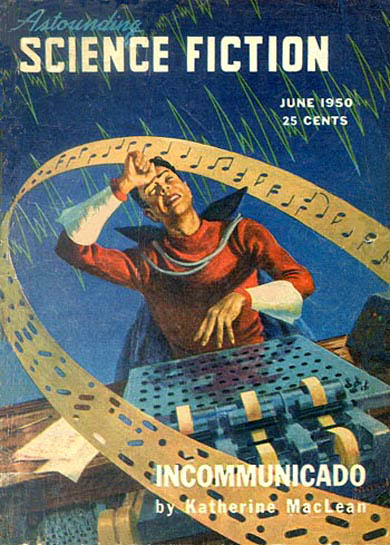
Life After the Star Wars Expanded Universe: On the Importance of Pulp Fiction

astounding science fiction cover

Andrew Findlay

In Life After the Star Wars Expanded Universe, we take a look at science fiction and fantasy, why they’re great, and what they say about where our species has been and where it’s going.

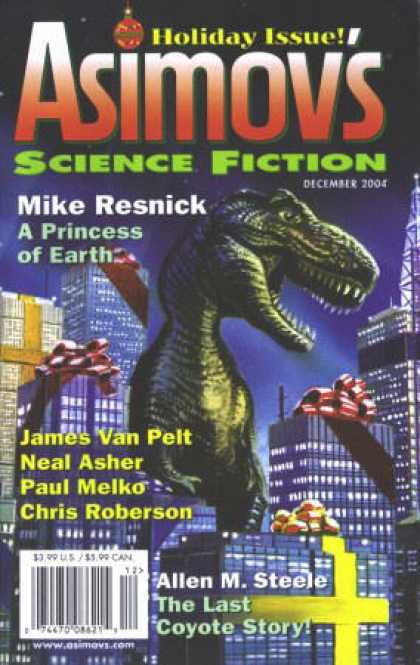
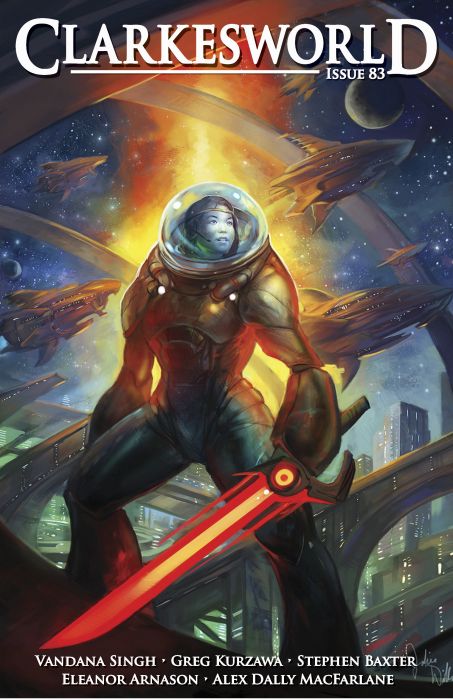
Remember the pulps? The old science fiction, mystery, and fantasy magazines published on cheap paper and read in the Golden Age of SF on trains, on buses, and by flashlight under blankets after bedtime? Well, they are still alive, well, and thriving. At the very least, dozens (link takes some scrolling down) are still publishing stories and paying authors. It is a vibrant, vital part of SF, but many superfans who have read every book Asimov ever wrote or won costume contests at ‘cons overlook them. There are tons of them, but two of the most famous are Analog and Clarkesworld. There are many benefits to reading these magazines.

First off, these rough, newspapery pages contain plenty of variety. Each magazine is usually filled with (shortest to longest) short stories, novelettes, and novellas, so the reader can choose how much time they want to invest and pick up the magazine for ten minutes, thirty minutes, or an hour. They are also full of informational articles that range from editorial commentary, to the state of the field today, to straight scientific fact to supplement the fiction. An article I just read in Analog explained some of the risks of climate change, and the factoid that stuck with me was that, if Greenland’s glaciers melt, the inundation of freshwater into the ocean might stop the North Atlantic Current, which currently brings warm air to Great Britain and keeps it relatively warm. Without this current, it would have a climate comparable to the Yukon. In addition to the variety of features, the collection of stories itself is extremely diverse. Just glancing at the table of contents of the November 2014 issue of Analog, there is a story about a Venusian colonist’s transport breaking and her having to survive in the high-pressure, acid-rich cloud layers of Venus while avoiding falling to the certain-death lower levels, another story about a convict with a life sentence appealing that sentence due to new immortality treatments rendering it a cruel and unusual punishment, and another whose plot concerns an AI who went on an apparent spree murdering dozens of his fellow AIs. Within that small sample, three of the eight stories on offer in the magazine, there is a story that deals with space colonization, one that deals with the social impact of longevity treatments, and one that touches on the dangers and nature of AI. That’s a broad range, and no matter what your interests, you’ll find something that interests you.

asimov

The next major reason that getting a subscription to a few of these is worthwhile is that the publishing environment fostered by the editors of these magazines fights off the bloat of success. Everyone who has read serial fantasy especially has run across this phenomenon: an author writes an amazing first novel that sells on a galactic scale. It is entertaining, the plot is tightly woven, and the characters are identifiable. The second and third entries are similar, but then the quality nosedives, and all of the sudden you are reading about characters you don’t care about in locations that bore you to tears while learning about the finer points of societal etiquette, which makes you feel like you’ve fallen into cotillion class as opposed to the rough-and-tumble who-dares-wins environment of the first book. This, friends, is because the author’s name is now more important than their work. The publisher knows that, whatever is written, it will sell a gazillion copies, so the editor backs off and the book bloats and bloats and bloats. Not so in the magazines. First, the stories average around 5,000 words, so the author has very little time in which to communicate what they need to. Characters, setting, and conflict are all usually extremely clear in the first two pages, after which the action goes gallivanting off towards resolution with nary a hesitation. Second, the editors make choices based entirely on what they think will give the readers who buy their magazine reason to buy it again: stories that entertain. If the characters are hard to identify with, if the ideas and technology explored in the story are not interesting, and if there is no satisfying plot, the editor will not buy the story and the magazine will not subject you to it. It is a hardscrabble environment where only the leanest, fittest stories survive.

clarkesworld

Let’s assume I have you convinced, and you’re raring to subscribe to a magazine or three. Where should you go? Analog Science Fiction and Fact is probably the most storied. It started life as Astounding Stories in the 1930s, and a few name changes later stands as the longest-running continuously published magazine in the genre. Its most famous editor is John W. Campbell, who is to Heinlein and Asimov what Max Perkins is to Hemingway and Fitzgerald. It is old, it is established, and it is a must-have for anyone starting down this path. For a shot of the new, check out Clarkesworld Magazine. Started in 2006, it has grown quickly. It and its authors have been nominated for and won the Hugo multiple times. It has achieved a huge profile in a relatively short time mostly due to the quality of its stories, but also because of its distribution method. It exists almost entirely as an online entity, with all of its stories available for free online in text and podcast form. A physical anthology is published each year, and ebook subscriptions are available, but the free podcast is the best way to experience the magazine. I listen to podcast stories relatively frequently, but so many readers have either a voice not suited to hold attention or one made so goofy by putting on a radio announcer style that I have trouble getting into the story. Not so with Kate Baker, the reader for every Clarkesworld podcast. Her voice is clear, normal, with enough variety to hold attention but not so much you feel you’re listening to a circus impresario. I recently listened to her read “Seven Years from Home” by Naomi Novik, one of the most satisfying world-building stories I’ve seen this year. It’s quality, it’s free, it’s multiformat, and you can check it out now with no commitment.

The magazine market is vital to the science fiction community at large. There are the monuments of the genre, the Neuromancers, the Stranger in a Strange Lands, and the Do Androids Dream of Electric Sheep?s, but the beating heart of SF is in these magazines, where the work of old pros and new blood meet and keep the body of SF as a whole vigorous and alive. Do your part to keep SF healthy and subscribe.

Andrew Findlay has strong opinions about things (mostly literature) and will share them with you loudly and confidently. You can email him at afindlay.recess@gmail.com.

Major Issues: The Kingdom – Rise of the Ape King

1723a58d0c5e661e776811a0dbe75a5c_large.jpg

Gardner Mounce

In Major Issues, we look at one newly-released comic book each week. Updated Mondays.

The Kingdom – Rise of the Ape King
Story and Art by Jason Bienvenu
Published by Kingdom Publishing

In the afterword to The Kingdom, writer-artist Jason Bienvenu states that his goal with this project was to create a story reminiscent of the 80s cartoons he grew up with. And though you won’t find fighting robots or cats with boobs in The Kingdom, you will find a lovably familiar good vs evil story with a knack for cheesy one-liners. So in that regard, Bienvenu succeeded.

The story is archetypal and familiar: Pale, the outcast hero, rises to power in the wilderness only to come back to save the kingdom–like Luke Skywalker, Simba, and David did before him. He wears the hero of Joseph Campbell’s monomyth thousandth face. In any case, the series’ raison d’etre isn’t its story, but its art.

Character design, in particular, may be Bienvenu’s special gift. Bienvenu communicates his characters’ essences through their designs. Trepidacious, naive Pale wears showy red armor that nonetheless doesn’t fully protect him; his white mohawk and hard features reveal a youthful determination. Pale’s father, the lovable oaf, hardly wears any armor to show that he’s cocky and unconcerned. The Boar-O, a giant [mega]bear, wears nothing but an eyepatch and a metal arm–exposed, vulnerable, but fully confident. Even without backstory or dialogue, these characters are three-dimensional.

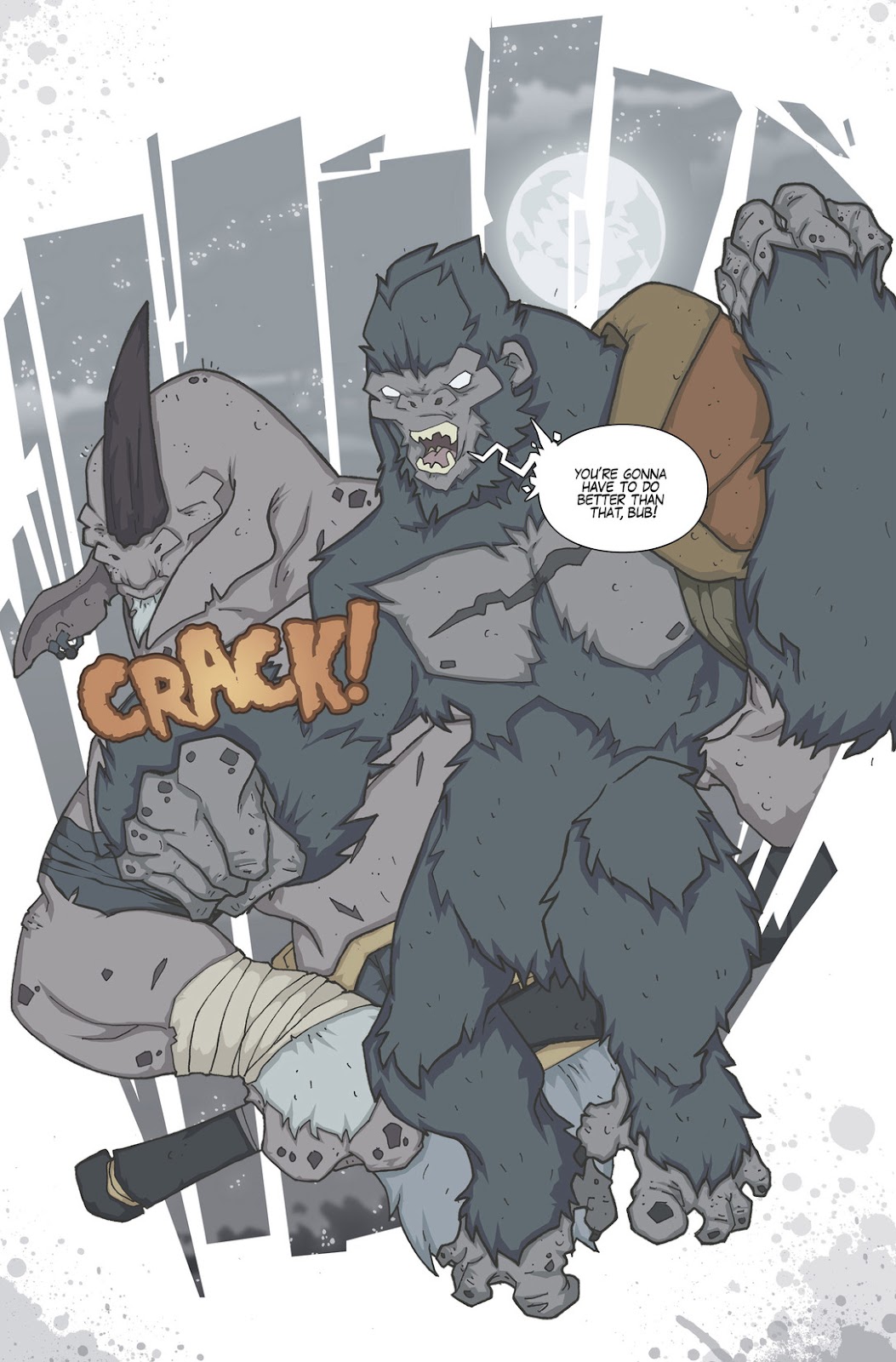
With such attention to detail, it’s frustrating that Bienvenu feels the need to over-explain the comic through dialogue and narration. The first issue is the most guilty of this, and acknowledges a lack of confidence in Bienvenu to tell a visual story. However, as the story progresses, the narration takes more of a back seat. By issue two, Bienvenu makes bolder moves in page layout, sequencing, and framing. By issue three, his confidence is perceptible. And issues three and four show Bienvenu at his most confident. The narration is minimal, the dialogue enhances rather than hinders, and the art flies off the page. Take the following splash page, for example. Among other things, Bienvenu breaks the background environment into broken panels, like cracked glass, to reflect the sudden violence of the scene.

6f7d8ea2baa10ee04940db6f90b73b60.jpg

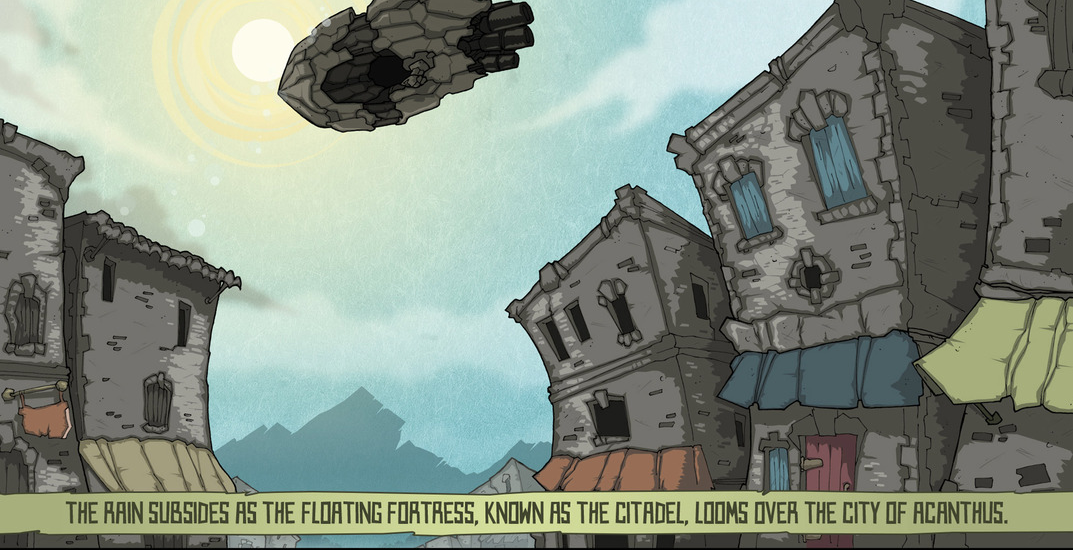
Speaking of environments–as a native Louisianian, Bienvenu understands how to communicate the heat and humidity of the jungle with muted greens, muddy browns, and a sun that emits waves of feverish heat. Conversely, his night scenes communicate quiet awe for a pre-electricity view of the stars. The cities of The Kingdom are designed with similar attention to detail. Each has its own style of architecture and mood. My only wish is that he would have made some of these environments splash pages for us to drool over.

Screen Shot 2014-09-07 at 9.54.33 AM.png

Though The Kingdom oftentimes runs through the motions of the hero myth, it never takes itself too seriously. Bienvenu set out to have fun, and he did. The story is full of wise-cracking corny stepdad jokes, but that’s sort of what makes it so fun. In any event, it puts on full display a new artistic voice who will no doubt helm exciting future projects.

Where to get it:

Comixology
Amazon

Gardner Mounce is a writer, speaker, listener, husband, wife, truck driver, detective, liar. When asked to describe himself in three words, Gardner Mounce says: humble, humble, God-sent. You can find him at gardnermounce.tumblr.com or email him at gmounce611@gmail.com 

Book Review: “Think Like a Freak” by Steven D. Levitt and Stephen J. Dubner

image source: freakonomics.com

image source: freakonomics.com

Brent Hopkins

I have rarely harped on it when writing here, (too busy raging at games and reviewing comic books) but I am a huge business and economics fan. I have my undergraduate in International Business and am currently working on a master’s degree in Human Resource Management, so something is always drawing me to this side of literature. That being said, I am no economist, but I think it is fascinating how certain things are correlated.

Steven D. Levitt and Stephen J. Dubner came to prominence with their collaboration Freakonomics. This book and its sequel, SuperFreakonomics, used economics (though you can argue it’s a lot of sociology and criminology as well) to help explain the correlation between a myriad of things that would seem ridiculous to a normal person. This goes from abortion affecting the crime rate to teachers cheating to boost grades. There have been some issues brought up from other researchers with their methods and phrasing, but as long as you read with a reasonable mindset the books are incredibly engrossing.

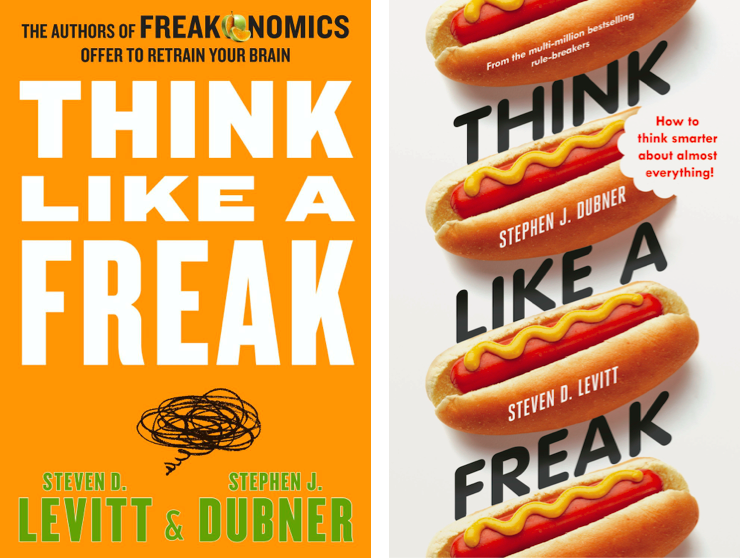
This brings us to the third book, Think Like a Freak, which was released this summer. The book takes a break from telling stories about how approaching problems with a different mindset can lead to unique solutions and instead uses little tales to try and get the reader to think uniquely in various situations. The entire book comes off as almost a self-help work, but refrains from really pointing out direct flaws in people that need to be fixed. Instead, the authors explain how problems don’t always have simple solutions, but when you think like a “freak” amazing things could, not will, happen.

I am a pretty practical and positive person so it was a treat to read something that resonates with me at the age of 28. Two topics in particular stuck with me as they talked about quitting and redefining problems to help redefine solutions. They used two rather fascinating stories to draw the readers in: one focused on Takeru Kobayashi, the famous Japanese eating champion, and how he figured out how to eat hot dogs so quickly and another story about a company that invents things but often has to give up on ideas if they aren’t feasible. The line “Fail Quick and Fail Cheap” is simple but makes a lot of sense from a business mindset. These topics will make the reader step back and ask: “Could I handle doing that?” which I feel is precisely what the authors set out to do.

This book is largely about self-limitations, fear, and dealing with pride. Most of the situations brought up are not about external issues, but instead about how people get so focused on either being right or setting up artificial boundaries that they can never get to the next level. Think Like a Freak holds your hand through these issues and packs a lot of depth for such a short read.

Should You Read It?

Yes. It may not change your life, but I think it has enough depth to really be applicable to anyone’s life.

Brent Hopkins considers himself jack-o-all-trades and a great listener. Chat with him about his articles or anything in general at brentahopkins@gmail.com.

Worst Best Picture: Is The French Connection Better or Worse Than Crash?

gene hackman the french connection

image source: oscars.org

Alex Russell

In “Worst Best Picture” we search every single Best Picture Oscar winner of all time from 1927 to present to uncover the worst of them all. Conventional wisdom says that 2005’s winner Crash is the worst winner in history. We won’t stop until we’ve tested every last one. Read the the first, our review of Crash, here. Posts will be relatively spoiler free, but there may be some details revealed. Today’s installment is the 1971 winner The French Connection. Is it better than Crash?

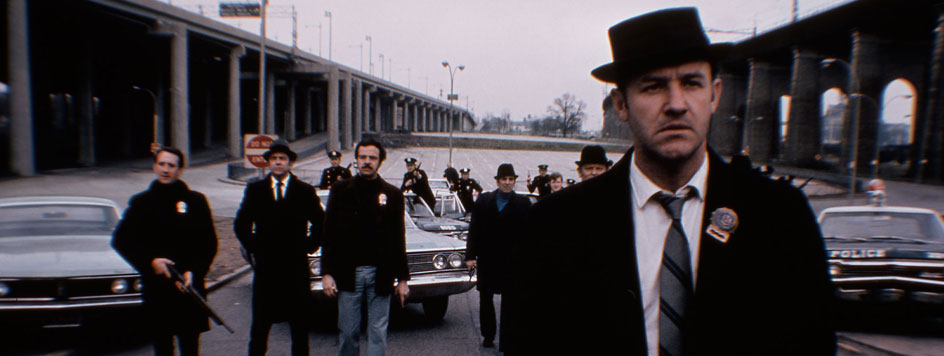
If anyone ever asks you if you’ve seen The French Connection, all you have to do is say “oh, man, that car chase is awesome!” That’s it. Maybe mumble something about Gene Hackman. Then change the subject and ask whoever you’re talking to about a neat fish you saw once. You made it out of that conversation, and I’m proud of you.

The French Connection is all about a good cop who ain’t all that good, y’know? Gene Hackman plays “Popeye” Doyle, a cop bent on bringing down the drug trade. Some street arrests and small-time guys lead him to some French druglords in the heroin game, and there’s your movie. Let’s get after it.

Shit, do they ever get after it. There’s just about no time invested in character in The French Connection, which usually strikes me as obnoxious in a movie. Popeye should come off as stiff or uninteresting, but instead it’s clear that everyone involved in this movie knew where to find the meat. It’s 100% tone: everything is about dirty, gritty New York and the intensity of the cat-and-mouse chase. Every line exists to hammer home those things and only those things.

It’s an action movie, and there’s nothing necessarily wrong with that. The French Connection is the greatest version of something that’s become pretty awful in the last few decades. It never goes deeper than the frustration of the chase or the desire to escape, but that’s all okay, too. Plenty of action movies on this list look at more intense themes — there’s plenty of action in movies like Platoon and No Country for Old Men– but few of them stand as a love letter to a genre as well as this one.

The Best Part: The iconic scene is rarely actually the best part, but in this case I’ll make an exception:

The Worst Part: It comes across as a little slight when compared directly with the rest of this list. Just as Marty is just a love story, The French Connection is just an action movie. There are worse things to be, though, and it is rare that a movie does everything it set out to do.

Is It Better or Worse than Crash? They both have driving! Other than that, the best comparison is the fact that Gene Hackman’s character is a bit of a racist (he calls the head French druglord “Frog One,” though I guess that guy is an international heroin dealer, so, well, uhm) and an asshole, just like everyone in Crash. This comparison goes back to one of the first topics considered in this space: is it better to try to say nothing and say nothing or try to say something deep and fail? One of these two movies achieved everything it meant to. You’ll never guess which one.

Worst Best Picture Archives: Crash | Terms of Endearment | Forrest Gump | All About Eve | The Apartment | No Country for Old Men | Gentleman’s Agreement | 12 Years a SlaveThe Last Emperor | The Silence of the Lambs | The Artist | A Man for All Seasons | Platoon | The Lord of the Rings: The Return of the King | The King’s Speech | Rain Man | The Departed | The Bridge on the River Kwai | Marty | Gigi | It Happened One Night | Driving Miss Daisy | Shakespeare in Love | Wings | Midnight Cowboy | Rocky | Gone with the Wind | Chicago | Gladiator | Cavalcade | The Greatest Show on Earth | You Can’t Take It With You | The Best Years of Our Lives | The Godfather | CasablancaGrand Hotel | Kramer vs. Kramer | The French Connection

Alex Russell lives in Chicago and is set in his ways. Disagree with him about anything at readingatrecess@gmail.com or on Twitter at @alexbad.

Song of the Summer? Nicki Minaj – “Anaconda”

“Anaconda” by Nicki Minaj

Jonathan May

As so succinctly summarized by Ms. Minaj at the end of “Anaconda”—“I got a big fat ass.” Indeed, without her ass as an answer to Sir Mix-A-Lot’s ubiquitous hit, the song would be nothing more than an ode to asses. But Nicki Minaj here sets out to reinvent the ass, so to speak. We come to her on her terms, willingly complicit in the gaze she’s created. I am by no means claiming this song as a feminist manifesto of any sorts, but rather a clumsy cut up of what has preceded it. Using every available cliché at its aid, the song makes no apology for its origins or its subject matter. Though I rarely hear the song on the radio, since it appeared on YouTube last week, it’s acquired over 100 million hits. This speaks more than anything to the fact that the song fails to stand alone as an aural hit; it needs the video to actualize as the message she intends. Without her colorful, expected visual motifs of fruit and fetishistic outfits, the song (as music) is literally all over the place. There’s lots of direct quotation from “Baby Got Back,” mismatched verse structures, talking, braggadocia in various forms. But what is said, beyond the mere fatness of her ass? Call me a curmudgeon, but shouldn’t there somehow be more to a “hit” than this? I can barely listen to the vaguely wandering five minutes without looking to the progress bar at the bottom of the screen every twenty seconds or so. There are so many things this song could have been, but there’s no point in eulogizing over modal realities. “Anaconda” insults its audience by being so lazy; the song, even possibly meant as an ironic statement on plasticity in pop, definitely doesn’t stand up to attempts to parse its coarseness. Put it back in the oven; remove in another ten years.

Jonathan May watches too much television, but he’s just playing catch-up from a childhood spent in Zimbabwe. You can read his poetry at owenmay.com, follow him on Twitter at @jonowenmay, or email him at owen.may@gmail.com

Life After the Star Wars Expanded Universe: Doctor Who – There’s a New Doctor in Town

image source: mirror

image source: mirror

Andrew Findlay

In Life After the Star Wars Expanded Universe, we take a look at science fiction and fantasy, why they’re great, and what they say about where our species has been and where it’s going. 

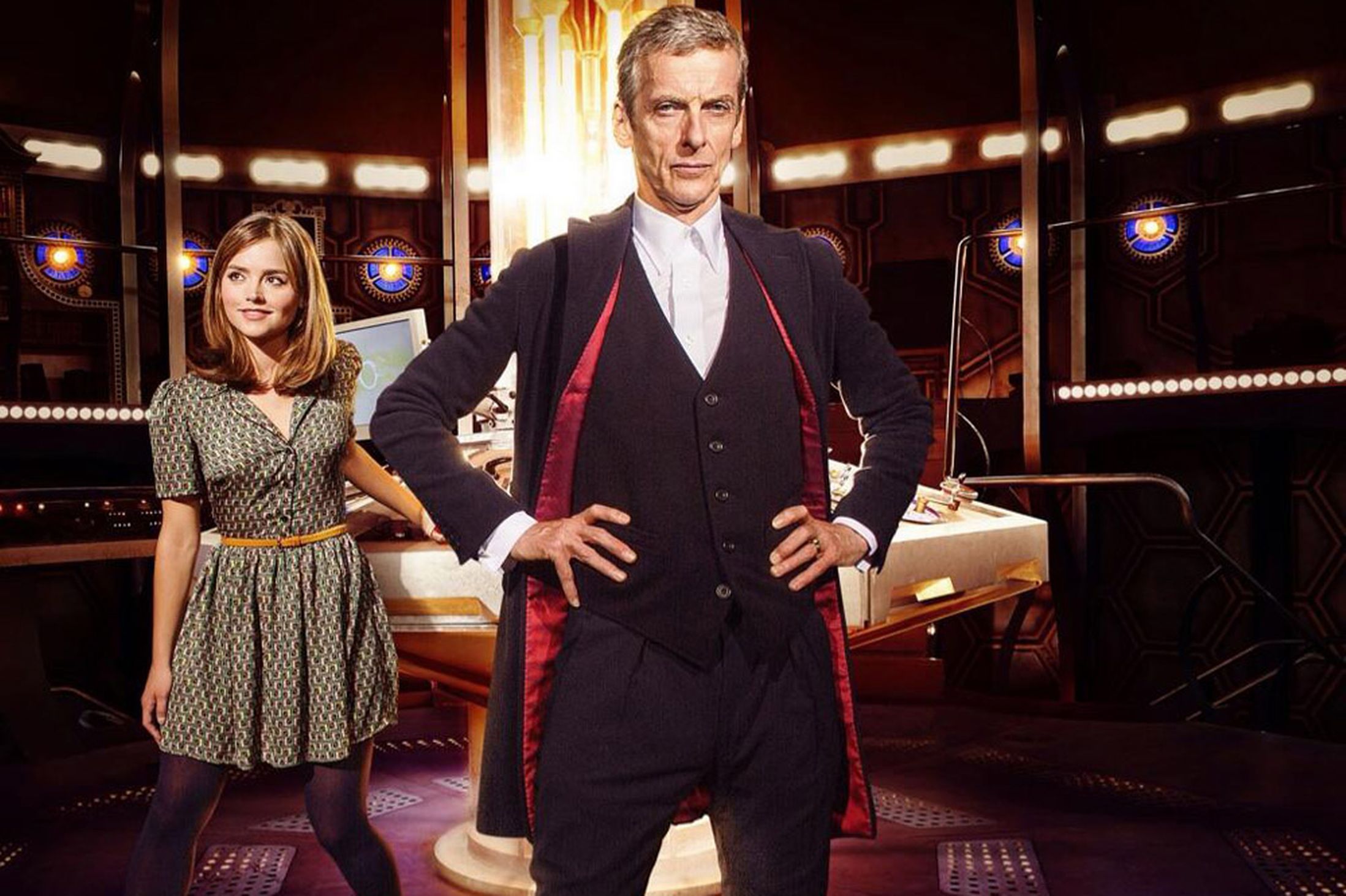
Doctor Who is back, and they’ve got a new doctor. Peter Capaldi, an old, celebrated, and cantankerous Scotsman, is taking over from Matt Smith. On the season premiere night, I sat with equal parts dread and anticipation, hoping that the hole into which the show has been falling since Moffat took over would be filled in somewhat. Good news: it has been. Somewhat.

The major problems of season seven, the glaring, show-ruining problems, included breaking the internally consistent rules of the Whoniverse, not giving a rat’s ass about personal character development (any character from season seven could have died with absolutely no emotional response from me), and a complete lack of dedication to any type of overarching season narrative, which has been a fairly standard piece of television fiction since Buffy the Vampire Slayer. Many of these problems have been fixed (on the evidence of two episodes) with varying degrees of success.

First off, there is a new doctor. Matt Smith was fine and all, but I always had trouble understanding the rabid fan dedication to him. He could not communicate the smoldering menace and goofiness of nine, nor could he fully handle the mercy/anger dichotomy and manic wonder of ten. Each new regeneration is a completely new doctor, so it’s completely excusable that he was not the same, but I feel like what he brought to the role was a lot less than his predecessors. He seemed to be running a poor emulation of the last two doctors with an extra dash of silliness, and his acting chops were not equal to the complexity of the character. It also didn’t help that the guy cast to play a millennia-old alien looked like a twelve-year-old. Peter Capaldi’s showing in the beginning of this season gives me hope.

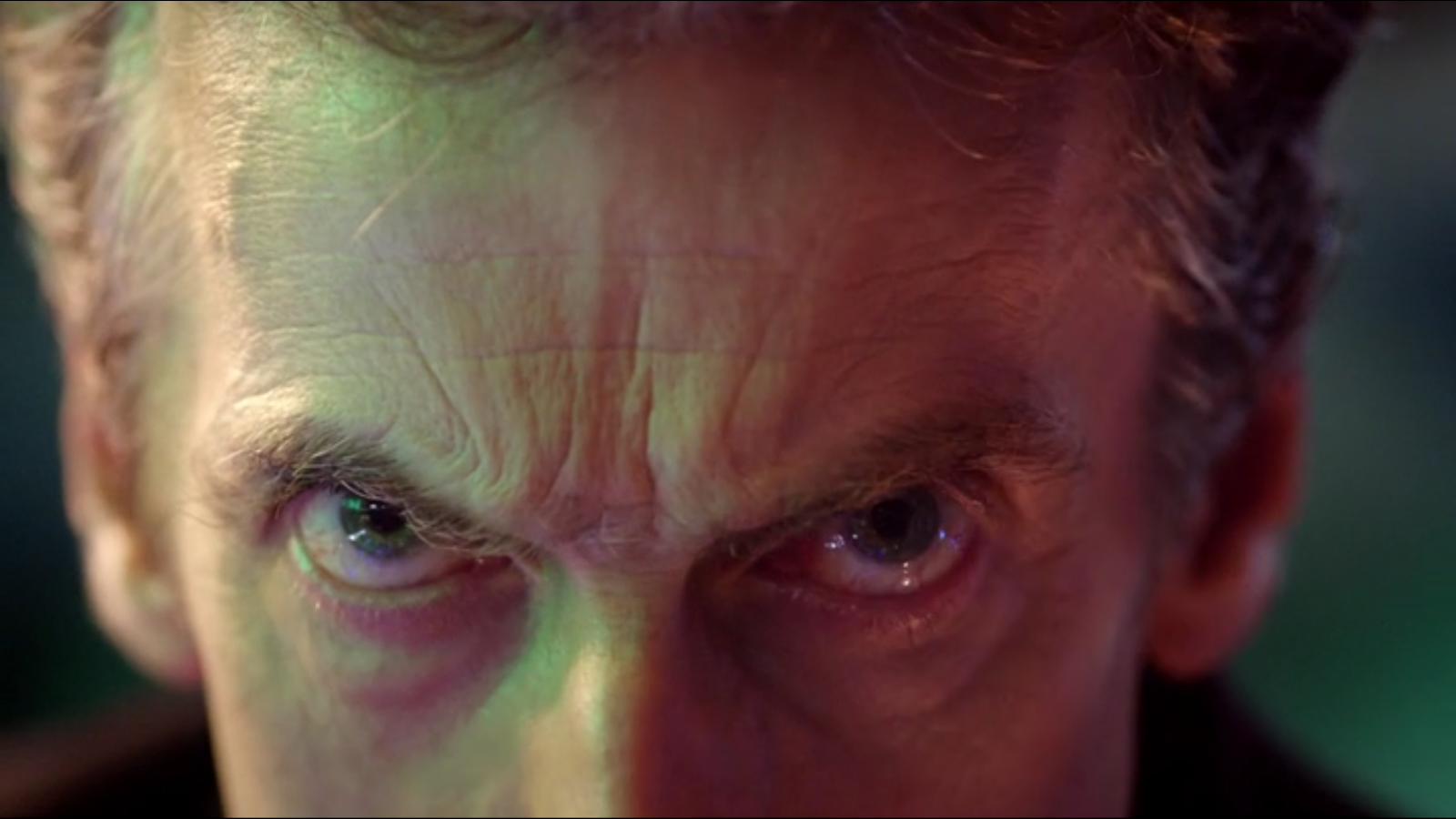
Capaldi is 56 years old. His extensive acting experience and his gray hair help to lend some much-needed gravitas to the role. Doctor Who has always straddled a line between seriousness and silliness, and Smith’s fez-loving incarnation took it too far over the silliness line. Capaldi’s eyes and age help him communicate the anger and weariness of a man who has been trying to save the universe for millennia. Another welcome personality change is that this Doctor is downright mean.

image source: gawker

image source: gawker

These are not the eyes of a man who wears fezzes. Fezzi?

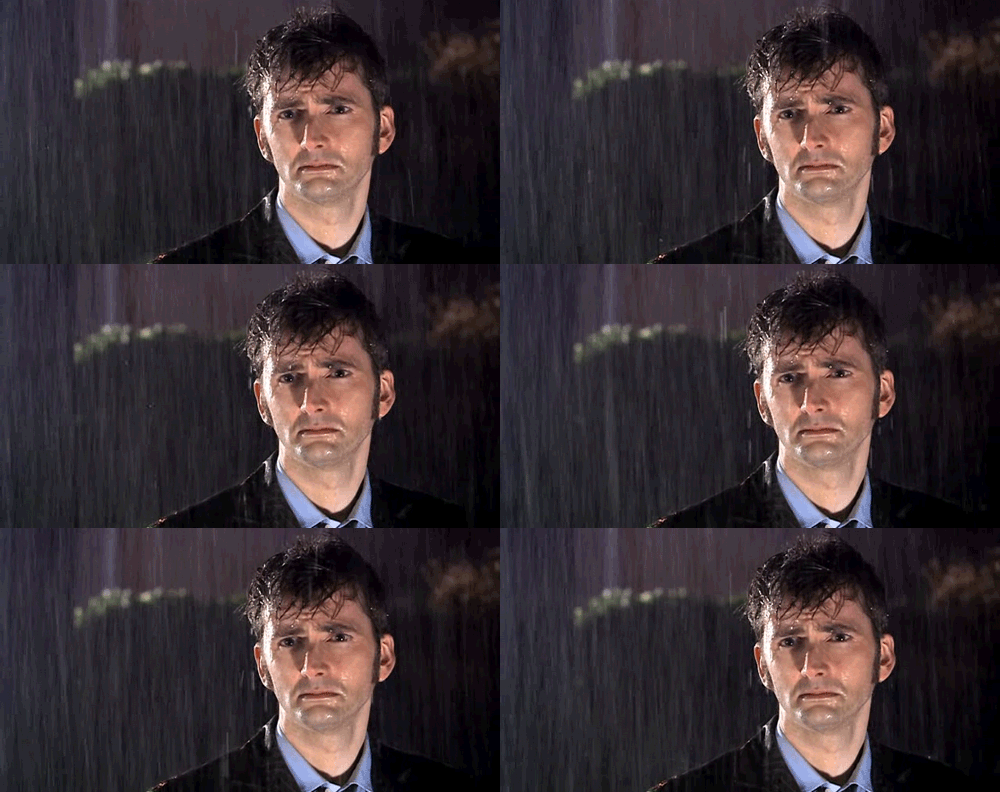
He is old, he is angry, and he wants to do good, but he could not give less of a shit about your feelings. In the beginning of episode two, he rescues a soldier while leaving her brother to die. She expresses anger and loss, and the Doctor’s only response is basically to call her out as an ingrate. In the first episode, when Clara (his companion) and he get in a tight spot, he straight up abandons her. He does the calculation, realizes if he leaves then he has a better chance of saving both of them, and then just goes. At another point in the season, a man is about to die. The Doctor gives him something to swallow, and the audience expects him to be saved, but he is dissolved by the attacker and the Doctor does nothing. Clara yells at the Doctor for this extremely callous act, and he responds by saying the pill was a tracker, and they will now be able to figure out where the remains are stored. This Doctor shows a practical and unfeeling acceptance of death as part of the territory, an attitude that makes sense in his line of work, and one that was conspicuously absent in other incarnations. He also insults Clara repeatedly, but this may be due more to social ineptitude than any intent to cause harm. After David Tennant’s run, in which he would apologize profusely to anyone who was about to die or whom he was about to kill, and Matt Smith’s run, which for some reason I can only picture as him jumping around giving lollipops to everyone he meets, it is an interesting direction to have a Doctor who is still dedicated to doing good, but is significantly less squeamish about the moral dilemma of means versus ends.

nBecdKf

I loved Tennant in the role, but he was a bit of a softy.

The writing team is also doing a better job giving actual depth to the supporting characters. Clara is written as a little egomaniacal and pushy, which is better than being written as the nothing of the previous season. She is still a basically good person, but she has some depth this time around because she has some flaws. In the second episode of this season, a recurring character is introduced and was given a backstory which immediately made me care if he lived or died, something the writers in season seven failed to accomplish over the entire season arc.

The other glaring fault that ruined season seven of Doctor Who was a complete disregard for complex storytelling or internal consistency. It is hard to tell just two episodes in, but that seems to have improved as well. The plot of both episodes so far is pretty simple and silly, but that is absolutely okay — that is part of what Doctor Who is — a handful of stunning episodes supported by a bed of rough-and-tumble, uncomplicated space opera. What was inexcusable in season seven and what is not happening now is that the plot resolution never made sense, was deus ex machina every time, or was just completely unsatisfying and forgettable. As far as complex storytelling, they are doing a much better job setting up the Big Bad and an overarching season enemy. Some of the people who die in each episode end up in a very nice garden setting, greeted by a woman who calls herself Missy and tells them they have made it to heaven. Something in the carriage of the woman or the too-good-to-be-trueness of the afterlife makes it ring false, and this subtle sense of something being wrong makes it ominous.

To really know if the show is coming out of a slump, we’ll have to wait and see how they handle the entire season, but current data hints that our favorite Gallifreyan might be back in the saddle. I fully intend to watch this show for the rest of my life, and I fully expect its quality to roller-coaster up and down over the years, but here’s hoping we’re currently on an upswing.

Andrew Findlay has strong opinions about things (mostly literature) and will share them with you loudly and confidently. You can email him at afindlay.recess@gmail.com.

Major Issues: Wayward #1

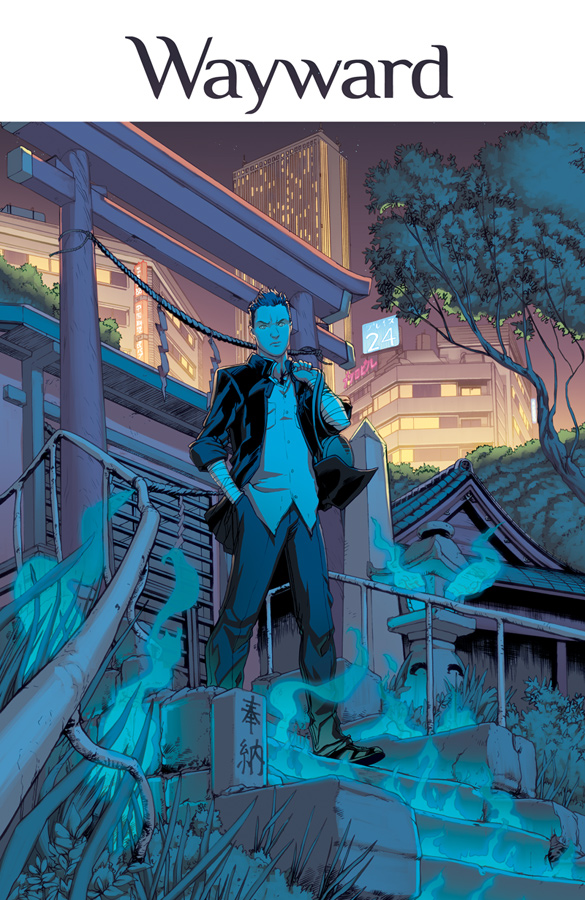
Wayward02A-585x900-web.jpg

In Major Issues, we look at one newly-released comic book each week. Updated Mondays.

Gardner Mounce

Wayward #1
Written by Jim Zub
Art by Steve Cummings
Colors by John Rauch and Jim Zub
Letters by Marshall Dillon
Published by Image Comics 8/27/14

My high school English teacher taught me that it’s bad form to begin an essay with a quote, and that’s why I’m saving it for sentence two. Someone once said that anyone can write a first act. It’s fun and easy to come up with a group of characters and establish a conflict; it’s in act two where things get tricky. Even so, a first act can be told poorly. Wayward’s problem is that it sets up its pieces so quickly that it doesn’t seem to enjoy its own premise.

Issue one falls into the trap of trying too quickly to get to the action. It assumes readers don’t have patience for the setup and are rolling their eyes until someone draws a sword. Protagonist Rori Lane, an Irish-Japanese high school student, lands in Japan to start a new life with her mom. For some reason, her mom doesn’t pick her up from the airport, which conveniently allows Rori to discover her new superpower–the ability to see her literal future path displayed for her in a red line (exactly like Donnie Darko’s ability to see his future path in a blue line). She catches up with her mom over dinner and explores Japan a little. Three men in an alleyway accost her. She’s saved by a ninja girl. They fight them off. The guys end up being turtle monsters, she discovers she can jump buildings for some reason, etc, etc.

This would be too much for one issue anyways, but writer Jim Zub dumps additional exposition on us in gobs of narration. Comics are a combination of words and pictures, but I’d argue that they’re a visual medium first. I hold them to Alfred Hitchcock’s standard that, like film, if they are played “silently” (without narration) the story should still work. It’s the cliche: show don’t tell. Narration should never do the work that the visual element could do. Most of the narration in Wayward could have been relayed to the reader visually, but oftentimes the narration just parrots what the comic is already showing. For instance, in one scene Rori struggles to take an afternoon nap, but is unable to do so due to jet lag. There are three frames. In frame one, Rori is lying down, staring at the ceiling. The narrator says, “I wonder if my brain will stop whirling long enough to take a nap.” The second frame is the same shot, to show that time has passed. The third frame shows Rori sitting up, indicating that, no, her brain won’t stop whirling long enough for her to take a nap. The reader understands this and needs no further indication, but Zub provides two additional layers of narration. First, Rori says, “Nope!” Second, the narrator says, “I guess it’s time to go exploring!”, which is an unnecessary line since the next panel shows Rori exploring. Zub commits this crime of over explaining constantly in issue one. The overall effect is that it reads like a rough draft, like Zub is still in the process of learning what his characters want and hasn’t yet found a way to tell the story in an interesting visual way.

Artist Steve Cummings and colorist John Rauch created this comic for a niche audience: the anime-ers. Skin is translucent. Hair is green or blue. Everyone’s dressed like they’re in attendance at Anime Expo. I’m not an anime or manga fan, so the art doesn’t feel like an homage to a Japanese style so much as it feels derivative of it. However, Cummings’s perspectives are noteworthy. Wide shots distort like wide angle lenses, giving the effect that the comic is filmed. It gives issue one a slick cinematic feel that definitely catches the eye. Now, if only Zub would trust him enough to take that camera eye and show us Japan and Rori Lane’s knotty relationship to her parents rather than tell us about it.

Should You Get It?

No. Unless manga is an obsession for you, and you’ve read all the manga, and you need anything that looks like manga or anime right now.

Gardner Mounce is a writer, speaker, listener, husband, wife, truck driver, detective, liar. When asked to describe himself in three words, Gardner Mounce says: humble, humble, God-sent. You can find him at gardnermounce.tumblr.com or email him at gmounce611@gmail.com