Author: Alex Russell

Life After the Star Wars Expanded Universe: Leos Carax’s Holy Motors

holy motors

Andrew Findlay

In Life After the Star Wars Expanded Universe, we take a look at science fiction and fantasy, why they’re great, and what they say about where our species has been and where it’s going.

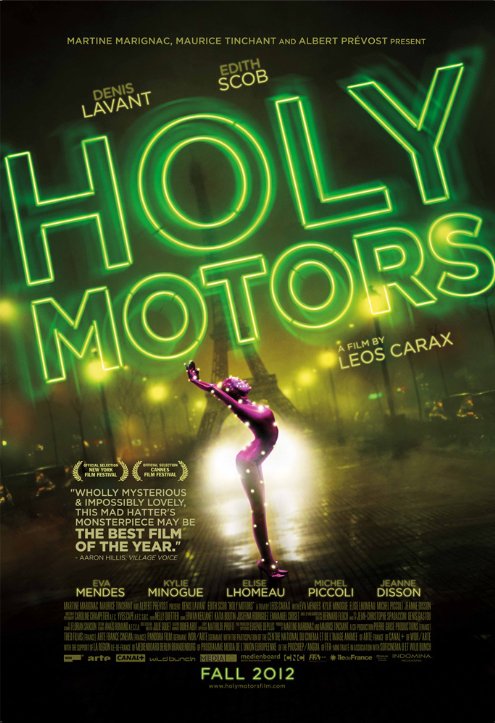
French film occupies a deserved and jealously defended place in the international consciousness. French film is where you go to see beautiful acting, dialogue, and cinematography fuse to communicate An Important Message. I’m not exactly sure what the message of Holy Motors is, but it is certainly filled with beauty. It might be my favorite movie of all time. It’s so bizarre and different from anything else I’ve seen. This is the part where I give you a general idea what it is, but I don’t even. Alright, the movie starts with you, the audience, watching another audience in a movie theater. A man in a room finds a secret door and enters the movie theater. A little girl and a giant dog are walking down the aisles. After that, the movie switches to the main flow of narrative. This movie’s goal is not linearity or understandable occurrences, but as far as there is any organization, here it is: the main character, Monsieur Oscar, has a job that involves getting in the back of a big white limousine and going from appointment to appointment throughout the day. Each of these appointments requires him to become something different. He leaves his family in a big white house in the suburbs of Paris and talks business on his cell phone on his commute into the city, fulfilling his role as a high-powered banker. As he approaches the city, he pulls a mirror to him, pulls a costume and makeup from the other side of the limo, and starts changing. When he leaves the limousine, he is a crumpled old woman, begging on the streets, caning her way up and down and muttering about how everyone she loves is dead, and how she’s gotten so old that she’s begun to fear she will never die. He goes through many different appointments: gangster with a vendetta, insane violent person running through a graveyard, old man on his deathbed, sharing a final, teary embrace with his niece. The film never explains how these appointments connect, who sets them, or what Oscar’s profession is. As an audience member, you need to just sit back, absorb without question, and enjoy the many benefits of the movie (although not plot. If you want to enjoy plot, you are out of luck).

This trailer makes about as much sense as the movie, but it’s not about making sense, philistine!

The film is a beautiful, kaleidoscopic, metafictional paean to the art of cinema. There are little interludes between some of the appointments, during one of which (the only part of the movie that even comes close to explaining what is happening) an old man visits Monsieur Oscar and talks to him about how good a job he’s doing, but he looks a little tired and is he sure he wants to go on? To which he answers, “Je continue comme j’ai commencé, pour la beauté du geste” [I’ll go on as I started: for the sake of beauty (more literally, for the beauty of the gesture)]. The only other tidbit this exchange gives, other than the motivation of the main character, is also the reason this is nominally a science fiction movie. Monsieur Oscar is a little tired and a little nostalgic for the good old days. He talks with the old pro who visits him about how cameras used to weigh more than the actors did, then they were the size of their heads, and now they’re so small you can’t even see them. Does this mean cameras are everywhere, invisible, and this is the future? Does Monsieur Oscar belong to some type of commune, creating art for popular consumption? Is this bizarre semi-scripted reality TV? Impossible to know – it is only possible to theorize. The structure of the film allows it to explore a rich mix of artistic themes without having to pin anything down to plot like a dead butterfly in a collector’s box. Parental disapproval, the intrusion of the bizarre into the everyday, the irretrievability of lost love, resignation in the face of duty, the nature of beauty and art, all swirl together onscreen in a beautiful, unhinged hurricane of creativity.

You’re going to want to buy a bottle of French wine (maybe make it a magnum) and enjoy this as part of a cultural night. Some French might take issue with this, but I’m not sure I’ve ever seen a more French movie. Screw the audience, screw the narrative, let’s see what we can cobble together as a deep exploration of the methods and techniques of cinema and humanity’s impulse to observe. The result is a resounding success. The lack of explanation might infuriate you, but if you can enjoy the movie simply for la beauté du geste, you will not be disappointed.

Andrew Findlay has strong opinions about things (mostly literature) and will share them with you loudly and confidently. You can email him at afindlay.recess@gmail.com.

Tough Questions: What’s the Stupidest Trend So Far in 2014?

question-mark

Every week we ask everyone who hangs out around here to answer a tough question. This week:

What’s the stupidest trend so far for 2014?

Rules are simple: what really bothers you about the year? What are the kids up to? I almost said “new television” as mine because I am 10,000 years old and from space. Let’s all be mad together.

Alex Russell

I love Twitter. I always have; my account is from 2008 and I read everything everyone I follow posts every day. Most people don’t use it like that, so they can ignore when someone tweets a bazillion things about a baseball game they don’t care about or a cause they’re not interested in, but I can’t operate that way. It’s all or nothing. I have to watch the clip show episodes of TV. I have to 100% everything. Because of that, I can’t fucking stand @midnight. Technically the show started in 2013, but it seems even bigger now. Chris Hardwick is from my hometown. Most of the comedians on @midnight are really, really funny. But oh my god, reading 40 tweets in a row that are jokes about #StreetNamesInBreakingBad or #ReplaceAnActorWithAFruit make me want to die. Some people are really good at it, but just like how I did an open mic and learned that I shouldn’t have a mic in my hand, most people are not.

Brent Hopkins

I am not sure what is happening in America but the fashion trend this year that left me a bit stunned is Birkenstock sandals. These were THE shoes of the summer for both men and women in South Korea and it just rendered me confused more than anything. They are comfortable, I will give them that much, but it is weird to see so many people wearing the same exact sandals. Same design. Same colors (black or white). Same obvious lack of wear and tear that means they just bought them for this summer. This year’s Crocs or UGG boots. Blech.

Andrew Findlay

Being pissy about the success of the ice bucket challenge. Sure, yeah, viral phenomena suck, and distaste is a healthy response to bandwagoning, but no matter how stupid it was, no matter how much it annoyingly dominated your Facebook feed, it raised over 100 million dollars for a disease that gets very little funding because it’s relatively rare. A slew of “Ew ALS ice bucket challenge gross ugh millenials armchair activism” thinkpieces popped up midway through the event, articles that were little more than strung-together buzzwords, and I could never understand why there was so much aggression leveled at something that, while annoying, did so much good. I am a stickler for exact language. When people use literally wrong, I silently judge them. However, let’s say I’m eating a sandwich. Let’s say someone approaches me and says, “Hey man, if you say that sandwich is so good you are literally dying, I will make sure this orphan is adopted by a loving family.” I would definitely say it, because it is harmless and it helps orphans. The people hating on the ice bucket challenge are the people who would say, “Screw orphans, I have to stick to my principles.”

Gardner Mounce

The stupidest new word I’ve heard this year is “thot.” It’s an anagram for “That Ho Over There”. It’s also incredibly confusing. I’ve heard students say someone was a thot, and I mistook them for saying they were thoughtful or smart. Instead of calling the student out for his or her rudeness, I was impressed with their kindness. Anyways, it’s stupid, and it needs to die.

Jonathan May

I think perhaps the stupidest trend for 2014 so far is the benchmark Supreme Court decision Burwell vs. Hobby Lobby Stores, Inc.. Not only was this decision incredibly contentious, it also paved the way for further reach of corporate “personhood” by setting unusual and disturbing precedent. My favorite part is the opening of Justice Ginsberg’s dissent: “In a decision of startling breadth, the Court holds that commercial enterprises, including corporations, along with partnerships and sole proprietorships, can opt out of any law (saving only tax laws) they judge incompatible with their sincerely held religious beliefs.” Although corporations as people is anti-democratic in every sense of the word, I think it’s by far the hottest and stupidest trend of the year!

Worst Best Picture: Is West Side Story Better or Worse Than Crash?

west side story

Alex Russell

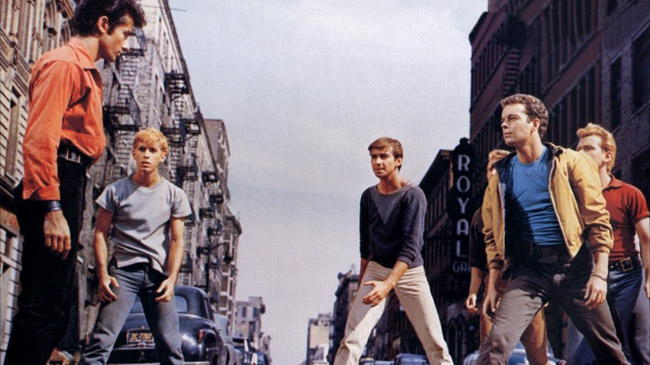
In “Worst Best Picture” we search every single Best Picture Oscar winner of all time from 1927 to present to uncover the worst of them all. Conventional wisdom says that 2005’s winner Crash is the worst winner in history. We won’t stop until we’ve tested every last one. Read the the first, our review of Crash, here. Posts will be relatively spoiler free, but there may be some details revealed. Today’s installment is the 1961 winner West Side Story. Is it better than Crash?

Before watching it recently, almost all of my specific West Side Story knowledge came from this Curb Your Enthusiasm clip:

I’ve talked before about my relationship with musicals, and I don’t know how much there is to really say on the subject in general. There’s a handful still to go, but the quintessential American musical just might be this one. It has three songs in the American Film Institute’s top 100 songs in film list: “Somewhere,” “America,” and “Tonight.” The “Sharks vs. Jets” pairing has been mocked in every form of media that exists. West Side Story is ubiquitous, I just didn’t really know how much I knew. I’d heard versions of “America” and “I Feel Pretty” before, but I think I was only loosely aware of their source.

All of that makes for an interesting first viewing in 2014, on par with movies that you somewhat know but don’t really like Driving Miss Daisy and Rain Man. You have a basic understanding of what’s up in West Side Story even if you haven’t seen a moment of it: forbidden love, dance fighting, and race in New York City. You’d end up writing a pretty terrible book report without more details than that, but you really do have most of what you need there. I guess the Driving Miss Daisy version of that is “a black guy drives an old white lady around and they learn they’re not so different after all,” but that would leave out the all-time-terrible performance from Dan Aykroyd, which would be a mistake.

So what’s under the surface of the dance fighting in West Side Story? Well, while “America” may be a pretty straightforward critique of race in the United States, it is a solid update of the Romeo and Juliet class dynamic. There’s some interesting smarm in “Gee, Officer Krupke” about the nature of being latchkey kids and what contributes to “troubled youth.” While it’s primarily an update of Shakespeare, it’s also something a little bit more. I can’t really judge the singing and dancing — reviews of musicals often have strong takes on the matter, and I just don’t have an eye for it — but the storyline is compelling and the pacing carries the nearly three-hour epic better than expected. It won’t be something I revisit very often, but I found myself caught up in an update of a story that I already know. That’s an accomplishment, so my bold take on West Side Story is that it’s “an accomplishment.” Really going out on a limb here.

The Best Part: Probably “America,” but I was really interested in the reaction to the climactic fight. I don’t think it’s possible to “spoil” an update of Romeo and Juliet, but someone dies. It’s not supposed to get that bad, and the reaction of a bunch of kids — that they act like a bunch of kids for the first time — is eye-opening. It adds a touch of realism to a movie that’s mostly people jumping off stoops and throwing their arms wide to show how tough they are. These kids don’t want to be “tough” but they see no other option, and when it all goes bad they can’t handle it.

The Worst Part: Is it bad that it’s the love story itself for me? I don’t care about Tony and Maria. I get that it’s the construct around which the rest of the world turns, but I was never that interested in it. Even the absurd love story of Gigi drew me in more than Tony/Maria, but that’s probably a failing on my part.

Is It Better or Worse than Crash? Finally, a movie that is directly about race to compare with the worst of the worst. The difference between the two is that in West Side Story race is a complicating factor for an existing plot and in Crash the plot stands in the way of a discussion of race. Race feels a little inserted into West Side Story, so even when the complication of “white vs. Puerto Rican” does come up, it comes up alongside “Sharks vs. Jets.” The battle lines are drawn along racial lines, but sometimes it feels more like they’re talking about the gangs than about the difficulty of race in America. That complication leads to some conversations where everyone appears to be talking about one thing, but really it’s a discussion of race. Race informs the entire movie, which allows for a deeper viewing of what is otherwise a fairly straightforward musical. Crash never lets anything go unsaid. If two people of a different race have a conversation, they both bring it up, angrily, to the other one. The tension of race is something everyone understands without it being shouted at them, but Crash is not at all interested in subtleties.

Worst Best Picture Archives: Crash | Terms of Endearment | Forrest Gump | All About Eve | The Apartment | No Country for Old Men | Gentleman’s Agreement | 12 Years a SlaveThe Last Emperor | The Silence of the Lambs | The Artist | A Man for All Seasons | Platoon | The Lord of the Rings: The Return of the King | The King’s Speech | Rain Man | The Departed | The Bridge on the River Kwai | Marty | Gigi | It Happened One Night | Driving Miss Daisy | Shakespeare in Love | Wings | Midnight Cowboy | Rocky | Gone with the Wind| Chicago | Gladiator | Cavalcade | The Greatest Show on Earth | You Can’t Take It With You | The Best Years of Our Lives | The GodfatherCasablancaGrand Hotel | Kramer vs. Kramer | The French Connection | In the Heat of the Night | An American in Paris | Patton | Mrs. Miniver | Amadeus | Crash, Revisited | How Green Was My Valley | American Beauty | West Side Story

Alex Russell lives in Chicago and is set in his ways. Disagree with him about anything at readingatrecess@gmail.com or on Twitter at @alexbad.

Worst Best Picture: Is American Beauty Better or Worse Than Crash?

american beauty

Alex Russell

In “Worst Best Picture” we search every single Best Picture Oscar winner of all time from 1927 to present to uncover the worst of them all. Conventional wisdom says that 2005’s winner Crash is the worst winner in history. We won’t stop until we’ve tested every last one. Read the the first, our review of Crash, here. Posts will be relatively spoiler free, but there may be some details revealed. Today’s installment is the 1999 winner American Beauty. Is it better than Crash?

When I first saw American Beauty I thought it was the greatest movie I’d ever seen. I was probably about 16. Those two things are connected.

From the ridiculous plastic-bag-in-the-wind scene to the rose petals that go so far past symbolism into being something else entirely, American Beauty is relentless with its style. If it connects with you, it probably does so very intensely. It’s a bit of a strange watch now, and I can’t say I’m not embarrassed by how much I liked it as a teenager. It’s the kind of movie that demands you ignore the edges to focus on the center. If you can do that, there’s a lot to love.

That was easier as a teenager. I looked past the super obvious mid-life crisis Kevin Spacey goes through and the first-year-creative-writing-student details of buying an expensive car, quitting your job in dramatic fashion, and smoking pot all the time. Typing it out feels ridiculous. Kevin Spacey is an incredible actor and he pulls off the sad-sack character well, but how is that not deeper? How did they get away with making such a surface-level movie that everyone called complex?

My best guess is because they tried to cover everything: sad loner with a secret warm heart, angry teenage daughter who just wants to connect, confident girl who secretly isn’t, sad housewife who seeks agency, etc, etc, etc. There’s a lot going on among the sad cast of American Beauty, and even for all the obviousness of the main traits of everyone involved, the gchat-status tagline of “look closer” actually works. I don’t buy the teenagers’ interactions with each other anymore, but the response of “don’t give up on me, dad” as a way to cut through Chris Cooper’s brutal discipline of his son really, really works. It’s not that he’s responding honestly, it’s that he’s figured out what his father wants to hear. Who ain’t been there?

American Beauty hasn’t aged well and it probably still has a ways to go before a historical consensus happens. It’s big on “art” in a way that can feel cheap at times — the roses coming out of Mena Suvari’s cheerleader uniform especially may as well have a “GET IT?” flashing over the screen — but I don’t hate it. I can’t really see why this was my favorite movie for so long, but that’s how a lot of these go. Hell, I think I kinda liked The Boondock Saints for a little bit, and oh my Godno.

The Best Part: In a last-ditch effort to save whatever remains of their love life, Kevin Spacey and Annette Bening very nearly have sex on a couch. She interrupts him with a shocked “don’t spill beer on the couch” and he responds with a tirade about how the couch doesn’t matter, everything else matters. It’s the entire ethos of American Beauty, and though there are many more hamfisted ways the message is expressed over the rest of the film, I really love this interaction. Honorable mention to Allison Janney, whose character is more haunting than I even remembered. It’s a terrifying display of more-from-less how she’s able to sell the misery of how life doesn’t always end up how you want.

The Worst Part: It’s gotta be the bag, right? The iconic scene in American Beauty is one character showing another video he shot of a bag floating in the wind. I don’t hate it as much as other people do — people really hate it — but I understand the feeling that “sometimes there’s so much beauty in the world that I can’t take it” isn’t the home run line that it seemed like to a teenager.

Is It Better or Worse than Crash? Someone terrible might draw a connection here between two movies that wanted to sell a simple idea and were caught up in the idea that you might miss the point if they ever let off the gas. I get that, because the most reasonable criticism for both of them is that they’re just too blunt. American Beauty has some interesting takes on the everything-isn’t-as-sunny-as-it-looks idea, but Kevin Spacey smoking pot and ranting around about how suburbia has a dark underbelly is… yeah. The ties between these two aren’t great, but American Beauty has some smart elements. It’s likable for all of its frowning and grousing, and Crash is decidedly not.

Worst Best Picture Archives: Crash | Terms of Endearment | Forrest Gump | All About Eve | The Apartment | No Country for Old Men | Gentleman’s Agreement |12 Years a SlaveThe Last Emperor | The Silence of the Lambs | The Artist | A Man for All Seasons | Platoon | The Lord of the Rings: The Return of the King | The King’s Speech | Rain Man | The Departed | The Bridge on the River Kwai | Marty | Gigi | It Happened One Night | Driving Miss Daisy | Shakespeare in Love | Wings | Midnight Cowboy | Rocky | Gone with the Wind| Chicago | Gladiator | Cavalcade | The Greatest Show on Earth | You Can’t Take It With You | The Best Years of Our Lives | The GodfatherCasablancaGrand Hotel | Kramer vs. Kramer | The French Connection | In the Heat of the Night | An American in Paris | Patton | Mrs. Miniver | Amadeus | Crash, Revisited | How Green Was My Valley | American Beauty

Alex Russell lives in Chicago and is set in his ways. Disagree with him about anything at readingatrecess@gmail.com or on Twitter at @alexbad.
Life After the Star Wars Expanded Universe: Batman: The Animated Series

batman

Andrew Findlay

In Life After the Star Wars Expanded Universe, we take a look at science fiction and fantasy, why they’re great, and what they say about where our species has been and where it’s going.

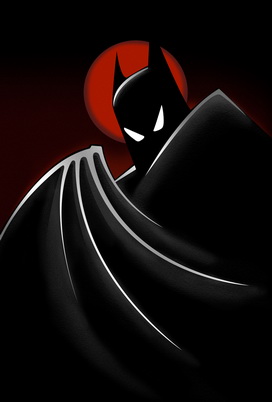
One of the perennial Batman questions is, “Who played him best?” Do you like Adam West’s camp and goofiness? Maybe Michael Keaton’s slightly nerdy turn did it for you. Perhaps, for some reason, you liked George Clooney and his suit nipples. A lot of people prefer Christian Bale’s elegant Wayne and imposing Batman, but no one has done it better than Kevin Conroy. Pretty much any time you’ve seen a Batman cartoon, Conroy’s been the one doing Bruce Wayne. His stellar voice acting is one of the reasons that Batman: The Animated Series is the best screen interpretation of the Bat. It is an amazing show: beautiful, well-acted, philosophically deep, and highly artistic.

The list of things TAS has done for Batman is long, but foremost among them is steer the public consciousness of Batman away from Adam West’s sunny, hippy, bat-tastic version into the grim persona most are familiar with today. Frank Miller returned grim to the Caped Crusader, but TAS cemented it. Mostly through its action, we went from the hokey, paunchy sixties Batman to the Bale batman who tortures people to get answers and deals with major antagonists by leaving them to die. He didn’t kill people and he didn’t curse (kids show), but he did deal with identity crises, betrayal, and loss, and the art and direction of the show has almost every frame oppressively shadowy.

This is the best intro of all time. It also gives you an idea of the show’s aesthetics.

The art direction of this show is one of the main draws. A lot of cartoons are unimaginative, and the art is just something to throw on the screen to support the sound. Each frame of TAS is original, distinctive, and iconic. Imposing buildings stretch into skylines splashed in ocher and black, the lines are angular and threatening, art deco caught in a Lovecraftian nightmare. The voice acting is another impressive bit of this show. One of the main criticisms of Christian Bale’s interpretation is that his actual Batman voice sounds like a mix between an old bear caught in a trap and the raptor cry from Jurassic Park. It is over the top and ridiculous. Conroy’s Batman voice is deep and threatening, but still within the realm of what humans should sound like. His Bruce Wayne voice is noticeably higher and more friendly. The beautiful thing about Conroy’s Dark Knight is that the Batman voice is the one he uses all the time, with all those close to him, mask on or off. The Wayne voice only comes out if he has to talk to shareholders or reporters, which underlines one of the main keys to Batman’s identity: Bruce Wayne is the mask.

Bruce Wayne’s voice. Chummy and nonthreatening.

Batman’s voice. Small, subtle shift that makes it about 10 times more menacing. Also, as a sidenote for the this-show-is-super-deep-for-kids argument, Batman is dosed with fear toxin, and his biggest phobia is not spiders or heights, but his dead father’s disapproval.

What Faulkner said of whiskey applies to this show. There’s no such thing as a bad episode of Batman: The Animated Series, some episodes just happen to be better than others. There are three key episodes you should watch. “Almost Got ‘Im,” in which many of Batman’s adversaries sit around playing cards and talking about how close they came to finally beating the Caped Crusader. The structure allows for a handful of Batman-kicking-ass vignettes, and the poker game narrative itself is a vital part of the episode. This is a masterful use of frame narrative. You know what else uses frame narrative? The Odyssey, Heart of Darkness, and The Canterbury Tales. I wasn’t kidding around when I called it artistic: it shares some techniques with a Greek epic and a foundational text of English literature. Another good one is “I Am the Night,” which starts with a grimmer-than-usual Batman reading an article about yet another criminal’s release from jail. It sends him on a spiral of self-pity and self-doubt, and the focus of the episode is the Bat regaining his confidence and his sense of purpose. This is surprisingly heavy stuff for a children’s cartoon. In this episode, he quotes Santayana, for chrissakes. The last one that I’m listing here, just because it really stuck with me from the time I watched it when I was 12, is “His Silicon Soul.” An impostor Batman is found running around on the rooftops, and of course, an angered Batman explores. The answer to the mystery involves AI, 1950s robotics, and a wonderfully pulpy, flashy plot.

I rewatch these all the time, and they never get old. Watching these is not just about Batman’s gruffness and karate taking you through a rollicking good time. It certainly has that, but it is also visually stimulating and filled with philosophical dissections of who Batman is and what the point of his mission is. The art direction, acting, and intellectual content is much more highbrow than a lot of what is on offer to adults today. It is, always and forever, one of the best things ever to be on television, and now the whole thing is free to stream if you have an Amazon Prime account. Worst case scenario, you will enjoy your nostalgic interaction with a classic 90s afternoon cartoon, but it’s very likely you will be blown away by just how sophisticated it is.

Andrew Findlay has strong opinions about things (mostly literature) and will share them with you loudly and confidently. You can email him at afindlay.recess@gmail.com.

Book Review: “Hyperbole and a Half” by Allie Brosh

Brent Hopkins

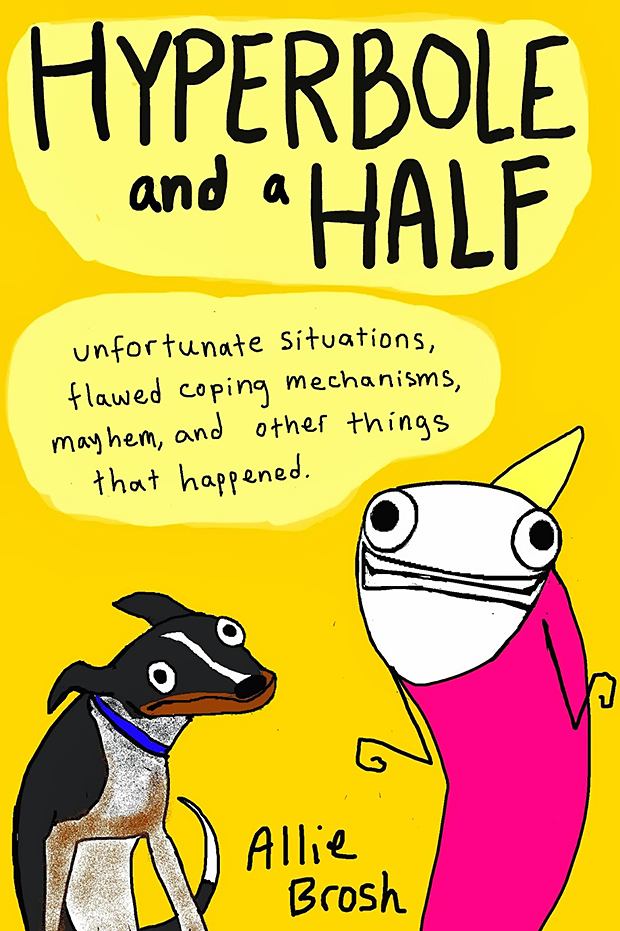
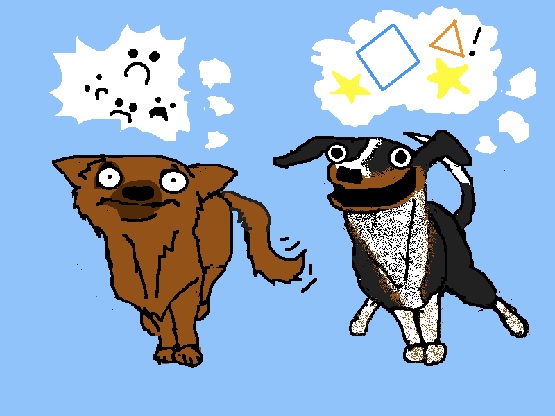
This book was released last year and I always had interest in reading it but failed to find it in a Korean bookstore until this week. Hyperbole and a Half was an extremely popular blog by Allie Brosh that followed the little nuances of her life. The drawing point of the blog was that it was weird in an almost fictional way. People of course exist like this, but you rarely see it illustrated in Microsoft Paint glory.

clean all the things

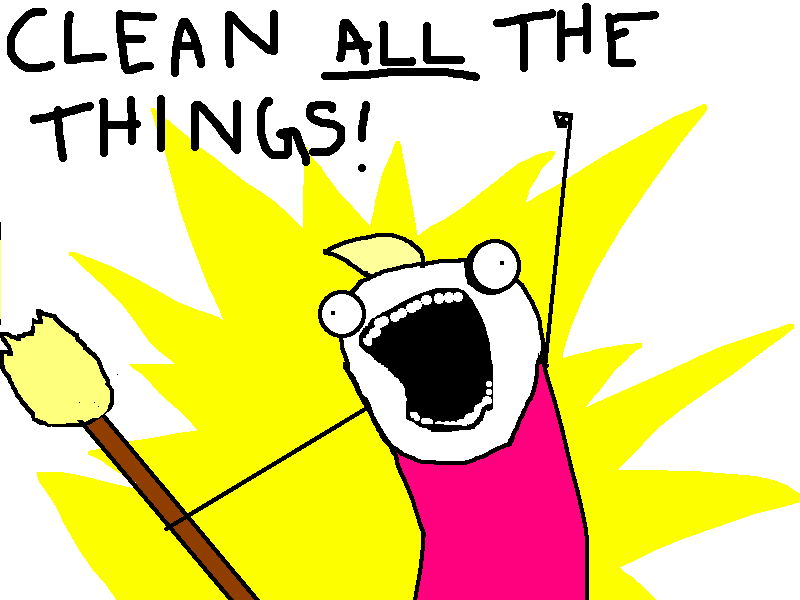
You may have seen this at some point during your Internetting.

This clearly isn’t a review of the blog, so let’s jump into the book. The first thing I noticed about it is the quality. This book feels absolutely amazing in the reader’s hands. The pages are thick and glossy and the color quality is perfect for giving an almost handheld blog feel to it. This might be the best feeling web-to-print book I have ever handled and honestly, maybe one of the best feeling books I have ever owned. I tend to give away and discard books due to living abroad but this is one that will make its way to a bookshelf I will someday own.

The meat of the book is the same as the blog. Allie Brosh illustrates different aspects of her life while filling the other space with narration. I hadn’t read the blog in a year, so it all felt relatively fresh to me even though I knew there were stories from the blog repeated in the book. If you like the blog then I think you will appreciate this book, but there is a bit more to it than meets the eye.

Brosh’s magnum opus (the blog has been silent since the book’s release) is not what I would call humorous. There are moments where I would smile or chuckle, a bit but the focus was very decidedly on the narration. This felt more like a memoir than anything else, following her from the eccentricities of her childhood to the same eccentricities in her adulthood. One thing that is well documented is Brosh’s struggle to deal with her depression. This book details how she gets there and the struggle to come back. It is surprisingly poignant and the conclusion is by no means sugarcoated to make the reader feel better.

People tend to keep up a facade of how they want to be perceived. Brosh completely deconstructs herself in this book and it is somewhat jarring to take in. There is simply a “This is who I know I am” and then the book ends. I can’t help but recommend it. It is a quick read and it clearly has a purpose.

Plus, the illustrations are pretty dope to look at.

Brent Hopkins considers himself jack-o-all-trades and a great listener. Chat with him about his articles or anything in general at brentahopkins@gmail.com.

Worst Best Picture: Is How Green Was My Valley Better or Worse Than Crash?

how green was my valley

Alex Russell

In “Worst Best Picture” we search every single Best Picture Oscar winner of all time from 1927 to present to uncover the worst of them all. Conventional wisdom says that 2005’s winner Crash is the worst winner in history. We won’t stop until we’ve tested every last one. Read the the first, our review of Crash, here. Posts will be relatively spoiler free, but there may be some details revealed. Today’s installment is the 1941 winner How Green Was My Valley. Is it better than Crash?

They aren’t all fun. Hell, most of them aren’t any fun, but How Green Was My Valley is the distinct opposite of “fun.”

You’re forgiven for not knowing anything about it. For years it was just my default guess at bar trivia whenever I had no idea about a movie from the 40s. It is the ur-movie-from-the-40s, really. It’s a sad, voiceover-filled retrospective about a time gone by. There’s really no better way to sum up this subset of Oscar history, so at least that can be said for this one. It’s about mine disasters and the death of the mining economy in Wales in the 19th century. Feelgood story it ain’t.

Through the perspective of young Huw Morgan, we follow the travails of the Morgan family as they are injured, degraded, humiliated, shamed, and abused by the impossible economy of brute force underground in a mine. The light moments are all about how the family came together even in the face of misery and a lack of hope. If I sound like I’m describing something Hard to Watch then I am doing a good job.

How Green Was My Valley exists these days mostly as a good sign of what things were like in film decades and decades ago. The tone is bleak throughout. The narrator gets beat up at school and the solution offered by his family is to reward him for getting hurt fighting. If you need to know how bleak this all is, the “good” solution to “our kid is getting beat up at school” is to send some family members down there to kick his teacher’s ass, which they do in front of the class. The problem is thus solved, we out.

How Green Was My Valley isn’t bad, but it’s a relic. It doesn’t really make sense anymore. It fills you with sadness for a people you can’t help. For an economy that has already bottomed out. In America we bemoan the death of our industrial cities, but How Green Was My Valley will put it in perspective: it has been thus for a long damn time.

The Best Part: Watching the dudes beat up a teacher in a classroom — even though I was very nearly a teacher — is hilarious. We deserve it. But for real, it’s an insane scene. It really deserves to be seen.

The Worst Part: There’s some good stuff in here, but it’s overshadowed by the relentless darkness of it all. At one point the patriarch of the family is challenged for wanting to stand by his ethics of “hard work” in opposition to a strike. There’s a chance to make a statement, but most of the movie is spent on darker, less complicated material.

Is It Better or Worse than Crash? Better, but slower. How Green Was My Valley and Crash are definitely at opposite ends of every spectrum. Crash may be more interesting to a modern viewer — it’s in color — but it’s a dumber message that doesn’t deserve to be listened to. You’re better off slogging through the sad history of Welsh mining, and I realize how insane that sounds. Take that as a slight to Crash and put it on the box: less interesting than the history of mining.

Worst Best Picture Archives: Crash | Terms of Endearment | Forrest Gump | All About Eve | The Apartment | No Country for Old Men | Gentleman’s Agreement | 12 Years a SlaveThe Last Emperor | The Silence of the Lambs | The Artist | A Man for All Seasons | Platoon | The Lord of the Rings: The Return of the King | The King’s Speech | Rain Man | The Departed | The Bridge on the River Kwai | Marty | Gigi | It Happened One Night | Driving Miss Daisy | Shakespeare in Love | Wings | Midnight Cowboy | Rocky | Gone with the Wind | Chicago | Gladiator | Cavalcade | The Greatest Show on Earth | You Can’t Take It With You | The Best Years of Our Lives | The GodfatherCasablancaGrand Hotel | Kramer vs. Kramer | The French Connection | In the Heat of the Night | An American in Paris | Patton | Mrs. Miniver | Amadeus | Crash, Revisited | How Green Was My Valley

Alex Russell lives in Chicago and is set in his ways. Disagree with him about anything at readingatrecess@gmail.com or on Twitter at @alexbad.

Worst Best Picture: Halfway Through the List, Let’s Revisit Crash. Is it Really that Bad?

crash

Alex Russell

In “Worst Best Picture” we search every single Best Picture Oscar winner of all time from 1927 to present to uncover the worst of them all. Conventional wisdom says that 2005’s winner Crash is the worst winner in history. We won’t stop until we’ve tested every last one. Read the the first, our review of Crash, here. Posts will be relatively spoiler free, but there may be some details revealed. Today’s installment is… Crash. Again. Damnit.

I just wanted to find an excuse to watch all the Best Picture winners. That’s all this was supposed to be, and now it is breaking me. Crash is winning. How did we get here?

There are 86 movies that have won Best Picture, though technically some of them won before it was called that exactly. The point is that there are 86 movies that The People That Make Such Decisions have said are the best of the best. There are other ways to watch 86 of the supposed greatest movies of all time, but there are no other ways to think about Crash, the 2005 winner, every single week for a year.

It’s an inane project to compare the other 85 to Crash — clearly — but it serves a purpose to me. It forces my hand. It’s much easier to give up on something when you don’t have to represent yourself publicly. For that reason, these are sometimes just for me. No one really cares what I thought about Mrs. Miniver or You Can’t Take It With You, I don’t have any delusions about that. What I do have is a need to see all 86 of these damn movies in 2014, and the way to do that is to have a space to come talk about each one. Hopefully I’m doing so in a way that’s interesting, albeit it Crash-filled. You be the judge of that.

The point is this is the halfway point. At the bottom of the page you’ll see 43 links to 43 articles about 43 movies. Some of them, like It Happened One NightMidnight Cowboy, and Kramer vs. Kramer, will stick with me for the rest of my life. Some of them, like Amadeus, Shakespeare in Love, and The Last Emperor, are already beginning to fade in my mind. As with any list of things, it is not a perfect summary of greatness in film history.

But is that the rub with the entire project? Has anyone ever said “these are the best?” I’d argue that they have, even though some of them have rightfully faded from memory. You have to get real deep in film history for anyone to care about Cavalcade or Grand Hotel, both rightfully so, but on the flip side some modern films on the list, like The Silence of the Lambs and No Country for Old Men, are instant classics. The list must be considered to at least be a summary of what people found great at the time, and thus can be used as a functional canon for what has constituted a “great film” over history.

So why in the hell is Crash on there?

None of the first 42 other movies came close to Crash. I hated The Artist, I was bored by Shakespeare in Love and A Man for All Seasons, and I can’t wrap my mind around the inherent strangeness of You Can’t Take It With You, but none of those came even close. They all have merits, and after watching Crash again last night, I still contend that Crash has none.

The weirdest part is that this is a divisive opinion; not everyone hates Crash. It’s certainly the movie that comes up the most in lists of the worst, but it’s by no means considered a “bad movie” on its own. The hate seems to have come from people putting it on a list with Casablanca and The Godfather.

I originally felt that way. I thought Crash was a little dumb, but not offensively so. It’s only after spending so much of my free time considering what Crash is and what it hopes to be that I feel a real hate for it, like an embittered ex-spouse. We are having a prolonged, public divorce and I never loved you, anyway, movie about racism.

After 43 straight posts about it, I got worried that I was losing touch with the source material. Rewatching it unearthed some new feelings, which I will now share with the class:

  • The very first scene of Crash opens with a car crash, where a white woman asks an Asian woman if she noticed her “blake lights” instead of brake lights. It sets the tone early, in the way that a fire will eventually be a pile of soot. It is completely unnecessary.
  • It’s moments like “blake lights” that make you wonder just how worried the writers of Crash were that people would miss their DEEP AND COMPLICATED MESSAGE about racism. There are films on this list that talk about race better than Crash. Some of them are six decades older than it. That is inexcusable.
  • “Hey Osama, plan a jihad on your own time” is said in scene two of Crash. I’m not going to go scene-by-scene, but you have to understand that these things happen essentially while there are still credits rolling on the screen. It feels like a tonal suckerpunch. You haven’t even had time to understand this world yet, but you already know that everyone is terrible all the time.
  • Ludacris enters the movie with a monologue about not getting offered coffee while eating spaghetti. This may be the best part of the movie, because no one ever addresses that these things are incongruous. When I was 15 I had to find a fancy dish to add some specificity to a short story I was writing and I went with something insane — turkey parm, I think — the point is that any decent editor would fix that, but they left in this insane coffee/spaghetti pairing. No one has ever had coffee with spaghetti.
  • The general direction for the acting in Crash seems to have been “no, even angrier.” Everyone is mad at everyone for every reason. This is supposed to feel “gritty” and “tense” but it feels “forced” and “ridiculous.” People treat the attempted murder of their children with less malice than a door not closing right.
  • Tony Danza. Don’t watch Crash, but if you do, watch it just for the scene where Tony Danza confronts Terrence Howard about someone not sounding “black enough.” Within the narrative of the movie it’s supposed to feel racially uncomfortable, but Tony Danza is a little too silly for how shameful this is supposed to be. It also happens after a much more intense white vs. black racial interaction with Terrence Howard, but this breaks him. Maybe being berated by Tony Danza is the most shameful thing possible. I take this back.
  • Don Cheadle does a good job with a complicated role. They make him say some really stupid things because Crash was written without an editor (“can’t talk mom, I’m having sex with a white lady” is hall-of-fame-bad) but he’s a tragic figure that I actually really connected with this time around. Great job doing more with less than less.
  • Brendan Frasier is married to Sandra Bullock and their storyline is terrible. Sandra Bullock may play the least compelling character in film history in this movie. Every single line she says is supposed to establish that she’s a terrible racist, but everyone is a terrible racist, so she just seems to be some kind of sociopath.

We have 43 movies to go. There are some classics on the remaining list, like The Deer HunterWest Side Story, and The Godfather II. There are also some famous duds, like Around the World in 80 DaysCimarron, and Dances With Wolves. All 43 will be compared to Crash. All must be judged. We came here to find something worse than Crash. So far, the task has been unfinished. I’m going back into the breach.

The Best Part: Don Cheadle.

The Worst Part: Sandra Bullock. Or Brendan Frasier. Or Tony Danza. Or Matt Dillon. Or the writing. Or the editing. You pick.

Is It Better or Worse than Crash? It is Crash. It is terrible.

Worst Best Picture Archives: Crash | Terms of Endearment | Forrest Gump | All About Eve | The Apartment | No Country for Old Men | Gentleman’s Agreement | 12 Years a SlaveThe Last Emperor | The Silence of the Lambs | The Artist | A Man for All Seasons | Platoon | The Lord of the Rings: The Return of the King | The King’s Speech | Rain Man | The Departed | The Bridge on the River Kwai | Marty | Gigi | It Happened One Night | Driving Miss Daisy | Shakespeare in Love | Wings | Midnight Cowboy | Rocky | Gone with the Wind | Chicago | Gladiator | Cavalcade | The Greatest Show on Earth | You Can’t Take It With You | The Best Years of Our Lives | The GodfatherCasablancaGrand Hotel | Kramer vs. Kramer | The French Connection | In the Heat of the Night | An American in Paris | Patton | Mrs. Miniver | Amadeus | Crash Revisited |

Alex Russell lives in Chicago and is set in his ways. Disagree with him about anything at readingatrecess@gmail.com or on Twitter at @alexbad.
Major Issues: Butterfly #1

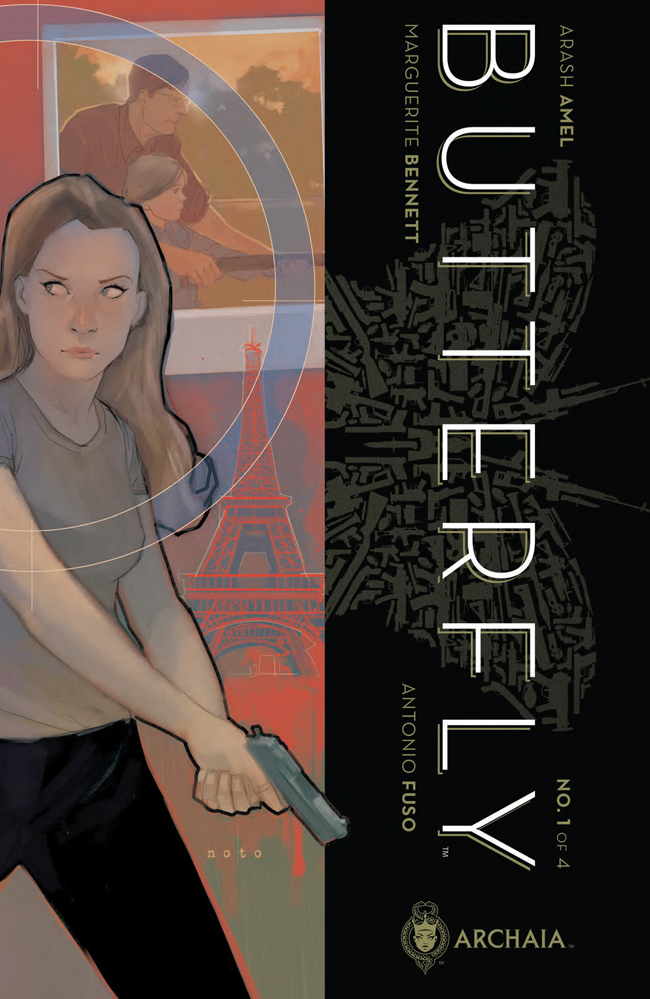
buttercover.jpg

In Major Issues, we look at one newly-released comic book each week. Updated Mondays.

Gardner Mounce

Butterfly #1
Story by Arash Amel
Written by Marguerite Bennett
Art by Antonio Fuso
Published by Archaia 9/24/14

New artforms all fight the same uphill battle to be respected by the artistic community. Like movies and novels before them, comics have gradually transcended their “juvenile” origins to gain a modicum of respect. Critics, aggregator sites, and culture publications have even started using that thorny word, “literary,” when it comes to comics. But what is a “literary” comic? In a Google search for “literary comics” you’ll find the realists like Craig Thompson, Will Eisner, and Daniel Clowes, which is to be expected if the same folks compiling the literary canon are compiling the graphical one. But unlike novels, these lists of “literary comics” also allow for the more fantastic (Watchmen, Maus, Bone). In this regard, the comic literary canon has more in common with the cinema canon that generally includes aliens and killer sharks. I bring all this up because Archaia, the publisher of Butterfly, says its goal is to publish graphical literature. Whatever that means, I took it as a cue to judge Butterfly carefully.

Butterfly is the story of a secret agent (codename Butterfly) whose cover is blown after she’s blamed for a murder she didn’t commit. Writer Marguerite Bennett deliberately paces this first issue with tense scenes and violent action bookended by flashbacks. It’s a complex introductory issue, but with just three issues to go, it needed to hit the ground running.

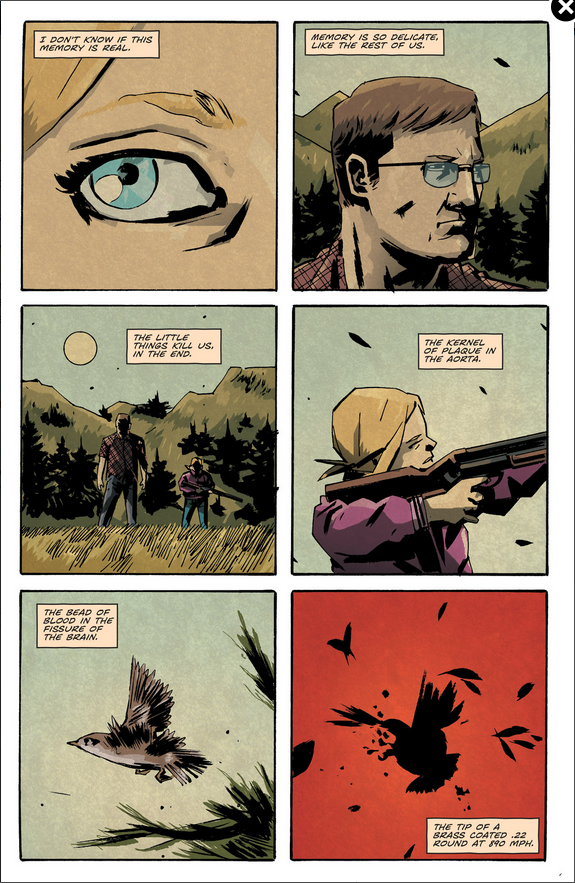
The writing is lyrical yet terse, with a penchant for the poetical. Take one of the opening pages in which Butterfly recounts a memory of her father teaching her how to shoot. More than just a pretty page, we see Butterfly’s personality and worldview jump off the page. The careful, clean pacing reflects her highly analytical mind, and the language speaks to her intelligence and insightful nature.

Capture.PNG

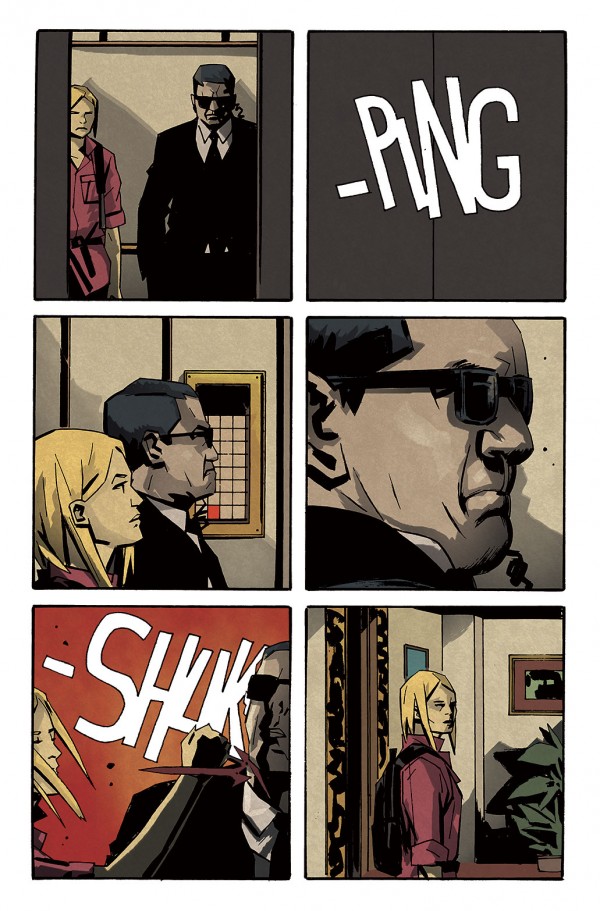
The art, too, is astounding in its reflection of the narrator’s psyche. Harsh lines and black shadows enclose muted colors. This reflects how Butterfly bridles her world in strict self-imposed rules and conduct. When Butterfly is in control of the situation, pages are evenly laid out in six panels of equal sizes. Notice how this technique is used when Butterfly stalks a man to an elevator and kills him.

Butterfly_001_011-600x911.jpg

She is calm and in control. Elsewhere, when Butterfly is out of control, the panels vary in size and shape, to reflect the frenzy of the moment or the fractal nature of memory (couldn’t find an example of that online, so unfortunately you’ll have to go buy one, ya freeloaders).

The worse thing to be said about Butterfly is that at points its plot is too overtaken by its style, which results in confusing storytelling. To go any deeper would be to spoil a key part of the story, so I’ll just say that my hope is that the questions I have now will be answered in subsequent issues.

Should You Get It?

The creative team behind Butterfly achieves a rare unity of purpose that most comic teams can only dream of. Art and words work in tandem to construct a world grounded in its character. It tells a story, but it also creates a graphical language which transcends it. I don’t know if that makes it literary or not, but it does make it a must-read.

Gardner Mounce is a writer, speaker, listener, husband, wife, truck driver, detective, liar. When asked to describe himself in three words, Gardner Mounce says: humble, humble, God-sent. You can find him at gardnermounce.tumblr.com or email him at gmounce611@gmail.com 

Life After the Star Wars Expanded Universe: Hidetaka Miyazaki’s Dark Souls

dark souls

Andrew Findlay

In Life After the Star Wars Expanded Universe, we take a look at science fiction and fantasy, why they’re great, and what they say about where our species has been and where it’s going.

My wife is out of the country on a business trip, and I bought Dark Souls to help fill the time I spend waiting for her to come back. It’s been on my radar for at least a couple years, but I’ve put off actually giving it a try due to one factor: every time I gave any thought to it, a companion thought came along and said, “Yeah, but do you really want to suffer that much? It’s like the hardest game of all time.” I beat it in six days, and it is actually not that bad. I’m writing about it here partially because it is fantasy, but mostly because it has dominated my life for the past week.

The main piece of buzz the uninitiated know about the game is its overwhelming difficulty. This is a positive feature – it was probably part of the marketing team’s campaign for the game. The problem is that so many people avoid it because they do not want to be punished in their leisure time. Here’s the thing: Dark Souls is not really that much harder than something like Halo or Halo 2 on Legendary. Sure, I died like 983 times, but that’s not as frustrating as it sounds. Death in this game is like jumping in Mario: it is the protagonist’s defining superpower. You are the Chosen Undead, a zombie selected to play a part in the ending or renewal of the world. When you die, you resurrect at the last checkpoint with all items, abilities, and stats intact (the penalty is that you lose all XP accrued since the last checkpoint). Dying and inexplicably resurrecting is a part of almost every video game. When Harbinger eviscerates Commander Shepard in Mass Effect, nobody explains how he’s alive and well after the next load screen. In Dead Souls, resurrection is a game mechanic. The main character is unkillable and will always resurrect at the last place he rested. From that point, the player can move through the level again and learn to avoid the things that murdered him last time. For example, I was fighting a difficult enemy on a stairwell. I rolled backwards to avoid his swing and fell to my death (the first time I met him, I did not avoid his swing and died immediately). On the third try, I got his attention and ran away until I was on solid, cliffless ground. Modifying my strategy slightly with each new attempt led to success, and that’s how it works with every challenge of this game. Die, die, die, succeed. By the time you’ve made all the necessary incremental adjustments, it’s baffling how you could ever have struggled as much as you did – when you finally move past, it seems like the easiest thing in the world. There were only three points in the game where I felt real despair: a ridiculous final boss of one level (Ornstein and Smough, the bastards), an absurd puzzle dungeon where it took me four hours to learn how to not get knocked into a pit by swinging blades over narrow bridges, and one of the very first levels where two zombies and three rats murdered my dagger-wielding, unleveled sorcerer continuously. The beginning of this game is absolutely brutal: you do not know the rules, you do not know how to move, and you do not have the skill points necessary to keep common vermin from destroying you. The great thing here is that it’s an RPG, so after the first 10 hours of pain, you start getting some real power. There is nothing in an RPG that cannot be solved by more experience points, and it is extremely gratifying when enemies who used to laugh at you as you hit them with a piece of blunt metal start disintegrating with an idle wave of your hand and a flash of blue light.

small-undead-rat-large

Dark-souls-gravelord-nito

The thing on the top killed me 23 times straight at the start of the game. Towards the end of the game, I killed the thing on the bottom effortlessly in a giant explosion of ethereal flame.

As far as the fantasy storytelling, I still can’t decide if its brilliant or if the game designers couldn’t be bothered. In the beginning, four Lords came out of the darkness, grabbed the power of the First Flame, and started killing the everlasting dragons. As long as the flame burns, the age lasts. At the beginning of the game, the flame is guttering, the world is ending, and people with the curse of the undead are popping up and being locked away. You escape and go to the world of the gods in order to pursue the power necessary to either save the world or help speed along its end. As far as explicit storytelling, that’s pretty much it, but the designers spend so much time giving weight and texture to every location that the setting ends up telling a lot of the story. It is the end of an age, and everything is rundown and crumbling, so drooping and rusted with age that it’s oppressive. NPC comments, item descriptions, and the setting itself give some hints as to how everything capsized, but mostly you just wander around dealing with the consequences and guessing at the causes. It’s refreshing. In Mario games, you know you have to save the princess. In  Mass Effect, you know you need to save the galaxy from terrifying, enslaving ship-bugs. In Dark Souls, the only thing that is clear is that everything is trying to kill you. I finished the game, and I chose the “good” path, but I’m still not sure if I made the right choice. Whose interests did I serve? Was I just a pawn of the gods? Did I really save anything at all, or did I perform what is at best a holding action against the encroaching dark? I still don’t know, but it was a joy to move through that world.

This game is three years old, a lot of people have played it, and a lot of people have avoided it. If you are avoiding it because of the reported difficulty, please give it a chance, especially if you’re the sort of gamer that doesn’t feel like a game is “finished” until you’ve beaten it on the hardest difficulty setting. The difficulty is bad, but it’s not that bad. Besides, in a gaming environment where difficulty is a constantly lowering bar, it is good to see a game that offers a challenge instead of just an experience. The worst gaming of my life was in Fable II when an entire dungeon consisted of hitting a floating, colored ball through a certain pattern. Here’s the twist: it changed colors, and you had to figure out to use an arrow, magic, or a sword to move it to the next location. It was insultingly easy, and it is important to have games like Dark Souls on the other side of the spectrum.

Andrew Findlay has strong opinions about things (mostly literature) and will share them with you loudly and confidently. You can email him at afindlay.recess@gmail.com.