Author: Alex Russell

Tough Questions: What Are Your Pet Peeves?

question-mark

Every week we ask everyone who hangs out around here to answer a tough question. This week:

What are your pet peeves?

Rules are simple: WHAT MAKES YOU SO ANGRY YOU TYPE THE INTRO TO A THING IN ALL CAPS?

Alex Russell

People… who talk online… like this… I want Twitter to have a function that deletes your tweet if it ends in an ellipsis. You see it all day. People don’t understand what it means and they just trail off all of their little missives into the world. Caring about Twitter punctuation might be the most curmudgeonly way to answer this question, but it always reads to me like someone’s doing the textual version of “Not to be an asshole, but…” You’re still being an asshole.

Brent Hopkins

My biggest pet peeve is people eating with their mouths open. I live in a country and region of the world where it is common and widely accepted and it grates my nerves to no end. It is so irritating to me that it might be a relationship-breaker for me. It tends to be the only thing I can focus on during meals and it just kills me.

Andrew Findlay

As I get older, the pool of things that annoy me shrinks. I feel this is an evolutionary adaptation, because if a sixty-year-old’s heart had to put up with the level of indignation experienced by your average teenager, the AARP would not exist. One pet peeve that has not fallen by the wayside deals with word usage. My fascination with reading stems mostly from an obsession with words, how they are put together, and what they can do. The more you know, the less you should use, like a kung fu movie hero who only fights when absolutely necessary. It’s always the people he beats the crap out of at the end that are the flashiest at the beginning, and their flashiness is the result of insecurity. An incisive, well-placed common word is a lot more effective than a bloated, ludicrous, damned-near archaic word. My pet peeve is when people use ungainly, gigantic words just to show they know them. There are many tiers to this offense, ranging from misdemeanor to outright felony. If you study reptiles for a living and someone asks you what you do, it’s okay to say “herpetologist,” because that’s what you are, and saying “I’m a snake herder” sounds a bit strange. If you use “pulchritudinous” instead of beautiful and “tintinnabulation” instead of ringing, you should be fined because you like hideous words and you don’t care if other people have a clue what you’re saying. If you use “hermeneutics” while discussing a TV show at a bar, you are a monster. If you use “hermeneutics” incorrectly while discussing a TV show at a bar, you are a dumb monster.

Gardner Mounce

The words quite, indeed, perhaps, and rather. They’re foppish.

Jonathan May

I have too many of these to quantify, but what follows are the major offenses. I hate improper texting. I hate when people don’t walk on the correct side of a sidewalk or staircase. I hate when my students don’t print off their papers or staple them. I hate when people complain about something at a restaurant to the staff, yet don’t want any action taken. I hate when people aren’t on time for lunch dates. I hate having to repeat myself. I hate when people try to moralize at me on Facebook or Instagram; I don’t give a shit. I hate when people use “LOL” as a passive-aggressive way of disagreeing. I hate when people say they don’t vote because it feeds into the system; grow up and vote, or go change the world, hippie. Also, I hate coffee shop people in general, but that’s just because I worked at coffee shops for ten years.

Game Review: Guacamelee Gold Edition

image source: punkandlizard.com

image source: punkandlizard.com

Brent Hopkins

Guacamelee is a game that has gotten plenty of acclaim across every platform it has been released on (so, all of them, since it has been released on all of them). The game is a typical “Metroidvania” style game where you explore different levels that can’t be completely finished until you get all of the different abilities. The initial release was in 2013, but the definitive version titled  Guacamelee! Super Turbo Championship Edition, came out this past July for the new generation of consoles and Steam. This review covers the stopgap Gold edition of the game, which isn’t missing too much.

First, I will have to admit I have never beaten a Metroid or Castlevania game, so I understand the concept, but I don’t actually have a frame of reference for the Metroidvania style.

Guacamelee looks really nice. The characters are bright and colorful and the environments match perfectly. The feeling I got while playing was a movie or Looney Tunes depiction of a Mexican village, which completely sucks the player in. The game follows a luchador named Juan who has to stop the villain, Calaca, from merging the land of the living and the land of the dead by saving his childhood love. This is not a story that will change the way you see games, but it is sufficient.

The whole game looks like this.

The gameplay is simple, but equally solid. The combat is your basic beat-em-up-and-dodge but when the game begins spawning multiple enemies that have special shields that require you to use certain attacks to break, battles can get extremely hectic. There is also a combo system which requires you to chain attacks without getting hit or taking lengthy breaks between attacks. The higher your chain, the more money you make. The money can be used to upgrade your character in basic ways like health and power but also you can unlock costumes. Each costume has its pros and cons and can be switched out at any save point. This is a cool little addition but some costumes make combat a complete joke on Normal difficulty.

The other gameplay aspect is the platforming. This is where the game gets hard. Juan can switch between the land of the living and the dead at the press of a button and the game often requires you to do this and use abilities to clear rooms. This can be tricky — but never unfair — so I commend Drinkbox Studios for doing platforming right.

The game is a solid 15-hour game if you do everything. Rushing through the game, you can easily complete it in four or five hours, which is a bit disappointing for a $14.99 game, but that would be a disservice to yourself to play it that way.

This game lived up to the hype and I highly recommend picking it up, if this is your type of game.

Brent Hopkins considers himself jack-o-all-trades and a great listener. Chat with him about his articles or anything in general at brentahopkins@gmail.com.

Music Review: Trust – “Capitol”

“Capitol” by Trust

Jonathan May

Space plays a significant role in this dream-pop, synth-heavy song, presented by Canadian duo Trust from their sophomore album Joyland. We ebb into the main architecture of the song slowly; in the beginning, I had a very hard time understanding what phrase the singer repeated, but I don’t care. When we get around to part where the words become clearer is probably where they matter most: “Will I die? Will I die? Will I die?” sung out hauntingly over sequences of endless starry space. This refrain, coupled with the gorgeous counterpoint of synthesizer and ambient noise, produces a haunting and important moment not often heard in “new-wave” bands’ attempts to kill their creative fathers. Flow is important within this song, and its many transitions indicate a willingness to be ambitious and show maturity. The video definitely adds a layer of visual appeal as well, with a striking young woman actualizing somehow through communion with forms of herself, although the whole thing reminded me a bit of the film Cocoon. The singer, who also films well, darts frantically around his space microphone and space backdrop, almost afraid to deliver his utterances to the electronic tribe. I find the added visual element overall quite potent. Though we’re given some expected ideas regarding “mystical actualization” (triangles, space, emanating light), we’re brought back to reality in the end, wherein the young woman finally seems to have found an object worthy of her unending attention and gaze. It would help if one enjoyed this particular genre of work, yet I would like to imagine that even a casual listener would find something mysterious and lovely about the song to call her own.

Jonathan May watches too much television, but he’s just playing catch-up from a childhood spent in Zimbabwe. You can read his poetry at owenmay.com, follow him on Twitter at @jonowenmay, or email him at owen.may@gmail.com

Worst Best Picture: Is Amadeus Better or Worse Than Crash?

image source: virtual-history.com

image source: virtual-history.com

Alex Russell

In “Worst Best Picture” we search every single Best Picture Oscar winner of all time from 1927 to present to uncover the worst of them all. Conventional wisdom says that 2005’s winner Crash is the worst winner in history. We won’t stop until we’ve tested every last one. Read the the first, our review of Crash, here. Posts will be relatively spoiler free, but there may be some details revealed. Today’s installment is the 1984 winner Amadeus. Is it better than Crash?

If you haven’t seen Amadeus yet, are you going to? Are you, really? Yeah, see?

I would have gone my entire life without seeing this, and I’m still trying to process how I feel about it. I don’t think I’m done with Amadeus, even a few weeks later. It’s an insanely long movie, but unlike a lot of the longer slogs on the list, there’s a ton to cover. Mozart is a young buck who just wants to flirt and get drunk and act like an asshole, while Salieri wants to create the music that will secure his legacy. Just as in life, in Amadeus the asshole is rewarded.

It’s complicated, though, which makes this worth your time. The movie happens in the framing device of an elderly Salieri detailing the sins of his life to a priest. It’s a neat device — and it’s done much better than the nearly identical one in The Last Emperor — and it allows for the telling of a ton of absurd stories. All it needs to be is the central Mozart vs. Salieri conflict, but it’s largely the story of Mozart’s sad life behind his giggling demeanor. There’s some heavy stuff with his dad and his family that feels much more compelling than the standard “he only cares about his work!” stuff in your typical movie about a mad genius. It’s not impressive because it’s risky, it’s impressible because of the scope of the story.

That said, I led this off the way I did because this is definitely what you think it is. It’s a movie about two men battling with classical music, so don’t expect it to wow you if that kind of thing doesn’t wow you. You’re not going to give an eighth of a day to it at this point if you haven’t already, but you will be missing something unique if you don’t.

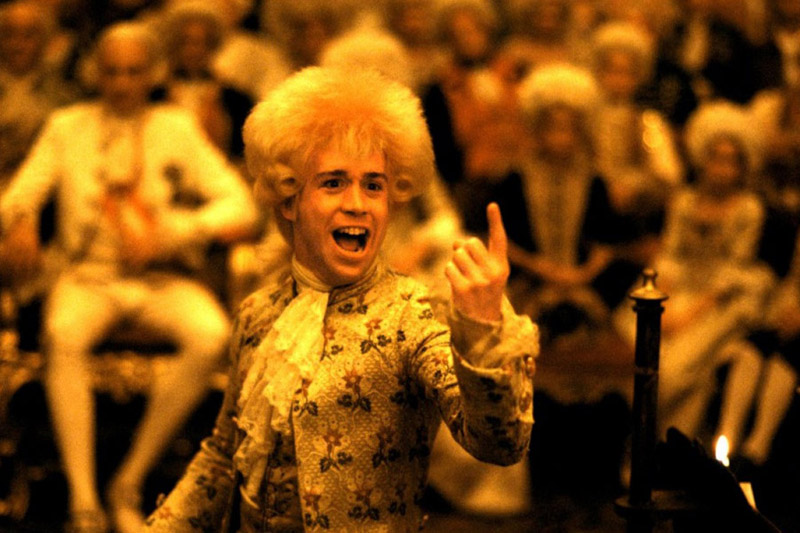
The Best Part: I rolled my eyes a lot during Amadeus, but Tom Hulce is just a damn delight as Mozart. His laugh will stick with me for a long time, so here’s some guy on YouTube that made a supercut of all of it:

The Worst Part: Holy shit, this is a long movie. A significant number of Best Picture winners are more than three hours long, but few of them feel as long as Amadeus. The most important conflict of the film is that Salieri can’t handle Mozart at all. It’s a compelling conflict, but it centers on Salieri’s shortcomings compared to the great composer. Maybe this is crass, but it’s definitely a bit difficult to feel for a guy whose main failing is that he kinda sucks compared to Mozart.

Is It Better or Worse than Crash? This is the halfway point with 43 down and 43 to go. I’m not entirely sure where my mind is at after talking about Crash for most of a year, but it’s nowhere good. I like Crash far less than when I started, which I certainly didn’t think was possible, but I also love a lot of these movies so far. Next week I’m going to do a rewatch of Crash to remind myself what even happens in it, because I’m much clearer on the list of great movies that follows this paragraph now. Comparing it to Amadeus seems impossible. One is the story of a man’s lifetime struggle with the reality that genius pays off more than hard work and one is a testament to how our process for rewarding movies with the “Best Picture” distinction made (at least) one tragic error. I guess they are alike. I did it. Don’t check my work.

Worst Best Picture Archives: Crash | Terms of Endearment | Forrest Gump | All About Eve | The Apartment | No Country for Old Men | Gentleman’s Agreement | 12 Years a SlaveThe Last Emperor | The Silence of the Lambs | The Artist | A Man for All Seasons | Platoon | The Lord of the Rings: The Return of the King | The King’s Speech | Rain Man | The Departed | The Bridge on the River Kwai | Marty | Gigi | It Happened One Night | Driving Miss Daisy | Shakespeare in Love | Wings | Midnight Cowboy | Rocky | Gone with the Wind | Chicago | Gladiator | Cavalcade | The Greatest Show on Earth | You Can’t Take It With You | The Best Years of Our Lives | The GodfatherCasablancaGrand Hotel | Kramer vs. Kramer | The French Connection | In the Heat of the Night | An American in Paris | Patton | Mrs. Miniver | Amadeus

Alex Russell lives in Chicago and is set in his ways. Disagree with him about anything at readingatrecess@gmail.com or on Twitter at @alexbad.

Worst Best Picture: Is Mrs. Miniver Better or Worse Than Crash?

image source: nicksflickpicks.com

image source: nicksflickpicks.com

Alex Russell

In “Worst Best Picture” we search every single Best Picture Oscar winner of all time from 1927 to present to uncover the worst of them all. Conventional wisdom says that 2005’s winner Crash is the worst winner in history. We won’t stop until we’ve tested every last one. Read the the first, our review of Crash, here. Posts will be relatively spoiler free, but there may be some details revealed. Today’s installment is the 1942 winner Mrs. Miniver. Is it better than Crash?

If Patton is the story of people who choose to make war their entire life, Mrs. Miniver is the story of people who don’t have a choice about it. It’s an entire movie about the homefront in war. It focuses on events at home — both mundane and not — and how they are complicated by the ridiculous nature of war. Cavalcade and The Best Years of Our Lives are also about that, but they’ve got much different messages than Mrs. Miniver.

This one is entirely about suffering and liking it. In another setting, a movie about being resilient in the face of strife on this scale would be a tough sell. A movie about the British resistance at home during WWII, though, we’re comfortable with that story. The entire international perception of England was changed by WWII. It is taken as fact that the British are tough and can handle the worst without complaint. It’s just one of those “things” now, and Mrs. Miniver was an important part of that myth-making.

There’s nothing going on in Mrs. Miniver other than the war. Men decide they need to go to war to protect Britain and the women need to stay home and be brave and true and good. It’s full on propaganda, but it’s distinctly Western propaganda (and Allied, I suppose, which is an even easier sell) so an American audience may not feel as manipulated. It’s just two hours of bad things happening and good people staring into the middle distance while they wonder how they’ll move on.

They’ll move on because they’re British and because they must, is the message, and it’s told again and again. There’s no real reason to watch this in 2014. You’ll get everything you need from any particularly badly written history book. The bombing of London is one of the iconic domestic tragedies of our time and a movie about the bravery and difficulty involved in surviving it is nothing to roll your eyes at, but at one point the entire family reads Alice’s Adventures in Wonderland under a staircase and it’s just a ton. It’s heavy and it should be, but other than the patriotism, there’s no there there.

The Best Part: The titular Mrs. Miniver captures a German soldier in her garden and they have a terrifying conversation in her kitchen. She makes him a meal at gunpoint before getting his gun away from him. This scene is either the greatest or worst part of the movie, and it probably depends on what you want Mrs. Miniver to be. If you want to marvel at strangeness, look no further.

The Worst Part: The entire movie is “climax” but my least favorite dramatic scene is a flower competition, and I would write more about it, but it’s a flower competition. Right before it there’s an unexpected death and right after it there’s a bombing. You can skip the flower competition. Please skip the flower competition.

Is It Better or Worse than Crash? I hate to say it, but I’m only 100% sure I’ll never watch Mrs. Miniver again, of the two. I’m going to watch Crash again this week for a rewatch, but I feel no need to watch Mrs. Miniver again. I got it. It’s not a bad movie, but it’s one-note and it’s fairly repetitive. Crash is much worse, to be sure, but only because there’s not really that much in Mrs. Miniver to love or hate. If you boiled down any movie to three words you’d be missing nuance, but I don’t think you miss anything with a three-word summary here: British people endure.

Worst Best Picture Archives: Crash | Terms of Endearment | Forrest Gump | All About Eve | The Apartment | No Country for Old Men | Gentleman’s Agreement | 12 Years a SlaveThe Last Emperor | The Silence of the Lambs | The Artist | A Man for All Seasons | Platoon | The Lord of the Rings: The Return of the King | The King’s Speech | Rain Man | The Departed | The Bridge on the River Kwai | Marty | Gigi | It Happened One Night | Driving Miss Daisy | Shakespeare in Love | Wings | Midnight Cowboy | Rocky | Gone with the Wind | Chicago | Gladiator | Cavalcade | The Greatest Show on Earth | You Can’t Take It With You | The Best Years of Our Lives | The GodfatherCasablancaGrand Hotel | Kramer vs. Kramer | The French Connection | In the Heat of the Night | An American in Paris | Patton | Mrs. Miniver

Alex Russell lives in Chicago and is set in his ways. Disagree with him about anything at readingatrecess@gmail.com or on Twitter at @alexbad.

Life After the Star Wars Expanded Universe: Simon Barry’s Continuum

show

Andrew Findlay

In Life After the Star Wars Expanded Universe, we take a look at science fiction and fantasy, why they’re great, and what they say about where our species has been and where it’s going.

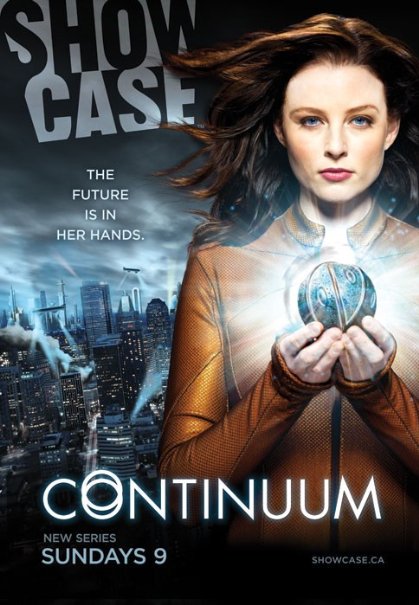
A few years ago, everyone was bemoaning the loss of quality SF programming on television. Lost had delivered one of the most reviled endings of all time, Battlestar Galactica had wrapped up, the Sci-Fi Channel had just been bought out by Swedish media conglomerate Syfy, which for some reason thought Americans only cared about ghosts and those who hunt them. There was a bit of a dry spell there for a minute, but in the past couple of years TV producers have looked at the success of shows like Battlestar and Lost and threw SF into a lot of their primetime fare with a gleeful what-will-stick-to-the-wall type attitude. The majority of these shows are major flops (I do not know first hand, but I hear Extant is terrible), but in defense of the television executives, a lot does actually stick to the wall. One such show is Continuum.

The_Swedish_Chef

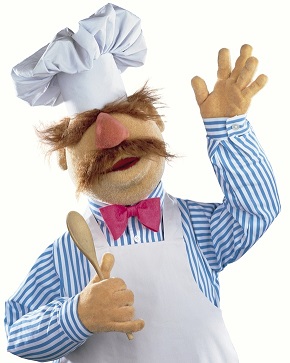
Pictured: the man in charge of all Syfy programming.

Its premise hooked me quick. In the year 2077, governments across North America have defaulted, and corporations bailed them out. State sovereignty no longer exists, and the North American Union is administered by a Corporate Congress, where the most powerful corporations run everything. So what’s different, you may ask. Fair enough. Today, if a corporation does not like an organization, they will take a senator out to a very nice lunch and talk to them about all the nice lunches and campaign contributions to come in the future if they sponsor legislation against the interests of said organization. In the future of Continuum, corporations own the police, which is now a private security force, and they would simply pay these security professionals to kill literally everyone involved in any way with this organization. Ah, the invisible and silenced gun of the free market! The show opens with the apprehension of the leaders of a terrorist organization that bombed the Corporate Congress and killed thousands of people. They are going to be mass-executed in a weird future electric-dais thingy, but when the machine activates, the terrorists throw a device into it. Kiera, our hero, is a cop guarding the detainees. She sprints towards the machine to see what’s going on, and then all people anywhere near it disappear in a massive blast. Kiera wakes up in Vancouver in 2012. All the terrorists went back in time as well, and she has to singlehandedly stop them, relying on nothing more than her pluck, determination, and highly advanced bio-implants and supersuit.

The show is hybrid organism, SF-time-travel tissue over a procedural cop drama endoskeleton. The presence of technology in the show is appealing. Kiera is sent back in time solo, but she has many implants (for example, a communications suite implanted directly into her brain/ears, and an eye implant that provides a super-soldier style HUD, can take fingerprints, record evidence, etc) and a standard-issue supercop suit, which is bulletproof in addition to giving her enhanced stamina and strength, cloaking abilities, and a built-in taser. Aside from this, and the advanced technology sometimes employed by the terrorists, most of the show stays in 2012 as far as equipment goes. The technology is central to the narrative, but it is non-intrusive. Kiera’s main weapon is not her suit, but her ability to insinuate herself into the Vancouver Police Department and use police strategies to track down her targets. The story definitely relies on the tropes of future-tech, but it’s not overused, nor is it ever the source of some goofy deus-ex-machina. Kiera herself is the center of the show – torn away from her family (a husband and a little boy), unable to get back, knowing that any change made by her or the terrorists could mean her son will never exist (like Back to the Future, but with less Chuck Berry and more complete isolation and existential terror). The show also does well by not simplifying the terrorists – sure, these are mass-murdering monsters, but the system they want to bring down is horrifying. Kiera wants to take them out to preserve her way of life, which her and many people in 2077 enjoy. Fine, woohoo, let’s root for Kiera! On the other hand, if you go into debt in that world, they implant you with a chip that turns you into a hindbrain-using meatpuppet building microchips in a dark factory forever, so the goals of the terrorists, if not their methods, are eminently understandable. There is a delicious complexity around this issue – as an audience member, do you root for the good person supporting a corrupt system, or for the bad people trying to take down that system?

The season one trailer, to get a basic feel for the actiony parts of the show

The most high-minded trope of the show is time travel. None of the big players fully understand how it works – they work under the assumption that present actions will change future consequences, but they don’t really know anything. The show draws a lot of water from this well, but it’s okay because the well is very deep. Some questions raised are how can the terrorists even know their actions will have the outcomes they want, how can Kiera ever return to her actual future now that her very presence in the past is changing it, and how, over the course of time, people become what they are. This last question is explored mainly through Alec Sadler, Kiera’s hacker buddy (no timewrecked futurecop ever goes long without finding a hacker friend). He meets Kiera because the rig he built in his parent’s barn can access her military-encoded communications chip. This is because he built that chip, or will build it – Alec Sadler is the CEO of the biggest corporation in the North American Union, which makes him de facto leader of the world. He is the one behind many of the evils of 2077, but in 2012, he’s just a shy, geeky tech dude. In a standard cop drama, seeing the hacker buddy becoming ever more competent, more self-confident, seeing him get the girl and outwit the competition, would be a positive thing. In Continuum, there is always an ominous shadow over his character development, as it is taking him ever closer to becoming basically King Bowser.

alec

Pictured: Alec Sadler. He wouldn’t hurt a fly. Of course, in the future, he feeds them with the blood of his enemies, so.

The show uses some tired cop-drama tropes, but it is concept-driven, entertaining, and while it’s not quite as cerebral as Primer, it explores the intricacies and implications of time travel with honesty and detail. You should watch it, and the following five words are the most convincing part of my (or really anyone’s) argument to watch Continuum (or really any show): every episode is on Netflix.

Andrew Findlay has strong opinions about things (mostly literature) and will share them with you loudly and confidently. You can email him at afindlay.recess@gmail.com.

Major Issues: Escape from Jesus Island #2

Screen Shot 2014-09-21 at 9.56.05 AM.png

In Major Issues, we look at one newly-released comic book each week. Updated Mondays.

Gardner Mounce

Escape from Jesus Island #2
Written by Shawn French
Art by Mortimer Glum
Letters by Peter Parker
Self-published
Released 9/17/14

Full disclosure: I had trouble picking a comic to review this week. All of the comics I bought at my local comic shop I had reviewed before or didn’t come out this past week. So, heart pounding, I scoured Comixology’s new releases for something that struck my interest. Finding nothing, I went at it from a different angle. I tried to find the most ridiculous thing possible. I think you see where this is going. Ladies and gentlemen, Escape from Jesus Island.

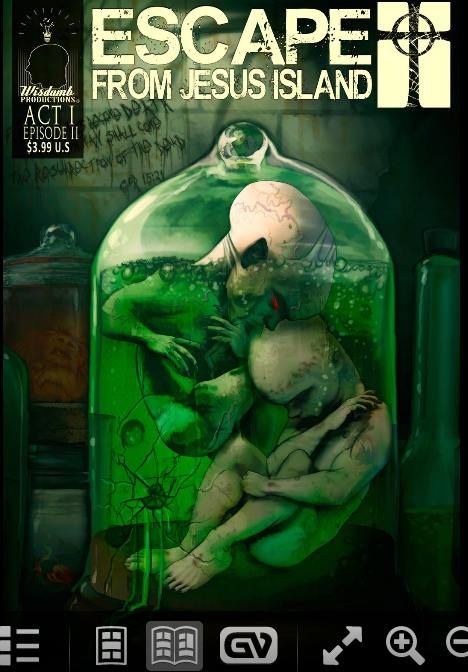
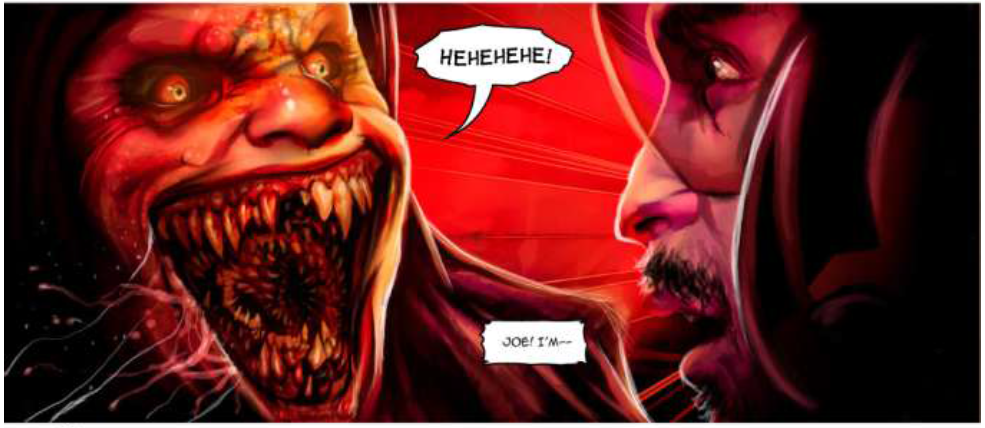
Escape from Jesus Island is about a corporation called ReGen that attempts to clone Jesus on a remote island by using the nails once used to crucify him on the cross. Many mistakes are made, and ReGen is left with a horde of mutants (“Christards”) whom they use in divinity-testing experiments. The Pope catches wind of Regen’s efforts to clone the King of Kings and sends a team to infiltrate the island to rescue him.

Obviously, the creative team behind EFJI has two goals with this project: maximum camp and maximum horror. It’s all kitsch and viscera, exploiting every horror movie trope, pushing every limit until it’s all a hilarious mess. It had me scanning the credits for some mention of Sam Raimi.

It’s irreverent and silly, but some of the humor rises above the camp with a nimble Vonnegutian edge. Issue two opens with, “In the beginning, God created earth, where animals lived in harmony with the natural world for millions of years. Then God created man, and that was the end of that.”

The art has a photorealistic quality that lends itself to twisted violence. A more representational style would have made this feel less Evil Dead and more Stick Wars. But the horror is over-the-top and pretty damn scary. Just check out the following image:

EFJInr2_4.png

Should You Get It?

You’ll love this if you’re the sort of person who enjoys over-the-top comics like Preacher or movies like Evil Dead and I Spit On Your Grave.

Gardner Mounce is a writer, speaker, listener, husband, wife, truck driver, detective, liar. When asked to describe himself in three words, Gardner Mounce says: humble, humble, God-sent. You can find him at gardnermounce.tumblr.com or email him at gmounce611@gmail.com 

Tough Questions: What’s the Worst Advice You’ve Ever Been Given?

question-mark

Every week we ask everyone who hangs out around here to answer a tough question. This week:

What’s the worst advice you’ve ever been given?

Rules are simple: no one can tell you what to do, not even your dad or a cop. They can only advise you. Who has done the worst job of it in your life?

Alex Russell

I’m terrible about unsolicited advice, so I’m usually the other end of this one. As for advice someone’s given me, I’ve got to go with something I was taught in college. Have everyone write down their feelings. I was in training to be a high school teacher, but a series of my education classes were “general” classes for teachers from preschool through high school. When you need something to apply to a six year old and an eighteen year old, you have to be pretty broad. When you have to be pretty broad, you end up saying a lot of really silly stuff. The moment the shine came off the apple for me was when a person looked me straight in the eye and told me that the way to handle a teenager that wouldn’t listen in class was to have them write down their feelings about class and to take away their recess.

Brent Hopkins

The worst advice I have ever received was to be brashly honest in relationships. This just straight up does not work and causes so much stress and pain on both ends that it kinda is a self-sabotaging mindset to be in. I am not saying I am a consistent liar or anything now, but I have grown to appreciate the little lies and the withholding of information to keep the peace. There are times where lying IS actually the best option, not just Eagle Scout levels of honesty. That being the case I am regularly told I am still too honest, but I have figured out when that extra push is too much and to just keep it to myself.

Andrew Findlay

I am fortunate enough to have trouble remembering advice that has landed me in a laughably compromising position. People who feel qualified to give it out in my life generally give it soundly, and most problems arise from me not following it. That being said, one general piece of “advice” that really annoys me is “Beer before liquor, never been sicker. Liquor before beer, you’re in the clear.” There is no, zero, nada physiological reason the order in which you ingest poison will make you feel worse or better. It’s like having a rhyme that starts “strychnine before arsenic…” Alcohol is a poison. You feel bad because you drank poison. If you drink so much you find yourself muttering useless, rhyming rules about it, you need to take a long, hard look in the mirror.

Gardner Mounce

A youth pastor once told me that it is a wife’s marital duty to sexually submit to her husband whenever her husband asks for it. He said that since two people become “one spirit and one flesh” when they are married, and since someone can’t rape themselves, then a man can’t be said to rape his wife.

Jonathan May

“Write what you know”–an often espoused platitude in creative writing programs. If people only wrote what they knew, then science fiction and fantasy, as genres, wouldn’t exist. If people only wrote what they knew, there would be only autobiography, which (unfortunately) so much of “today’s” writing is inherently. With the rise of the personal essay and proliferation of creative writing programs, I heard this advice often from writers at all levels, and I wanted to ask them, “Do you ever write outside of yourself?” So yeah, “write what you know” is horrible advice. All you writers out there–do whatever the hell you want.

Worst Best Picture: Is Patton Better or Worse Than Crash?

image source: oscars.org

image source: oscars.org

Alex Russell

In “Worst Best Picture” we search every single Best Picture Oscar winner of all time from 1927 to present to uncover the worst of them all. Conventional wisdom says that 2005’s winner Crash is the worst winner in history. We won’t stop until we’ve tested every last one. Read the the first, our review of Crash, here. Posts will be relatively spoiler free, but there may be some details revealed. Today’s installment is the 1970 winner Patton. Is it better than Crash?

I’ll say this: this was the easiest movie on the list to pick out a picture for.

Patton is dramatic, funny, and challenging. It’s a sweeping view of one part of one person, but it’s by no means simple. George C. Scott won — and refused — an Oscar for his portrayal of General George S. Patton, and I’m not sure anyone has ever done a better job of portraying a character.

It’s a character, for sure, because it’s such a thin version of a person. Patton doesn’t care about anything aside from military conquest. He can’t keep control of his troops because he keeps screwing up basic stuff, but he’s a brilliant tactician on the battlefield. He, like so many of us, can’t do the dumb things he’s gotta do every day — like, well, not piss off Russia — to get to the part of life that he cares about. He just wants his troops to follow him, unwavering, to battle. He cares about conquest and victory in a very romantic sense. He’s a warrior-poet, emphasis on both, and he needs his story told in blood.

What makes it work so well is that it isn’t a sort of un-Full Metal Jacket. It’s still not a very rosy view of military life or battle, it’s just a more complicated view of the men who care about such things. Patton isn’t the everyman and he isn’t supposed to be a suggestion of the proper way to feel about patriotism or war. He’s supposed to be an over-the-top view of the military. He’s what we’d all be if we actually gave ourselves to work. He’s too far gone.

War movies are almost always the story of why we shouldn’t go to war. Those are fine — many on this list are more than fine — but Patton wants to talk about George S. Patton more than war. It’s about how we love our heroes when they’re being heroic, but we don’t want to deal with the things that keep those people human. We want them to go back into a box until there’s more heroism needed. George C. Scott’s Patton wants to keep being heroic all the time, and when he runs out of villains to find he starts constructing them himself.

The Best Part: Maybe it came across here, but if there’s any doubt I shall put it to rest: GEORGE. C. SCOTT. Go watch the first 10 minutes of Patton. It’s the iconic “pep talk” scene in front of the giant flag. Go do it, right now. Don’t even read the rest of this section first. I could put anything here, because no one is reading it, because you are watching the first 10 minutes of Patton. I’m gonna put my Social Security number here.

The Worst Part: I hate to keep coming back to length. A good third of Best Picture winners are 2.5 hours or longer, and most of them definitely don’t need to be. Patton doesn’t sag under the weight of 170 minutes, but it’s impossible to not mention. It’s supposed to feel enormous, like the full weight of the man’s struggle against the system he so didn’t understand, and it does. It just wanders a little bit toward the middle; there’s some especially repetitive scenes of Patton losing his shit and losing his army that don’t add to anyone’s understanding of the General himself.

Is It Better or Worse than Crash? Patton, if nothing else, is the triumph of George C. Scott. He’s exceptional in Dr. Strangelove, but he’s all-time great, here. It would not be unreasonable to say that this is possibly the greatest single performance on the list, and this is one hell of a list. There are flaws with Patton, to be sure, but none of them come from Scott’s consistent, terrifying performance. He sells you on a difficult concept: that a man who loves war, and only war, is more than a monster. Exceptional art challenges the viewer, and Patton does. I’m not even going to talk about the other movie right now.

Worst Best Picture Archives: Crash | Terms of Endearment | Forrest Gump | All About Eve | The Apartment | No Country for Old Men | Gentleman’s Agreement |12 Years a SlaveThe Last Emperor | The Silence of the Lambs | The Artist | A Man for All Seasons | Platoon | The Lord of the Rings: The Return of the King | The King’s Speech | Rain Man | The Departed | The Bridge on the River Kwai | Marty | Gigi | It Happened One Night | Driving Miss Daisy | Shakespeare in Love | Wings | Midnight Cowboy | Rocky | Gone with the Wind | Chicago | Gladiator | Cavalcade | The Greatest Show on Earth | You Can’t Take It With You | The Best Years of Our Lives | The GodfatherCasablancaGrand Hotel | Kramer vs. Kramer | The French Connection | In the Heat of the Night | An American in Paris | Patton

Alex Russell lives in Chicago and is set in his ways. Disagree with him about anything at readingatrecess@gmail.com or on Twitter at @alexbad.

Worst Best Picture: Is An American in Paris Better or Worse Than Crash?

image source: classichollywoodcentral.com

image source: classichollywoodcentral.com

Alex Russell

In “Worst Best Picture” we search every single Best Picture Oscar winner of all time from 1927 to present to uncover the worst of them all. Conventional wisdom says that 2005’s winner Crash is the worst winner in history. We won’t stop until we’ve tested every last one. Read the the first, our review of Crash, here. Posts will be relatively spoiler free, but there may be some details revealed. Today’s installment is the 1951 winner An American in Paris. Is it better than Crash?

“Well, you do hate musicals.”

I cannot tell you how many times people have told me this supposed fact about myself this year. If you hate a musical, you apparently hate all musicals. This isn’t true for any other damn genre — I hate Crash, if you haven’t picked up on it, but I don’t hate everything vaguely like it — but it’s apparently true for movies with singing and dancing in them.

I don’t! I swear I don’t! I even liked Gigi, and Gigi was BuzzFeed’s worst Best Picture winner ever. I thought it was charming, if a little misguided with regards to message. I mean, you can only sing “Thank Heaven for Little Girls” so many times before it starts to sound odd. But as for other musicals, I think I like most of them. I like the ones everyone likes. I kinda hated Moulin Rouge!, but I saw that as a 15-year-old. It never stood a chance.

I’m now at the age where I assume that if I hate something out of my comfort zone, I’m the asshole. I assume that the problem is genuinely with me. I assume that I simply haven’t given myself over to the experience; I haven’t said yes to life. I decided that I was going to say yes to George Gershwin and Gene Kelly.

The result? Did I love An American in Paris? No. I powered through An American in Paris the way someone watches the reset episode of a drama they like. I made it to the credits because I wanted to see what was next. I probably wouldn’t have even finished it if not for this project, but then, that’s the whole point of the thing.

In An American in Paris, Gene Kelly has to dance a lot to delight children, win over a young woman, and discuss love with his friends. There’s a lot of dancing in this movie, which is sort of like saying a restaurant has a lot of food, but I really have to express to you just how much damn dancing is in this movie. There is an entire quarter of an hour of dialogue-less dancing in this film. In a movie that clocks in under two hours, that feels crazy. Gene Kelly is the best there ever was at what he does, but make damn sure you want to see a ton of it.

There is so much music in this — a musical with the creation of music as a story element is laying it on pretty thick — that some songs are interrupted by other songs. A traditional musical would interrupt a story element to cut to a musical number, but An American in Paris interrupts its own music for more music. You got your musical in my musical!

But Gene Kelly is Gene Kelly, so some moments are just “magical” enough to work. He performs “I Got Rhythm” while French children crowd around him and form a call-and-response group. That part really sticks with me, and it’s apparently the only song from the film to make AFI’s top 100 songs from film list. The love is love. It’s not annoying. Maybe I don’t love musicals, but I certainly don’t hate them. I’m lukewarm on the sprawling, ridiculous An American in Paris because I’m not very interested in what it has to say, not because I hate the whole genre.

The Best Part: 

It’s kinda fun, isn’t it? The French kids don’t know any English beyond what they say in the song, either, so now you know that.

The Worst Part: “Risky” is as nice of a word as I can use to describe the ending. I hate this ending. I hate, hate, hate it. It’s not spoiling it to say it ends with a “daydream” sequence that plays out as a ballet. I know it’s iconic and it’s exceptional and dazzling and all that, but it’s exactly what people think of when they say they “hate musicals.” West Side Story is three hours long and nothing in it feels as shoehorned in as the ballet here.

Is It Better or Worse than Crash? I’m not a big fan of this one, but I don’t think it would even make my bottom five. The visuals are bright, the characters are fun, and the dancing can’t be beat. I found myself really in love with moments of it, but it couldn’t keep me hooked from start to finish. Only the ballet really bored me, and that brings this all back to a debate had often in this space: is it better to be terrible or boring? We’re rapidly approaching the halfway mark here, and we’re going to have to find a good answer for that by then. I’ll say An American in Paris is better because the highs are much, much higher, but I was just about as angry at that ballet as I was at some of the mild awfulness in Crash. Nothing comes close to that police chase scene in Crash, though, so Crash retains the top (bottom?) spot in a walk.

Worst Best Picture Archives: Crash | Terms of Endearment | Forrest Gump | All About Eve | The Apartment | No Country for Old Men | Gentleman’s Agreement |12 Years a SlaveThe Last Emperor | The Silence of the Lambs | The Artist | A Man for All Seasons | Platoon | The Lord of the Rings: The Return of the King | The King’s Speech | Rain Man | The Departed | The Bridge on the River Kwai | Marty | Gigi | It Happened One Night | Driving Miss Daisy | Shakespeare in Love | Wings | Midnight Cowboy | Rocky | Gone with the Wind| Chicago | Gladiator | Cavalcade | The Greatest Show on Earth | You Can’t Take It With You | The Best Years of Our Lives | The GodfatherCasablancaGrand Hotel | Kramer vs. Kramer | The French Connection | In the Heat of the Night | An American in Paris

Alex Russell lives in Chicago and is set in his ways. Disagree with him about anything at readingatrecess@gmail.com or on Twitter at @alexbad.