Literature

The Book of Mormon Musical and Being Offended

The Book of Mormon

Jonathan May

The Book of Mormon was written by Trey Parker, Matt Stone, and Robert Lopez.

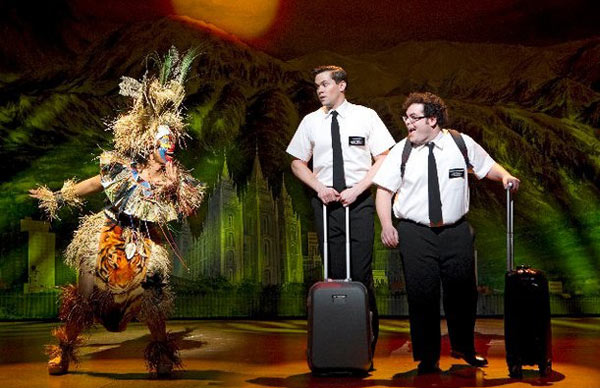
It took about three years for The Book of Mormon to arrive in Memphis from its original Broadway premiere. I didn’t listen to one second of the music during that whole time because I wanted to be surprised by the lyrics and story. Needless to say, the story itself is fairly simple; two young Mormon missionaries are sent to Uganda for their two-year stint. Having lived in Zimbabwe as a child of Christian missionaries, I can safely say the experience the two have upon arrival is eerily and comically perfect. Africa, though presented by some of its worst qualities, shines through as a tough place where real shit goes down, which it is. Therefore the jokes about men raping babies made most in the audience uncomfortable because, deep down, they knew (or became aware of then) that things like this happen.

I was insanely entertained by the whole show, being a fan of South Park. Those who would claim that the show just attacks Mormonism are simply missing the point; the show ultimately posits an absurdity in holding any system of religious belief. Parker and Stone, like many before them, make the point that religions are nothing more than metaphors by which to guide one’s life. This idea comes up often during South Park: that strict dogmatism often leads to unhappiness. So while Mormonism is the prism through which this idea is viewed, I argue that the musical deals ultimately with much more than the one religion. People who take offense at such things often miss that the creators of South Park have taken great care over the years to offend everyone equally, regardless of belief-oriented affiliation.

The Book of Mormon parodied many elements and traditions of musicals, as the creators are wont to do. Many of the songs contains leitmotifs or riffs from other famous musicals in order to further the meta-narrative quality of the production. By no means is this a family show, in the traditional sense. Cursing and “real talk” are par for the course, and no one shies away from all possible outlets of sexual and religious conflation for comedic effect. (One line that stands out, regarding baptism, is when a female character states she is “wet with salvation.”) If you are easily offended, I don’t know why you would consider going in the first place, but you should go. It’s easily the funniest Broadway show I’ve ever seen, and it does challenge one’s sense of humor. I laughed out loud steadily, but several moments gave me pause.

The realistic portrayal of the hardship of missionary work and the even harder quotidian circumstances for Africans undeniably make this musical what it is; without those, it might amount to nothing more than the sum of its jokes. But the leads (the two Mormon missionaries and the young African woman they attempt to convert) and their doubts are some of the strongest moments of this unforgettable show.

Jonathan May watches too much television, but he’s just playing catch-up from a childhood spent in Zimbabwe. You can read his poetry at owenmay.com, follow him on Twitter at @jonowenmay, or email him at owen.may@gmail.com

Life After the Star Wars Expanded Universe: Raymond Chandler’s The Long Goodbye

download

Andrew Findlay

In Life After the Star Wars Expanded Universe, we take a look at science fiction and fantasy, why they’re great, and what they say about where our species has been and where it’s going. 

This one is a bit of a stretch. There are no spaceships, no wars over nascent technology, no deadly viruses, and no door-opening dinosaurs. There are a whole bunch of drunks, smog, and Oldsmobile convertibles. Yessir, this book takes place in 1950s L.A., the world of doctor-endorsed cigarettes, movie stars, mansions, and extensive highway systems. It still fits here because this book and almost everything after it owes its existence to the pulps, a medium that infused SF with the life it needed to become the powerhouse it is today, where it seems half of all new TV shows and movies have at least some type of speculative element.

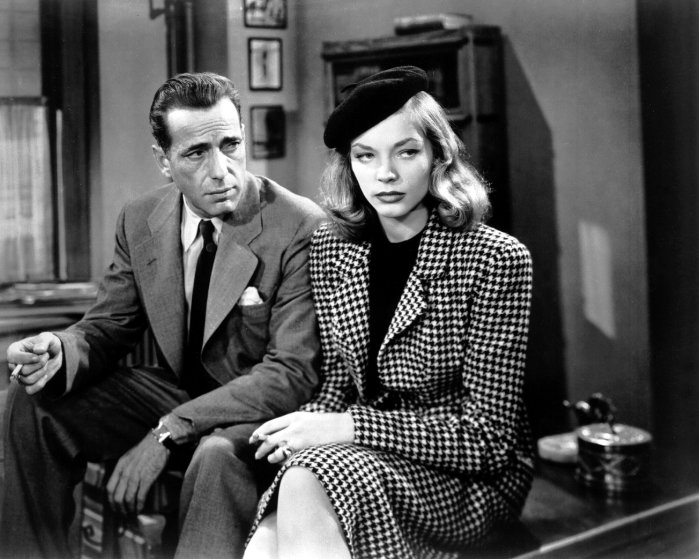
Pulps were magazines published on cheap, rough-looking wood pulp paper. They were about half the price of the more prestigious magazines, and they published detective stories, horror fiction, adventure fiction, and science fiction. It was something cheap to read on the train and then throw away. A lot of writers who went on to publish their own novels ate on the checks they won from these magazines. Raymond Chandler wrote for Black Mask, which specialized in mysteries. Chandler has a weird story, as far as writing goes. He was a top oil executive pre-Depression, but lost his job and decided to try his hand at writing. His first short story was accepted at 45, his first novel published at 51. It is an impressively late start for someone who created such an enduring legacy in American fiction. He took what James M. Cain and Dashiell Hammett started and forged it into one of the most recognizable subgenres out there: the hard-boiled detective story. Their protagonists are hard-fighting, hard-drinking men with a cynical outlook on life and a questionable relationship with the rest of the human race. Their style is one of spare, densely descriptive prose. The atmosphere of the books (at least The Long Goodbye) is more oppressive and fully-built than most other novels – this type of fiction lives on style. A lot of that style is created by the cynical, fast-talking wisecracking of the main character, Philip Marlowe. Basically, Raymond Chandler and Humphrey Bogart together created the American cultural memory of how men spoke in the 40s and 50s. In fact, Bogart delivered the defining film interpretation of Philip Marlowe in the movie version of Chandler’s first book, The Big Sleep.
MV5BMTg3NzQ0NTY4NV5BMl5BanBnXkFtZTgwNDY1MzU5MTE@._V1__SX1305_SY559_

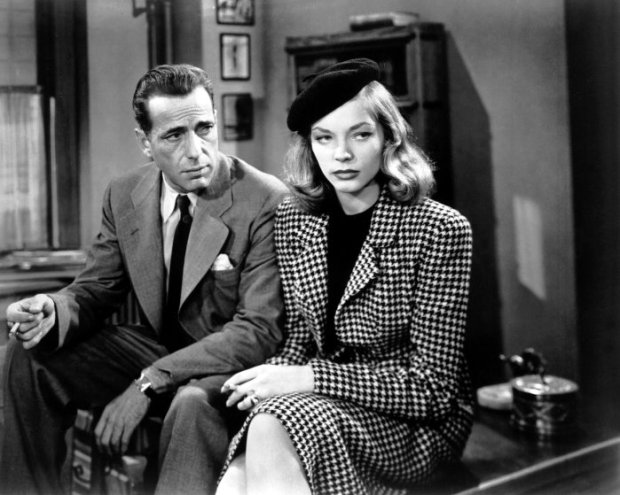
If you have not seen Lauren Bacall and Humphrey Bogart acting together, you do not know what American cinema is.

The words and delivery of the main character form so much of the atmosphere of this book that the analysis of the few choice quotes that follow is necessary for an understanding of the book.

I. Intro

The first time I laid eyes on Terry Lennox he was drunk in a Rolls-Royce Silver Wraith outside the terrace of The Dancers. The parking lot attendant had brought the car out and he was still holding the door open because Terry Lennox’s left foot was still dangling outside, as if he had forgotten he had one. He had a young-looking face but his hair was bone white. You could tell by his eyes that he was plastered to the hairline, but otherwise he looked like any other nice young guy in a dinner jacket who had been spending too much money in a joint that exists for that purpose and for no other.

This is the first paragraph of the novel. It introduces the principal mystery-driving character of a mystery story, so it is pretty important. This uses really simple language to convey a lot of information. First, the description of the character: young face, white hair, drunk as hell. A lot of descriptions work this way – Marlowe’s inner monologue always gives details about every new person in the story, and it is always a handful of key details that then leave you with more than enough to construct a full character. Hard-boiled detective fiction is the spiritual successor of of Hemingway’s iceberg theory of writing. Also, the stylistic flourishes like “as if he had forgotten he had one” and “plastered to the hairline” are beautiful examples of Bogart talk, which, again, Chandler played a key role in inventing.

1948_Rolls_Royce_Silver_Wraith_Freestone_Webb_Coachwork

The Rolls-Royce Silver Wraith. There’s a line in the book saying that this is more attractive than women, so… different times, I guess?

II. Bogart Talk (BT henceforward)

These quotations are collected from all over the book, and the BT is strong in all of them.

And the next time I saw a polite character drunk in a Rolls-Royce Silver Wraith, I would depart rapidly in several directions. There is no trap so deadly as the trap you set for yourself.

Notice the information-dense recall of Terry Lennox (who has since caused Marlowe a heap of trouble): the “polite character drunk in a Rolls-Royce Silver Wraith,” followed by the darkly, impossibly humorous “depart rapidly in several directions,” capped off by the cynical and truthful commentary: “there is no trap so deadly as the trap you set for yourself.”

They put as much muscular activity into a telephone conversation as I would put into carrying a fat man up four flights of stairs.

This second quotation is less complex, but still a great distillation of BT. Cynical, removed, semi-humorous view of the world tinged by disgust at what is being observed, summed up by a weird simile. The jarring quality of the strange simile stretches it almost to tearing, but it doesn’t tear, and the result is stronger than a more measured comparison would be.

The fellow who decorated that room was not a man to let colors scare him.

Not much to say here, just perfect dismissiveness and darkly humorous cynicism

I kissed her some more. It was light, pleasant work.

Again, cynicism and humorous dismissal, the humor arising in large part from the extent of the dismissiveness. Sure, Marlowe’s pretty excited, he’s kissing a beautiful woman, but all he reports is the hilariously understated “It was light, pleasant work.”

III. Social Commentary

Sheriff Petersen just went right on getting re-elected, a living testimonial to the fact that you can hold an important public office forever in our country with no qualifications for it but a clean nose, a photogenic face, and a closed mouth. If on top of that you look good on a horse, you are unbeatable.

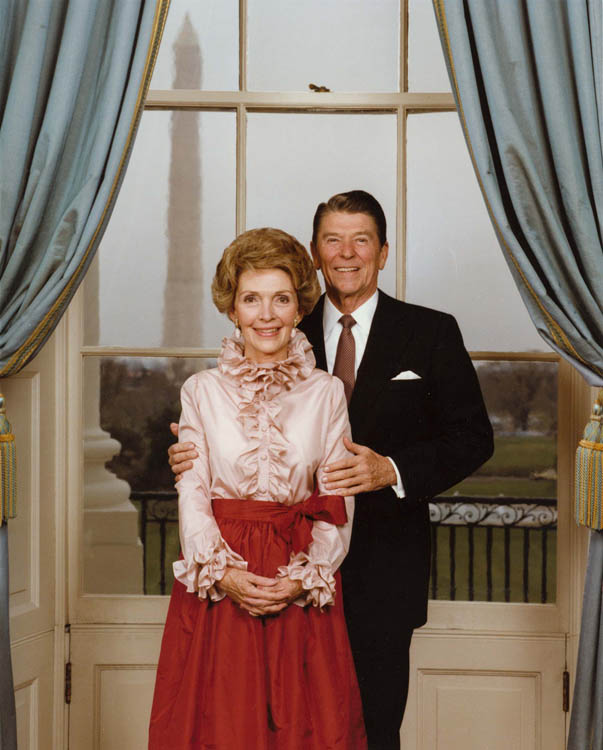
So, The Long Goodbye gets a lot of credit for being a vehicle for social commentary. Here is just the barest snippet, a beautiful dismemberment of the political process. Winning elections is all, all appearance, and no content. If you think Chandler or Marlowe is excessively cynical, just know that handsomeness has had a ridiculous influence on election results ever since Nixon and Kennedy. As a more recent example, I voted for Obama both times (it’s turned out kind of meh, but his stated platform was not explicitly evil, so). I remember being a lot more worried about Romney v. Obama than I was about McCain v. Obama. What created this dynamic? Obama is energetic and attractive, and McCain came off as an angry, wrinkled old man. Romney, on the other hand, was in roughly the same spot as Obama on the attractiveness spectrum. Policies aside, the man’s face is so chiselled it looks like he is currently on Mt. Rushmore. He ended up losing, but especially after that first debate, I was concerned he wouldn’t. Against an incumbent president. Because he was so pretty. Chandler knew and dismantled this failing of the American political system more than half a century ago, and it is only one of the smallest pieces of social commentary he weaves into this book.
President_and_Mrs._Reagan_pose_in_the_Blue_Room_for_their_official_portrait_1981

Walter Mondale didn’t stand a fucking chance.

IV. Philip Marlowe is a badass

A basic requirement of a hard-boiled protagonist is that he know his way with his gun, with his fists, with a chair, or with whatever blunt objects happen to be within reach. The assumed badassery of the character is key. That being said, Marlowe is not some two-bit punk. He does actually try to avoid violence as much as possible, and he shows quite a bit of sentimentality whenever events break through his wisecracking exterior. Anyway, observe:

I started to get up. I was still off balance when he hit me. He hooked me with a neat left and crossed it. Bells rang, but not for dinner. I sat down hard and shook my head.

So, this is describing when Marlowe was being questioned by police and made one angry on purpose to get him to hit him so he could gauge his threat level. The data gathered from this experiment indicated that this cop was more a boxer than a fighter, and that Marlowe would be able to take him to pieces if he hit him again. First off, inciting a punch to the face as a fact-finding mission is amazing. Secondly, the BT involved in “Bells rang, but not for dinner” to indicate that it was a hard hit, but only hard enough to make him shake his head, is a perfect incarnation of the form.

You’re a piker, Marlowe. You’re a peanut grifter. You’re so little it takes a magnifying glass to see you. I didn’t say anything at all.

Marlowe is being directly insulted here, but is cool and collected enough to take no offense, let the man keep talking, and say nothing at all. A key feature of the hard-boiled hero is self-control and a certain superiority to emotion-driven idiots. He controls his emotions. Until the man is done talking, that is.  At the end of the conversation, this guy who has been flaunting his wealth and calling Marlowe a nobody left his valuable cigarette case behind. Marlowe moves to return it, and then:

“I got a half dozen of them,” [the rich asshole] sneered.

When I was near enough to him I held it out. His hand reached for it casually. “How about half a dozen of these?” I asked him and hit him as hard as I could in the middle of his belly.

A lot happened here. Saying nothing, taking it with equanimity at first. After the exchange has taken place, being taken over the edge by a final snide comment. Then, Marlowe accomplishes two things: flooring a man who has been shitting all over him and inserting a wonderful piece of BT as he does it, “How about a half a dozen of these?” Someone has been served here, and it ain’t Marlowe.
litreactor-marlowe

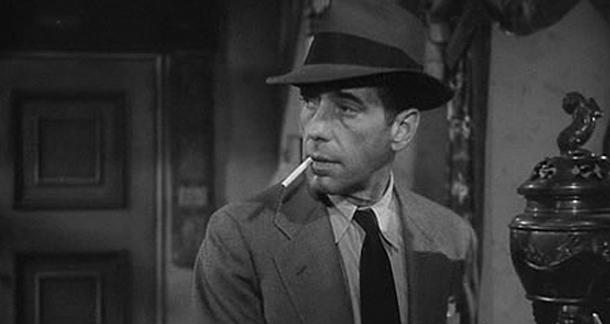
I don’t always smoke, but when I do, it’s after watching a Humphrey Bogart movie.

Chandler has been called a hack by some and a thief by others (he has a lot in common with earlier crime writer Dashiell Hammett). Those calling him a hack are hacks themselves, and those calling him a thief should realize that he did not steal a style, he polished and perfected it. He gave to American crime fiction a literary element it didn’t quite have before. His densely-packed, evocative prose created a legion of admirers, from Paul Auster to Joyce Carol Oates. Again, he almost single-handedly invented an entire style of dialogue.

The overarching plot of the book is a little crazy. Marlowe happens to meet a drunk at a club and finds out he has a beautiful wife. About ten pages later, the beautiful wife is dead and the drunk is at Marlowe’s house with a gun asking for a ride to Mexico. The drunk is a bit nervous, so Marlowe pours him a big shot of Old Grand-Dad (which I have been drinking steadily while writing this article). He takes him out of the country, returns, and spends the rest of the book navigating a world of shit as he attempts to find out what happened. By the denouement, there are so many twists and turns and moving parts that the whole thing almost comes crashing down. Almost. That being said, I hit the last 200 pages of this book and could not stop, meaning that I read until five a.m. and went in to work on just under three hours of sleep. Sometimes crazy is good. In addition, the solid, vivid atmosphere put together by Chandler alongside the snappy dialogue means that if it had been a story about the night shift at Pizza Hut, I still would have read it.

American crime fiction started its life in the literary backwater of pulp fiction, and a lot like SF, has since migrated into the mainstream. Raymond Chandler’s cynical style, sparse prose, and satisfying plotting laid a lot of the groundwork for that. He considered The Long Goodbye his greatest work, and you should too. Read it right now.

Andrew Findlay has strong opinions about things (mostly literature) and will share them with you loudly and confidently. You can email him at afindlay.recess@gmail.com.

Images: IMDB, Amazon, and Litreactor
Major Issues: Saga #20 and Binge Watching vs. Actually Doing Something

image

In Major Issues, we look at one newly released comic book each week. Updated Fridays.

Gardner Mounce

Saga #20
Written by Brian K Vaughan

Art by Fiona Staples
Published by Image Comics
Release: 6/25/2014

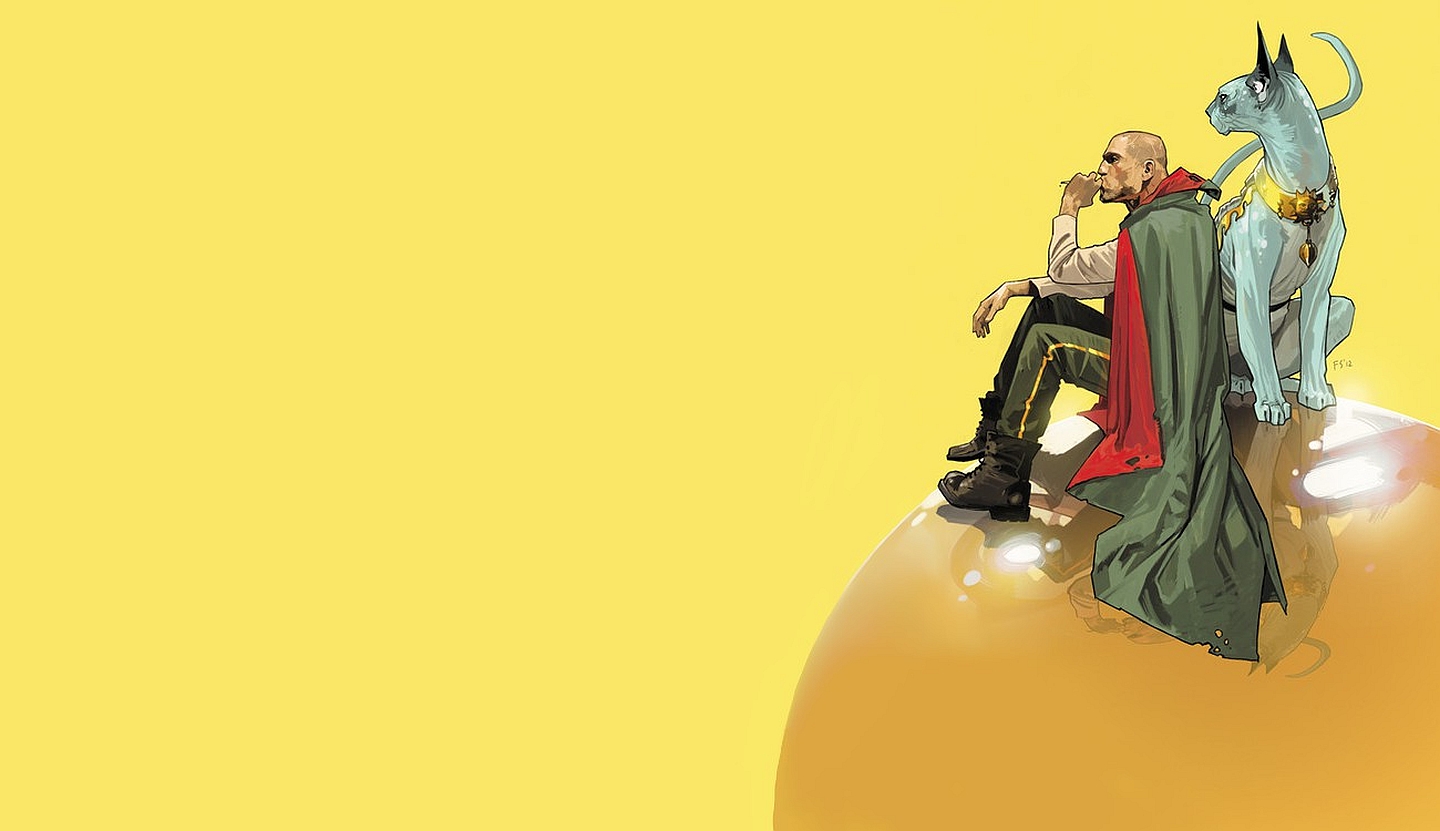
Saga is not a comic for the faint of heart. It’s irreverent, crude, and pairs attraction with repulsion like a sociopathic sommelier. For example, this very NSFW picture of a naked woman with a spider vagina. Awesome! Saga is a mixed bag. It sometimes hits with you an ethical quandary, and sometimes hits you with arachnid genitals. Just like in life.

If you know nothing about the comic, it’s the story of Alana and Marko, citizens of the planet Landfall and its moon Wreath, respectively. Landfall and Wreath are at war, but since the destruction of one would mess up the other’s orbit, the war has been outsourced. It’s Star Wars meets Romeo and Juliet with a whole lot of Vonnegutian humor.

Of the many things Issue 20 deals with (drugs, dance lessons, …) it spends some of its time with Alana at her job at the Circuit (a television station, of sorts). She gets into a conversation with a coworker about what capital-g Good, if any, they’re doing as actors of the Circuit. The coworker says none; they’re drug-dealers, and the Circuit is the opiate for the masses. Alana counters by saying that as a kid she watched a Circuit show that irrevocably changed her views on poverty. But, her coworker counters, “What did you do? Join a nonprofit organization? Volunteer at a soup kitchen? Or did you lock yourself in a tiny room, shut the blinds and mainline every transmission like a junkie?”

This is a great question for our binge-watching culture, and the type of thing Saga is wont to ask. I’ll state it in another way: Is a story considered a failure if the audience doesn’t internalize the unique perspective and act on it?

It reminds me of a similar question brought up in Fahrenheit 451. In that book, the scholar-in-secret, Faber, argues that there are three things a healthy culture requires to avoid ossification: art with texture, leisure time to reflect upon that art, and the ability to act on the lessons learned from it. In our culture, I think that we do plenty of the first two, but do we allow ourselves to act on the implications of the art we engage with?

Allow me to completely derail this Saga train and talk a little about Orange is the New Black (no spoilers) because it’s a good example. Can we watch OitNB and shirk the onus to reform the prison system? Well, people do. But is this right? Are we avoiding the third step of Faber’s advice in Fahrenheit 451 and putting our society at risk of ossification? The best answer I can give is that social reform is a (possible) positive byproduct of good story, but not story’s objective.

The first thing stories do, as David Mamet says, is to order the universe into a comprehensible form. A story is working if your first inclination once an episode ends is to watch another one. That means you’re invested in its characters, in its world. It is ordering the universe into an exciting and comprehensible form and giving you some new perspective or understanding of it. And so a writer’s objective shouldn’t be “Well, I’m going to teach them all something,” but “I’m going to drop them into the world of story and show them (in an interesting way) a little of what it’s like to be these particular human beings.” If a story’s success was based on its ability to teach something, then we could reduce stories to preaching and pamphleteering. Our stories would all come to resemble The Pilgrim’s Progress. And, of course, stories are so much more than this. Great stores are like a black box we get dropped into. Once we get to the other side, we should be changed in some way. Maybe we don’t have a new answer, but we have a new perspective. In the case of OitNB, we see that the prison system is a dehumanizing system. It is not something the writers force on us like a sermon, but a condition of the characters’ lives. It is a necessary and unavoidable element of telling the story honestly.

But once we have that new perspective, is it wrong to not act on it? Are we watchers of OitNB immoral for locking ourselves in a dark room and binge-watching instead of working for prison reform?

Maybe you know more about the problem than I do, and maybe it’s not as bad as it seems, but based on what I know, I feel like I should do something. Am I going to go start a nonprofit? Rally in the streets? Honestly, no. But I will vote differently, and I will speak up in conversation. After all, maybe that’s the best way to effect social change–through stories, not through argumentative means, by showing how human lives are affected by the dehumanizing systems we have created, and creating empathy for them.

443816

Should you get it?

(Saga, not Orange is the New Black)

Yes. Though Saga has its weaknesses (almost all of the characters’ voices sound the same) it’s one of my favorite ongoing series. It’s smart, consistently hilarious, filled with bizarre environs and ridiculous characters, and very punk rock. It also raises great questions (see above article). You can get the trade paperback of the first six issues on Amazon or at your local comic book shop for $9.99.

Gardner Mounce is a writer, speaker, listener, husband, wife, truck driver, detective, liar. When asked to describe himself in three words, Gardner Mounce says: humble, humble, God-sent. You can find him at gardnermounce.tumblr.com or email him at gmounce611@gmail.com 

Video Games as Literature and The Stanley Parable’s Answer to “What is a Game?”

stanleyatdesk

Alex Russell

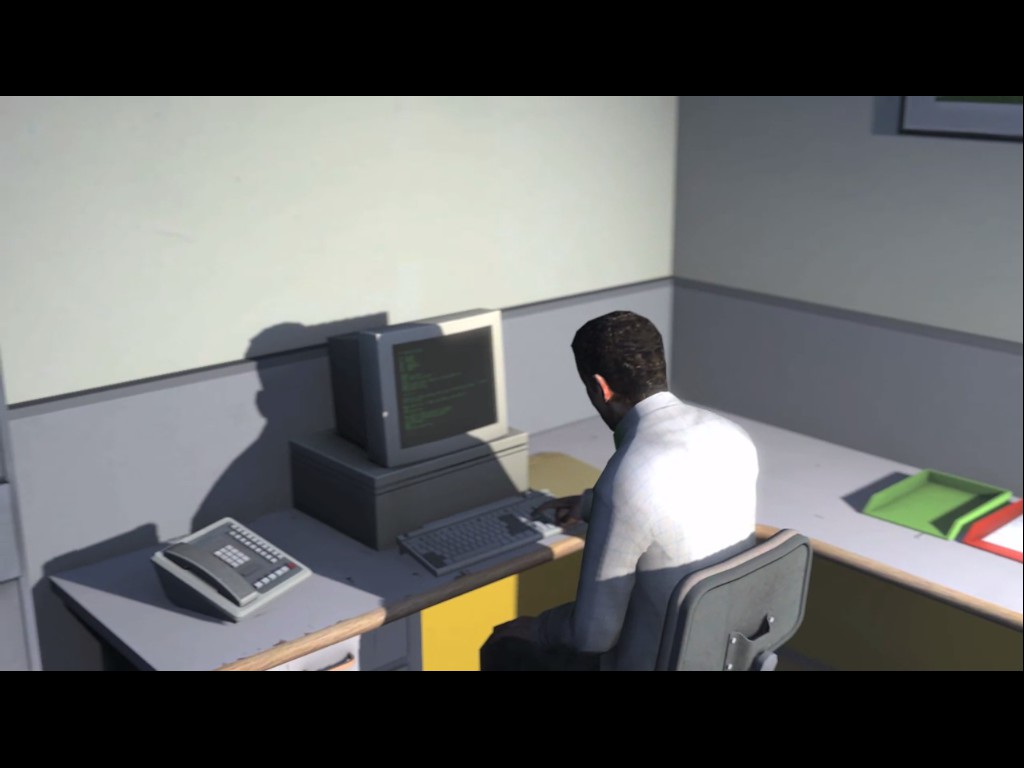
You are Stanley, and your job is to push buttons when a screen tells you to push buttons. You like your job fine enough normally, but today is different. Today, no one came to work. Today, the office is entirely empty except for you.

That’s where The Stanley Parable starts out, and that’s how it always starts out. The Stanley Parable isn’t a traditional game in a lot of ways, but it has a defined start. Every single playthrough starts with Stanley in his office, alone. Where it goes after that is up to you.

During each “run” of The Stanley Parable, a narrator narrates your actions just before they happen. He may say “Stanley went through the door on the left” just as you confront two doors. It’s up to you to then either follow the narrated story and play out the “true” The Stanley Parable or to “break” the game and make another choice. Most of them are just that simple: the game says you went up the stairs, but maybe you go down the stairs, and so on.

If you do what you’re told every time, you’ll finish the game in about 10 minutes. You’ll discover some secrets about what appears to be a simple office, and you’ll “beat” the game. That’s one way to do it, and it’s not wrong to do so. You’ll experience a complete story. You’ll learn something.

But you’ll learn just as much if you take the door on the right. You’ll learn about who Stanley really is (maybe) and what’s really going on with all these choices (also maybe). You have to decide for yourself what the story of the game is, and it changes a little bit every time.

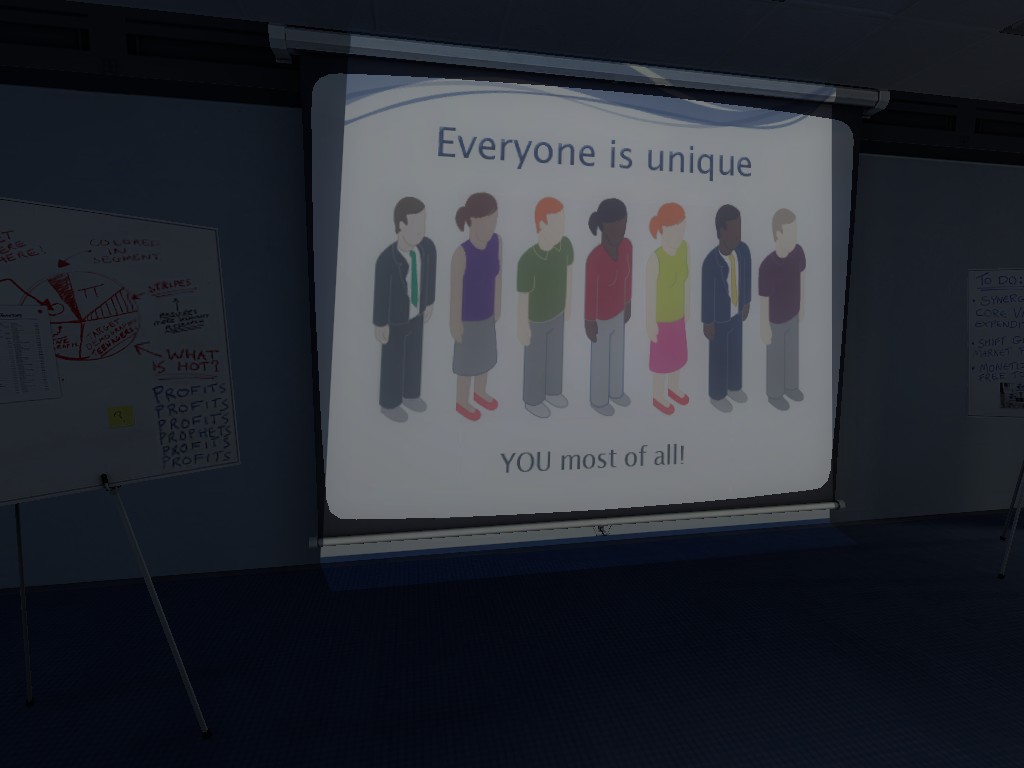
everyoneisunique

Frighteningly realistic workplace graphics.

The full The Stanley Parable experience involves playing it until you see every ending. You’re in for about three or four hours or so maximum if you do that, and that can make the price tag tough to swallow. You can buy it on Steam for the price of a movie in the theaters (though it’s been much cheaper during the Steam Summer Sale) and you will only feel cheated if you assign dollar amounts to fun in strange ways. I can absolutely assure you that this isn’t what you expect, and that much is worth it alone.

The only other thing to discuss is something that has come up a lot lately in games journalism. It sounds dumb, but it boils down to “is The Stanley Parable a game?” Since there are dozens of endings and you can’t really die, there’s no such thing as a fail state. Some of the endings involve the narrator restarting your game and calling you an asshole, essentially, and even those are “true” endings. The Stanley Parable is more interested in testing the boundaries of what beating a game means than it is with what “a game” is in the first place, but people love to debate this stuff. Gone Home, one of the best games of the last few years, is often labeled a “walking simulator” in Steam. It’s meant to be a dig, because in Gone Home the only gameplay is walking around and uncovering a mystery. The only gameplay in The Stanley Parable is making choices and uncovering different endings.

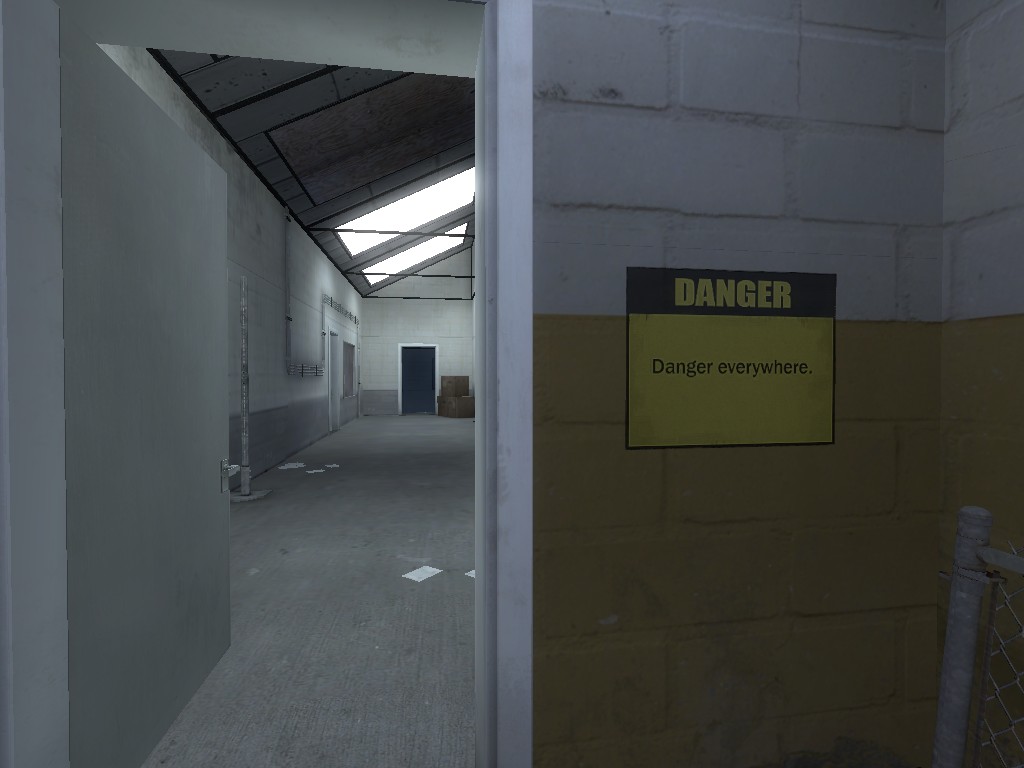
dangereverywhere

Hostile work environment.

The Stanley Parable is open to interpretation. It’s a sort of “choice simulator” where the entire fun of the experience is that every choice is valid. You experience what it means to do A instead of B, but you also consider the fact that most choices don’t really matter. You get very different endings based on what you do, but you never know what inputs will give you what outputs. There’s no morality assigned to going down a staircase instead of going up one, but making that choice once determines if you stay sane or not. So instead of the choices in a lot of games about the morality of good and evil, the choices in The Stanley Parable exist to remind you that you are shaped by decisions that you don’t understand. Your life doesn’t have a narrator that you can listen to or ignore, but your life is also shaped the same as Stanley’s.

I say it counts as literature even without a “real” ending. It’s the story of choice, which is really what every story boils down to, even though most of them don’t start with door number one or door number two.

Alex Russell lives in Chicago and is set in his ways. Disagree with him about anything at readingatrecess@gmail.com or on Twitter at @alexbad.

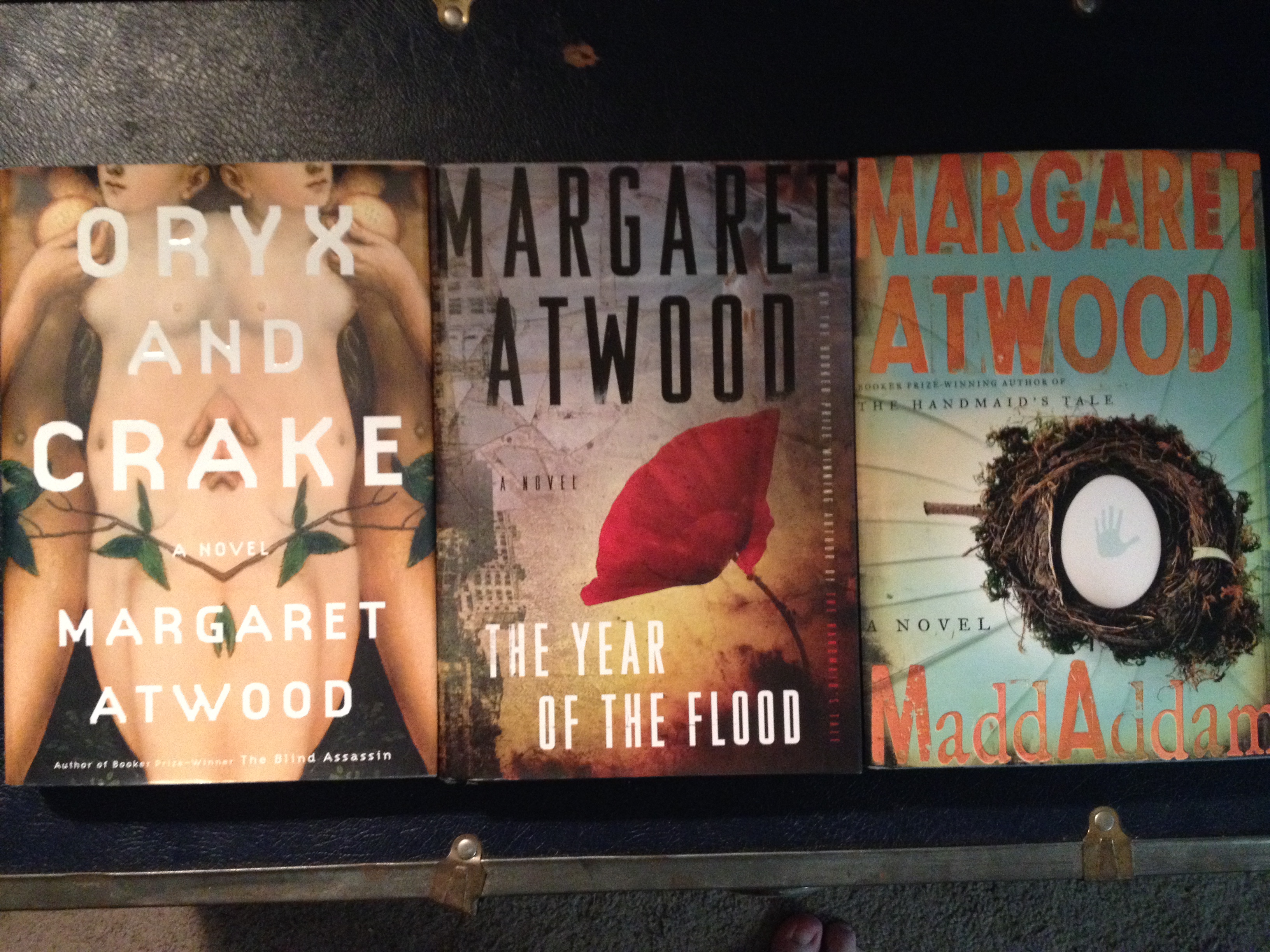
Book Review: Oryx and Crake/The Year of the Flood/MaddAddam, Margaret Atwood’s Dystopian Trilogy

Awtood trilogy

Jonathan May

I read Oryx and Crake when it came out in 2003, certainly never anticipating two follow-up novels. I was given the next two books as gifts over the years as they came out, but would set them gently next to the first, like glass miniatures on a shelf. Facebook was blowing up recently with news of Darren Aronofsky adapting the three books into an HBO miniseries, so I decided it was time. I read all three books over the course of a week and a half, finishing just fifteen minutes prior to the composition of this piece. As always, I aim for brevity when I write for this site, so pardon my simplifications.

Oryx and Crake is Atwood’s only novel featuring a male, first-person protagonist (named Snowman); the other two novels vacillate between voices, with the third in the series having the most variety of narrators. I mention this only because it seems obvious that we need Snowman to contrast with one of the more prominent narrators in the latter two, Toby, a female Gardener. The whole world of the novels is a future wherein biological manufacturing is the norm and companies serve as the main units of life, housing families in compounds. Eco-groups like God’s Gardeners rise in reaction to the companies and their lapse of morality, maintaining “older” ways of life (keeping bees, gardening, etc.) Since all this doesn’t seem far off at all, the novels maintain a sharp sense of realism, even in the more absurd parts. Being grounded in a future that seems not only plausible but also eventual tethers the novel firmly to the ground, imbuing it with a prescience that I love about Atwood. Her characters and plots always surprise me in how true to life they are. So when you have pigs that think like people and invented bacteria that dissolve people into goo, it’s nice to be able to believe in them.

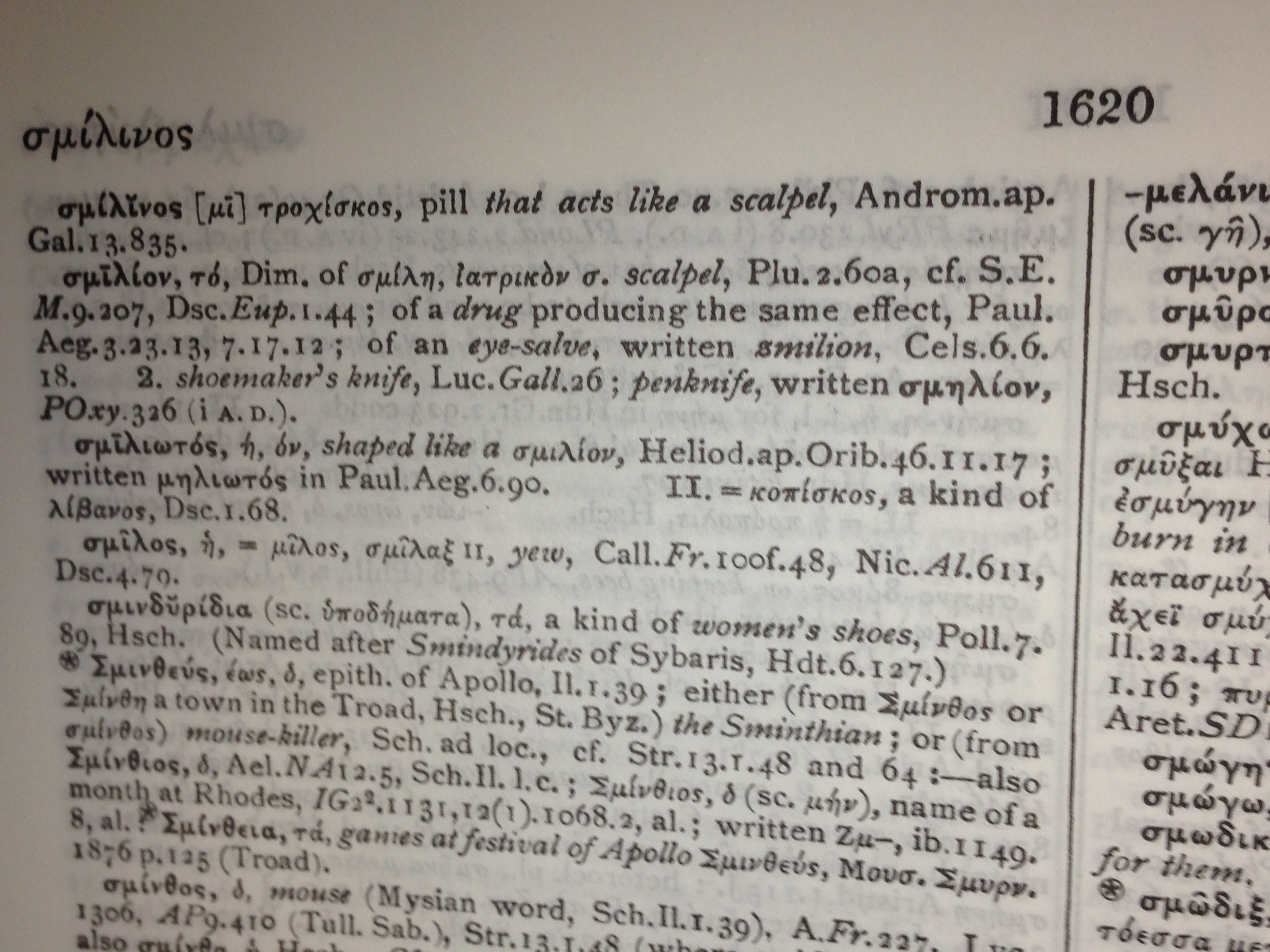
It’s obvious that Atwood favors Toby as a narrator; she is so true to Atwood’s other narrators, women who see the world as a series of mutable paintings. The only time I cried during the course of the trilogy was when Toby had to tell the bees of the death of a fellow Gardener who had taken care of the hive. The addition of things like talking with the bees and the word smile coming from the Greek for scalpel are classic Atwood (thank you to my Dad for help with the Greek there [see picture below]); I learn more from her books than almost any other author (except Cormac McCarthy, whom I read with a dictionary on hand). Just so you know, lambent means glowing or radiant.

Oryx and Crake, smile, Greek lexicon

All together, the novels function quite beautifully, weaving in and out of the chronology, fashioning from the whole a triptych of corporate dominance, human desire, and the ability to play God. Atwood’s world, before and after the Apocalypse, is so eerily close to our own that I felt an immediate desire to plant a garden and learn how to take care of an apiary, lest the grid fail tomorrow. It’s weird, but the novels most closely resemble morality tales than anything else. In other words, I feel only improved after finishing them.

Jonathan May watches too much television, but he’s just playing catch-up from a childhood spent in Zimbabwe. You can read his poetry at owenmay.com, follow him on Twitter at @jonowenmay, or email him at owen.may@gmail.com

Comic Review: The Wicked + The Divine: Issue 1

thewicked1

Gardner Mounce 

The Wicked + The Divine: Issue 1
Written by Kieron Gillen
Art by Jamie McKelvie
Published by Image Comics
Release: 6/18/2014

There are few things as pathetic for adults to engage in as the cult of personality. As a teenager, it’s expected–encouraged, even–to hang posters of pop stars and athletes on your wall. They are your heroes. They inhabit that nebulous world of fame that promises fulfillment and power, etc. But when you grow up, you pull back the veil and it turns out Justin Bieber is a turd and… Creed? (Yes, I had an actual Creed poster on my wall when I was in fifth grade. It’s my life. I wasn’t living it for you.) Image Comics’ latest release The Wicked + The Divine (heretoforth known as WD) finds that balance between idolizing these figures and understanding them to be human, but then tips it. Because in WD, the pop stars are actual gods.

In this world, 12 deities incarnate every 90 years as humans in order to live two years on Earth. Why? I’m not sure yet. But in 2014, they’re pop stars. Roll with it. Let’s touch on which gods we’re talking about, first of all. Is this going to be about a hip Jesus MCing a rap battle between Yah Boi Yahweh and Allah $? No. In the first issue we meet Ananke (Ancient Greek), Susanoo (Shinto), Amaterasu (Shinto), Sakhmet (Egyptian), and Lucifer. Try to guess which of those I didn’t have to Google. So, kudos to writer Kieron Gillen for exploring mythologies not often found in pop culture. Though the reader goes into the story knowing the gods are legitimate, Gillen doesn’t give the reader a god’s eye view. After an explosive introduction, we follow Laura, a 17-year-old fangirl of the gods (i.e. the teenage perspective in that balance I mentioned earlier). But, wisely, Gillen packs the deck with adult skeptics. A reporter accuses Amaterasu and the other gods of being “kids posturing with a Wikipedia summary’s understanding of myth,” and, more hilariously, accuses Amaterasu of being “a provincial girl who doesn’t understand how cosplaying a Shinto god is problematic at best and offensive at worst.”

thewicked2

Throughout, the dialogue crackles with similar wit and character. But that isn’t the only aspect of the writing that’s on point. The scenes build and explode with heady pacing and smooth transitions. And, suggesting a great trust between writer and artist not often found in comics, Gillen never weighs down the art with unnecessary narration. It should be a major pet peeve of every comic reader when a panel that shows a man running from a bomb also has that man yelling, “I am RUNNING from a BOMB!”

The art matches the writing in quality. Whether or not you’ve read another McKelvie comic, you know intuitively that his art is practiced. The panels are arranged poetically, correctly, becoming denser or larger with the beats of action. Likewise, colorist Matt Wilson endows the panels with a versatile color palette capable of portraying violence, beauty, and fame. In this first issue, the really standout feature of the art is the character design. It is my suspicion that each character has a real-world analogue that may or may not have deeper significance. Amaterasu looks like the lead singer of Paramore going through a hippie stage. Sakhmet looks similar to Rihanna. And Lucifer (Luci, in this case) looks just like Pink.

thewicked3

Lucifer, everyone.

The promise this first issue shows isn’t in the premise or story, which is, in my opinion, sort of like American Gods (which I really didn’t like) but in how the story is told. Gillen and McKelvie are master storytellers, and the evidence is borne out in the details.

Should you get it?

Yes, most definitely. This is an exciting new release, written with intelligence and wit.

Gardner Mounce is a writer, speaker, listener, husband, wife, truck driver, detective, liar. When asked to describe himself in three words, Gardner Mounce says: humble, humble, God-sent.

Comic Review: Rising Stars

rising-stars-comic(1)

Brent Hopkins

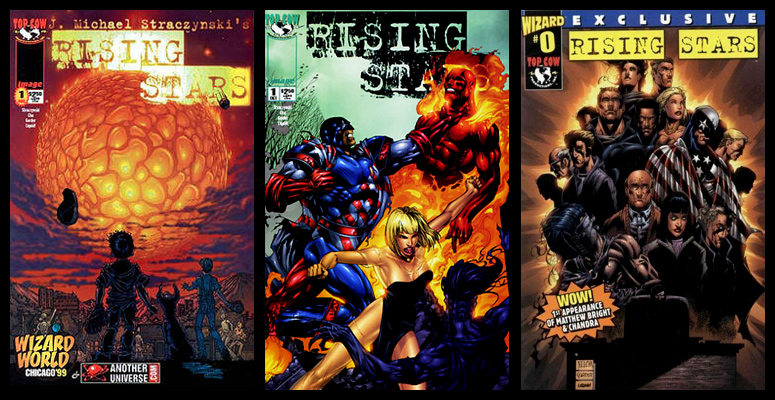
The 24-issue Rising Stars is an interesting tale of a group of children that attain superpowers via an intense flash of light from a comet. These children were all yet to be born and therefore only 113 of them receive this “gift.” They grow up with their powers and become known as the “Specials.”

Story

The story behind Rising Stars is definitely where the main interest lies. There has always been human interest figuring out how life would be if people had abilities that made them a cut above a normal human. This is regularly touched on in X-Men’s Sentinel saga, also with Lex Luthor’s general hatred of Superman being a living god. Rising Stars turns this on its head in a very satisfying way by limiting the powers that are given out to a set group of people and having them deal with being the extreme minority on the planet, yet wielding all of the power.

As can be expected, the Specials have their own personalities and hopes and dreams, as normal people do. They also are not all made equally. There are some individuals who are the Superman archetype and others that fall more into the hyper-intelligent brand of superhero. This disparity in skills causes schisms among the Specials themselves since some individuals feel they are of a superior nature to others.

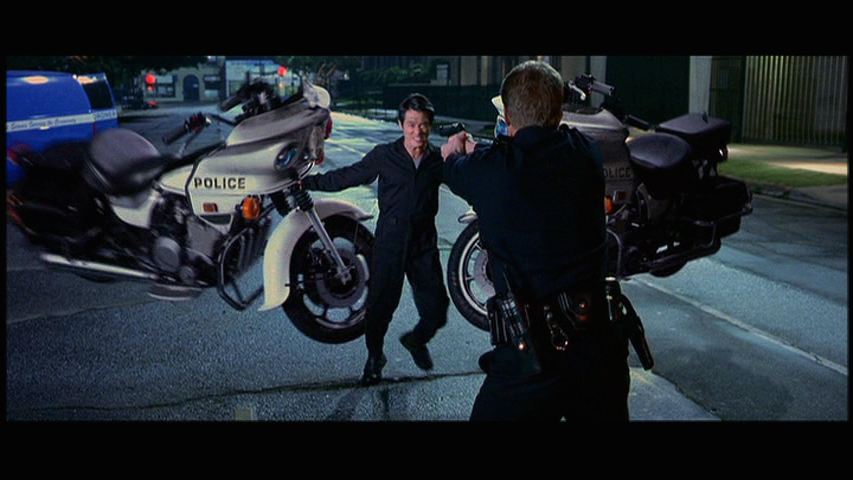
The main plot gets rolling when a few Specials are murdered and it is obvious that one of their own is committing the crimes. This is all narrated by the last living Special, John Simon (aka Poet). John narrates the discovery that, with the murders the energy from the dead Specials is transferred to the remaining ones (Think Jet Li’s great film The One).

vlcsnap-2011-09-08-03h45m01s97

Like this, but Jet Li has the skill set of a Super Saiyan.

This is just the tip of the iceberg and the reader gets to go on a special journey in the lives of superheroes, which is watching their full lives begin and end. Specials have all the power in the world, yet they have the same limitation normal humans do: time. Another underlying tale unfolds as well, which is how humanity would try to deal with suddenly falling from the apex predator perch.

Art

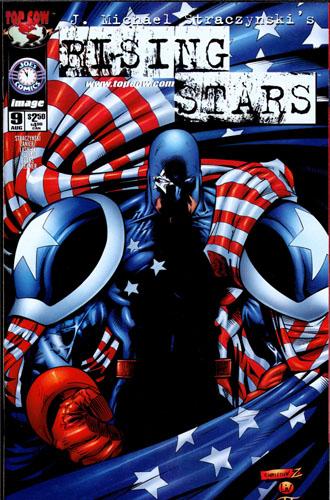
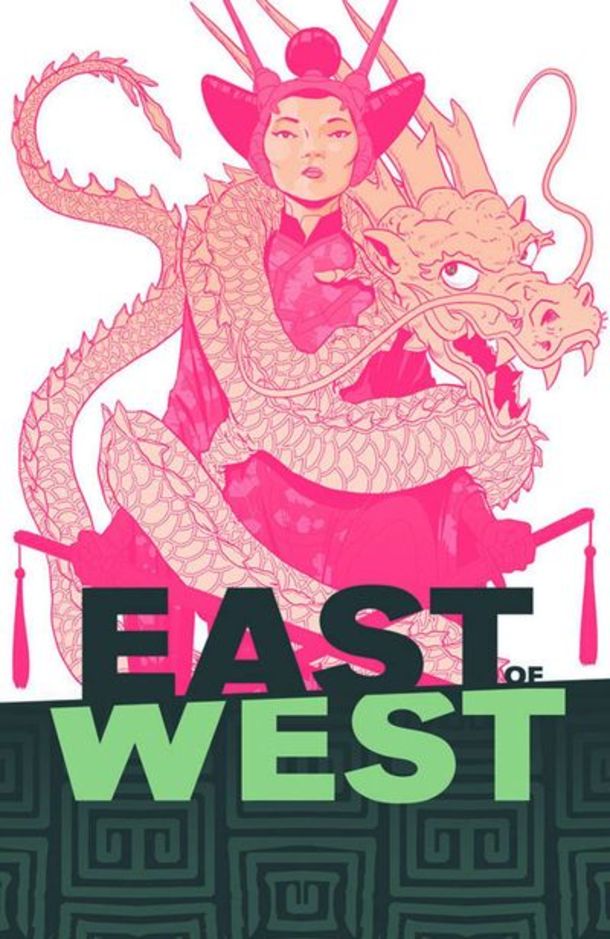
The art here isn’t really impressive. It isn’t bad, by any means, but the coloring and artwork definitely feel like a typical comic book. I would say if you were playing a game of charades and had to draw comic characters, Rising Stars would be the perfect point of reference. Held up next to League of Extraordinary Gentlemen, or East of West it fails to have that same visual impact.

rs09-lg

Cap’n Muurrca

Characters and Writing

Considering there are a mere 24-issues and three mini-series to get acquainted with the Specials there is a lot of ground covered. 113 is an impossible amount of characters to introduce and give personality to and intelligently author J. Michael Straczynski doesn’t attempt to. Each of the Specials mentioned in-depth in the comics are all interesting and either have powers you need to actually see to understand or have personalities so strong that you want to know what makes them tick. The inclusion of archetypical superheroes is also done intelligently. How would a real Batman act? You get to see it here. What would someone with multiple-personality disorder do with the ability to control other? Also in here. I found myself loving and hating characters and then merely understanding them by the end of the series and I loved it.

Worth the read and time to complete?

My God, yes. This feels like a brilliant deconstruction of the fantasy of superhero living a la Watchmen (not saying it is as good or anything). There are 24 issues and it really makes you think about what life would be like if you did have amazing abilities but knew you’d die at 70. My only complaint is that it does end very neatly, but I would prefer that over feeling unfulfilled at the end.

Brent Hopkins considers himself jack-o-all-trades and a great listener. Chat with him about his articles or anything in general at brentahopkins@gmail.com.

Images: Header image from here, other images here and here

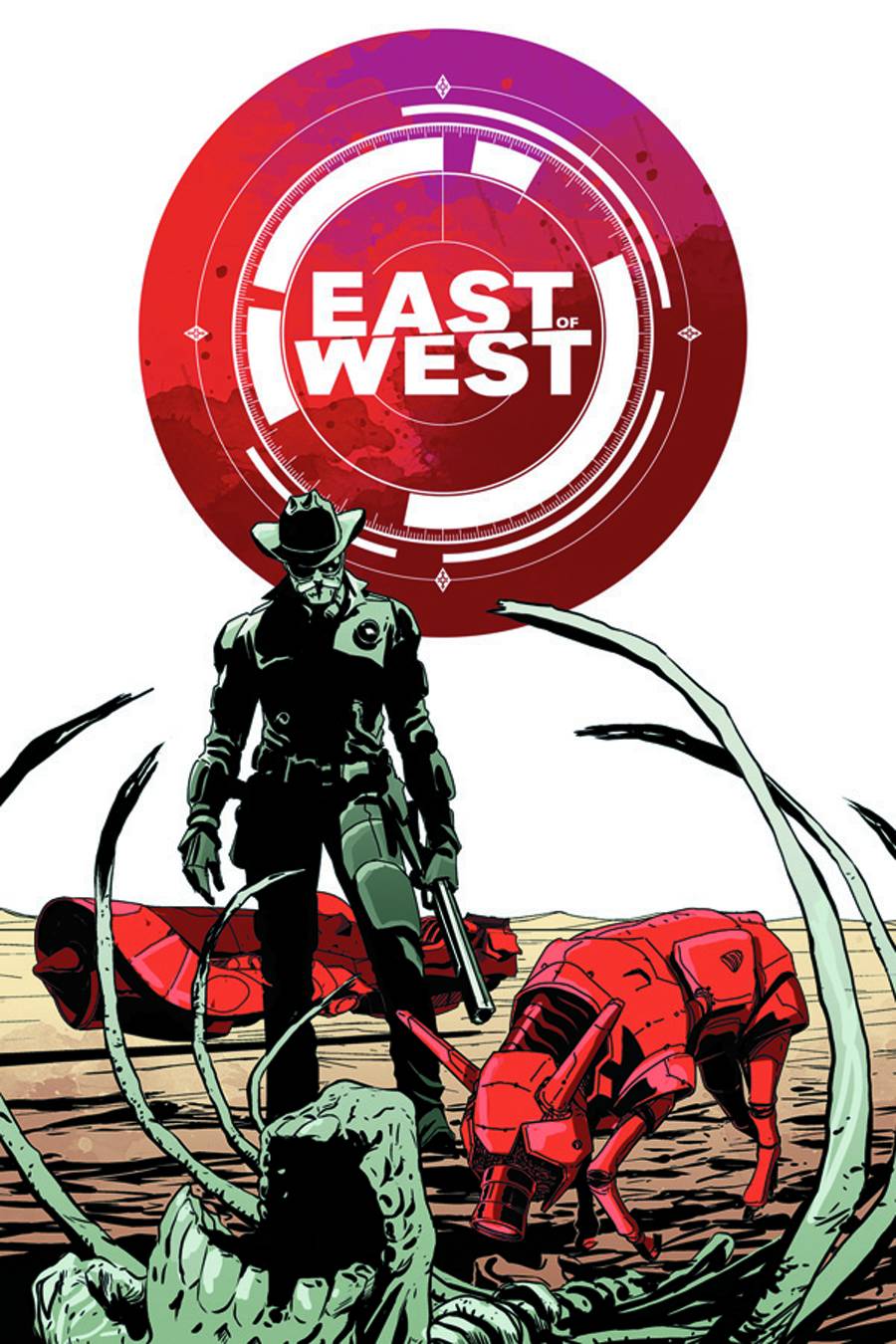
“East of West” Comic Review: Art that Shushes Your Inner Critic

east-of-west-3cover-artjpg-30b4bb_610w (1)

Gardner Mounce

As we consumers of culture grow older, our inner critic grows louder. A new band we might have liked ten years ago we now quickly brush off as a carbon copy of an earlier incarnation. The latest Coen brothers’ could never be as good as past efforts. With every passing year, we append new cultural experiences to our collected “Experience,” thus making it increasingly rarer to experience that work of art that shushes your inner critic so that you can actually enjoy it. Not to say that critiquing (or even tearing apart) works of art isn’t its own form of enjoyment. But that’s for another article.

STK527769.jpg

It wasn’t until undergrad that I got into graphic novels. It wasn’t until after grad school that I got into comic books. If you don’t know the difference, here’s a clip (courtesy of ABC Family) of someone asking the question and then two people kissing. All that to say, even though I haven’t been a lifelong fan, I feel that I’ve read enough to know when I’ve found that rare specimen. That specimen, in this case, being Jonathan Hickman’s and Nick Dragotta’s East of West.

How to describe it? I use the word “badass” selectively. Sure, I live in the South where badass is an endearment ascribed to everything from camouflaged iPhone cases to comely sunsets. I used it once at a Nine Inch Nails show when Trent Reznor kicked over his keyboard, and in spite of myself at a monster truck show when Grave Digger jumped an improbable number of wrecks. Like I said: I’m Southern.

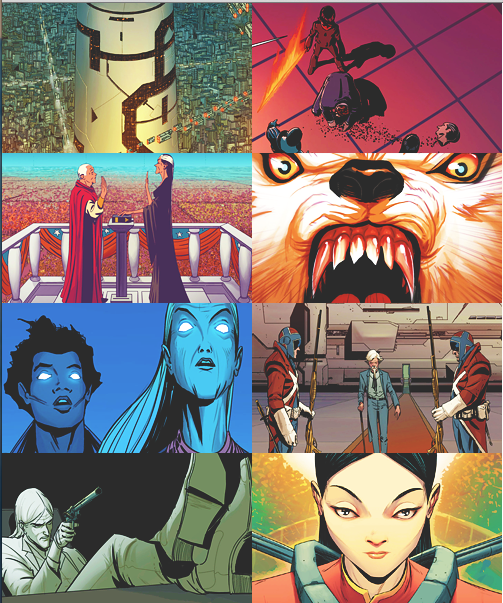
I think I want to give East of West that most Southern laurel because of how much weight Dragotta’s art carries, how every panel is filled with gravity and action and consequence, with no frills, nothing wasted. It’s like reading the storyboard of a Darren Aronofsky film: every shot means something. The following is a collection of unrelated panels (no spoilers) that I’ll use for example. Every shot is packed with a story that demands to be read, understood, savored.

Screen Shot 2014-06-10 at 5.10.11 PM.png

It’s the color palette, it’s the framing, it’s the energy in each panel that whispers “I know something you don’t know”, and so drives us onward. Dragotta fully realizes Hickman’s dystopian sci-fi world, a grand scale epic that includes vast cityscapes, a cadre of unique characters, and wonderfully offbeat technologies like horse-bikes. It’s artwork like this that primarily hushes my inner critic. Even if the story wasn’t good, the artwork alone sweeps you up. But the story. Oh, man, the story

If Sturgeon’s law is to believed, 90% of everything is crap. This is definitely true for comic books, where at least 80% of comics are about superheroes with dead parents–nothing lightweight about dead parents, but come on, comic book writers, pick a new backstory for Chrissake. The story behind East of West is…complicated. In a nutshell, it’s a dystopian sci fi story about three of the four horsemen of the apocalypse–Famine, War, and Conquest–who arrive on earth to end it all, but the fourth horseman, Death, doesn’t show. Death, personified as a colorless Clint Eastwood-esque cowboy, is off on an errand of his own. As the three horsemen track him down, elite members of the warring nation-states plot to end the world rather than settle their differences.

What makes the story so special is that Hickman embraces the essence of American mythology: there is not one, but many American mythologies. Contained in East of West is the myth of the cowboy, the religious zealot, the industrialist, the South vs. the North, the South (white wealth) vs. the South (free slaves), tradition vs. technology, the indigenous vs. the immigrant, and more. Hickman collects these multifarious mythologies and we get to watch them squirm. As crowded as that sounds, as rife as that premise is with the potential to wholly miss its mark, it somehow doesn’t. There are worlds contained in East of West, and, so far, its creators have told its story well enough that when I open up a new issue, my inner critic takes a walk.

Where to Start?

Luckily, the series is only 12 issues in. Get the first five in trade paperback for under $9 on Amazon or for around $10 at your local comic book store.

Gardner Mounce is a writer, speaker, listener, husband, wife, truck driver, detective, liar. When asked to describe himself in three words, Gardner Mounce says: humble, humble, God-sent.

Image: IGN

Comic Review: The League of Extraordinary Gentlemen (1999-2007)

league-of-extraordinary-gent

Brent Hopkins

The League of Extraordinary Gentlemen is probably best known for the horrible, career ending movie that starred Sir Sean Connery in his last major motion picture. The movie is a disjointed mess and takes almost nothing from the source material other than the characters’ names.

The comic, on the other hand, is an interesting romp with an entire world built around it. The main concept of the comic is that many literary fiction characters are actually real characters that have retained their otherworldly abilities. They come together as a crime-solving troupe, but, as they are human, they retain all of the issues they have interacting with one another and overcoming being better than an average human.

The Story

Written by Alan Moore (of Watchmen and various other comics fame) the story follows Mina Harker, Captain NemoAllan QuatermainDr. Jekyll, and Hawley Griffin from 1898 to 2009 solving crimes with antagonists from literary history. These include Fu Manchu, Professor Moriarty from Sherlock Holmes, and even the aliens from The War of the Worlds.

download (1)

Characters and Writer

The protagonists are often seen as interesting, but not entirely bad, in modern culture. Moore is not that type of writer, and each of the “heroes” in this comic are, for lack better phrasing, miserable fucking bastards. Each of them exploits their myriad abilities in exactly the worst ways possible — murdering, drug using, and raping — because there is no one that can truly stop them. They get a completely free pass on this, because when aliens come from Mars and threaten to liquidate the entire human race you have to let the superhuman characters handle it.

There is quite a bit of death in this comic and it is dished out to the good and bad alike. The strange thing is I never really connected with the good guys because they were all pretty deplorable people in their own right.

Art

The art is done really solidly throughout. There is only one artist from start to finish, so it is very cohesive. Those that like steampunk flair will adore this, as the whole span of time from 1898 to present day has a decidedly steampunk feel. The comic consistently feels like a viewing of the imagination of someone reading a book, which is precisely how it should feel. The characters are all very unique and it feels like you are viewing a real alternate timeline where pen and paper make reality come to life.

Writing

Moore is a world builder. He has done this with Watchmen and here he has managed to do the same thing. While The League of Extraordinary Gentlemen isn’t long per se, Moore includes so much side text and so many appendices from the world that you never really feel lost. These are necessary reads to get the full effect of the world these characters reside in and they are entertaining in their own right. Each character is also consistent throughout the story, never suddenly becoming more than they were like many superhero novels do. Once insane, always insane, and that helps engross even more.

Worth the read and time to complete?

Kinda??? I read this in its entirety in about two weeks and I did enjoy it quite a bit, yet it is hard reading something with a bunch of people you don’t entirely like. The main characters are Allan Quartermain and Mina Harker and they’re relatively interesting, but their cohorts were far more intense and crazy which made me sad when they departed from the story (These departures are amazing though).

Brent Hopkins considers himself jack-o-all-trades and a great listener. Chat with him about his articles or anything in general at brentahopkins@gmail.com.

Images: Litreactor and Indiewire.

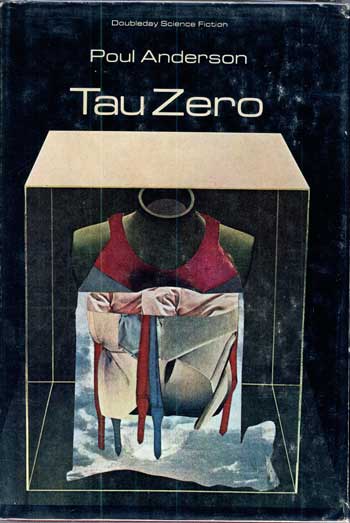
Life After the Star Wars Expanded Universe: Poul Anderson’s Tau Zero

 114510

Andrew Findlay

In Life After the Star Wars Expanded Universe, we take a look at science fiction and fantasy, why they’re great, and what they say about where our species has been and where it’s going. 

There are two main classes of SF author: those who have broken into mainstream success, and those who have, while creating a vibrant and diverse body of work, remained largely unknown outside of the hallowed halls of SF fandom. In the first category, you have your Ursula K. Le Guins (who is actually in a category all by herself because dear God is she amazing), your Neal Stephensons, and your Robert Heinleins. In the second category, you have your Roger Zelaznys, your Vonda McIntyres, and your Poul Andersons. The work of those in the second category is not necessarily worse than those in the first. Indeed, many of the ideas explored are right on par or better than those from the first-category authors. Their work simply tends to be less geared towards wider audiences, so it does not have the wider appeal of the first-category authors.

One way to make SF appeal less to wider audiences is to construct a hard SF tale. Hard and soft SF are terms which denote an overwhelming focus on technology and innovation for the one and a focus more on the social developments and psychological effects of technology for the other. In hard SF, you’ll get an explanation of how the propulsion system of the spacecraft works, the main character will be an engineer, and the main conflict will be his struggle to repair the craft before everyone dies. In soft SF, everyone will be on the same spaceship, but it’ll just fly because that’s what spaceships do, and the narrative focus will be more on character development and social concerns. These two directions are not mutually exclusive – you can have good explanation of tech in soft SF, and you can have strong character development in hard SF – it’s just a question of focus. Tau Zero is considered a perfect example of hard SF.

First off, the name itself is a scientific term. Tau is the symbol which denotes proper time in physics. Proper time is time as measured by a moving observer, meaning that at relativistic speeds, proper time for someone in a ship is very different than proper time for someone outside the ship. Time dilation is a central concept of this book, and tau is a central measure in time dilation. According to Anderson (Wikipedia says he fudged this a bit), as tau approaches zero, the gap between experienced and objective time becomes more and more significant. This is the main conflict of the book.

A team of scientists boards the Leonora Christine, a new ship with a Bussard ramjet propulsion system. Bussard ramjets are theoretical engines that use massive magnetic fields to collect hydrogen from space as they travel interstellar distances. The faster the ship goes, the faster the hydrogen is collected. The magnetic fields and the acceleration combine to compress the hydrogen to the point where it fuses and creates a massive amount of energy, which is then directed by those magnetic fields out the back of the engine, creating thrust. This proposed propulsion system solves the problem of holding onto fuel for interstellar travel – no ship would be able to lug around all the crap it would need to burn to get from one star to another – the prohibitively high weight would render it infeasible.

Anyway, they got themselves a ramjet, and they’re using it to go on a twenty-year exploratory mission. The way the trip works is that the ship spends half of its time accelerating and half of its time decelerating, so at the midpoint it turns its engines around and reverses thrust. The astronauts are prepared for time dilation to make twenty years go by on Earth, but there’s a hitch. Right before the midpoint, the ship passes through a nebula. All that dust collides with the deceleration system and renders it nonfunctional. The astronauts cannot slow down, so they sit and try to solve the problem while everyone they have ever known dies on Earth. They decide to accelerate even more and go to an entirely new galaxy, so they kiss human civilization goodbye and ramp up their speed. The main struggle of the book is fixing the decelerator and finding a place to live now that all of human civilization has been gone for millions of years.

The character development of the book is severely lacking. It exists, and it is passable, but it was clearly not a priority. They were so paper-thin that they had less substance than the gangsters from that fake mob movie that Kevin McCallister watches in Home Alone. A grizzled war veteran holds the entire crew together as they bounce from crisis to crisis, never giving up hope because he’s just got too much damned grit. That in itself is a pretty slipshod job of character building, and he’s really the only character I remember from the book. That and the fact that I spent more than half of this article talking about spaceships and about five percent of it talking about characters should indicate the severity of this book’s character problem.

Despite all that, I enjoyed it. The overarching direction of the book is humanity boldly going where no one has gone before, which I’m a sucker for. A very simple, clear, and horrifying problem arises when their propulsion system goes on the fritz, and the hard work of a handful of dedicated individuals solves the problem in a very interesting way. It has a very interesting and clear central idea, but the surrounding elements do not quite come together. It is a novel expanded from a short story, and maybe it should have stayed a short story. Problems aside, you should give this one a shot.

Andrew Findlay has strong opinions about things (mostly literature) and will share them with you loudly and confidently. You can email him at afindlay.recess@gmail.com.

Image from here.